Off to Rapa Nui

I hardly slept last night – never do before a big trip, because although I love travelling and discovering new places, getting there by plane still scares me, or it could because I am excited at finally going to Easter Island! We leave our hotel at 6am for the airport and are checked in by 6.30. Anthony cleverly thought of calling Lan Chile and asking them for a wheelchair, not knowing how far we were going to have to walk at the airport.

When I booked the first available flight to Easter Island, I only got a price, no choice of class. It was a little more than the return flight but I put it down to demand. It turns out we are travelling business premium!!!! I think we are the first to check in and we have a choice of seats – perfect, I have a window seat and Anthony is seated next to me. This is great news. Originally we were seated on opposite sides of the plane.

Anthony at Santiago airport

Anthony at Santiago airport


That is not all: we are travelling on our first ever Dreamliner, business class. (At least this particular plane is the first in LAN’s fleet so has been flying for a while, but I find the idea of being in a composite material tube unnerving…) I don’t just have a window, I have 4!!! With personal window glare dimmer control! Lovely crisp white doona/quilts and all the luxuries of business class travel at a level we haven’t experienced before as this is such a new and modern plane. I think we are back in that artificial bubble….

My four windows, dimmed for my comfort

My four windows, dimmed for my comfort

We both make the most of our 5 1/2 hour flight to catch up on our blog writing and watch a couple of Modern Family episodes. They make me laugh out loud and keep my mind busy…

So where exactly are we headed? Easter Island, declared a UNESCO heritage site in 1995, is one of the most remote islands in the world – the nearest inhabited island with 50 inhabitants is Pitcairn Island over 2000kms away. Polysians first inhabited Easter Island in the first millenium but due to introduced Polynesian rat infestation and poor land resource management which led to deforestation and over-population, by the time the first Europeans arrived in 1722, there were 2000 to 3000 inhabitants, down from an original estimated 15,000 a century earlier. Then due to European sailors’ diseases and Peru’s slave raids and delibrately introduced diseases, population here was down to a mere 111 by 1860. Easter Island is known for its moais – enormous stone statues, mostly with their back to the ocean, scattered across the island. There are many myths and theories abound as to how the first inhabitants arrived and how they erected these statues. The moais, representing deitified ancestors, hold mana (power) that protects the island. There were no external dangers they thought which they had to protect against, but they needed strength and power to protect the island itself and its inhabitants and bring prosperity and health, hence the moais faced inland, their backs to the ocean. As the island became over-populated and deforested, warriors forced the end of the Ancestor Cult, where ancestors were revered and held the mana, and the Birdman Cult was created (an annual competition of chiefs of different tribes or their representatives based on physical strength, the winner being the first one to return from a 5km swim and climb back up the cliffs with an unbroken manutara (sooty tern) egg and awarded ‘birdman’ status for one year). The last Birdman competition was held in 1867.

Apparently in 1722, Europeans noticed standing statues but by 1838 most had been toppled during internal power clashes. Now, due to the Rapa Nui’s own near extermination and lack of written history (they did have their own hieroglyphs but it has never been deciphered), we are left to speculate on the origins and meanings behind much of Rapa Nui. Various carbon datings have dispelled previous estimates as to when Rapa Nui was first settled by Polynesians. There are still many mysteries, unanswered questions and differing theories. This is what makes this place so fascinating. But how tragic that a civilisation just about wiped itself out due to poor resource management out and its culture nearly lost, with expeditioners and missionairies taking its final breath away… This should be reminder to us all of what can happen if we do not take care of our planet and each other… This my crude abbreviation of a fascinating history – you may wish to check out good old wikipedia for a clearer overview at http://en.m.wikipedia.org/wiki/Easter_Island, and of course there are many books.

We are 30′ out of Hanga Roa and the captain announces we are about to commence our descent. I am getting excited. Not long now. We are on the left hand side of the plane and we have no idea if we will get any areal view of Easter Island. Suddenly I get my first glimpse of the island – fantastic. Then, what? We are above the runway. As if to give all passengers a view of both sides of the island, we fly right over the airport, which gives me a view of Orongo crater, then do a right then massive left hand turn, giving me now a full view of the entire island. We need the whole length of the runway, which is also the whole width of the island at that point, then turn back on ourselves to get to the terminal. I spot Anthony’s wheelchair being brought over!!
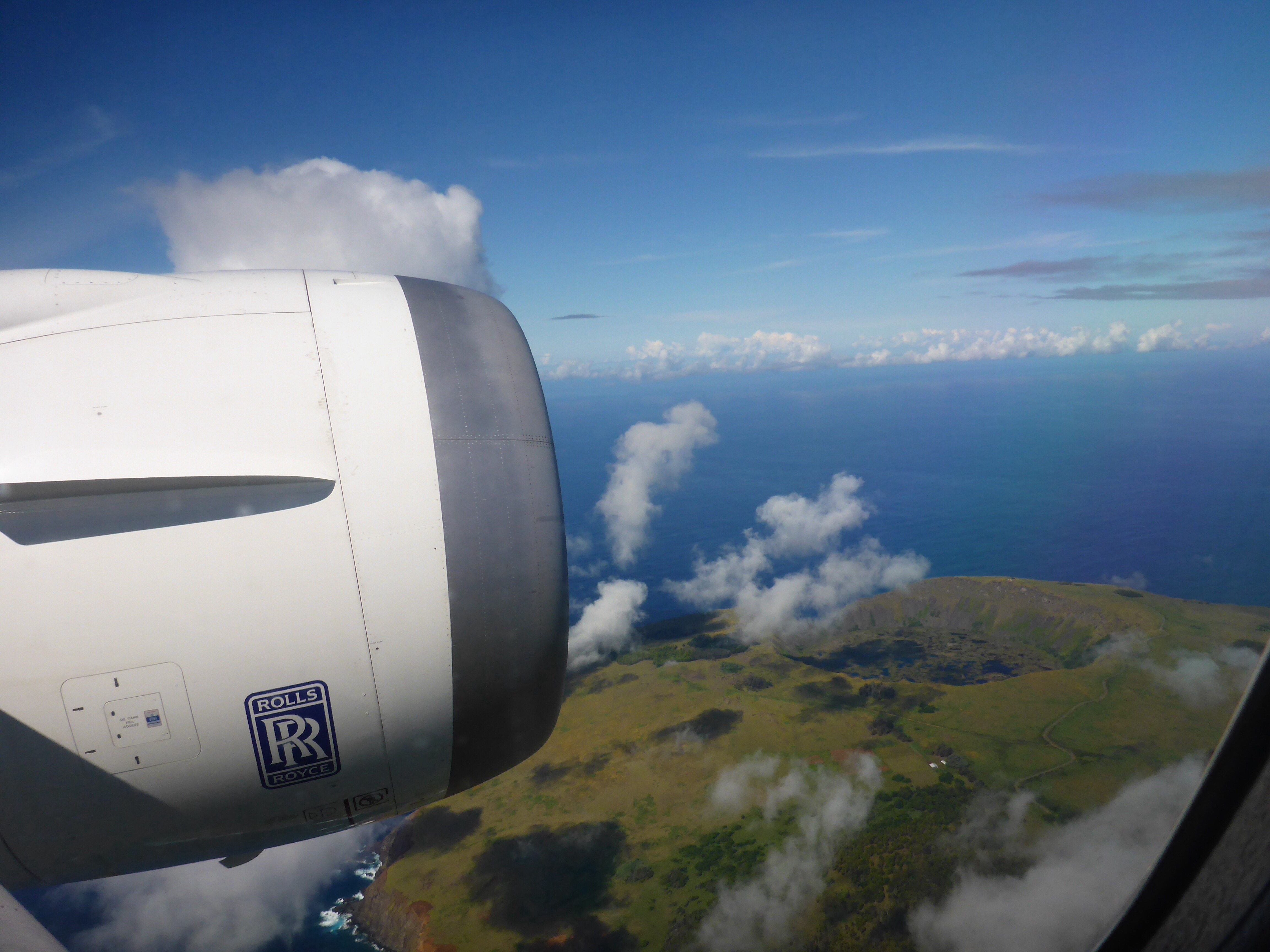
Rano Kau volcano, SW of Easter Island
Rano Kau volcano, SW of Easter Island

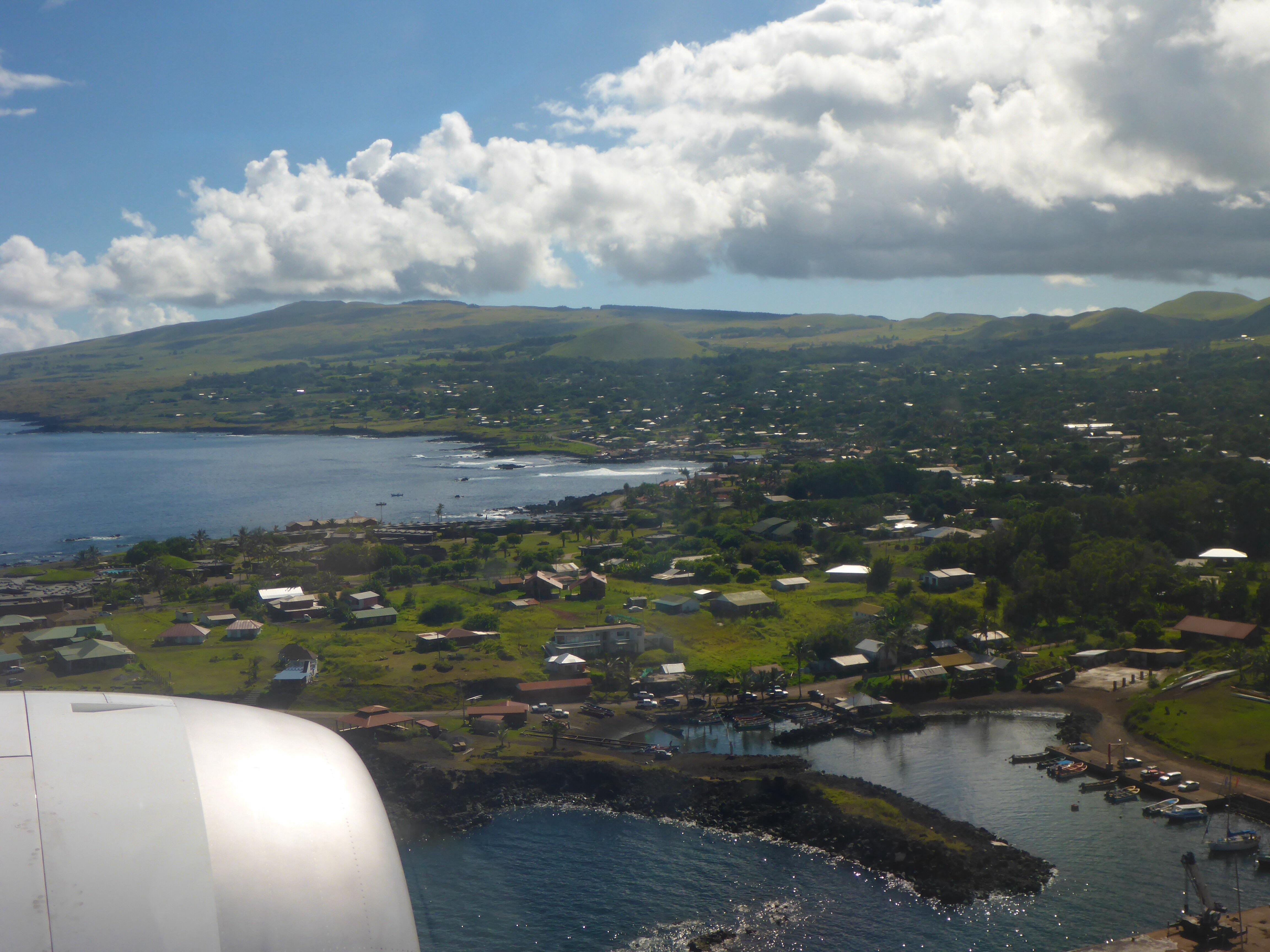
Hanga Roa, the only town on Easter Island

Hanga Roa, the only town on Easter Island

Anthony being wheeled at Mataveri airport

Anthony being wheeled at Mataveri airport

I am the first one off the plane with Anthony slowly following behind. There are many steps down for anyone with such a sore ankle as Anthony. It instantly feels and smells like home: the sea air, the hot humid weather. We need to buy our National Park entrance fees at the airport and the wheelchair attendant takes to the front of the queue (a small benefit to being handicapped) and the ranger refuses to sell Anthony a ticket: just one ticket for the 2 of us with a special note handwritten on the back for the park officials to allow Anthony through. As we get into the terminal, the sweet scent of tropical flowers instantly remind us both of Tahiti. Locals are welcomed by various members of their familes and friends with multiple leis (garland of fresh flowers placed around the visitor or returning traveller’s neck as a welcome). It is such a lovely custom. The love and happiness on their faces is heartwarming.

We wait a while for our checked bag and eventually head outside where we find China, our hostel owner, with our name on a board. She welcomes us with a lei each. I do love this custom!! China was born here, from a Rapa Nui father and Chilean mother. Rapa Nui is the name of the island, the name of its people and the name of its culture.

We hop into her people mover and get a mini private tour as we drive through tiny Hanga Roa centre, the only town on Rapa Nui, to our home for the next 5 nights, China waiving to various friends on the way. What strikes me is how neat and clean Hanga Roa is, the streets tarred or paved and there is not a spec of rubbish. It is green and lush, flowering bushes everywhere and people waiving to each other everywhere. You immediately feel a sense of pride in the place. It is good to be with a local who can point out which statues are modern or replicas or restored. We are on the northern edge of town, just past the cemetry, a 10′ walk to just about anywhere in town. The Sunset Hostal has 2 double cabañas. We are the only guests at the moment which is great.

Our cabin on the left
Our cabin on the left


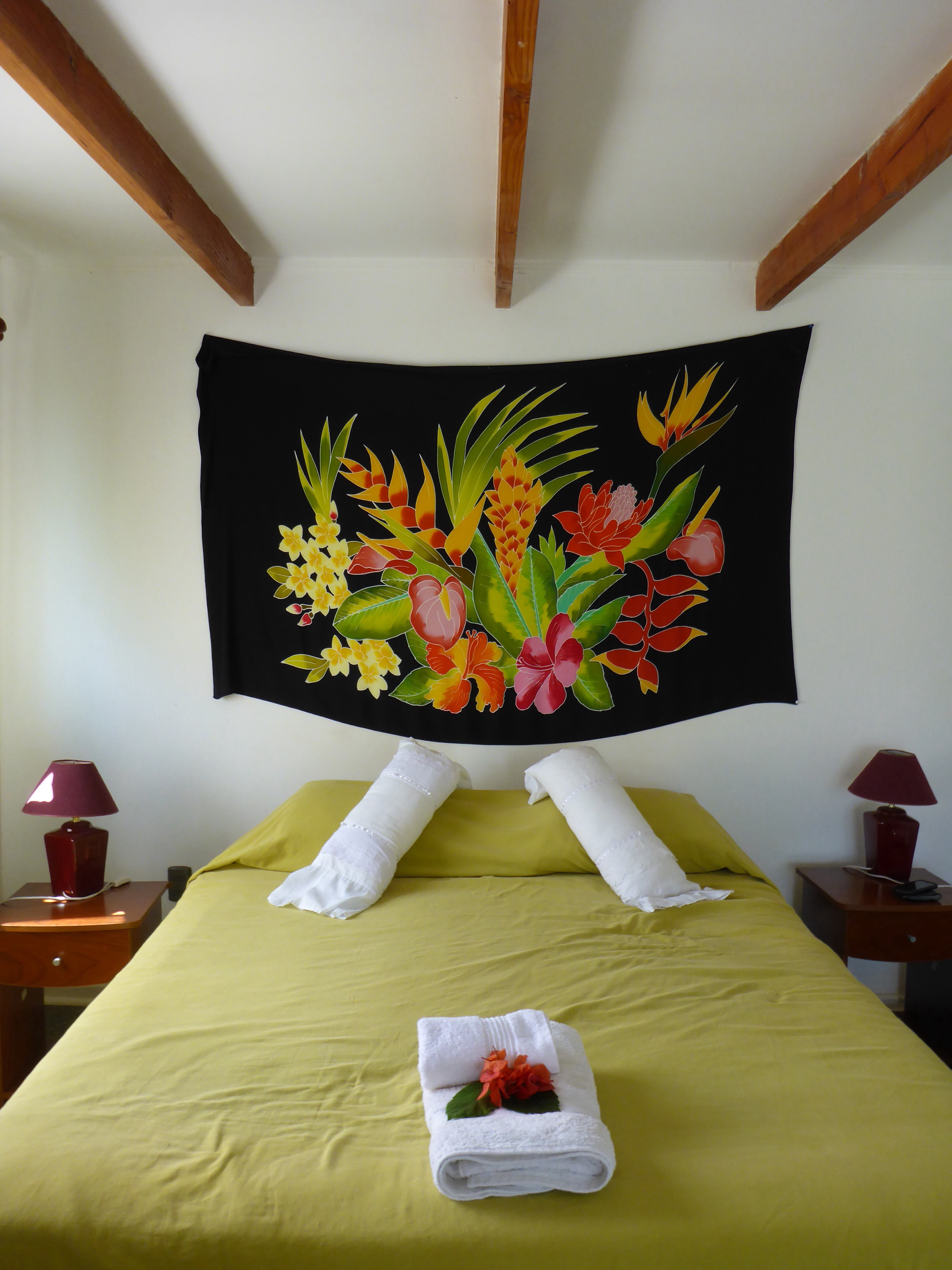
Our room at Sunset Cabañas at Habga Roa

Our room at Sunset Cabañas at Habga Roa


China lets us settle down before coming back with a local map and explaining what local tours are on offer and warning us of the dog problem on the island: there are stray dogs everywhere but they are friendly especially towards tourists who often feed them. China has 4 friendly dogs but they are very territorial so we must not let a stray dog follow us home or an almighty dog fight will erupt.

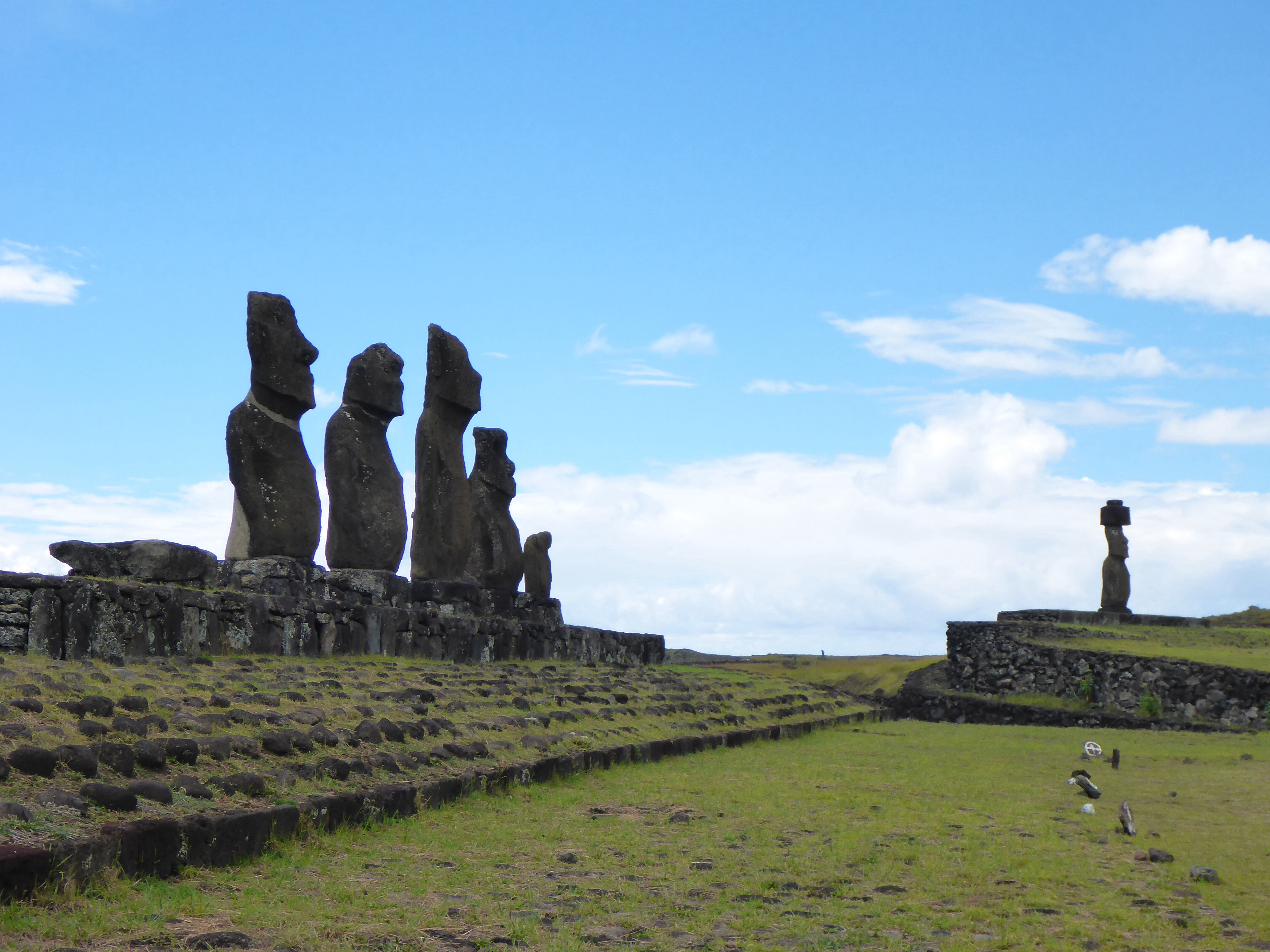
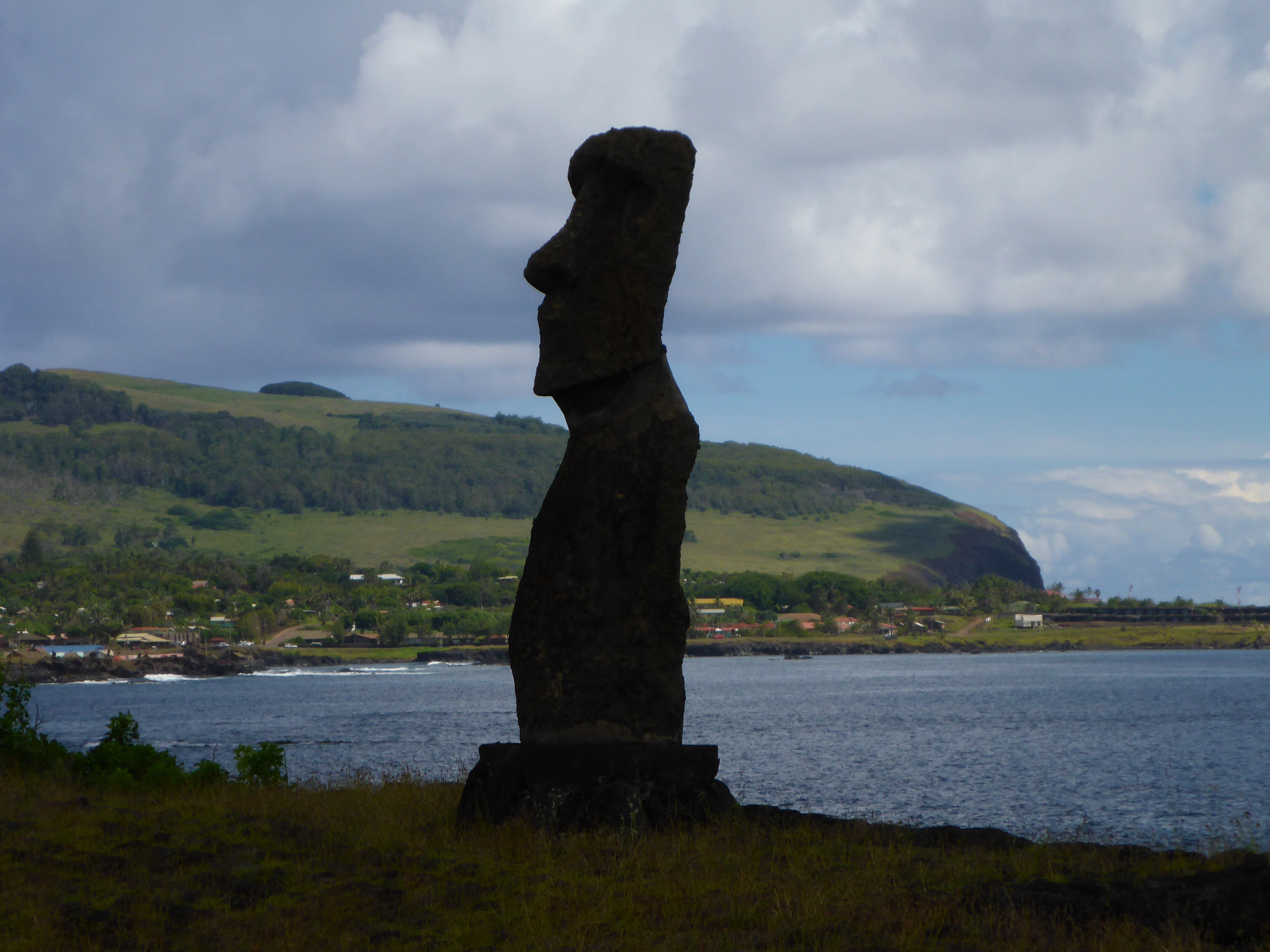
While Anthony rests with an ice pack on his ankle, I set off exploring for the next two and a half hours. First stop is the most beautiful cemetery, across the road from our hostal. The stone and wood carvings and offerings left at each tombstone are exquisite. Somehow, this cemetery feels alive, not forgotten like so many. I then walk over to Tahai, an ahu (platform or ceremonial shrine) with 7 moai (stone statues). My first up close ‘contact’ with a moai!!! Like most on the island, they face inland, their role being to protect the Rapa Nui People. Tahai has an original ahu with 5 moais remaining and a couple of single separate moais but the buildings have been reconscructed for us visitors for educational purposes. Those moais have an incredible presence. I continue along the coast for another hour. There is no one apart from several wild horses gently grazing and one local fisherman who pops out of the rocks I am standing beside as I looked out to sea, up from the beach below me. We have a quick ‘chat’ and each continue on our way. The tropical heavens open briefly, I get drenched, I am in paradise. After the rain, the lighting is stunning.
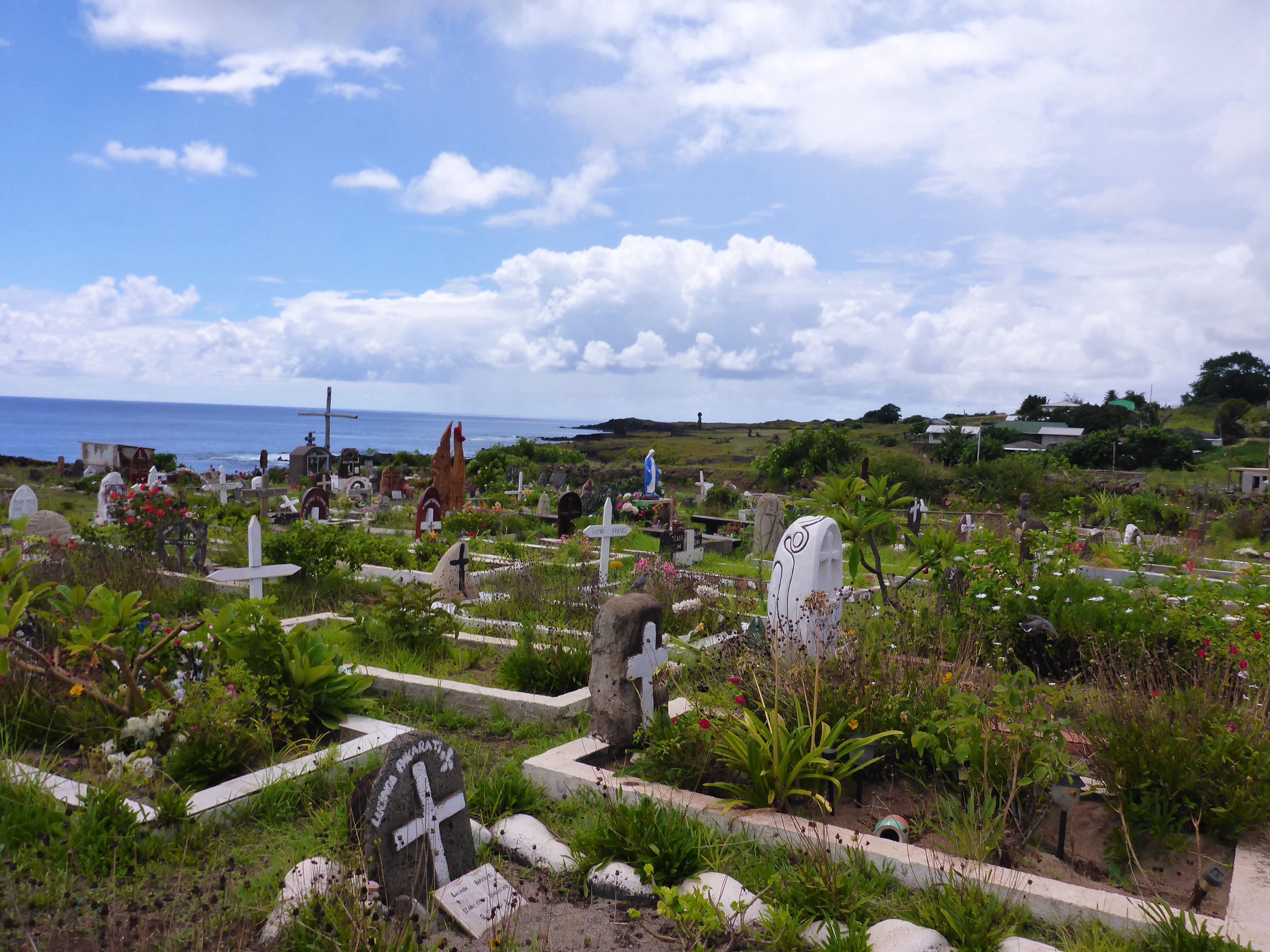
Hanga Roa cemetery
Hanga Roa cemetery


Ahu Tahai, Hanga Roa
Ahu Tahai, Hanga Roa

Tahai moai

Tahai moai
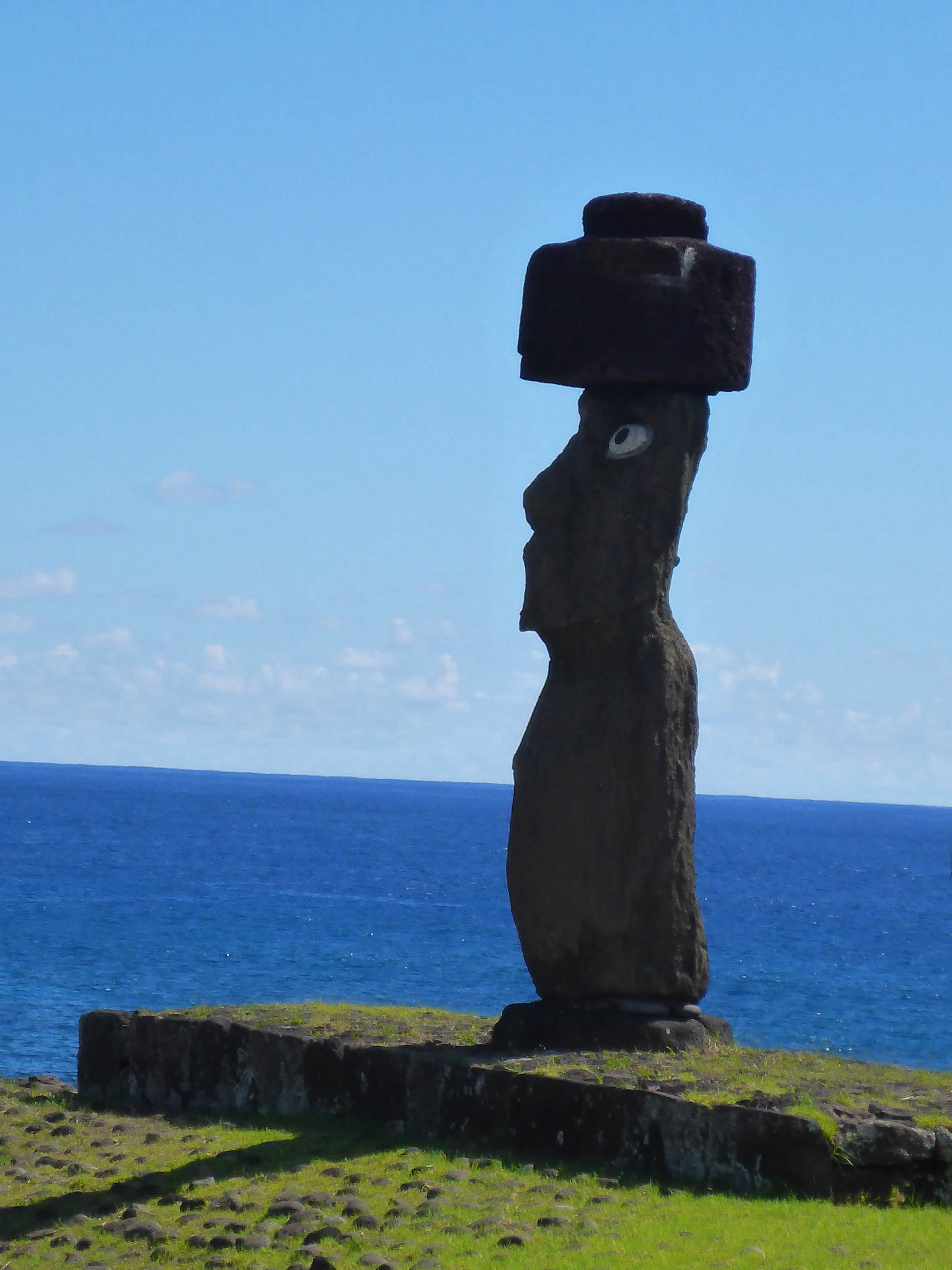

Tahai

Tahai


Vai Uri Moai (the eyes are not original)
Vai Uri Moai (the eyes are not original)


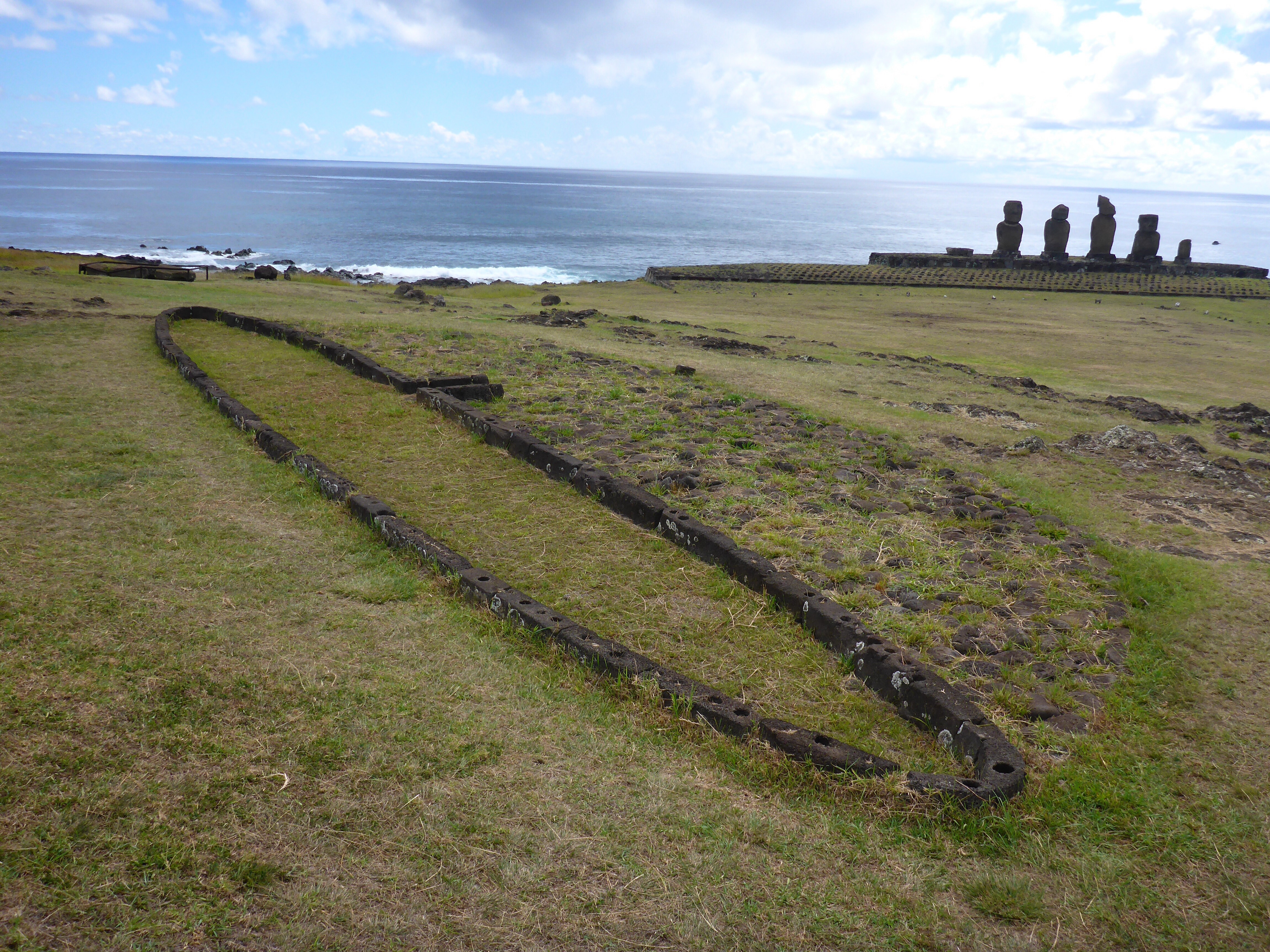
Ahu Tahai with a house foundation in the foreground
Ahu Tahai with a house foundation in the foreground


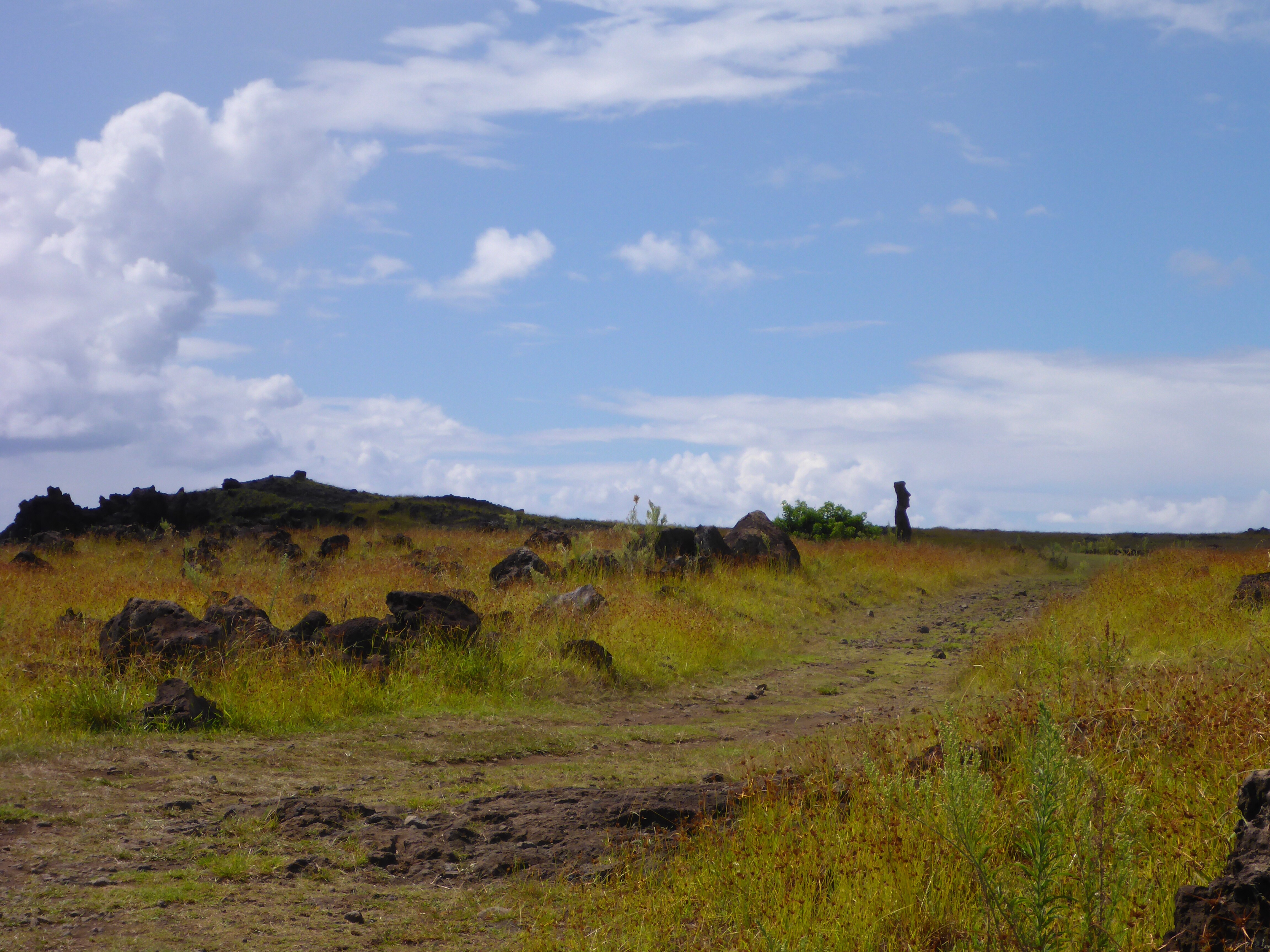
Walking towards Te Ihu O Motu Pare

Walking towards Te Ihu O Motu Pare

Before returning to our cabin, I check out a few restaurants close to us for dinner which Anthony could walk to.

Outside my selected restaurant, we bump into Mary from Minneapolis who was behind us at the Airport in Santiago. We chat, find out that her host has given her all sorts of incorrect information (the weekly dance show she wanted to go to next to the restaurant isn’t on this evening but tomorrow and the sculptures behind us are not original but replicas – a good reminder for anyone coming here to do some research to find a knowledgeable guide!). We invite her to join us for dinner as she is on her own. We have a great view, one level up, across the sculpture park to the ocean. As the sun sets, we hear lots of barking dogs: about 6 dogs are chasing 2 horses, the dogs are running around frantically while the horses slowly move away. Eventually, the dogs lose interest. The sunset is stunning.
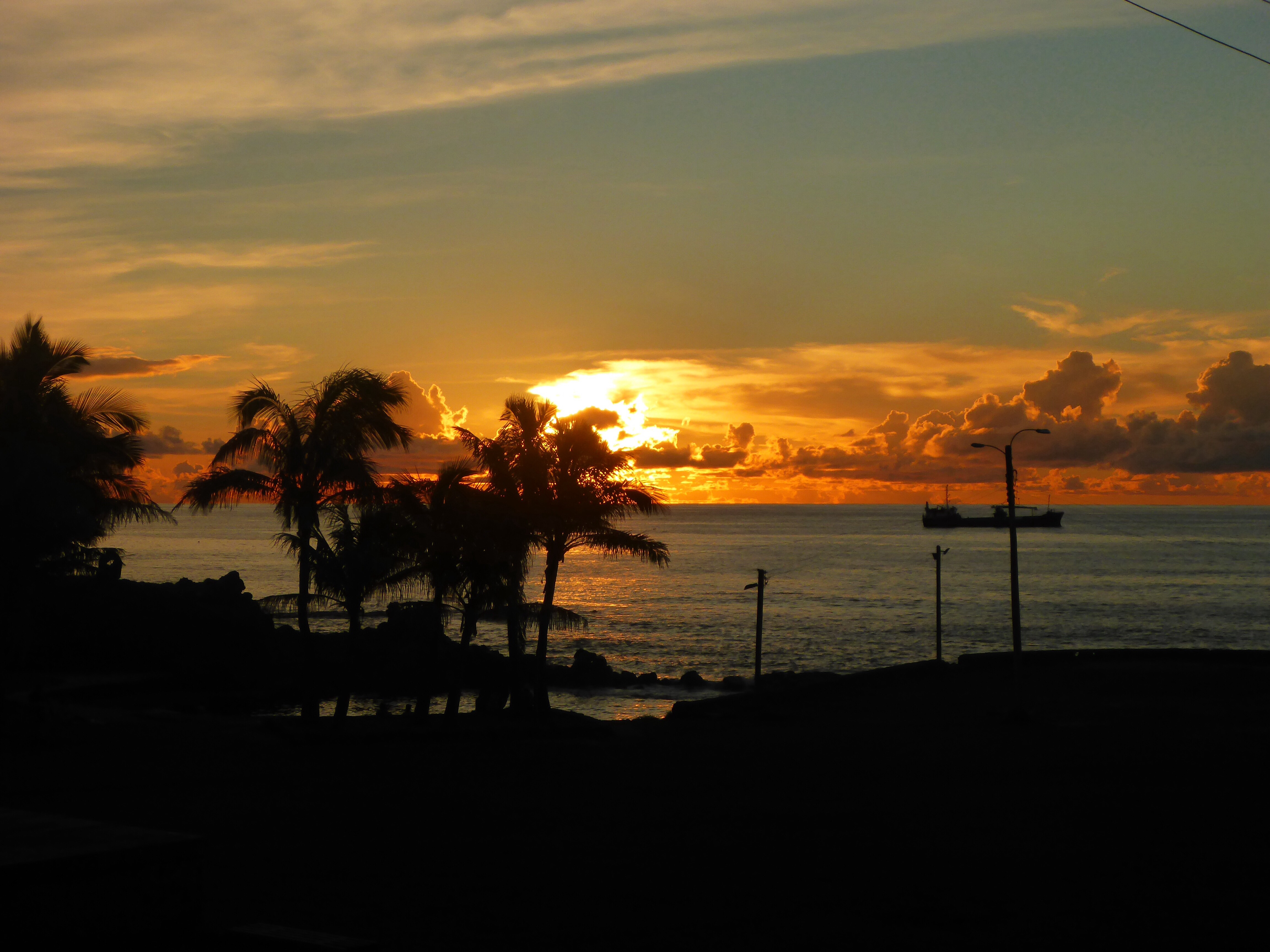
Sunset at Hanga Roa

Sunset at Hanga Roa

After a lovely evening, a pisco sour for me (a South American cocktail) and locally brewed pale Ale for Anthony and delicious dinner, we return to our home, past the cemetery: even at night it is beautiful as many graves have solar powered candles.
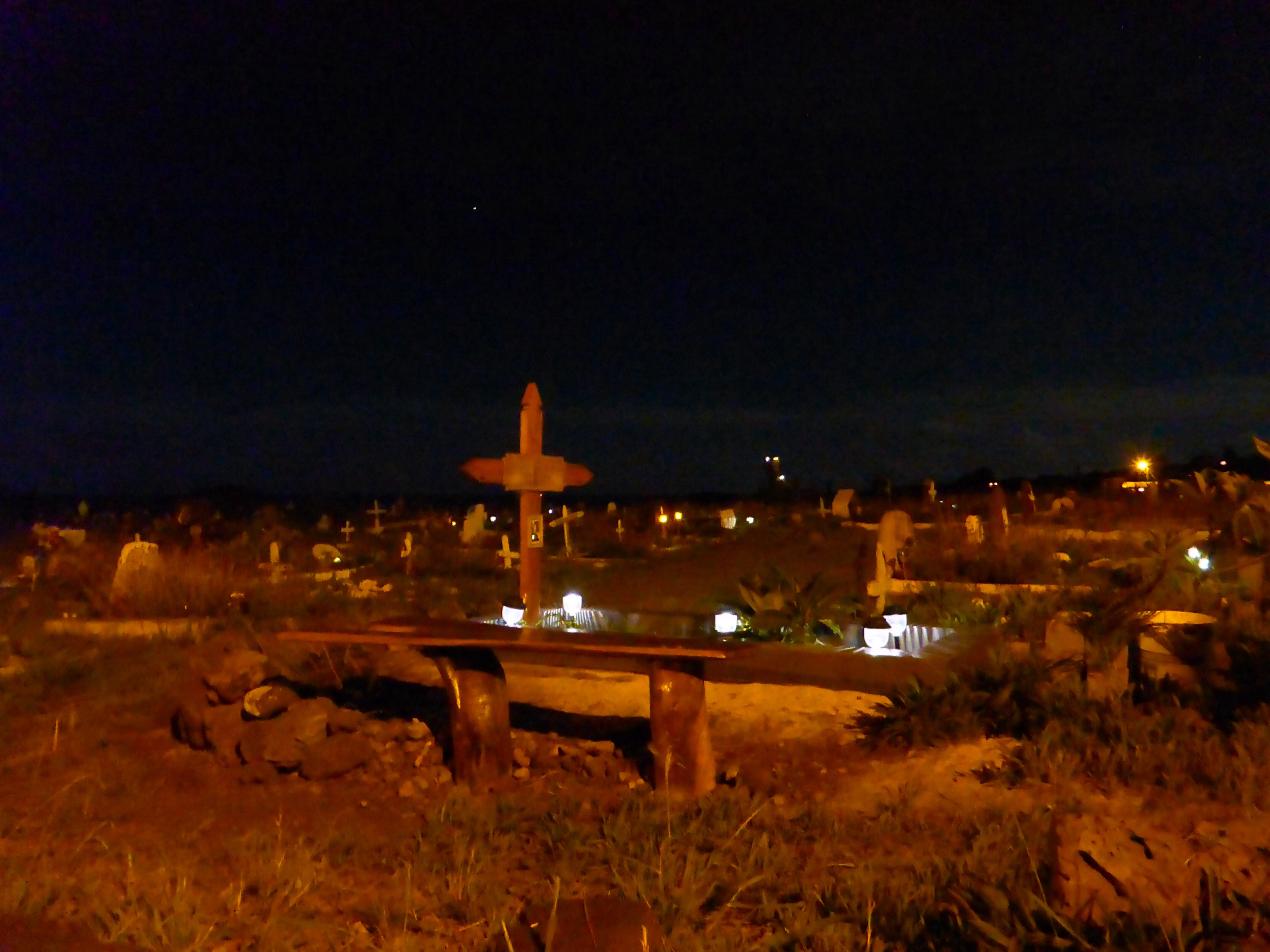
Hanga Roa cemetery at night

Hanga Roa cemetery at night

The next few hours are spent downloading my new photos to my iPad, captioning the photos from our trip south which I had already uploaded to our blog site last night in Santiago (and 45′ to upload one missing photo) for Anthony’s posts – we are so far behind in our blog!!

We have only spent one afternoon and evening here so far, but it feels like so much longer. What a day!!! Tomorrow, China will give us a half day tour – we decided it best to have short tours in the morning so that Anthony doesn’t over do it. Due to the swelling in his foot, he needs to spend as much time with his leg up as possible.

– Anne

A different kind of day….

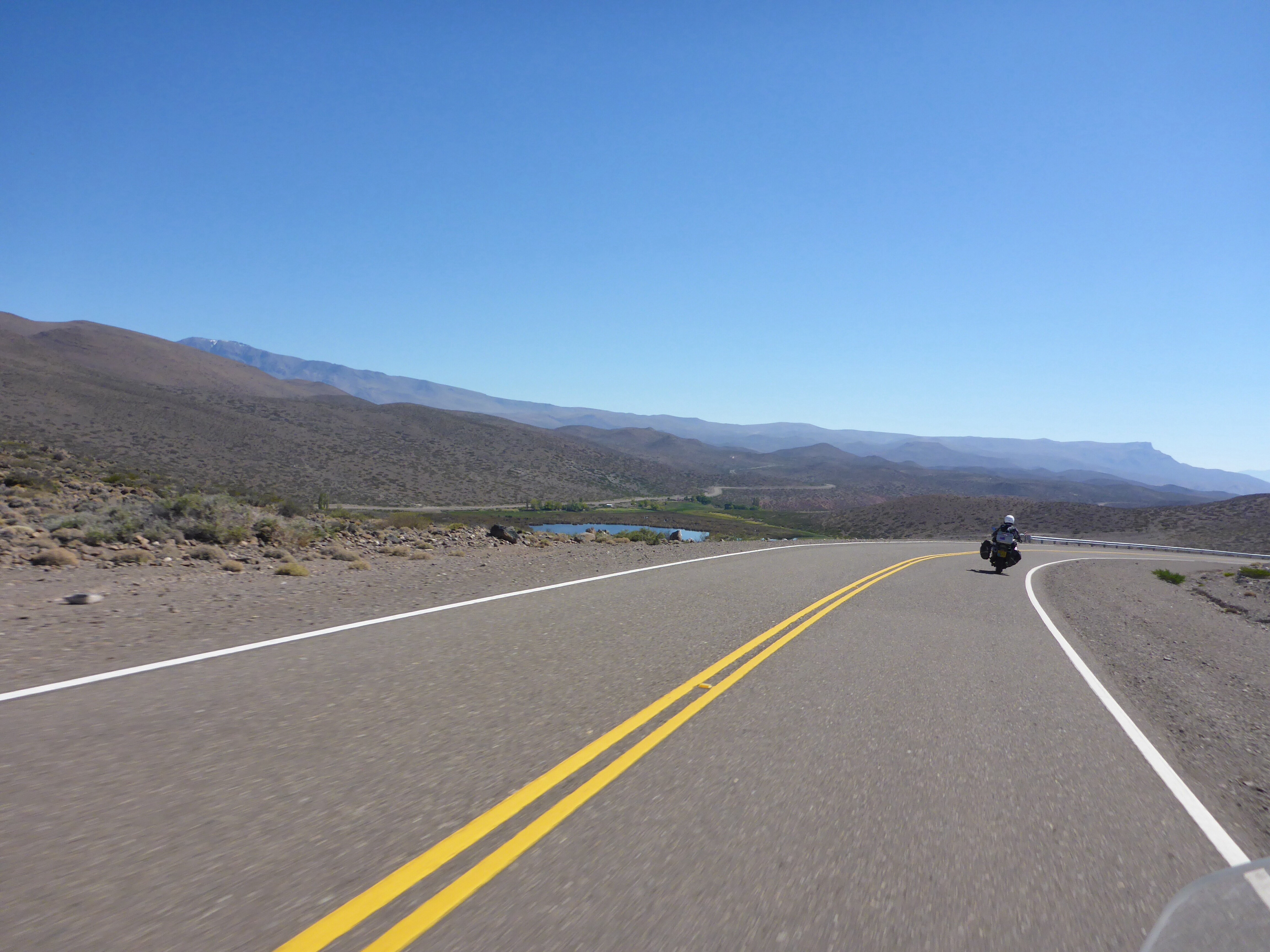
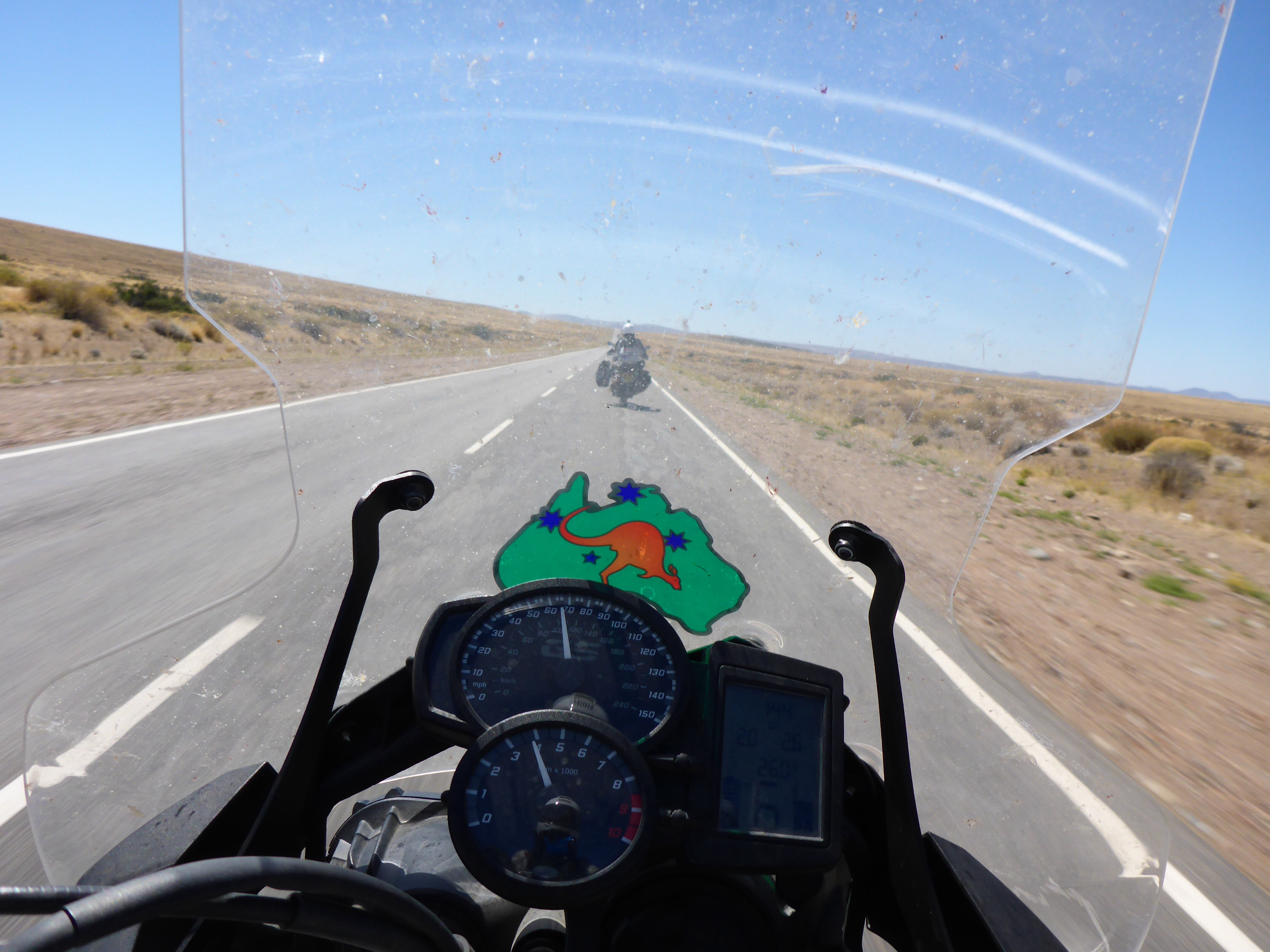
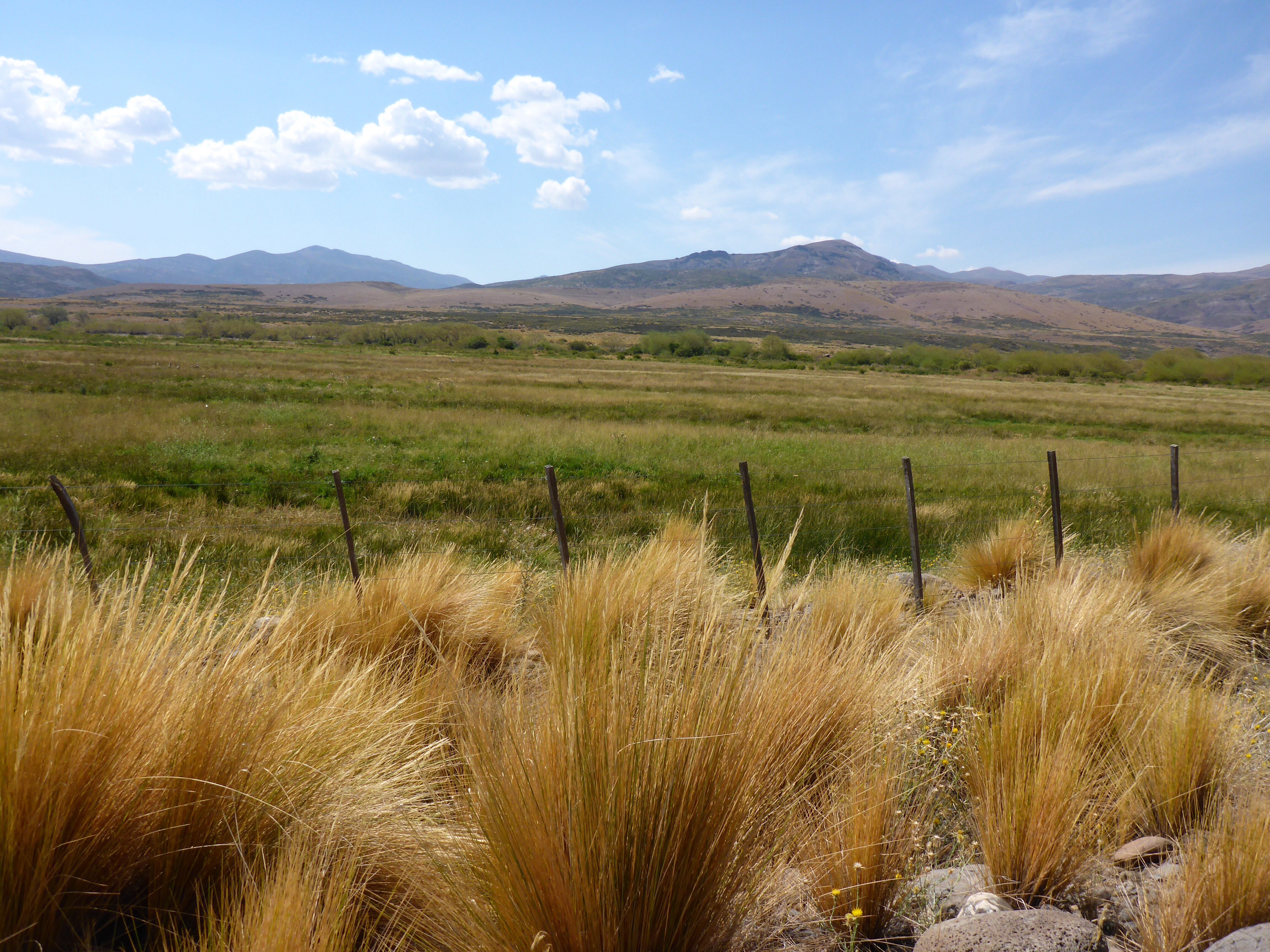
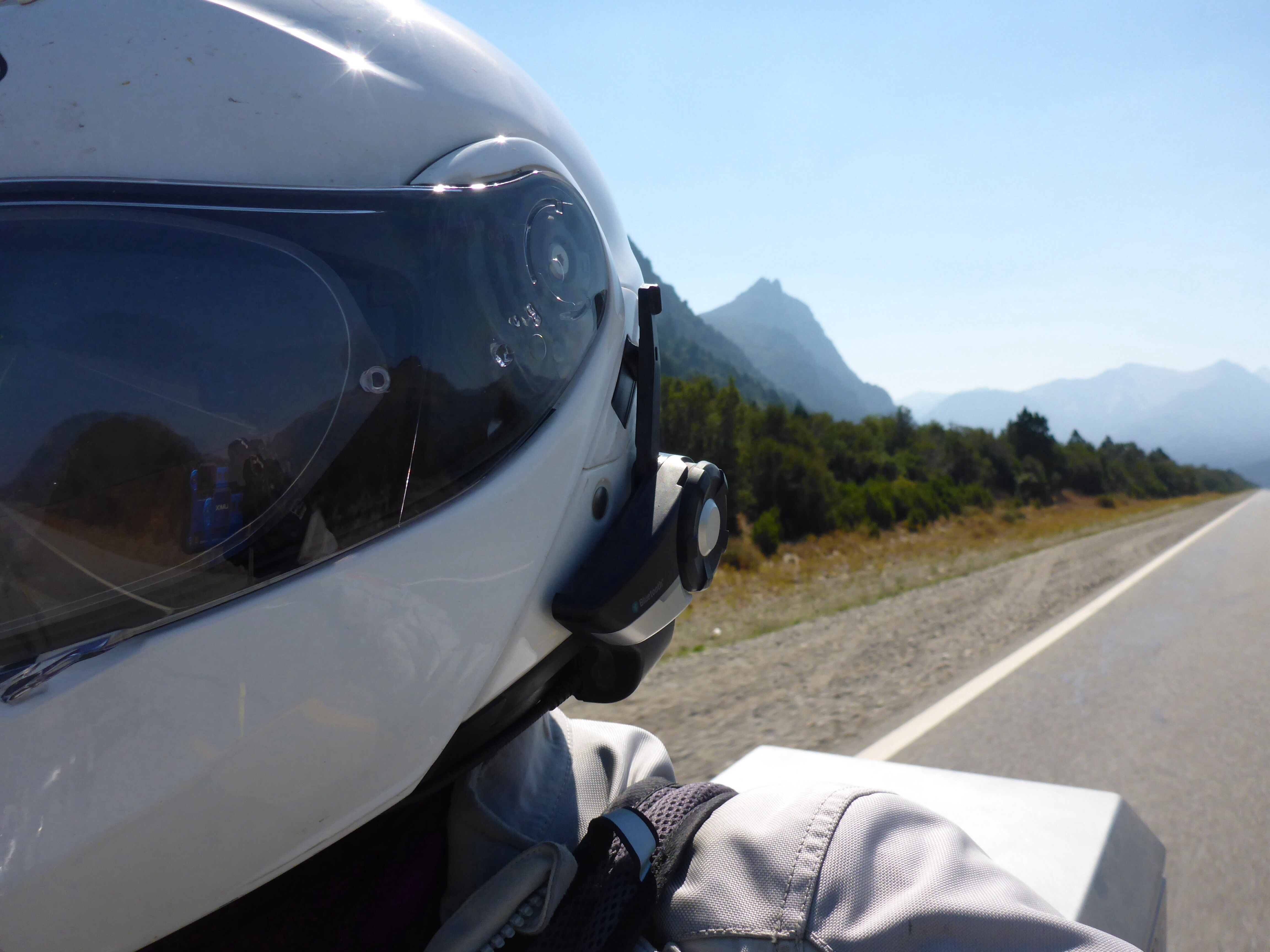
Today we need to cover many kilometres and an early start is called for, well early by local standards where hotel breakfasts do not start till 08:00. We leave Chos Malal heading northwards on Ruta 40, which is a 3,500km road running the length of Argentina along the eastern edge of the Andes. Our destination is San Rafael, some 550km up the road, which is well above our 350km per day average. With our departure for Easter Island rapidly approaching we need to ensure we are back in Santiago by the 3rd and have some 1,200km to cover via Mendoza, our planned route. The road is perfect, smooth tar swings right and left, up and down. It is a pleasure to ride, the road goes to all points of the compass literally as it snakes around hills and mountains, crosses broad plains and passes under the watchful eyes of volcanoes whose rock and snow colouring reminds me of the bald eagle who also would be looking down from above surveying their world as the volcanoes do.

Along Ruta 40, a geologist's paradise and great bike riding road

Along Ruta 40, a geologist’s paradise and great bike riding road

Ruta 40 towards San Raphael is a fabulous riding road - why so few people and no bikes??

Ruta 40 towards San Raphael is a fabulous riding road – why so few people and no bikes??

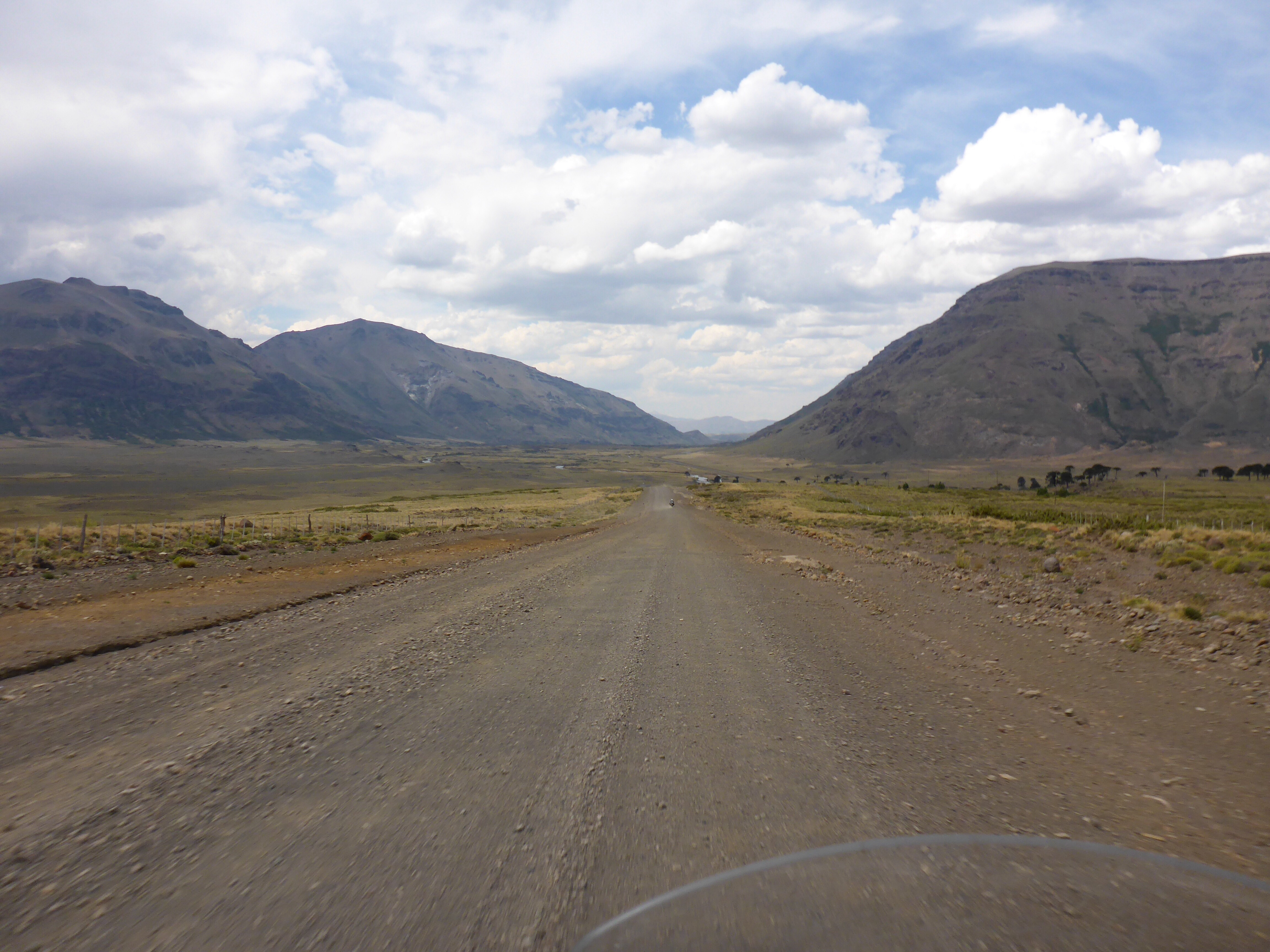
We make good time, the road is free of traffic and we are enjoying the ride in beautiful and spectacular scenery: what more could you ask for, absolutely nothing from a rider’s perspective. Then the road abruptly turns to dirt with a sign promising at least 40kms of the surface. We had thought that our 120kms on dirt yesterday was more than enough for a fews days, but no, we are to get more practice. As we carefully pick our way along the surface at slow but steady pace our interest in the scenery diminishes as we focus on the task at hand. This will impact our journey time considerably as we start to contemplate how this delay may require us to rethink our destination for the day.

Need a break, we now doubt we'll make St Raphael tonight

Need a break, we now doubt we’ll make St Raphael tonight


After some 30 kilometres ahead is a car stopped with the bonnet/hood up heading in same direction. We pull over to find an English couple, Mitch and Mary whose hire car bash plate has lost the front bolts. They are attempting to secure it with string, and while I can offer no additional skills or advice, Anne remembers we have a packet of cable ties and we offer them a couple to fix the problem. I notice we have not opened the packet in seven months on the road and it contains 50! We can definitely spare a couple. They set off ahead of us on the dirt and we meet again at a bridge where the river has cut through the lava flow creating an interesting small gorge. They offer us some of their sandwiches and tomatoes plus half and apple with makes a great change from tinned tuna and dried biscuits. They are retired doctors and enjoying a couple of months in Argentina and Chile. Cleverly they spent time in Spain to improve their Spanish before undertaking this tri.
Mitch and Mary offer us some of their sandwiches

Mitch and Mary offer us some of their sandwiches

Lava canyon on our way to Las Loicas, Argentinia

Lava canyon on our way to Las Loicas, Argentinia


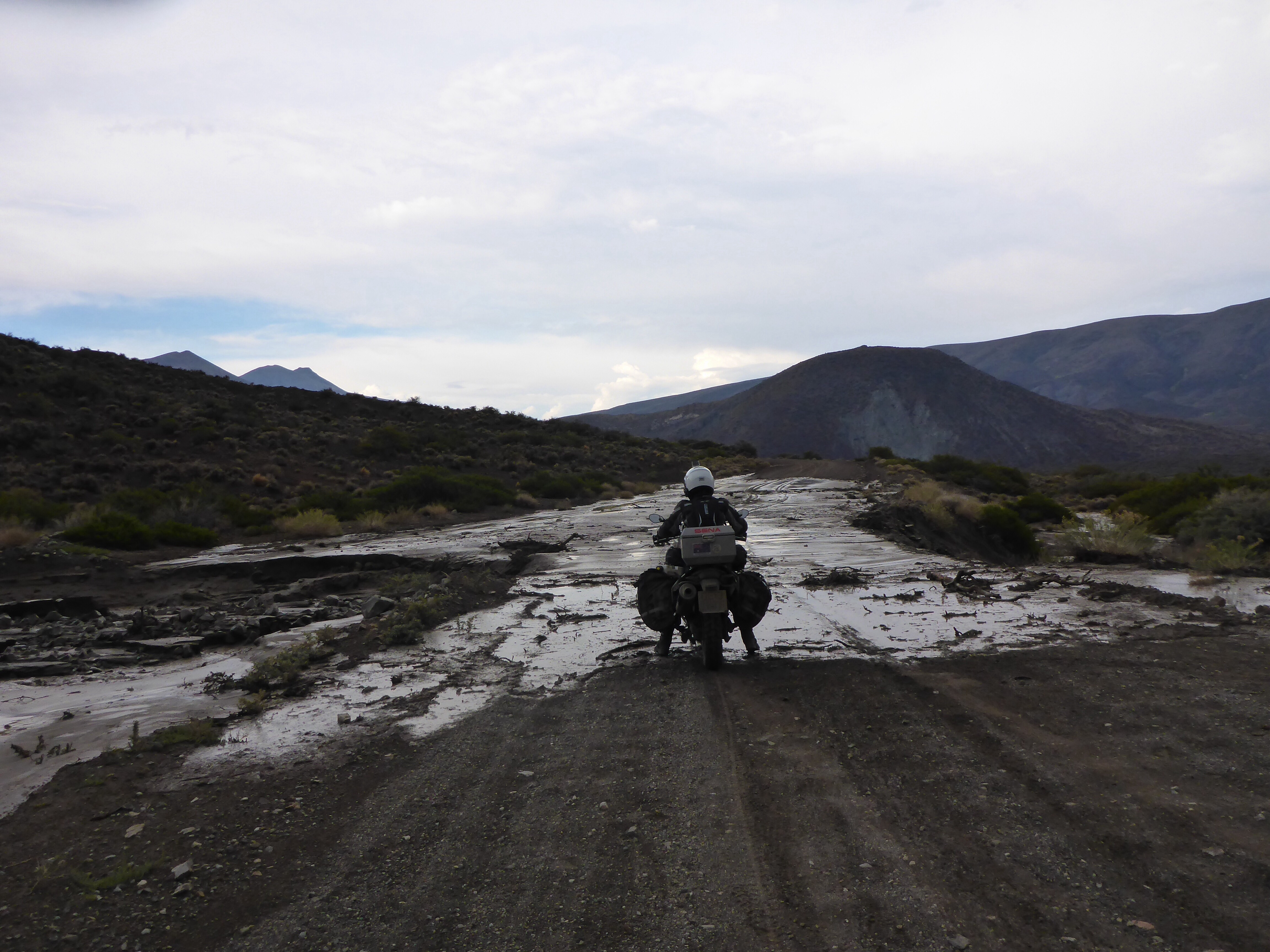
We cross the bridge after lunch and are back on tar, this however is potholed and in places has been returned to dirt and gravel. Lack of road maintenance makes me wonder when this stretch will be returned to dirt when then potholes, which show no sign of repair, become too numerous. As always as you have a thought, such as poor road maintenance, around the next corner there is a new road being constructed. As we navigate the track alongside the new smooth, but un-tarred surface our thoughts of driving there are extinguished by the huge gaps where culverts are being dug! We are directed up onto the road under construction which has some tar and some areas with gravel. We are doing ok, then surface changes to loose rejects from the prehistoric golf ball factory dug up by Fred Flintstone. I run into this at 50km per hour, fine on normal gravel, but after a few seconds I am into a massive tank slapper, handle bars alternately right and left, then BANG, I am down, the bike crushes my left ankle as my left side hits the ground. The bike and I end up facing backwards having done a 180 degree spin. Anne stops and while I am saying I am ok, Anne urges me to stay down, as I have a tendency to leap up after motorcycle accidents regardless (December 2012) then silence reigns except for the snapping of Anne’s camera shutter recording the event, just for you the blog readers of course.
Damned Ruta 40!  This surface feels like ball bearings and is treacherous

Damned Ruta 40! This surface feels like ball bearings and is treacherous


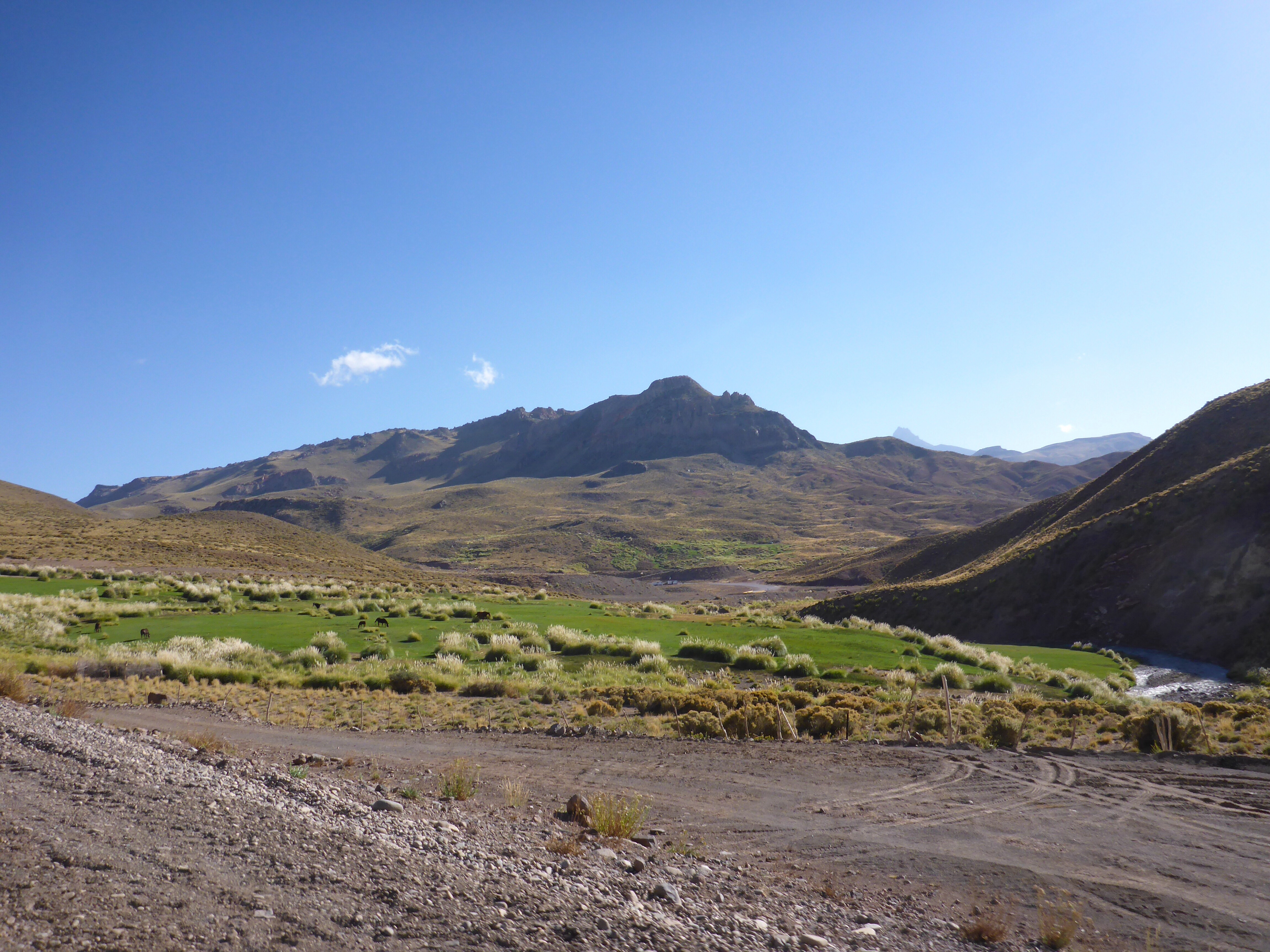
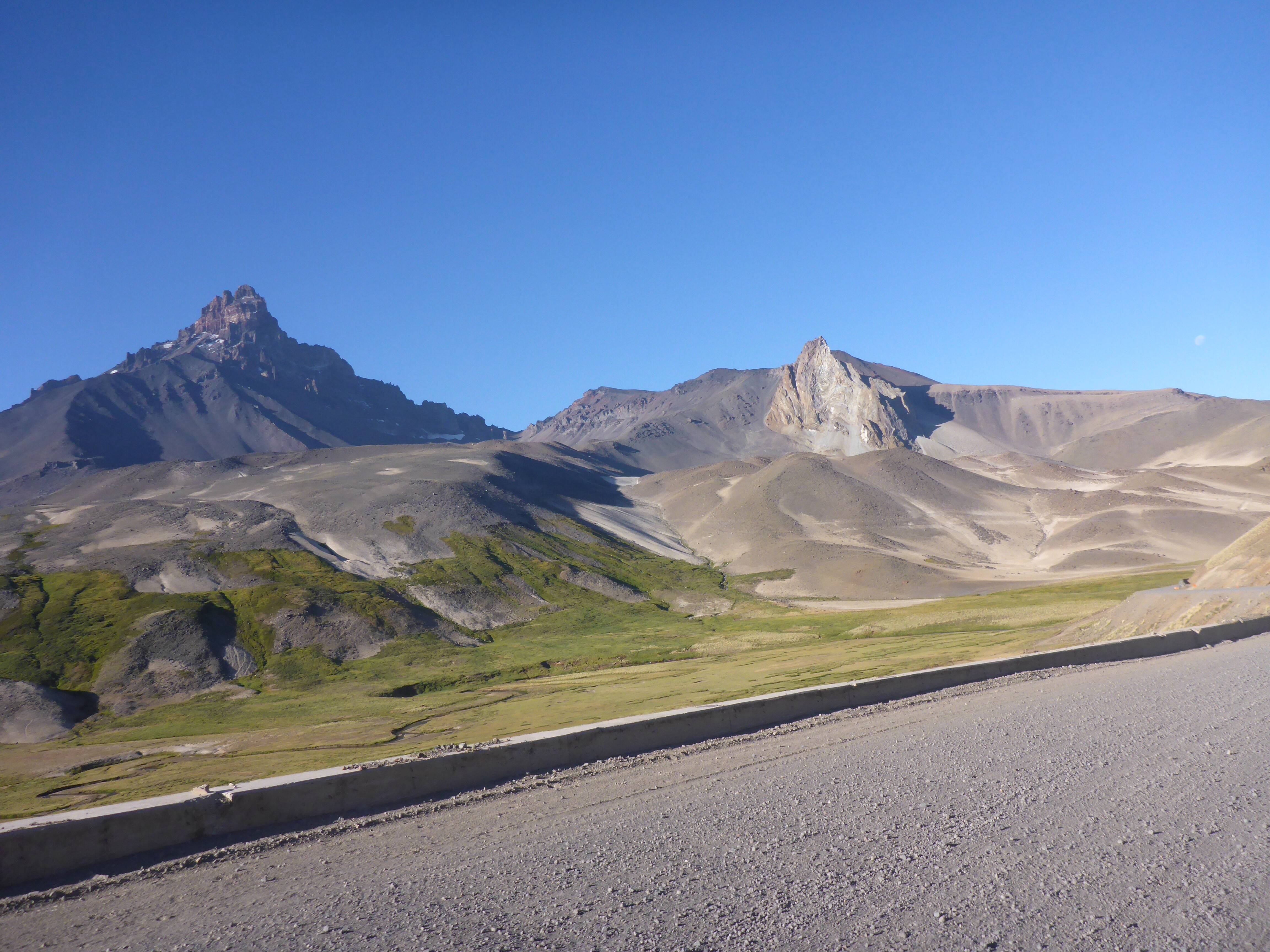
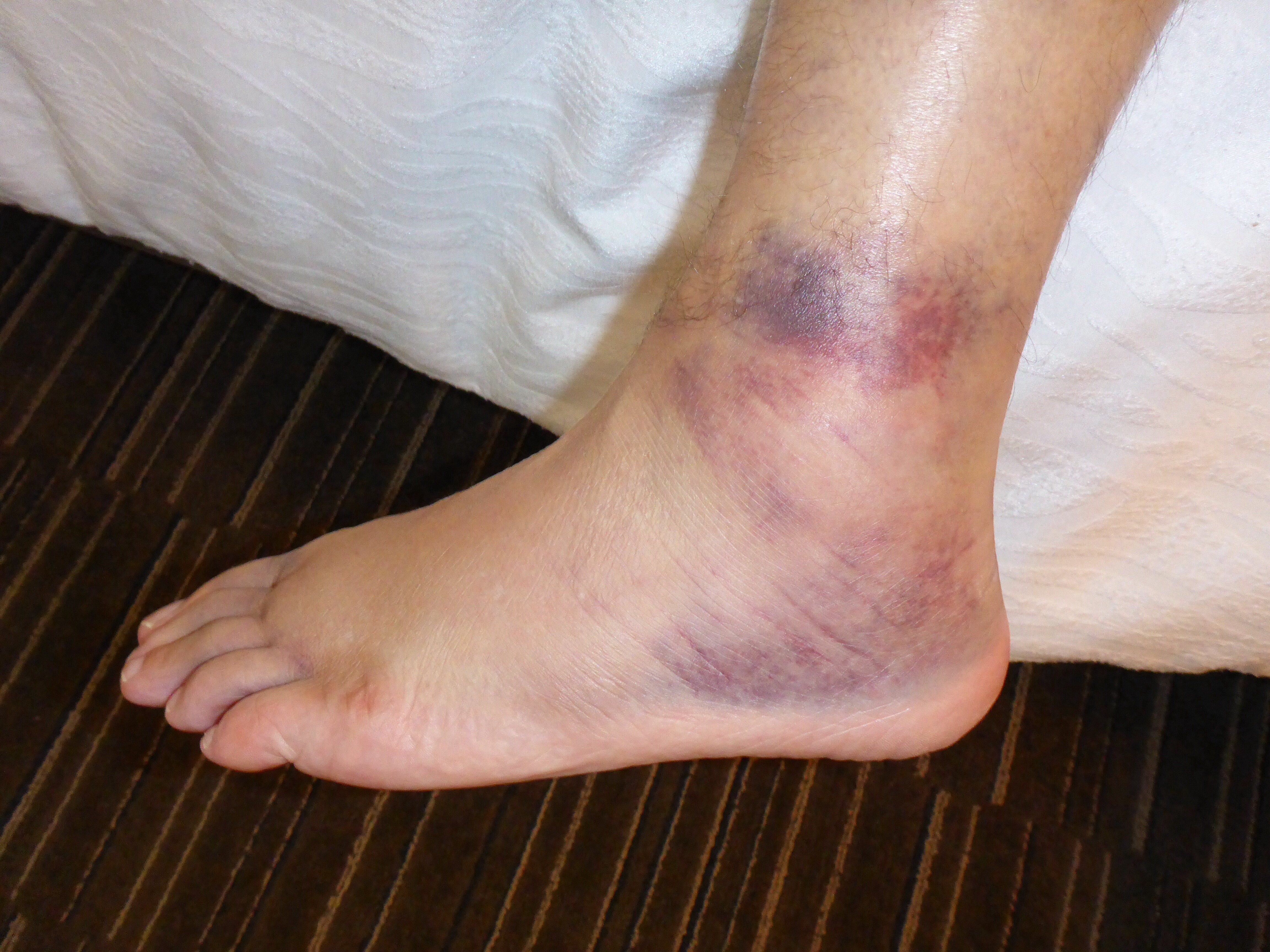
As usual adrenaline kicks in and apart from the sharp pain in my ankle I feel fine, standing is a different proposition but I can put some weight on my left leg. The blow from the bike is in almost the identical place to where I broke a non weight bearing bone in my leg some six years previously by, yes you guessed it, dropping a BMW motorcycle on it. I now sit at the side of the road, having been told by Anne to sit yet again as we wait for the two doctors to catch us up. When they arrive, I realise I have no UK National Health Card on me, so they probably will not treat me. They provide good advice, don’t take my boot off as it is providing support and restricting the swelling which I can now feel happening. A local pickup slows as Anne flags it down, but does not stop to help which we find surprising. That would never happen in the Australian bush. Anne and Mitch get my bike up, undamaged apart from the windscreen that has split in two. A plan is devised to see when the tarred surface starts, which turns out to be around the next corner, just a kilometre away, so close yet so far. Anne bravely takes both bikes to the start of the tar. We decide that an X-ray for my ankle is the next priority. I can ride but gear changes are a pain, literally. We decide to head back into Chile and the city of Talca some 200+ kilometres away which will have better medical facilities. We start to climb eastwards up into the Andes, such spectacular scenery. I am limiting my gear changes as they have become progressively more difficult to make as the leg swells. The border posts on both sides are some 40km apart so we complete the Argentine side and then ride up a gravel road, again, towards the summit with the most spectacular scenery. One could spend days here, maybe horseback is the way to see this area as they are slower and more sure footed than bicycles. We reach the top of the Pehuenche pass at 2,553 meters and begin an equally spectacular decent, but on tar roads. We have found over the years that roads leading to border crossings are a source of national pride and each country likes to show off with well built roads, such as in Chile’s case here, with the Argentine side still under construction.
The ride up to Paso Pehuenche from Las Loicas is  amazing

The ride up to Paso Pehuenche from Las Loicas is amazing

Riding up to Paso Pehuenche, the scenery changes at every corner

Riding up to Paso Pehuenche, the scenery changes at every corner


Looking back as we slowly climb up to Paso Pehuenche

Looking back as we slowly climb up to Paso Pehuenche

Another corner, another visual delight

Another corner, another visual delight

Still beautiful, pity about the ripio

Still beautiful, pity about the ripio

Now in no man's land where the valleys are dotted with small farms

Now in no man’s land where the valleys are dotted with small farms

More amazing rock formations, in no man's land

More amazing rock formations, in no man’s land

Another corner, another surprise

Another corner, another surprise

We wish we could just camp somewhere here but we have to press onto the Chilean border post

We wish we could just camp somewhere here but we have to press onto the Chilean border post


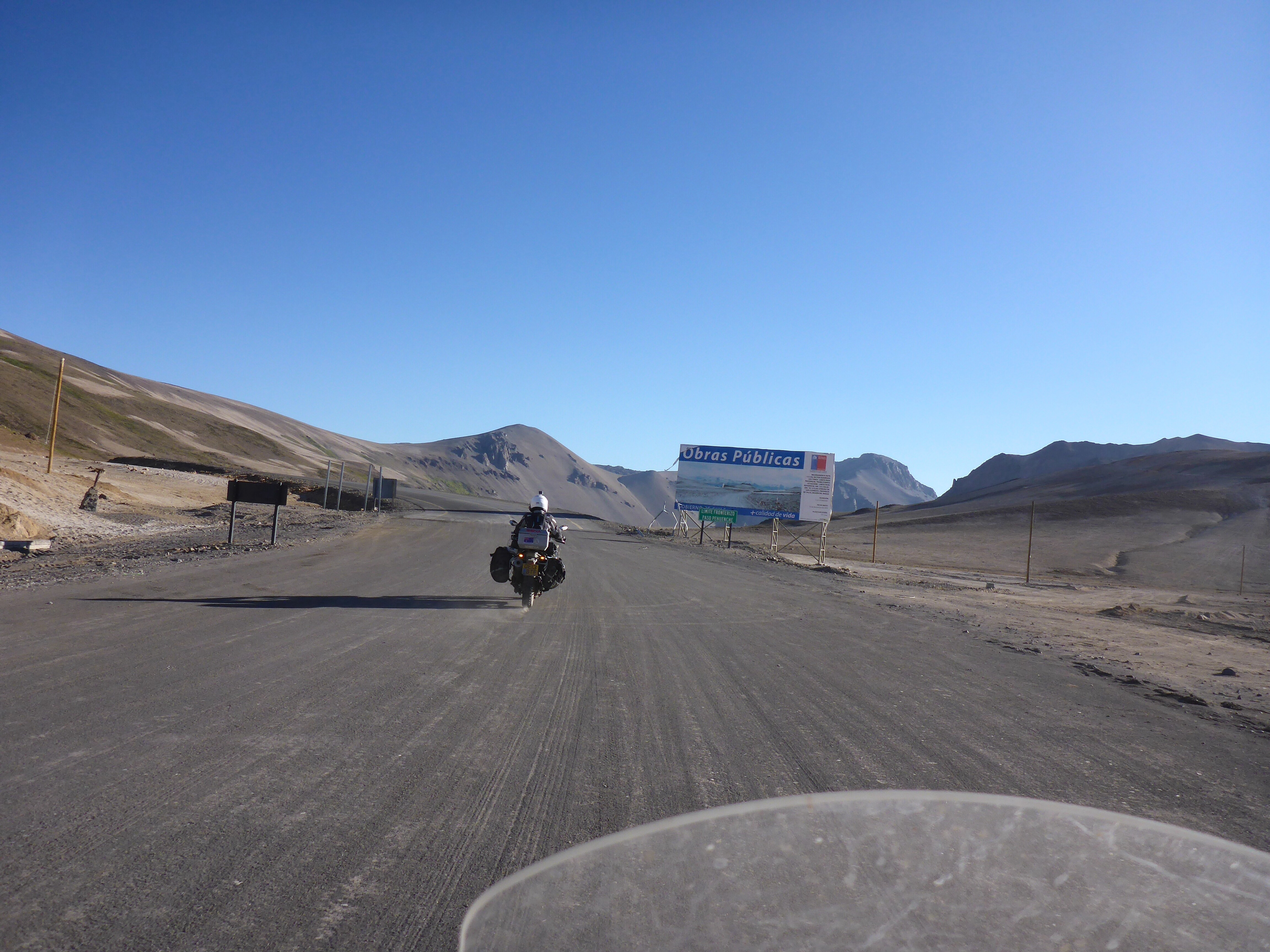
You can guess where the Argentinian/Chilean border at Paso Pehuenche is!!

You can guess where the Argentinian/Chilean border at Paso Pehuenche is!!


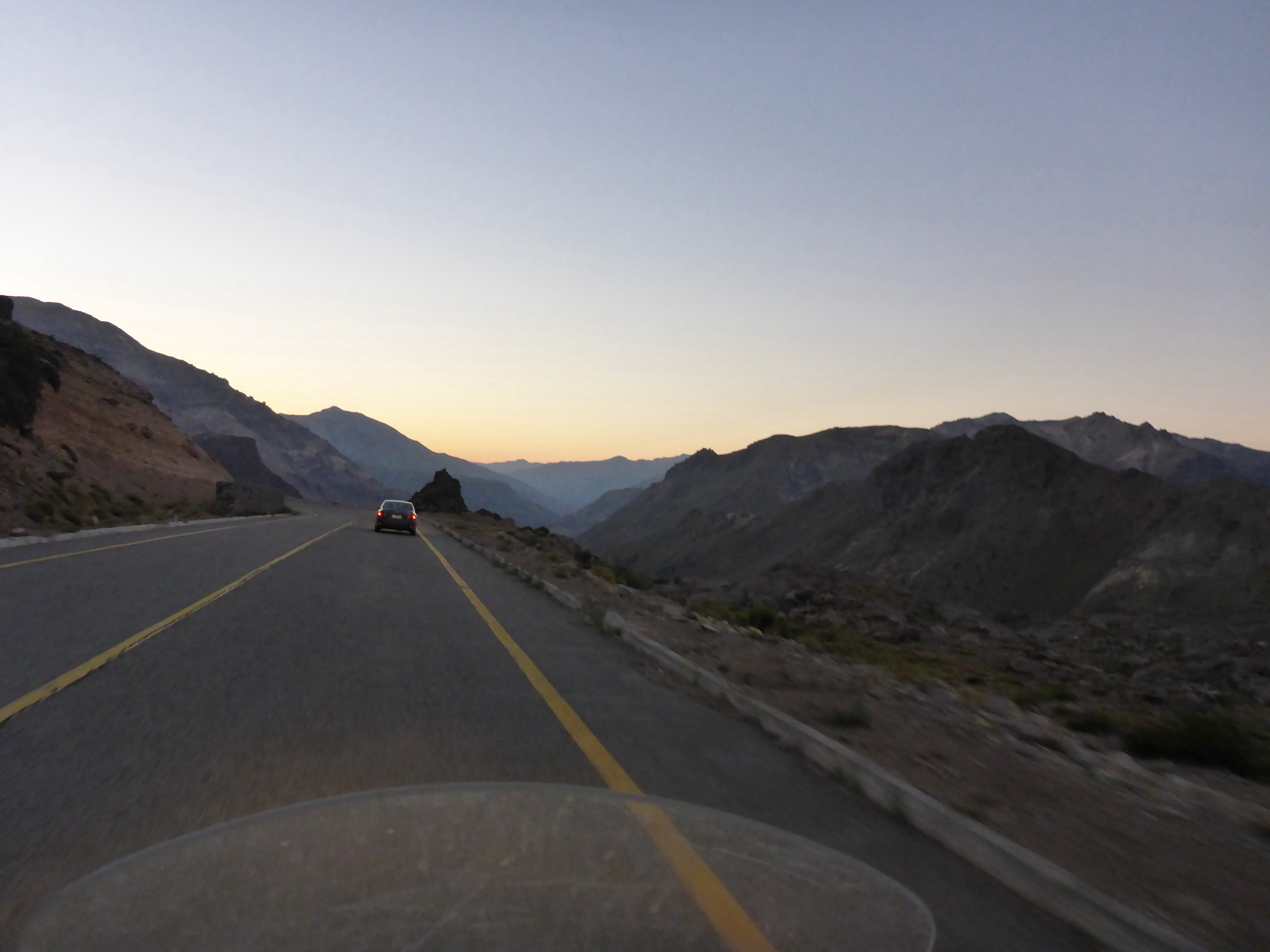
Our swift passage down the pass is stymied after 20 glorious kilometres at the Chilean customs and immigration post, firstly by arriving behind a coach load of tourists, then by the first officious immigration officer we have met in seven months of travelling. She first wants us to go back to Argentina, an 80 km round trip journey for some form we are supposed to have. Anne refuses as we are trying to get to a clinic for a leg X-ray. I am sitting on the floor to keep the weight off my ankle, but this does not improve her mood. Then a family of four from Talca; Ricardo, Marta, Diego and Monserrat offer their assistance in dealing with the immigration officer. They wait as we complete the paperwork. It is now 20:00 hours and the sun and temperature are going down fast, they offer to guide us to a medical clinic in Talca. Our strong preference is not to ride at night, but getting the X-ray done is a priority. We descend into the dusk seeing the last dying rays of the sun kiss the tips of the peaks behind us for a brief moment before they are gone, magical. We still have 125km to go and as darkness approaches at least the temperature warms up as we go from 13 degrees celsius to 23 degrees celsius as we descend over 2,000 meters in probably 15 to 20 minutes.
Finally through the Chilean border at 8pm, following our Chileans guides and the sun is fading fast

Finally through the Chilean border at 8pm, following our Chileans guides and the sun is fading fast

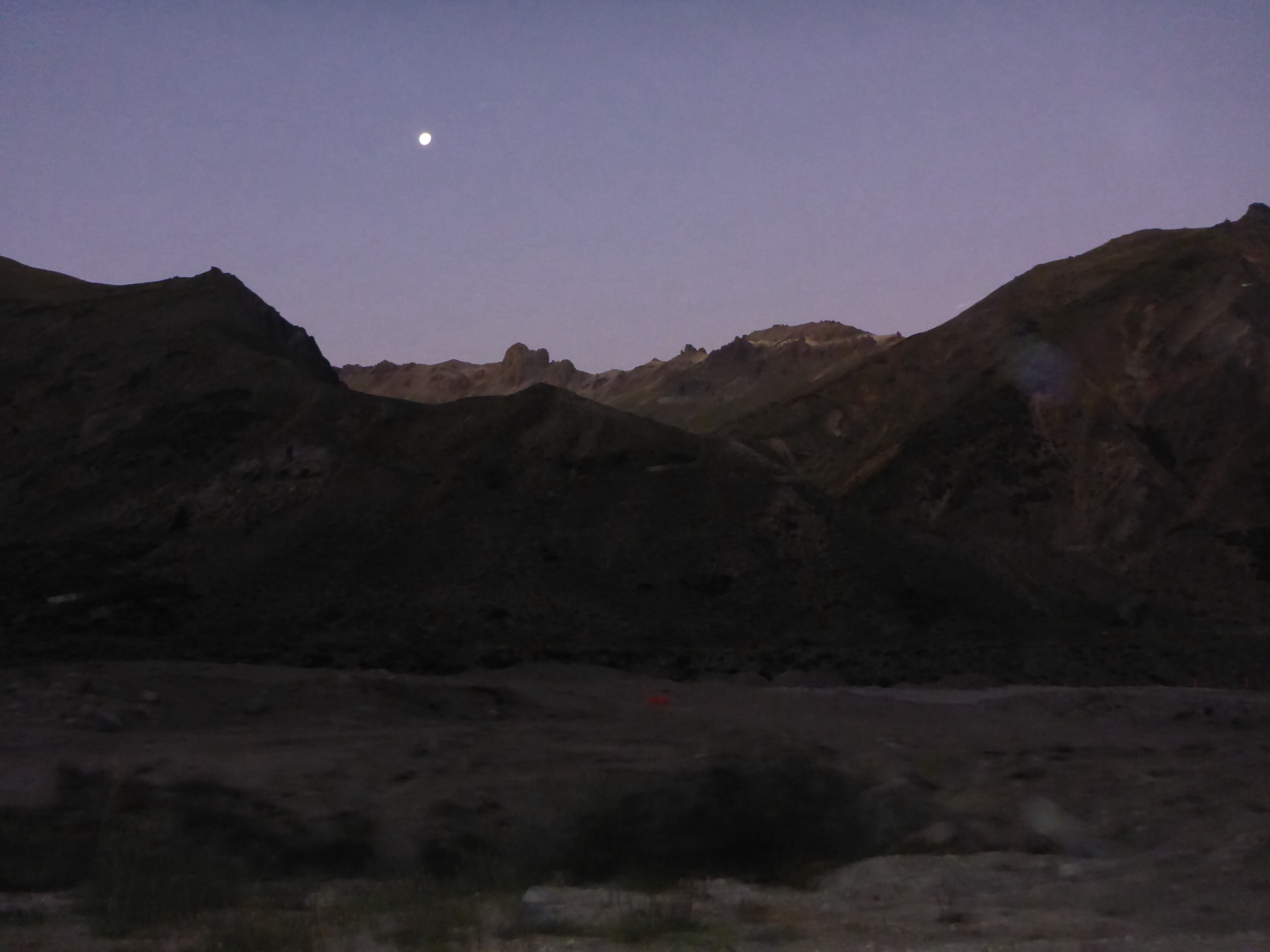
The moonlight is beautiful

The moonlight is beautiful


The risks of night riding are highlighted by a fox running just behind Anne’s bike, unlit pedestrians and cyclists appear at the roads edge as we get closer to Talca. We have also been travelling over 13 hours and we both know we need to concentrate hard for the last few kilometres. We have arrived at a clinic in the centre Talca, which are better than hospitals if you can pay I understand, it turns out to be couple of blocks from the hotel we planned to stay at.

I park my bike and am greeted by a kindly wheelchair operator which is pushed back over uneven ground with me as a passenger, scariest part of the day, but we avoid an accident. Is this how the clinic gains business?

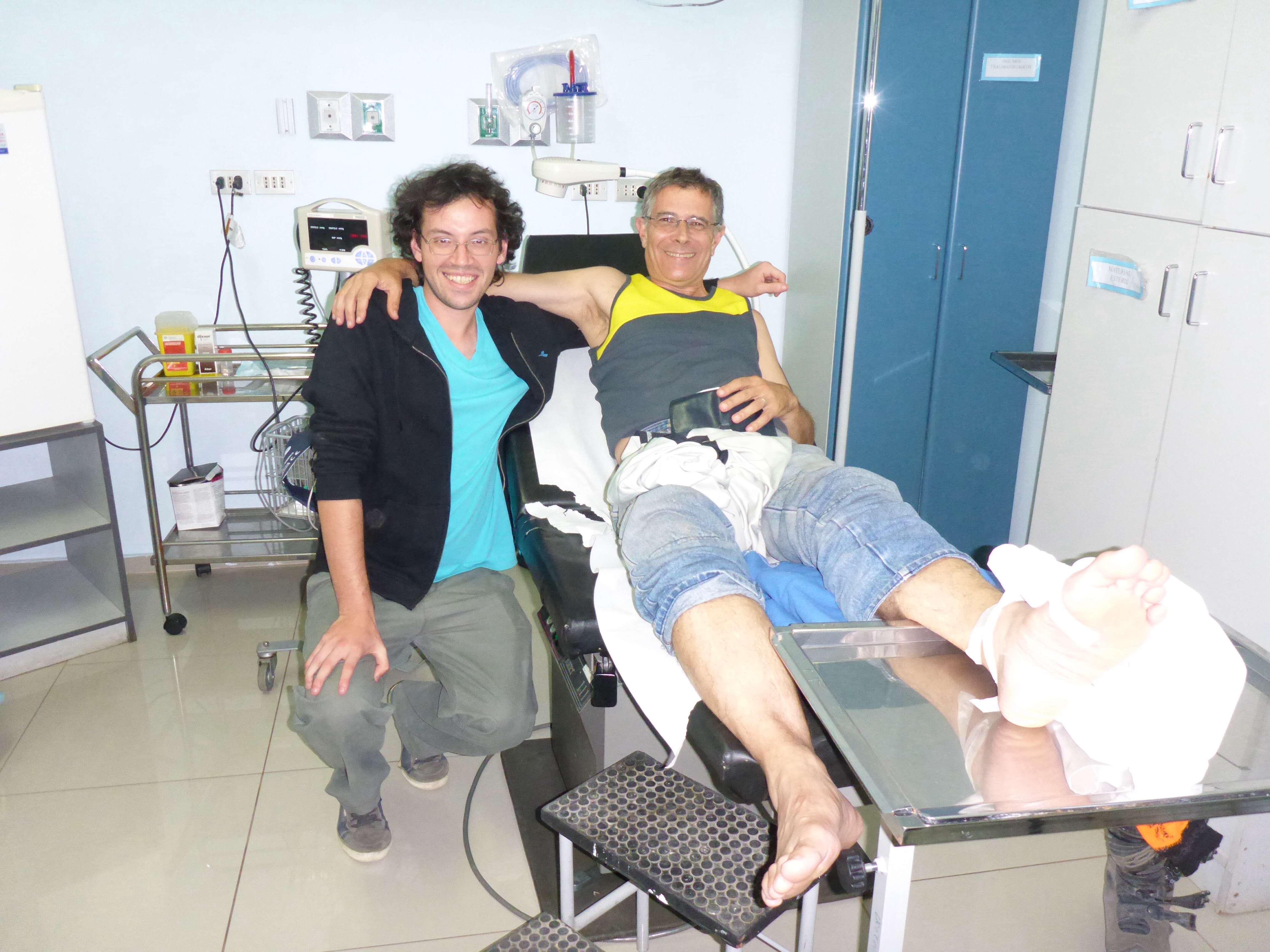
Diego is Anthony's interpreter at the clinic

Diego is Anthony’s interpreter at the clinic


They are quick and efficient and want to X-ray me from top to toe, but I am able to convince them via Diego’s excellent translation that the ankle is the only area of concern. They even offer an intravenous drip with pain killer. An interesting proposition but the pain is not enough to justify such medication, although it might be fun. Good news!….. The X-ray reveals no new breaks, just the old one. Ice, elevated leg rest and anti inflammatories are the order for the day. We can stop thinking of the alternative travel plans. Anne has to ride both bikes to the hotel, with the help of our new friends who have waited at the clinic all this time in case we needed anything. They had even offered us a place to stay for the night as well. Human kindness abounds in this world and we are fortunate to be recipients of it.
Anthony's sore and swollen ankle - red and blue all around

Anthony’s sore and swollen ankle – red and blue all around

Diego, Ricardo, Marta and Monserrat - a beautiful family guided us to the clinic in Talca

Diego, Ricardo, Marta and Monserrat – a beautiful family guided us to the clinic in Talca

13 hours, 480 km, 80 of them on ripio (and washouts, loose gravel, soft sand & deep pre-historic golf balls), a motorcycle accident, border crossing, a clinic visit with X-ray and making new friends, we fall into bed after a different kind of day….

– Anthony

Finally heading North

We arrived in Santiago some 2 weeks or so ago with plans to head north through the Americas for New York. Here we are some 1,500 kilometres south of our intended departure point! Just goes to show, you need good geography and some flexibility when undertaking a trip of this nature. We have decided that we will run back mostly up Ruta 40 to Mendoza then across the Andes to Santiago by the third of March. Long days riding will be required but we have built in a spare day into our calculations for any unseen incidents.

San Carlos de Bariloche in the morning from our hotel

San Carlos de Bariloche in the morning from our hotel

Leaving San Carlos de Bariloche

Leaving San Carlos de Bariloche

The open road beckons and we are off, our route will take us away from the Andes heading for Zapala and beyond if possible today. Refuelled, we leave Bariloche behind and soon find ourselves running parallel the Rio Limay, the river that runs from the lake at Bariloche into the Rio Negro and the waters then flow in the South Atlantic Ocean.

Rio Limay an hour out of Bariloche on the RN 37

Rio Limay an hour out of Bariloche on the RN 37

As we watch large inflatable rafts negotiate very gentle rapids, I muse that drifting lazily down this gentle looking river on a large raft for a few days could be a very pleasant experience and one I would enjoy. For another time perhaps.

Confluence of the Rio Limay and Rio Traful

Confluence of the Rio Limay and Rio Traful

Onwards we press and as we leave the river behind and swing north we are exposed to a strong and persistent gusty headwinds.

Heading towards Zapala on the RP47, battling strong head winds

Heading towards Zapala on the RP47, battling strong head winds

Both our higher screen and Cape Town riding experiences stand us in good stead as we are constantly buffeted about. For those of you not familiar with Cape Towns weather, strong winds from the Antarctic blast the city on a regular basis. We spent a couple of years living there and our follower(s) from Cape Town can comment further, as I presume that coming out of the city at hospital bend where two freeways cross and Table mountain’s protection finishes is still as interesting as ever.

We average about 400km per 16 litres of fuel and this has been pretty consistent throughout the trip. Usually we average higher if our speed is a little slower than 100 kph / 60 mph. Fuel stops are few and far between, plus Zapala is only 375km from Bariloche. My low fuel warning light comes on while we are about 50km from Zapala with Anne’s warning light following a few kilometres later. This is the first time this has happened to us. I recall that this means about two litres reserve left, the manual states 2.7l, so about 50 to 60km if we ease off a little. Anne gets four kilometres before the bike starts stuttering, a little recalibration required here please BMW.

We have just passed a police post, so Anne turns around to limp back and wait for me as I will continue on to Zapala, fill up our spare 4 litre fuel container and return. I am able to add just under a litre to my tank as our camping stove also uses the same fuel. This was a deliberate choice on our part. I ride as smoothly as possible, freewheel where I can and make it to Zapala. I coast into the petrol station to be told to join a queue in a side street. No chance, I tell them I will wait till the cars in the queue have passed first. I am not risking pushing the motorbike as I suspect I am very close to empty. Fuel tank 16.00 litres, filled 15.62 litres. That’s close enough for me.

Back to Anne who has spent the time talking to the local policeman, who tells her I will have taken the opportunity to do a runner and will not be back. I think he is disappointed to see me.

Anne spent 2 hours chatting with this policeman at his post 40kms out of Zapala waiting for Anthony to return with fuel

Anne spent 2 hours chatting with this policeman at his post 40kms out of Zapala waiting for Anthony to return with fuel

We stay at one of the few hotels that also has a casino. The town has at least two we have seen, but the casinos seem to attract no customers. We can only assume that some benefits must have accrued in constructing them.

Our next decision is which route north from Zapala. Our maps show a scenic route starting some 10 kilometres or so north of the next town of Las Lejias which links back up with Ruta 40 just south of Chos Malal. We are unsure as to which way to go and as we are pulled over in Las Lejias a battered Ford F150 pulls over. The driver is a motorbike rider and confirms the beauty of the scenic route, provides some detailed instructions of which roads to follow and we understand that we will only have 10 kilometres of ripio to cover. Great news.

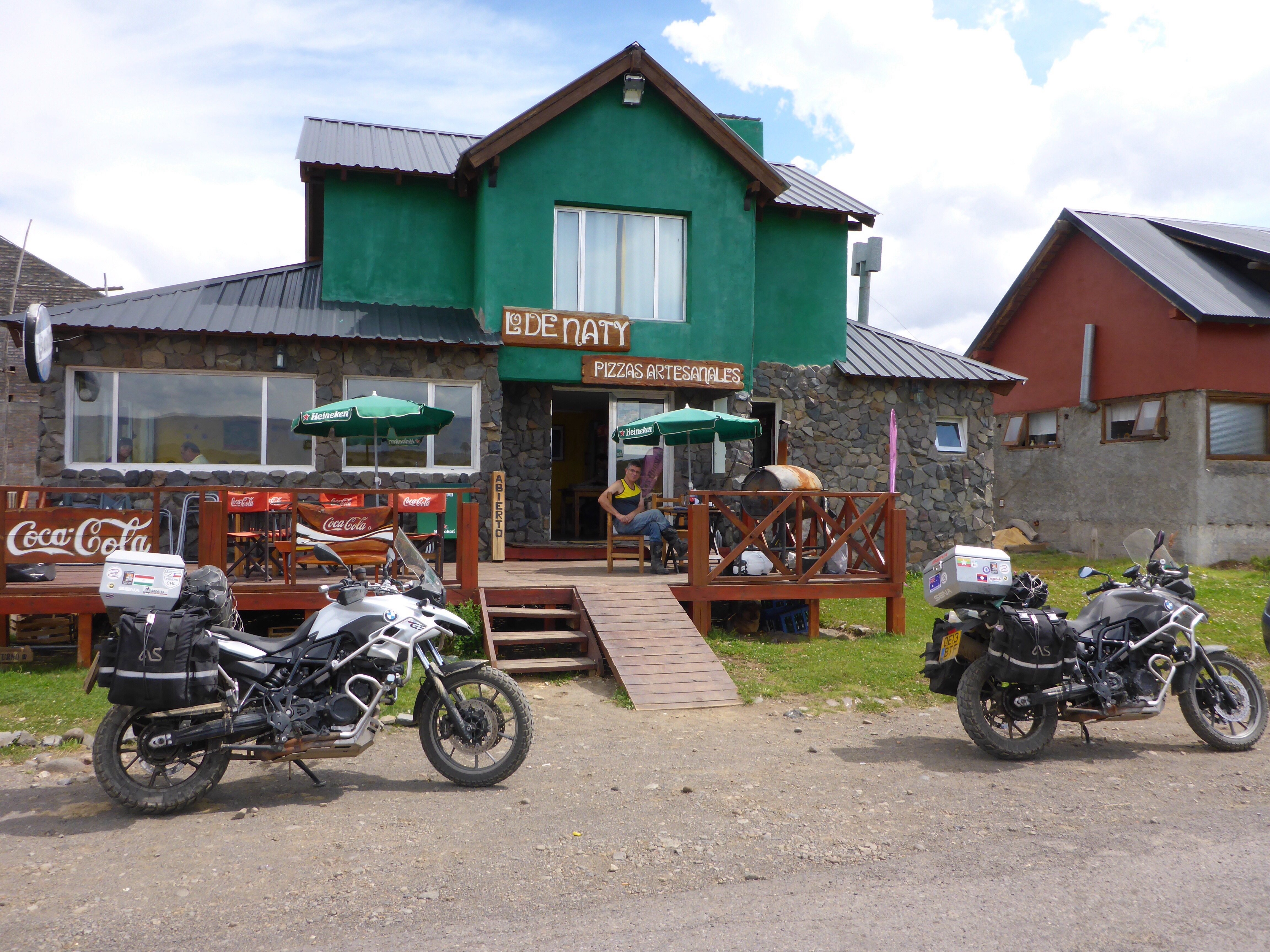
We follow his advice, and for those interested in looking on the map it RN21, RP26, RP27, RP21 and finally RP4. RN21 and RP26 provide an all tar route over a mountain pass to Caviahue which is the town for the Parque Caviahue ski area. It was interesting to see the higher quality of the houses here compared with the average houses in the towns and villages we had passed through. Ski home owners have money. As a remote summer destination, not many places are open, but we find a fantastic cafe that does great pizzas overlooking the lake. The charming english speaking owner, who swapped teaching for cooking, puts the thickest layer of non cheese toppings on a pizza I have ever seen. I could not think of a more idyllic place for lunch.

Loncopué, Argentina

Loncopué, Argentina

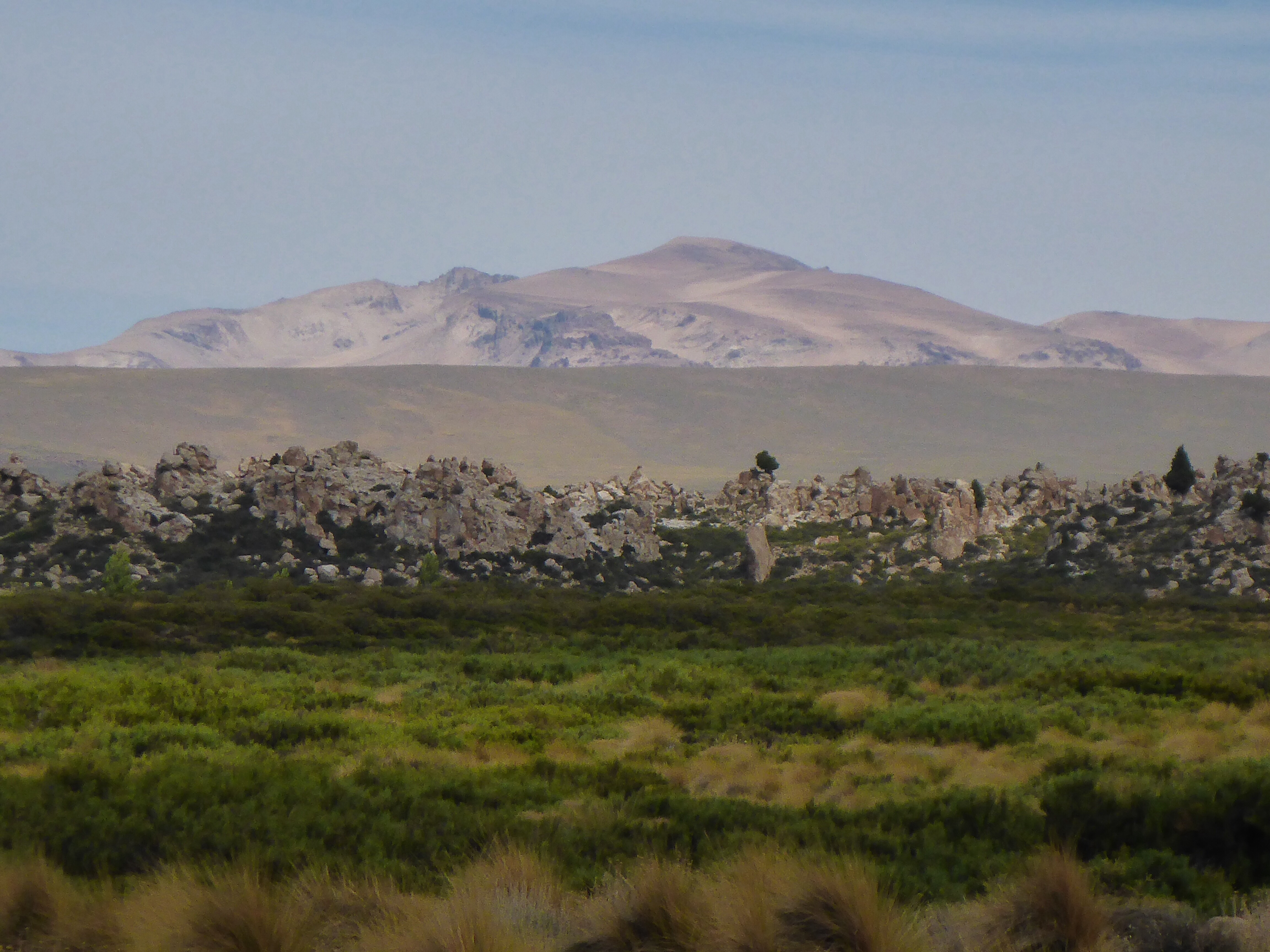
Heading towards Copahue, the rock formations are amazing - this is not a rock wall in the foreground but a long crest

Heading towards Copahue, the rock formations are amazing – this is not a rock wall in the foreground but a long crest

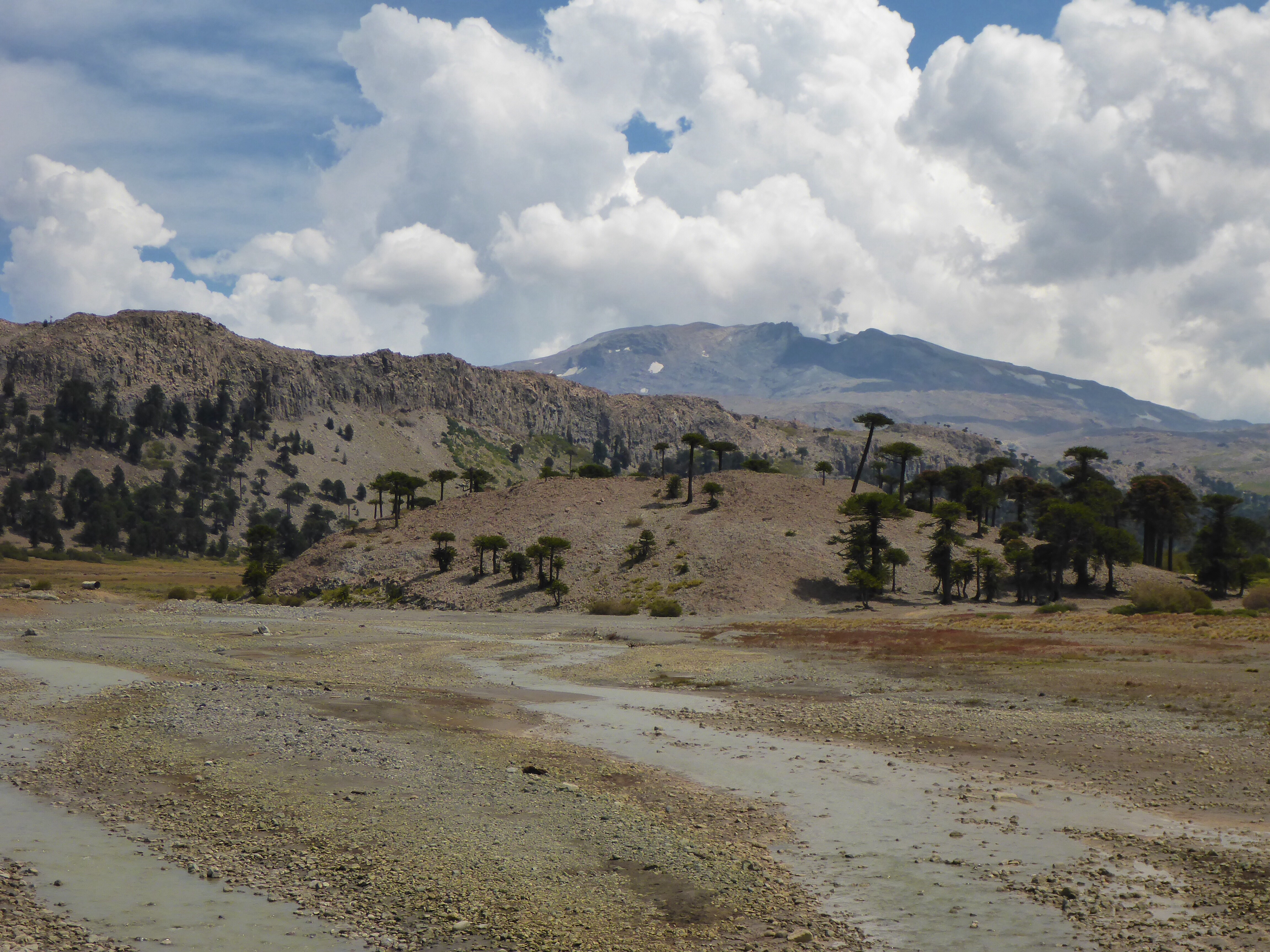
Volcan Copahue

Volcan Copahue

Had an amazing pizza at Caviahue on the RP26

Had an amazing pizza at Caviahue on the RP26

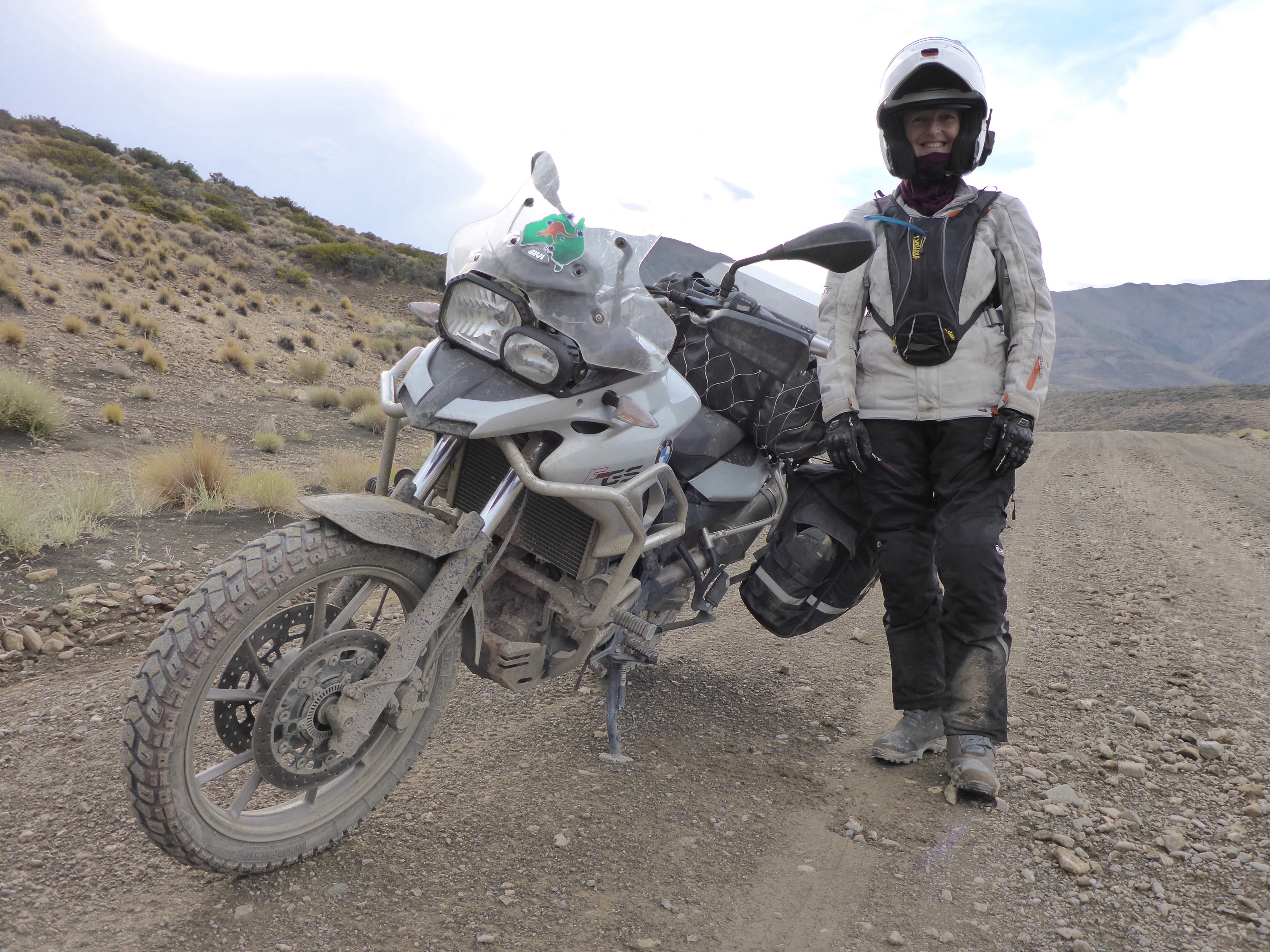
We now head off down our 10 km of ripio, err….seems to be going on and on and on! Neither of us are comfortable on this surface, mostly due to lack of experience. With a high proportion of loose gravel on the surface we seem to loose that nice connected feeling we have on tar. I think it is harder for Anne as she has a better sense of balance and feels the movement more acutely. Still as we progress over the 10,20,30,40 km of ripio we gain confidence.

Running along the Rio Agrio

Running along the Rio Agrio

Crossing Rio Agrio on the RP27 after Caviahue

Crossing Rio Agrio on the RP27 after Caviahue

This storm has been getting bigger for the past couple of hours - will we escape it?

This storm has been getting bigger for the past couple of hours – will we escape it?


As in many mountain locations afternoon storms can develop. Here is no exception and as jagged streaks of lightening hit the ground ahead of us, a sensible stop is called for. We finally reach tar again, only some 120 km of ripio, enough for today thanks, but all good experience. Anne feels that she has gained confidence today, even enjoyed the last hour’s riding on dirt – this will stand us in better stead for the parts of Bolivia where no tar alternatives will exist.
The massive storm that surrounded us for 2 hours left its mark on RP4

The massive storm that surrounded us for 2 hours left its mark on RP4

Out of the storm, not far to go now and Anne is feeling fantastic

Out of the storm, not far to go now and Anne is feeling fantastic


The 4 of us will need a good wash tonight!

The 4 of us will need a good wash tonight!


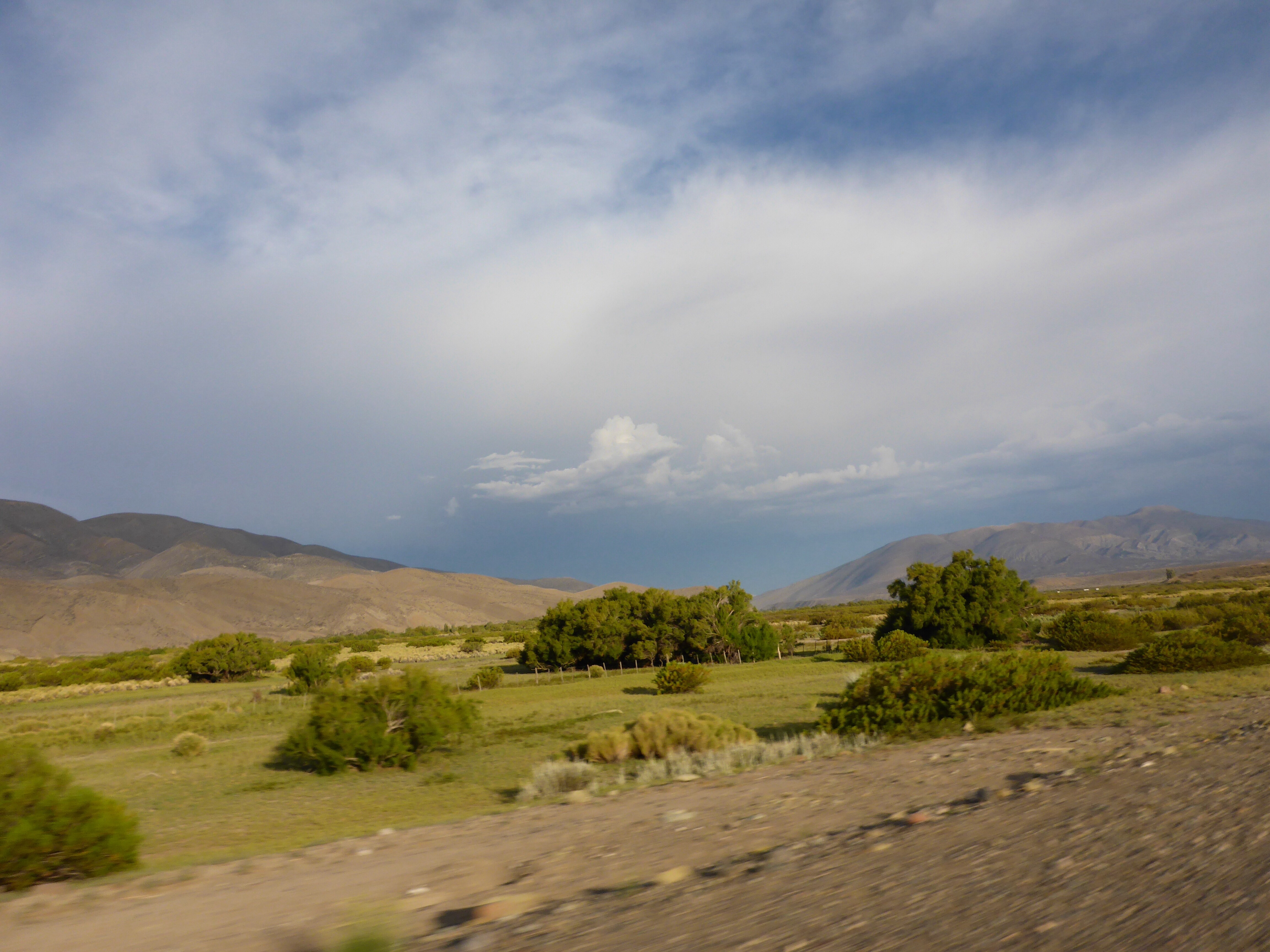
Gorgeous lighting after the storm as we approach Chos Malal

Gorgeous lighting after the storm as we approach Chos Malal

What a great day!

Anthony

The seven lakes route Patagonia

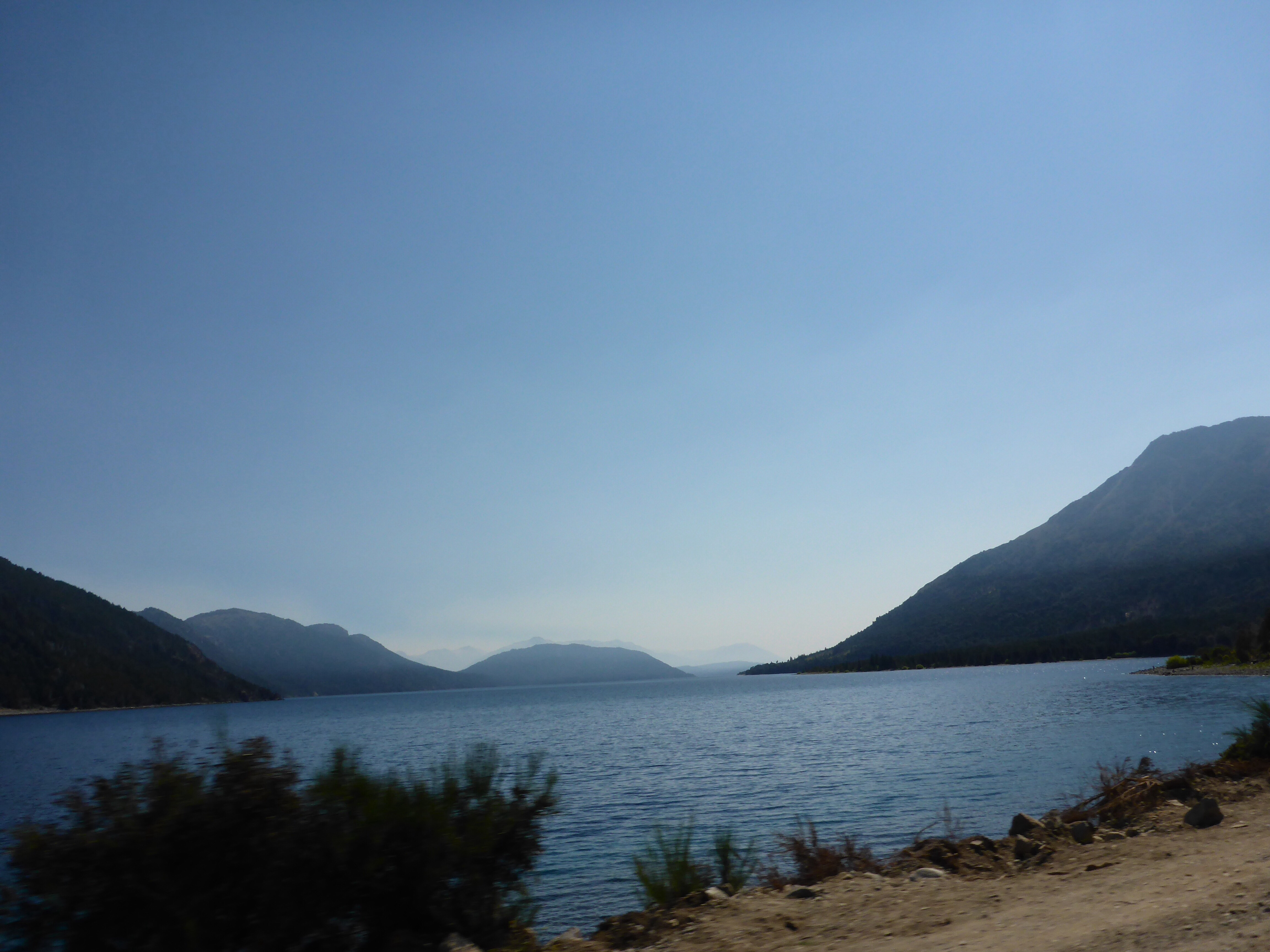
After yesterday’s beautiful border crossing, we have decided to meander down towards San Carlos de Bariloche. Between San Martin de Los Andes and Bariloche are seven lakes linked by part of Ruta 40. As we ride down this section of road, it is hard to find words to describe the vistas as they unfold before us. The muted browns and greys of the mountains, the green hues of the trees and the unbelievable blues of the lakes, pictures will have to suffice.

Lácar lago outside San Martin de los Andes

Lácar lago outside San Martin de los Andes

Rolling pastures of Patagonia near Lácar lago

Rolling pastures of Patagonia near Lácar lago

Looking west  towards the Andes near Lácar lago

Looking west towards the Andes near Lácar lago

Lácar lago

Lácar lago

Another bend and the scenery changes again along the Camino de los  Siete Lagos through the Nahuel Huapi national park

Another bend and the scenery changes again along the Camino de los Siete Lagos through the Nahuel Huapi national park

Camping spots abound at the lake shores, and if we had more time, this section of some 150km should be a journey of a few days not hours. At one location we stop at a campsite leads directly onto a beach of golden sand. The location reminds me of Fraser Island at home in Queensland, with sand dunes replaced by mountains. The water is a pleasant temperature, surprising for a mountain lake and make the location all the more appealing to camp at, but onward we must go.

At one lakeside campsite, we meet up with Heinrich again. He joins us as we talk to a Columbian rider who is travelling for 10 months on a bike that is literally covered in stickers. This is definitely bike country, both pedal and motorised, we have seen more travellers, most from Chile and Argentina, in one day than in six months and while I have a great admiration for those pedalling given the mountainous nature of the road, I have no desire to emulate their exertions.

Lago Villarino

Lago Villarino


We had expected more ripio or dirt and gravel on this but road upgrades are reducing the remaining sections un-tarred road by the day, it is less than 10km now, and I would not be surprised if all the ripio is gone by next summer. It should be noted that as road sections are upgraded, the authorities have made some changes to road numbering to designate the better sections as Ruta 40, so some maps and online information may conflict.

I have talked before about smell, and how it is an integral part of our travels that are hard to convey to our readers. From time to time on this journey, strong scents have reminded me that the sense of smell can both create and bring back strong memories. Here the wind as we ride brings us a whiff of pine as we pass the lumber yards, eucalyptus as the sun warms the leaves on the trees, and logs on fires, all add to the immense pleasure from this under-utilised, in my view, sense.

Nahuel Huapi south of Villa la Angostura

Nahuel Huapi south of Villa la Angostura


Back onto the Ruta 40 looking back towards  the lake district

Back onto the Ruta 40 looking back towards the lake district


Baraloche has turned out to be the southern most point we will reach on this journey with our departure for Easter Island on the 4th of March looming . We have decided that our return north will be on the Argentinian side following the famous and scenic Ruta 40 as far as Mendoza.
San Carlos de Bariloche at dusk

San Carlos de Bariloche at dusk


– Anthony