From Finca Haven to Bogota Megalopolis

After our visit to Parque del Cafe outside Montenegro, we make our way to our Finca hotel, a 150 year old house on a coffee plantation. After taking a wrong turn, down a single lane track for 3 kms, a kindly couple accept to call the owner of the finca for us to give us directions. The couple offer to take us there and the owner came towards us – all so helpful!!! Once again, the kindness of people, who we will never be able to repay in any way, touches us deeply.

We are the only guests at the finca. Neither the owner Jo nor the caretaker Suzy speak a word of English. But it doesn’t stop them chatting away. I manage to get the jist of what they say but it is a struggle for me. I really should have taken some Spanish lessons…. Jo tells me of the things we should do in the area and visit. I think she is shocked and horrified that we could spend 2 nights here and not go anywhere when I tell her we just want to stay at the finca and relax.
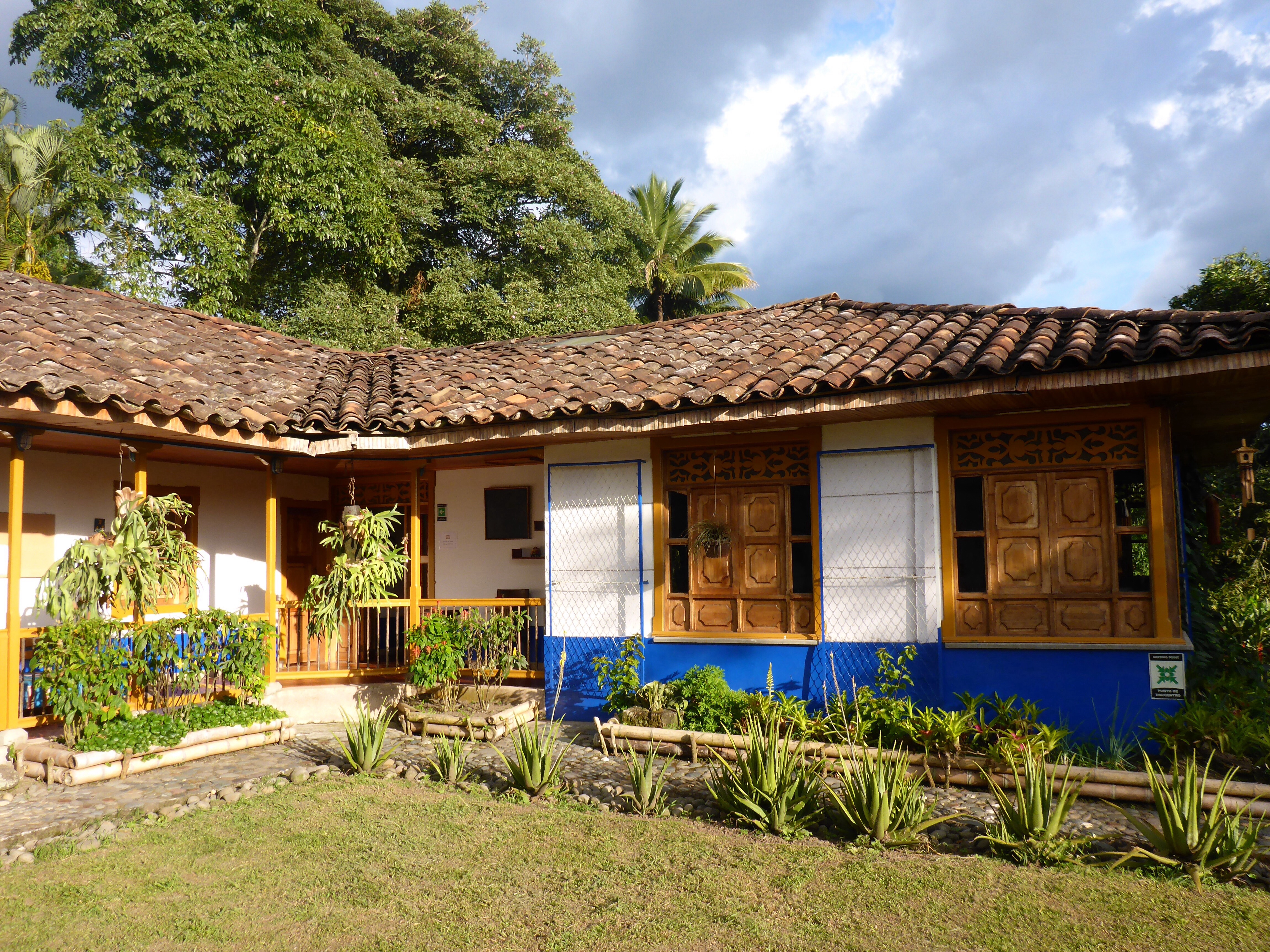
El Laurel Finca hotel, Montenegro, Colombia

El Laurel Finca hotel, Montenegro, Colombia

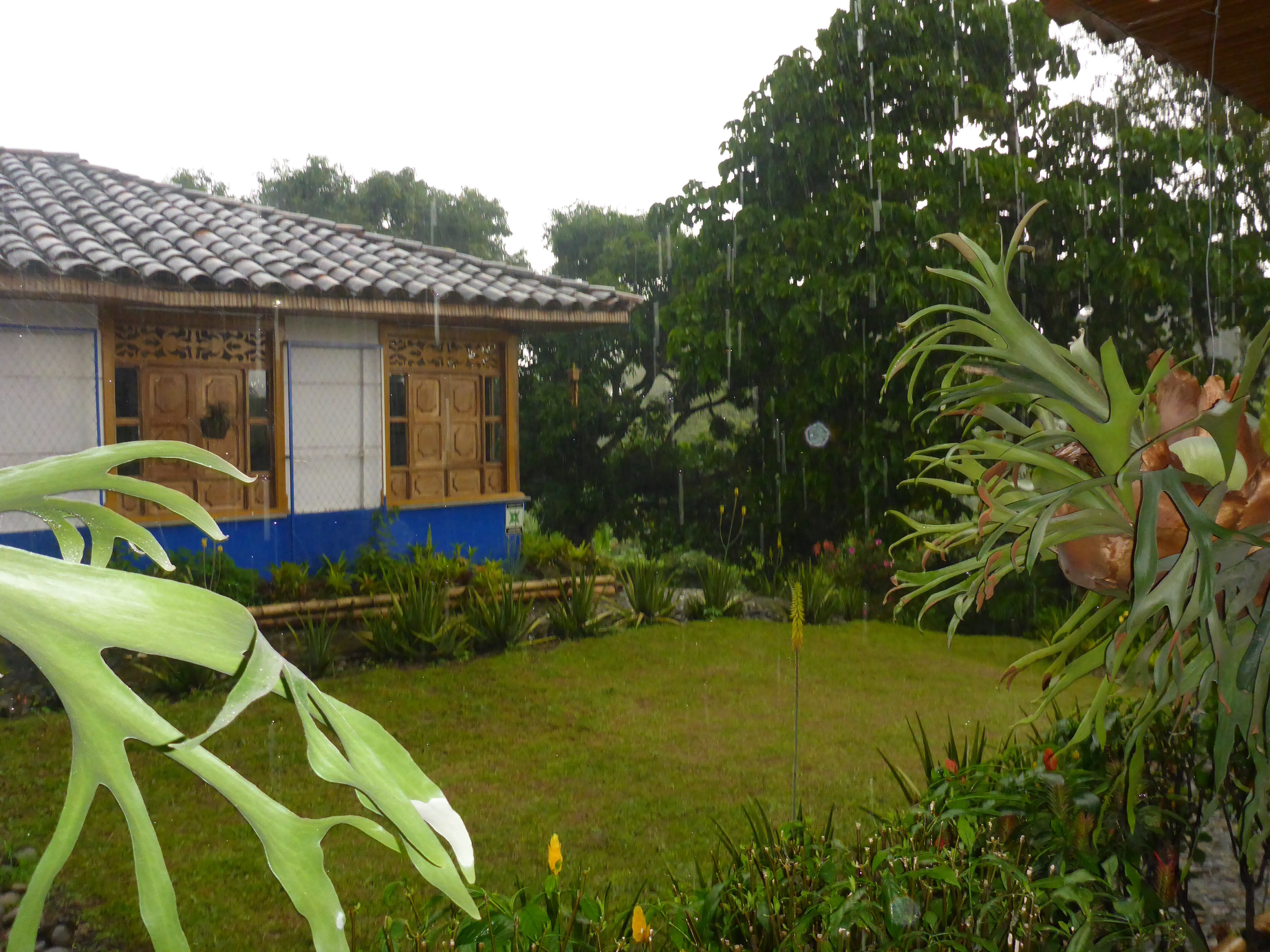
Over our time at the finca, Suzy would come to us with freshly squeezed fruit juices and then chat away. We spend a wonderful time sitting on the porch, watching the birds, the amazing hummingbirds darting from one flower to another, stopping in mid flight and darting off again. The garden is gorgeous. So peaceful. We walk a few kms to the closest roadside restaurant and have a great grilled trout for lunch. The clouds build up during day, culminating in an almighty storm. The noise of the rain on the big tropical tree leaves near our room and the roof is deafening. We enjoying nature unfolding from our porch rocking chairs. After a game of scrabble on the porch, our 3 course dinner is served by Suzy in the large empty dining room.
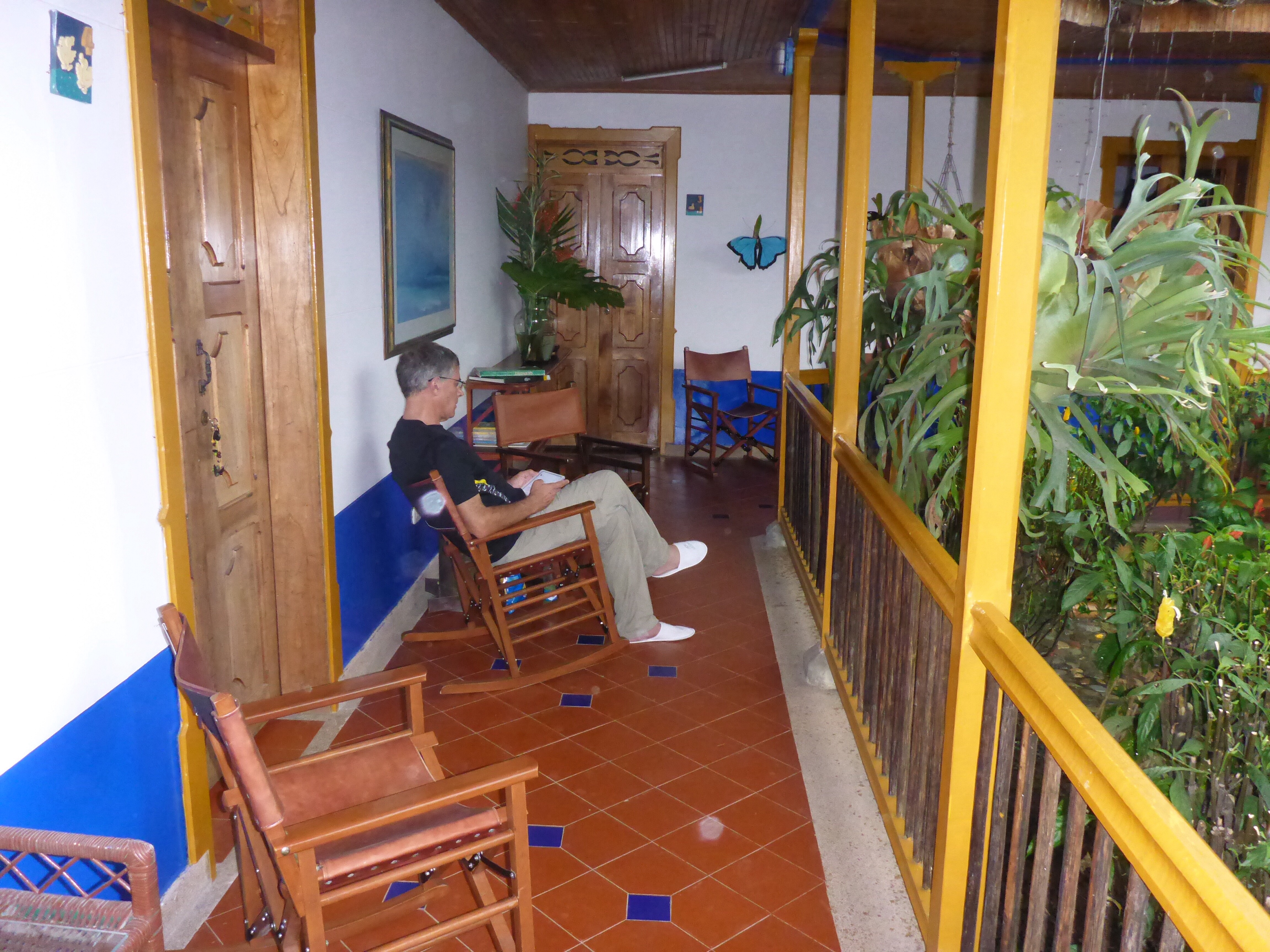
Just relaxing at our Finca Hotel El Laurel, Colombia
Just relaxing at our Finca Hotel El Laurel, Colombia

Loving sitting on the porch watching and listening to the rain pelting down

Loving sitting on the porch watching and listening to the rain pelting down

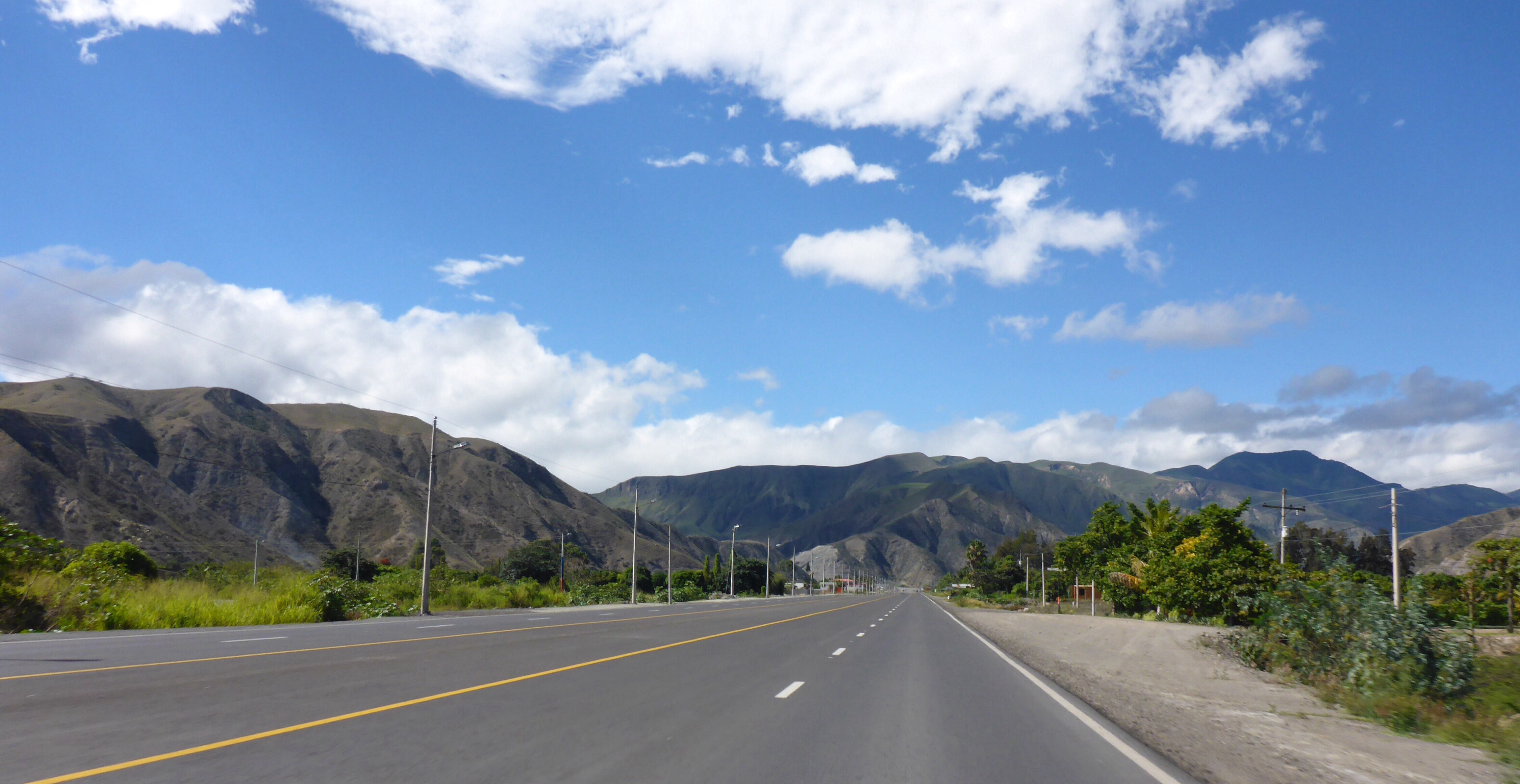
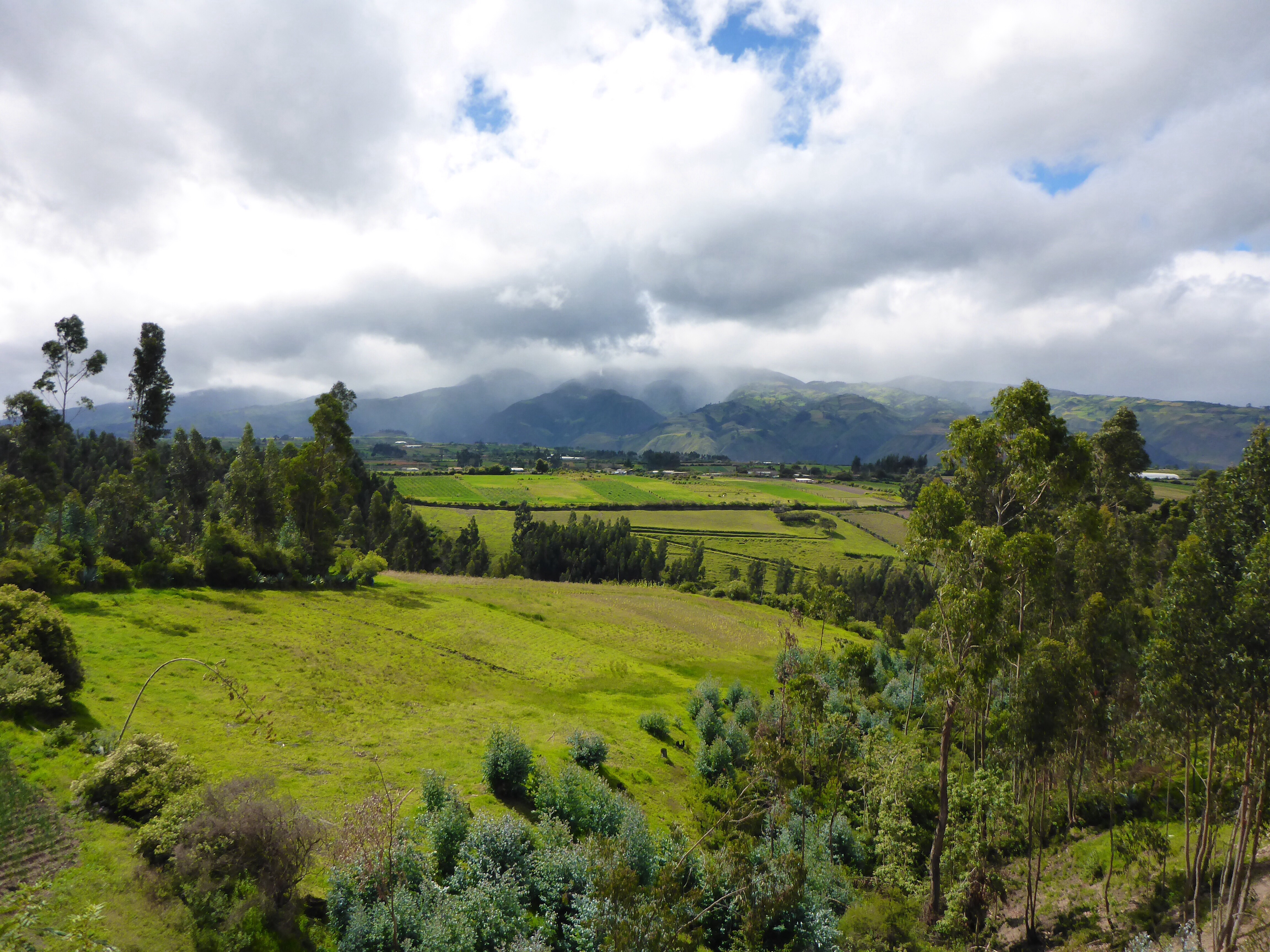
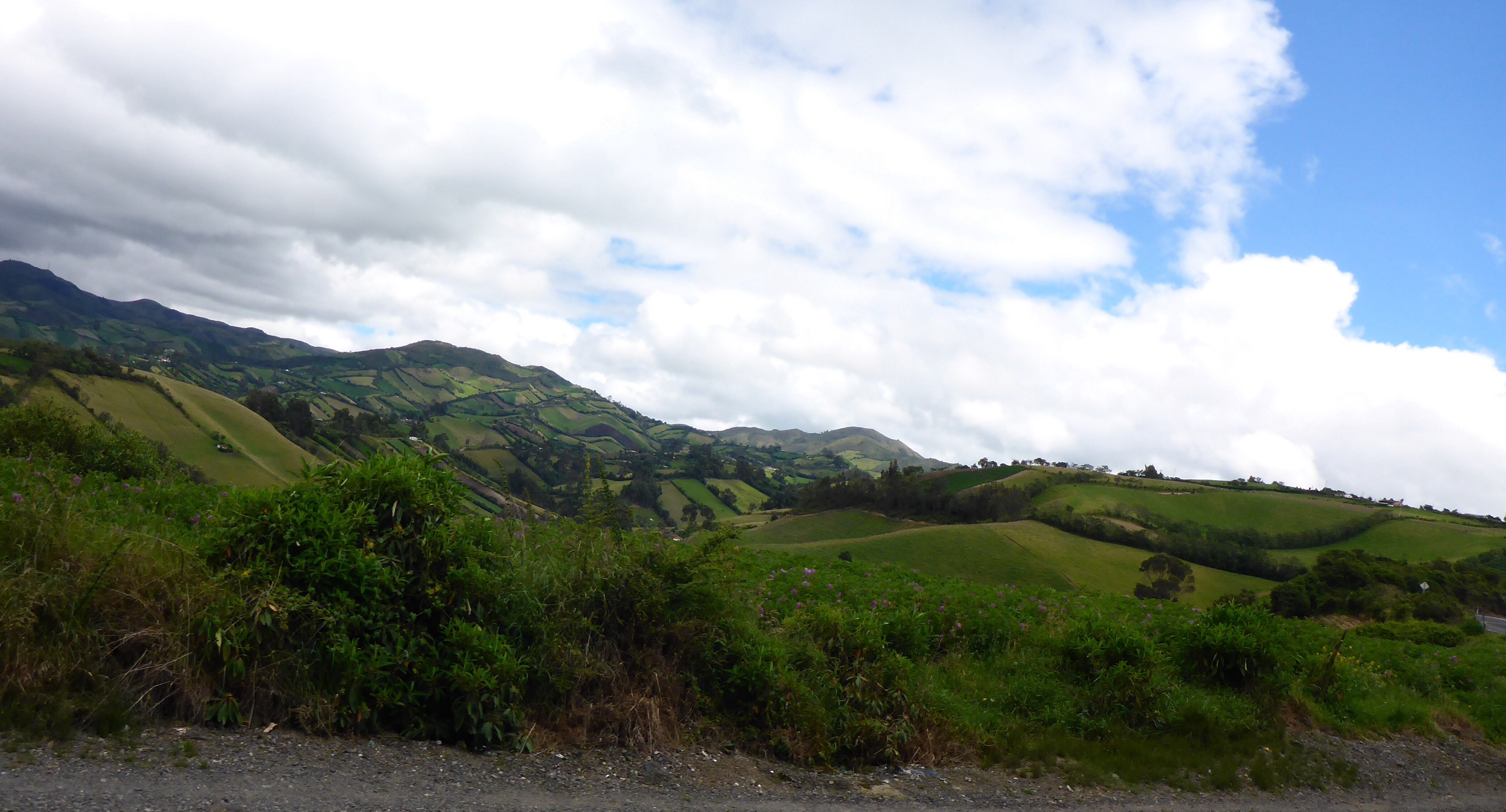
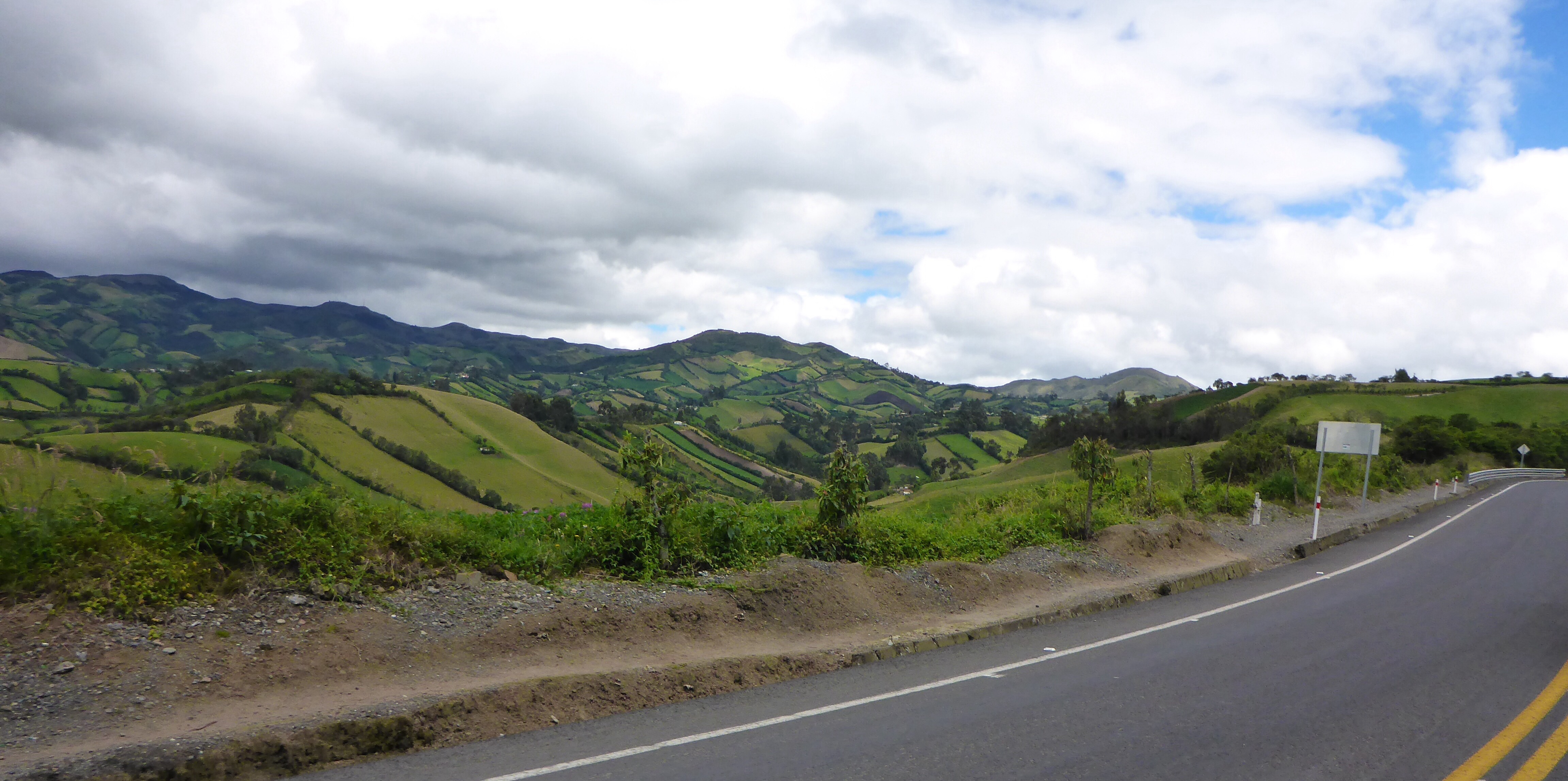
We have a long day ahead to get to Bogota as we have a few mountain passes to get over so we get up at 5.30am and we are on our way just after 7am. Yet again, what a ride. I keep Streak’s fuel tank above half full and thankfully don’t have any problem. Our first 3 hours are sssslllloooowww. 3 hours to do 70kms. Why so slow?! Slow trucks up mountain passes on a very windy road with limited overtaking opportunity.

Slow and windy Ruta 40 heading east towards Bogota
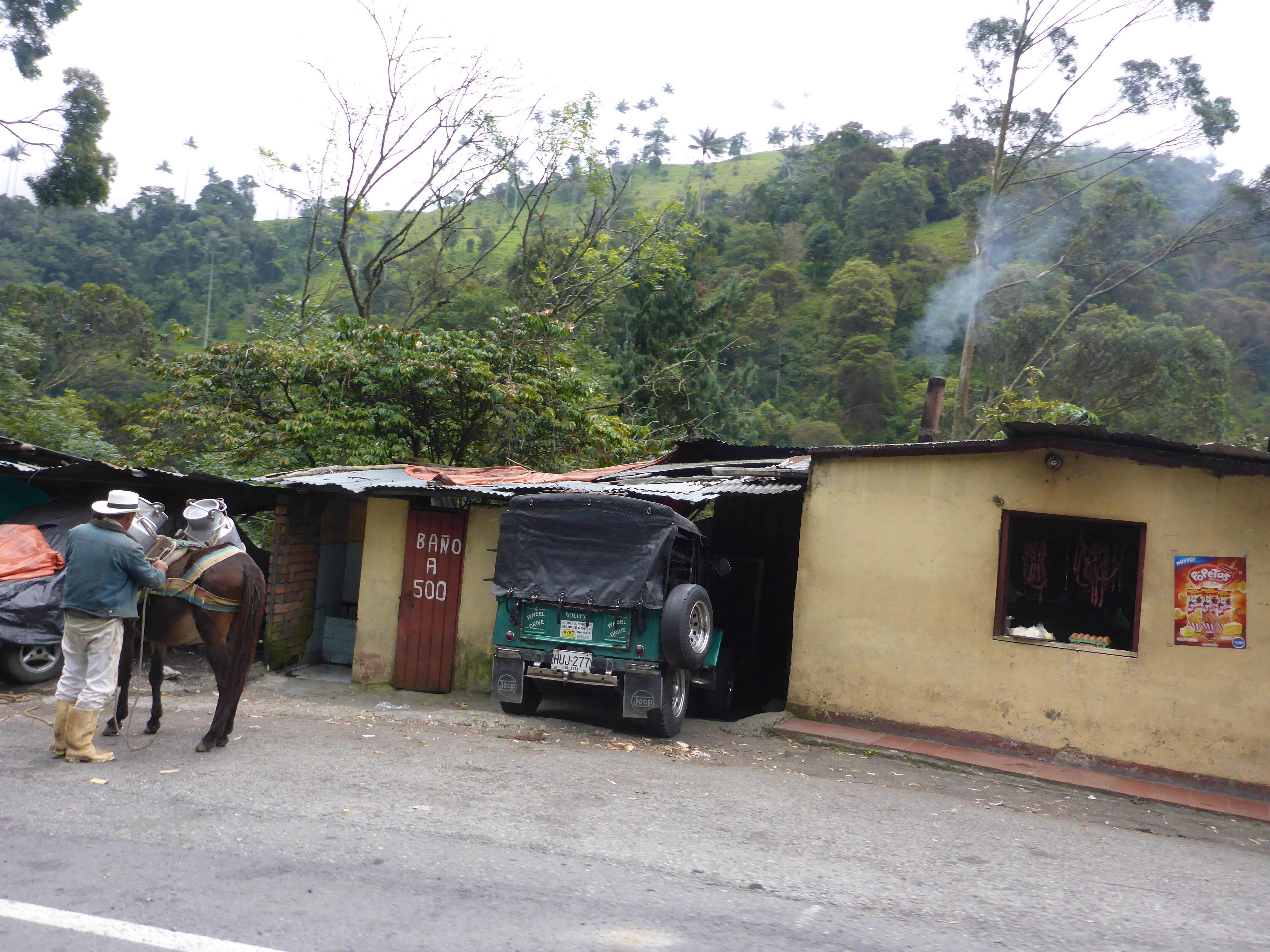
Slow and windy Ruta 40 heading east towards Bogota

Green Willy, Colombia
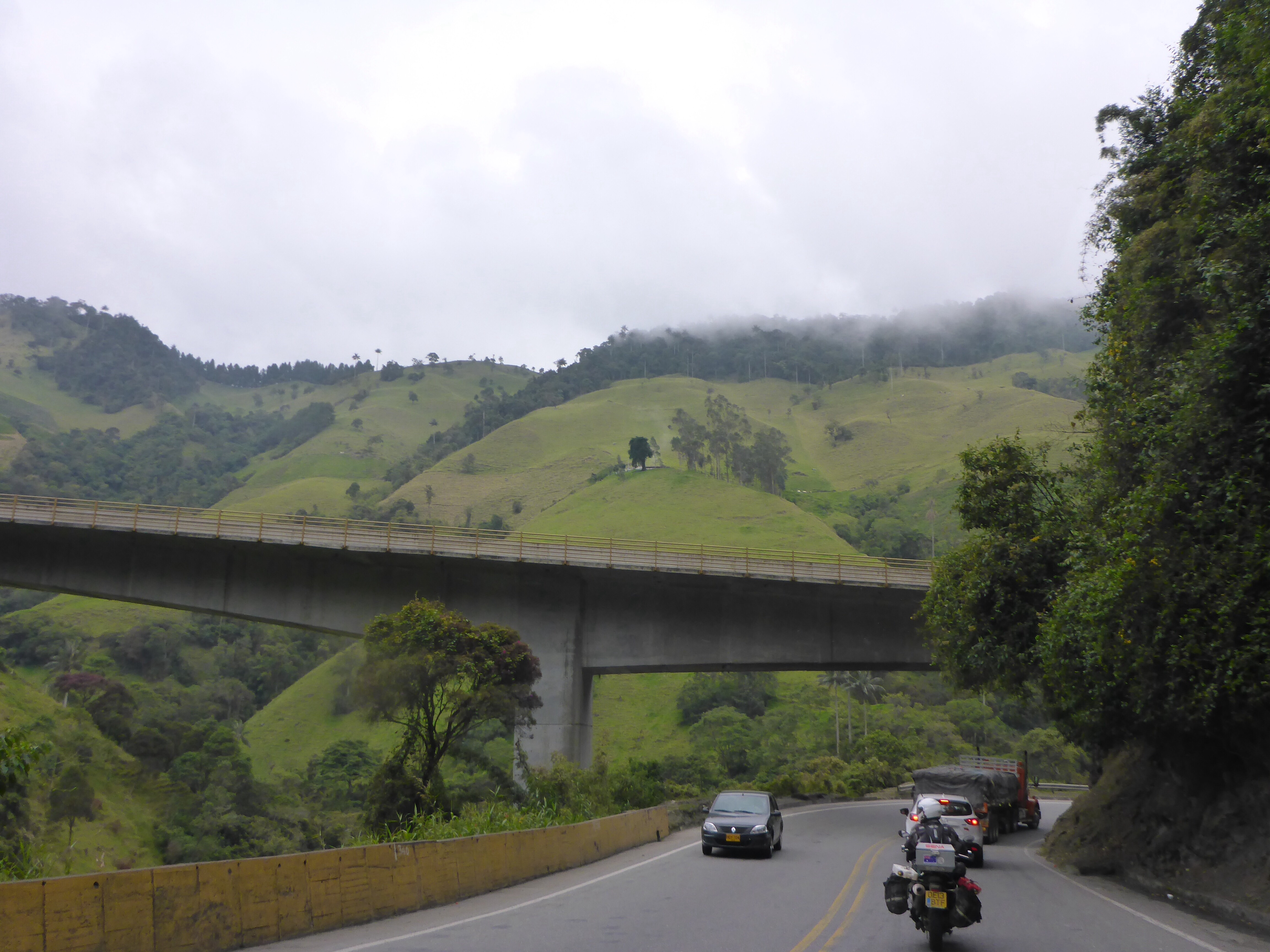
Green Willy, Colombia

There are grand plans for Ruta 40

There are grand plans for Ruta 40

Following local riders past a long line of stopped traffic down the mountain
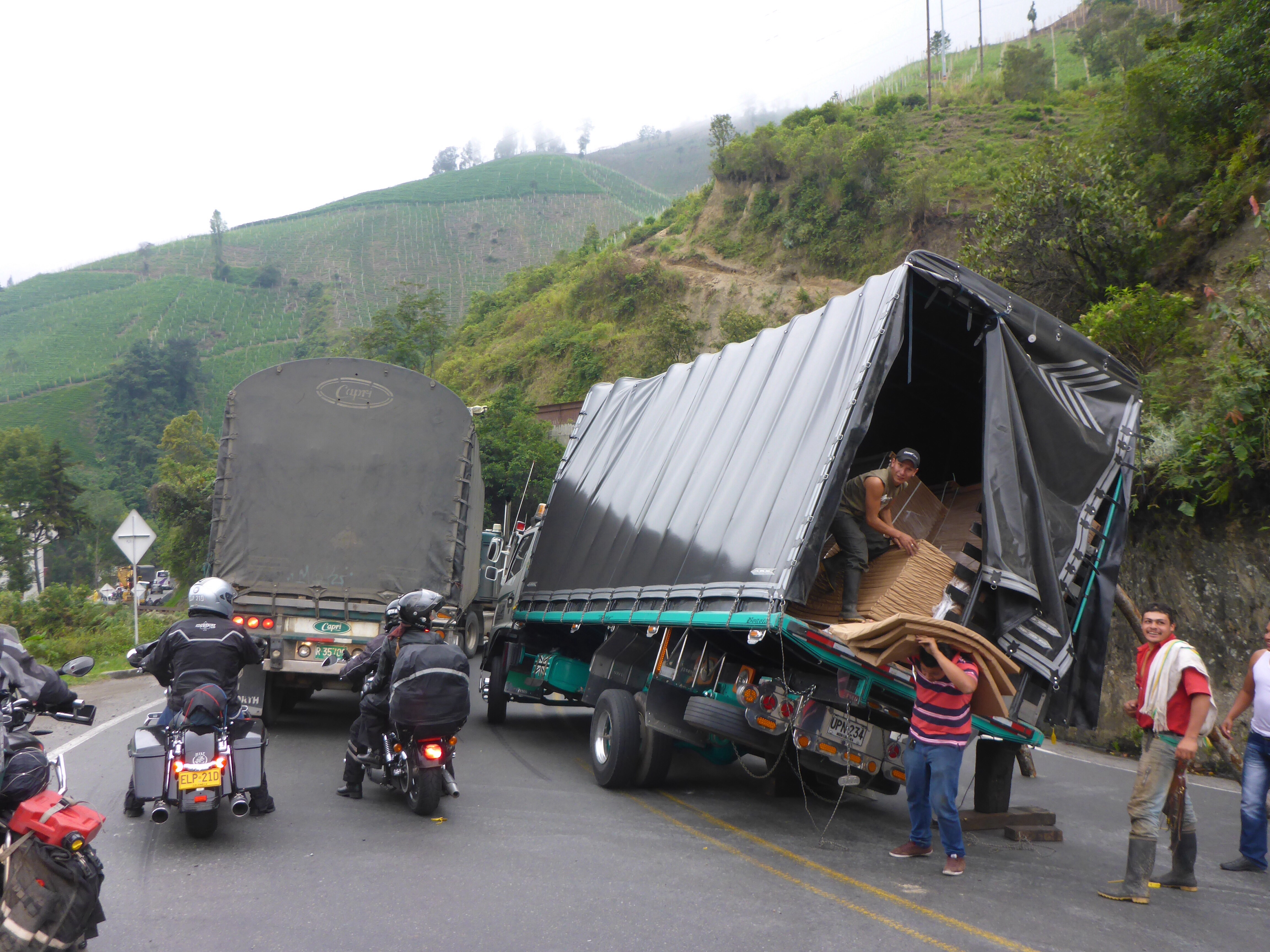
Following local riders past a long line of stopped traffic down the mountain

The cause of the traffic hold up
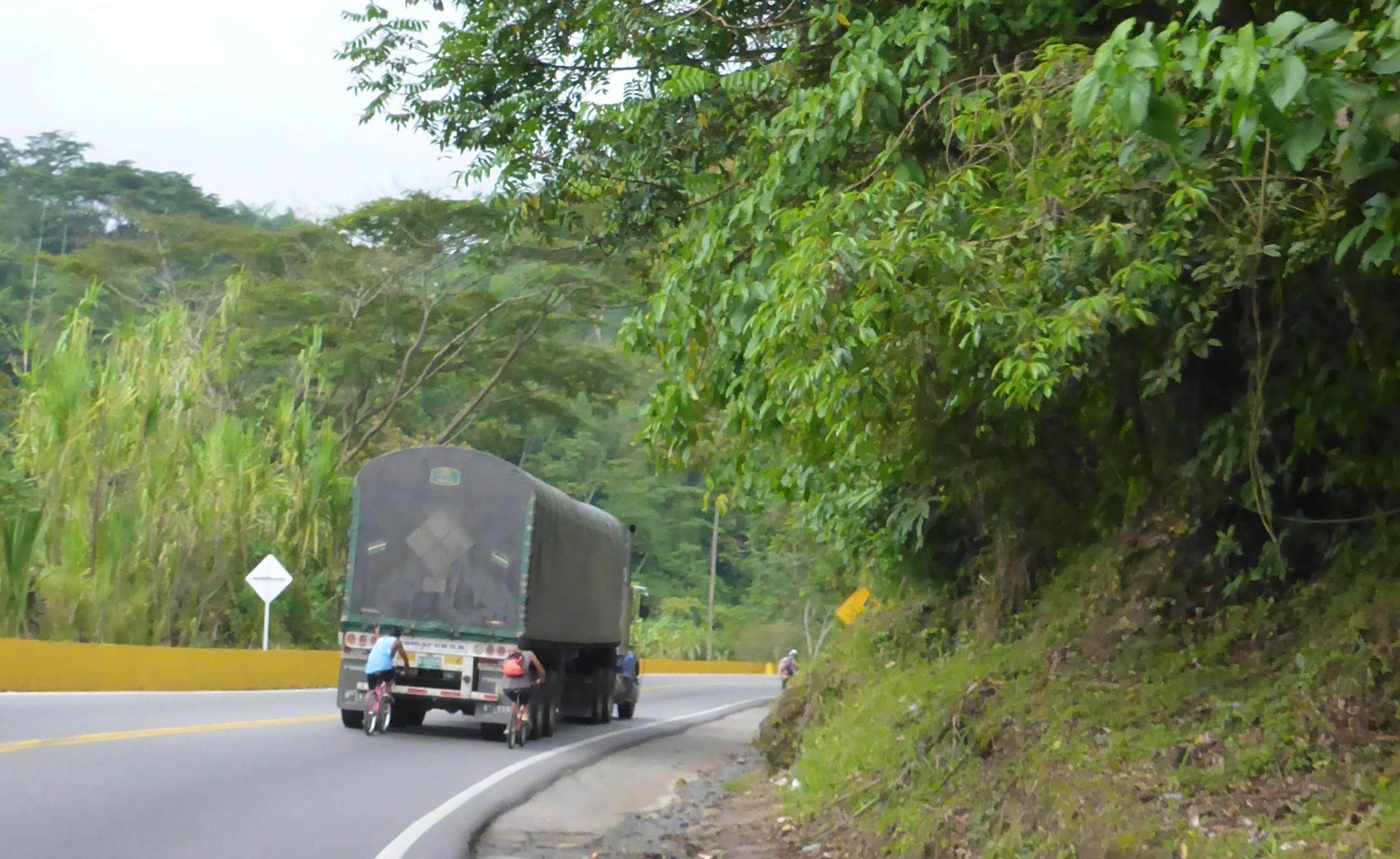
The cause of the traffic hold up

Easy ride up the mountain for cyclists!!
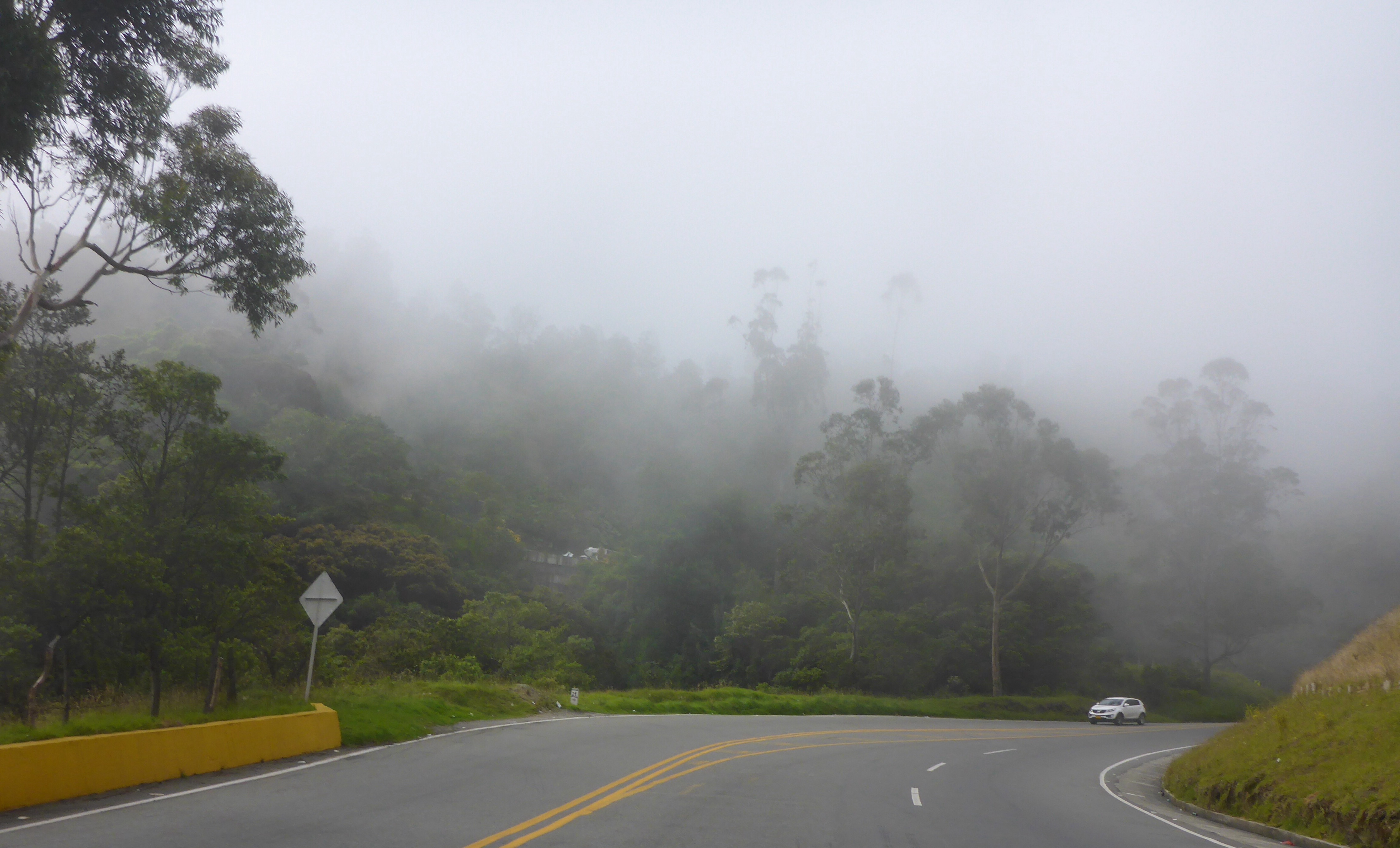
Easy ride up the mountain for cyclists!!

Heading into the clouds on Ruta 40, Colombia
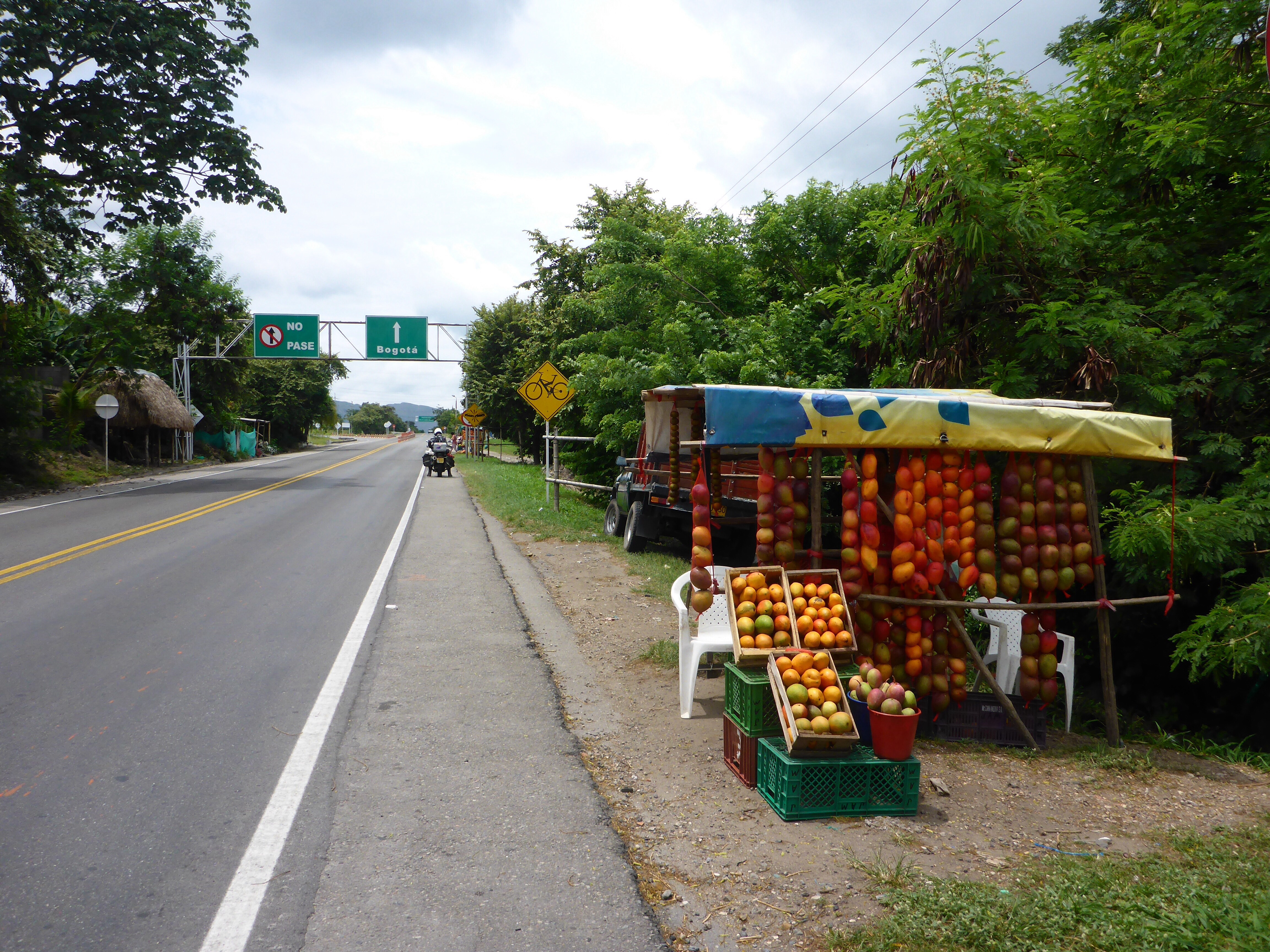
Heading into the clouds on Ruta 40, Colombia

Colombia is colourful in so many ways - fruit, foliage, road signs

Colombia is colourful in so many ways – fruit, foliage, road signs

But once again, what stunning scenery. And lots and lots of heavily armed military. Always giving us the thumbs up sign. I notice the car behind me at one time kept hooting as we passed each soldier. We arrive at our hotel in Bogota by 4pm after a nine hour day. Before we can drive our bikes into the car park, we have to wait for the explosive inspection!
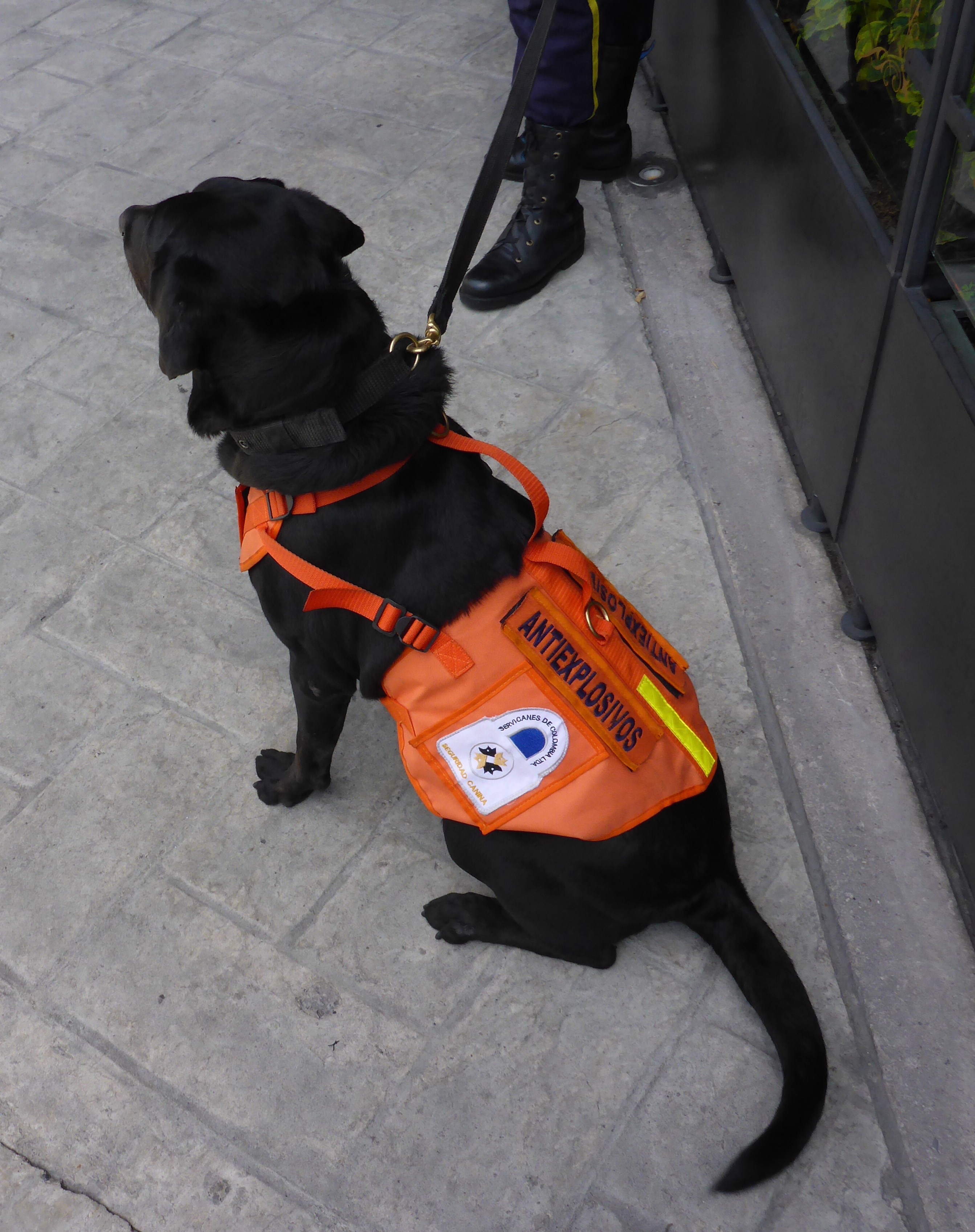
One of 2 explosive sniffer dogs at our hotel, Bogota, Colombia

One of 2 explosive sniffer dogs at our hotel, Bogota, Colombia

Our first day in Bogota and we opt against taking 3 buses plus a longish walk to get to our first sightseeing destination and choose the luxury of a cab to be driven there. When we get to a large city, we don’t use the bikes but walk, or take public transport or taxis. We ride enough as it is without visiting sites in our riding gear!! Not riding means we can look around, observe local life, see what business are selling – riding in these parts of the world, our concentration is pretty intense, on the road, traffic and all sorts of sudden unexpected hazards.

As we drive towards Zipaquira, each soldier gives every car passing by the thumbs up and our taxi driver hoots at each soldier along the road. Like the car behind me yesterday. I think it might be a sign of appreciation to the military providing the average Colombian peace and safety. The threat is obviously real and still current.

What are we doing in Zipaquira? Salt deposits in Zipaquirá were formed 250 million years ago, and were raised above sea level during the late Tertiary period, when the Andes were formed. Halite, the natural form of salt, has been mined since the 5th century BC and the pre-Columbian Muisca culture traded salt, emeralds and coal for raw cotton. Miners had carved a sanctuary, as a place for their daily prayers asking for protection to the saints before starting to work. The first Salt Cathedral was inaugurated in 1954 and dedicated to Our Lady of Rosary, Patron saint of miners but as the church but structural problems, the authorities to shut it in 1990 for safety concerns. A new Cathedral was inaugurated in 1995. Its various corridors and sanctuaries were achieved by making small but significant additions to the caves left behind by previous mining operations. This is what we have come to see. But I hadn’t realised the extent of the underground tunnels open to visitors and the number of chapels!! It was truly stunning. Being claustrophobic, it was a bit of a challenge but worth it!!!


Catedral del Sal, Zipaquira, Colombia
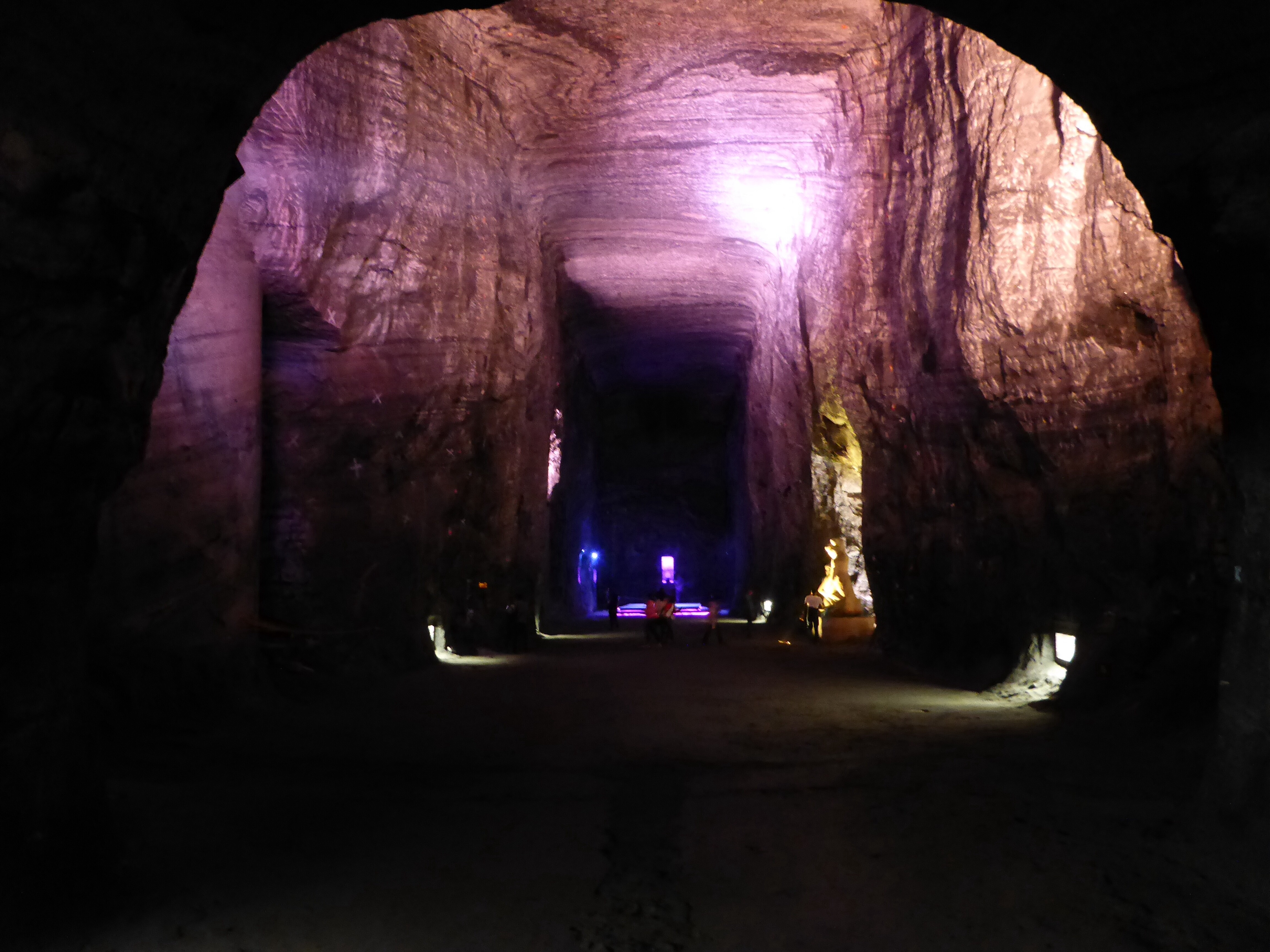
Catedral del Sal, Zipaquira, Colombia

Catedral del Sal, Zipaquira, Colombia

Catedral del Sal, Zipaquira, Colombia

I didn’t know this: very crudely, halide deposits are mined by drilling wells into the salt layer, bringing hot water which dissolves the salt into a brine, the brine is saturated with dissolved salt, pumped out, evaporated and the remainder salt crystalises and is harvested. This is what we call “rock salt”!

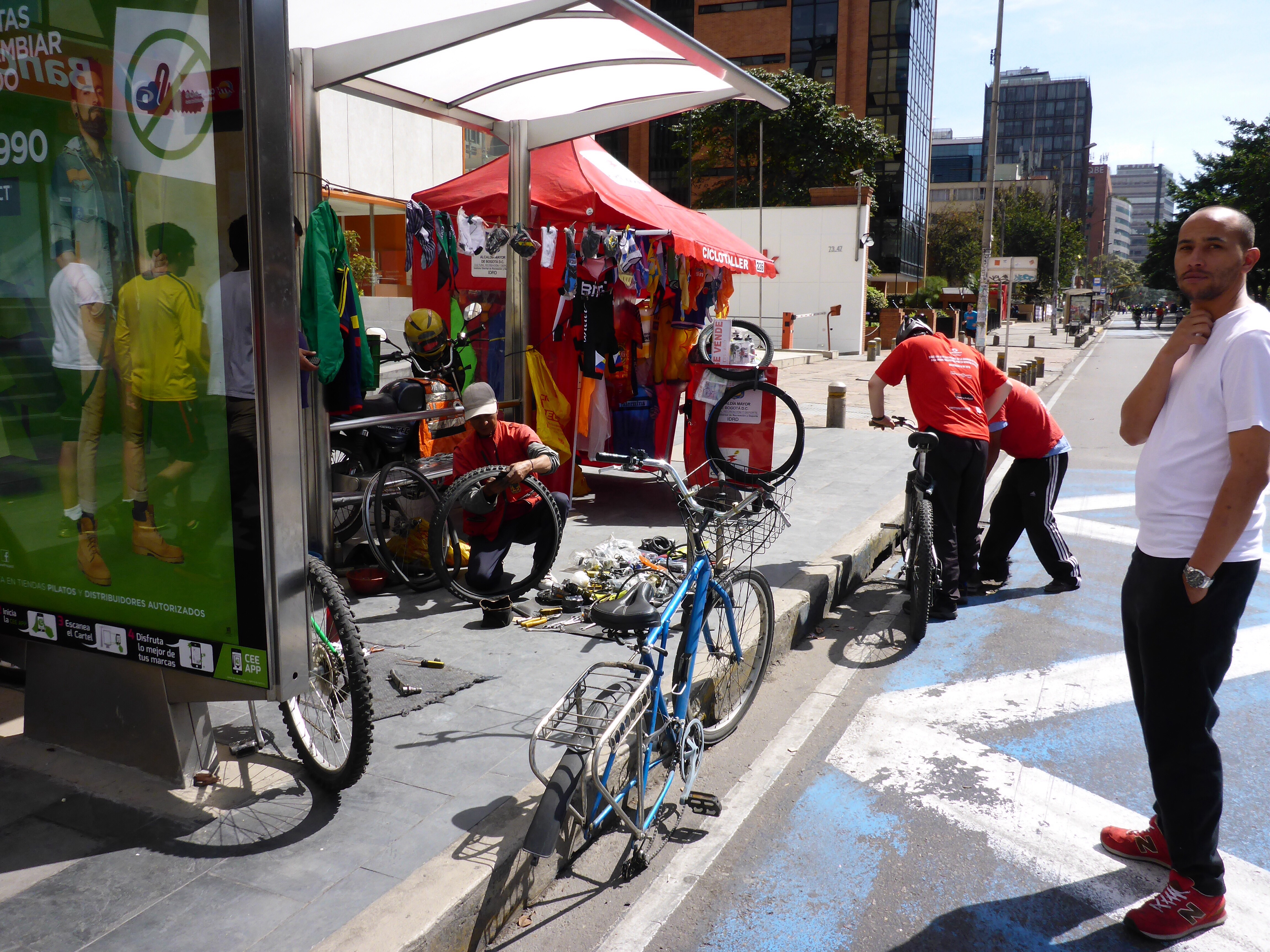
I had read that Bogota had a substantial network for cyclists and on the way to the Salt Cathedral yesterday, we saw cycling corridors along the main arterials. Proper corridors, separated from the main road by a low concrete wall. Not like the painted bicycle lanes we have in Australia which suddenly disappear or gradually get squeezed down to a ridiculously narrow lane that wouldn’t give cyclists any protection from passing cars or busses. Sunday morning, half the street outside our hotel is blocked off for cyclists, runners, walkers. Vendors have set up little stalls selling water, freshly squeezed fruit juices, snacks. There is even a tyre repair stand.
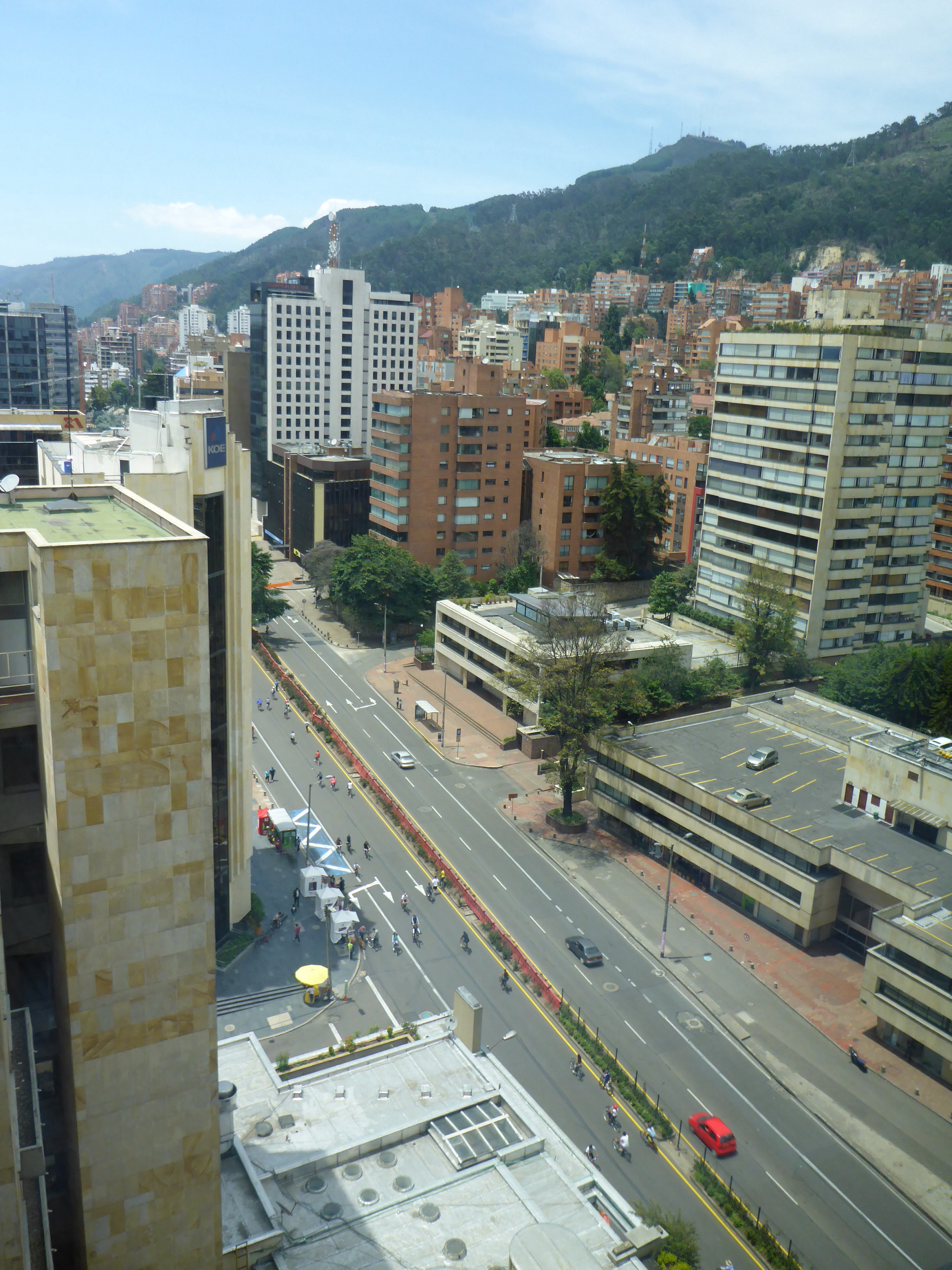
View of the closed off road for cyclists and walkers, Bogota, Colombia
View of the closed off road for cyclists and walkers, Bogota, Colombia

Good use of a bus stop for bicycle tyre repair on Sunday, Bogota, Colombia

Good use of a bus stop for bicycle tyre repair on Sunday, Bogota, Colombia

Our Sunday afternoon in Bogota:
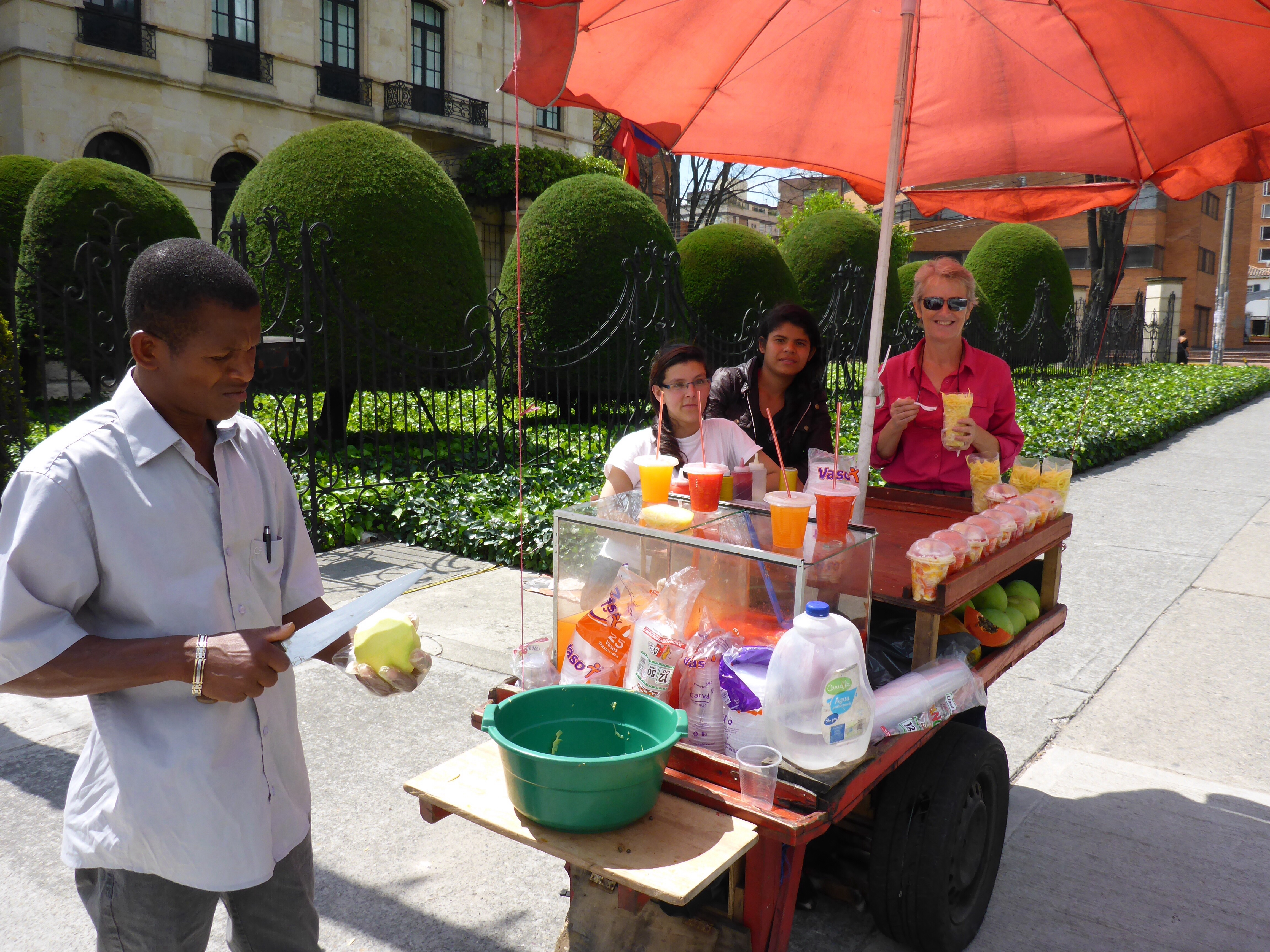
Enjoying fresh shredded mango, Bogota, Colombia
Enjoying fresh shredded mango, Bogota, Colombia

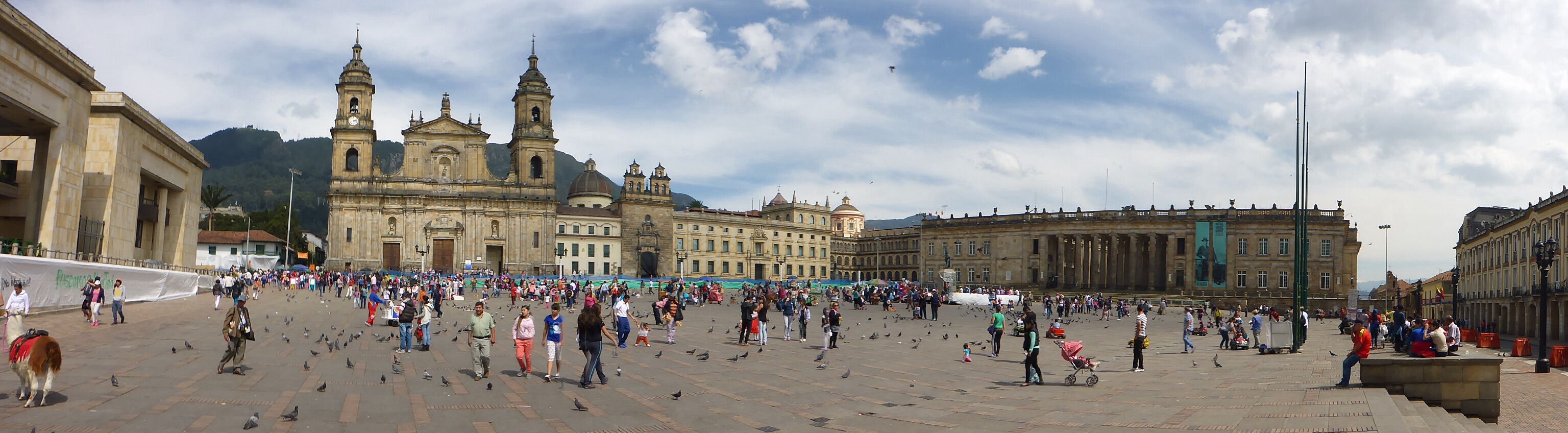
Plaza Bolivar, Bogota

Plaza Bolivar, Bogota

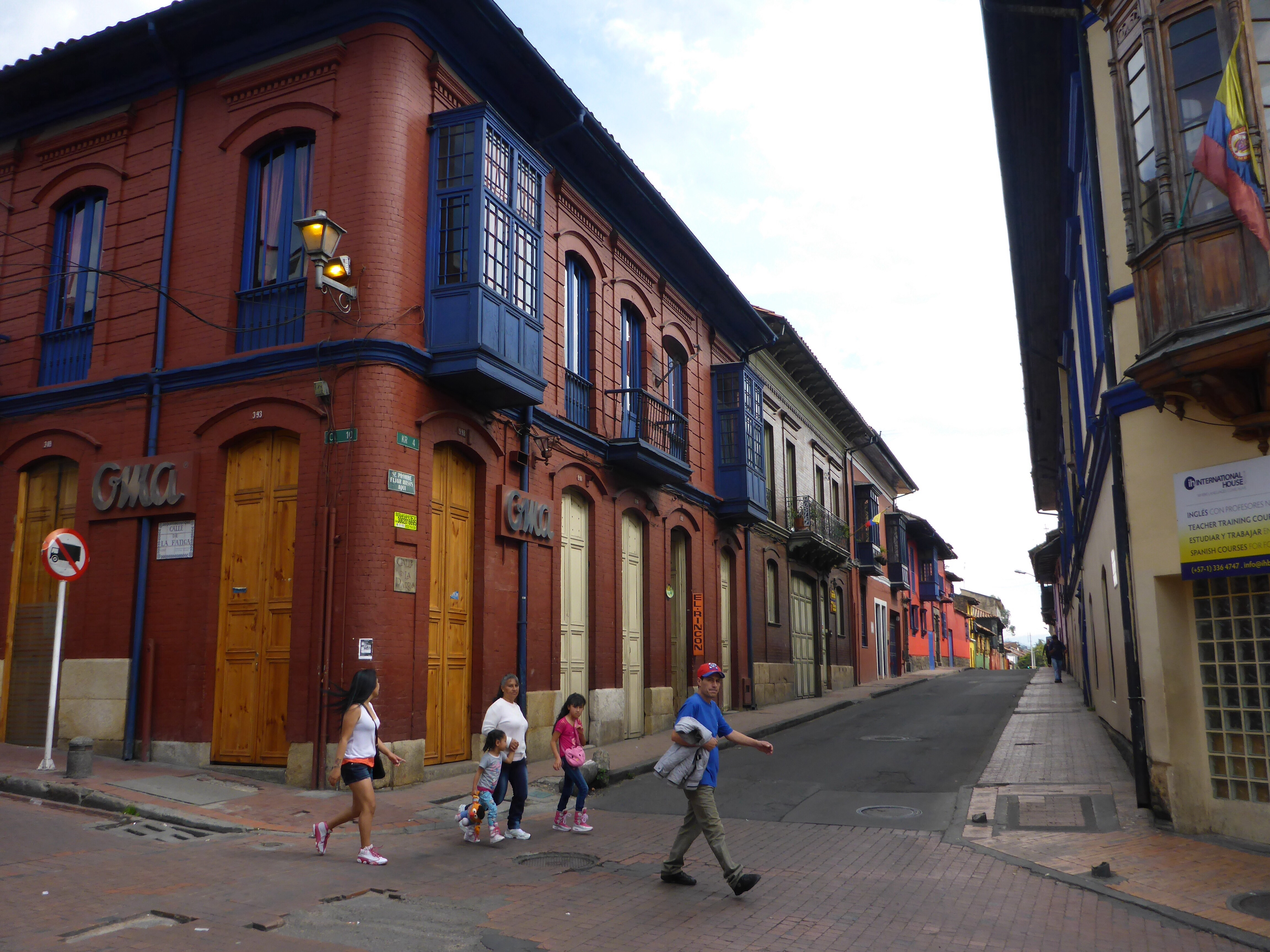
La Candelaria, Bogota, Colombia

La Candelaria, Bogota, Colombia

Army security, La Candelaria, Bogota, Colombia
Army security, La Candelaria, Bogota, Colombia

La Candelaria, Bogota, Colombia
La Candelaria, Bogota, Colombia

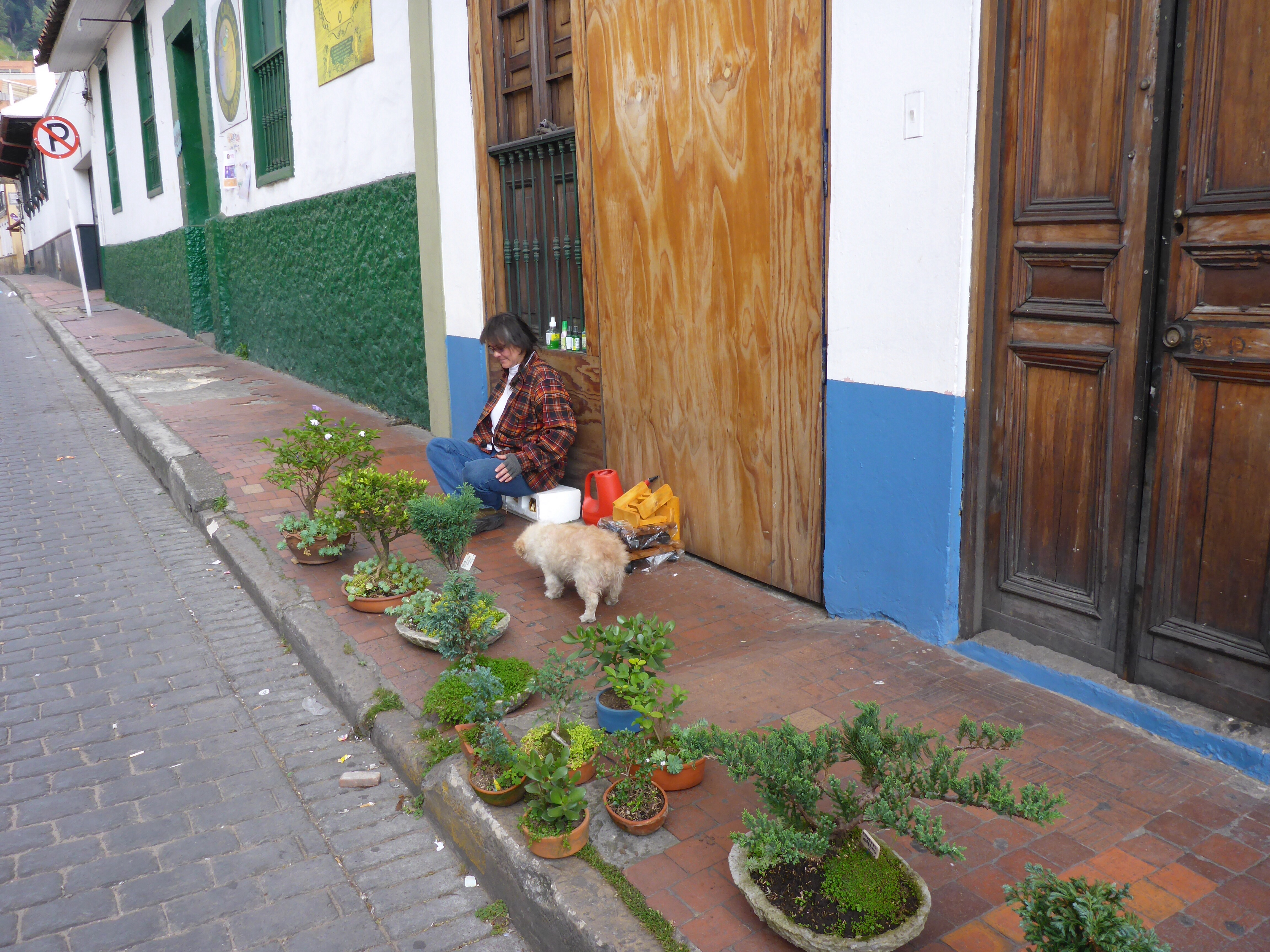
Grower with her 10 year old bonzais, La Candelaria, Bogota, Colombia

Grower with her 10 year old bonzais, La Candelaria, Bogota, Colombia

La Candelaria, Bogota, Colombia

La Candelaria, Bogota, Colombia

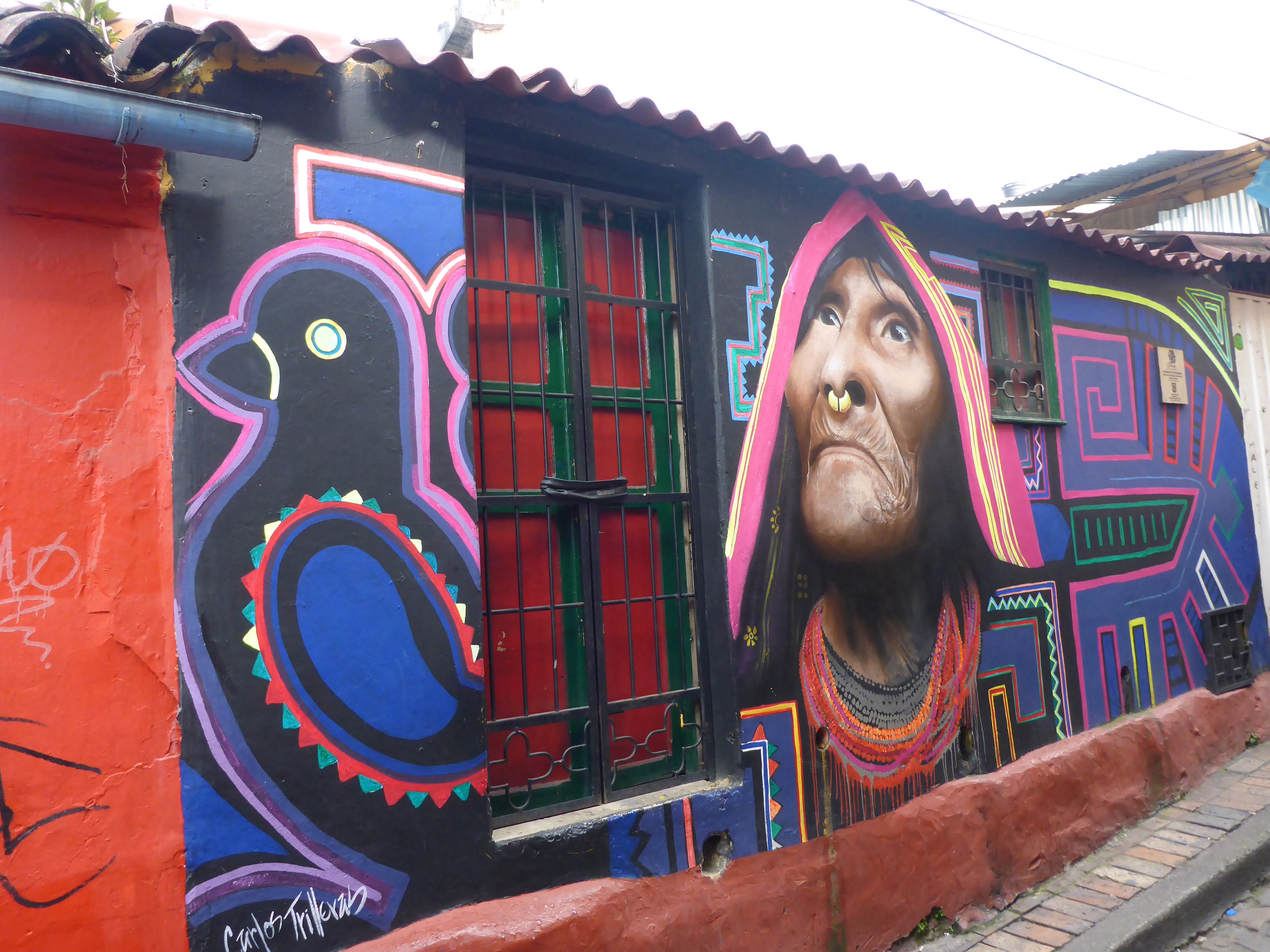
La Candelaria graffiti, Bogota, Colombia

La Candelaria graffiti, Bogota, Colombia
La Candelaria graffiti, Bogota, Colombia
La Candelaria graffiti, Bogota, Colombia

La Candelaria graffiti, Bogota, Colombia

La Candelaria graffiti, Bogota, Colombia

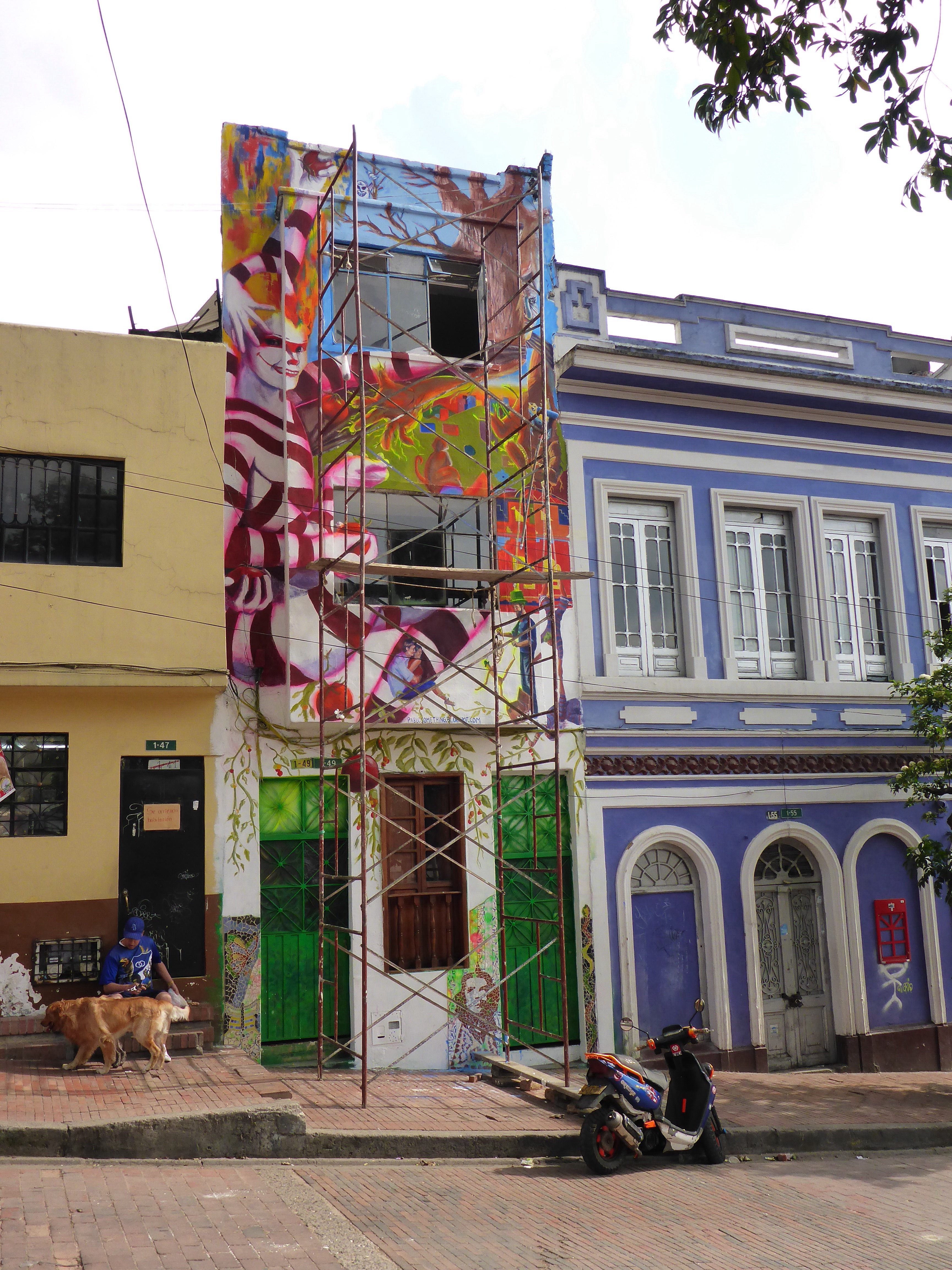
Work in progress, La Candelaria graffiti, Bogota, Colombia
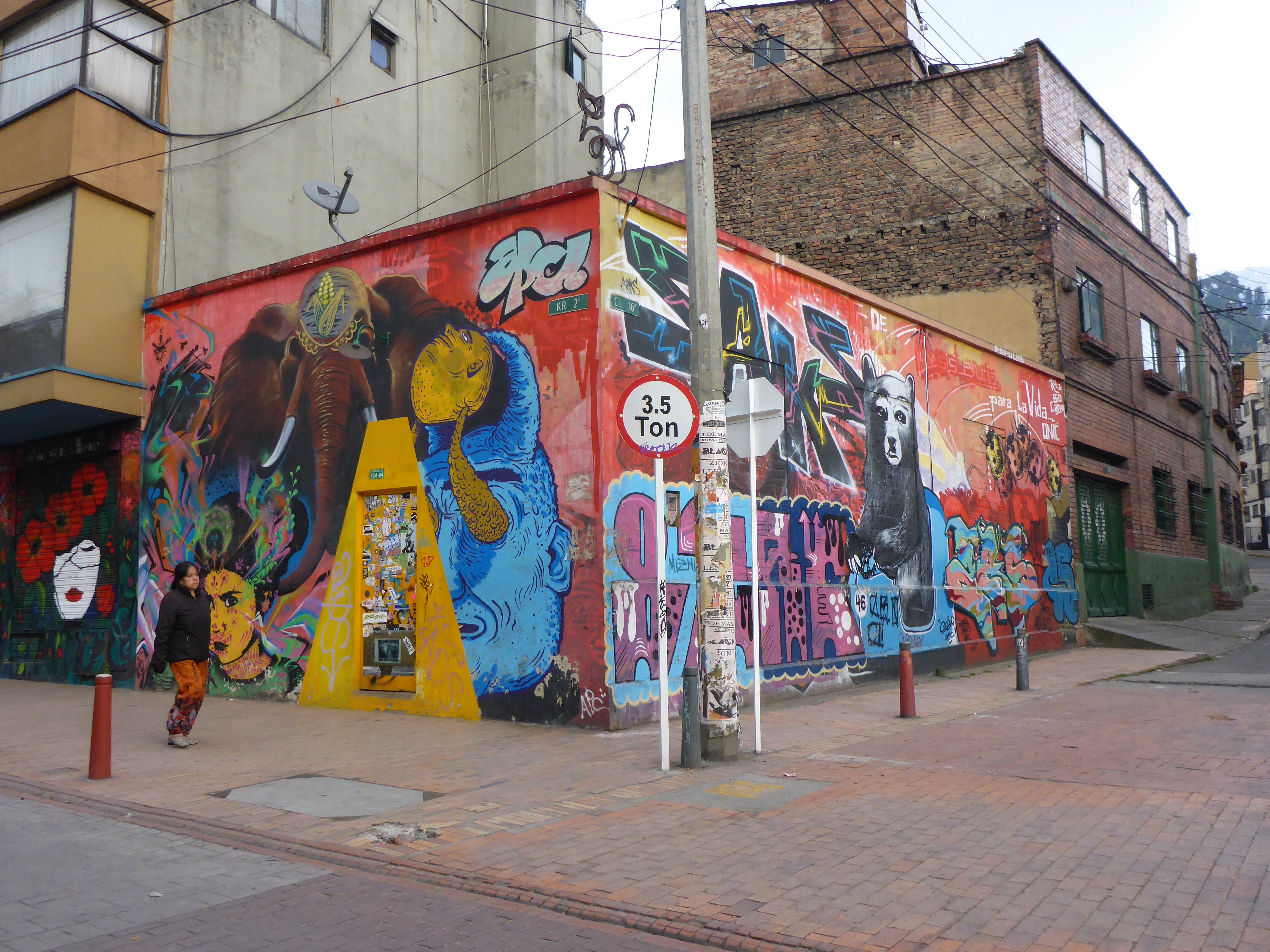
Work in progress, La Candelaria graffiti, Bogota, Colombia

La Candelaria graffiti, Bogota, Colombia
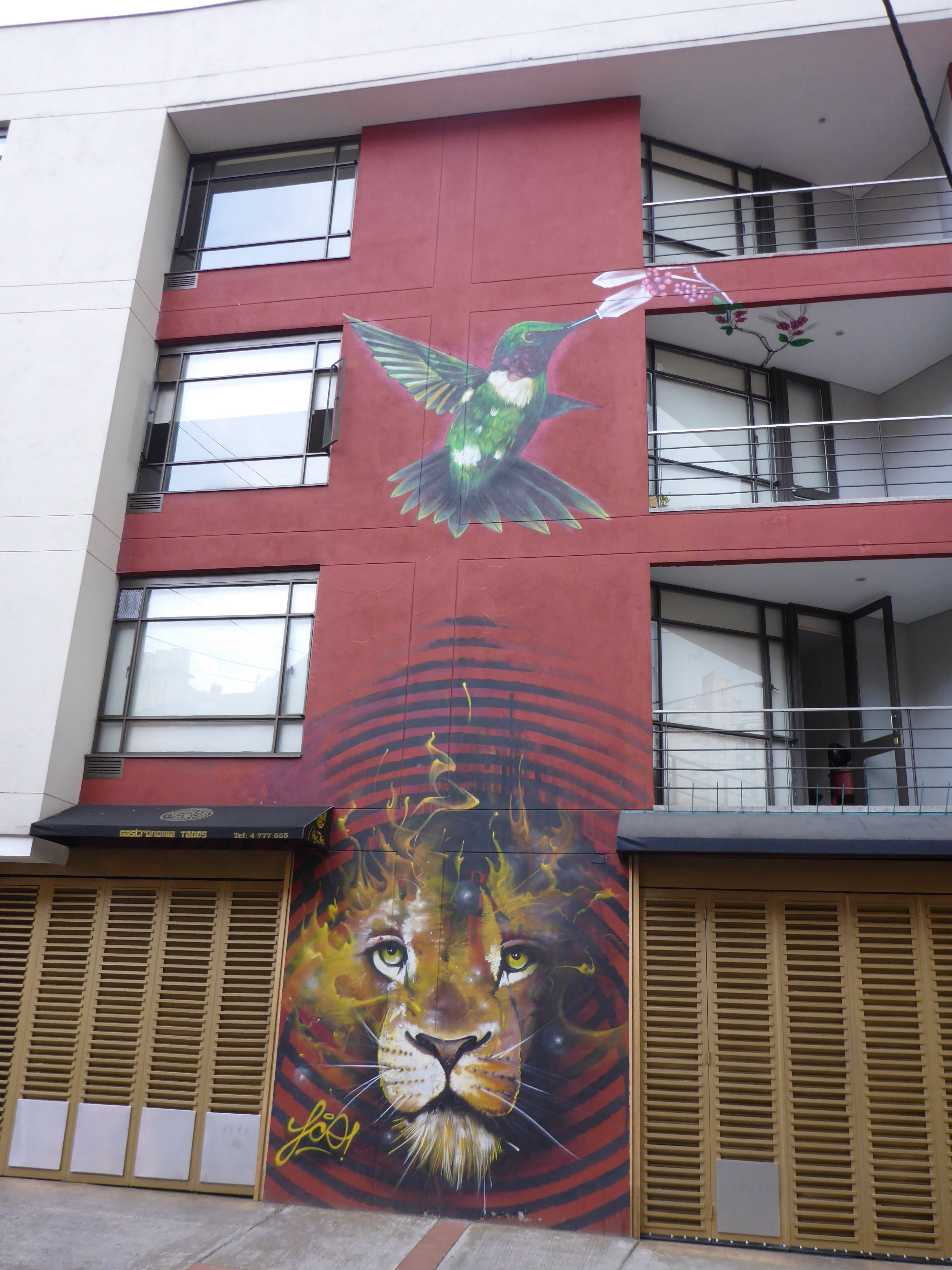
La Candelaria graffiti, Bogota, Colombia
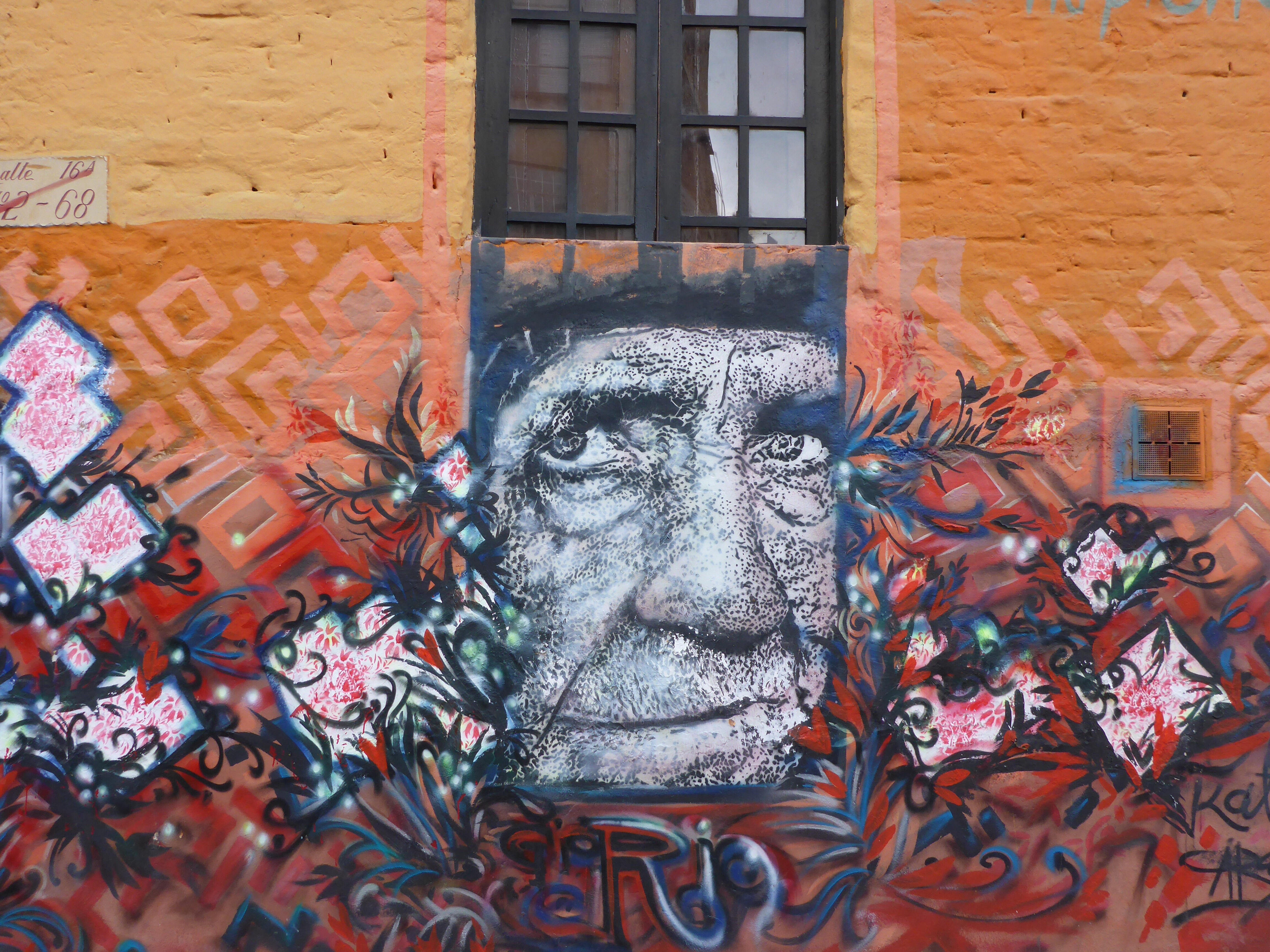
La Candelaria graffiti, Bogota, Colombia

La Candelaria graffiti, Bogota, Colombia

La Candelaria graffiti, Bogota, Colombia

La Candelaria graffiti, Bogota, Colombia

Even though I thought I would happily skip visiting Bogota, preferring to stay away from large cities, and the mad traffic riding through these entails, I am so glad we did!!  We have both loved every minute we’ve spent in Colombia.

Monday 4th May, we start making our slow way to Medellin where we intend airfreighting our bikes to Panama from.   We hope to get to Panama on Friday, so until then, hasta luego!!

– Anne
 

Cali, Colombia, Containers, Cats, Cane, Coffee and Cablecars.

I think I have covered all the ‘C’s and yes they are in sequence. The first two are fairly obvious, we are in Cali, Colombia. The others will be revealed in due course as this blog entry unfolds.

Our priority in Cali is to find and understand the options available to us for transporting our bikes to Panama or beyond. The demise of the ferry between Cartagena and Colon in Panama last week has put all options on the table. They include small sailing ships, containers, RORO ferry and airfreight.

The internet has provided us with a great source information as we have travelled and like our GPS we have come to rely on it. A problem occurs for us when the information found is inaccurate, mostly due to the passage of time. We also need to consider the author and their interpretation of what they are recording, as our views in this blog are influenced by who we are and our experiences.

We have also found instances where inaccurate information has been copied or linked in good faith and repeated a number of times. It therefore gains authenticity and credibility when undertaking a Google search. In our case the ferry demise is so recent that Anne’s information, which she shares on a travelling forum, is some of the most current.

Anne researches and sends 19 emails, many are not answered, but as time progresses we learn some interesting facts. If you are using the RORO ferry, remove your number plates as they are considered souvenirs. No we did not pack a spare set, we must remember for next time. The Colombian police will search every vehicle for drugs, including dismantling your car/bike so that means we will probably have to unpack and repack everything. We understand that takes hours to do. Sailing boats are not permitted to take motorbikes, probably to assist the now defunct ferry operator, this will change in due course but we cannot wait weeks or months for this to happen if we are to complete our journey on time.

After days spent researching, emailing and checking, we have decided that we will airfreight the bikes. While this is the most expensive option, but the quickest, we have no idea on port costs in Colon and our previous experience of port costs is that there are always a few more added on when you get there. We also avoid having to visit Colon and its port in Panama, which does not have the best reputation.

We and the bikes plan to depart on the 9th of May for Panama by air at this stage from Medellin, where we will go next week. Well that took a few paragraphs to describe and three days to sift through the information. We now need to come up with some 8 million plus pesos as they only accept cash. Off to the ATM each day to stock up each day.

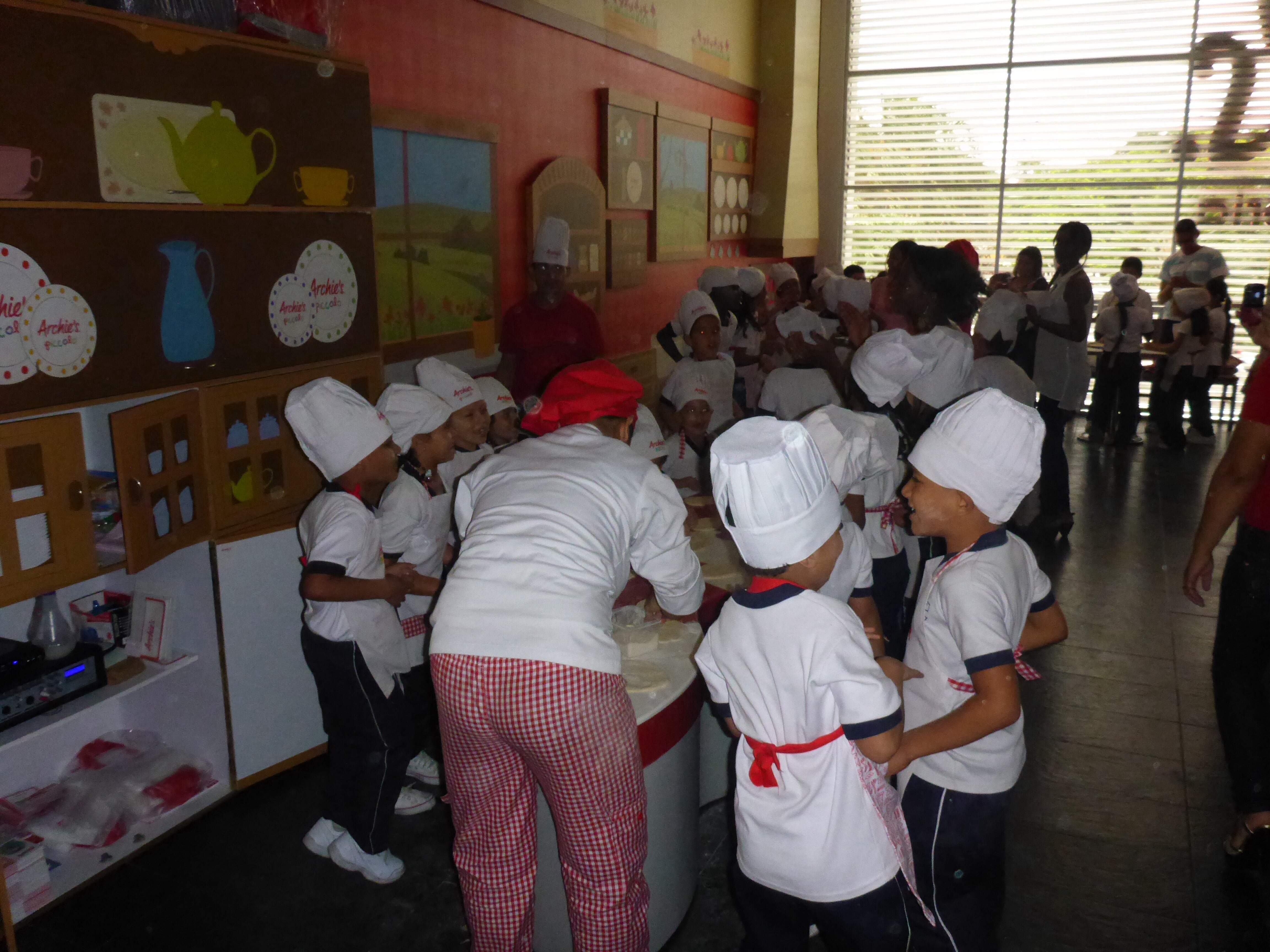
Cali is a modern city, but has used some old facilities well. The old railway maintenance buildings have been turned into a modern open air shopping centre. Here we found an unusual restaurant that had a section where kids could learn to cook, pizzas it seemed, and parents could shop without having to drag small unwilling shoppers around with them. Good idea.

Pizza making school for kids in a shopping centre, Cali, Colombia

Pizza making school for kids in a shopping centre, Cali, Colombia

People have been so helpful: apart from the motorbike pushing over the bridge, we have had someone take us a couple of blocks to look for a camera battery. A restaurant manager in Cali on hearing that Anne was allergic to cream and cheese, came to us with the whole menu ingredient list to make sure her choice was safe. A restaurant owner in Pasto, although rushed off his feet, was so attentive towards us, it was as if we were the only guests. When we took a wrong turn down a dirt track for 3kms looking for our accommodation, a young couple who we approached offered to hop onto their motorcycle to show us the way. Cab drivers in Cali rounded our fare down, not up, on several occasions!!

We also strolled along the banks of the fast flowing Cali river. A little land has been retained on each side for walking and jogging, popular in the early evening. Here we found a ‘El Gato del Rio’ a three-ton bronze sculpture by the late Colombian artist Hernando Tejada

El Gato del Rio bronze, Cali, Colombia

El Gato del Rio bronze, Cali, Colombia

This cat has 19 small cats painted by local artists situated nearby for company.

Leaving Cali is straightforward, apart from my soft pannier rubbing up against a car as we tried to cross four lanes of traffic in a tunnel, no damage done, but an unhappy driver. Cities are not our favourite driving places and we were glad to be out and heading past the many fields of sugar cane. Well that’s five ‘c’s, only two to go. We can smell the sugar cane as we pass the processing plants and a sweet honey smell from the large tress with pink flowers that overhang the road in places.

Road to Parque del Cafe, Montenegro, Colombia

Road to Parque del Cafe, Montenegro, Colombia

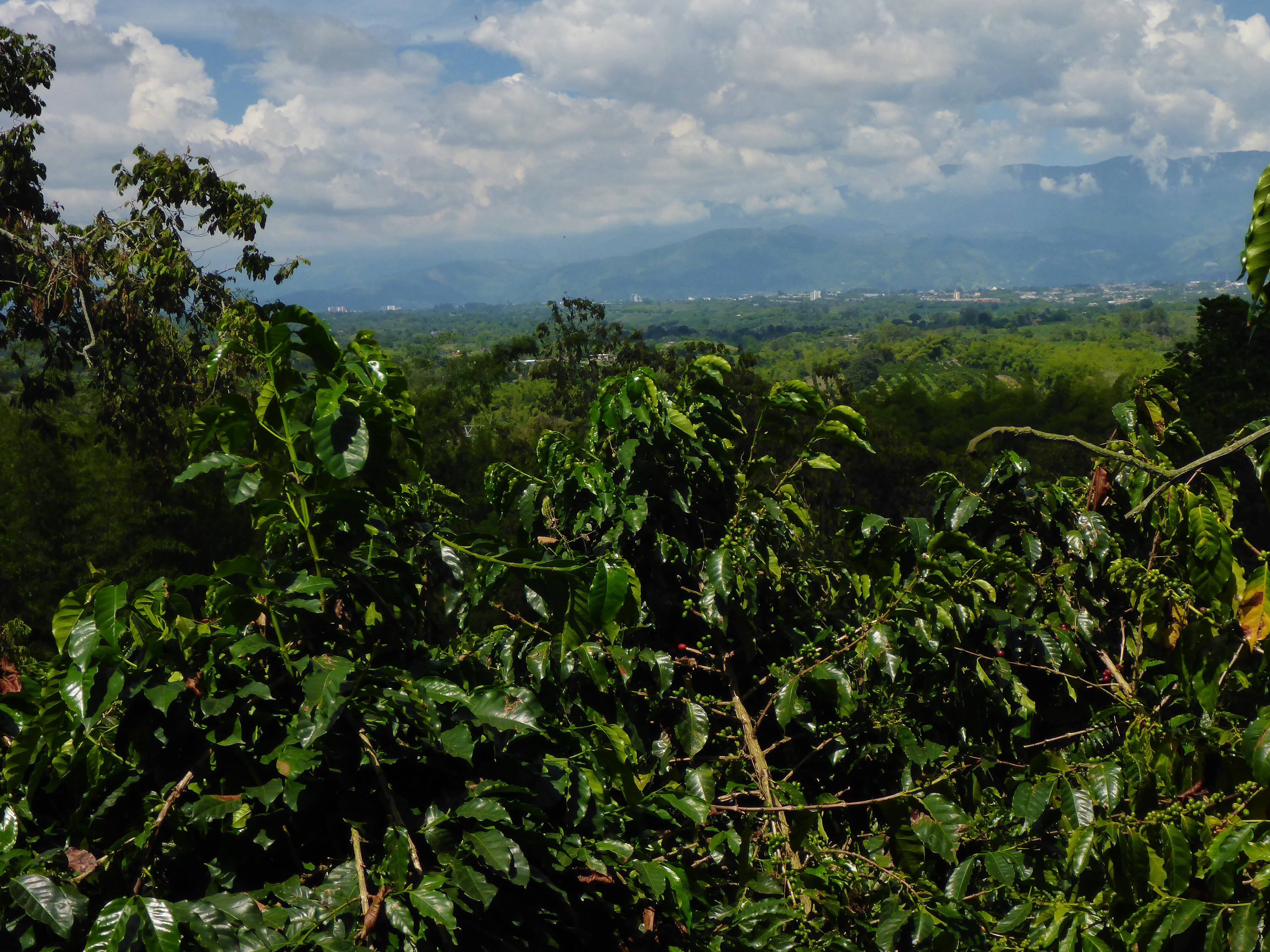
We are heading for coffee country. Columbia is famous for its coffee, although I understand from reading somewhere that Colombians prefer chocolate as a drink to coffee. Having seen the number of ice-cream sellers, I think there is a sweet tooth here. We are going to stay near a town called Montenegro but first will stop at the Parque del Café. This is a combination of coffee museum and amusement park set on a hillside overlooking a lush valley with the city of Armenia in the distance.

Armenia coffee growing area, Colombia

Armenia coffee growing area, Colombia

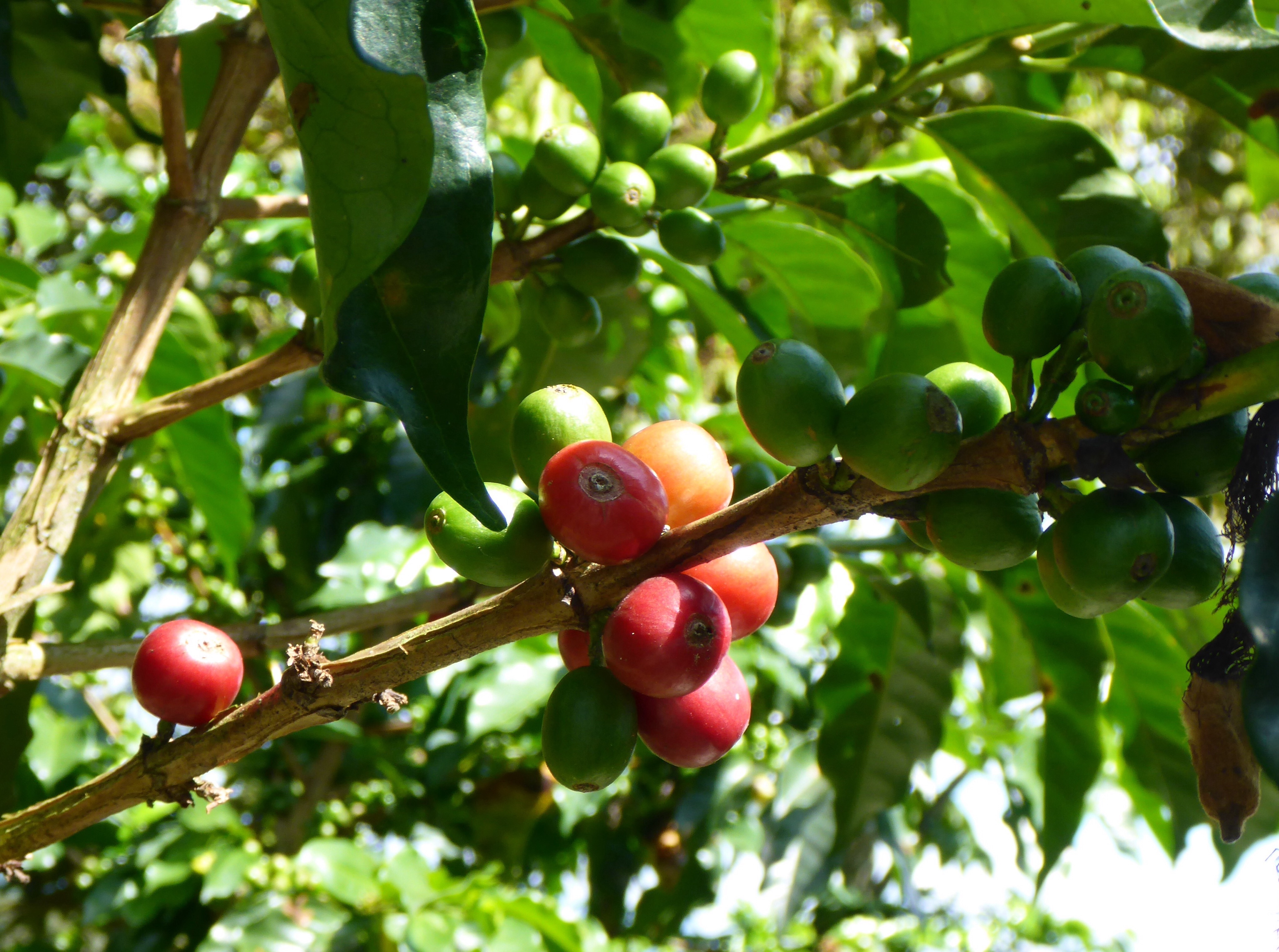
Colombian coffee, Colombia

Colombian coffee, Colombia

The coffee history is very interesting in this region, we learnt of the introduction of the coffee bush to the Americas between 1710 and 1725. The development of coffee as a major export product and the large employment it has generated saw the establishment of the Colombian Coffee Growers Association (FNC) a coffee co-operative in 1927. Many coffee farms are family run and FNC works to ensure that the 560,000 families that work in the coffee industry have a market for their product at the best price, help develop markets worldwide for 100% Colombian coffee and undertake on-going research.

A short 3D movie in the museum even had a coffee smell, which I love, introduced into theatre to help us appreciate coffee more. Sadly even with all this great information and marketing, I have not been converted to a coffee drinker, so it failed to gain another convert. I will stick to green tea. We are able to see a variety of coffee plants, both Colombian and Arabica planted on the hillside as we meander down to the amusement park section..

We “brave adventure riders” decline the -5% rollercoaster for the more gentle railway ride. We get enough excitement on the roads each day! Returning to the top of the park, we take the cable car back to the top. I am pleased to see that the cable car system is from Switzerland. I prefer to know that something important like this comes from a manufacturer in a mountainous country with a long pedigree.

–  Anthony

Columbia: Ride to Travel or Travel to Ride?

We have commented previously that we “Ride to Travel” rather than “Travel to Ride”. The distinction in our minds is is that the first uses the motorcycle to reach new destinations, the latter is more focused on the riding the motorcycle in a variety of terrains. We have always considered ourselves to be in the former category. Riding through Ecuador and Columbia we have found that our focus has been on the riding, and less on the historical town centres and famous buildings. Our enjoyment of interacting with the people we meet remains undiminished and each time we do it confirms our belief in the positive aspects of humanity.

This video is the result of our ride from Pasto to Cali in Columbia. While this trip took 10 hours to complete, partially due to Anne’s dodgy fuel problem that lasted for a couple of hours in the mountains with the engine dying over 200 times! All said, it was a glorious day’s ride, we definitely felt we “Travelled to Ride” on this day. Enjoy!


Stunning scenery from Quito to Pasto

Although Karen and Jos have very kindly invited to stay with them as long as we like, we feel we should move on. It is not that we want to leave Ecuador in a hurry, but spending more time in Quito which is huge has no appeal and we need to give ourselves a buffer if time to sort out how we will get out of Colombia (the ferry service to Panama having been terminated this week).  Before we leave, Jos and Karen, who have lived 18 years in Colombia before moving to Ecuador, give us some safety tips on security in Colombia which we will be sure to follow:  we should not stop between Pasto and Cali and definitely not ride there at night.

Ready to leave Jos and Karen's in Quito

Ready to leave Jos and Karen’s in Quito

What a ride out of Quito!!! How they managed to construct so many buildings and suburbs in this landscape, clinging to sheer cliffs, is incredible. You have to stay alert while driving around Quito as there are so many ramps and overpasses that go in opposite directions to where you are aiming, to get around cliffs or creeks and rivers. A bit of a maze. Luckily getting out of the city from Karen and Jos is a breeze and we are out into the beautiful countryside in no time.

Entrepreneur in Ecuador

Entrepreneur in Ecuador

Entrepreneur in Ecuador

Entrepreneur in Ecuador

On the equator in Ecuador

On the equator in Ecuador

We ride up and up again, up to 3,600 metres before going down again. Glorious roads and countryside.

Cayambe, Ecuador

Cayambe, Ecuador

Heading to Otavalo, Ecuador

Heading to Otavalo, Ecuador

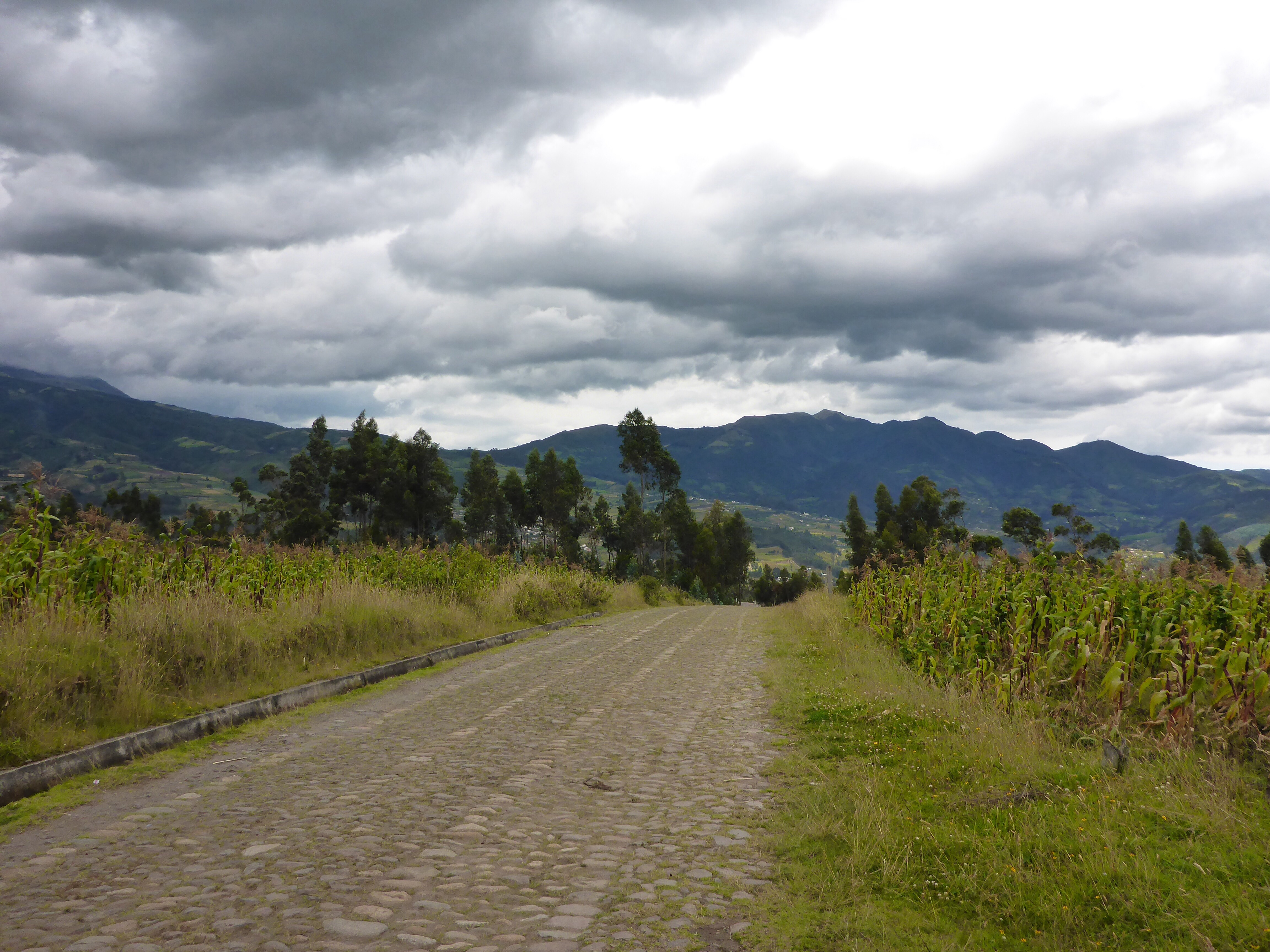
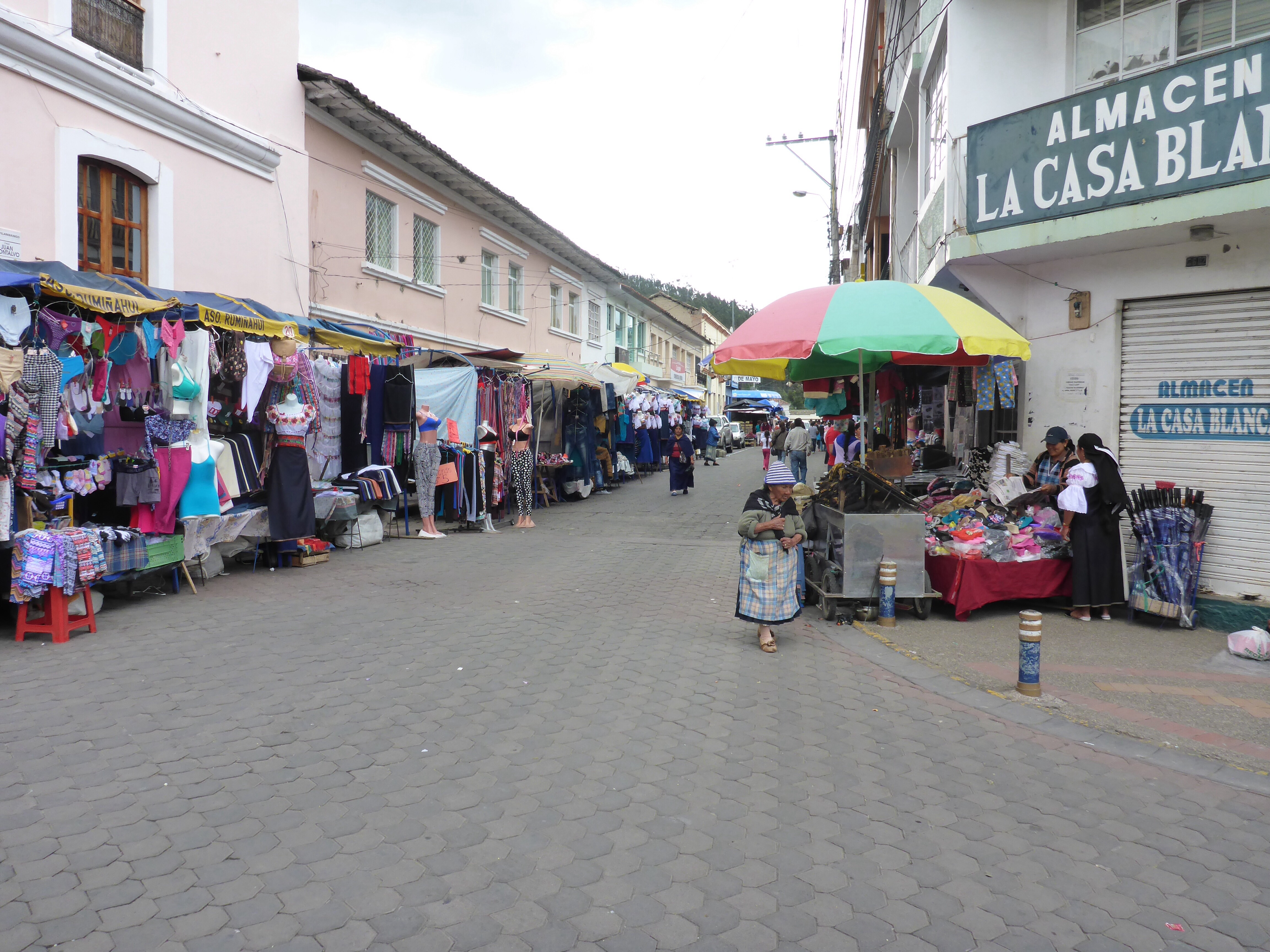
Otavalo is renowned for one of its markets where people are dressed in traditional costumes and selling various clothes, shawls, ponchos, jewellery, most goods we are told resembling Peruvian goods – sounded way too touristy for us so Jos and Karen mentioned a route that took us near a lake on the outskirts of Otavalo and into tiny villages. We stop at a food market there and enjoy a quiet stroll and chat with an old lady. We chat, not quite understanding each other so hold hands and everything is clear. This is the side of travel we love. We started riding up towards a nature reserve, but after 3kms of pebbles up a narrow windy road, we turned back when it started raining, still going for the safe option as you see…

Pivarinshe, Ecuador

Pivarinshe, Ecuador

Pivarinshe, Ecuador

Pivarinshe, Ecuador

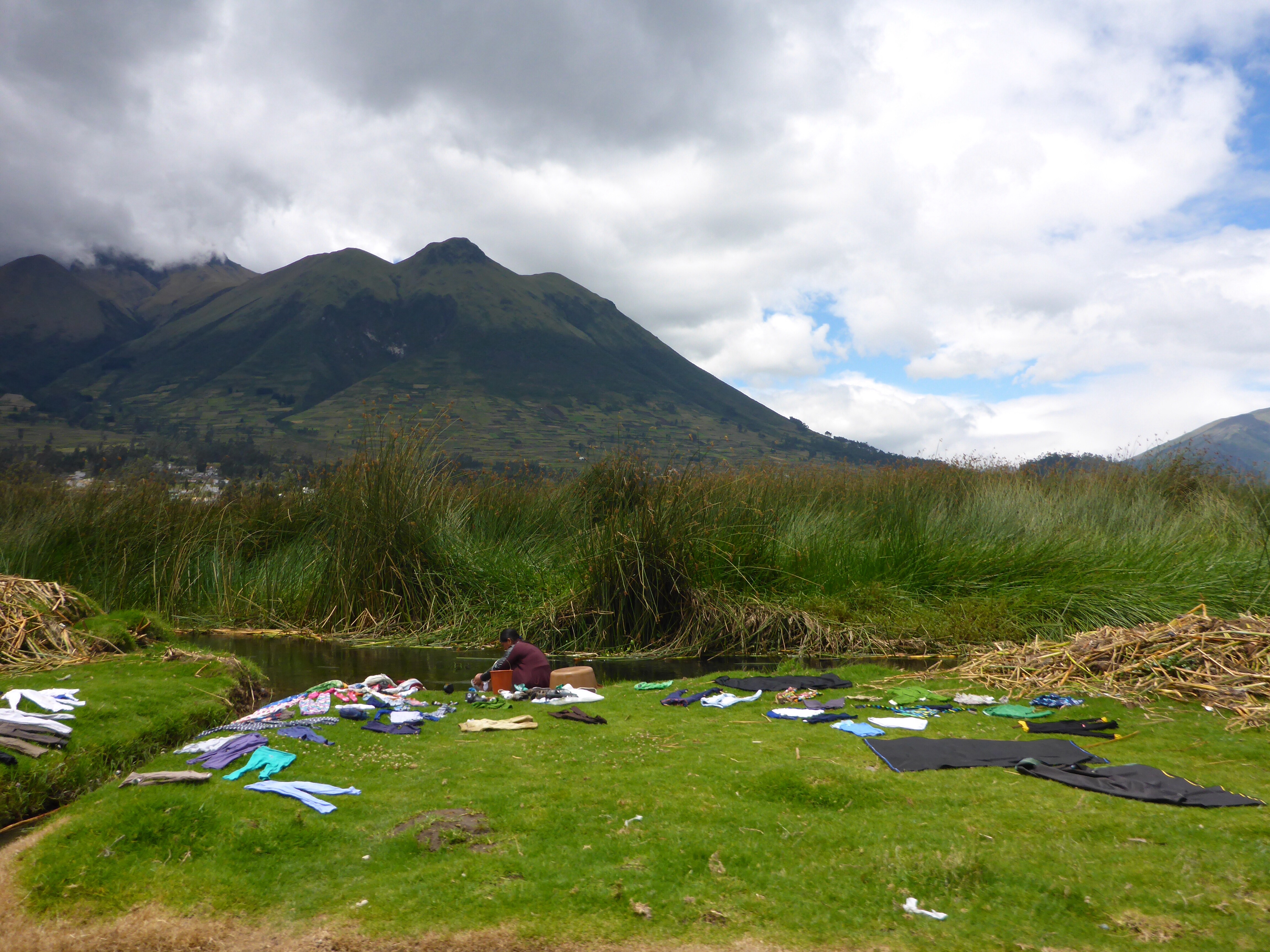
Outside Otavalo, Ecuador

Outside Otavalo, Ecuador

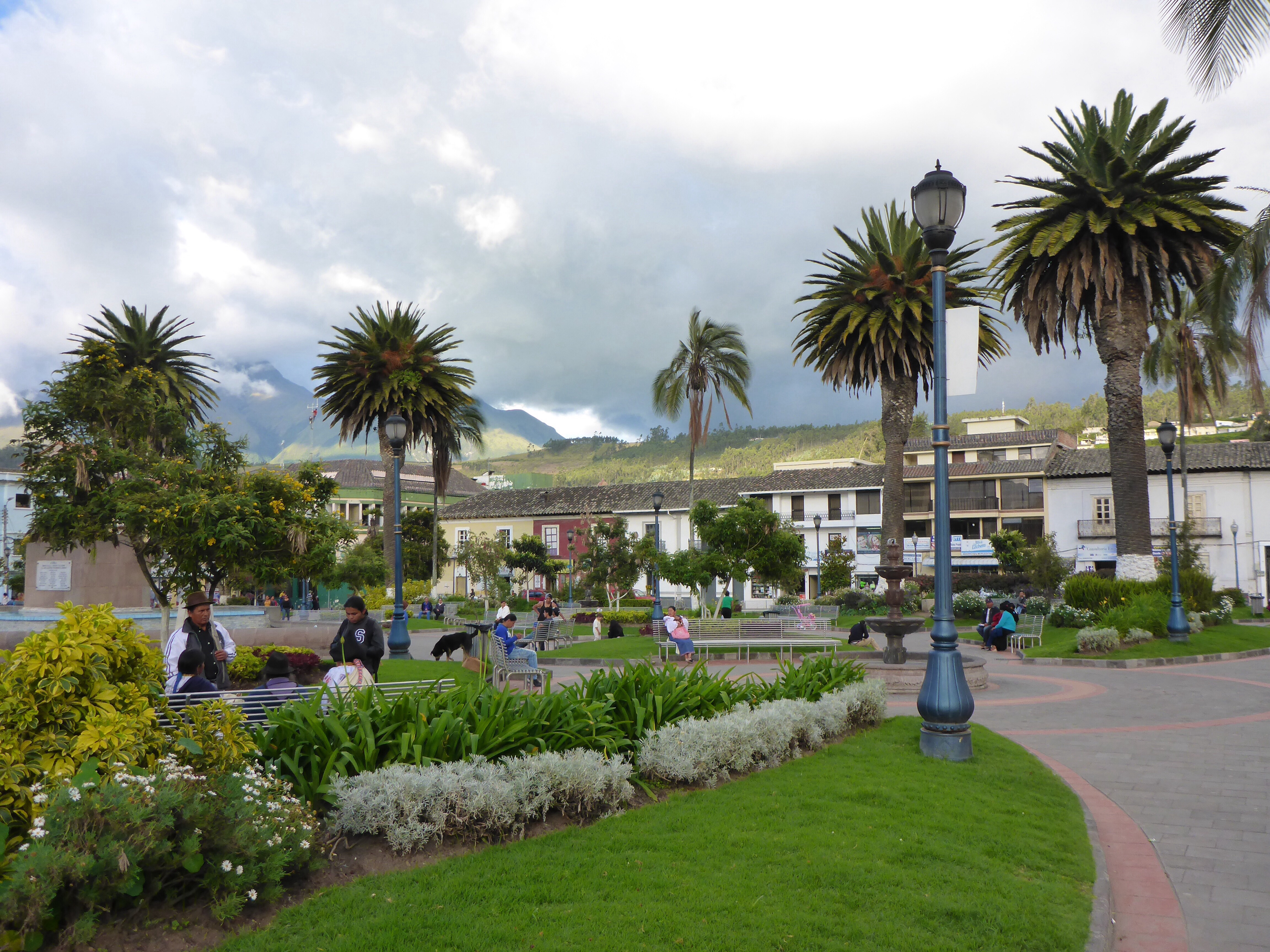
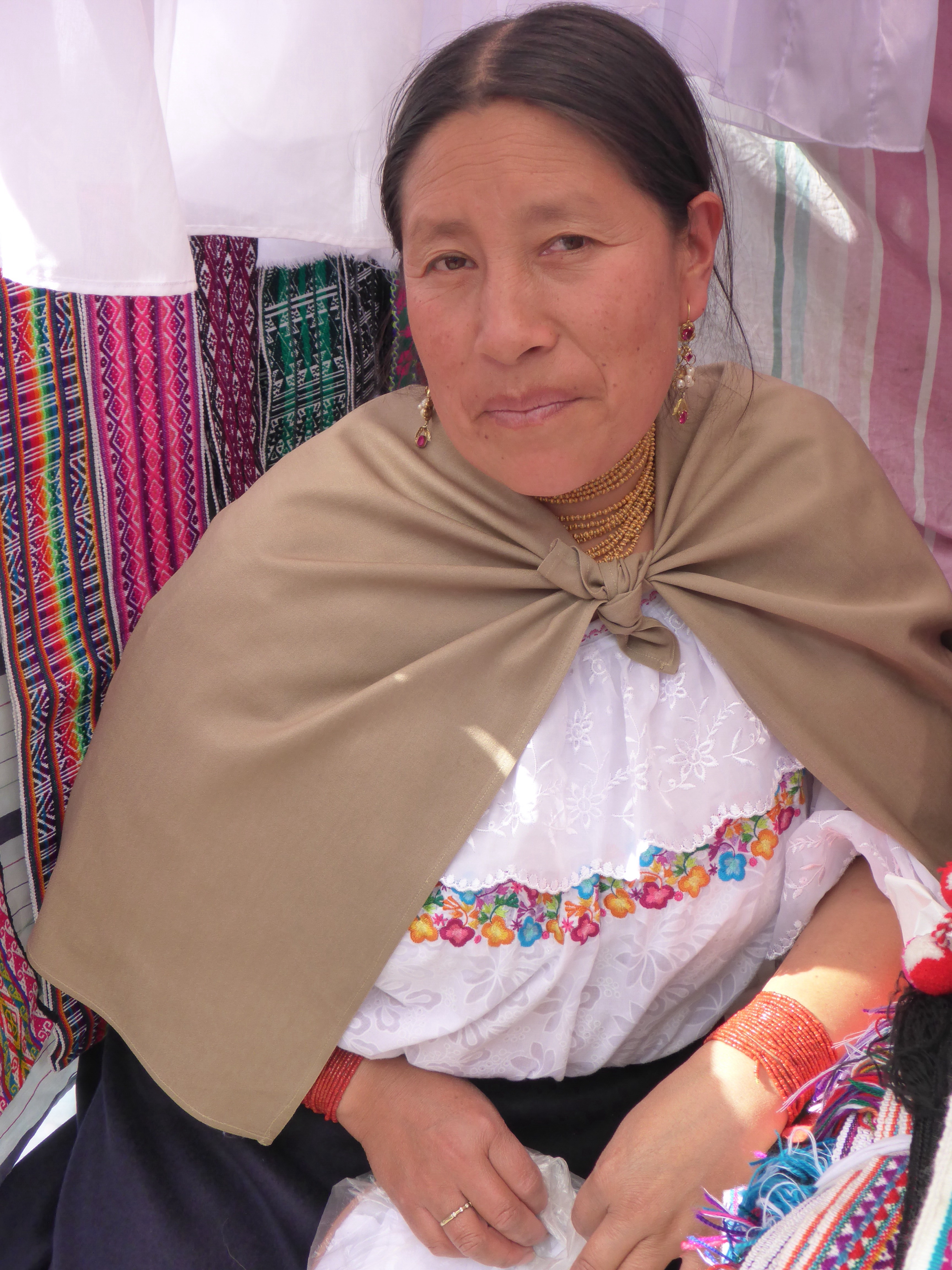
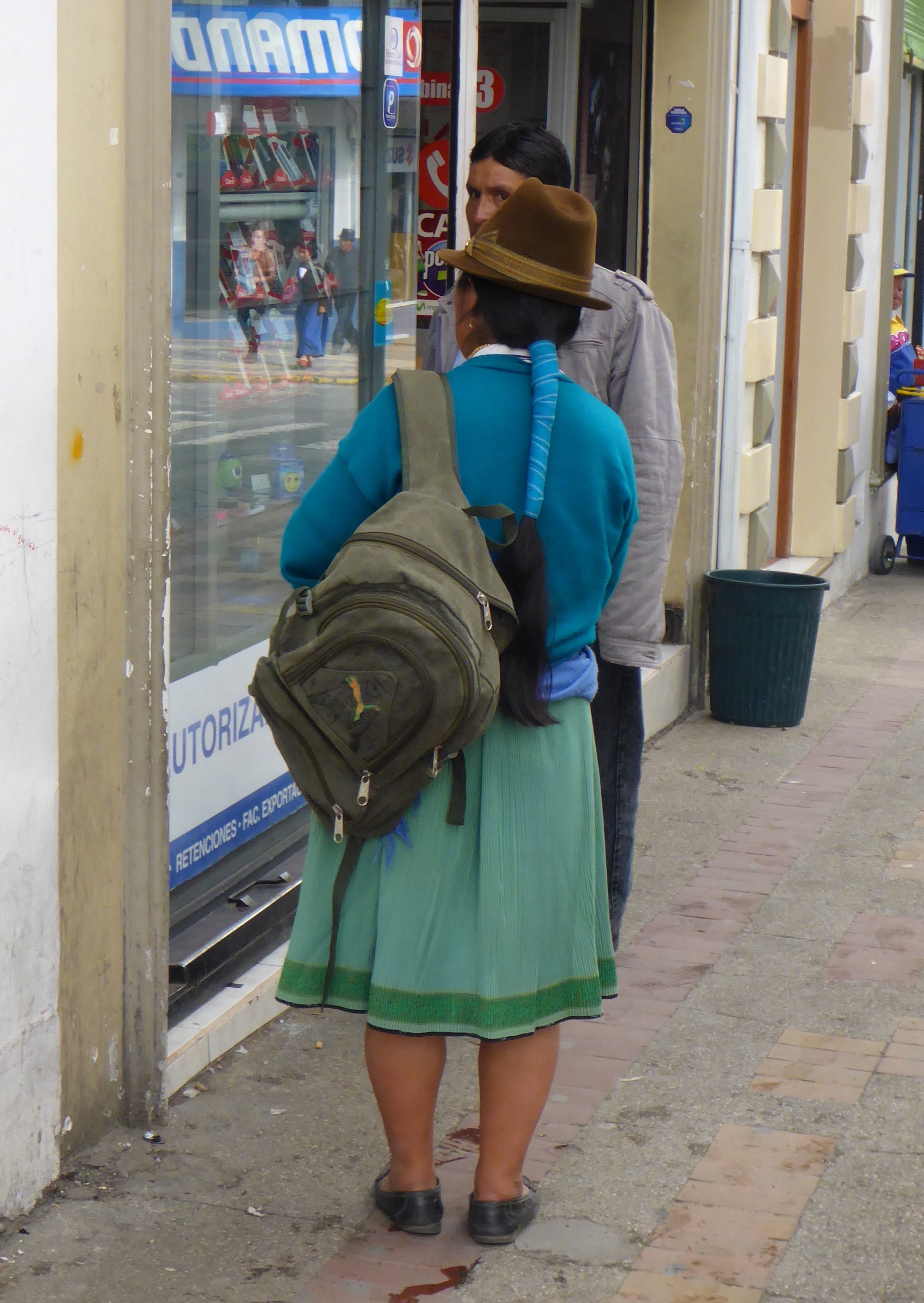
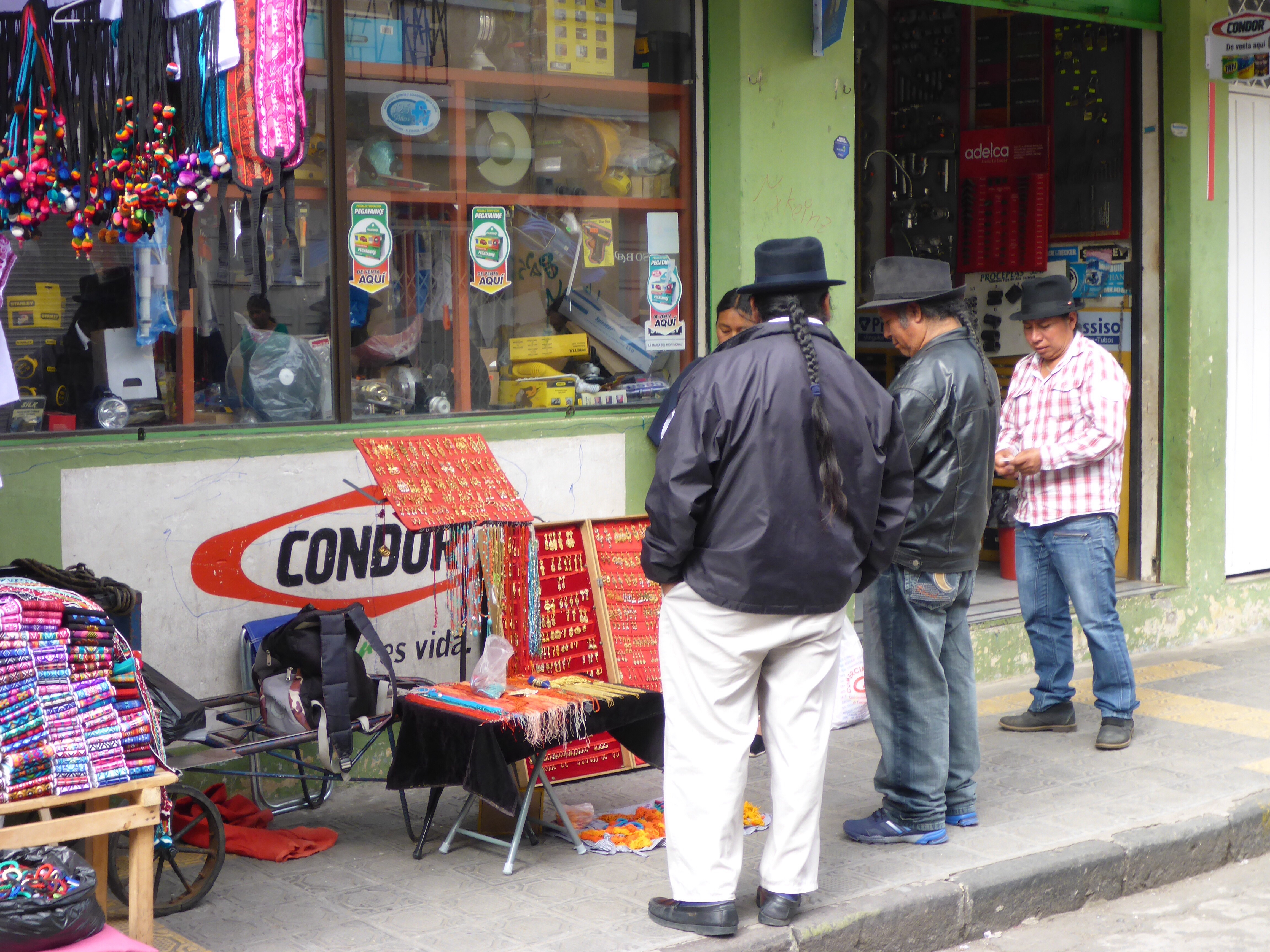
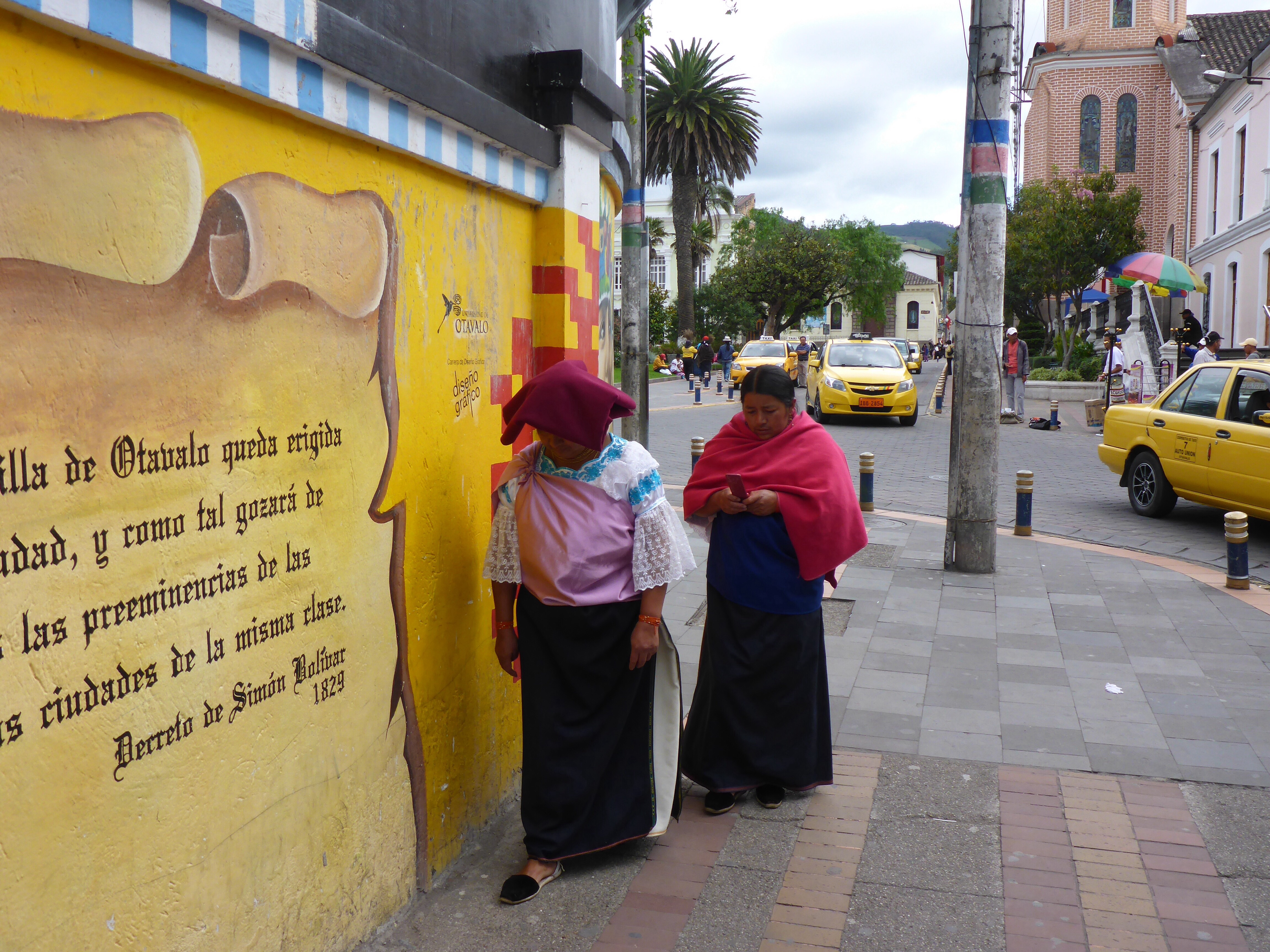
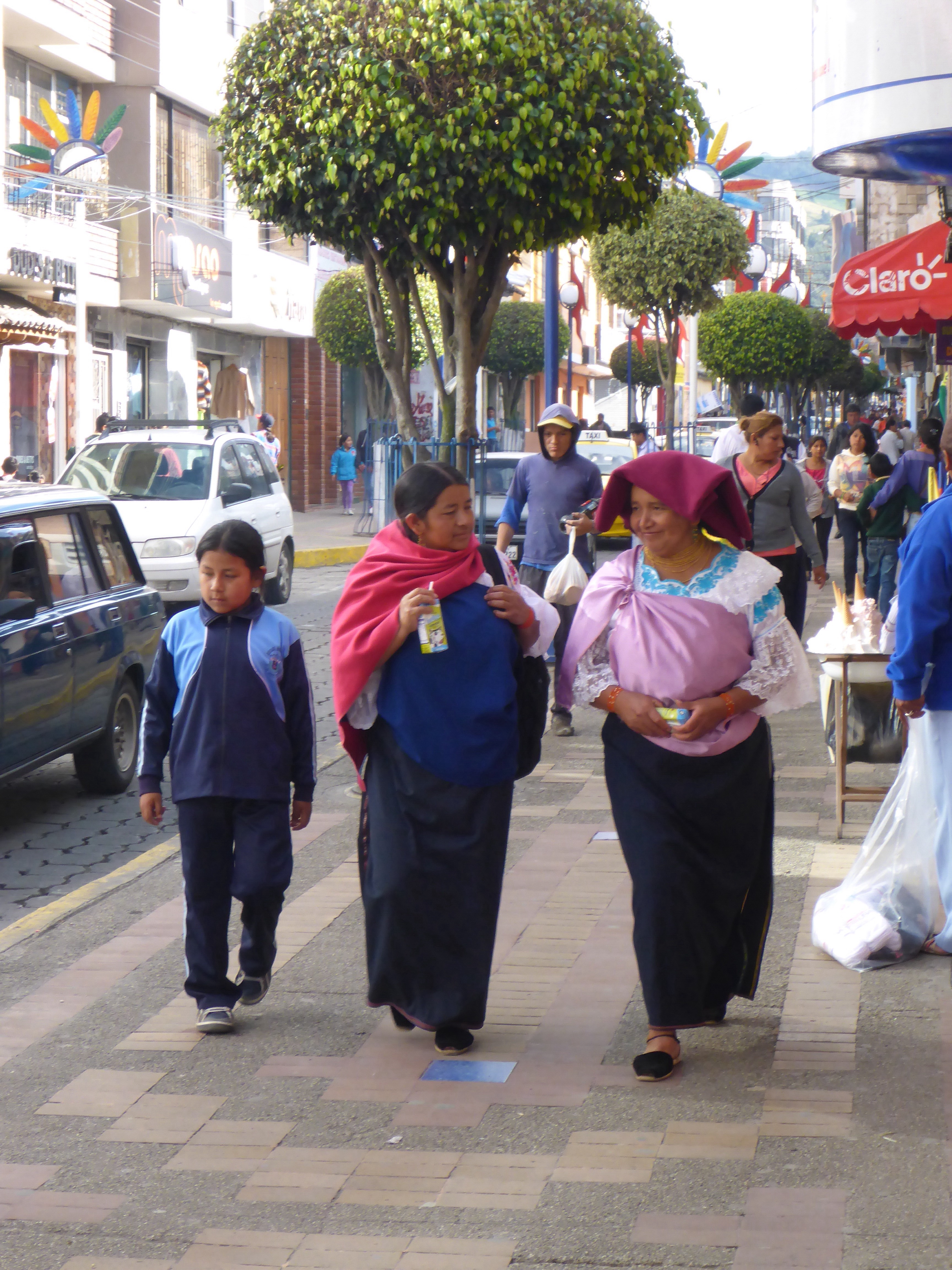
While Anthony rests at the hotel, I enjoy walking around the local market, watching a lady sewing, sitting in the main square watching people. Eventually, I make my way to the touristy market as many are packing up. What was interesting to see was that ladies there wear their traditional clothes everywhere. It is not just for tourists at the touristy market.

Otavalo, Ecuador

Otavalo, Ecuador

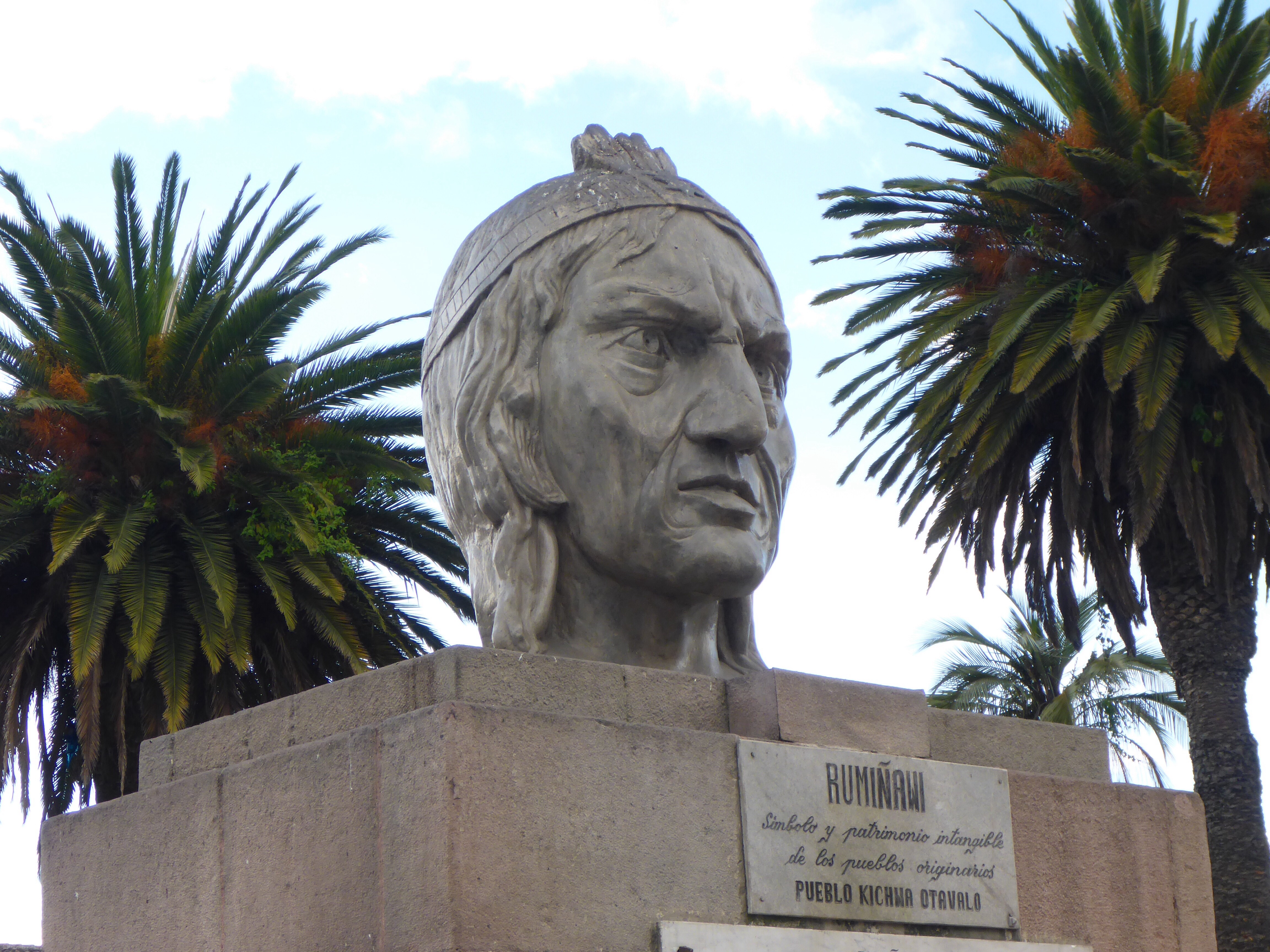
Inca warrior Rumiñawi, Otavalo, Ecuador

Inca warrior Rumiñawi, Otavalo, Ecuador

Local market in Otavalo, Ecuador

Local market in Otavalo, Ecuador

Otavalo lady

Otavalo lady

Traditional blouses in Otavalo, Ecuador

Traditional blouses in Otavalo, Ecuador

Otavalo, Ecuador

Otavalo, Ecuador

Otavalo, Ecuador

Otavalo, Ecuador

Otavalo, Ecuador

Otavalo, Ecuador

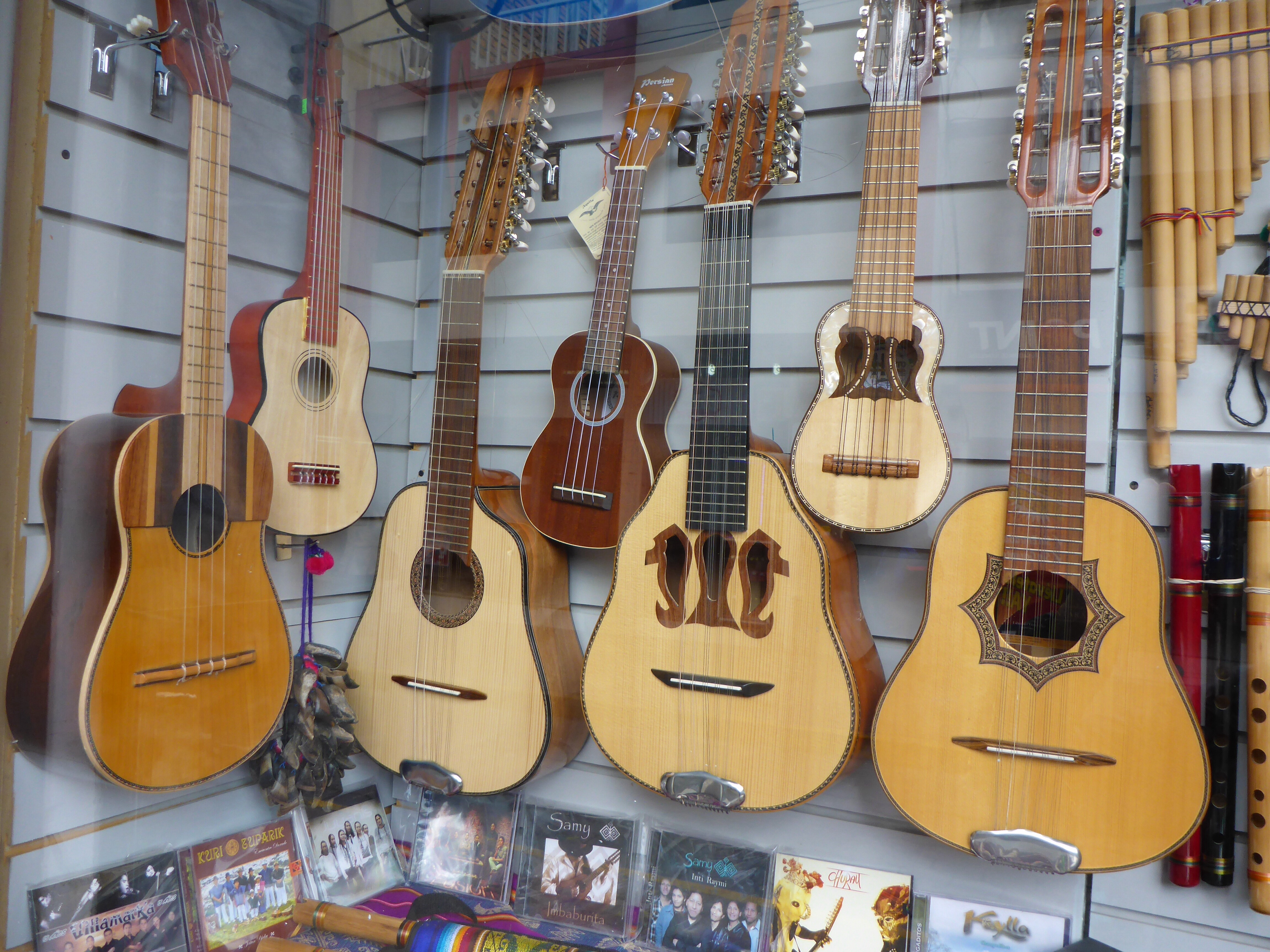
One of several music stores in Otavalo, Ecuador

One of several music stores in Otavalo, Ecuador

Otavalo, Ecuador

Otavalo, Ecuador

Ice cream seller in Otavalo, Ecuador

Ice cream seller in Otavalo, Ecuador

Otavalo, Ecuador

Otavalo, Ecuador


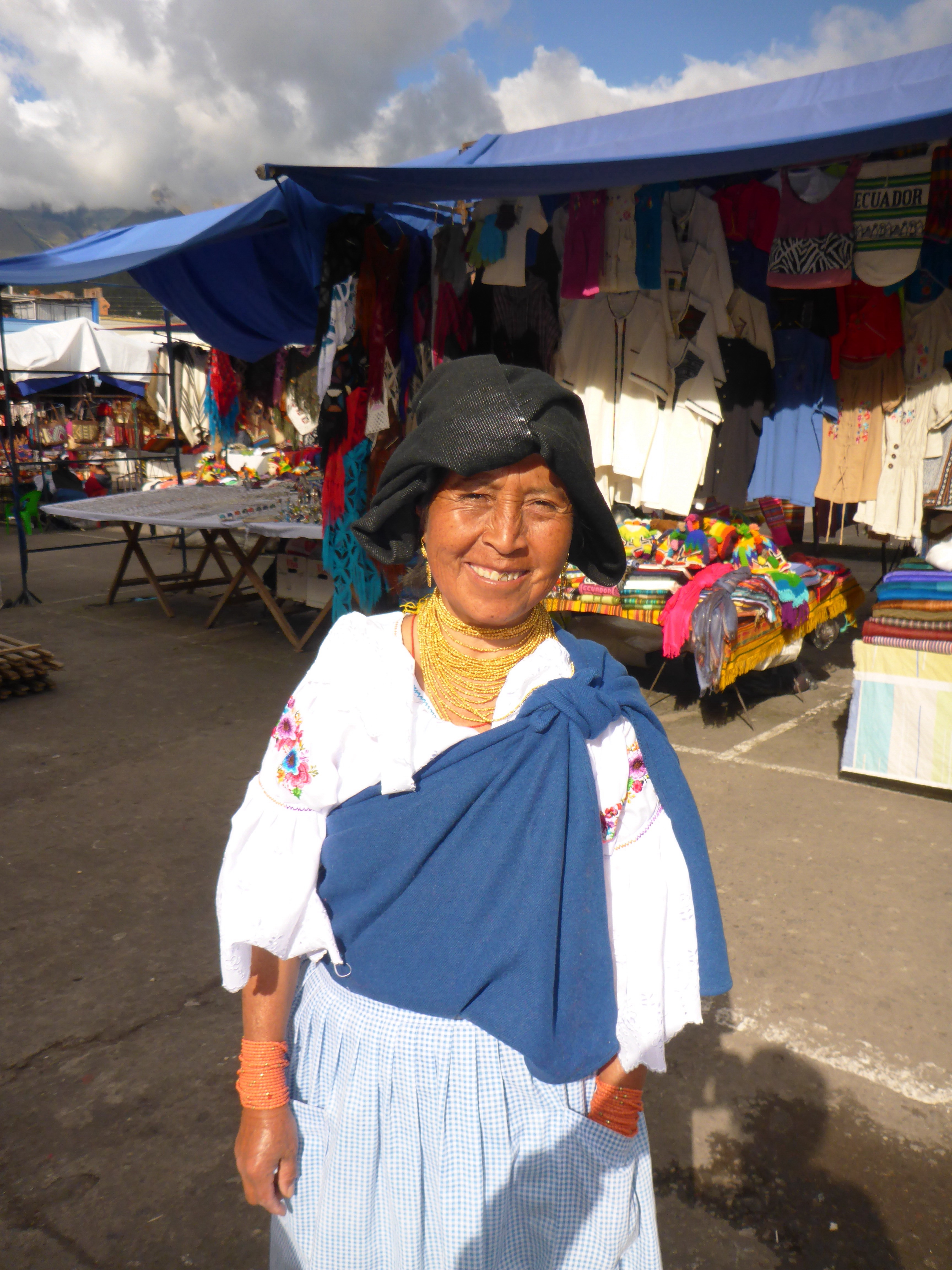
Lovely market seller in Otavalo, Ecuador

Lovely market seller in Otavalo, Ecuador

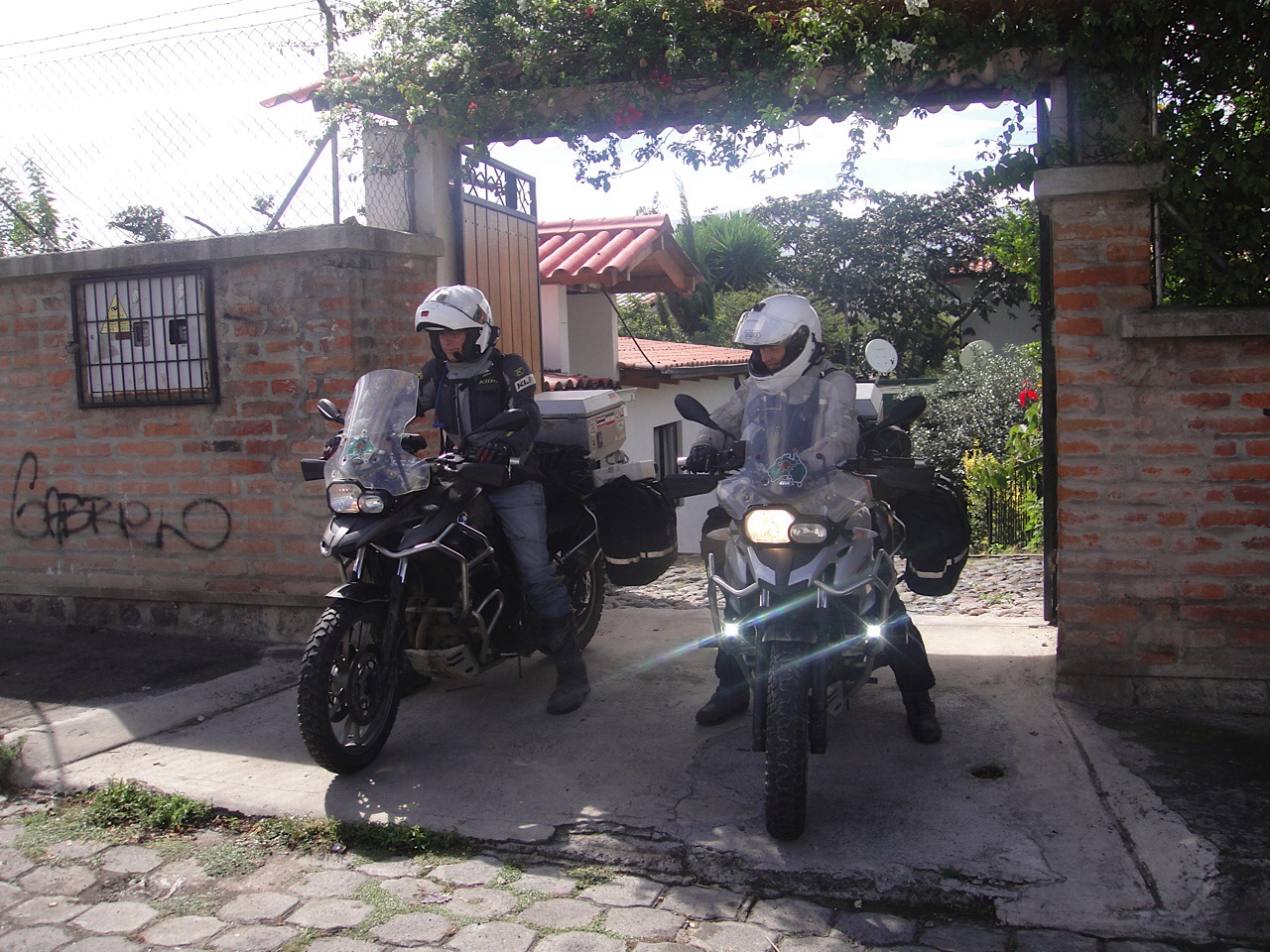
We get ready to leave Otavalo early as we will be crossing the border into Colombia today and want to make it to Pasto well before dark, and we have 227kms to cover plus an unknown amount of time at the border. We meet up with the hotel owner again as we are packing the bikes: did we find the stickers at the place he mentioned to us last night? No luck. So he decides to go off to the store himself and look for us. He has no luck either but how lovely of him!!

We enjoy our ride up to the border:

Ibarra, Ecuador

Ibarra, Ecuador

Flower greenhouses in Ecuador

Flower greenhouses in Ecuador

Bolivar county, Ecuador

Bolivar county, Ecuador

Tulcan, Ecuador

Tulcan, Ecuador

Tulcan, Ecuador

Tulcan, Ecuador

We arrive at the Rumichaca border at 10.30. The immigration processing office is so full that a security guard holds people back from entering. It takes us 2 hours to get the immigration exit stamp. Before going onto the Colombian border, we have a quick snack sitting on the side of the road – a can of salmon and dry biscuits – our favorite staple traveling diet. On we drive to the Colombian side which is very close, and up we walk to the immigration office which takes a couple of minutes and then onto the customs office. A gentleman in a crisp black suit greets us as we’re walking up to the office, and tells us in English that the office is closed but he’ll get someone to see us anyway. Very nice. They unlock the door and in we go. Unfortunately, the lady there is leaving her shift and her colleague who should be processing us is nowhere to be found. Just go and have lunch and come back she says. As we’ve had lunch, we decide it is best to ‘save’ our place in the queue, ie sitting at the desk waiting for someone to come back from lunch. We use that time for one of us to get the required photocopy of our passports with our immigration stamp (luckily, for once Kristjan had gone through the border before us, so we knew the process) and get our road insurance. An hour later, a customs guy arrives. It takes another hour for him to enter all the vehicule information into his computer, while about 20 people still wait outside the locked office. What delayed us a little more was the requirement to take a carbon rubbing of our chassis number – not easy when it is printed on a label, not engraved but they got enough and we were finally stamped into Colombia 4 hours after arriving at the border.

Our first priority is to drive into Ipiales to get our SOAT road insurance as the border office computer was down!! You can buy your SOAT at at supermarket but where is that supermarket? Once in the centre, I suggest that Anthony stays with bikes while I hop into a taxi there and back. I take a quick photo of where we are so I can find my way back!!

Parque San Felipe, Ipiales, Colombia

Parque San Felipe, Ipiales, Colombia

Finally, we are off. We are in Colombia!! Wow, I have butterflies of excitement.

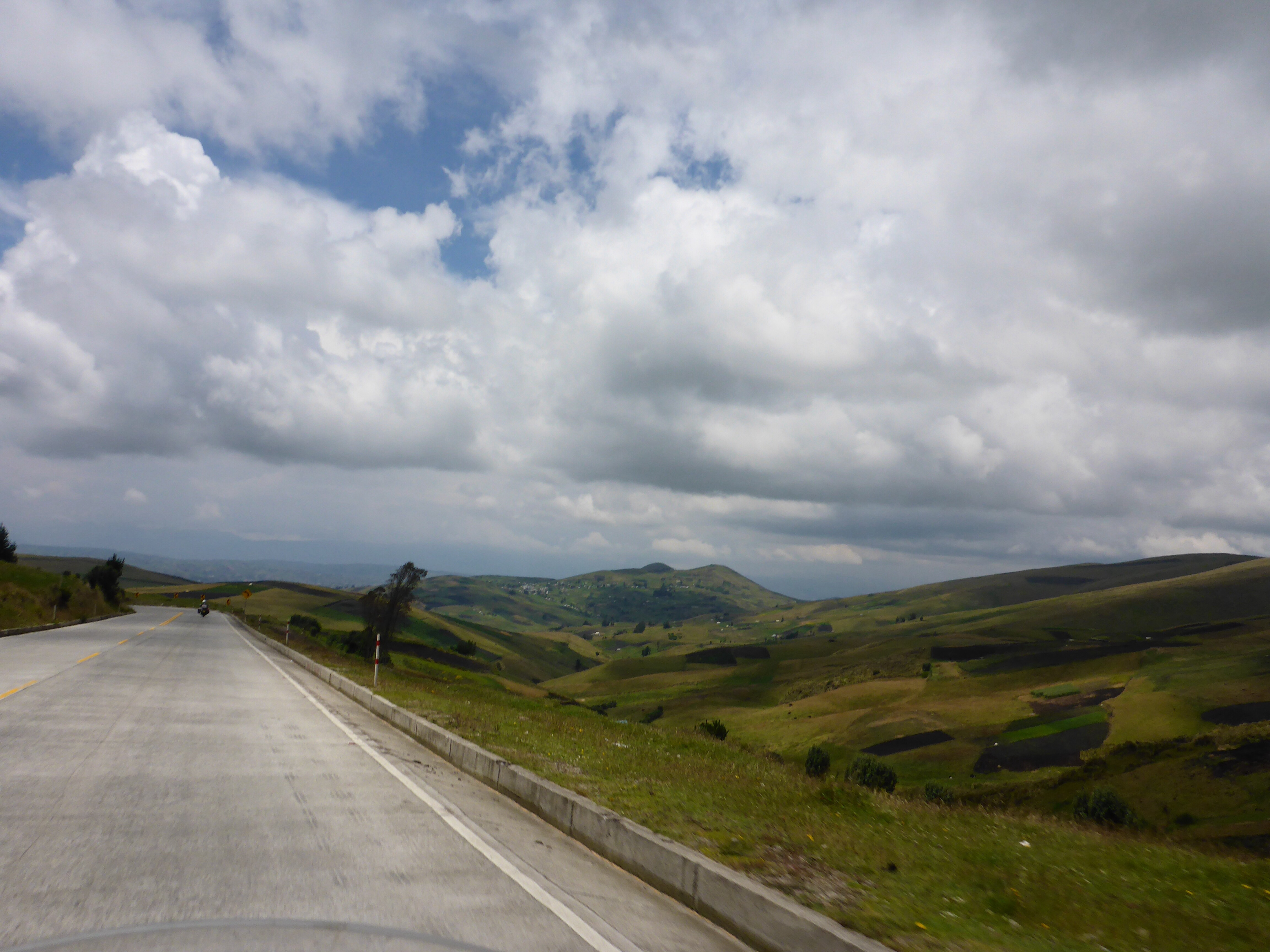
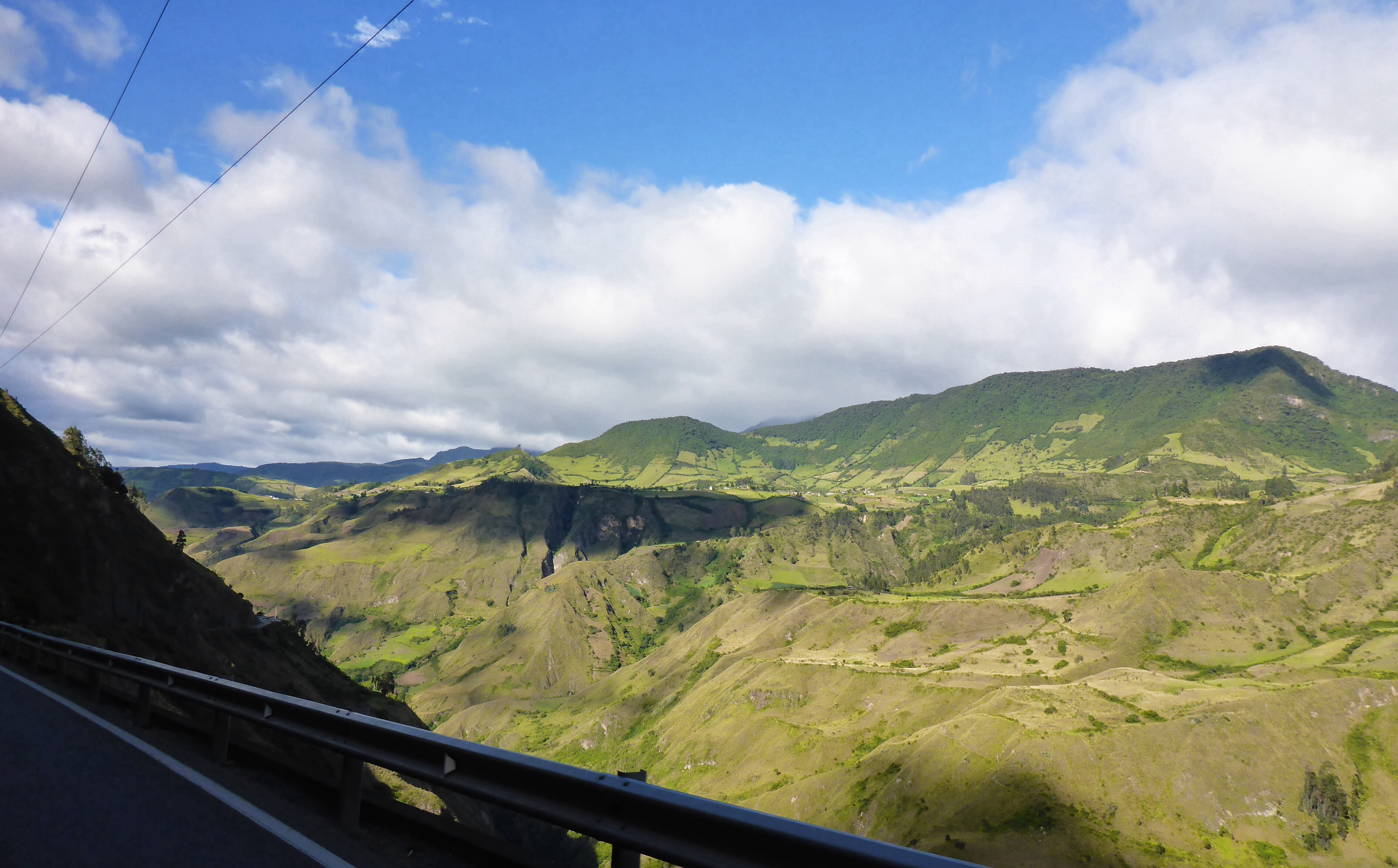
Our road insurance complete, we finally head out of Ipiales and start our journey towards Pasto. The scenery is so gorgeous, once again, every new bend surprising us even more. As a bike rider, the road is paradise. Gentle bends, perfectly cambered road, vistas as far as the eye can see of beautifully green rolling hills, then suddenly cliffs and deep green gorges. Here is how the scenery changed within 15′ (luckily my Lumix camera records the time as I would never remember such details):

North of Ipiales, Colombia

North of Ipiales, Colombia

North of Ipiales, Colombia

North of Ipiales, Colombia

North of Ipiales, Colombia

North of Ipiales, Colombia

North of Ipiales, Colombia

North of Ipiales, Colombia

We get to our hotel in Pasto around 5pm – Hotel Frances La Maison which Anthony spotted online. It is owned by a Frenchman, Patrice, who has been living in Colombia for 20 years. It is good to speak French!! We have dinner at a little pizza place 5′ walk down the road: I can say it was the best pizza I have ever had and the owner of Alina was such a wonderful and gentle guy. Colombia has a great feel so far and we are enjoying being here.

– Anne

Up to Quito

Ecuador has been our first country visited for the first time since Laos, back in November 2014. As Anne talked about in the previous blog entry, a pleasure to ride in. We have no specific plans but are heading to Quito via Riobamba to take up Jos and Karen’s kind offer to stay with them. One advantage of the route up the middle of the country is the absence of Malaria at the altitudes we will encounter.

As we have travelled up the west coast of South America, we have been blessed with nice dry weather. We have managed to avoid almost all of the unseasonal downpours that have afflicted some parts of the west coast. The lush environment that has surrounded us since we left Peru and entered Ecuador can only be maintained by regular watering from above. We will need to learn to ride in the rain again!

We did hear some troublesome news from a couple heading south at the Peru – Ecuador border that the new ferry service thhat plies between Cartagena in Columbia and Colon in Panama may be suspended from 23 April 2015. This was reiterated in a recent blog entry we found. Our easy transit to Panama has been terminated and we are back to the drawing board on that one. Nothing we can do, just part of the challenges all travellers can face regardless of their mode of transport.

Our Garmin Montana GPS has faithfully recorded the route travelled since we started in the UK back in June 2014. One of the metrics it records is altitude gained. We are at over 95 kilometres or 58 miles and our journey from Guayaquil to Quito will take us over a 3,800 meter pass so I think that before we leave South America we will break the 100 kilometre barrier in vertical height gained. Update – the Garmin only displays up to 99999 metres, or 100km / 62 miles. So now the display shows _ _ _ _ _ maybe I should have reset it somewhere along the way.

Out of the city amd on our way.

Out of the city amd on our way.

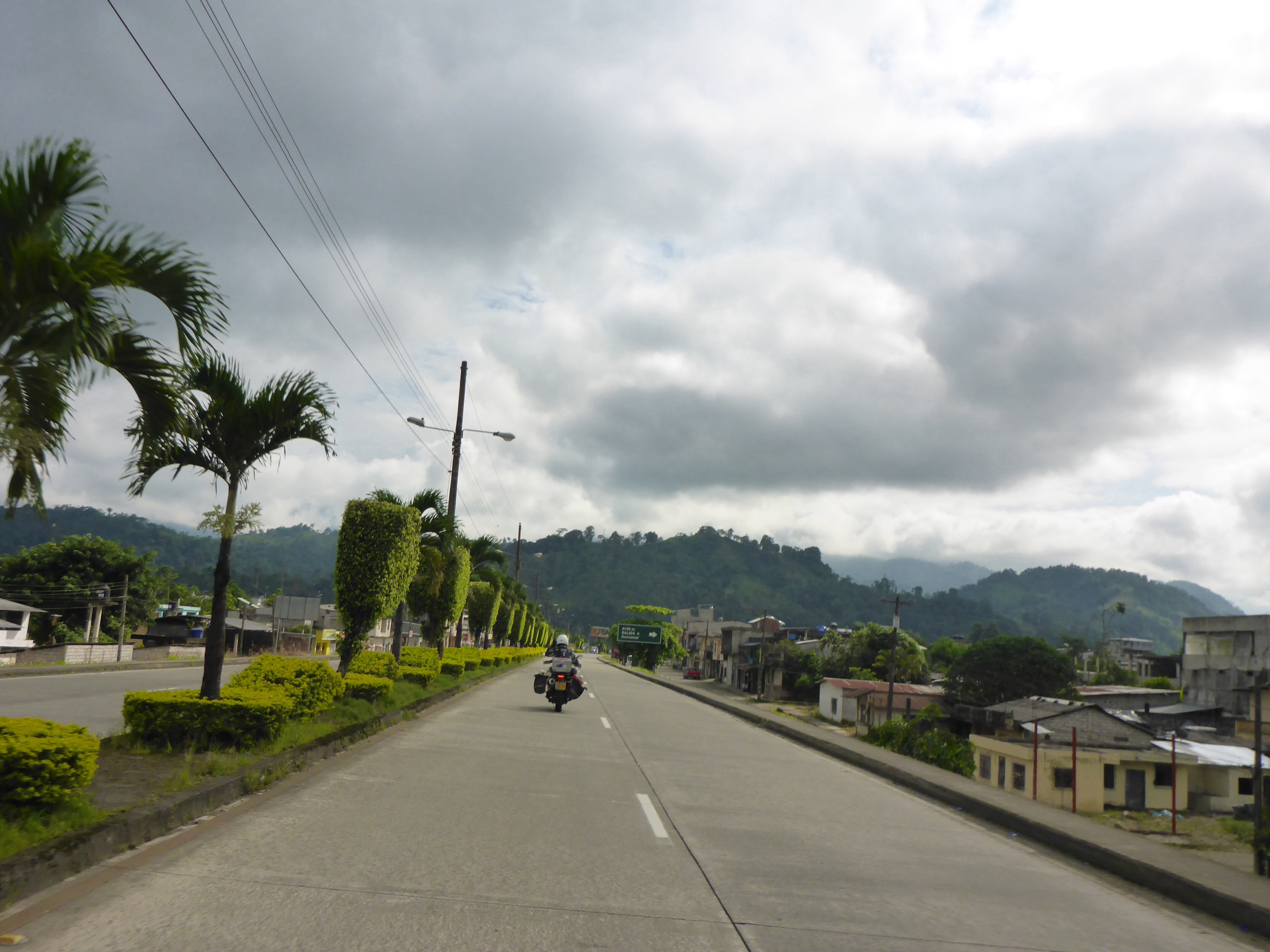
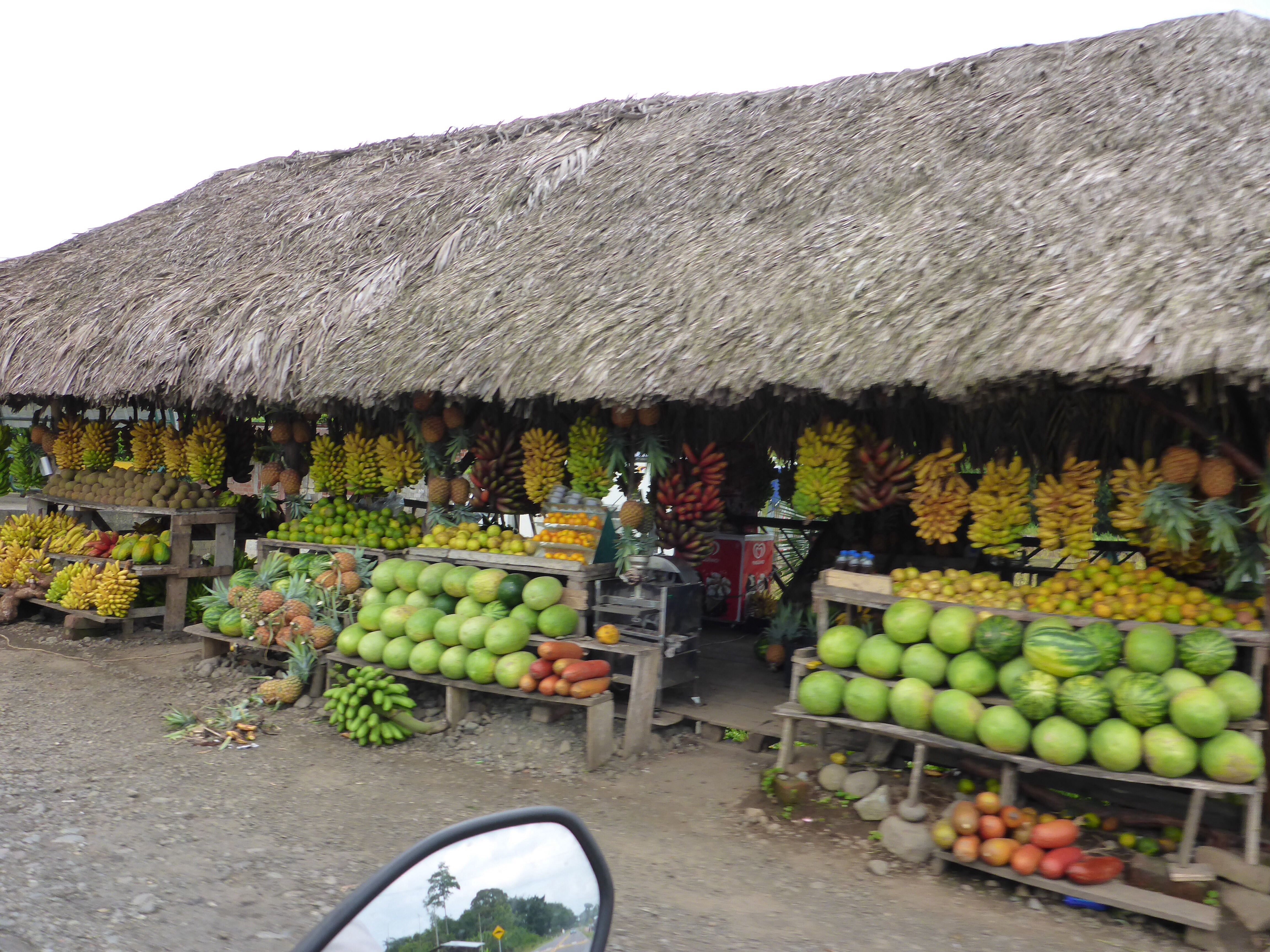
An easy departure being Sunday morning, we quickly cover the first 100 km which are flat, with field after field filled with trees and plants, farm stalls line the highway with tables groaning under the weight of healthy looking produce.

A huge variety of  fresh local produce for sale

A huge variety of fresh local produce for sale

After weeks of desert brown and grey hues, the change is both a pleasant one and confirms in our minds that we like the variety of colours, but prefer green over brown and grey.

Pallatanga, Ecuador

Pallatanga, Ecuador


On the way up to 3,800 metres.

On the way up to 3,800 metres.

And now down from 3800m, Colta region, Ecuador

And now down from 3800m, Colta region, Ecuador

Outside Riobamba, Ecuador

Outside Riobamba, Ecuador

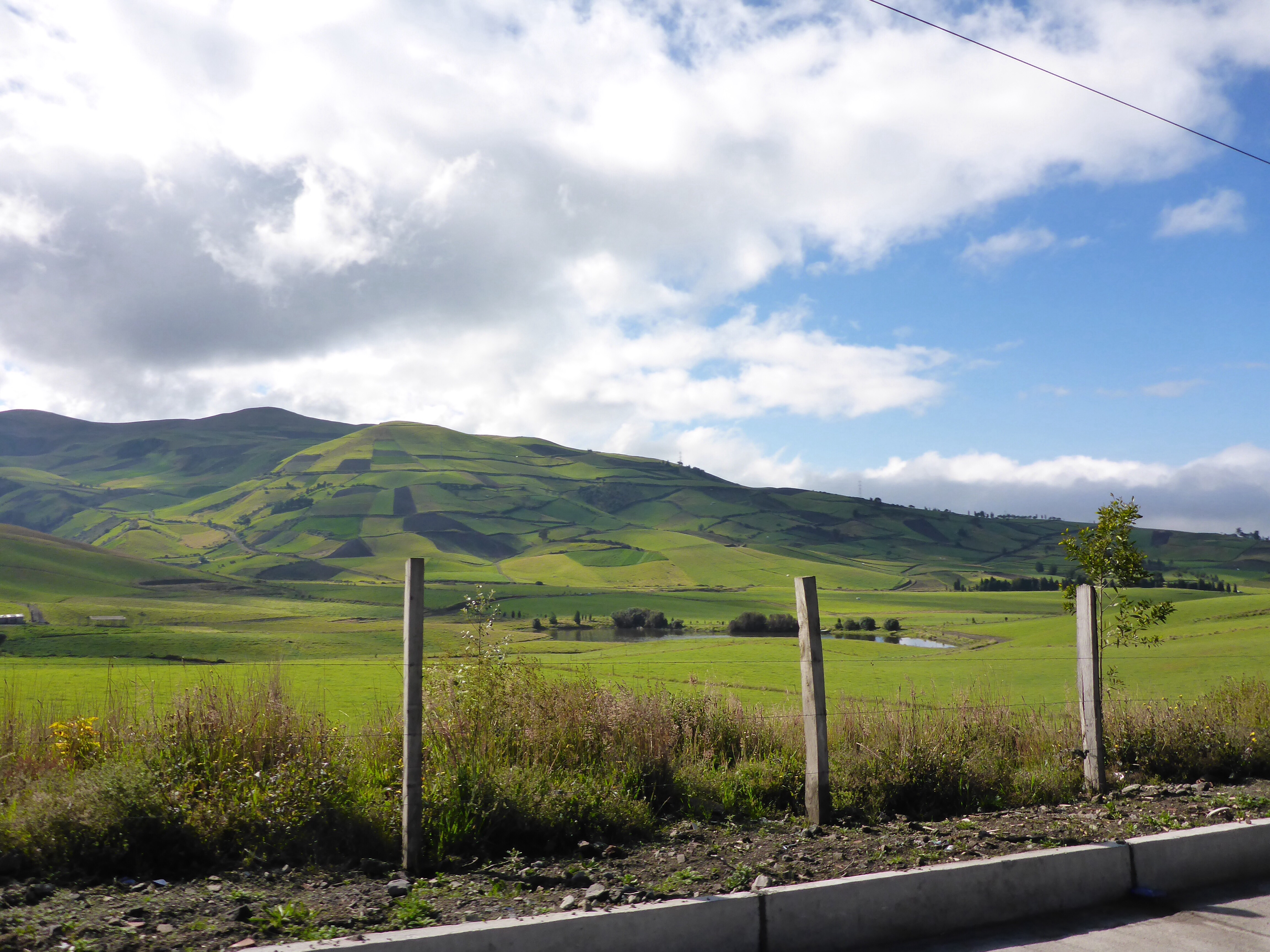
We start to climb and climb up through a verdant green landscape, higher and higher ’til we enter the rainclouds at over 3,800 metres. We come out the other side to a landscape of fields carpeting the hillsides regardless of the slope, at altitudes we would normally expect to see scrub and grass covering only. We guess that being so close to the equator creates this environment. This also allows extensive human habitation which we see all the way to Quito.

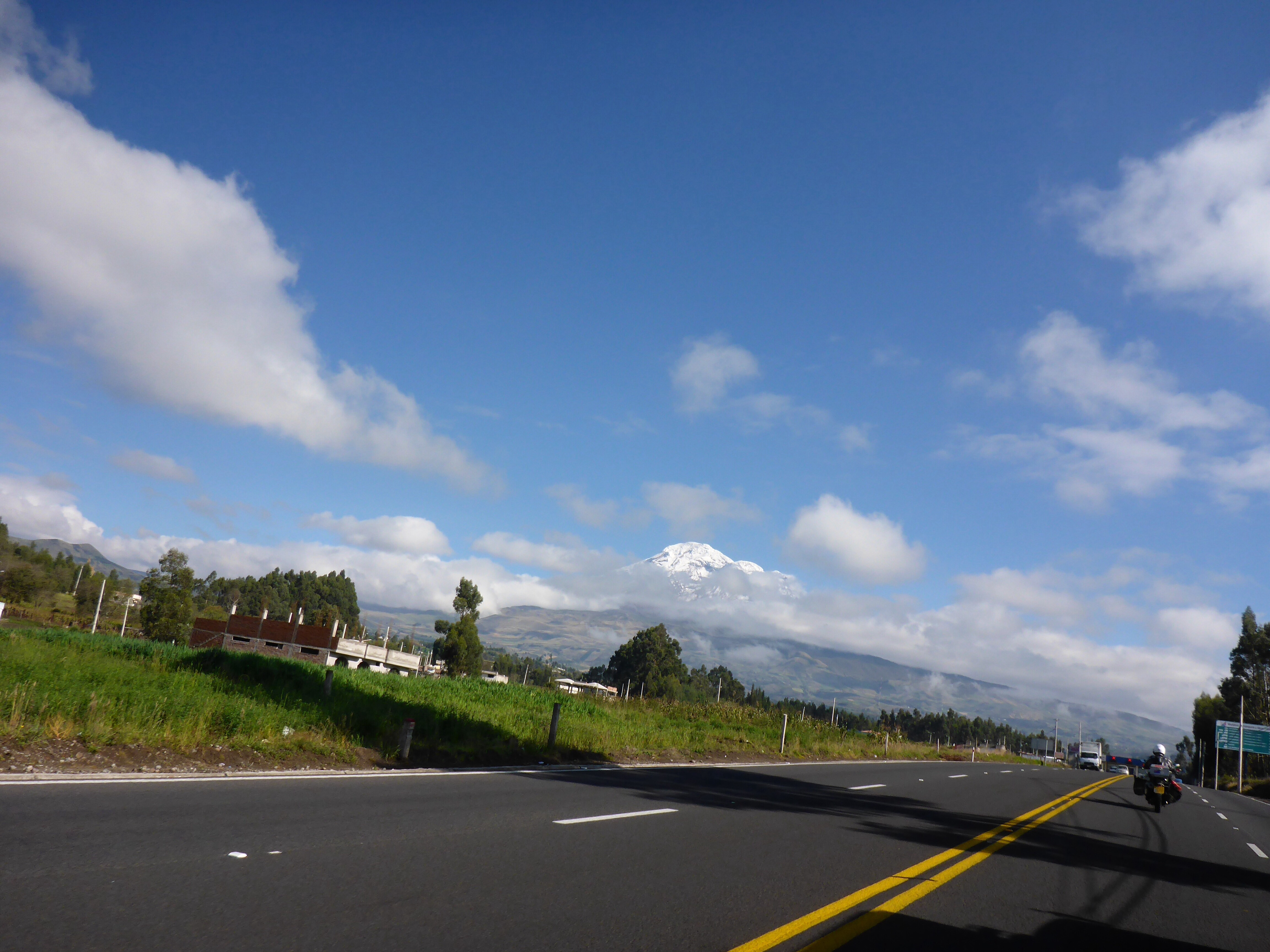
As this is the end of the rainy season, those pictures of clear blue skies framing white capped volcanic peaks are not available to us, but luckily we are able to see Chimborazo, at 6,268 metres (20,564 ft), Chimborazo is the highest mountain in Ecuador as we depart Riobamba for Quito.

Our lucky glimpse of  Chimboraza

Our lucky glimpse of Chimboraza

We have been invited by a Dutch couple, Jos and Karen, whom we met at our B&B in Chiclayo and again at the Peru-Ecuador border, to stay with them in Quito.

New friends Karen and Jos in Quito

New friends Karen and Jos in Quito

They have been living in Columbia and Ecuador for over 25 years running their own flower consulting business. We had not realised that exporting flowers from this region was such a huge business, but on reflection, it explains the large number of greenhouses we saw along the road on the way to Quito. It is always fascinating to me to hear details of an industry that I know little or nothing about and the challenges and opportunities that industry has.

Jos and Karen were wonderful hosts, especially considering they had been travelling in Peru and Chile for 8 weeks and only just arrived home. They even went to the trouble of cooking a “lomo al trappo” in which the meat is covered in salt, wrapped in a wet cloth and placed on top of the roaring fire that Jos had created, which both cooked the meat and warmed us as we ate outside. Wonderful.

Preparing the fire

Preparing the fire

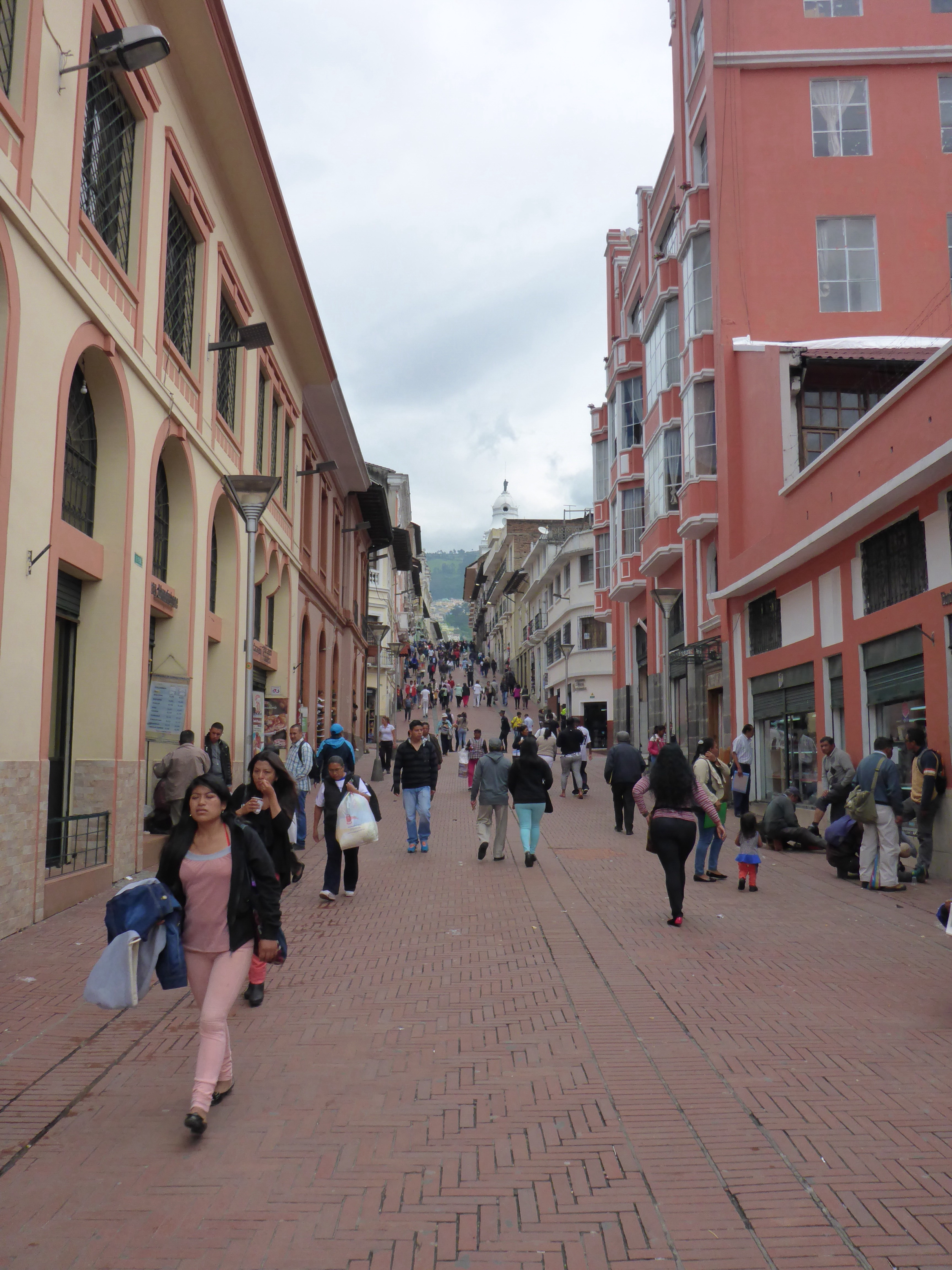
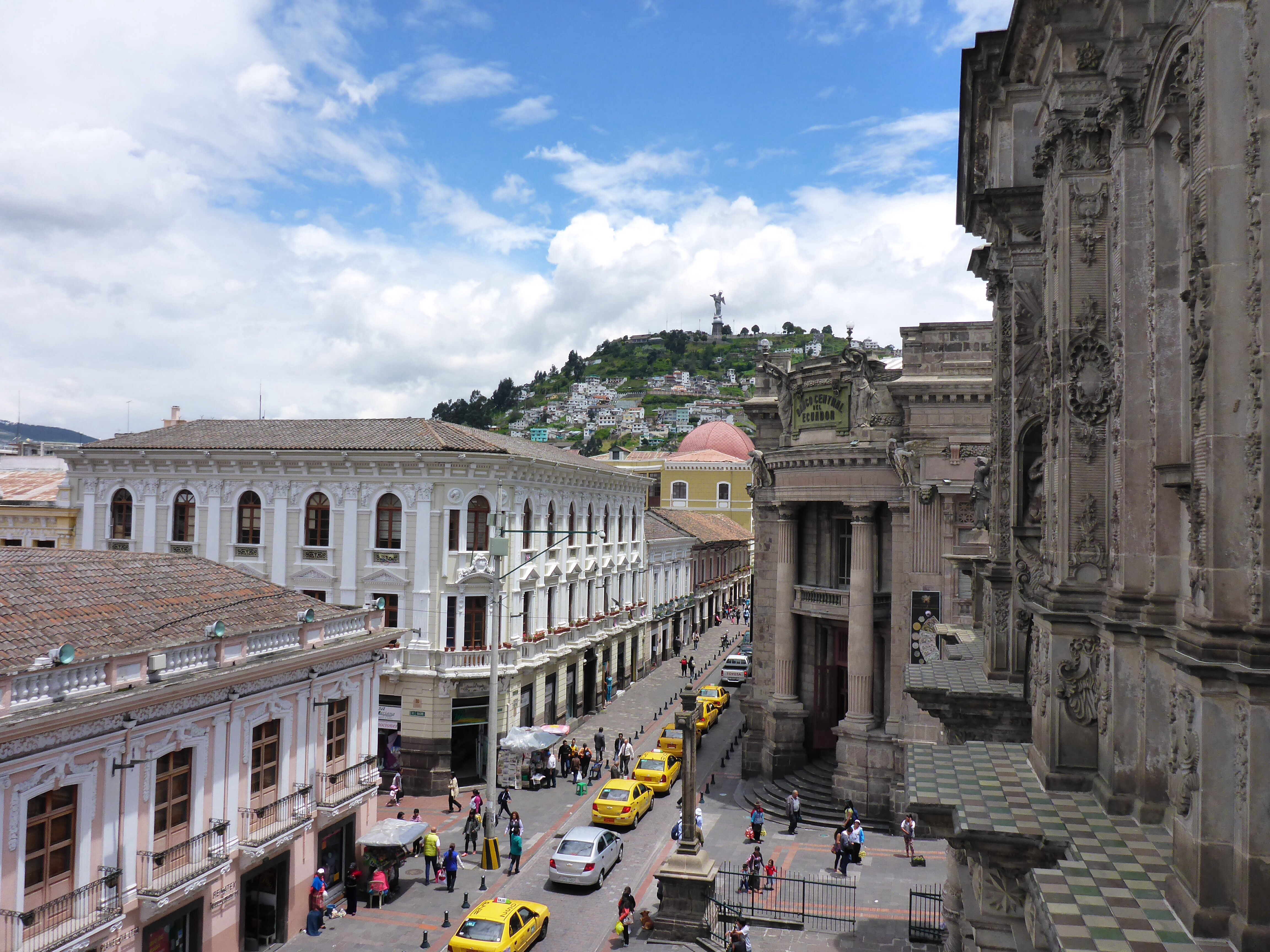
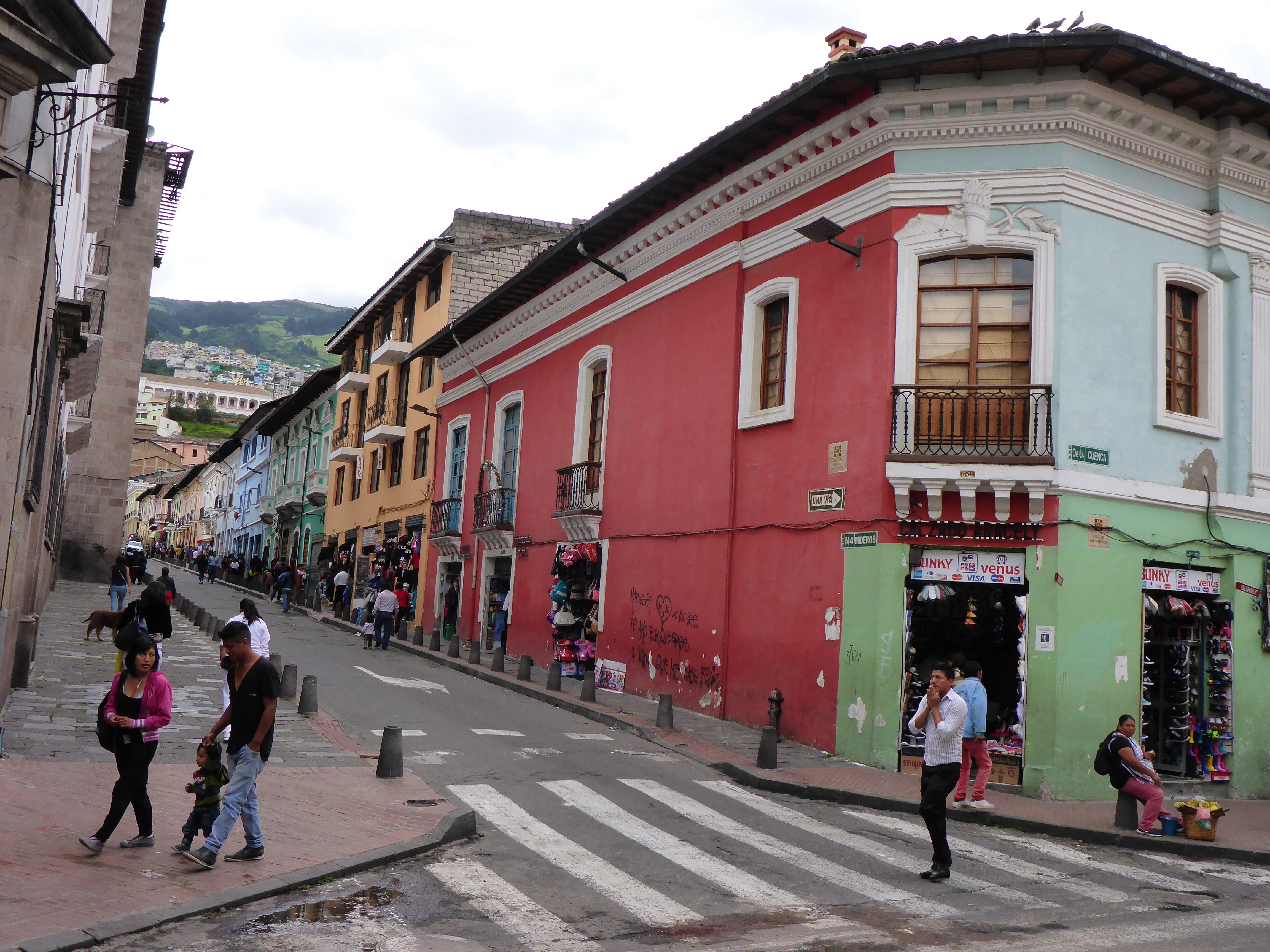
We spent a day in Quito, which like may of the cities we have visited in South America, has retained the old buildings and churches in the centre of town. The city’s geography makes for some interesting roads and the journey to town by bus and back by taxi allowed us to enjoy the views, unlike when we are riding and our focus is on the road and traffic! The steepness of the streets and the altitude make for slow and steady walking around town.

Quito, Ecuador

Quito, Ecuador

The Catedral Metropolitana Quito has been turned into a museum after the construction of the Basílica Del Sagrado Voto Nacional. What makes this very interesting is the access to the attached administration area of the cathedral. Normally in a functioning cathedral these areas would be occupied and off limits to visitors. We found quite a rabbit warren of interconnecting passages and rooms.

A rooftop view of Quito

A rooftop view of Quito

Quito, Ecuador

Colourful buildings ansd steep streets in Quito, Ecuador

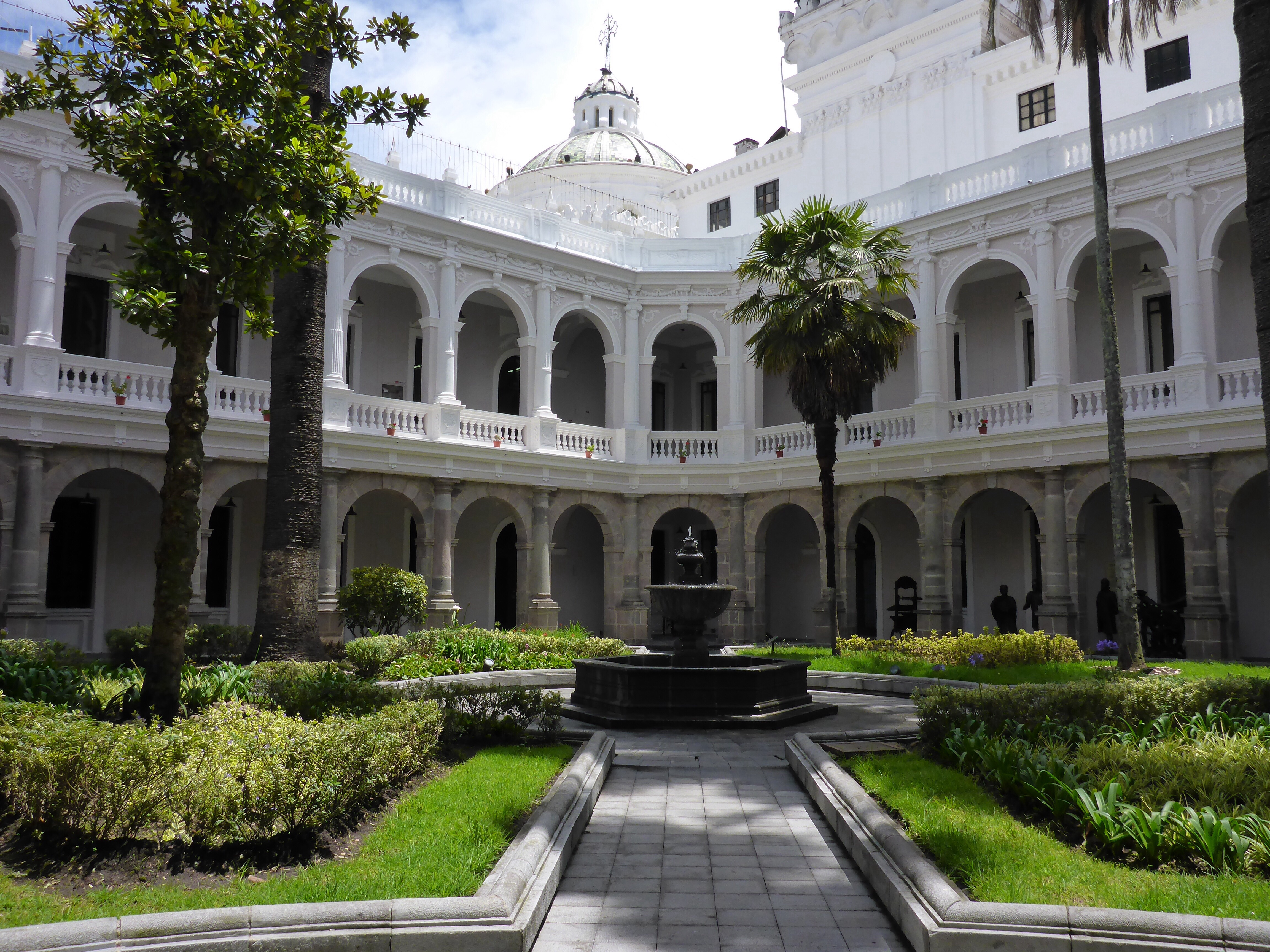
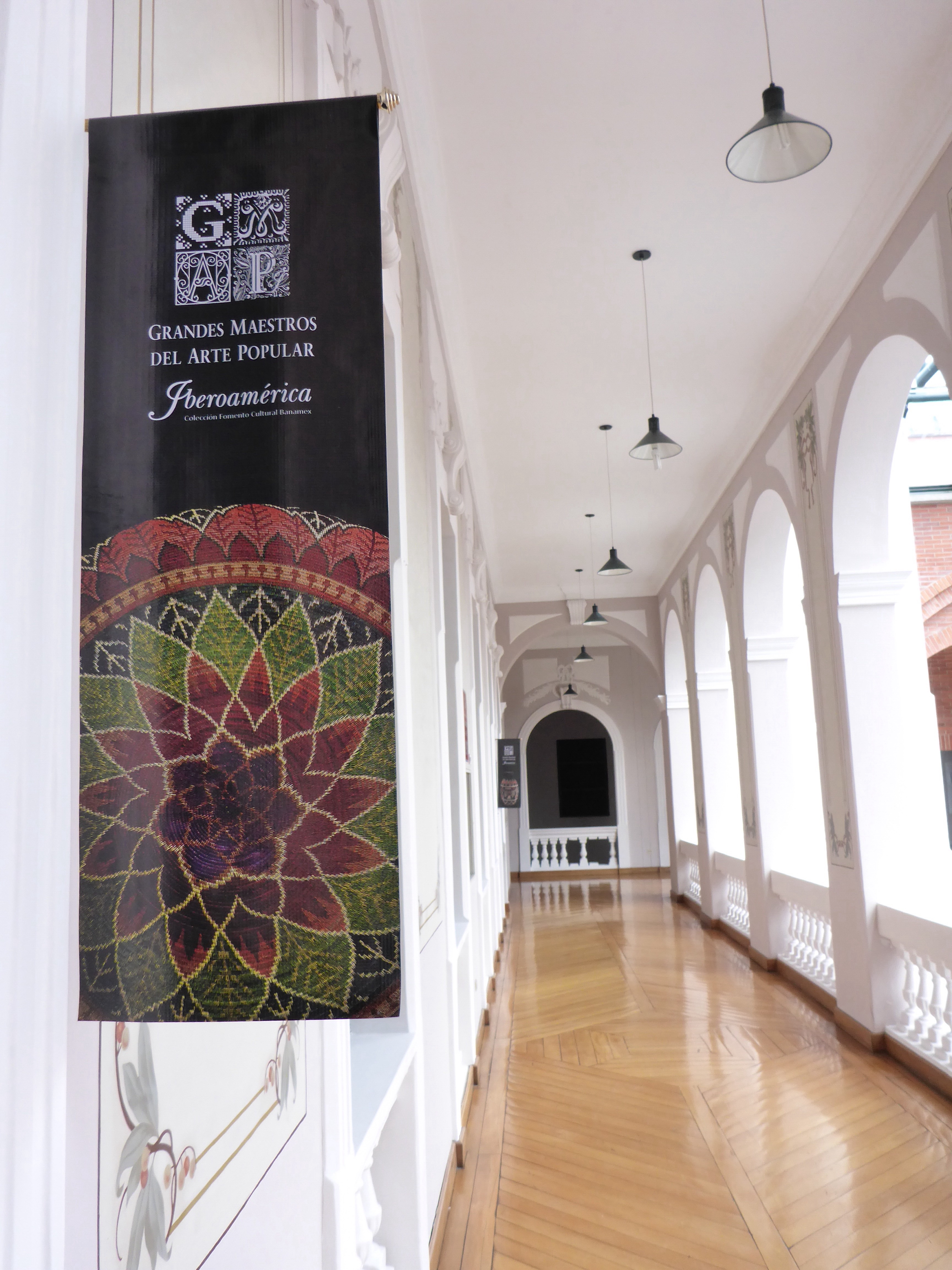
In the Centro Cultural Metropolitano off the Plaza de la Independencia we found an amazing exhibition of art from artists across the Americas, media included ceramics, metalware, cabinet making, pottery material and basket weaving Anne found herself drawn to works from Mexico, which means we will be looking out for the artists’ works when we get to Mexico!
Cultural Centre and university library in Quito, Ecuador

Cultural Centre and university library in Quito, Ecuador

Metropolitan Cultural Centre, Quito, Ecuador

Metropolitan Cultural Centre Exhibiton, Quito, Ecuador


We were sad to leave our new friends, but we know we will meet again sometime, hopefully in Australia where we can return the hospitality.

As we have travelled, we have been on a constant lookout for sticky backed plastic flags of the countries we have been passing through to apply to our aluminium top boxes. A simple enough task you would say, well too simple for us. We have failed miserably! We can find fridge magnets, which will not stick to aluminium, sew on patches which would deteriorate too quickly, but no reasonably sized plastic stickers. That old fall back of paper stickers does not work as our Iranian flags are slowly disappearing from our top boxes. We can of course order online a set of flags of the world, but they would all be the same and not really be original. That is our fallback position. In the meantime, we’ll keep looking out for them whenever we visit cities.
Anthony