Category General
Life along Central America’s Panamerican Hwy
The few photos in our last post didn’t do justice to the stunning scenery and colourful lifestyle of Central America. We got the message :-). So here are more photos. But they still don’t convey our full experience and intense variety of senses. The music everywhere, the sight of fluttering butterflies (sadly too many ended up with sore heads against our screen or visors), the smell of storm, the sweet smell of mangoes dripping from the trees or waiting to be bought from roadside carts, the sweet smell of pineapples from the roadside sellers, the daily sound of car alarms (we know the sequence of sounds and rhythms as we have heard the same alarm throughout South America too), the number of heavily armed police everywhere and the number of police checks along the road. Mostly, they wave us through. Sometimes, when we’ve had enough of slowing down and stopping for nothing, we just wave at them with a big smile and drive off!! And luckily, you won’t experience the smell of dog, which became wet dog, and finally wet horse which we have worn every morning in Central America – our clothing has got progressively wetter and has not managed to dry out by the morning. You can tell the time of the day each photo was taken based on the colour of the sky and the clouds.
Central American villages love to use “reductors” to slow traffic down. Some are easily rideable on a bike, others are serious humps. They are often perfect opportunities for us to overtake slow trucks but sometimes, when they are spaced literally every 50 metres, they can be a bit painful. Some villages though build their own humps so they are not that visible as they don’t paint the warning stripes over them.
People in Central and South America have great concern for their motorcars safety and wellbeing. This goes as far as to have hotels that allow you to take your car into the bedroom with you. The Auto hotels as they are known allow you to drive, with your partner into garage attached to the bedroom and close the door behind you for privacy for you and your car. As most of us do not sleep for 24 hours, you, your car and partner can rent the room by the hour. What enlightened hotel management that think of your wallet and your cars safety.
Hope you enjoy the ride 🙂
Anne & Anthony

Great meeting fellow rider Carlos at BMW San Jose
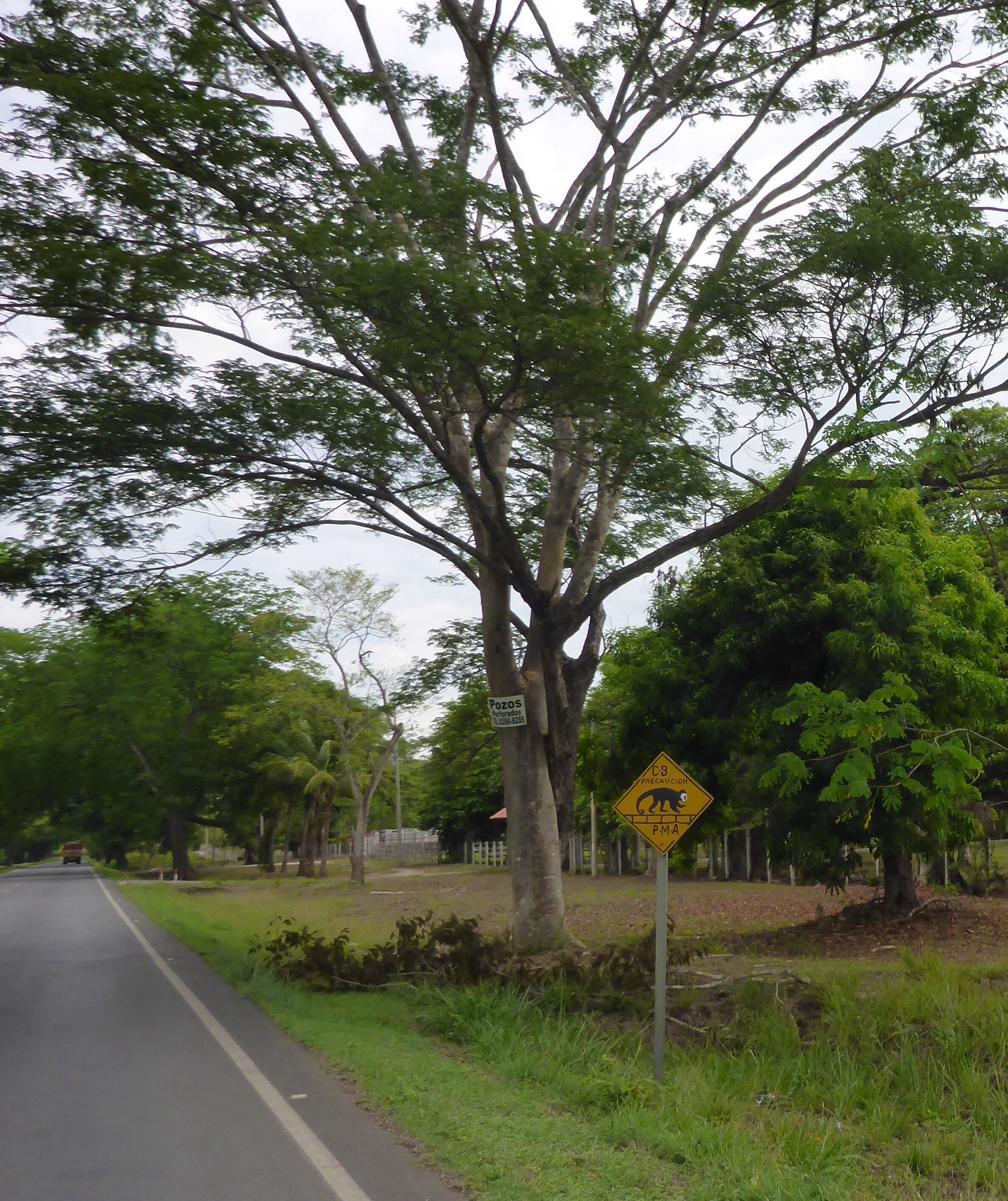
That’s the only monkey we saw – Costa Rica road sign

Stunning trees in Costa Rica
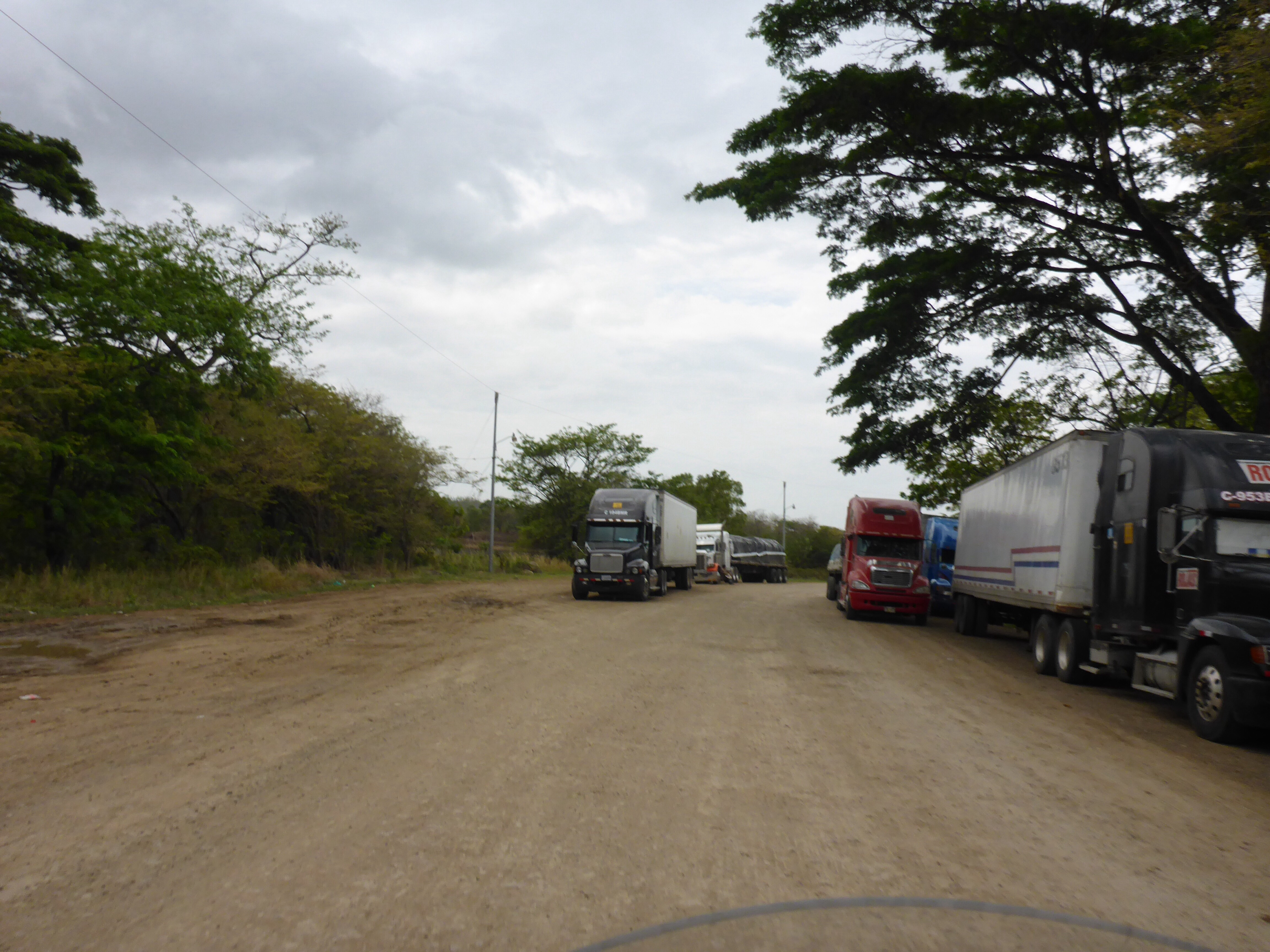
Our wrong turn left looking for Costa Rica exit border post
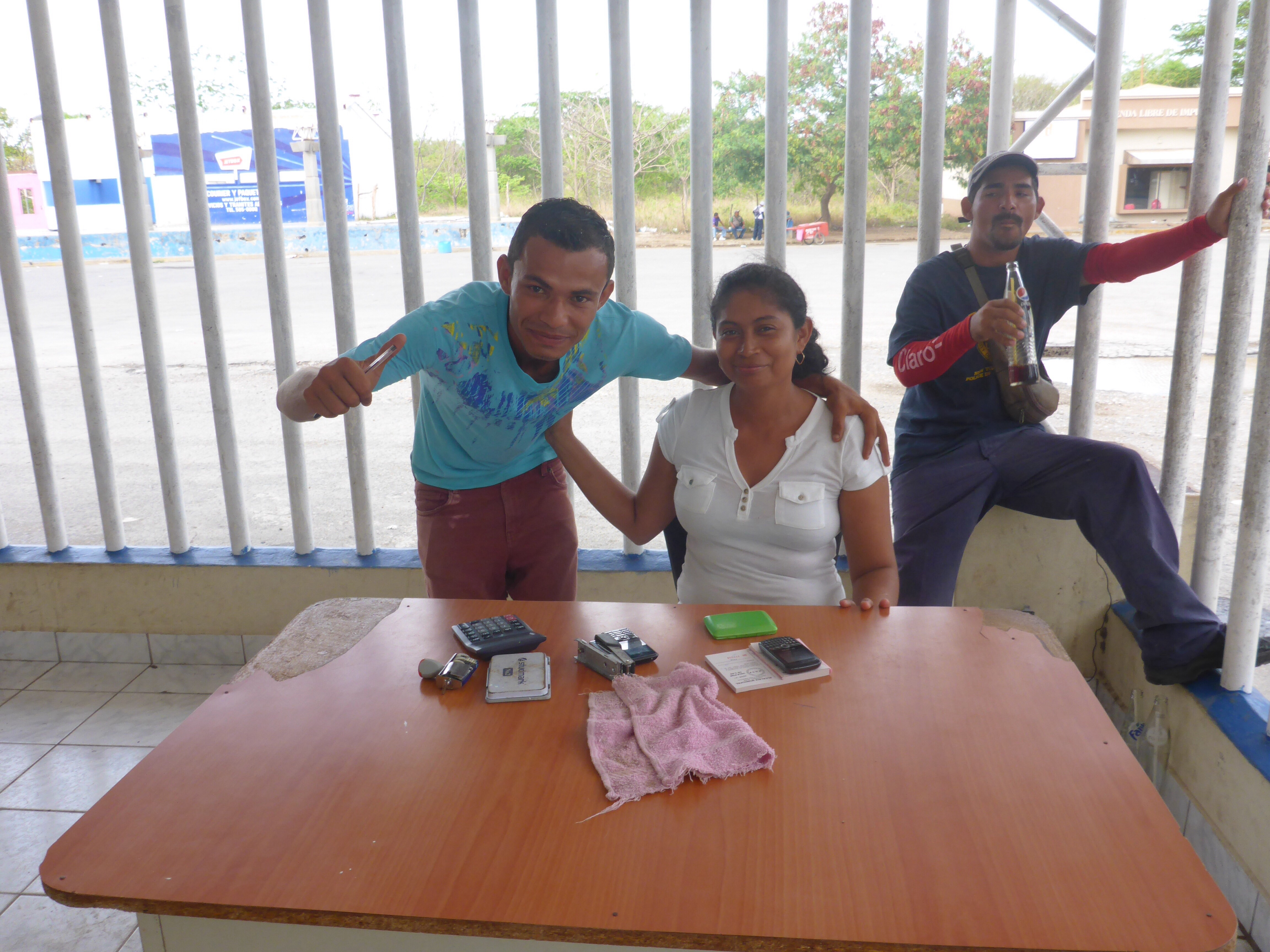
El Savador border Municipality tax counter
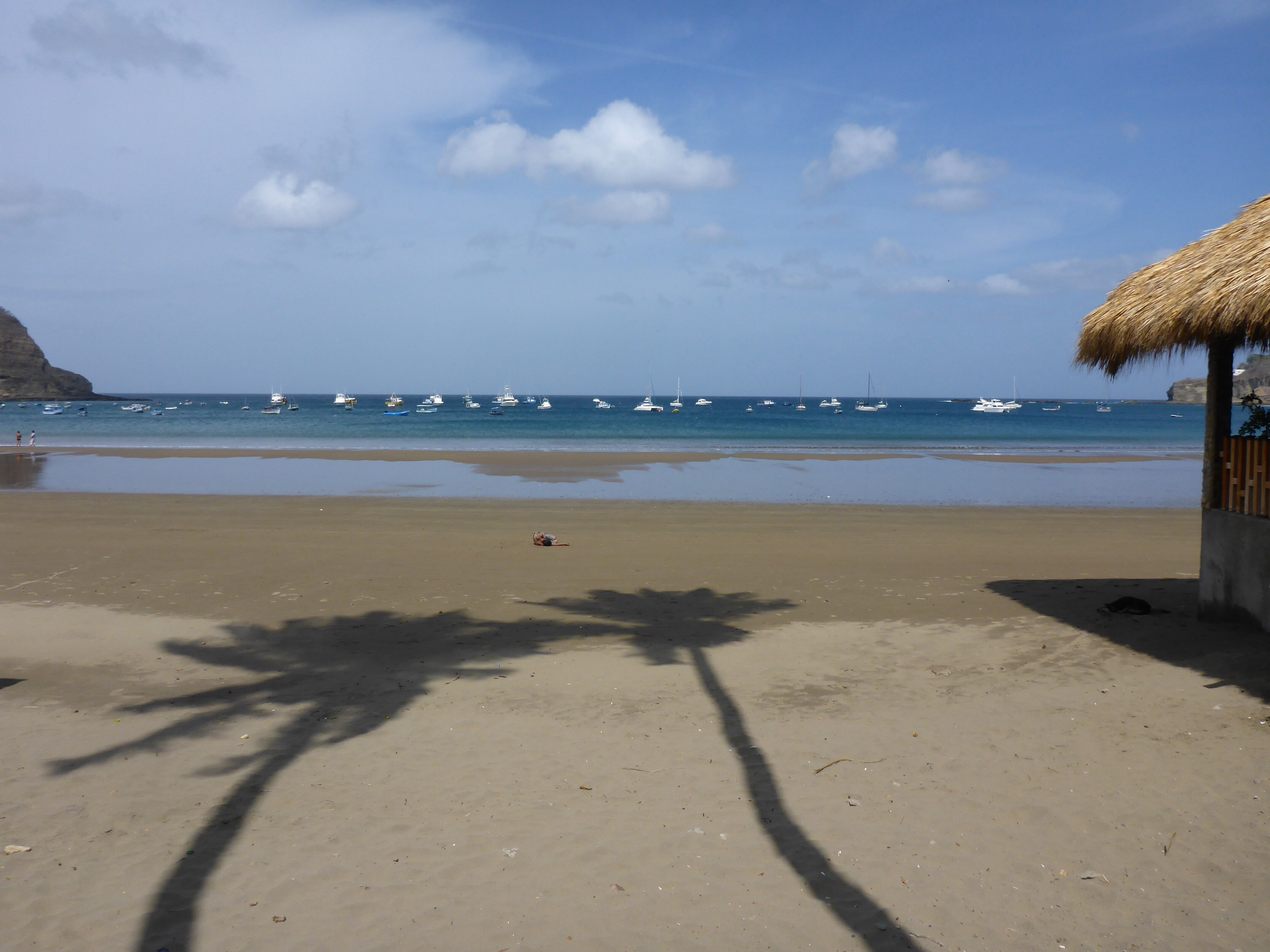
San Juan del Sur, Nicaragua
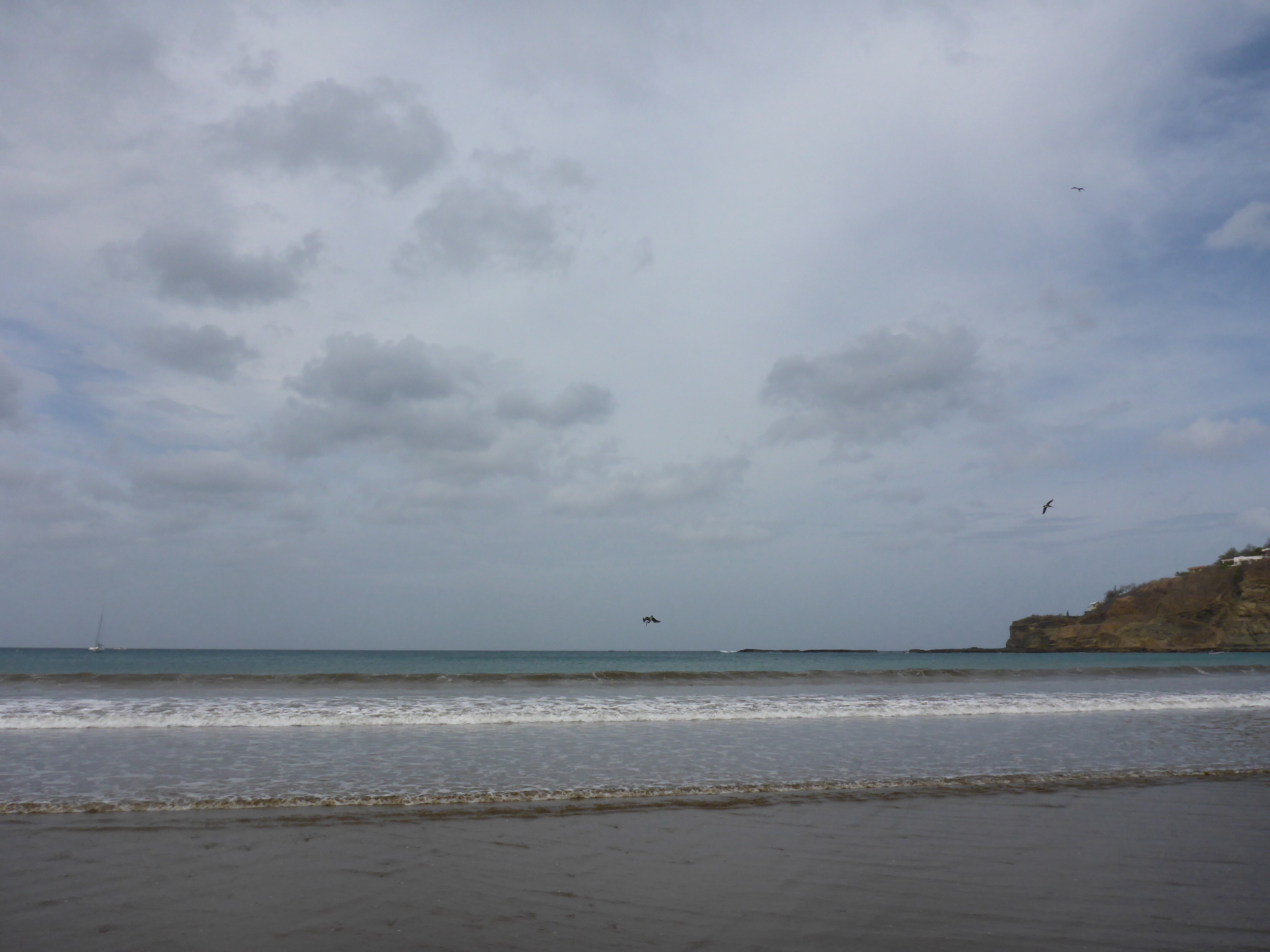
Pelican diving for fish at San Juan del Sur, Nicaragua

Anthony body surfing at San Juan del Sur, Nicaragua
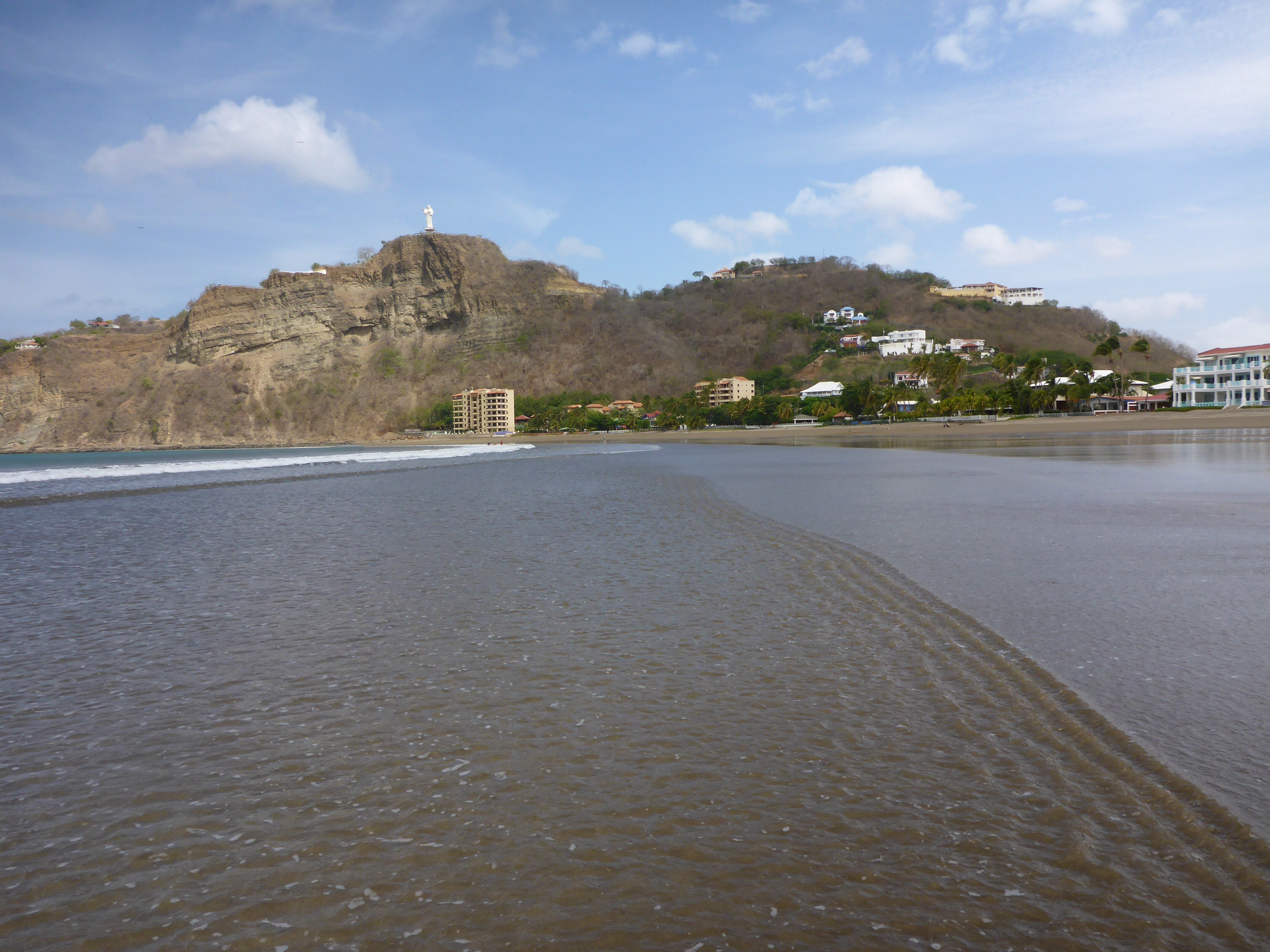
San Juan Del Sur beach, Nicaragua
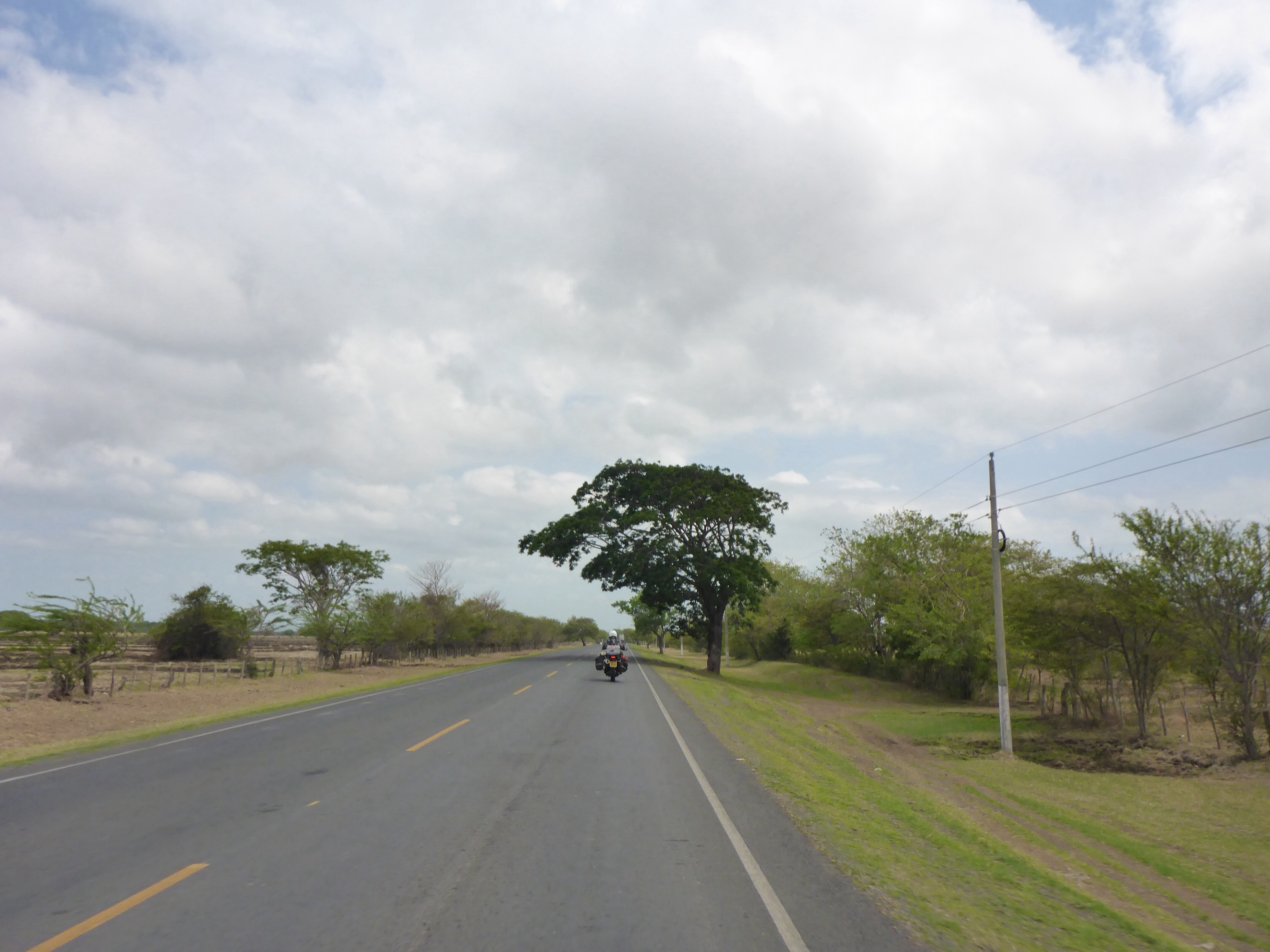
It was windy in Nicaragua
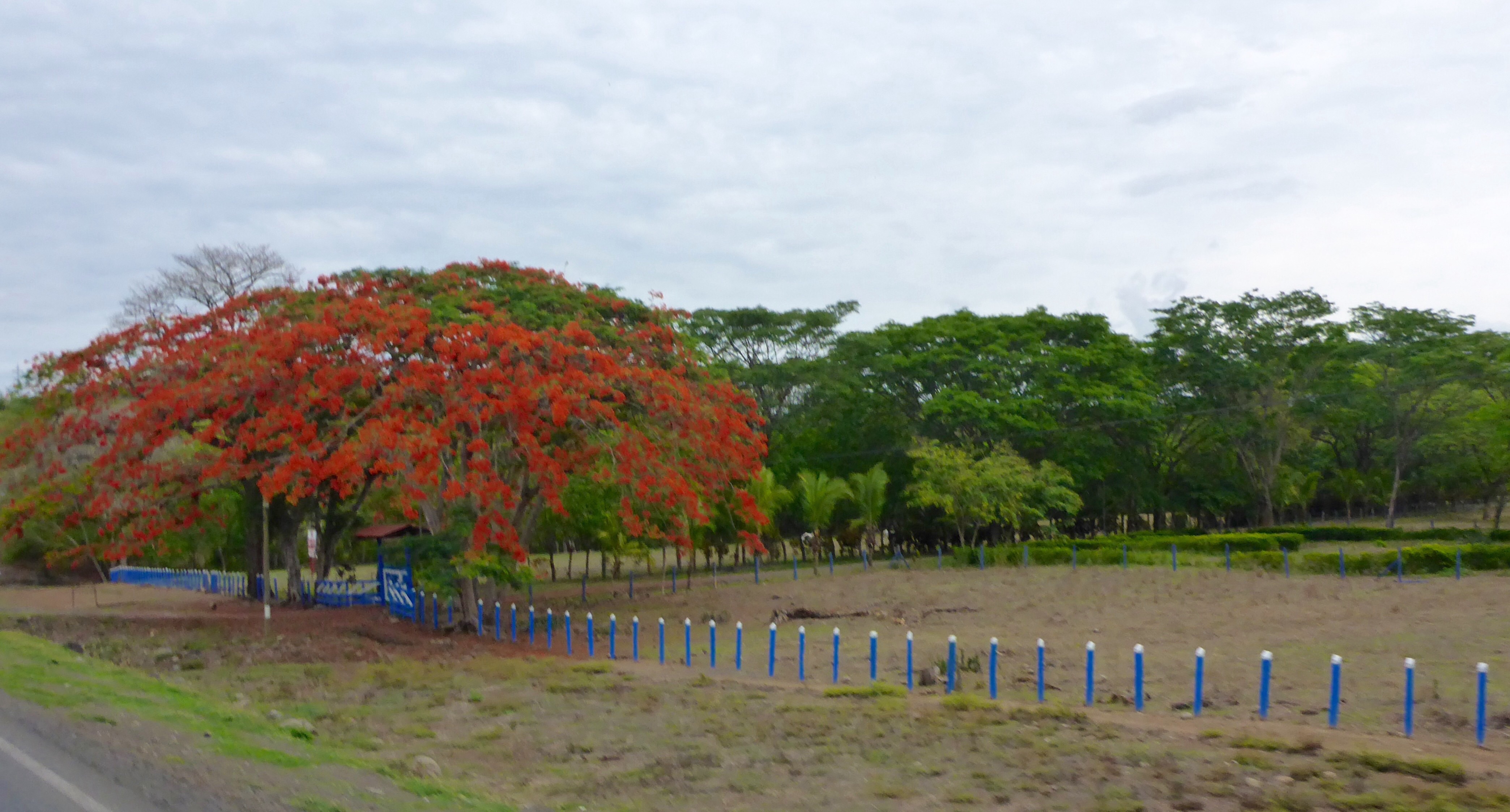
Poincianas throughout Central America reminded us of home – here in Nicaragua
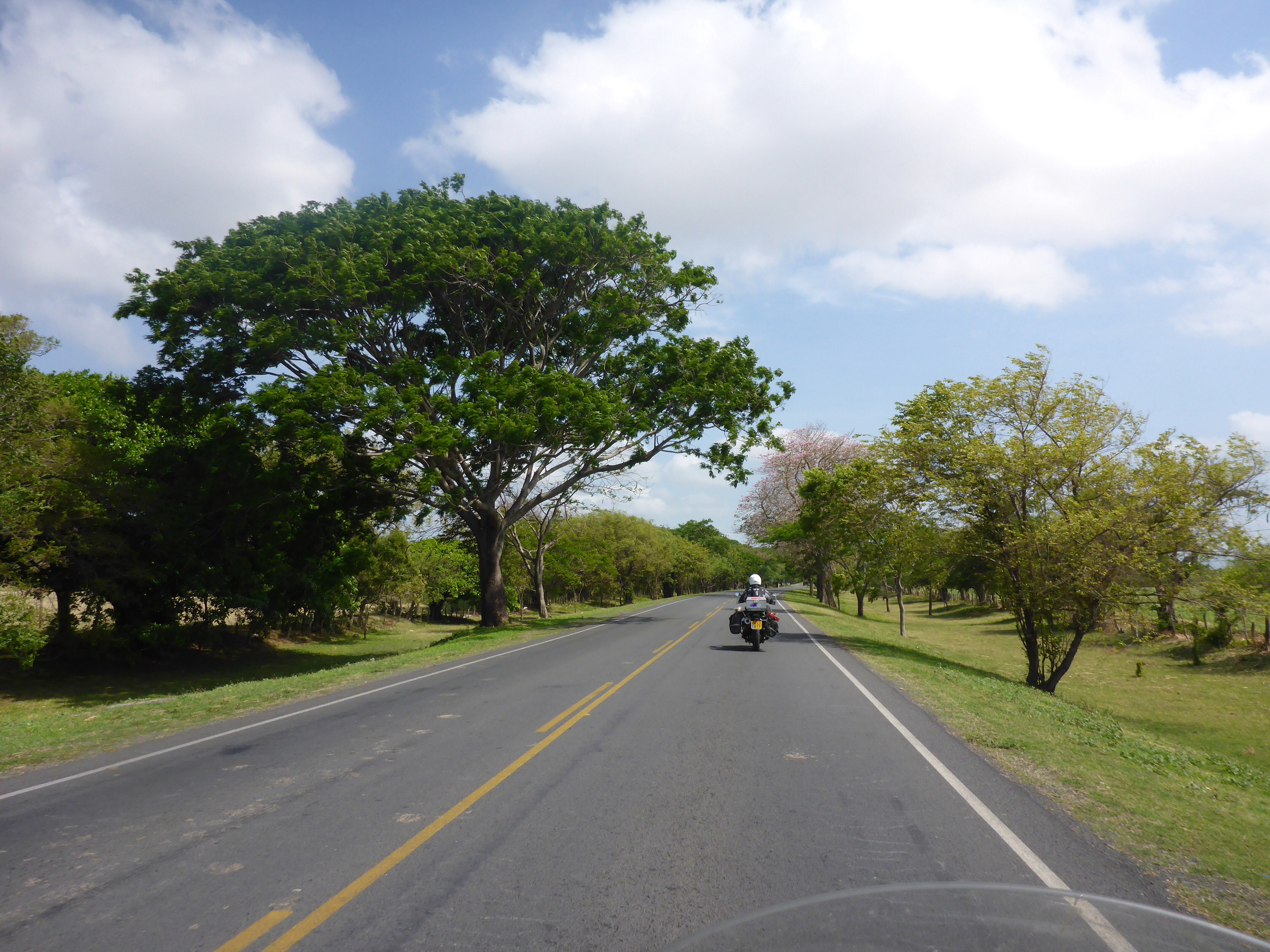
We could be anywhere in the world – here in Nicaragua
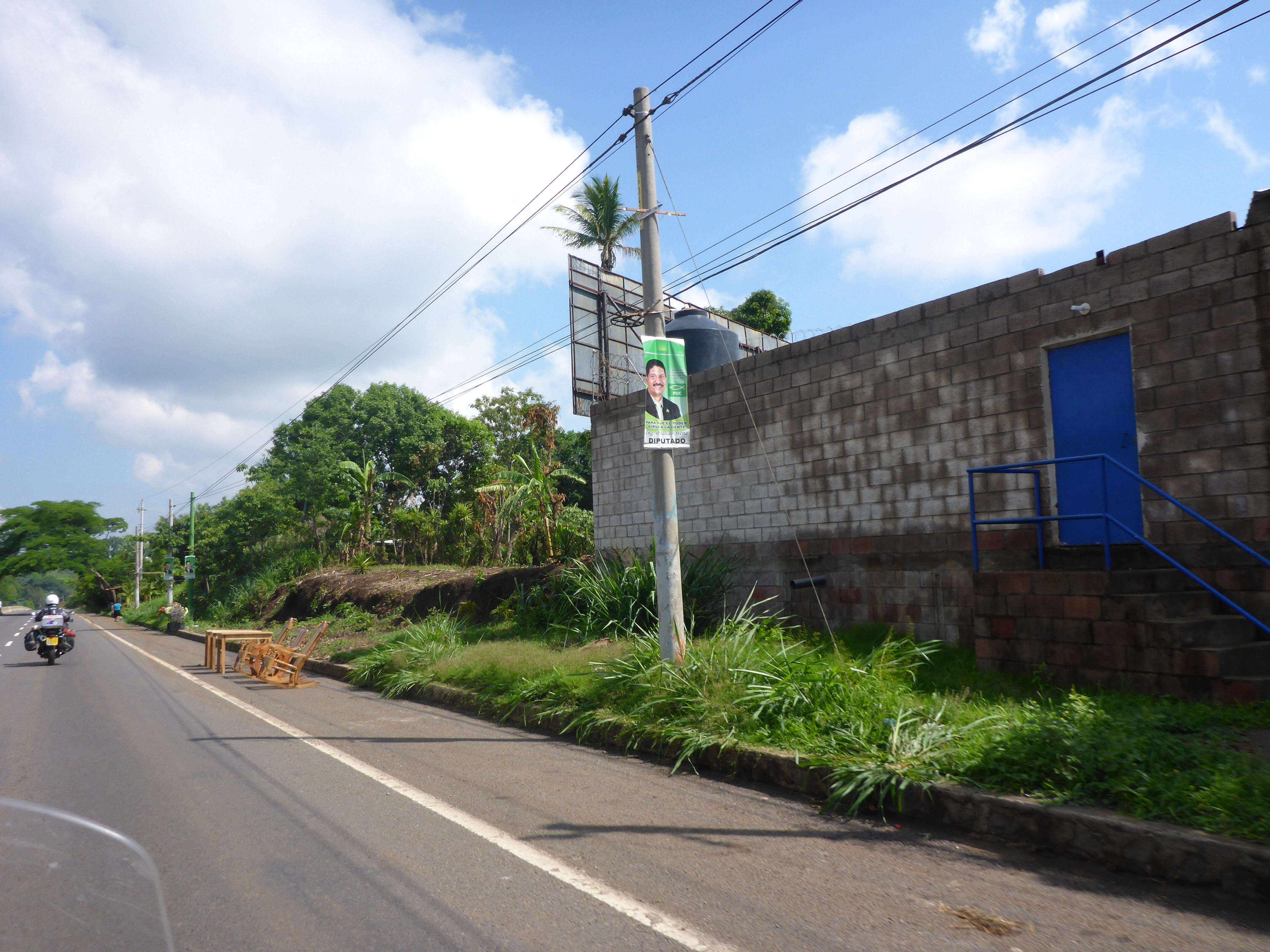
Rocking chairs for sale roadside in Nicaragua
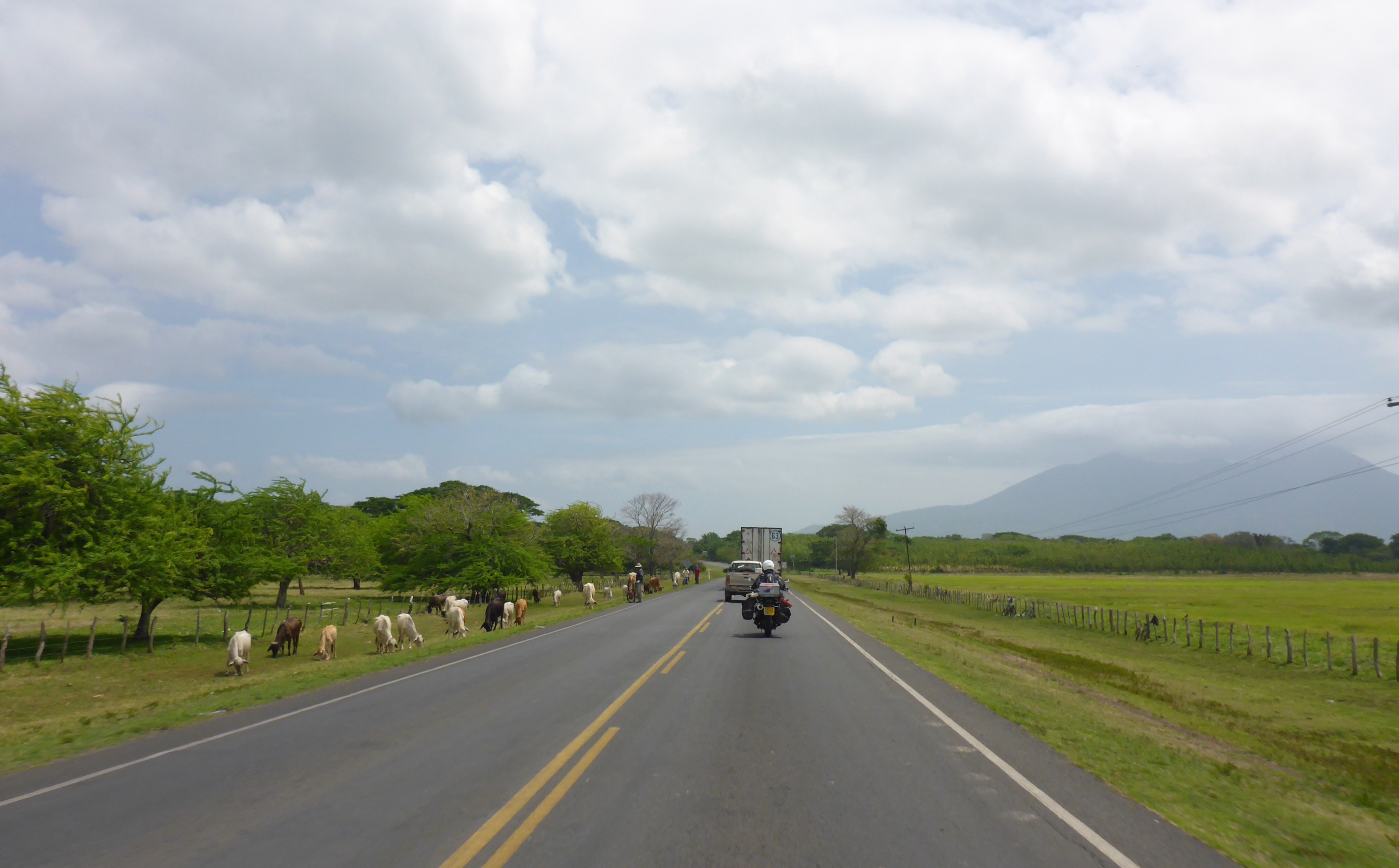
Nandaime, Nicaragua
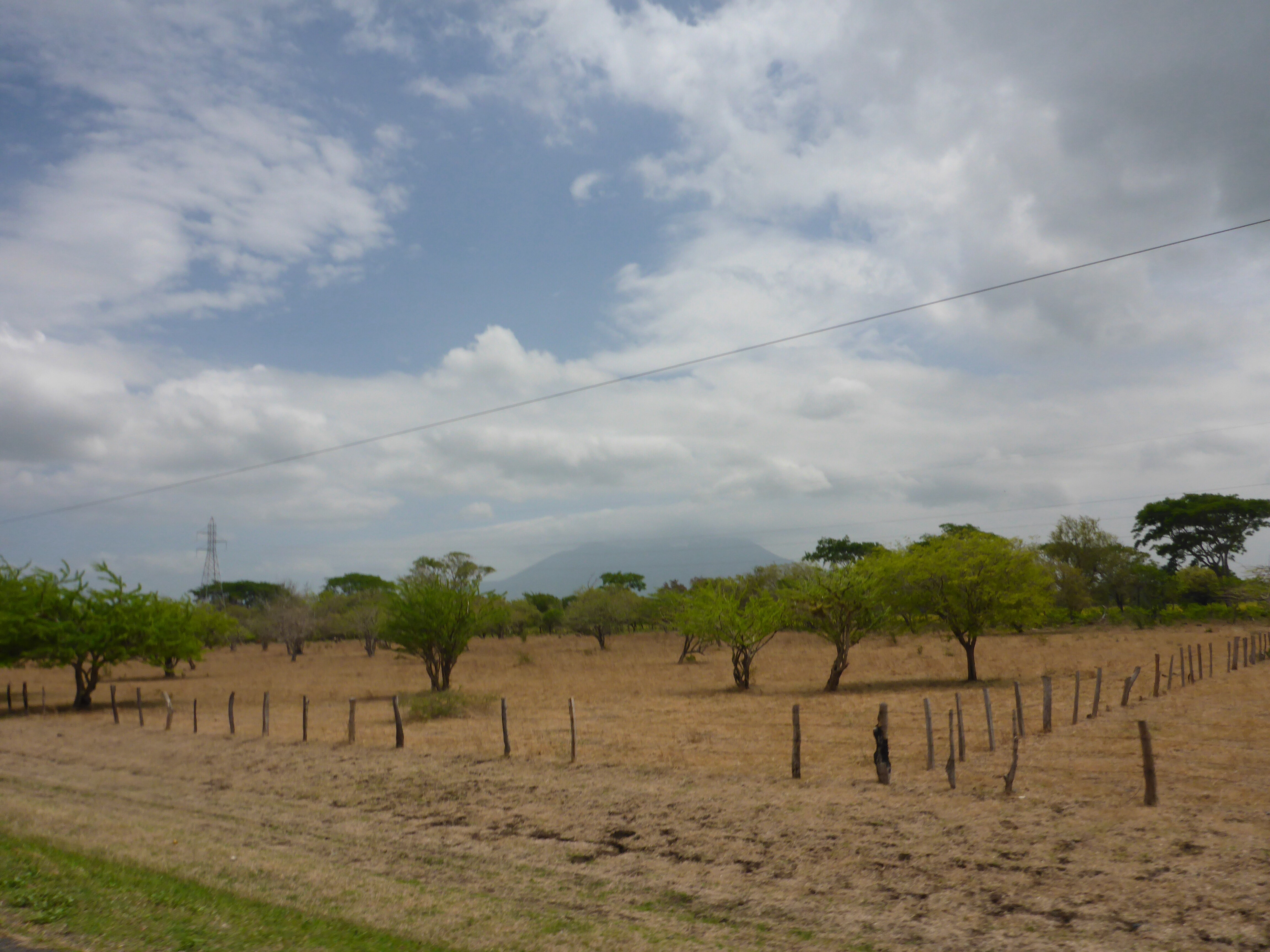
Nandaime, Nicaragua
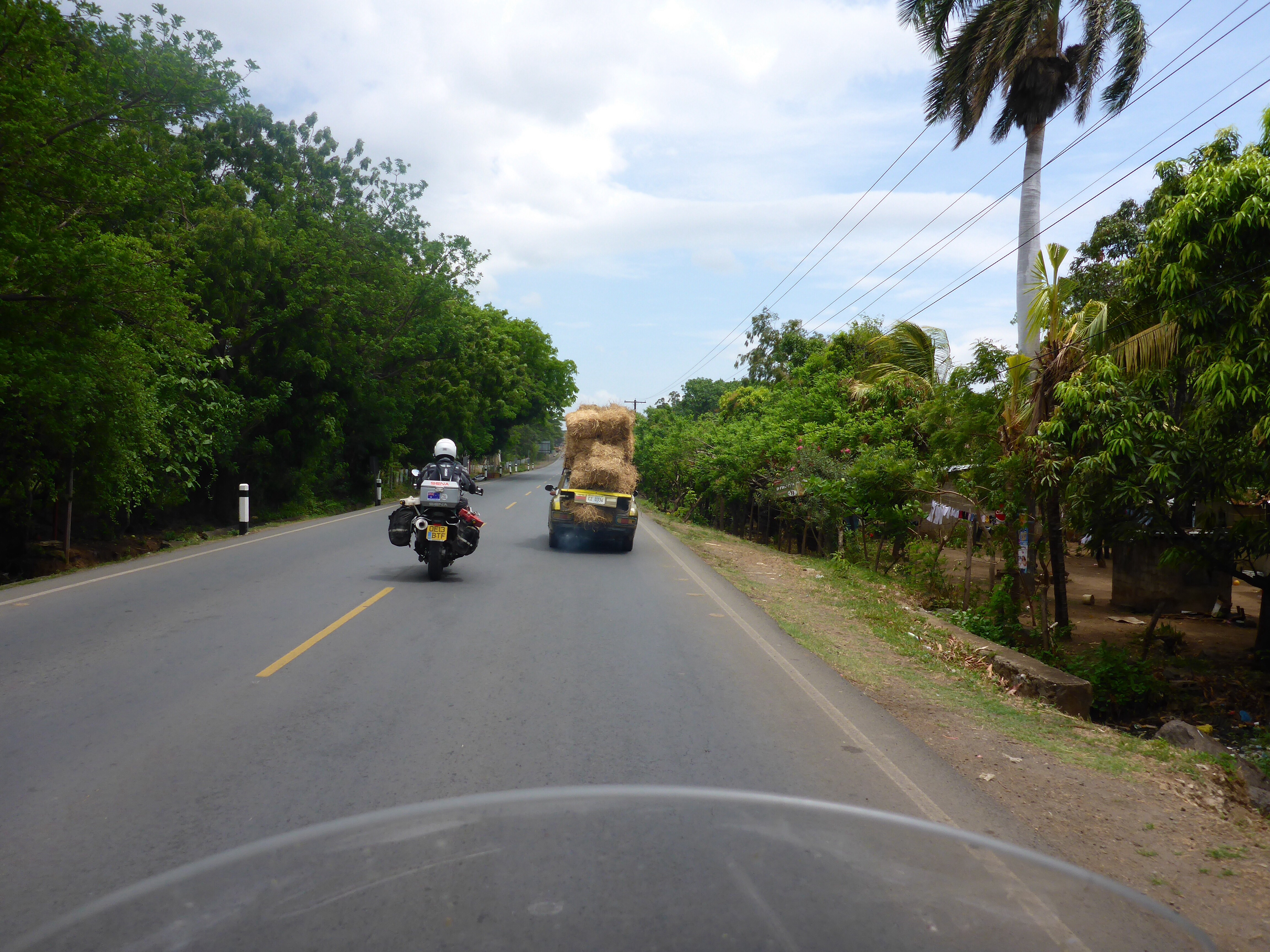
Nandaime, Nicaragua
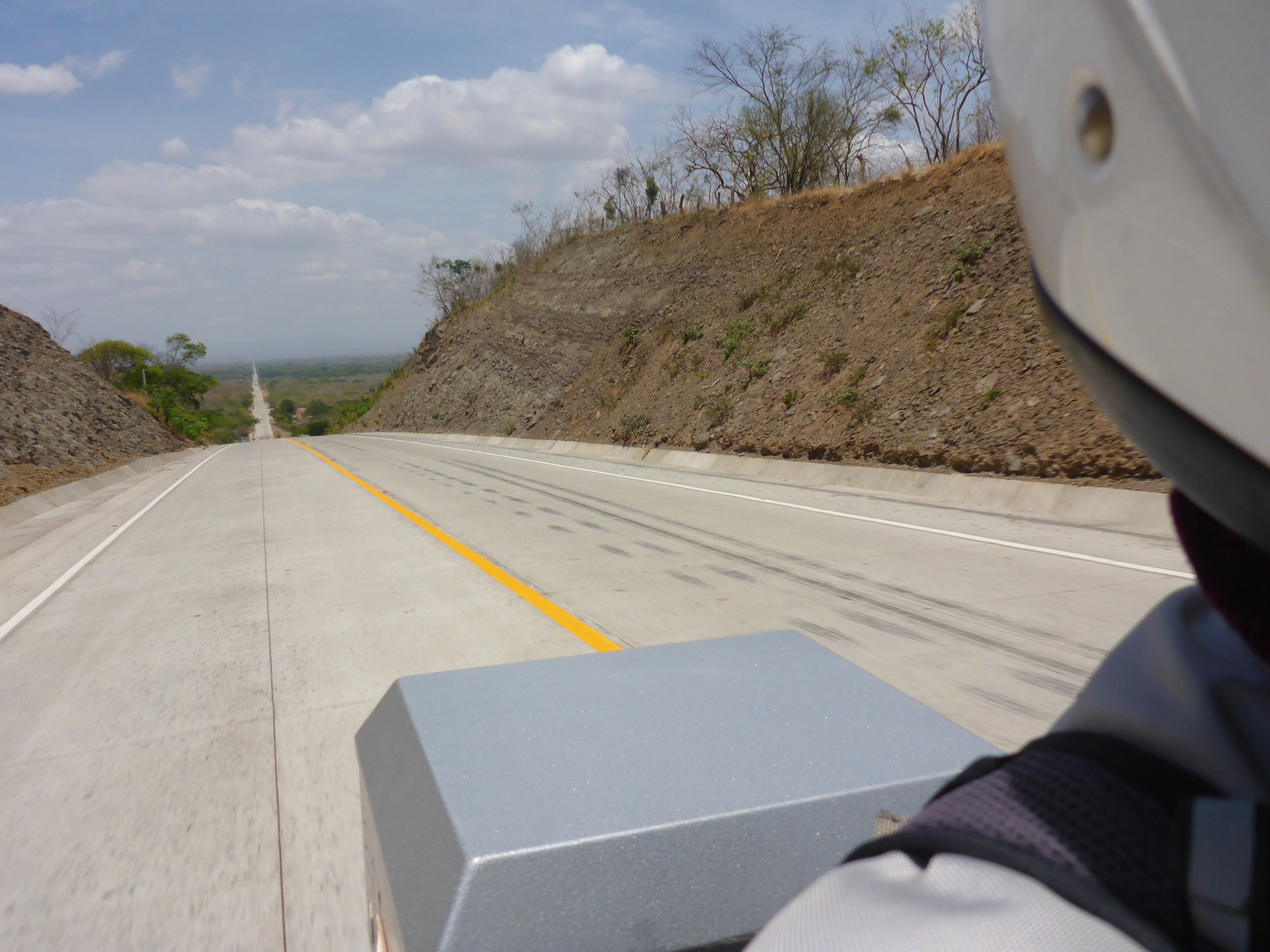
That’s one straight stretch of road in Nicaragua, near Nagarote
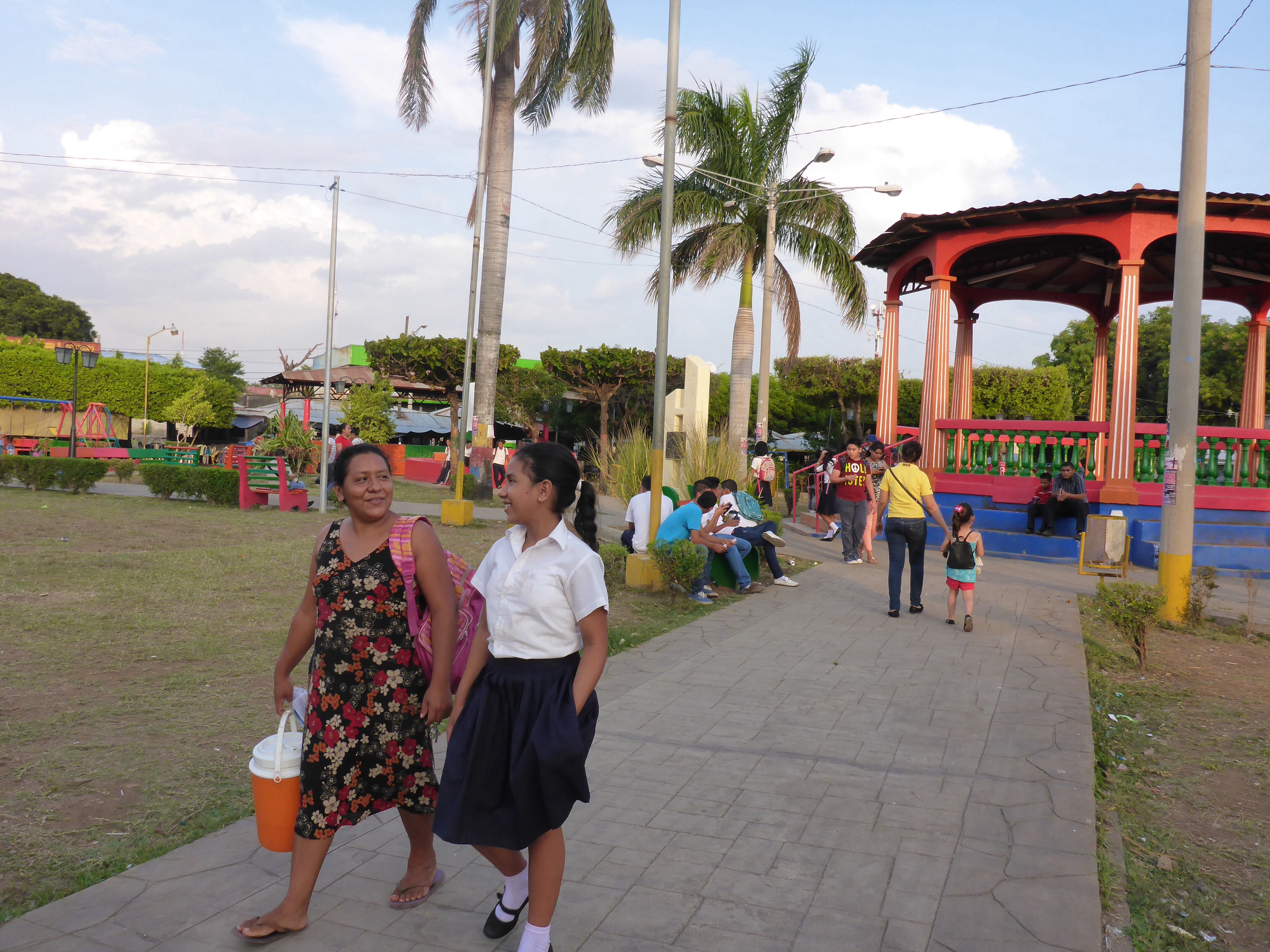
Chinandega, Nicaragua
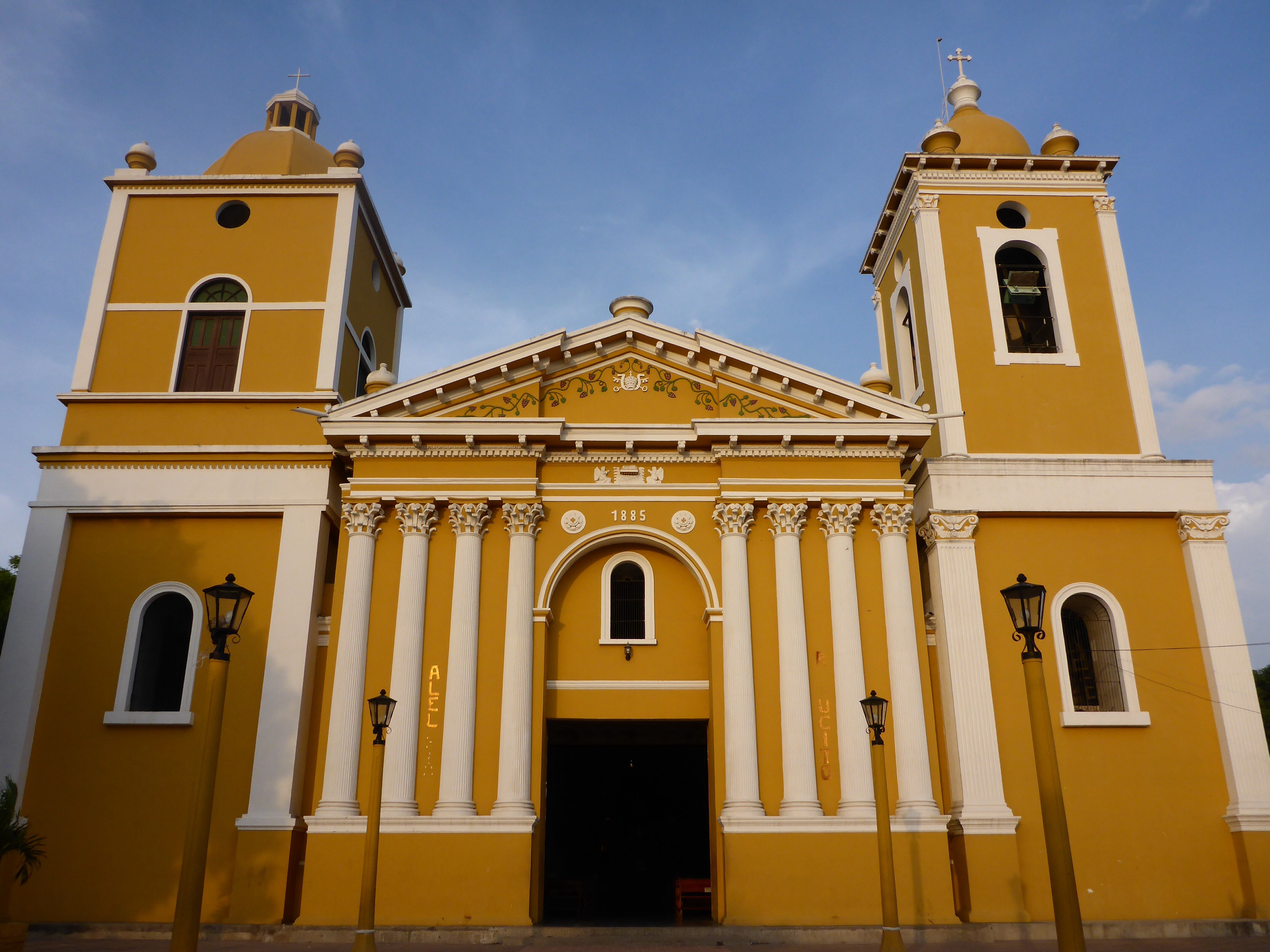
Chinandega, Nicaragua
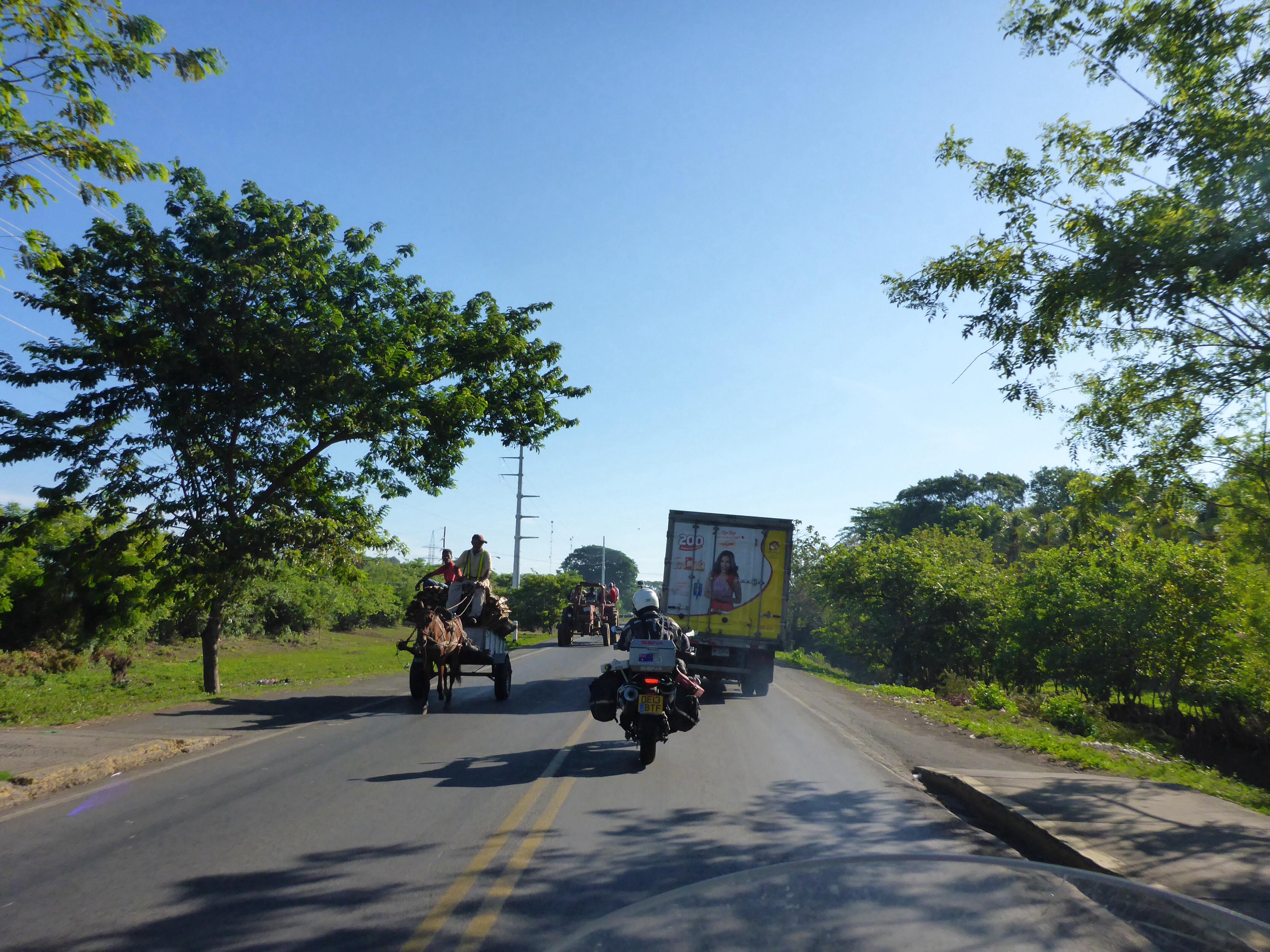
Leaving Chinandega, Nicaragua

Leaving Chinandega, Nicaragua
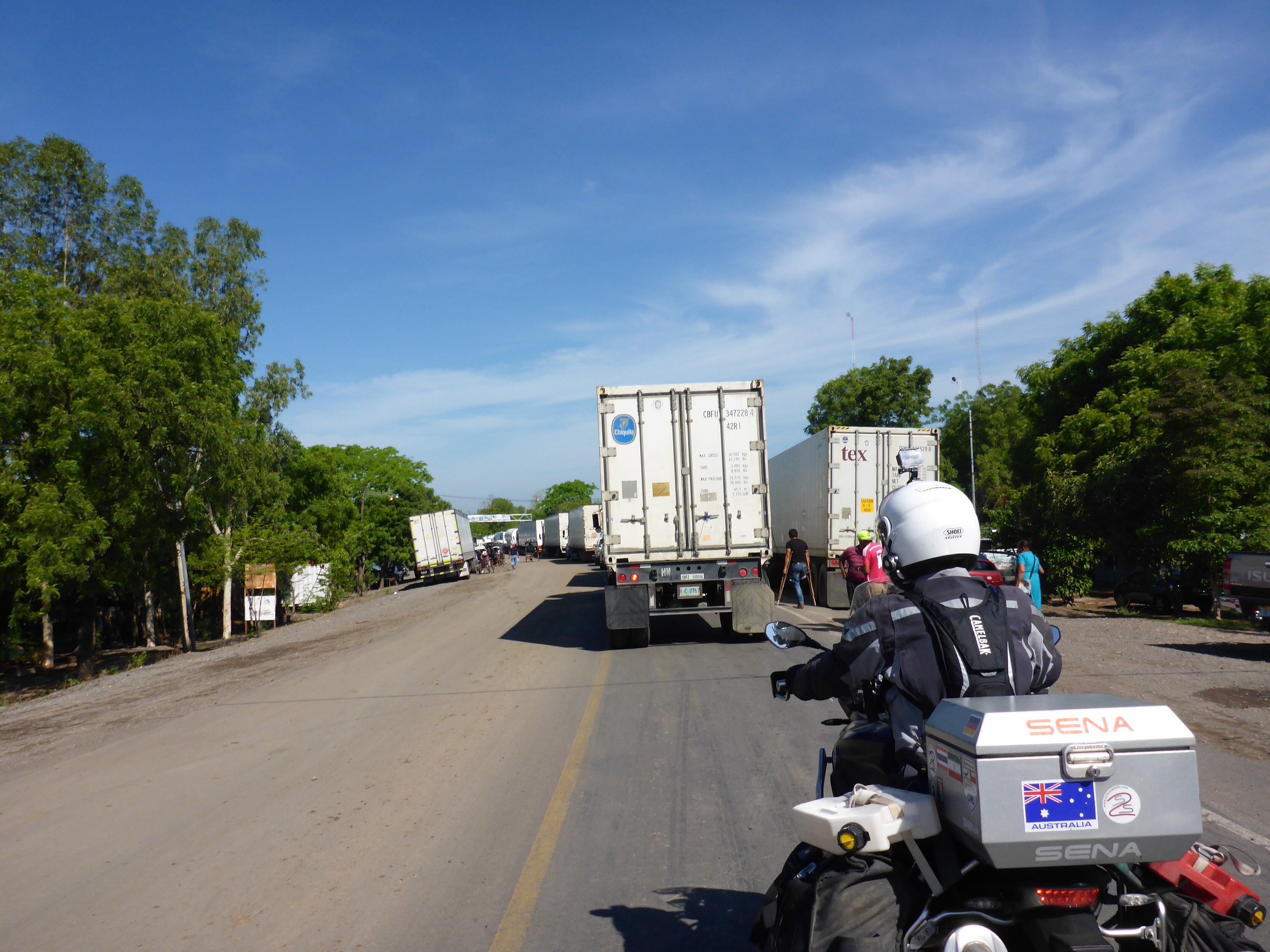
Approaching the Nicaragua-Honduras border post
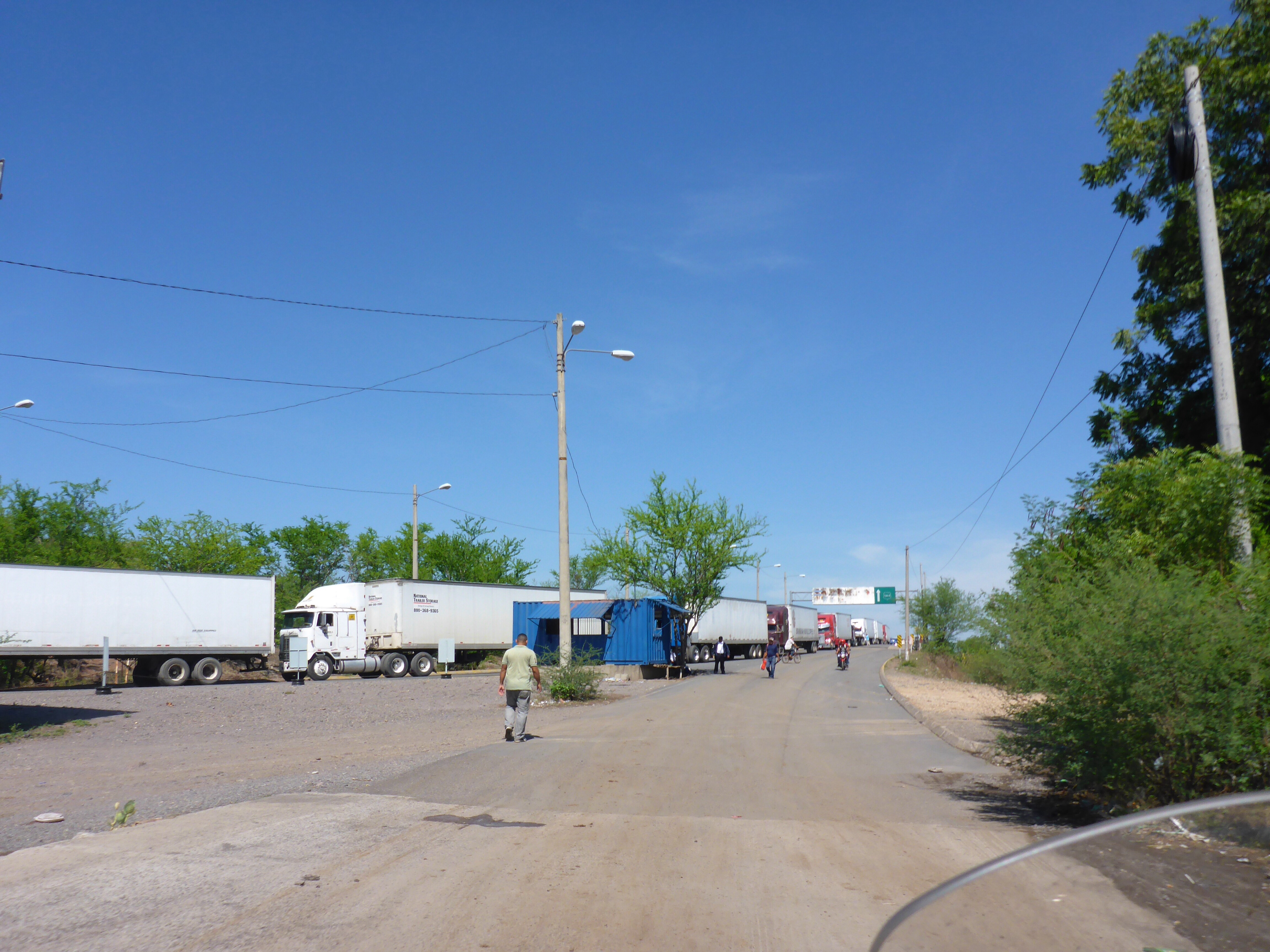
Honduras border post
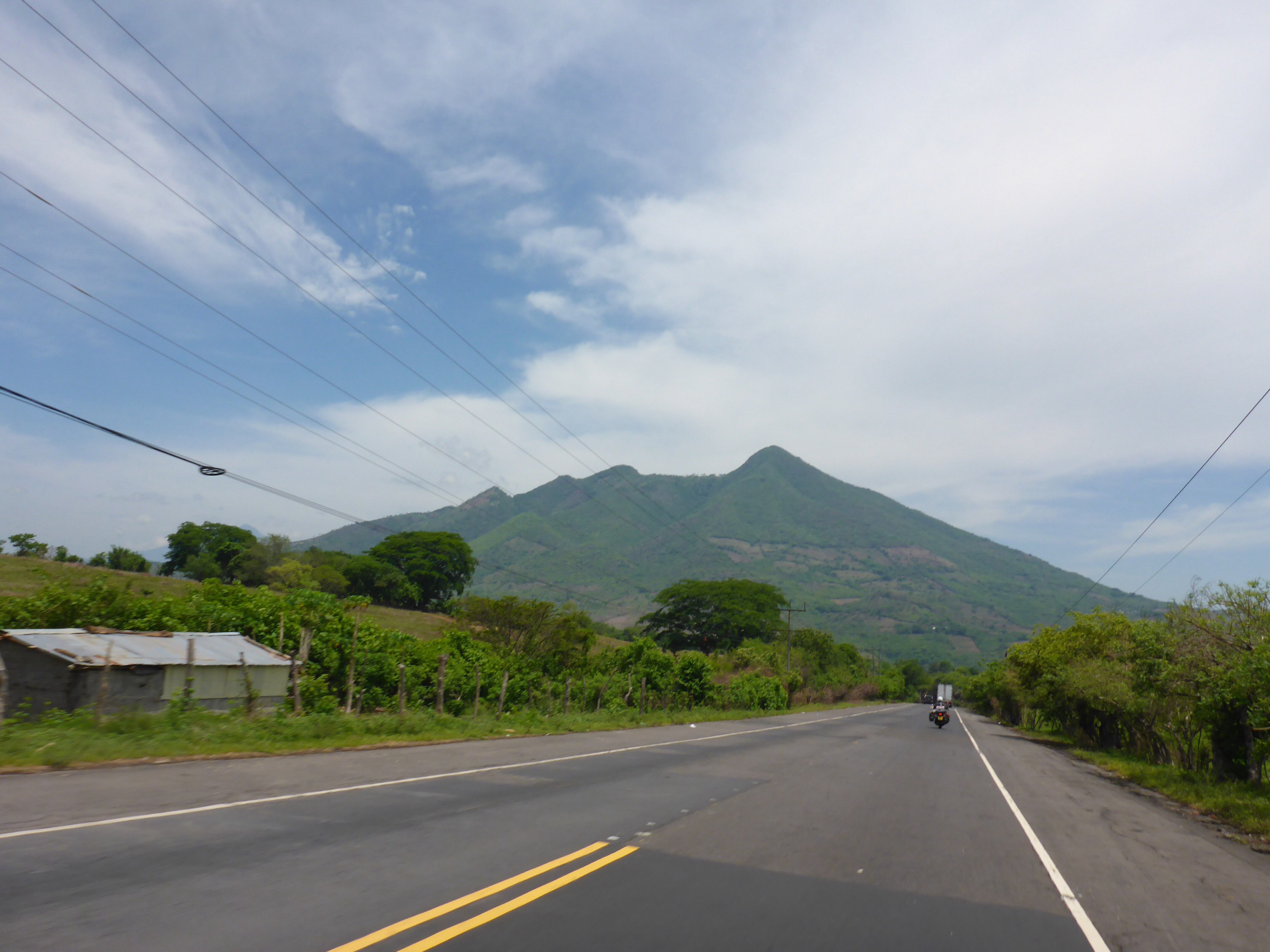
So many volcanoes in Central America – here in Honduras

Honduras

Lizard seller in Honduras
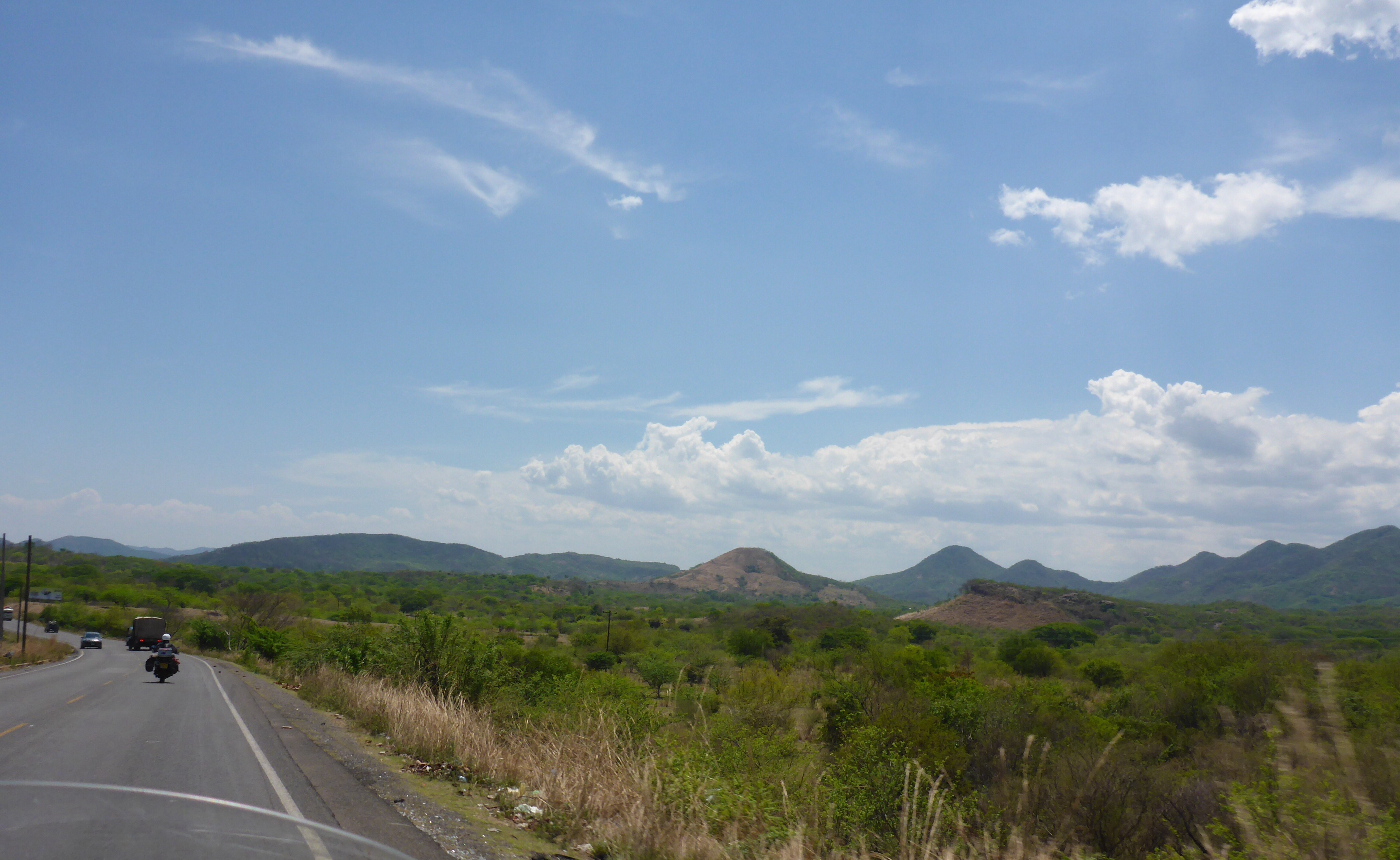
More volcanoes in Honduras
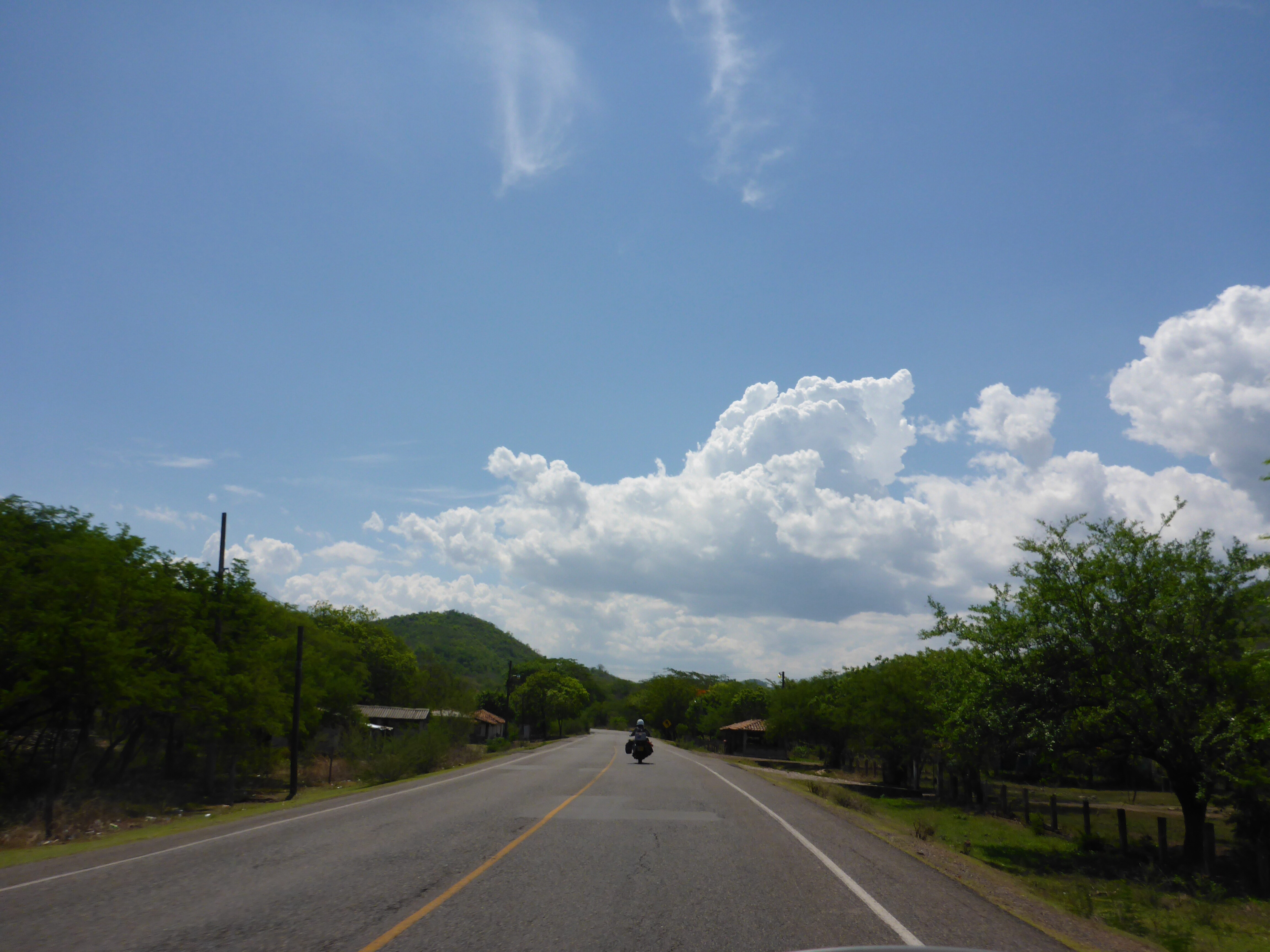
More fabulous clouds just over the border into El Savador, at El Amatillo

Long day to San Miguel – here coming up to El Caemen, El Savador
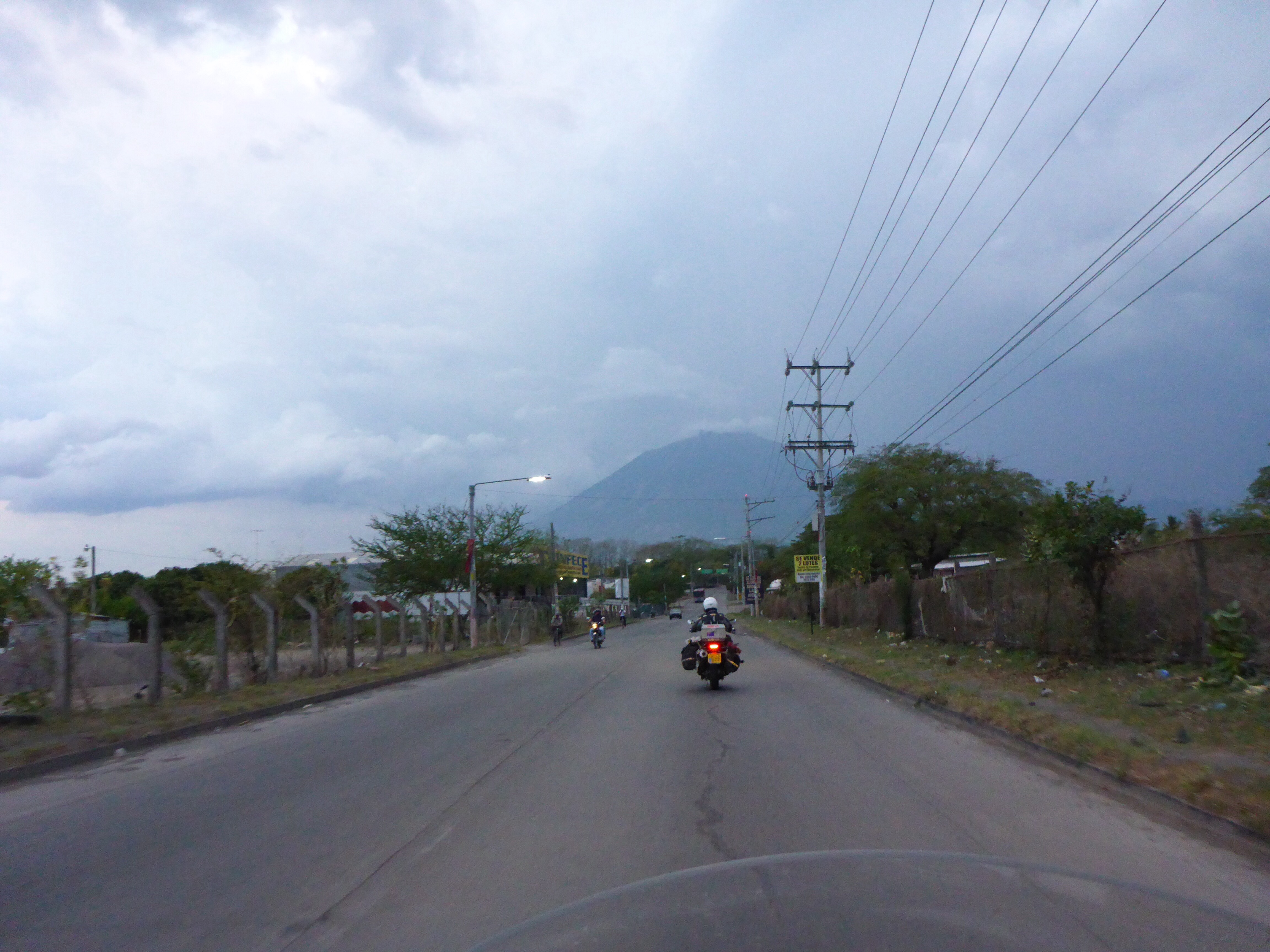
Another wet end to the day in San Miguel, El Savador
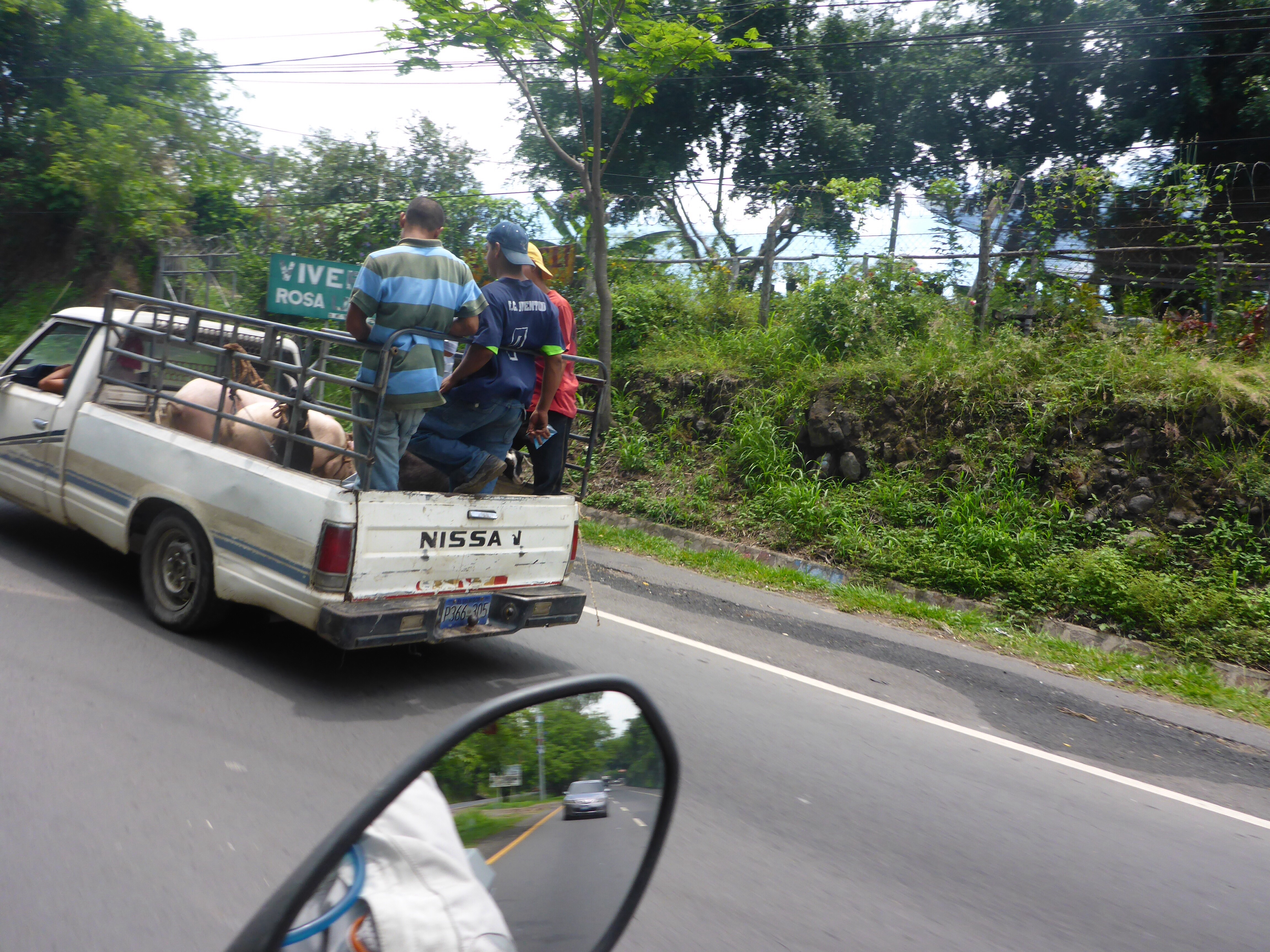
Transport in El Savador
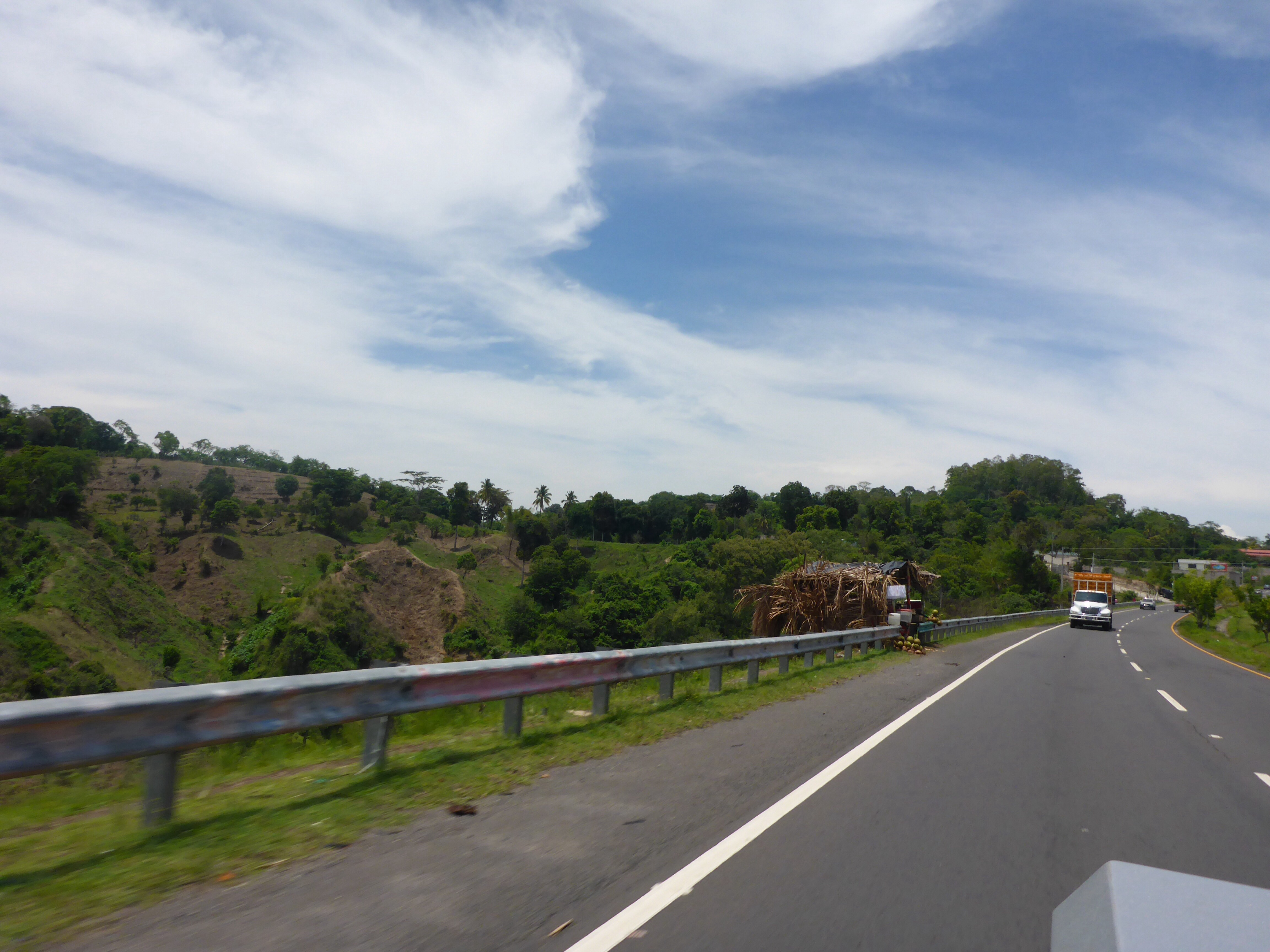
Coconut sellers in El Savador
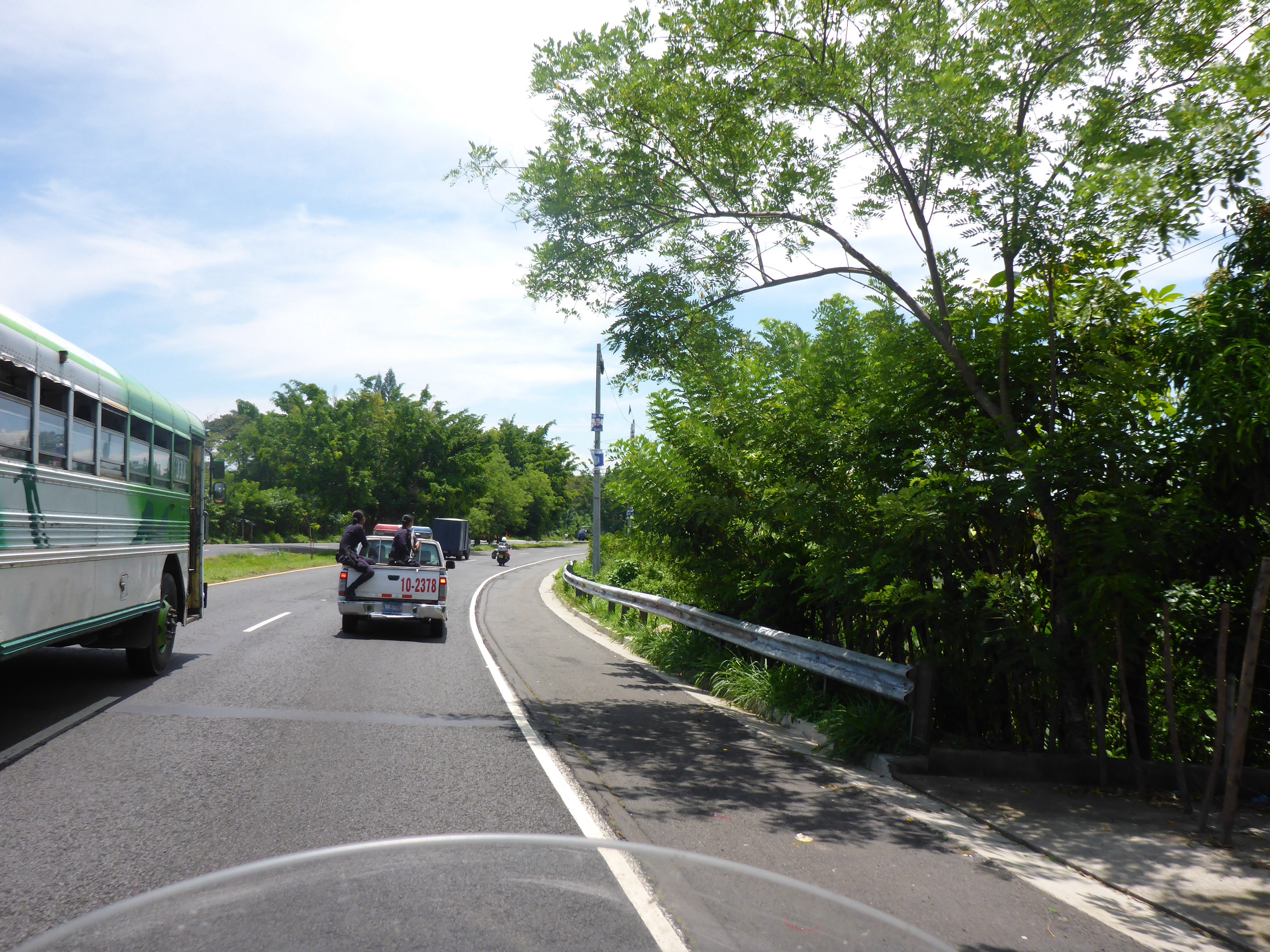
Police going to work in El Savador
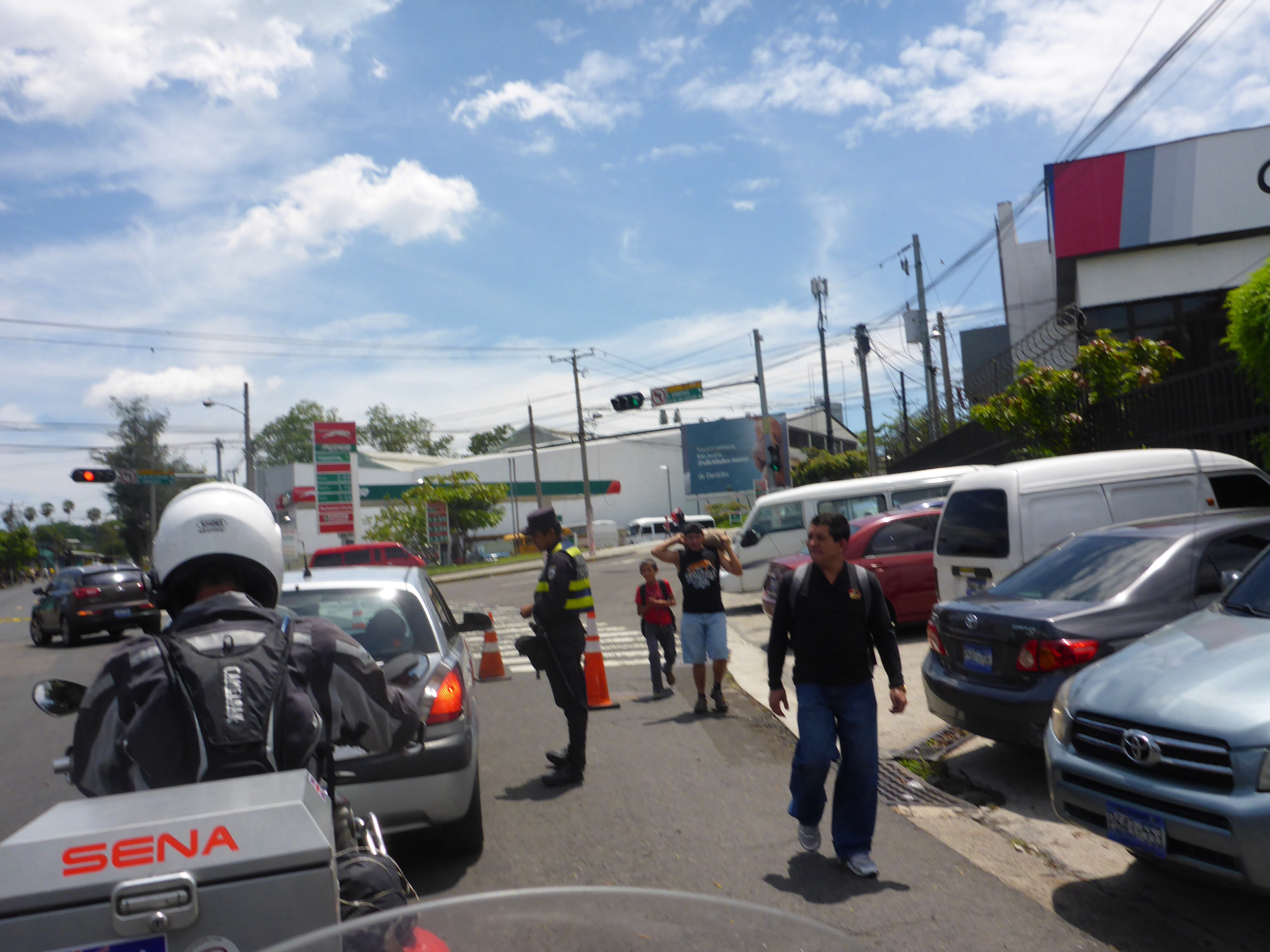
So many police checks – here in El Savador

Guatemala here we are!!
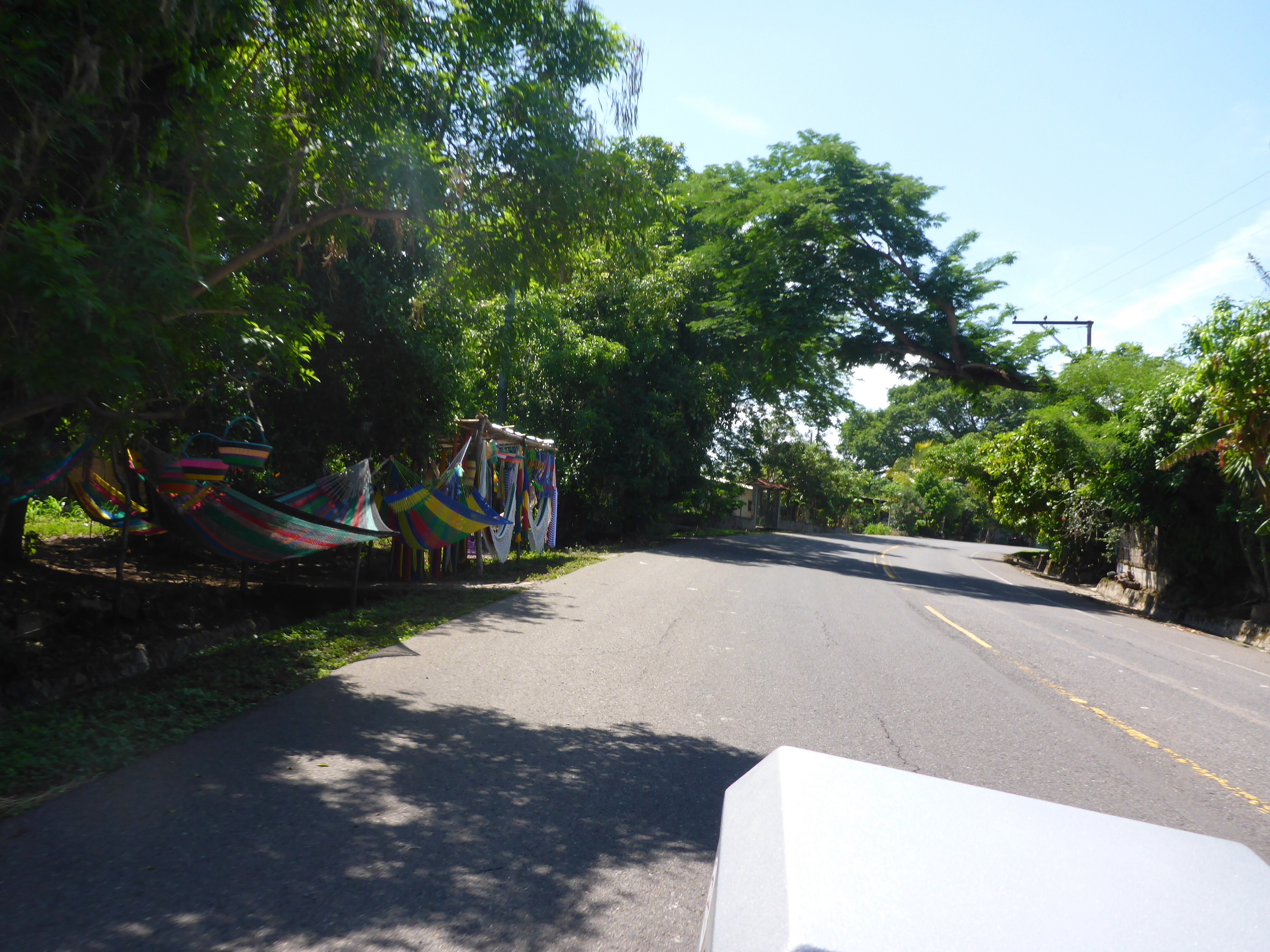
Guatemala hammocks
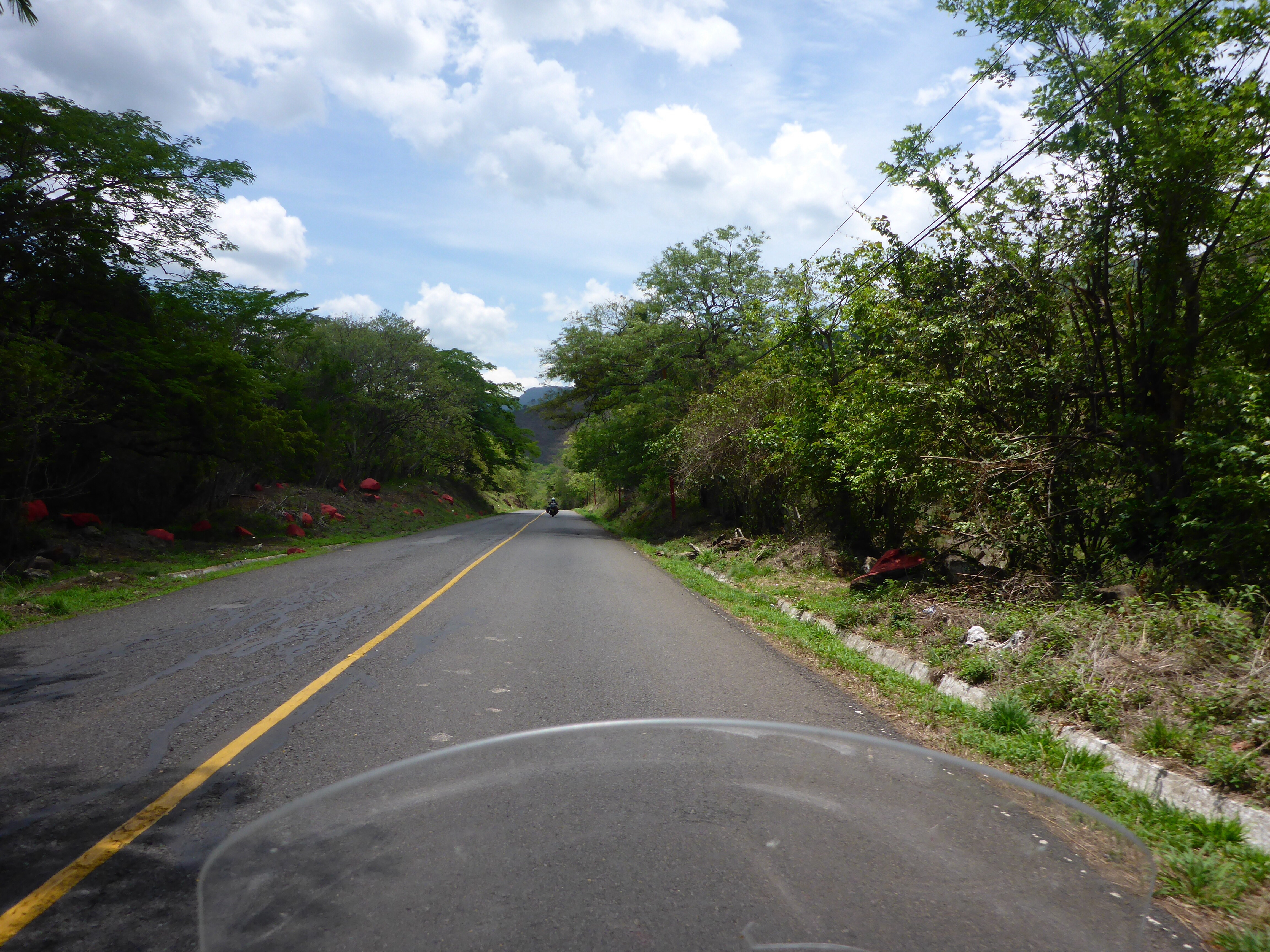
It is ‘red team’ territory – in other areas, the red rocks were painted over in white in Guatemala
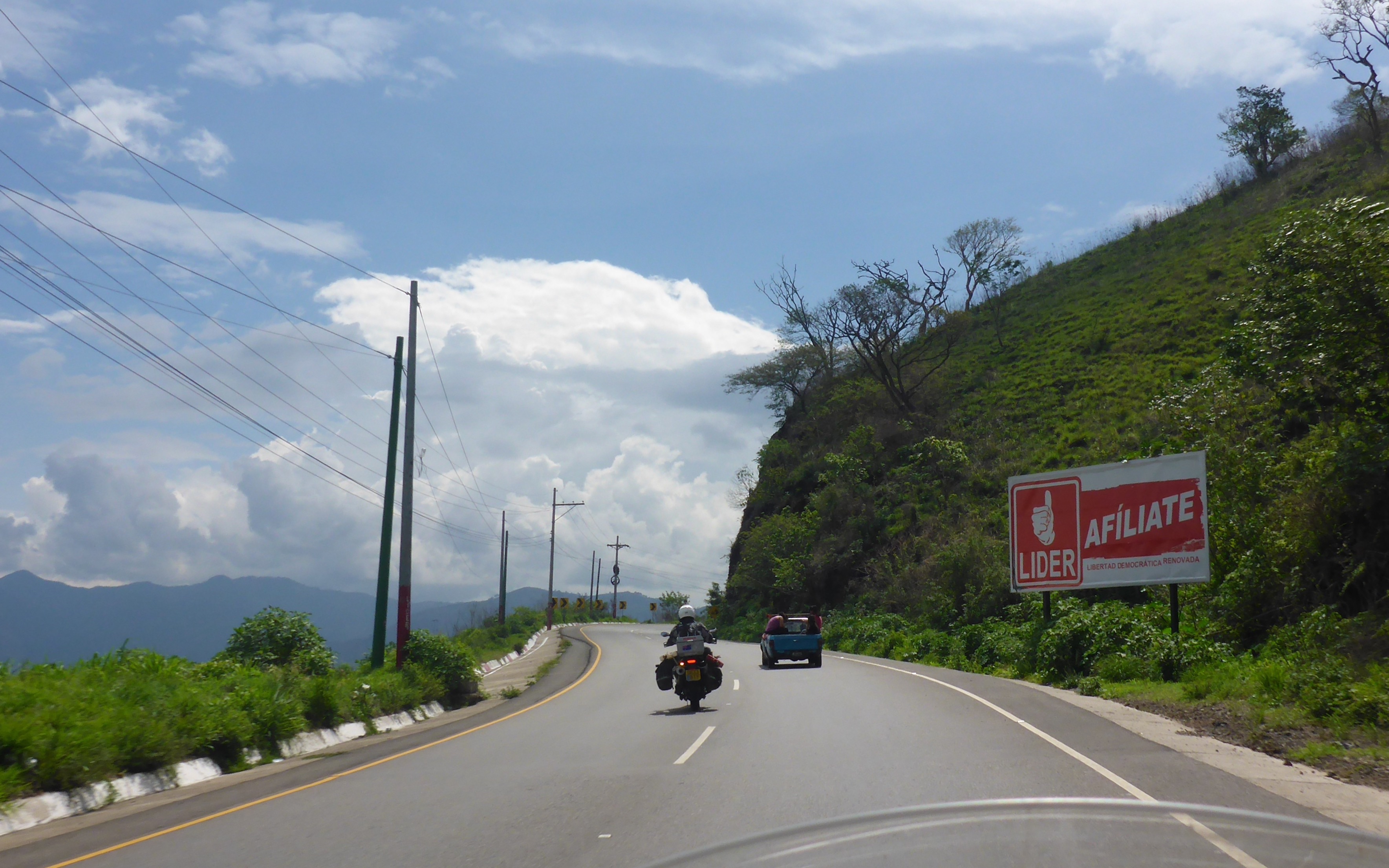
Love these tropical storms as they build
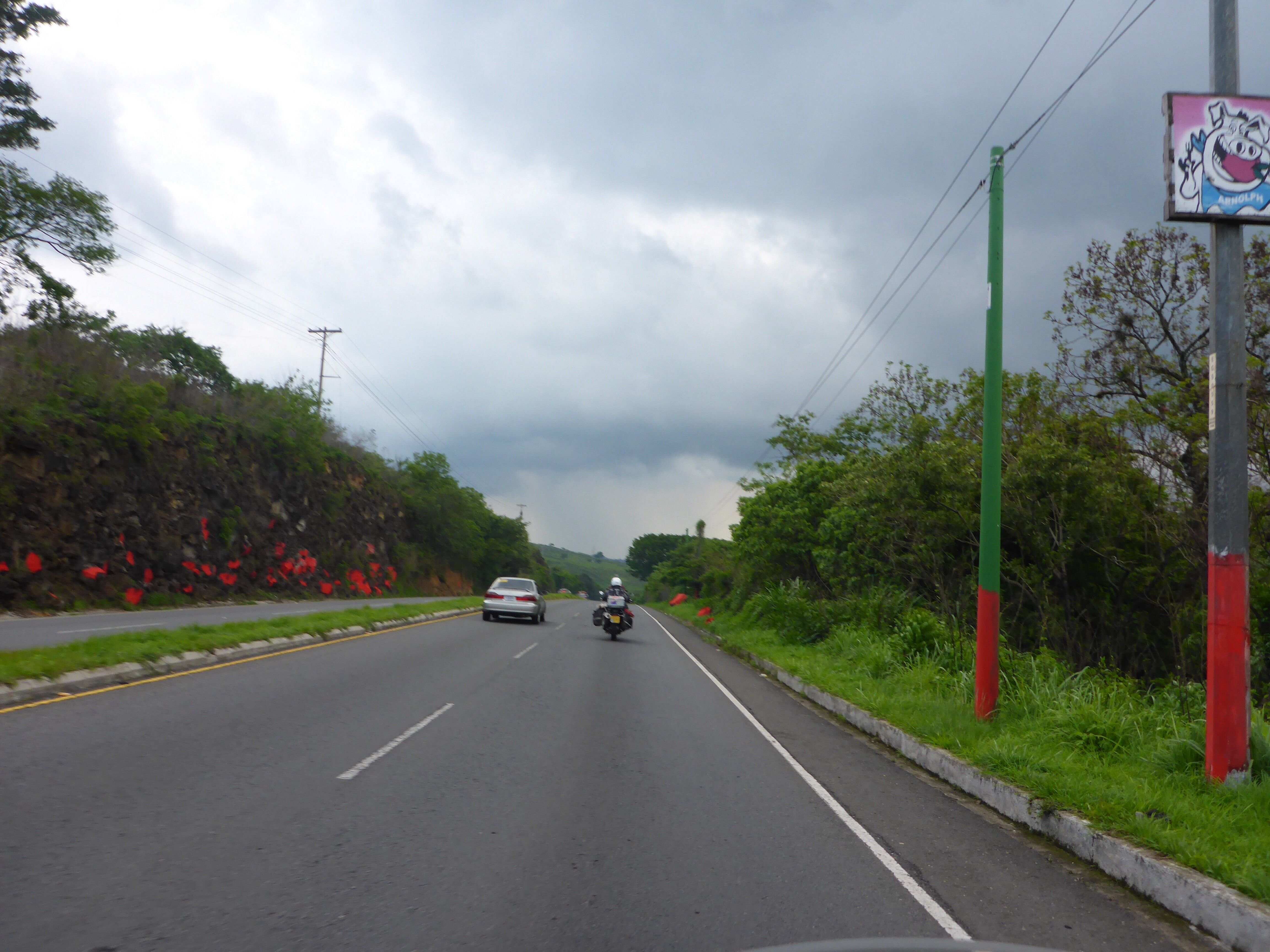
Another storm brewing for us on our way to Guatemala City
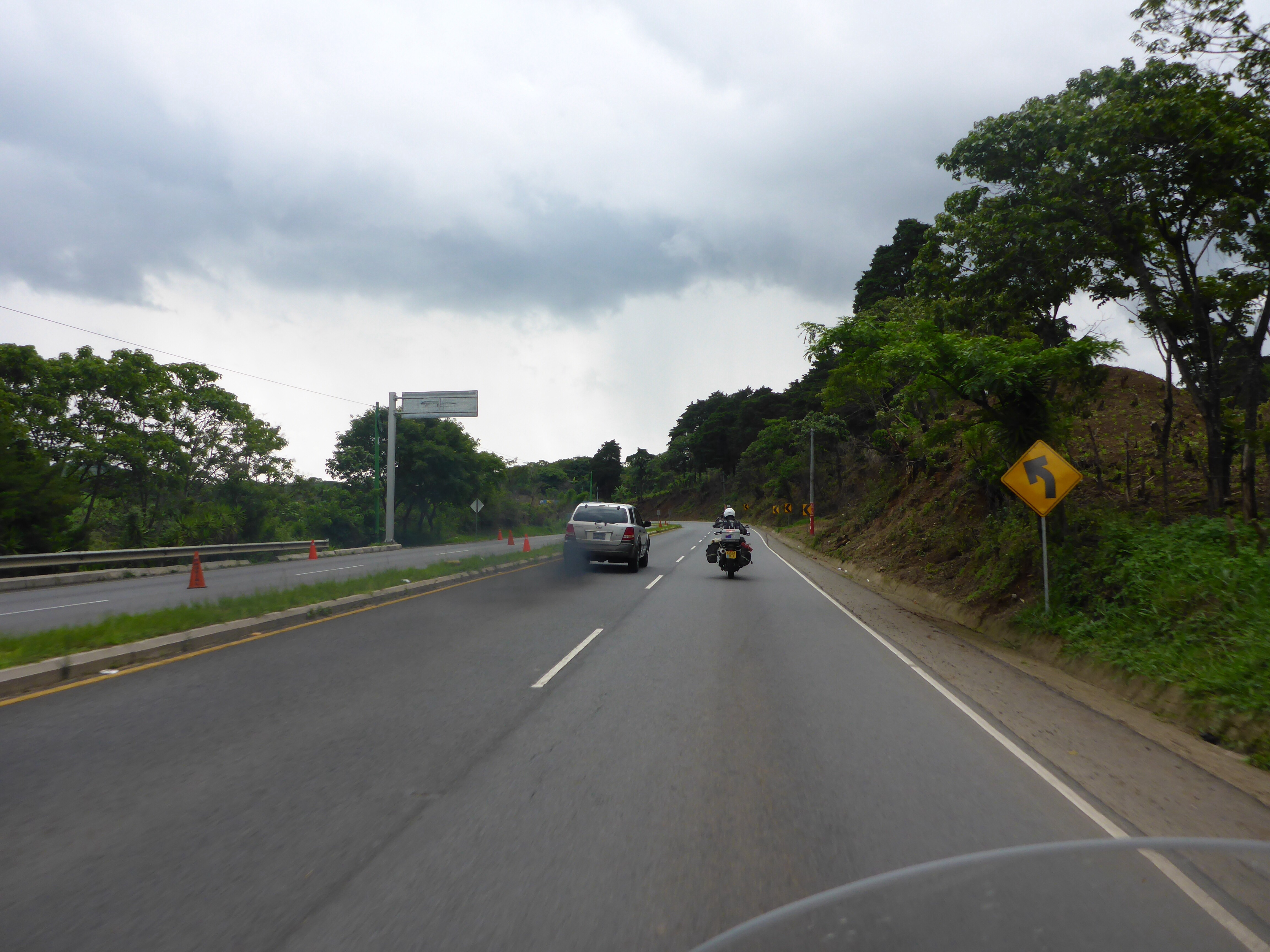
Guatemala don’t have emissions control
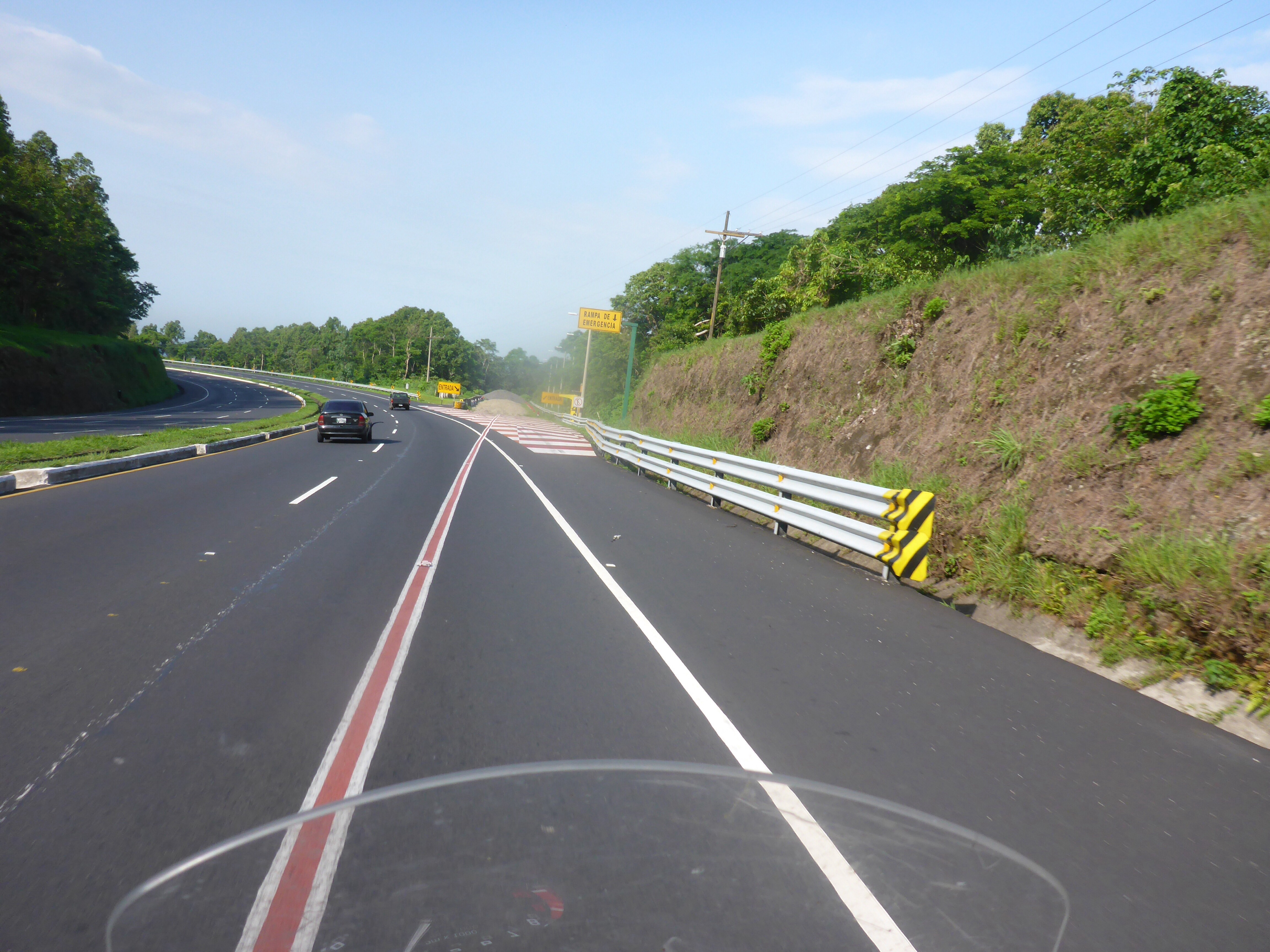
This emergency truck escape line started further up the hill, cutting out sharp bends – Guatemala
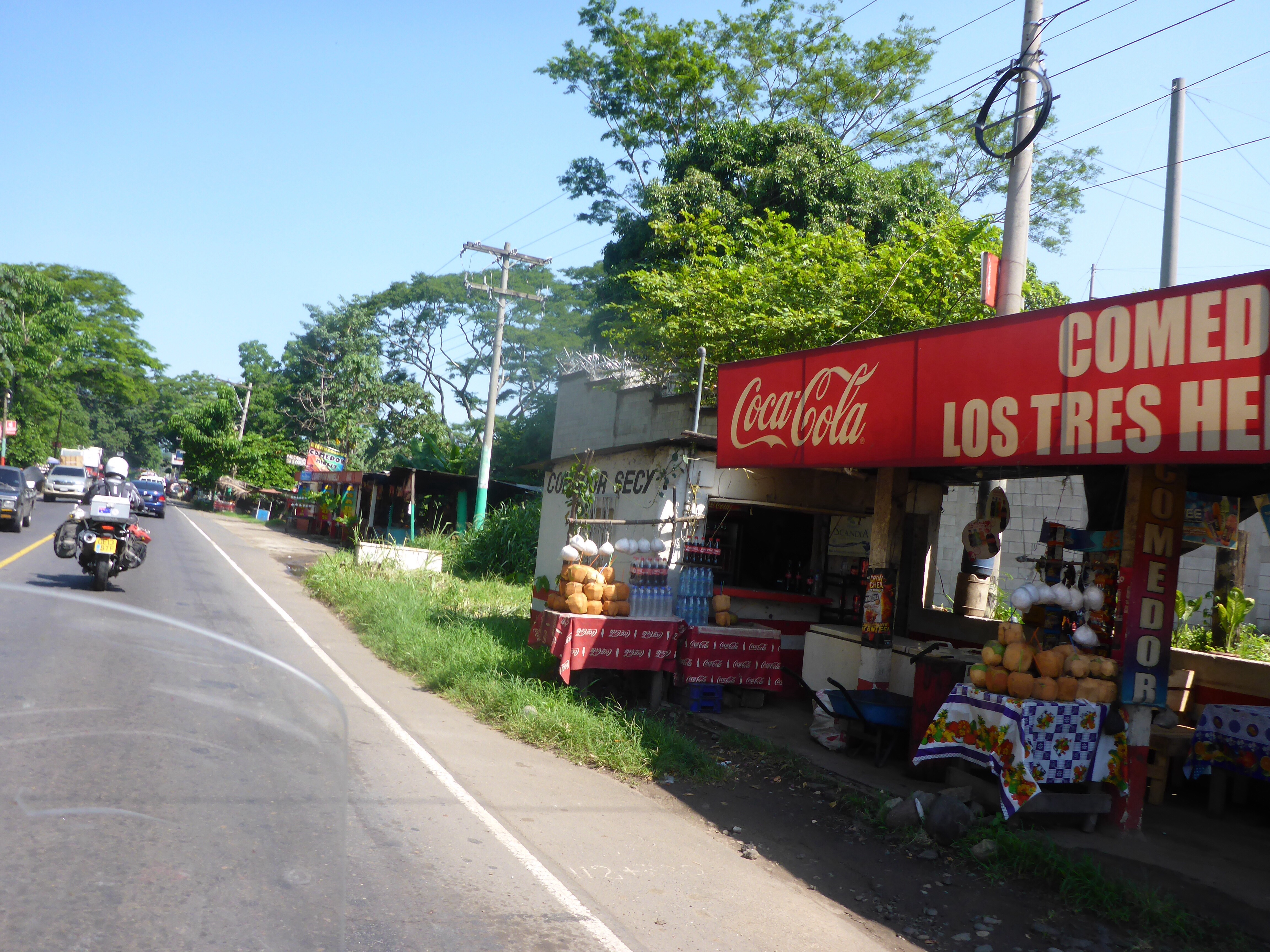
Cheese balls and other delicacies in Santa Lucia, Guatemala

Another glorious poinciana, Jalpatagua, Guatamela
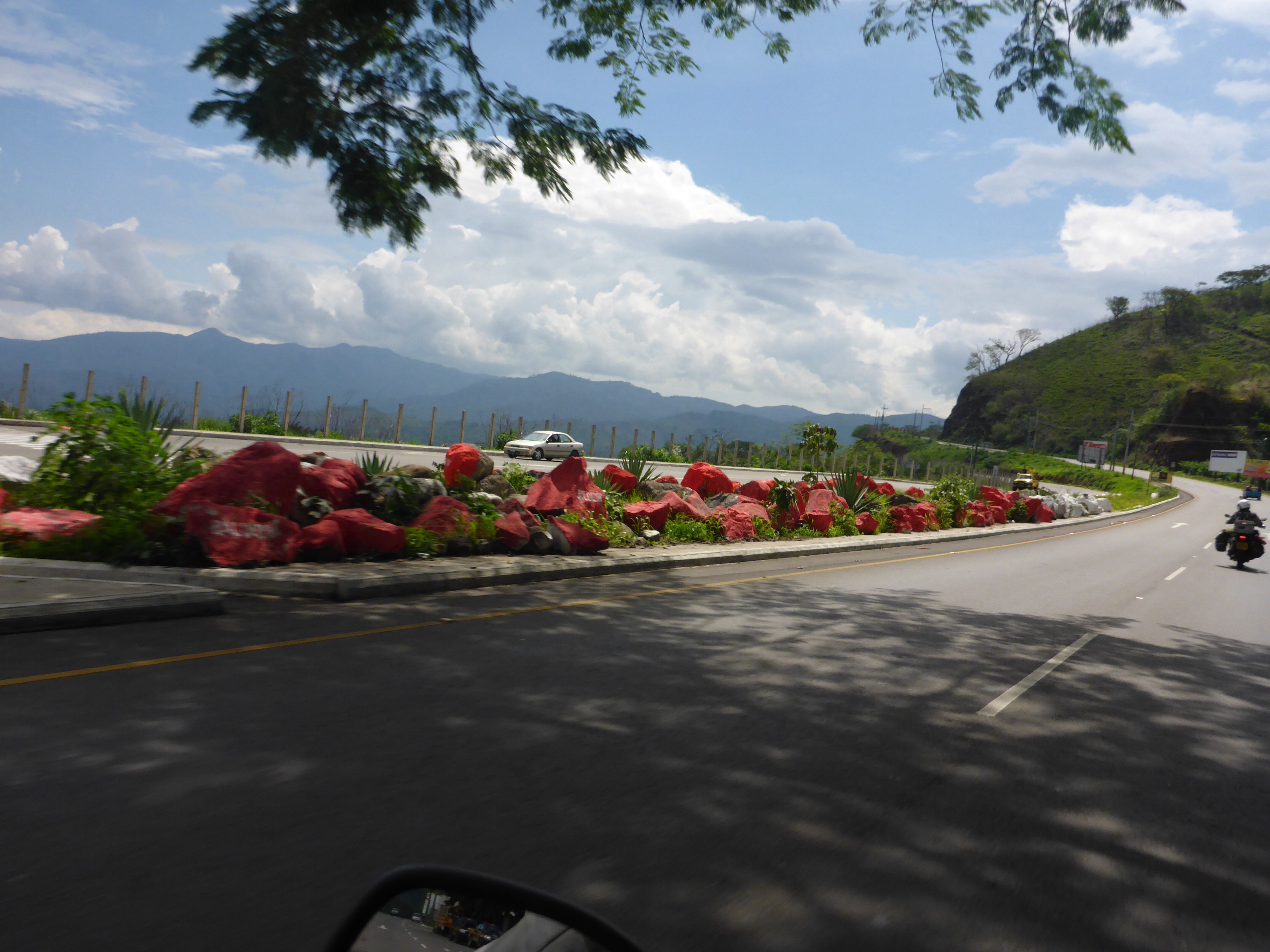
Cuilapa, Guatemala
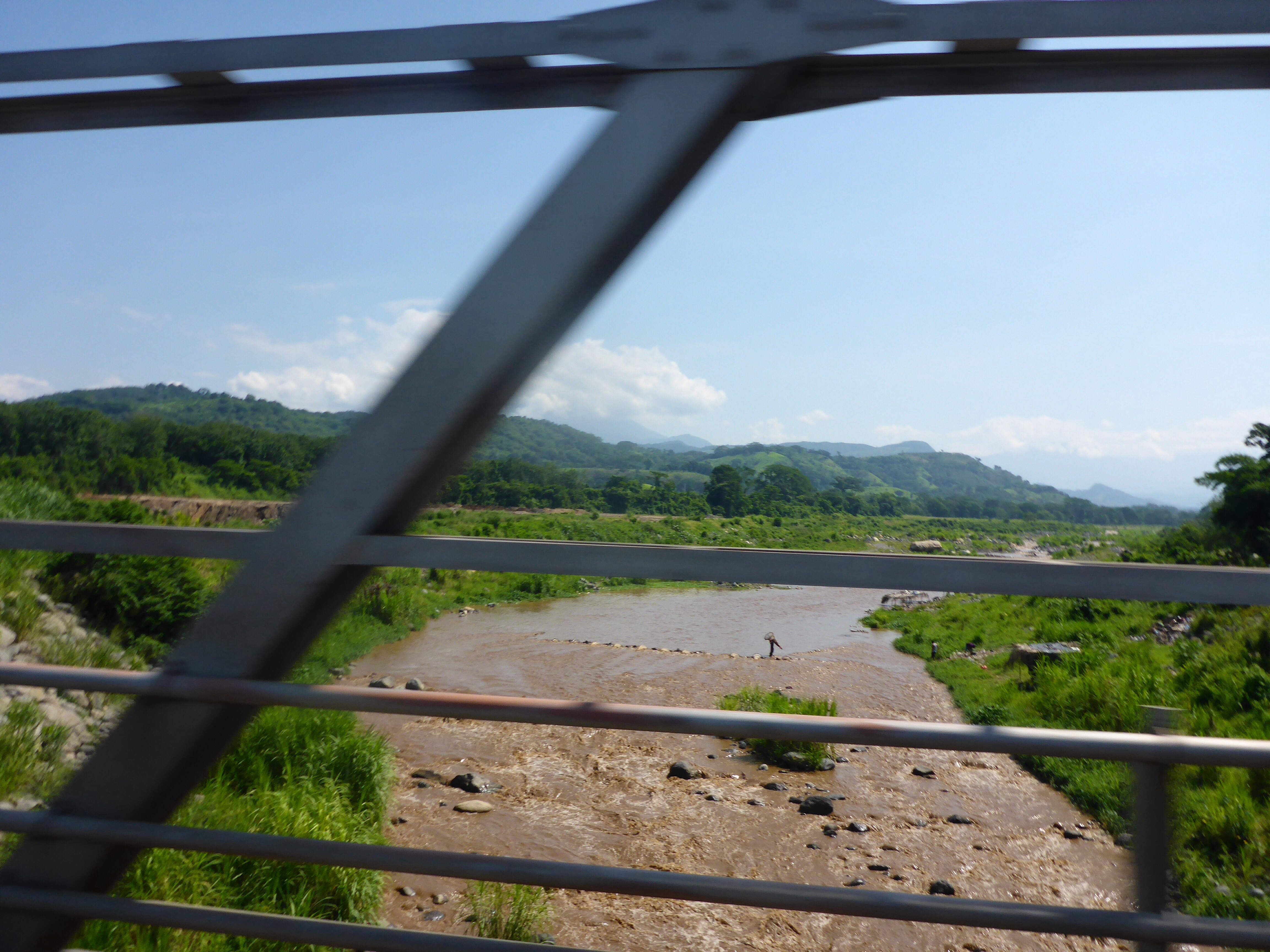
Rio Madre Vieja in Guatemala
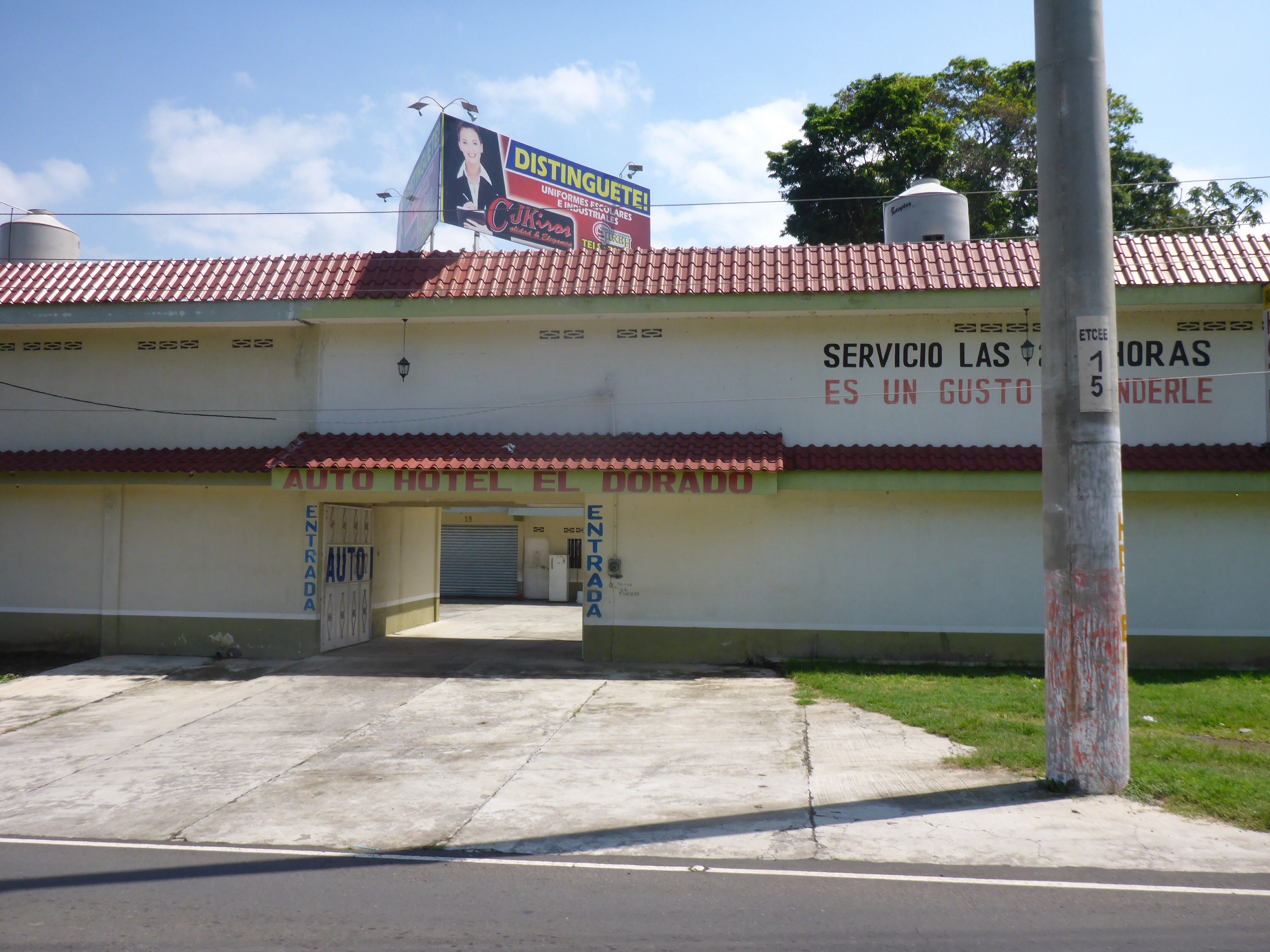
Another Auto Hotel in Guatemala
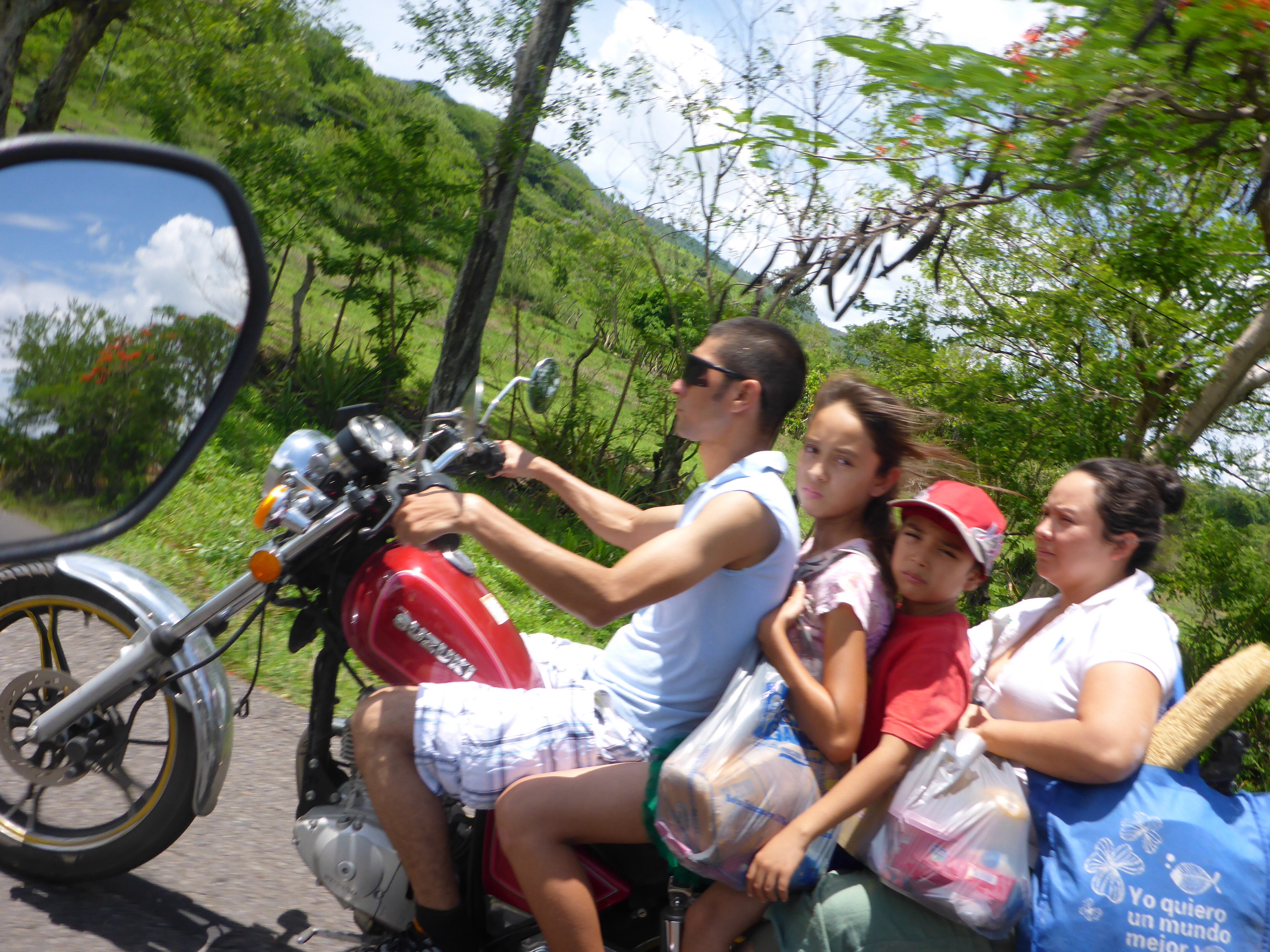
Guatamelan family
We won’t be able to settle down, you say?
The recent comments to our blog posts suddenly have a common theme: we will not be able to settle down when we get home, many of our followers believe. Really? This made me think that we have omitted to describe a large part of our days while on the road, and all the uncertainties that being on the road entails. There are many unknowns in our day, every day. Many things to work out. And the same things to work out all over again, every day!! While we love it and it is part of being on an adventure trip, routine is something we know we will enjoy once home.
Every day we are on the road, we have no idea:
– What the road conditions will be like
– What the traffic will be like
– How many random police checks we will have and slow our progress
– What roadworks or detours we will encounter and also slow our progress
– Where we will have lunch
– Where we will change money
– How far we will get
– Where we will sleep
When we have borders to cross, we have no idea:
– How long it will take
– What the best time to arrive is
– When are they open/closed
– Where we have go
– What paperwork we must acquire during the border process
– What order we are to follow
– Where we will change money
– Where we can get road insurance
Here is the Nicaragua border process for example, after driving past dozens of parked trucks all over the place, we:
1. Are waved over to a small awning on the right – asked to show our passports to official looking “unofficials”!?
2. Accept a fixer by simply nodding and following his instructions
3. Drive to a larger tent nearby – show passports, asked our nationality, “I” marked in ledger against country and given a small 2cm by 2cm piece of paper which is carefully placed in our passport. Do not loose it!!
4 Drive to fumigation station
5. Go to window and pay for quarantine treatment. US$3 each. And get large printed receipt
Complete customs form
6. Back to bikes which have already been fumigated
7. Show receipt and hand customs form which is then stamped
8. Drive about 400m and park between 2 buildings
9. Go to small table outside large building and pay US1 each for Municipal tax
10. Immigration – hand passports, with tiny piece of paper, completed immigration form, pay tourist tax of US$10 each, passport is stamped with 90 days visa
11. Walk to another office to buy insurance and pay US$12 each
12. See pale blue shirt Customs Inspection lady back at main building where we parked. She walks over to the bikes, no inspection, and she stamps customs form
13. Vehicle temporary window. Hand over quarantine treatment receipt, customs form, passport and vehicle document. Get permit – free!!
14. Find customs police (who are currently dealing with a ute carrying a purple fluff covered coffin). Get temporary permit stamped
15. Go to bikes for Customs police inspection. He squeezes a couple of bags and signs the temporary import docs. Last step done!
We are having an absolutely amazing time on this trip, we realise this trip will have changed us, not sure exactly how or to what extent, and while we are not sure how we will feel being home, we know we will relish routine, the ease, luxury and comfort of routine, for a while anyway!!!… And for me especially, I will enjoy the luxury of having a washing machine and not smelling of wet dog!!
– Anne
A tale of 2 cultures – Panama & Costa Rica
During this trip we have pondered on how and why cultures develop differently and how they imprint themselves on their people, both consciously and sub-consciously. We first noticed this as we travelled the ‘Stans’ last year. In that case the breakup of the Soviet Union was only a couple of decades old, and while we had no prior knowledge of how each of the now independent countries has been during their participation on the Soviet Union, the very different driving styles we encountered were probably most likely developed in the last 20 years.
Here in Central America, we have a number of small contiguous countries that we shall travel through in the coming few weeks and will have a limited opportunity to see first hand how their cultures differ in our view, if at all, and the impact this has had on people’s behaviour. This will be a work in progress: as I write, we are only into our second country Costa Rica. It has been interesting as with only one day in Costa Rica, we have seen differences between here and Panama. I am jumping ahead here, lets go back a day or two.
As we mentioned in a previous blog, we have met some helpful people in Panama, but we have found that there is desire to make extra money, whether by proposing an inflated taxi fare because we are foreigners, while in Bogota the taxi drivers rounded down, or asking what we will do to avoid an official traffic infringement being raised. More on that later.
Our departure from Panama City took us out over the ‘Punte Centenario’ or Centennial Bridge which is situated just north of the two sets of locks on the Pacific Ocean side. We had our last glimpse of Panama Canal and a ship sailing towards the Atlantic. If felt that we were now really in the North American continent. I know there is debate about where to draw the actual boundary between the North and South American continents and people use country boundaries, geography, language and tectonic plates, but I like the idea of the canal, especially since it runs more North/South than East/West, which is something I had not really appreciated before we came here. As we have traversed Panama and now Costa Rica we tend to ride more West than North.

Crossing the Panama Canal
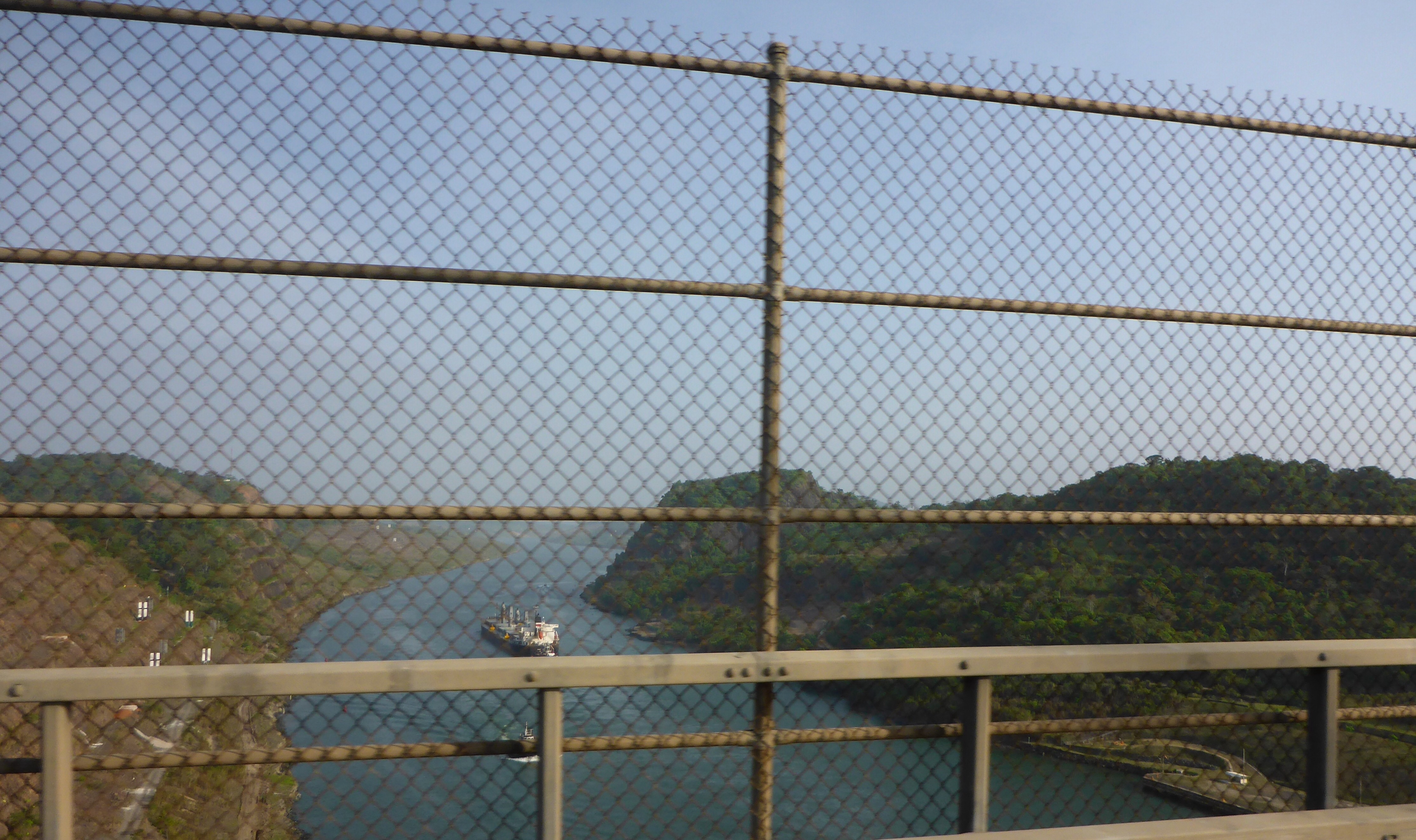
Crossing the Panama Canal
Until today on this journey we had two encounters with traffic police, both of which we were at fault, and paid the appropriate ‘Spot Fine’. We have been careful to observe the rules, well, as much as the locals do, while we ride.
Today we are pulled over on an open straight 4 lane highway and informed the speed limit is 80km per hour. We saw no signs, but could not guarantee we had not missed them while overtaking. We had been careful but these things happen. We are then told the infringement will be US$100 each, our policeman intimates a cash alternative is acceptable. We decide to pay the spot fine and then are asked for a pair of motorcycle gloves as well! Luckily mine are ratty and have big hole in the palm of my hand, he is not interested.
After departing we take a keener interest in the speed limits, and also the other drivers’ speed. It turns out that the 100km per hour only applied near Panama City and the rest of the four lane highway to the Costa Rica border is 80km per hour or less. Drivers are very careful, and stay below the limit, where they perceive or know of trapping, otherwise they go faster, but the heavy police presence trapping makes it a fraught game. We find the ‘Carretera Interamericana’ as the highway is called is being duplicated for over 160km and the speed limit en route, regardless of construction conditions, is either 30km or 40km per hour. Police trapping seems to occur after most of the infrequent speed limit signs. With the existing road surface being of poor quality, perhaps a 60 km per hour limit might be more appropriate. This starts to look more like a business not a road safety initiative.

Gorgeous tree outside Panama City
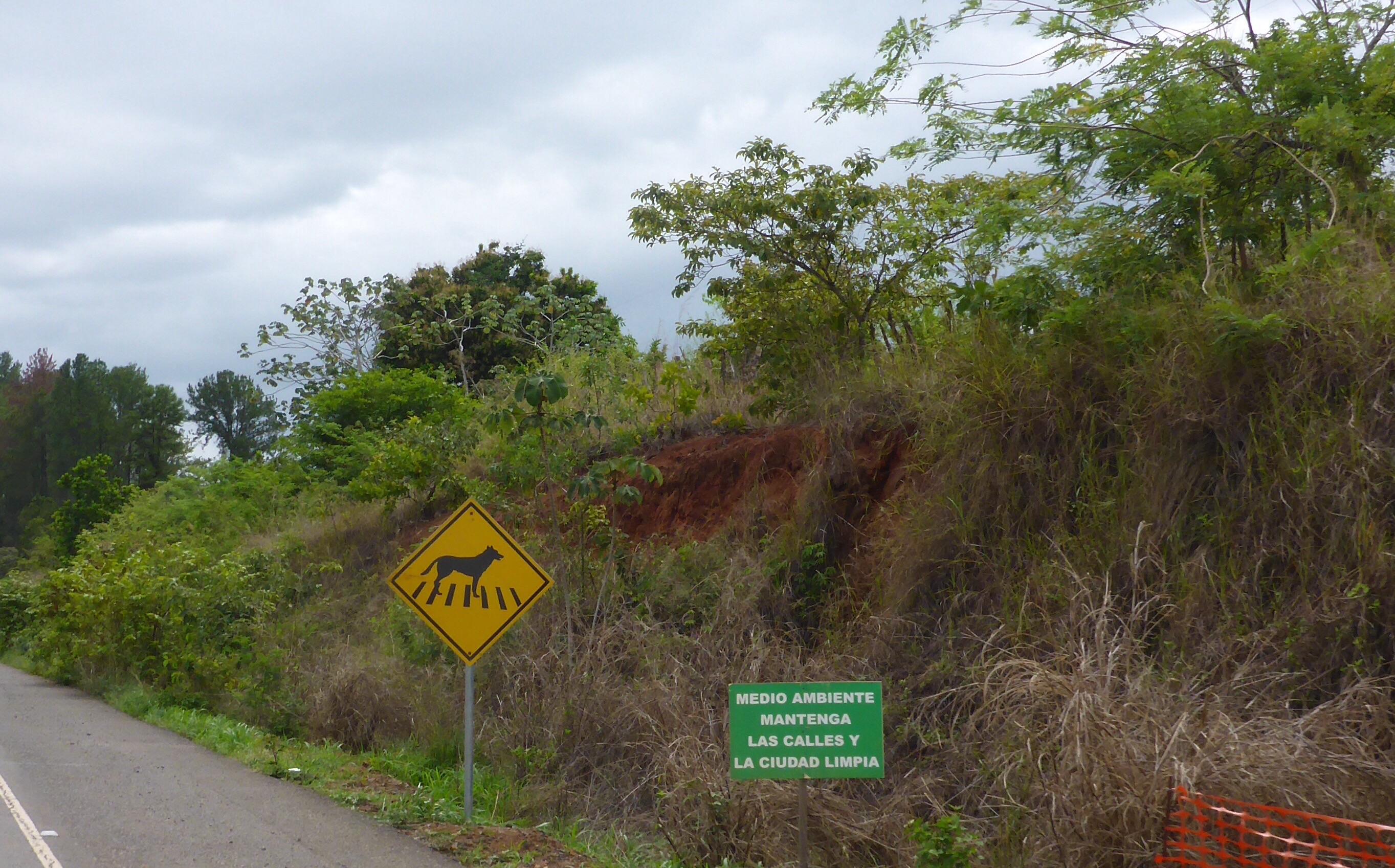
Would love to know what this sign means, Panama
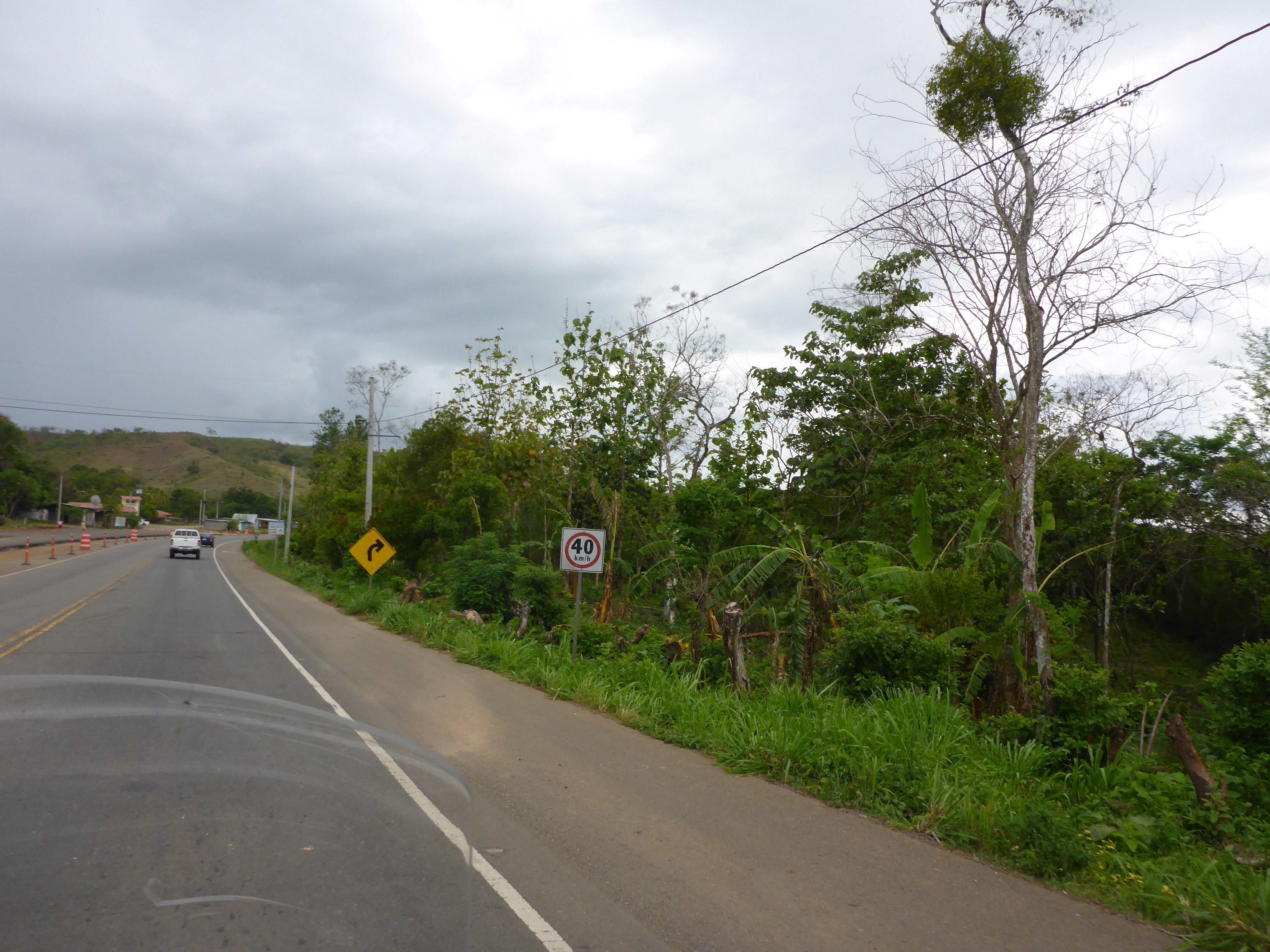
Still 40kms/hour on our way to David, Panama

We want to beat the rain but the bum is getting sore

Anthony’s confidence is still high it will not rain on us
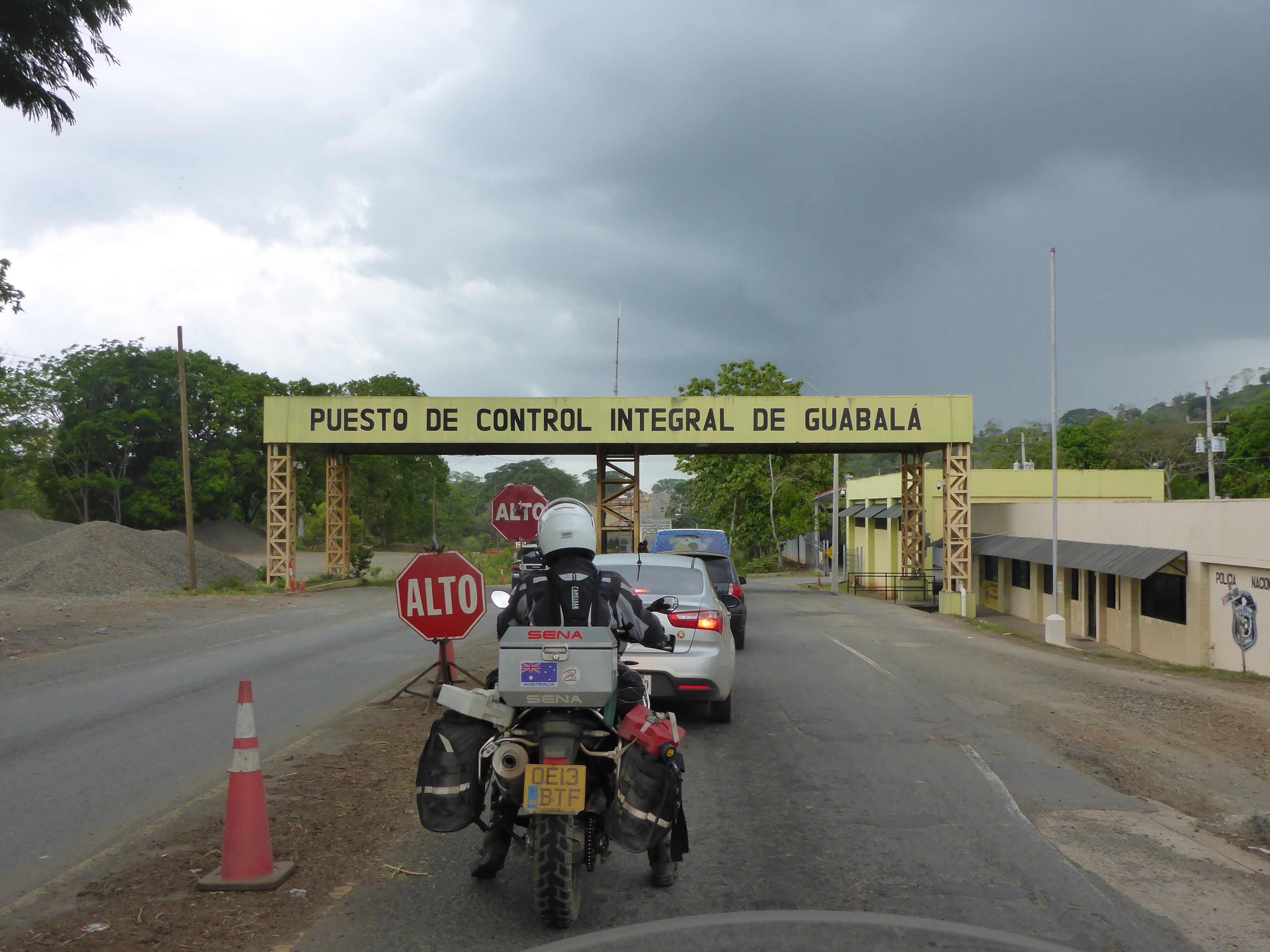
Just another customs check, 150kms from the border
My confidence in avoiding rain as we progress into the afternoon is misplaced and a black torrential tropical downpour envelops us. Must remember to put on waterproof trousers before the skies open up. It is easier for Anne as her new riding trousers we bought in Kuala Lumpur are waterproof. This downpour makes for interesting progress but we eventually arrive at our destination some 20km short of the border. We do not have an exact location of our bed and breakfast place and a kindly local drives ahead to show us the way. I can now dry out all the money in my jeans pockets. We also both have wet boots, our new pair of TCX Track Evo boots are still not waterproof…
We are not looking forward to the Panama / Costa Rica border crossing, we have read stories of long delays, ‘fixers’ being needed to help your progress, generally unpleasant. Our friend Kristjian had a torrid time here as well, it took him 3 days… We are lucky in that Kristjian has been sending regular reports of his crossing experiences which give us an up to date view. We also have multiple crossings to make in the next couple of weeks as the countries are small. In many of the Asian countries, we travelled thousands of kilometres before we crossed the next border so we only undertook the border crossing process occasionally rather than every couple of days as we will here.
– Anthony
Panama – Costa Rica border – 15 May 2015
As Anthony said, we were not looking forward to this border crossing following Kristjan’s experience. We had also heard the border crossing was very slow with many large trucks and coaches who make the journey overnight to arrive by 6am and a couple staying at our B&B were going to cross at around 10am ‘when it should be quieter’. We stick with our original plan to be at the border by 7am.
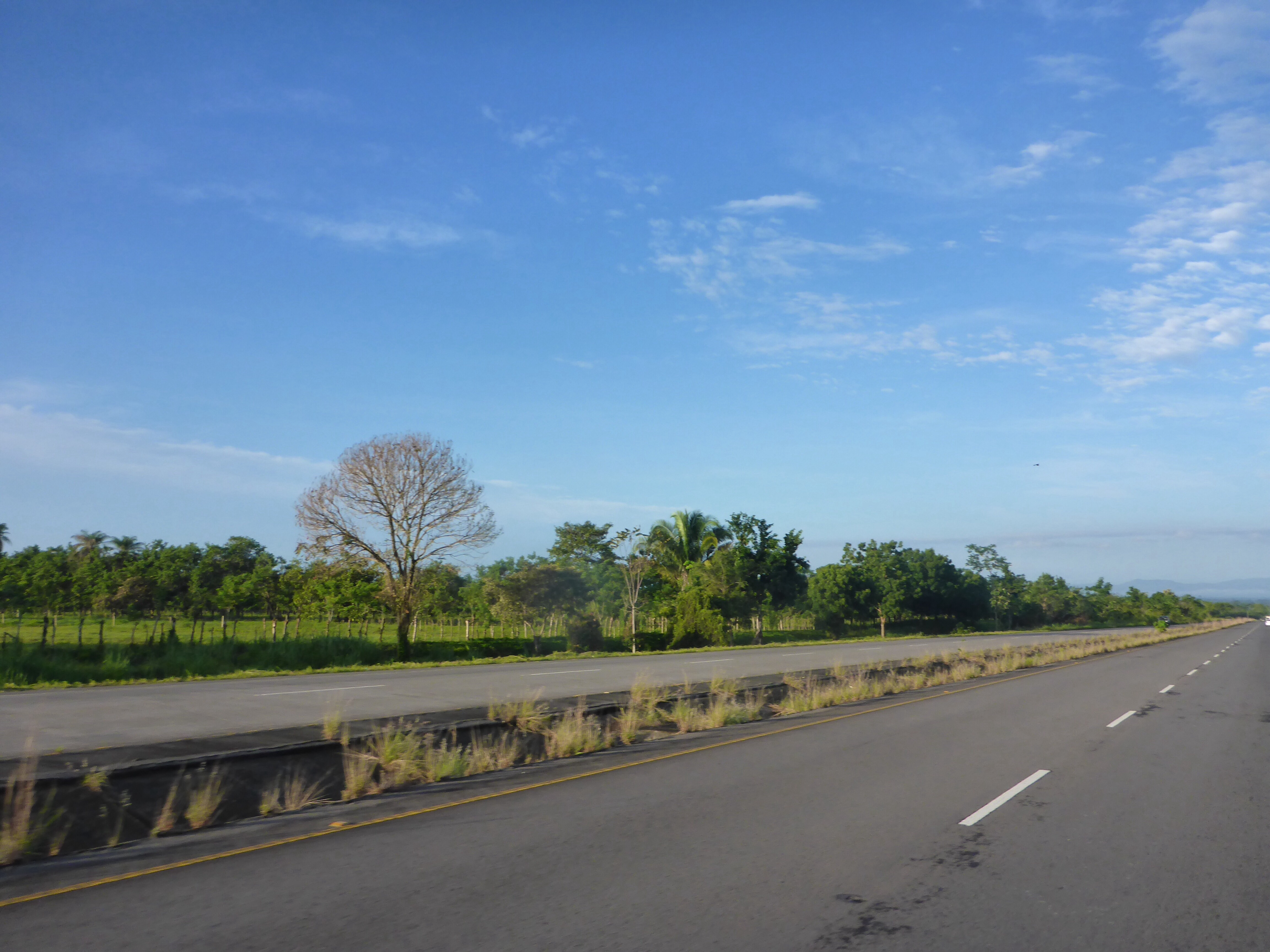
Nice to see blue skies as we head to Paso Canoas border
What we didn’t know is that only 3 tight lanes of vehicles can drive past the immigration/customs building, under a large tin roof – in our case a line with 2 coaches, and 2 lines of trucks. We are directed by an army official to park our bikes behind the lines – we park side by side behind the back of a Tica transport company coach.
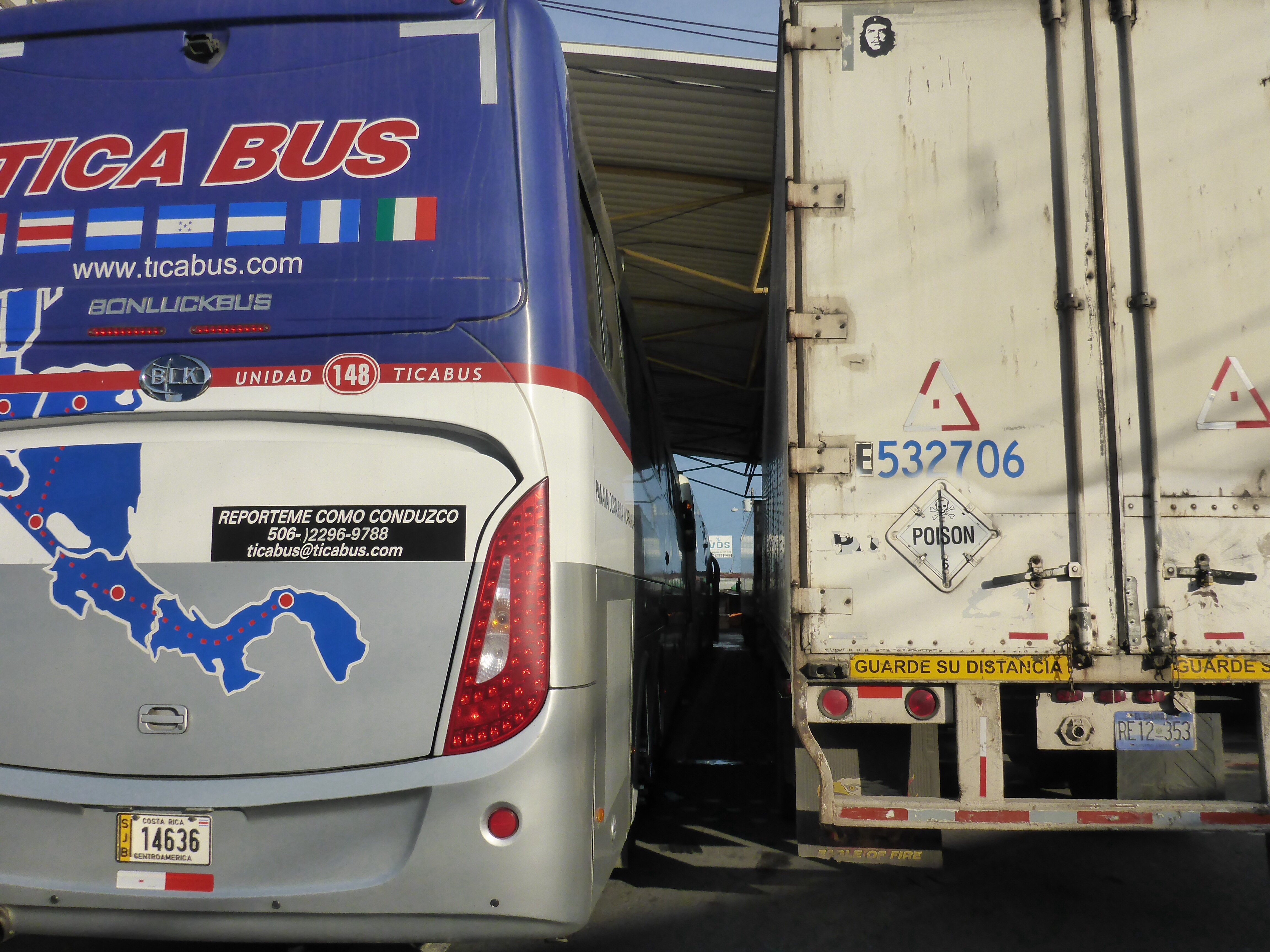
At Paso Canoas border post
As soon as we get off our bikes and walk towards the buildings, a man approaches and waves to follow him. He is a “fixer” and we decide to accept his help.
First he takes us to the furthest building (there are only 2), marked Aduanas, asks us for our (vehicle temporary import) document, leans down into the little window opening and calls the 3 women sitting and chatting at the back of their office. One gets up – not sure she wants to assist, but she stamps one of the forms on the back. He has to ask her to stamp the 2nd one too which she does reluctantly. Now this when a fixer comes in very handy: he then took the forms and found the man who would sign the stamps!! He was busy with a truck and he too seemed reluctant to assist but he signed both. Job done.
Next immigration, which is in the first building on the left when we arrived. Not the long line of travelers who have come off one of the coaches, but the window to the far left left marked ‘solo transportitas’. Our fixer tells us to hand the vehicle document and our passports. Small delay as the 2 women behind the window decide to read one of the coach brochures on their shelf. We just wait. Brochure read, replaced, then whole pack removed… Iris photo taken, passport stamped, all documents returned.
The fixer then takes us back to the Aduana window where our temporary vehicle stamp in our passport is stamped too and cancelled.
Job done. The entire process took 15′. Would we pay US$5 each for his help, our fixer asks. Very fair price, no problem!! Time to leave, but how? There is no room to squeeze past the busses and trucks. Anthony goes off, while I secure our position behind the busses, to see if we can go through the entry side instead. Our fixer is not interested, not his area, fair enough. The army official who had told us where to park before the process began indicates it is not his call but we must ask a superior officer by tapping his shoulder on his (lack of) officers tabs. I notice there is movement with the buses and now the one in front of us is trying to reverse. On the bikes we hop, move back to find out the front truck and both buses have maneuvered to make space for us to squeeze past!!! Brilliant!!! Absolutely amazing. We are through in exactly 27′ total!!
On we drive a short distance to the Costa Rica border, past all the ‘no stopping’ parking bays (?!) until I give up and stop just next to a drinks seller. That will do – we are not in a no parking spot, just on the road!!
No fixer approaches us here so we walk towards a row of windows but they are unattended and we are advised by a helpful person sitting on a bench to go window 4 behind. That is one of the 2 entry into Costa Rica immigration windows. 2 people in the queue and we are next in no time, passport stamped with 90 days. We go to the Aduanas next but are told to buy our road insurance next door first, get copies across the road and return. A security guard is sitting by the insurance window. He offers his seat so that I can rest my helmet on it. What a gentleman!! He jokes that it is only for me, not Anthony. We chat about where are are going etc. and he tells us he is happy to meet us. Full details of the border process will be uploaded in our Borders and Visas section soon.
Once our entire process is completed, we say goodbye to Dagoberto who keeps telling us he is “happy, happy” to meet us.
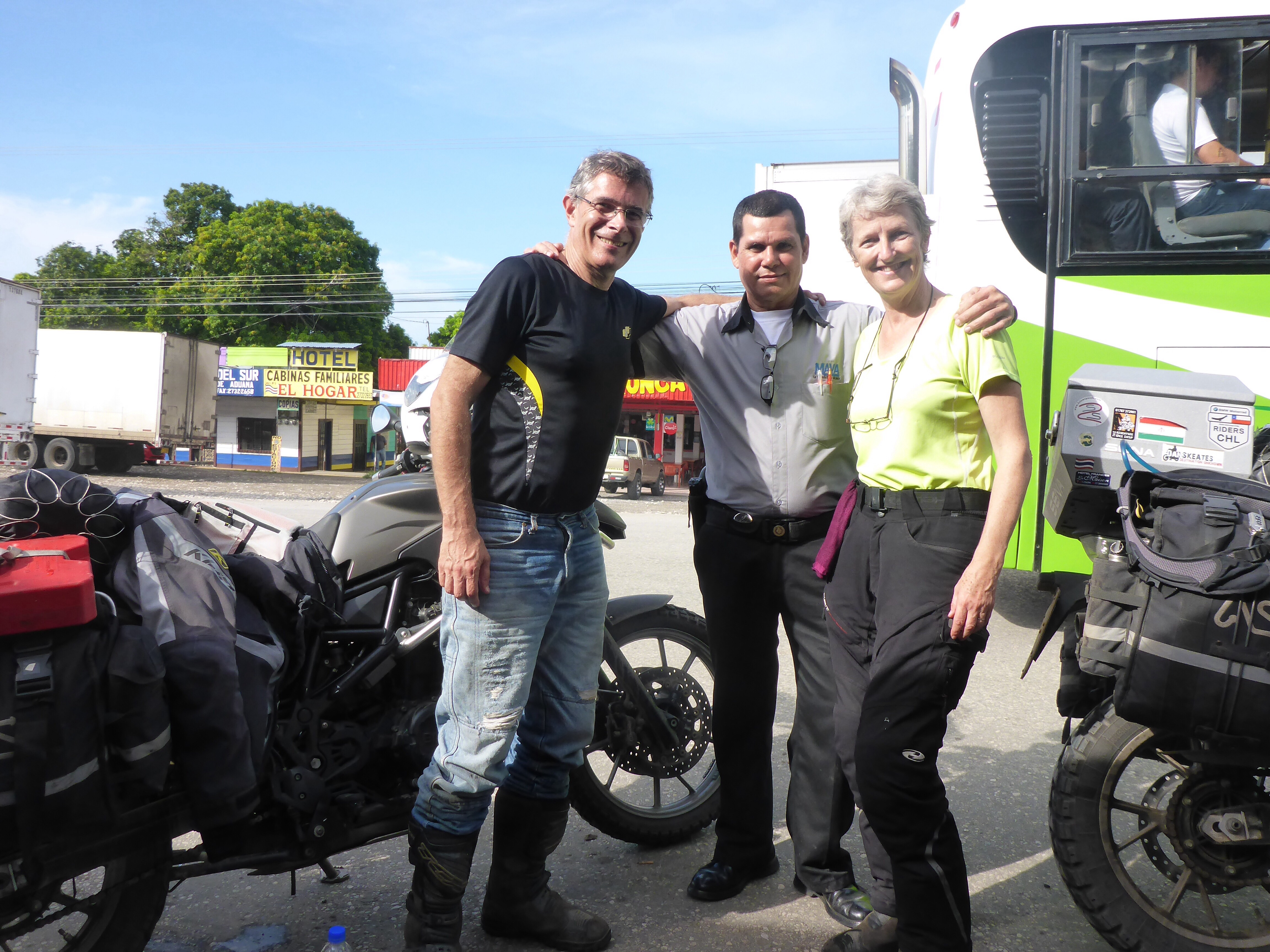
Happy happy Dagoberto at Paso Canoas border post
Back at our bikes and we buy drinks from both sellers we are parked next to. What suddenly parks just in front us, the Tica coach from Costa Rica which moved over for us at the Panama border. We meet Alberto like long lost friends. While we get ready, we enjoy the banter between him and one of the drinks sellers – “she doesn’t want to have my baby!!”. We eventually say goodbye to Alberto and Dagoberto and head off into Costa Rica. One and half hours after arriving at the Panama border and we are through both borders. We are so lucky!!! Plus we have gained an hour being in Costa Rica, it is only 07.30am. We can have a leisurely ride to Jaco, 280kms away.

Alberto, the friendly Tica bus driver
We are instantly loving Costa Rica. We had so many wonderful Costa Ricans helping us and not once was there any question of money. It is so tropical here. No pretense of highway close to the border as we’ve found in so many countries, just a lovely country road. Bougainvilleas, poincianas, white poinsettias, jacarandas, banana trees, palms, it all looks and feels and smells like home. Lovely gardens, well tendered homes, clean road gutters. Palms and more palms – then palm oil factories. Single lane each way, gentle curves, a few trucks and buses and everyone is so courteous. It is a gorgeous ride. Lucky we had an early start as the rain decided to come early today and we get our first tropical downpour of the day by 9am. We slow right down. Eventually, a large coach approaches and hoots as he overtakes us. It’s Alberto!! We hoot back, and hoots some more. Later, he’s had to stop in a village for passengers so we overtake. There is a cacophony of horns going on for about ages as we approach then pass him. Byebye Alberto!! This country has a great feel already…
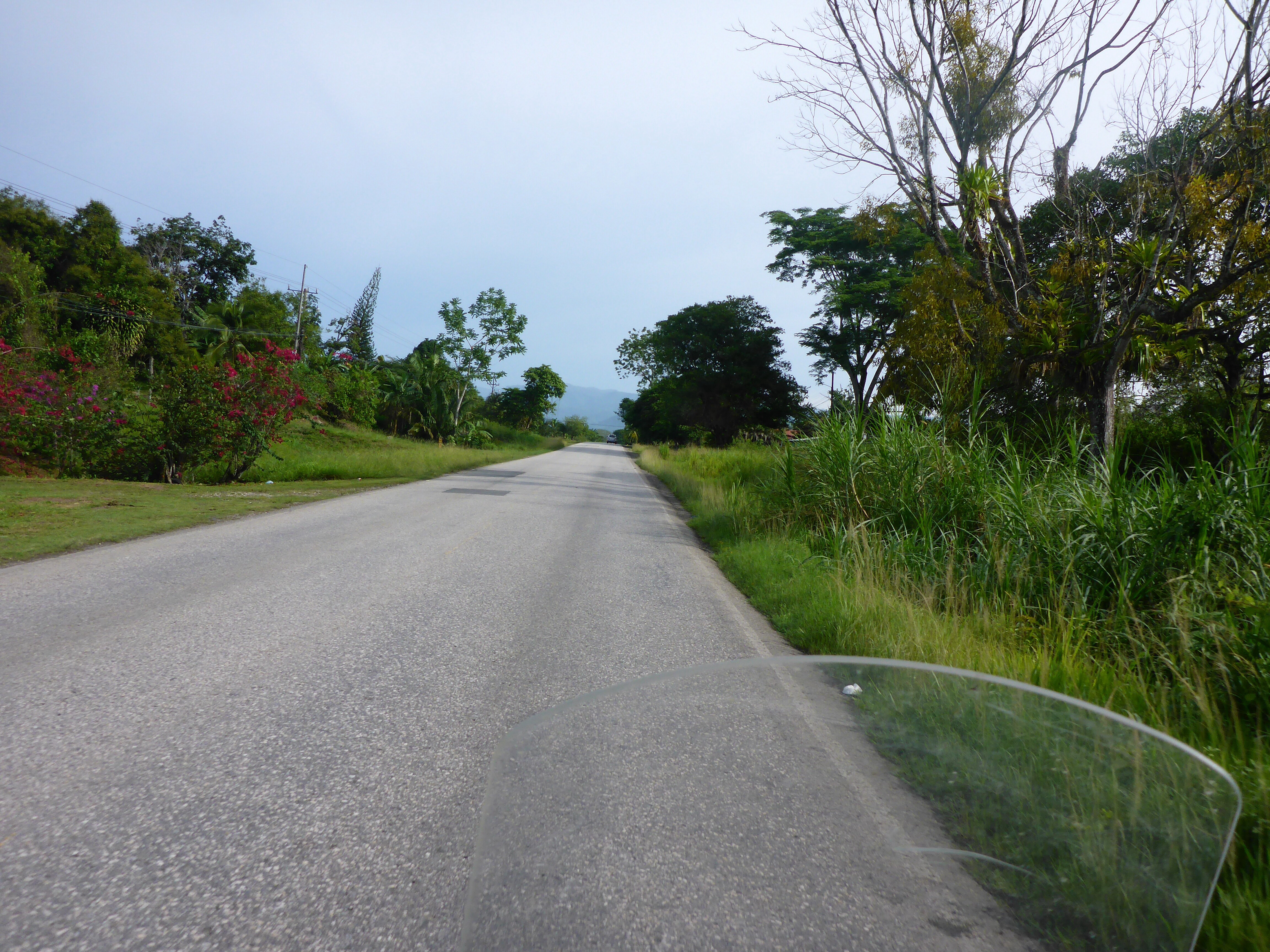
We are in Costa Rica!!

The Panamwrican highway in Costa Rica – simply gorgeous
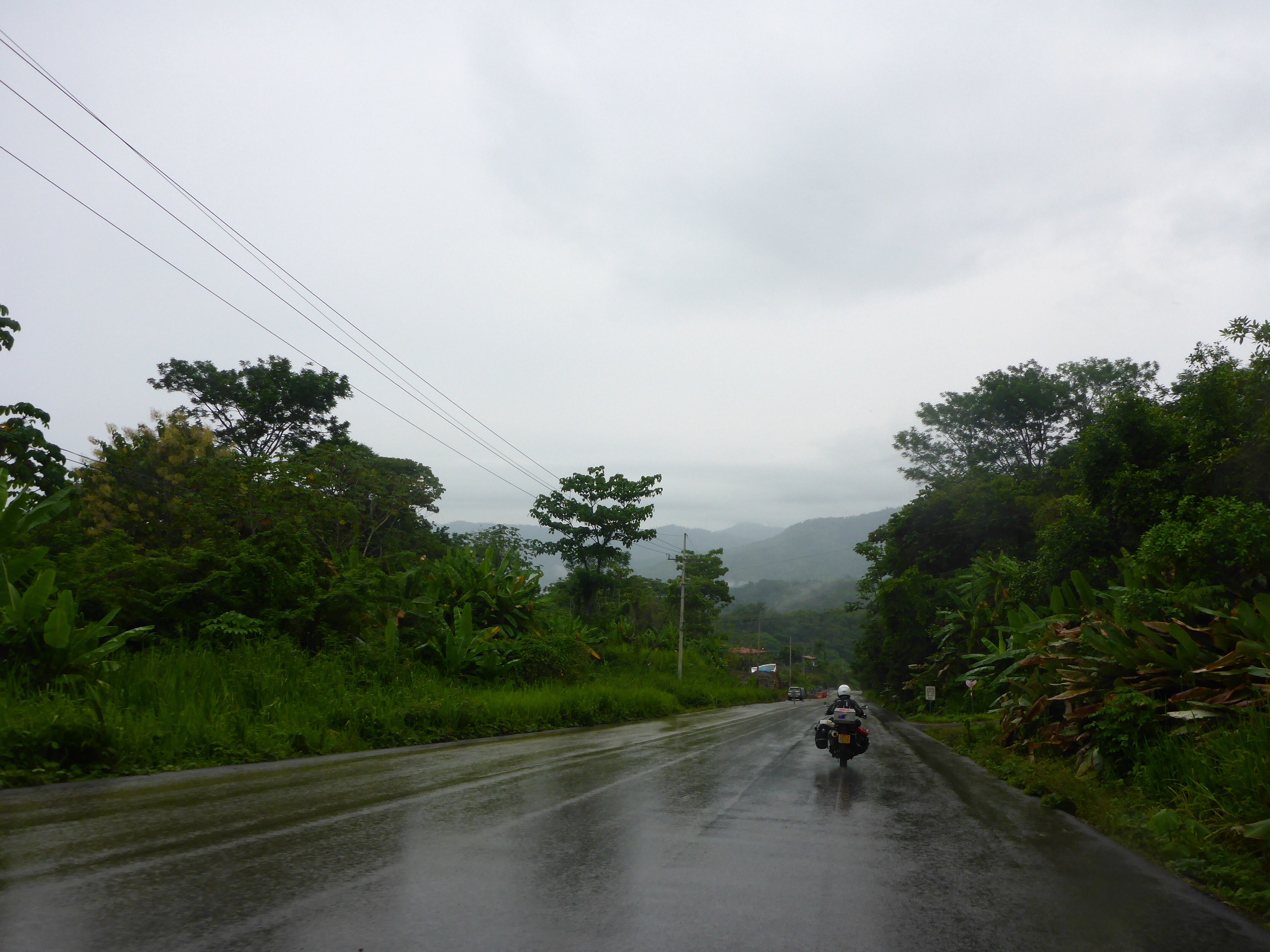
It is a wet ride today from Rio Claro, Costa Rica
Once again, we discuss how interesting it is that countries and societies can be so different in feel, habits, and wonder how and why they evolve so differently. We know we shouldn’t generalise and we haven’t spent much time in either country, but our personal experiences in each are so strikingly different.
We stop for lunch, so that our jackets etc can dry a little before we check into our B&B. By the time we are ready to leave, there are little puddles all around our table!! But not before Anthony has a game of pool with one of the restaurant staff.

Lunch stop just outside Jacó, Costa Rica

Great spot to dry out and have lunch

Anthony has a game of pool with one of the restaurant staff
We arrive at the bed and breakfast I selected based on its location, quiet street away from downtown Jaco and great reviews. I hadn’t realised the owner of La Villa Creole was Belgian from Brussels. It is great to speak French!! I also hadn’t realised how touristy Jaco was! From my point of view, it was a convenient location near the coast and close enough to San Jose where the bikes are being repaired under warranty Monday morning. There is apparently a great sushi restaurant, run by Japanese, so is authentic. After a lovely swim in the pool and shower, we head there for dinner, a 15′ walk down the road. What strikes us are the number of high security fences and serious fencing around homes. So there must be a serious theft issue here. That’s why the B&B were so concerned about our bikes and were uncomfortable about us deciding to leave all our luggage on the bikes. We covered the bikes – each pannier is locked anyway.
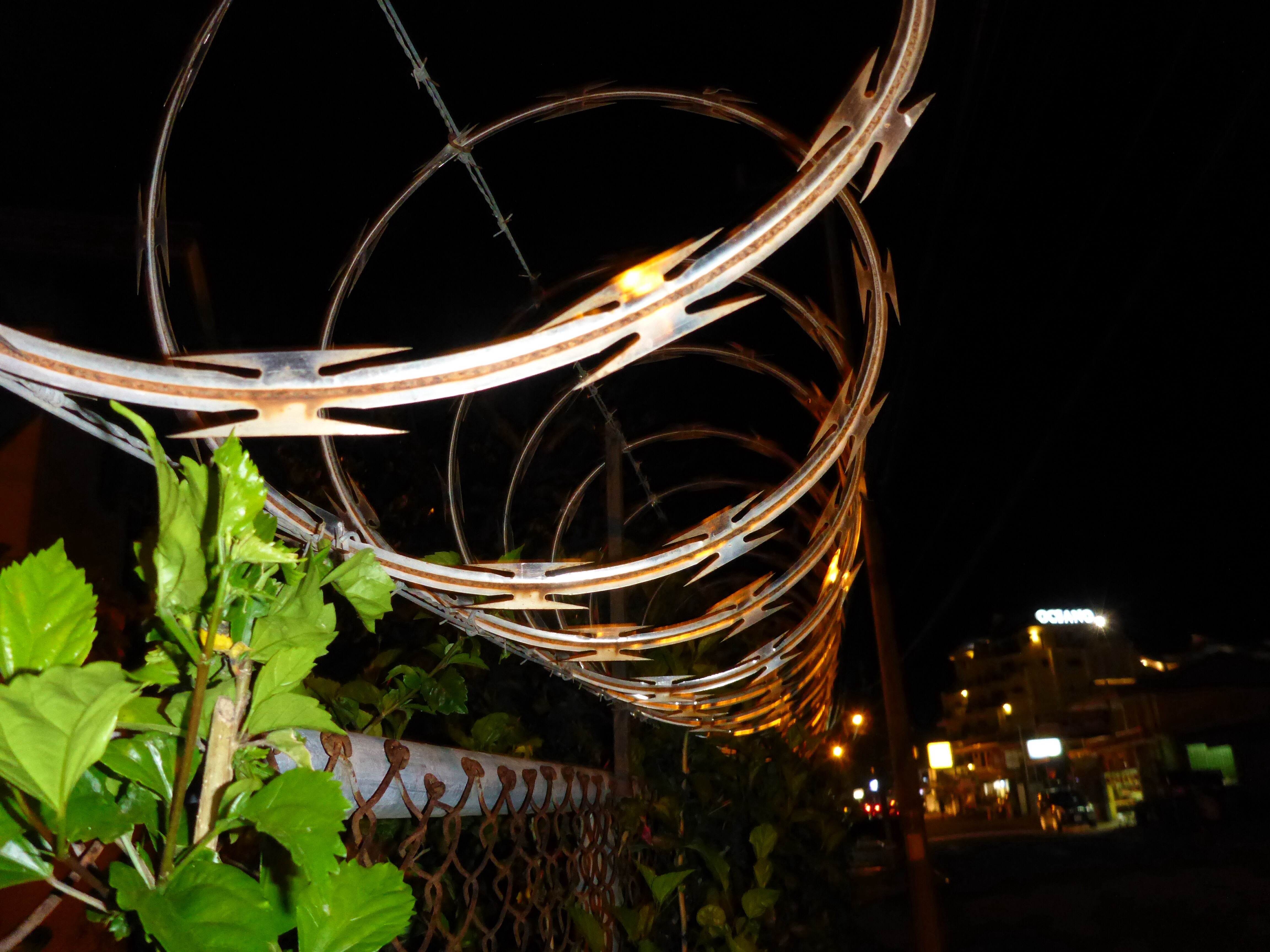
Common house security in Jacó, Costa Rica
Jaco is so touristy!!! It reminds us of Chiang Mai where we spent a week last year! Maybe because that was the last place we visited that was so touristy. But also because both have a high number of ‘expats’ who have made their new life in a foreign country, Over dinner, we once again wonder how societies develop so differently. While in Chiang Mai, we met many people who integrated into their adopted country, and you could see many mixed groups. We hear a lot of Americans here, but don’t see any mixed groups or couples. We wonder how integrated all the expats, or foreigners I should say, are here. And is there a real or perceived threat of theft here?
Saturday, we first visit the Tico Pod Art House & Gifts store which specialised in locally produced art and admire some stunning Boruca masks. The Boruca are a tribe of Indigenous people of Costa Rica who managed to scare off the Spanish Conquistadors and secure their independence to this day thanks to their scary masks. The masks are absolutely stunning. Would have loved to visit them but we are running out of time to get my DME replaced before end of warranty in June.
We then take a local taxi for a short ride to Playa Hermosa which we rode past after lunch yesterday. It looked stunning – and it was. While Jaco seemed packed with American tourists, Playa Hermosa is low key, with a few backpackers, hippies selling handcrafted jewelry or sandals and lovely healthy small restaurants and lots and lots of surfers. Apparently, Kelly Slater, the world famous surfer, has a home there, and for good reason!! The sea is rough, so much so that they have a huge sign which we should have on the Gold Coast beaches in Queensland, warning people of rips (strong currents that sweep you out to sea) and how to handle them. We enjoy watching the surfers while eating our fresh tuna salad.
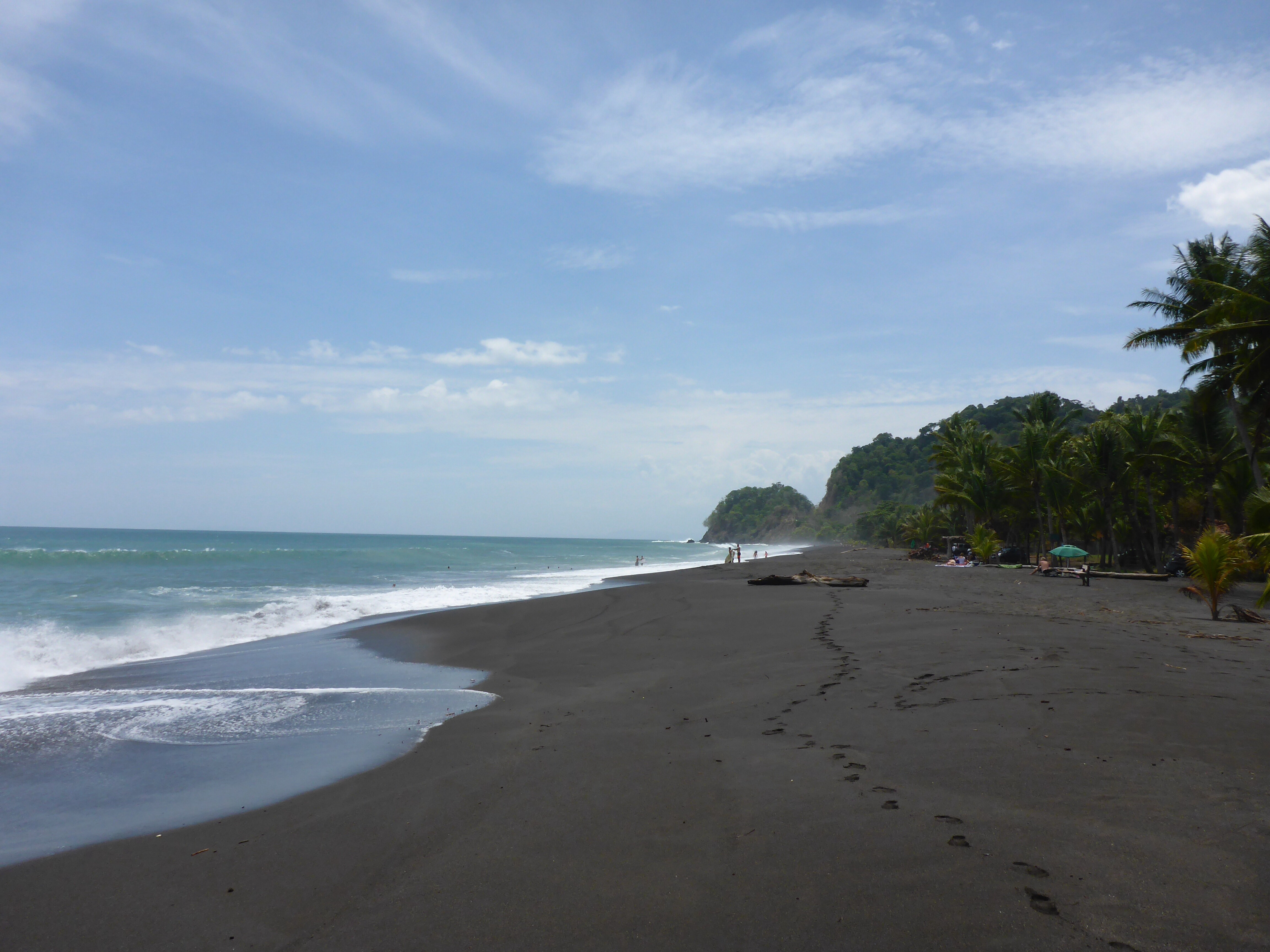
Playa Hermosa, Costa Rica
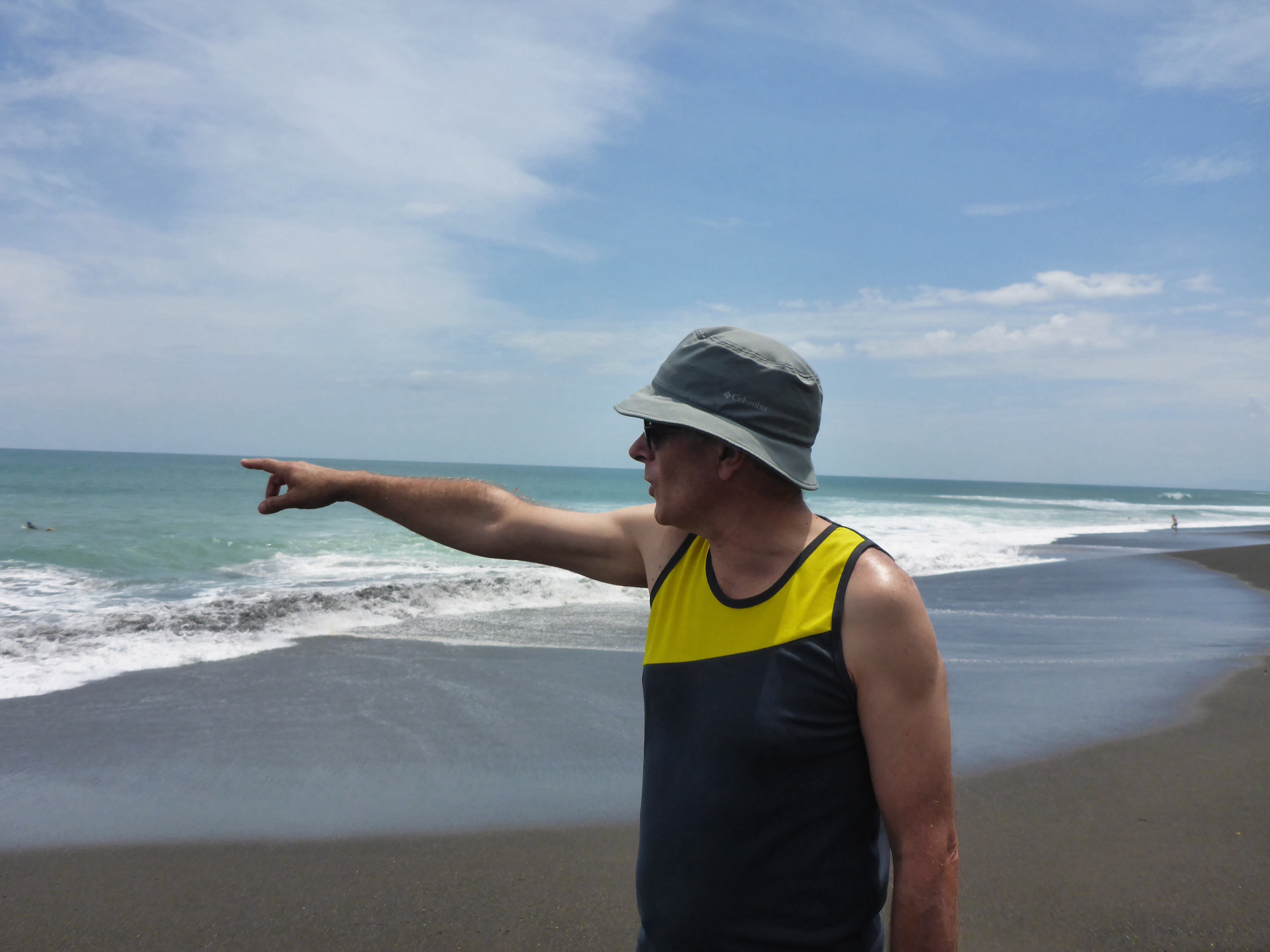
Playa Hermosa, Costa Rica
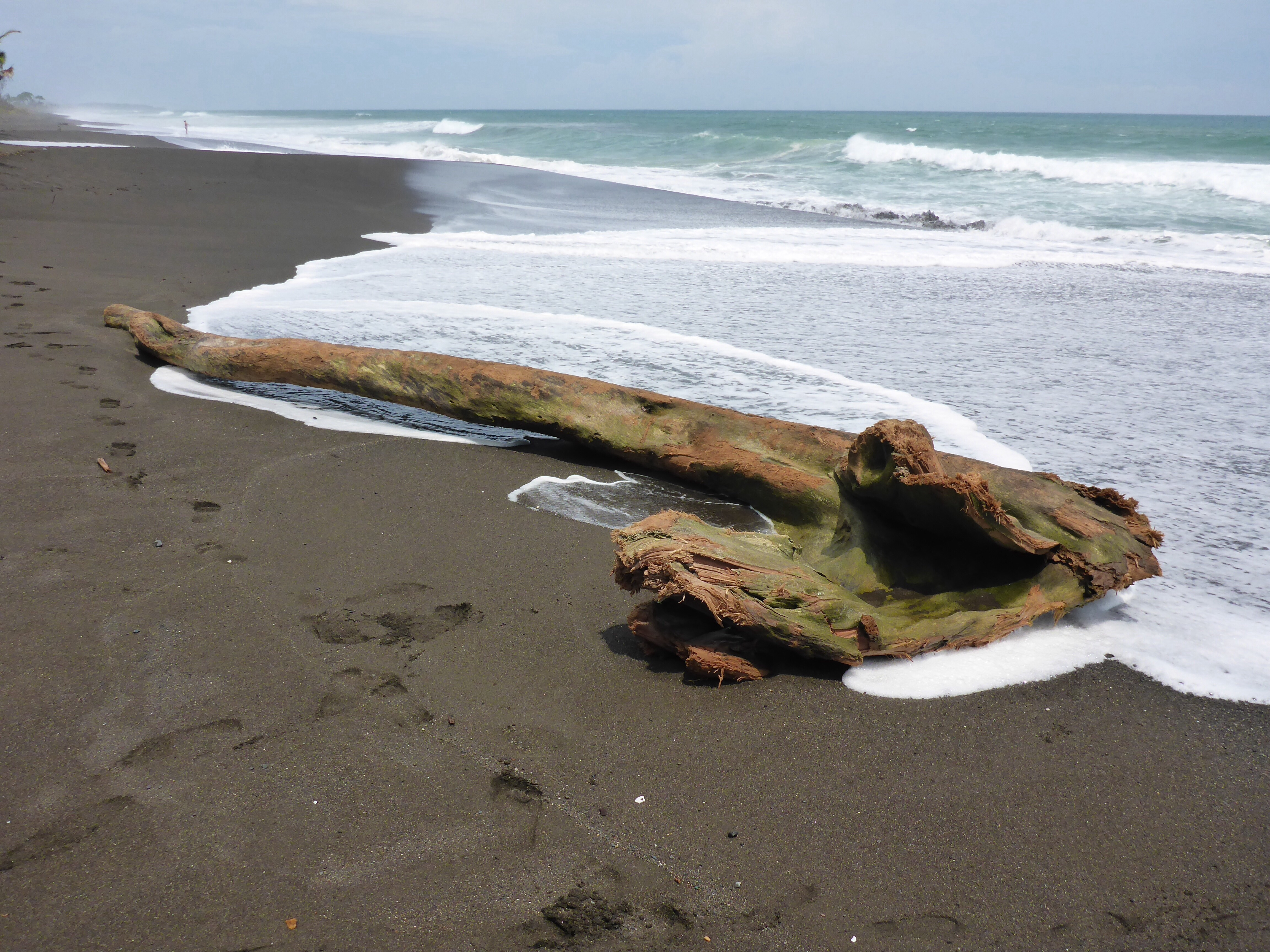
Playa Hermosa, Costa Rica
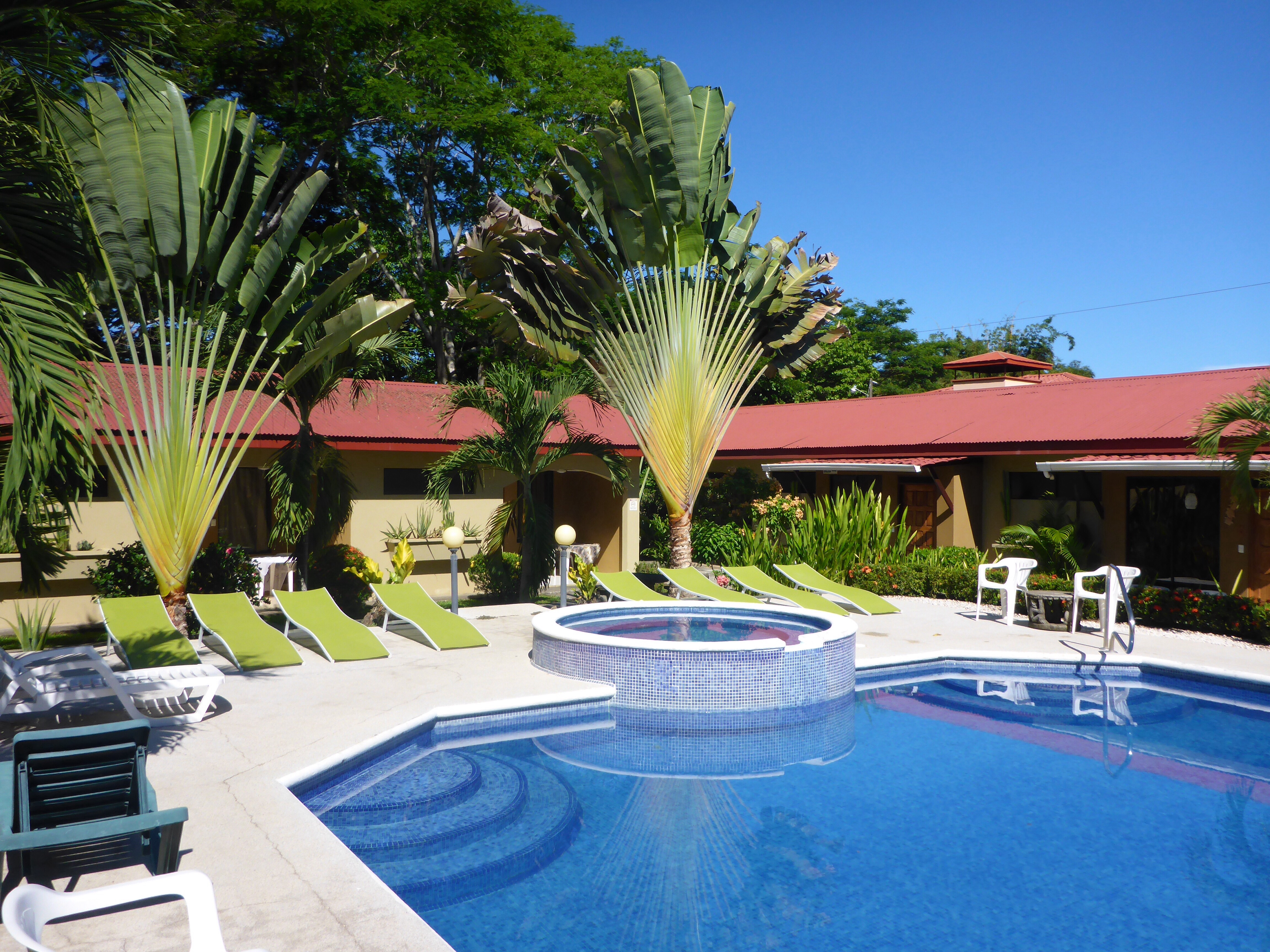
La Villa Creole, Jacó
Sunday is an easy ride up to San Jose.
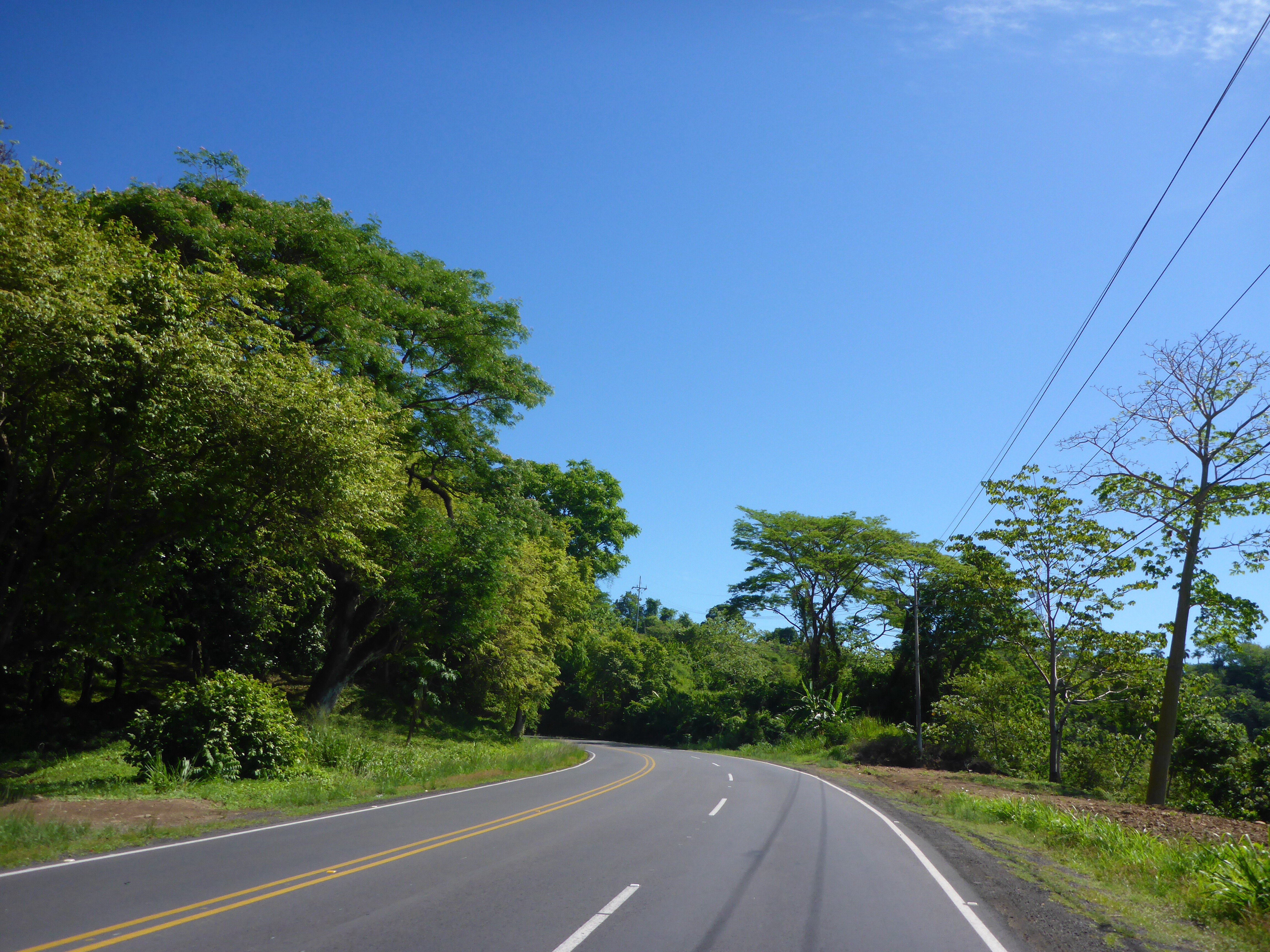
Perfect day for our ride to San Jose
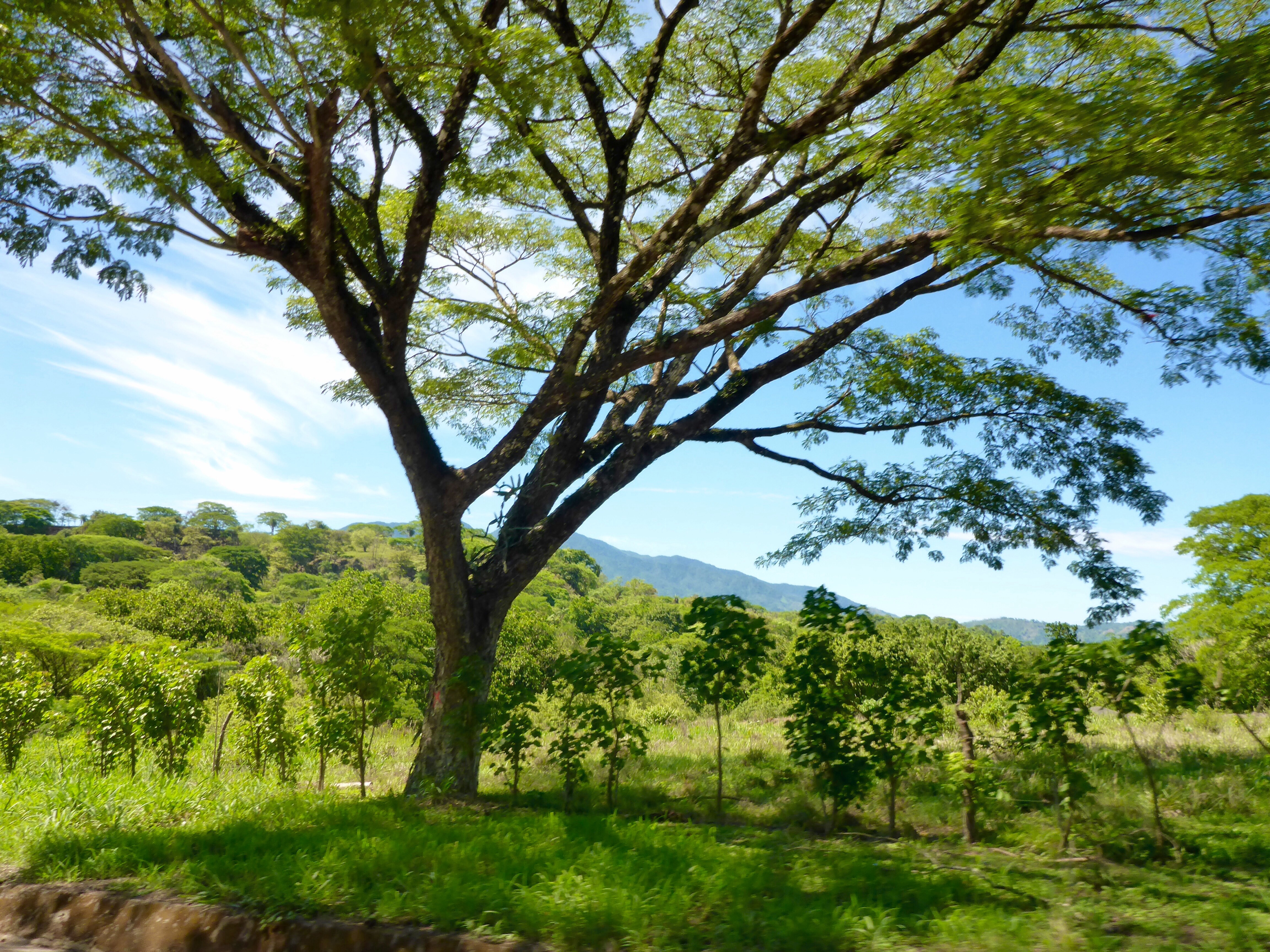
On our way to San Jose, Costa Rica
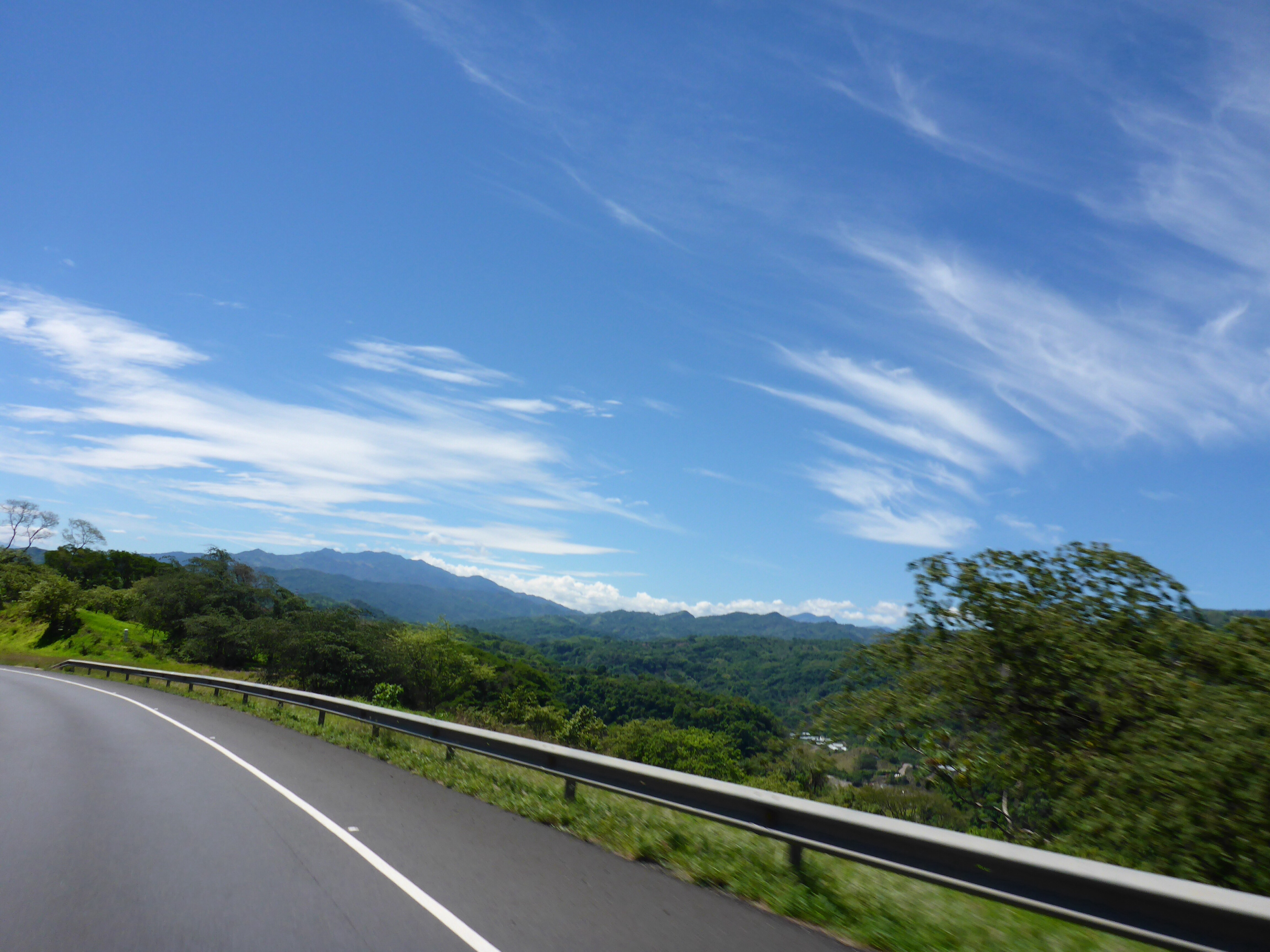
Coming up to San Jose, Costa Rica
The only reason for us going to San Jose is for Streak and Storm to get new tyres and new steering head bearings on Monday. Our Heidenau Scout K60 tyres have performed marvelously: the front tyres lasted 33,000kms and back 22,000kms. The back ones could have lasted a little longer but there was no life left in the front ones and it was time to swap to asphalt & wet road conditions so 2 new sets of Metzeller Tourance tyres, a few too many $$$ later but great service from BMW San Jose and we are ready to continue our way through Central America. – Anne
– A&A
The bikes are back in town
I stand under the roof of the old control tower at Tocumen International Airport, now part of the cargo complex, as another COPA, the local airline, B737 roars overhead, looks like the 800 series
for those who are really interested. We have started the process to be reunited with our bikes, and already the information we have on the process to retrieve them is incorrect. This information came from a friend who undertook the same process a week earlier. Nothing stays the same or should be taken for granted when following ours or other people’s instructions.
Anne has disappeared into the distance and out of sight while I remain with our two small bags and a five litre water container now filled with fuel. We had problems getting this filled, due to sensible safety concerns at the petrol stations our taxi driver tried to fill the water container up at. Finally one petrol station provided a loan fuel container which we could the transfer then fuel to our water bottle out of sight. Anne’s fuel tank has so little fuel left after being drained in Medellin that I doubt that the petrol filter is still wet.
As the countries we travel through are closer to our safety conscious western ways, the standards increase and the enforcement of the rules grow. In some countries fuel, or what purports to be fuel, is sold in old soft drink bottles at the side of the road. ‘Caveat emptor’ we take the risk here, as at home risk is regulated away – rules and enforcement encourage the correct behaviour of all, except usually those who it was targeted at in the first place who ignore the rules anyway. I have no doubt that most people who have been impacted by accident or injury as a result of failure of safety rules would disagree with me and, probably if I or a loved one was affected I would think differently. However at this time, I believe we still need to opportunity for adventure and perhaps risk in our lives and should be afforded it, if it only impacts ourselves. Enough rambling from me, yes I am still waiting for Anne to return, what topical subject should I tackle next while I wait?
Anne is back, our bikes were shipped with a different airline, so the initial instructions have changed. I have moved to new location a few hundred meters away. Time to ponder again.
What should be our next subject? Since I am not on Twitter, Facebook or other social media and more importantly do not have internet access at this time, I will need to choose. ‘US Presidential election 2016 campaign’ . Anne is back and has the three stamps and knows where to go for the temporary import permit. I think I will soon be on unwrapping and assembly duty soon. As we have been travelling north and now have less than 10 months before we return to Australia, we are thinking about our future. Since we retired a couple of years ago, we think what next, Chapter two after Chapter one ‘A year in Europe, interrupted by RTW motorcycle trip’. I had idly thought: how about working for a US Presidential Candidate in their campaign? Probably not sensible as they seem to take clever hardworking young Americans, and I suspect that when I get back to Australia, I will have to work to pay for all the fun times we will have had in two and a half years. Yes, by the time we get back in March 2016, we will have been travelling since September 2014, which was not our original plan of 9 months in Europe seeing family and back home. Great how life can unfold. I had no idea when we left Australia that I could end up sitting in an airport car park in Panama.
I hope we do not have to ride the bikes off the loading dock, the meter plus vertical drop will be a challenge for the bikes’ suspension.
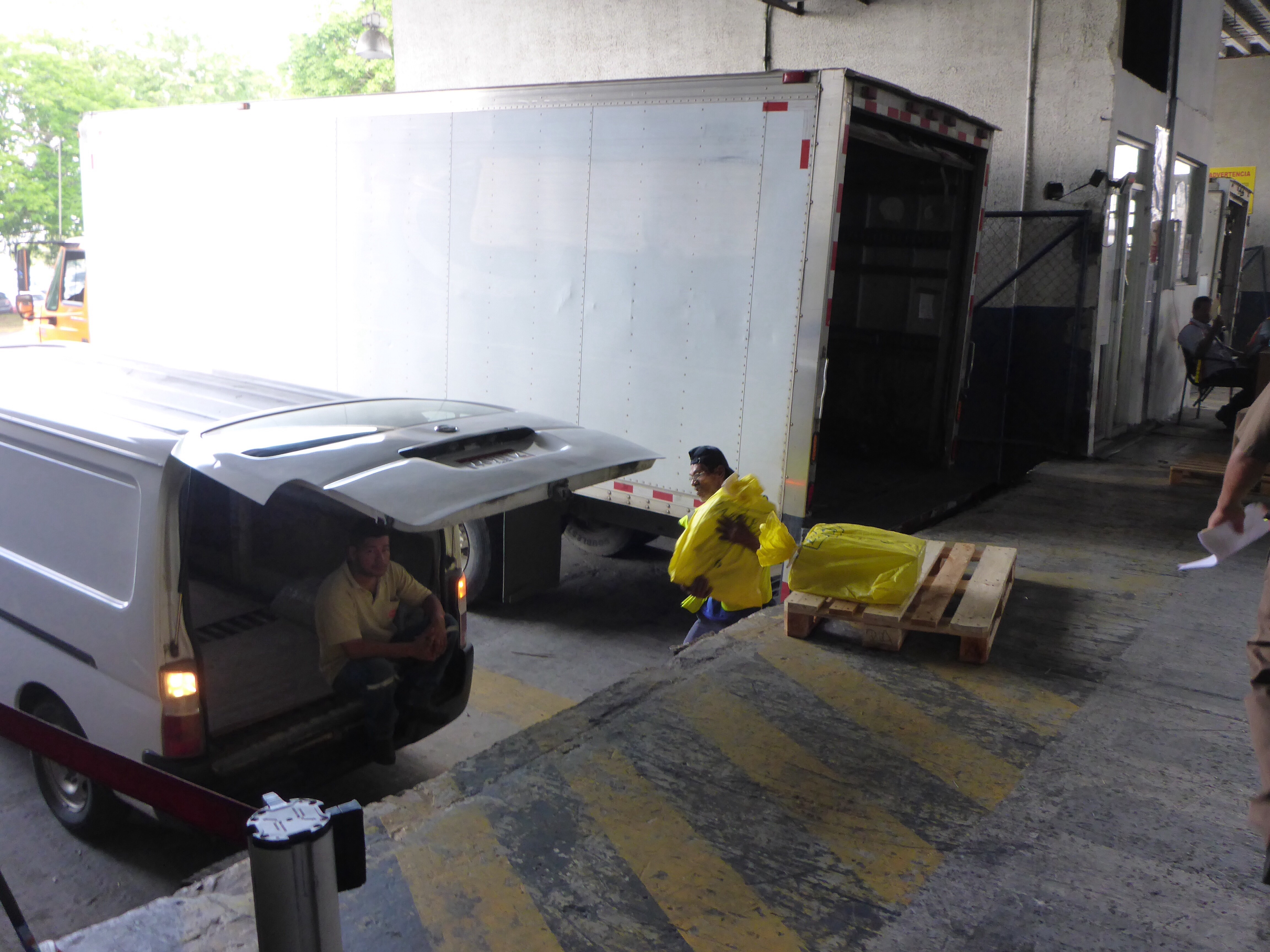
Panama cargo area – the drop is a bit too much for the bikes
No, a back door exists and after donning a safety vest and changing my red warehouse visitors access card for a green airport apron access card, the bikes are then delivered on a metal frame just outside the gates literally, the front wheels are just outside the gates.

Our bikes are now delivered at Panama airport
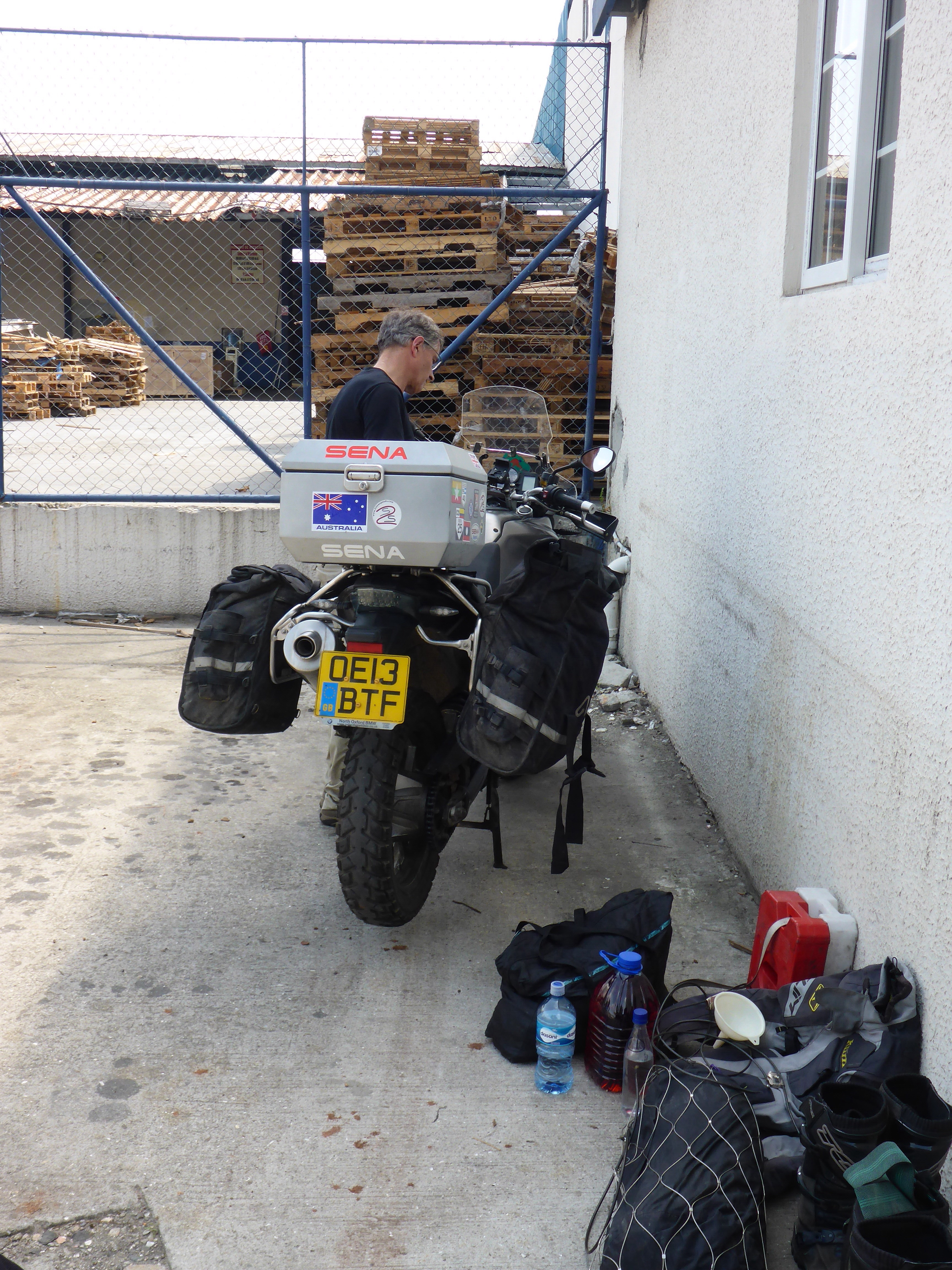
A tiny bit of shade to reassemble the bikes
We fill motorbikes with fuel and are ready to depart for places unknown, err not quite, the steady flow of petrol from under the seats, where the petrol pump and filter we removed to drain the fuel tanks in Medellin must have not been replaced properly. We push the bikes away from the petrol bowsers for safety reasons and quickly start to syphon fuel from the tanks into spare containers. A downpour of rain makes life a little more problematic, and with no cover to work on the bikes, we decide to stay a night longer and find a dry hotel in town.

One of the 2 drowned rats while waiting for rain to stop.
A quick internet booking and we are set for a slow ride to town having syphoned enough fuel out of the tanks to stop the leaking.
We remove Anne’s pump first, reseat the pump and gasket, all looks good, refit the locking ring, refill Anne’s tank and the fuel just runs out again. Damm.. We need to go to BMW as this is beyond our basics skills and the gasket is probably damaged . BMW Motorrad is not too far away, and here we meet Arturo, who is very helpful and arranges for their mechanics to look at the motorbikes even though they are busy – they will replace the gaskets. They also confirm we need new front tyres and that my suspicions of a problem regarding the steering are correct. Anne had questioned hers previously but had been told all was ok so put it down to her highly sensitive sense of balance. We will need new steering head bearings but as they are very busy with other bikes, they can’t get to that this week. The tyres will have to be done in San Jose, Costa Rica as none of our size are available in Panama and the steering head bearings will also be done in San Jose under warranty. Arturo has kindly contacted BMW Motorrad in San Jose to confirm availability and prices, very helpful for us.
Panama uses US dollars and we need to get some smaller banknotes and yesterday we used a 100 dollar bill at a supermarket finding that for each 100 dollar bill they need your ID, signature and two staff counter signatures. Interesting that they are so concerned about this – forgeries I presume?
We have the bikes back and are set to go tomorrow.
– Anthony

