Transiting the Central American Isthmus

Definitely our longest gap between blog entries, you may have thought we had been swallowed up by the Central American jungles, but no, just a little busy travelling (thank you to a number of you who have emailed or messaged us checking we were ok). Transiting Central America has been challenging for us. Since we left San Juan in Costa Rica on the 21st of May, we have ridden every day, crossed 5 countries riding in a variety of road and traffic conditions, temperatures maxing out at 42 degrees celsius, up to 100% humidity most days, negotiating up to four customs and immigration procedures in one day. We had decided to move quickly through Central America, transiting rather than touring. Why you may ask?

The decision has been made for a number of reasons. We are running out of time. While our return to Europe in September 2015 may seem distant, we have 10,000 plus kilometres we still have to cover and we have to decide who and what we can see in the USA. This is a RTW trip that we had decided we would undertake in around 12 months in two 6 month segments, which from experience is about as long as we like to travel for. We have to make decisions about what we can and cannot do.

We also need also get to the USA to get Anne’s bike fixed before the warranty runs out in mid June. The continuing problem with the engine management system which affects Anne’s throttle can only be fixed with a replacement part that has to be coded to the individual Vehicle Identification Number (VIN), which BMW will only do in the factory in Berlin and this has a substantial lead time. We have not been able to organise this in South America, probably due to our deficient Spanish and a reluctance of a particular BMW dealer to get involved. With parts lead times in South America, we may have had to wait weeks in one location.

We also want to get out of malaria country as Anne has a negative reaction to Malaria prophylactics. The thought of all the reportedly difficult border crossings waiting for us has added to a tiredness which has grown in recent weeks. We are looking forward to finding some good mountain camping spots in the Rocky Mountains in June, hiking and relaxing by a cool stream.

Anyway I am getting ahead of myself, Let me take you all back a week…….. It has been a little surreal staying at the Hilton Garden Inn in San Jose. The hotel has only been open 5 days and has 8 rooms is use. The hotel occupies the top half of a building with finishing work continuing below during the day. The pool is not completed, power switching rooms are open to guests and we are the only people at dinner. We meet the executive chef who used to teach at university as he and his staff serve us. It all seems so dream like in the hotel.

The replacement of the steering head bearings and the new tyres make for a new pleasurable riding experience once we have covered the first 100km / 60 miles to remove the new tyre oil film.

Today seems to be tyre day: just ahead of us bang! an explosion as a truck tyre disintegrates in a cloud of dust and debris which we both see. Anne, who is leading, is lucky that a car is between her and the truck or else she would have had showered. I have never actually seen a tyre let go like that, just the debris scattered in the road, another first. Anne mentions that she feels like she may one day wake up from one long dream. After our recent strange dreamlike stay in this empty hotel, many experiences have been a little unreal or just so perfectly lucky: like the tyre explosion, like when we left San Jose with brand new slick tyres and the weather ‘waited’ until we had ridden 160kms before it rained, like arriving at border posts with no queues ahead of us.

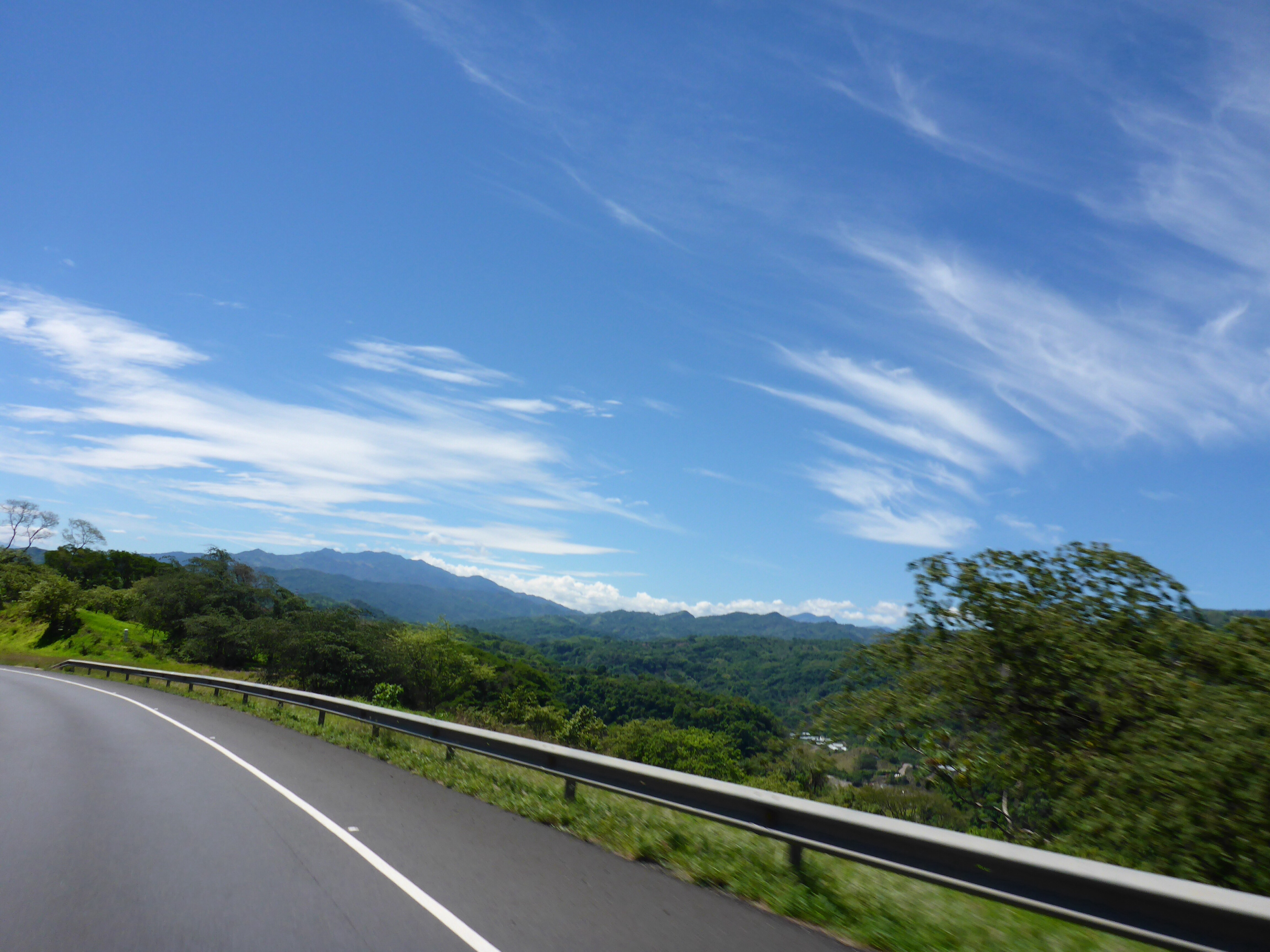
As we progress towards to the Nicaraguan border, the scenery changes to a drier more open country painted with an artist’s palette of browns and rust. I had assumed, incorrectly, that the Central American landscape would be all bright and vivid jungle greens based on pictures I had seen before we came here.

Our crossing of the various borders in Central America has been made easier by having sent Kristjan ahead to scout the route, note processes and problems and report back to us in written form. This has given us a head start at each border crossing as to what we might reasonably expect to encounter and Kristjan’s view of the current process.

Writing instructions. This is harder than you think. When each of us write instructions, we make sub-conscious assumptions, our own and about the audience. In the case of the Costa Rica Nicaragua border we went wrong at the first instruction which said take the first road after the entrance gate. I spotted a dirt road immediately after the entrance we turned left followed past the 300-400 meters in the instructions without spotting the customs building. Ahead a police car waived us down, we told them what we were looking for, they laughed and they directed us to continue and then turn right. This seemed a little strange until we realised the road we were on completely bypassed Costa Rica Customs and Immigration! I presume for those that were too busy to fill out the paperwork. We should have been looking for a concrete road a little further on the left, the second road in fact not the first, but the dirt road with trucks parked either side could be easily missed or mistaken for a parking area, Anne had not noticed it but I did. I am certain that those who read and use our border crossing notes may find fault or error in them. It may be the process has changed or I have made some assumptions along the way that others are not able to follow. It is always easier to amend than create, so our thanks to Kristjan for his pioneering work.

Full details of the actual crossing process are in Borders and Visas section. Again we were lucky with the process, the Costa Rica side we handled without a facilitator and apart from having to convince a customs officer that we had not been processed by the colleague who he had just taken over from was straight forward. Our intelligence on the Nicaraguan side was that a facilitator was needed and it turned out to be a beneficial. He took us through the myriad of buildings, windows and processes. We also inadvertently came across our first border corruption. After completing the customs and police inspection we were advised by our facilitator that the police check, which was in addition to the Customs check, only took 2 minutes because we were to pay US$20 avoiding a 2 hour search. Neither of us were happy with not knowing this in advance as we would have chosen the longer search. Some may think us hypocritical because we have paid spot fines to police before, but that was our choice. I should add that we have seen signs in some of the offices in Costa Rica saying there are no charges for forms or processing by Government officials. Progress is being made.

It is interesting that in all our travels on this trip, the Central American countries are the only places we have encountered ‘fixers’ or facilitators. In Central Asia, locals or officials would always point out the next place to go in the process, similarly in South America. In Central America however it has become a business which, given the amount of queuing and running around that can take place, they can be useful to expedite the process. We used them on two of the five border crossings, the others we took care of ourselves.

We have deduced from the number of land crossings we have made that the paperwork process, in our experience should, but probably will not, go along these lines:

Country Exit – cancel ‘Vehicle Temporary Import Permit’, process Passport for exit ……..
Country Entry – complete immigration and customs form, process Passport, obtain Vehicle Insurance, obtain ‘Vehicle Temporary Import Permit’

Photocopies are the order of the day at most borders, some you can do in advance such as Passport, Vehicle Registration and Driving Licence. Photocopies of your just stamped passport page, or document just issued means unless you have a portable photocopier, you will need fresh copies and it always seems there is a business setup to provide such services handy. I did talk with one official who spoke good English at a border crossing about the endless copies and they agreed to processes are very bureaucratic for them and probably unnecessary in many cases as well.

We come across a large (44MW) wind farm manufactured by Suzlon just inside Nicaragua along side lake Nicaragua, close to where the proposed canal connecting Pacific and Atlantic would be built by the Chinese. Here we see our first broken wind turbine blade, the remains just hanging in space, further on a complete turbine and tower are down. The base looks like the centre of a kitchen roll that had been bent. Not real good for the turbine when it hit the ground. Given the strong gusts wind we are encountering I can understand how the those two turbines met their fate.
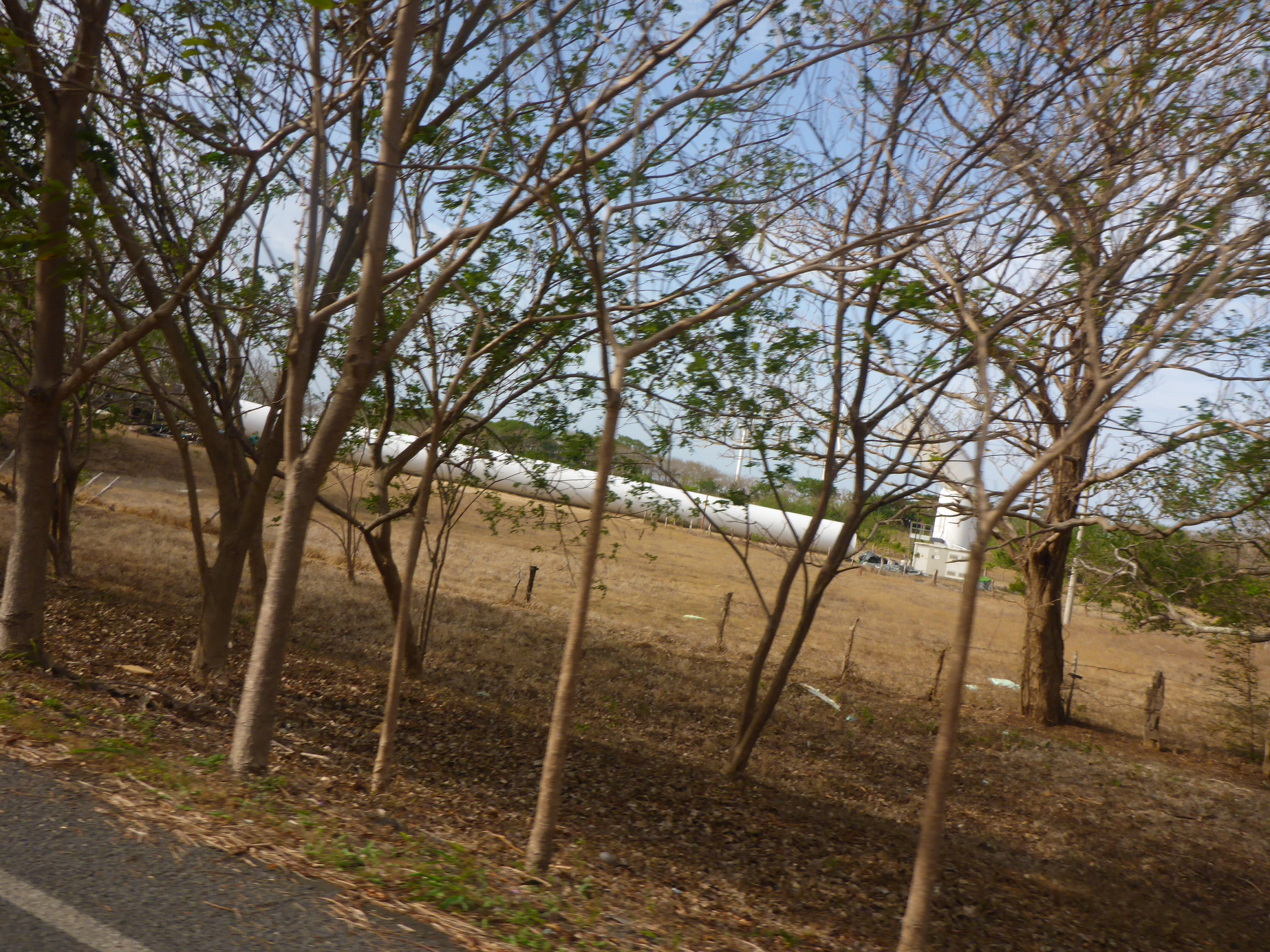
Horizontal and broken off wind turbine.
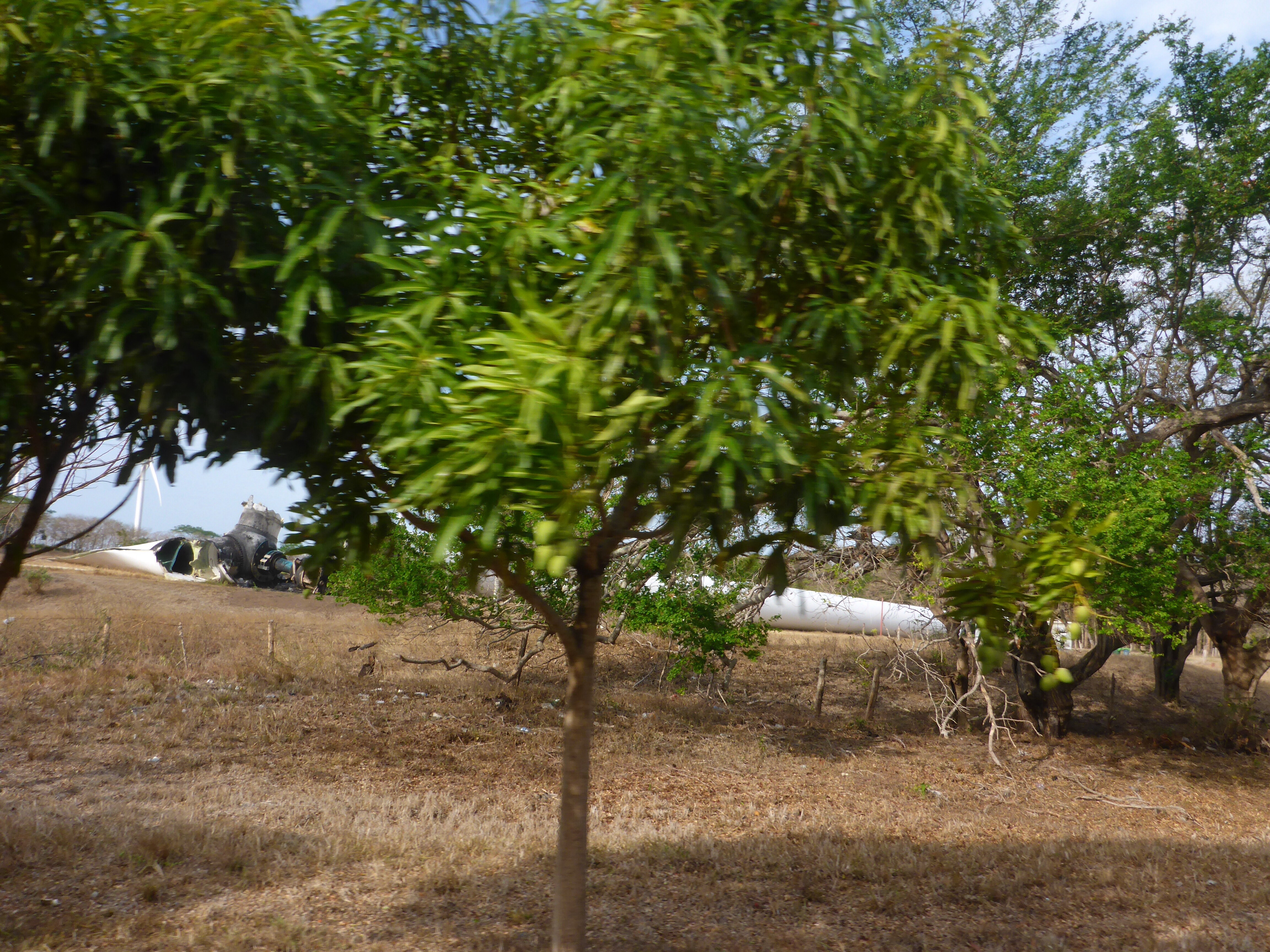
Horizontal and broken off wind turbine.

Not good for the turbine as it hit the ground.

Not good for the turbine as it hit the ground.

Down to San Juan del Sur, one of Nicaragua’s must see beaches. We find a wonderful hotel on the main street. Across the street palm frond roofed restaurants sit with views across the beach and out over the sea. One can sit and sip a cold beer watching pelicans dive for fish. The place has a pleasant feel and not too overcrowded. We realise that San Juan del Sur caters to a younger crowd than us by the proliferation of bars/discos using loud, well to us, music to attract clientele.

When we travelled down through Africa in 1982-1983, we commented on the proliferation of Coca-Cola signs, even in the remotest places, and how one day when archeologists in the the future are excavating our present, they may assume Coca-Cola was a vast all encompassing empire. I prefer it to Pepsi any day. Fast forward some 30 odd years, Coca-Cola is still everywhere, but archaeologists, will be puzzling over the hand held VISA card machines that seem to be at every small cafe, store and petrol station. We are able to pass through some countries without changing any currency due to to proliferation of VISA machines. Progress moves steadily forward, what will be the global relic in another 30 years?

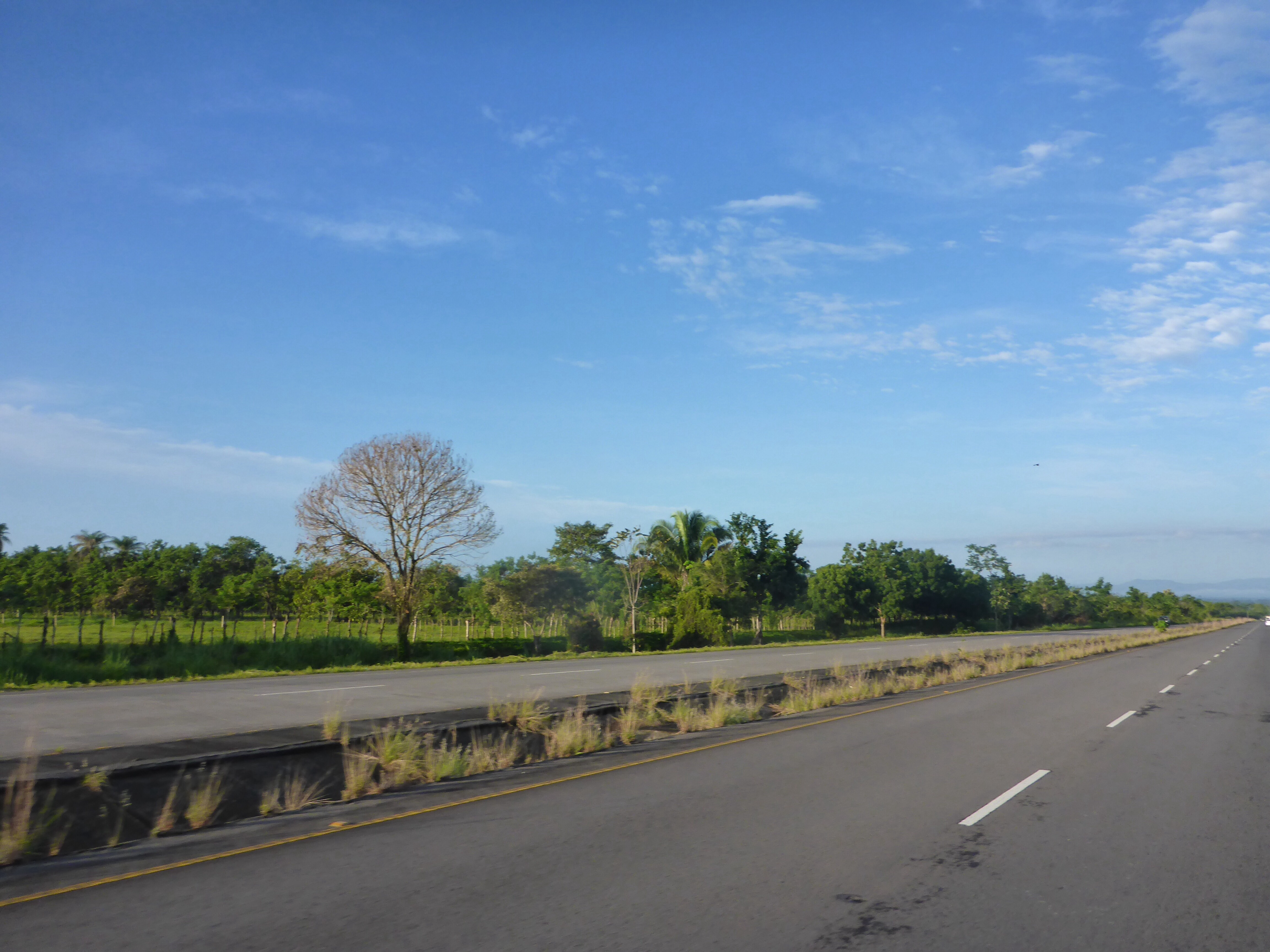
It has been surprising the counties we have travelled through have been so dry. We were expecting lush tropical scenery and instead found ourselves travelling through a vista not too dissimilar to riding out towards Esk and Wivenhoe dam back home. The temperature reached 42 degrees celsius during our Central American transit which makes for hard riding.
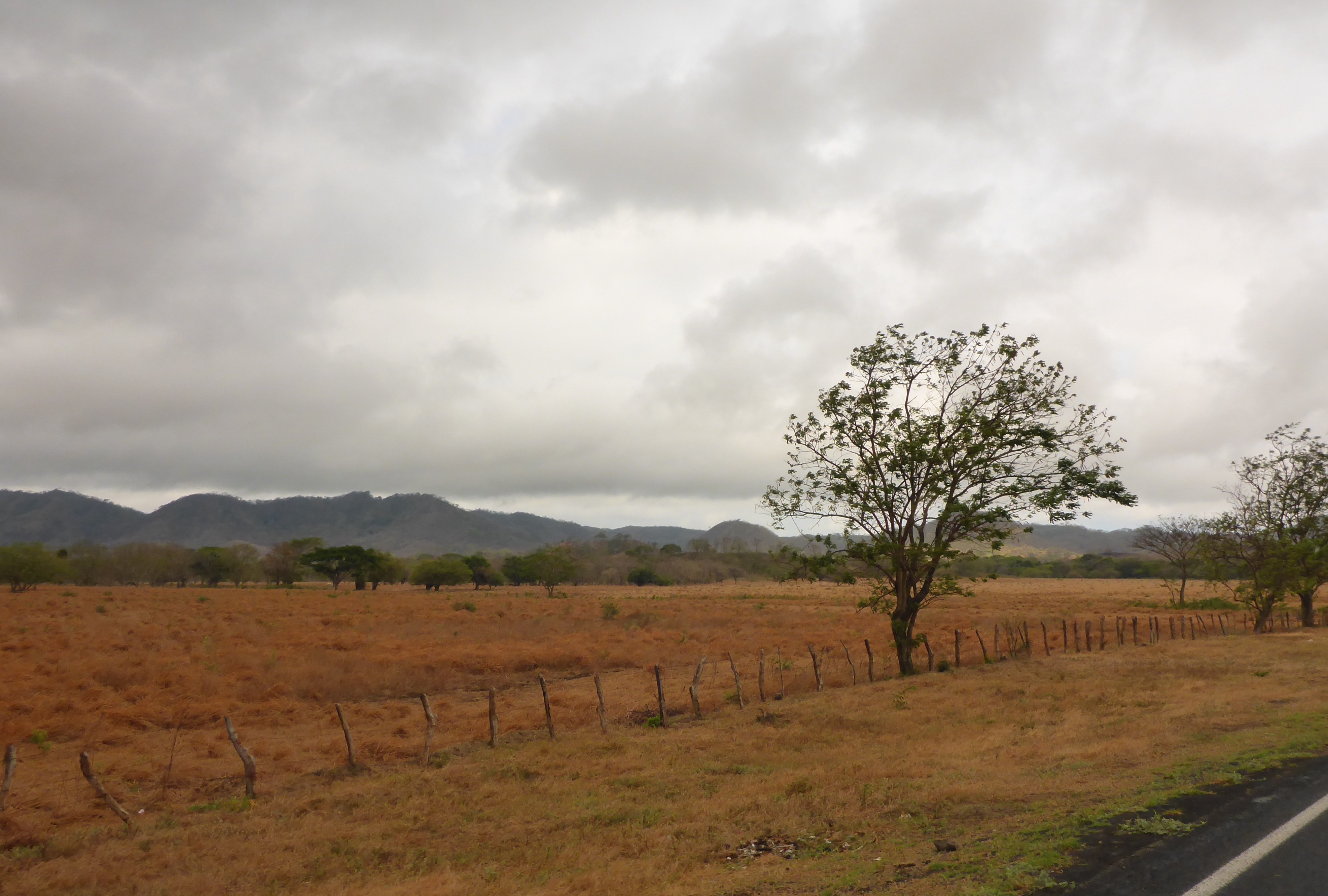
Not what we expected in tropical Central America

Not what we expected in tropical Central America

We spend a second night in Nicaragua at Chinandega. A small town within a reasonable distance of our next border crossing. A wander through the town reveals a main square with a recently built castle, we think for the kids. Always interesting how each place we visit tries to develop itself, we may not understand why they pick a particular approach, but they are making an effort to provide for the local people.
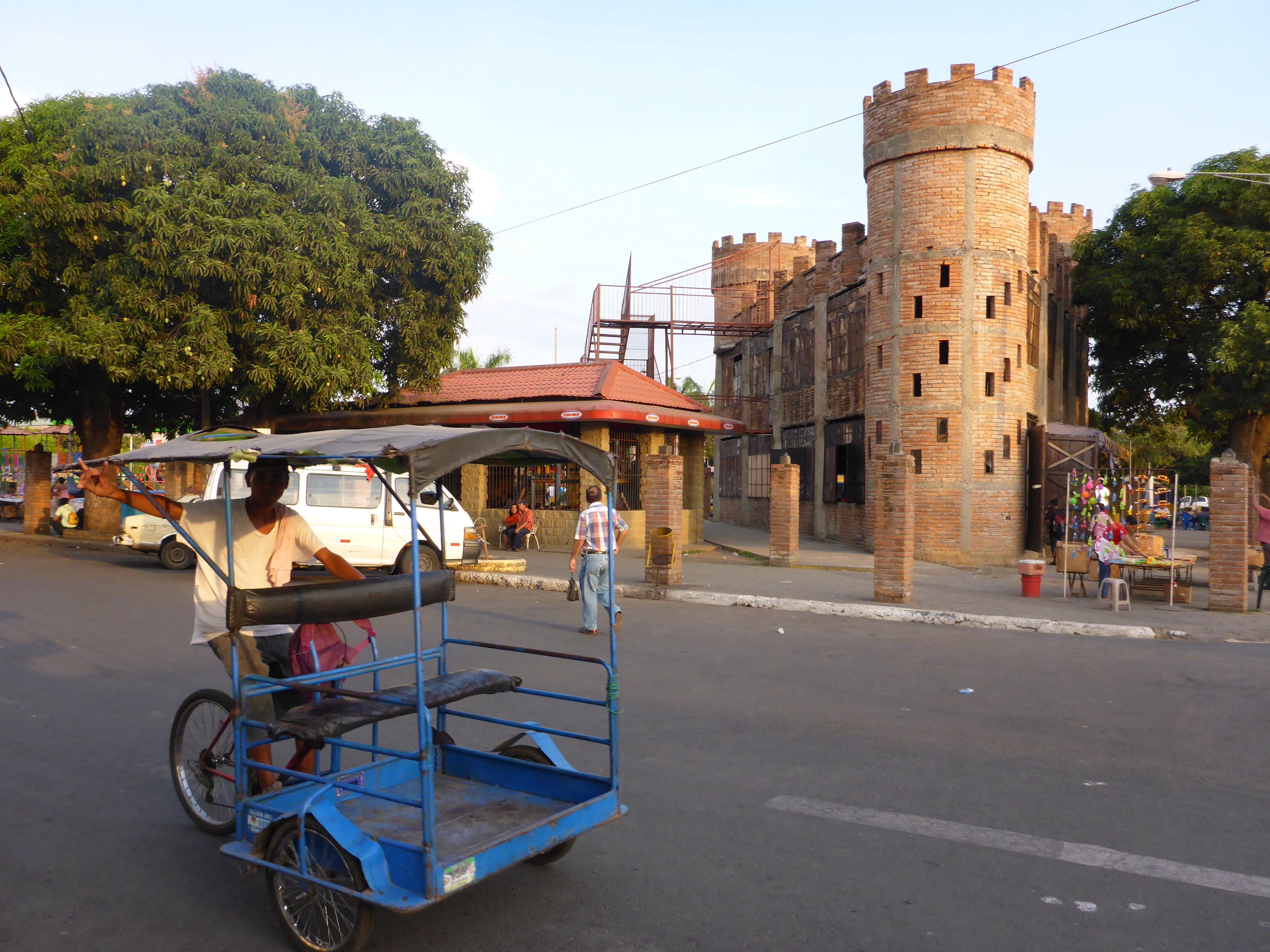
Chinandega, Nicaragua
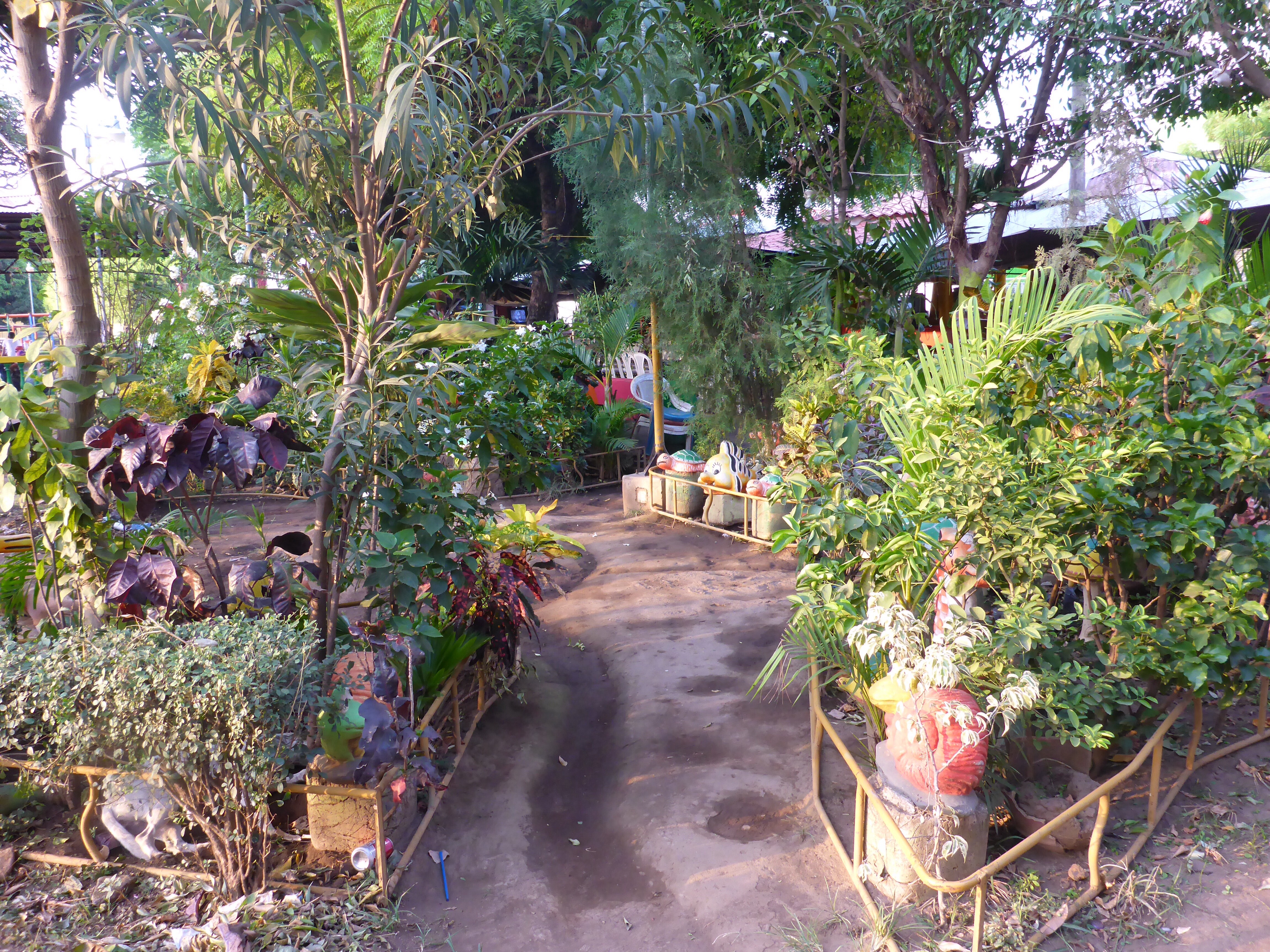
Chinandega, Nicaragua


Chinandega main square, Nicaragua

Chinandega main square, Nicaragua


After last night’s massive downpour, we get off to a blue sky day, and fabulous views of one of the many small, hopefully dormant volcanoes that dot the landscape.
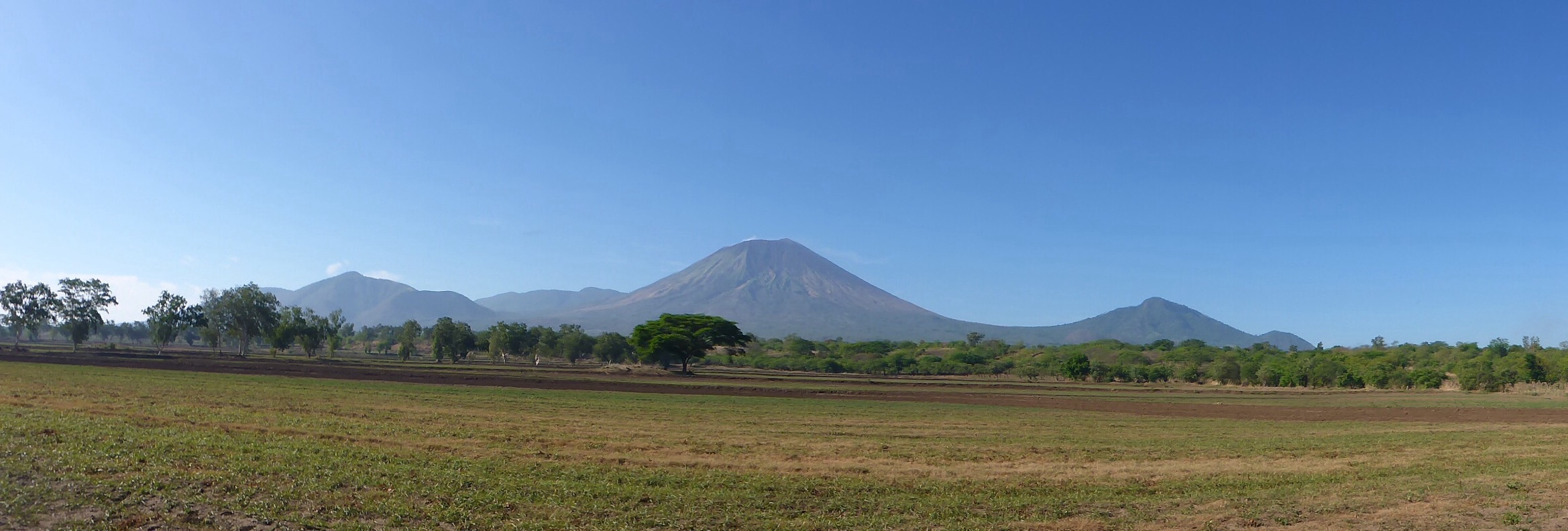
San Cristobal volcano, Nicaragua

San Cristobal volcano, Nicaragua


We decided to attempt two crossings in one day, estimating 2 hours per crossing based on previous experiences. Our first crossing is from Nicaragua to Honduras, the usual crowd of facilitators is around, and we offer the opportunity to a young kid, but he does not speak english or fully understand the process so an English speaker steps in. The process is detailed in Borders and Visas. Doing four sets of Immigration, Customs and Vehicle temporary import processing in one day, I am having some difficulty extracting each element clearly from my memory so if something is not right please bear with me.

What was interesting to learn from the Honduras Customs officials is that they ask us not to pay money to fixers for services, we will tip the fixers for their help but not pay for officials’ services.

After spending almost three hours entering El Salvador, mostly due to the indifferent attitude of the data entry operator who spent one and a half hours entering data from three forms, already completed by their colleagues in Spanish. One was mine, one Anne’s and third and Aussie couple from Perth in a van. Even when the Aussie couple had their paperwork completed, they still waited with us, which was really kind of them.

On this border crossing we also ran into a problem with my Vehicle Identification Number (VIN) sticker. During the replacement of my steering head bearings, they damaged the sticker removing one of the VIN numerals. Luckily I was able to show the official the actual engraved VIN as well. He only looked closely because he was training new staff, most countries never bother to check as long as they have their multiple paper copies.

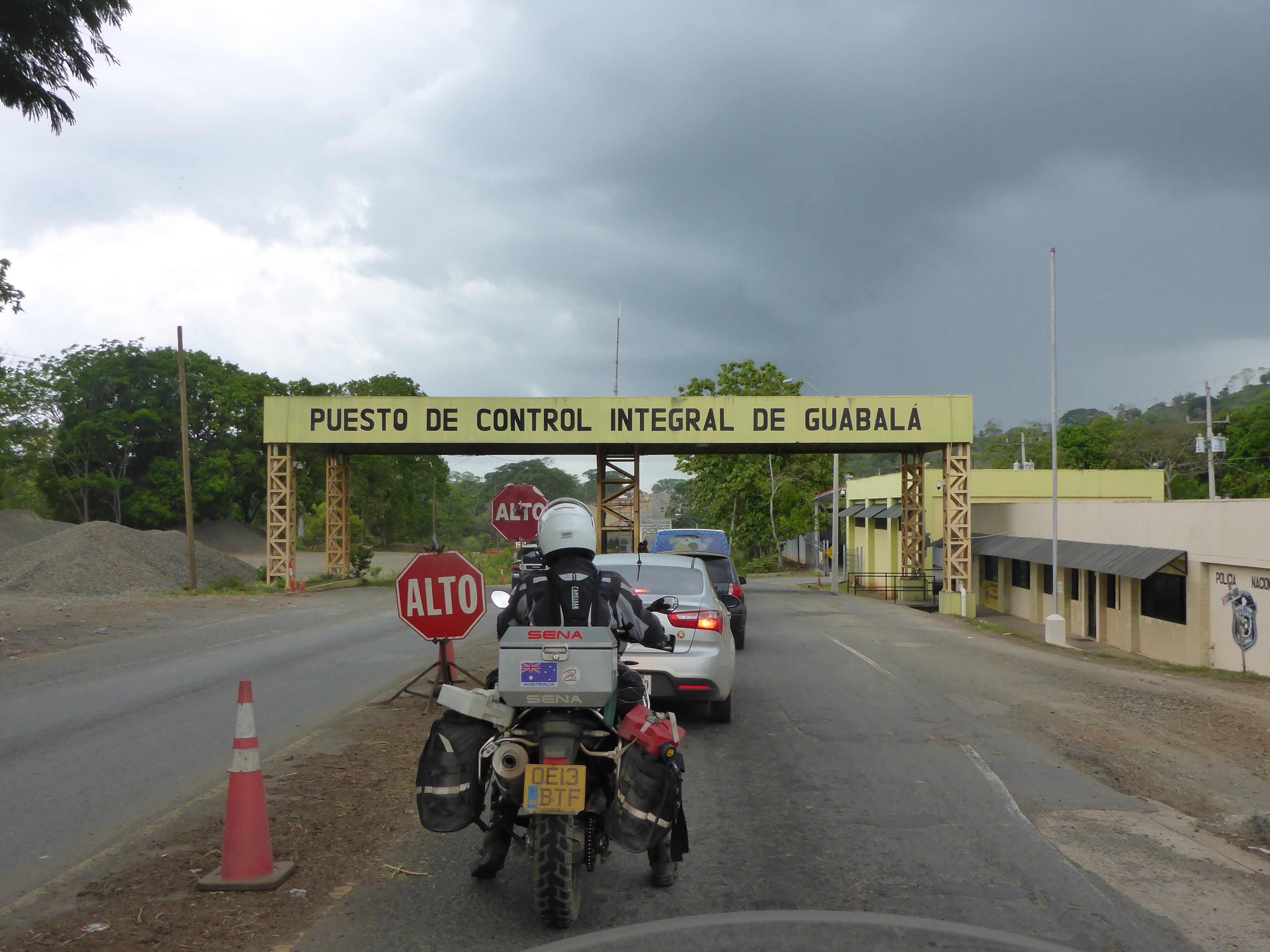
El Salvador to Guatemala was straightforward and as it was Sunday all the fixers were in Church! Guatemala to Mexico was our last crossing in the series. Fairly straight forward, expect that the gentleman who had entered our temporary vehicle permit had not activated it, thus it could not be cancelled! I thought for a brief moment, could we have our money back as we were now across the country, but thought better of it. It never pays to mess with Customs and Immigration officers.

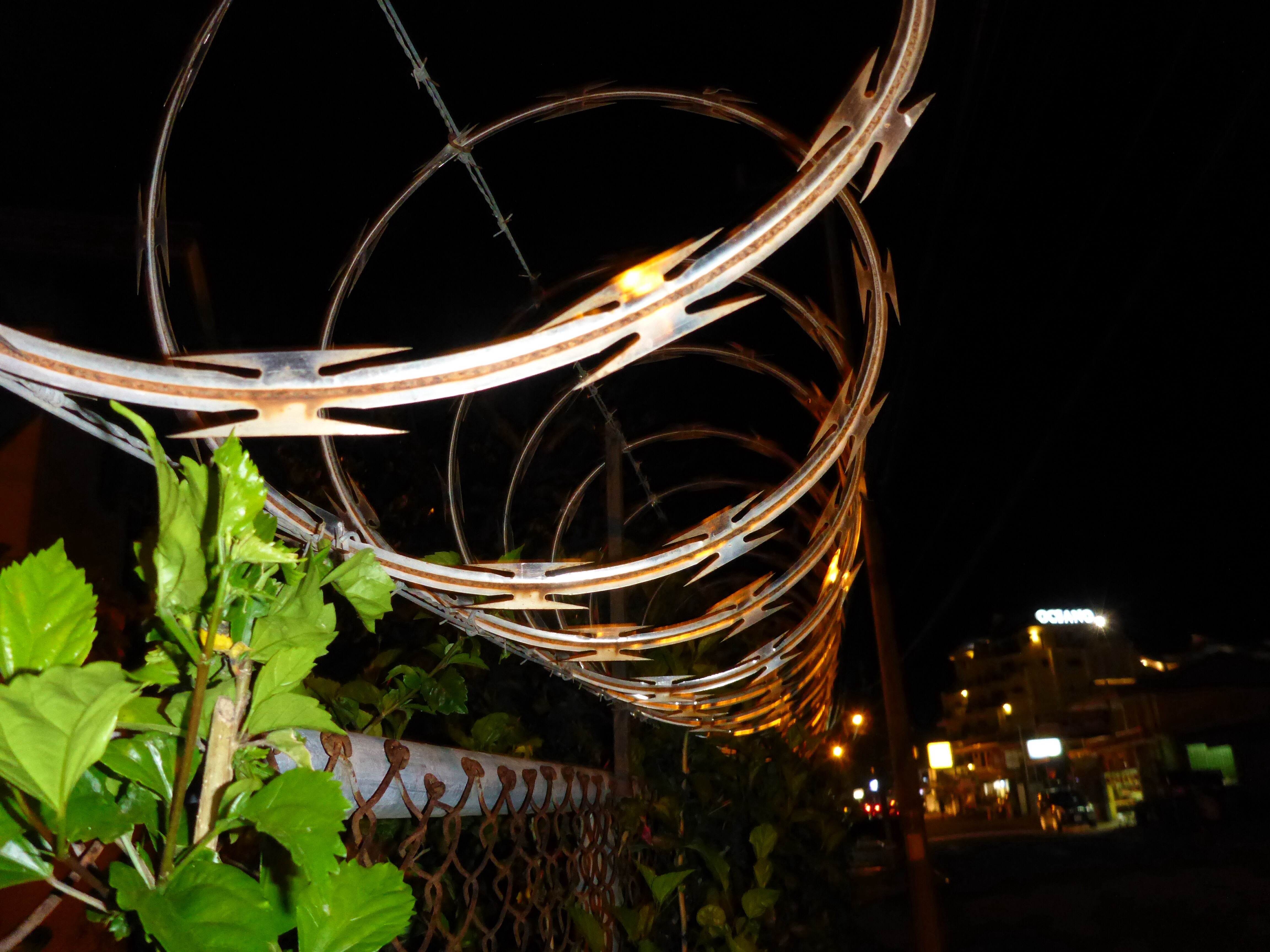
We have been constantly warned about our personal security by locals as we travelled through Central America. Sometimes they warn about the next country along, others about their own country. We were advised not to stop in Honduras at all. The vast quantities of razor wire in evidence around businesses and homes are testament to either top quality razor wire salesmen or a real problem of theft. I suspect the latter.

One aspect we were not used to is the use of armed security guards. In Guatemala and El Salvador armed security guards can be found at petrol stations and restaurants, anywhere that cash accumulates, usually in pairs armed with pistols and pump action shotguns. We see them traveling around on the back of mopeds, nothing like riding past the business end of a pump action shotgun laid across the seat between driver and passenger, we travel past quickly, I would hate for a bump in the road to set the gun off as we pass, ruining and otherwise perfectly good day.
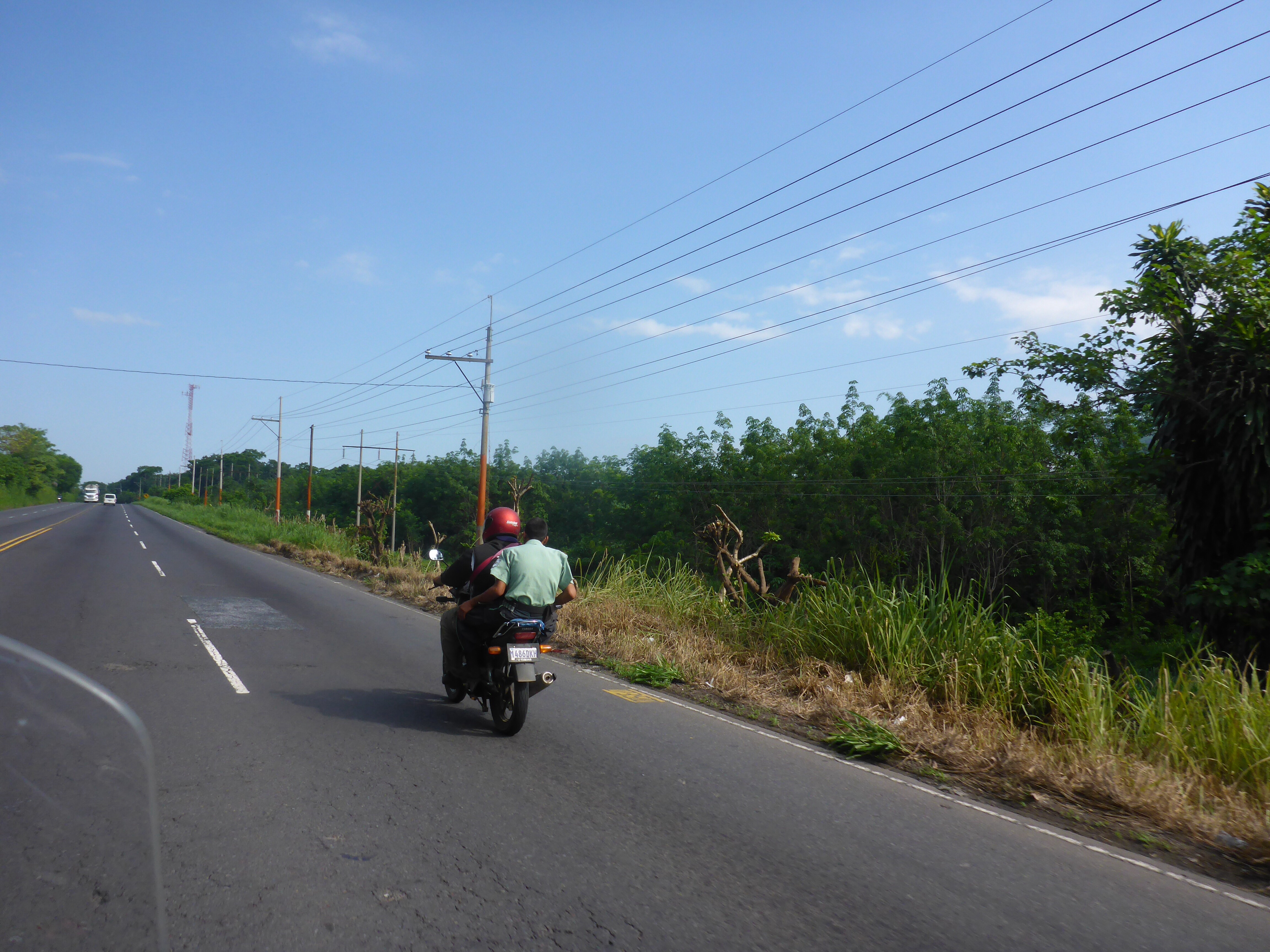
Security guy riding with his shotgun across his lap, Escuintla, Guatemala

Army guy riding with his shotgun across his lap, Escuintla, Guatemala

It was interesting to note the changes in modes of transport between the various Central American countries. The number of mopeds, tuk tuk’s and donkey carts varied from one to another depending, I surmise, on the respective wealth of the country. While the Golden Arches of MacDonald’s and other American consumer icons became more prevalent as we moved towards Mexico, the roadside stalls still exist in large numbers, enabling one to stop, for whatever is the local produce, Mangos in this case.
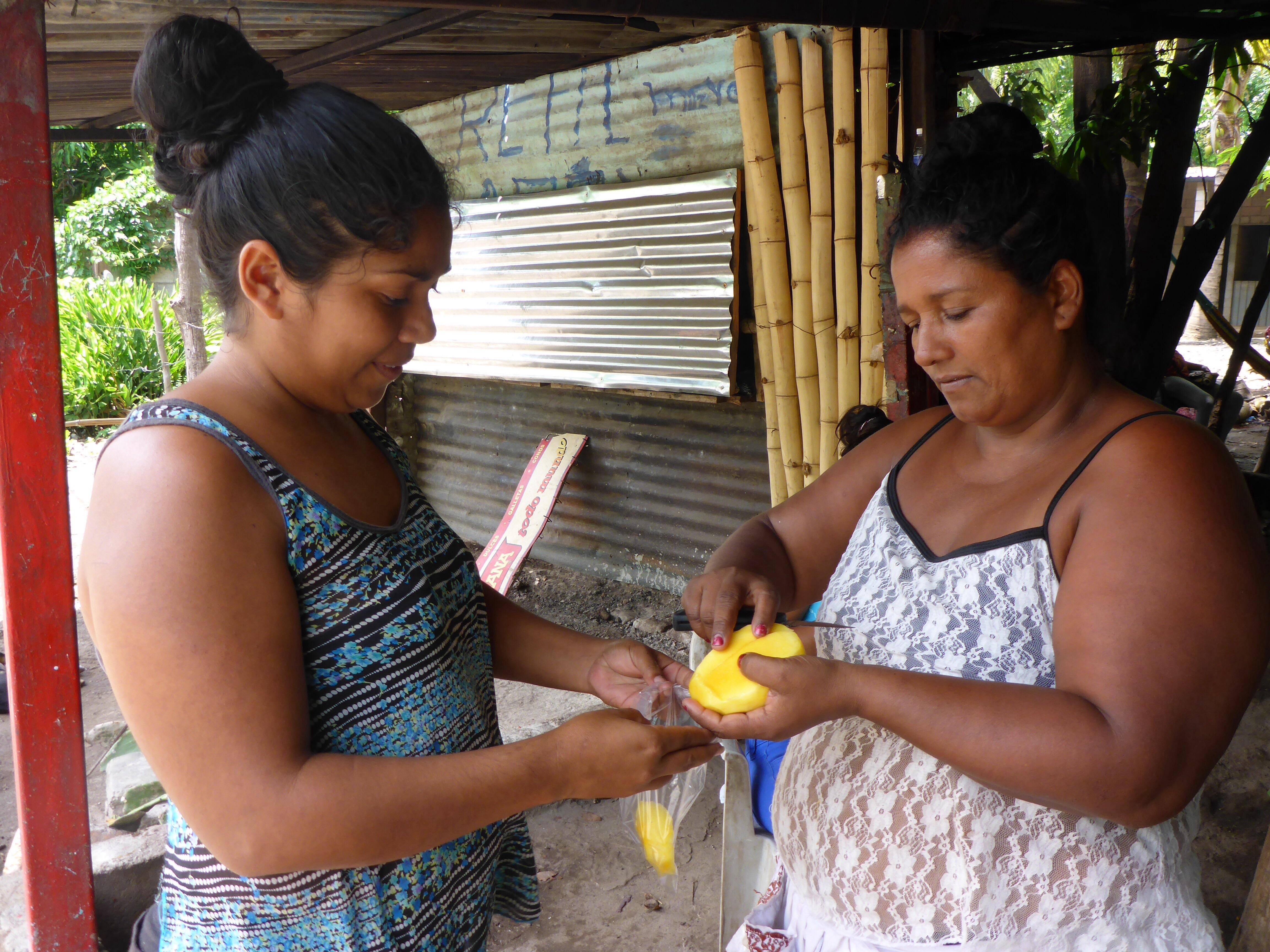
Having a fresh mango peeled on the side of the road in El Salvador

Having a fresh mango peeled on the side of the road in El Salvador

While we have only briefly visited this region, there is much to intrigue the visitor who has time to explore further. The beaches, jungles, volcanoes, historic monuments and the people make would make for an adventurous journey.

These buses barely stop to let passengers on and off in El Savador

These buses barely stop to let passengers on and off in El Savador


San Savador, El Savador

San Savador, El Savador


Typical Central America Auto Motel
Typical Central America Auto Motel


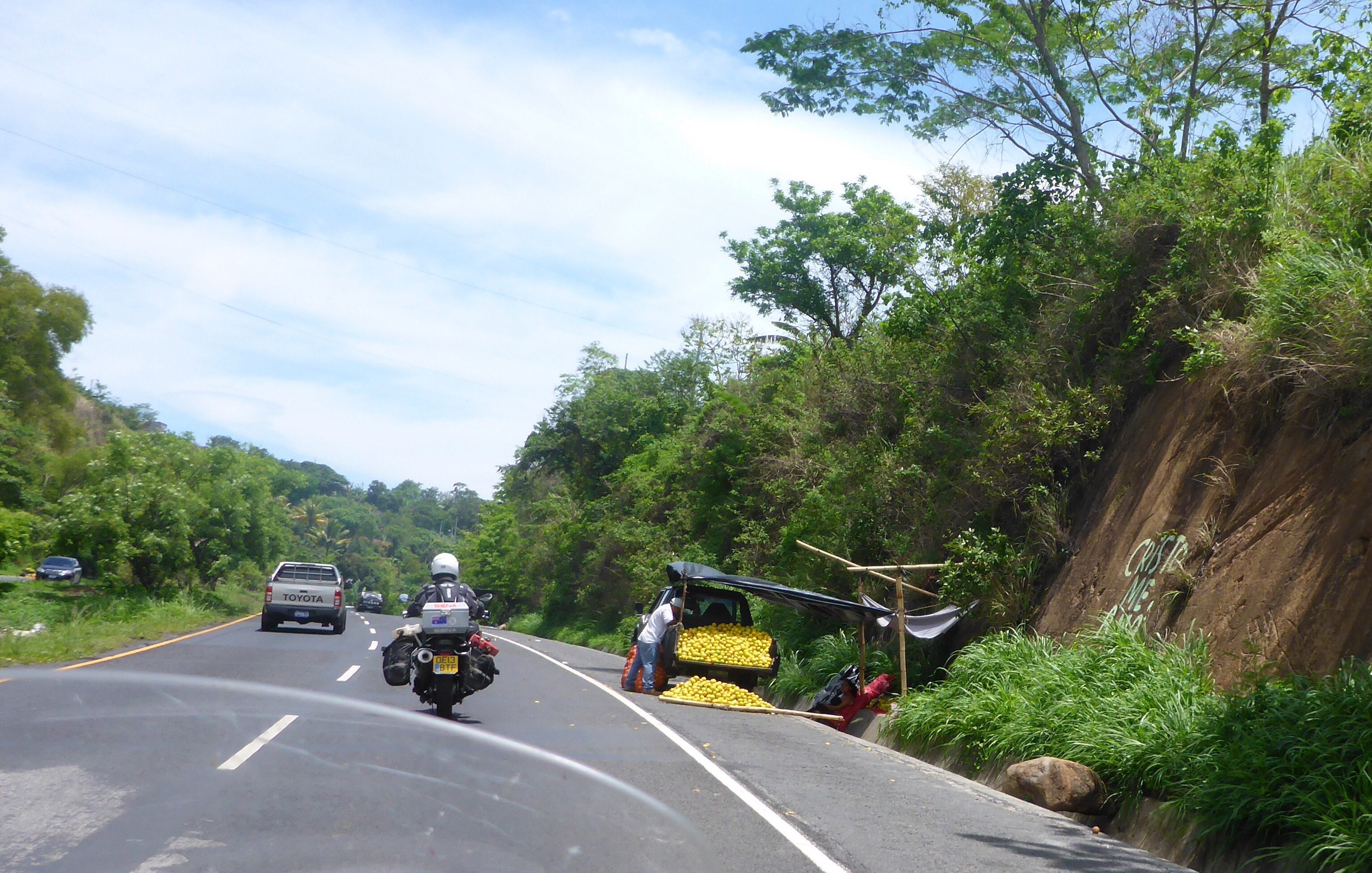
Another roadside seller in El Savador - fresh lemons

Another roadside seller in El Savador – fresh lemons
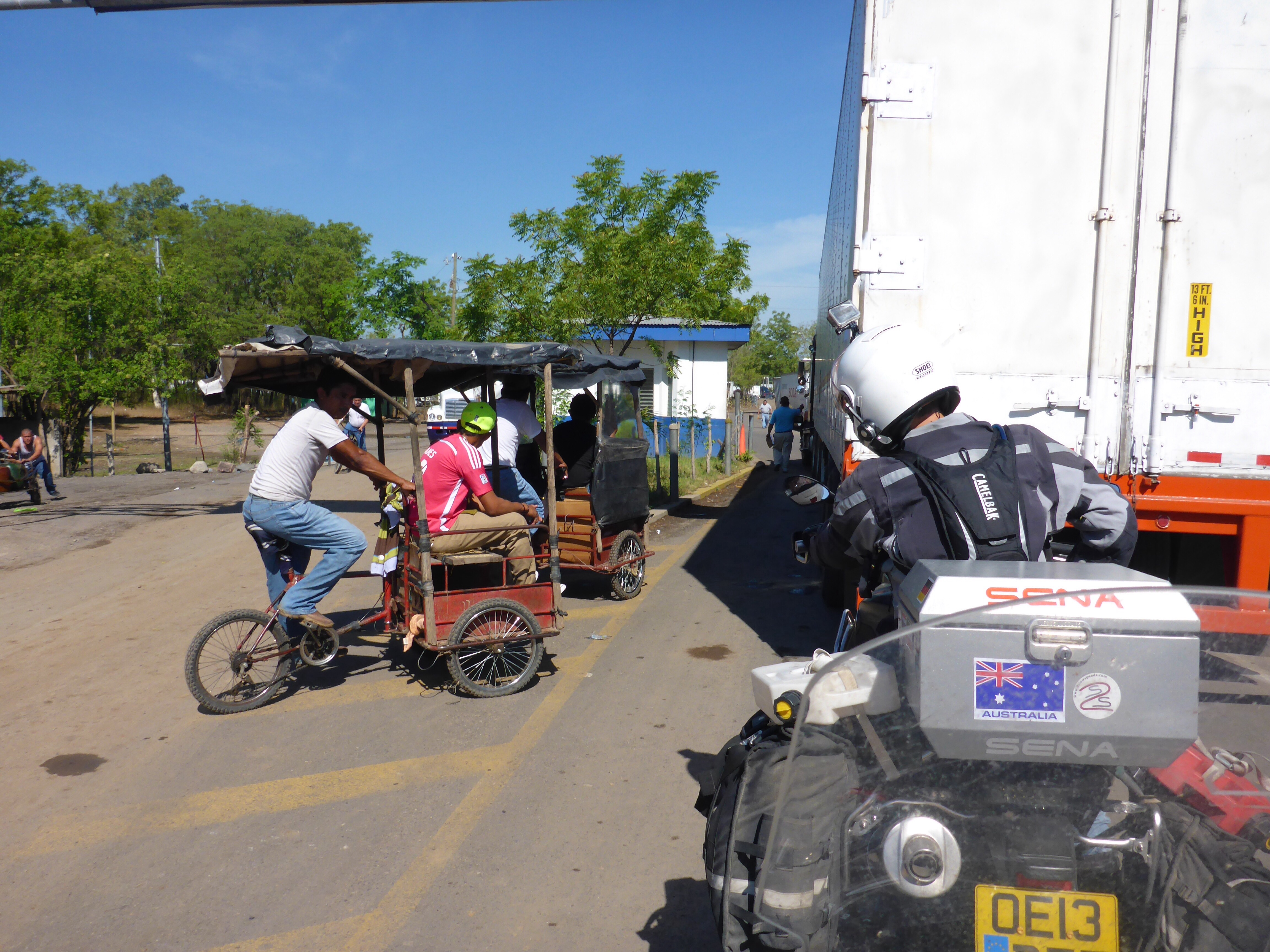

Somotillo border post 'Must be able to squeeze through here'

Somotillo border post ‘Must be able to squeeze through here’


In the middle of Barberena, Guatemala - must have been desperate

In the middle of Barberena, Guatemala – must have been desperate


Anne can finally eat a banana in under an hour

Anne can finally eat a banana in under an hour


– Anthony

We won’t be able to settle down, you say?

The recent comments to our blog posts suddenly have a common theme: we will not be able to settle down when we get home, many of our followers believe. Really? This made me think that we have omitted to describe a large part of our days while on the road, and all the uncertainties that being on the road entails. There are many unknowns in our day, every day. Many things to work out. And the same things to work out all over again, every day!! While we love it and it is part of being on an adventure trip, routine is something we know we will enjoy once home.

Every day we are on the road, we have no idea:
–  What the road conditions will be like
–  What the traffic will be like
–  How many random police checks we will have and slow our progress
–  What roadworks or detours we will encounter and also slow our progress
–  Where we will have lunch
–  Where we will change money
–  How far we will get
–  Where we will sleep

When we have borders to cross, we have no idea:
–  How long it will take
–  What the best time to arrive is
–  When are they open/closed
–  Where we have go
–  What paperwork we must acquire during the border process
–  What order we are to follow
–  Where we will change money
–  Where we can get road insurance

Here is the Nicaragua border process for example, after driving past dozens of parked trucks all over the place, we:

1. Are waved over to a small awning on the right – asked to show our passports to official looking “unofficials”!?
2. Accept a fixer by simply nodding and following his instructions
3. Drive to a larger tent nearby – show passports, asked our nationality, “I” marked in ledger against country and given a small 2cm by 2cm piece of paper which is carefully placed in our passport. Do not loose it!!
4 Drive to fumigation station
5. Go to window and pay for quarantine treatment. US$3 each. And get large printed receipt
Complete customs form
6. Back to bikes which have already been fumigated
7. Show receipt and hand customs form which is then stamped
8. Drive about 400m and park between 2 buildings
9. Go to small table outside large building and pay US1 each for Municipal tax
10. Immigration – hand passports, with tiny piece of paper, completed immigration form, pay tourist tax of US$10 each, passport is stamped with 90 days visa
11. Walk to another office to buy insurance and pay US$12 each
12. See pale blue shirt Customs Inspection lady back at main building where we parked. She walks over to the bikes, no inspection, and she stamps customs form
13. Vehicle temporary window. Hand over quarantine treatment receipt, customs form, passport and vehicle document. Get permit – free!!
14. Find customs police (who are currently dealing with a ute carrying a purple fluff covered coffin). Get temporary permit stamped
15. Go to bikes for Customs police inspection. He squeezes a couple of bags and signs the temporary import docs.  Last step done!

We are having an absolutely amazing time on this trip, we realise this trip will have changed us, not sure exactly how or to what extent, and while we are not sure how we will feel being home, we know we will relish routine, the ease, luxury and comfort of routine, for a while anyway!!!…  And for me especially, I will enjoy the luxury of having a washing machine and not smelling of wet dog!!

– Anne

A tale of 2 cultures – Panama & Costa Rica

During this trip we have pondered on how and why cultures develop differently and how they imprint themselves on their people, both consciously and sub-consciously. We first noticed this as we travelled the ‘Stans’ last year. In that case the breakup of the Soviet Union was only a couple of decades old, and while we had no prior knowledge of how each of the now independent countries has been during their participation on the Soviet Union, the very different driving styles we encountered were probably most likely developed in the last 20 years.

Here in Central America, we have a number of small contiguous countries that we shall travel through in the coming few weeks and will have a limited opportunity to see first hand how their cultures differ in our view, if at all, and the impact this has had on people’s behaviour. This will be a work in progress: as I write, we are only into our second country Costa Rica. It has been interesting as with only one day in Costa Rica, we have seen differences between here and Panama. I am jumping ahead here, lets go back a day or two.

As we mentioned in a previous blog, we have met some helpful people in Panama, but we have found that there is desire to make extra money, whether by proposing an inflated taxi fare because we are foreigners, while in Bogota the taxi drivers rounded down, or asking what we will do to avoid an official traffic infringement being raised. More on that later.

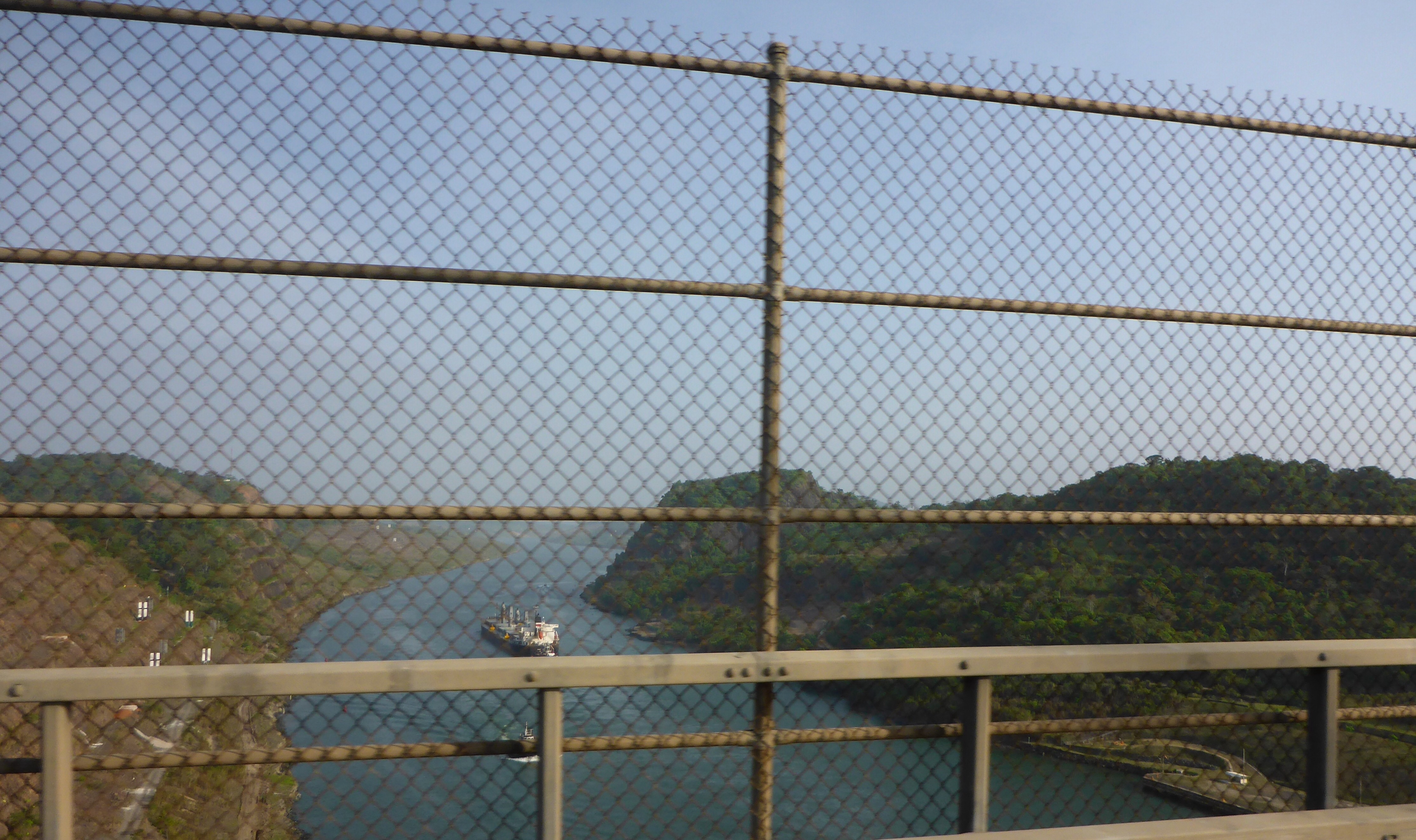
Our departure from Panama City took us out over the ‘Punte Centenario’ or Centennial Bridge which is situated just north of the two sets of locks on the Pacific Ocean side. We had our last glimpse of Panama Canal and a ship sailing towards the Atlantic. If felt that we were now really in the North American continent. I know there is debate about where to draw the actual boundary between the North and South American continents and people use country boundaries, geography, language and tectonic plates, but I like the idea of the canal, especially since it runs more North/South than East/West, which is something I had not really appreciated before we came here. As we have traversed Panama and now Costa Rica we tend to ride more West than North.


Crossing the Panama Canal

Crossing the Panama Canal

Crossing the Panama Canal

Crossing the Panama Canal

Until today on this journey we had two encounters with traffic police, both of which we were at fault, and paid the appropriate ‘Spot Fine’. We have been careful to observe the rules, well, as much as the locals do, while we ride.

Today we are pulled over on an open straight 4 lane highway and informed the speed limit is 80km per hour. We saw no signs, but could not guarantee we had not missed them while overtaking. We had been careful but these things happen. We are then told the infringement will be US$100 each, our policeman intimates a cash alternative is acceptable. We decide to pay the spot fine and then are asked for a pair of motorcycle gloves as well! Luckily mine are ratty and have big hole in the palm of my hand, he is not interested.

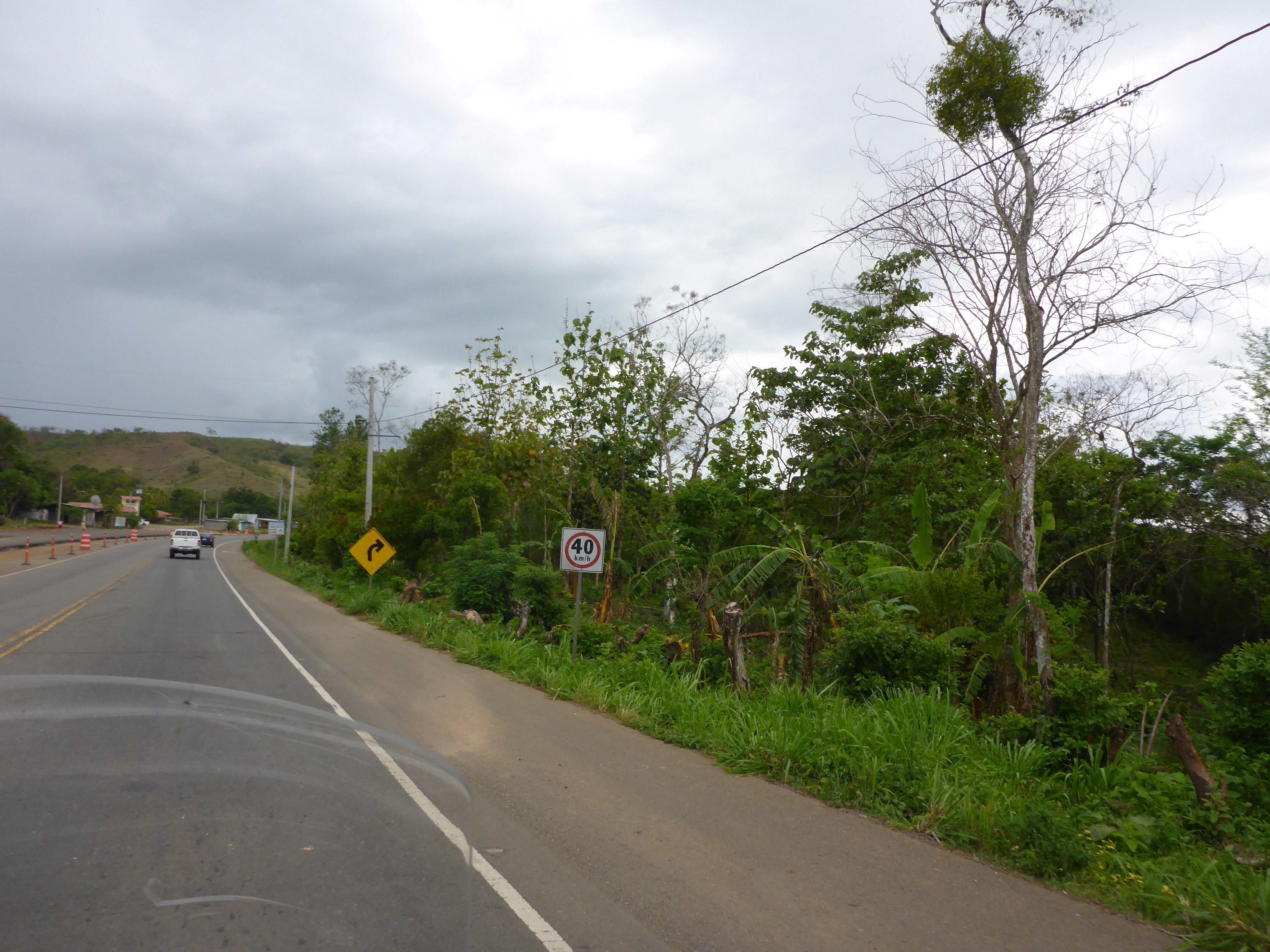
After departing we take a keener interest in the speed limits, and also the other drivers’ speed. It turns out that the 100km per hour only applied near Panama City and the rest of the four lane highway to the Costa Rica border is 80km per hour or less. Drivers are very careful, and stay below the limit, where they perceive or know of trapping, otherwise they go faster, but the heavy police presence trapping makes it a fraught game. We find the ‘Carretera Interamericana’ as the highway is called is being duplicated for over 160km and the speed limit en route, regardless of construction conditions, is either 30km or 40km per hour. Police trapping seems to occur after most of the infrequent speed limit signs. With the existing road surface being of poor quality, perhaps a 60 km per hour limit might be more appropriate. This starts to look more like a business not a road safety initiative.

Gorgeous tree outside Panama City

Gorgeous tree outside Panama City

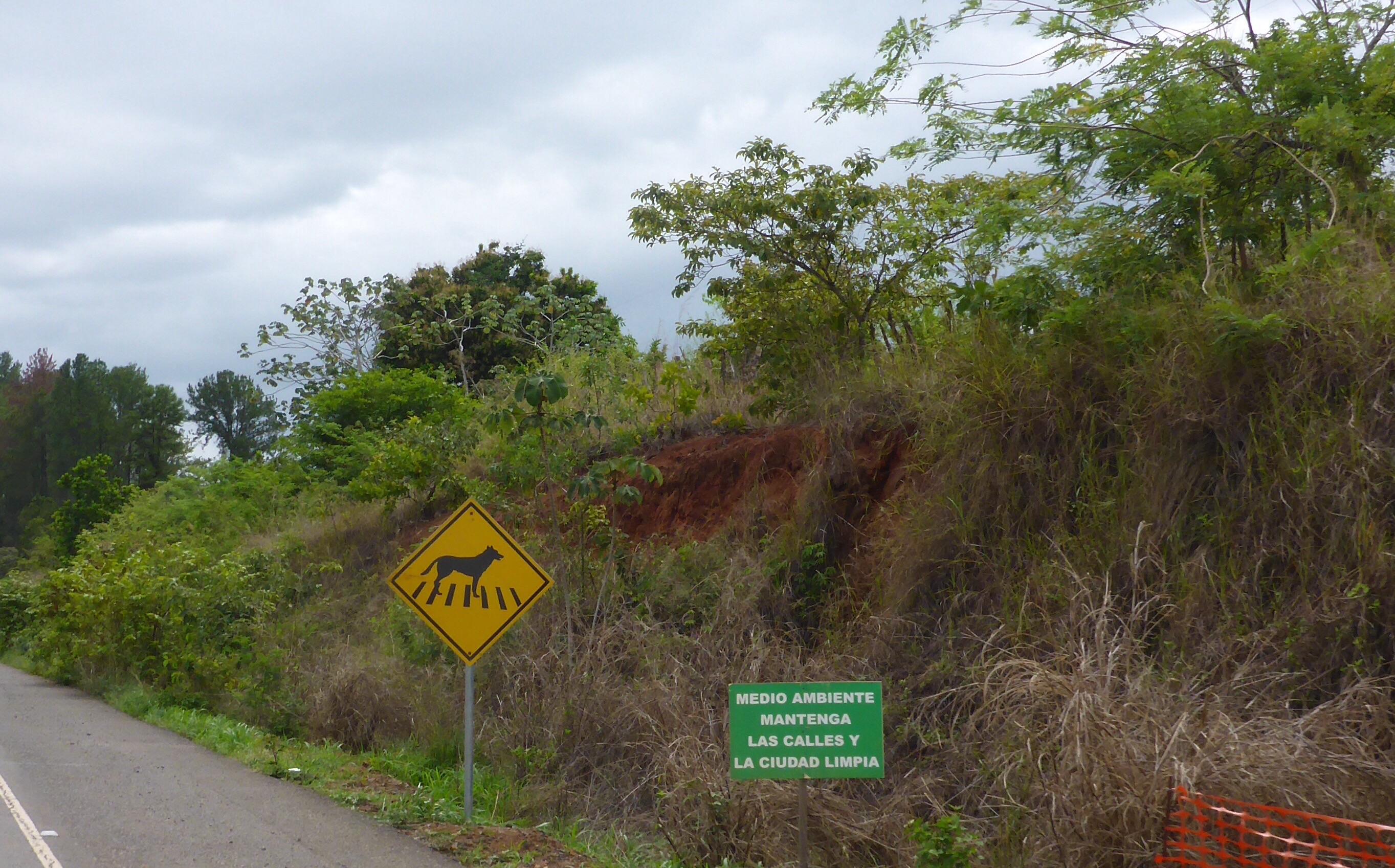
Would love to know what this sign means, Panama

Would love to know what this sign means, Panama

Still 40kms/hour on our way to David, Panama

Still 40kms/hour on our way to David, Panama

We want to beat the rain but the bum is getting sore

We want to beat the rain but the bum is getting sore

Anthony's confidence is still high it will not rain on us

Anthony’s confidence is still high it will not rain on us

Just another customs check, 150kms from the border

Just another customs check, 150kms from the border

My confidence in avoiding rain as we progress into the afternoon is misplaced and a black torrential tropical downpour envelops us. Must remember to put on waterproof trousers before the skies open up. It is easier for Anne as her new riding trousers we bought in Kuala Lumpur are waterproof. This downpour makes for interesting progress but we eventually arrive at our destination some 20km short of the border. We do not have an exact location of our bed and breakfast place and a kindly local drives ahead to show us the way. I can now dry out all the money in my jeans pockets. We also both have wet boots, our new pair of TCX Track Evo boots are still not waterproof…

We are not looking forward to the Panama / Costa Rica border crossing, we have read stories of long delays, ‘fixers’ being needed to help your progress, generally unpleasant. Our friend Kristjian had a torrid time here as well, it took him 3 days… We are lucky in that Kristjian has been sending regular reports of his crossing experiences which give us an up to date view. We also have multiple crossings to make in the next couple of weeks as the countries are small. In many of the Asian countries, we travelled thousands of kilometres before we crossed the next border so we only undertook the border crossing process occasionally rather than every couple of days as we will here.

– Anthony

Panama – Costa Rica border – 15 May 2015

As Anthony said, we were not looking forward to this border crossing following Kristjan’s experience.  We had also heard the border crossing was very slow with many large trucks and coaches who make the journey overnight to arrive by 6am and a couple staying at our B&B were going to cross at around 10am ‘when it should be quieter’. We stick with our original plan to be at the border by 7am.

Nice to see blue skies as we head to Paso Canoas border at 7am

Nice to see blue skies as we head to Paso Canoas border

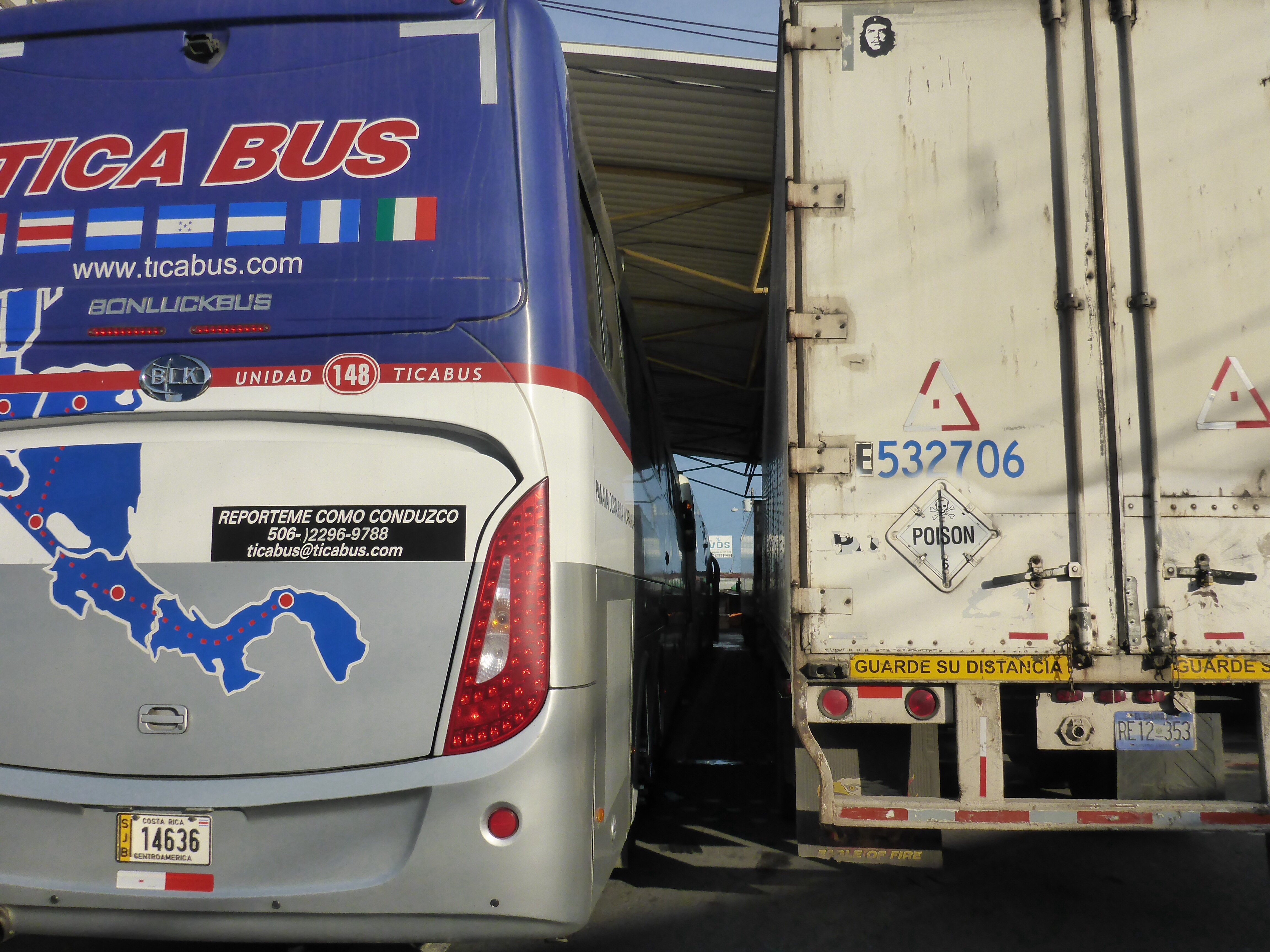
What we didn’t know is that only 3 tight lanes of vehicles can drive past the immigration/customs building, under a large tin roof – in our case a line with 2 coaches, and 2 lines of trucks. We are directed by an army official to park our bikes behind the lines – we park side by side behind the back of a Tica transport company coach.

At Paso Canoas border post

At Paso Canoas border post

As soon as we get off our bikes and walk towards the buildings, a man approaches and waves to follow him. He is a “fixer” and we decide to accept his help.

First he takes us to the furthest building (there are only 2), marked Aduanas, asks us for our (vehicle temporary import) document, leans down into the little window opening and calls the 3 women sitting and chatting at the back of their office. One gets up – not sure she wants to assist, but she stamps one of the forms on the back. He has to ask her to stamp the 2nd one too which she does reluctantly. Now this when a fixer comes in very handy: he then took the forms and found the man who would sign the stamps!! He was busy with a truck and he too seemed reluctant to assist but he signed both. Job done.

Next immigration, which is in the first building on the left when we arrived. Not the long line of travelers who have come off one of the coaches, but the window to the far left left marked ‘solo transportitas’. Our fixer tells us to hand the vehicle document and our passports. Small delay as the 2 women behind the window decide to read one of the coach brochures on their shelf. We just wait. Brochure read, replaced, then whole pack removed… Iris photo taken, passport stamped, all documents returned.

The fixer then takes us back to the Aduana window where our temporary vehicle stamp in our passport is stamped too and cancelled.

Job done. The entire process took 15′. Would we pay US$5 each for his help, our fixer asks. Very fair price, no problem!! Time to leave, but how? There is no room to squeeze past the busses and trucks. Anthony goes off, while I secure our position behind the busses, to see if we can go through the entry side instead. Our fixer is not interested, not his area, fair enough. The army official who had told us where to park before the process began indicates it is not his call but we must ask a superior officer by tapping his shoulder on his (lack of) officers tabs. I notice there is movement with the buses and now the one in front of us is trying to reverse. On the bikes we hop, move back to find out the front truck and both buses have maneuvered to make space for us to squeeze past!!! Brilliant!!! Absolutely amazing. We are through in exactly 27′ total!!

On we drive a short distance to the Costa Rica border, past all the ‘no stopping’ parking bays (?!) until I give up and stop just next to a drinks seller. That will do – we are not in a no parking spot, just on the road!!

No fixer approaches us here so we walk towards a row of windows but they are unattended and we are advised by a helpful person sitting on a bench to go window 4 behind. That is one of the 2 entry into Costa Rica immigration windows. 2 people in the queue and we are next in no time, passport stamped with 90 days. We go to the Aduanas next but are told to buy our road insurance next door first, get copies across the road and return. A security guard is sitting by the insurance window. He offers his seat so that I can rest my helmet on it. What a gentleman!! He jokes that it is only for me, not Anthony. We chat about where are are going etc. and he tells us he is happy to meet us. Full details of the border process will be uploaded in our Borders and Visas section soon.

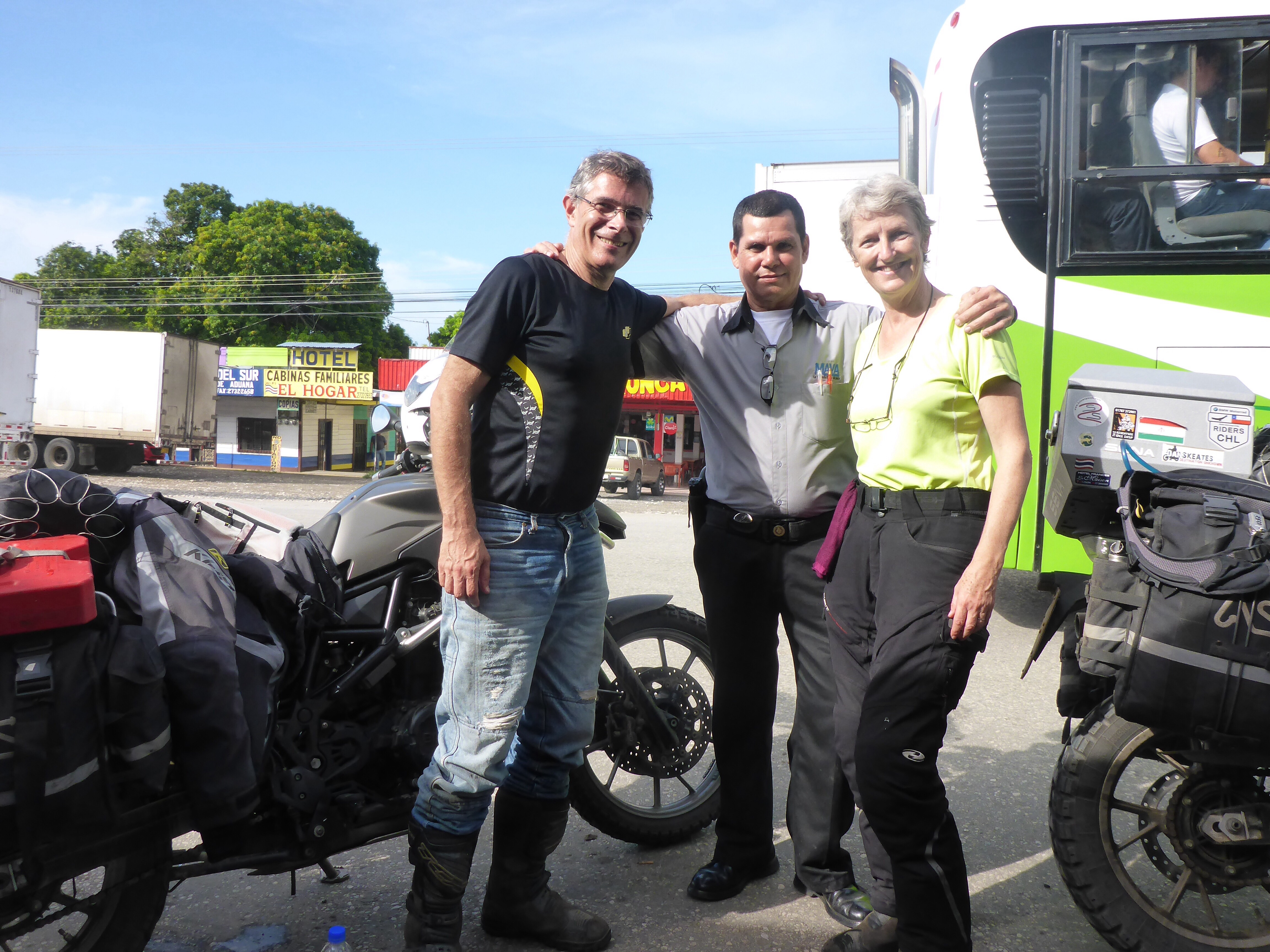
Once our entire process is completed, we say goodbye to Dagoberto who keeps telling us he is “happy, happy” to meet us.

Happy happy Dagoberto at Paso Canoas border post

Happy happy Dagoberto at Paso Canoas border post

Back at our bikes and we buy drinks from both sellers we are parked next to. What suddenly parks just in front us, the Tica coach from Costa Rica which moved over for us at the Panama border. We meet Alberto like long lost friends. While we get ready, we enjoy the banter between him and one of the drinks sellers – “she doesn’t want to have my baby!!”. We eventually say goodbye to Alberto and Dagoberto and head off into Costa Rica. One and half hours after arriving at the Panama border and we are through both borders. We are so lucky!!! Plus we have gained an hour being in Costa Rica, it is only 07.30am. We can have a leisurely ride to Jaco, 280kms away.

Alberto, the friendly Tica  bus driver

Alberto, the friendly Tica bus driver

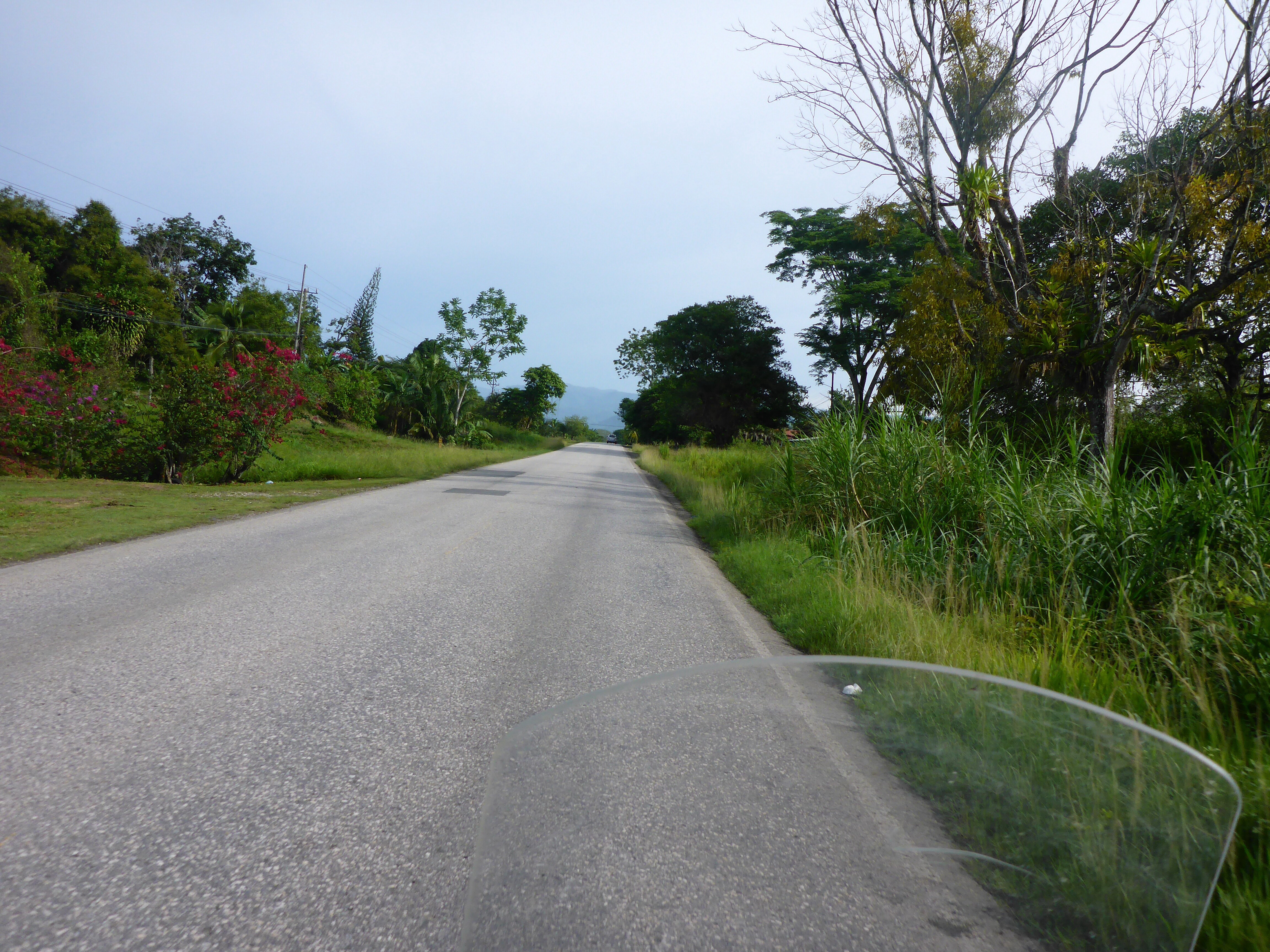
We are instantly loving Costa Rica. We had so many wonderful Costa Ricans helping us and not once was there any question of money. It is so tropical here. No pretense of highway close to the border as we’ve found in so many countries, just a lovely country road. Bougainvilleas, poincianas, white poinsettias, jacarandas, banana trees, palms, it all looks and feels and smells like home. Lovely gardens, well tendered homes, clean road gutters. Palms and more palms – then palm oil factories. Single lane each way, gentle curves, a few trucks and buses and everyone is so courteous. It is a gorgeous ride. Lucky we had an early start as the rain decided to come early today and we get our first tropical downpour of the day by 9am. We slow right down. Eventually, a large coach approaches and hoots as he overtakes us. It’s Alberto!! We hoot back, and hoots some more. Later, he’s had to stop in a village for passengers so we overtake. There is a cacophony of horns going on for about ages as we approach then pass him. Byebye Alberto!!  This country has a great feel already…

We are in Costa Rica!!

We are in Costa Rica!!

The Panamwrican highway in Costa Rica, past Rio Claro

The Panamwrican highway in Costa Rica – simply gorgeous

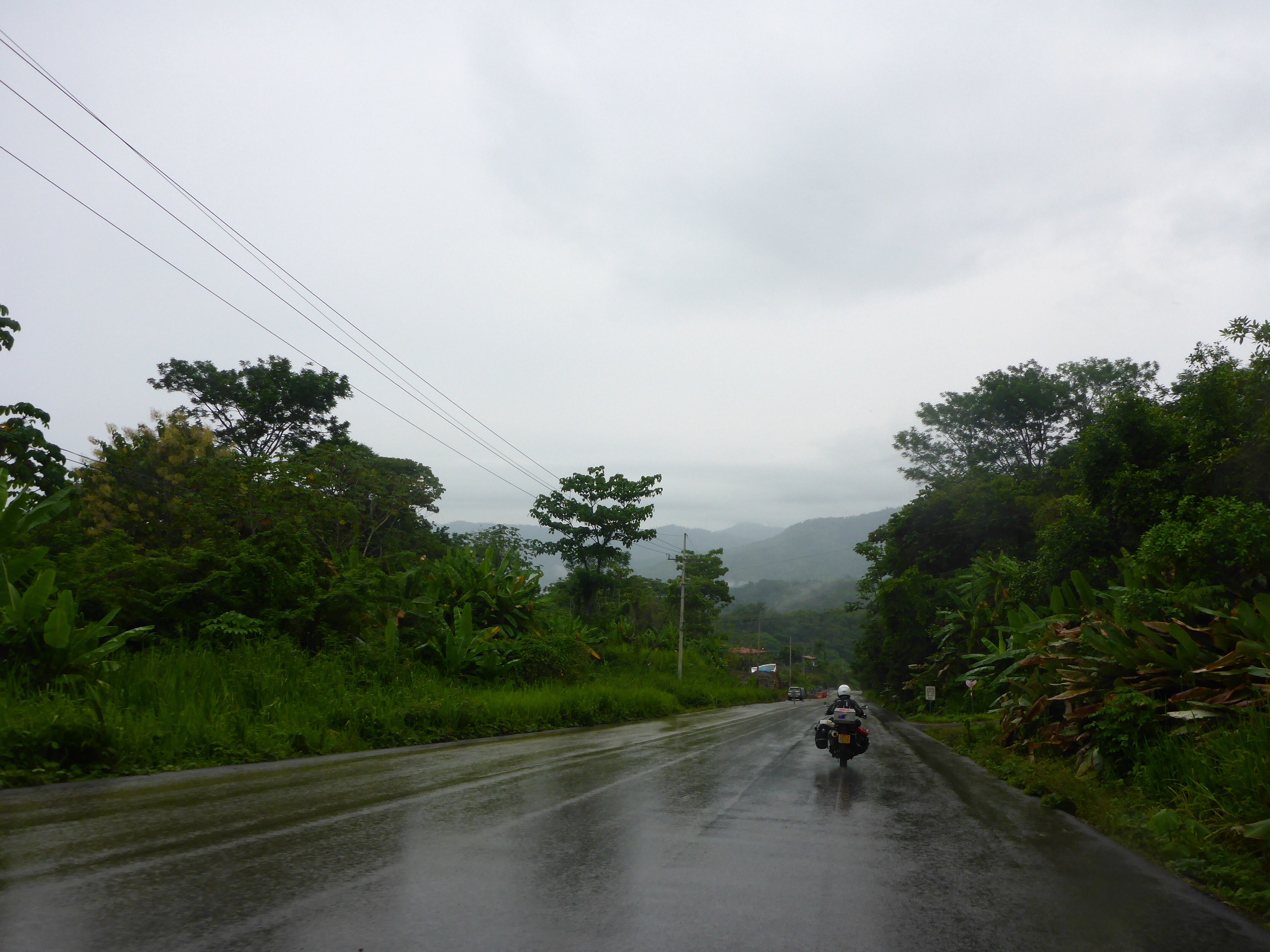
It is a wet ride today from Rio Claro, Costa Rica

It is a wet ride today from Rio Claro, Costa Rica

Once again, we discuss how interesting it is that countries and societies can be so different in feel, habits, and wonder how and why they evolve so differently. We know we shouldn’t generalise and we haven’t spent much time in either country, but our personal experiences in each are so strikingly different.

We stop for lunch, so that our jackets etc can dry a little before we check into our B&B. By the time we are ready to leave, there are little puddles all around our table!! But not before Anthony has a game of pool with one of the restaurant staff.

Lunch stop just outside Jacó, Costa Rica

Lunch stop just outside Jacó, Costa Rica

Great spot to dry out and have lunch

Great spot to dry out and have lunch

Anthony has a game of pool with one of the restaurant staff

Anthony has a game of pool with one of the restaurant staff

We arrive at the bed and breakfast I selected based on its location, quiet street away from downtown Jaco and great reviews. I hadn’t realised the owner of La Villa Creole was Belgian from Brussels. It is great to speak French!! I also hadn’t realised how touristy Jaco was! From my point of view, it was a convenient location near the coast and close enough to San Jose where the bikes are being repaired under warranty Monday morning. There is apparently a great sushi restaurant, run by Japanese, so is authentic. After a lovely swim in the pool and shower, we head there for dinner, a 15′ walk down the road. What strikes us are the number of high security fences and serious fencing around homes. So there must be a serious theft issue here. That’s why the B&B were so concerned about our bikes and were uncomfortable about us deciding to leave all our luggage on the bikes. We covered the bikes – each pannier is locked anyway.

Common house security in Jacó, Costa Rica

Common house security in Jacó, Costa Rica

Jaco is so touristy!!! It reminds us of Chiang Mai where we spent a week last year! Maybe because that was the last place we visited that was so touristy. But also because both have a high number of ‘expats’ who have made their new life in a foreign country, Over dinner, we once again wonder how societies develop so differently. While in Chiang Mai, we met many people who integrated into their adopted country, and you could see many mixed groups. We hear a lot of Americans here, but don’t see any mixed groups or couples. We wonder how integrated all the expats, or foreigners I should say, are here. And is there a real or perceived threat of theft here?

Saturday, we first visit the Tico Pod Art House & Gifts store which specialised in locally produced art and admire some stunning Boruca masks. The Boruca are a tribe of Indigenous people of Costa Rica who managed to scare off the Spanish Conquistadors and secure their independence to this day thanks to their scary masks. The masks are absolutely stunning. Would have loved to visit them but we are running out of time to get my DME replaced before end of warranty in June.

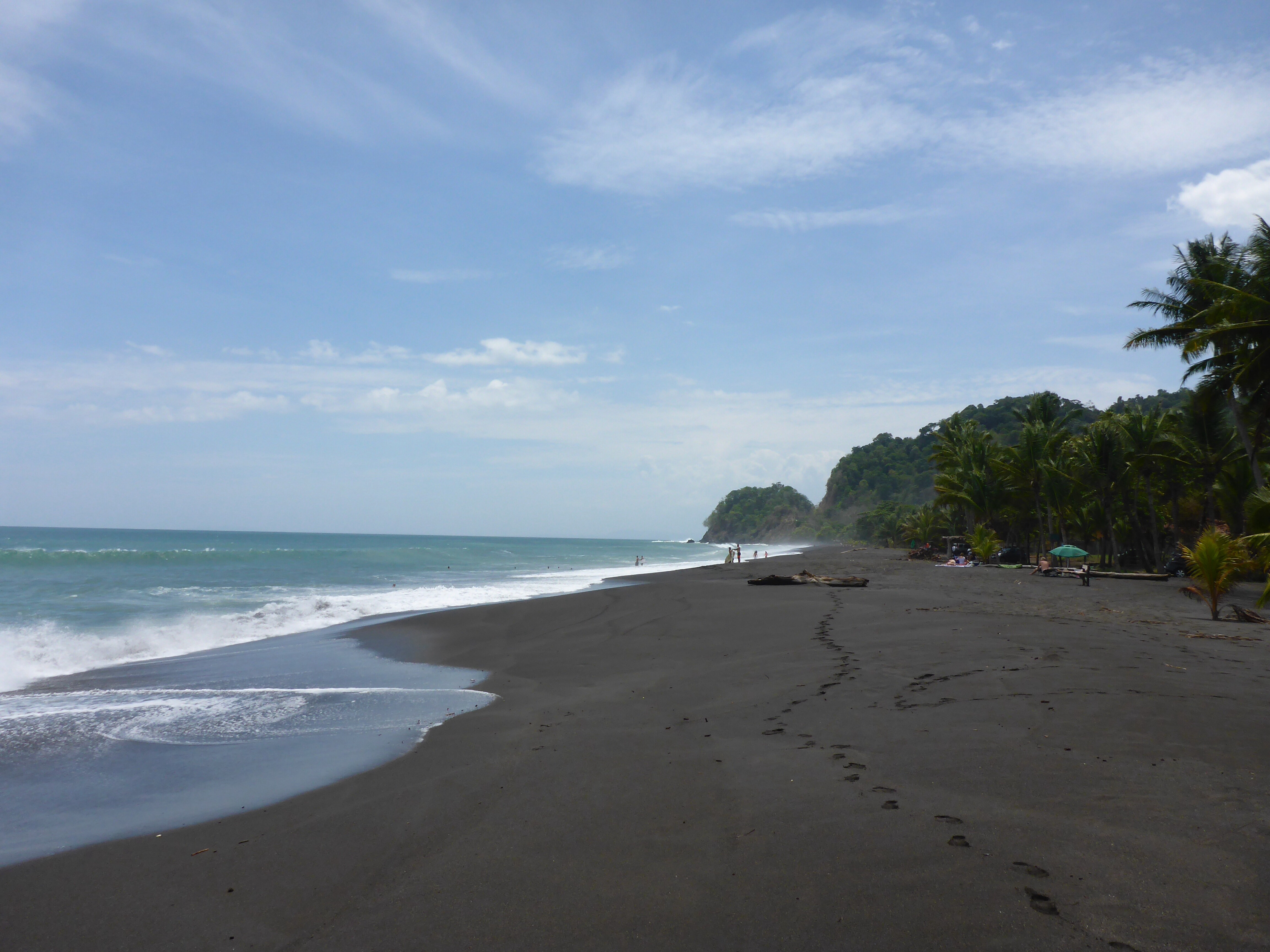
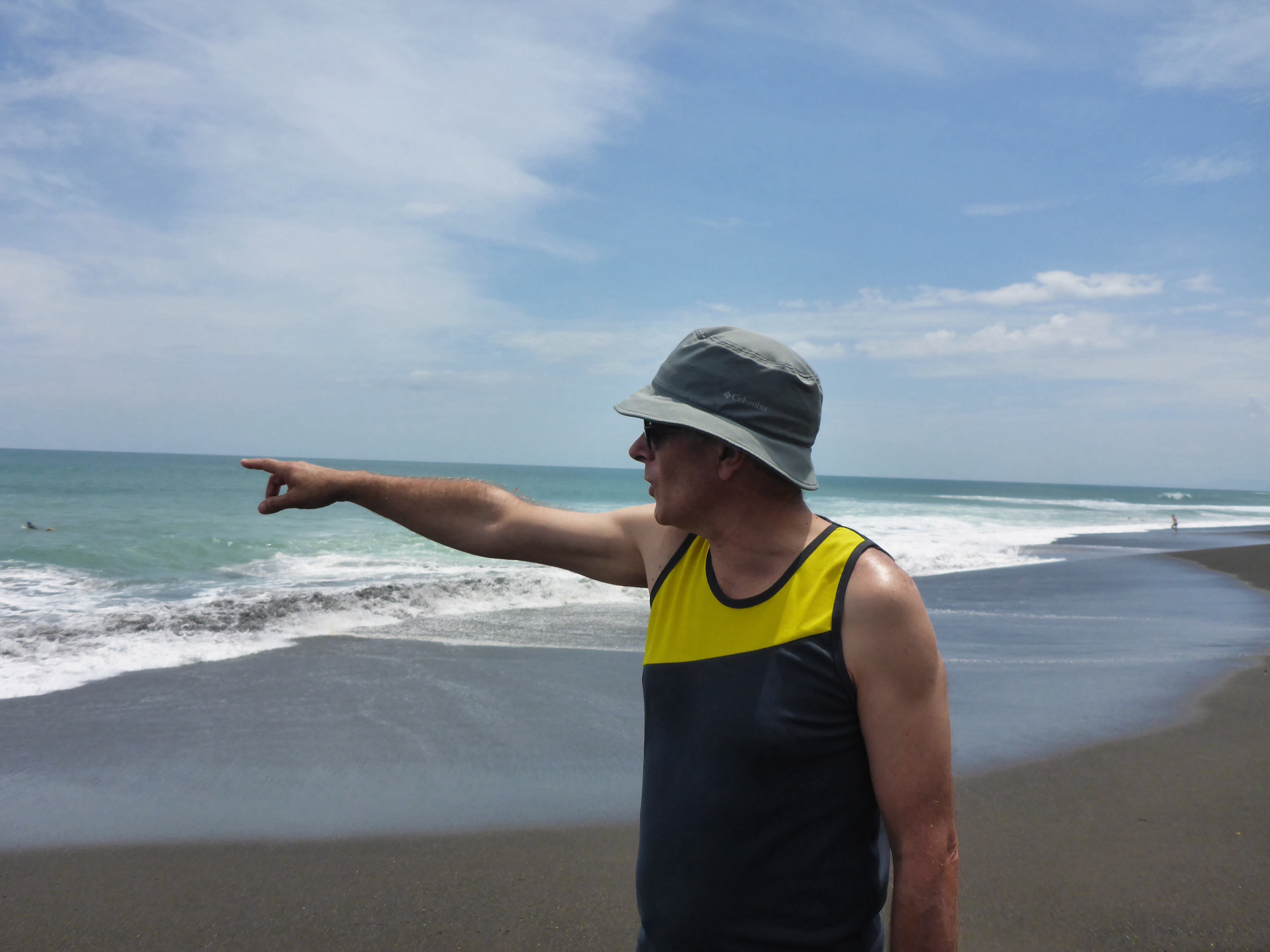
We then take a local taxi for a short ride to Playa Hermosa which we rode past after lunch yesterday. It looked stunning – and it was. While Jaco seemed packed with American tourists, Playa Hermosa is low key, with a few backpackers, hippies selling handcrafted jewelry or sandals and lovely healthy small restaurants and lots and lots of surfers. Apparently, Kelly Slater, the world famous surfer, has a home there, and for good reason!! The sea is rough, so much so that they have a huge sign which we should have on the Gold Coast beaches in Queensland, warning people of rips (strong currents that sweep you out to sea) and how to handle them. We enjoy watching the surfers while eating our fresh tuna salad.

Playa Hermosa, Costa Rica

Playa Hermosa, Costa Rica

Playa Hermosa, Costa Rica

Playa Hermosa, Costa Rica

Playa Hermosa, Costa Rica

Playa Hermosa, Costa Rica

La Villa Creole, Jacó

La Villa Creole, Jacó

Sunday is an easy ride up to San Jose.

Perfect day for our ride to San Jose

Perfect day for our ride to San Jose

On our way to San Jose, Costa Rica

On our way to San Jose, Costa Rica

Coming up to San Jose, Costa Rica

Coming up to San Jose, Costa Rica

The only reason for us going to San Jose is for Streak and Storm to get new tyres and new steering head bearings on Monday. Our Heidenau Scout K60 tyres have performed marvelously: the front tyres lasted 33,000kms and back 22,000kms. The back ones could have lasted a little longer but there was no life left in the front ones and it was time to swap to asphalt & wet road conditions so 2 new sets of Metzeller Tourance tyres, a few too many $$$ later but great service from BMW San Jose and we are ready to continue our way through Central America. – Anne

– A&A

The bikes are back in town

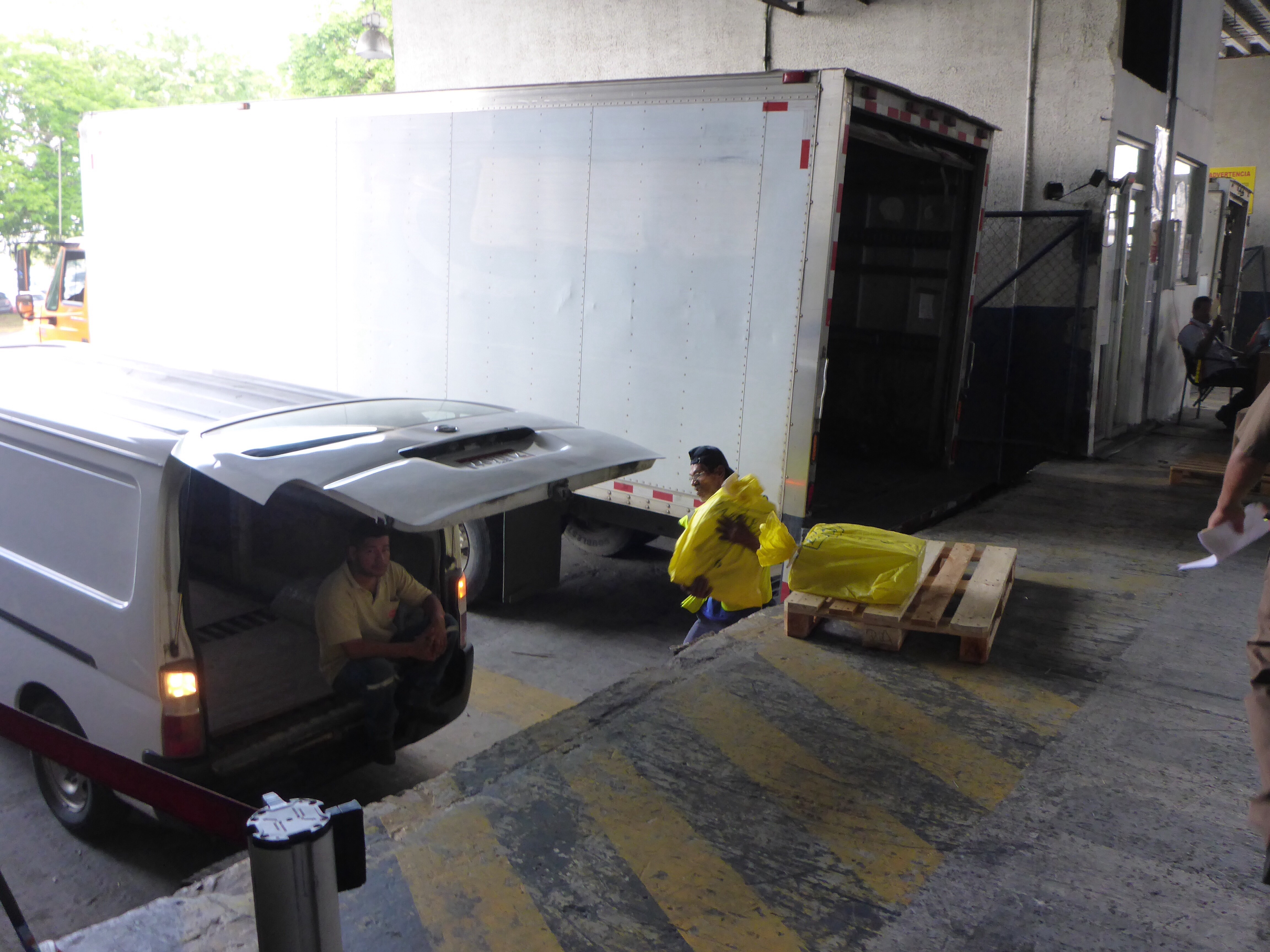
I stand under the roof of the old control tower at Tocumen International Airport, now part of the cargo complex, as another COPA, the local airline, B737 roars overhead, looks like the 800 series

for those who are really interested. We have started the process to be reunited with our bikes, and already the information we have on the process to retrieve them is incorrect. This information came from a friend who undertook the same process a week earlier. Nothing stays the same or should be taken for granted when following ours or other people’s instructions.

Anne has disappeared into the distance and out of sight while I remain with our two small bags and a five litre water container now filled with fuel. We had problems getting this filled, due to sensible safety concerns at the petrol stations our taxi driver tried to fill the water container up at. Finally one petrol station provided a loan fuel container which we could the transfer then fuel to our water bottle out of sight. Anne’s fuel tank has so little fuel left after being drained in Medellin that I doubt that the petrol filter is still wet.

As the countries we travel through are closer to our safety conscious western ways, the standards increase and the enforcement of the rules grow. In some countries fuel, or what purports to be fuel, is sold in old soft drink bottles at the side of the road. ‘Caveat emptor’ we take the risk here, as at home risk is regulated away – rules and enforcement encourage the correct behaviour of all, except usually those who it was targeted at in the first place who ignore the rules anyway. I have no doubt that most people who have been impacted by accident or injury as a result of failure of safety rules would disagree with me and, probably if I or a loved one was affected I would think differently. However at this time, I believe we still need to opportunity for adventure and perhaps risk in our lives and should be afforded it, if it only impacts ourselves. Enough rambling from me, yes I am still waiting for Anne to return, what topical subject should I tackle next while I wait?

Anne is back, our bikes were shipped with a different airline, so the initial instructions have changed. I have moved to new location a few hundred meters away. Time to ponder again.

What should be our next subject? Since I am not on Twitter, Facebook or other social media and more importantly do not have internet access at this time, I will need to choose. ‘US Presidential election 2016 campaign’ . Anne is back and has the three stamps and knows where to go for the temporary import permit. I think I will soon be on unwrapping and assembly duty soon. As we have been travelling north and now have less than 10 months before we return to Australia, we are thinking about our future. Since we retired a couple of years ago, we think what next, Chapter two after Chapter one ‘A year in Europe, interrupted by RTW motorcycle trip’. I had idly thought: how about working for a US Presidential Candidate in their campaign? Probably not sensible as they seem to take clever hardworking young Americans, and I suspect that when I get back to Australia, I will have to work to pay for all the fun times we will have had in two and a half years. Yes, by the time we get back in March 2016, we will have been travelling since September 2014, which was not our original plan of 9 months in Europe seeing family and back home. Great how life can unfold. I had no idea when we left Australia that I could end up sitting in an airport car park in Panama.

I hope we do not have to ride the bikes off the loading dock, the meter plus vertical drop will be a challenge for the bikes’ suspension.

Panama cargo area - the drop is a bit too much for the bikes

Panama cargo area – the drop is a bit too much for the bikes

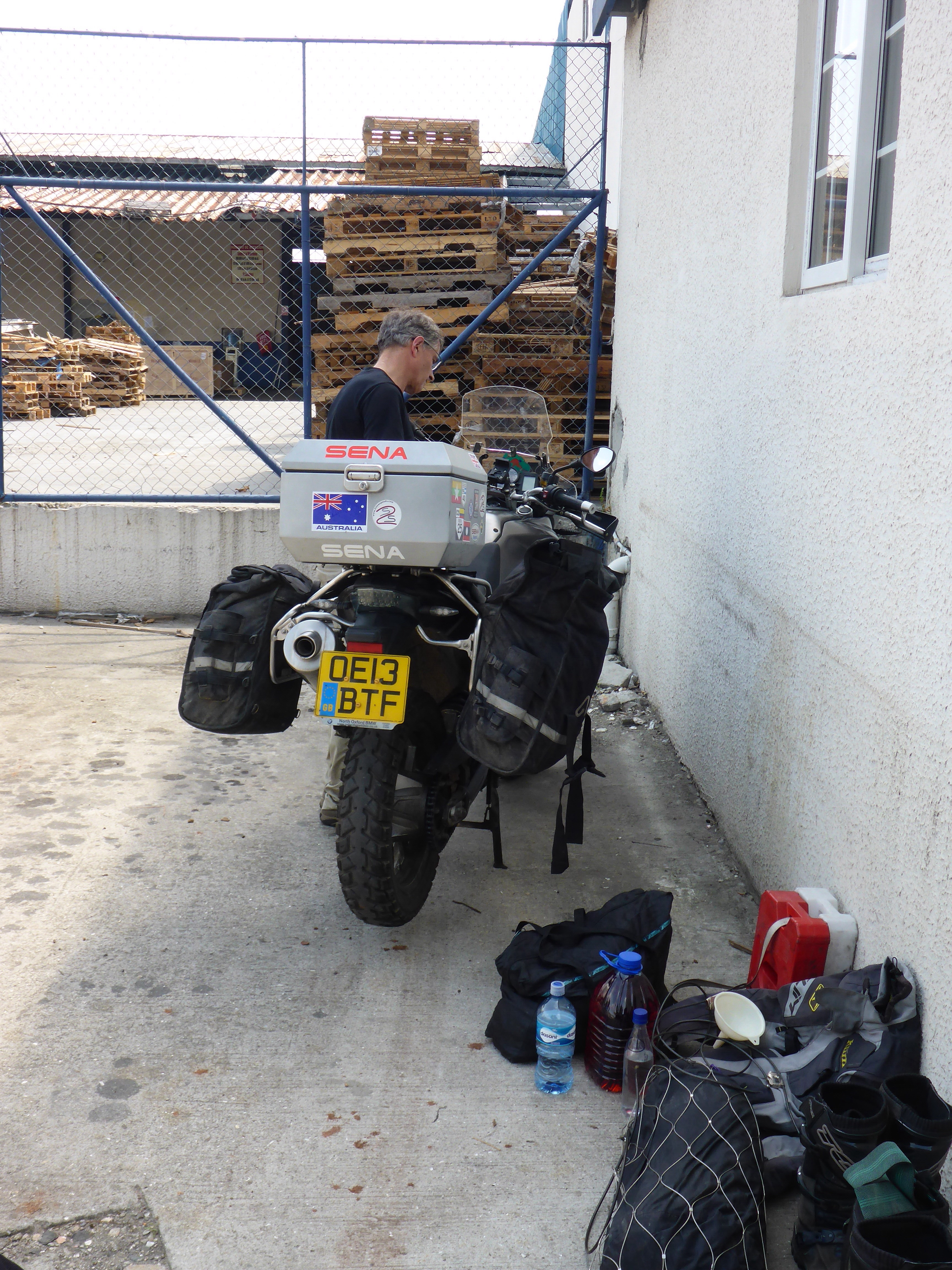
No, a back door exists and after donning a safety vest and changing my red warehouse visitors access card for a green airport apron access card, the bikes are then delivered on a metal frame just outside the gates literally, the front wheels are just outside the gates.

Our bikes are now delivered at Panama airport

Our bikes are now delivered at Panama airport

A tiny bit of shade to reassemble the bikes

A tiny bit of shade to reassemble the bikes

We fill motorbikes with fuel and are ready to depart for places unknown, err not quite, the steady flow of petrol from under the seats, where the petrol pump and filter we removed to drain the fuel tanks in Medellin must have not been replaced properly. We push the bikes away from the petrol bowsers for safety reasons and quickly start to syphon fuel from the tanks into spare containers. A downpour of rain makes life a little more problematic, and with no cover to work on the bikes, we decide to stay a night longer and find a dry hotel in town.

One of the 2 drowned rats while waiting for rain to stop.

One of the 2 drowned rats while waiting for rain to stop.

A quick internet booking and we are set for a slow ride to town having syphoned enough fuel out of the tanks to stop the leaking.

We remove Anne’s pump first, reseat the pump and gasket, all looks good, refit the locking ring, refill Anne’s tank and the fuel just runs out again. Damm.. We need to go to BMW as this is beyond our basics skills and the gasket is probably damaged . BMW Motorrad is not too far away, and here we meet Arturo, who is very helpful and arranges for their mechanics to look at the motorbikes even though they are busy – they will replace the gaskets. They also confirm we need new front tyres and that my suspicions of a problem regarding the steering are correct. Anne had questioned hers previously but had been told all was ok so put it down to her highly sensitive sense of balance. We will need new steering head bearings but as they are very busy with other bikes, they can’t get to that this week. The tyres will have to be done in San Jose, Costa Rica as none of our size are available in Panama and the steering head bearings will also be done in San Jose under warranty. Arturo has kindly contacted BMW Motorrad in San Jose to confirm availability and prices, very helpful for us.

Panama uses US dollars and we need to get some smaller banknotes and yesterday we used a 100 dollar bill at a supermarket finding that for each 100 dollar bill they need your ID, signature and two staff counter signatures. Interesting that they are so concerned about this – forgeries I presume?

We have the bikes back and are set to go tomorrow.

– Anthony
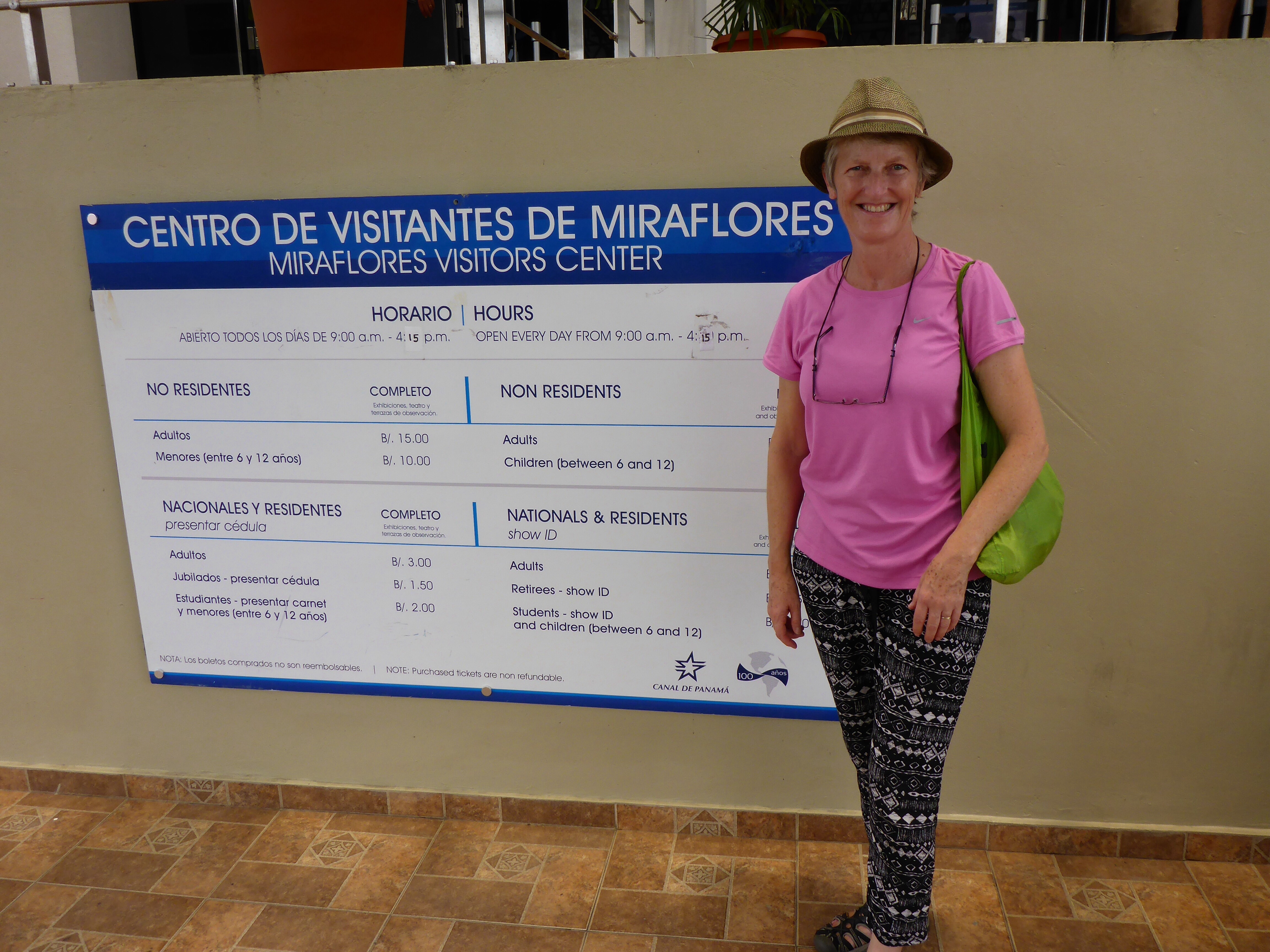
Surprised to be so inspired in Panama City

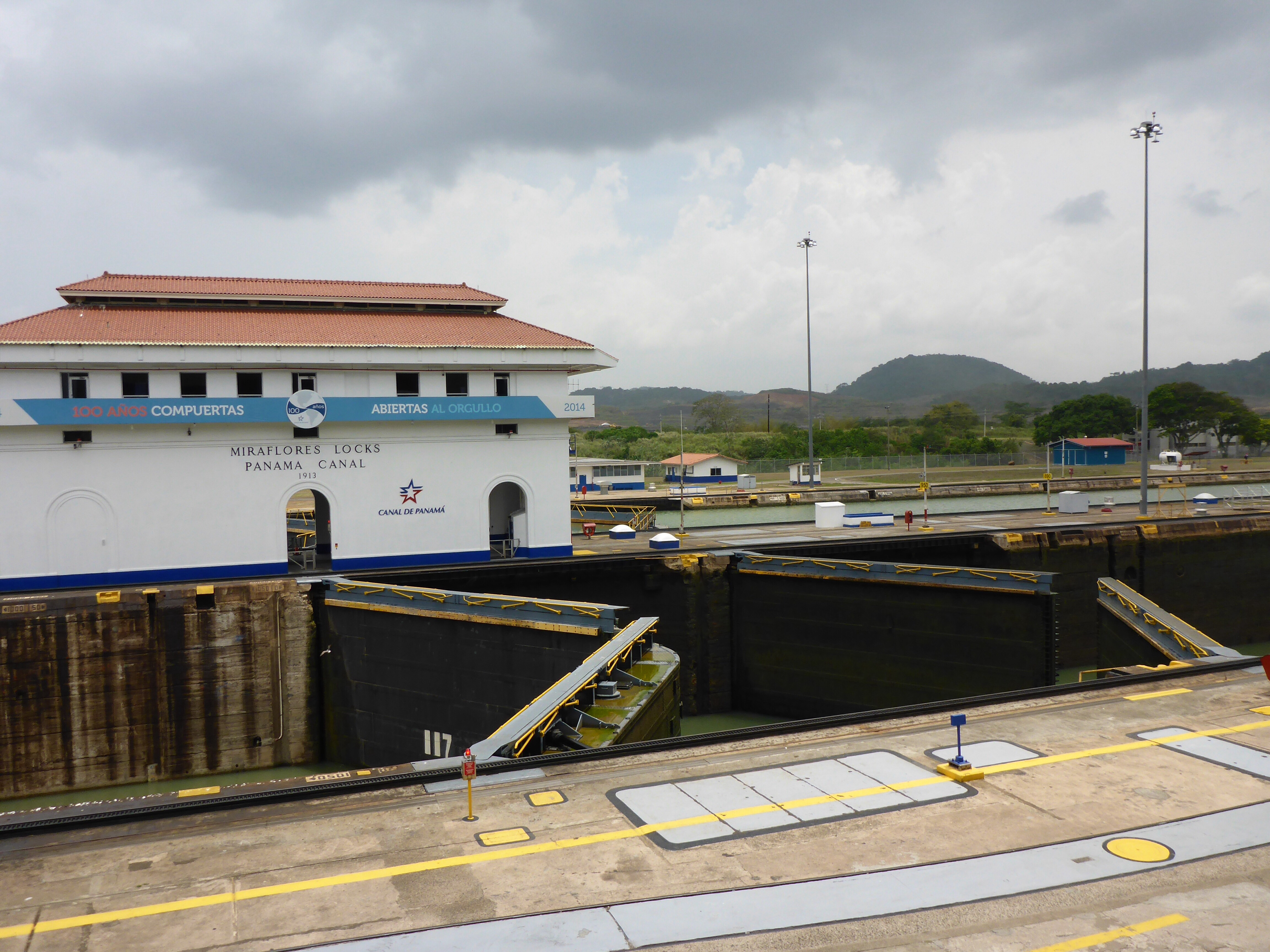
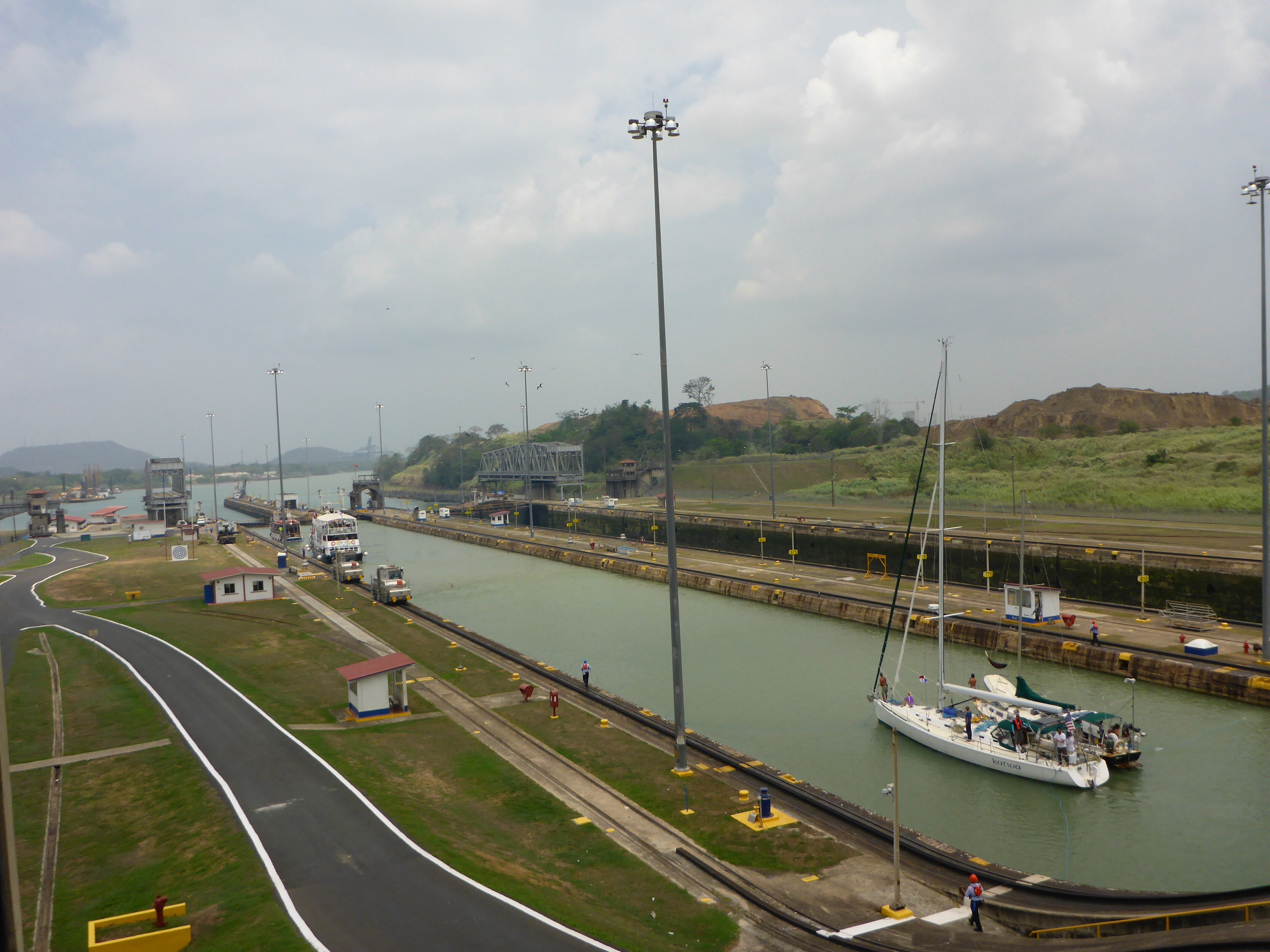
Our first full day in Panama City and we decide to go to the Panama Canal Miraflores Visitor Centre. I was looking forward to seeing this world famous canal, one which my mother went through when she travelled by container ship to visit us in Australia.

About to learn all about the Panama Canal

About to learn all about the Panama Canal

What I hadn’t counted on was how utterly fascinated and inspired I would be at seeing it and watching vessels pass through over the next 6 hours!!! Maybe it was because of the recent difficulty we had had on finding a way to cross the Darien Gap and get to Panama? Or knowing how many people died trying to cross the Darien Gap and building the canal. But the importance of the Canal was suddenly clear: I felt like it was allowing the life blood of the shipping world to flow, a connector for the entire world in fact. Building the Canal was a monumental engineering feat.

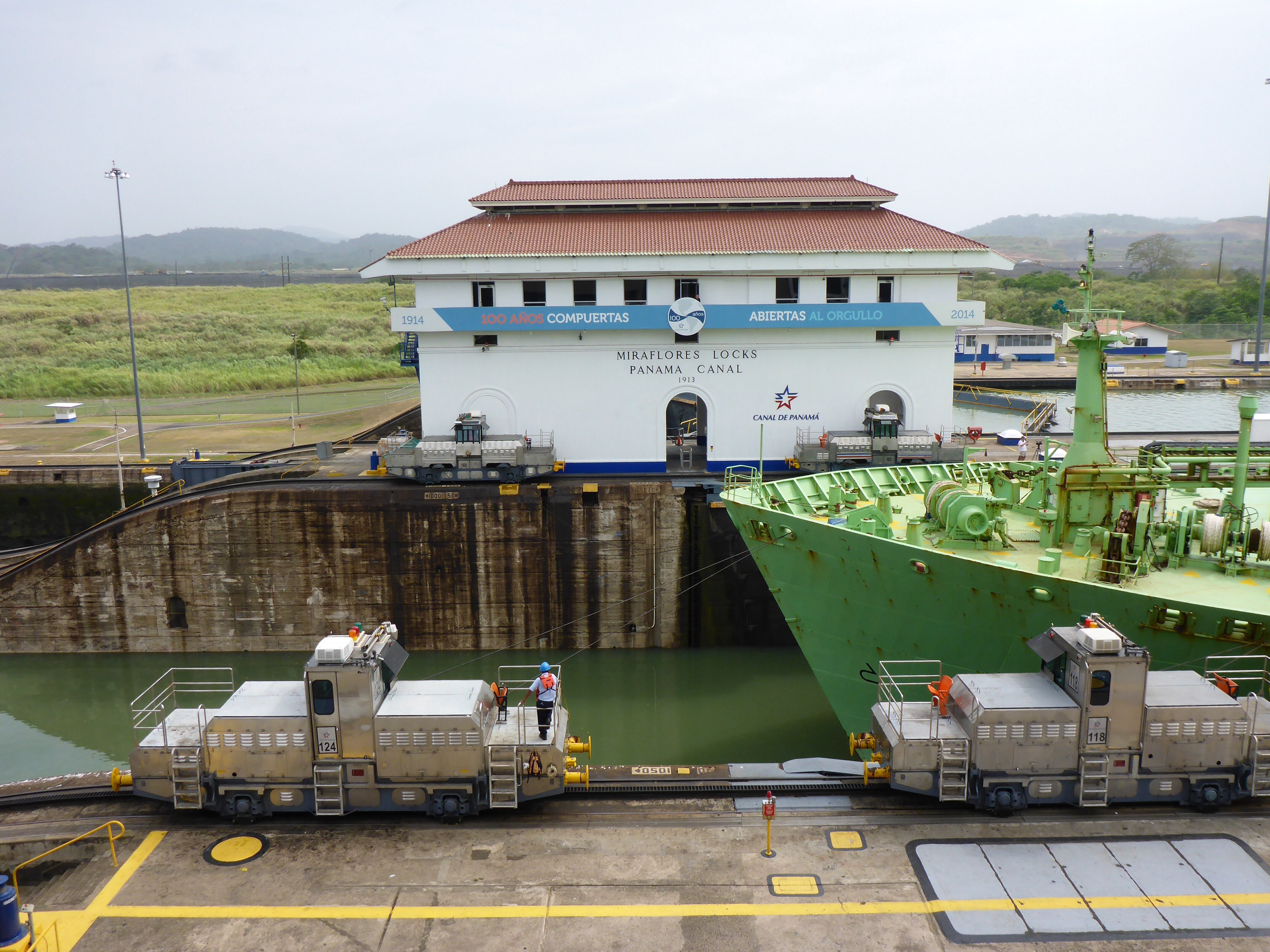
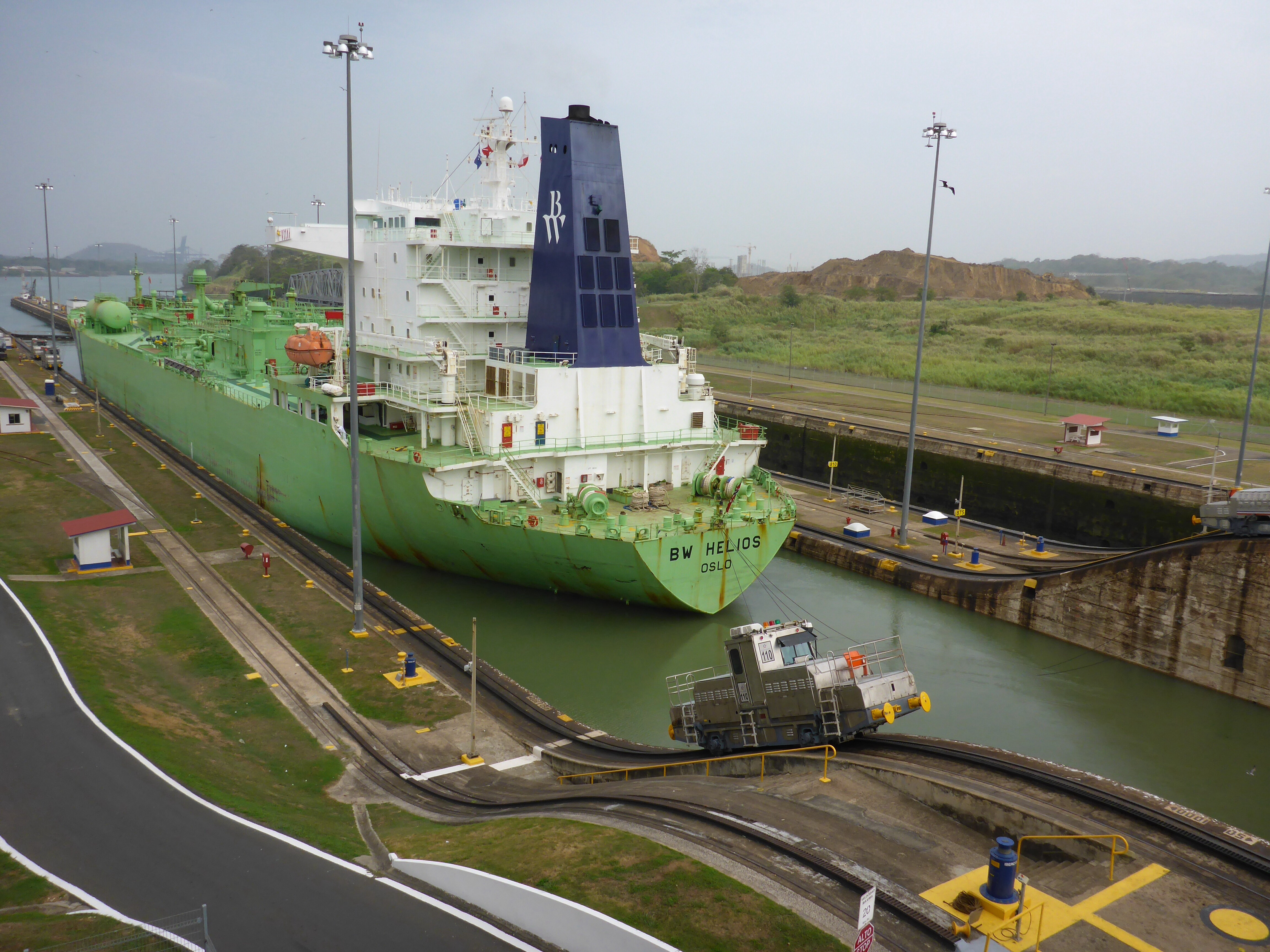
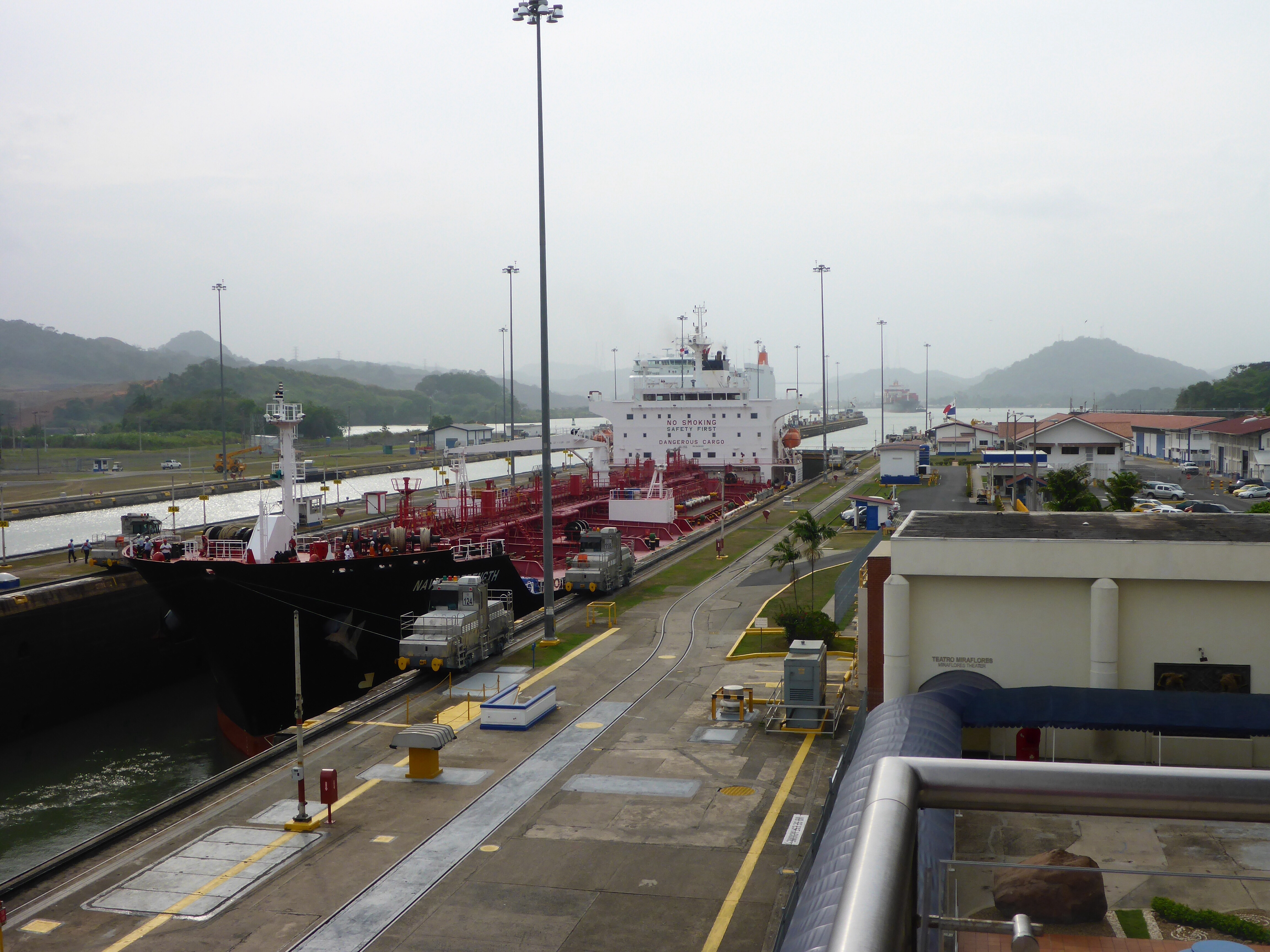
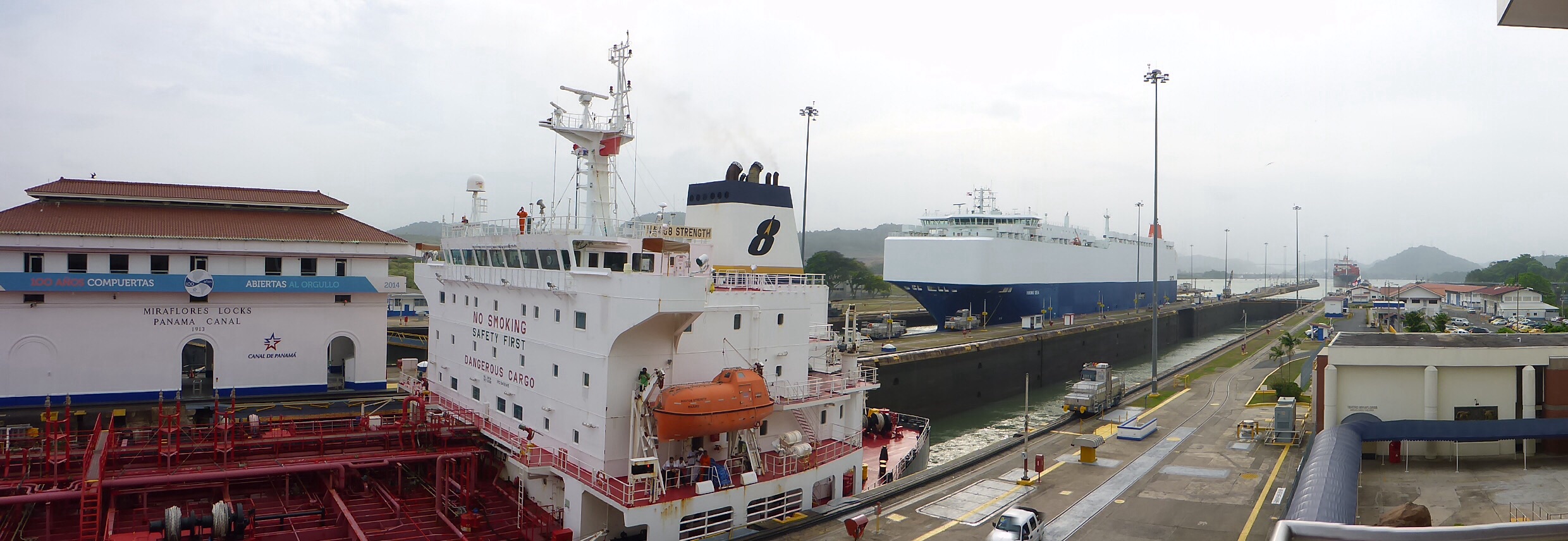
Here are a few facts: the Canal opened in 1914 and connects the Atlantic and Pacific oceans across the Isthmus of Panama. It is 77kms long and 25 metres above sea level, the level of Gatun Lake which feeds the system of locks. The canal enables ships traveling from New York to California to trim 13,000kms off its voyage by bypassing the tip of South America. Between 30 to 40 ships use the canal a day. On average, it takes a ship 8 to 10 hours to pass through the canal. While moving through it, a system of locks raises each ship 85 feet above sea level. Ship captains aren’t allowed to transit the canal on their own; instead, a specially trained canal pilot takes navigational control of each vessel to guide it through the waterway. As the ship enters the lock, the ship is guided by 4 to 8 engines on tracks to make sure the ship doesn’t collide into the canal walls. It is absolutely incredible to see these huge ships gliding through the locks, with so little spare space, the engines attached to cables slowly pulling the ships along the locks. There is a size called Panamax, the maximum width and length allowable for ships to use the canal.

And here’s a brief history of the canal. The idea for a canal across Panama dates back to the 16th century but a survey ordered by Charles V determined that the construction of a ship canal was impossible. The first serious attempt at building a canal didn’t start until the 1880s by the men behind the Suez Canal and the Eiffel tower. The project was plagued by poor planning, engineering problems and tropical diseases (malaria and yellow fever) that killed 20,000 workers and the excavation proved more difficult than anticipated. The company was declared bankrupt in 1889. Sadly Eiffel retired from business after being accused of fraud and mismanagement of this project.

America originally thought of building a canal in Nicaragua but thanks to some intense lobbying by Philippe-Jean Bunau-Varilla, one of the French engineers who had been involved in the failed French project, who convinced American lawmakers than Nicaragua’s volcanoes made it too dangerous but they should rather buy the old French assets. Although the US congress approved the purchase of the French assets in 1902, Colombia, which Panama was part of, refused to allow the US to build the Canal. The Panamanians revolted and declared independence and negotiated the Hay-Bunau-Varikla treaty which gave America the right to a zone of more than 800 square kms in which it could construct a canal, a zone to be controlled in perpetuity by the Americans. Well, not quite because, after some riots in 1964, then a number of political negotiations and treaties, Control of the canal was transferred peacefully to Panama in December 1999, and the Panamanians have been responsible for it ever since. The canal took 10 years to build, during which time 5,600 workers died, mostly due to accidents rather than tropical disease. The canal is currently being expanded to handle today’s megaships, up to the “New Panamax” size limit, and cargo vessels carrying nearly three times the amount currently accommodated. They won’t however be super-sized enough for the world’s largest cargo ships such as Maersk’s Triple E class ships, which measure 60 metres wide and 400 metres long!!

Interestingly, a century after the United States completed the Panama Canal, a navigable link across Nicaragua remains a possibility: in 2013, a Chinese company announced it had struck a $40 billion deal with the Nicaraguan government for the rights to construct a 275kms long waterway across Latin America’s largest fresh water lake and finally broke ground to start building the access roads in December 2014. Sadly, the Nicaraguan government has stated it does not have the funds to conduct an environmental impact study and I fear the construction of this new canal will be disastrous for Nicaragua ecologically…

Here is a selection of the 300 photos I took of the canal:

Panama Canal locks

Panama Canal locks

Lock gates opening, Panama Canal

Lock gates opening, Panama Canal

Boats of all sizes use the Panama canal

Boats of all sizes use the Panama canal

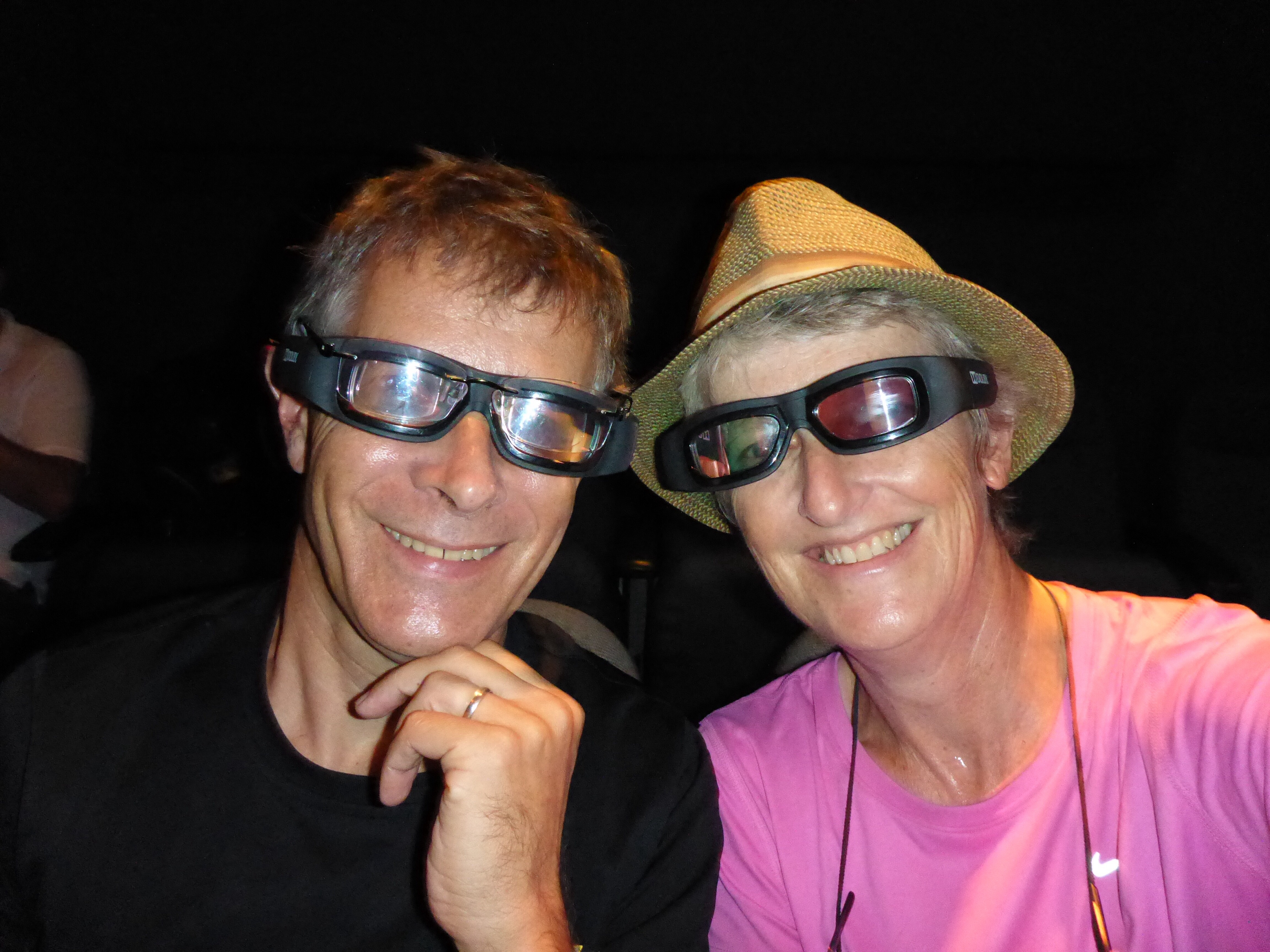
Time for a 3D movie on the Panama Canal history and operation

Time for a 3D movie on the Panama Canal history and operation

Tanker in one lock...

Tanker in one lock…

Lock level dropped...

Lock level dropped…

Gates opening...

Gates opening…

...time to move to the next set of locks

…time to move to the next set of locks

... Now in the last set of locks ready to head out to the Pacific

… Now in the last set of locks ready to head out to the Pacific

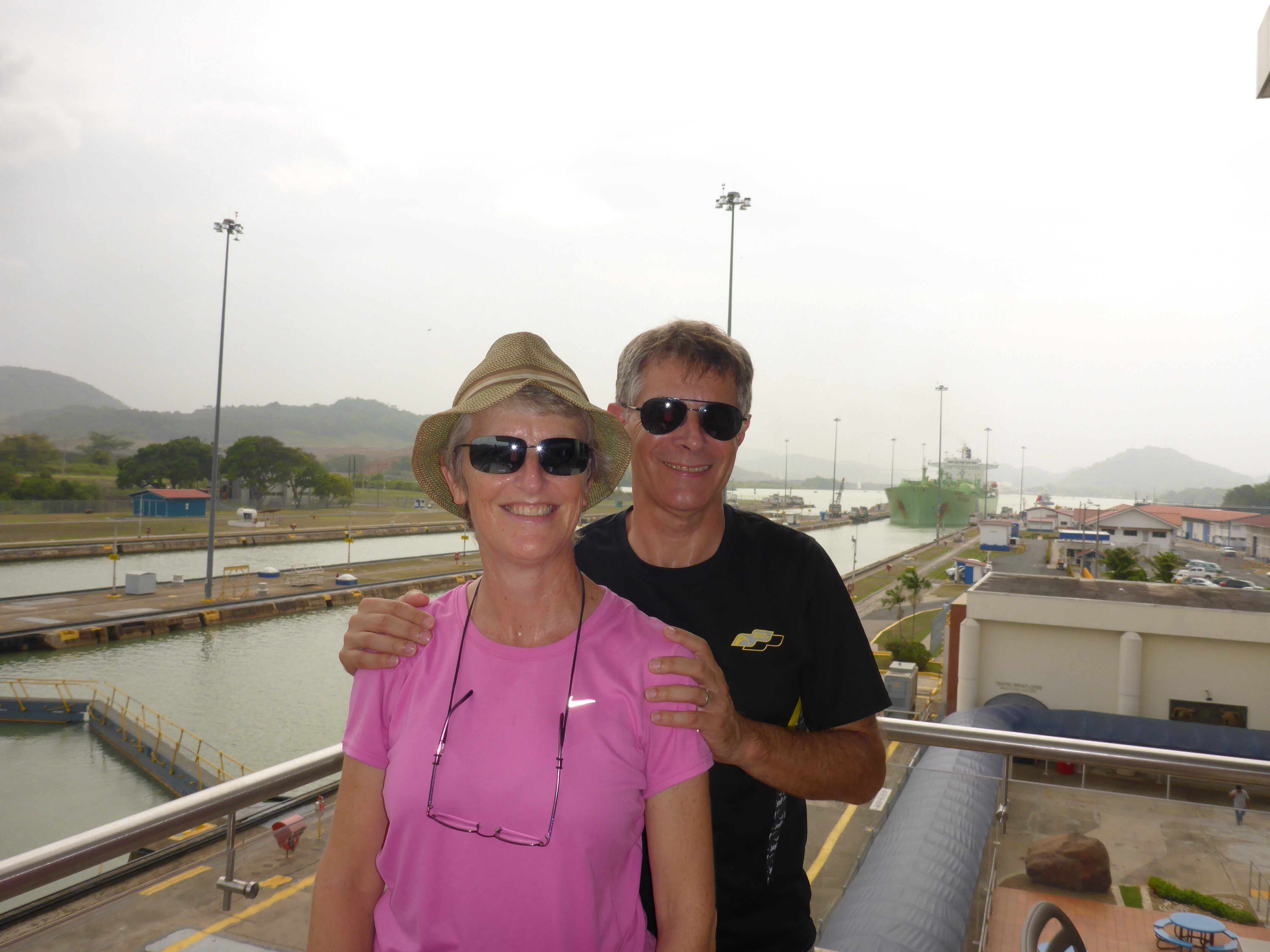
Enjoying the Panama Canal

Enjoying the Panama Canal

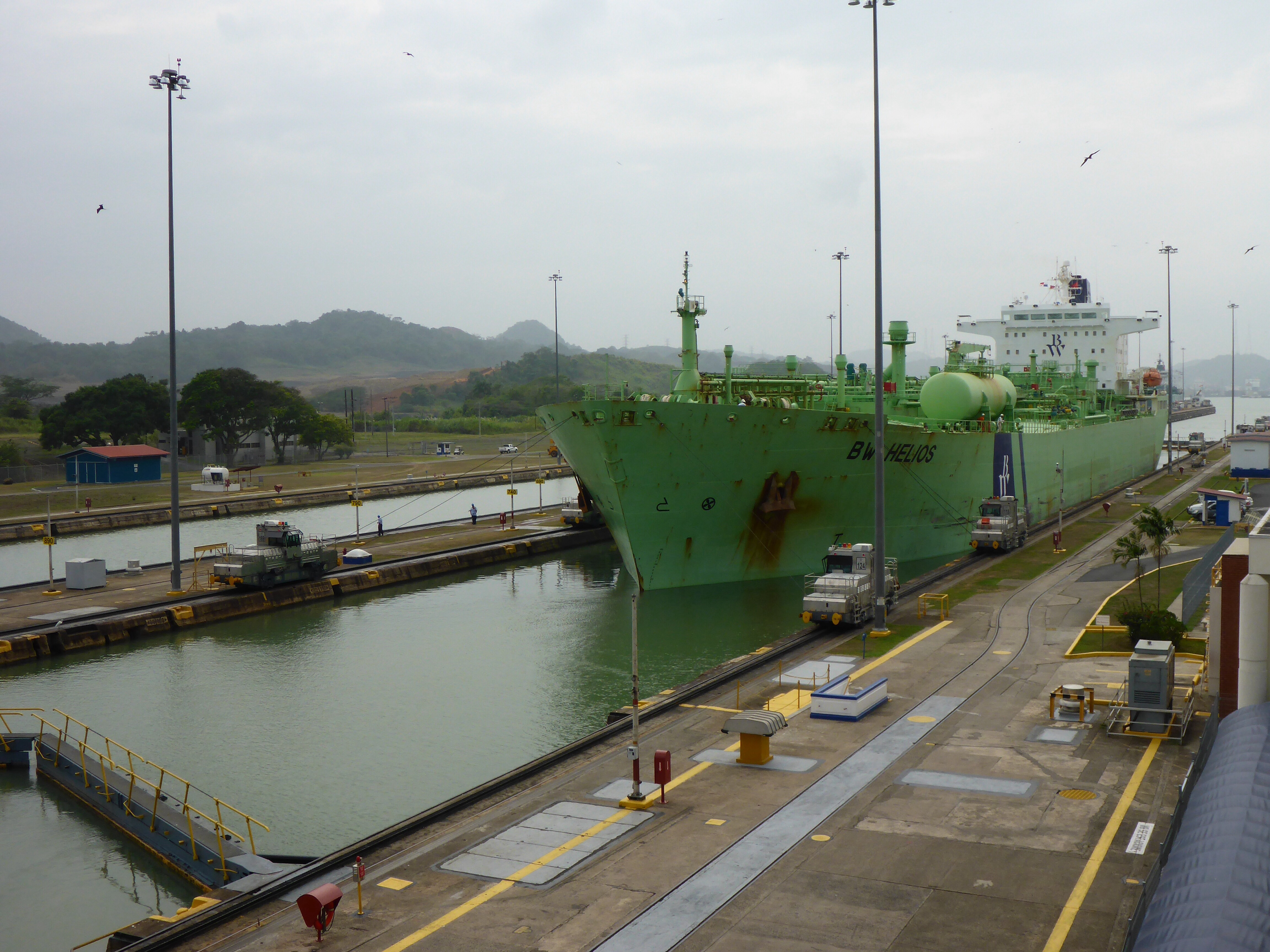
Tankers nowadays make full use of the Panamax limits

Tankers nowadays make full use of the Panamax limits

LPG tanker being guided, Panama Canal

LPG tanker being guided, Panama Canal

LPG tanker being guided, Panama Canal

LPG tanker being guided, Panama Canal

LPG tanker is now in the last lock, Panama Canal

LPG tanker is now in the last lock, Panama Canal

Condensate tanker being guided by trucks along the lock, Panama Canal

Condensate tanker being guided by trucks along the lock, Panama Canal

Condensate Tanker lowered into the lock, Panama Canal

Condensate Tanker lowered into the lock, Panama Canal

Condensate tanker and car transporter, Panama Canal

Condensate tanker and car transporter, Panama Canal

Container ship, Panama Canal

Container ship, Panama Canal

I told you I was completed fascinated and inspired by this canal!!! And this road sign made me smile:

Should be a Colombian road sign!!

Should be a Colombian road sign!!


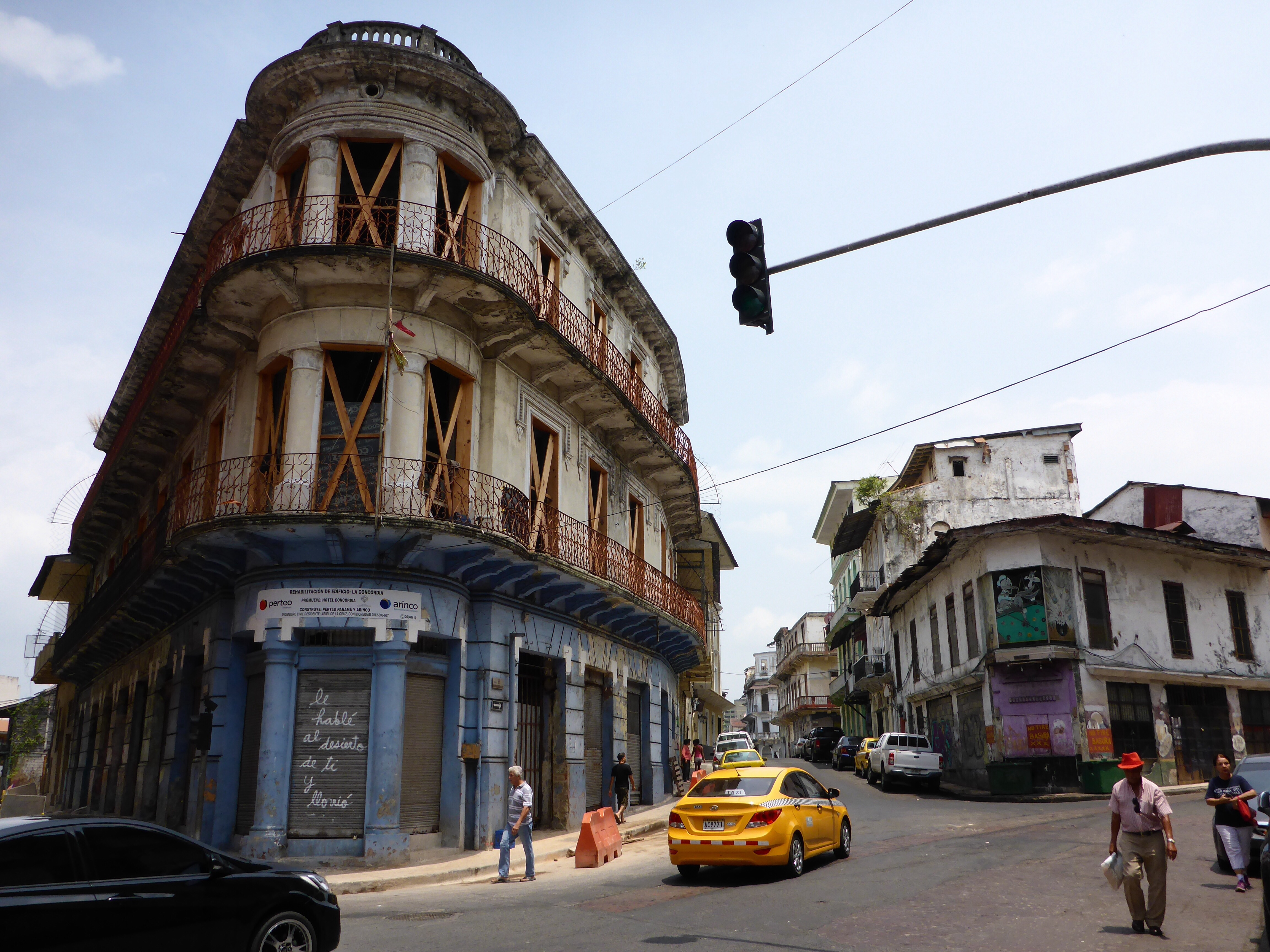
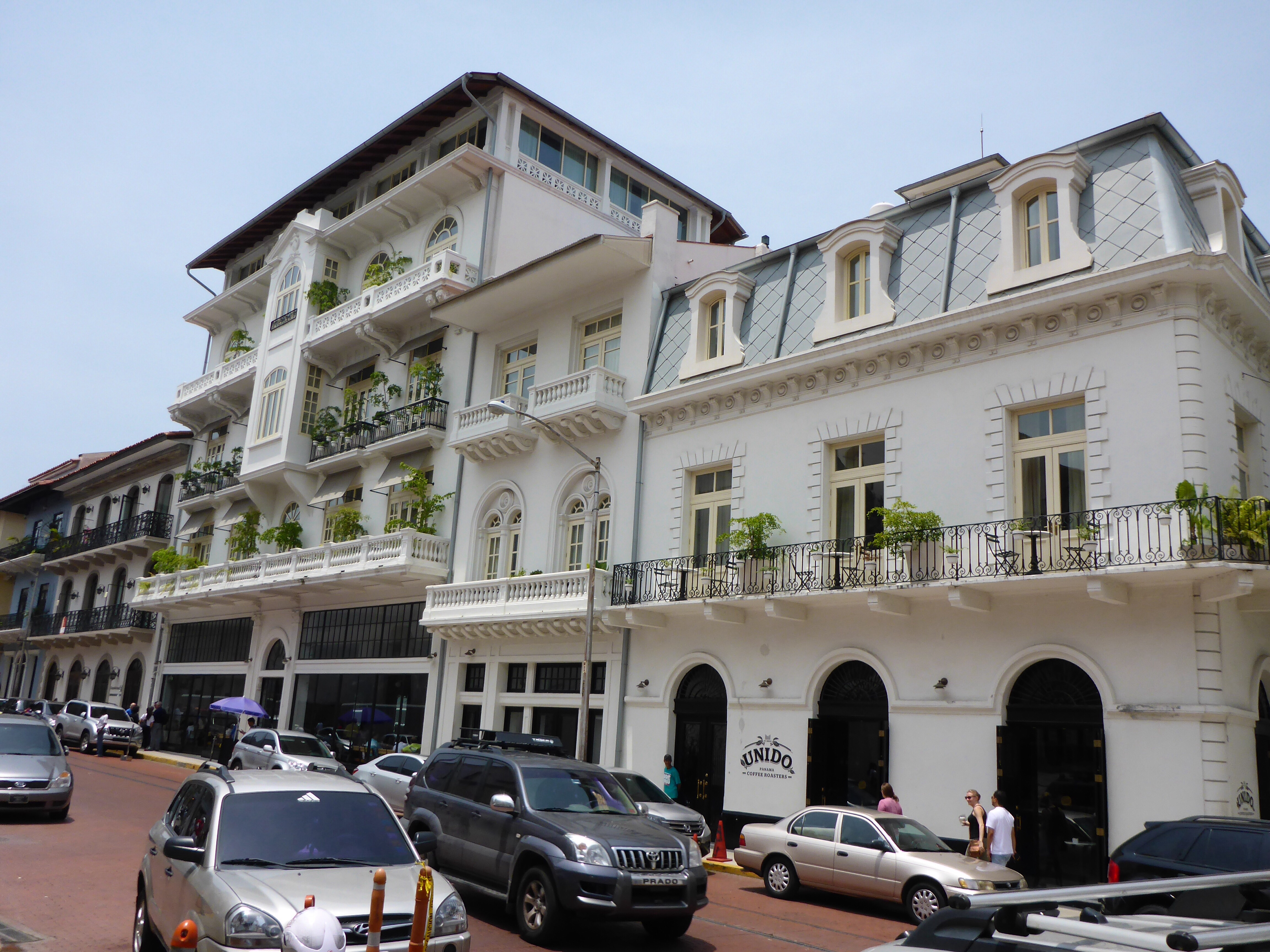
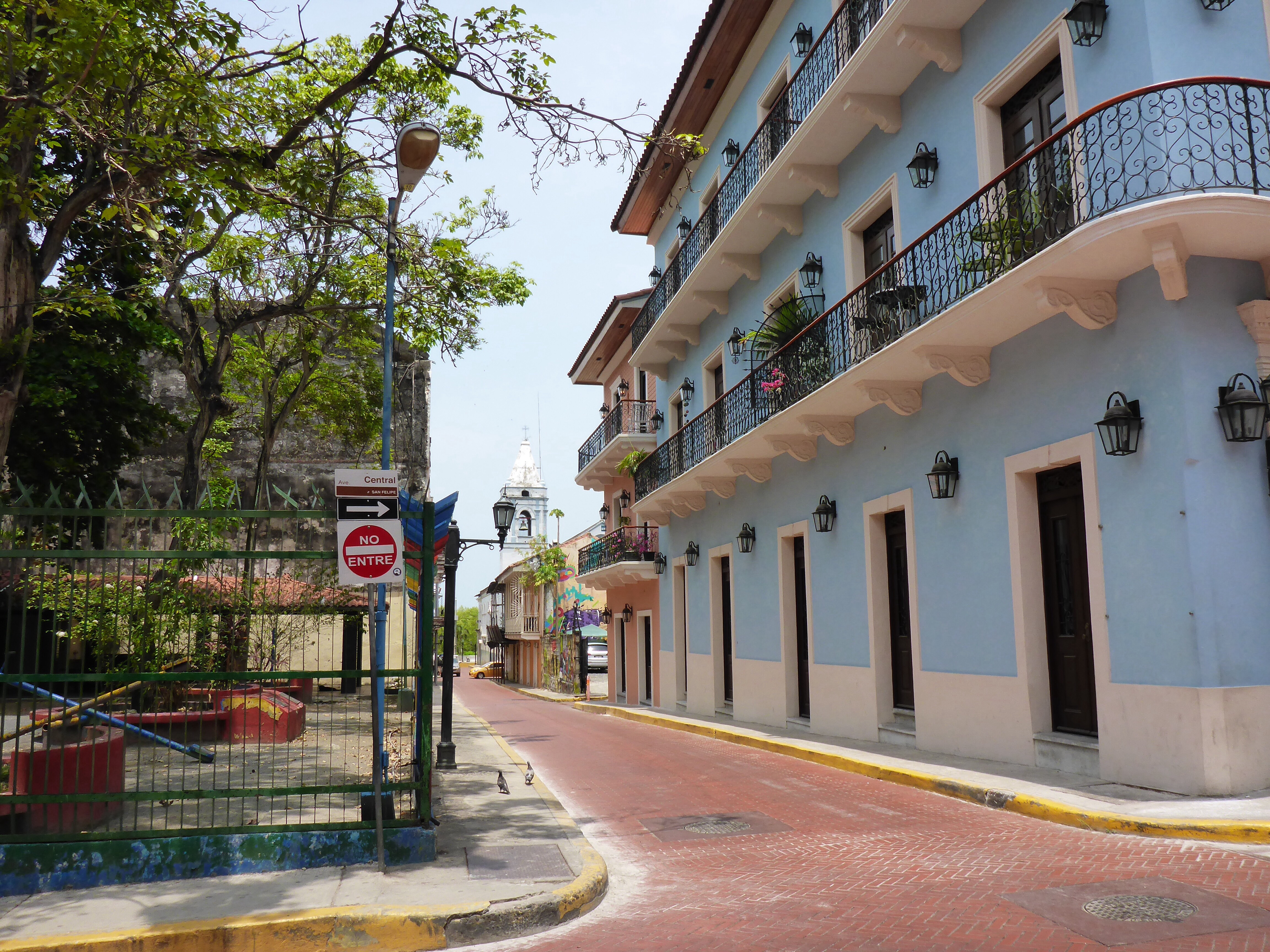
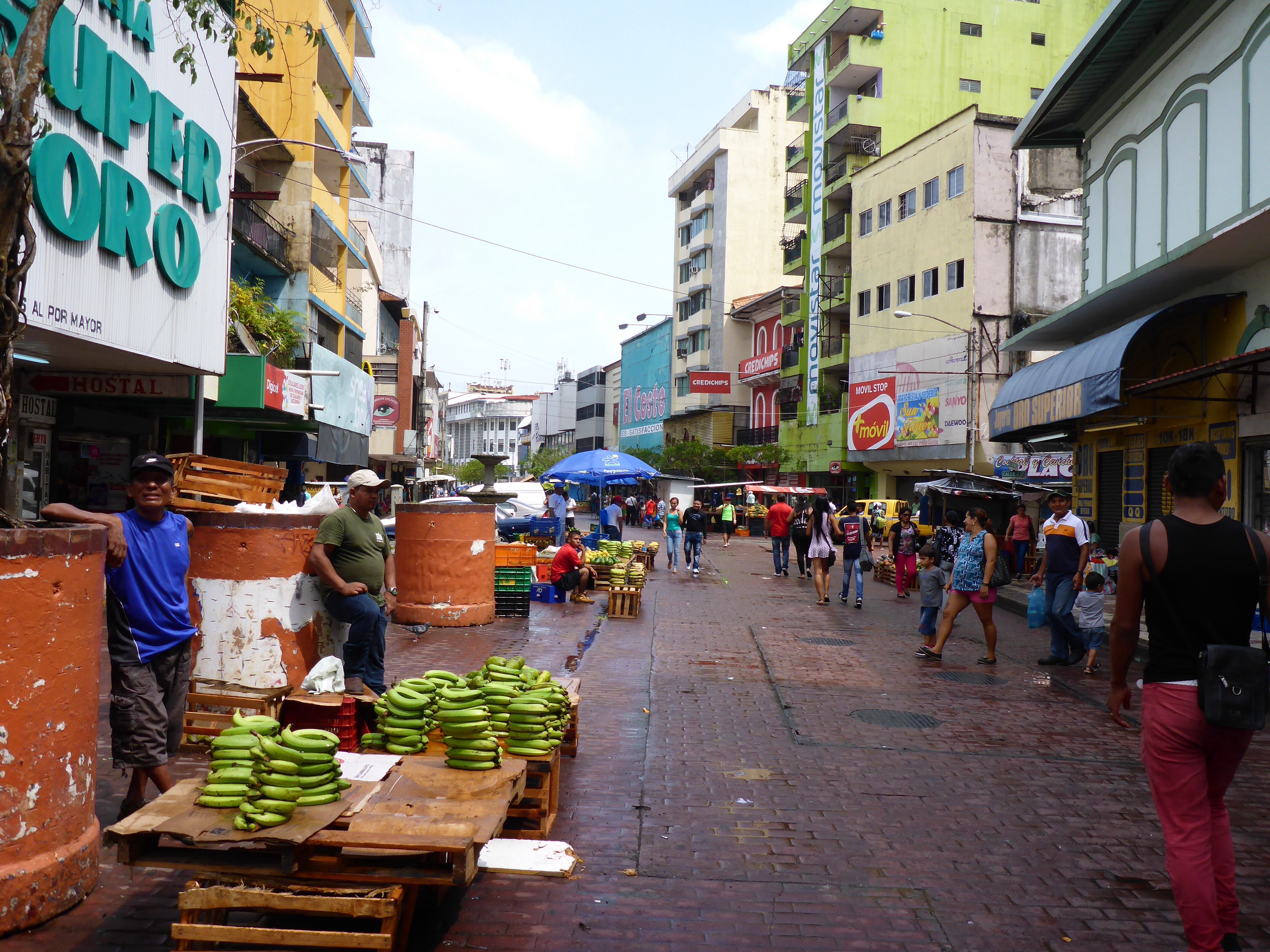
The next day, we took the metro to a large shopping centre to buy new camera flash cards before heading as close to the old city as we could before walking. Panama city is full of contrasts. From the shiny and clean business area to the more run down commercial area and suddenly, from one side of a set of traffic lights to the other, you are transported to a different world. The old city has been beautifully restored. There are many empty facades, boarded up for future renovations. Although it was lovely to admire some of the old buildings, that part of town was surprisingly soulless. There were just a handful of local and overseas tourists. No cafes or restaurants to sit and watch the world walk by as there was no-one. Very odd. We eventually walk into the only restaurant we had noticed earlier that was open and had lunch. Perfect timing as the heavens opened up shortly after.
The old airport is now a major bus station and shopping centre - notice the shoe shine below

The old airport is now a major bus station and shopping centre – notice the shoe shine below

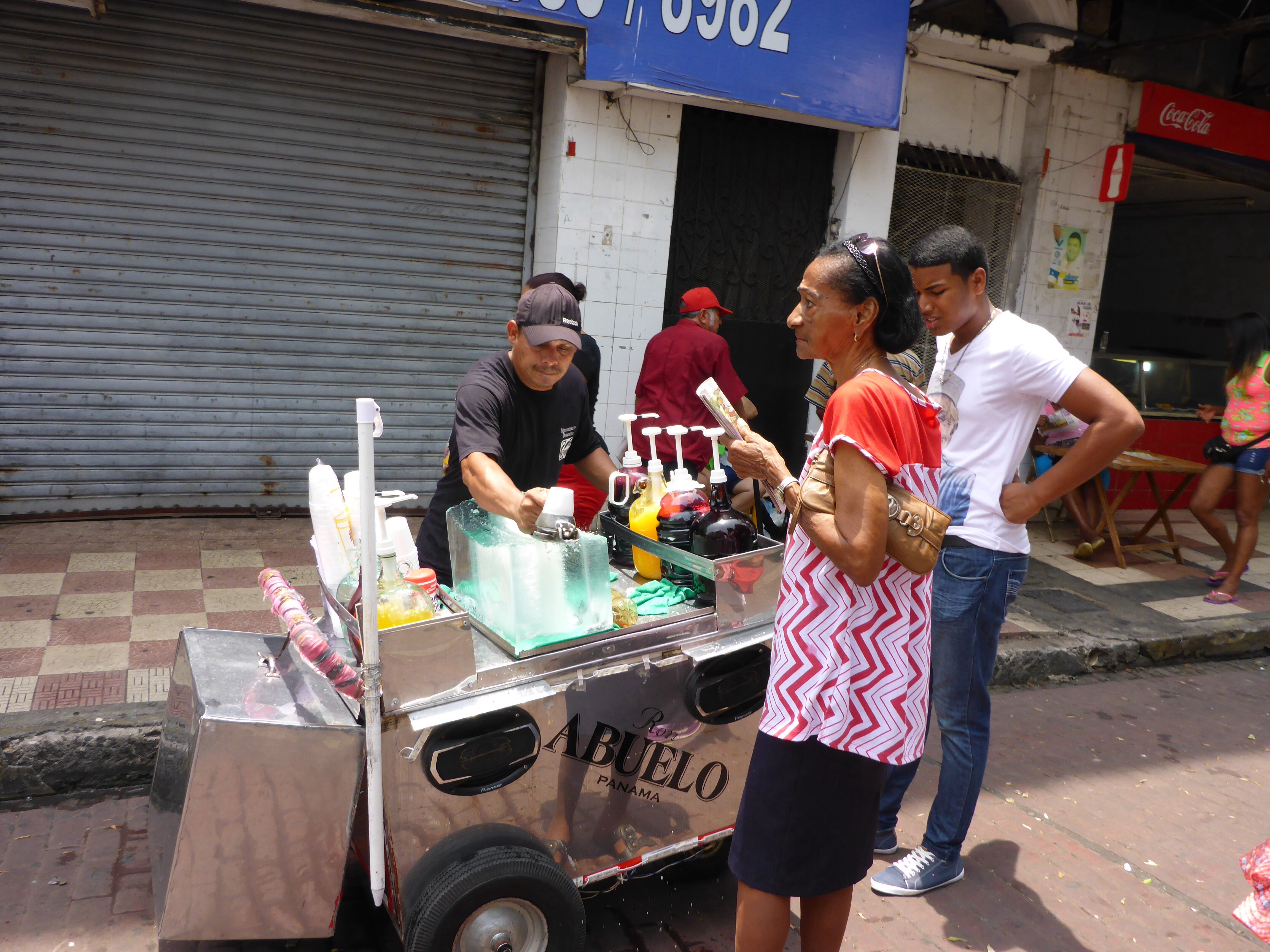
Shaved ice drinks seller, Panama City

Shaved ice drinks seller, Panama City

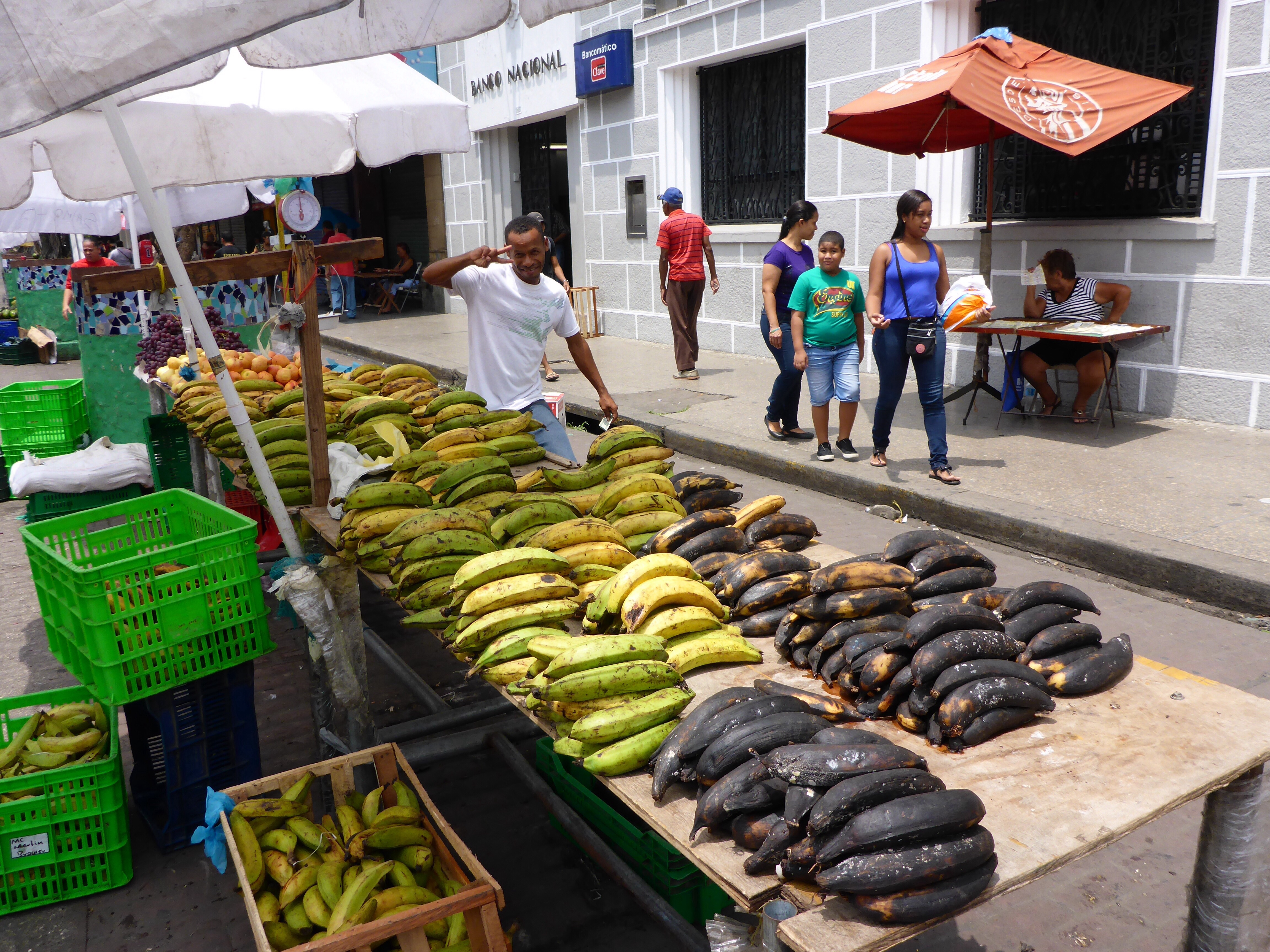
Banana seller, Panama City

Banana seller, Panama City

The old Panama City

The old Panama City

The old Panama City, restored

The old Panama City, restored

The old Panama City, restored

The old Panama City, restored

The original Panama City, restored

The original Panama City, restored

Panama City

Panama City

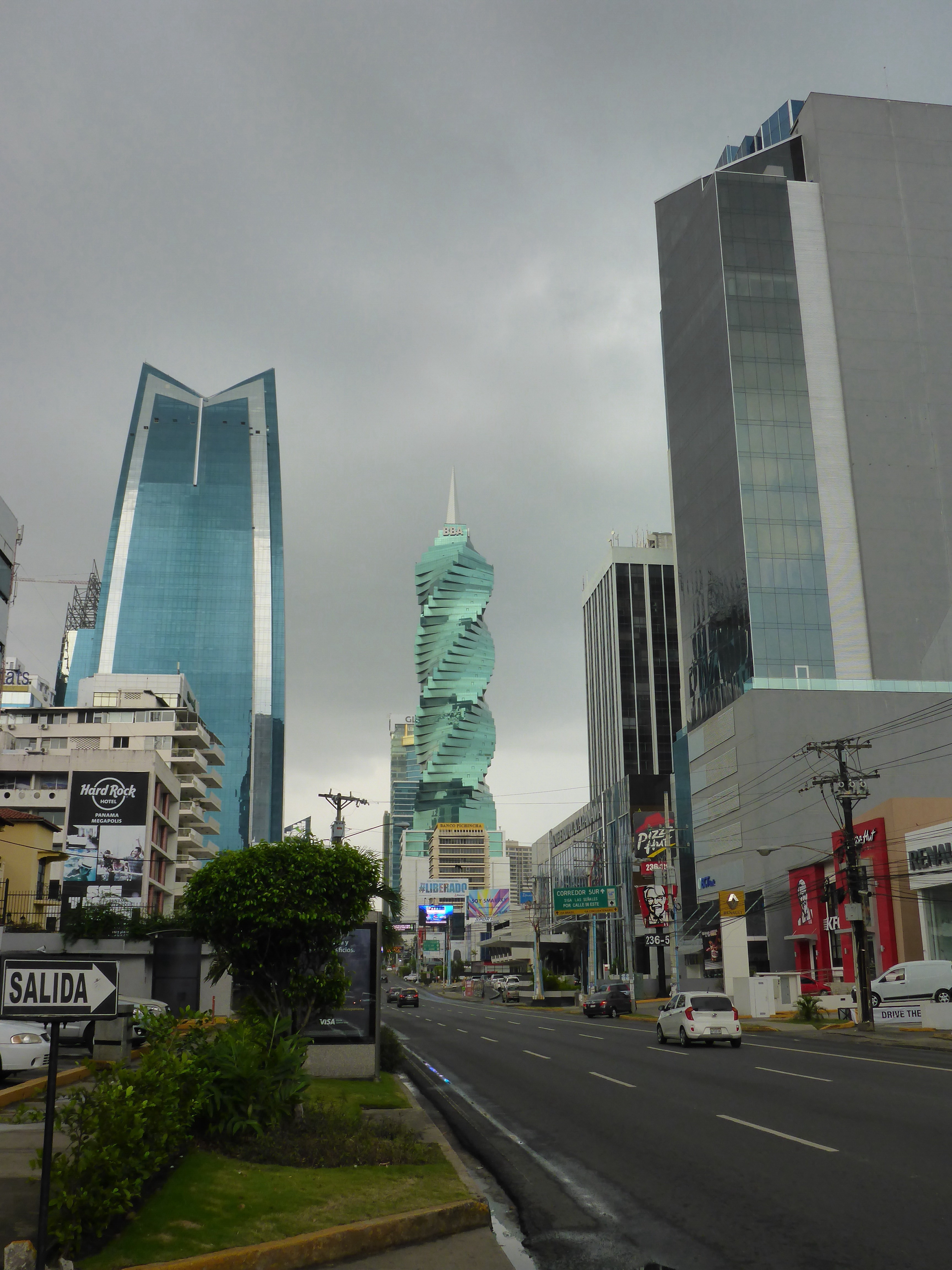
I really wanted to get a closer view of one of the towers I had caught a glimpse of when we first arrived. I thought of the stunning Turning Torso of Malmo, Sweden, but this one didn’t have the same elegance or finesse. Interesting nonetheless.

Panama City with the Revolution Tower in the centre

Panama City with the Revolution Tower in the centre

The Revolution Tower, Panama City

The Revolution Tower, Panama City


It meant quite a bit more walking and getting completely drowned on our walk back to our hotel – I am lucky Anthony is always so accommodating, especially considering his ankle is still constantly aching…
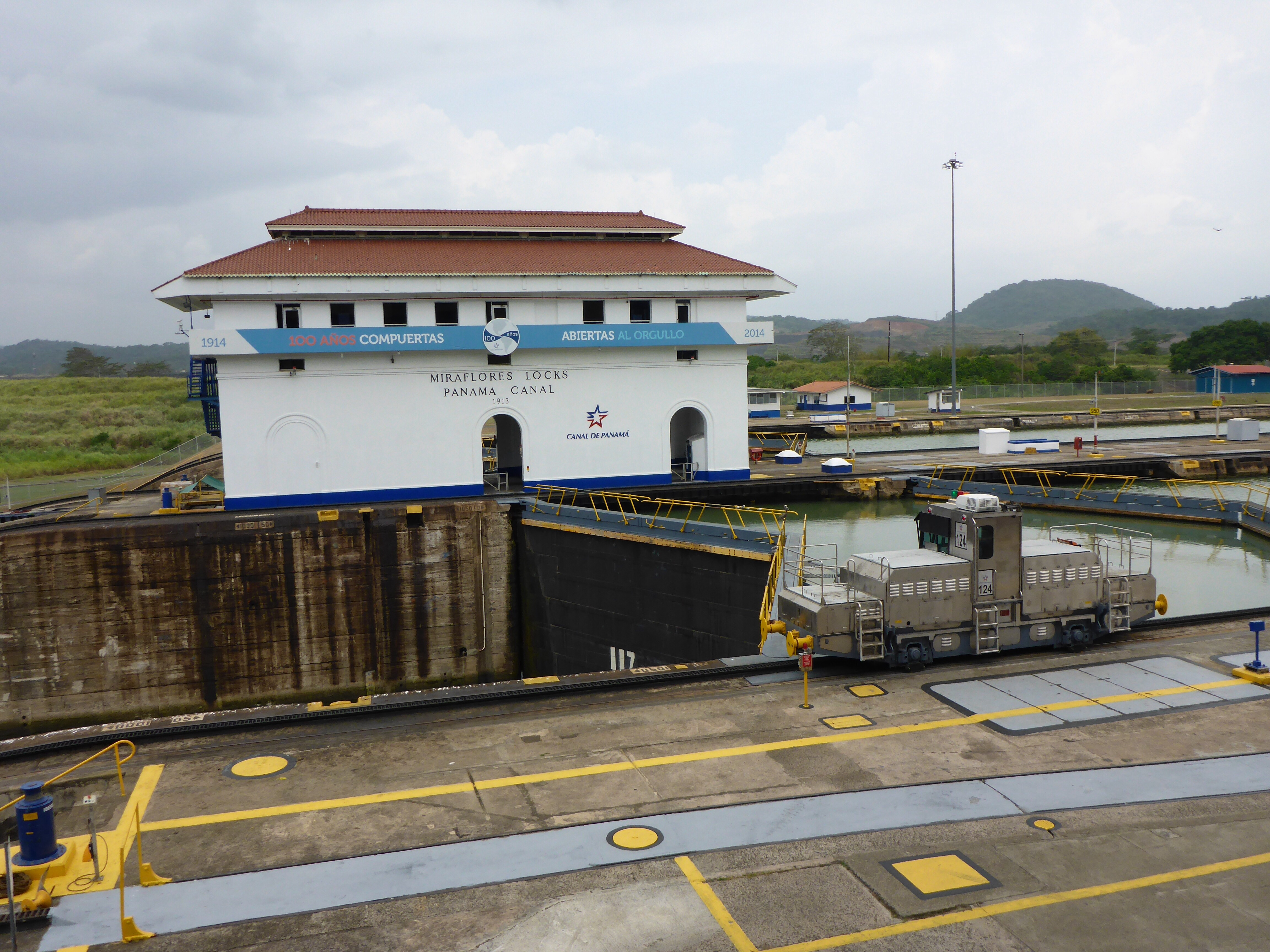
Tomorrow is bike collection day!!!