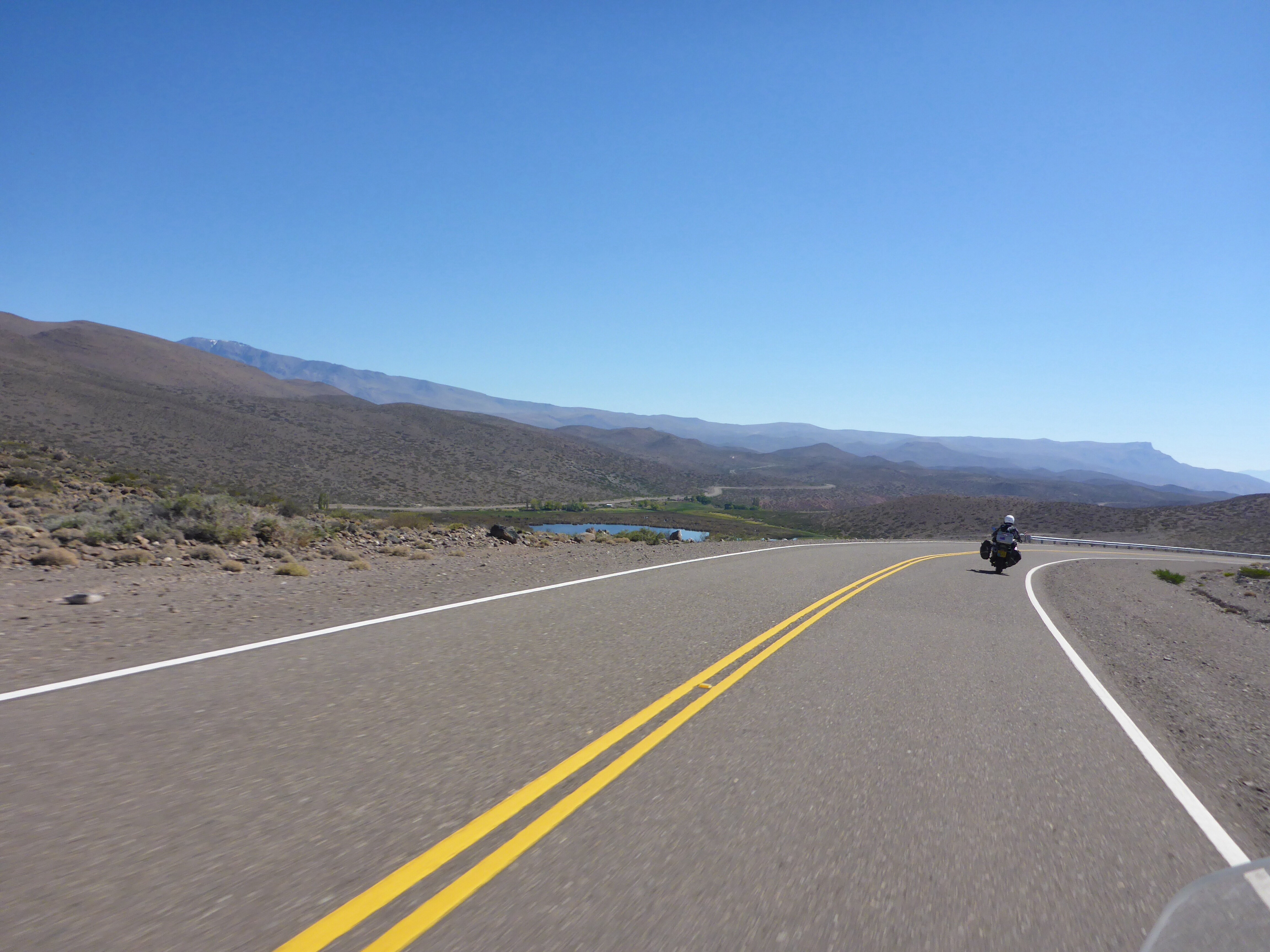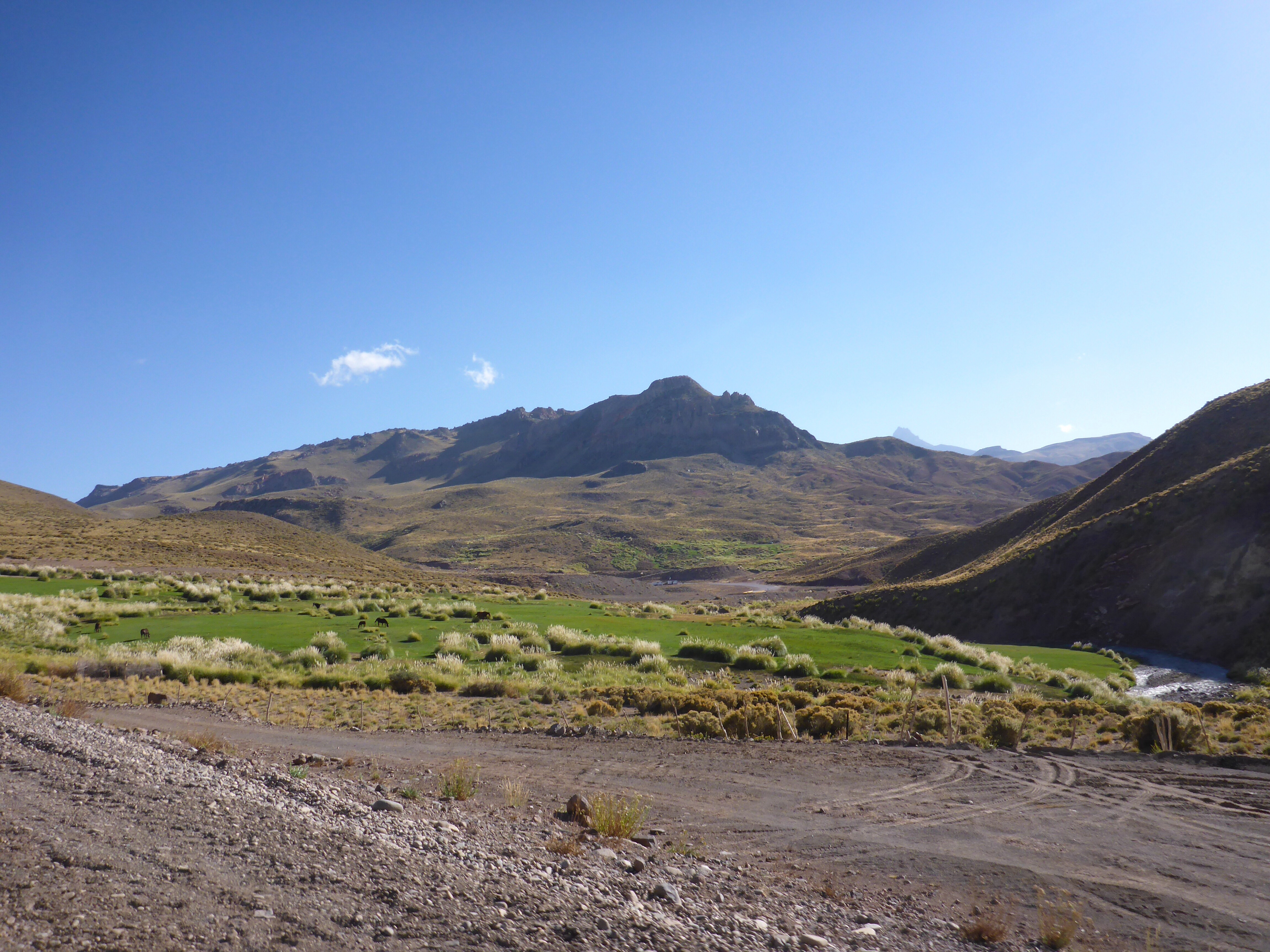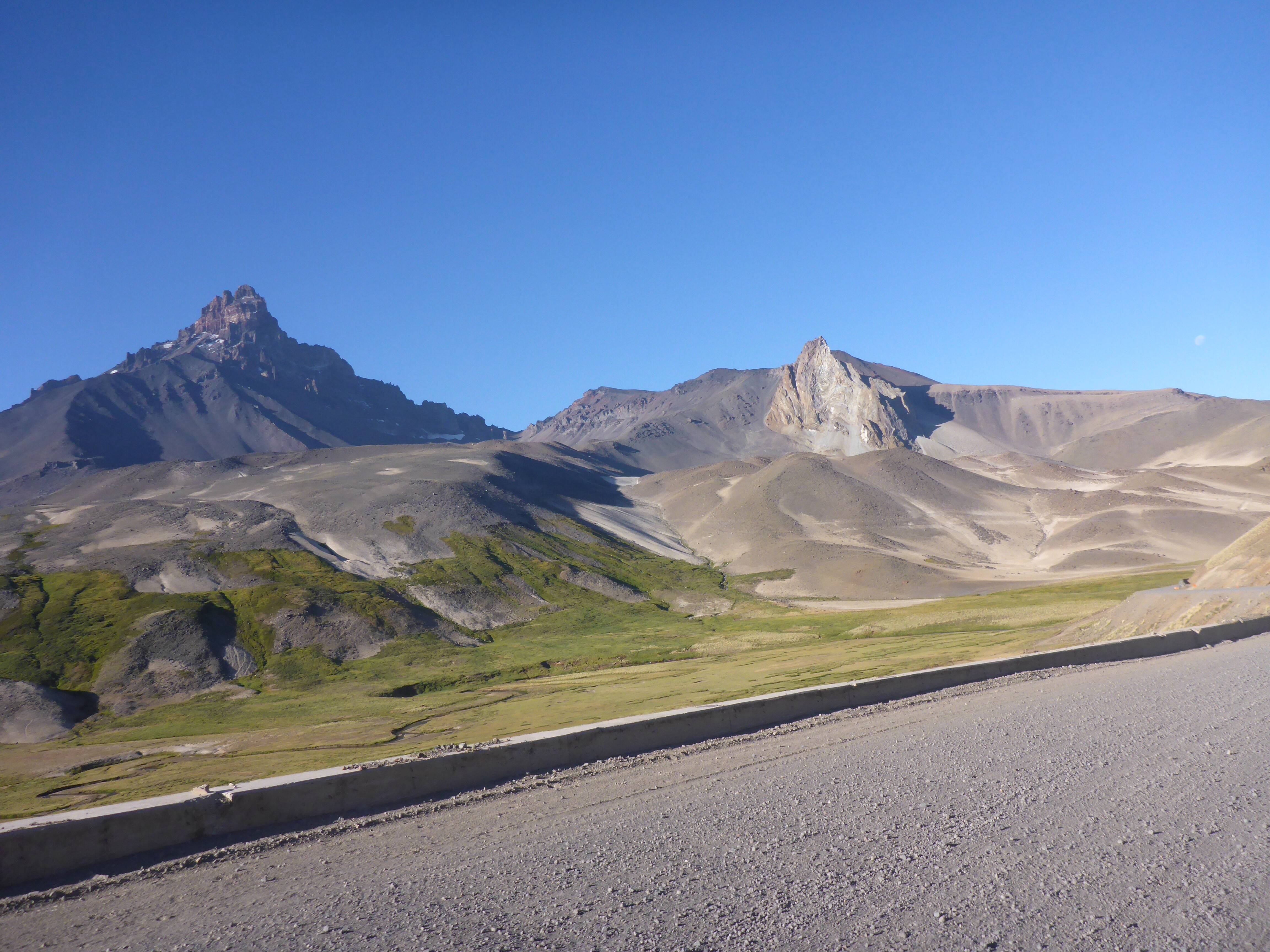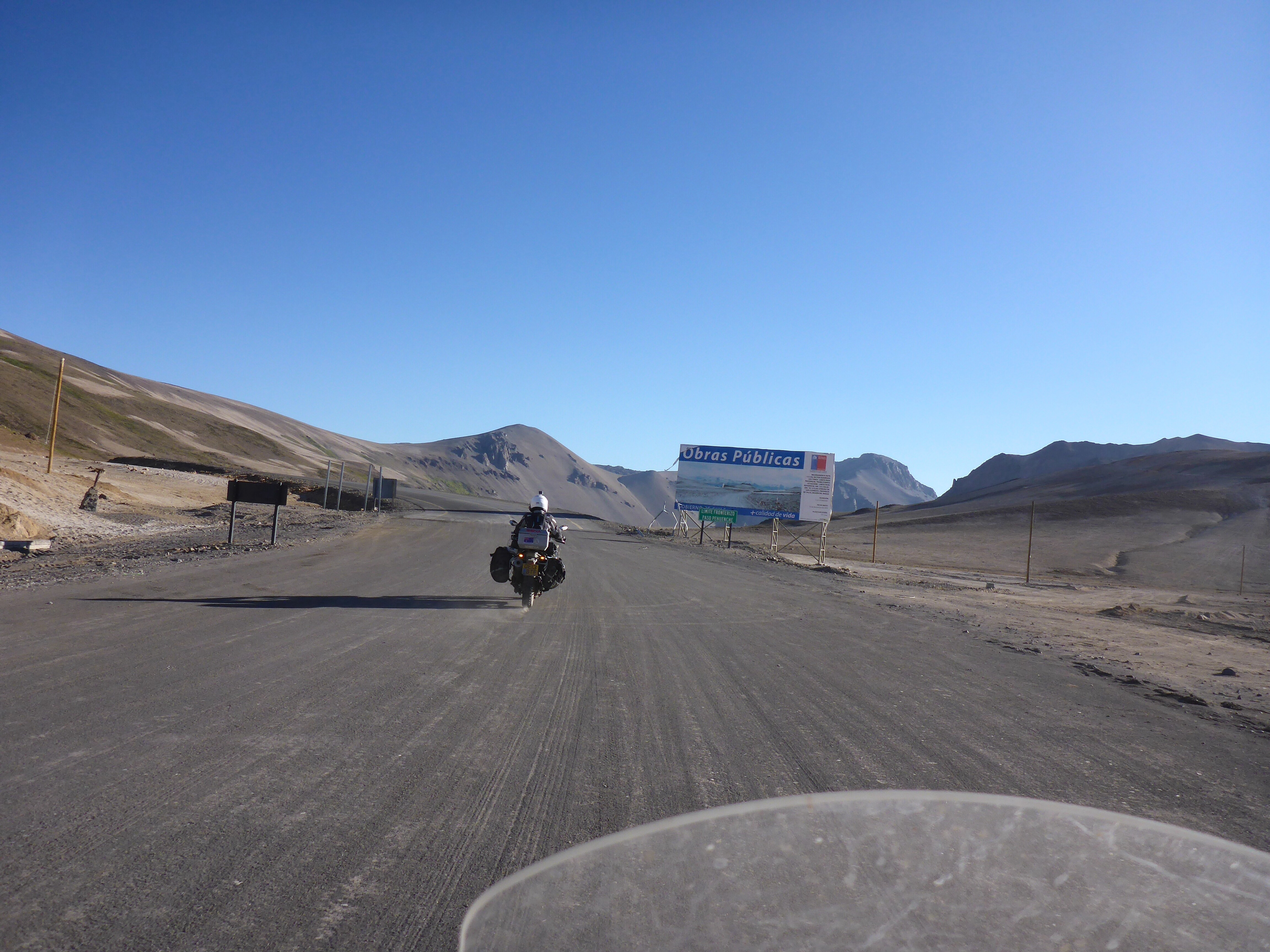
Oh what a night in Vicuña!!

13th March, over a month since we arrived in Chile for Part II of our trip and we are finally heading north!! We leave our hotel near Santiago airport after a few days’ rest, a major repack after our trip South and Easter Island and a skype call to my niece for her birthday. It feels good to finally be following El Norte signs. We repeated our preparation of several envelopes with exact change for the numerous toll booths – on our way south, they occurred every 50kms, and were 700 pesos each and because stopping, finding neutral, taking gloves off, finding change can take a while at toll booths, Anthony had come up with this great idea of pre-paring several little envelopes. I prepared 6 more, some with the exact change, some with 2 notes. Good planning hey?! Ha!! Not quite because the distance between booths going north is completely different and every single booth asks for a different amount!! Oh well, at least I know how much is in each envelope.

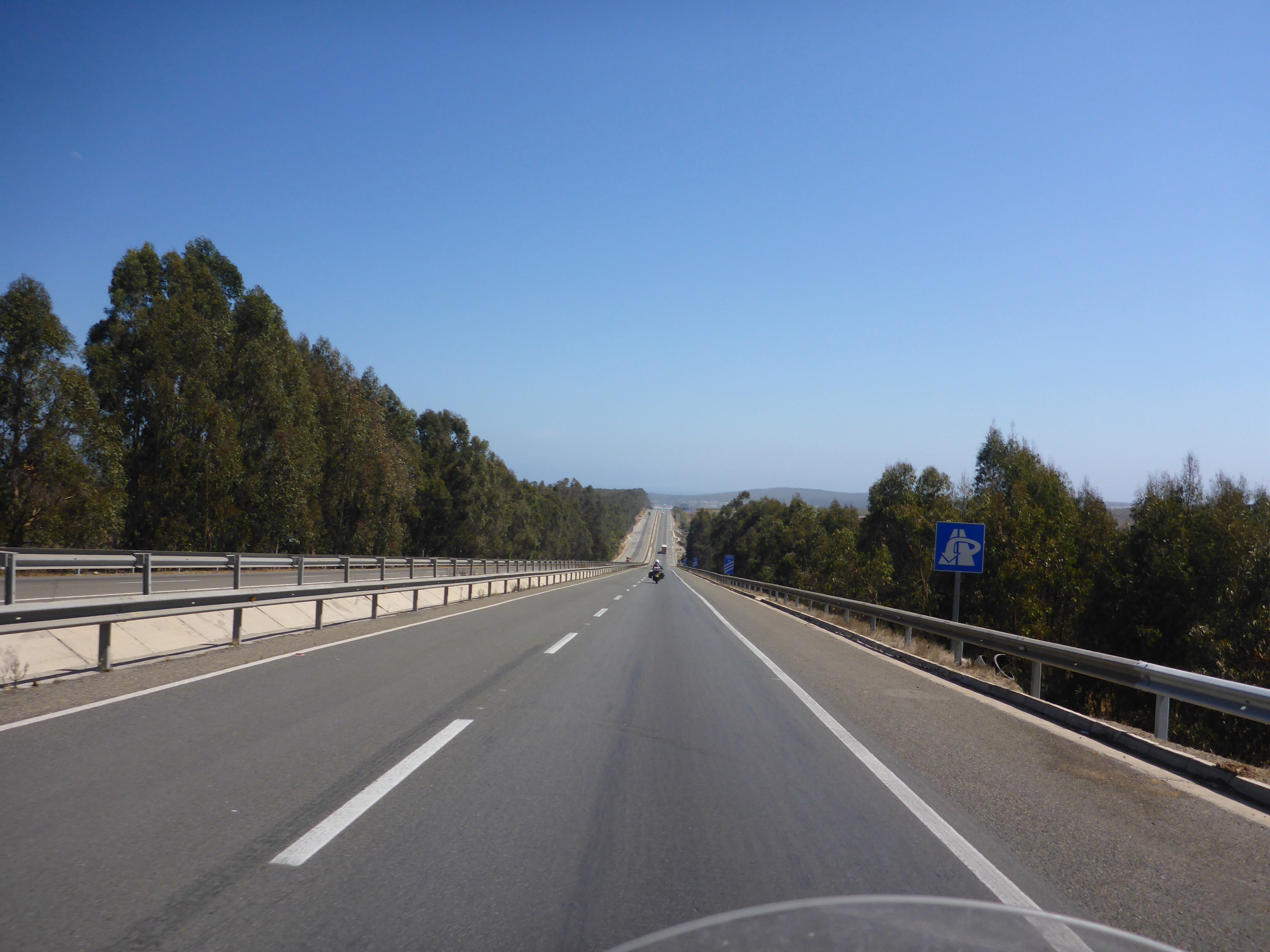
We want to get some distance under our belt before exploring more of Chile, so we take the Ruta 5 north. It is a beautiful 2 lane each way highway. It is an easy ride but quickly becomes tiring as it doesn’t require as much concentration as dirt roads. The scenery becomes very dry and barren very quickly. After the wine growing area and we cut into another valley, a fruit growing valley by the fruit trees we see and the number of fresh juice stalls along the road. The air smells sweet – it smells of pineapple. Then we ride through sparse grazing land, with rocky and scrubby hills in the distance. We hug the coast for a while, it is wild, the waves rolling and crashing spectacularly. It is tempting to stop but we have set ourselves La Serena as a target for today which will make us feel like we are finally progressing north, then Vicuña east of there the next day.
We are finally heading north of Santiago on Ruta 5

We are finally heading north of Santiago on Ruta 5

Then we ride through numerous wind farms, in the middle of nowhere. They are obviously owned by different power generation companies based on the advertising flags along the perimeters. Yes, wind farms does mean it is windy but nowhere as much as I had expected from what I had read. Maybe, as Anthony once said, it is because we “grew up” (our first bike riding experience) in Cape Town which is incredibly windy. Or we were very lucky…

All along the way, we ride past numerous tiny roadside cafés and restaurants, with Coca Cola or other suppliers’ advertising flags. Unlike the new wind generation farm flags, these are in tatters, sometimes you only see the first 2 white letters on red background, having been pounded by the relentless gusts for too long.

While riding, I find myself wondering how much I want to get more experience on dirt roads, as seeing Anthony coming off has brought back my fears of seeing him getting hurt – feelings and flashbacks reminiscent of my PTSD after his Dec 2012 accident rearing their ugly head – that took so long for me to get over… For the first 3 months on the road, I was terrified watching Anthony coming so close to grief, especially in Russia and Iran, yet he remained so calm and sure of himself (his anti-depressants at the time masking most emotions), I eventually relaxed myself too and started enjoying the challenges along the way and loving the way he rode.

We meet 2 Argentinian bikers now living in Santiago at a petrol stop. As you do when you meet fellow bikers, we discuss our route options to Vicuña – they thought the route was tarred all the way but we show them our detailed map which showed otherwise. They are going via Ovalle first instead of La Serena which we were going to do. It looks like a good idea so, quick change of plan, and we decide to aim for Ovalle too. As we ride off, Anthony and I both opt for the easier but longer option to Ovalle. His ankle is quite painful today and the thought of any type of riding challenge is totally unappealling.

The winding road is easy, through many more wind farms so yes it is a little gusty at times. The scenery has changed again, we see many cacti (pad thai’s Anthony thought I said!).
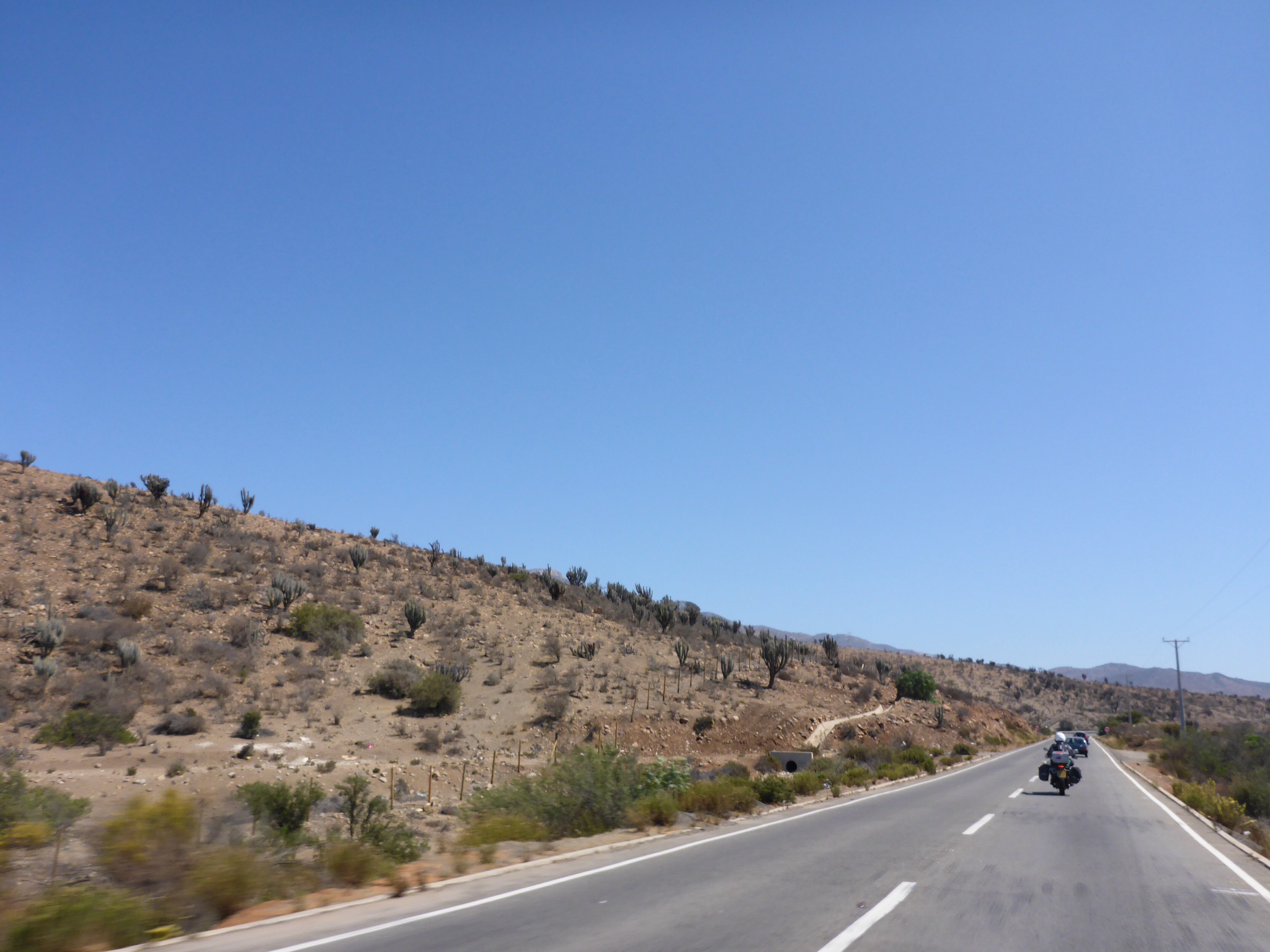
On the way to Ovalle

On the way to Ovalle


We have to ride right across Ovalle to get to the Limari hotel the 2 bikers told us about and go through an endless number of traffic lights. At one time Anthony goes through a green to orange light, so I stop. Carabieneros to my right on 2 trail bikes notice we have been split up and wave me through the red light – so nice and intelligent policing. The truck driver on the inside of the cops realises too, so waits for me to ride through. I already love Ovalle. As we ride out towards the hotel, we ride past a shopping centre with a living wall: it is the first time I have seen such a ‘living’ wall on the outside of a wall, the plants really looking like they had a heart beating in them as they moved in the breeze. So magical.

After an interesting chat with the 2 Argentinian bikers near the pool that turns out to be too cold for a swim, we have a dinner of delicious ceviche with a pisco sour. When the bill arrives we tell them it is wrong as it is missing the drinks – no, that was a welcome drink!! Wow, nice surprise! The hotel has an interesting garden, full of interesting plants, birds, rabbits and a llama. To finish off, we are treated to the most stunning sunset.

In the morning, we discuss route options to Vicuna with the 2 Argentinians – the state of road depends on who you talk to, as is often the case, from all tar from the receptionist to 50kms of bad ripio by one of the many bikers staying at our hotel. Neither Anthony or I can be bothered with 50kms of bad ripio today, not as a choice. Somehow, the thought of one of us coming off and Anthony struggling with his ankle churns my stomach. We opt for easy road.

It is only about 130kms but by 110kms, we are both tired. Often the shorter rides feel like they’re much longer. We finally reach the pisco growing area. Not far now.
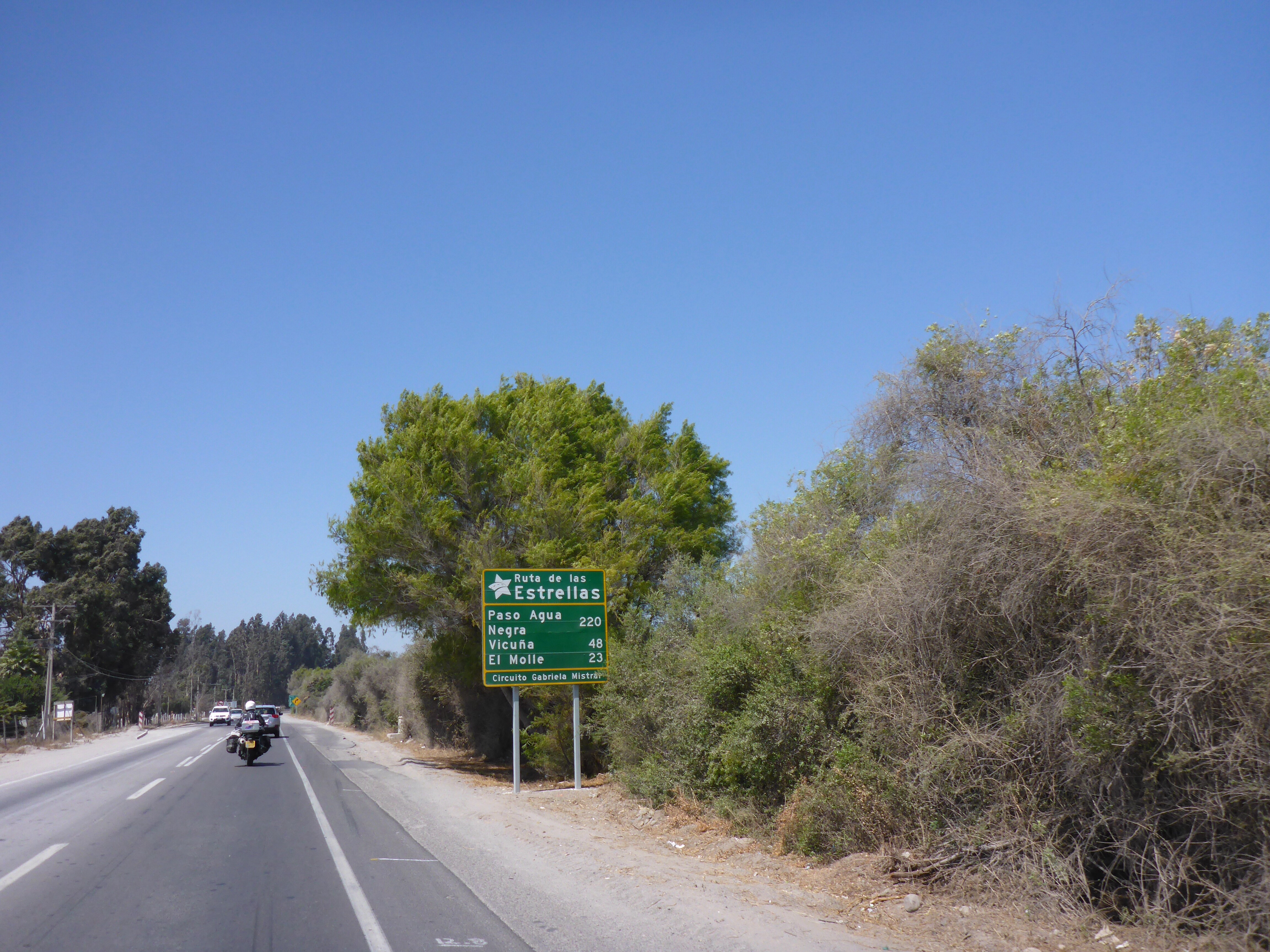
We are on the Ruta de les Estrelles, where many astronomical observatories are located

We are on the Ruta de les Estrelles, where many astronomical observatories are located

Wine growing valley of Elqui region

Wine growing valley of Elqui region


We find the hostal I booked a couple of hours earlier, the Casa Museo Solar de los Madariaga. All windows and doors are closed. Hmmm… I knock twice, wait, then 3 times a little louder on the big door knocker – nothing. We have a sandwich next door and I check my email. Booking has gone through and they have responded. After lunch, I go back to knock again, louder this time. I am greeted by lovely Alberto and Mitzi. We are the only guests and the place feels so serene. There is a lovely breeze, the courtyard full of flowering bushes, the sweet scent of jasmine and lavender in the air, the sound of chattering leaves in the gusts of wind, it feels lovely. I unpack the bare essentials out of the panniers while Anthony changes – it is not long before he snoozes in the sound of the wind which he loves and I type my notes. It is so lovely here, we ask Mitzi if we can stay an extra night. No one else is expected tomorrow so the room is ours for 2 nights. Perfect!!! 5pm, time for an afternoon walk for me, leaving Anthony snoozing.

I looked for brushes to give Streak and Storm a good clean. The Supermarcado and all the stores in town remind me of the stores in the UK when I was a little girl visiting my grandparents: they have a long counter with goods behind on shelves or in locked glass cabinets around the store and someone serves you. I find the word for brush – I obviously don’t speak Spanish so the guy mimics brushing teeth, no, I lift my foot up and mimic brushing shoes. Too easy!!

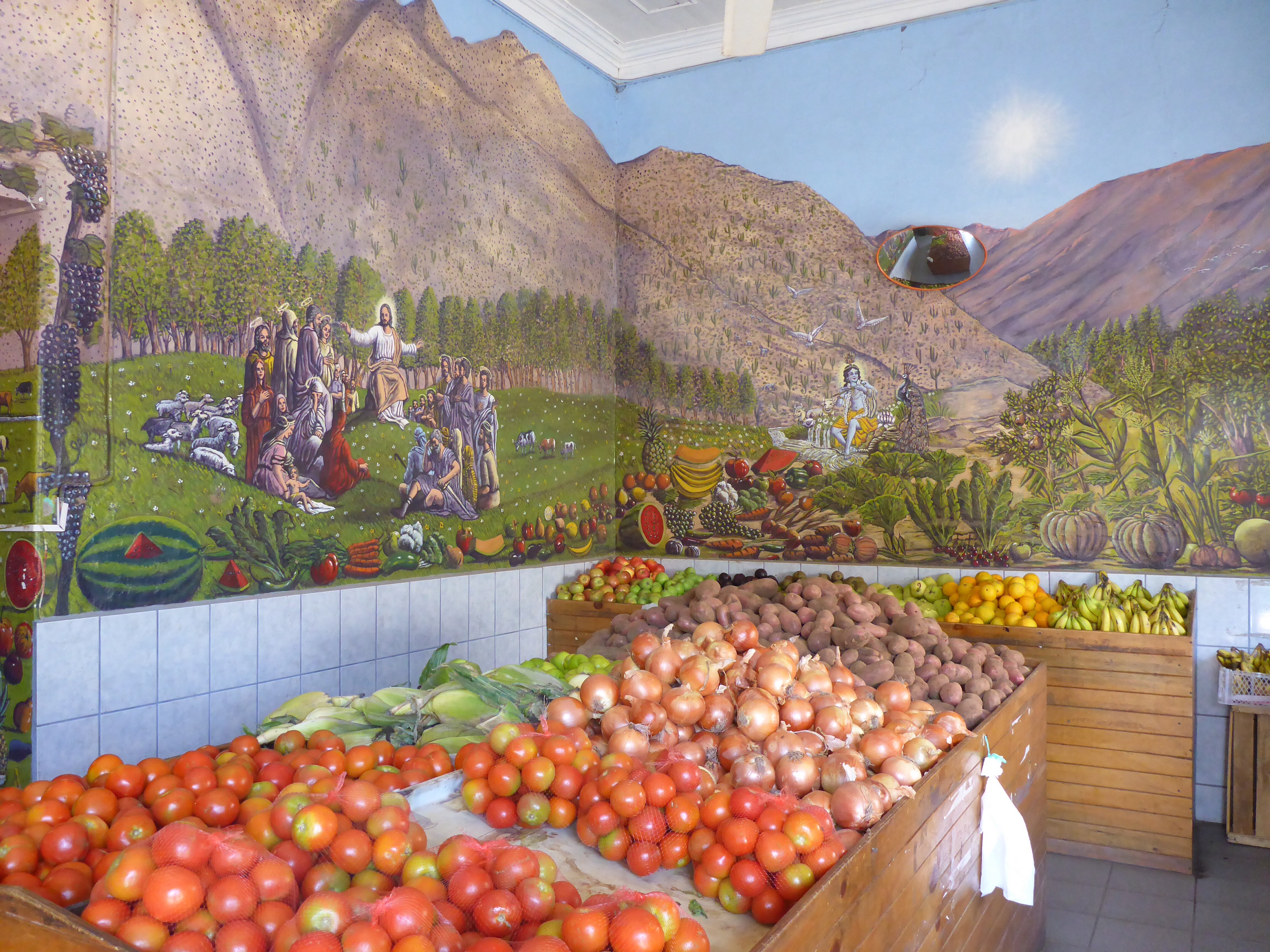
Shopping done, I stroll through town. All the bars are buzzing with shouts, gasps, cheering – I walk into a couple: they are watching a soccer match on the TV or big screen. I get to the tourist office as she is closing – yes, I am too late. On to the cathedral. Before walking in, I take my hat and sunglasses off. After admiring it, and taking a photo, I walk out, having noticed a donation box with a notice to tourists and ignoring it. I have a slight pang of guilt but continue on my walk. Stop at a green grocer advertising 4kgs of tomatoes for 1000CLP ($2), walk into see what they’re selling and discover a most amazing mural around the store. We must come back here before we leave Vicuña and buy some fresh fruit (“eat more fruit” we kept being told in Iran still rings in my head). I am now 100 metres from our B&B, look into my bag to put my hat back on and discover it is missing. I know exactly where it is: I must have dropped it when I took the photo inside the cathedral. I return, make a donation and chuckle at myself for having been so stingy and being taught a lesson!!!
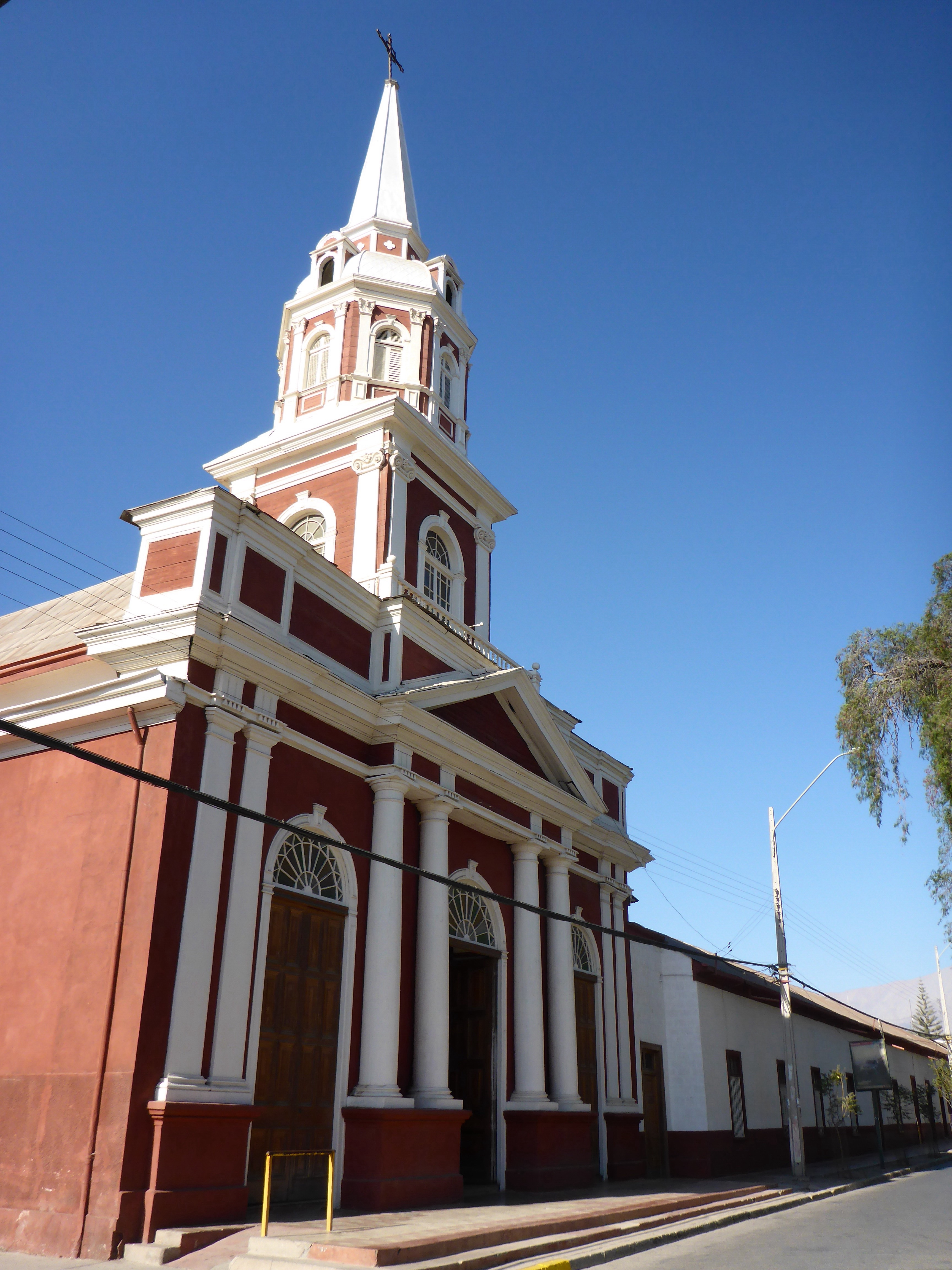
Iglesia Inmaculada Conception in Vicuña

Iglesia Inmaculada Conception in Vicuña
Inside the Iglesia Inmaculada Conception in Vicuña

Inside the Iglesia Inmaculada Conception in Vicuña


Amazing mural inside Vicuña greengrocer

Amazing mural inside Vicuña greengrocer


As the sun is cooling off, we decide to wash the bikes. I had asked Mitzy if that was ok and she said yes. We find a pot in the garden we can use as a bucket. It is only when she comes over some time later that we find out she is about to go out for the evening, for a meeting on the shortage of water (they had very poor winter snow fall for the past 4 years and therefore the town has a shortage of water). We are glad we decided to use a bucket and minimise the amount of water we use. Anthony’s ankle is too sore and he goes to lie down. I finish washing and drying both bikes – the chain will have to wait until tomorrow.

The reason for coming to Vicuña was to visit one of the several astromical observatories and a pisco distillery. The Elqui valley where we are has 300 days of clear skies a year and is renowned for having the clearest skies in the world. Because we often change our plans and timings, we hadn’t booked anything yet and we are too late for a tour tonight. Mitzy tried to call several times on our behalf but kept getting an answering machine. I decide to try and book online and follow up with an email.

We have a lovely evening at a restaurant nearby – we share a plate of 6 bruchettas with veggies. Delicious. When we return to the darken B&B, open the front door with a massive old key, it reminds us of “a night at the museum” movie, for this place is also a museum. The house has belonged to Mitzi’s family since 1880. Her grandfather used to be a trading merchant so half the house was used as storage. The walls are all 60cm thick, the ceilings 5m heigh. They have cordonned a large part of the property as a museum showing furniture, utensils and equipment used by her grandfather. There is no air conditioning or fan but the room has stayed cool all day. Our room looks onto a beautiful courtyard, full of flowering bushes, the roof dripping with different ‘creepers’. There’s a passage way that takes you to another courtyard and back garden. It is simply gorgeous.

View from our room at Casa Solar de los Madariaga in Vicuña

View from our room at Casa Solar de los Madariaga in Vicuña


At 4am I am still awake because of the incredibly loud thumping music outside and we find out over breakfast that Mitzy couldn’t sleep either and even called the carabinieros.

We have the most delicious breakfast – huge plate of fresh fruit each, plate of cold meats and cheese, home made jam, fresh pot of real coffee and green tea. Amazing.

I get an email back from the observatory I contacted and yes we can join a tour this evening, I just need to drop by the agency between 12 and 2 to pay. Brilliant. We were going to take a local taxi to one of the pisquerias at lunchtime but Mitzi organises for one of her friends Lorenzo to take us around for the same price – excellent. We go Aba pisqueria first: good timing as a busload of cruiseship tourists arrives just as we leave after some interesting tasting (and the purchase of a half bottle!). Pisco is a local brandy made from muscat grapes – ancient documents reveal pisco was already been made in this valley in the 16th century. You can drink it as an eau-de-vie or in a cocktail such as pisco sour, which is pisco based of course with some sour citrus juice, some sweetner and sometimes angostura bitters. I have tried a few while in Chile (and Peru) and while they have all been very tasty, they never taste the same! We go to another pisqueria outside Vicuña, much larger and more commercialised but they are overrun with cruiseship visitors so we leave. A lovely little Sunday outing though.

At Aba pisqueria in Vicuña

At Aba pisqueria in Vicuña

Elqui Valley outside Vicuña
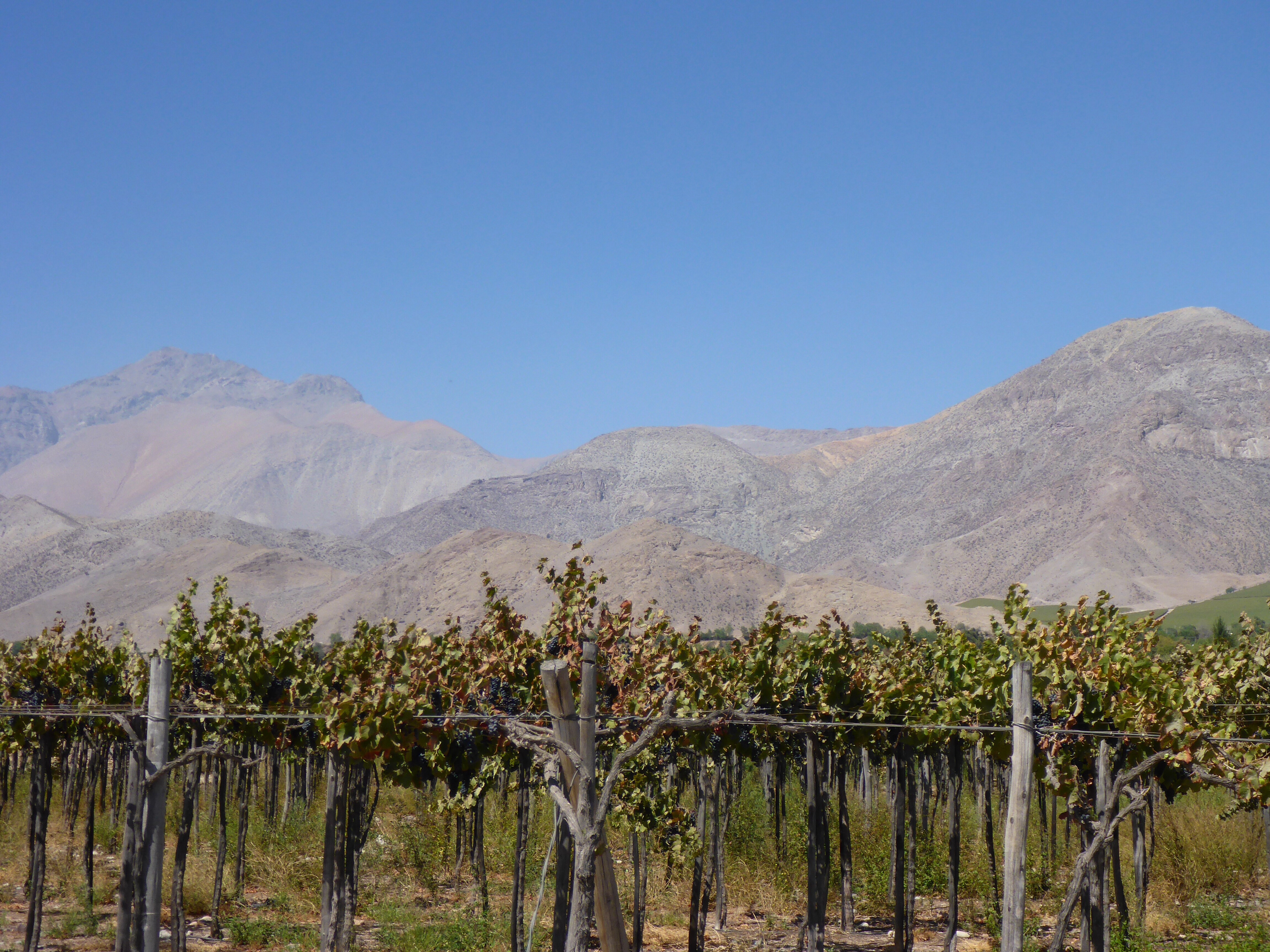
Elqui Valley outside Vicuña
Elqui Valley outside Vicuña

Elqui Valley outside Vicuña

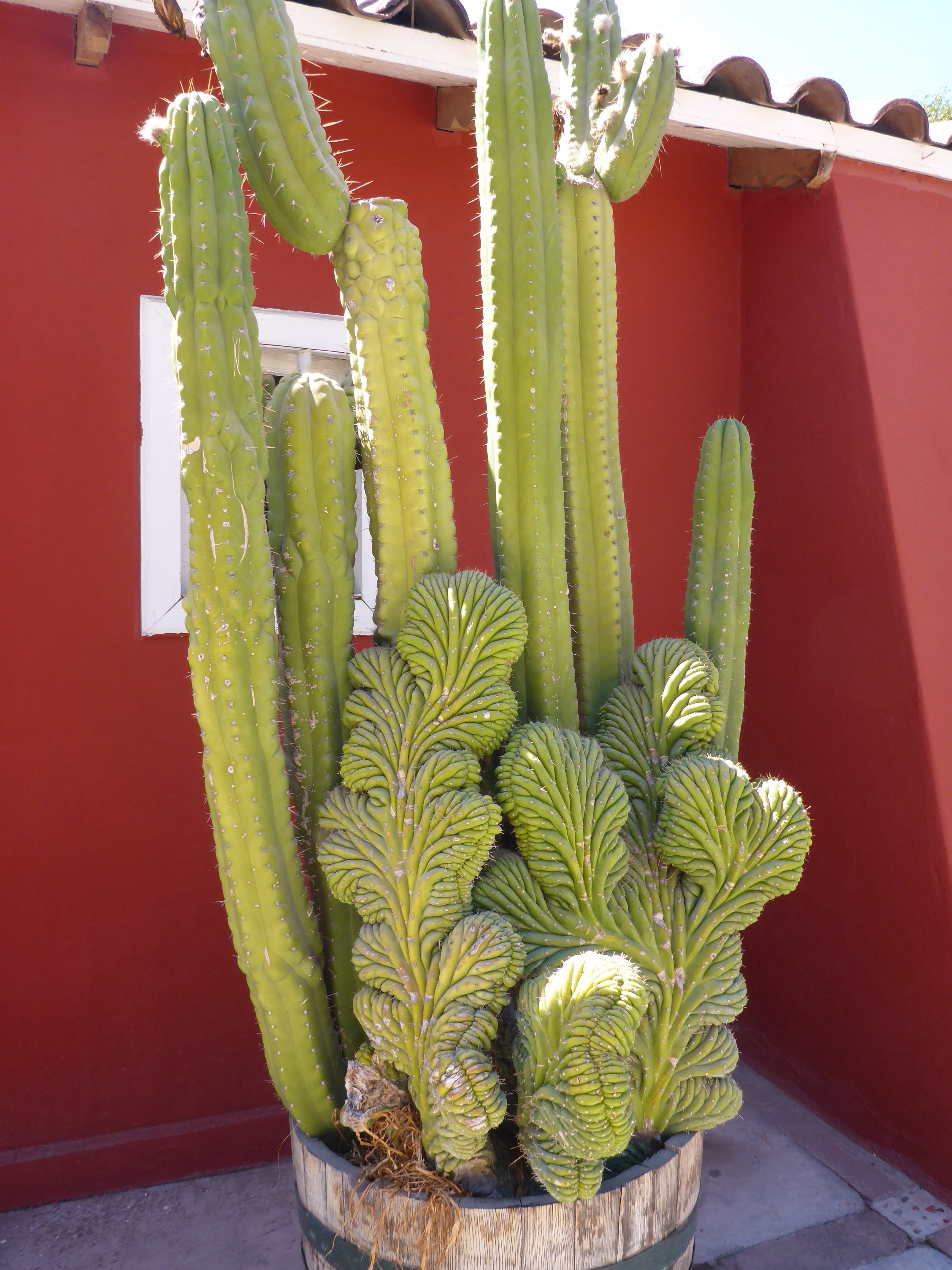
Strange cactus in Vicuña

Strange cactus in Vicuña


Time for me to hunt down some sandwich in sleepy Vicuña and bring it back to the B&B for lunch. The afternoon is spent reading, researching, writing and cleaning the chains after which we adjust Anthony’s chain and tighten up a few bolts that rattled themselves loose. Time for a shower before we get picked up for the observatory tour.

Oh what a night!!!!! Our visit to the Observatorio del Pangue, situated 19kms south of Vicuña, where the only man-made structures nearby are 3 other scientific observatories, was out of this world!!!!! We saw galaxies with the naked eye, a mere 200,000 light years away, we saw a galaxy (Sombrero or M104) through the telescope which is 60 million light years away, so far that we could clearly see its entire shape, we saw the only existing supernova in the entire universe, which is an exploding dying star, and we saw a slowly collapsing dying star, we saw Saturn with its rings and 4 moons. We also learned that the point of the southern cross id made up of twin stars and saw them. And of course, we saw shooting stars. We saw and learned so much… It was a completely mind blowing experience… It makes me feel like visiting more observatories with bigger lenses and learn more. Can’t wait to camp again under the stars soon.

Tomorrow, we head north, slowly towards Antofagasta.

– Anne

Timing Recalibration – Santiago to New York

As you may recall, due to a little medical hiccup in January, we departed a couple of weeks late for Santiago. This still gave us enough time to reach New York for late July as planned. As we finally start to head north, we have spent an additional four weeks in Chile and Argentina having had a wonderful time, but are no closer to our destination of New York than we were last month at this time. Something has to give.

One of our concerns had been that we needed to have our motorbikes back in the UK to obtain our Carnet de Passage refund, a not insignificant amount, by August 2015. This has turned out not to be the case and we can send the documents back once we are clear of any countries that may wish to see them. While we would have loved to be back in Europe for late summer, this is just not practical anymore given the distances, roads, borders and places we want to visit.

Places we want to visit! Now that has become a problem, there are just so many. Where do you start and stop? As we found out in Easter Island, a small place, but easy to fill 5 days! We could have spent a couple of months in the Chilean lake district and Argentina’s Patagonia. We realise now that as we travelled across Asia, the visa limits of no more than 30 days forced us to focus on what was practical to see in that timeframe and then we had to leave. If we are to avoid riding into New York in a December snowstorm, we have to make some decisions about time allocation. When we set off on this journey around the world in June 2014, we both agreed that we did not want to travel indefinitely. We have found that we enjoy six months or so continuous travelling but that is about our limit. Endless travel is not our thing. Having spent the preceding nine months living in Europe we were glad to be home, abeit briefly for six weeks, in January 2015.

So we now need to make some timing decisions, of course subject to change as we travel but with the aim of now arriving in New York in September. We have also decided to focus on certain countries and regions namely, Northern Chile, Southern Bolivia, only the Nasca lines in Peru since we have spent a fair amount of time in Peru on a previous trip, Ecuador and Columbia.

Since my accident we have both been considering how much ripio, or gravel we wish to ride on. Hard packed is OK, but the softer stuff is an issue, I do not have full strength and mobility and another fall could curtail our trip permanently. We ride to enjoy, and as we do not enjoy corrugations and poor quality roads, should we even undertake them if we do not need to? Anne is prone to altitude sickness and considering we would be above 4000m continuously for a few days (up to 5000m) in Bolivia, we are not sure how she will go or if we will even attempt it. We still have about a week before we have to decide on whether we enter Bolivia briefly or cross it up to La Paz. I do not know at this stage, we will probably decide when we get closer and have the latest information on road conditions.
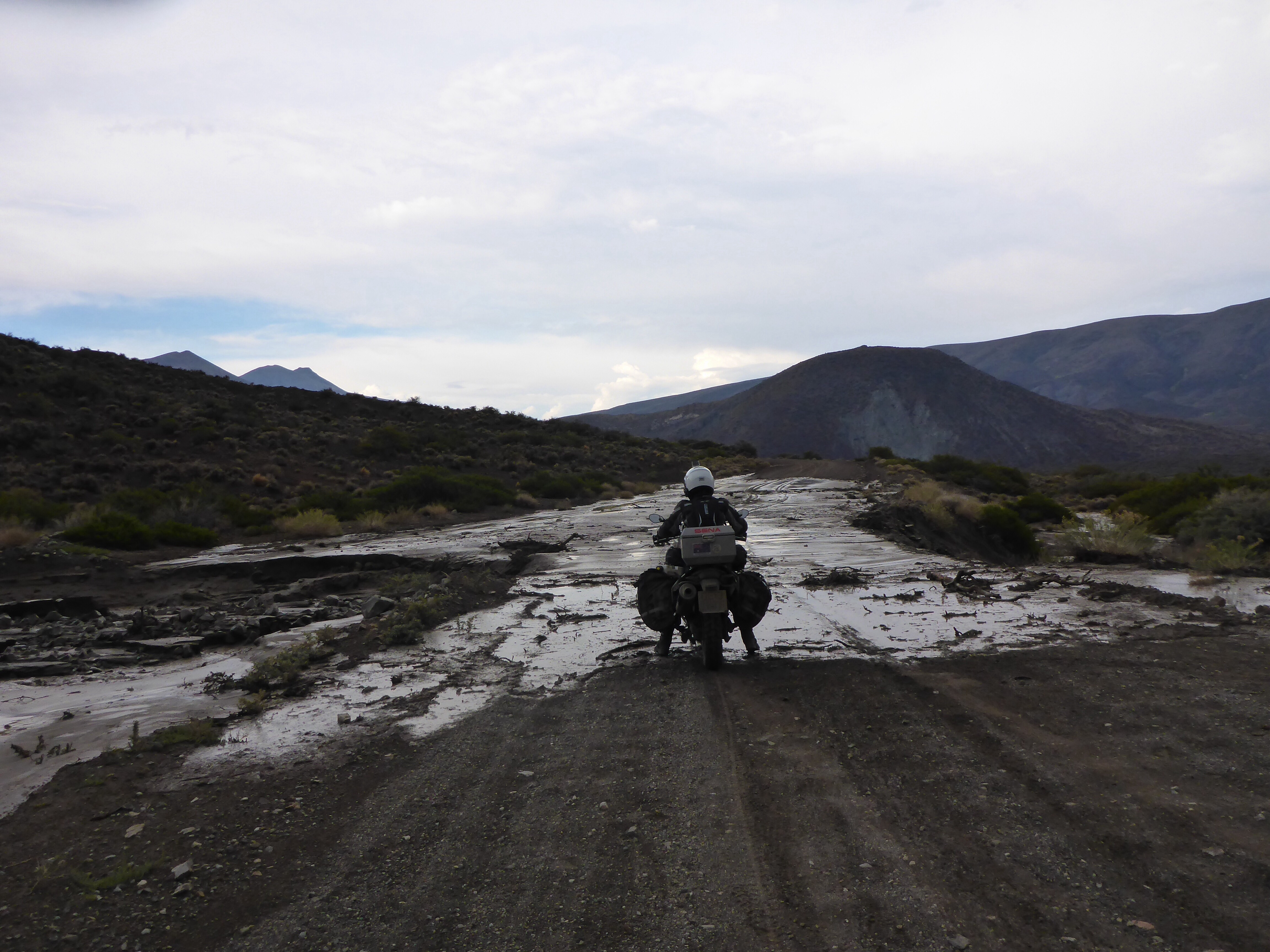
Central America and Mexico are more accessible from the USA should we wish to return in future so we will limit our time there. It may unfortunately mean we may now be unlikely to get to Mexico and Costa Rica in time to meet up with friends as we had hoped later this year, but until we get past Peru we will not know for certain. I know we will miss many amazing places, but we need to leave somewhere for you armchair followers to explore on your own.

On this revised basis, and assuming I can stay on my motorbike, we should arrive in the USA mid July which should give us enough time to catch up with friends en-route and still get to Sturgis for the 75th anniversary of this motorcycle rally in early August. So those of you motorcyclists that want the 75th anniversary t-shirt, how about riding some of the way with us? A thought for those who have not planned their next holiday or can slip a few days in on a business trip.

Now we have a totally new and unexpected target to aim for, we will see how it all unfolds in the next five months, your guess is probably as good as ours.

– Anthony

A different kind of day….

Today we need to cover many kilometres and an early start is called for, well early by local standards where hotel breakfasts do not start till 08:00. We leave Chos Malal heading northwards on Ruta 40, which is a 3,500km road running the length of Argentina along the eastern edge of the Andes. Our destination is San Rafael, some 550km up the road, which is well above our 350km per day average. With our departure for Easter Island rapidly approaching we need to ensure we are back in Santiago by the 3rd and have some 1,200km to cover via Mendoza, our planned route. The road is perfect, smooth tar swings right and left, up and down. It is a pleasure to ride, the road goes to all points of the compass literally as it snakes around hills and mountains, crosses broad plains and passes under the watchful eyes of volcanoes whose rock and snow colouring reminds me of the bald eagle who also would be looking down from above surveying their world as the volcanoes do.

Along Ruta 40, a geologist's paradise and great bike riding road

Along Ruta 40, a geologist’s paradise and great bike riding road

Ruta 40 towards San Raphael is a fabulous riding road - why so few people and no bikes??

Ruta 40 towards San Raphael is a fabulous riding road – why so few people and no bikes??

We make good time, the road is free of traffic and we are enjoying the ride in beautiful and spectacular scenery: what more could you ask for, absolutely nothing from a rider’s perspective. Then the road abruptly turns to dirt with a sign promising at least 40kms of the surface. We had thought that our 120kms on dirt yesterday was more than enough for a fews days, but no, we are to get more practice. As we carefully pick our way along the surface at slow but steady pace our interest in the scenery diminishes as we focus on the task at hand. This will impact our journey time considerably as we start to contemplate how this delay may require us to rethink our destination for the day.

Need a break, we now doubt we'll make St Raphael tonight

Need a break, we now doubt we’ll make St Raphael tonight


After some 30 kilometres ahead is a car stopped with the bonnet/hood up heading in same direction. We pull over to find an English couple, Mitch and Mary whose hire car bash plate has lost the front bolts. They are attempting to secure it with string, and while I can offer no additional skills or advice, Anne remembers we have a packet of cable ties and we offer them a couple to fix the problem. I notice we have not opened the packet in seven months on the road and it contains 50! We can definitely spare a couple. They set off ahead of us on the dirt and we meet again at a bridge where the river has cut through the lava flow creating an interesting small gorge. They offer us some of their sandwiches and tomatoes plus half and apple with makes a great change from tinned tuna and dried biscuits. They are retired doctors and enjoying a couple of months in Argentina and Chile. Cleverly they spent time in Spain to improve their Spanish before undertaking this tri.
Mitch and Mary offer us some of their sandwiches

Mitch and Mary offer us some of their sandwiches

Lava canyon on our way to Las Loicas, Argentinia

Lava canyon on our way to Las Loicas, Argentinia


We cross the bridge after lunch and are back on tar, this however is potholed and in places has been returned to dirt and gravel. Lack of road maintenance makes me wonder when this stretch will be returned to dirt when then potholes, which show no sign of repair, become too numerous. As always as you have a thought, such as poor road maintenance, around the next corner there is a new road being constructed. As we navigate the track alongside the new smooth, but un-tarred surface our thoughts of driving there are extinguished by the huge gaps where culverts are being dug! We are directed up onto the road under construction which has some tar and some areas with gravel. We are doing ok, then surface changes to loose rejects from the prehistoric golf ball factory dug up by Fred Flintstone. I run into this at 50km per hour, fine on normal gravel, but after a few seconds I am into a massive tank slapper, handle bars alternately right and left, then BANG, I am down, the bike crushes my left ankle as my left side hits the ground. The bike and I end up facing backwards having done a 180 degree spin. Anne stops and while I am saying I am ok, Anne urges me to stay down, as I have a tendency to leap up after motorcycle accidents regardless (December 2012) then silence reigns except for the snapping of Anne’s camera shutter recording the event, just for you the blog readers of course.
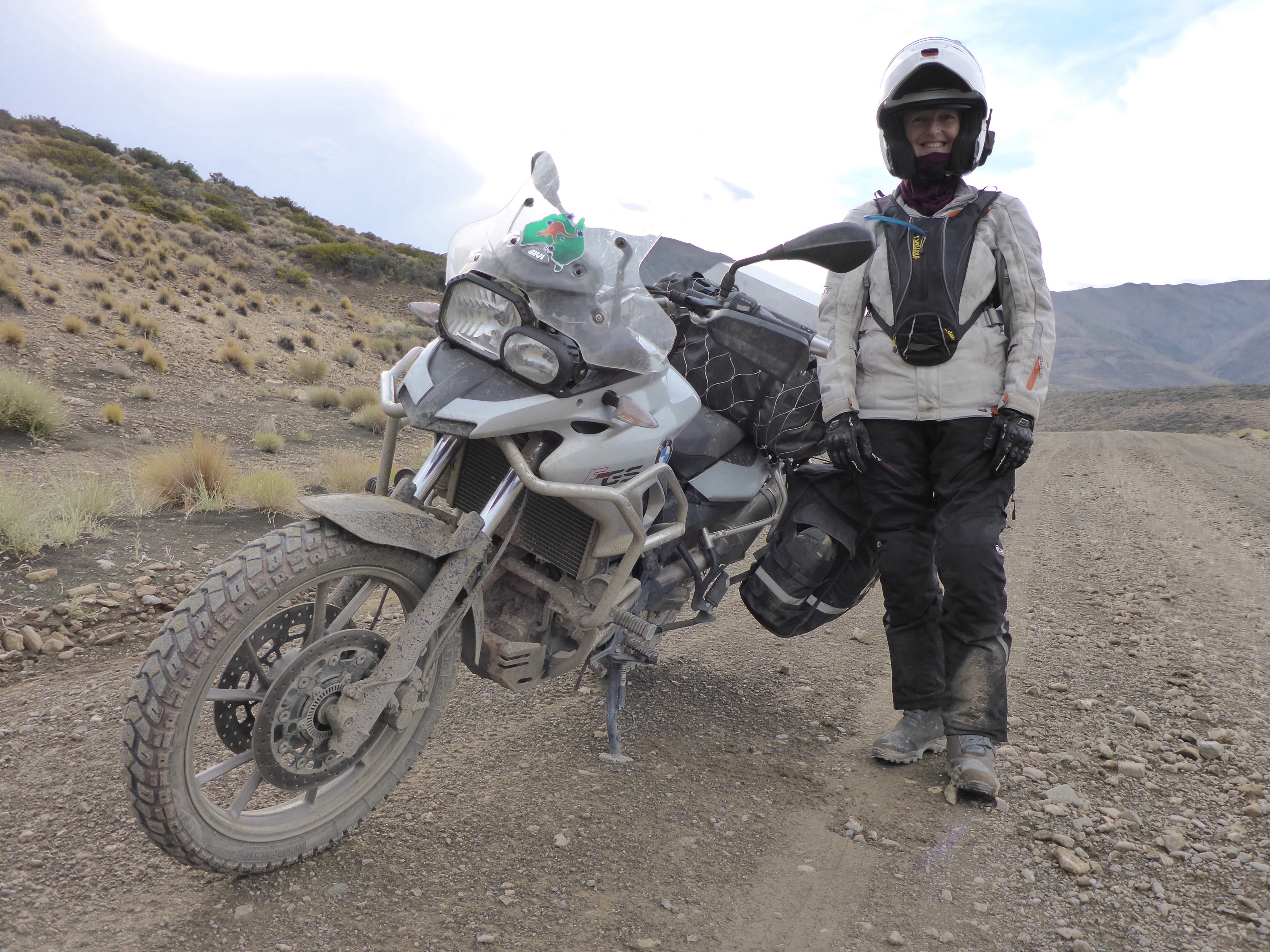
Damned Ruta 40!  This surface feels like ball bearings and is treacherous

Damned Ruta 40! This surface feels like ball bearings and is treacherous


As usual adrenaline kicks in and apart from the sharp pain in my ankle I feel fine, standing is a different proposition but I can put some weight on my left leg. The blow from the bike is in almost the identical place to where I broke a non weight bearing bone in my leg some six years previously by, yes you guessed it, dropping a BMW motorcycle on it. I now sit at the side of the road, having been told by Anne to sit yet again as we wait for the two doctors to catch us up. When they arrive, I realise I have no UK National Health Card on me, so they probably will not treat me. They provide good advice, don’t take my boot off as it is providing support and restricting the swelling which I can now feel happening. A local pickup slows as Anne flags it down, but does not stop to help which we find surprising. That would never happen in the Australian bush. Anne and Mitch get my bike up, undamaged apart from the windscreen that has split in two. A plan is devised to see when the tarred surface starts, which turns out to be around the next corner, just a kilometre away, so close yet so far. Anne bravely takes both bikes to the start of the tar. We decide that an X-ray for my ankle is the next priority. I can ride but gear changes are a pain, literally. We decide to head back into Chile and the city of Talca some 200+ kilometres away which will have better medical facilities. We start to climb eastwards up into the Andes, such spectacular scenery. I am limiting my gear changes as they have become progressively more difficult to make as the leg swells. The border posts on both sides are some 40km apart so we complete the Argentine side and then ride up a gravel road, again, towards the summit with the most spectacular scenery. One could spend days here, maybe horseback is the way to see this area as they are slower and more sure footed than bicycles. We reach the top of the Pehuenche pass at 2,553 meters and begin an equally spectacular decent, but on tar roads. We have found over the years that roads leading to border crossings are a source of national pride and each country likes to show off with well built roads, such as in Chile’s case here, with the Argentine side still under construction.
The ride up to Paso Pehuenche from Las Loicas is  amazing

The ride up to Paso Pehuenche from Las Loicas is amazing

Riding up to Paso Pehuenche, the scenery changes at every corner

Riding up to Paso Pehuenche, the scenery changes at every corner


Looking back as we slowly climb up to Paso Pehuenche

Looking back as we slowly climb up to Paso Pehuenche

Another corner, another visual delight

Another corner, another visual delight

Still beautiful, pity about the ripio

Still beautiful, pity about the ripio

Now in no man's land where the valleys are dotted with small farms

Now in no man’s land where the valleys are dotted with small farms

More amazing rock formations, in no man's land

More amazing rock formations, in no man’s land

Another corner, another surprise

Another corner, another surprise

We wish we could just camp somewhere here but we have to press onto the Chilean border post

We wish we could just camp somewhere here but we have to press onto the Chilean border post


You can guess where the Argentinian/Chilean border at Paso Pehuenche is!!

You can guess where the Argentinian/Chilean border at Paso Pehuenche is!!


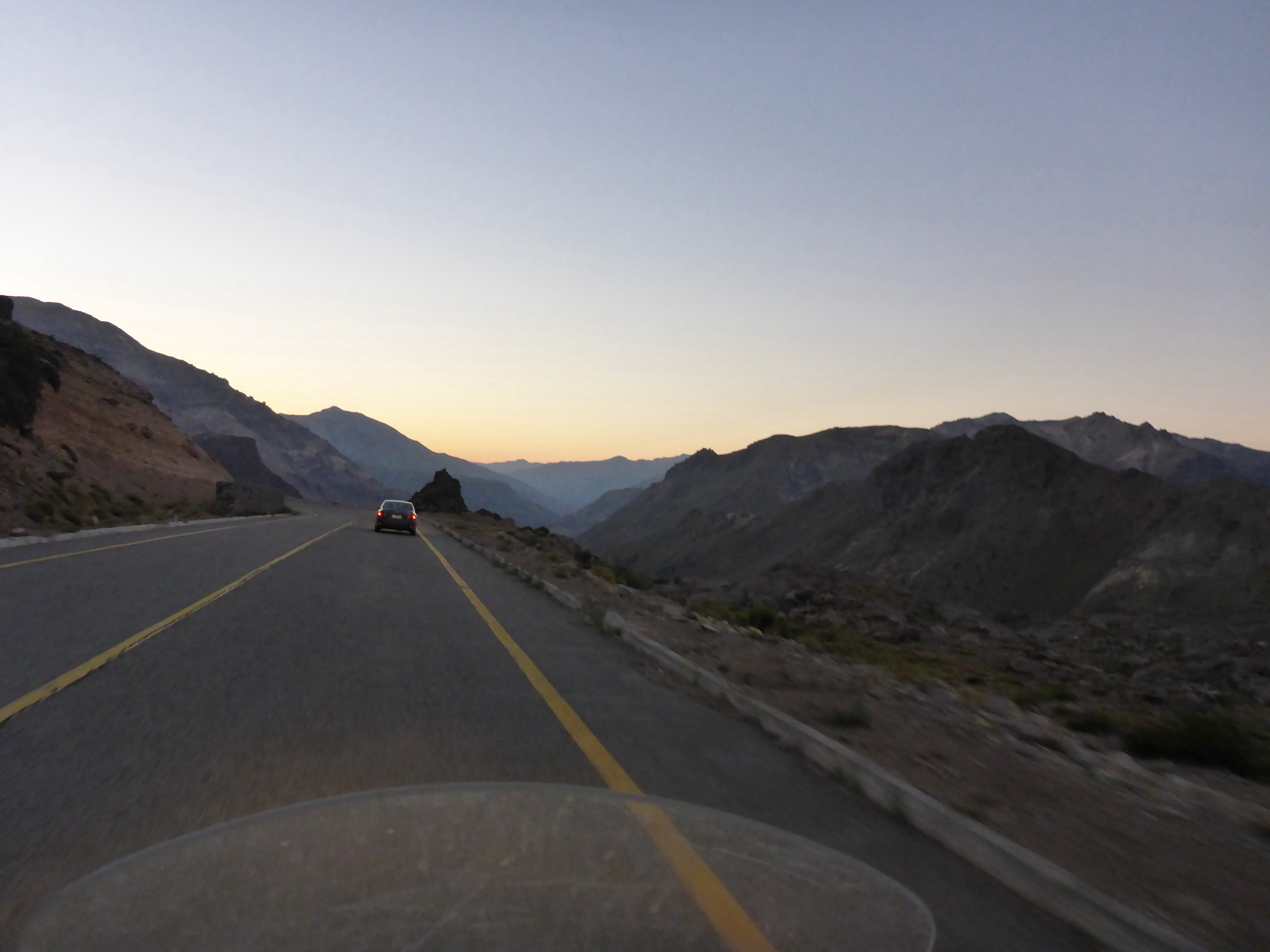
Our swift passage down the pass is stymied after 20 glorious kilometres at the Chilean customs and immigration post, firstly by arriving behind a coach load of tourists, then by the first officious immigration officer we have met in seven months of travelling. She first wants us to go back to Argentina, an 80 km round trip journey for some form we are supposed to have. Anne refuses as we are trying to get to a clinic for a leg X-ray. I am sitting on the floor to keep the weight off my ankle, but this does not improve her mood. Then a family of four from Talca; Ricardo, Marta, Diego and Monserrat offer their assistance in dealing with the immigration officer. They wait as we complete the paperwork. It is now 20:00 hours and the sun and temperature are going down fast, they offer to guide us to a medical clinic in Talca. Our strong preference is not to ride at night, but getting the X-ray done is a priority. We descend into the dusk seeing the last dying rays of the sun kiss the tips of the peaks behind us for a brief moment before they are gone, magical. We still have 125km to go and as darkness approaches at least the temperature warms up as we go from 13 degrees celsius to 23 degrees celsius as we descend over 2,000 meters in probably 15 to 20 minutes.
Finally through the Chilean border at 8pm, following our Chileans guides and the sun is fading fast

Finally through the Chilean border at 8pm, following our Chileans guides and the sun is fading fast

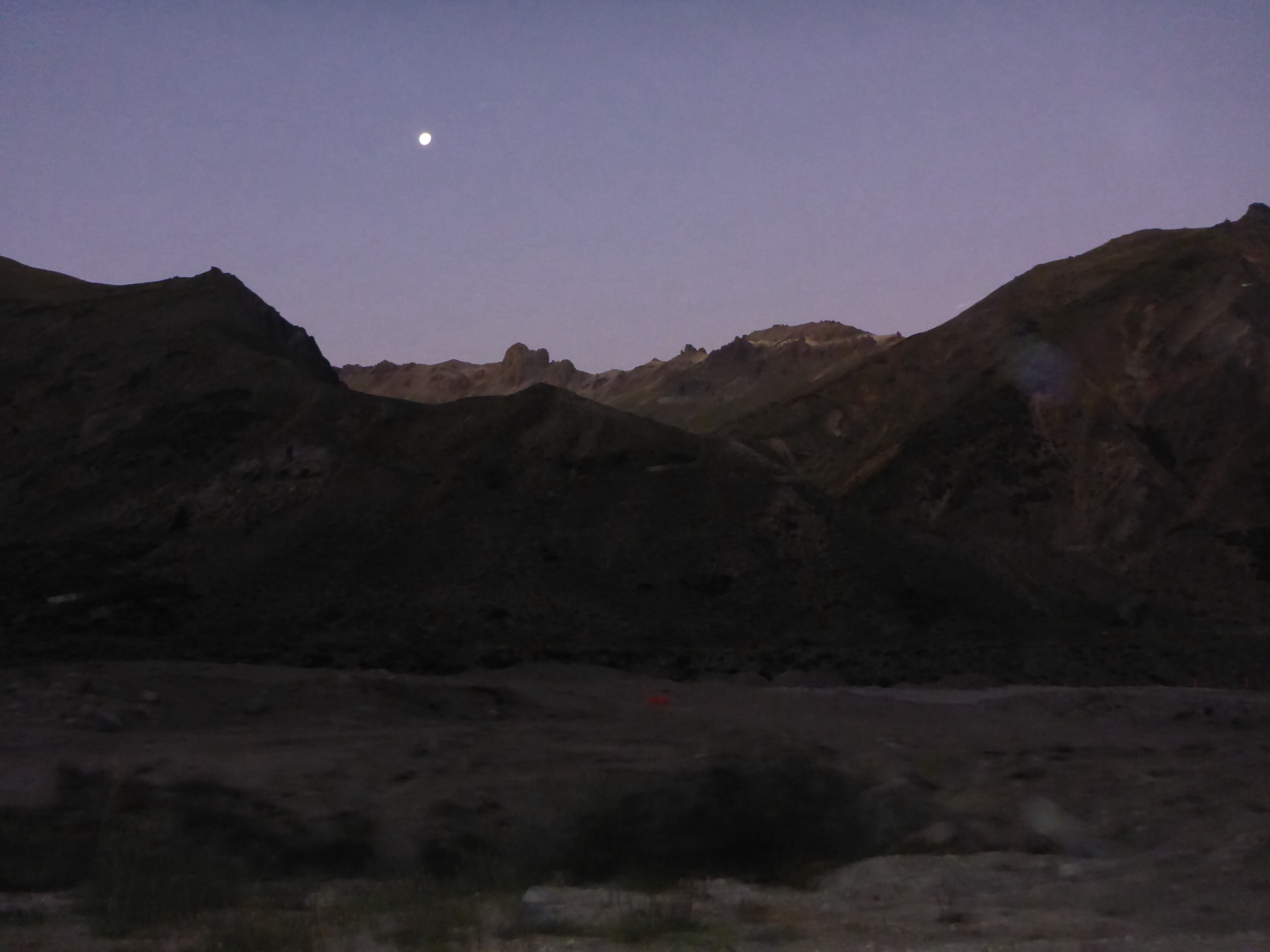
The moonlight is beautiful

The moonlight is beautiful


The risks of night riding are highlighted by a fox running just behind Anne’s bike, unlit pedestrians and cyclists appear at the roads edge as we get closer to Talca. We have also been travelling over 13 hours and we both know we need to concentrate hard for the last few kilometres. We have arrived at a clinic in the centre Talca, which are better than hospitals if you can pay I understand, it turns out to be couple of blocks from the hotel we planned to stay at.

I park my bike and am greeted by a kindly wheelchair operator which is pushed back over uneven ground with me as a passenger, scariest part of the day, but we avoid an accident. Is this how the clinic gains business?

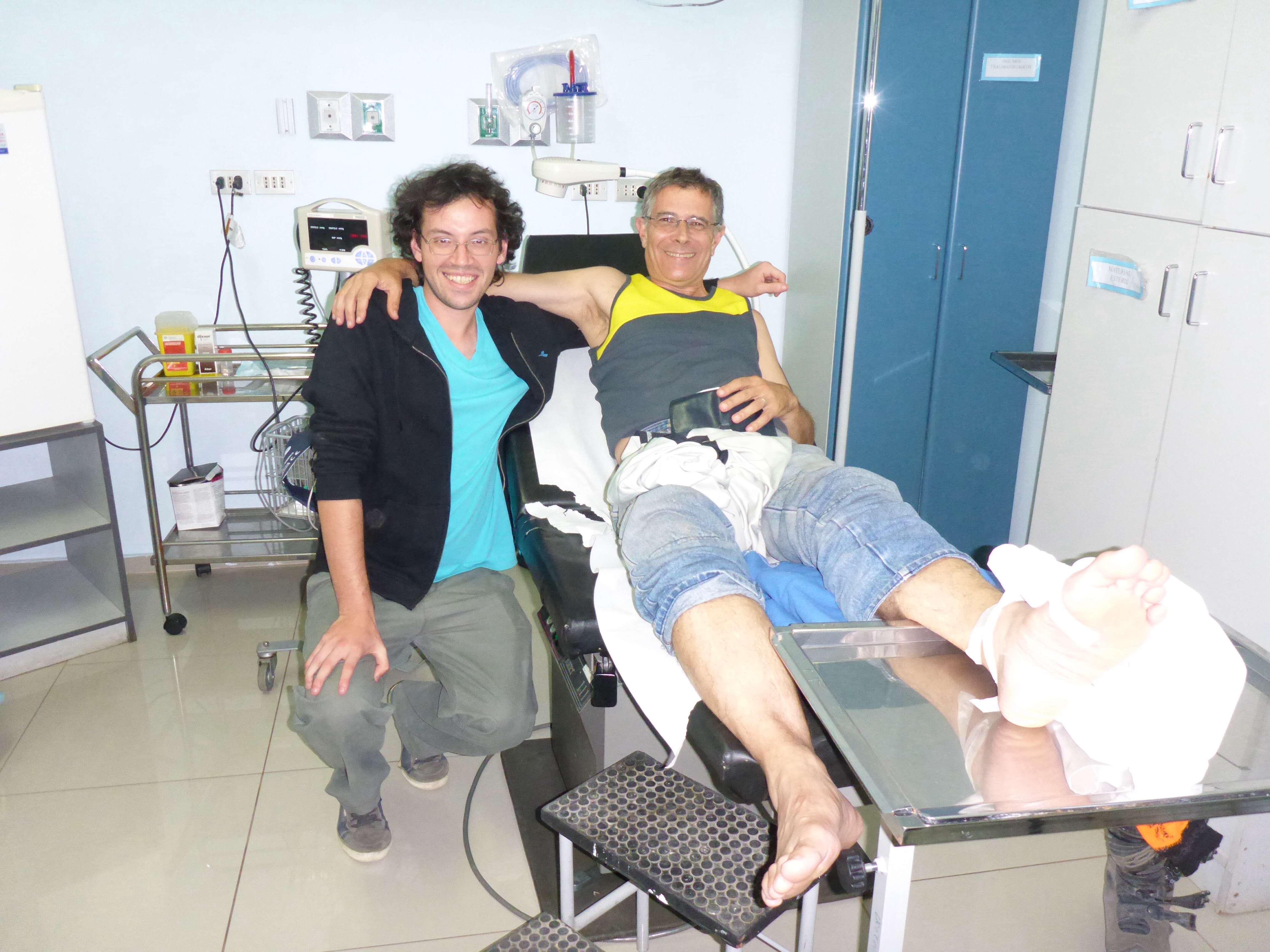
Diego is Anthony's interpreter at the clinic

Diego is Anthony’s interpreter at the clinic


They are quick and efficient and want to X-ray me from top to toe, but I am able to convince them via Diego’s excellent translation that the ankle is the only area of concern. They even offer an intravenous drip with pain killer. An interesting proposition but the pain is not enough to justify such medication, although it might be fun. Good news!….. The X-ray reveals no new breaks, just the old one. Ice, elevated leg rest and anti inflammatories are the order for the day. We can stop thinking of the alternative travel plans. Anne has to ride both bikes to the hotel, with the help of our new friends who have waited at the clinic all this time in case we needed anything. They had even offered us a place to stay for the night as well. Human kindness abounds in this world and we are fortunate to be recipients of it.
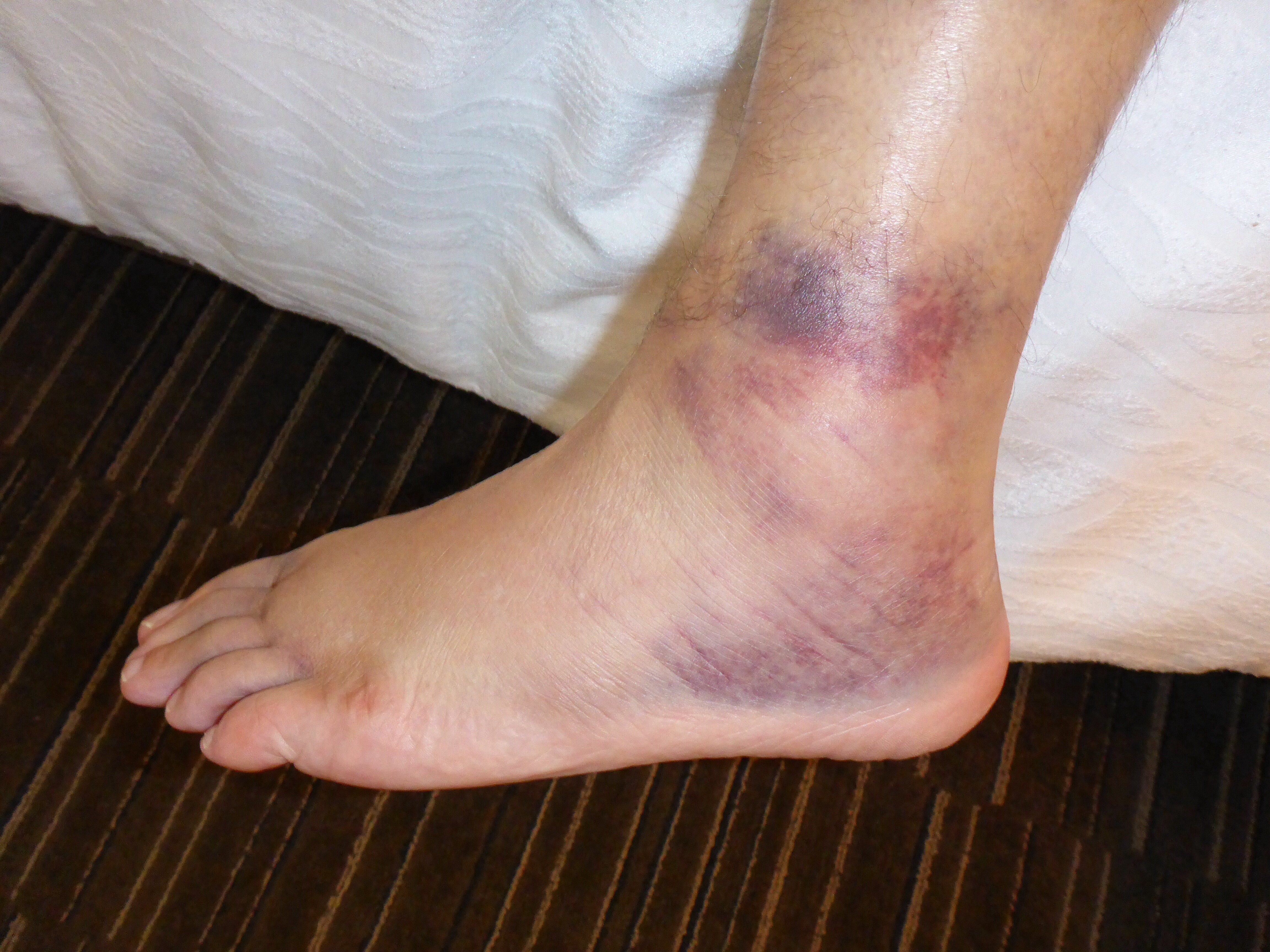
Anthony's sore and swollen ankle - red and blue all around

Anthony’s sore and swollen ankle – red and blue all around

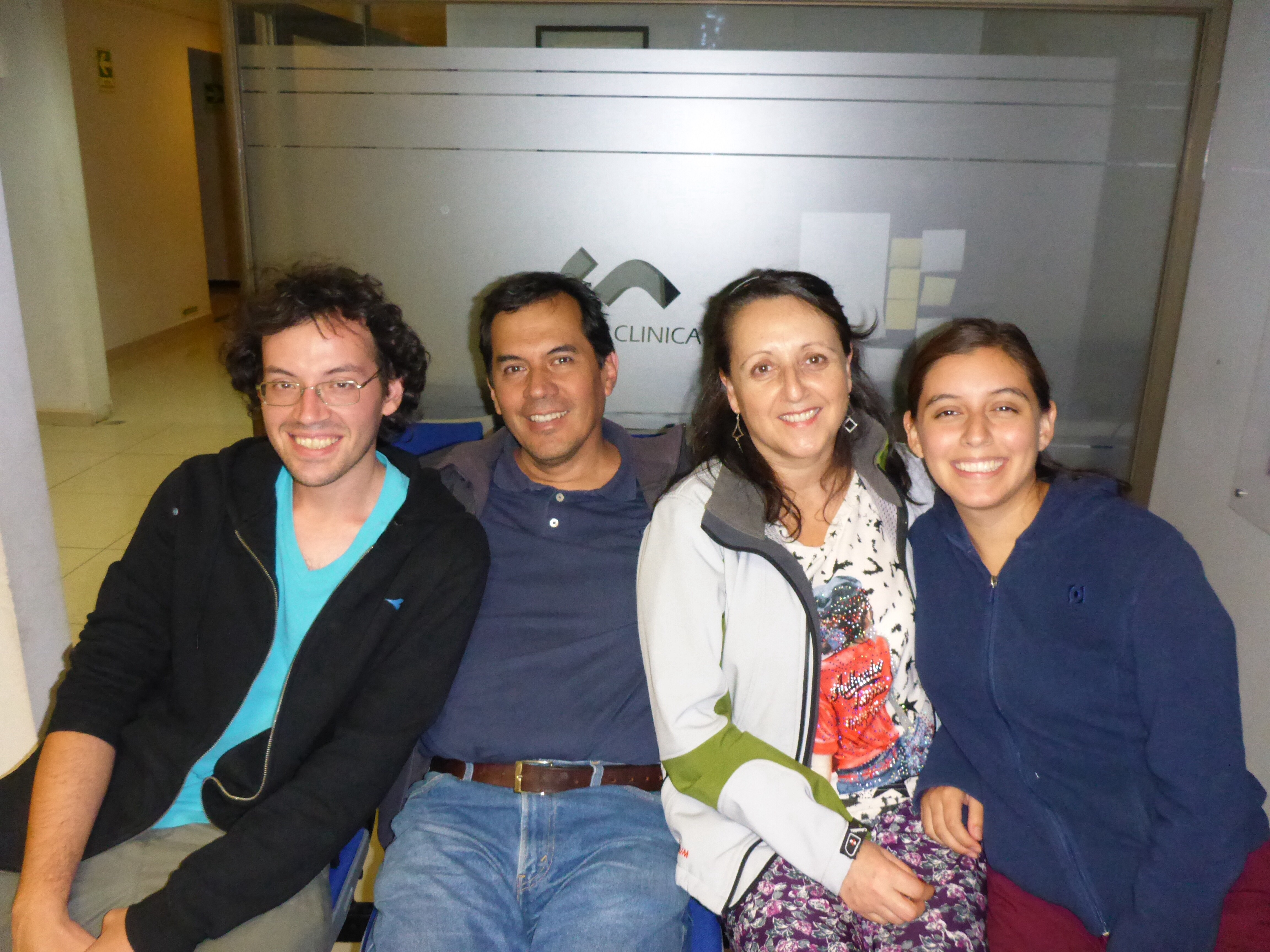
Diego, Ricardo, Marta and Monserrat - a beautiful family guided us to the clinic in Talca

Diego, Ricardo, Marta and Monserrat – a beautiful family guided us to the clinic in Talca

13 hours, 480 km, 80 of them on ripio (and washouts, loose gravel, soft sand & deep pre-historic golf balls), a motorcycle accident, border crossing, a clinic visit with X-ray and making new friends, we fall into bed after a different kind of day….

– Anthony

Finally heading North

We arrived in Santiago some 2 weeks or so ago with plans to head north through the Americas for New York. Here we are some 1,500 kilometres south of our intended departure point! Just goes to show, you need good geography and some flexibility when undertaking a trip of this nature. We have decided that we will run back mostly up Ruta 40 to Mendoza then across the Andes to Santiago by the third of March. Long days riding will be required but we have built in a spare day into our calculations for any unseen incidents.

San Carlos de Bariloche in the morning from our hotel

San Carlos de Bariloche in the morning from our hotel

Leaving San Carlos de Bariloche

Leaving San Carlos de Bariloche

The open road beckons and we are off, our route will take us away from the Andes heading for Zapala and beyond if possible today. Refuelled, we leave Bariloche behind and soon find ourselves running parallel the Rio Limay, the river that runs from the lake at Bariloche into the Rio Negro and the waters then flow in the South Atlantic Ocean.

Rio Limay an hour out of Bariloche on the RN 37

Rio Limay an hour out of Bariloche on the RN 37

As we watch large inflatable rafts negotiate very gentle rapids, I muse that drifting lazily down this gentle looking river on a large raft for a few days could be a very pleasant experience and one I would enjoy. For another time perhaps.

Confluence of the Rio Limay and Rio Traful

Confluence of the Rio Limay and Rio Traful

Onwards we press and as we leave the river behind and swing north we are exposed to a strong and persistent gusty headwinds.

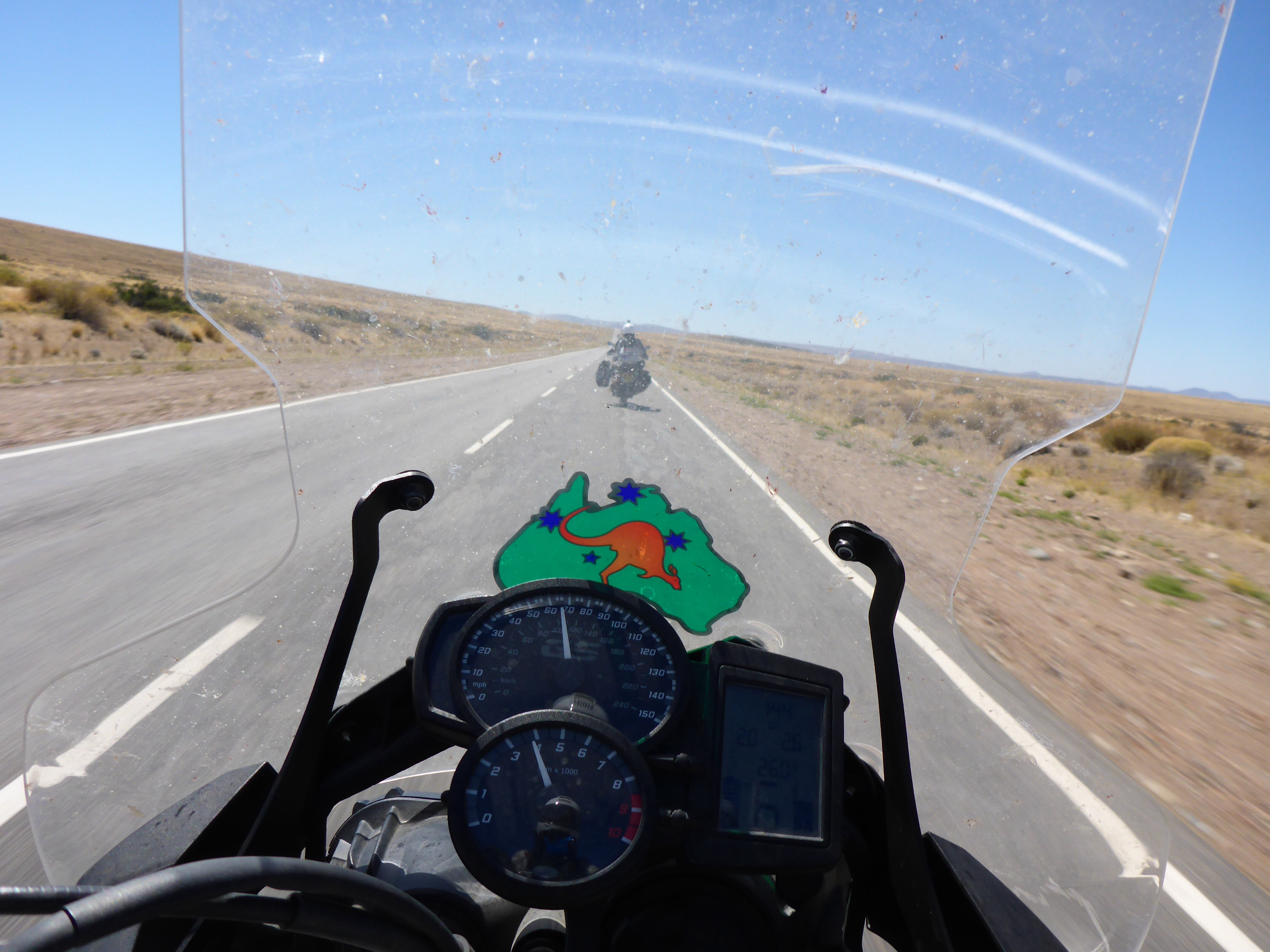
Heading towards Zapala on the RP47, battling strong head winds

Heading towards Zapala on the RP47, battling strong head winds

Both our higher screen and Cape Town riding experiences stand us in good stead as we are constantly buffeted about. For those of you not familiar with Cape Towns weather, strong winds from the Antarctic blast the city on a regular basis. We spent a couple of years living there and our follower(s) from Cape Town can comment further, as I presume that coming out of the city at hospital bend where two freeways cross and Table mountain’s protection finishes is still as interesting as ever.

We average about 400km per 16 litres of fuel and this has been pretty consistent throughout the trip. Usually we average higher if our speed is a little slower than 100 kph / 60 mph. Fuel stops are few and far between, plus Zapala is only 375km from Bariloche. My low fuel warning light comes on while we are about 50km from Zapala with Anne’s warning light following a few kilometres later. This is the first time this has happened to us. I recall that this means about two litres reserve left, the manual states 2.7l, so about 50 to 60km if we ease off a little. Anne gets four kilometres before the bike starts stuttering, a little recalibration required here please BMW.

We have just passed a police post, so Anne turns around to limp back and wait for me as I will continue on to Zapala, fill up our spare 4 litre fuel container and return. I am able to add just under a litre to my tank as our camping stove also uses the same fuel. This was a deliberate choice on our part. I ride as smoothly as possible, freewheel where I can and make it to Zapala. I coast into the petrol station to be told to join a queue in a side street. No chance, I tell them I will wait till the cars in the queue have passed first. I am not risking pushing the motorbike as I suspect I am very close to empty. Fuel tank 16.00 litres, filled 15.62 litres. That’s close enough for me.

Back to Anne who has spent the time talking to the local policeman, who tells her I will have taken the opportunity to do a runner and will not be back. I think he is disappointed to see me.

Anne spent 2 hours chatting with this policeman at his post 40kms out of Zapala waiting for Anthony to return with fuel

Anne spent 2 hours chatting with this policeman at his post 40kms out of Zapala waiting for Anthony to return with fuel

We stay at one of the few hotels that also has a casino. The town has at least two we have seen, but the casinos seem to attract no customers. We can only assume that some benefits must have accrued in constructing them.

Our next decision is which route north from Zapala. Our maps show a scenic route starting some 10 kilometres or so north of the next town of Las Lejias which links back up with Ruta 40 just south of Chos Malal. We are unsure as to which way to go and as we are pulled over in Las Lejias a battered Ford F150 pulls over. The driver is a motorbike rider and confirms the beauty of the scenic route, provides some detailed instructions of which roads to follow and we understand that we will only have 10 kilometres of ripio to cover. Great news.

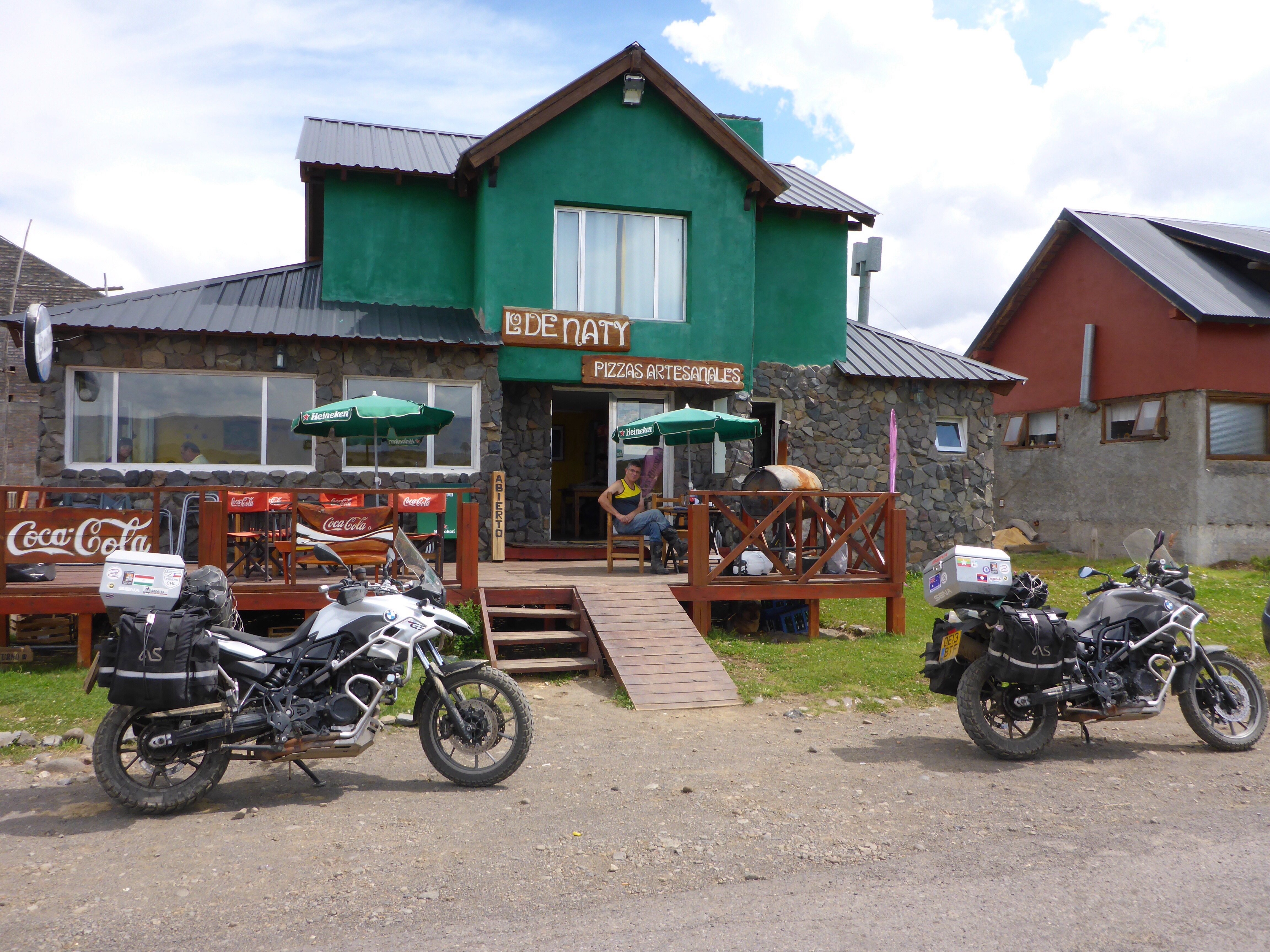
We follow his advice, and for those interested in looking on the map it RN21, RP26, RP27, RP21 and finally RP4. RN21 and RP26 provide an all tar route over a mountain pass to Caviahue which is the town for the Parque Caviahue ski area. It was interesting to see the higher quality of the houses here compared with the average houses in the towns and villages we had passed through. Ski home owners have money. As a remote summer destination, not many places are open, but we find a fantastic cafe that does great pizzas overlooking the lake. The charming english speaking owner, who swapped teaching for cooking, puts the thickest layer of non cheese toppings on a pizza I have ever seen. I could not think of a more idyllic place for lunch.

Loncopué, Argentina

Loncopué, Argentina

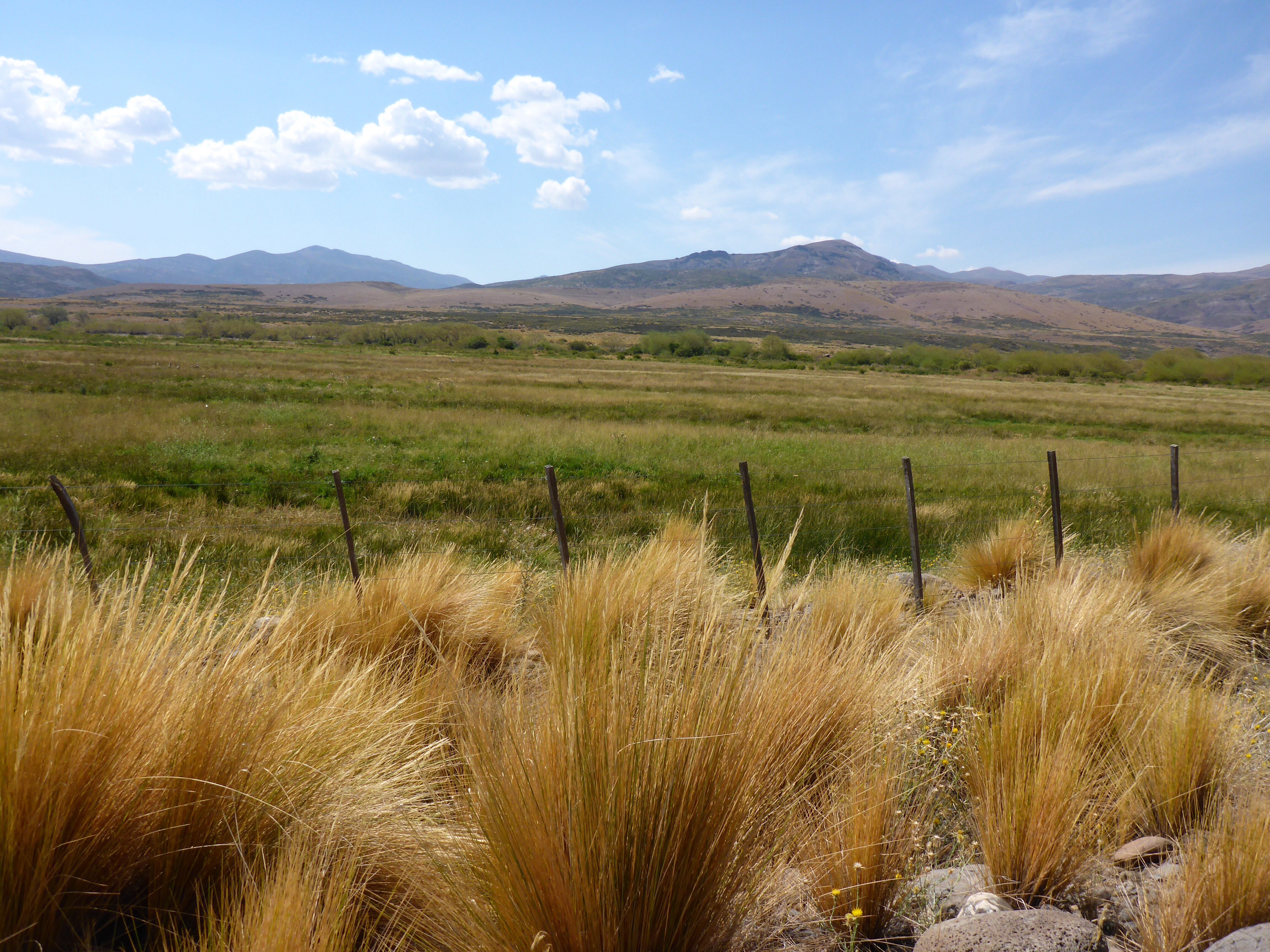
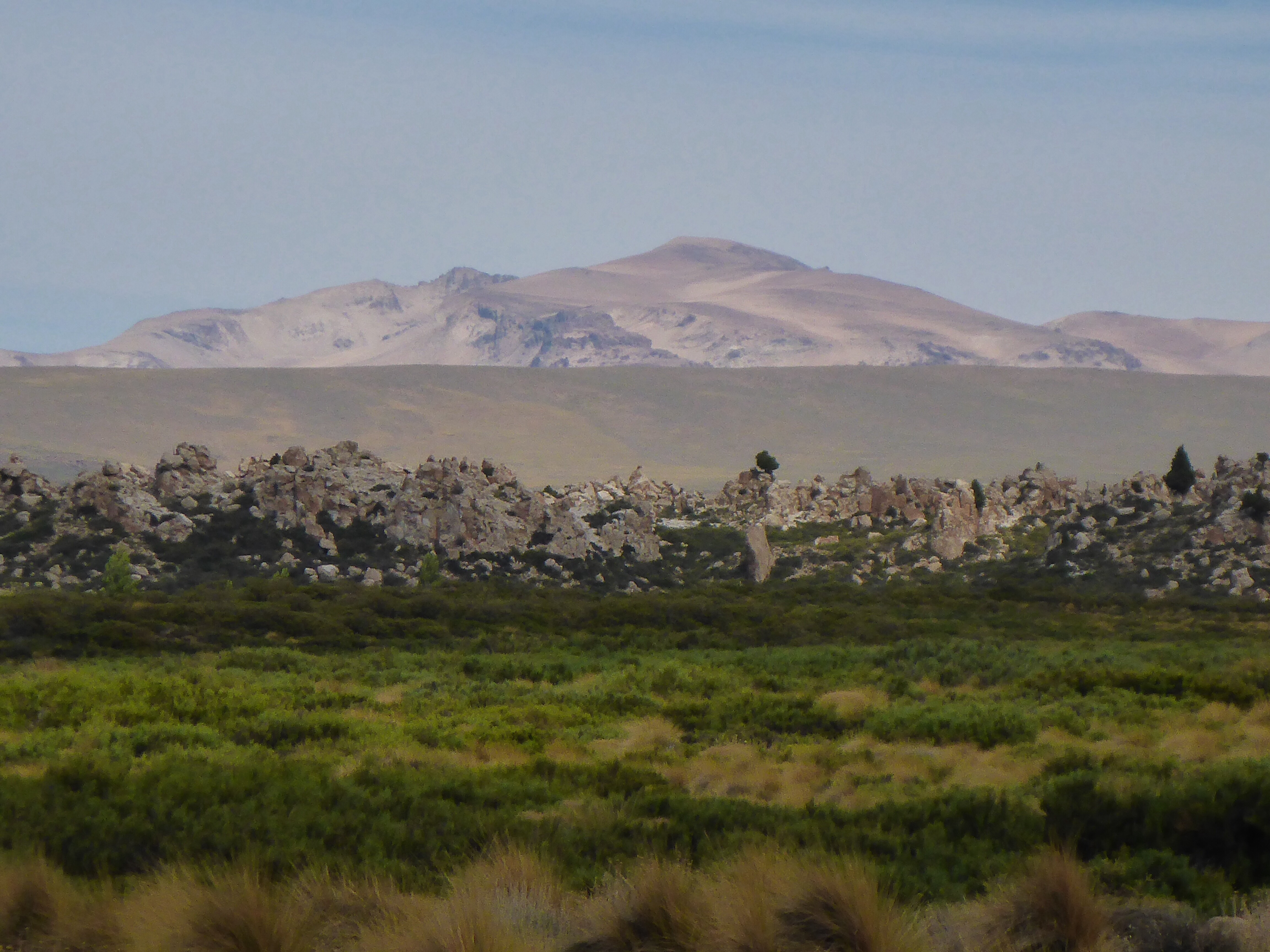
Heading towards Copahue, the rock formations are amazing - this is not a rock wall in the foreground but a long crest

Heading towards Copahue, the rock formations are amazing – this is not a rock wall in the foreground but a long crest

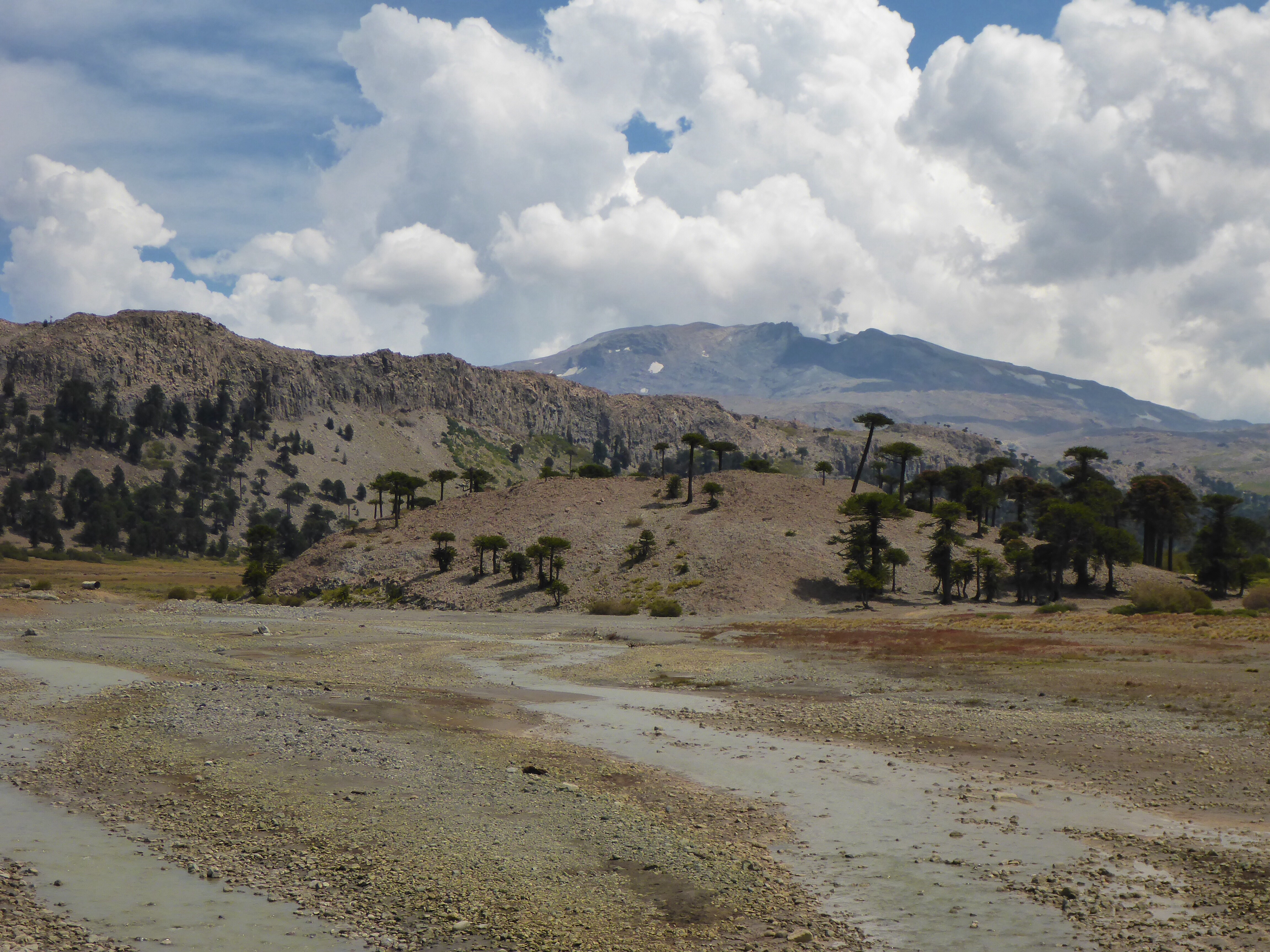
Volcan Copahue

Volcan Copahue

Had an amazing pizza at Caviahue on the RP26

Had an amazing pizza at Caviahue on the RP26

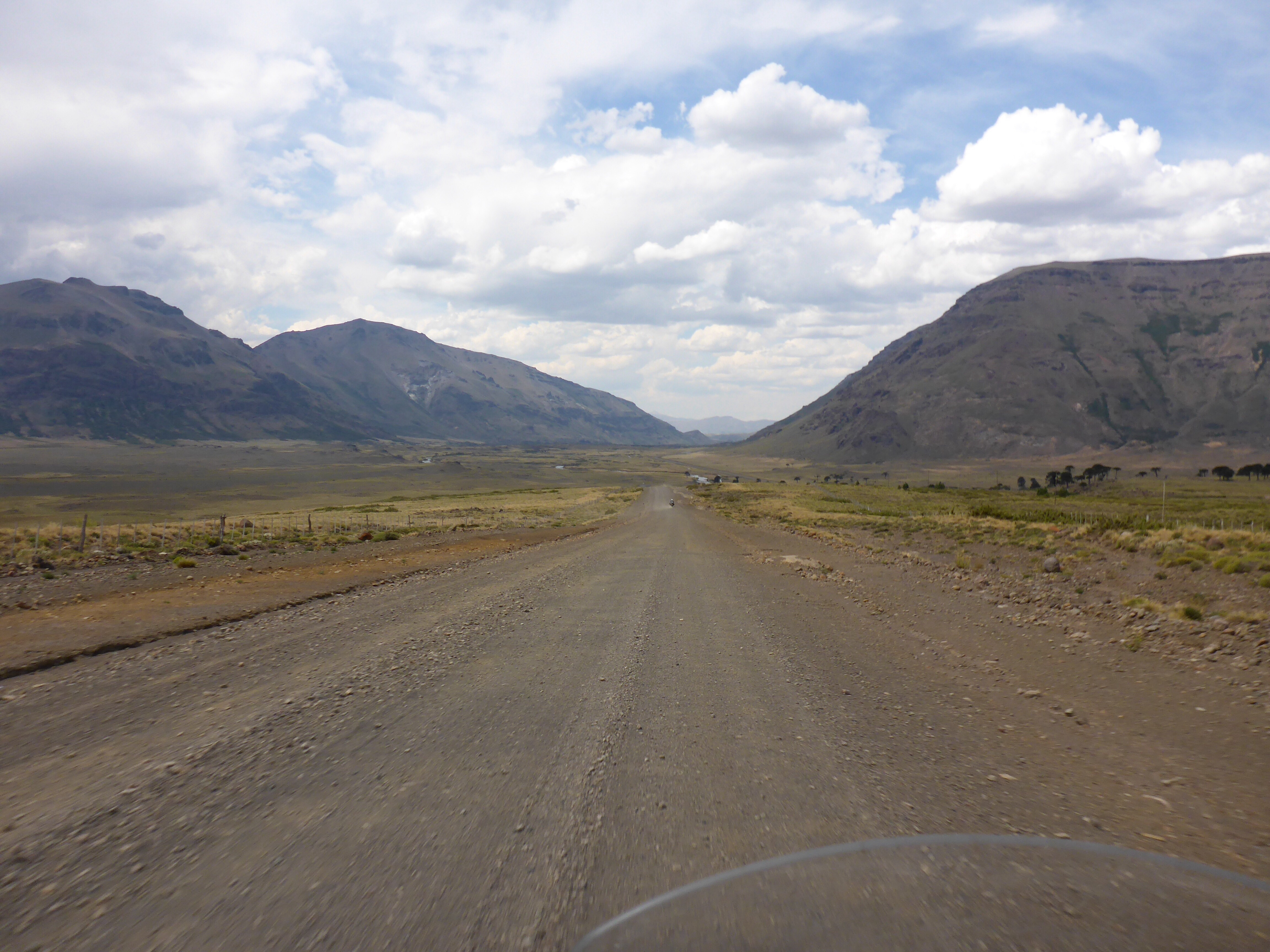
We now head off down our 10 km of ripio, err….seems to be going on and on and on! Neither of us are comfortable on this surface, mostly due to lack of experience. With a high proportion of loose gravel on the surface we seem to loose that nice connected feeling we have on tar. I think it is harder for Anne as she has a better sense of balance and feels the movement more acutely. Still as we progress over the 10,20,30,40 km of ripio we gain confidence.

Running along the Rio Agrio

Running along the Rio Agrio

Crossing Rio Agrio on the RP27 after Caviahue

Crossing Rio Agrio on the RP27 after Caviahue

This storm has been getting bigger for the past couple of hours - will we escape it?

This storm has been getting bigger for the past couple of hours – will we escape it?


As in many mountain locations afternoon storms can develop. Here is no exception and as jagged streaks of lightening hit the ground ahead of us, a sensible stop is called for. We finally reach tar again, only some 120 km of ripio, enough for today thanks, but all good experience. Anne feels that she has gained confidence today, even enjoyed the last hour’s riding on dirt – this will stand us in better stead for the parts of Bolivia where no tar alternatives will exist.
The massive storm that surrounded us for 2 hours left its mark on RP4

The massive storm that surrounded us for 2 hours left its mark on RP4

Out of the storm, not far to go now and Anne is feeling fantastic

Out of the storm, not far to go now and Anne is feeling fantastic


The 4 of us will need a good wash tonight!

The 4 of us will need a good wash tonight!


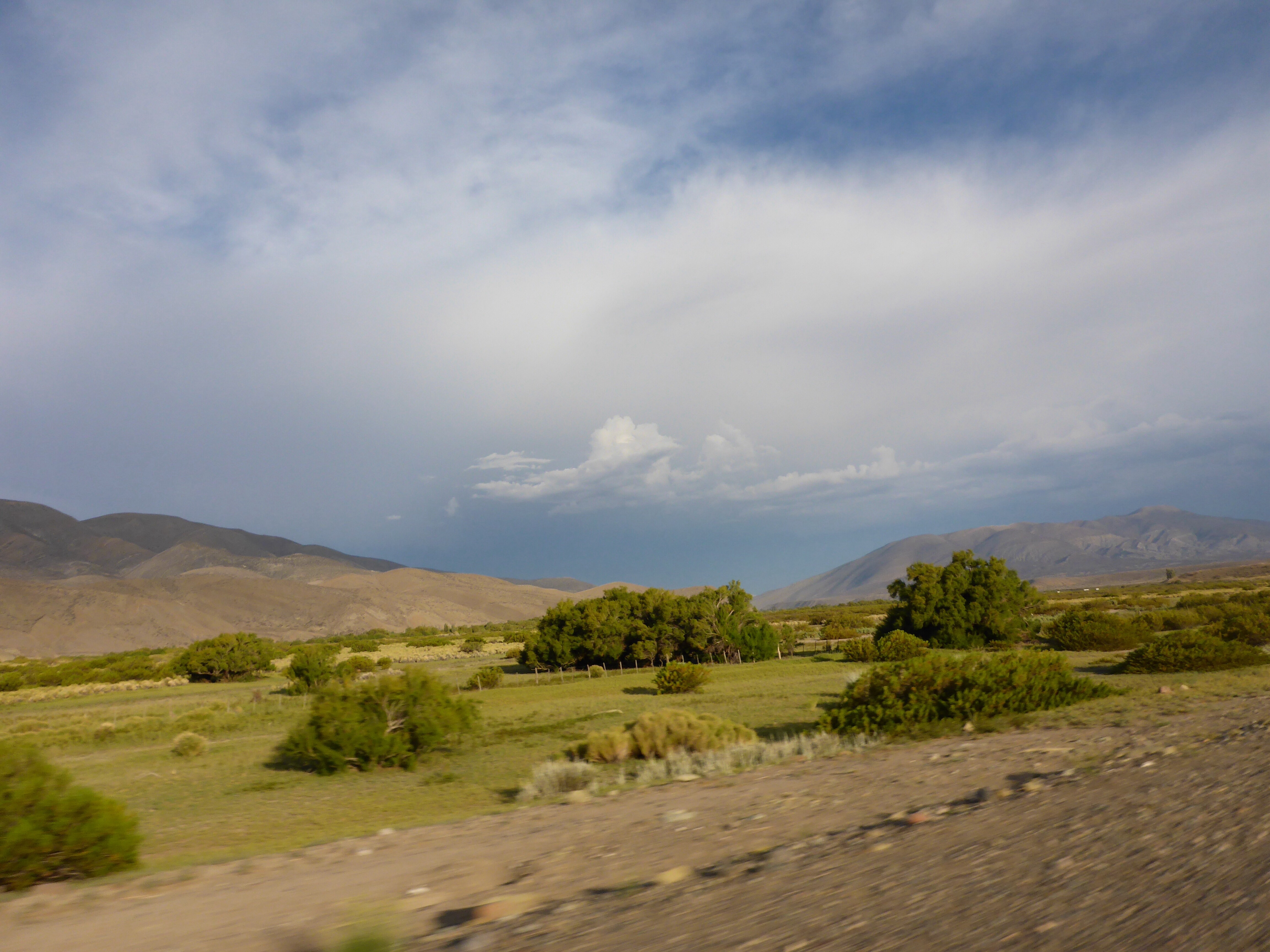
Gorgeous lighting after the storm as we approach Chos Malal

Gorgeous lighting after the storm as we approach Chos Malal

What a great day!

Anthony