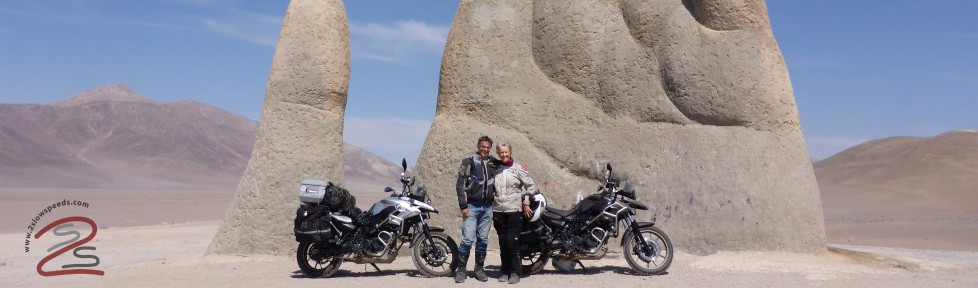
The bikes are back in town

I stand under the roof of the old control tower at Tocumen International Airport, now part of the cargo complex, as another COPA, the local airline, B737 roars overhead, looks like the 800 series

for those who are really interested. We have started the process to be reunited with our bikes, and already the information we have on the process to retrieve them is incorrect. This information came from a friend who undertook the same process a week earlier. Nothing stays the same or should be taken for granted when following ours or other people’s instructions.

Anne has disappeared into the distance and out of sight while I remain with our two small bags and a five litre water container now filled with fuel. We had problems getting this filled, due to sensible safety concerns at the petrol stations our taxi driver tried to fill the water container up at. Finally one petrol station provided a loan fuel container which we could the transfer then fuel to our water bottle out of sight. Anne’s fuel tank has so little fuel left after being drained in Medellin that I doubt that the petrol filter is still wet.

As the countries we travel through are closer to our safety conscious western ways, the standards increase and the enforcement of the rules grow. In some countries fuel, or what purports to be fuel, is sold in old soft drink bottles at the side of the road. ‘Caveat emptor’ we take the risk here, as at home risk is regulated away – rules and enforcement encourage the correct behaviour of all, except usually those who it was targeted at in the first place who ignore the rules anyway. I have no doubt that most people who have been impacted by accident or injury as a result of failure of safety rules would disagree with me and, probably if I or a loved one was affected I would think differently. However at this time, I believe we still need to opportunity for adventure and perhaps risk in our lives and should be afforded it, if it only impacts ourselves. Enough rambling from me, yes I am still waiting for Anne to return, what topical subject should I tackle next while I wait?

Anne is back, our bikes were shipped with a different airline, so the initial instructions have changed. I have moved to new location a few hundred meters away. Time to ponder again.

What should be our next subject? Since I am not on Twitter, Facebook or other social media and more importantly do not have internet access at this time, I will need to choose. ‘US Presidential election 2016 campaign’ . Anne is back and has the three stamps and knows where to go for the temporary import permit. I think I will soon be on unwrapping and assembly duty soon. As we have been travelling north and now have less than 10 months before we return to Australia, we are thinking about our future. Since we retired a couple of years ago, we think what next, Chapter two after Chapter one ‘A year in Europe, interrupted by RTW motorcycle trip’. I had idly thought: how about working for a US Presidential Candidate in their campaign? Probably not sensible as they seem to take clever hardworking young Americans, and I suspect that when I get back to Australia, I will have to work to pay for all the fun times we will have had in two and a half years. Yes, by the time we get back in March 2016, we will have been travelling since September 2014, which was not our original plan of 9 months in Europe seeing family and back home. Great how life can unfold. I had no idea when we left Australia that I could end up sitting in an airport car park in Panama.

I hope we do not have to ride the bikes off the loading dock, the meter plus vertical drop will be a challenge for the bikes’ suspension.
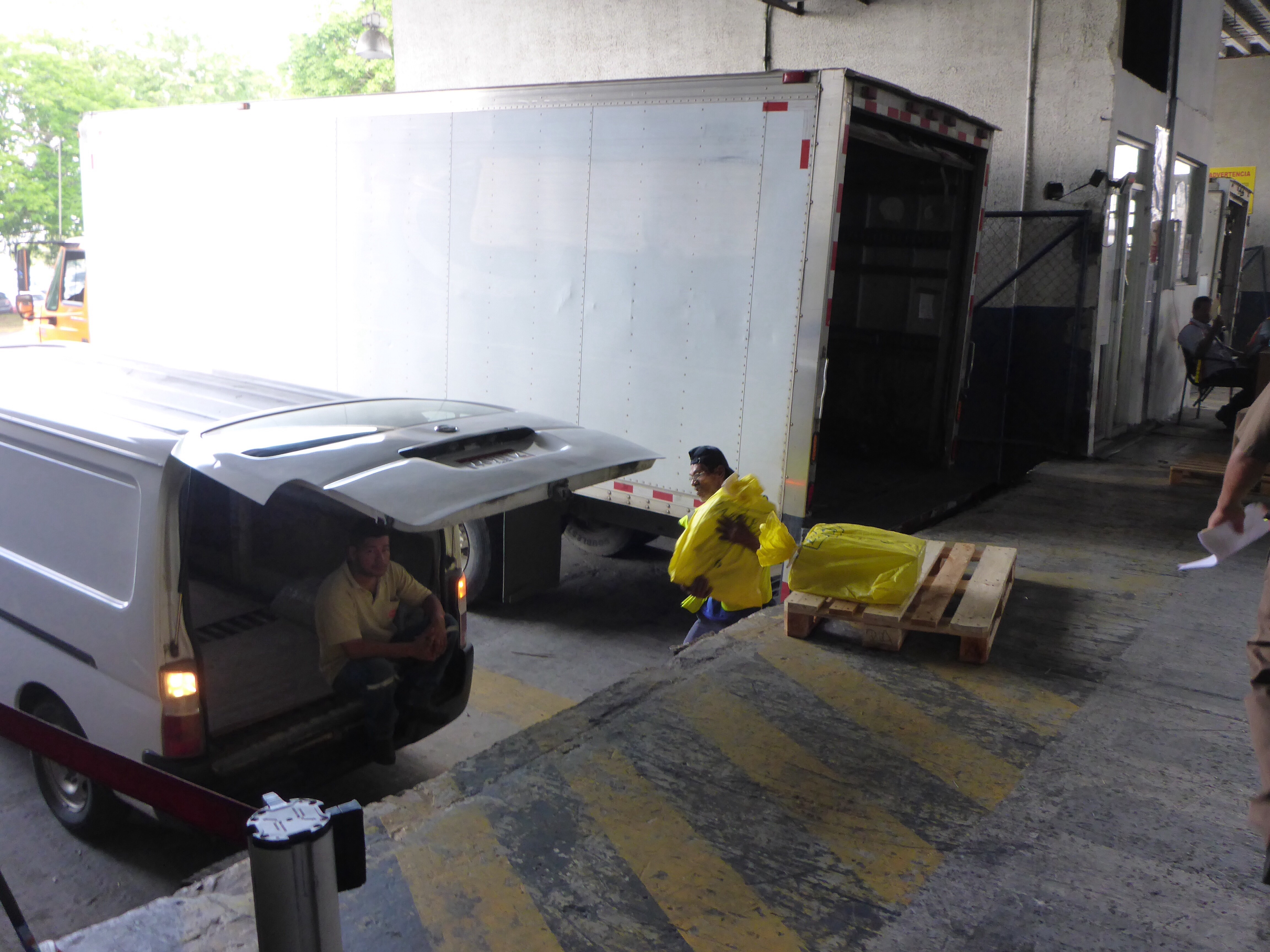
Panama cargo area - the drop is a bit too much for the bikes

Panama cargo area – the drop is a bit too much for the bikes

No, a back door exists and after donning a safety vest and changing my red warehouse visitors access card for a green airport apron access card, the bikes are then delivered on a metal frame just outside the gates literally, the front wheels are just outside the gates.

Our bikes are now delivered at Panama airport
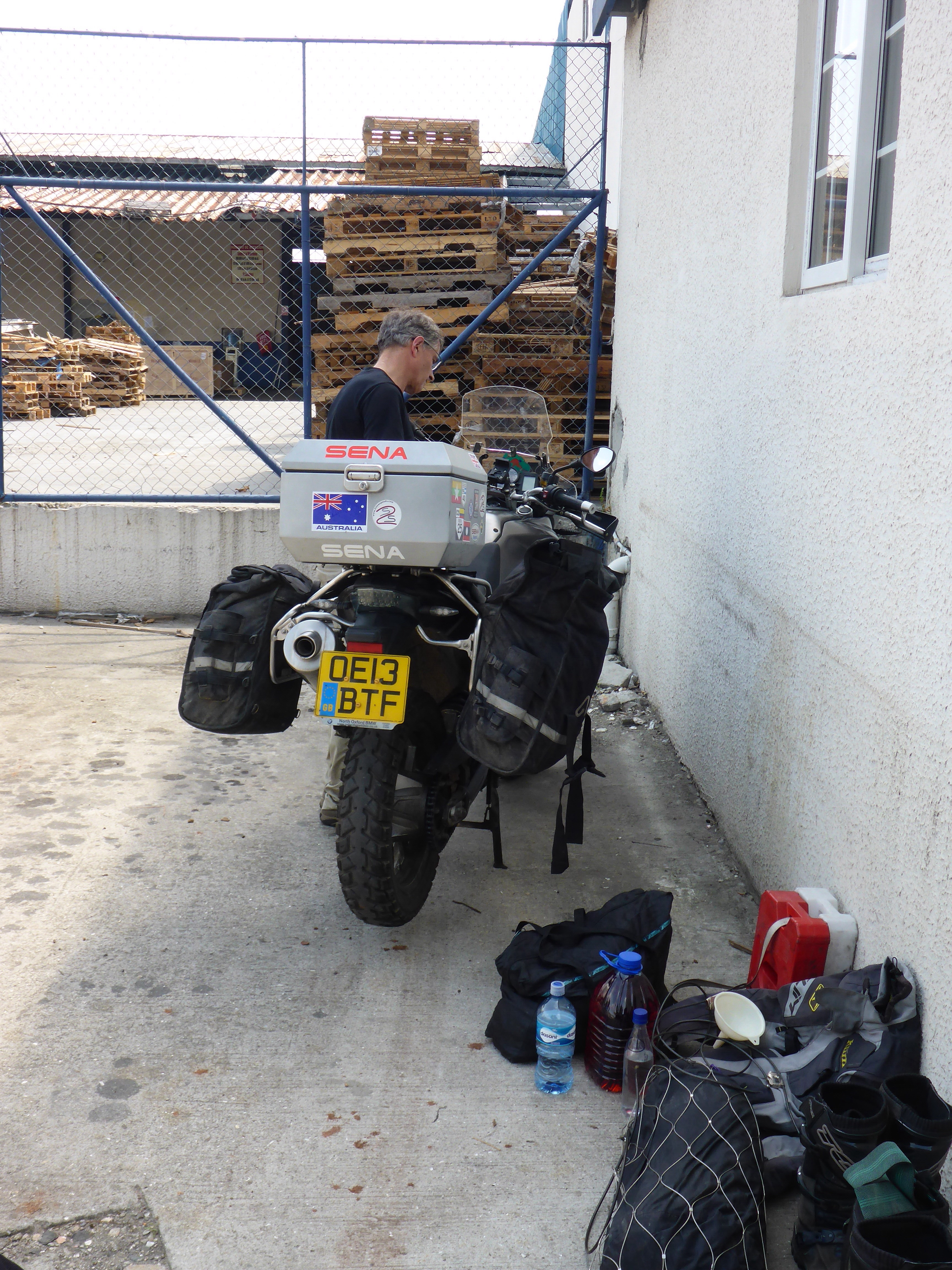
Our bikes are now delivered at Panama airport

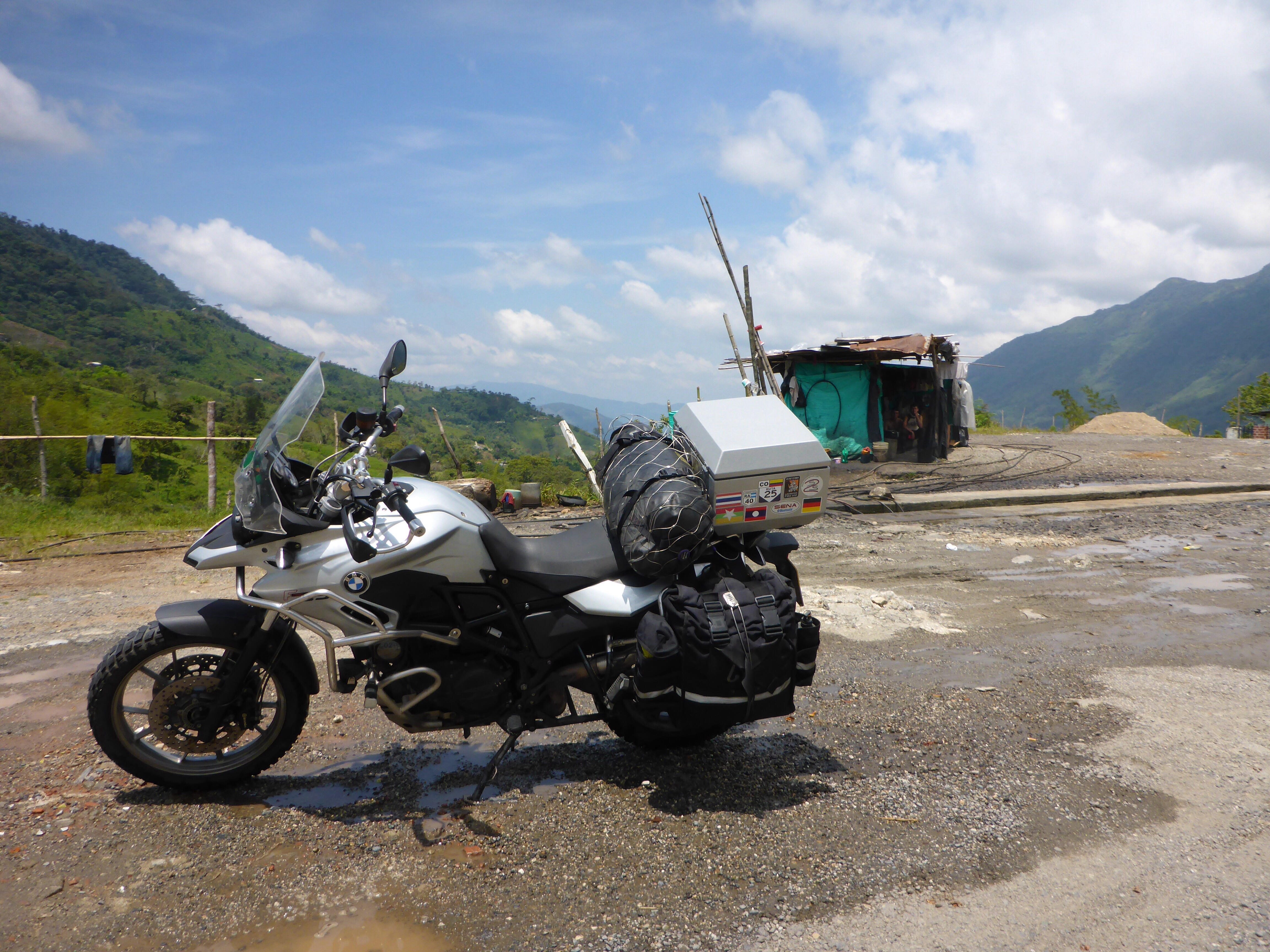
A tiny bit of shade to reassemble the bikes

A tiny bit of shade to reassemble the bikes

We fill motorbikes with fuel and are ready to depart for places unknown, err not quite, the steady flow of petrol from under the seats, where the petrol pump and filter we removed to drain the fuel tanks in Medellin must have not been replaced properly. We push the bikes away from the petrol bowsers for safety reasons and quickly start to syphon fuel from the tanks into spare containers. A downpour of rain makes life a little more problematic, and with no cover to work on the bikes, we decide to stay a night longer and find a dry hotel in town.

One of the 2 drowned rats while waiting for rain to stop.

One of the 2 drowned rats while waiting for rain to stop.

A quick internet booking and we are set for a slow ride to town having syphoned enough fuel out of the tanks to stop the leaking.

We remove Anne’s pump first, reseat the pump and gasket, all looks good, refit the locking ring, refill Anne’s tank and the fuel just runs out again. Damm.. We need to go to BMW as this is beyond our basics skills and the gasket is probably damaged . BMW Motorrad is not too far away, and here we meet Arturo, who is very helpful and arranges for their mechanics to look at the motorbikes even though they are busy – they will replace the gaskets. They also confirm we need new front tyres and that my suspicions of a problem regarding the steering are correct. Anne had questioned hers previously but had been told all was ok so put it down to her highly sensitive sense of balance. We will need new steering head bearings but as they are very busy with other bikes, they can’t get to that this week. The tyres will have to be done in San Jose, Costa Rica as none of our size are available in Panama and the steering head bearings will also be done in San Jose under warranty. Arturo has kindly contacted BMW Motorrad in San Jose to confirm availability and prices, very helpful for us.

Panama uses US dollars and we need to get some smaller banknotes and yesterday we used a 100 dollar bill at a supermarket finding that for each 100 dollar bill they need your ID, signature and two staff counter signatures. Interesting that they are so concerned about this – forgeries I presume?

We have the bikes back and are set to go tomorrow.

– Anthony
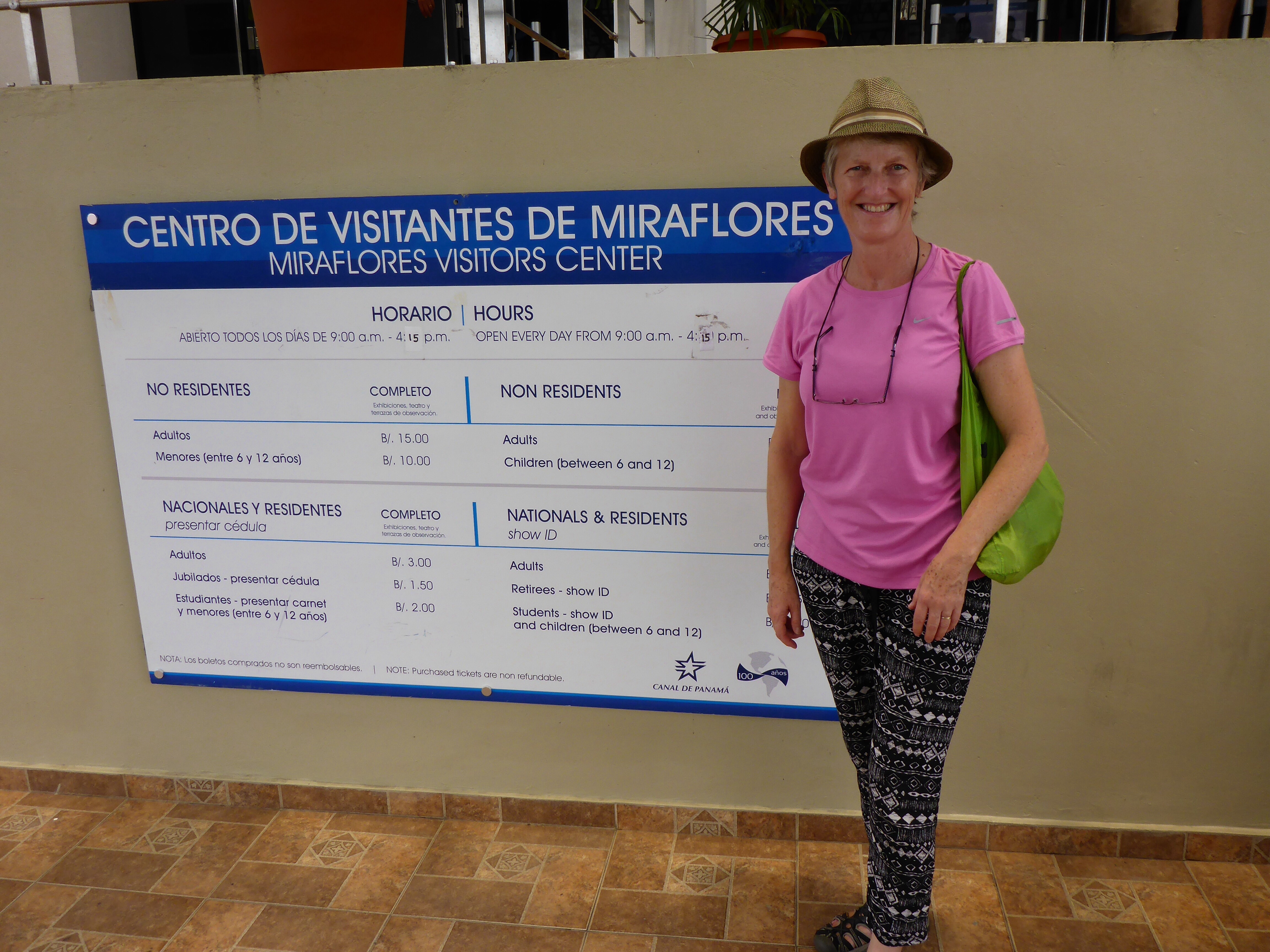
Surprised to be so inspired in Panama City

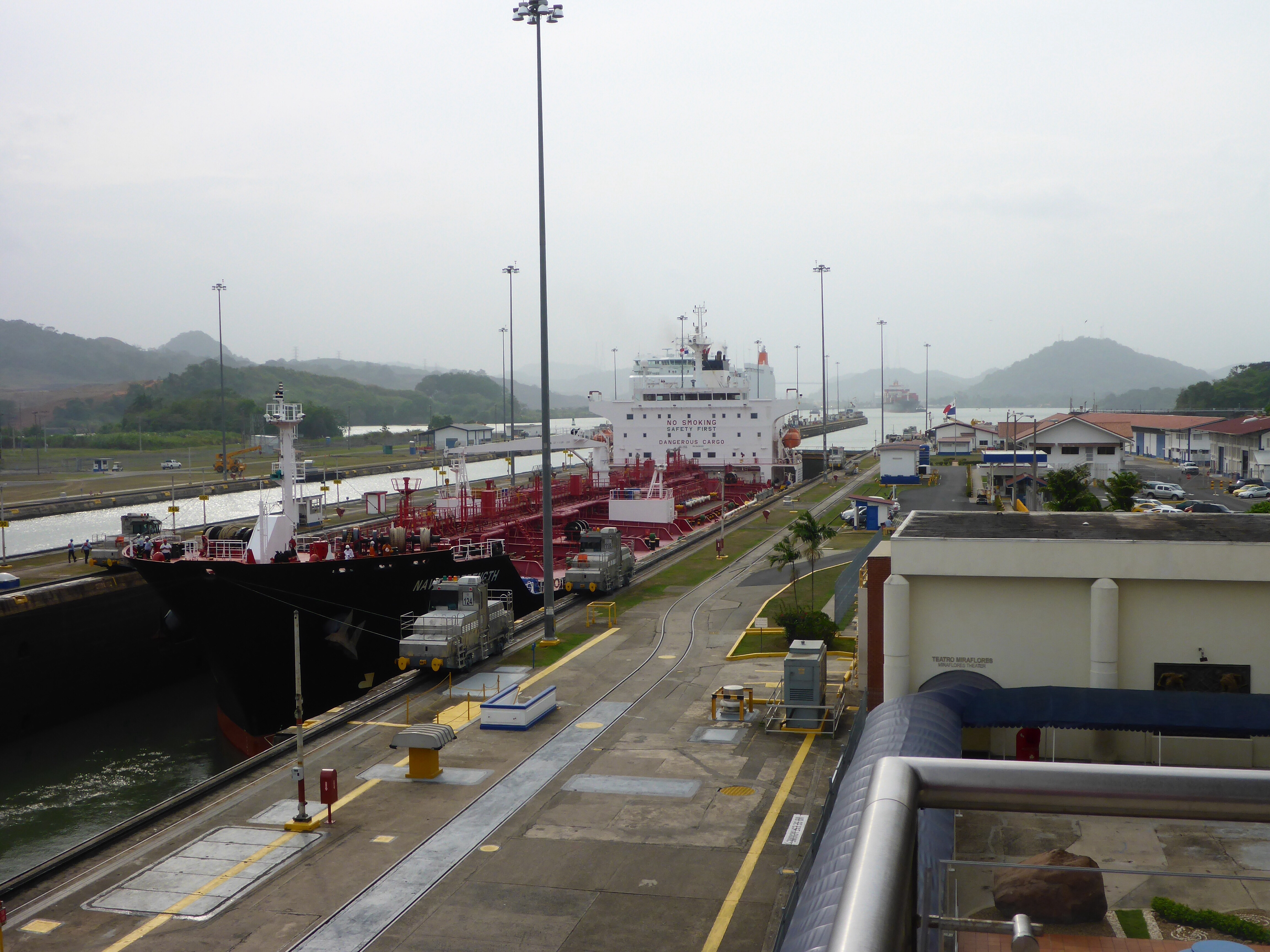
Our first full day in Panama City and we decide to go to the Panama Canal Miraflores Visitor Centre. I was looking forward to seeing this world famous canal, one which my mother went through when she travelled by container ship to visit us in Australia.

About to learn all about the Panama Canal

About to learn all about the Panama Canal

What I hadn’t counted on was how utterly fascinated and inspired I would be at seeing it and watching vessels pass through over the next 6 hours!!! Maybe it was because of the recent difficulty we had had on finding a way to cross the Darien Gap and get to Panama? Or knowing how many people died trying to cross the Darien Gap and building the canal. But the importance of the Canal was suddenly clear: I felt like it was allowing the life blood of the shipping world to flow, a connector for the entire world in fact. Building the Canal was a monumental engineering feat.

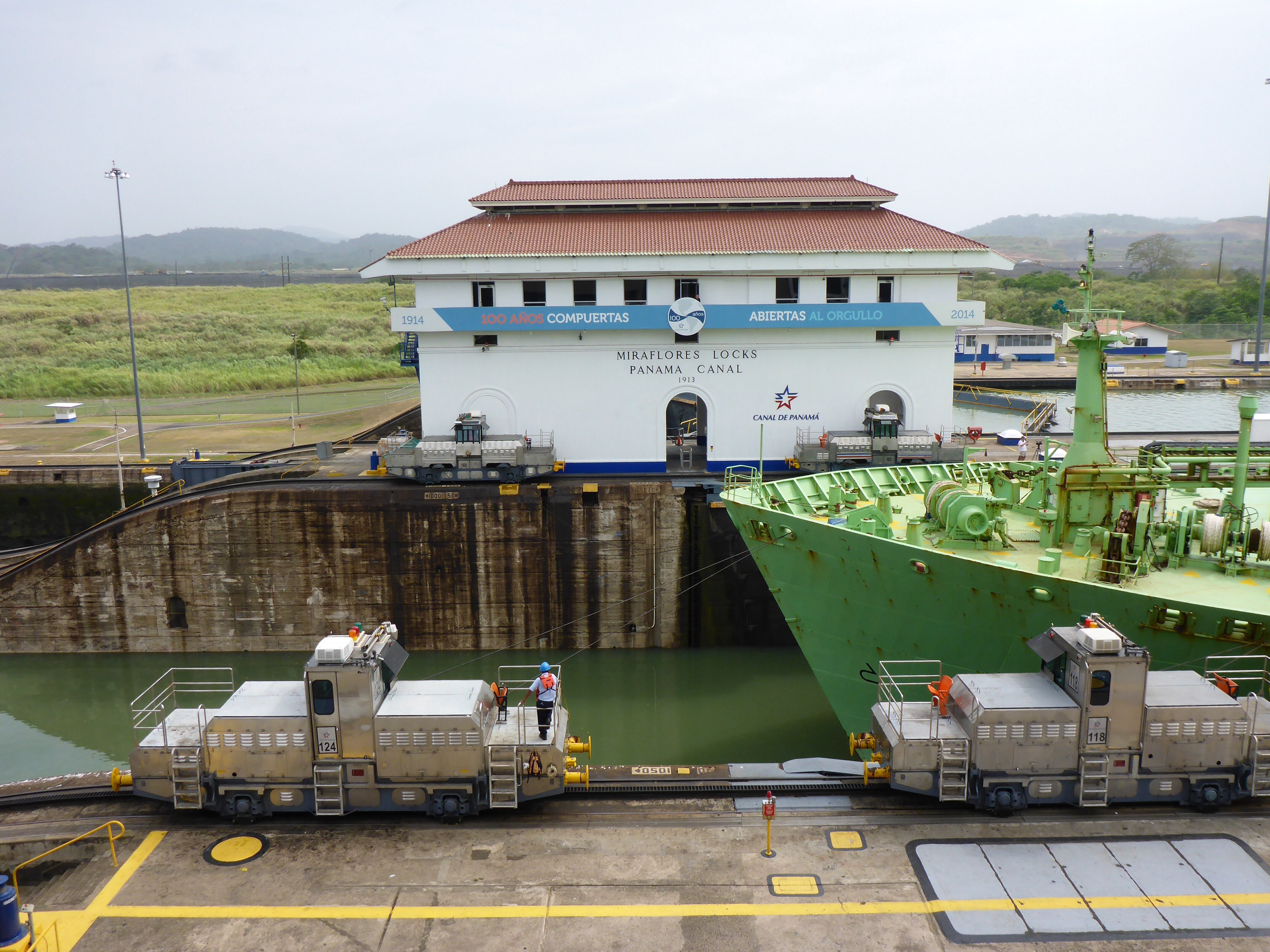
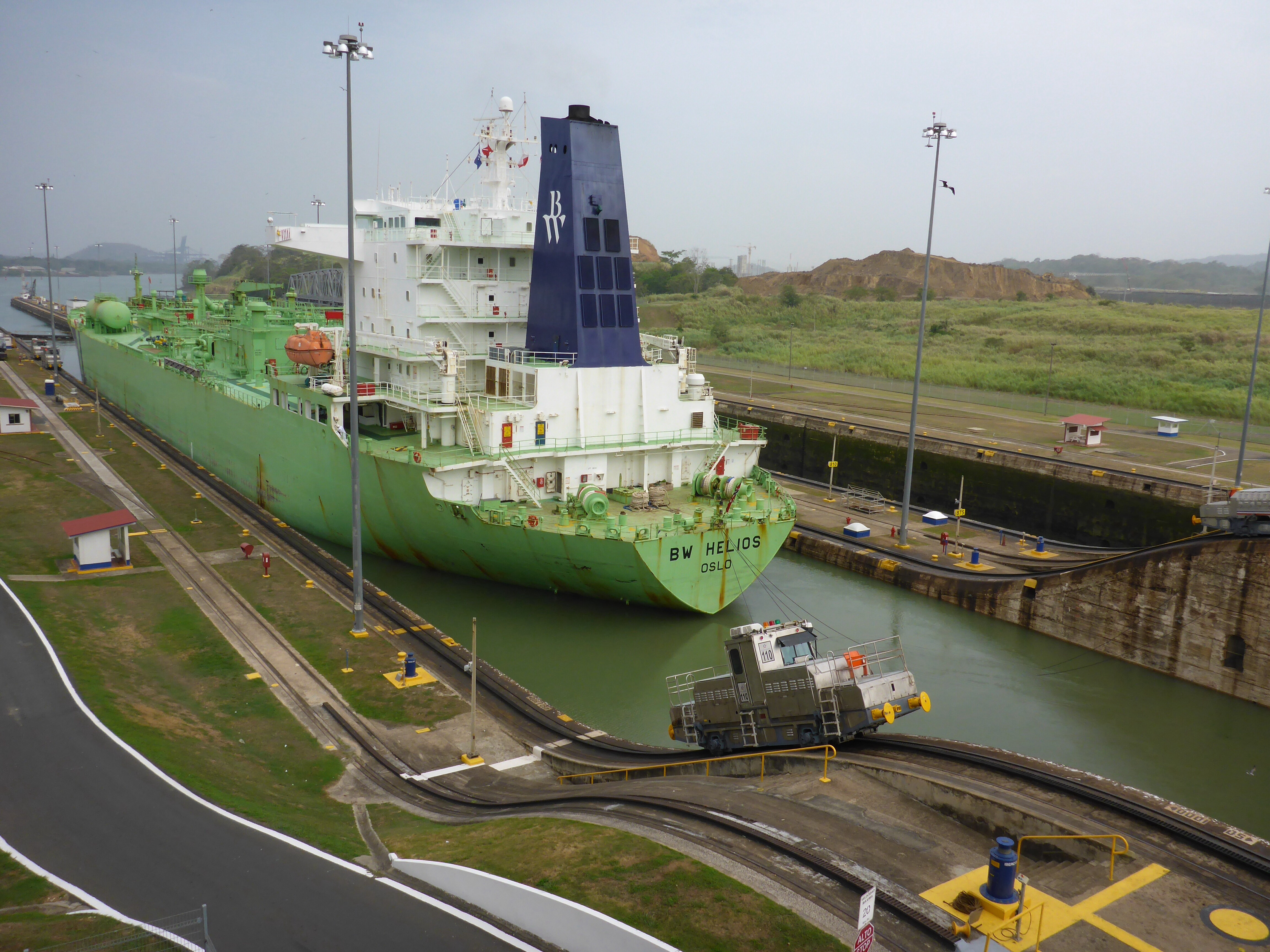
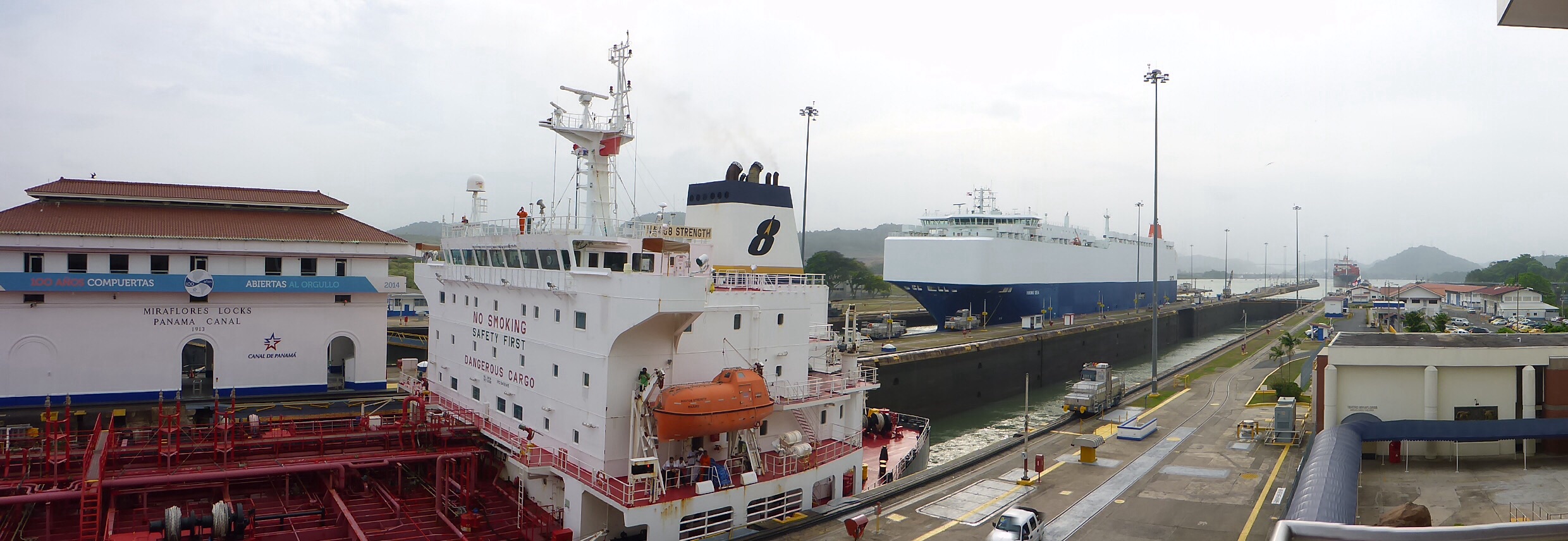
Here are a few facts: the Canal opened in 1914 and connects the Atlantic and Pacific oceans across the Isthmus of Panama. It is 77kms long and 25 metres above sea level, the level of Gatun Lake which feeds the system of locks. The canal enables ships traveling from New York to California to trim 13,000kms off its voyage by bypassing the tip of South America. Between 30 to 40 ships use the canal a day. On average, it takes a ship 8 to 10 hours to pass through the canal. While moving through it, a system of locks raises each ship 85 feet above sea level. Ship captains aren’t allowed to transit the canal on their own; instead, a specially trained canal pilot takes navigational control of each vessel to guide it through the waterway. As the ship enters the lock, the ship is guided by 4 to 8 engines on tracks to make sure the ship doesn’t collide into the canal walls. It is absolutely incredible to see these huge ships gliding through the locks, with so little spare space, the engines attached to cables slowly pulling the ships along the locks. There is a size called Panamax, the maximum width and length allowable for ships to use the canal.

And here’s a brief history of the canal. The idea for a canal across Panama dates back to the 16th century but a survey ordered by Charles V determined that the construction of a ship canal was impossible. The first serious attempt at building a canal didn’t start until the 1880s by the men behind the Suez Canal and the Eiffel tower. The project was plagued by poor planning, engineering problems and tropical diseases (malaria and yellow fever) that killed 20,000 workers and the excavation proved more difficult than anticipated. The company was declared bankrupt in 1889. Sadly Eiffel retired from business after being accused of fraud and mismanagement of this project.

America originally thought of building a canal in Nicaragua but thanks to some intense lobbying by Philippe-Jean Bunau-Varilla, one of the French engineers who had been involved in the failed French project, who convinced American lawmakers than Nicaragua’s volcanoes made it too dangerous but they should rather buy the old French assets. Although the US congress approved the purchase of the French assets in 1902, Colombia, which Panama was part of, refused to allow the US to build the Canal. The Panamanians revolted and declared independence and negotiated the Hay-Bunau-Varikla treaty which gave America the right to a zone of more than 800 square kms in which it could construct a canal, a zone to be controlled in perpetuity by the Americans. Well, not quite because, after some riots in 1964, then a number of political negotiations and treaties, Control of the canal was transferred peacefully to Panama in December 1999, and the Panamanians have been responsible for it ever since. The canal took 10 years to build, during which time 5,600 workers died, mostly due to accidents rather than tropical disease. The canal is currently being expanded to handle today’s megaships, up to the “New Panamax” size limit, and cargo vessels carrying nearly three times the amount currently accommodated. They won’t however be super-sized enough for the world’s largest cargo ships such as Maersk’s Triple E class ships, which measure 60 metres wide and 400 metres long!!

Interestingly, a century after the United States completed the Panama Canal, a navigable link across Nicaragua remains a possibility: in 2013, a Chinese company announced it had struck a $40 billion deal with the Nicaraguan government for the rights to construct a 275kms long waterway across Latin America’s largest fresh water lake and finally broke ground to start building the access roads in December 2014. Sadly, the Nicaraguan government has stated it does not have the funds to conduct an environmental impact study and I fear the construction of this new canal will be disastrous for Nicaragua ecologically…

Here is a selection of the 300 photos I took of the canal:

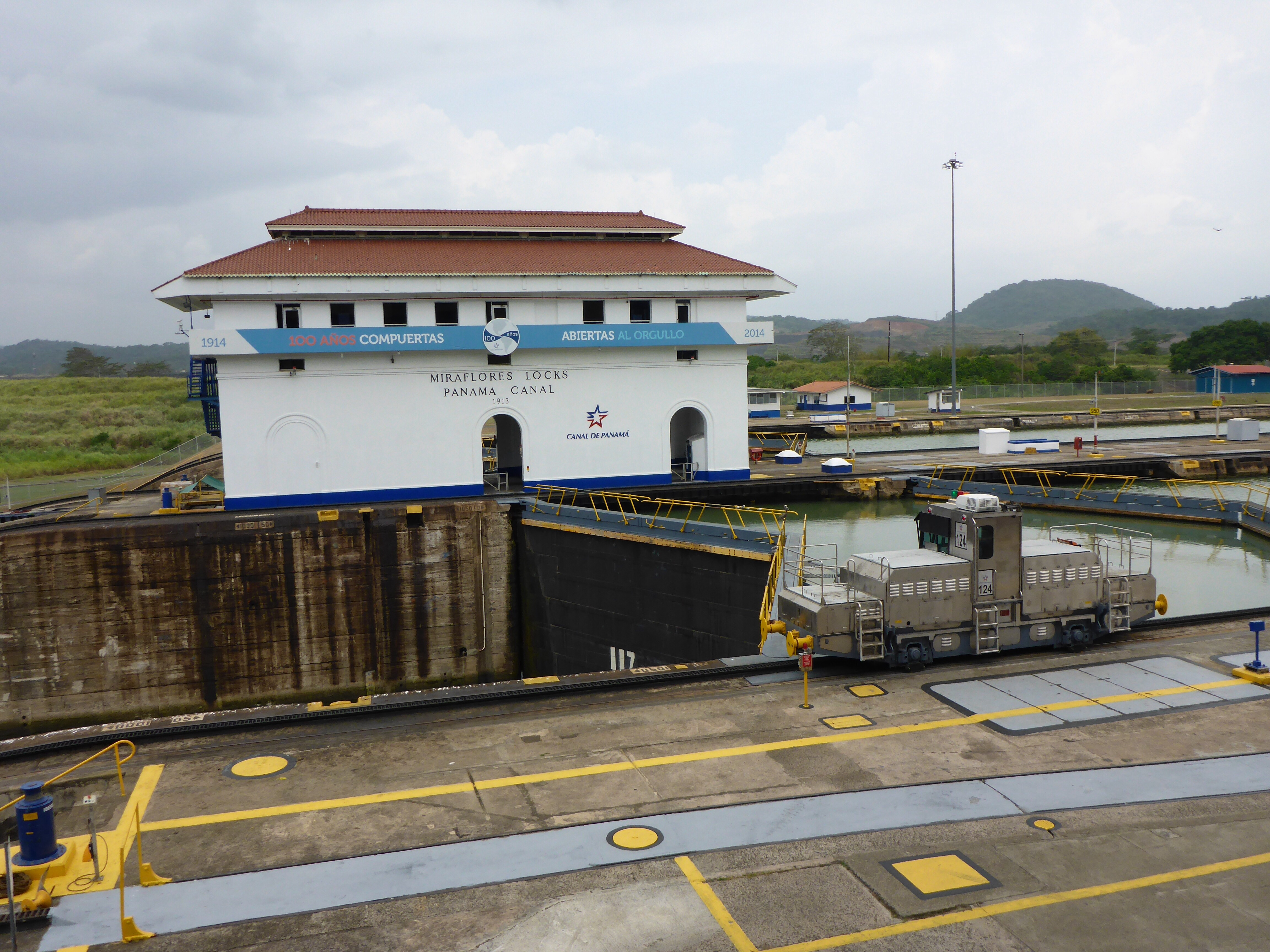
Panama Canal locks

Panama Canal locks

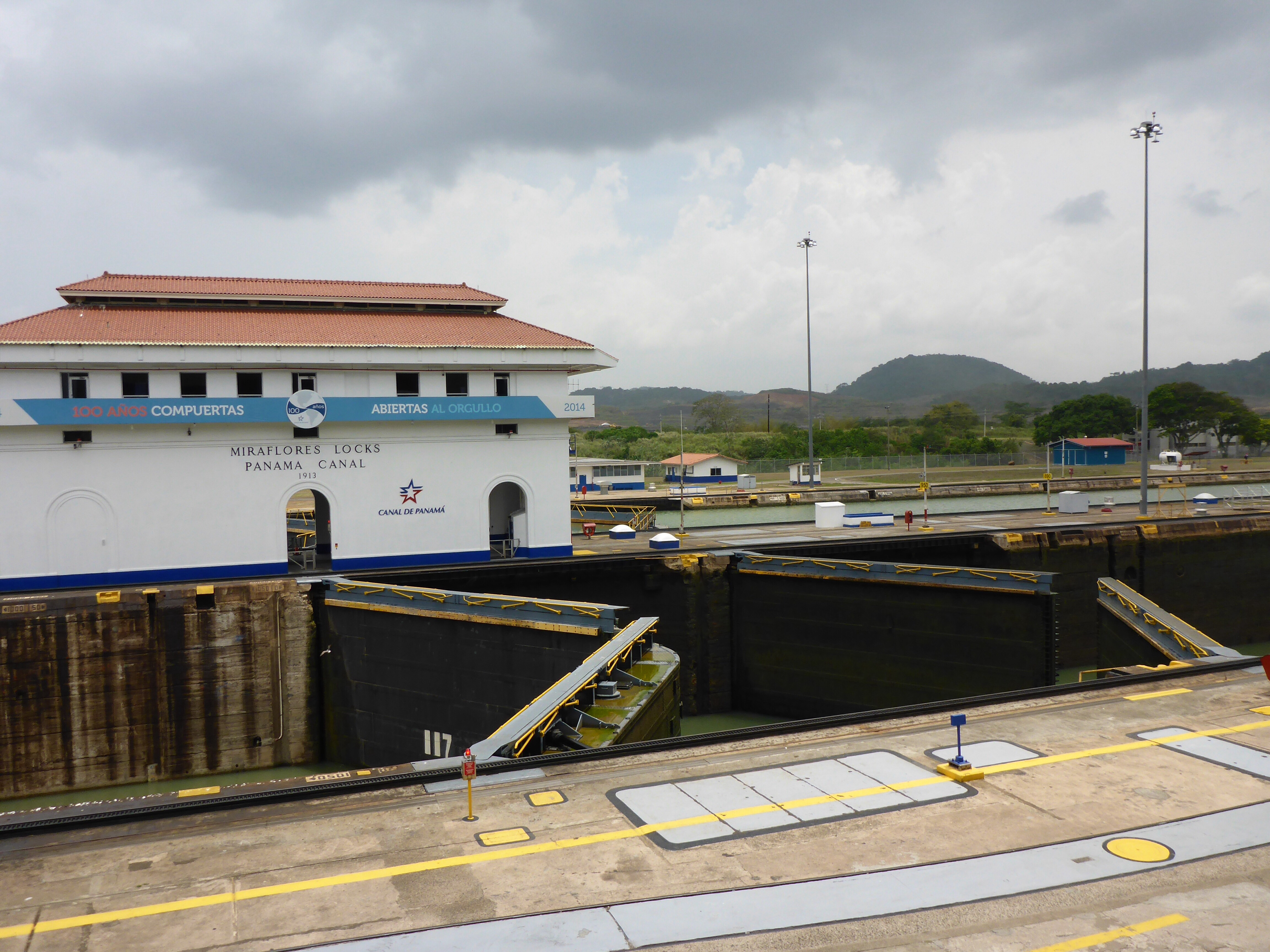
Lock gates opening, Panama Canal

Lock gates opening, Panama Canal

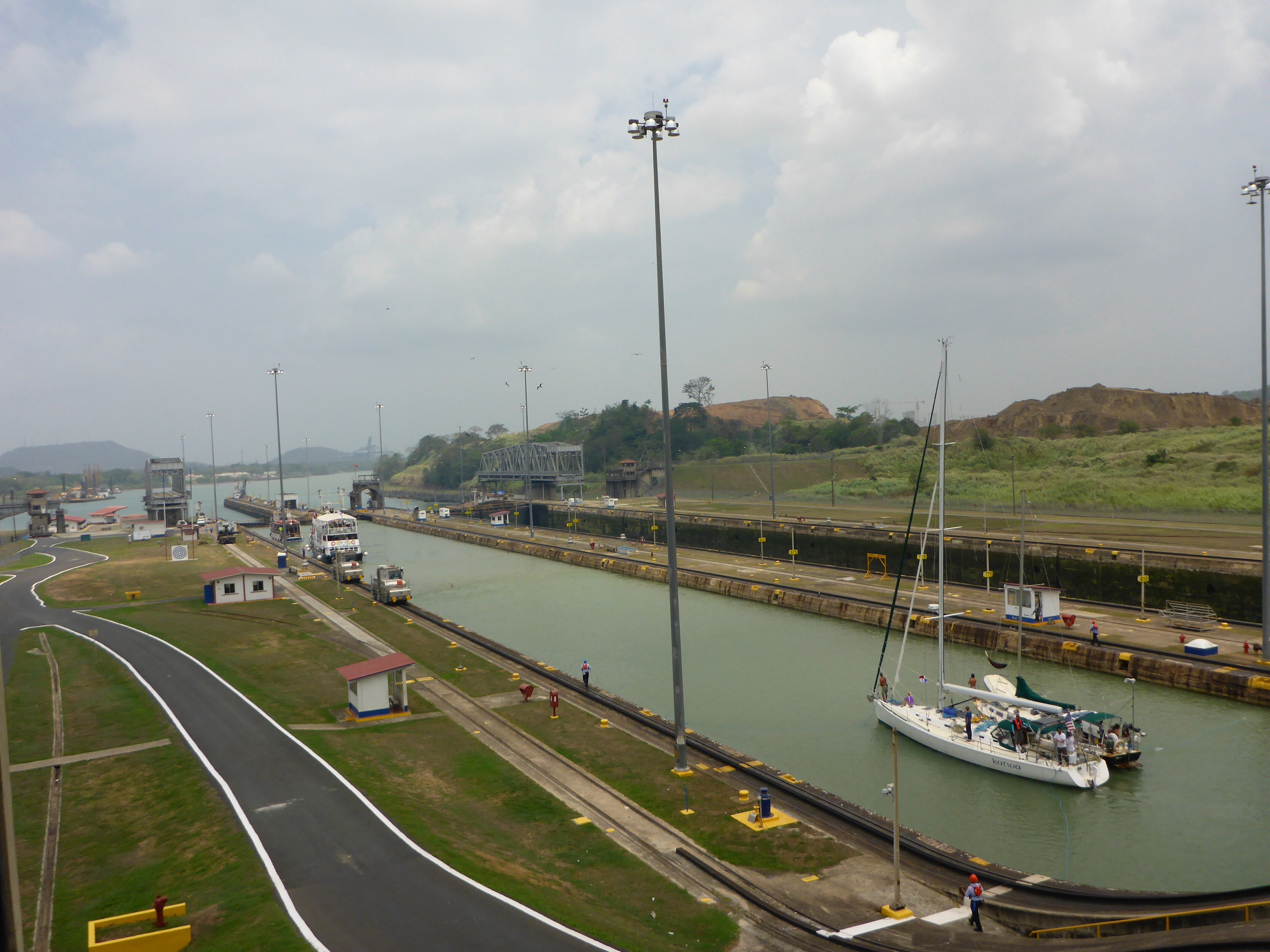
Boats of all sizes use the Panama canal

Boats of all sizes use the Panama canal

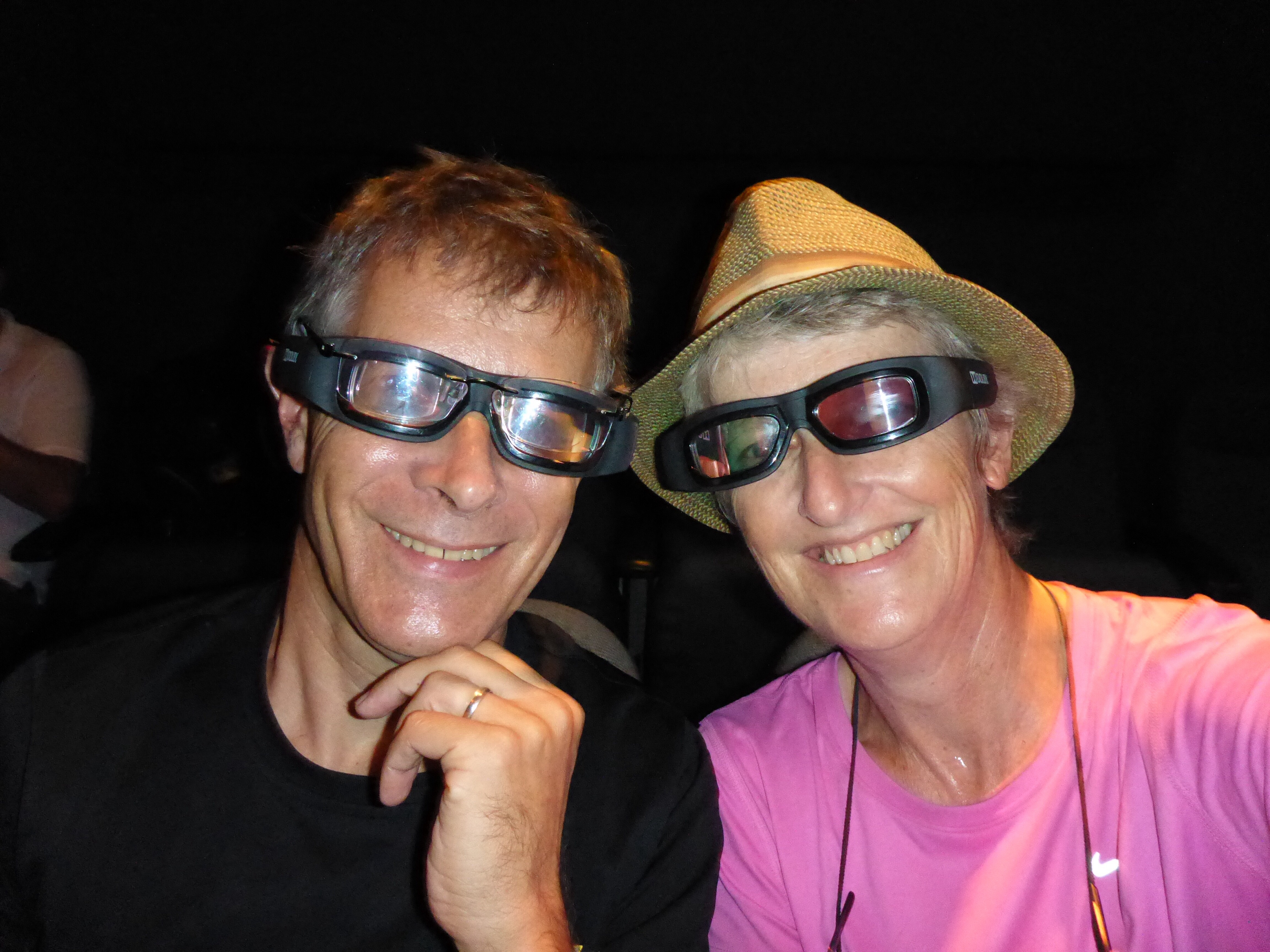
Time for a 3D movie on the Panama Canal history and operation

Time for a 3D movie on the Panama Canal history and operation

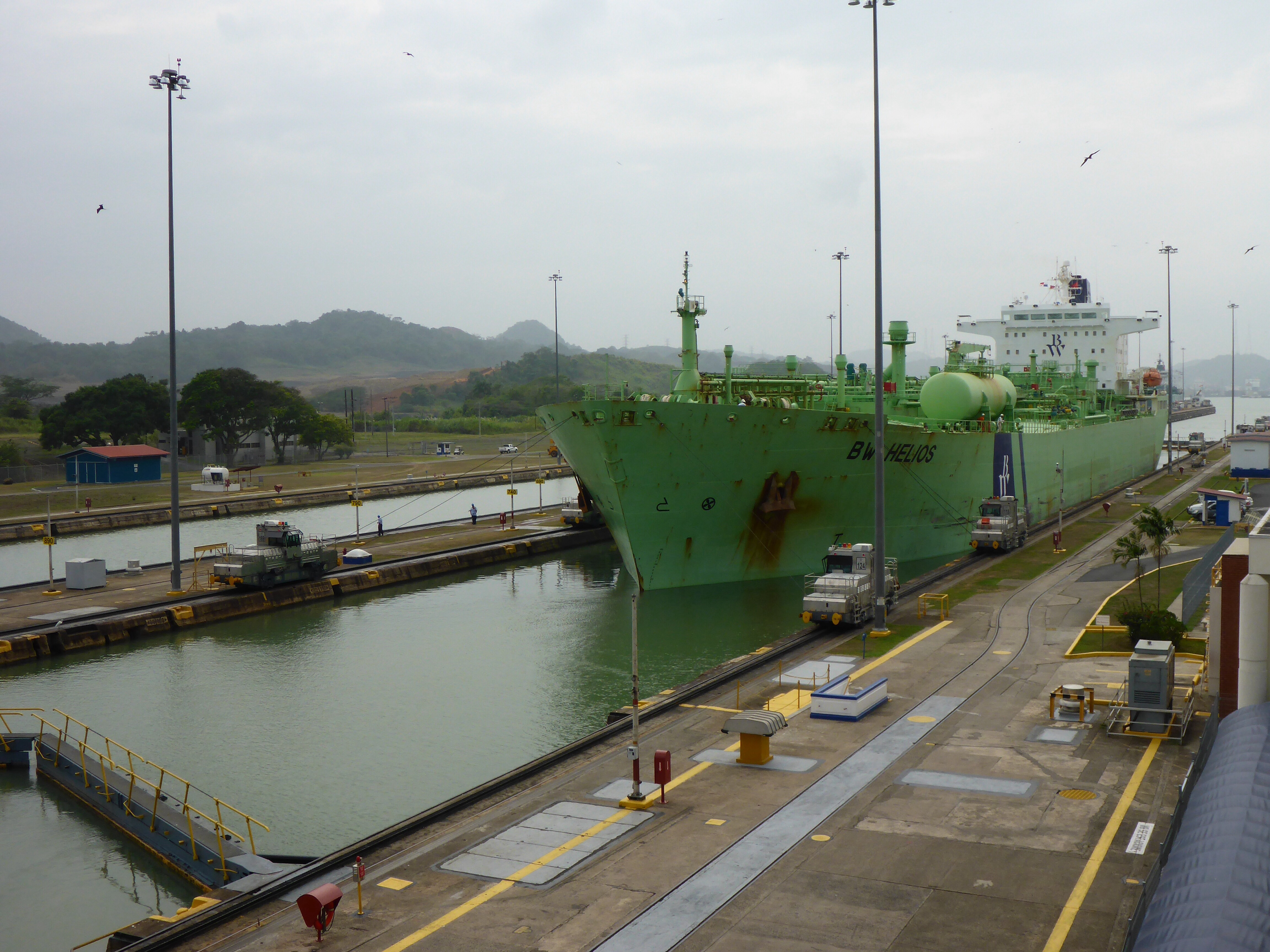
Tanker in one lock...

Tanker in one lock…

Lock level dropped...

Lock level dropped…

Gates opening...

Gates opening…

...time to move to the next set of locks

…time to move to the next set of locks

... Now in the last set of locks ready to head out to the Pacific

… Now in the last set of locks ready to head out to the Pacific

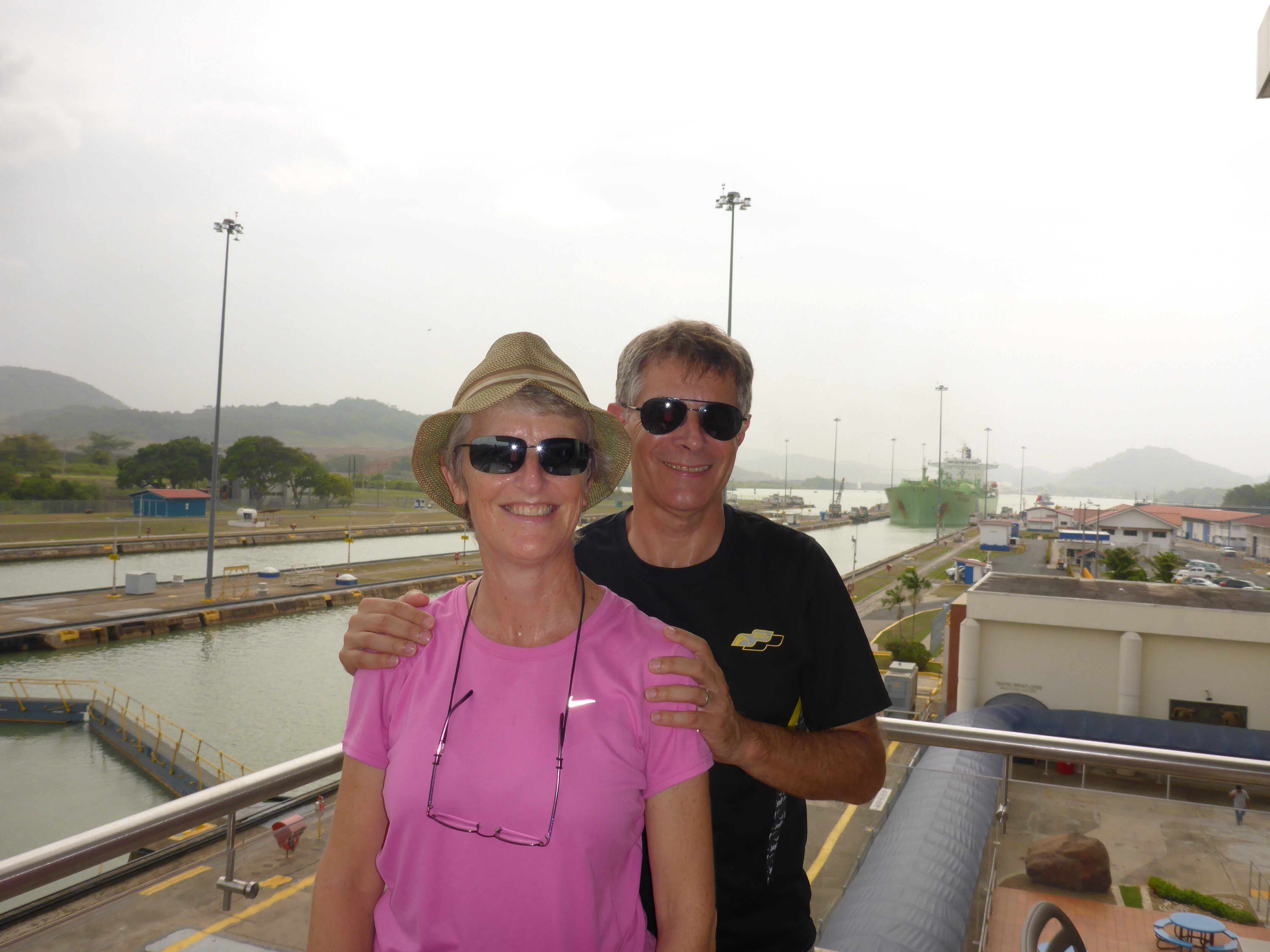
Enjoying the Panama Canal

Enjoying the Panama Canal

Tankers nowadays make full use of the Panamax limits

Tankers nowadays make full use of the Panamax limits

LPG tanker being guided, Panama Canal

LPG tanker being guided, Panama Canal

LPG tanker being guided, Panama Canal

LPG tanker being guided, Panama Canal

LPG tanker is now in the last lock, Panama Canal

LPG tanker is now in the last lock, Panama Canal

Condensate tanker being guided by trucks along the lock, Panama Canal

Condensate tanker being guided by trucks along the lock, Panama Canal

Condensate Tanker lowered into the lock, Panama Canal

Condensate Tanker lowered into the lock, Panama Canal

Condensate tanker and car transporter, Panama Canal

Condensate tanker and car transporter, Panama Canal

Container ship, Panama Canal

Container ship, Panama Canal

I told you I was completed fascinated and inspired by this canal!!! And this road sign made me smile:

Should be a Colombian road sign!!

Should be a Colombian road sign!!


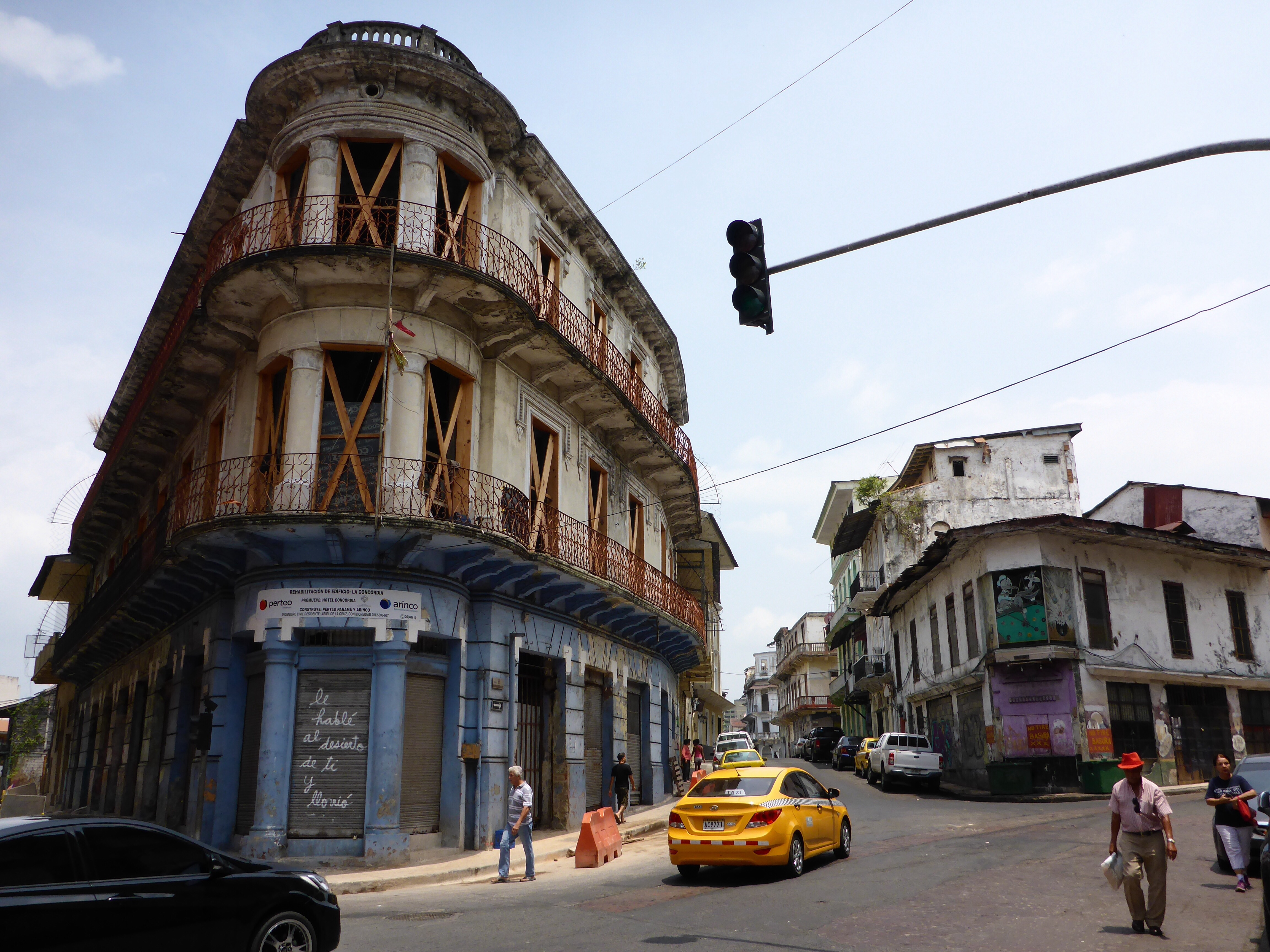
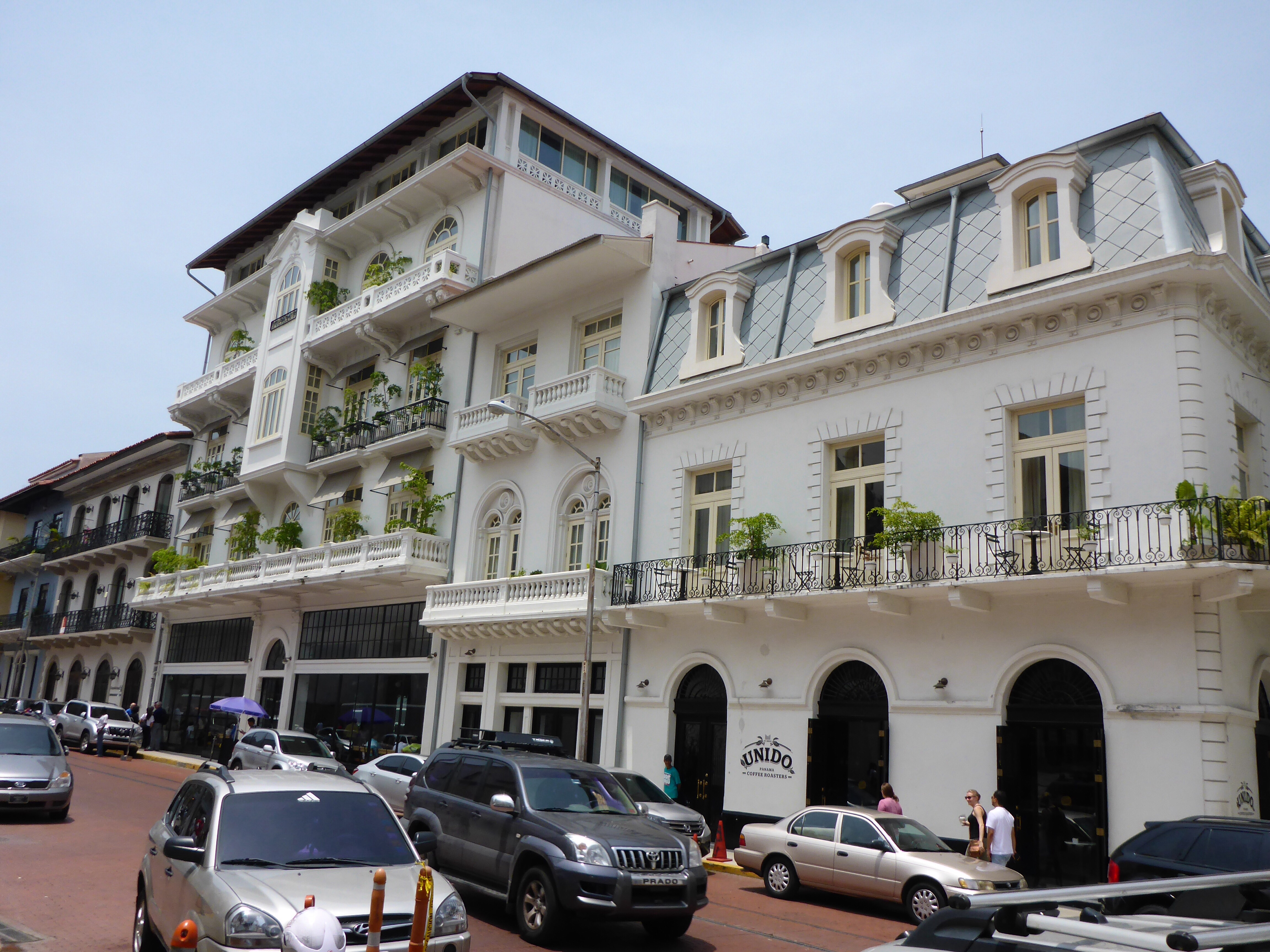
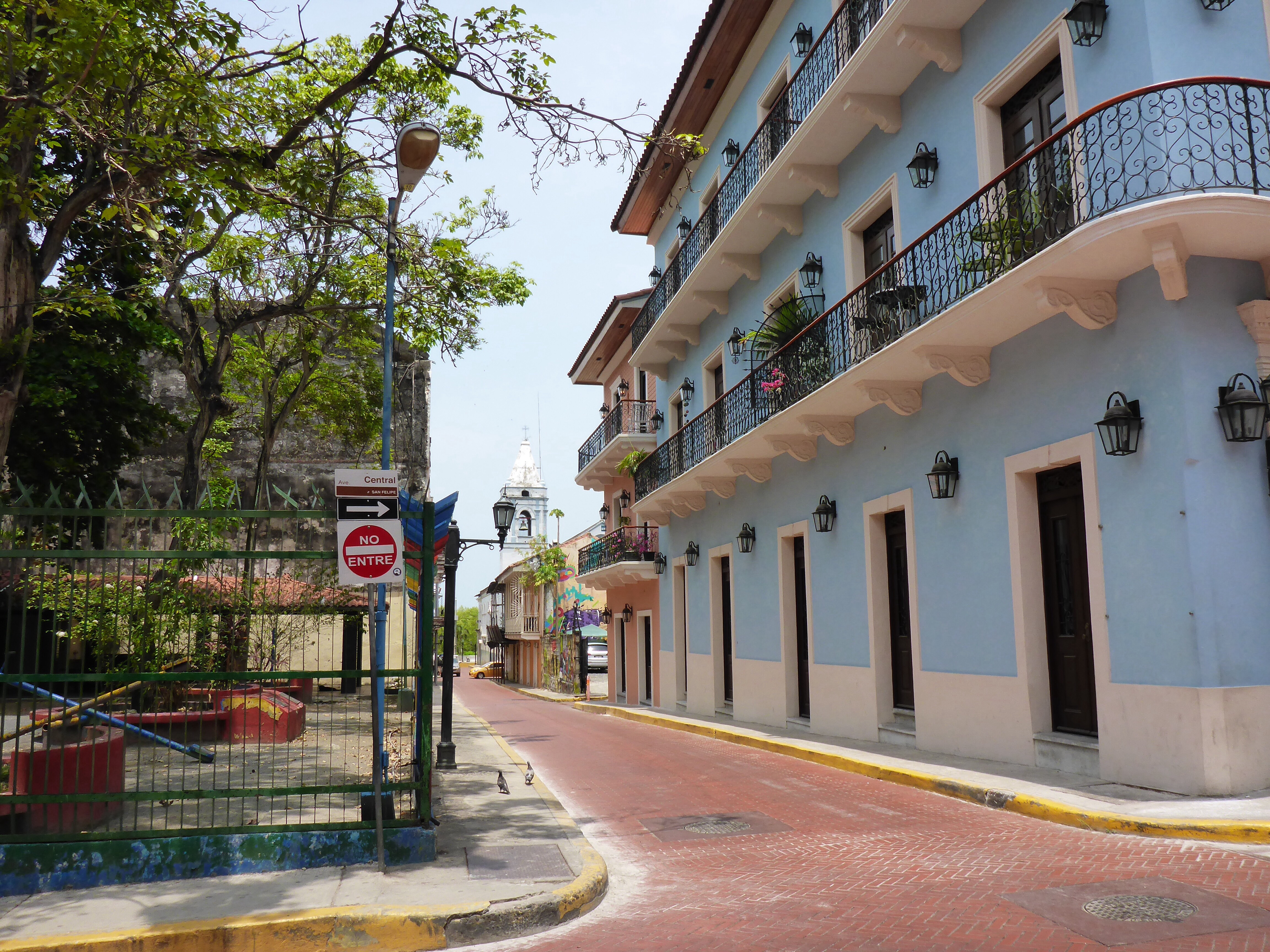
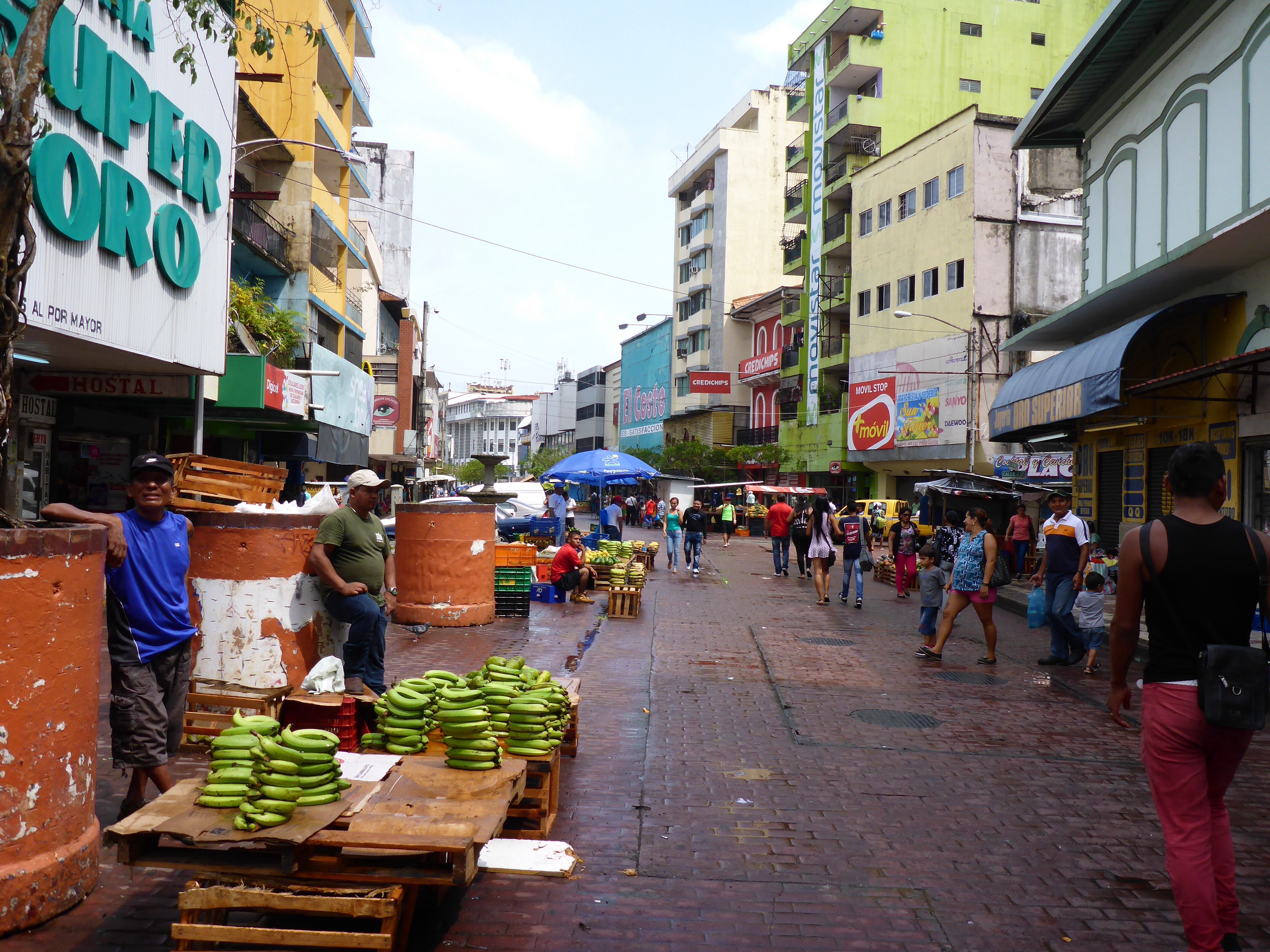
The next day, we took the metro to a large shopping centre to buy new camera flash cards before heading as close to the old city as we could before walking. Panama city is full of contrasts. From the shiny and clean business area to the more run down commercial area and suddenly, from one side of a set of traffic lights to the other, you are transported to a different world. The old city has been beautifully restored. There are many empty facades, boarded up for future renovations. Although it was lovely to admire some of the old buildings, that part of town was surprisingly soulless. There were just a handful of local and overseas tourists. No cafes or restaurants to sit and watch the world walk by as there was no-one. Very odd. We eventually walk into the only restaurant we had noticed earlier that was open and had lunch. Perfect timing as the heavens opened up shortly after.
The old airport is now a major bus station and shopping centre - notice the shoe shine below

The old airport is now a major bus station and shopping centre – notice the shoe shine below

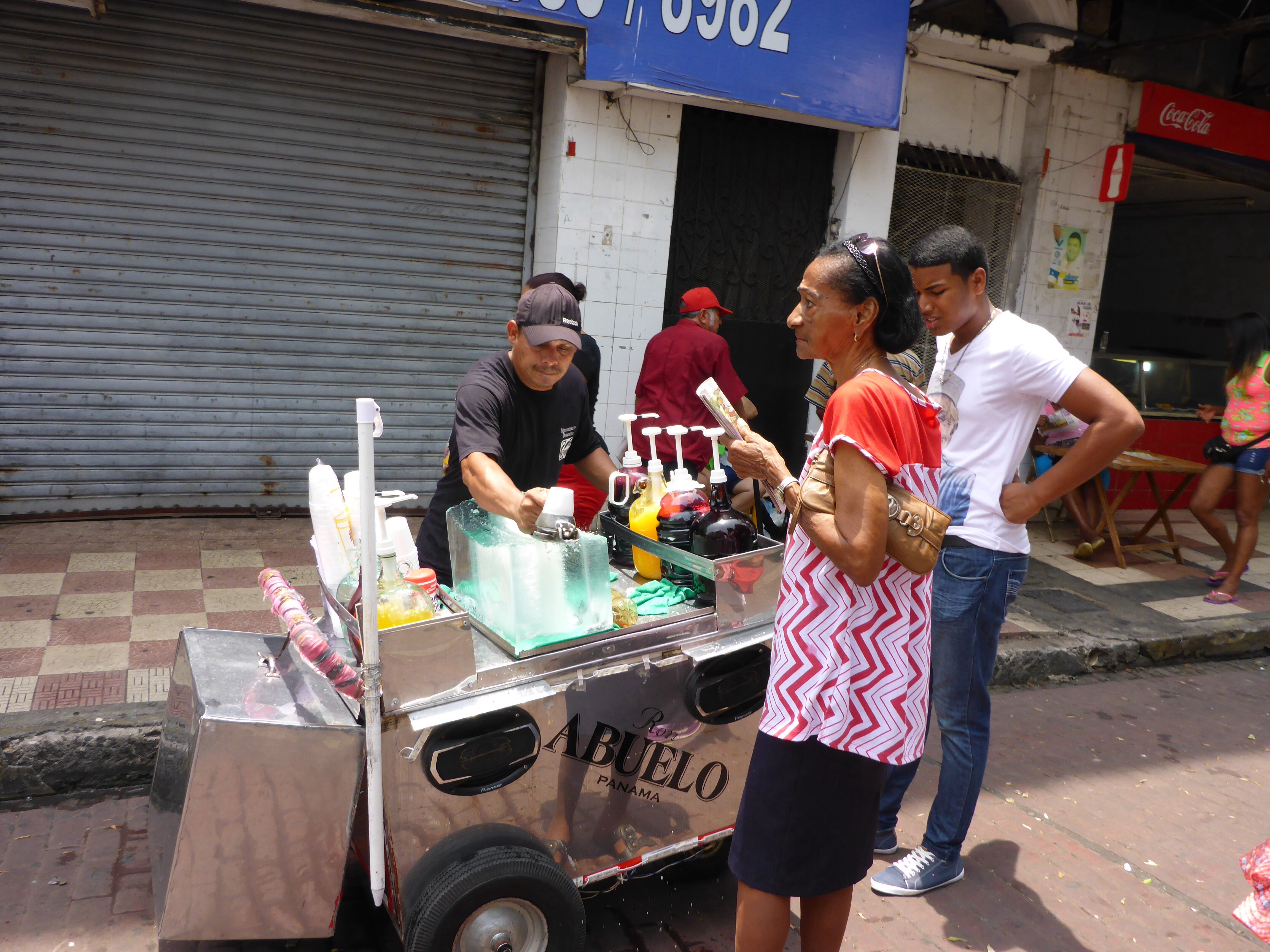
Shaved ice drinks seller, Panama City

Shaved ice drinks seller, Panama City

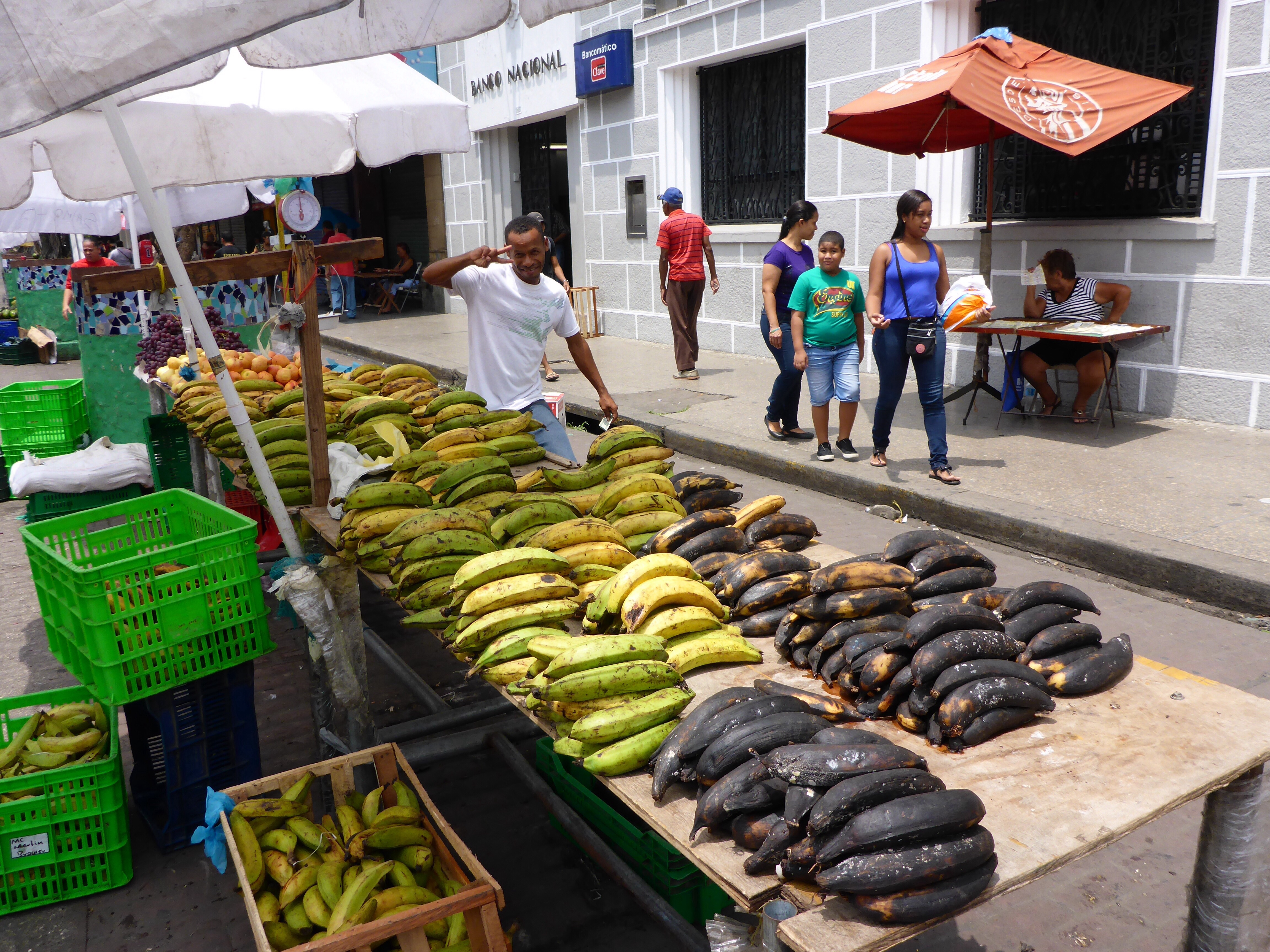
Banana seller, Panama City

Banana seller, Panama City

The old Panama City

The old Panama City

The old Panama City, restored

The old Panama City, restored

The old Panama City, restored

The old Panama City, restored

The original Panama City, restored

The original Panama City, restored

Panama City

Panama City

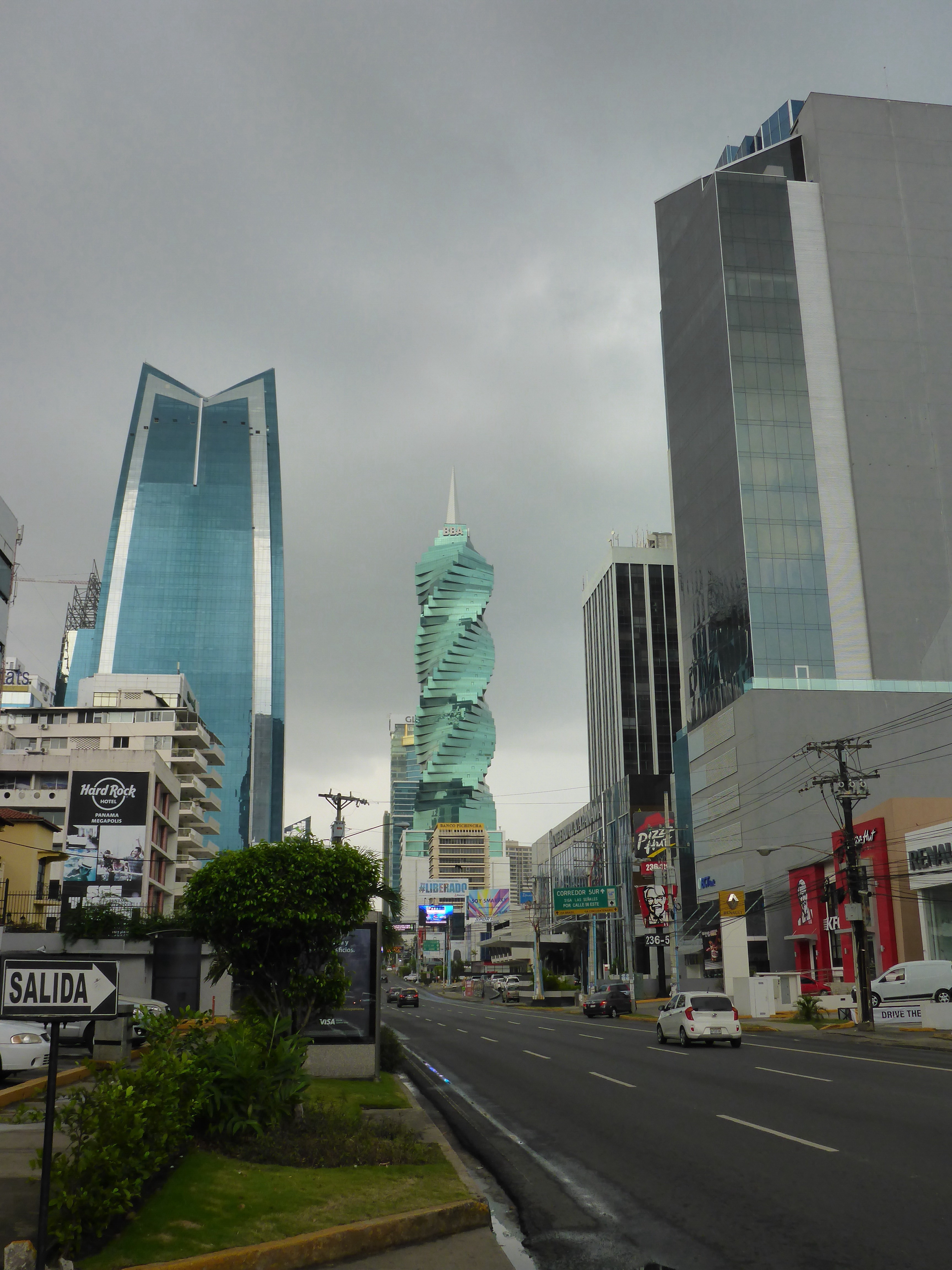
I really wanted to get a closer view of one of the towers I had caught a glimpse of when we first arrived. I thought of the stunning Turning Torso of Malmo, Sweden, but this one didn’t have the same elegance or finesse. Interesting nonetheless.

Panama City with the Revolution Tower in the centre

Panama City with the Revolution Tower in the centre

The Revolution Tower, Panama City

The Revolution Tower, Panama City


It meant quite a bit more walking and getting completely drowned on our walk back to our hotel – I am lucky Anthony is always so accommodating, especially considering his ankle is still constantly aching…

Tomorrow is bike collection day!!!

Over the Darien Gap

Having decided to fly both ourselves and the motorbikes over the Darien Gap we must make our way to Medellin airport to prepare the bikes for shipment. Early morning traffic is reasonably light and apart from the potholes and constant stream of motorbikes lane splitting, something we cannot undertake with our panniers, we steadily make our way out of Bogota, which we have enjoyed.

As we make our first descent, roadworks, mostly aimed as shoring up the mountainside, are in progress, at one point the stop/go sign holder walks ahead of us moving the road cones back, pursued by a gaggle of motorcyclists who have filtered to the front of the queue.

Waiting on the lollypop man.

Waiting on the lollypop man.

It is interesting how, in many countries where small motorbikes are commonplace, filtering between lanes is normal and acceptable, especially when the traffic is stopped or slow moving. This allows the benefits of being a motorbike rider in the community to be enhanced. In the western world, this practice, as a general rule, is frowned upon or illegal. This reminds me of that experiment of filling a glass jar with large stones and asking the audience if it is full, then adding small rocks, gravel and finally water and each time asking the audience if the jar is full. The motorbikes are the sand in my mind.

Highway down the Rio Negro valley.

Highway down the Rio Negro valley.

A new double lane highway runs up the valley of the river Negro, beautifully cambered and sparsely trafficked, a pleasure to ride. We will miss these types of open uninhabited roads we have found in South America. I am certain that Central America will not offer the same opportunities.

We all like to think of ourselves as adventure riders, but occasionally we come across a real adventure rider. This man daily takes on the challenge of delivering up to 1 meter high stack of eggs to his customers on the roads and tracks around the town of Pueto Salgar.

Scrambled eggs anyone?

Scrambled eggs anyone?

This is a real adventure rider, not the pale imitation that I am. We watch him ride out navigating the truck park, potholes and small lakes masquerading as puddles with his load of eggs. Back to safe tarmac for me.

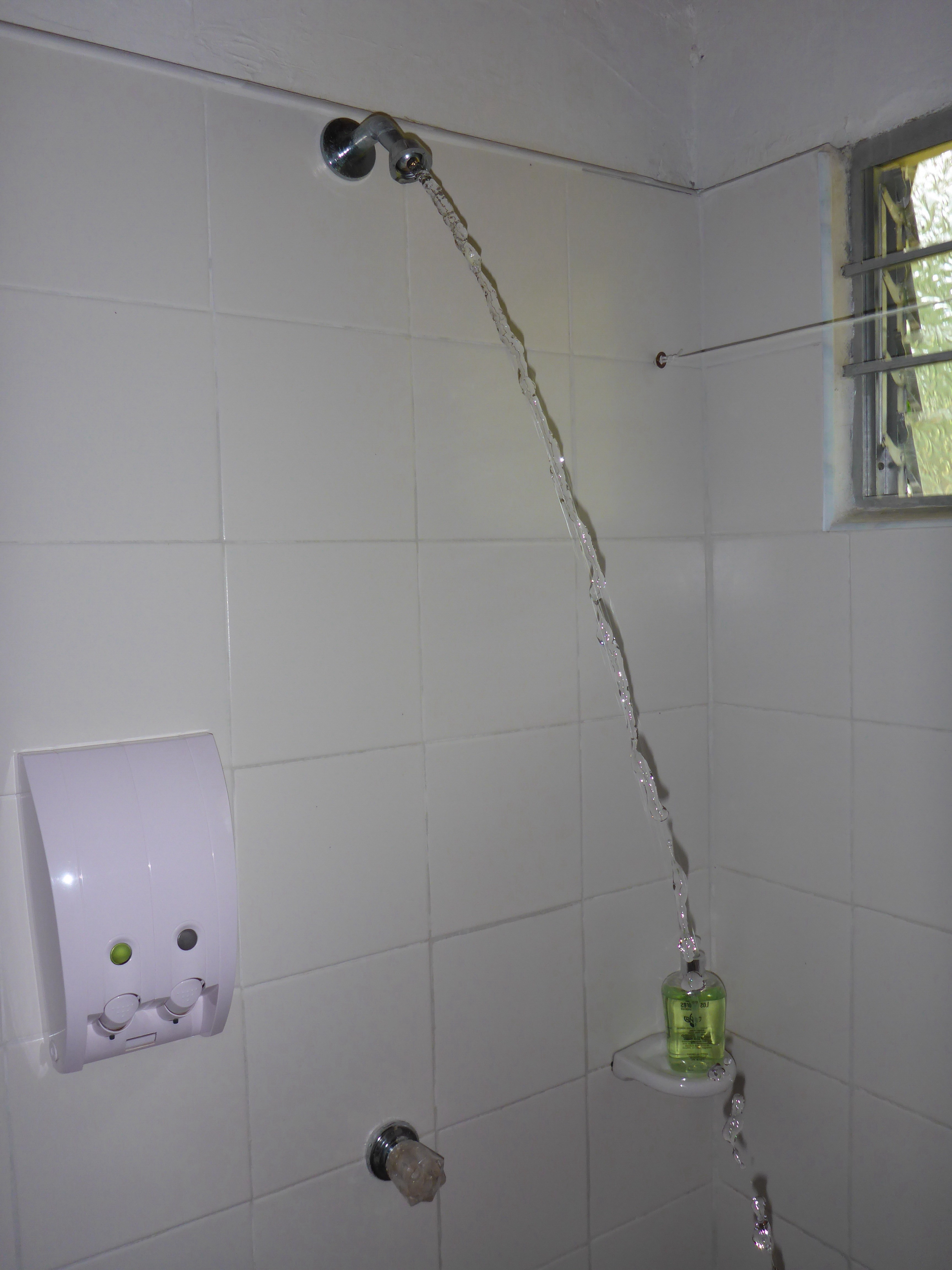
We decided to do the journey from Medelling to Bogota over a couple of days and stop over for the night just past Puerto Triunfo. Anne chose the standard room with fan – not realising this meant cold shower only.

Just a cold stream of water called a shower

Just a cold stream of water called a shower

Before shipping the motorbikes, we need to give them a clean. It is surprising how dirty they get, especially after the odd rain shower We have noticed in the mountainous areas, near fast flowing streams and rivers for an endless supply of free water, truck cleaning facilities. Here the trucks are made sparkling clean and we probably see more than half the businesses occupied at any one time. We find one unused, and are allowed by the bemused operators to clean our bikes.

Roadside cleaning, just a little more dirt to remove.

Roadside cleaning, just a little more dirt to remove.

All clean at the truck wash.

All clean at the truck wash.

The rest of our journey to Medellin is uneventful and pleasant, apart from the mud puddle across the road, that even at a few kilometres an hour negates the recent cleaning activity!  We met our shipper, Dora, all our paperwork is ready for signing.

Tomorrow is Anne’s Birthday. Anne will cover her Birthday in a separate blog………….

We ride our bikes to the airport and into the Cargo area to be confronted by the first challenge of the day. The only way onto the loading dock is to ride up a short flight of stairs! Err no not for us –  while I think I understand the physics and we are told Kristjian made it up last week, we both decide that the mechanic can do it, we don’t take risks unnecessarily. We lighten the bikes and up the mechanic goes over a few steps, ABS kicking in on the loading dock surface.

The first work to be undertaken is to remove excess fuel from the tanks. The mechanic who has ridden the bikes up the pallets and stairs tries unsuccessfully with the old syphon via a hose. This works as well for him as it did for me yesterday, not at all! Apart from the taste of fuel and a lung full of fumes, we both achieved nothing. I am able to show him how to remove the fuel pump and filter unit, based on our experiences with Anne’s bike in Myanmar. Maybe restoring some street cred after not riding the motorbikes up the stairs, probably not.

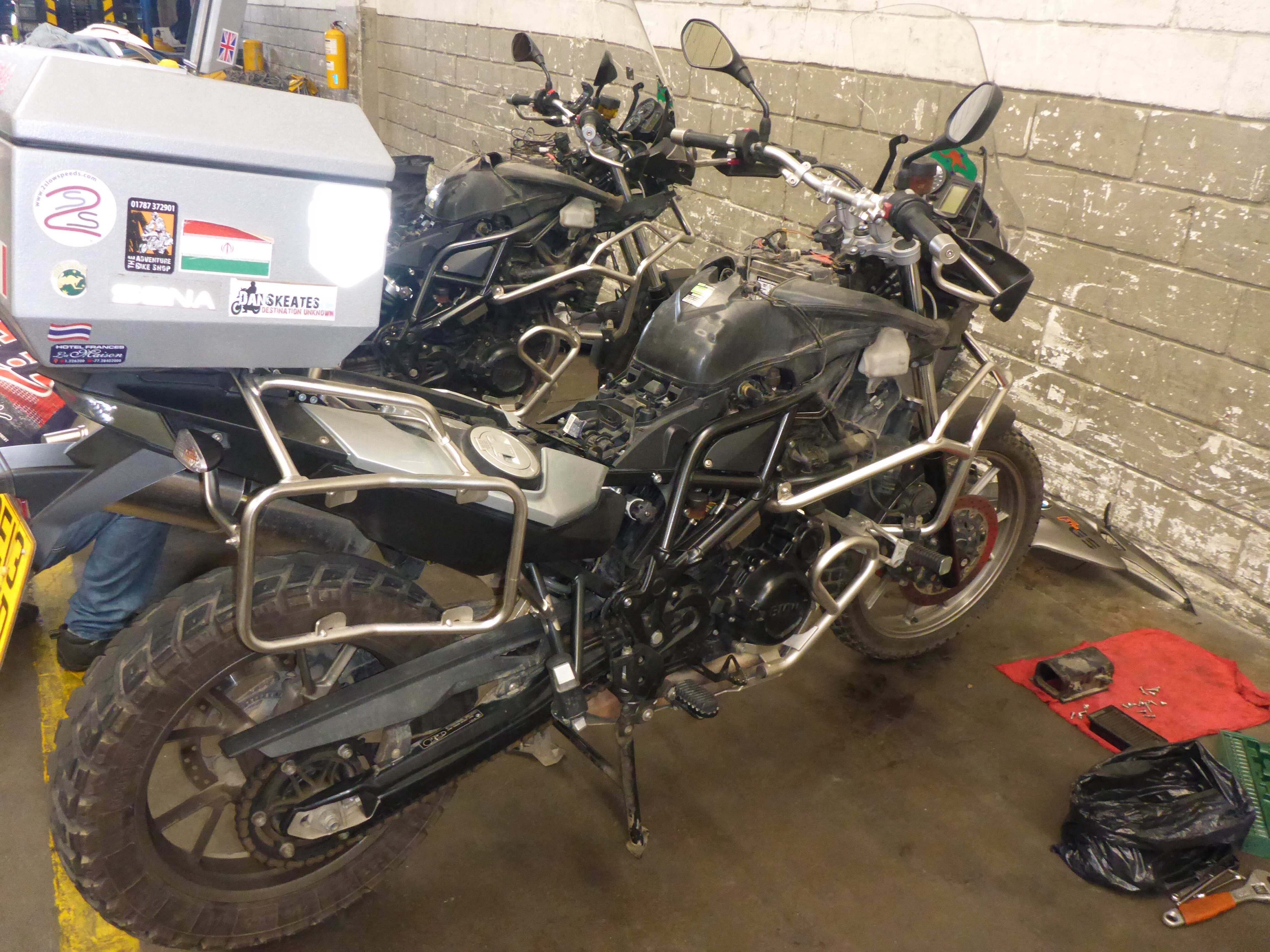
Streak and Storm stripped down for Custom's inspection

Streak and Storm stripped down for Customs’ inspection

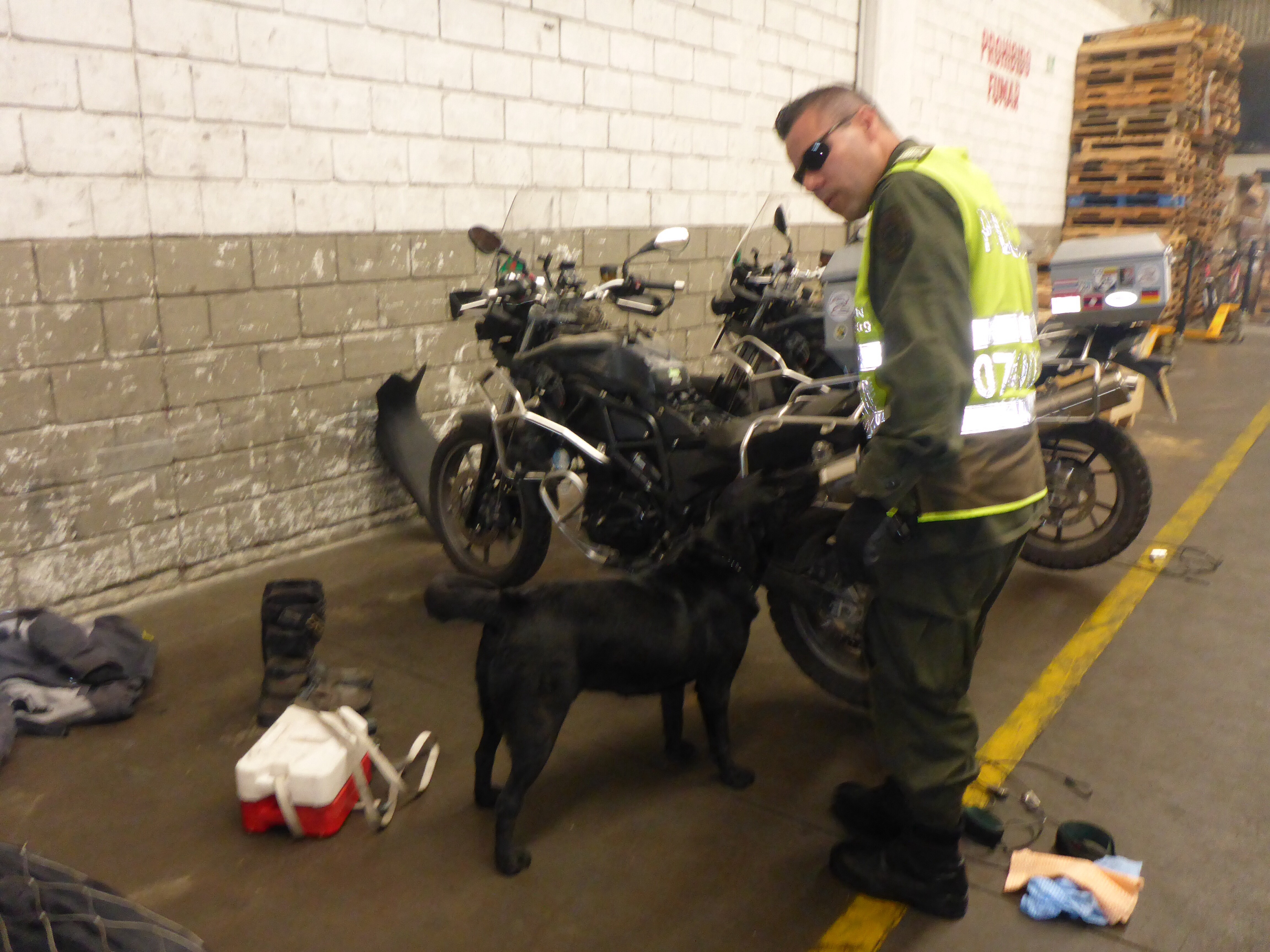
After the mechanic removes the side panels of the motorbikes, the drug dog and his handler appear and check out the motorbikes for drugs. Another officer, who spoke English had checked our panniers and bags and helpfully repacked the panniers, another friendly and helpful Columbian.

Drug sniffing dog at work checking our motorbikes

Drug sniffing dog at work checking our motorbikes

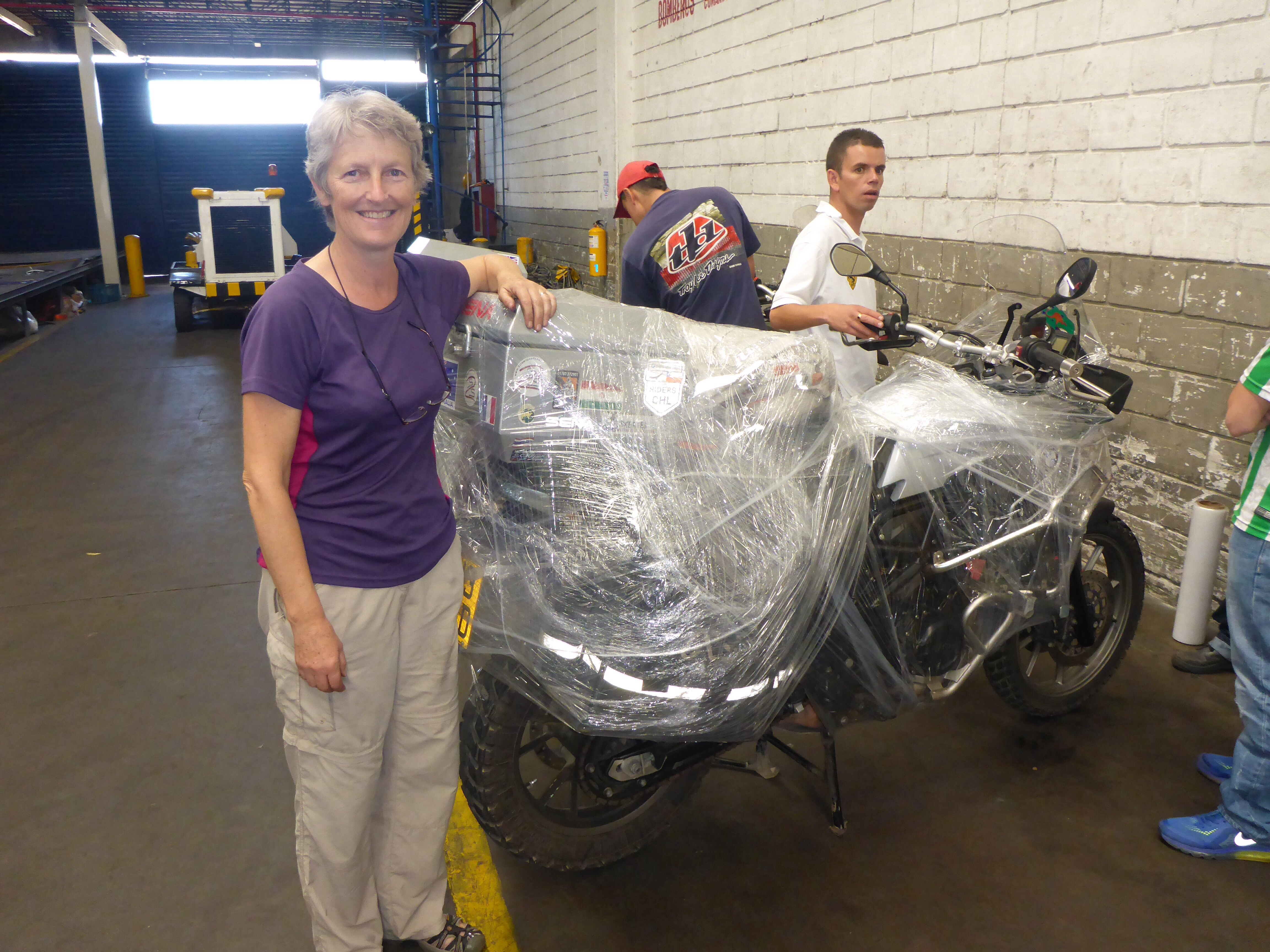
All clear, paperwork signed off and the bikes can be reassembled. In three hours since we arrived, we are all done and the motorbikes are wrapped in plastic wrap. Why did we not wrap the motorbikes when we started the trip to keep then clean? Possibly not too easy to ride.

Well wrapped up!

Well wrapped up!

We just need to get the motorbikes up onto the loading dock, so more pallets and muscle power and the motorbikes are ready to be loaded onto a cargo plane on Saturday. We will see them again in Panama City on Monday.

Getting the motorbikes up onto the departure bay

Getting the motorbikes up onto the departure bay

We return to the shipping company to make payment, and Dora, our contact, invites us join her for lunch. We are joined by her colleagues including her son Julian, who has been our English translator during the shipping process, the other three turn out to be Dora’s husband William, his brother Fernando and her brother Felipe. It’s a real family run business.  (Our Visas and Borders section will have information on Dora’s company Master Logistic and other useful shipping contacts soon)


Jullian, Felipe, William, Dora amd Fernando

Jullian, Felipe, William, Dora amd Fernando

We have a regional speciality for lunch, Bandeja Paisa, which with the great company perfectly rounds off our stay in Medellin.

A small ' Bandeja paisa' a local Antioquia district dish

A small ‘ Bandeja paisa’ a local Antioquia district dish

Our first flight is interesting, the distance between Medellin and Bogota is only some 200km away by air. Flight time is about 30 minutes, by road it is a minimum of 9 hours! It took us 11 hours. We had seen few buses between the two cities, most people travel by air with flights every 20-30 minutes. Having done both ways, air is definitely the quickest and easiest.

We depart Columbia having enjoyed the country and its people immensely. Columbia goes on our shortlist of counties we have high on our list of places to return to.  Panama and Central America await us.

– Anthony
Cali, Colombia, Containers, Cats, Cane, Coffee and Cablecars.

I think I have covered all the ‘C’s and yes they are in sequence. The first two are fairly obvious, we are in Cali, Colombia. The others will be revealed in due course as this blog entry unfolds.

Our priority in Cali is to find and understand the options available to us for transporting our bikes to Panama or beyond. The demise of the ferry between Cartagena and Colon in Panama last week has put all options on the table. They include small sailing ships, containers, RORO ferry and airfreight.

The internet has provided us with a great source information as we have travelled and like our GPS we have come to rely on it. A problem occurs for us when the information found is inaccurate, mostly due to the passage of time. We also need to consider the author and their interpretation of what they are recording, as our views in this blog are influenced by who we are and our experiences.

We have also found instances where inaccurate information has been copied or linked in good faith and repeated a number of times. It therefore gains authenticity and credibility when undertaking a Google search. In our case the ferry demise is so recent that Anne’s information, which she shares on a travelling forum, is some of the most current.

Anne researches and sends 19 emails, many are not answered, but as time progresses we learn some interesting facts. If you are using the RORO ferry, remove your number plates as they are considered souvenirs. No we did not pack a spare set, we must remember for next time. The Colombian police will search every vehicle for drugs, including dismantling your car/bike so that means we will probably have to unpack and repack everything. We understand that takes hours to do. Sailing boats are not permitted to take motorbikes, probably to assist the now defunct ferry operator, this will change in due course but we cannot wait weeks or months for this to happen if we are to complete our journey on time.

After days spent researching, emailing and checking, we have decided that we will airfreight the bikes. While this is the most expensive option, but the quickest, we have no idea on port costs in Colon and our previous experience of port costs is that there are always a few more added on when you get there. We also avoid having to visit Colon and its port in Panama, which does not have the best reputation.

We and the bikes plan to depart on the 9th of May for Panama by air at this stage from Medellin, where we will go next week. Well that took a few paragraphs to describe and three days to sift through the information. We now need to come up with some 8 million plus pesos as they only accept cash. Off to the ATM each day to stock up each day.

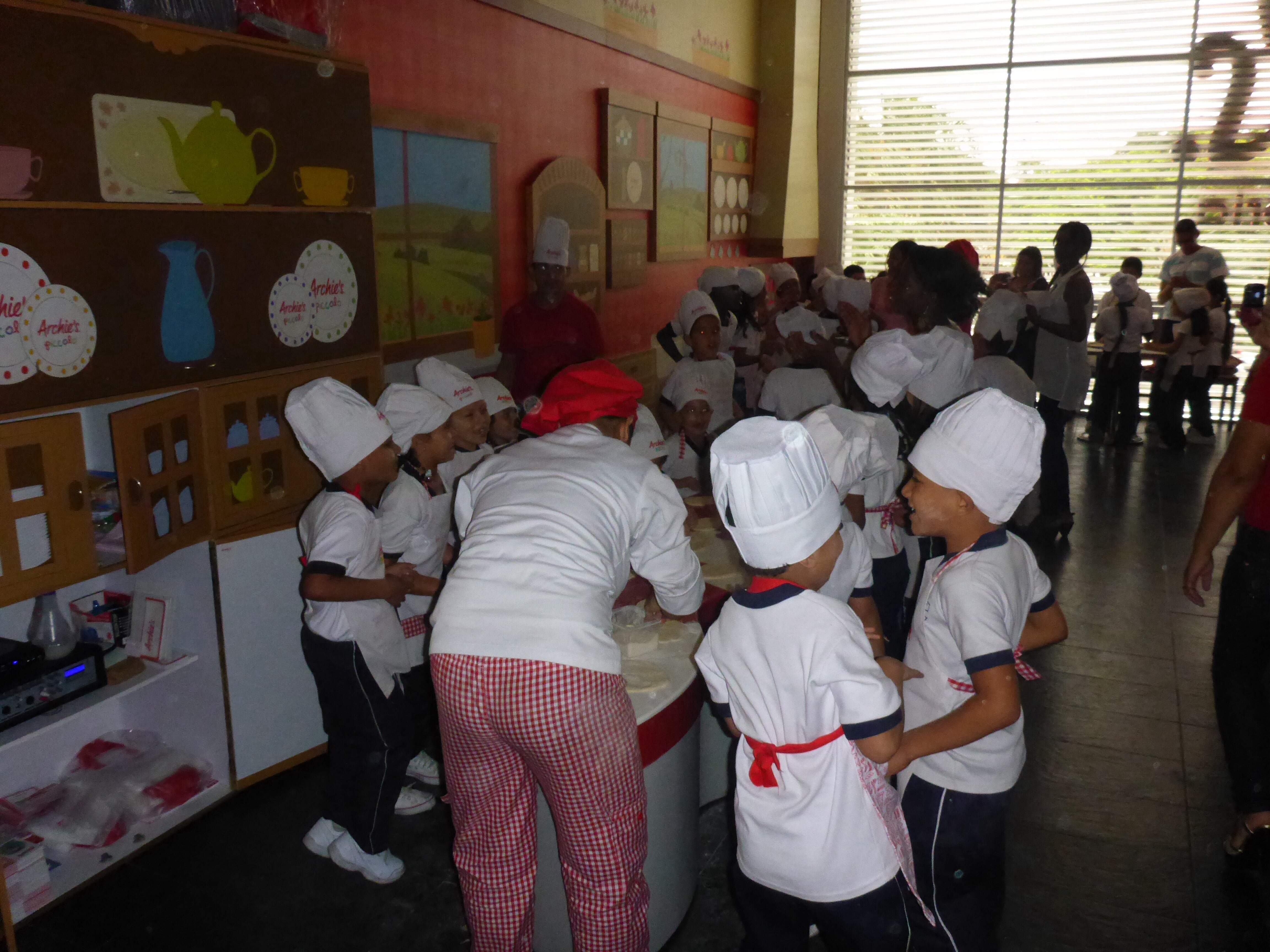
Cali is a modern city, but has used some old facilities well. The old railway maintenance buildings have been turned into a modern open air shopping centre. Here we found an unusual restaurant that had a section where kids could learn to cook, pizzas it seemed, and parents could shop without having to drag small unwilling shoppers around with them. Good idea.

Pizza making school for kids in a shopping centre, Cali, Colombia

Pizza making school for kids in a shopping centre, Cali, Colombia

People have been so helpful: apart from the motorbike pushing over the bridge, we have had someone take us a couple of blocks to look for a camera battery. A restaurant manager in Cali on hearing that Anne was allergic to cream and cheese, came to us with the whole menu ingredient list to make sure her choice was safe. A restaurant owner in Pasto, although rushed off his feet, was so attentive towards us, it was as if we were the only guests. When we took a wrong turn down a dirt track for 3kms looking for our accommodation, a young couple who we approached offered to hop onto their motorcycle to show us the way. Cab drivers in Cali rounded our fare down, not up, on several occasions!!

We also strolled along the banks of the fast flowing Cali river. A little land has been retained on each side for walking and jogging, popular in the early evening. Here we found a ‘El Gato del Rio’ a three-ton bronze sculpture by the late Colombian artist Hernando Tejada

El Gato del Rio bronze, Cali, Colombia

El Gato del Rio bronze, Cali, Colombia

This cat has 19 small cats painted by local artists situated nearby for company.

Leaving Cali is straightforward, apart from my soft pannier rubbing up against a car as we tried to cross four lanes of traffic in a tunnel, no damage done, but an unhappy driver. Cities are not our favourite driving places and we were glad to be out and heading past the many fields of sugar cane. Well that’s five ‘c’s, only two to go. We can smell the sugar cane as we pass the processing plants and a sweet honey smell from the large tress with pink flowers that overhang the road in places.

Road to Parque del Cafe, Montenegro, Colombia

Road to Parque del Cafe, Montenegro, Colombia

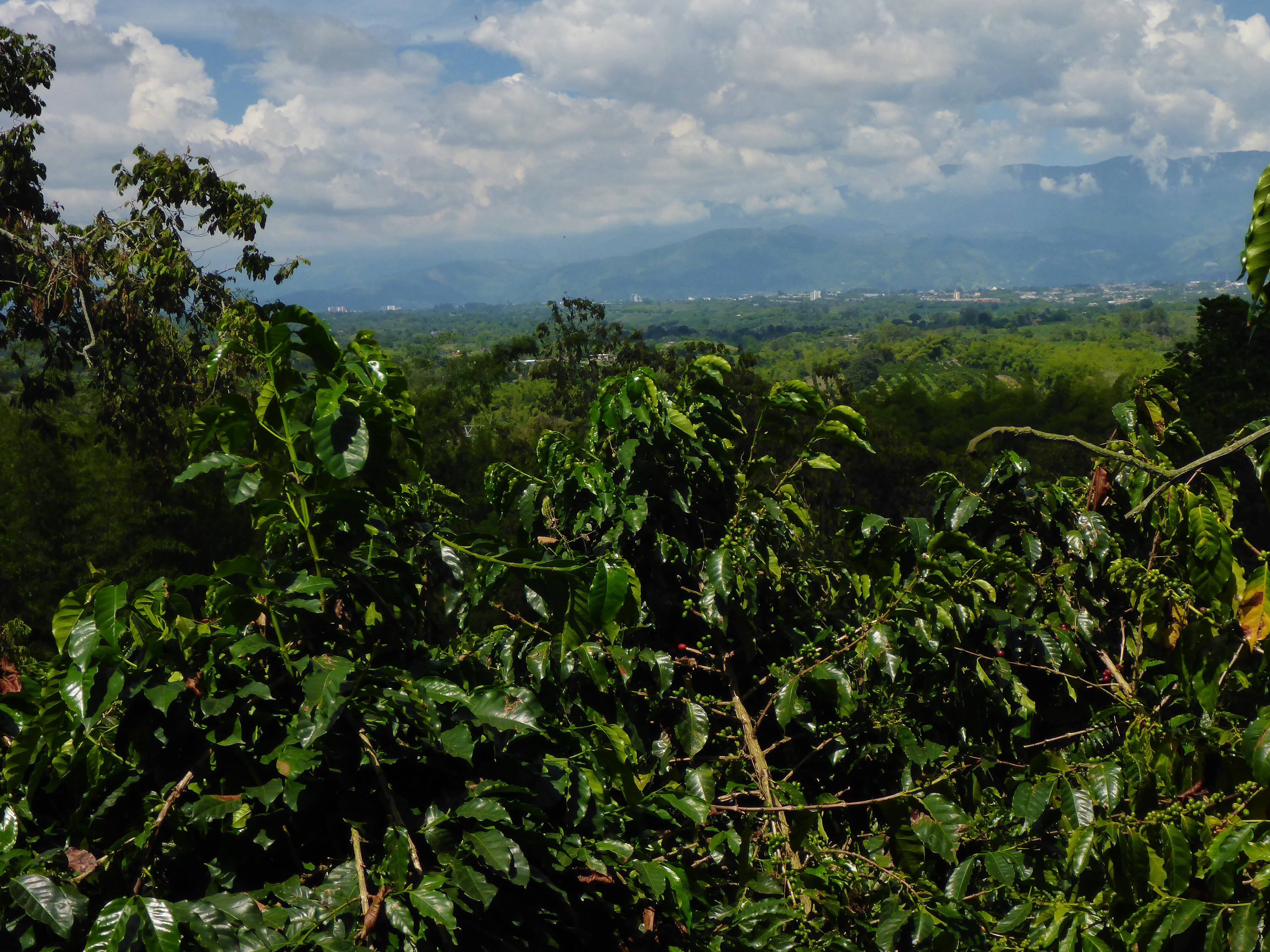
We are heading for coffee country. Columbia is famous for its coffee, although I understand from reading somewhere that Colombians prefer chocolate as a drink to coffee. Having seen the number of ice-cream sellers, I think there is a sweet tooth here. We are going to stay near a town called Montenegro but first will stop at the Parque del Café. This is a combination of coffee museum and amusement park set on a hillside overlooking a lush valley with the city of Armenia in the distance.

Armenia coffee growing area, Colombia

Armenia coffee growing area, Colombia

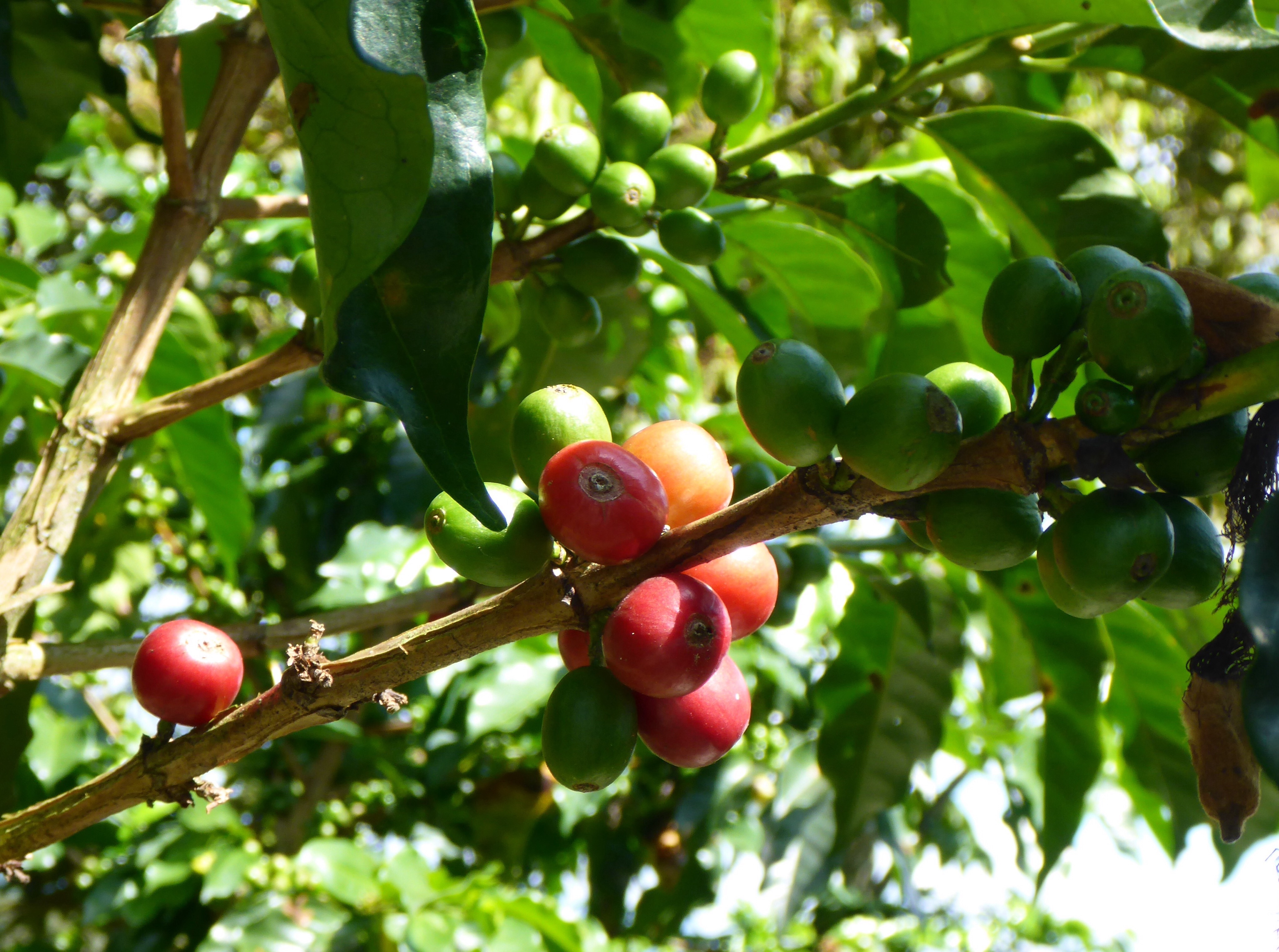
Colombian coffee, Colombia

Colombian coffee, Colombia

The coffee history is very interesting in this region, we learnt of the introduction of the coffee bush to the Americas between 1710 and 1725. The development of coffee as a major export product and the large employment it has generated saw the establishment of the Colombian Coffee Growers Association (FNC) a coffee co-operative in 1927. Many coffee farms are family run and FNC works to ensure that the 560,000 families that work in the coffee industry have a market for their product at the best price, help develop markets worldwide for 100% Colombian coffee and undertake on-going research.

A short 3D movie in the museum even had a coffee smell, which I love, introduced into theatre to help us appreciate coffee more. Sadly even with all this great information and marketing, I have not been converted to a coffee drinker, so it failed to gain another convert. I will stick to green tea. We are able to see a variety of coffee plants, both Colombian and Arabica planted on the hillside as we meander down to the amusement park section..

We “brave adventure riders” decline the -5% rollercoaster for the more gentle railway ride. We get enough excitement on the roads each day! Returning to the top of the park, we take the cable car back to the top. I am pleased to see that the cable car system is from Switzerland. I prefer to know that something important like this comes from a manufacturer in a mountainous country with a long pedigree.

–  Anthony

Columbia: Ride to Travel or Travel to Ride?

We have commented previously that we “Ride to Travel” rather than “Travel to Ride”. The distinction in our minds is is that the first uses the motorcycle to reach new destinations, the latter is more focused on the riding the motorcycle in a variety of terrains. We have always considered ourselves to be in the former category. Riding through Ecuador and Columbia we have found that our focus has been on the riding, and less on the historical town centres and famous buildings. Our enjoyment of interacting with the people we meet remains undiminished and each time we do it confirms our belief in the positive aspects of humanity.
This video is the result of our ride from Pasto to Cali in Columbia. While this trip took 10 hours to complete, partially due to Anne’s dodgy fuel problem that lasted for a couple of hours in the mountains with the engine dying over 200 times! All said, it was a glorious day’s ride, we definitely felt we “Travelled to Ride” on this day. Enjoy!