Samarkand, Bukhara and Khiva

Finally, we have good enough internet access to post an update (from our friends’ home in Behshahr, Iran) so here’s what happened after we left Samarkand…

We returned to Tashkent from Samarkand by train, hoping we’d get our Turkmen visa the next day. Our train journey back wasn’t as pleasant as our way over, being in the last carriage, we got no air conditioning (just the occasional rumbling of the air con waking up) and with 5 of us in a tiny compartment, and being by the window in the scorching sun, it made for a not so enjoyable journey…

We got back to Tashkent and Streak and Storm were still there at the hotel which was good. It was funny to see the number of finger prints all over as various kids, and adults, would have climbed onto them to take photos!! We spotted them doing so from our hotel window on a few occasions!!

The Turkmen visa process was the same as when we dropped off our application: up at 5am to get there before 6am and get our name on the list. Return to the hotel (30′ walk each way) for breakfast and return to the embassy to wait for our name to be called at 9am and then wait our turn. We were 4 & 5 on the list. Our application has been approved so we left our passports and were to return at 4pm to collect them again.

Time for more washing, then some food shopping, buying water, getting more bagsfull of local currency and repacking. Later that day, we get our passports back with Turkmenistan visas. We are good to go.

It seems strange as, for the first time since we left in June, we have not ridden our bikes in over a week!! We get up at 5am for an early departure as it takes us 2.5 hours to get ready – up, shower, breakfast, final packing, taking all our bags to the bikes – we have 4 panniers, 1 roll bag with sleeping bags and mats, 1 roll bag with tent, several shopping bags with all our water and food and now 2 extra 10 litre fuel containers, jackets, helmets, waterpacks (rehydration backpacks) and topbox bags with maps, essential documents. We look like gypsies as we leave our hotel room with all those bits and pieces but everything has its place on each bike.

We leave Tashkent in the lovely coolness of the early morning. We are excited to be moving on again and riding our faithful Streak and Storm. Our ride back to Samarkand is uneventful and thanks to Anthony’s good sense of direction, arrive very close to our friends’ home, having taken numerous little windy, dirt track back roads. We stop at a crossroad that we know is very close. But we don’t have a street name or house number. As soon as we stop, as always, we are surrounded by a group. We ask if anyone speaks English. One guy is called from a home. I ask him if he can speak to my friend Aziza who could then give him the final instructions on how to get to her parents’ home. Having an Uzbek sim card has been very handy. We were exactly 5 houses away, and was in fact Aziza’s brother’s friend!!!

Anthony navigated us back brilliantly to our friends' home in Samarkand to within 4 houses from this cross road

Anthony navigated us back brilliantly to our friends’ home in Samarkand to within 4 houses from this cross road

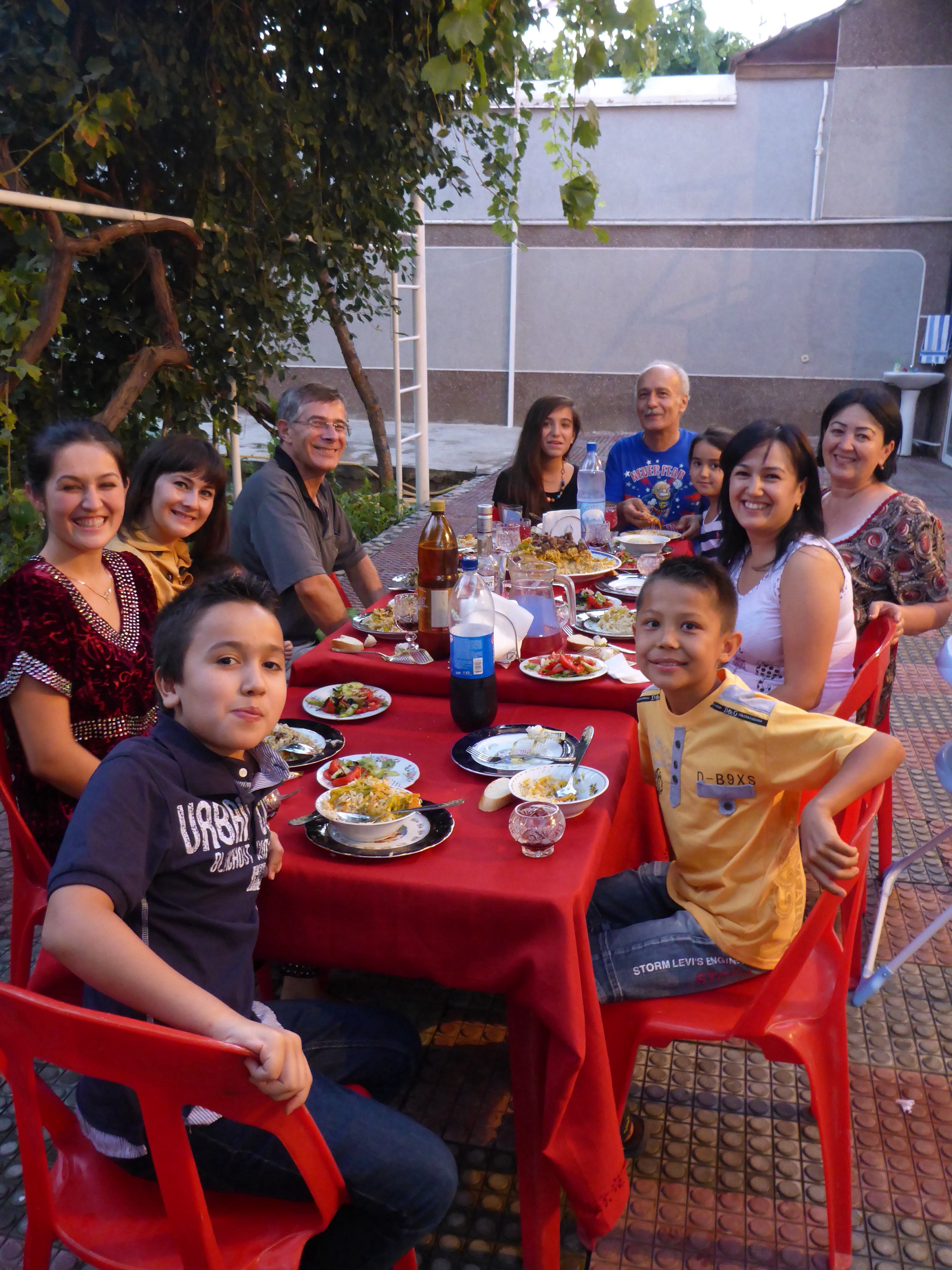
What a memorable evening!! Our friends treated us to yet another feast. We had delicious plov, traditional Uzbek pilaf, the most delicious home made sausage rolls, amazing bread, fresh juice from home grown grown fruit, home made wine that tasted more like port. How we wished we could converse with Jamkur more. It was interesting to understand the reason for his allegiance to Russia still. We talked, laughed, I cried then others cried. Anthony was given a very special Uzbek cap, with the traditional ‘evil eye’ protection, which isn’t circular, but in the almond shape of their eyes. We were asked whether we wanted to go to another wedding, but we declined.
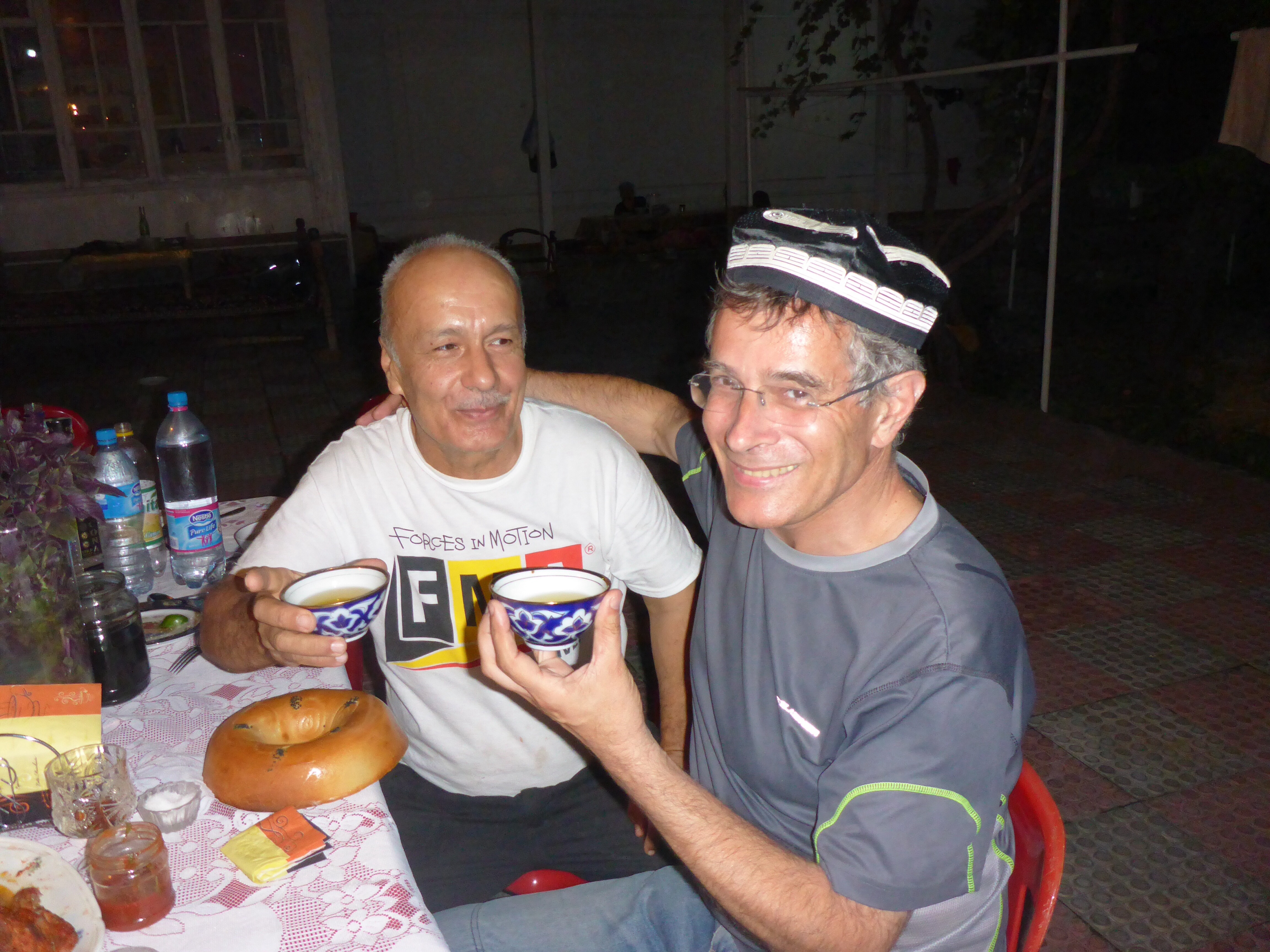
Jamkhur just gave Anthony this special gift

Jamkhur just gave Anthony this superb gift

Jamkur's bread which he made for us

Jamkur’s bread which he made for us

We were then taken to Gulnozaz’s home for the night, where we were treated to more food and a wonderful welcome. The next morning, we went back to Aziza’s home, had a huge breakfast and repacked the bikes.

I cannot do justice to our friends’ warmth of spirit in words here but Jamkur’s parting words to us will stay with us forever: a little part of his heart was leaving with us…

We set off, more tears and a huge lump in my throat… Samarkand was visually breathtaking, but we left a little part of our hearts behind. We’ll be back one day.
image

We arrived in Bukhara as planned, around 5pm and found the little hotel I had tried to book for 3 nights but hadn’t heard back from. They had a room for the 1st and 3rd nights only and would find us a place for the 2nd night. We were too hot and tired to hunt for another place so we accepted. We got a gorgeous room.

While Samarkand was breathtakingly stunning, I was in awe of the architecture of Bukhara. Bukhara is compact enough to walk from one monument to another. Unesco has done such a wonderful job of restoring Bukhara!!

I am afraid that because we are so late in posting this, I will not include any history here as it is easily found and our internet access is limited.
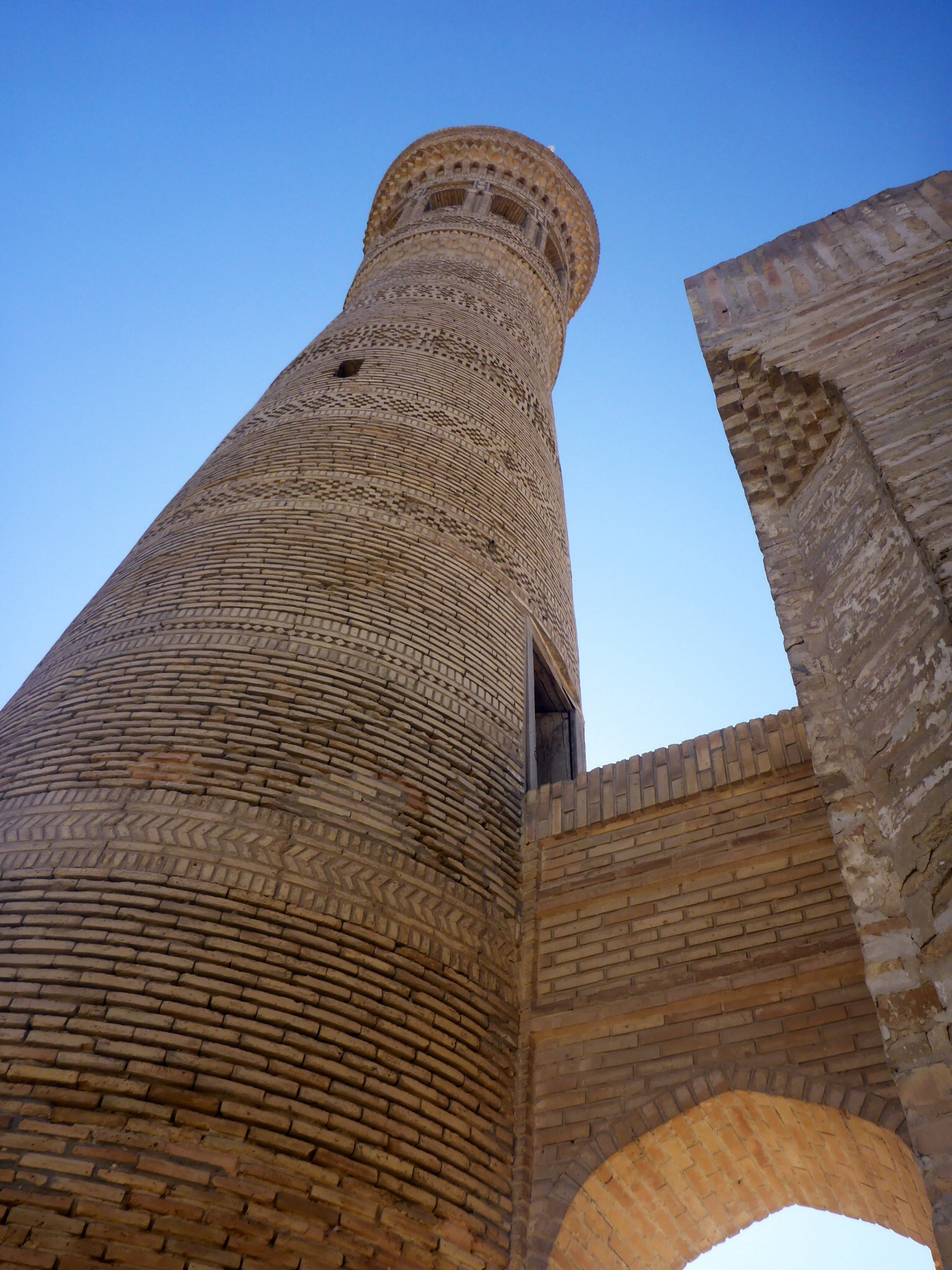
Xoja Kalon - minaret in Bukhara, Uzbekistan.  I was blown away by the brick work - until I saw the next one...

Xoja Kalon – minaret in Bukhara, Uzbekistan. I was blown away by the brick work – until I saw the next one…
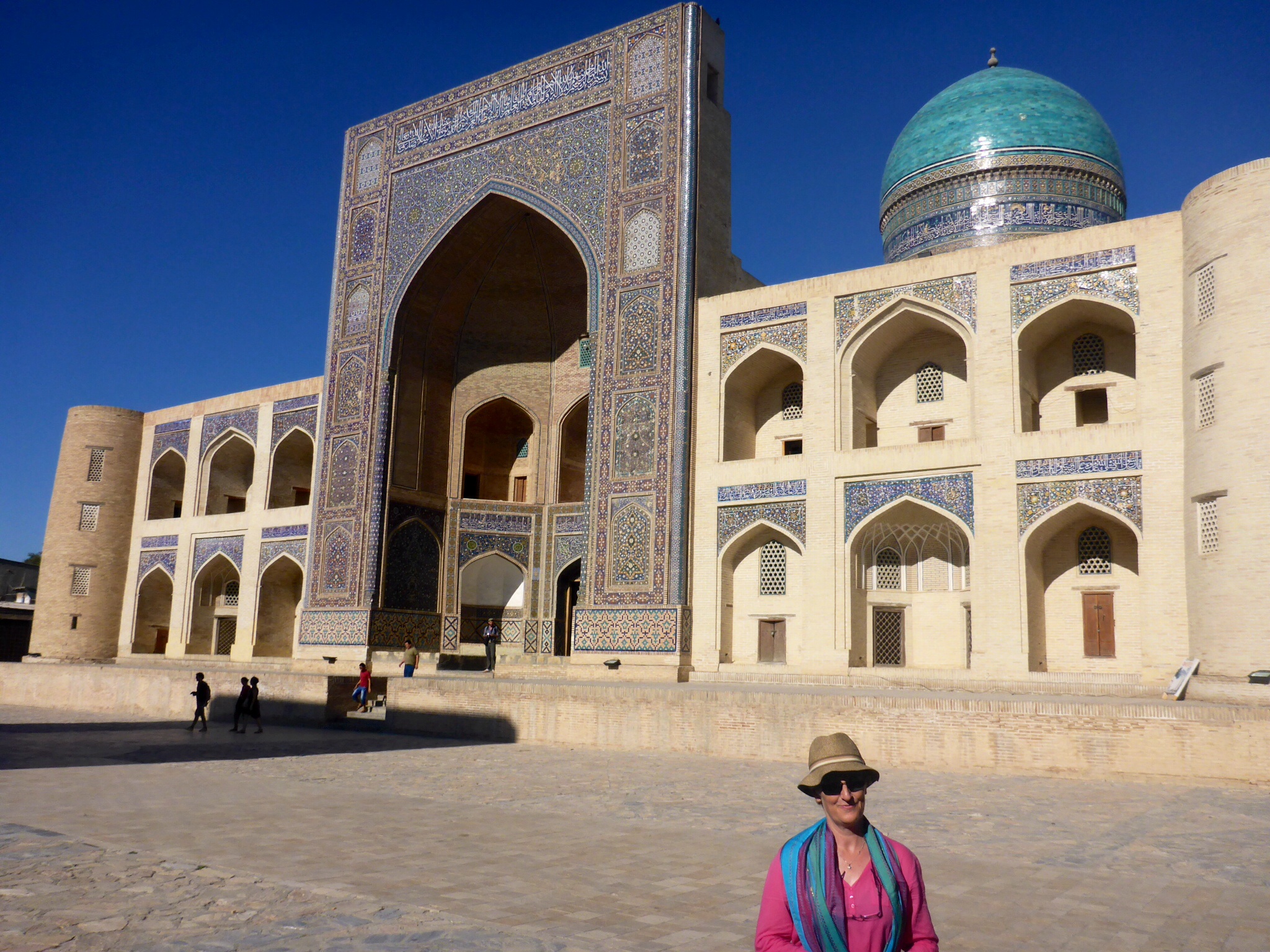
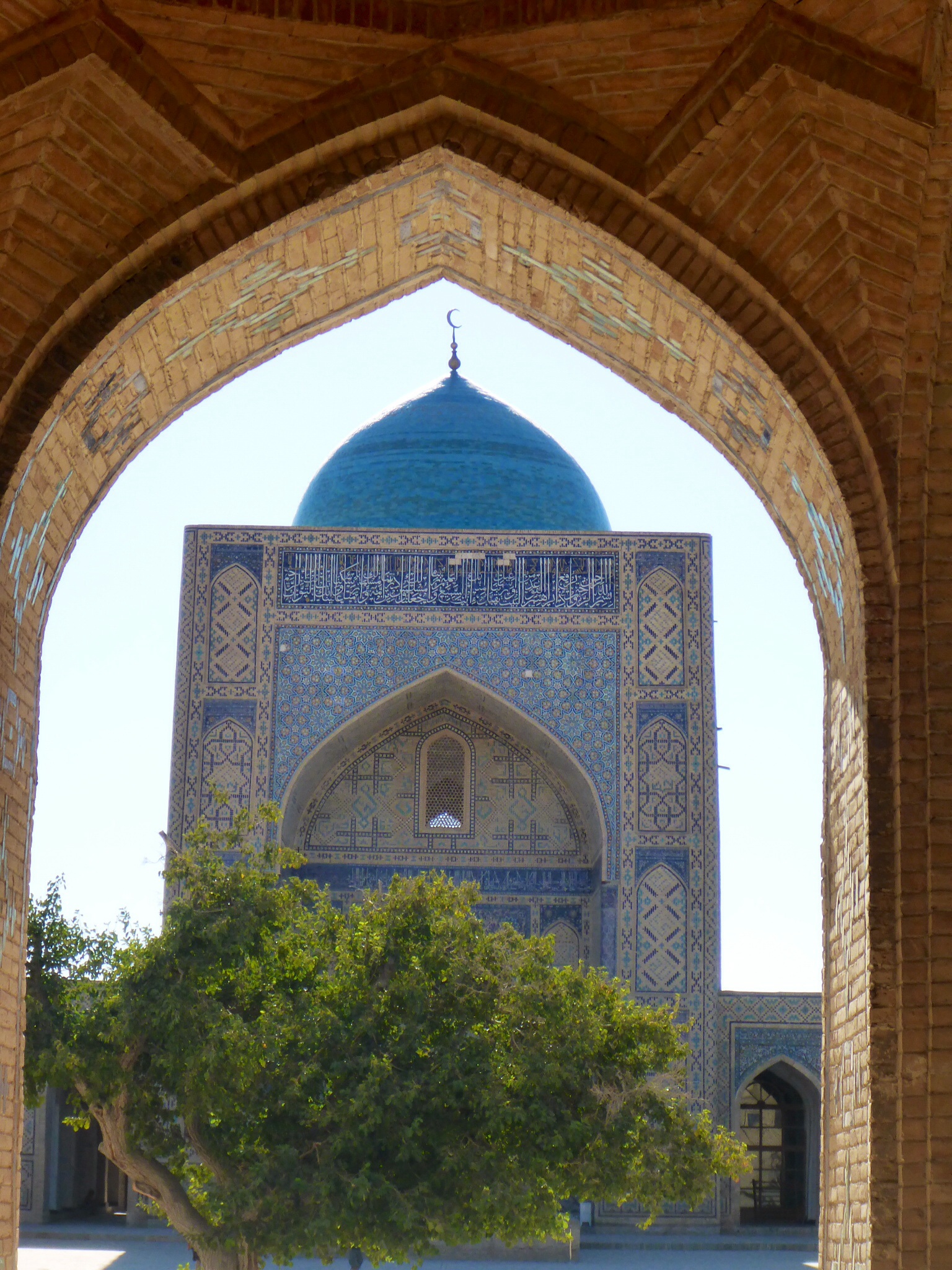
Miri Arab madrassah, Poi-Kalon ensemble, Bukhara, Uzbekistan
Miri Arab madrassah, Poi-Kalon ensemble, Bukhara, Uzbekistan

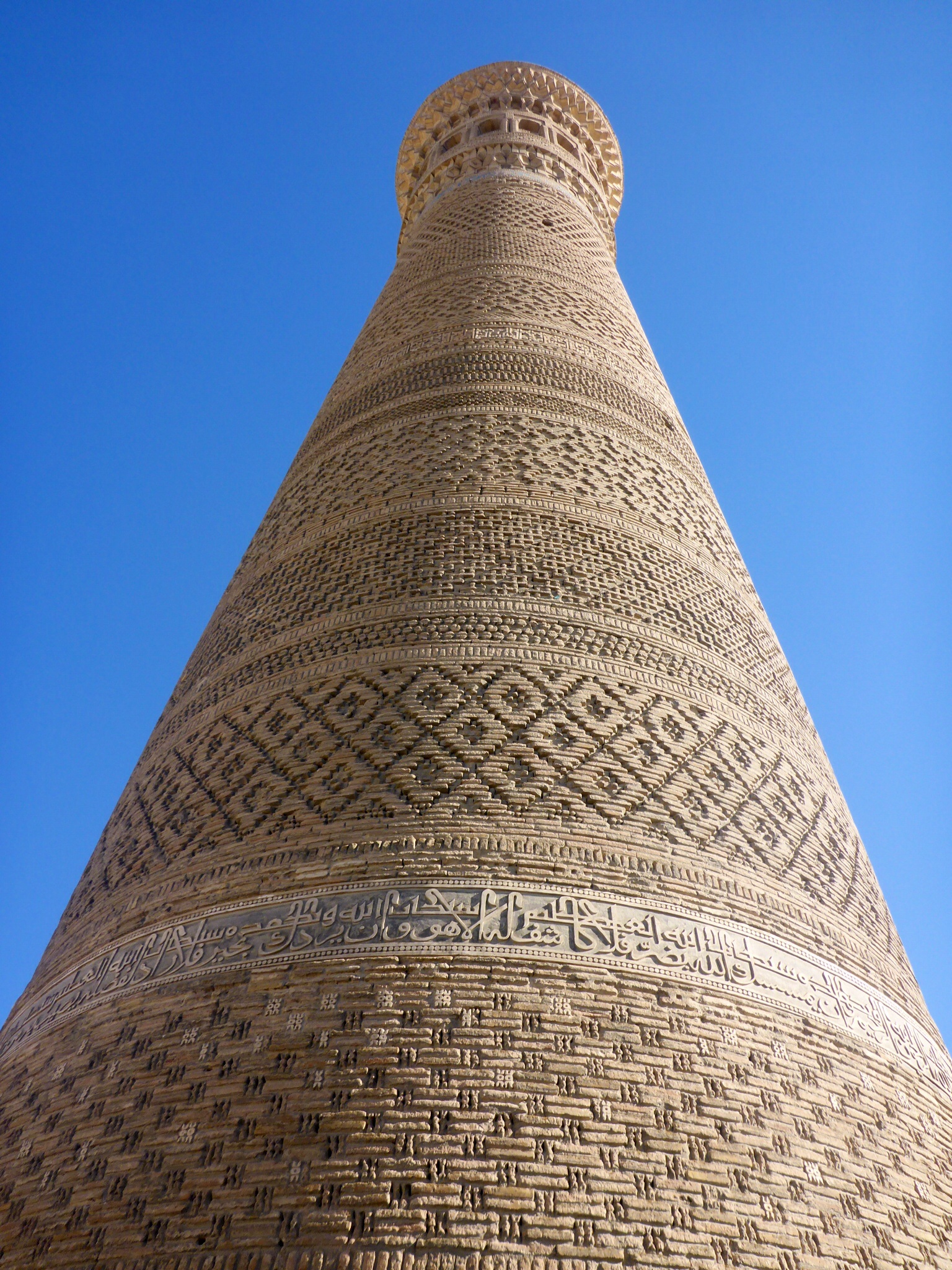
Stunning and architecturally awe-inspiring Kalon minaret, Poi-Kalon ensemble, Bukhara, Uzbekistan
Stunning and architecturally awe-inspiring Kalon minaret, Poi-Kalon ensemble, Bukhara, Uzbekistan

Emir Alim Khan madrassah, Poi-Kalon ensemble, Bukhara, Uzbekistan
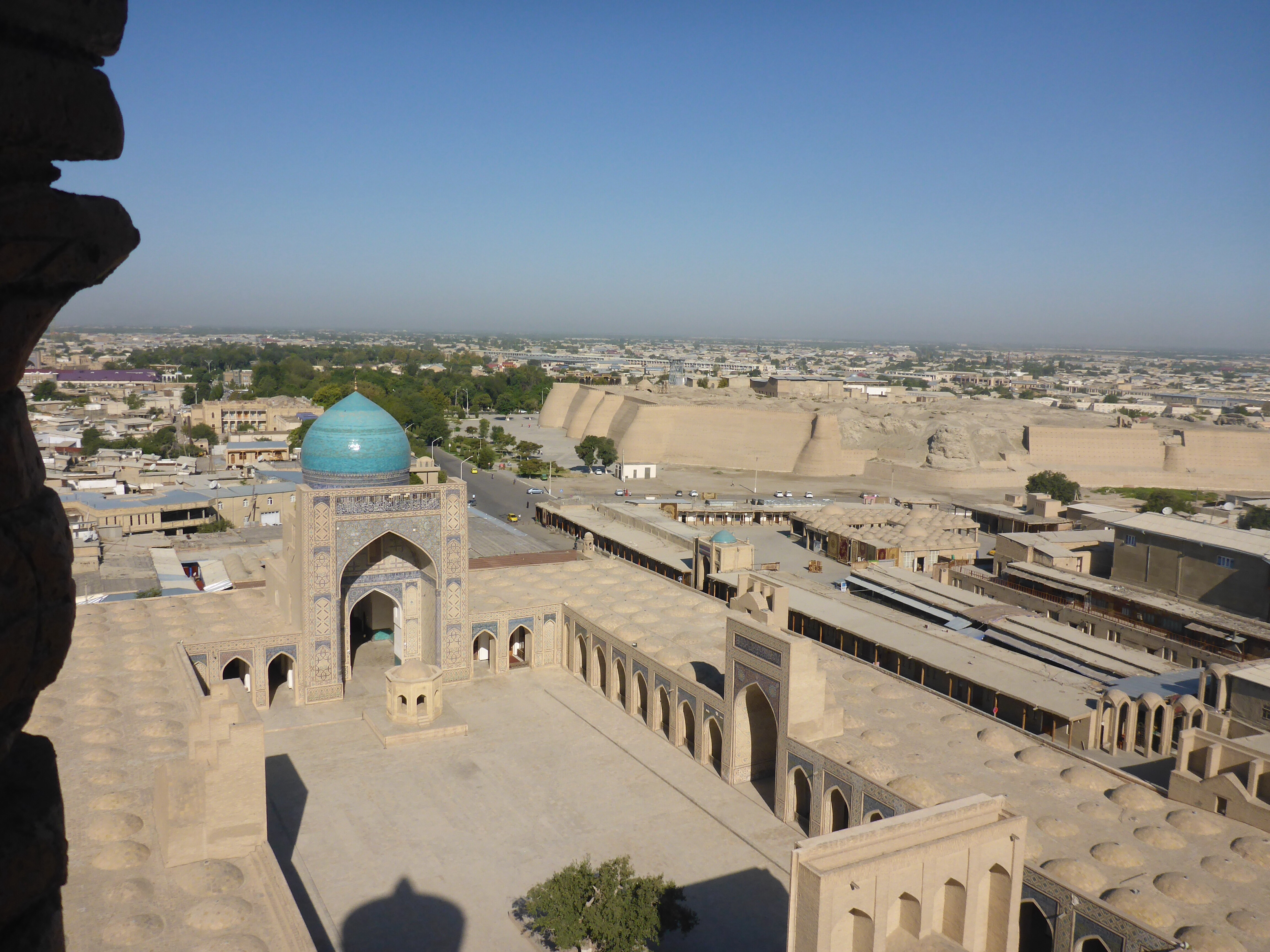
Emir Alim Khan madrassah, Poi-Kalon ensemble, Bukhara, Uzbekistan

Emir Alim Khan madrassah, Poi-Kalon ensemble, Bukhara, Uzbekistan and view towards the citadel
Emir Alim Khan madrassah, Poi-Kalon ensemble, Bukhara, Uzbekistan and view towards the citadel

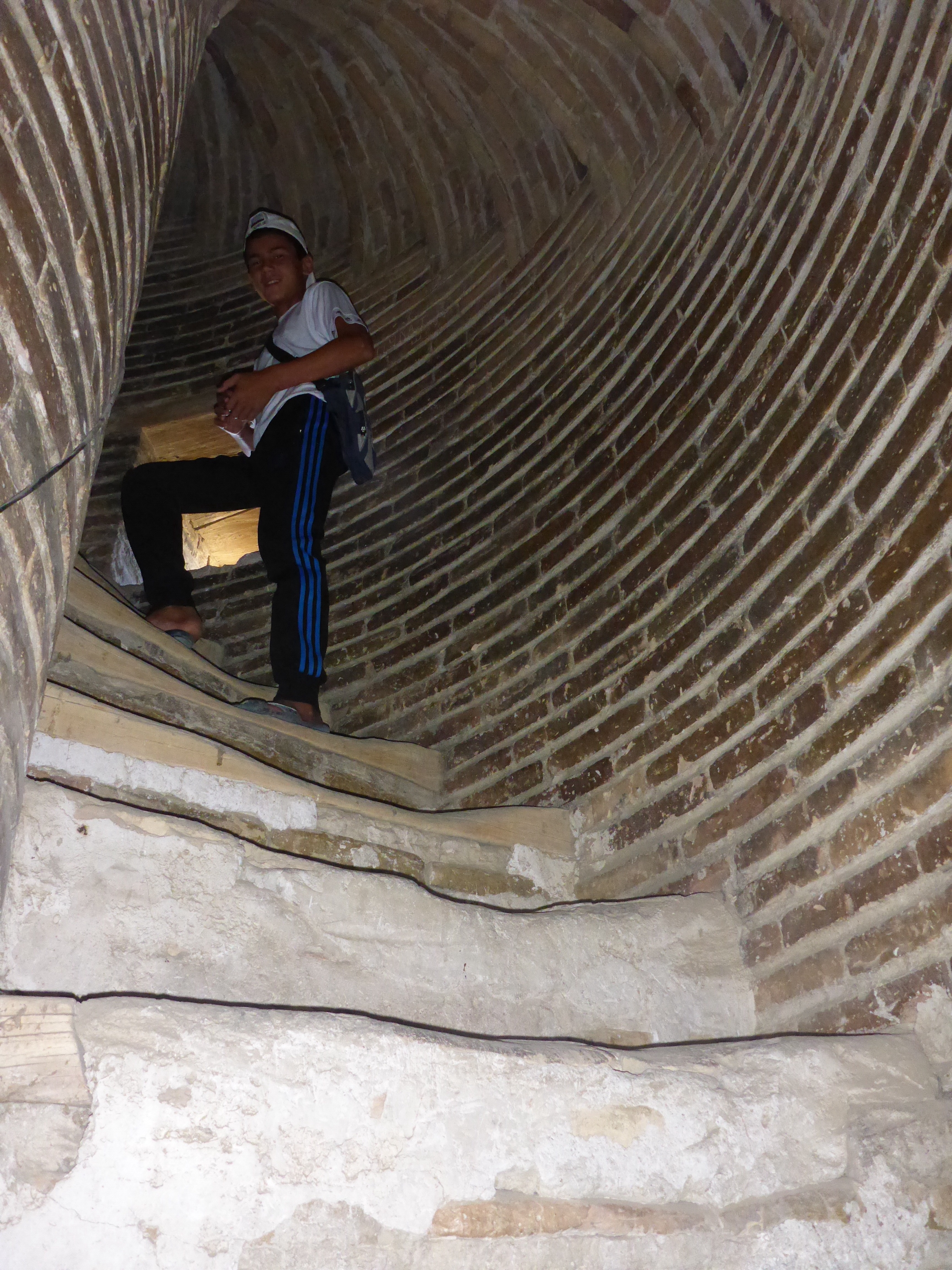
Steps up the Kalon minaret, Poi-Kalon ensemble, Bukhara, Uzbekistan
Steps up the Kalon minaret, Poi-Kalon ensemble, Bukhara, Uzbekistan


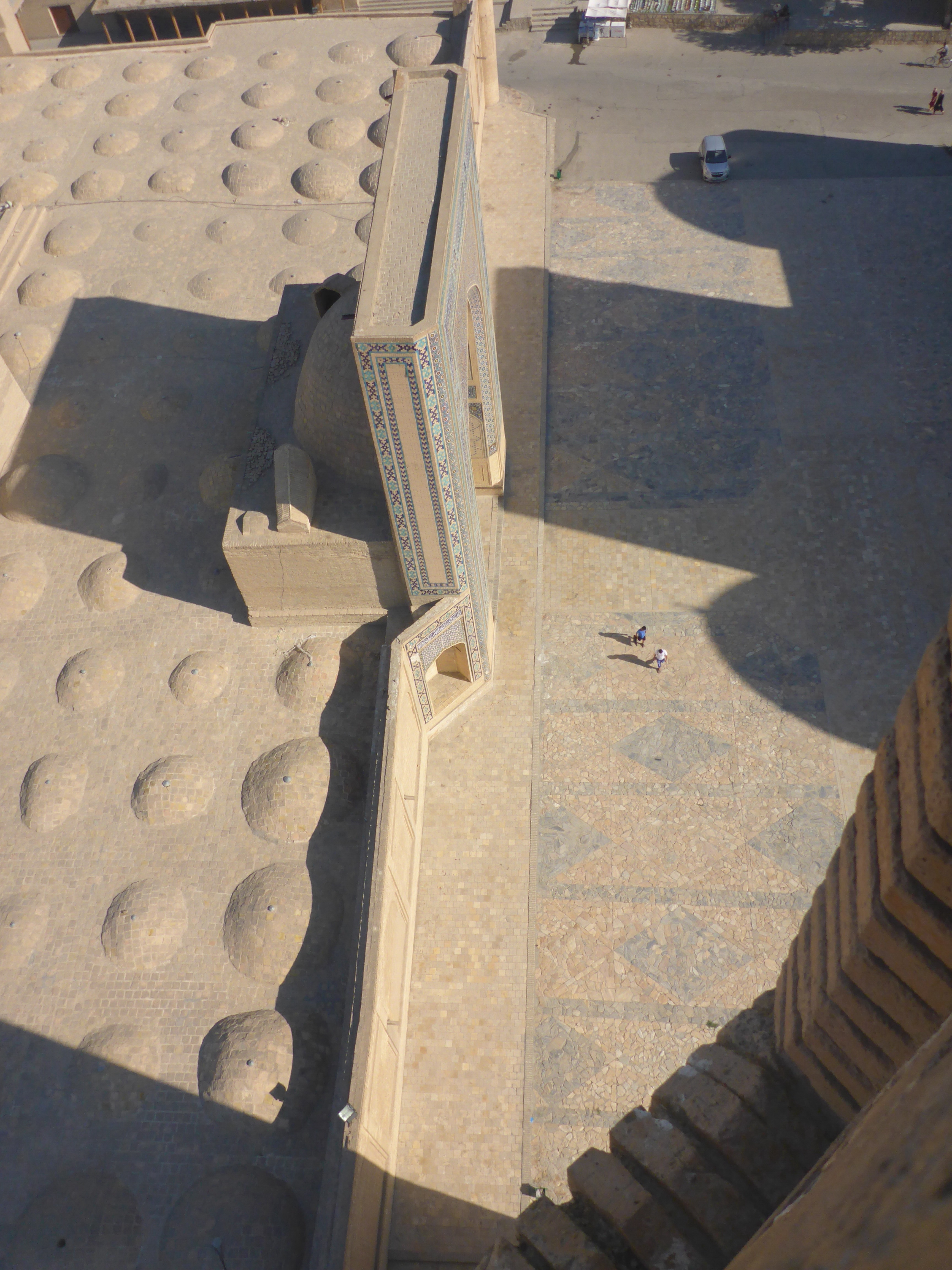
Emir Alim Khan from the top of Kalon minaret, Poi-Kalon ensemble, Bukhara, Uzbekistan

Emir Alim Khan from the top of Kalon minaret, Poi-Kalon ensemble, Bukhara, Uzbekistan

Emir Alim Khan madrassah, Poi-Kalon ensemble, Bukhara, Uzbekistan and view towards the citadel
Emir Alim Khan madrassah, Poi-Kalon ensemble, Bukhara, Uzbekistan and view towards the citadel

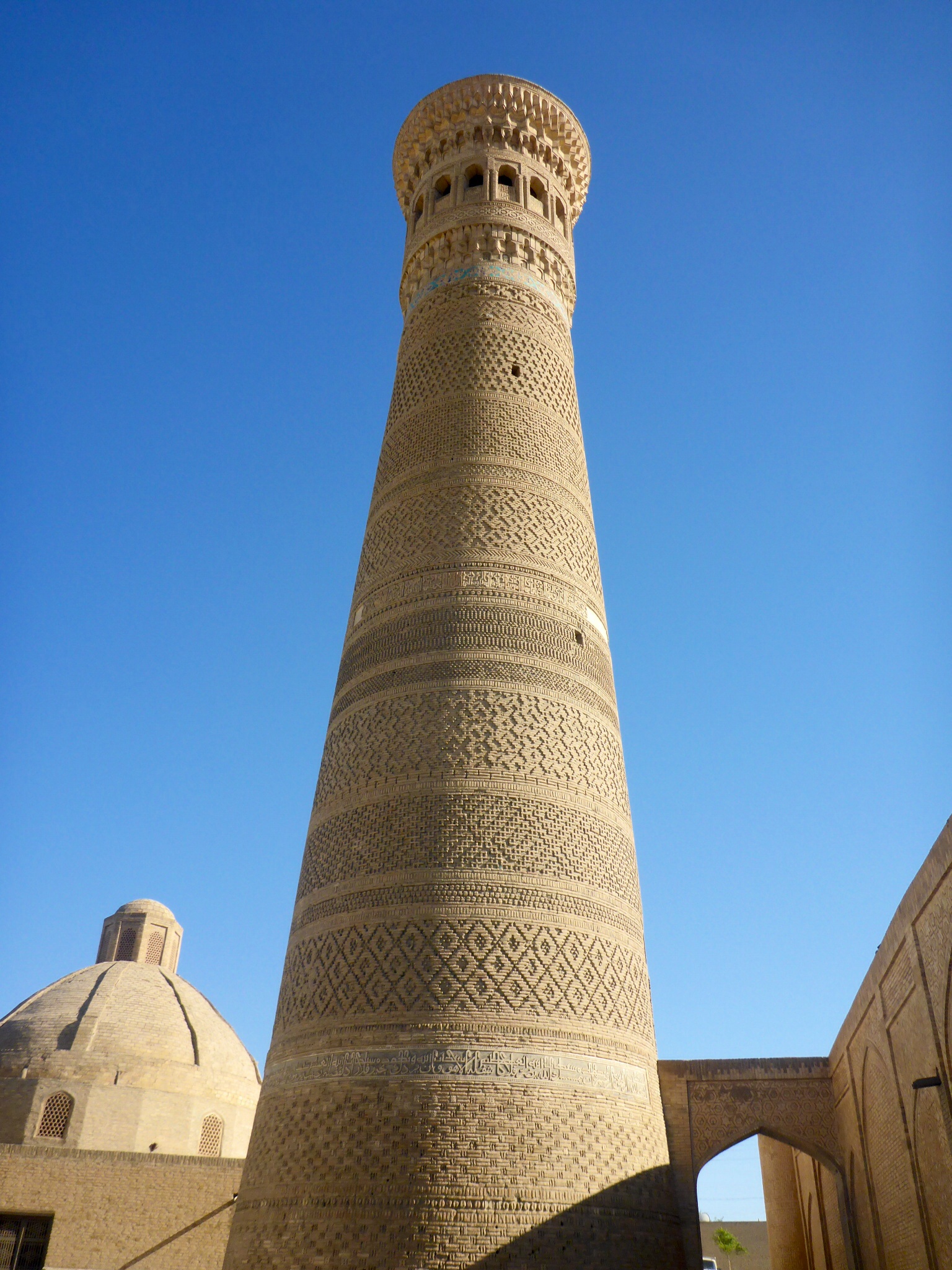
Poi-Kalon minaret, Bukhara, Uzbekistan - 47m high, it was built in 1127, over deep foundations of reeds to withstand earthquakes and has never required structural repairs.

Poi-Kalon minaret, Bukhara, Uzbekistan – 47m high, it was built in 1127, over deep foundations of reeds to withstand earthquakes and has never required structural repairs.

From Bukhara, we headed to Khiva. Phew, that was a long hard hot ride. The only good part was meeting our first fellow traveller, Andy, at one of the few petrol stations. Considering we only found one petrol station between Tashkent and Samarkand (260 kms), 17kms out of Samarkand, we knew getting to Khiva, which was 450 kms away, with the petrol we had, would be tricky. Even getting a place which would accept to fill our 2 containers was difficult!! The road to Khiva was pretty poor so the concentration was intense – we arrived on the outskirts of Khiva after 8 hours.

The final part of the ride was the hardest for me: weaving in and out of twisty narrow potholed dead end lanes for about 45′ completely finished me. I got another pouring of water all over me by Anthony to cool me down. We eventually found our hotel. A cold drink, cool shower and change and I was good to set off to discover Khiva in the perfect late afternoon glow.

Walking through Khiva was like stepping back in time, just as it was when it was founded in the 5th century and built over 600 years. The street vendors were still there, just as they always had been, selling goods mostly intended for locals. The most surprising goods were fur hats!?!?! But after leaving Khiva, we saw people walking with those hats, despite the intense searing heat. Good protection against sun burns.

Unfortunately, it is now 01.30am and the internet won’t allow me to upload the Khiva photos, so this will happen in a separate post. But all is good with the 2slowspeeds, now in Iran – we have been treated to wonderful Iranian hospitality for the past couple of days. Suite au prochain numéro!!

– Anne
Reflections so far

Reflections so far and some questions answered:

1. We do not travel to ride but we ride to travel
2. The trip so far is all and more than we could have wished for
3. We are still enjoying ourselves and loving the trip
4. We don’t bother checking the weather forecast – we know it will be hot
5. Apart from visa exit date limits and needing to be back in Australia by 26th December, we have no fixed plan
6. We have both been surprised at how exhausted as we have been at times – probably due to the intense concentration with mad traffic and the heat
7. We keep marveling at how lucky we are to be traveling the way we are and having the experiences we are
8. The bikes have performed brilliantly for us so far, 8000kms
9. Both our main light beam light bulbs died within a few hours of each other
10. We communicate while riding via bluetooth, using Sena S20
11. Our hottest day so far has been 39 degrees in Kazakhstan
12. We don’t feel as hot while riding as we thought we would thanks to the ventilated jackets, white helmets and the sweat cooling us off with the wind
13. All our electrical items can be recharged on the bikes while riding if necessary except for the electric toothbrush
14. Our clutch hands don’t hurt anymore
15. Our backsides still occasionally get sore when we ride long stretches without a break so we ride standing when that happens but luckily we won’t have such long stretches again except across Turkmenistan
16. Anne experienced the worst exhaustion she ever has in Russia but bounced back after an hour’s stop and Anthony pouring precious drinking water all over her
Anne finds it more comfortable wearing her hydration pack on her front than her back
17. We have seen some crazy drivers and scary moments, but no road rage
18. Anne deals with still photos and Anthony with videos
19. Anthony is in charge of the GPS and Anne is in charge of packing
20. Anne does the historical research and Anthony is happy to follow
21, Anthony is in charge of navigating and Anne is happy to follow
22. We have avoided most of the tourist routes up until Samarkand
23. We rarely book accommodation ahead of time
24. We only choose a few places of interest to seek out in each place we stop at
25. We spend more time aimlessly meandering the streets than going from one tourist spot to another
26. We are enjoying having the ability to stay at more comfortable places than we did in our younger days
27. We don’t seek out the cheapest option at all cost
28. It has been too hot to walk too much between noon and 4pm
29. Our ‘rest’ days, until our real rest Samarkand, have always been filled with: hand washing, uploading photos from the camera to the iPad, culling the photos, uploading from the iPad to WordPress, annotating photos, writing blog posts, reading emails and posts, planning the next part of the route, researching routes, researching places of interest and deciding what to visit, researching latest info on borders, updating various forums, finding a good supermarket and restocking, recharging all our electric items (Panasonic Lumix FT5 camera batteries, electric toothbrush, Sena helmet bluetooth, iPads, iPhones, GoPro video) and of course bike maintenance.
30. We use WordPress.com premium (not.org) for the blog
31. Organising visas has been much more time consuming than we had expected
32. We have so far managed to take the bureaucracy involved with visas and border crossing in our stride and have not got annoyed or impatient (albeit sometimes disappointed)
33. What local people we’ve met have to go through to get visas to Europe is far worse than what we have to do
34. What Anne misses the most: seeing and chatting with family and friends
35. What Anthony misses the most: catching up with family and friends face to face
36. What Anne finds the hardest: maneuvering the bike through rough terrain at stop start speeds in traffic
37. What Anthony finds the hardest: navigating on the GPS in towns while managing the traffic
38. What Anne finds the most frustrating: the slow and unreliable internet
39. What Anthony finds the most frustrating: how the medication that I take dulls my senses
40. What Anne wishes the most: longer legs or a lower bike
41. What Anthony wishes the most: Anne to have longer legs to make her riding easier in rough terrain
42. What has surprised Anne the most: the number of police on the roads in Kyrgyzstan and the number of green lush parks in the towns and cities
43. What has surprised Anthony the most: the variation and diversity in people’s attitudes and cultures in the ‘Stans’ given they only gained independence 23 years ago
44. What Anne has enjoyed the most: the people we’ve met (and scenery in Kyrgyzstan and architecture in Uzbekistan)
44.2 What Anthony has enjoyed the most: the open spaces, being on the road and the wonderful people we have met
45. What Anne has enjoyed the least: the food in Kyrgyzstan
46. What Anthony has enjoyed the least: see above
47. Anne’s favourite packed item: her pillow (can be finely adjusted for all surfaces and my neck is always happy), fun trousers with elasticated ankles (good for pit toilets), hat and riding jacket and tent. (Yes, that’s more than one but I’m a girl so am allowed)
48. Anthony’s favourite item: Bluetooth communication while riding
49. Item Anne wishes she had: the very expensive light folding chairs would have been great for camping and road side stops and Anne wishes she could have taken more perfume – one of those sample bottles is being used very rarely and sparingly to make it last (yes yes, I know, it’s more than 1…)
50. Item Anthony wishes he had: more short sleeve tops and an attachment to remove our oil filter (he’s got more than 1 item too!)
51. What Anne wishes she’d done before leaving: brush up on her Russian (thankfully reading cyrillic is no problem)
52. What Anthony wishes he’d done before leaving: read the manuals and trialled the goPro and GPS. There is a lot more functionality and menu options on these versions.
53. What has disappointed Anne the most: her boots (leaked like sieves on the first week of the trip)
54. What has disappointed Anthony the most: the boots, both pairs leaking so badly. It is not always possible to test all your equipment under all conditions before you leave
55. Items packed and not used yet: extra pairs of socks, long sleeved winter tops, Anne’s pair of nice ‘town’ shoes, Anne’s Iranian ‘manteau’ (which will be mandatory in Iran) and folding water bowl (what was I thinking?!)
56. Packing tip: pack tops & underwear in different draw cord bags – keeps tops well folded and items easy to get out & saves space in panniers
57. Sleeping in the tent has been so much more comfortable now we have great equipment
58. Water/rehydration packs are a must on long riding journeys and have been great
59. We are glad we have practical sandals that protect the toes (albeit it ugly) – the remains of pavements can be treacherous, especially at night as there is rarely street lighting
60. Item only ever purchased for this trip: Anne’s Sheewee, which has come in very handy a few times already
61. We have been eating fairly well and still have fat reserves to lose
62. Since we left Russia, we have been carrying 17 litres of water
63. We have been thinking of what we’ll do when we eventually return home in Manly and are making plans such as renovating and finally working on the garden
64. We eagerly look out for blog comments – like going to one’s letter box hoping for a friendly letter
65. Whether on the bikes or not, we have had the best experiences with local people we’ve met along the way
66. We have never laughed as much as while riding or spoken to passing cars like we have in Uzbekistan
67. People are inherently good, regardless of their government, religion, social standing or living conditions
68. People with the least are often the most generous
69. It is our interaction with people that gives us the most enjoyment – even in Samarkand which could hardly be more stunning and interesting and exciting to be seeing, the memories of our time with Uzbeks and their generosity of spirit, which is overwhelming and warms our hearts, will remain our favourite memory of Samarkand

– Anne

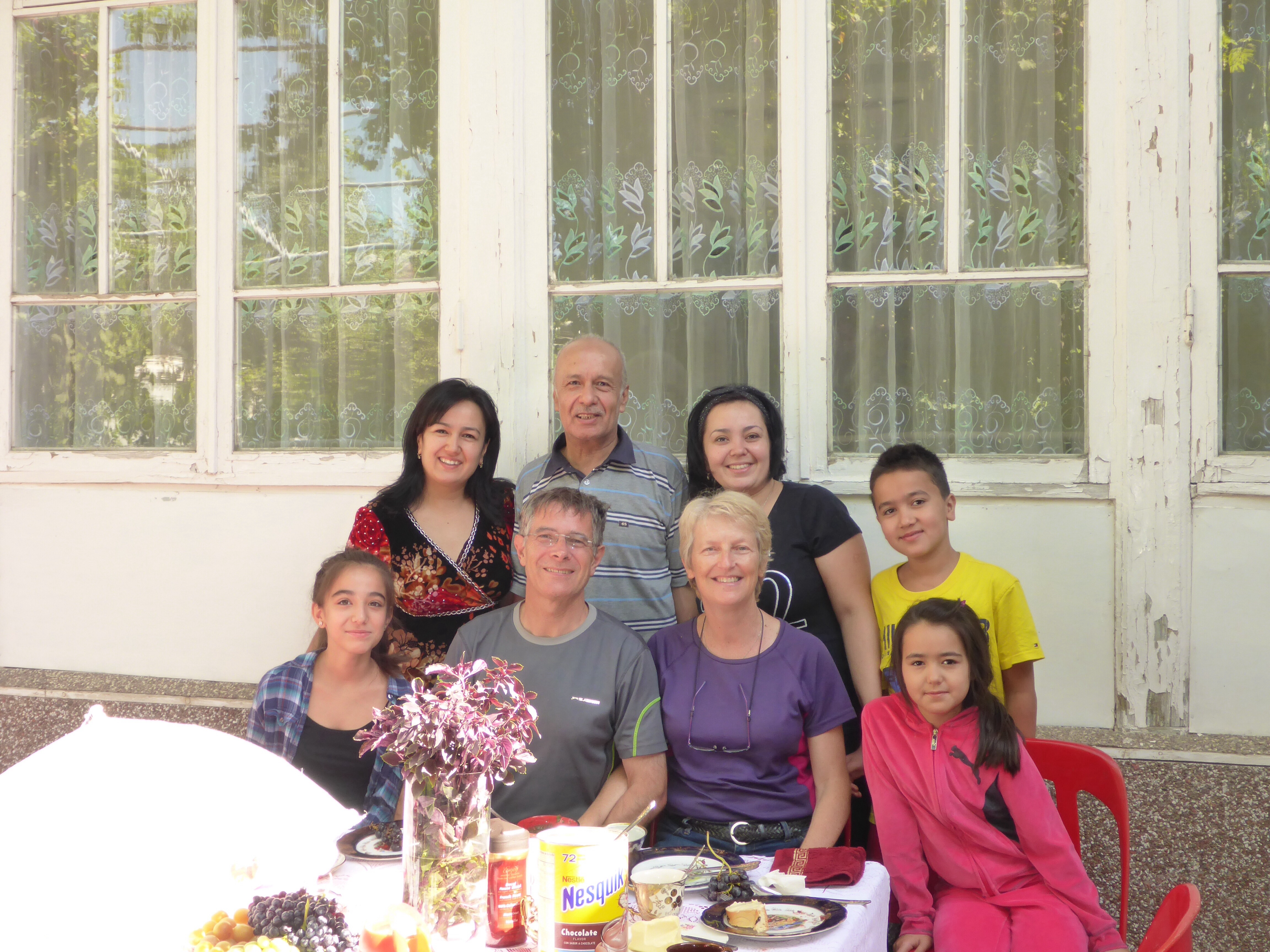
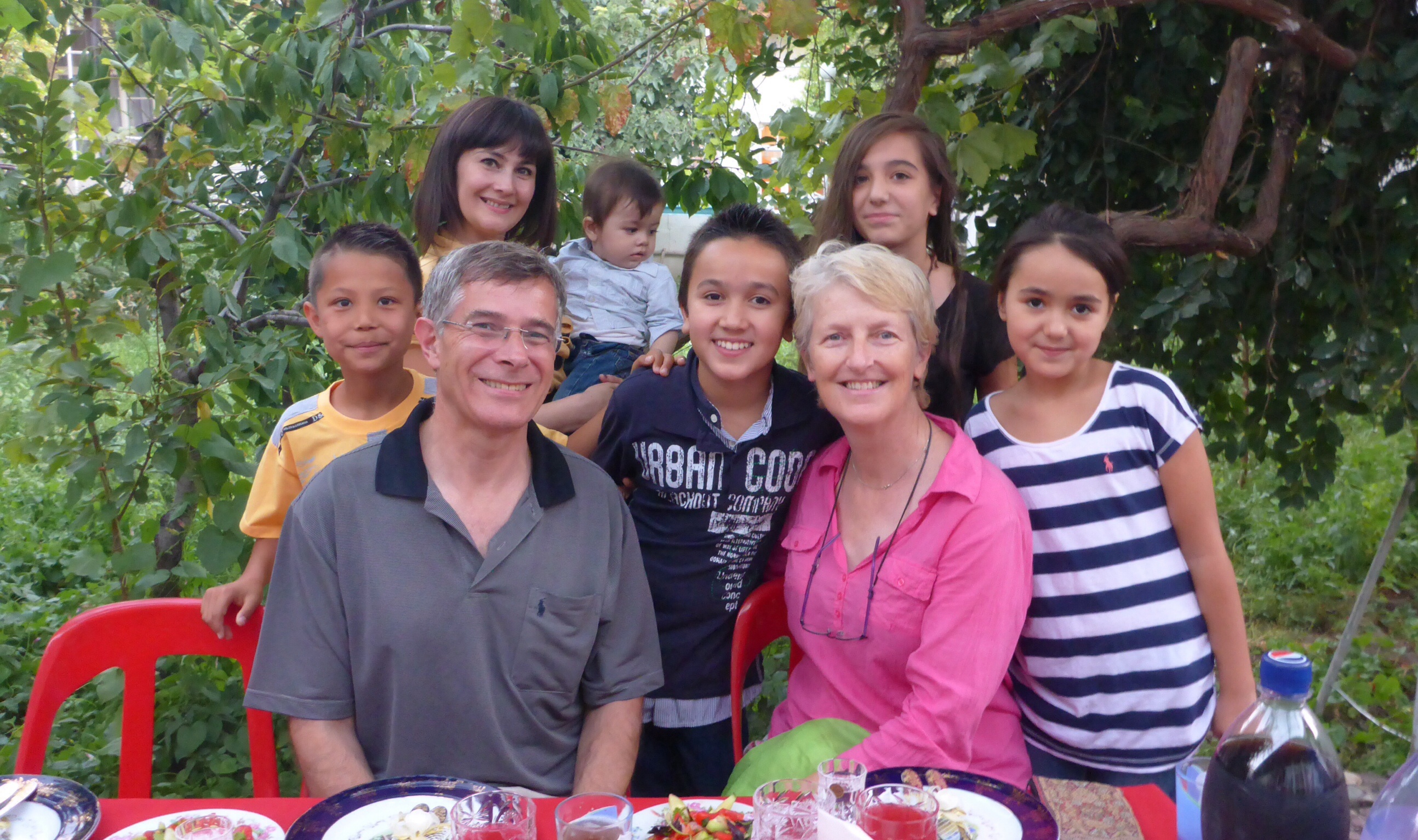
A memorable evening in Samarkand:  Gulnoza and baby Omar behind Anthony and Aziza's kids Muqhbar and Raziza on either side of Anne, and Aziza's niece Sabina behind Anne

A memorable evening in Samarkand: Gulnoza and baby Omar behind Anthony and Aziza’s kids Muqhbar and Raziza on either side of Anne, and Aziza’s niece Sabina behind Anne

Samarkand – a silent stroll

Words cannot describe the beauty of the treasures we have had the privilege to visit, the serenity of the architecture and madrasahs and the warmth of Uzbeks, so I hope you enjoy this silent stroll.

– Anne

Amir Temur Mausoleum, which Amir Temur built for his favourite grandson Muhammad Sultan who suddenly died in 1403, Samarkand, Uzbekistan

Amir Temur Mausoleum, which Amir Temur built for his favourite grandson Muhammad Sultan who suddenly died in 1403, Samarkand, Uzbekistan

Amir Temur mausoleum, Samarkand, Uzbekistan

Amir Temur mausoleum, Samarkand, Uzbekistan

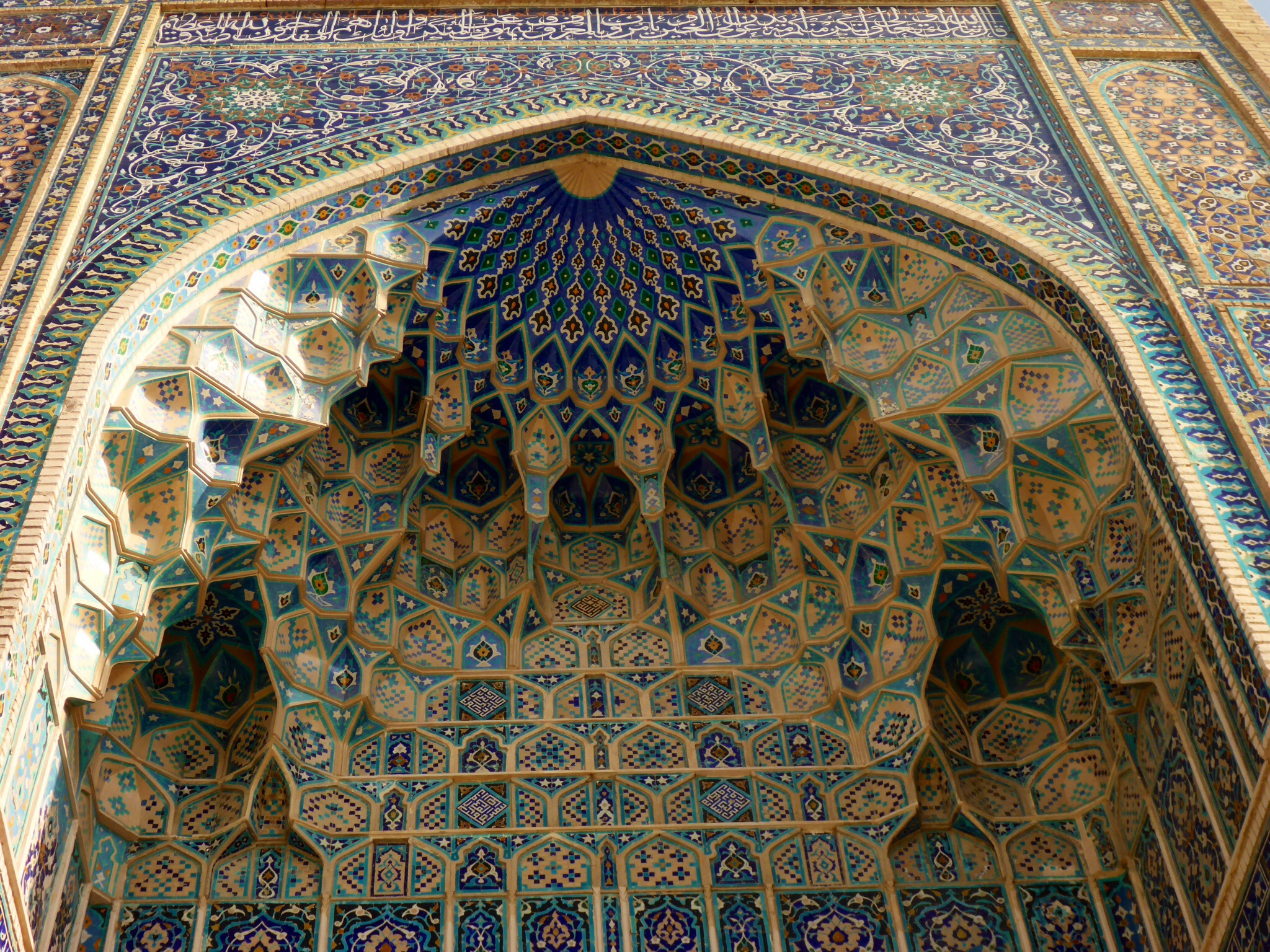
Amir Temur mausoleum, Samarkand, Uzbekistan- deep niches and muqarnas decorations

Amir Temur mausoleum, Samarkand, Uzbekistan- deep niches and muqarnas decorations


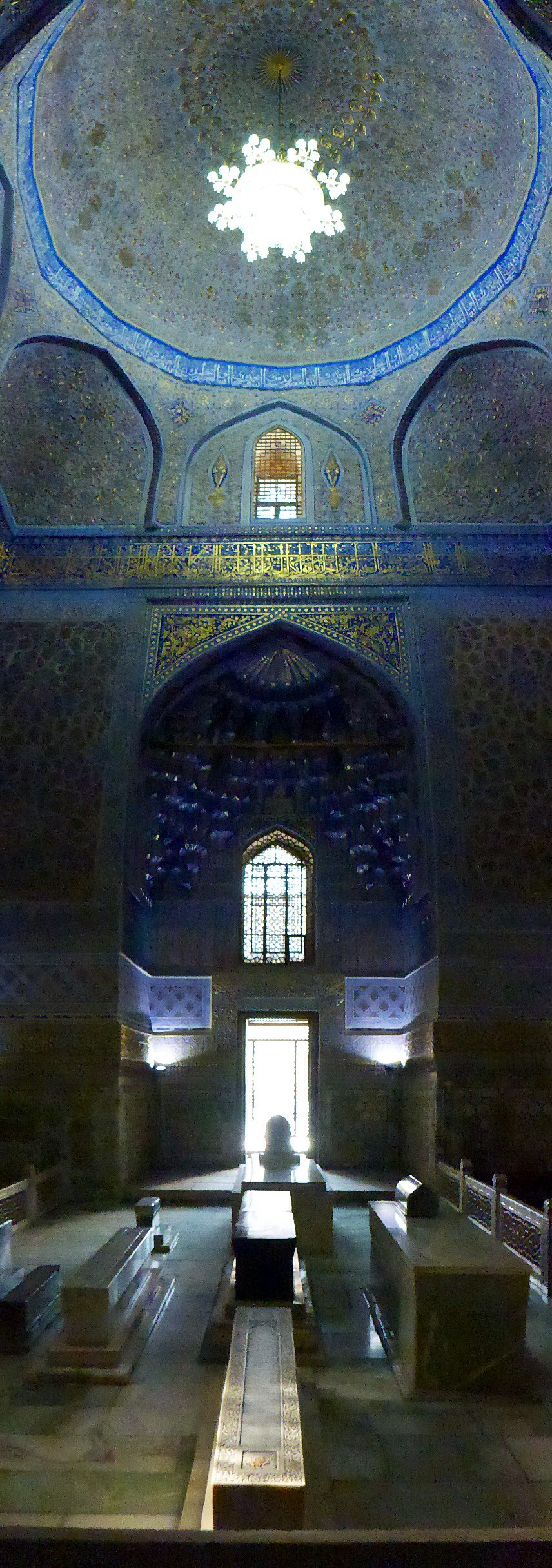
Amir Temur, Tamerlane,  mausoleum, Samarkand, Uzbekistan - Amir Temur's tomb is in the centre - there is much interesting folklore around this solid block of dark green jade tomb stone (which appears black without direct sunlight on it).  Amir Temur died in 1405.

Amir Temur, Tamerlane, mausoleum, Samarkand, Uzbekistan – Amir Temur’s tomb is in the centre – there is much interesting folklore around this solid block of dark green jade tomb stone (which appears black without direct sunlight on it). Amir Temur died in 1405.

Amir Temur mausoleum, Samarkand, Uzbekistan - stunning gold leaf on silk paper adorns the inside of the mausoleum, the dome of bricks is 15m in diameter and 12.5m deep

Amir Temur mausoleum, Samarkand, Uzbekistan – stunning gold leaf on silk paper adorns the inside of the mausoleum, the dome of bricks is 15m in diameter and 12.5m deep

A tree trunk marks the burial site of a sufi - Amir Timur's teacher, Sufi Sayyid Baraka, who died the same year as his favourite grandson in 1403

A tree trunk marks the burial site of a sufi – Amir Timur’s teacher, Sufi Sayyid Baraka, who died the same year as his favourite grandson in 1403

Amir Temur, Tamerlane, mausoleum, Samarkand, Uzbekistan

Amir Temur, Tamerlane, mausoleum, Samarkand, Uzbekistan

The tiles on the right are 18 years old, the ones on the left 600 years old - and which are the brightest?!  Amir Temur Mausoleum, Samarkand, Uzbekistan

The tiles on the right are 18 years old, the ones on the left 600 years old – and which are the brightest?! Amir Temur Mausoleum, Samarkand, Uzbekistan

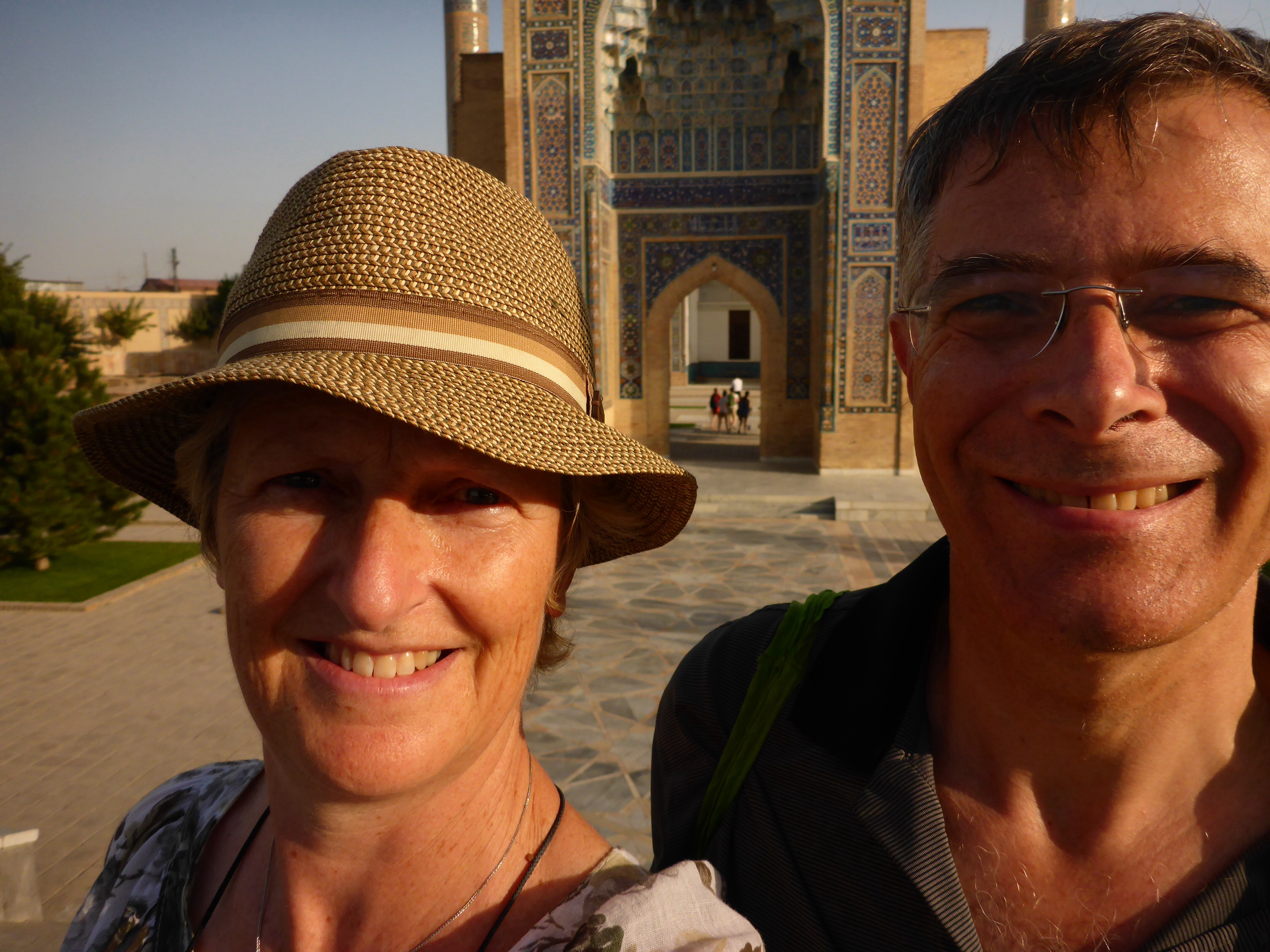
2SlowSpeeds in front of Amir Temur's mausoleum, Samarkand, Uzbekistan

2SlowSpeeds in front of Amir Temur’s mausoleum, Samarkand, Uzbekistan

Our first view of the Registan, Samarkand, Uzbekistan

Our first view of the Registan, Samarkand, Uzbekistan

Ruxshona, 20 year old with 2 year old child, Azida, 22, married doctor and Dilnoza, 22, engaged with whom we chatted for an hour on life, mixed marriage, education and travel

Ruxshona, 20 year old with 2 year old child, Azida, 22, married doctor and Dilnoza, 22, engaged with whom we chatted for an hour on life, mixed marriage, education and travel

The Registan, with from L to R, the Ulugh Beg Madrasah (1417-1420), the Tilya-Kori Madrasah (1646-1660) and the Sher-Dor Madrasah (1619-1636).  The public place in the middle was used for royal declarations and executions

The Registan, with from L to R, the Ulugh Beg Madrasah (1417-1420), the Tilya-Kori Madrasah (1646-1660) and the Sher-Dor Madrasah (1619-1636). The public place in the middle was used for royal declarations and executions

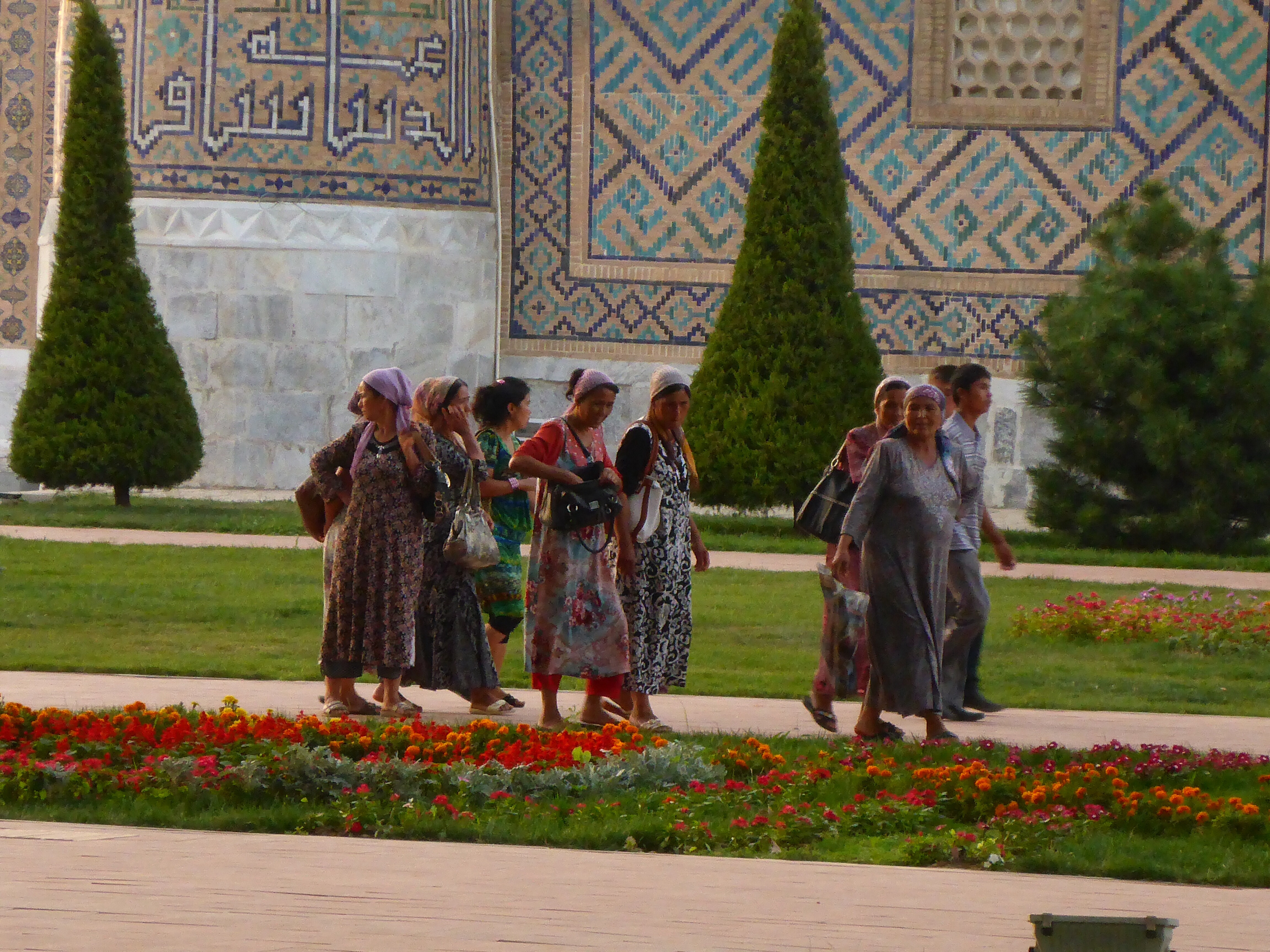
Uzbek women, near the Registan, Samarkand, Uzbekistan

Uzbek women, near the Registan, Samarkand, Uzbekistan

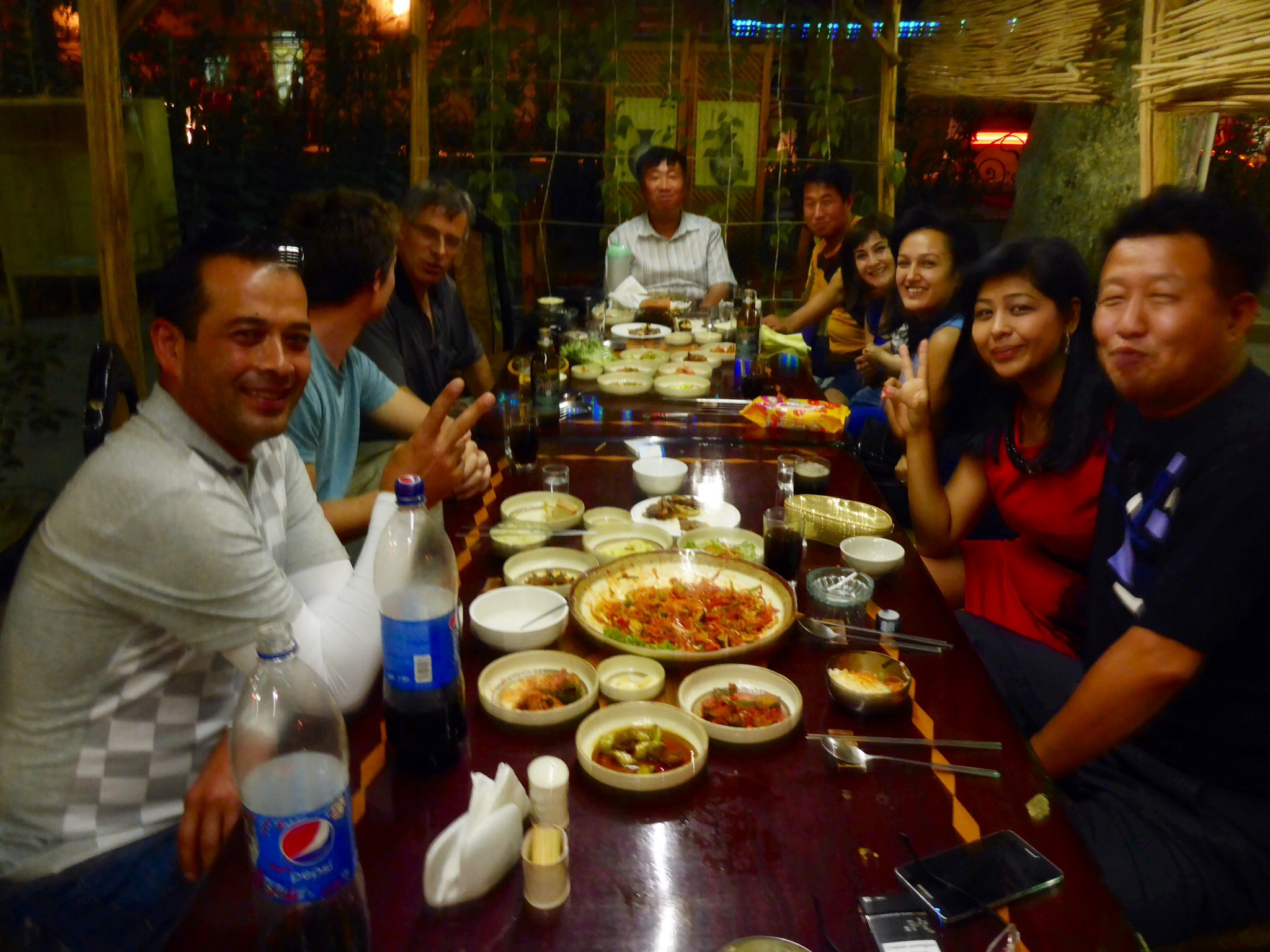
We were invited to join this group of Uzbeks and Koreans as soon as we walked into a Korean restaurant in Samarkand - what a fun evening ensued - little did we know we'd see them again a couple of days later...

We were invited to join this group of Uzbeks and Koreans as soon as we walked into a Korean restaurant in Samarkand – what a fun evening ensued – little did we know we’d see them again a couple of days later…


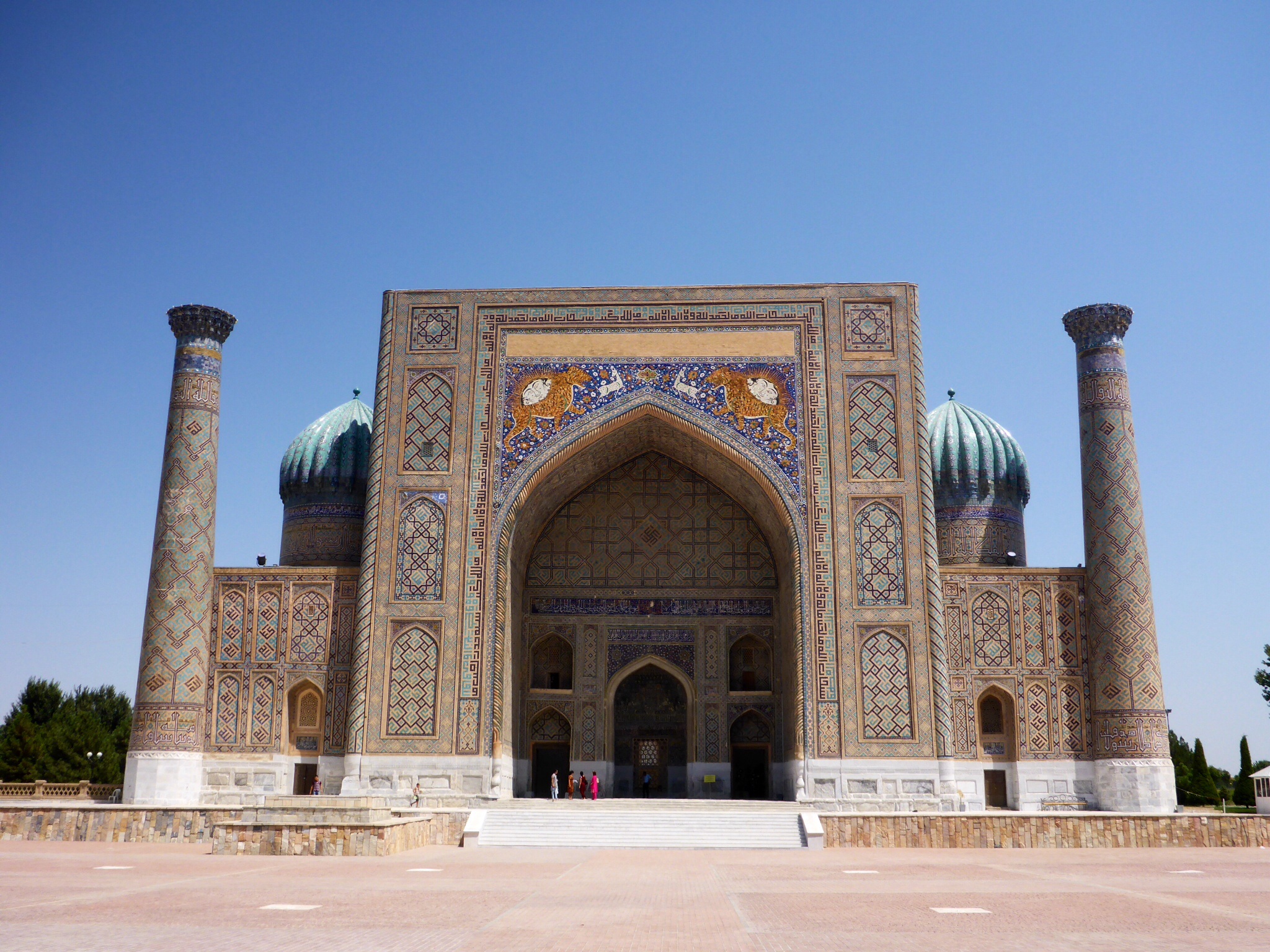
Front of Sher-Dor madrasah,  Registan, Samarkand, Uzbekistan

Front of Sher-Dor madrasah, Registan, Samarkand, Uzbekistan

Inside the Sher-Dor madrasah, Registan, Samarkand, Uzbekistan

Inside the Sher-Dor madrasah, Registan, Samarkand, Uzbekistan

Sher-Dor madrasah, Registan, Samarkand, Uzbekistan

Sher-Dor madrasah, Registan, Samarkand, Uzbekistan


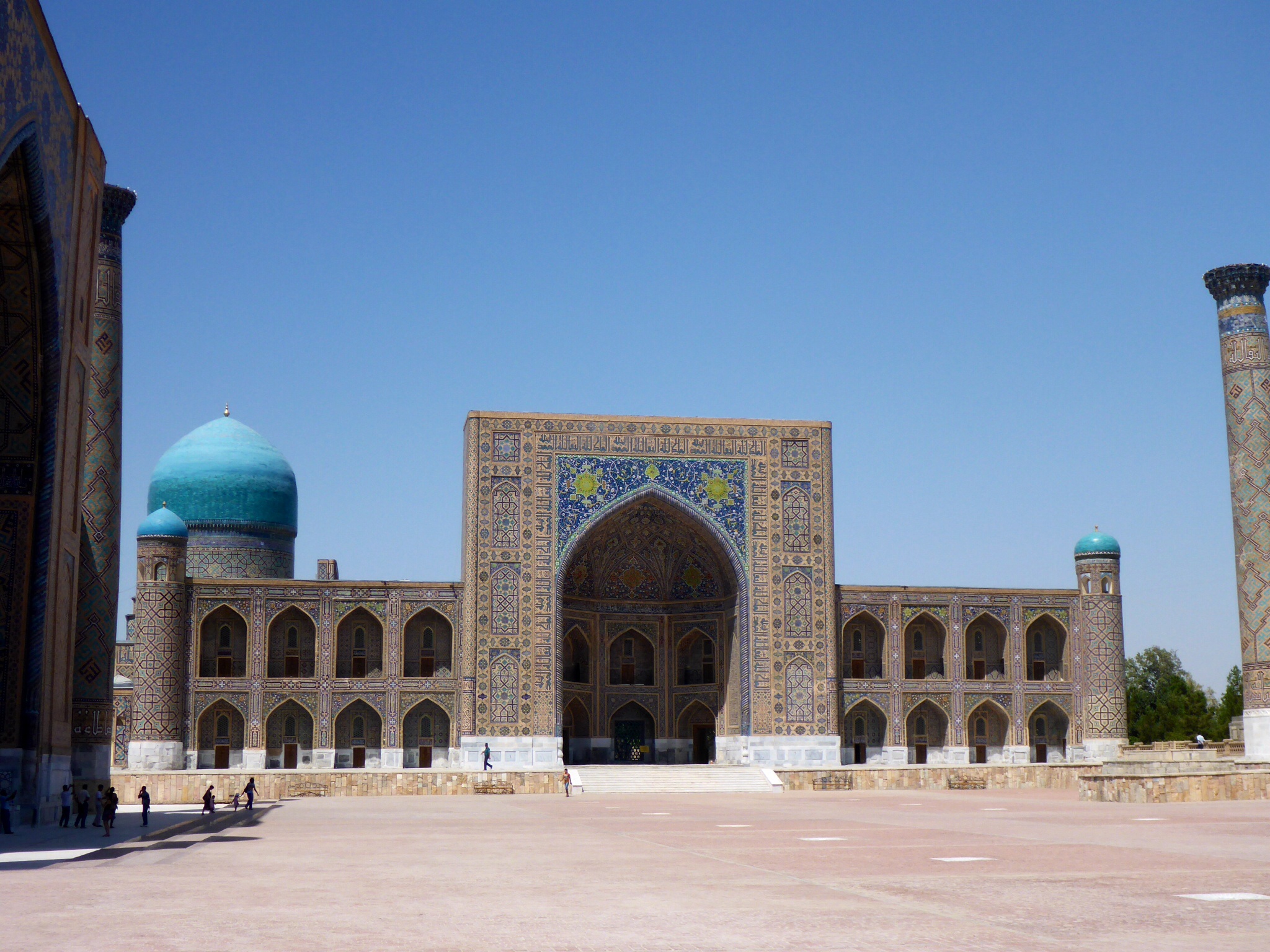
Front of Tilya-Kori madrasah, Registan, Samarkand, Uzbekistan

Front of Tilya-Kori madrasah, Registan, Samarkand, Uzbekistan

Tilya-Kori madrasah arch, looking towards Ulugh-Beg madrasah, Registan, Samarkand, Uzbekistan

Tilya-Kori madrasah arch, looking towards Ulugh-Beg madrasah, Registan, Samarkand, Uzbekistan

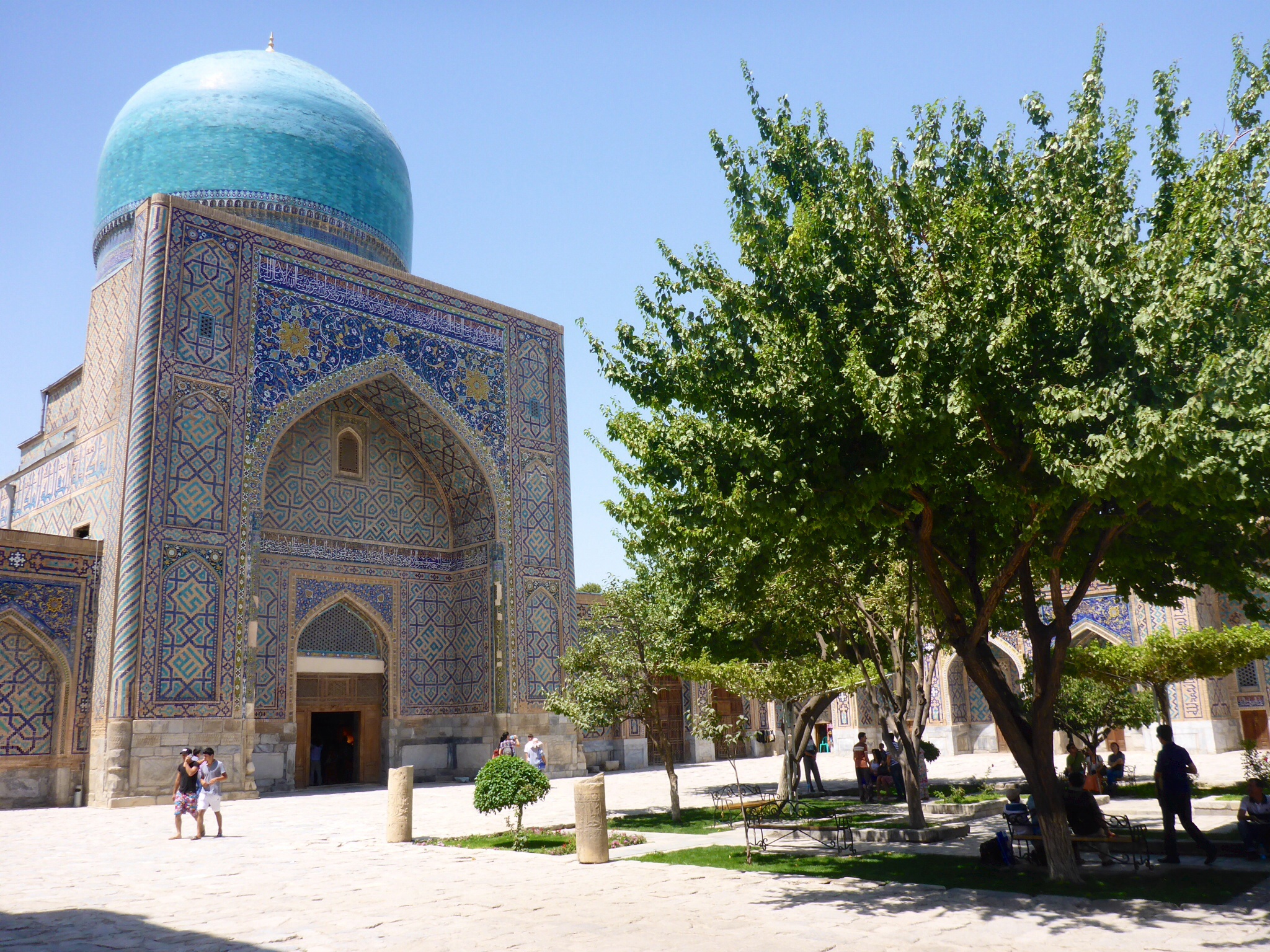
Courtyard of the Tilya-Kori madrasah, Registan, Samarkand, Uzbekistan

Courtyard of the Tilya-Kori madrasah, Registan, Samarkand, Uzbekistan

Serene courtyard of the Tilya-Kori madrasah, Registan, Samarkand, Uzbekistan

Serene courtyard of the Tilya-Kori madrasah, Registan, Samarkand, Uzbekistan

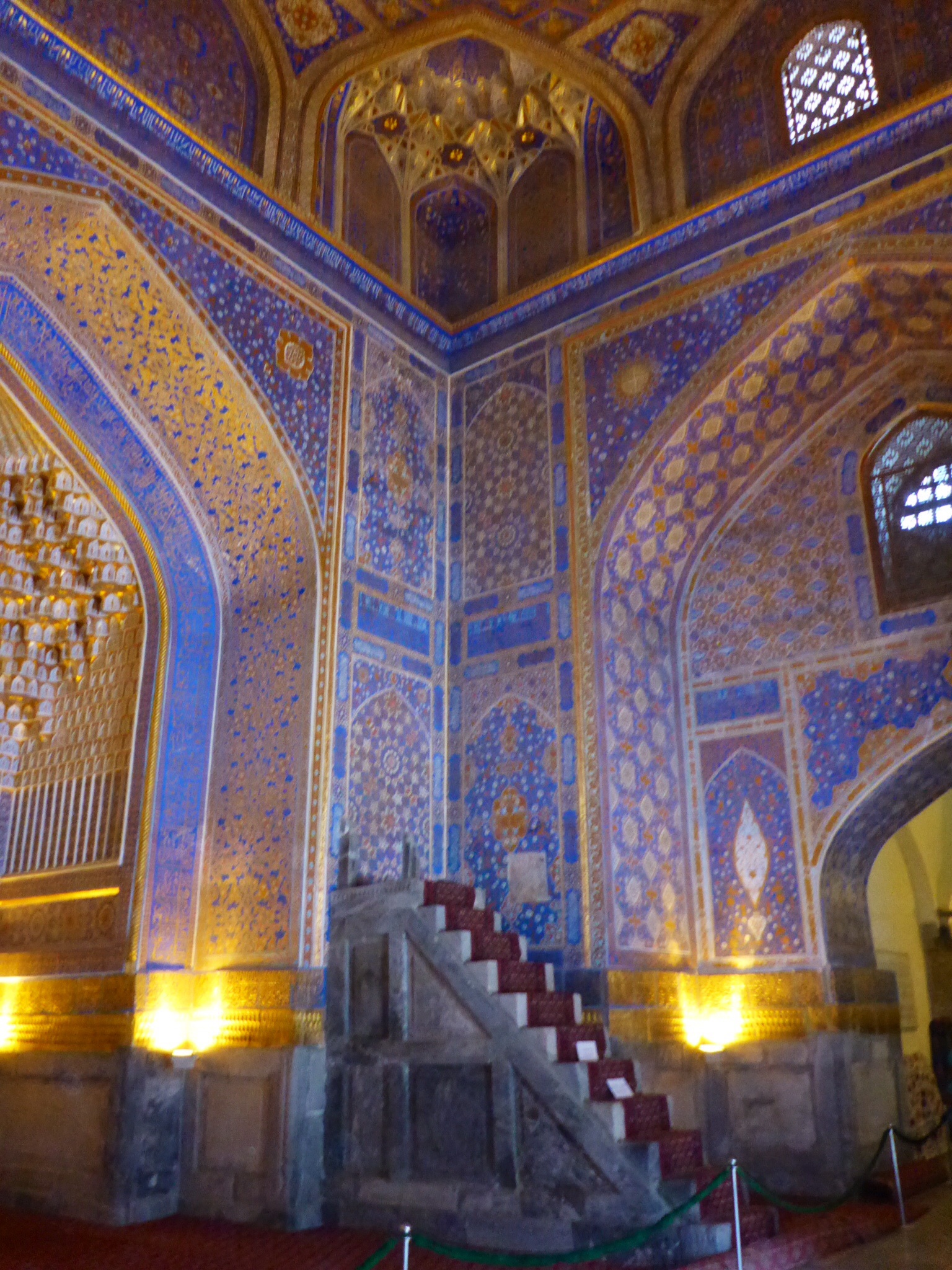
Tilya-Kori madrasah, Registan, Samarkand, Uzbekistan

Tilya-Kori madrasah, Registan, Samarkand, Uzbekistan

Tilya-Kori madrasah, Registan, Samarkand, Uzbekistan

Tilya-Kori madrasah, Registan, Samarkand, Uzbekistan

Tilya-Kori madrasah, Registan, Samarkand, Uzbekistan

Tilya-Kori madrasah, Registan, Samarkand, Uzbekistan

Tilya-Kori madrasah, Registan, Samarkand, Uzbekistan

Tilya-Kori madrasah, Registan, Samarkand, Uzbekistan

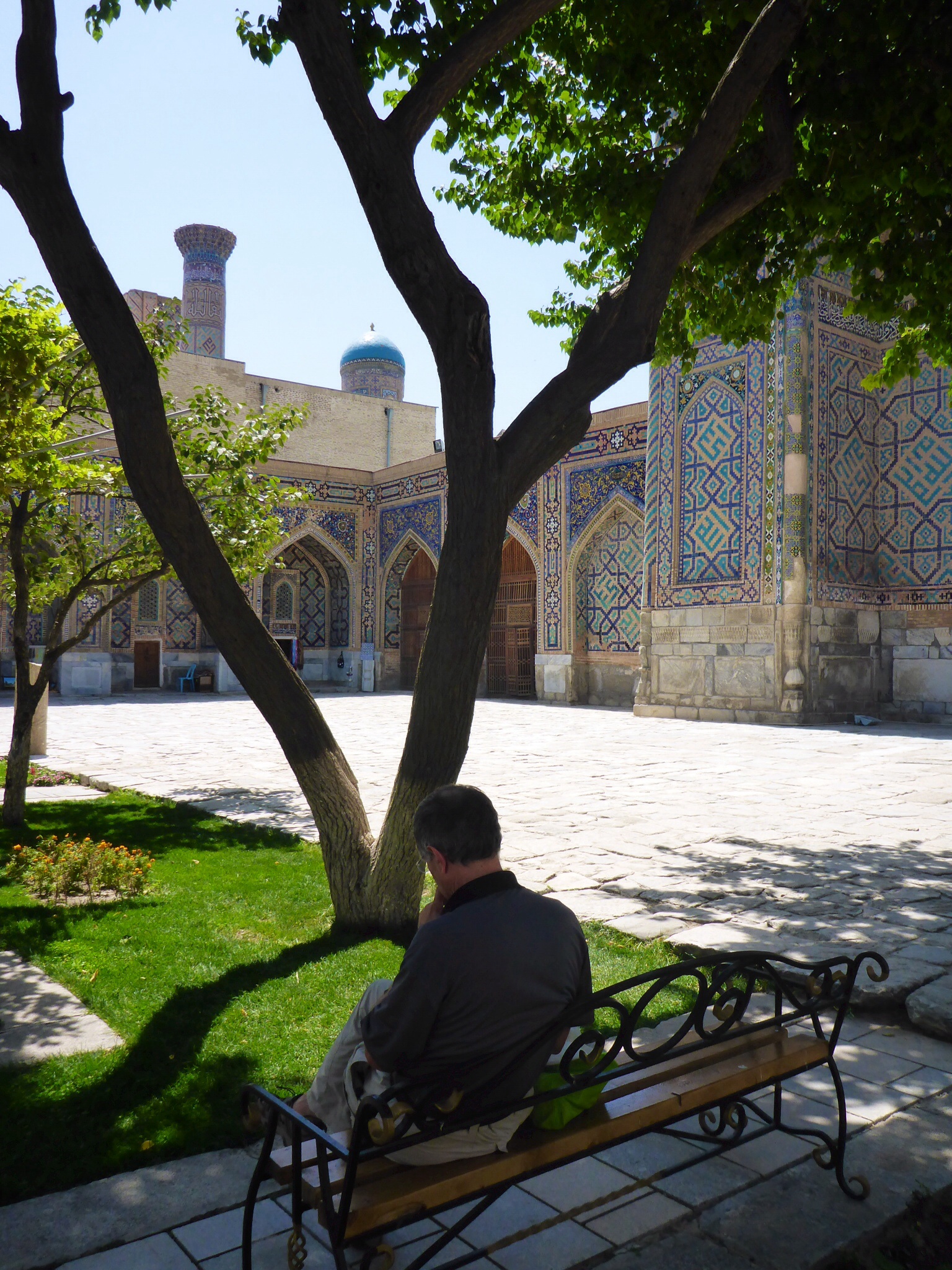
Anthony enjoying the serenity of Tilya-Kori madrasah, Registan, Samarkand, Uzbekistan

Anthony enjoying the serenity of Tilya-Kori madrasah, Registan, Samarkand, Uzbekistan

Arch of the Tilya-Kori madrasah, Registan, Samarkand, Uzbekistan

Arch of the Tilya-Kori madrasah, Registan, Samarkand, Uzbekistan

Ulugh-Beg madrasah, Registan, Samarkand, Uzbekistan

Ulugh-Beg madrasah, Registan, Samarkand, Uzbekistan


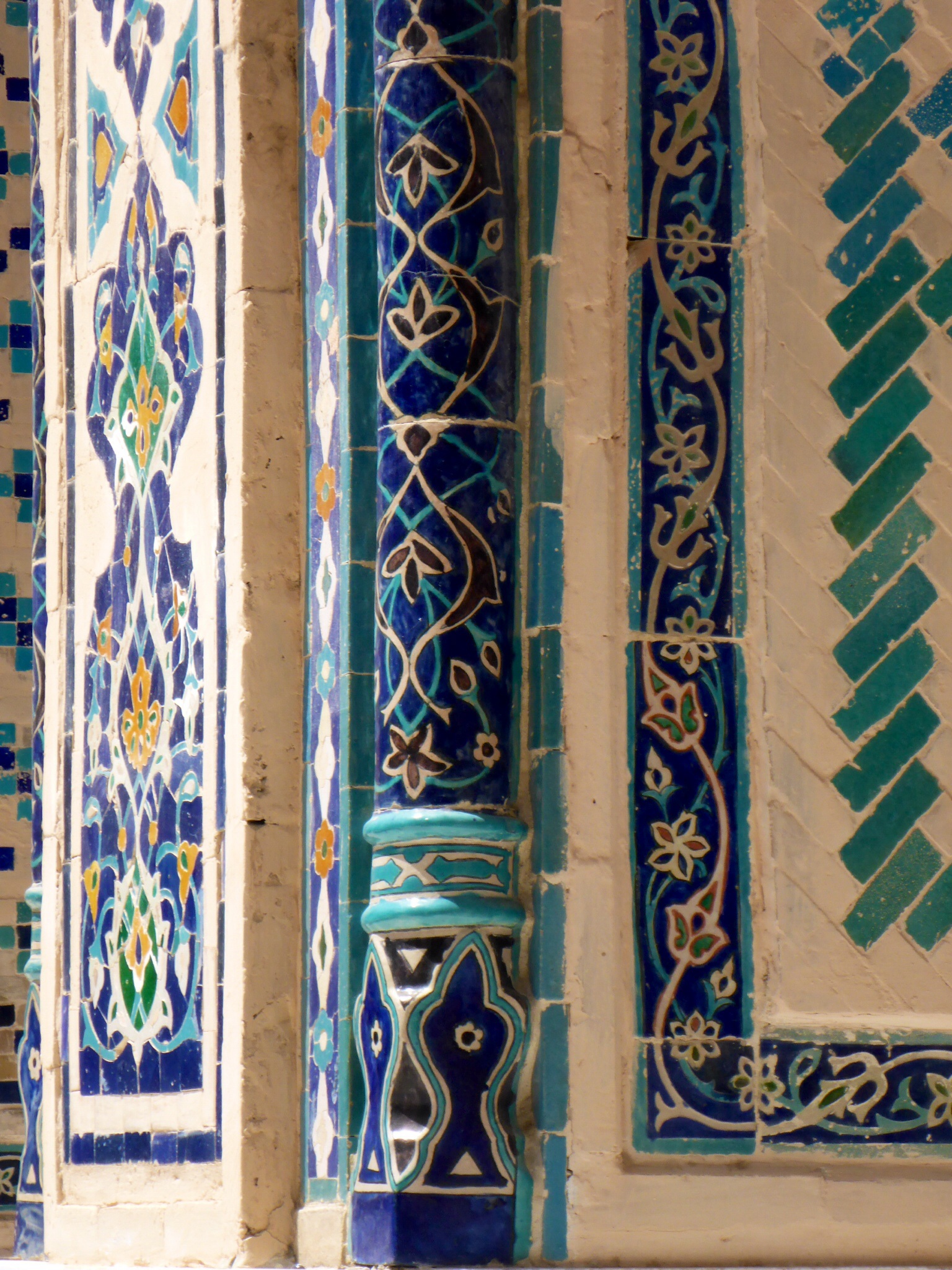
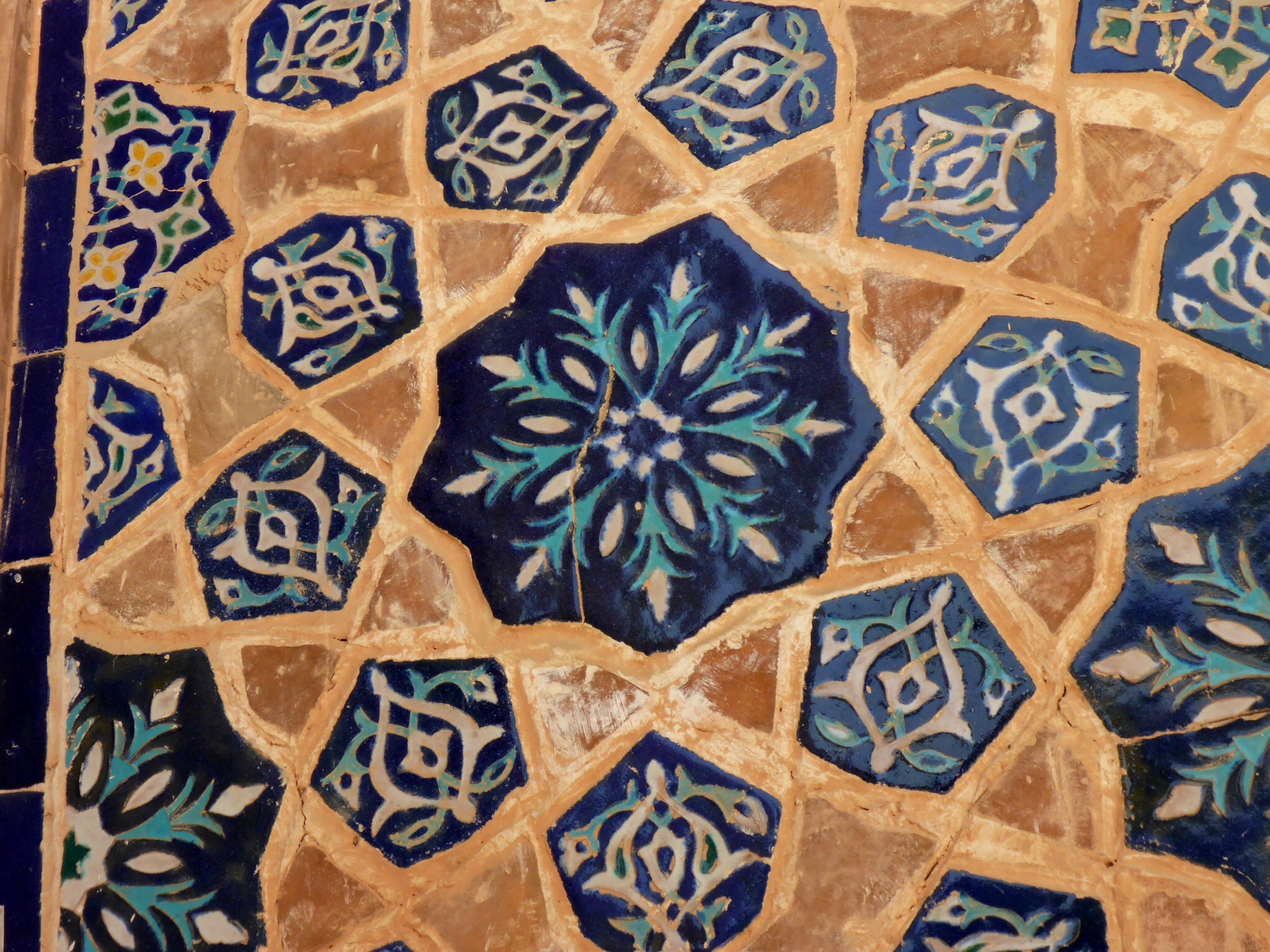
Ceramic tiles inside Ulugh-Beg madrasah, Registan, Samarkand, Uzbekistan

Ceramic tiles inside Ulugh-Beg madrasah, Registan, Samarkand, Uzbekistan

Ceramic tiles inside Ulugh-Beg madrasah, Registan, Samarkand, Uzbekistan

Ceramic tiles inside Ulugh-Beg madrasah, Registan, Samarkand, Uzbekistan

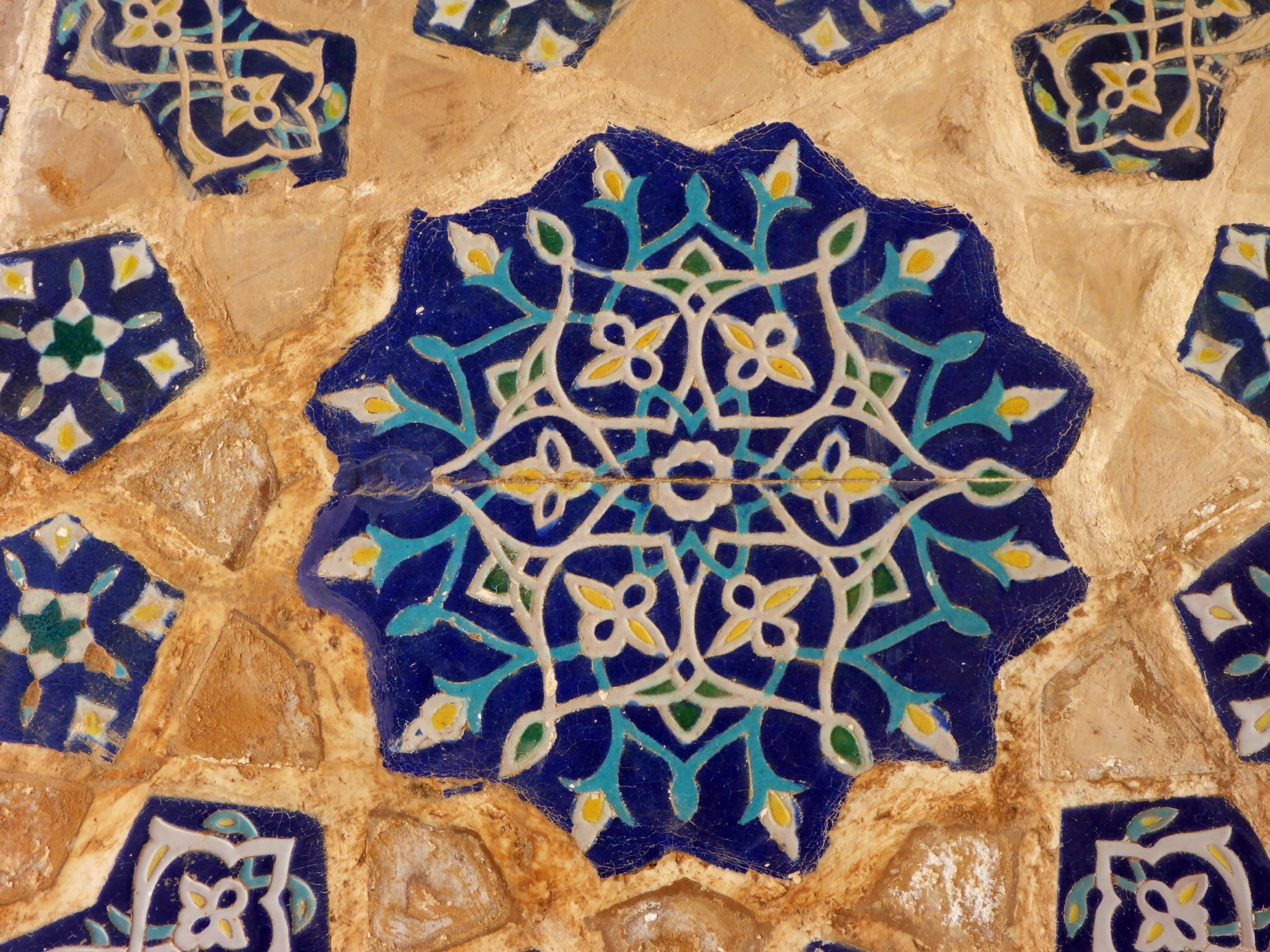
Old tile inside Ulugh-Beg madrasah, Registan, Samarkand, Uzbekistan

Old tile inside Ulugh-Beg madrasah, Registan, Samarkand, Uzbekistan

Ulugh-Beg madrasah, Registan, Samarkand, Uzbekistan

Ulugh-Beg madrasah, Registan, Samarkand, Uzbekistan

Ulugh-Beg madrasah, Registan, Samarkand, Uzbekistan: a school for higher education in secular science, including philosophy, mathematics, astronomy.  Under each arch were either lecture rooms or dormitories.

Ulugh-Beg madrasah, Registan, Samarkand, Uzbekistan: a school for higher education in secular science, including philosophy, mathematics, astronomy. Under each arch were either lecture rooms or dormitories.


Ceramic tiles inside Ulugh-Beg madrasah, Registan, Samarkand, Uzbekistan

Ceramic tiles inside Ulugh-Beg madrasah, Registan, Samarkand, Uzbekistan

Ceramic tiles inside Ulugh-Beg madrasah, Registan, Samarkand, Uzbekistan

Ceramic tiles inside Ulugh-Beg madrasah, Registan, Samarkand, Uzbekistan

Uzbek family having lunch inside Ulugh-Beg madrasah, Registan, Samarkand, Uzbekistan

Uzbek family having lunch inside Ulugh-Beg madrasah, Registan, Samarkand, Uzbekistan


Statue of Ulugh-Beg, 1394-1443, ruler, astronomer, mathematician and sultan, at his obdervatory, Samarkand, Uzbekistan

Statue of Ulugh-Beg, 1394-1443, ruler, astronomer, mathematician and sultan, at his obdervatory, Samarkand, Uzbekistan

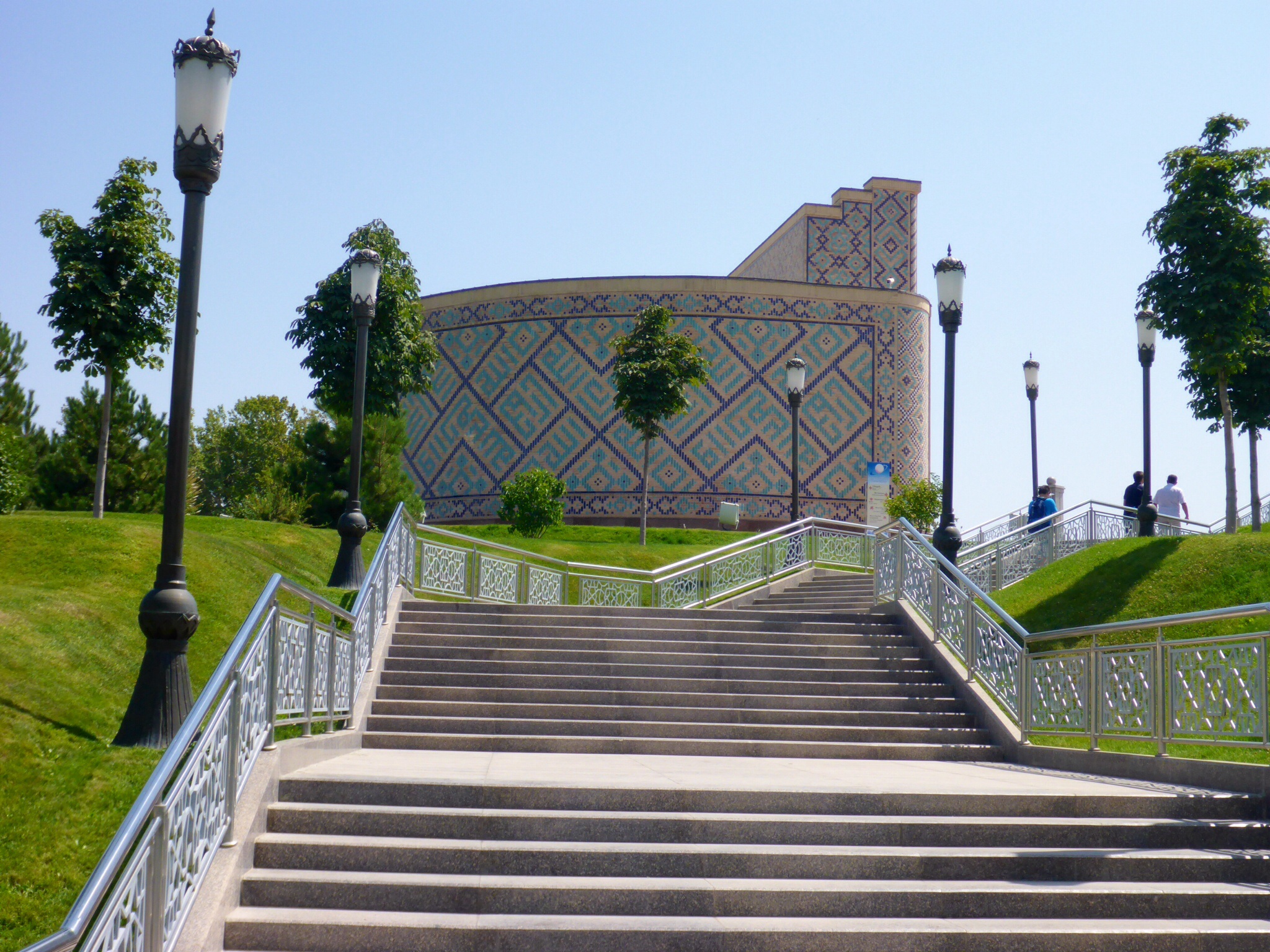
Ulugh-Beg museum at his observatory, Samarkand, Uzbekistan

Ulugh-Beg museum at his observatory, Samarkand, Uzbekistan

What remains of Ulugh-Beg's observatory - he determined the Earth's axial tilt as 23.52 degrees, which remained the most accurate measurement for hundreds of years.

What remains of Ulugh-Beg’s observatory – he determined the Earth’s axial tilt as 23.52 degrees, which remained the most accurate measurement for hundreds of years.

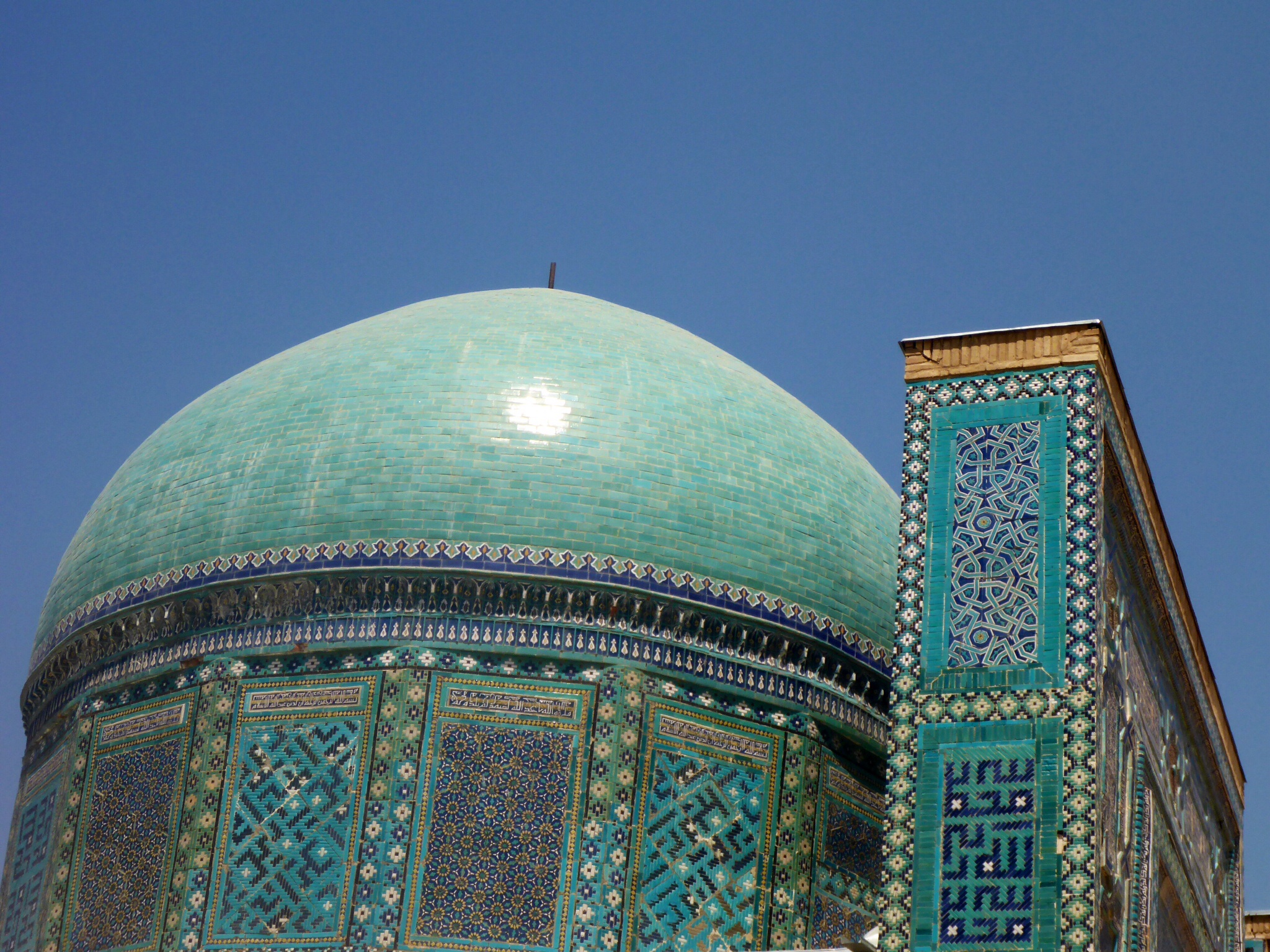
Double dome mausoleum, Shahi-Zinda necropolis, Samarkand, Uzbekistan

Double dome mausoleum, Shahi-Zinda necropolis, Samarkand, Uzbekistan

Inside the mausoleum dedicated to the wet nurse to Amir Temur's court, Shahi-Zinda necropolis, Samarkand, Uzbekistan

Inside the mausoleum dedicated to the wet nurse to Amir Temur’s court, Shahi-Zinda necropolis, Samarkand, Uzbekistan

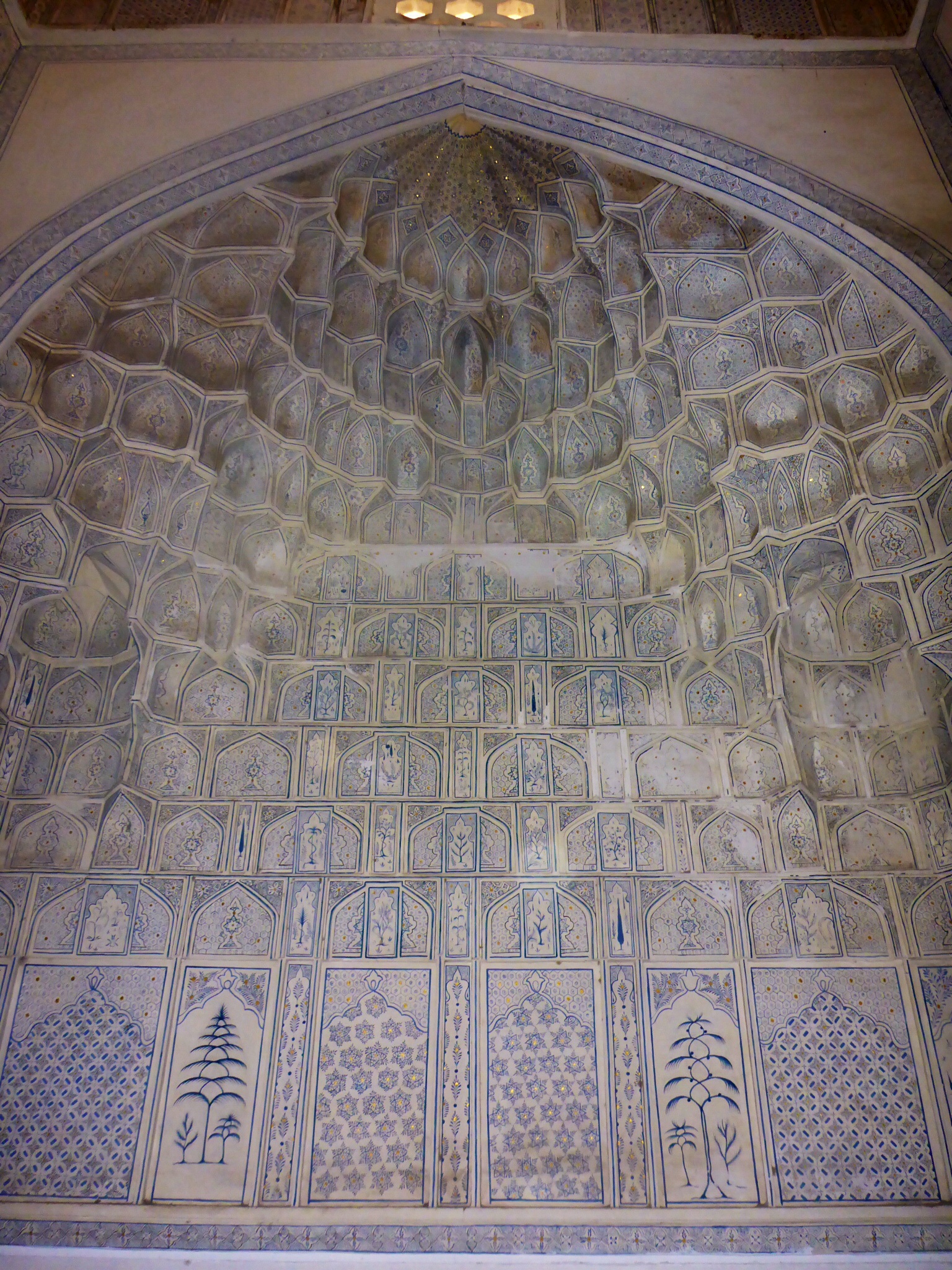
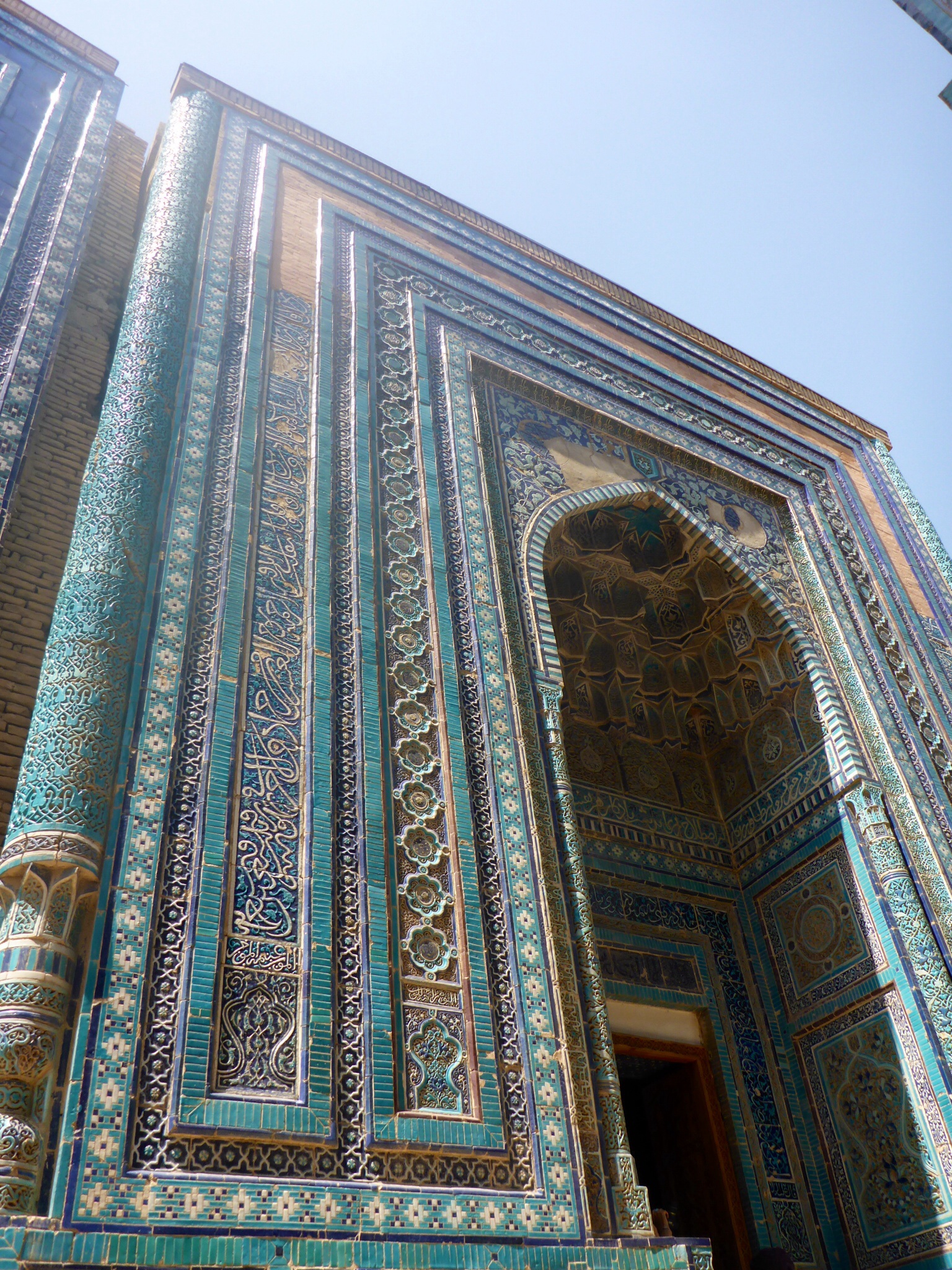
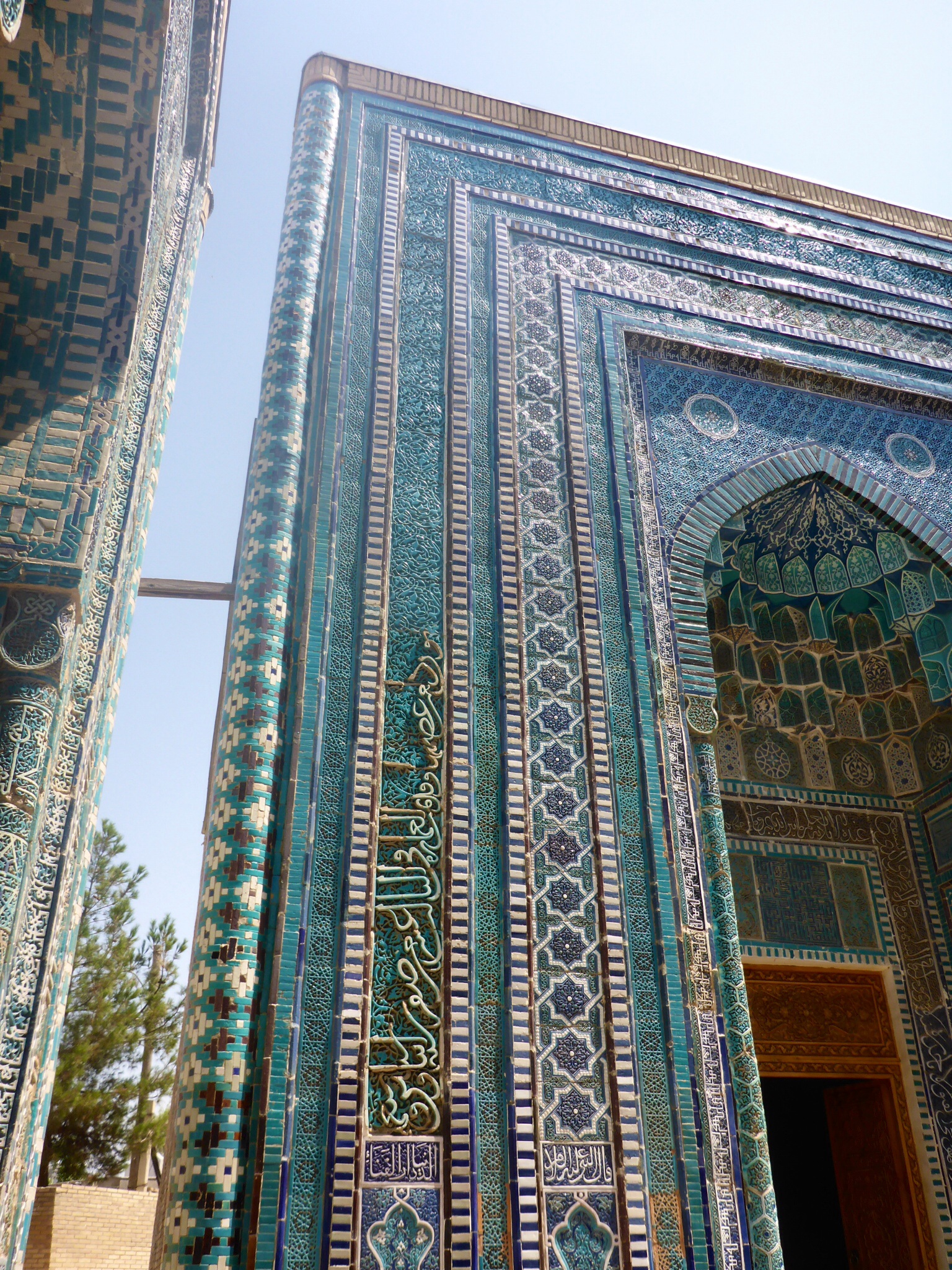
One of the most beautiful mausoleums at Shahi-Zinda necropolis, Samarkand, Uzbekistan, built in honour of Temur's sister Turkon and her daughter Shodi Mulk, Shahi-Zinda, Samarkand, Uzbekistan

One of the most beautiful mausoleums at Shahi-Zinda necropolis, Samarkand, Uzbekistan, built in honour of Temur’s sister Turkon and her daughter Shodi Mulk, Shahi-Zinda, Samarkand, Uzbekistan

One of the most beautiful mausoleums at Shahi-Zinda, Samarkand, Uzbekistan, built in honour of Temur's sister Turkon and her daughter Shodi Mulk, Shahi-Zinda necropolis, Samarkand, Uzbekistan

One of the most beautiful mausoleums at Shahi-Zinda necropolis, Samarkand, Uzbekistan, built in honour of Temur’s sister Turkon and her daughter Shodi Mulk, Shahi-Zinda, Samarkand, Uzbekistan

Built by Temur for his sister, Shirin Beka, Shahi-Zinda necropolis, Samarkand, Uzbekistan

Built by Temur for his sister, Shirin Beka, Shahi-Zinda necropolis, Samarkand, Uzbekistan

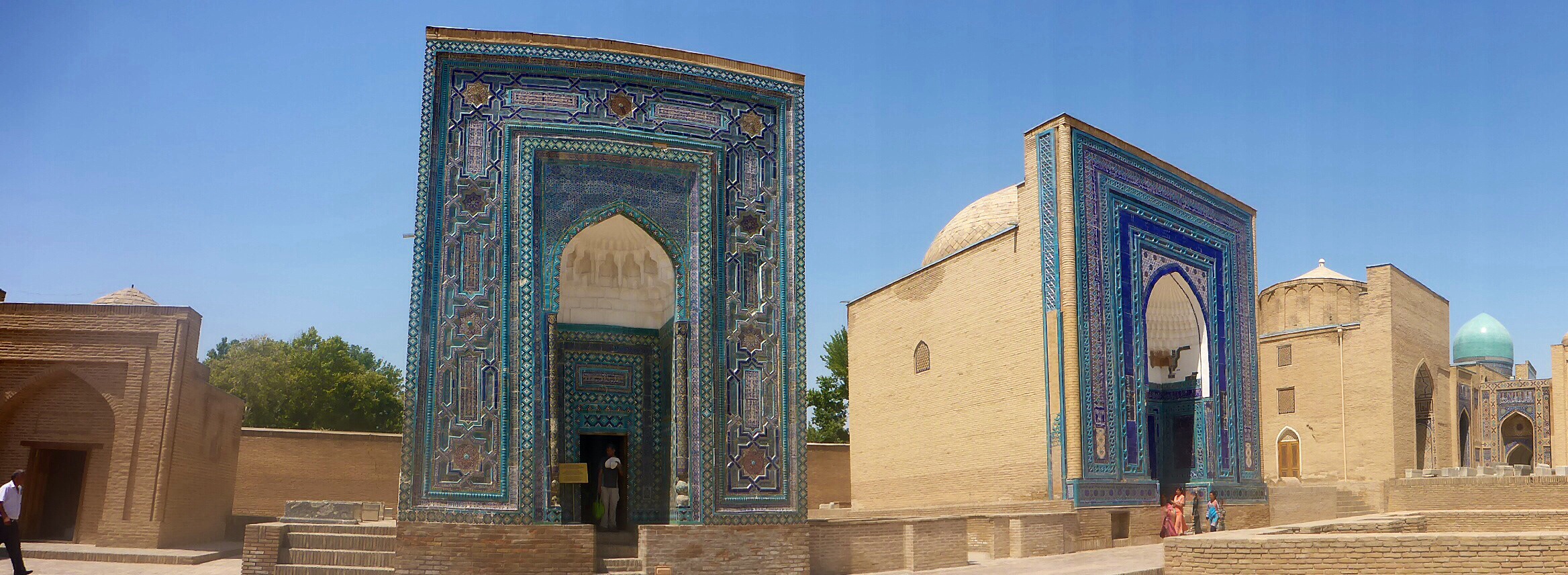
Shahi-Zinda necropolis, Samarkand, Uzbekistan

Shahi-Zinda necropolis, Samarkand, Uzbekistan

Shahi-Zinda ensemble, Samarkand, Uzbekistan

Shahi-Zinda ensemble, Samarkand, Uzbekistan

Shahi-Zinda ensemble, Samarkand, Uzbekistan

Shahi-Zinda ensemble, Samarkand, Uzbekistan

Gorgeous Uzbek lady - women especially have a mouthful of gold teeth

Gorgeous Uzbek lady – women especially have a mouthful of gold teeth

Shahi-Zinda ensemble, Samarkand, Uzbekistan

Shahi-Zinda ensemble, Samarkand, Uzbekistan

Carved glazed terracota, Shahi-Zinda necropolis, Samarkand, Uzbekistan

Carved glazed terracota, Shahi-Zinda necropolis, Samarkand, Uzbekistan

Shahi-Zinda ensemble, Samarkand, Uzbekistan

Shahi-Zinda ensemble, Samarkand, Uzbekistan

Shahi-Zinda ensemble, Samarkand, Uzbekistan

Shahi-Zinda ensemble, Samarkand, Uzbekistan


Gulnoza and baby Omar, behind Anthony and Aziza's kids Muqhbar and Raziza on either side of Anne, with Aziza's niece Sabina

Gulnoza and baby Omar behind Anthony and Aziza’s kids Muqhbar and Raziza on either side of Anne, with Aziza’s niece Sabina


After bumping into Aziza and Gulnoza again, we were invited to have dinner at Aziza's home and meet her family - such a beautiful family and overwhelmingly warm welcome

After bumping into Aziza and Gulnoza again, we were invited to have dinner at Aziza’s home and meet her family – such a beautiful family and overwhelmingly warm welcome

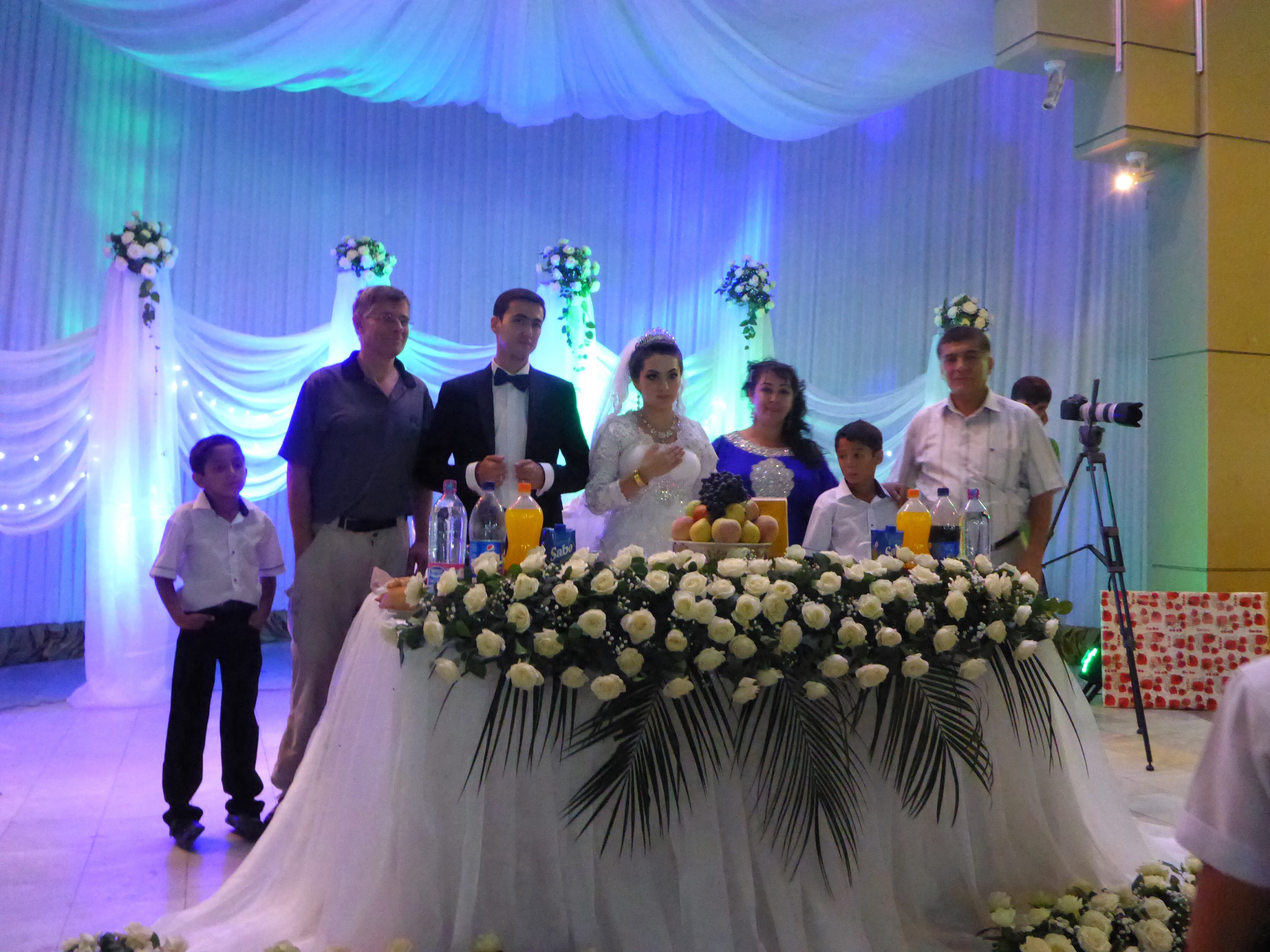
After dinner at Aziza's home, we are taken to an Uzbek wedding - it was quite ok to them for us to 'gatecrash' this wedding

After dinner at Aziza’s home, we are taken to an Uzbek wedding – it was quite ok to them for us to ‘gatecrash’ this wedding

Anthony is invited to the table of honour by the father of the bride whose wedding of 500 guests we were invited to gatecrash by our Uzbek friends

Anthony is invited to the table of honour by the father of the bride whose wedding of 500 guests we were invited to gatecrash by our Uzbek friends

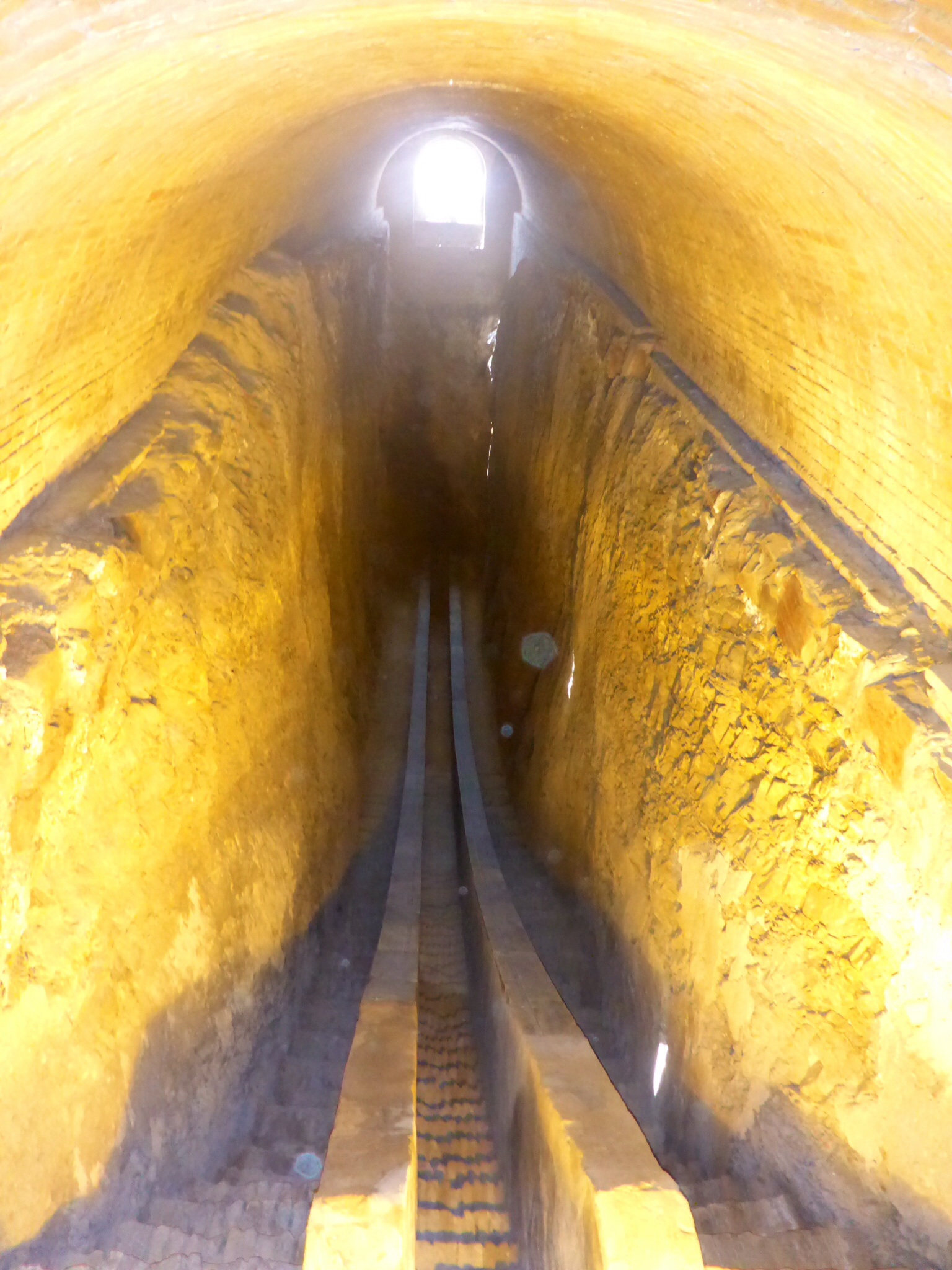
Steps up one of Tilya-Kori minaret, courtesy of a guard at 7am

Steps up one of Tilya-Kori minaret, courtesy of a guard at 7am

View of Tilya-Kori dome from one of its minarets,  Registan, Samarkand, Uzbekistan

View of Tilya-Kori dome from one of its minarets, Registan, Samarkand, Uzbekistan

Sher-Dor madrasah, seen from one of Kilya-Kori minarets, Registan. samarkanf, Uzbekistan

Sher-Dor madrasah, seen from one of Kilya-Kori minarets, Registan. samarkanf, Uzbekistan


Last view of the Registan, Samarkand, before returning to Tashkent, Uzbekistan to collect our Turkmen visas

Last view of the Registan, Samarkand, before returning to Tashkent, Uzbekistan to collect our Turkmen visas

Tashkent

Tashkent, or Toshkent, a large sprawling city with both a new centre and old heart and a silk route city. As we have ridden through this region following sections of the silk route we can only wonder at the courage and fortitude of those who travelled this way centuries ago linking the diverse cultures of east and west bringing trade and ideas to other cultures.

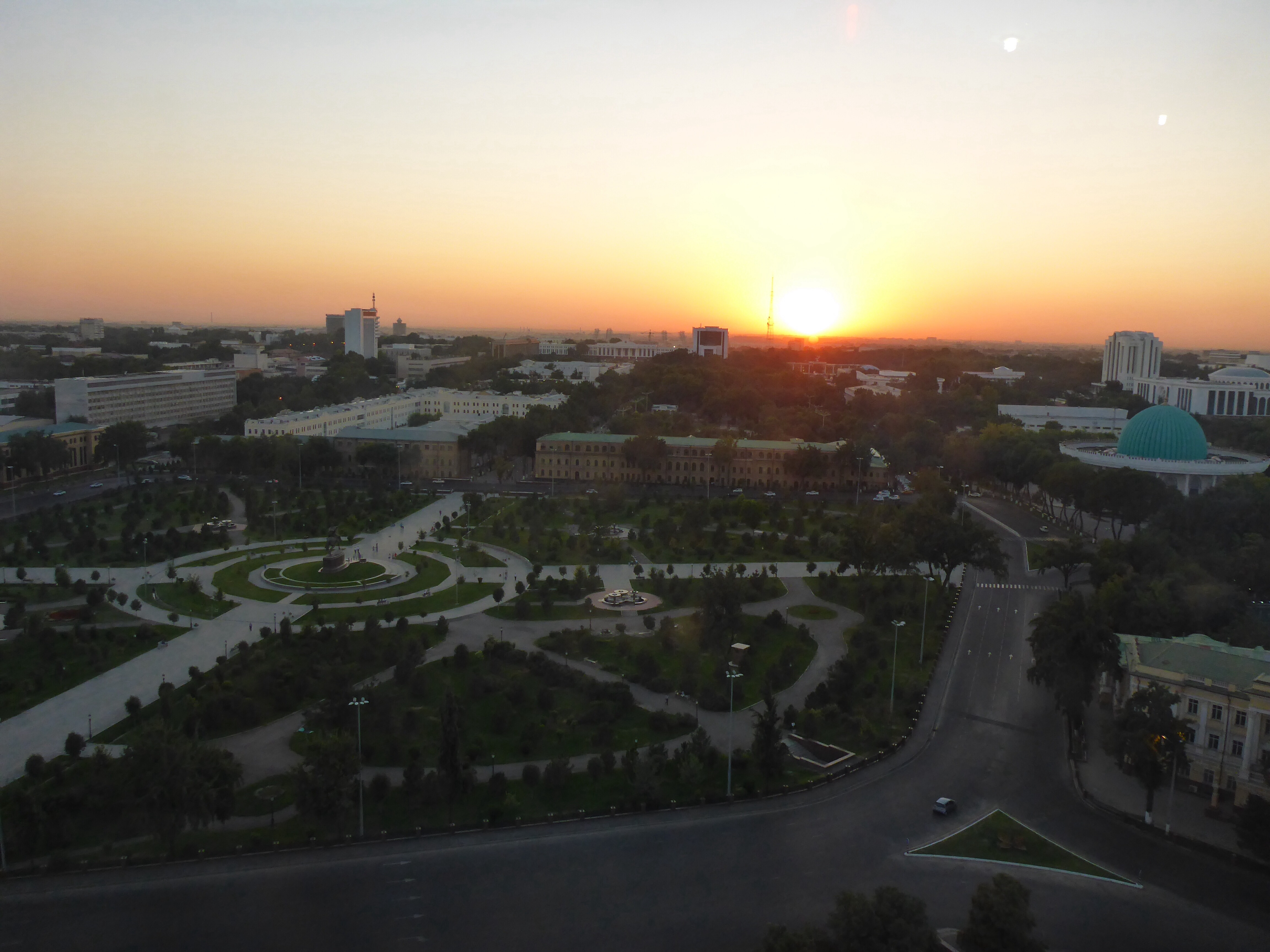
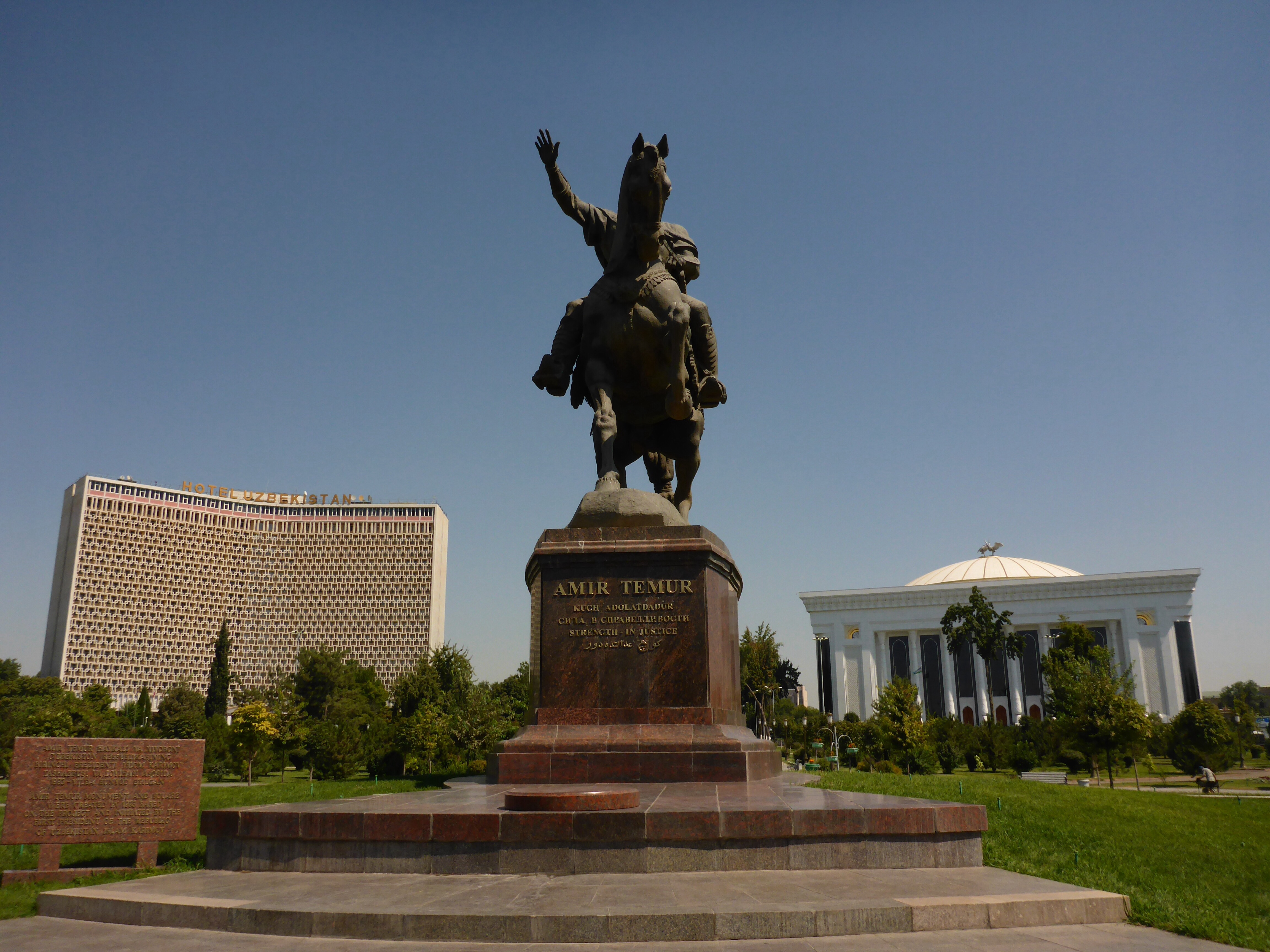
We have been lucky enough to choose the Uzbekistan Hotel, which turns out to be situated on Amir Temur square. We gain a large room overlooking the square,

View from our hotel room across Amir Temur square, Toshkent, Uzbekistan

View from our hotel room across Amir Temur square, Toshkent, Uzbekistan

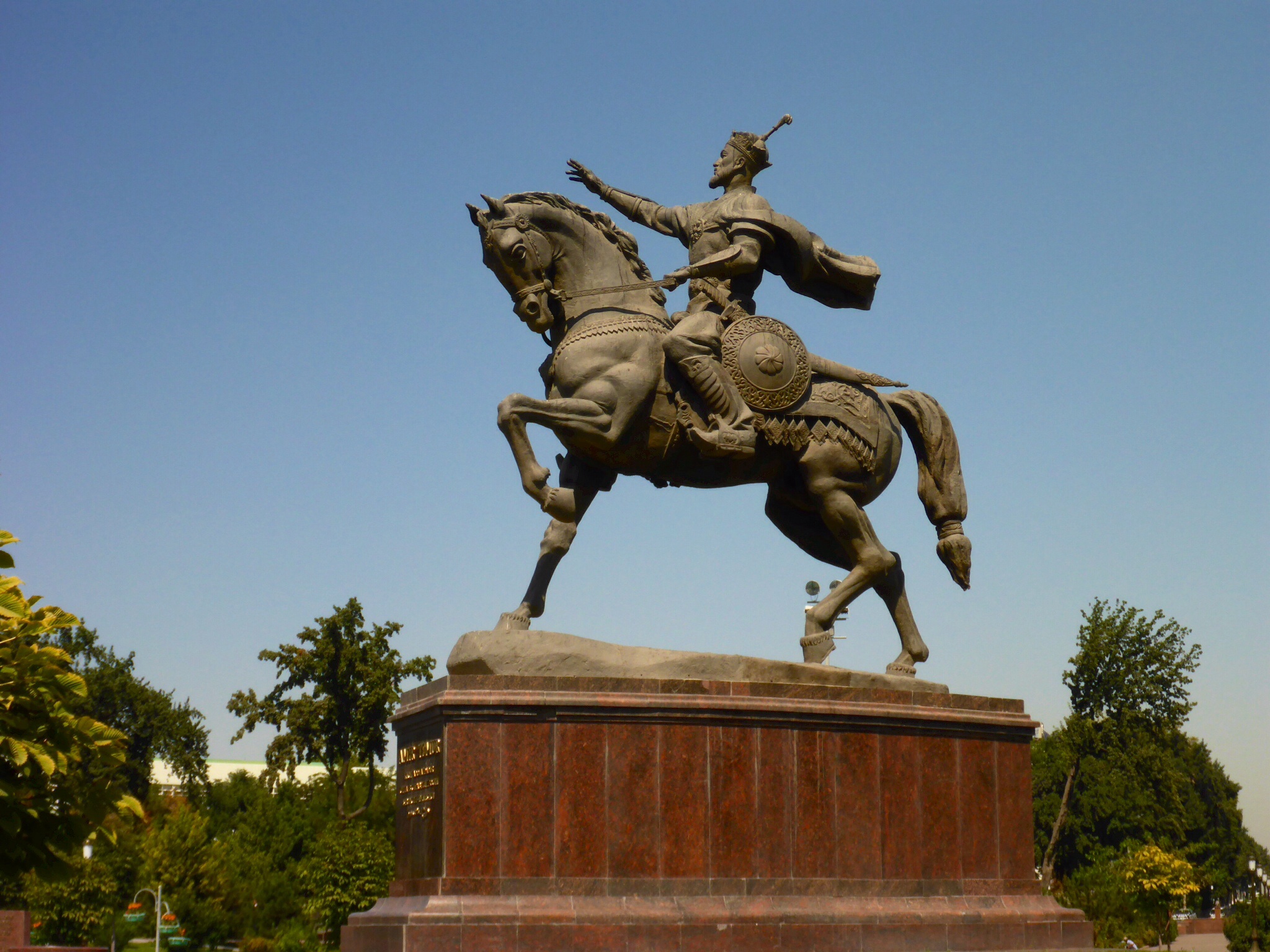
named in honour of Amir Temur, also known as ‘Tamerlane’, who founded the Timurid dynasty.
The mighty Amir-Temur, on the square named after him, Toshkent, Uzbekistan

The mighty Amir-Temur, on the square named after him, Toshkent, Uzbekistan

This soviet era building towers over the surrounding low level buildings, probably as it was intended to do for visiting dignitaries from Moscow. The park was remodeled in 1993, a couple of years after independence. Given the focus of statues on historic Uzbek rulers and leaders before the Russian invasion in 1865, we wonder what the landscape in Tashent looked like prior to 1991 from a sculpture and statue perspective.

A surprise to us is the number of large trees and gardens that line the avenues here. In what is a fairly dry environment, the grass, trees and plants seem to be continually watered. It creates a lush and cooler environment, which we see is not reflective of the whole city when we explore further afield. The size of the trees indicates this must have been done many, many years ago.

Visas are our priority here, we must get the Turkmenistan visa, which we need to submit the paperwork for and we have an appointment at the Indian Embassy after Anne made an online submission from Bishkek. At the Indian Embassy, we are informed that they only issue one month visas valid for one month from date of issue. This does not work for us, they offer two months but that still does not work. Anne’s six hours of work is for nothing, we will have to try again later in the journey, probably Teheran. We are discussing this with an Uzbek guy who works for a German company, and he explains that for him to visit head office in the European Union, he needs to provide documentary proof of employment for his parents, and all his siblings! We should not complain about visa requirements, given what we ask of these countries’ citizens.
The taxi system in Uzbekistan cities is based on a fleet of official yellow taxis and every other car as well. Put your arm out, cars stop, check if they are going in your direction, you negotiate a fee and off you go. Probably never wait more than 30 seconds for a vehicle to stop. Of course they may lack seat belts and airbags which we are used to back home. We have also seen that the drivers do not check the amount of money you give them, they accept you will deal honestly with them.

On by taxi to the Turkmenistan Embassy, but it’s closed half an hour early, back tomorrow. To get on the list to enter, we are advised to arrive at about 6am as the numbers of people seeking visas can be large.

We return to the hotel to find three wedding parties in the lobby, with the attendant video and still cameramen. We are puzzled that there seem to be few guests. It turns out that while the hotel is popular for weddings, many couples come here for their video and photos, then go on to their reception elsewhere. Yes they pay for the privilege of having the photo shoot. Uzbek weddings at the hotel’s banquet hall can run up to 650 guests.

The heat has made us glad we have an air-conditioned room to retreat to in the middle of the day, we have found that in 35 degree plus temperatures we lose interest in tourist activities. What is nice though is that we have not seen large numbers of tourists as this is a low season due to the heat.

We arrive at the Turkmen embassy at 6am and there are already 3 people ahead of us! Our Turkmenistan visa application process started with our application form, downloaded from the embassy website, is one year out of date. Luckily the helpful staff provided new forms, helped us with the additional Russian language form. We ask for an express processing and are told to come back in one week, it’s two weeks for standard processing.

We have decided that since we have a week to wait, we will go to Samarkand for four days by train rather than wait for a week in Tashkent. We travel on the metro for the first time to go and buy the tickets. Opened in 1977, it features themed stations with high ceilings, wide platforms and amazing chandeliers. Not like the cramped Paris metro or London underground stations. One station is themed on Soviet space flight, unfortunately no photos are allowed and policemen can be seen at every station and on every platform, but Anne’s camera went off accidentally a couple of times, see the results below.

Tashkent metro

Tashkent metro


Gagarin at the kosmonavtar metro station. Toshkent, Uzbekistan

Gagarin at the kosmonavtar metro station. Toshkent, Uzbekistan

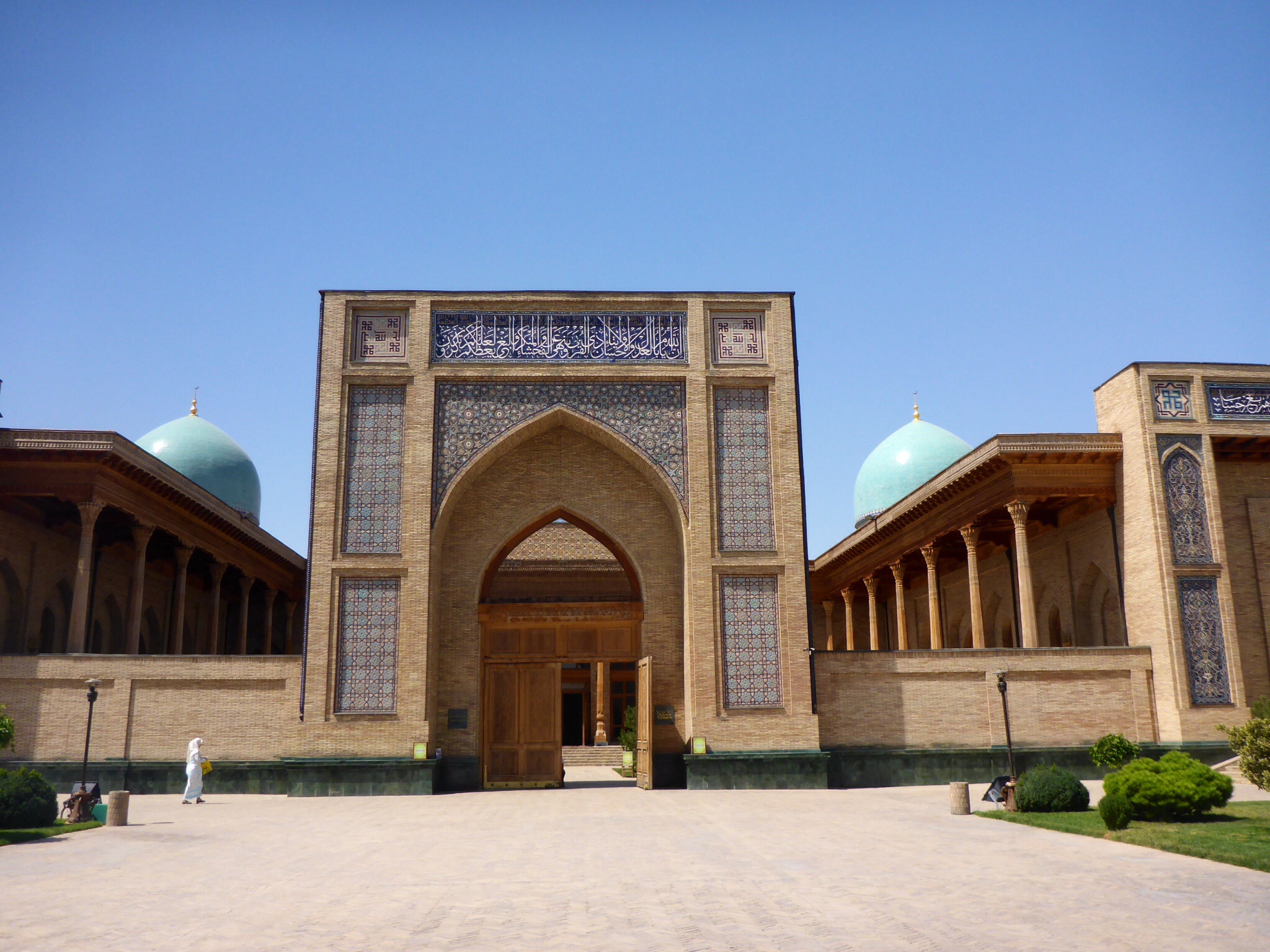
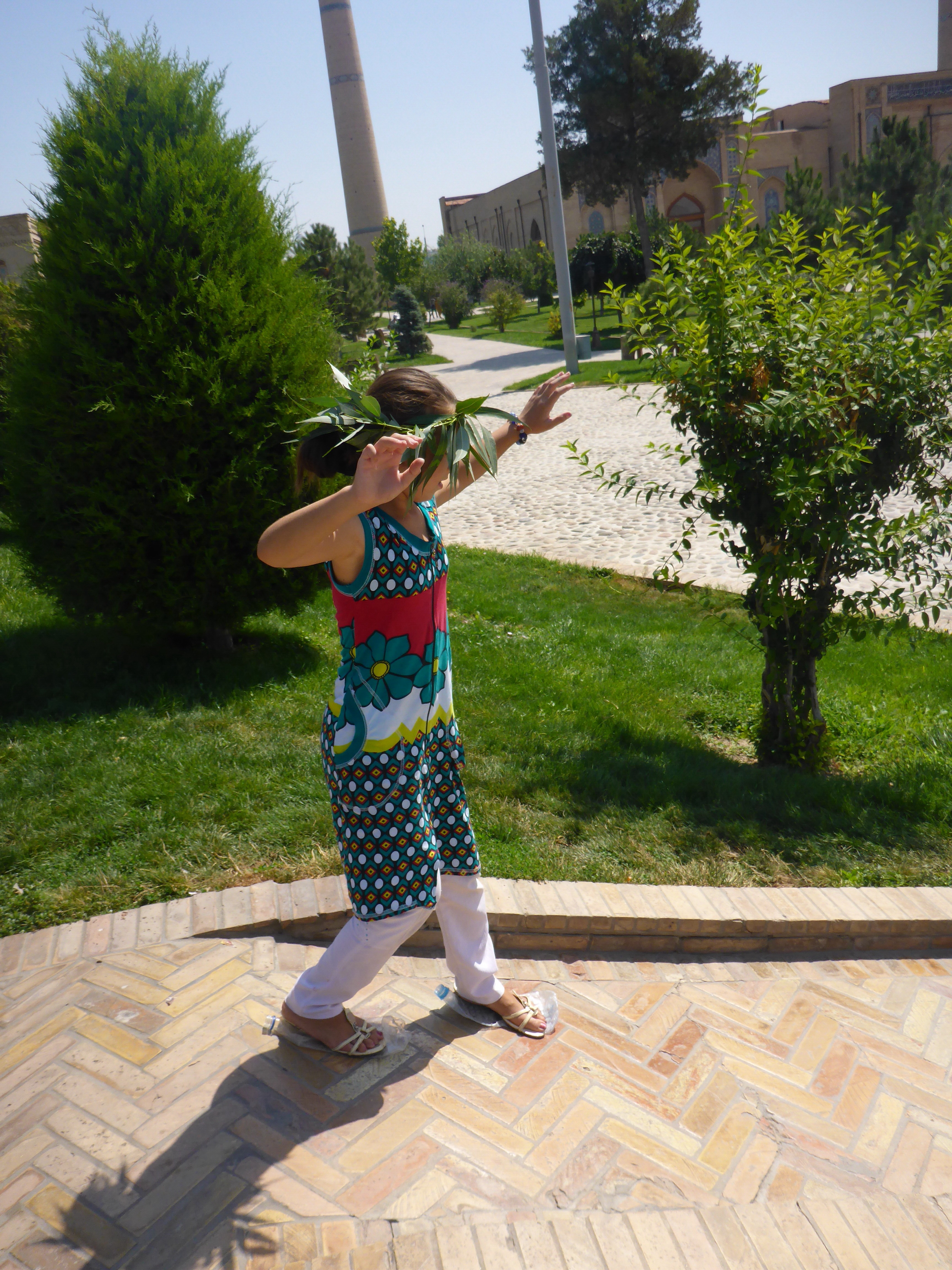
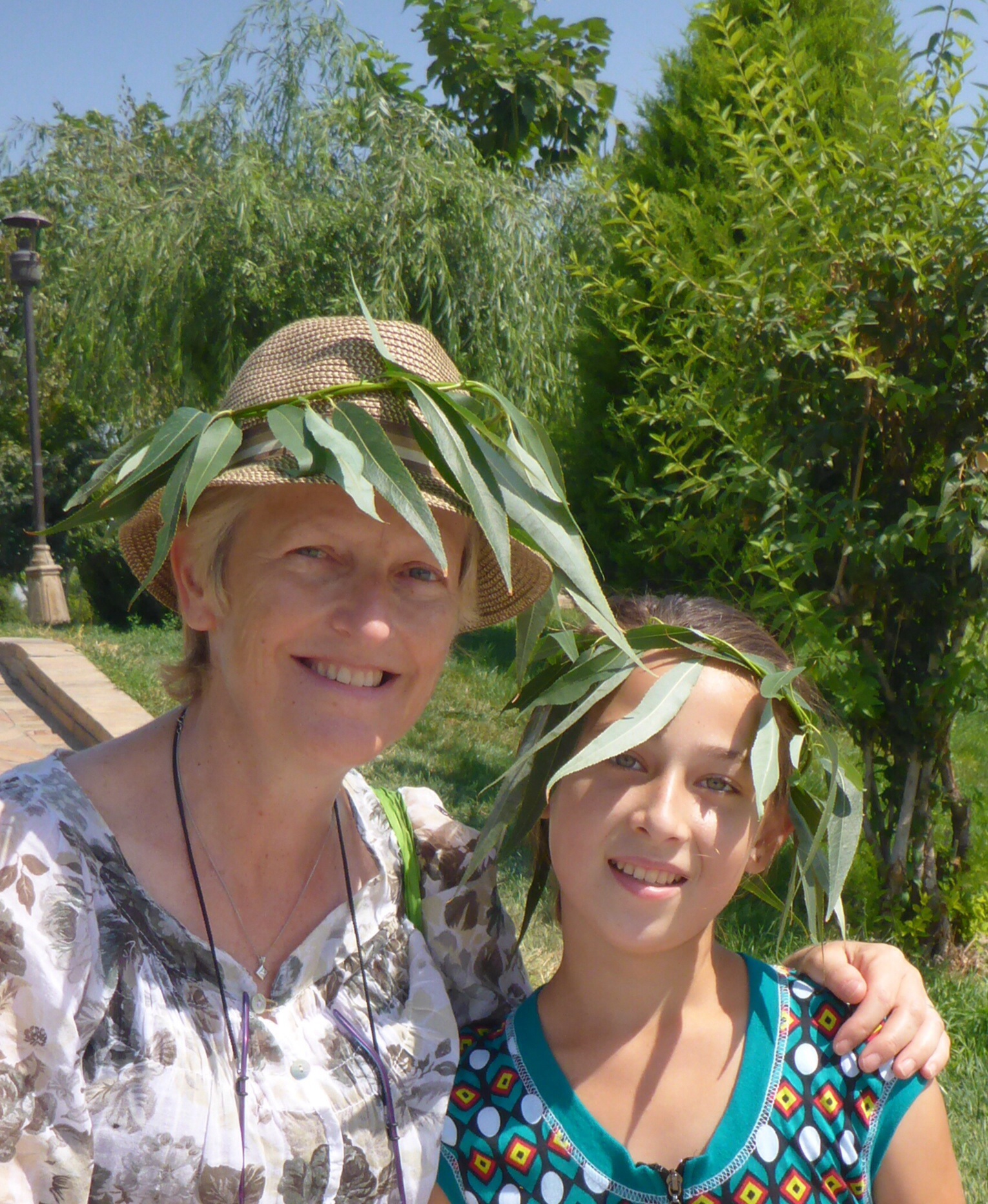
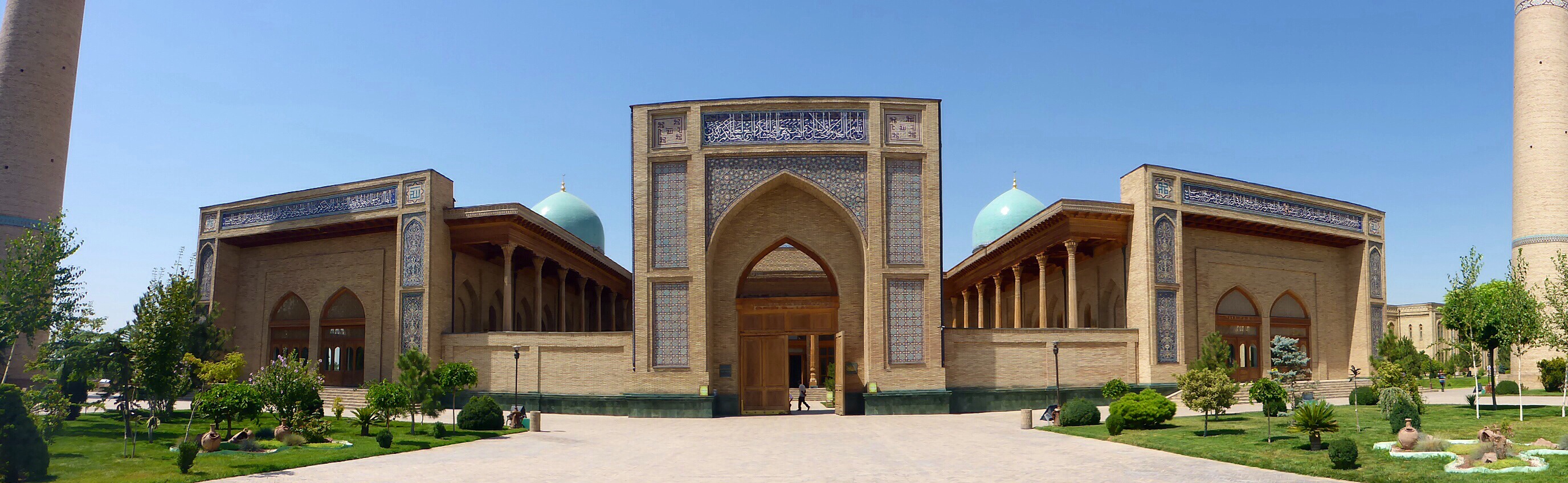
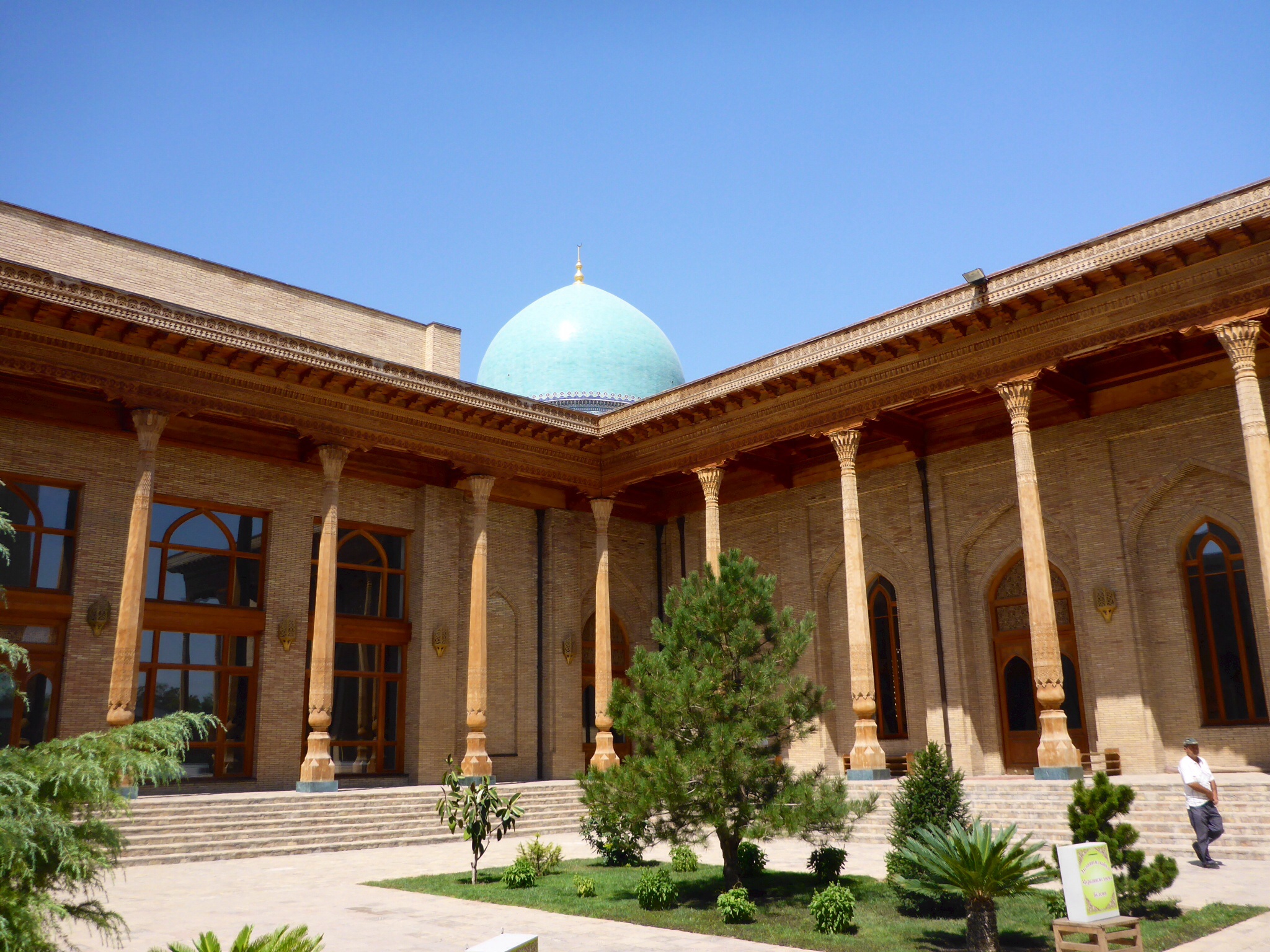
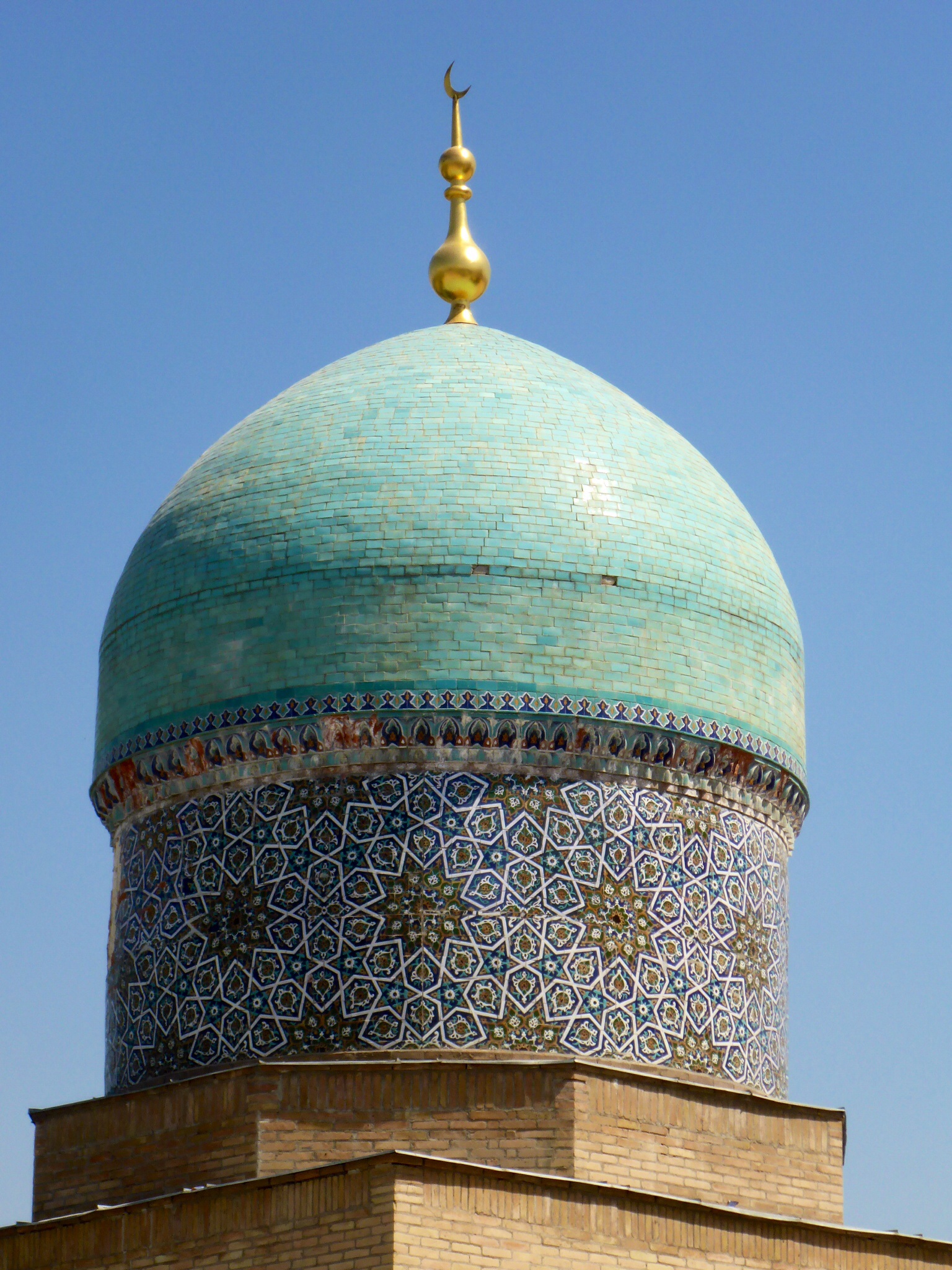
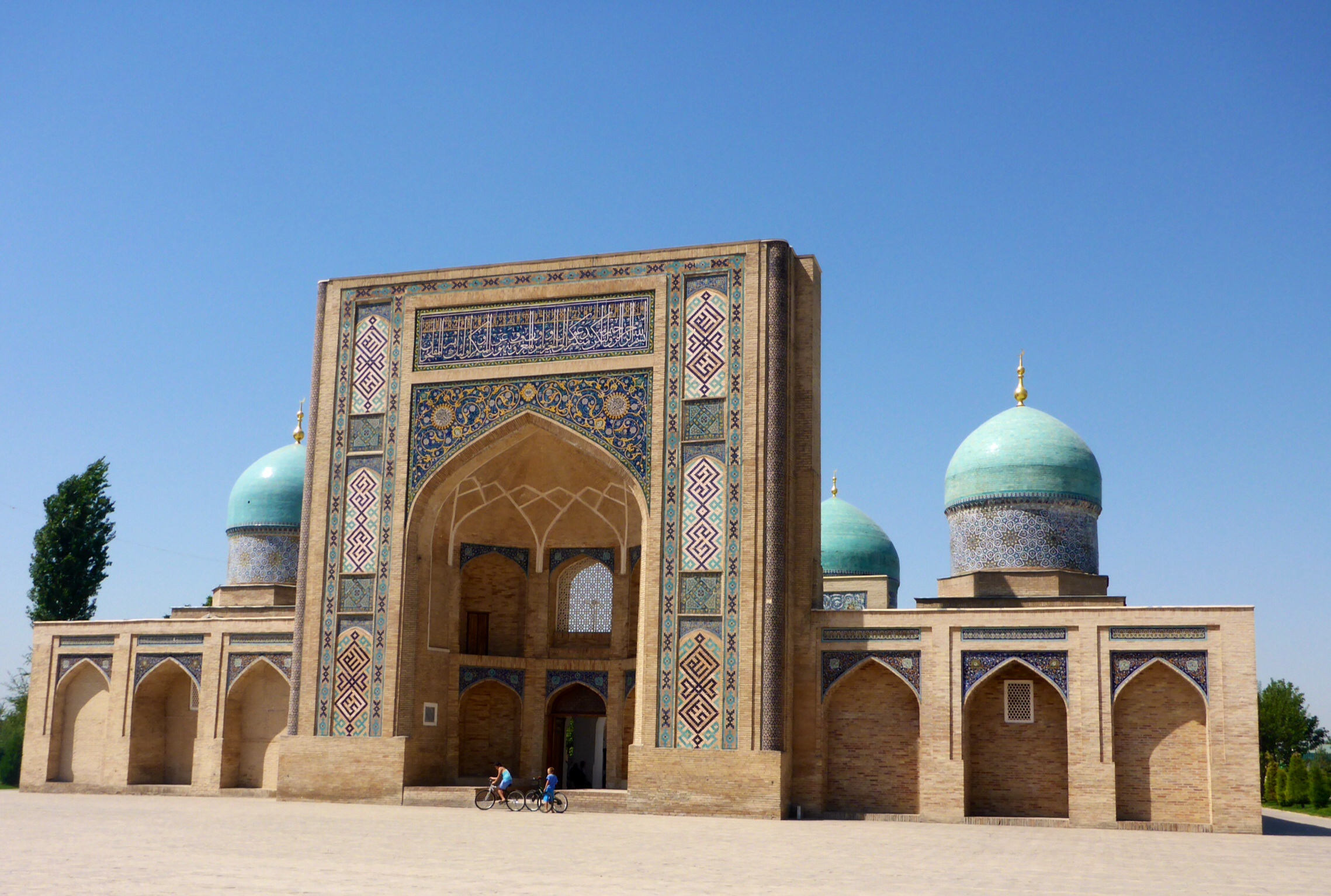
Visiting the Barak-Khan madrassah gives us our first view of Tashkent history. We find it down little back streets not on a main street as the new buildings are. We meet a few children skateboarding on plastic bottles, the eldest gives Anne a wreath of leaves to wear.
Barak-Khan Madrassah, Toshkent, Uzbekistan

Barak-Khan Madrassah, Toshkent, Uzbekistan

Who needs expensive skates or skateboards when flattened water bottles do the trick?  Barak-Khan madrassah, Toshent, Uzbekistan

Who needs expensive skates or skateboards when flattened water bottles do the trick? Barak-Khan madrassah, Toshent, Uzbekistan

After I asked whether I could take a photo of her skating, she offered me one of her head bands - too sweet.  In Toshkent, Uzbekistan

After I asked whether I could take a photo of her skating, she offered me one of her head bands – too sweet. In Toshkent, Uzbekistan

We had not made it to a market so far on this trip, but decided that we would in Tashkent. The biggest market is the Chorsu. The section of the market we explored is primarily foodstuffs and we were able to stroll down rows of spices, vegetables and fruit. We were however given fruit to try, and handfuls of vegetables from friendly stall holders.

Friendly and generous Uzbek farmers at Chorsu market, Toshkent, Uzbekistan

Friendly and generous Uzbek farmers at Chorsu market, Toshkent, Uzbekistan

This vendor and her son were so sweet - I loved her eyes and gold teeth too. Chorsu market, Toshkent, Uzbekistan

This vendor and her son were so sweet – I loved her eyes and gold teeth too. Chorsu market, Toshkent, Uzbekistan

We buy some sweet grapes that look like small olives and the stall holder keeps giving us more and more for what seems like a very small price. We talked with one group and discussed motorbikes, children or lack thereof in our case and how young they thought we looked. They always want to know age, married and children. We said because of no children and they understood the youthful looking aspect, but not why we had not got children. The discussion was in Russian, English and sign language. We would have gone further into the market, but we already had two carrier bags full of fruit and veg! It was interesting for us because we did not have the motorbikes with us, so that was not the reason for their interest in talking to us. The Uzbeks are a genuinely friendly people.

As you will have seen from previous photos, money comes in big bundles, with approx 2300 cym to the US $ and mostly only 1,000 cym notes everyone carries large wads of money. Supermarkets and shops have counting machines, you hand a wad over and then deal with the discrepancy. No idea why the country does not have more of the larger 5,000 cym notes except that they only started printing them in 2013. This picture shows 2.7 million, the payment for a wedding reception.

2.7 million cym for a small Russian wedding reception of 50 people at the hotel

2.7 million cym for a small Russian wedding reception of 50 people at the hotel


Official process here is very important: to get a Uzbek SIM card for my phone, to upload photos to the blog, hotel WiFi is useless, I needed no only my original passport, but my specific hotel registration card. Let’s just say that not being used to such specific requirements and not being able to use copies resulted in a number of trips back to the mobile phone store.

Off to Samarkand next where Anne is looking forward to a cultural and visual feast.

– Anthony

Our ridiculously huge room at the Uzbekistan Hotel,  Toskent, Uzbekistan
Our ridiculously huge room at the Uzbekistan Hotel, Toskent, Uzbekistan

Amir Temur square, with our hotel to the left and the Forums Palace to the right, Toshkent, Uzbekistan

Amir Temur square, with our hotel to the left and the Forums Palace to the right, Toshkent, Uzbekistan

Anne's first drink since we've been on the road, Anthony's beer and a wad of cym

Anne’s first drink since we’ve been on the road, Anthony’s beer and a wad of cym

Baraak-Khan madrassah, Toshkent, Uzbekistan

Baraak-Khan madrassah, Toshkent, Uzbekistan

Wonderful sandalwood colums from India, Barak-Khan madrassah, Toshkent, Uzbekistan

Wonderful sandalwood colums from India, Barak-Khan madrassah, Toshkent, Uzbekistan

Barak-Khan madrassah, Toshkent, Uzbekistan

Barak-Khan madrassah, Toshkent, Uzbekistan

Barak-Khan madrassah - Toshkent, Uzbekistan

Barak-Khan madrassah – Toshkent, Uzbekistan