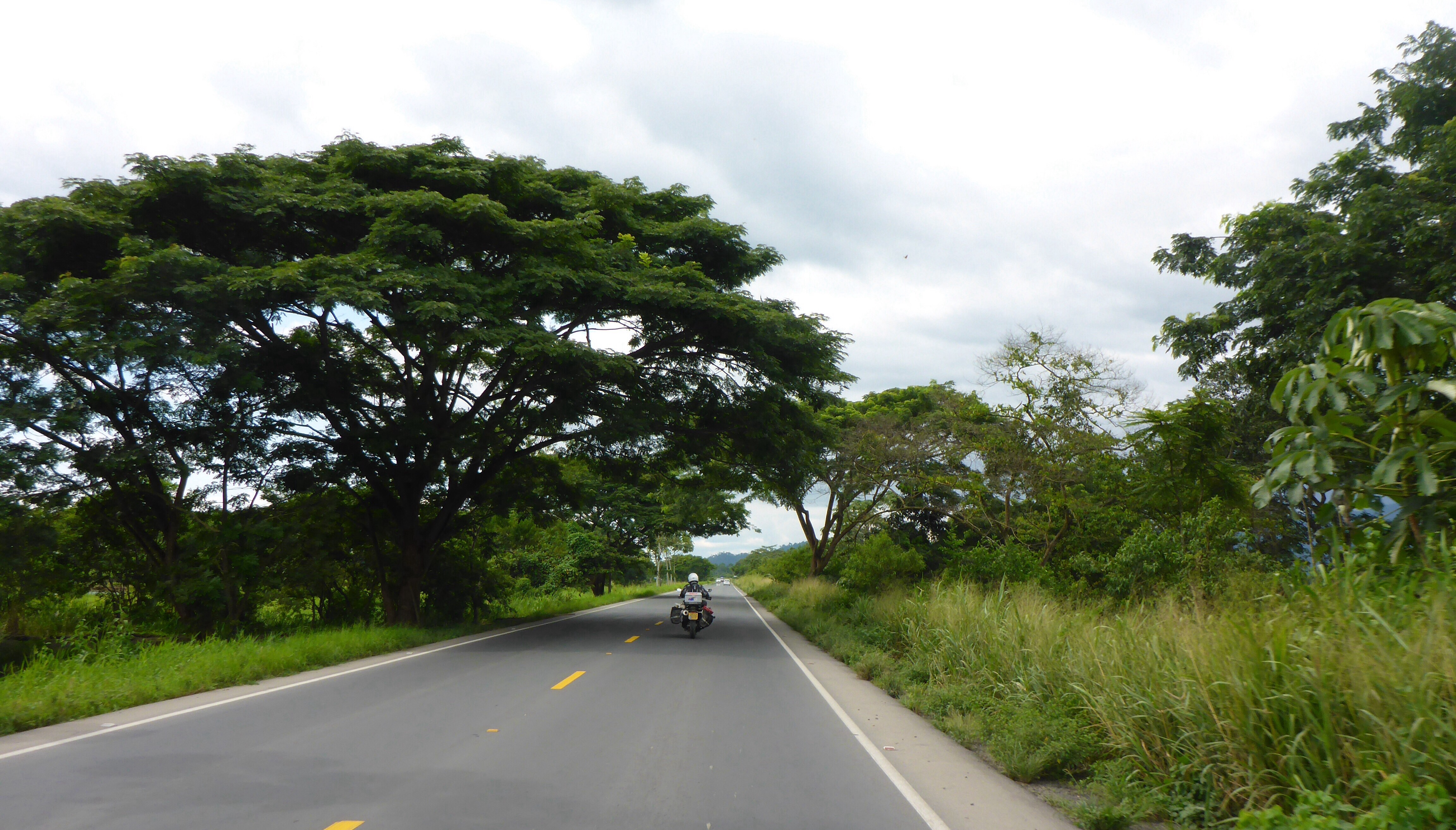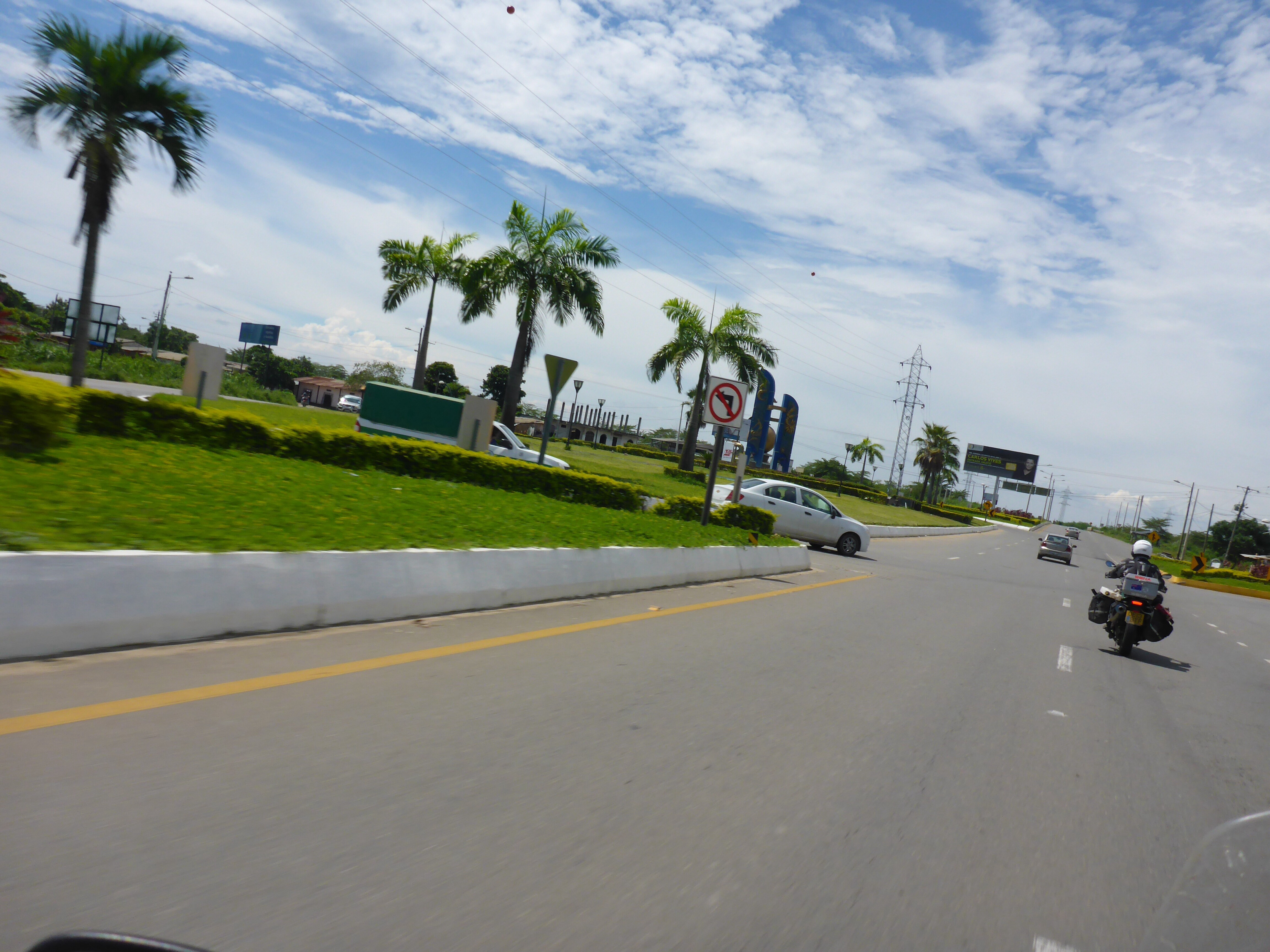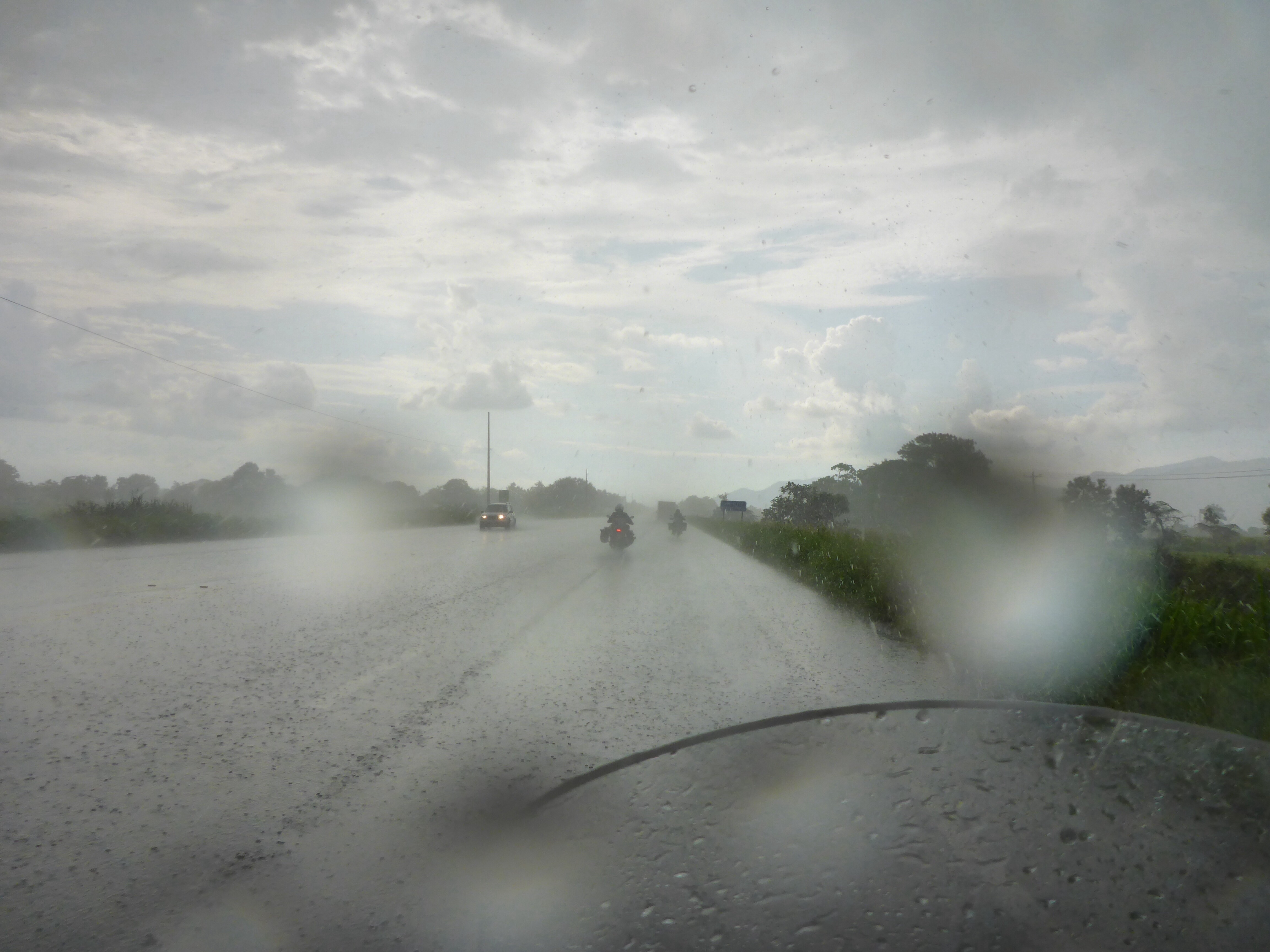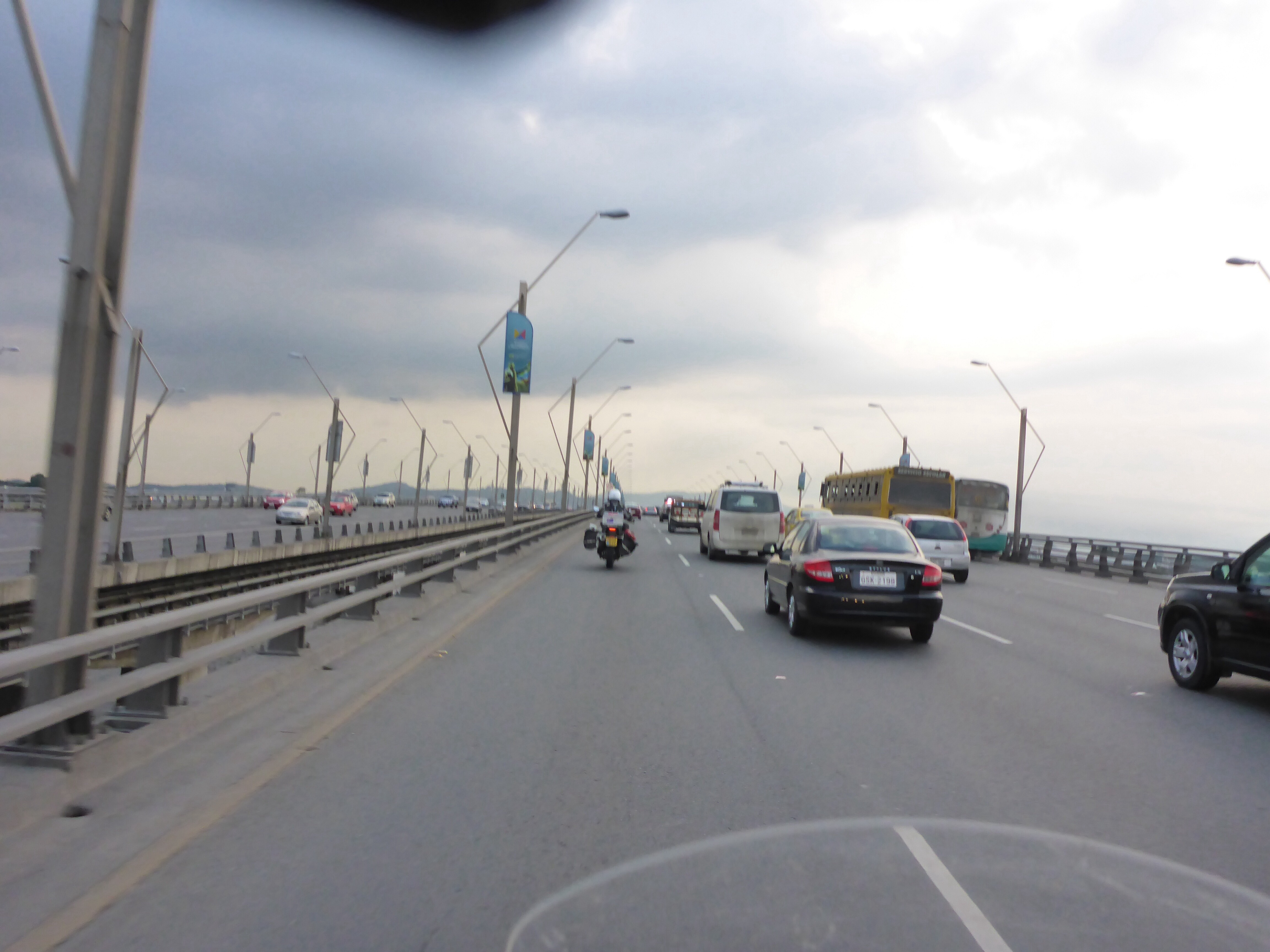
Trujillo to Lambayeque, 1400 years of History

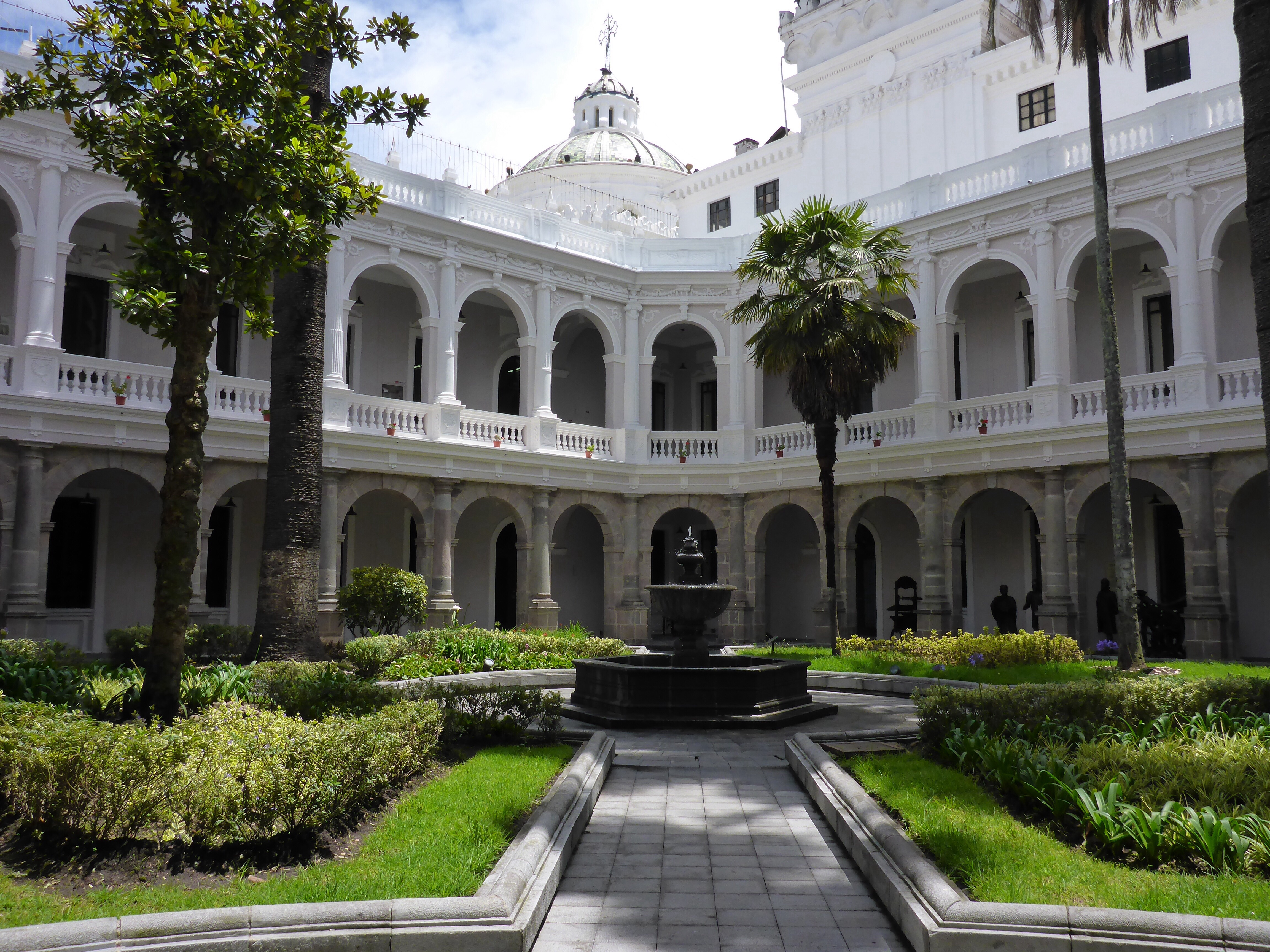
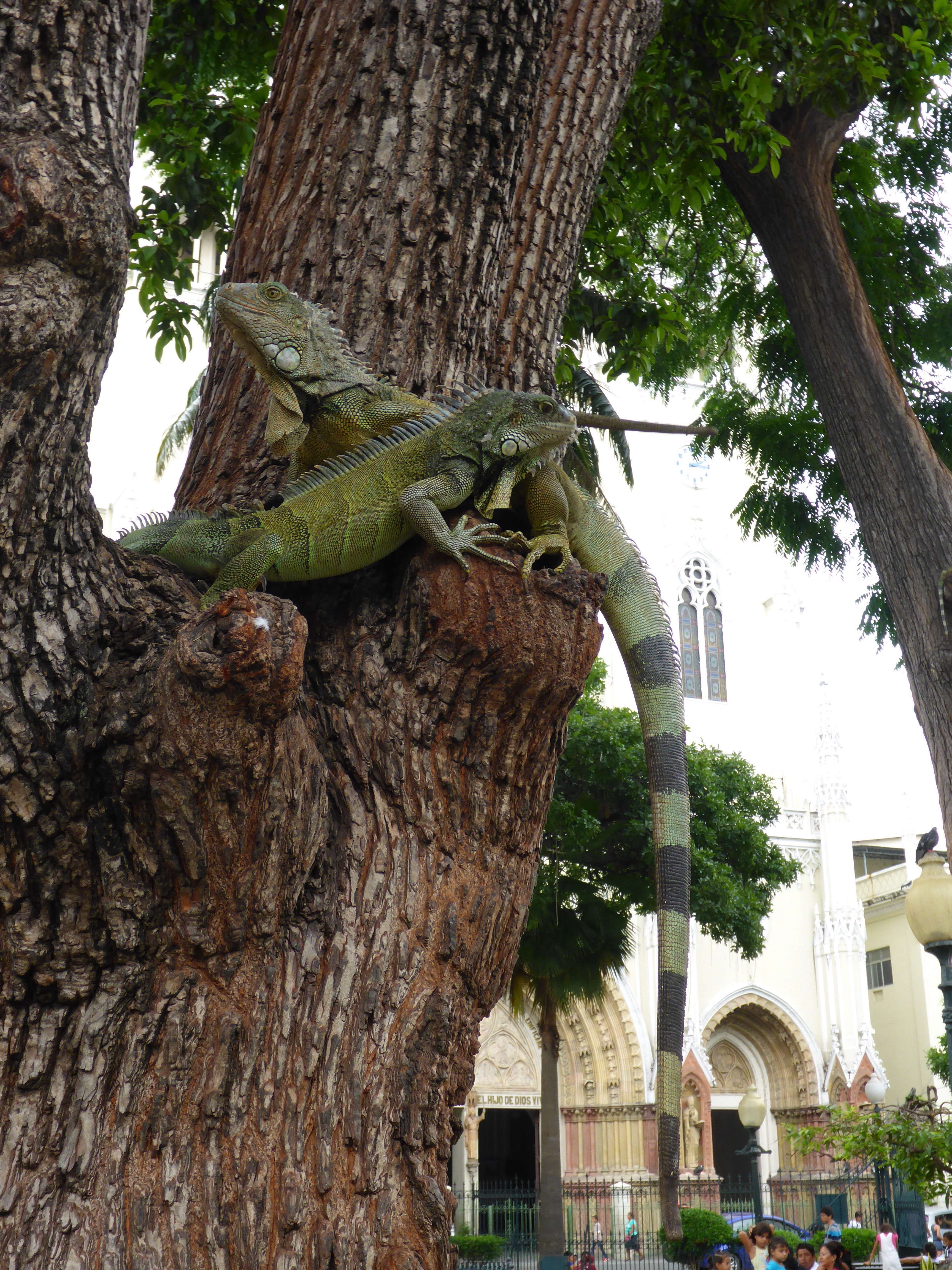
Anne has mentioned that she likes it when I choose a hotel, she looks for price, location and reviews, I pick from the GPS list and hope for the best, which for some strange reason usually is. Today my pick turns out out to be a beautiful Hotel Libertador on the Plaza de Armis in Trujillo, a wonderfully preserved square and surrounding buildings. (Sounds familar?)

When I commented some time ago on the cultural similarities we encountered from time to time travelling through the ‘Stans’, Iran and India, all countries with intertwined histories at different points in time, little did I think that some of those similarities would appear in Peru. I am referring to the Spanish architectural influence, in turn influenced by the Moors, with their roots in North Africa again having come from further east. It’s a long connection and those more knowledgeable than me may find flaws in my thinking, but it is interesting to see how far across the world cultures are connected.

Hotel Libertador with Moorish style windows

Hotel Libertador with Moorish style windows

While Peru is famous for its Inca culture and of course Machu Picchu, many older and more influential cultures existed which do not have the same public exposure as the Inca’s. The Northern Peruvian coast was inhabited by two civilisations between approximately AD 100 and the Inca conquest in AD 1470. The Moche (AD 100 to AD 650 approx.) and Chimú (AD 650 approx. to AD 1470) both occupied roughly the same boundaries and there is conjecture that the move from one civilisation to the other was triggered by the an exceptionally long El Nino, some 60 years of flood and drought, and was due to internal struggles over scarce resources, and the loss of confidence in the gods and by association loss of credibility in political and religious leaders.

The Moche developed the Huaca de la Luna  (“Temple/Shrine of the Moon”) over a period of five hundred years. The construction is unusual in that every hundred years or so, the temple was completely built over, creating a new layer of similar design to the old, with tombs of important leaders sandwiched between layers. It is interesting to note that the design of each layer is stepped inwards from the outside and stepped outwards from the inside. Hope that makes sense! This temple was not rediscovered until the early 1990’s by students looking at the nearby ruins of the nearby town.

Huaca de la Luna in front of the white mountain

Huaca de la Luna in front of the white mountain

Huaca de la Luna, fifth layer walls damaged by Spanish to plunder tombs inside.

Huaca de la Luna, fifth layer walls damaged by Spanish to plunder tombs inside.

Huaca de la Luna, visible is part of the forth layer wall inside.

Huaca de la Luna, visible is part of the forth layer wall inside.

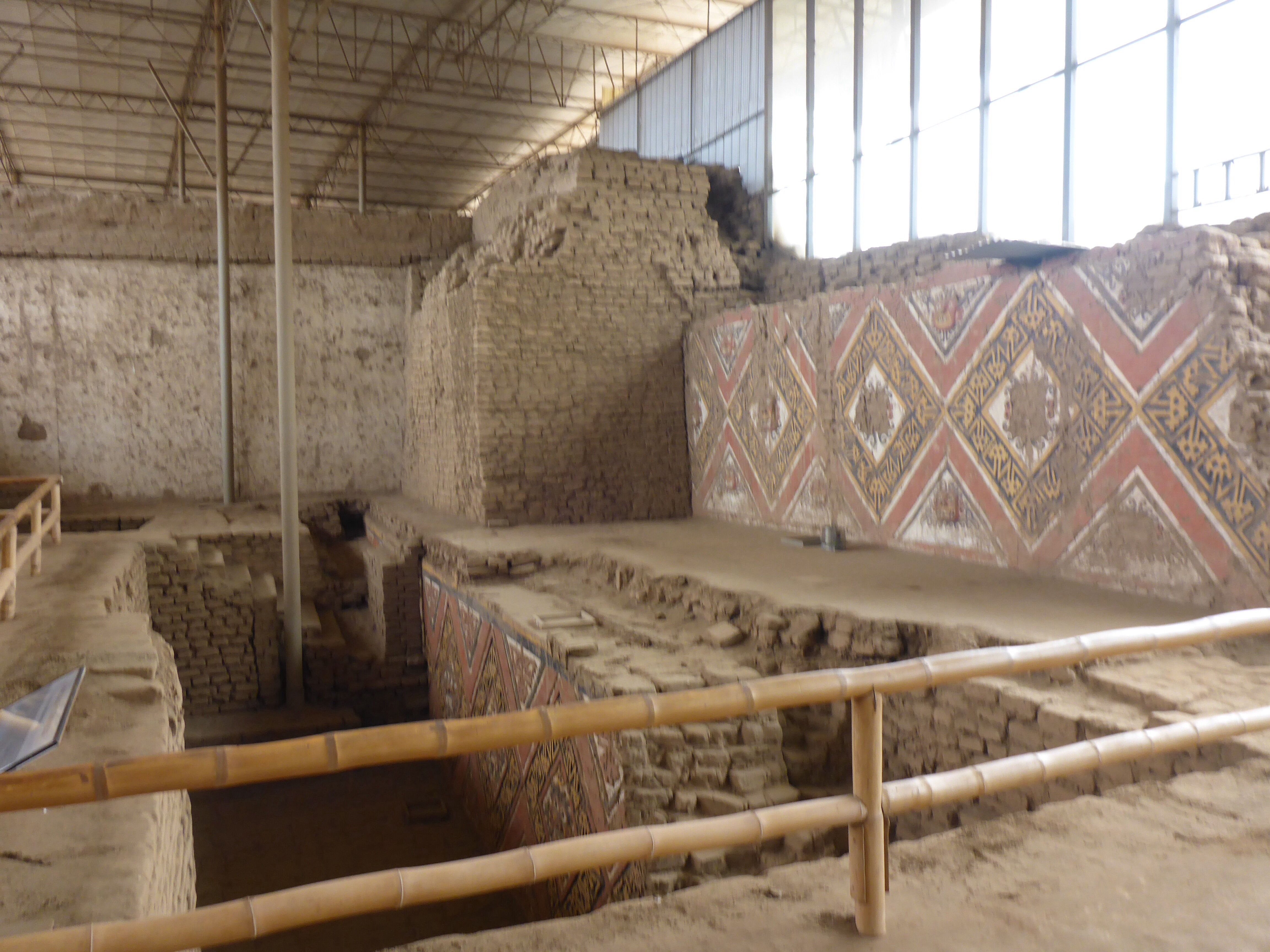
Huaca de la Luna. Third and forth levels. Note the step outwards on the inside.

Huaca de la Luna. Third and forth levels. Note the step outwards on the inside.

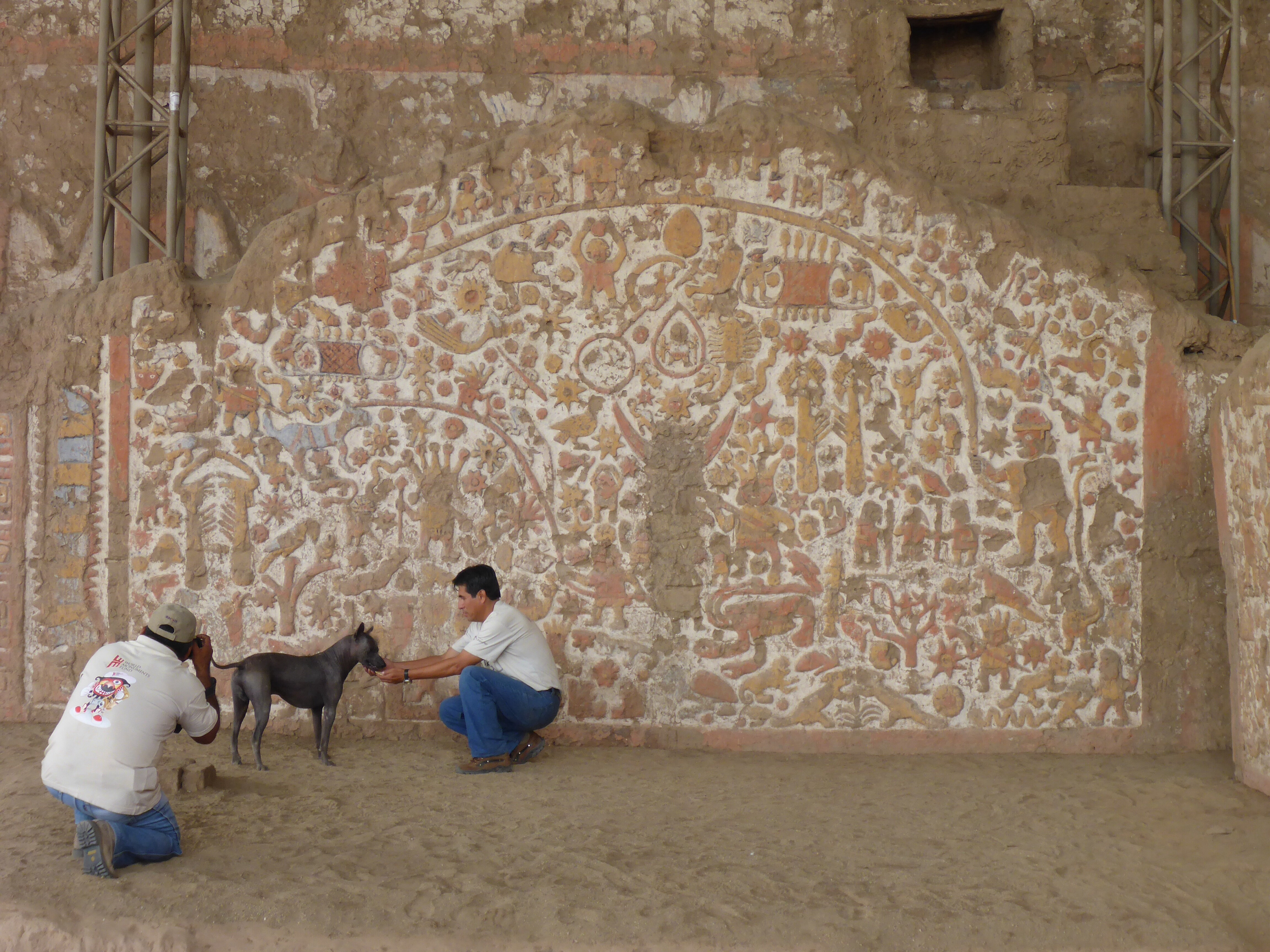
Hairless Peruvian dog, shown in Moche engravings.

Hairless Peruvian dog, shown in Moche engravings.


Huaca de la Luna, mural wall  with an Peruvian hairless dog in blue

Huaca de la Luna, mural wall with an Peruvian hairless dog in blue

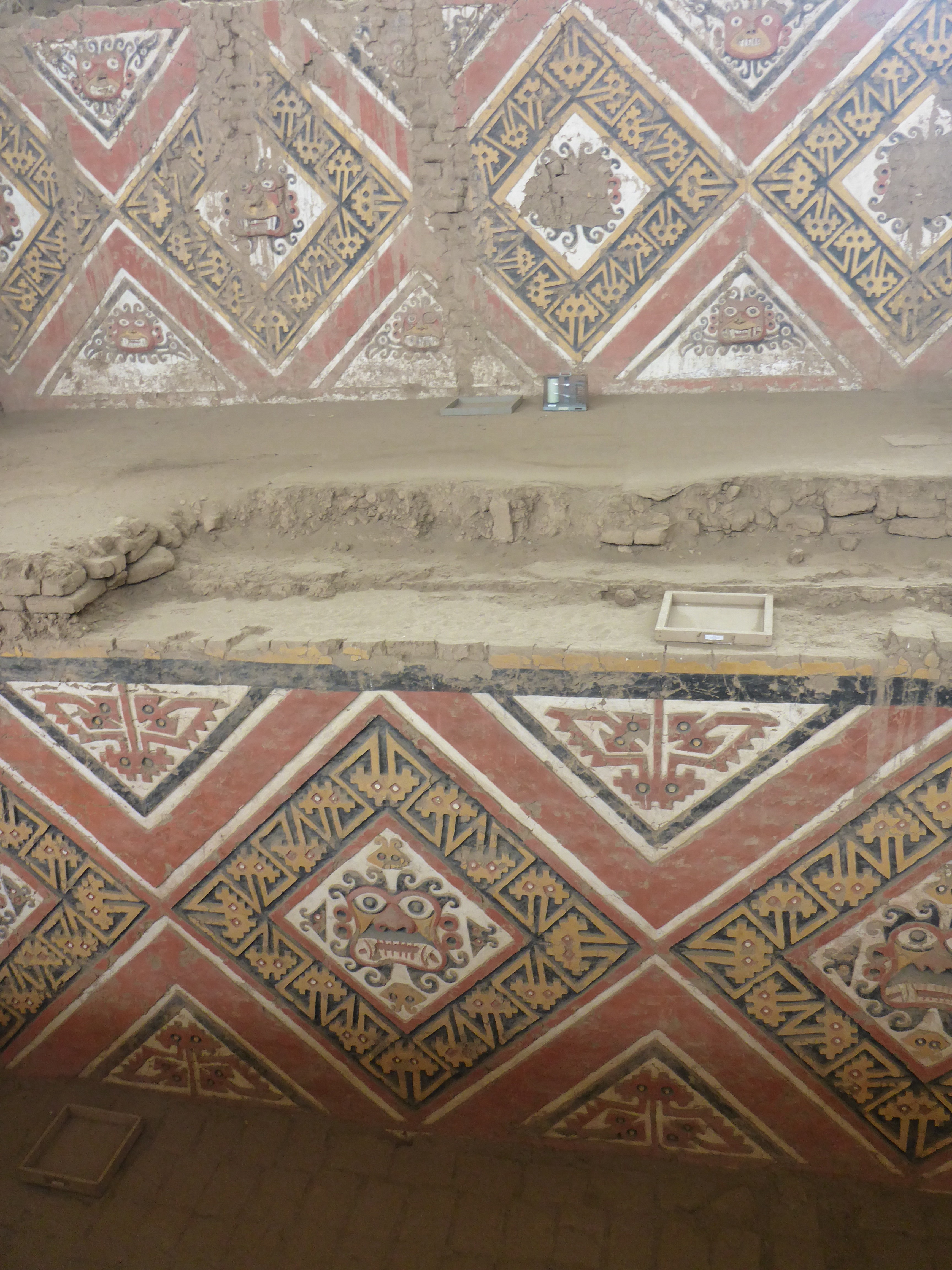
Huaca de la Luna. The face of the 'Exterminator' God.

Huaca de la Luna. The face of the ‘Exterminator’ God.

The nature of the construction with adobe means that heavy rain erodes the top layer making it indistinguishable from the surrounding countryside especially when covered in sand dunes. When excavation does take place, protection from the ravages of the elements is essential for any long term survival. This seems to take the form of galvanised roofing in some places on the sites or a newly applied extra layer of mud that seems to have some cement and gravel included.

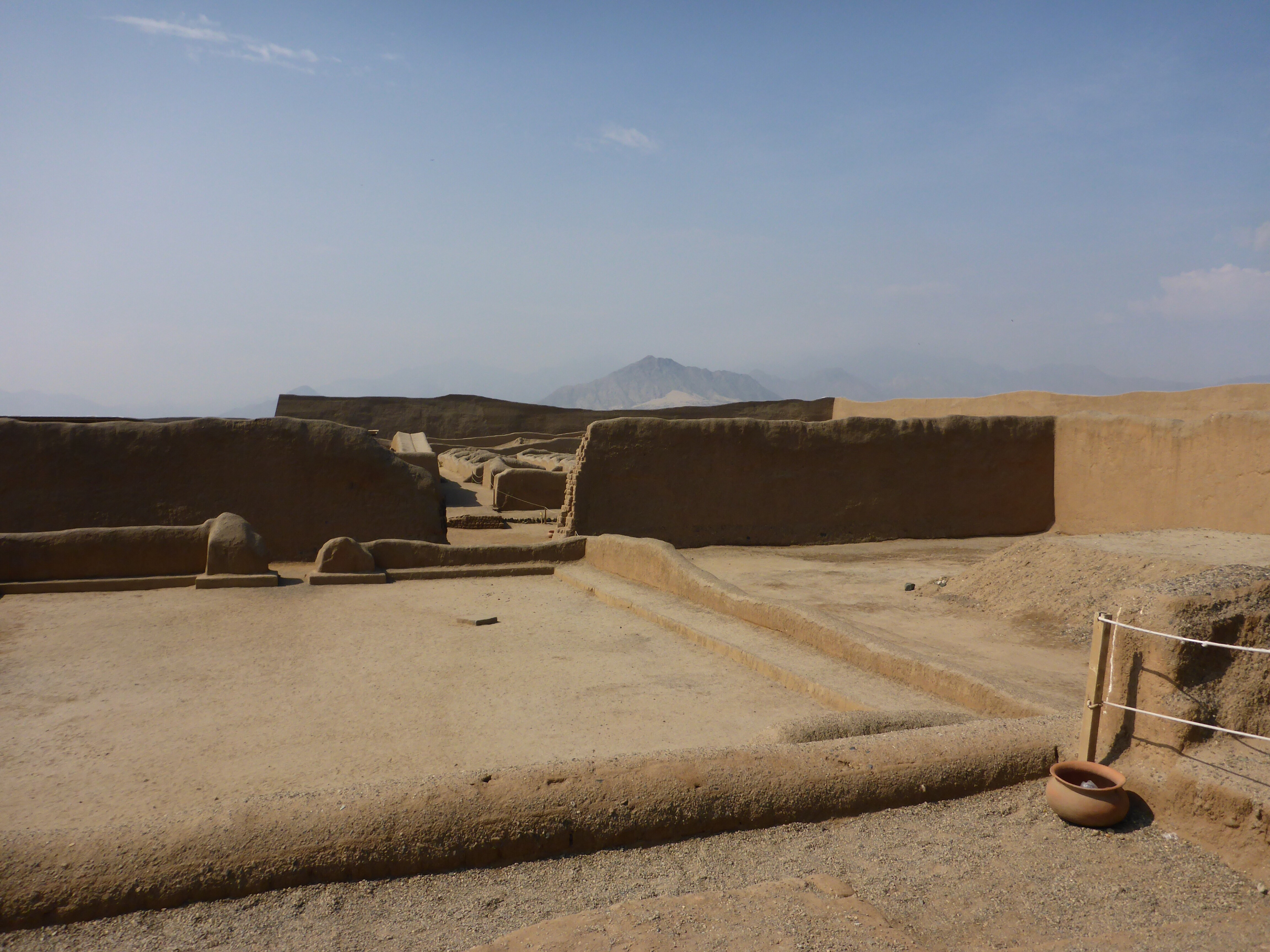
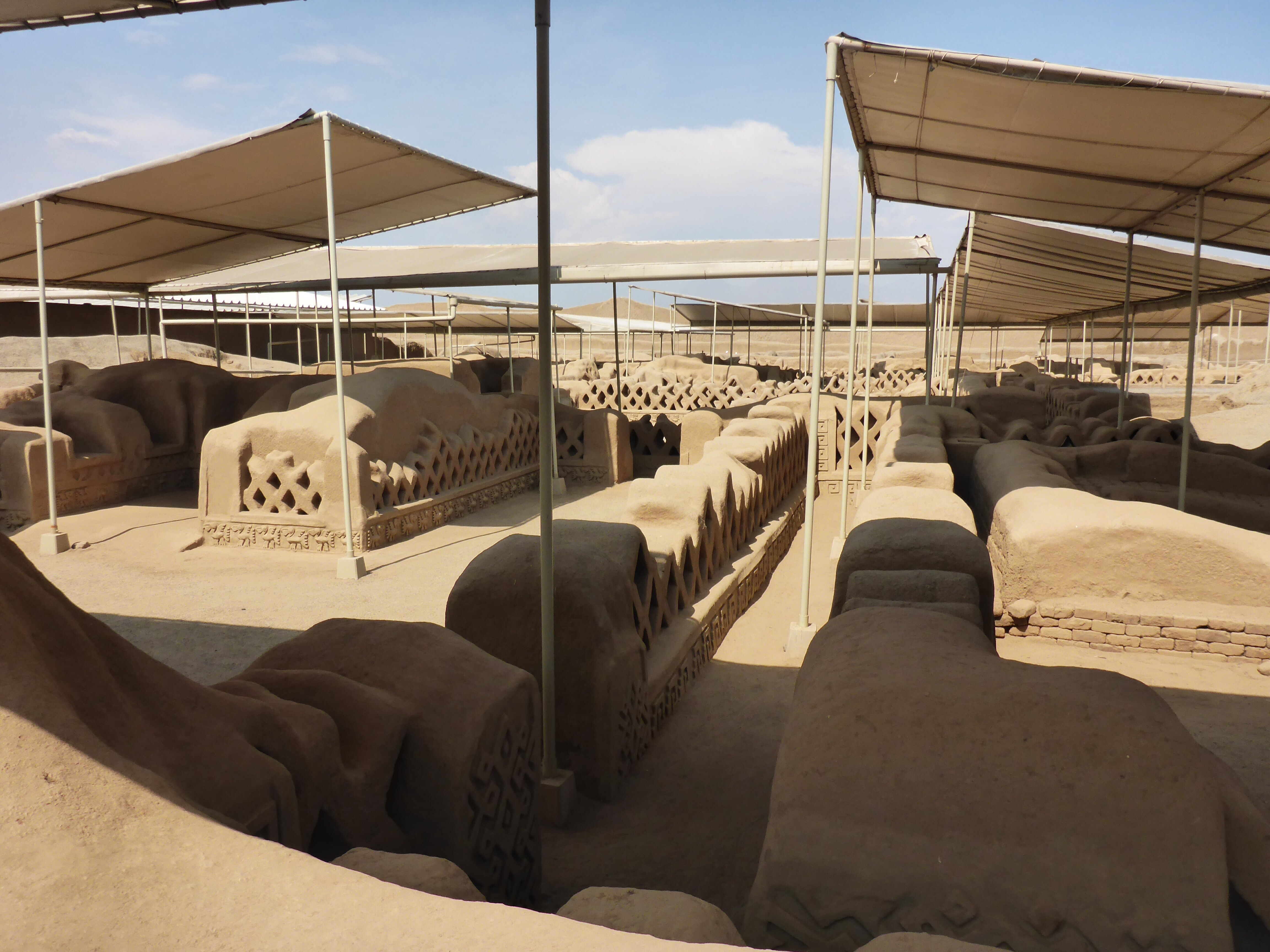
Chan Chan palace, protecting the walls from rain damage.

Chan Chan palace, protecting the walls from rain damage.

Chan Chan palace walls with adobe brick gaps to resist earthquakes.

Chan Chan palace walls with adobe brick gaps to resist earthquakes.

View of Adobe bricks exposed showing construction methods.

View of Adobe bricks exposed showing construction methods.

Five kilometres from Trujillo is Chan Chan the largest adobe (mud) city in the world. Built by the Chimor people (Chimú civilisation). Chan Chan was built around AD 850, covering over 20 square kilometres with a population of 30,000 people, Chan Chan was comparable to any major city around the world of its time. The city was only uncovered in the 1970 and yes it’s another UNESCO World Heritage Site. Some have commented that we seem to be visiting all UNESCO’s world heritage sites but no there are still one or two (hundred or thousand) to see yet.

Chan Chan palace, walls originally 8 meters high.

Chan Chan palace, walls originally 8 meters high.

Chan Chan palace administration area

Chan Chan palace administration area

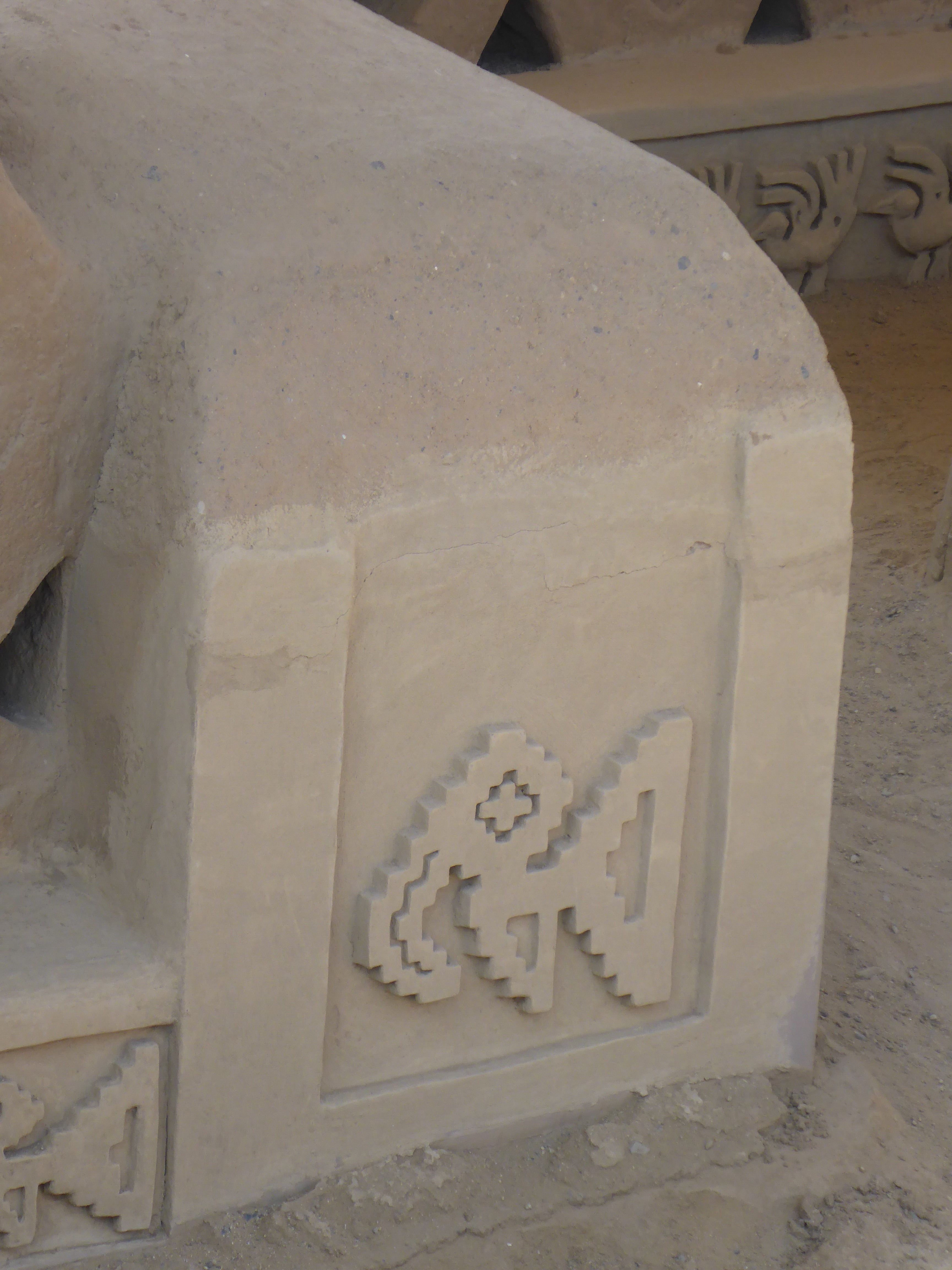
The Moche and Chimú cultures had a couple of modern day features, The culture worshipped the moon rather than the more usual sun worship. As the moon is considered female, thus the majority of the sacrifices were male. An early form of equality! With the choice of the moon to worship, calendars were based on 28 days and years on 13 months. The other modern feature in the Chimú palace uncovered is the fish motifs in the bases of palace walls in rooms and passageways which indicate which way to the exit, by following the fish symbols. A ancient ‘EXIT’ signage system.

Chan Chan palace, fish's head: exit direction.

Chan Chan palace, fish’s head: exit direction.

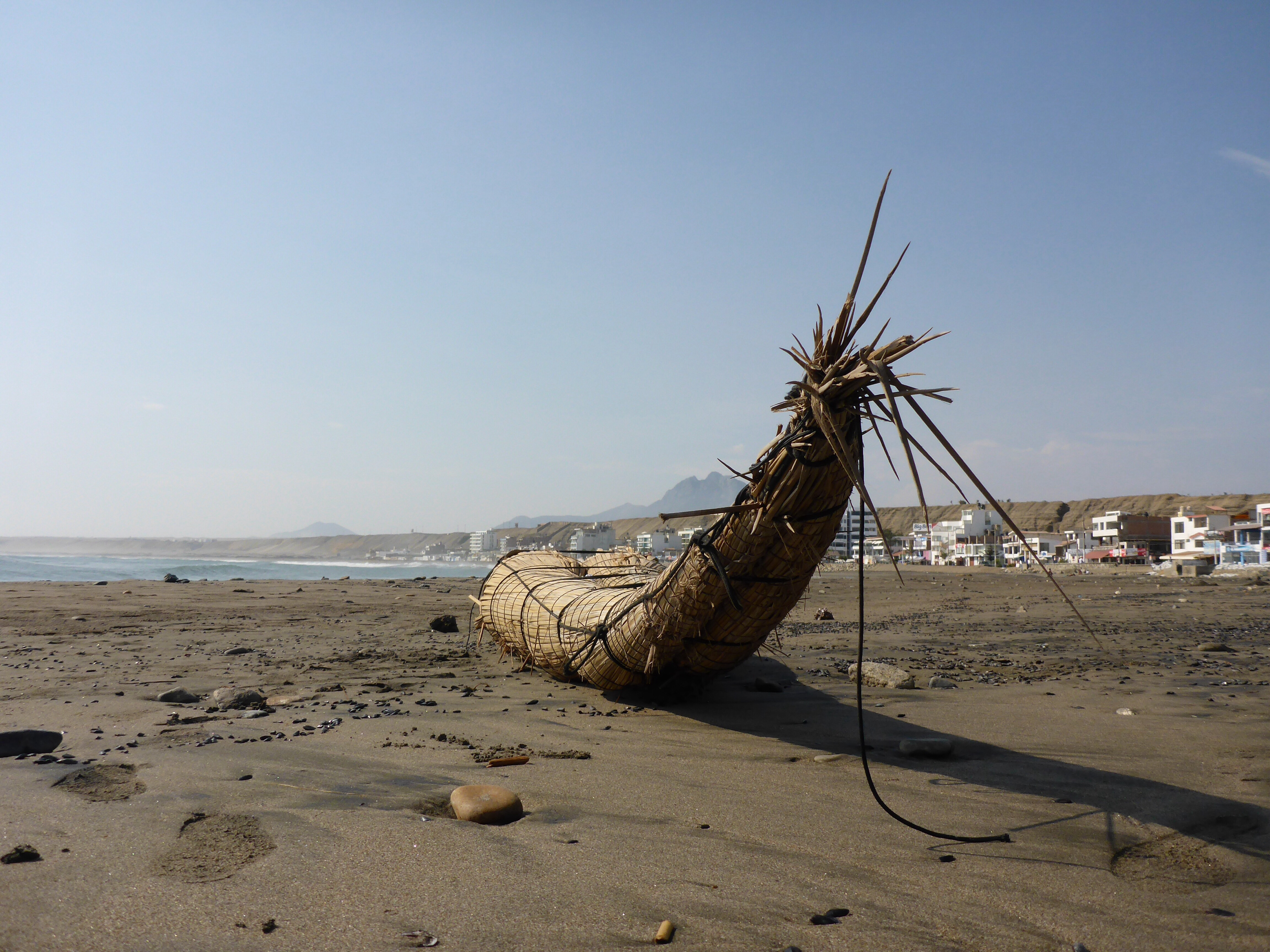
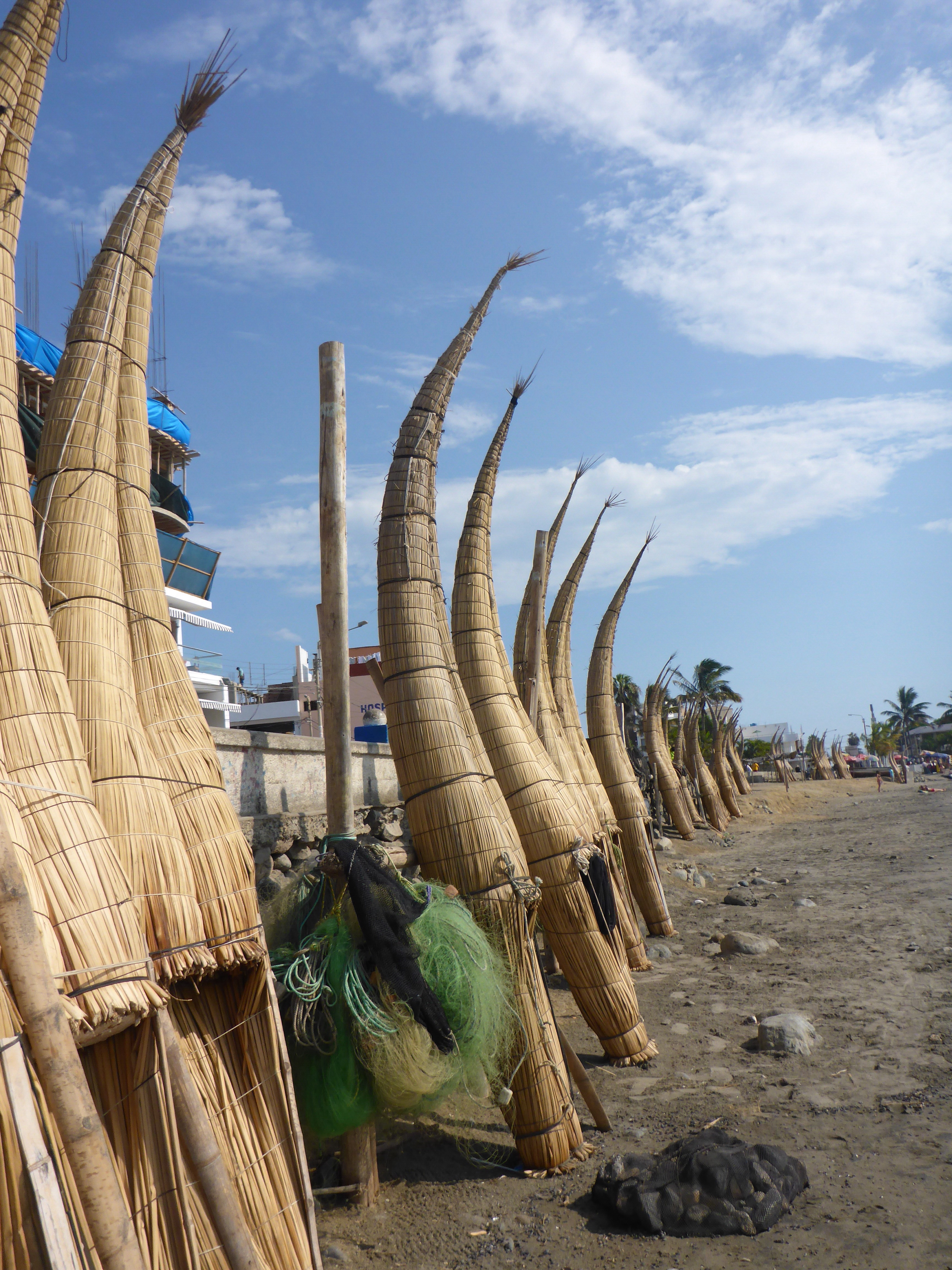
While touring Chan Chan and the partially restored palace, we could hear the sound of the sea, only two kilometres away which was to be our next destination. We wanted to see the reed canoes at nearby Huanchaco. The construction is traditional, but they are now stuffed with expanded polystyrene for modern day buoyancy.

Reed boat on the beach at Huanchaco.

Reed boat on the beach at Huanchaco.


Read boats at Huanchaco.

Read boats at Huanchaco.

Museo Tumbas Reales de Sipán (Museum of the royal tombs of Sipán) is a modern museum in Lambayeque a northern Peruvian town which displays the treasures found in the royal tombs. What a breathtaking display, this really needs more publicity for people visit. No pictures were allowed inside, but here is the link http://www.museotumbasrealessipan.pe It does need flashplayer so will not work from an ipad.

Museo Tumbas Reales de Sipán (Museum of the royal tombs of Sipán).

Museo Tumbas Reales de Sipán (Museum of the royal tombs of Sipán).

What makes this collection so special is that the treasures remained undiscovered until very recently and therefore were never looted unlike the Huaca de la Luna. Complete tombs with all the offerings to the gods for a good afterlife have been left intact for hundreds of years. The quality of the jewellery and pottery and designs have to be seen to be truly appreciated.

– Anthony

Another glorious ride – Lima to Trujillo

‘On the road again!’ as the song goes, the bikes serviced, beautifully cleaned (we should have left the panniers on and maybe they would have washed those too!), Anthony has a new chain and sprockets so the constant rattling is gone and we are good to go. We are lucky to be leaving on Sunday, without the weekday traffic. We have, unusually for us, planned an early pre 08:00 departure. We are away and within one minute, Anthony’s carefully chosen route is abandoned, roads we planned to use blocked off for some sporting event.

Still, a quick redirection and twe are away in very light traffic. A quick stop by traffic police for using a motorbike free underpass.  Who knows why…  A friendly exchange and we are away on again and finally on the three lane expressway, accelerate to overtake a truck and STOP!  Who put a set of faded, barely visible, traffic lights on our side only?  Who knows, yet again… The freeway is dotted with bus stops as it passes through some of the working class districts of Lima. We have spent our time in Miraflores, an affluent seaside suburb, and not seen this side of Lima close up. This is the reality for many of the people drawn to Lima for the opportunities that a big city can provide.

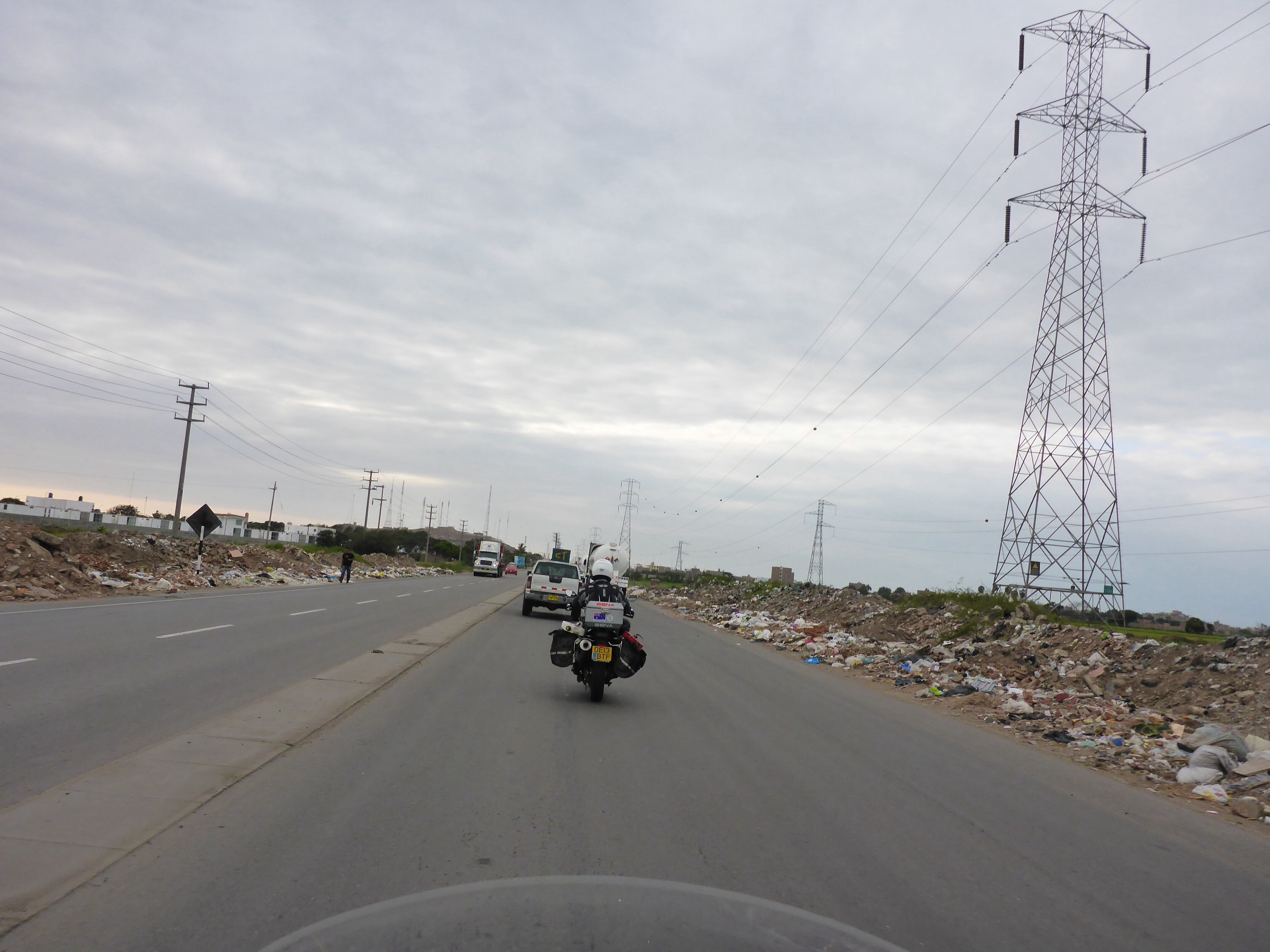
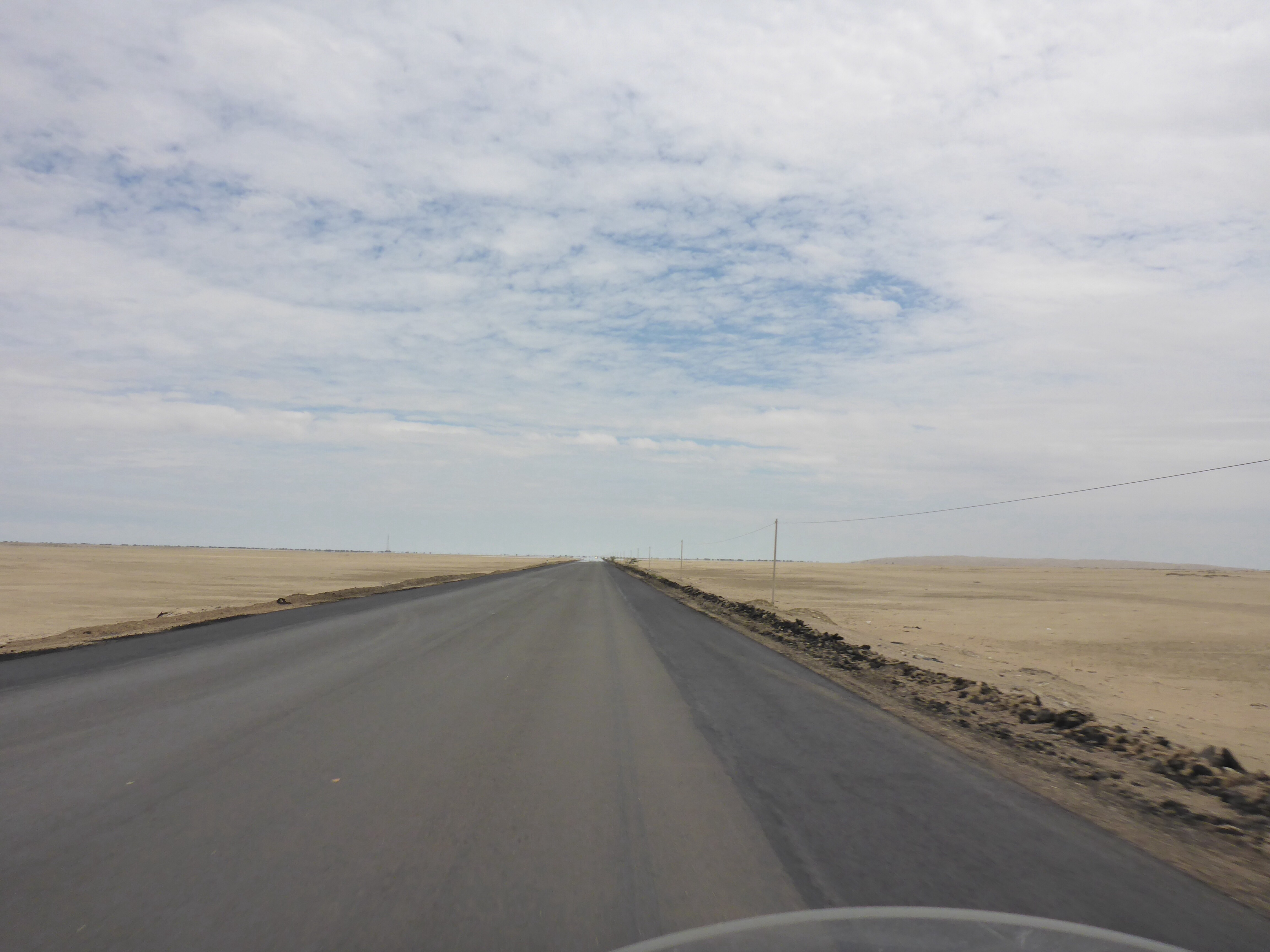
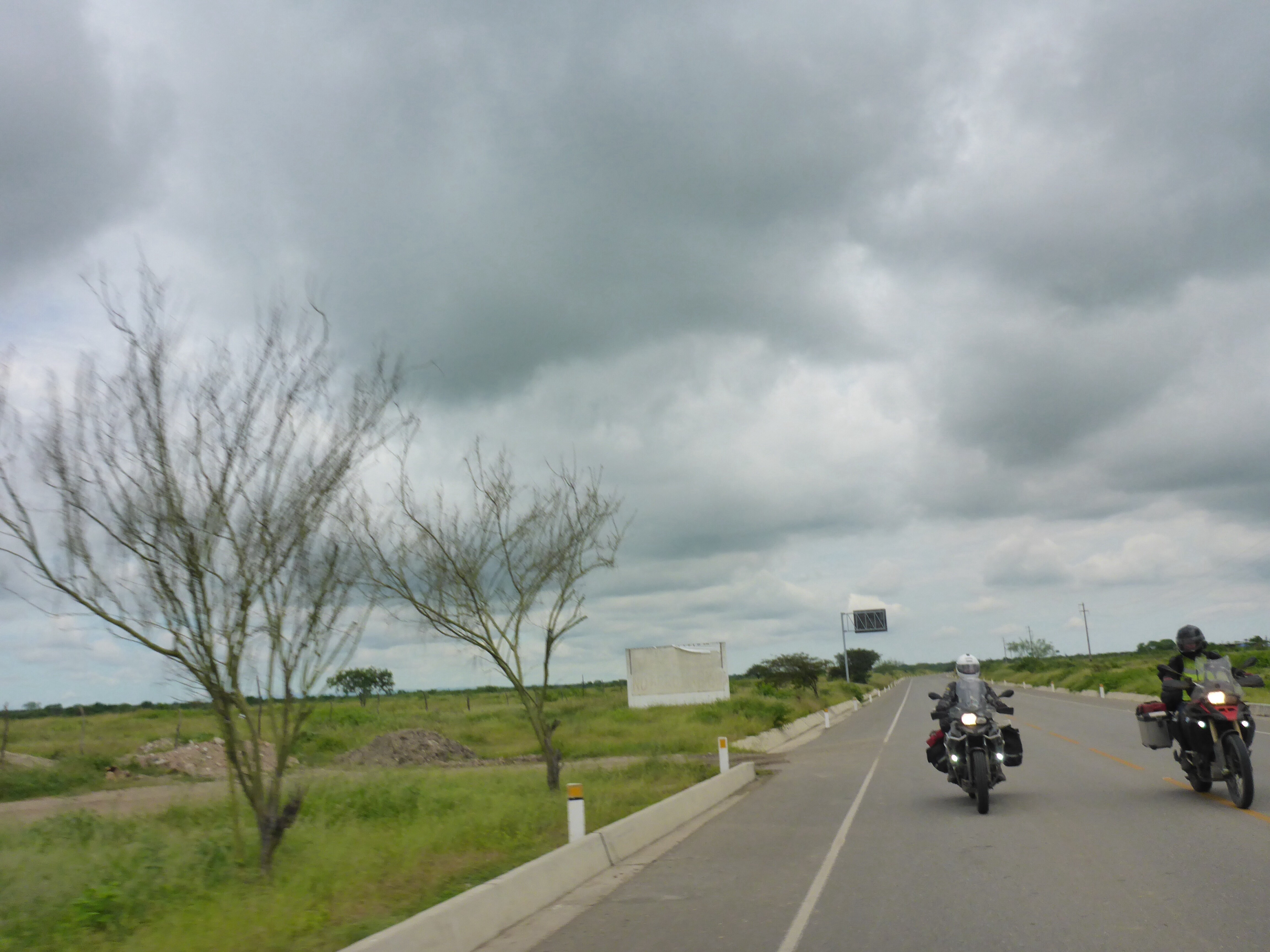
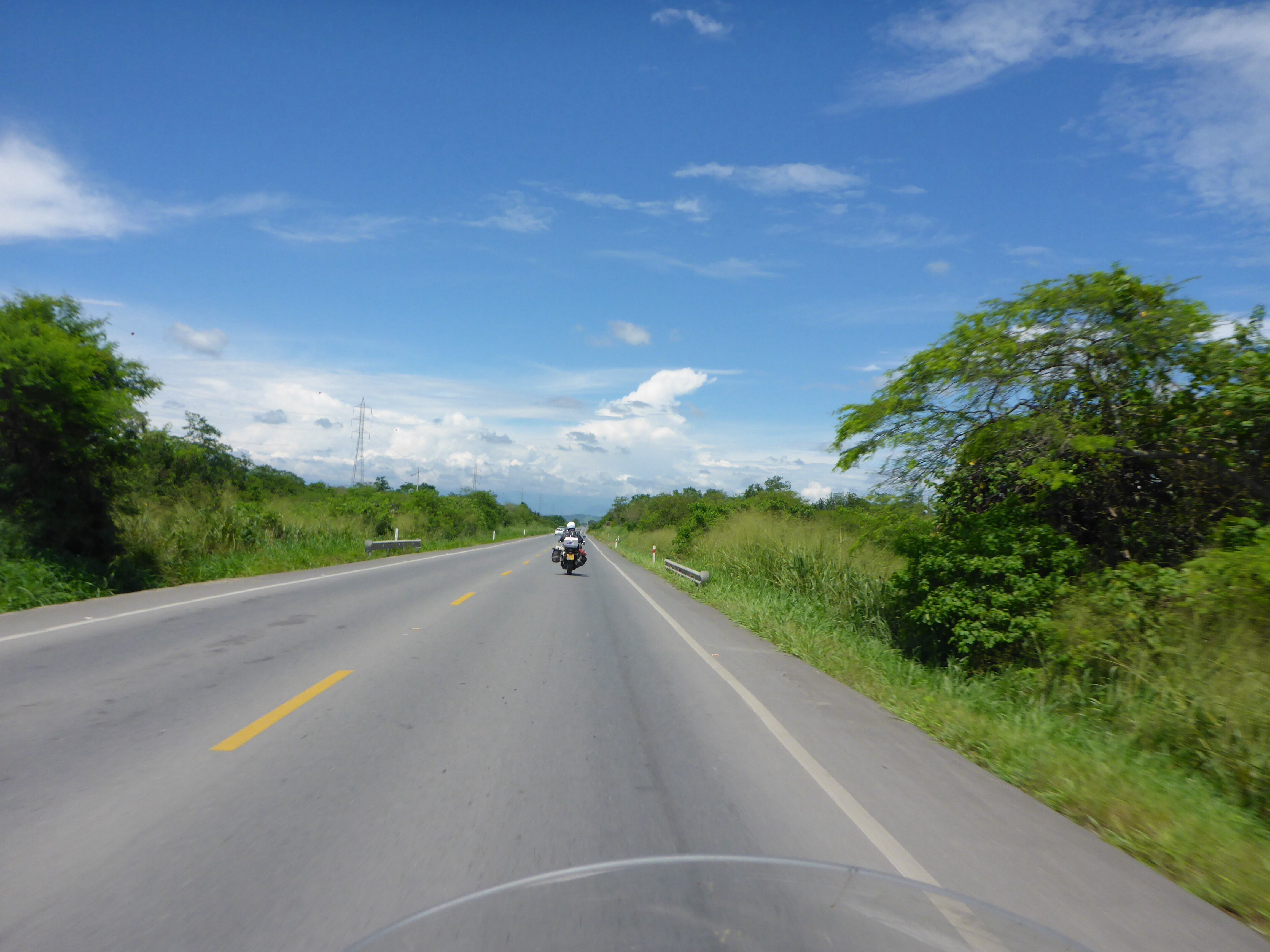
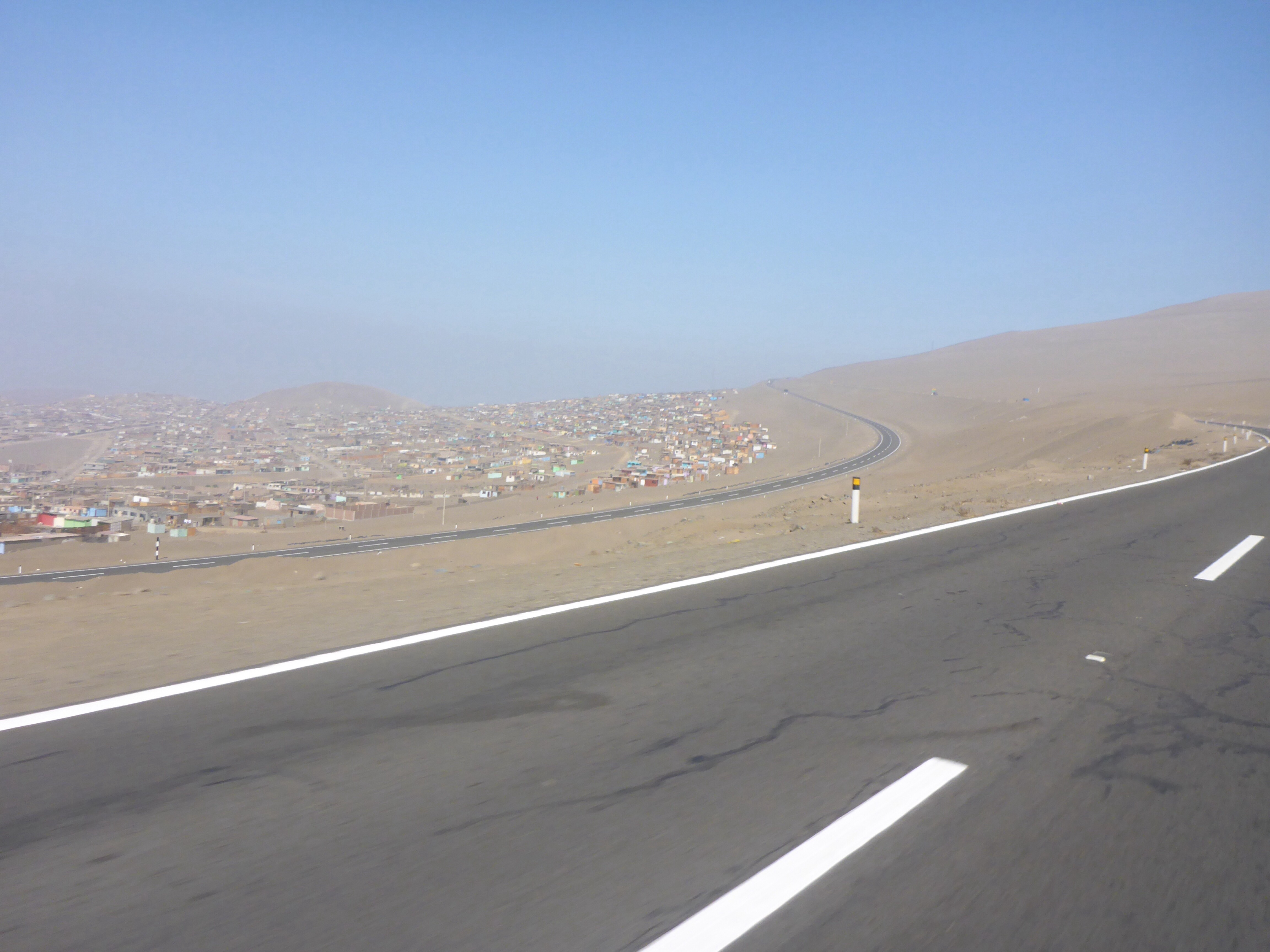
Panamericana Norte leads us out of Lima and back to the desert landscape we have become so familiar with. We have noticed that, in towns and cities along the way in Peru,  traffic volume falls dramatically at the edge of town. The majority of traffic stays within the town limits with mostly trucks and busses making the long haul journeys.

We are definitely out of Lima now

We are definitely out of Lima now

Towns are slow, with traffic calming humps sometimes every few hundred metres – most are very noticeable, painted with large yellow stripes, others we only know because the traffic in front of us suddenly slows down dramatically.  We have grown to love those humps as they have been very useful, giving us the opportunity to either over or undertake slow vehicles.

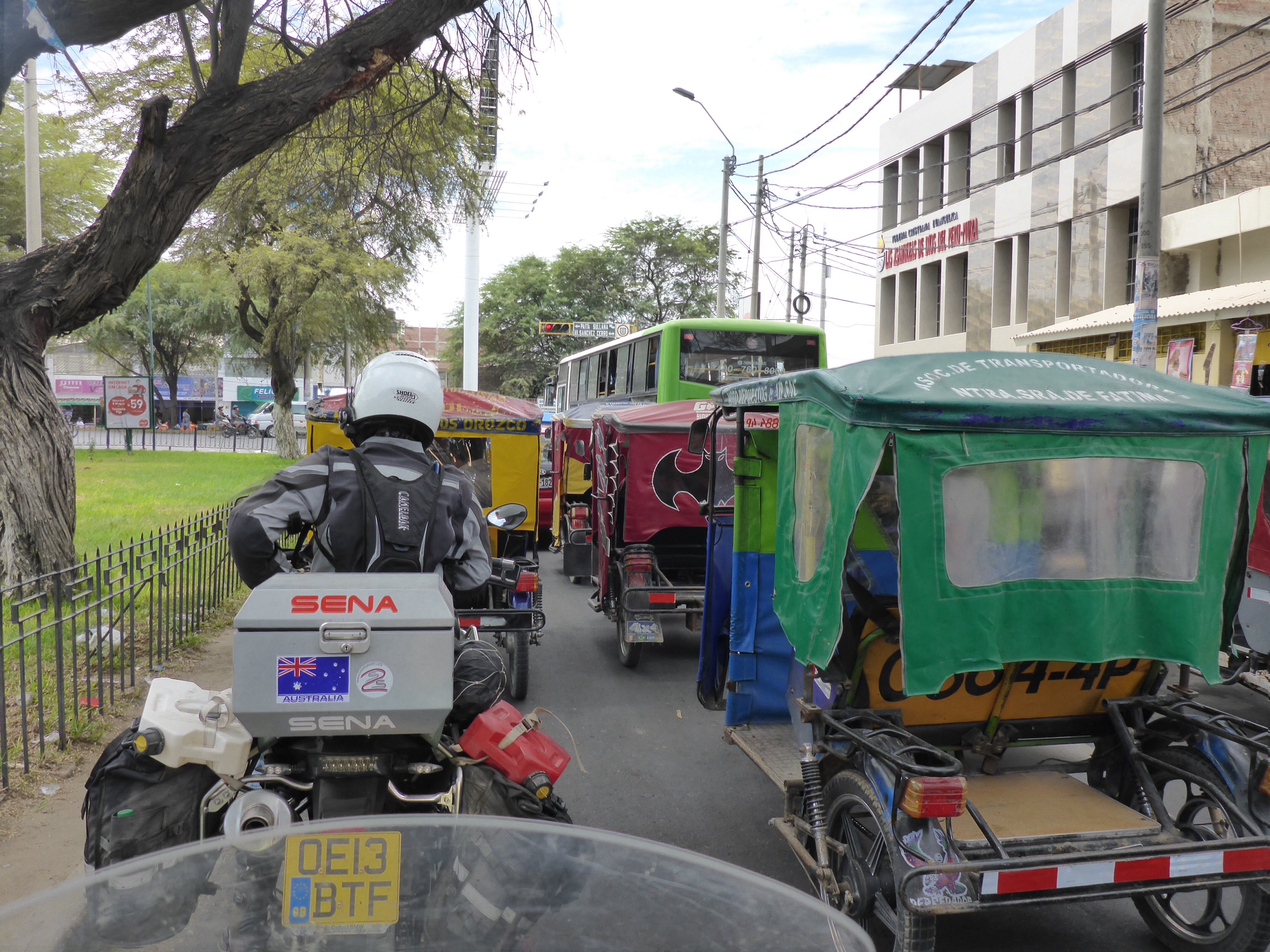
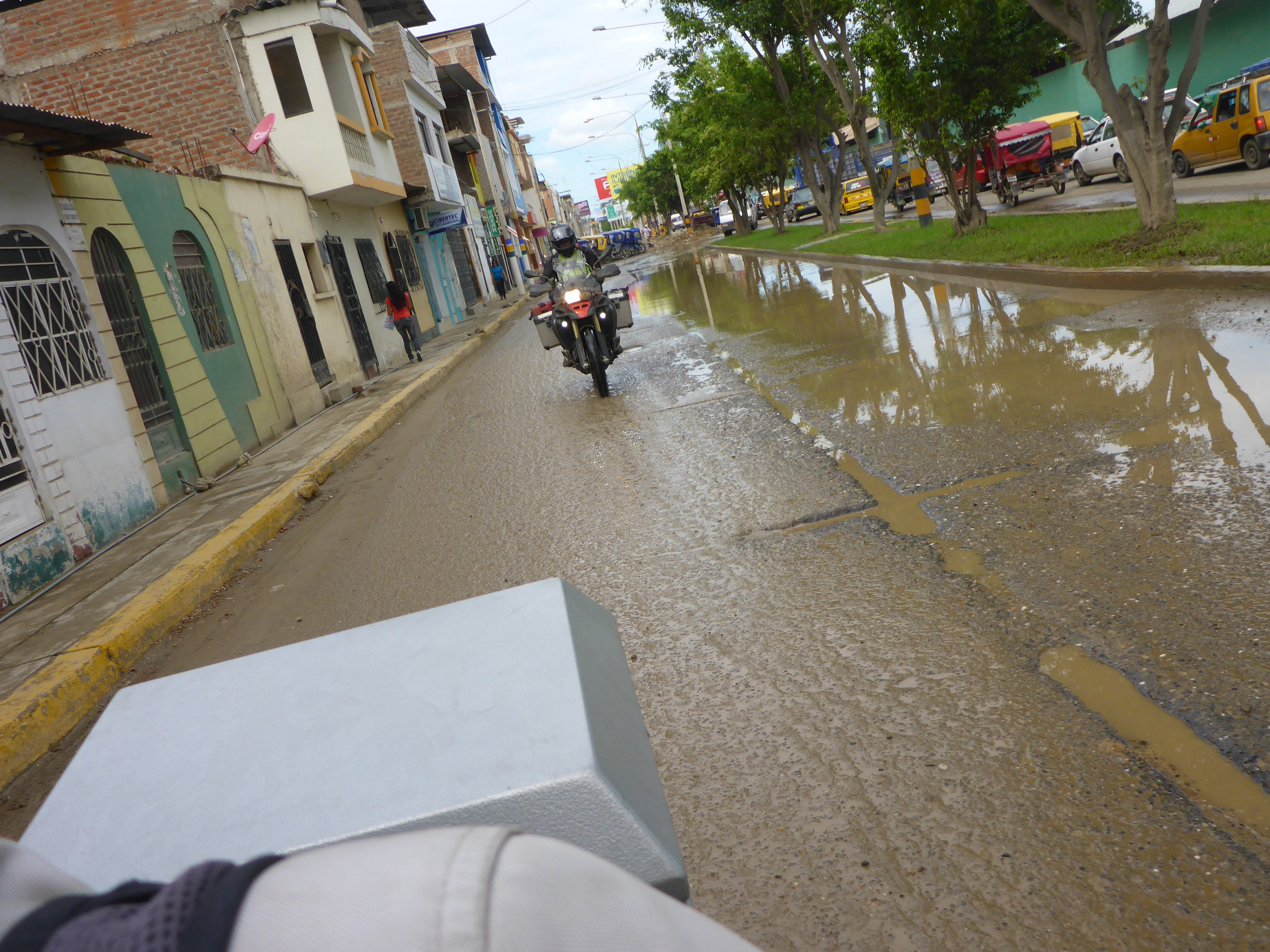
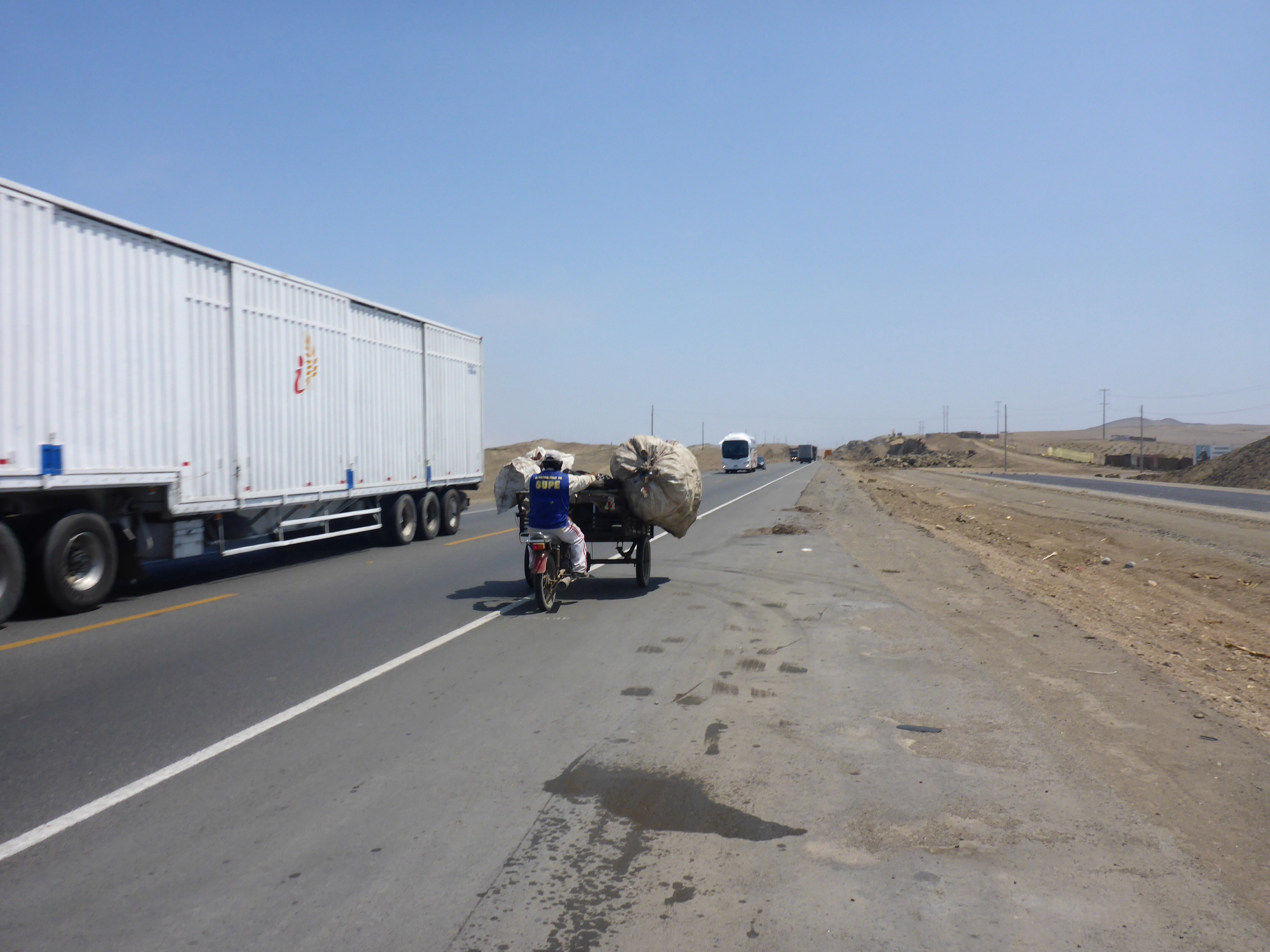
Outside the villages, we mostly see trucks and busses, a few cars and the odd mototaxi (tuk tuk in Asia) or motorcart, carrying incredible loads.

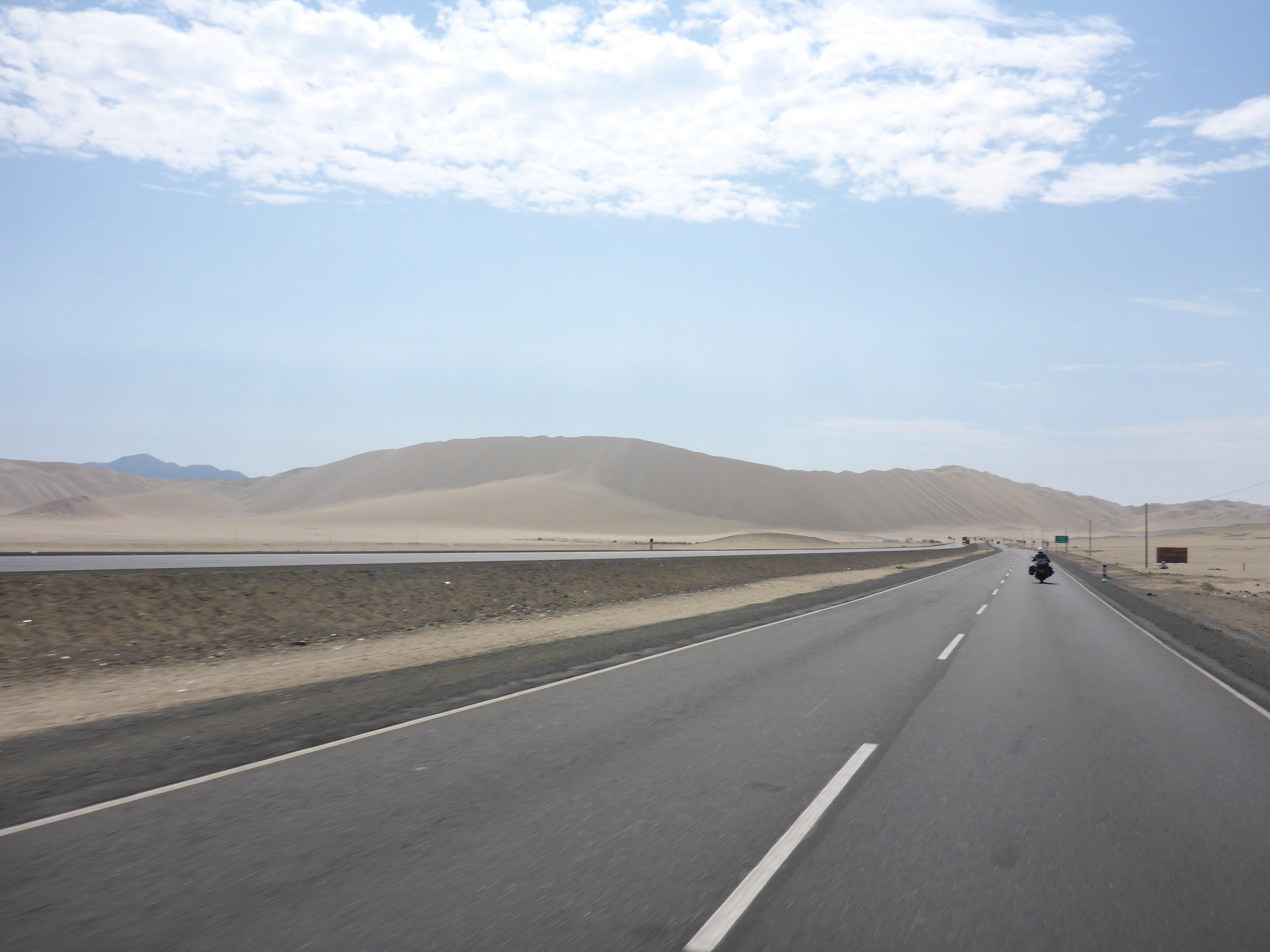
Typical traffic on the Panamericana Norte

Typical traffic on the Panamericana Norte

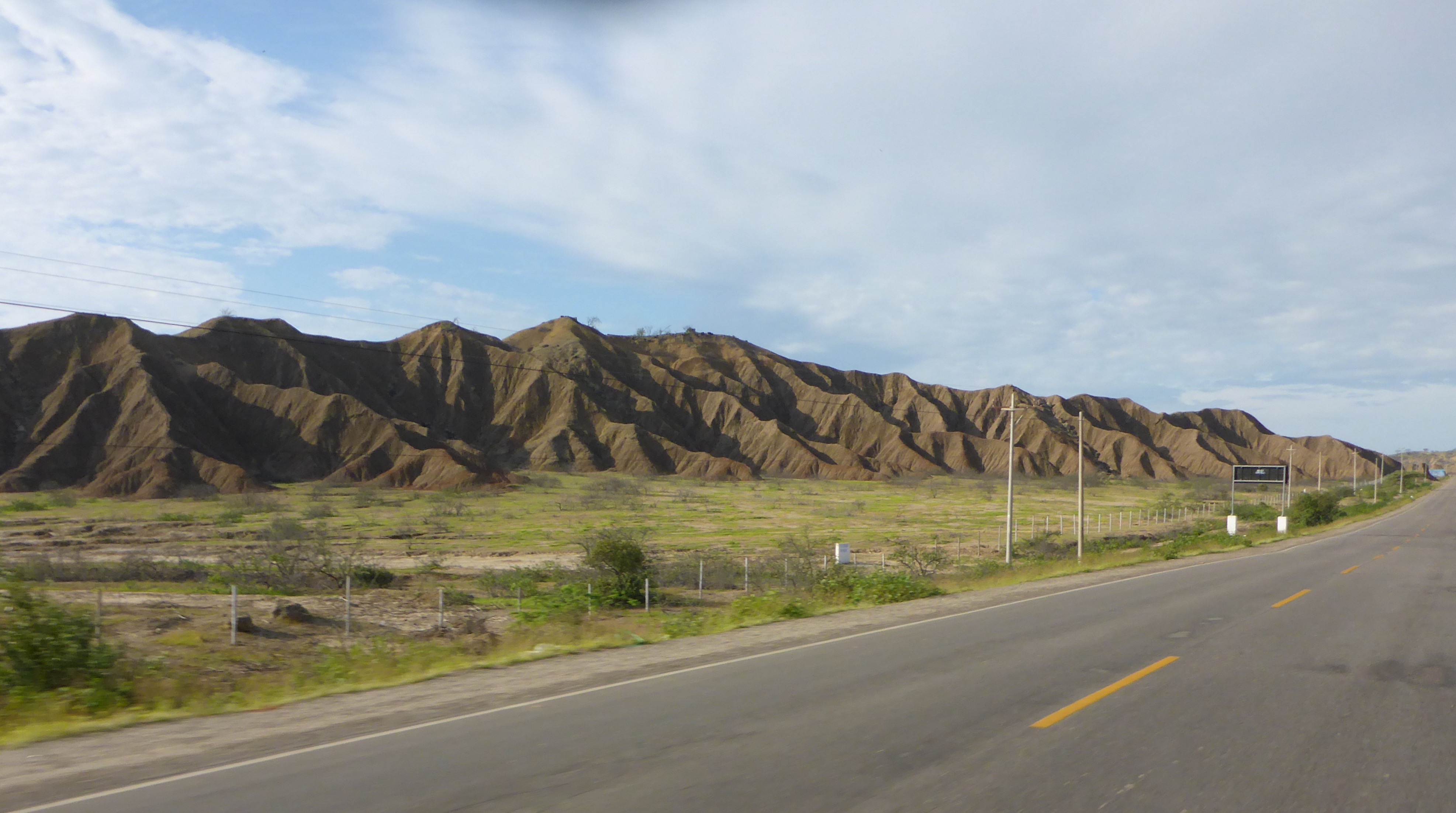
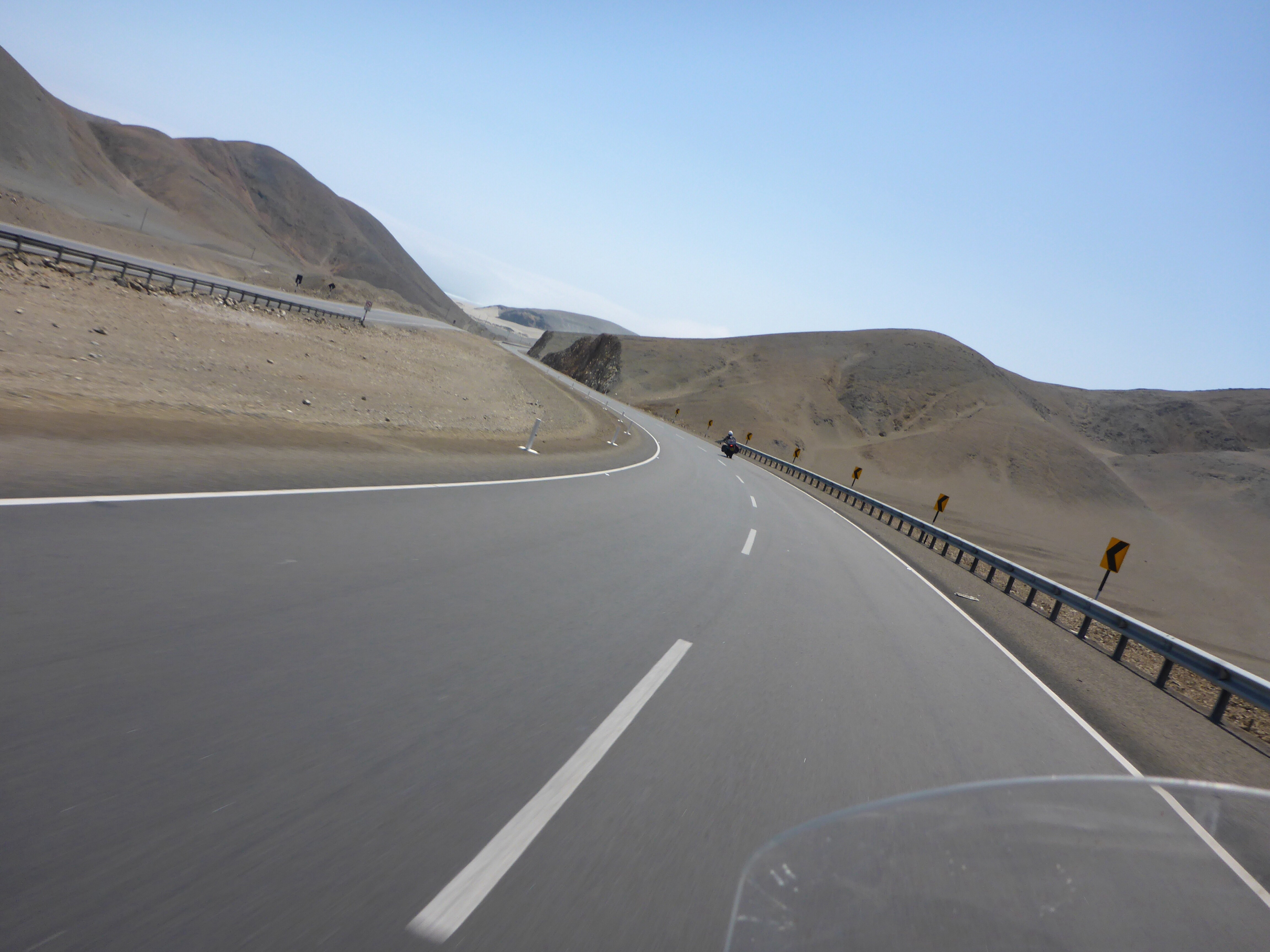
I thought we had seen every combination of pastel colours in the mountain ranges, but we are once again treated to the most subtle and gentle shade of red, beige, grey and brown.  Each turn revealing a different hue and mountain shape.  It is calming and serene,  it seems like there is only us.  No other life.  No scrubby bush or bird.  Just a glorious winding road and us.

Our first fog encounter on the Panamericana Norte

Our first fog encounter on the Panamericana Norte

Panamericana Norte half way between Lima and Trujillo

Panamericana Norte half way between Lima and Trujillo

Panamericana Norte half way between Lima and Trujillo

Panamericana Norte half way between Lima and Trujillo

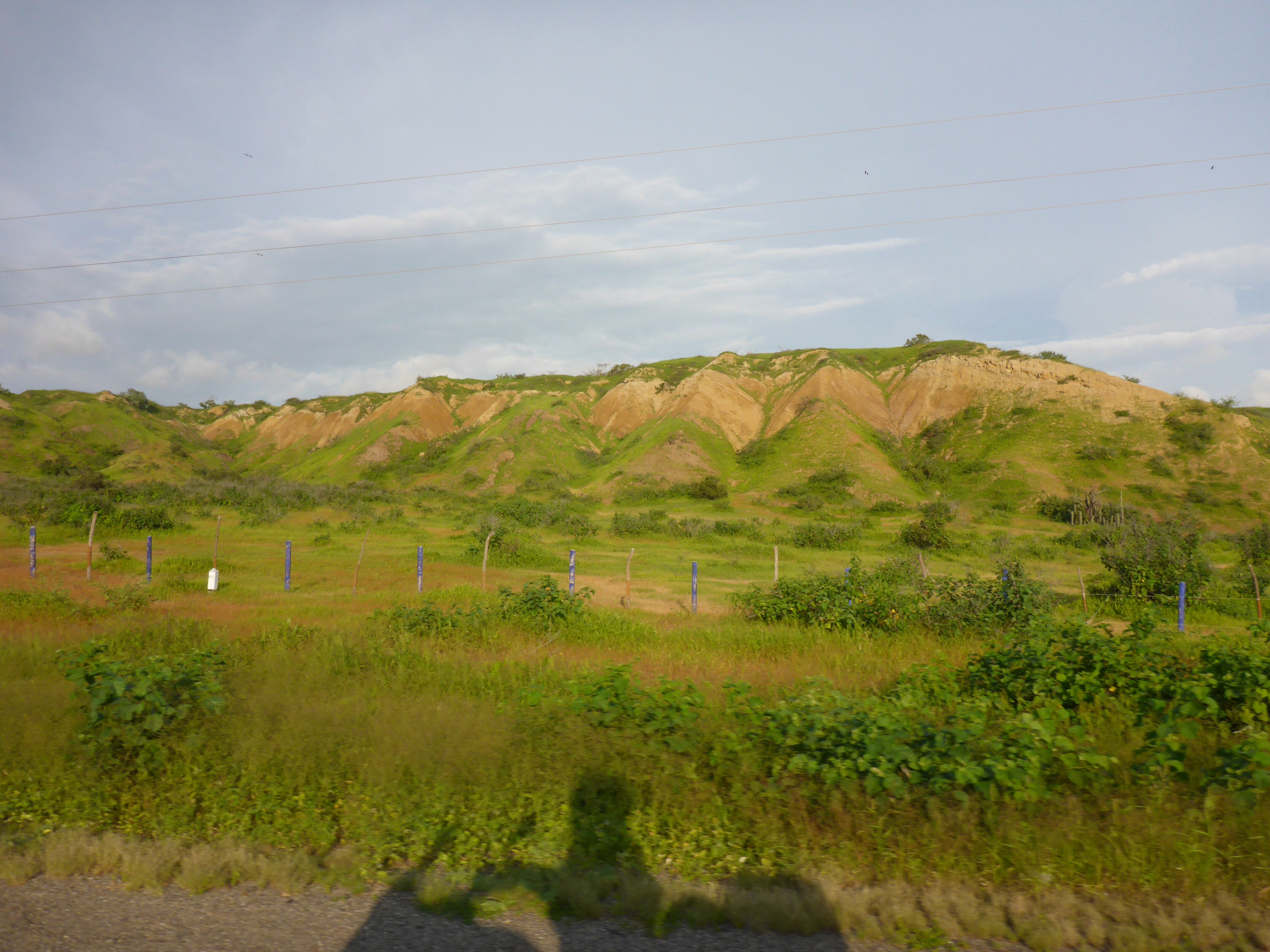
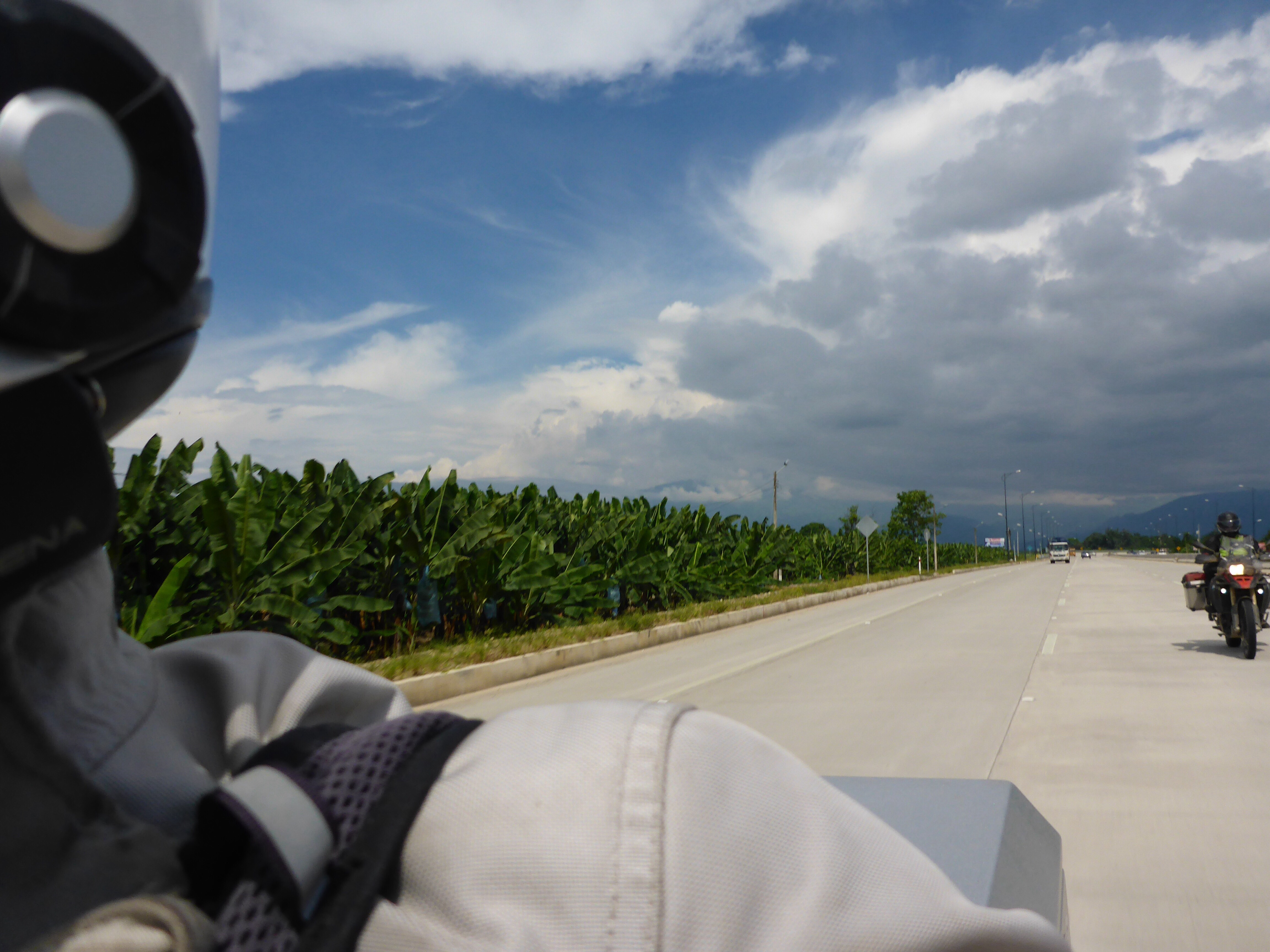
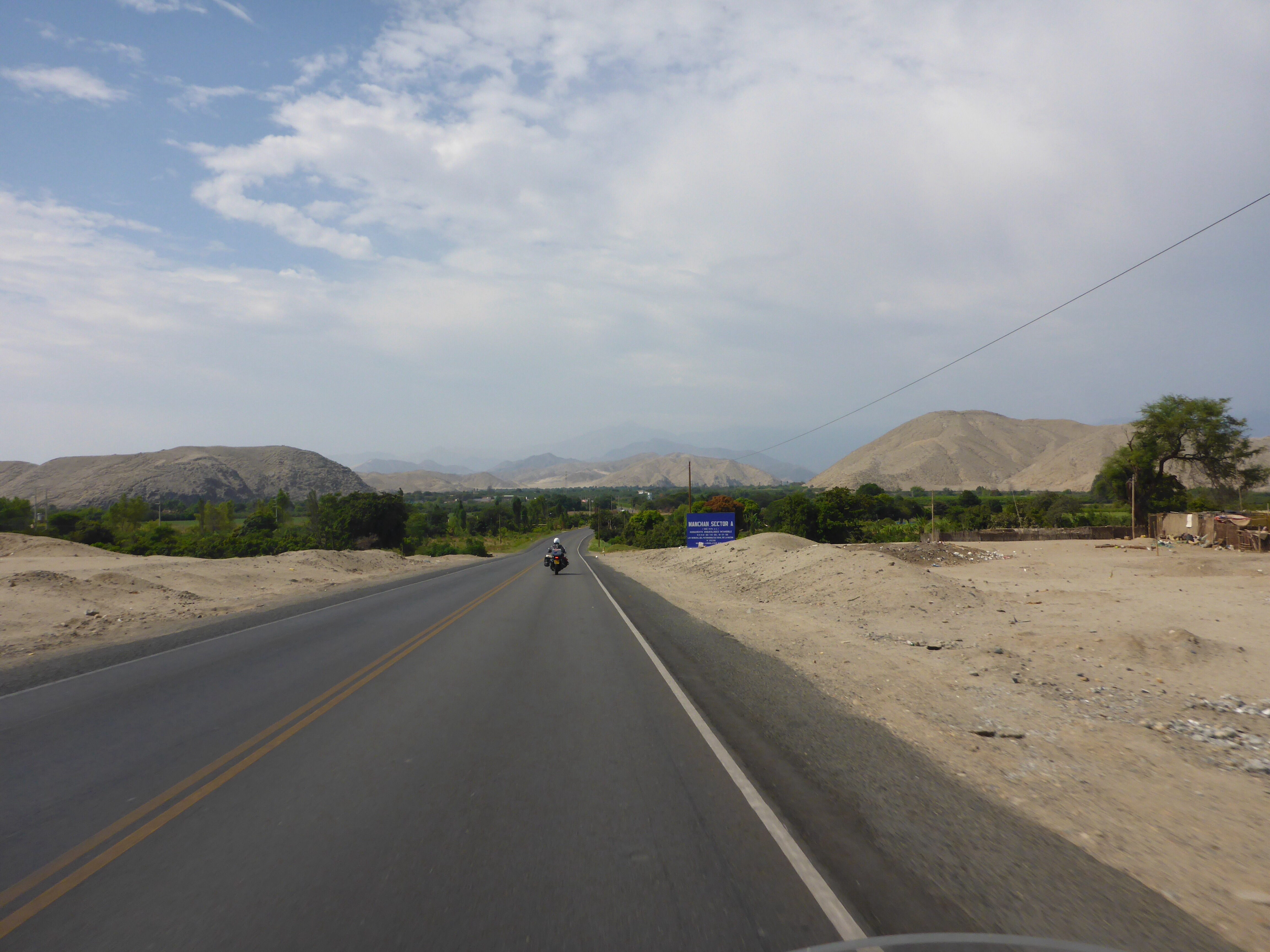
Then suddenly, after one last bend, the vibrant green jumps out, shouting life at us.  We see rice, sugar cane, corn, chilli bushes and fruit trees.  Wow, I love that green!!!  It is amazing how life giving those meandering rivers are.

Another lush valley

Another lush valley

Panamericana Norte half way between Lima and Trujillo

Panamericana Norte half way between Lima and Trujillo

Wind and sand dunes on the Panamericana Norte

Wind and sand dunes on the Panamericana Norte

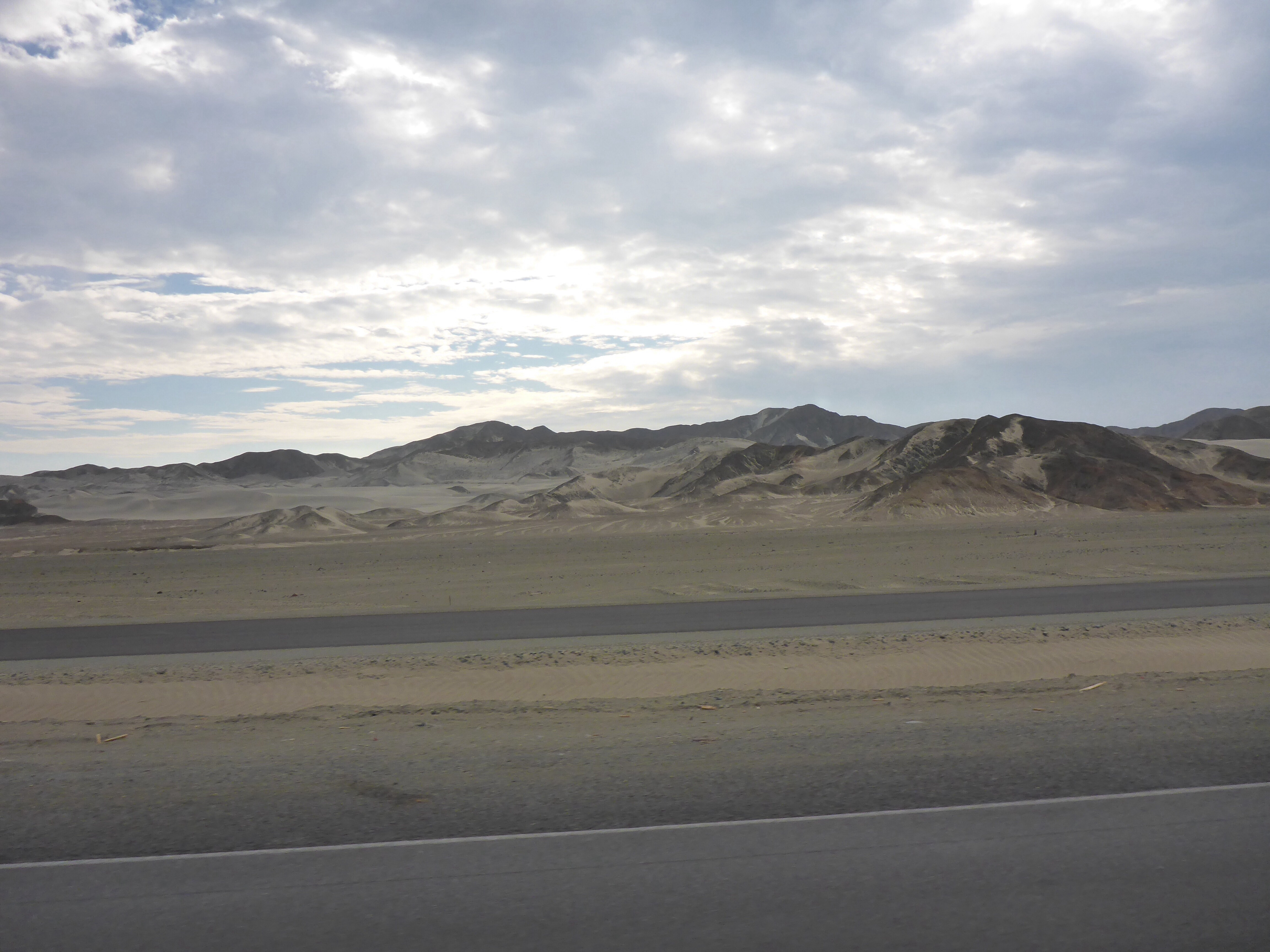
So many shades of grey!

So many shades of grey!


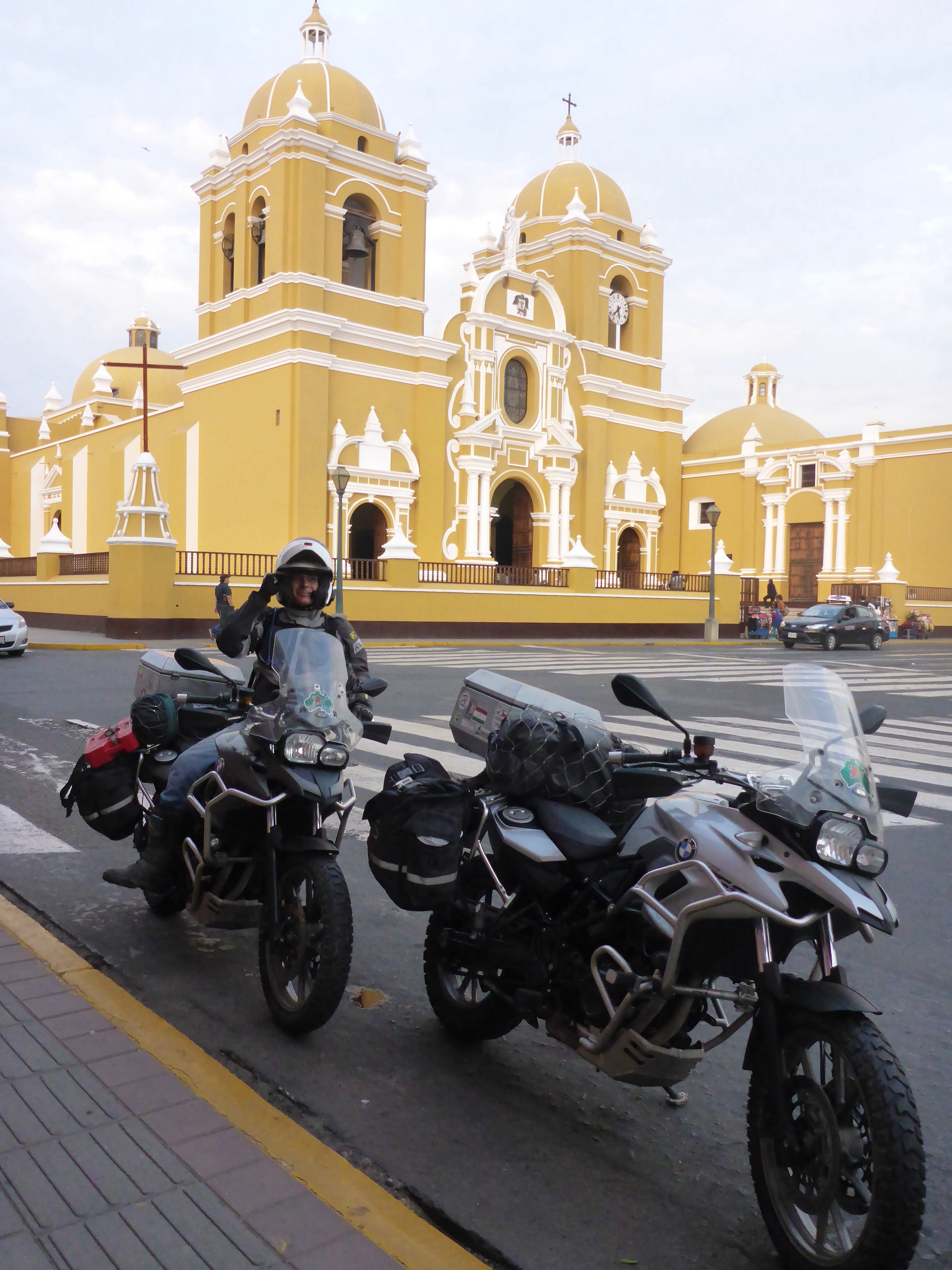
After a most glorious ride, we finally reach the outskirts of Trujillo.  We had no idea we would get that far today.  Anthony checks hotels in his GPS and picks a nice sounding named hotel , the Libertador, on the Plaza de Armas, so off we set for a final stretch.  We arrive around 5.30pm having ridden 580kms.  What a gorgeous square and hotel.  That will more than do thank you very much!!!!

We have just arrived at Trujillo Plaza de Armas

We have just arrived at Trujillo Plaza de Armas

Trujillo cathedral

Trujillo cathedral

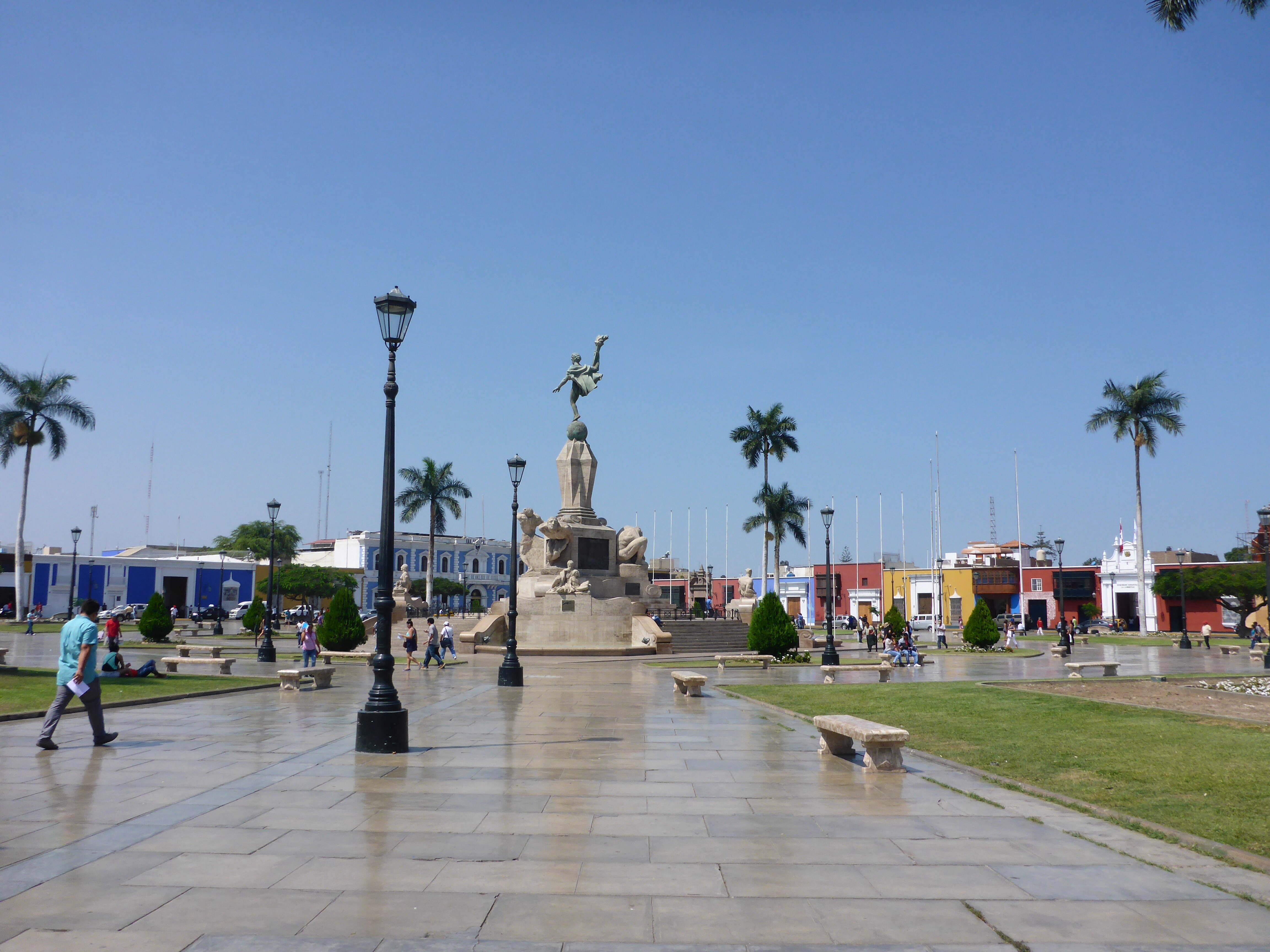
Trujillo Plaza de Armas

Trujillo Plaza de Armas

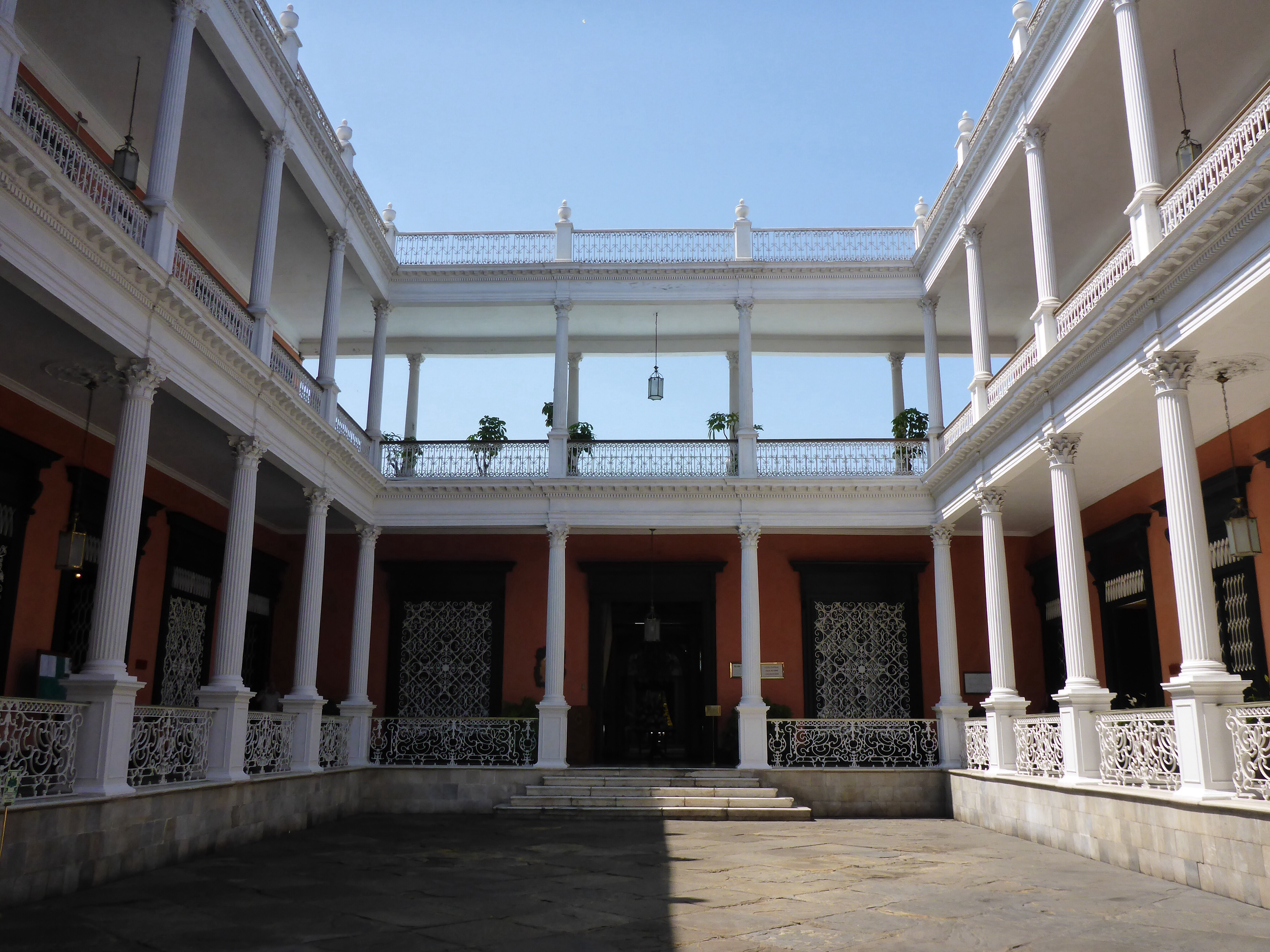
Trujillo typical courtyard

Trujillo typical courtyard

We quickly decide we’ll spend 2 nights there Ss there is so much to see here.


– AnnE

Onward to and over Nasca

We spent much of the last couple of days heading up the Peruvian coast, northwards you would think, but in fact we were heading west mostly according to the SatNav. I have always thought of the west coast of South America being a relatively straight line northwards, but was wrong. Talking of lines the double solid yellow lines in the middle of the road in Peru are not worth the paint applied on it. Everyone, including us sadly, ignores it.

Why you say does this situation exist and road users, including the “slow speeds” undertake such overtaking? The answer lies in road system in Peru, where we have ridden so far, no slow overtaking lanes exist in any form and it seems double yellow is applied in many more places than in other countries. If you are behind a heavily loaded truck doing less than 5 kph on a 30km section of mountain pass, heading to say Arequipa, you are more likely to burn out your clutch with having to feather it in first gear than arrive at your destination.

A lesson in overtaking from a local truck driver.

A lesson in overtaking from a local truck driver.

This does create increased risk where those overtaking on the double lines have poor judgement or overconfidence. We are always alert for this and only overtake where we have good sight ahead. We should also note that no emergency truck runaway gravel traps exist, so one is always conscious of the truck behind and its braking capability.

As the Easter holiday approached, we started to see our first Peruvian motorcycle travellers. We even stopped to chat with two couples who were riding from Lima to Arequipa for Easter. One of the bike tyres had met a sharp metal object with the obvious result. Luckily we were able to assist with a temporary tyre plug and a portable compressor to get them to Arequipa. We may catch up, time permitting, when they get back to Lima.

Helping fix a puncture for Ian and Stephanie amd their BMW F700 GS like ours.

Helping fix a puncture for Ian and Stephanie amd their BMW F700 GS like ours.

Where the road hugs the coast, the smell of the ocean is strong and the salt it deposits on one’s visor leaves an opaque mask starts to blur the landscape. Wind is a constant companion on this arid section of coast, with villages that seem to develop along the riverbanks where irrigation has been used to bring to life the barren landscape. It is amazing to see how water can transform a landscape and how dependant we are on water’s life giving properties.

Down to the ocean yet again under a grey sky

Down to the ocean yet again under a grey sky


The wall barely holds back the sand off the road.

The wall barely holds back the sand off the road.


Into the black, no fancy tunnel entrances here.

Into the black, no fancy tunnel entrances here.

I have tried to remember when I first heard about the Nasca lines, was it in my childhood or later I cannot recall. Having read a little about the lines again and all the varied and conflicting theories about the reason for their existence and am still none the wiser. Part of the problem is that the age, and therefore the date of construction is unknown, with widely ranging views which means that any links to celestial calendars is difficult to justify without a date and therefore a set star map to compare with. I do find it quite fascinating to think that the architects and builders would be unable to see the finished article, unlike almost all other historical constructions, e.g. the pyramids because of the low elevation of the lines and the fact they are spread over many kilometres / miles.

OB-2063  a Cessna 207 of AeroNasca

OB-2063 a Cessna 207 of AeroNasca

The flights over the Nasca lines are well organised and leave on a regular basis, reportedly making Nasca airport the second busiest in Peru for aircraft movements after Jorge Chavez International in Lima. Seems strange not going aloft with Anne, but as she rightly says, she would probably not enjoy the flight so I will take the photos and videos. I had wondered about doing the flight as one can see better photos than I can take online, in books or at museums. Somehow though actually seeing, or in Anne’s case seeing my photos, makes one feel something extra that you do not get by just seeing a good quality picture or video, a connection is made and that’s why we want to experience the world the way that we do. Not sure I explained this well, but I know how I felt having done the flight. I will let the photos speak for themselves.

Hard to see, but in the circle is the whale geoglyph.

Hard to see, but in the circle is the whale geoglyph.


The condor geoglyph.

The condor geoglyph.


The hummingbird geoglyph.

The hummingbird geoglyph.


The hummingbird geoglyph showing some of the terrain around.

The hummingbird geoglyph showing some of the terrain around.


The Austronaut geoglyph on the hillside rather than the valley floor.

The Austronaut geoglyph on the hillside rather than the valley floor.


I have also put together a short video to allow those in the armchairs the opportunity to fly over the Nasca Lines with me. Note this video may take a little time to download before it will run.

– Anthony

Tacna to Arequipa

As is so often the case, it is the people you meet that you remember when thinking back to a place. Tacna is one of those places. The manager of the little hotel I booked greets us with genuine warmth. The room he takes us too only has a window to a central well, no outside window, but it feels clean so for one night, it will do. He tells us of a restaurant nearby which closes in 30′ at 4pm so we rush over for a late lunch. We had one of the most delicious seafood risottos, full of fresh prawns and scallops. And it was cheap!!!

Back to our hotel for a nana nap for Anthony while I set out exploring the town. I spend a lovely couple hours just wondering through this lovely town and bring a couple of tiny pastries to have with a cup of tea back at the room which will do as dinner as we had such a late lunch.

Alameda Bolognesi walkway in Tacna

Alameda Bolognesi walkway in Tacna

Tacna Paseo Civico

Tacna Paseo Civico

Tacna neo-renaissance cathedral

Tacna neo-renaissance cathedral

Unusual store in Tacna

Unusual store in Tacna


Espiritus Santo church in  Tacna

Espiritus Santo church in Tacna

We get up at 6am this morning, 28th March, as we have a long ride to Arequipa, 400kms is not that far, but we don’t know what the road condition or traffic will be like. Our lovely hotel managers have agreed to have our breakfast ready a little earlier than usual for our early departure. The bread rolls arrive fresh from the bakery. It is a simple little hotel but the service and personal touch are wonderful. This is one of those times I really wish I could speak Spanish. It is more than good service, I feel a personal connection. The gentle touch of our shoulders meant so much more, it came from the heart, warm hearts. In my frustration at myself having realised at the time of paying for the night that I was missing my Visa card, I didn’t think of taking a photo of them or get their names. Yet, their warmth will remain with me. We now have to return to the border where we purchased our road insurance yesterday as this is where I am sure I forgot to collect it back. We really didn’t need this extra mileage today… Lucky it is not too far… And Anthony in his usual supportive way is very calm about it. In situations like this, we usually beat ourselves up enough that the other one feels more sorry than annoyed. We’re a good team.

So off we head back to the border. I walk into the SOAT building and the lady who processed Anthony’s paperwork yesterday immediately notices and recognised me, opens her drawer and hands me my Visa card. Phew…..

Back to Tacna, in time for local rush hour now after a wasted 1.5 hours and we are finally on our way to Arequipa.

Finally leaving Tacna after a quick trip back to the border to collect Anne's credit card

Finally leaving Tacna after a quick trip back to the border to collect Anne’s credit card

The way the scenery changes in this part of the world is always so sudden and dramatic. We head up the hill and quickly end up in a very harsh and arid desert. Just as suddenly, as we descend to cross a river, we find ourselves riding through a fantastically lush and fertile valley of alfalfa, corn, onions, avocados, fruit and even vines.

Lush valley just north of Tacna

Lush valley just north of Tacna

We are very puzzled at the obviously defined parcels of land. Outside Tacna, we saw tiny brick blocks, then they were woven windbreaks with huge “private property – no entry” signs and now, 10′ out of town, there are no shacks or huts, just rocks or the odd branches to mark a property entrance. I suspect blocks of land have been allocated to people by the government but why and how?? And always such barren land. Why bother?? What could anyone do with that land?? I can’t find anything about this but would love to know if anyone reading this has the answer.

What are these tiny concrete blocks outside Tacna??

What are these tiny concrete blocks outside Tacna??

What can anyone do with these land parcels outside Tacna?

What can anyone do with these land parcels outside Tacna?

Our ride all day up to 30kms out of Arequipa has to be one of the most beautiful. Long gentle climbs to high plateaus, perfect curves for bike riding, little traffic, then stunning descents through gorges down to the greenest and lush valleys. Again, it seemed that the colour of the rock changes at every corner – how many shades of grey, beige and red can nature create?! A most magical ride. We make several stops just to take in the scenery.

Heading down into Moquegua valley

Heading down into Moquegua valley

Moquegua valley

Moquegua valley

Moquegua also has those tiny parcels and shacks but there is no sign of life anywhere

Moquegua also has those tiny parcels and shacks but there is no sign of life anywhere

Along the PanAmerican Hwy between Moquegua and Cocachacra valley

Along the PanAmerican Hwy between Moquegua and Cocachacra valley

Along the PanAmerican Hwy between Moquegua and Cocachacra valley

Along the PanAmerican Hwy between Moquegua and Cocachacra valley

Starting to head down into the Cocachacra valley

Starting to head down into the Cocachacra valley

The river Tambo has carved a stunning canyon

The river Tambo has carved a stunning canyon

Still going down towards the river Tambo

Still going down towards the river Tambo

Each turn reveals a different aspect of the canyon

Each turn reveals a different aspect of the canyon

The lush green valley along the river Tambo

The lush green valley along the river Tambo

Looking back for a last look at the stunning valley

Looking back for a last look at the stunning valley

Starting another long ascent from the valley floor

Starting another long ascent from the valley floor

High plateau an hour out of Arequipa

High plateau an hour out of Arequipa

Time for another stop on this high plateau an hour out of Arequipa

Time for another stop on this high plateau an hour out of Arequipa

45' south of Arequipa - soft grey sand covers the mountains

45′ south of Arequipa – soft grey sand covers the mountains

And then we get 30kms out of Arequipa. The change is brutal. The climb up is tough as there is a massive long line of slow trucks, single lane each way, and no room to overtake – feathering the clutch for kilometers up the mountain. As we plateau, we get to a suburb of Arequipa: it is completely under water due to the recent rains!! It suddenly feels like we are back in Indian traffic – the problem is that we were not mentally prepared for that. It is horrid. Impatient drivers, stop-start, in the middle of the damaged potholed flooded road. And our poor bikes are suffering from bad fuel: both died at most inconvenient times and keep spluttering. No fun at all…

We are glad to arrive at our hotel after a very long day!!!

View from our Katari hotel room in Arequipa

View from our Katari hotel room in Arequipa


We end up spending 5 days in Arequipa. Our bodies said rest, so we did. Our hotel, right on the Plaza de Armas is beautifully located. We are right in the centre of yet another UNESCO world heritage listed site. Arequipa was founded in 1540 shortly after the Spanish conquest and the architecture is breathtaking.

We have the most awesome view from our room and from the rooftop breakfast area, looking across the main square towards the cathedral and the Misti volcano to the north east, the peaks of Chachani to the west of it, and Pichu Pichu to the east. Yes, the square is noisy at times, with several processions leading up to Easter early evening and daily loud demonstrations against mining in the area, but we find it all very interesting. At least there are no dogs barking or roosters or thumping music all night as we have had in many places in South America so we wake up rested. The Plaza de Armas with its stunning colonial architecture and colonnaded balconies and all the buildings within the world heritage site are made of light grey volcanic rick called sillar which is actually quite bright in the sunlight, giving Arequipa the nickmane “white city”. It is truly stunning.

Our breakfast 'room' at the Katari hotel n Arequipa

Our breakfast ‘room’ at the Katari hotel n Arequipa


The historical centre is full of lovely old buildings, intricate baroque facades and porticos, archways and vaults, robust thick walled buildings, and gorgeous little courtyards and open spaces – and travel and souvenir shops but we simply ignore all these. It is a visual delight.
Santa Catalina street, Arequipa

Santa Catalina street, Arequipa

Fabulous stonework and courtyards in Arequipa

Fabulous stonework and courtyards in Arequipa

Chi Cha - lovely spot for fresh fruit juice in Arequipa

Chi Cha – lovely spot for fresh fruit juice in Arequipa

Our time in Arequipa has been a great stop – bike maintenance, photo upload, blog entries, washing and great meals, fantastic pisco sours, several walks and a number tourist sites including the Santa Catalina convent, the Cathedral, and the market.

The Monasterio de Santa Catalina is a huge complex covering 20,000 square metres right in the centre of the city founded in 1579. It originally housed up to 175 nuns, of privileged background, who were able to continue their lives as they knew it in their own houses, with servants or slaves. The Pope introduced some ‘reforms’ in the early 1870s and put a stop to these privileges: all the nuns then had to live in one single large room, their beds separated by a simple curtain. Walking through the convent, it felt like we could have been in a tiny Spanish village – it was beautiful. It was definitely worth having a guide take us through the complex and explaining its history.

Monasterio Santa Catalina, Arequipa

Monasterio Santa Catalina, Arequipa

Monasterio Santa Catalina, Arequipa

Monasterio Santa Catalina, Arequipa

Monasterio Santa Catalina, Arequipa

Monasterio Santa Catalina, Arequipa

Monasterio Santa Catalina, Arequipa

Monasterio Santa Catalina, Arequipa

We tried to visit the cathedral and several churches a number of times, but they were either closed or had a church service – we felt it inappropriate to walk around them at such times. While Anthony rested one day, I decided to try and visit the cathedral. I find the side entrance, pay the entrance fee and am asked to wait for the guide: you can only visit the cathedral and its museum with a guide. Again, it was worthwhile and interesting. Originally constructed in 1656, it was gutted by fire in 1844, rebuilt shortly thereafter then destroyed in 1868 by an earthquake. It was completely rebuilt then another large earthquake hit in 2001 toppling one of its towers. My timing could not have been better: the organist is practicing and we are treated to magnificent music during the tour – how special. I think the guide is required because we are taken to rooms that hold priceless objects which are either no longer used (had belonged to previous bishops) or only come out once a year for special occasions such as Easter or Christmas.
Arequipa cathedral's Lauret organ from Belgium

Arequipa cathedral’s Lauret organ from Belgium

Arequipa cathedral's magnificient Belgian pipe organ

Arequipa cathedral’s magnificient Belgian pipe organ

Arequipa cathedral 'false marble' apostle statue, made of wood, chalk, honey and oil

Arequipa cathedral ‘false marble’ apostle statue, made of wood, chalk, honey and oil

Oak pulpit made in Lille, France has a devil carved at the base

Oak pulpit made in Lille, France has a devil carved at the base

View of Arequipa Plaza de Armas from the cathedral bell tower

View of Arequipa Plaza de Armas from the cathedral bell tower

Our hotel is across the square, to the right of the flags, with grass on the roof (our breakfast area).
image

We always love local markets and the one in Arequipa was no disappointment.

Arequipa San Camilo market

Arequipa San Camilo market

San Camilo market

San Camilo market

Our last afternoon and I go out for one last wonder about town. I feel like some local human contact rather than visiting another museum or church. Maybe I’ll just sit in the Plaza de Armas? No, I’ll look for a hairdresser. After walking for 45′, I finally find one at the end of a tiny alley. She is free so I put myself in her hands. As she cuts my hair in a way I have never seen before and with a pair of scissors I remember having as a child for artwork and makes a deep dull clunk as she snips away, I think how things have changed: I used to drive for an hour to get to a hairdresser on the other side of Brisbane and pay a small fortune because I liked the way she cut and coloured my hair. Now the end result really doesn’t worry me. It just needed trimming, that’s all. I communicate as best I can with the hairdresser, once again wishing I knew more Spanish. The hair cut only cost me $4 but better still, it was a lovely experience.
Our extended stay in Arequipa has been perfect, really lovely and we are both ready to get back on Streak and Storm and make our slow way to Nazca tomorrow morning.

– Anne

Onward to Peru

We leave San Pedro de Atacama with rain clouds gathering. Snow has fallen to the east causing the road to Argentina and Bolivia to be closed. We could not have proceeded in that direction even if we wanted too. We have decided to move out of Chile and get into Peru. We seem to have ridden endlessly through the Atacama desert in its various forms and we both feel like a change of scenery.

Cold and rain we have not experienced for many months. We realise that in the 8 months on the road traveling, this is only the 8th day of rain! While our trip timing was to avoid the wet seasons as far as possible, I think we have done exceptionally well. A recent comment on the blog noted that we only seem to have pictures with blue skies and sunny days and was that a reflection on how we feel? The answer is yes, we are always happier on blue sky days and while the occasional cosy grey day makes a change, blue skies are our natural habitat.

Rain is waiting for us - we can see how much snow has fallen overnight in the distance

Rain is waiting for us – we can see how much snow has fallen overnight in the distance


Today leaving San Pedro de Atacama is the coldest day we've had

Today leaving San Pedro de Atacama is the coldest day we’ve had

While we press on through the rain, which is unusual for this very arid region, we have to count ourselves lucky that we have missed the worst of the flooding in the Atacama, which is playing out in towns we passed through and stayed at less than a week ago. At each fuel stop we are greeted with a TV screen showing the devastation that such extreme weather for this region is doing. In desert regions, towns cannot justify stormwater drainage systems and when rivers overflow there is nowhere for the water to flow but into houses and businesses. Power and communications are cut to the north of Chile, some cities are without power and the damage to roads will be extensive.

Where we stopped for lunch - chicken is out so it was only boiled rice and fresh tomatoes - nice change from canned tuna and dry crackers

Where we stopped for lunch – chicken is out so it was only boiled rice and fresh tomatoes – nice change from canned tuna and dry crackers

Every petrol stop and restaurant is showing the destruction currently unfolding in Northern Chile

Every petrol stop and restaurant is showing the destruction currently unfolding in Northern Chile

Despite the wet conditions, which improve as we get further north, we make good progress towards our coastal destination of Iquique.

Salar de Pintados national park

Salar de Pintados national park


Coastal clouds south of Iquique

Coastal clouds south of Iquique


The road approach to Iquique is nothing short of spectacular: a 600 metre (2,000 feet) decent from the town of Alto Hospicio cut into the steep side of the mountain runs for over 10 kilometers. As we ride down it feels like we are in an aircraft making our decent to land. Amazing feeling!
On our way down into Iquique

On our way down into Iquique


As we ride towards our hotel, we see multiple tsunami warning signs and with Iquique, like so many other Chilean coast cities pressed up against the mountains, evacuation is not easy. In Iquique’s case, it is compounded by having only a single road, the one we arrived on, as an escape route. On 1 April 2014, less than a year ago, an 8.2 magnitude earthquake occurred offshore, followed by up to 20 aftershocks of 5.0 magnitude or greater, caused many thousands of residents to abandon Iquique entirely, heading to nearby town of Alto Hospicio, a tsunami-proof town 600 meters (2,000 feet) above Iquique. The problem was that the road surface was damaged, and the only way out was to walk up the steep road we had entered up to Alto Hospicio as many did with small children and strollers.
Iquique tsunami warning sign

Iquique tsunami warning sign

Plaza Prat de Iquique

Plaza Prat de Iquique

Iquique was the location of our first real negative encounter with locals and a salutary reminder of how a series of events can lead to a confrontational situation without the intent of either party to reach that position. It happened in a car park, the details are irrelevant now, but being told to reverse over two speed humps with no room to maneuver or help and about 15 cars hooting (at us or for us, we are not sure) left us leaving Iquique with a bad taste.

From time to time, as we have headed north on Ruta 5, our path has been crossed by dry riverbeds that have necessitated the road to make a small detour from its path to make the crossing. As we depart towards Arica we can see on the map two significant canyons running to the Pacific Ocean that require detours of 20 to 30 km to cross. The first is the Quebrada de Chiza which provides a magnificent decent to the canyon floor. Here we encounter some of the strongest and unpredictable crosswinds, caused by wind funneling up from the ocean via the Quebrada de Camarones, we have ever ridden in. We were protected to an extent on the 20 plus kilometer decent, but on the canyon floor we are fully exposed. While we are used to persistent wind in our travels, being in the canyon brings extra hazards. Anne is swept from her lane across the oncoming lane to the start of the hard shoulder and then back again like a giant wind slap. There is nothing we can do except hang on (as stopping is not an option or you would definitely be blown over) and keep going. Luckily traffic is light. The power of nature is always to be respected and here, nature was reminding us of that. We were glad to make the customs post at Cuya and then hug the canyon wall as we climbed out on the other side. Not something we would like to repeat.

Before heading down into Quebrade Chiza canyon

Before heading down into Quebrade Chiza canyon

Camarones valley

Camarones valley


Riding down towards Arica

Riding down towards Arica


The largest Coca-Cola logo (50x120 metres) made out of 70,000 empty bottles outside Arica

The largest Coca-Cola logo (50×120 metres) made out of 70,000 empty bottles outside Arica


We are glad to reach Arica our last stop before we cross into Peru. We are only some 30 kilometers from the border.
San Marcos de Arica church designed by Gustave Eiffel

San Marcos de Arica church designed by Gustave Eiffel

A short ride of about half an hour from Arica sees us at our first border crossing in a month. The luxury that people in the European Union have of just driving across the border without stopping does not exist here. We have found that the information available on the web can very quickly become out of date and therefore the timing and requirements have changed. As usual the actual crossing details are recorded in over Visas and Borders section. Suffice to say that the only unusual aspect of this crossing is going to the cafe cashier to purchase a multi copy form needed for the crossing process. Very helpful people on both the Chilean and Peruvian sides sees the process over in about two hours, fairly normal for us, plus the border was not too crowded.

Level 1 of the Chilean customs & immigration building - cafetaria where you buy carbon copies of RVP

Level 1 of the Chilean customs & immigration building – cafetaria where you buy carbon copies of RVP

Peruvian border post at Santa Rosa

Peruvian border post at Santa Rosa


Across from the SOAT building, this lovely lady gave us a piece of cake to go with our cold drinks

Across from the SOAT building, this lovely lady gave us a piece of cake to go with our cold drinks


A quick stop to pick up SOAT Insurance and half an hour sees us into Tacna and our first interaction with Peruvian traffic reminds us that we will have to raise our situational awareness after Chile.

I have had the same chain since the journey started and it has covered over 25,000 kilometres with the occasional adjustment. I am now having to do almost daily adjustments as the stretching has accelerated significantly and it really rattles by the end of the day. We will need a new chain and sprocket set in Lima. The weight and bulk of the parts meant that we do not carry those spares, but there is a reasonable BMW Motorrad network in the capital cities we pass through.

– Anthony