43 years, a wonderful journey

We sit, shaded from the sun’s blistering heat, in the beautiful courtyard of the Karavanseray Restaurant in Sheki. The whiteness of the tablecloth is only marred by a brown crispy dry leaf, which is quickly plucked away by our waiter, Brown leaves, autumn?, cannot be… A glance around and I spy a gardener diligently raking up piles of brown leaves. The first sign of autumn confirmed in this sweltering heat.

Was it that long ago we were complaining of cold as the North American winter refused to allow spring to bloom back in mid April? Since that time, we have seen the leaves bud, flowers blossom and crops grow, ripen and be harvested as we have ridden westward. The eternal annual cycle which we set out to beat back to London before winter’s icy fingers once again plucked at our clothing is ringing the changes once more. We have seen photos of a foot of snow, 25 cm, over a highway we rode back in Siberia. The song ‘Forever Autumn’ recorded by Justin Haywood of the Moody Blues comes into my mind ( had to check the singer on Wikipedia).
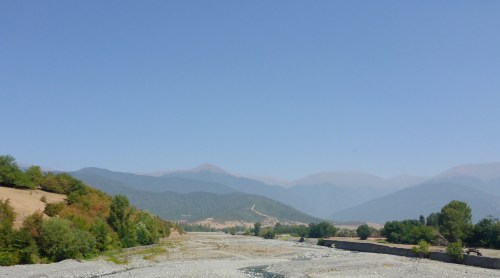
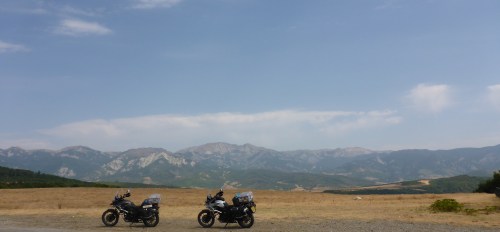
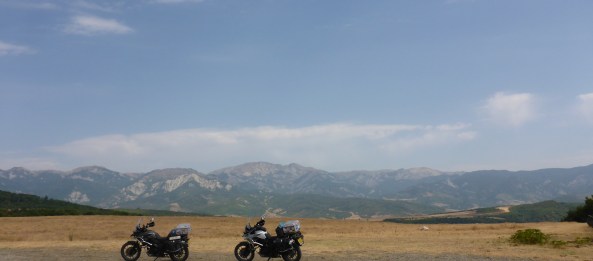
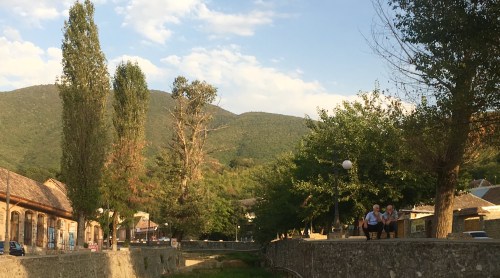
Looking north to the Central section of the Northern Caucasus mountains

We are in the Autumn of our trip, we will be back in the UK in about 5 weeks. Since we crossed the Caspian Sea, we do not feel the same remoteness that we have felt in Siberia and the ‘Stans’. We are gradually re-entering a more densely populated and developed part the world and this feeling will intensify as we continue westwards. With so much to see and do in the next 4,000 to 5,000 km, we will have to make even more choices and compromises. We have decided however that we will look to focus our time between Azerbaijan and Istanbul, while other points of interest closer to the UK will have to wait for another adventure.

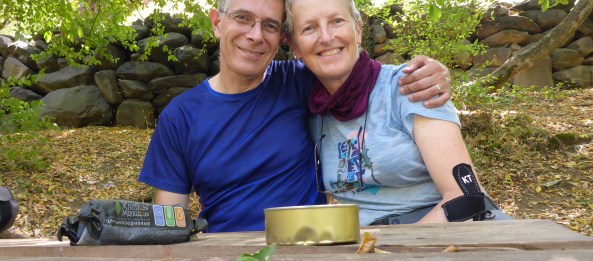
Stop rambling you say, ‘where’s the beef?’. I know pictures, people and prose are what you are looking for, well I was trying the last one. Today, 31 August, is the Anniversary of the day Anne & I first met back in 1974 in Fayet, a small village outside St Quentin in Northern France. How will we celebrate the day? For the girl who has everything, me of course, and how about a nice border crossing to start the day off.

A leisurely three hours to the border, with some gravel and broken tar thrown in remind us that the back roads are not all smooth sailing, with the dappled sunlight and patterned cow droppings, it is hard to spot every pothole and Streak and Storm bottom out from time to time. The smell of freshly dug earth fills my senses at one point, such a change from the dust we have endured for a couple of months. As Anne says, she has had our fill of browns and now want green to dominate the landscape.
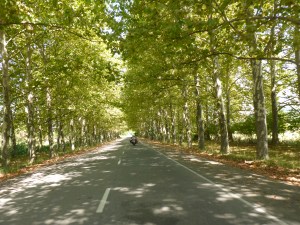
Tree lined splendour


Curing tobacco
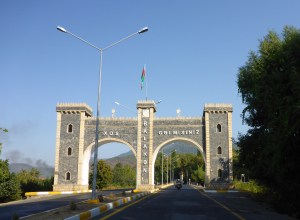

Every town should have one
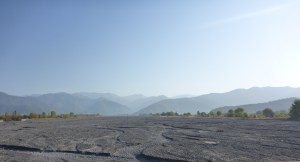

Rivers are wide and gravel filled


As we come to leave Azerbaijan, we are still grappling with priority at roundabouts / traffic circles. We have worked out that the largest road had priority, but who decides what is the largest road, each driver I suspect and they may have differing views.

“Passport”, “Open bags”,”Check Everything”, I am starting to tire of the officious nature of some of the border crossing staff. They seem to enjoy the power of being able to order one around, but then when they have all your bags open, just give a cursory glance at the top of the contents, loose interest and move on to the next victim. I would have greater respect for them if they did their job properly, even if it meant a more diligent search of my possessions on a random basis.

Georgian Immigration is done while we were on the motorcycles, a first in this part of the world. Another first “Can we see your driving licence”. Since we set off in 2014 on RTW version 1 till now, no one has ever asked to see a driving licence. Passport, vehicle registration, insurance, yes, but never a driving licence. Good thing we had one. Also no time consuming ‘temporary import documents’ to fill out, just “Welcome to Georgia”. Makes one feel good.

Azerbaijan ‘Daadaas’ changed for Georgian ‘Daadaas’, at the border. I guess I need to explain that one. When we travelled overland from London to Cape Town in 1982/3 using public transport and hitchhiking, we met Stan from Newcastle NSW. He coined the term ‘Daadaas’ as a generic currency name as he would forget the name of the currency of the country he was in. It has stuck with us ever since.

Georgia seems to have better defined villages than Azerbaijan, where it seemed like every house wanted to be on Main Street which has led to very, very long villages and about 50m / 150ft between the end of one village sign and the start of the next. Here they allow a measure of countryside between them which is much more pleasurable to ride.
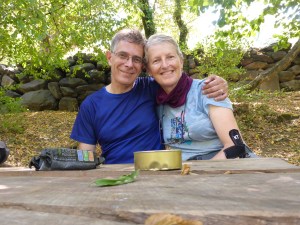
Anniversary lunch
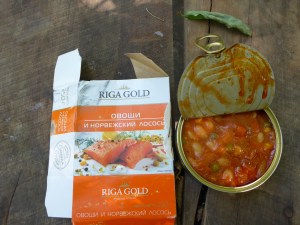

Lunch Advertising vs reality, hmmm…


High on a hill we spy a church, and soon thereafter a sign to a monastery. Perfect place to stop for an anniversary lunch. We eat our sumptuous meal in the picnic area below the Nekresi monastery. The Church dates from the 4th century AD, built by king Thrdat. The church has been restored in recent years.
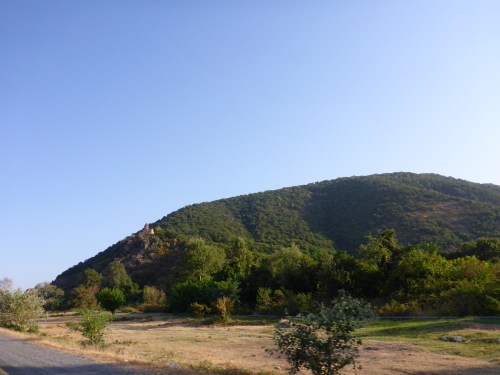
Nekresi Monastary high on the hill


One cannot ride up to the monastery, but a bus will take you up, but only when there are 10 or more passengers. We convince four Russians that if we buy the extra four tickets between us, total cost US$2, the bus will go with 10 tickets sold. With a little prompting of the driver, we are correct and off we go. For those followers who rode with us in Myanmar up to the Golden Rock on my birthday in 2014, you will understand the steep nature of the road and the tight hairpin bends. It seems as high as Tigers Nest in Bhutan. Why do religious orders build their homes in high difficult to reach places, to give us all heart attacks while visiting? It was a worthwhile stop.
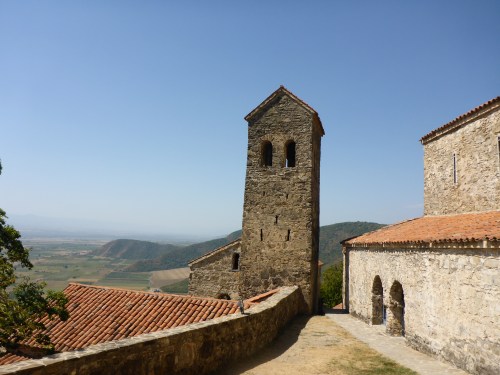
Nekresi Monastary
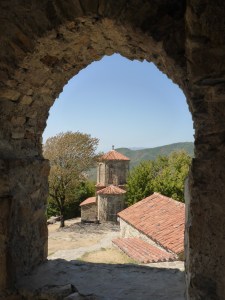

Nekresi Monastary


Nekresi Monastary
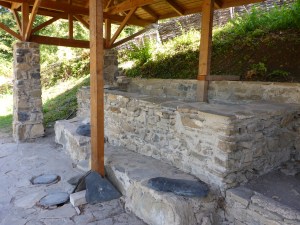

Where the monks used trample grapes to make wine at the Nekresi Monastary


We have noticed a significant number of older Mercedes Benz motorcars here, usually driven at high speed, not always under then control of the driver, we see fishtailing or power-oversteer as older Mercedes Benz take off or turn in from sideroads. Can the manufacturer look at some form of speed limiter based on age and location of the vehicle? Must be easier than self driving cars?

Onward to Tbilisi, a mixture of old and new buildings make up this city which is split by a river and constrained by low hills on both sides which makes for an interesting and at times challenging route to our hotel, which is in a complex that was once a winery – an excellent choice by Anne once again.

Dinner is served and we relax in the grounds of this old winery, 43 years since we met, that’s worth celebrating.
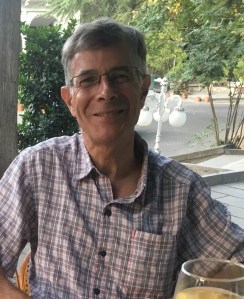
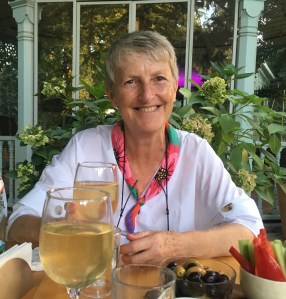
– Anthony
Surprising Azerbaijan

Riding into Baku felt like being in Paris, wide treed boulevards, gorgeous buildings and some pretty fast drivers. I haven’t seen anything yet, but I have a good feeling. After our little cruise across the Caspian, we are hot, sweaty and no doubt stinky and we can’t wait to get to our hotel and get a good shower. “I see your booking, but how could you have booked when I marked the hotel as fully booked this morning?”. We had booked only less than 2 hours ago at the port but the hotel is fully booked. The receptionist kindly organises another hotel for our first night, but that means walking “just 5′ away”. It felt like much more than that, even with someone helping us carry our bags. We had more bags than usual because we hadn’t repacked the bikes properly from the ferry crossing so our pillows were in the camping bag. Usually, we just have one day pack each that we take off the bikes. Sometimes we definitely feel our age!!

Arriving into Baku along the boulevard


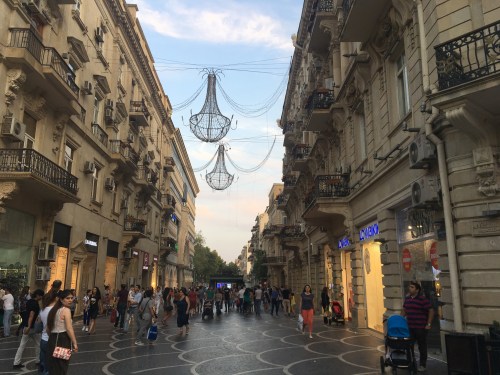
After a good shower and a short rest, and dinner, we are ready to explore Baku city centre. It is Sunday evening and the Fountain square is alive, with a live music band, people going for a stroll, selfies being taken everywhere. This place has a great buzz. There is such an ethnic mix of people. I hear Iranian spoken – we are so close – such a pity the huge detour we had to make because Turkmenistan wouldn’t give us a transit visa means we don’t have time to go there from here now…

This is just the entrance to an underpass in Baku, Azerbaijan


Evening entertainment in Baku Fountain Square

Baku, Azerbaijan


As usual, I have a little ‘tour’ of Baku planned for us the next day after moving some stuff back to our original hotel. First a walk through the old city as the history of this country which we are visiting for the first time is fascinating. The indented section below is my crude attempt at a synopsis of Azerbaijan’s history so you can skip if not interested.

Located at the heart of ancient civilizations, Azerbaijan has been invaded and fought over by many empires and rulers, including Alexander the Great, the Roman general Pompey, the Mongol conqueror Genghis Khan, and Russia’s Peter the Great. In the 4-5th century BC, the Zoroastrian religion dominated in Azerbaijan until the 3rd century when Christianity became a principal religion then came under Muslim rule in the 7th century. Today, Azerbaijan is home to more than 70 different ethnic groups.

Azerbaijan is an important part of the Silk Route being the gatway between far away China and distant rich Europe, and a bridge in the Caspian region connecting the Caucasus, Middle East and north-eastern Europe.

Established in 1920 as the Azerbaijan Soviet Socialist Republic (SSR), from 1922 to 1936, it was part of the Transcausasian Socialist Federative Soviet Republic (SFSR) together with the Armenian SSR and the Georgian SSR. In December 1922, the Transcaucasian SFSR became part of the newly established Soviet Union. Then after a disputed referendum, Azerbaijan adopted its declaration of independence from the USSR on 18 October 1991, before the dissolution of the Soviet Union on 26 December 1991. The politician Heydar Aliyev became the President of Azerbaijan in 1993 and successfully stabilized the country and a ceasefire between Azerbaijan and Armenia was signed in 1994, which ended the war. However, 20 % of Azerbaijan is still occupied by the Armenian military and the two countries are in a state of war over the disputed territory of Nagorno-Karabakh – an internationally recognised part of Azerbaijan, but a defacto independent state with Armenian ethnic majority.

Azerbaijan has had a rich, complex and turbulent history and continues today…

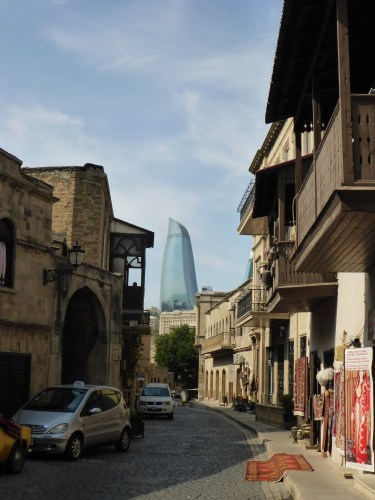
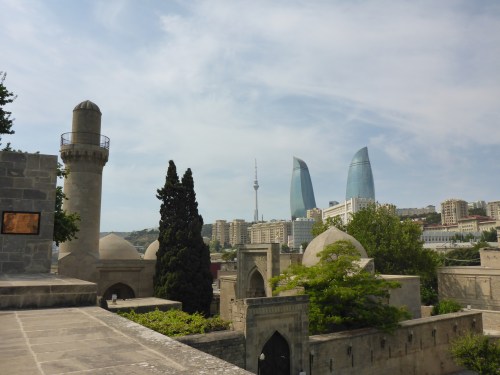
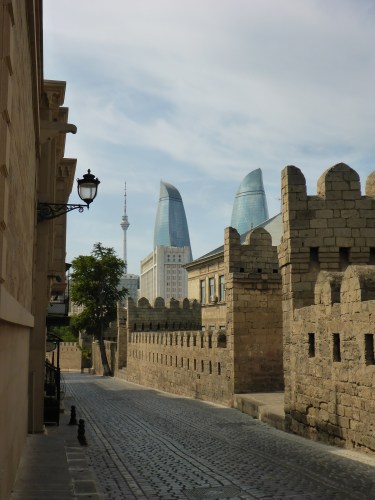
From Baku old city

From Baku old city

Baku, old and new

Baku old city

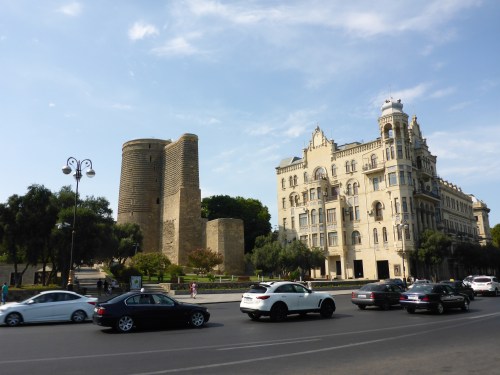
Maiden Tower, Baku


One of 1000 aubergine London cabs ordered by the president


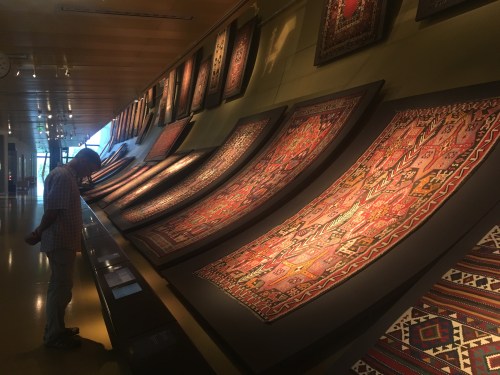
Next stop is the Azerbaijan Carpet Museum. Yes, a museum dedicated to carpets!!! Our friends know our weakness for rugs so will understand I could not pass up on the opportunity to visit a museum that has the largest collection of Azerbaijani carpets in the world. And look at the building too!!

Carpet museum, Baku

Fabulous Carpet Museum, Baku

Some modern carpets, while maybe not our style, were amazing.

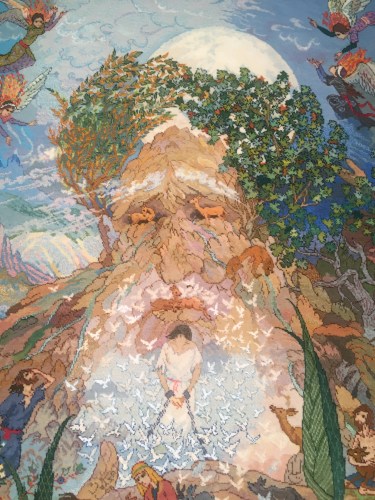
Carpet by Eldar Mikayilzade, Carpet museum, Baku

Close up of carpet by Eldar Mikayilzade, Carpet museum, Baku

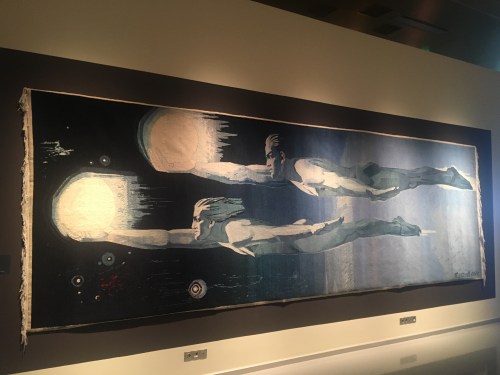
This was my favourite contemporary one:

6m long carpet of “For You, Humanity” by Salahov (1961) – Carpet museum, Baku

We did a lot of walking around Baku:

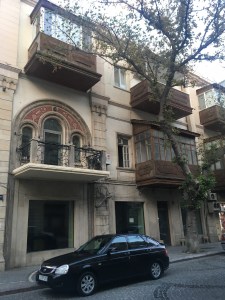
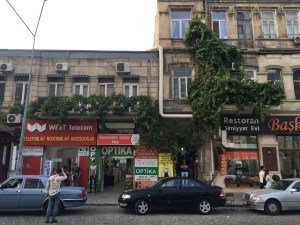
Baku architecture

Saw so many such single vines in Baku

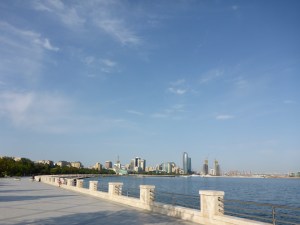
Baku Boulevard

Baku Boulevard – with oil derrick

Azerbaijan flag, Baku

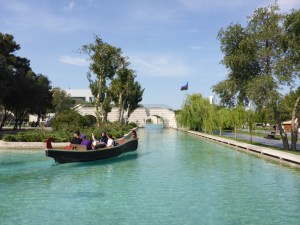
Baku Boulevard – little Venice


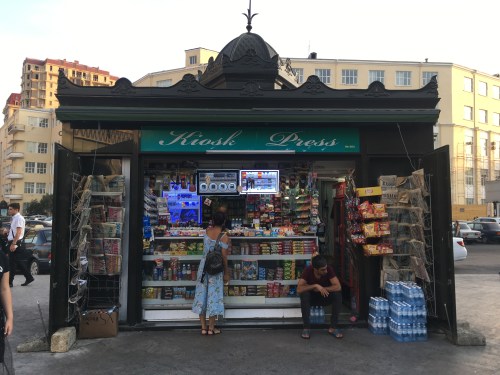
The first press stand we have seen since leaving Korea

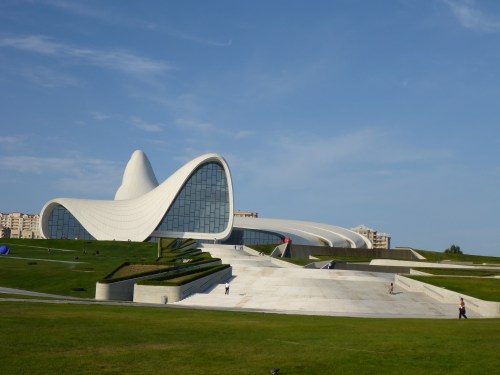
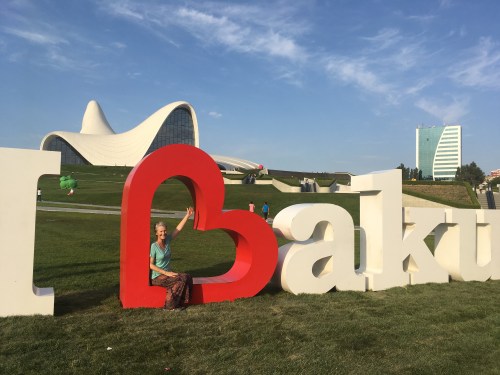
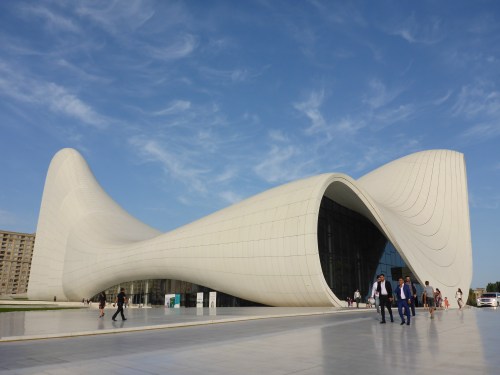
Heydar Aliyev Centre, Baku designed by Zaha Hadid

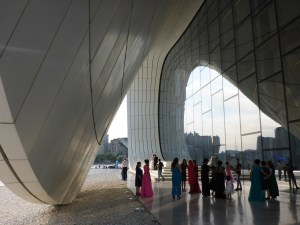
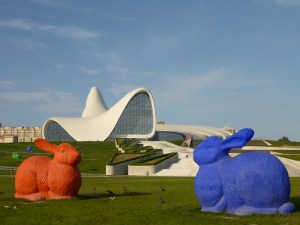
Heydar Aliyev Centre, Baku

Heydar Aliyev Centre, Baku

Heydar Aliyev Centre, Baku

#I❤️Baku!!


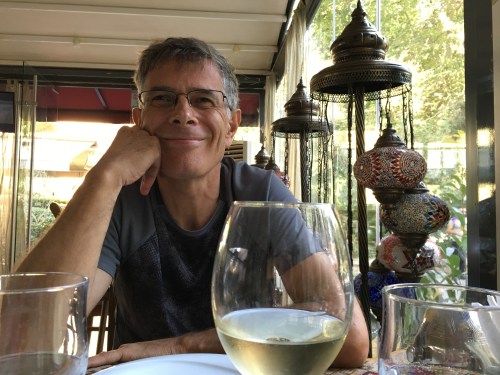
Enjoying a great meal and Azerbaijan wine

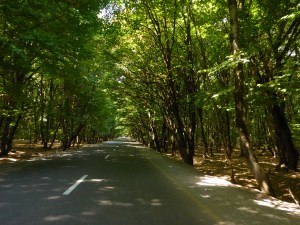
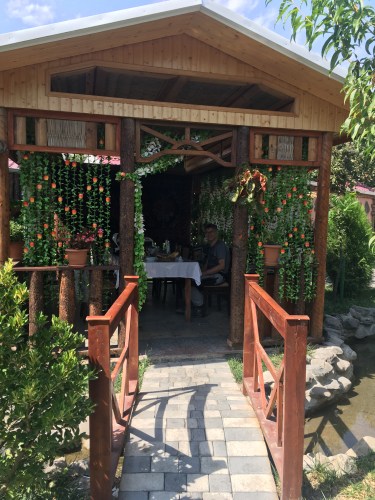
After 3 nights here, we leave our hotel in Baku early and it is not long before we get to the city limits and hit the hot desert again. We ride past many impressive volcanos – we could have visited mud volcanos and seen ancient petroglyphs, but we are desert-worn! Kazakhstan did that for us. We are ready for greener scenery so we happily push on towards our next destination of Sheki. It was a very pleasant day’s ride, going from desert to hills, we see the start of the Great Caucasus mountain range to our right, small hill top villages selling fruit paste and honey and as we go down again, grapes! We stopped to refuel and checked a few coffee shops for a mid-morning snack, but all coffee shops were simply tea houses, with groups of men either chewing the fat or playing their local game of backgamon – we could hear the loud clacking of each move from far away! Nothing to eat, we snack on some chips/crisps and cold drinks and we move on. As we ride through a gorgeous oak forest, the light shining through the bright green leaves, we smell the waft of barbecued meat coming from tiny stands in the forest shade – it was tempting to stop but knowing it was likely mutton, again, with maybe a ‘salad’ of raw onion to accompany it, I preferred pushing on. I have often thought on this trip that I could nearly be vegan (except that I do love fish and chicken is ok). Mutton dumplings of various shapes over the last few months are something I will not miss but can smell when I think of them… We were about to stop and have one of the canned fish meals I had bought for our Caspian cruise, when we spot our first real restaurant. Not what we expected from the outside at all! A real little oasis of running water stream, and private shaded huts scattered in the large garden. The bread, which we found out as we left the restaurant was baked onsite, was the most delicious bread we’ve had on the whole trip!!

Leaving Baku

Fruit paste and honey for sale, Azerbaijan

Good spot for a stop in Azerbaijan

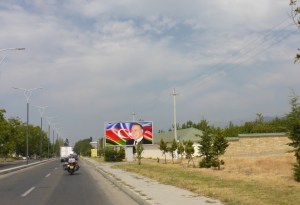
The Azerbaijan president, Ilham Aliyev, is everywhere in Azerbaijan

On our way to Sheki, Azerbaijan

Picked a lovely spot for lunch on our way to Sheki

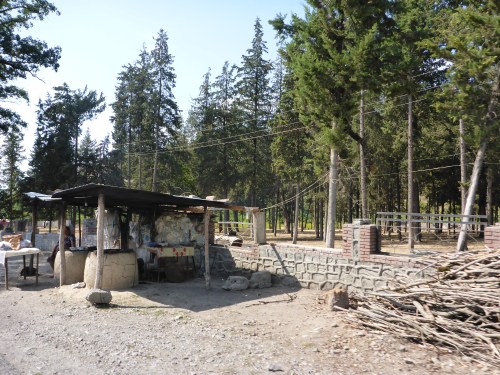
Fresh bread making at the restaurant we stopped at, Azerbaijan

Fresh bread along the road to Sheki, Azerbaijan

I had read about the medieval town of Sheki with its cobbled stones and stunning palace surrounded by densely forested mountains. Those sites didn’t disappoint, but it was the unexpected gem we stumbled across in a non descript side street in the ‘new town’ that we will remember as a special moment.

One of the most ancient settlements and cultural centres of Azerbaijan, inhabited by the Saka’ tribe in 6-7BC, Sheki was founded more than 2700 years ago at the southern slopes of the Major Caucasus Mountains Chain. Throughout its history, like the rest of the country and region, Sheki swung between independence and foreign domination. In earlier centuries, Sheki was the seat of an Albanian kingdom, which was invaded repeatedly by the Persian, Roman, Parthian, Arab, Mongolian, and other empires. Then Sheki fell under the influence and often the direct rule of Persia or the Shirvanshahs of Baku. Shortly after the 18th century collapse of the Safavid Empire, Sheki became the capital of the independent Sheki Khanate, but Sheki’s independence did not last long: it was absorbed in the early 19th century by an expansionist Russian Empire. Sadly, due to Sheki’s tumultuous political history, the majority of Sheki’s preserved historic and architectural monuments date from only the 16th to 19th centuries.

Sheki was famous as the city of craftsmen on the Silk Road where merchants and traders used to gather. Large caravanserais, each with over 200 rooms, were built for the convenience of merchants and their goods. Today, 2 of the 5 built have survived. In Sheki caravanserais merchants stored their goods in cellars, traded on the first floor, and lived on the second.

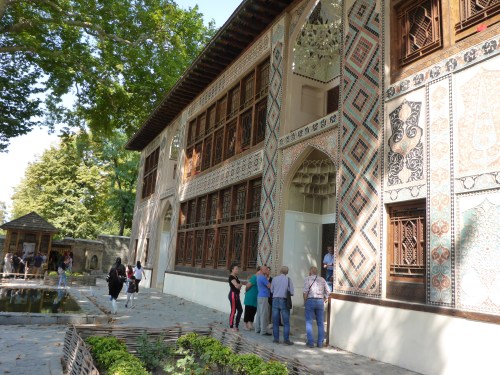
The Palace of the Sheki Khan, is a magnificient work of Islamic architecture. Located high on a hill overlooking the old town was built in 1762, without a single nail or drop of glue, according to legend. The two-storied summer residence building is decorated with magnificent frescos and exquisite stained glass work, known as ‘shebeke’ or ‘shabaka’. The main visiting hall, reserved for important visitors and designed to intimidate them, to make them aware of the Sheki Khan’s power and wealth, features delicately painted murals, one 24m long, of weaponry and military banners, hunting parties and dragons—the latter a motif heavily influenced by Azerbaijan’s trade with China.

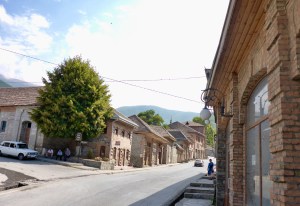
The day we arrived, we had a short stroll towards the old town.

Sheki, Azerbaijan

Chewing the fat in Sheki, Azerbaijan


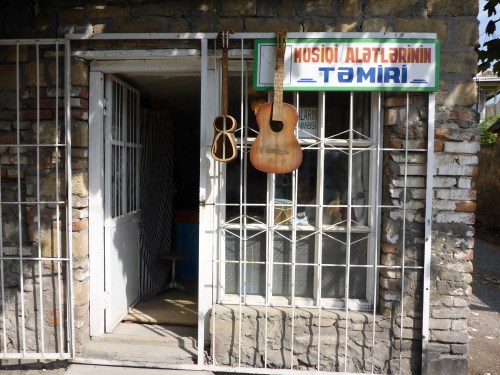
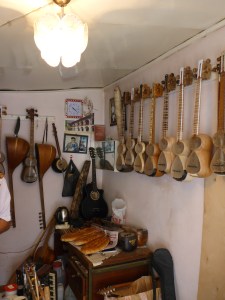
As we walk past this little shop the next morning, I notice musical instruments on the wall. I stop and look and see a man working. I cannot resist entering and asking if we can watch him. He immediately gets different items in various stages of completion to explain how he makes the various folk instruments. And then he proceeds to play! What a treat. His mate who was sitting in the corner picks up another one and plays a different piece. A magical moment. It has made our day.

What a gem inside this little store, Sheki, Azerbaijan

Azerbaijani folk instrument maker’s studio/shop, Sheki, Azerbaijan

Fresh cow heart skin makes the sound box of this folk instrument, Sheki, Azerbaijan


Press the play arrow in the photo below to hear traditional Azerbaijani music:

But onto the old town to see the ‘must see’ sights.

75% of cars, very old Ladas, seem to be taxis here in Sheki, Azerbaijan

They love their sweets and local baklava here – Sheki, Azerbaijan

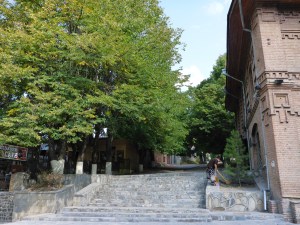
Sheki, Azerbaijan

Sheki, Azerbaijan

Sheki, Azerbaijan

Caravanserai, Sheki, Azerbaijan

Palace of the Shaki Khans, Sheki, Azerbaijan

That was a hard walk up to the plalace – it is hot here again today – but definitely worth the effort (pity no photos were allowed inside the Palace) and most definitely time for a late lunch. The outdoor shaded restaurant we spotted at the back of the caravanserai seems like the perfect place.

– Anne

Caspian Sea, shore to shore

‘Why did you come to Aktau?’ asks Micheal a Russian guest at our hotel. A fair question when you look on a map and see Aktau on the shores of the Caspian Sea with no obvious reason to visit here and it is a long way by road from anywhere.

We explain we are in Aktau to take the ferry to Azerbaijan. Micheal, who comes with his family for the beach which is the nearest to drive to from the Urals in Russia where they live, starts to tell us of the various interesting geological features that exist in the area, none of which we were aware of, or had found in any English Language search of the internet. As we have found time and time again there is always something of interest wherever you are going.

Michael from the Urals at our resort hotel


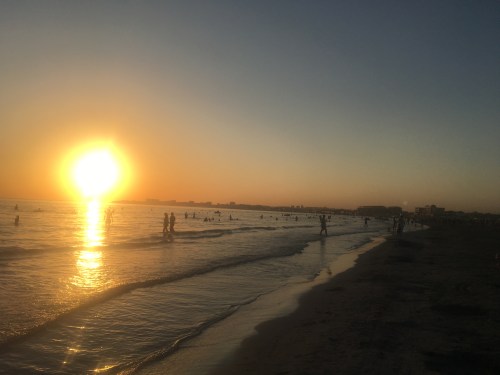
Glorious sunset over the Caspian Sea


Our hotel and beach near Aktau port


After registering our bikes and us, at two separate locations 11kms / 7 ml apart, port and city respectively, we spent three days in Aktau, mostly relaxing at our resort hotel as we waited for the call to say a ferry is on its way. This we understood is standard practice here as the local offices have no idea which ship is coming until it departs from Baku, and seems to depend on the demand from trucks wanting to cross. There is no schedule. When we left the port, I noted some 30 vehicles on the screen in the port office, but only 24 were scheduled to board that night.

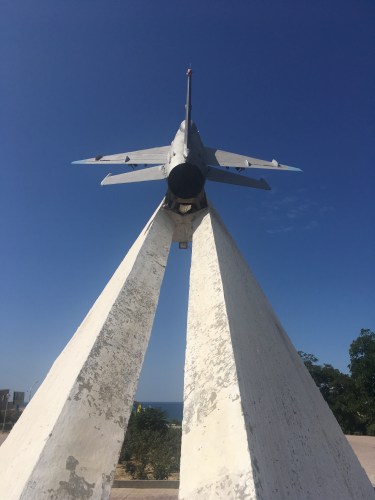
Mig 21 in Aktau park


Mig 21 takes to the skies in Aktau


No streetnames here, just block and building numbers, No. 32


Soviet era apartments in Aktau


A text pops up on my mobile with the Kazakhstan sim card ‘come to the office between 10 and 12’, which office? We guess correctly: the port office, complete our bill of lading then get our passenger tickets in town. The ship will arrive at about 02:00 and we need to be at the port at 23:00. Not much sleep tonight.

We ride to the port, only 3 km / 2 ml from our hotel, but as we avoid riding at night wherever possible it’s a strange feeling riding in darkness and as we arrive at the port we realise that the empty railway tracks we had seen in daytime that criss cross the port roads are alive with shunting activity at night. Rider/driver beware.

Customs and Immigration processes are documented in Visas and Borders section, only noteworthy item was watching Customs officers trying to search our bags in the dark without any torches: that does not work well, they could see nothing and I could see nothing, it was over pretty quickly.

Rather than our comfortable hotel bed, a short distance away, we spend the early morning hours outside the port office, surrounded by cigarette smoking truck drivers – seems the world’s remaining smokers congregated here. We were waiting with a couple of other motorcyclists and a number of backpackers. We have hardly seen a backpacker on our journey, different hotels/hostels and the fact we never visit train or bus stations means our paths normally never cross. That was us once many decades ago, I am certain I could not lift a backpack like that anymore. Ahh nostalgia….No I do not miss the cheap backpacker hostels with old beds and no air-conditioning, maybe I have become soft but I like my comforts.

Dawn is breaking and we are close to leaving Aktau


Just before departure from Aktau


We have packed food and sleeping bags to take onboard, as have others because there is no information on sleeping arrangements or food availability on the ship. Shows how little information is available on these crossings, better to be prepared.

Great to be on our way soon


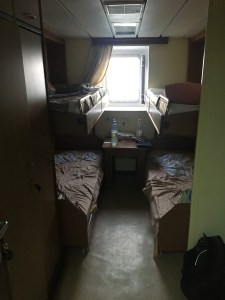
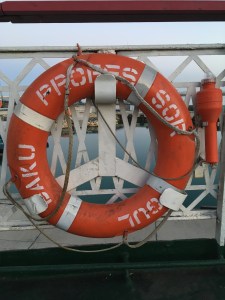
We get on board our ship, a RO/RO Passenger ferry called ‘Professor Gul’, as the eastern sky gets that early morning glimmer of light, unfortunately Storm is having difficulty starting, we get there, but sounds like a problem to be looked at in Baku (turns out that the battery was run down: did someone fiddle with my spotlight switch while the motorbikes were waiting to board?). A four berth cabin, a surprise, is allocated by an unpleasant woman who wants as many people to a cabin as possible to save cleaning, and opens as few toilets as possible (3 male toilets only) to save work. Very different attitude from the kitchen staff who work hard to give us wholesome food at each meal time. We end up sharing with a Dutch motorcycle couple on a pair of Royal Enfield’s who started from Australia over a year ago heading to Europe , even slower travellers than the 2slowspeeds! Sleep overtakes us.

Our snug cabin on the Professor Gul


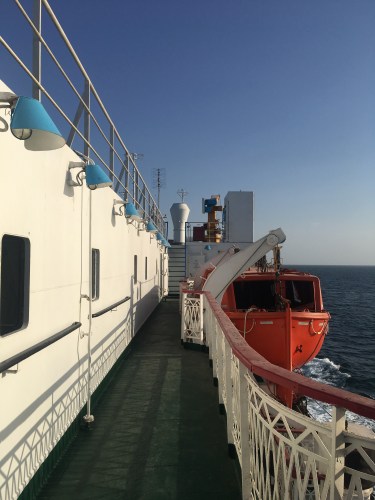
A calm sea greets us when finally awaken in the early afternoon. The cabin is warm, the newly installed air conditioning system is not working, I hope better goes for the lifeboats, at least they have a checked date of 16/07/2017 painted on them from the last major overhaul. Luckily, we can open our window and our cabin door does not close so we have a through draft. Hopefully we will not need our Personal Location Beacon (PLB), a smaller version of an EPIRB, which we have dug out the top-box just in case.

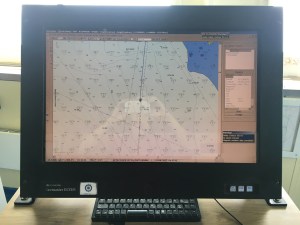
“Don’t know what this means” the officer in charge told Anne


1986 built Professor Gul instruments


“Now was it turn left or right?” Anne wonders while all alone on the bridge, “


Vacant bridge, Anne is in charge, gulp….Ok so she has flown an RAAF C130-H for 45 mins.


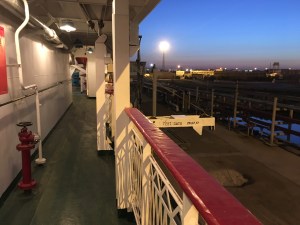
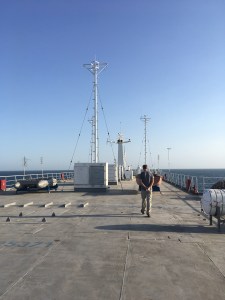
We start to wander around, seems we could go anywhere except the vehicle deck, but the heat and noise emanating from the fully opened engineering hatches is enough to keep me topside. It must be hard working down below in summer. On researching the ship I find it was constructed in Croatia: how did they get a 155m x 18m ship into the Caspian Sea, more research and the can only assume they used the Don-Volga canal, which would have been a tight squeeze.

Professor Gul


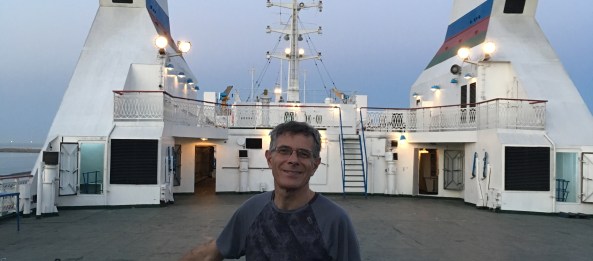
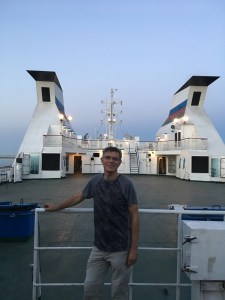
Anthony exploring our luxury cruise ship


Full steam ahead, making smoke


The sea is smooth, great for us fair weather sailors, and we progress without me sighting a single ship. Not the busiest of shipping routes. Day 2 sees us anchored just off Baku, our final destination, by 3am but sadly not the Professor Gul’s. We are destined for the new port of Alat some 65 km. / 40 ml. south of Baku and we eventually move into that direction 5 hours later, and disembarked after 31 hours at sea.

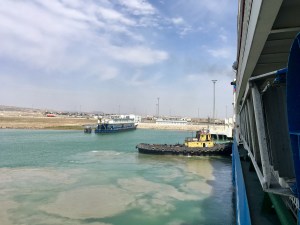
Getting a little help to dock into Alat port


We have nearly arrived in Alat, Azerbaijan


After the usual Customs and Immigration procedures, plus time taken to pay for the motorcycle transport portion of our journey, we emerge onto the nice wide tarred highway and head for Baku.

We have arrived in Azerbaijan

By the way nobody voted the correct date of our departure, which was earlier than even we expected, Friday 25th August 2017. I think some 50+ people viewed the blog entry, but only 11 voted, woefully inadequate conversion rate in my view, I will have to write better operating instructions, or provide a real prize in future, should we decide to hold another poll.

– Anthony
Up to the Caspian Sea

The magnificent buildings in Samarkand and Bukhara visited for the second time in three years will now be added to our store of memories’ record in this blog as we head west again. From Bukhara we have a long haul to reach Aktau some 1,500 km or almost 1,000 ml away. Luckily the temperature is not expected to rise above the mid 30’s celsius. Last time we were here in 2014 it was the mid 40’s celsius, so we are lucky again. An early start from Bukhara, after loading another 28 litres of fuel onto Streak and Storm, sees us wrestle with avoiding potholes close to the city which does not always work as bottoming out the suspension on numerous occasions will testify. Anne has a theory on where the potholes come from, and we now have photographic evidence, they are stolen!

How pot-holes are formed, someone steals the road in pieces


Drivers hoot, flash lights and wave as we slowly make our way slowly westwards of all the ‘Stans’, the people of Uzbekistan are the most enthusiastic towards motorbikes. We also pass a bad accident, one car wrecked on the road, another in the field nearby, probably a front-on looking at the damage, lots of people already stopped so as we move on we are reminded to stay alert.

Waving locals


Beautiful cloud patterns


While we have 14 litres of fuel each extra, headwinds and the fact we are using 80 octane fuel, albeit with a booster additive, means we cannot be too complacent about how fast we travel on the good stretches of road – some fuel we have purchased has sediment which looks like that found in old wine bottles, so do not decant it all into the tank. We do have enough to reach Nukus some 550 km away which we reach after a long day’s riding.

Nukus was once one of the most prosperous cities in Uzbekistan based on agricultural produce but over time diversions of water resources to other regions has reduced agricultural output, and wealth significantly. To the north lies the shrinking remains of the Aral Sea. This was caused by the diversion of water from the Syr Darya River and the Amu Darya River in the 1960’s to support the growth of Soviet cotton production. Work is being undertaken to reverse the damage but it will take decades to achieve. Nukus is a good jumping off point for tours up to the Aral sea bed. Our hotel reception procures more petrol/gasoline, “do you want 91 octane?”. I think they have done this before.

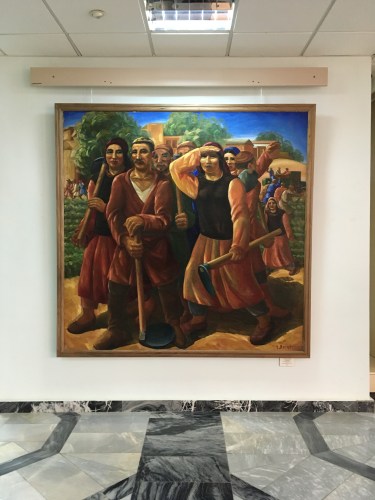
State Museum of Art named after I.V.Savitsky in Nukus


Soviet era art by A N Volkov in the I.V.Savitsky museum


Early morning departure from Nukus


Off to work in Nukus


Extra fuel along for the ride

Time to adjust the extra fuel straps


This may be where the pot-hole pieces came from.


Our crossing back into Kazakhstan from Uzbekistan is relatively painless as borders go, paperwork at a minimum and only a couple of hours’ time. Makes one realise how good the systems we have in place are and the benefits of the EU Customs Union. If Brexit does not come up with an efficient Customs alternative the tailback will reach long past the M20 in Kent.

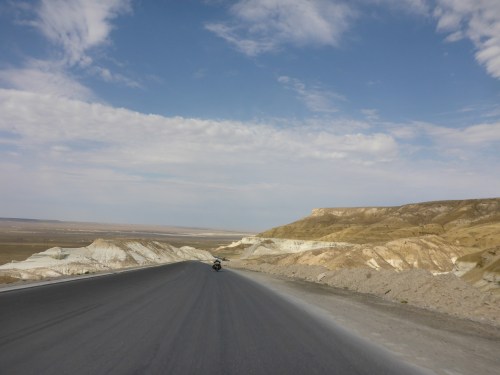
We had heard that the road on the Kazakhstan side was difficult and this proved to be true, it is mostly dirt, which in many ways is easier than pot-holed tar. We tend to be quicker than the cars across this surface, but we are always listening for a telltale rattle that something has come loose. We only have about 45 miles / 70 kilometres of this surface before we return to tar. It just confirms I am not a dirt rider, I will do it, but it gives me no pleasure.
Glad not to be doing this in the rainly season


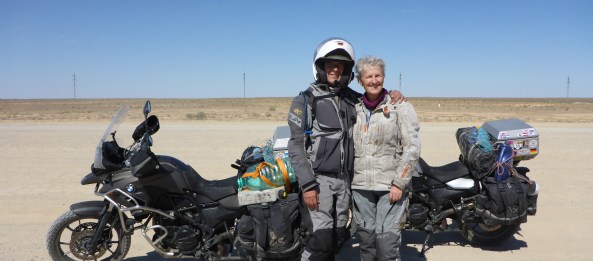
Fellow travellers


Out and about in NW Kazakhstan


Hard to see the road markings here


Go for the gap in the middle


Oil and gas fields that feed Aktau port


We are some 20 ml/32 km from our final destination in Kazakhstan, the port of Aktau, where we will board a ship to take us across the Caspian Sea to Azerbaijan. I glance down at the GPS and see that it has turned into a depth gauge, we are already some 70 meters below sea level! I quickly hold by breath, check for oncoming water from the Caspian Sea that towers above us somewhere ahead at only 27 meters below sea level and try to remember any anecdotal diving information from a friend over long dinners and good red wine back in Manly. Reality returns to my befuddled brain and I I realise I do not need to add a snorkel or oxygen tanks to the fuel and water containers that festoon Streak and Storm, Phew! We are in or close to the Karagie Depression which reaches 132m / 433 ft. below sea level and is one of the lowest points in the world. The name translated from Kazakh is “black hollow”, although the landscape is white and yellow. There are also many reported UFO sightings in the area, although today I think we are the only aliens around.

About to go down below sea level near the Karagie Depression.


We arrive in Aktau, the Caspian Sea now bars our way and we will need to seek passage on a ship to travel further westwards, but that’s for another blog entry.

Anthony