Ghardaia and the M’Zab Valley

From the initial spectacular view of Ghardaia, we descend into the new Ghardaia, ride through the usual chaotic traffic, through roundabouts and over the endless humps and get stopped for only the second time in Algeria but second time today.   Same questions as last time, “where did we come from”, “where are we going”, “where are staying” and “where to after here”. A phone call is made with all this information relayed to someone at the other of the phone and we are welcomed to Ghardaia with a smile. 

A wrong turn in the guts of old Ghardaia sends up a narrow lane, hairpin bend up another steeper lane to find out we’ve arrived at the back of the hotel. A quick U turn and we head back down, nearly into a reversing car on the sharp bend. Anthony swerves to avoid the car and we encounter our first unhappy driver shouting “il en enfoiré c’lui la” at me!!  (He’s crazy that one!).   Finally at our hotel having reversed our bikes off the road, I am totally exhausted and out of breath. This 37 degree heat and exercise is reminding me of my age these days!!  

So why have I been so keen to ride through this vast expanse for the last couple of days to visit Ghardaia?  Well its history, geography and house construction had fascinated me from what I had read.  

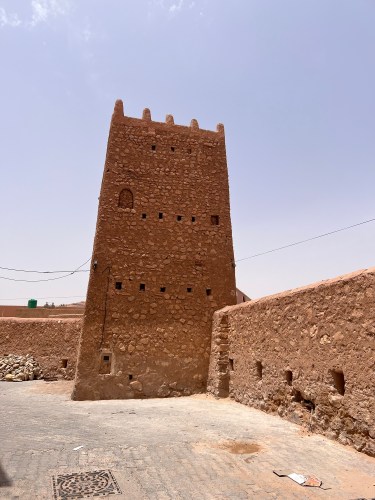
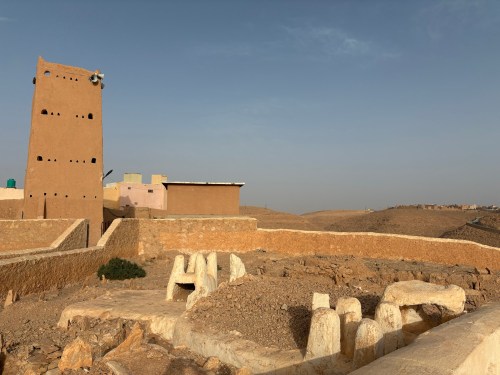
A bit of background first. Ghardaia, a hill top village that lies within the M’zab Valley about 600kms south of Algiers and is part of what is known as a Pentapolis,  comprised of five walled villages, together with Melika, Beni-Isguen, Bounoura, and El Attuf.   It dates back to the 11th century and was founded by the Mozabites, an Ibadi sect of the Berber Muslims. And unsurprisingly, it was declared a UNESCO World Heritage Site in 1982.  All five are similar hilltop mini citadels, each with its own rampart, mosque, watch tower, cemetery.   Ghardaïa and Melika are the only ones of the five that housed not only Ibadites Berbers, but also Malekits Arabs and a Jewish community until the Algerian Independence.  

Arrived in Ghardaia!!

I cannot wait to see and experience this region!

The hotel we’re staying up was recommended to us by several people and I knew was designed by French architect Fernand Pouillon which sounded interesting.   We find out over the next couple of days that it was once a prestigious hotel designed and built in 1970 over the remants of an old fort occupied by the colonial army. It was restored after being closed for 27 years as part of the 67th anniversary of the “Glorieuse Révolution du 1er Novembre 1954”. We also find out that it is now a state owned hotel.  Think Faulty Towers service and you get an idea of what this place is like. The proudly placed large Visa sign on the reception counter is for show – cash only here. Menu prices are wrong, the proper prices (and you guessed it, more expensive) are in the computer.

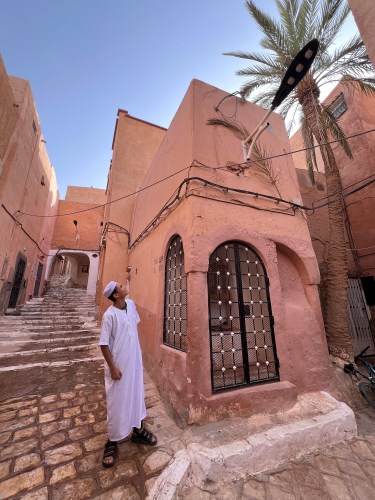
The one thing going for the M’zab hotel is the most stunning view you get over the valley, super comfortable beds and interesting Fernand Pouillon architecture.   When I saw our hotel from the other side of the valley the next day though, I was shocked and even embarassed to be staying there.  While all the buildings around the M’zab valley have a gentle sand colour, this hotel is huge, white (with sand stained water marks down the walls instead of its original traditional colour that blended into the mountain) and looks so out of place. Even the palm trees have been replaced with stainless steel poles (meant to be flag poles but have no flags).  What disappointing “restoration”.  Enough on that. 
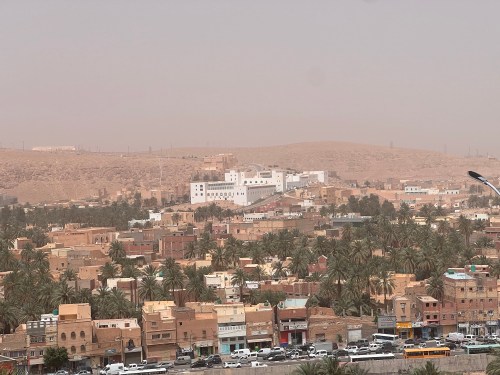
Guess where the hotel is

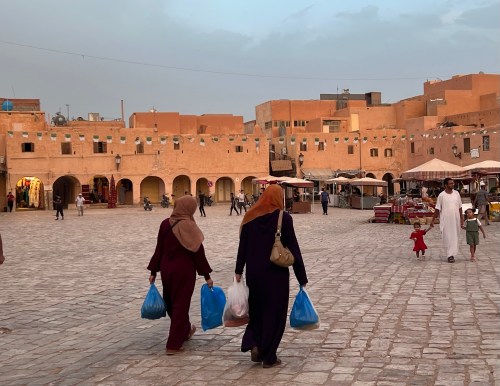
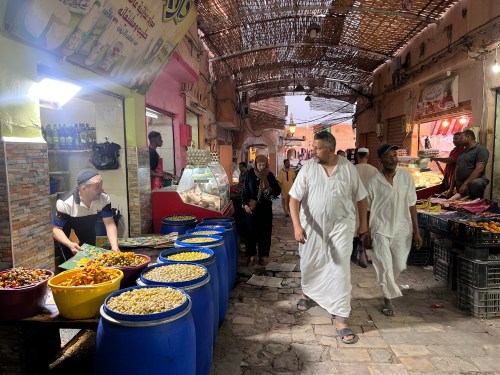
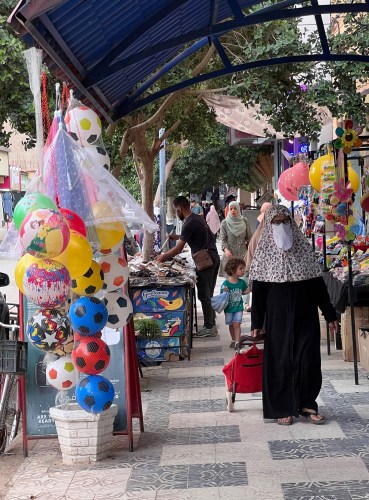
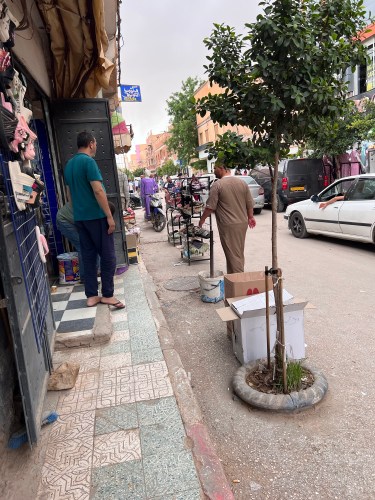
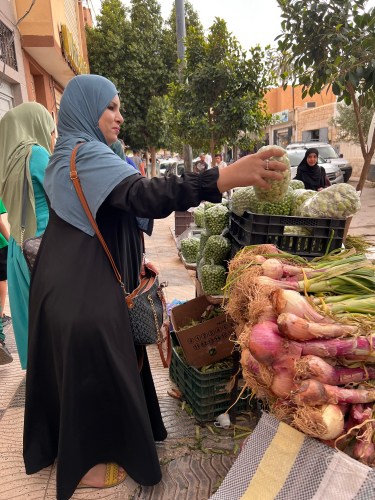
After a shower and a rest, we head down to the old market square.  What a delight. We are welcomed by so many stall holders in the souq as we wander through the narrow lanes.  Bienvenue!  How refreshing to be in such a place and not be accosted to buy something.  The beauty and advantage of little tourism to date.   In fact we do not see a single tourist. 

Ghardaia – view from our hotel
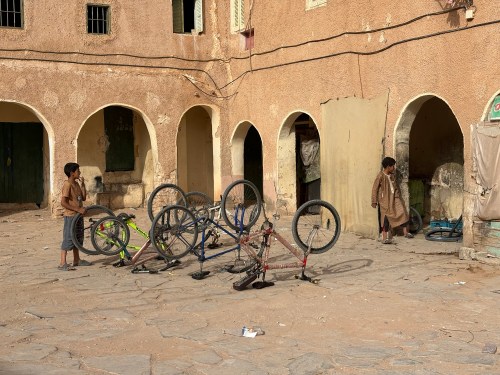
Ghardaia market square
Ghardaia souq
How many have walked over those over the centuries?
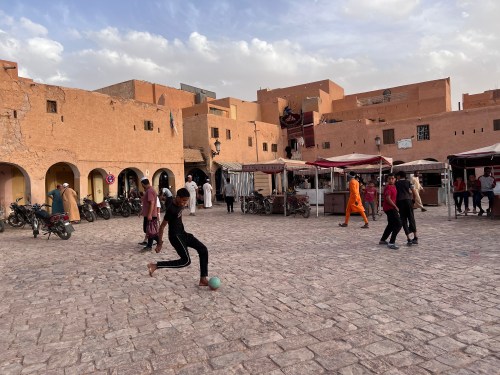
Boys playing football in Ghardaia square

Rachid stopped us in the souq – he is a lecturer here and was shopping. Welcomed us to Ghardaia as all Algerians we cross do, chatted about his job and interest in renewable energy then took us to a drinks shop and bought us 2 cups of a local drink:  Takerwait, a traditional Algerian beverage from the M’zab Valley, is made from a blend of natural ingredients, primarily dates, citrus fruits (like lemons), and a variety of herbs and spices. Specifically, it often includes myrtle flowers, marigold, and other aromatic plants. The infusion is typically sweetened with sugar and known for its slightly bitter and spicy flavor.  It was very tasty. 

Takerwait

After parting company, we continue wandering through the souq and Rachid comes back to us as he wants to introduce us to someone in the souq, even though he is in a rush to get elsewhere he tells us.   We have no idea where we’re going but know it could be interesting.

There in this little store we’ve been taken to, we meet Hamid and Idriz in the souq who both spoke great English.   After chatting for a while, I asked Hamid if he would be willing and available to be our guide. While I had already organised one for tomorrow morning, he only spoke some broken French.  After some phone calls and messaging, juggling our day tomorrow, we now had Hamid picking us up at 9:30am and Hafid at 16:00.   This is getting very exciting.  Hamid will not take payment as it is his pleasure to take us around. Such kindness again.

Thursday morning and we’re excited to meet up with Hamid and discover a bit of this region with him.

Breakfast inside Pouillon’s Mzab hotel
Looking forward to today!!

Hamid was born in Ghardaia and knows the area well.   He picks us up on the dot as planned.  He is an engineer who has worked in various countries and speaks excellent English.   It is nice for Anthony who has missed out on most of the conversations – even though I translate for him along the way, sometimes, it breaks the flow of conversation too much and he really missed out.  

I was keen to see Melika so after being taken to get a bird’s eye view of the entire valley, we head to Melika next.   The views are hazy all day today because of the wind and sand.

Beni Isguen – most sacred of the 5 cities

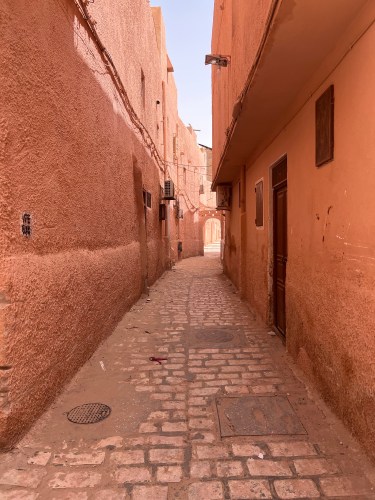
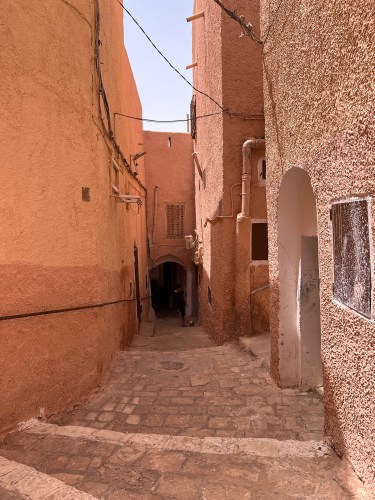
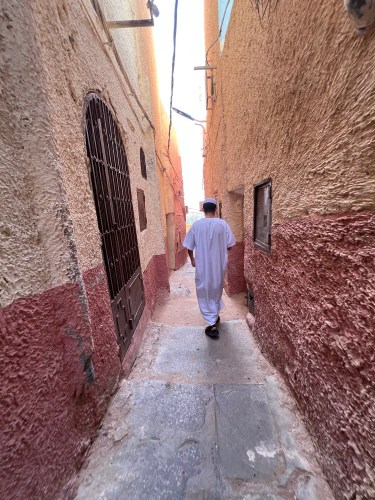
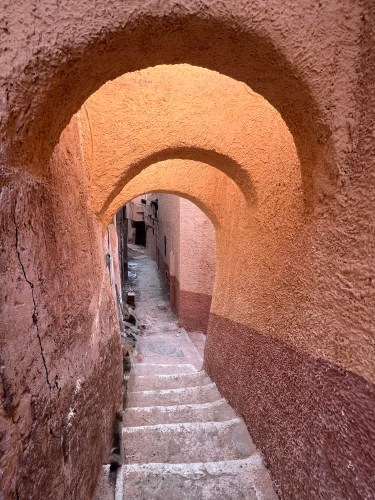
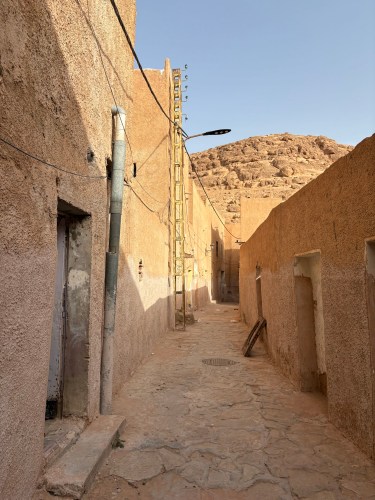
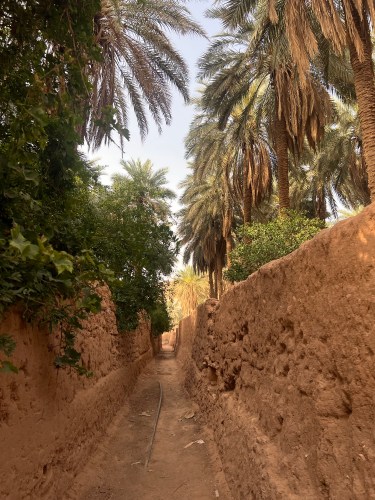
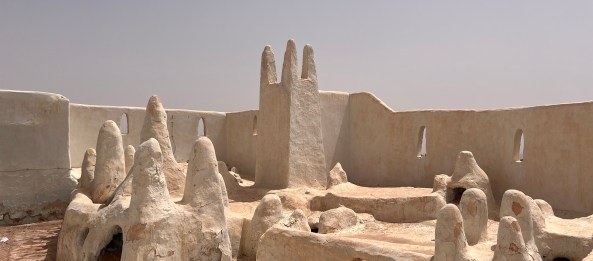
Hamid points out various cultural, environment and defensive designs adapted throughout the pentapolis.  For privacy,  front doors don’t face each other. All buildings are the same height so that one does not look over and into a neighbour’s house and roughly the same size.  I had read that the wall coating is designed to create as much shade as possible thus reducing house temperatures by up to 20 percent.  The walls are covered in little bumps created by first painting the walls with wet clay then thrashing them with the empty date branches. Streets are curved so that winds and sand storms can’t funnel down a street as they would do if straight. The dead ends are to confuse intruders or invaders. And there are no cars within those ancient walled cities.   It is not difficult to see why these ancient cities should be a source of inspiration for urban planners today.  
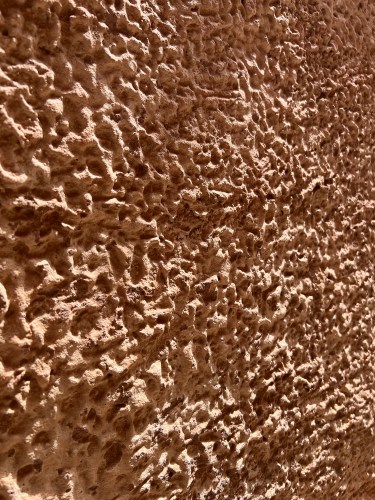
Melika “bubbly” walls
The empty branches of bunches of dates are used to texture the walls
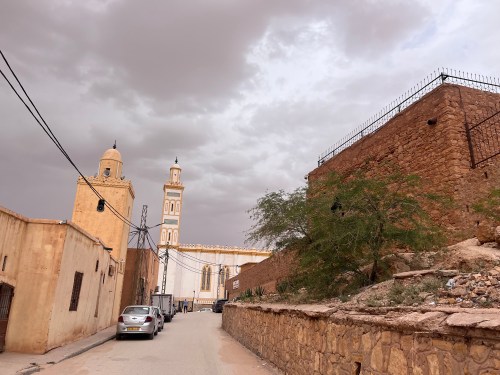
Melika
Melika, Algeria – front doors don’t face each other
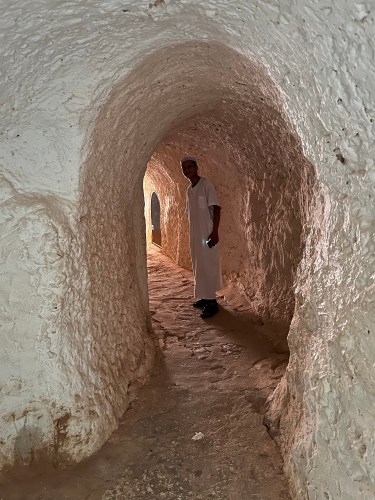
Steps and passage ways in Melika
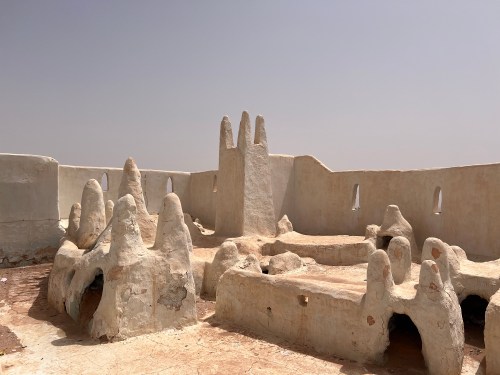
Melika mosque

As we walk around Melika, I know not to take photos of people but really wish I could.   Especially of the Mozabite  women who wear a white shroud totally covering them but for one eye if they are married. I eventually mention this to Hamid who tells me that so long as it is taken from a distance, that was ok which is what I did. Here are a couple of cropped photos.
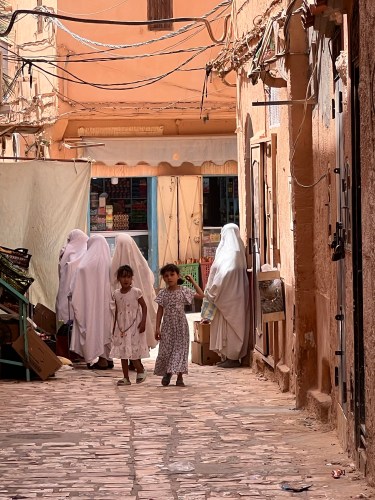
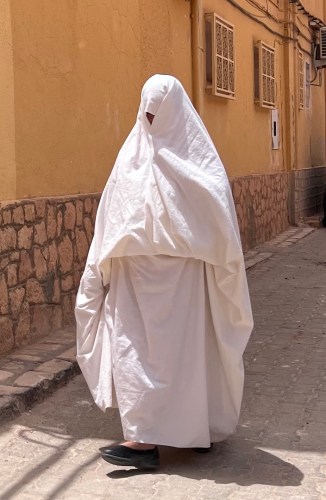
Melika
Married Mozabite woman

After an hour’s walk, we return to the square where there were a couple of shops for some cold drinks.  Anthony counted the money and hands the coins to the store owner. He noticed Anthony put the coins into his right hand before handing them to him and thanks him. He appreciated Anthony’s cultural awareness of not using his left hand. 

Water fountain in Melika
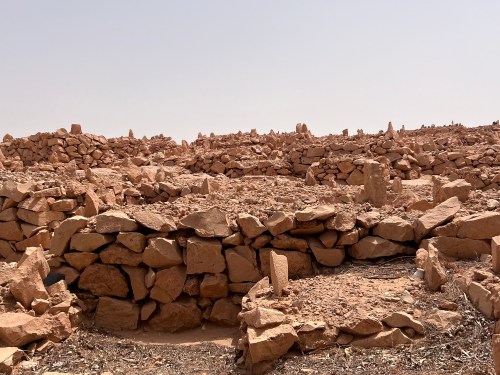
Old Melika cemetary
New Melika cemetary – no name, just a broken pot or item

Our conversation throughout the day with Hamid is fluid going to so many topics, from energy to ancient civilisations, to travel, to life dreams, to today’s generation of entitlement, to his preference to eat fresh organic foods, to Algerian life including finding out why so many buildings in Algeria are unfinished. Algerians like to invest in bricks and mortar.  It doesn’t matter that the house is unfinished – they have placed their investment in something tangible. They leave the exposed concrete rebar so that their children can expand onto their parents’ house. 

At 4pm Hafid picks us up and first takes to an ossis outside Beni Isguen to see a centuries old dam wall that was ingeniously constructed to protect the city from violently flooding Ben Isguen. 

Beni-Isguen, built in the fourteenth century, is surrounded by a great wall of 1525m in length and 3m in height with a thickness of up to 1m at the base and 20 cm at the top.  It is the most sacred Berber Islamic town. It prohibits all non-M’zabites from various sections of the town, and all foreigners from spending the night within its walls. 

We see our first tourists in a week here – so many!  Must have seen a dozen!!  I knew we could only visit this city with an official guide. While Hafid is an official guide, we are given another Ben Isfuen guide to take us around. Very kindly, they have provided us with Taha, a 19 year guide who spoke excellent English. First, we must read a huge sign which clearly states that we must not take photos of anyone.   At one point during our visit, I wanted to take a photo of the market square pointing away from people. But in the distance, there was a child walking away. I had to wait to take the photo. 
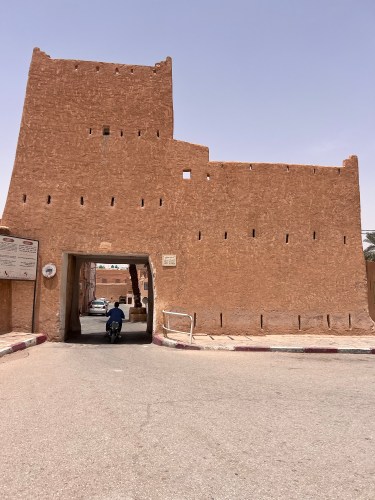
Beni Ishguen gate
Bebi Isguen Mairie where you get your official guide
Look at the amazing wall texture
More steps and passage ways in Beni Isguen
Passage way in Beni Isguen
A palm tree indicates there is a well – Beni Isguen
Bulila tower, Beni Isguen

The next day, Friday, is prayer and family day.  We are perfectly located to hear the Adhan, the call to prayer moving like a wave from minaret to minaret across the Valley around us.  I first heard it from a roof top in Jeddah 20 years ago and I found it quite moving.  For us it is a blogging and bike maintenance morning. Tins of tuna and sardines and corn crackers on the balcony for lunch then 4.5 hours with our guide Hafid for more discovery. 
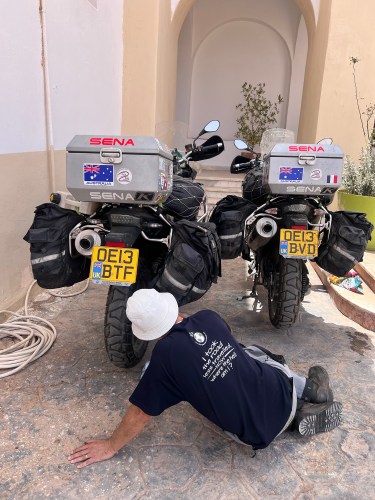
A bit of chain maintenance

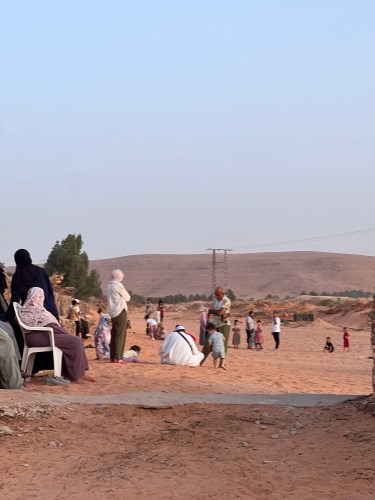
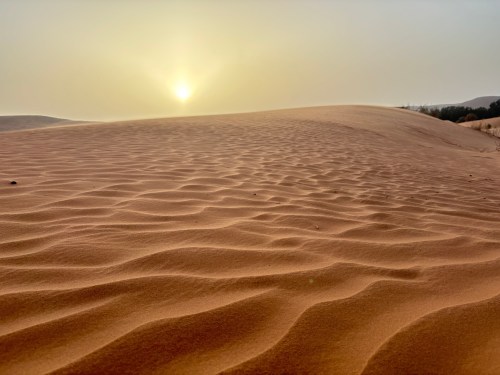
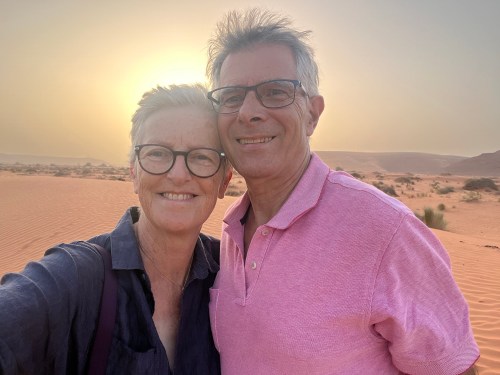
We head to Metlili 40kms away from Ghardaia then onto Sebseb, a spot on the edge of the Sahara sand dunes for sunset.  How lovely to see so many families out together and just quietly sitting there waiting for that magical sunset. Anthony and I head out away from the “crowd” for a little moment alone. How special to be here!!!  We have only been here 2 days, have seen and learned so much over the last two days – our brains are full. Makes us realise we need to change our way of life when we get home and not fritter our precious time away.

Entering Metlili, south of Ghardaia
Big door for the parents, little door for son
Metlili
Metlili, south of Ghardaia
Walls separate different families’ palm plantations
Rock and mud brick wall
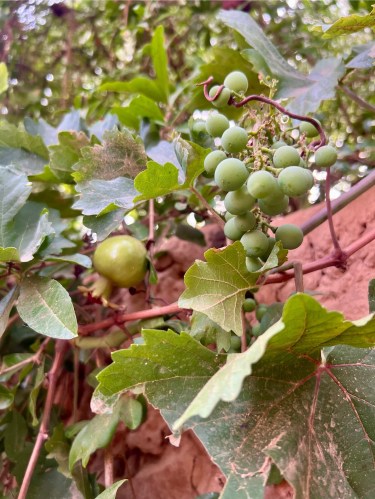
Pomegranate and grapes
Touareg walking in Sebseb
Waiting for the sunset outside Sebseb
Sahara desert at Sebseb
Sahara sunset, south of Sebseb

As we were driving back in the dark, I noticed what looked like thick low cloud or a mountain range in the distance which I knew wasn’t there. I point it out to Anthony as it seems so strange. 5’ later the most violent wind picks up whirling sand all over the place. I thought our sandy wind a couple of days ago was bad – this is heaps worse with visibility near disappearing for a time and impressive buffeting of the car.   At least Hafid did momentarily slow down – not a comfortable ride with no seat belt, at 110kms in the dark up and down mountains. Thank goodness for the smaller places as we get back closer to Ghardia and have to slow down for the hundreds of speed humps. 

We have had 3 different guides over the past two days and they each gave us a different perspective and slant on their city and its history.  What a magical experience. 

Once again, we leave a place having met some very kind people and made some wonderful connections.   We hope we met Hamid again somewhere sometime.   We also hope that tourism doesn’t change Ghardaia and its people too much and are grateful to have been there now. 
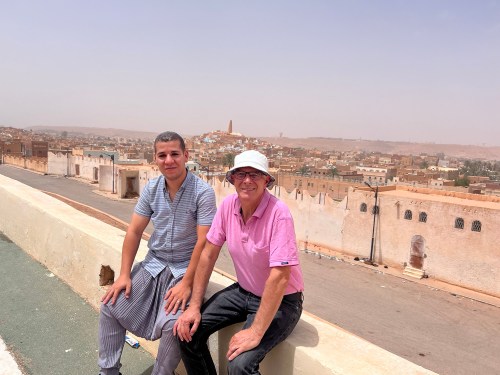
Hamid and Anthony

The wind howled all last night, sand blown into our room and it rained heavily. We get a different clear view of the valley.

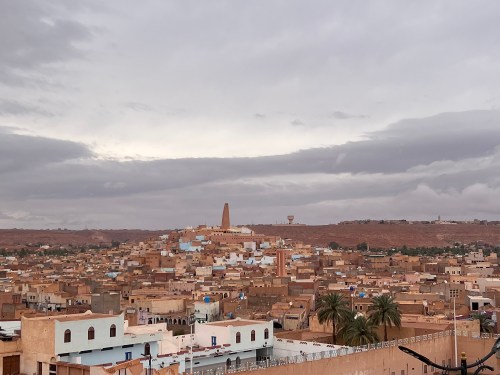
Beni Isguen after the rain
Ghardaia after the rain

What will today’s ride be like?  We have 360kms to cover today to get to Touggourt – yes this is pretty much as far south as we’re going on this trip.   Time to head off and find out what awaits us next.

– Anne

Algeria: a new adventure

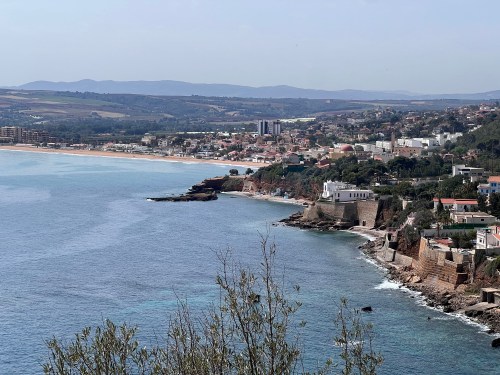
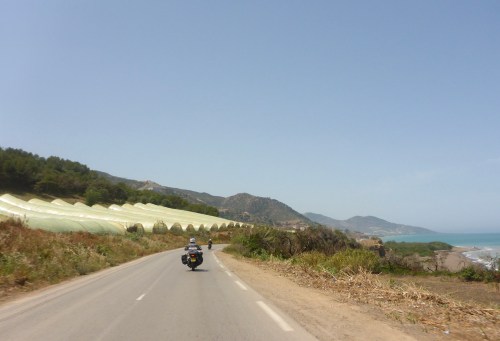
A comfortable night’s sleep and we prepare for the road ahead. After yesterday’s wonderful interaction with local people what will today bring? We are headed along the coast along route CW 109 and RN 11 to Tenes for lunch. This route is highlighted in green as a scenic route on our Michelin map of Algeria. Very quickly we realise that what was once a scenic route along the coast has, been somewhat, in my view, overtaken by human expansion. Plastic greenhouses cover fields and modern, often half completed multi story structures have expanded beyond village boundaries and this growth combined with multiple road humps makes for slow progress.

Leaving Tipaza
Greenhouses all along the coast
Incomplete buildings everywhere

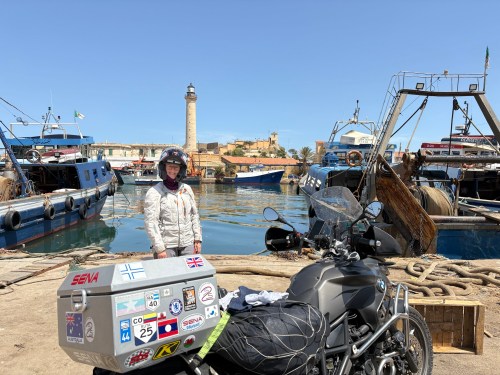
A short diversion into the port at Churchell allows Anne to stand in the same area that her father once visited all those years ago.
Thinking of my father in Cherchell
Fresh fish sold on the street in Cherchell

We realise as the day continues that we are averaging less than 50kph / 30mph due to the aforementioned constraints added to which are the numerous police roadblocks where random vehicles are pulled over for inspection. So far we have been waived through but the queues beforehand again slow us down. We decide to take a different hopefully quicker route to Chlef, our destination for the night.

Damous, Algeria

As we leave the coast at Damous and head inland following the dams that provide irrigation for the multitude of plastic covered greenhouses that dot the landscape, we head up a series hairpin bends into the mountains and I am surprised at the amount of cultivation even on quite steep slopes. I was expecting more wilderness but with the density of villages, the amount of cultivation seems reasonable.

More greenhouses
Glorious road away from the coast
Heading towards Chlef on the RN65
That was a tough day

We arrive a Chlef in 39 degrees heat after a long day on the road and during dinner we meet Dr Soufiane, a neurosurgeon friend of Lamine’s (who we met in Tipaza) – we spend an enjoyable evening in his company, the conversation covering many topics including ancient civilisations, the pyramids of Giza, Siffar in south east Algeria which Anne had heard if but was sadly off our route as too far south. He explains the best routes south, good hotels and other useful tips only a local could provide. If we have any problems on the road we can always call him anytime. In fact he ends up checking on us as Lamine does. The kindness of people in Algeria.
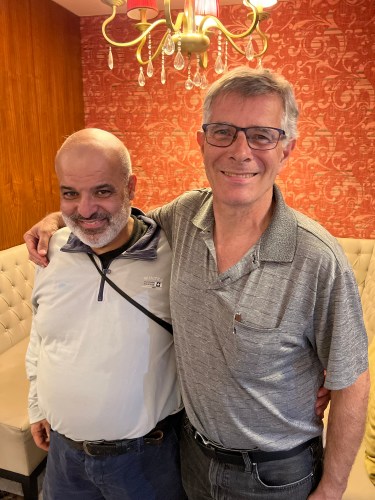
Dr Soufiane and Anthony

For those who remember the aeroplanes that have smoking and non-smoking sections separated by a single seat back, the same applies to floors of the hotel. It does not work. After the discussion last night on roads, we are changing our route going back along the East West Highway and then south on the Trans Sahara, both freeways/motorways, not our preferred travel route but easier to make our timeline in Algeria.

The East West motorway will be a toll road, but not yet for us. Police checks are even here but they seem to be under bridges to stay in the shade.

We have lost count of the number of police checks

We do get one backroad section across country towards Medea which provides a welcome change from freeway driving. Heading south again, we stop in Ksar El Boukhari, first for fuel then lunch. We spot a cafe with lots of people so stop there. They only do drinks but we are provided with a young man to take us to a restaurant 10’ walk away. There, we are taken to the “family room” which is where women go.

Eating in the Family room, away from men in Khsar Boukhari

As we walk up the road, a police man approaches us and welcomes us. Welcome to Algeria. Bienvenue chez nous. Vous êtes chez vous ici. Bienvenue chez vous. (Welcome to our country. Consider this your home. Welcome to your country). He tells us he had seen our bikes and had put two police officers near them to guard them. As we walk back to bikes with him, he asks whether we need anything, is everything ok can he help in anyway. Once at the bikes, we see there are 5 police officers around them!!

As we leave, we get a few specks of rain. The sky is black, in the opposite direction to where we’re going thankfully…. So we thought, for the next hour, we face a mixture of brutal wind, sand and rain showers and are glad to reach our hotel at Ain Oussara.

Glad this storm is behind us
Hard to capture the sandy wind we rode through for an hour

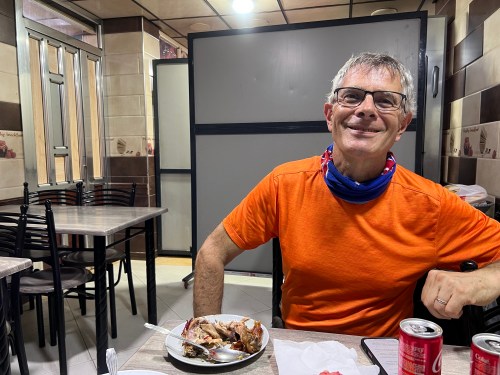
Kebabs for dinner make a nice change from roast chicken and steamed vegetables which have become my simple gluten free “go to” on the road.

Waiting for our kababs with as much bread as you can eat bread in that bag
Our dinner
Our hotel outside Ain Oussara

The Trans Sahara highway south continues to be dual lanes in both directions as we head towards Laghouat. En route to Laghouat we somehow end up embedded in a Algerian police patrol – eight vehicles tailed by an police ambulance are heading south. At times we are encouraged to overtake the vehicles by the occupants even on solid white lines. We do have a technique of overtaking that keeps us on our side of the while line, so all legal hey? “Third Laning” as I refer to it is alive and well in Algeria. At the second police roadblock we are signalled by the convoy NOT to follow them through with them again. Oh well it was fun while it lasted.

Yep, it doesn’t change much
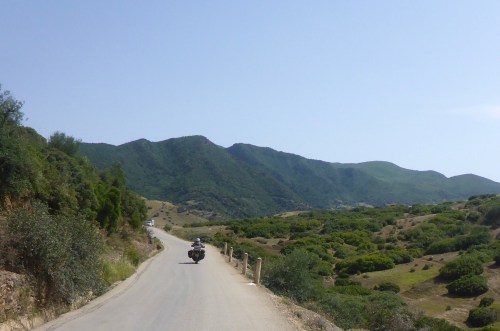
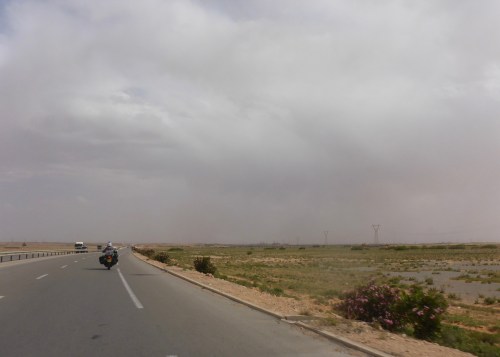
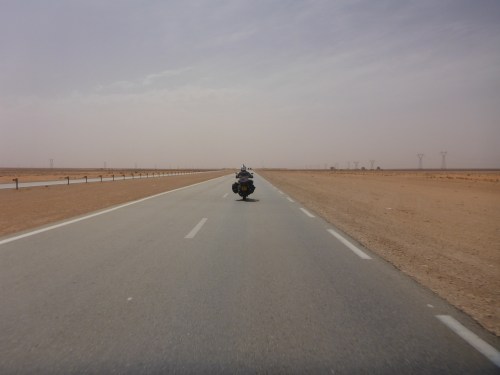
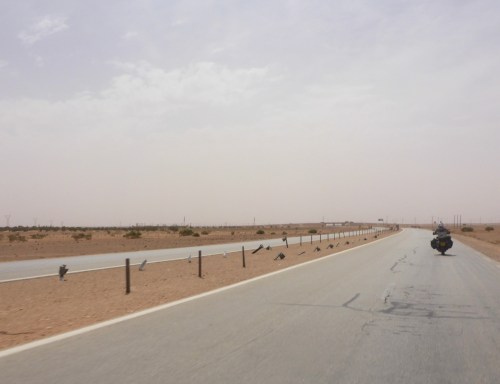
And some more desolate road heading south to Ghardaia
Great road but don’t crash in the same place twice!
Part of a police convoy heading south
Watch out for sand drifts over the road

Here we will have time to explore the old town. A taxi to town from our hotel Sechel Sahara and we explore the fort area, sadly closed and then the Grand Mosque Essaffah designed by Molinari Giacomo guided by our taxi driver who had stayed around to take us back when we are ready. Very kind. We wander down the main street, shops on both sides with stands spilling onto the streets. A chanting crowd approaches and the store holders pull their stands back. A funeral cortège. Everyone stands respectfully as the funeral procession passes by.

Fort Bouscaren in Laghouat
Grand Mosque Essaffah
The Great mosque Essaffah, Laghouat
Essaffah mosque in Laghouat, designed by Giacomo Molinari
Laghout city centre
Those stalls were brought in during the funeral procession, Laghouat
Buying fresh produce in Laghouat

We are intrigued by a perfume store with hundreds of labelled bottles on the wall. We enter and talk to Mohamed, a young guy who has a nose for perfumes. Anne tries a couple and when she says she will get this one, he says he would like to gift Anne the perfume as we are visitors to the country.
Generous Mohammed at Janal Parfums, Laghouat

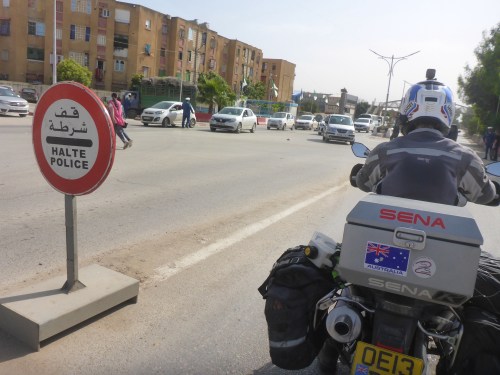
As we head towards Ghardaia we are finally stopped at a police checkpoint. Passport and vehicle documentation are required plus where are we going and staying. Anne always has a photo of the hotel details saved on her phone for convenience at times like this. The police officer makes a call to someone, mentions our nationality, where we’re staying and where we’re going next, returns all our paperwork and waves us through. As a note hotels may check for married status for two people in one room. If your passport is in your maiden name, carrying a copy of the marriage certificate would be a good idea. Anne has been asked a couple of times if we were spouses when making hotel bookings over the phone and has read of a couple being refused to stay at one hotel because the elderly couple had different surnames.

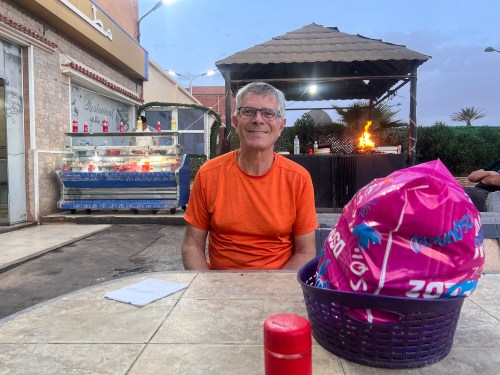
Petrol station cafetaria – love those huge bags of bread!

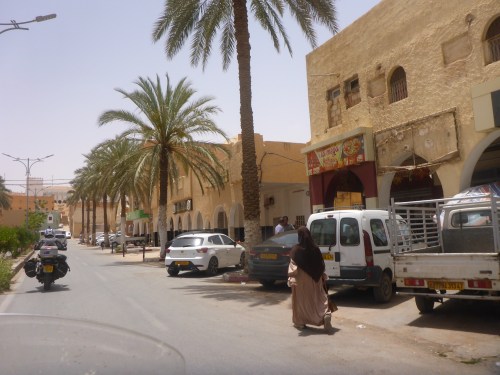
We are aiming for Ghardaia, one of the seven towns established in the M’Zab Valley. We are officially in the Sahara Desert. Here I think anything over 10cm / 4 inches qualifies as a tree amongst the very very sparse vegetation. Ghardaia is a very different looking town as we get a great view descending into the valley from the North, but that’s another blog entry.

Riding into new Ghardaia

– Anthony & Anne

A day to remember

I wake at 6am sleeping on a mattress on the floor of our cabin. My days on the top bunk are over, the short ladder and cramped cabin have convinced me of that. We will be docking in about two hours, so time to get ready and pack. The crossing was smooth and apart from having the toilet not work initially, due, we were told, to “people tortured the button” – gentle tap only required.

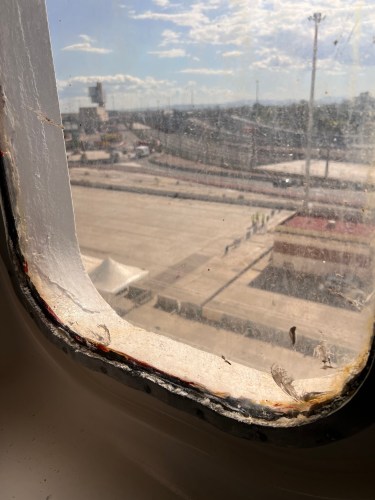
I wonder if our cabin window is a reflection of the state of our ferry

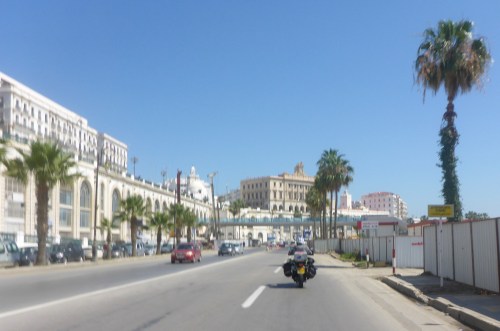
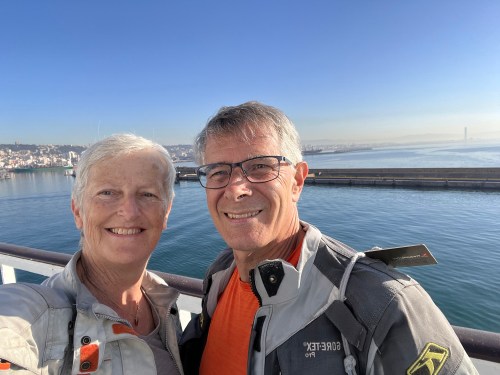
Anne wanted to be on deck as we came into port as this is where her father did his national service back in 1950. We are arriving in Algiers, the capital of Algeria and the first time we have visited the country plus the first time Streak and Storm have been in Africa. The waterfront of Algiers with its historic buildings rising up the hillside make an impressive vista.

Following in father’s footsteps?
Docking into Algiers!
Had to duck as we rode up the steep ramp

Docking completed we need to negotiate with the bikes two levels down. How come every indoor parking so far has been two levels, either up or down? Suffice to say we negotiated it successfully and entered the arrival process which is documented in Visas and Borders. The whole process took a couple of hours but we were ably assisted by a very helpful customs officer who followed our progress, assisted us with paperwork and even guided us to the insurance booth and gave directions to get SIM cards. Thank you, a welcoming arrival to Algeria.

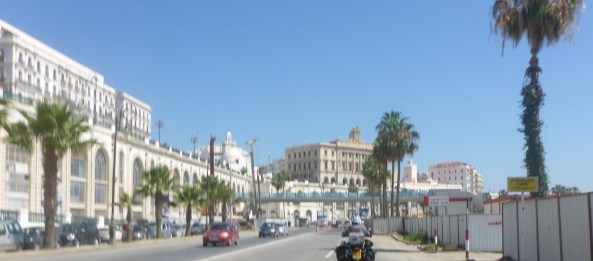
Into the traffic, after laid back Spain, one has to be much more focused here. I had been complaining about the number of traffic lights on roundabouts in Spain, here I am reminded of Lima, everyone has priority. A couple of traffic lights would not go amiss to ease the mayhem. Maybe we have spent to much time in Europe.

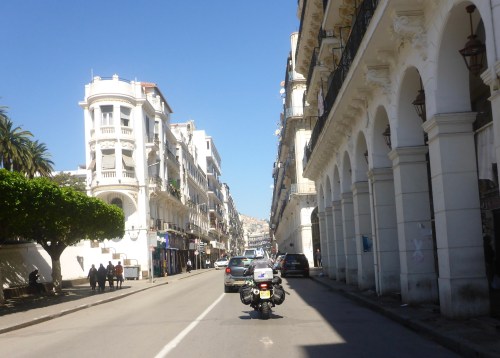
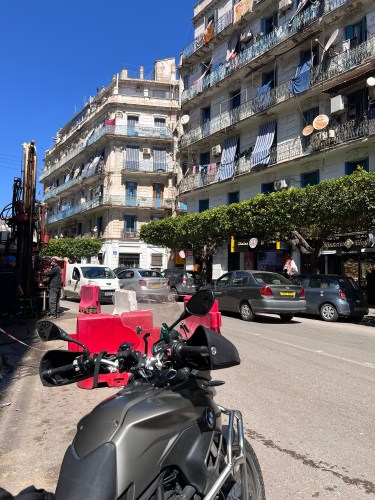
We head for the suburb of Bab el Oued, an older suburb close to the port, both sides of the road house small shops selling everything from washing machines to SIM cards housed in the ground floor of apartment blocks. There is very limited parking so into some roadworks we go, “Ok to park here?” “Oui” and we are off for SIM cards. We now have 80GB (€8) each and are set for our time in Algeria.

Blvd Ernesto de Che Gevara, Algiers
Heading towards Bab El Oued, Algiers
Bab el Oued – work site perfect for us to park
Bab el Oued district of Algiers
Bab el Oued quarter, Algiers

We navigate through the myriad of vehicles and people who seem to step out without looking, unaware they in front of a foreigner’s vehicle. For all the apparent chaos to us, it seems like the vehicles and pedestrians are conducting a dance with steps we are unfamiliar with. Anne noted at one point that the bonnet of the car behind me and my pannier were separated by centimetres, probably less than an inch, as we wove through traffic. Yes I did see a couple of fender benders today, but very little hooting or driver aggression.

As we get out town, waves, smiles and toots of horns greet us. I think people are happy to see visitors. Lunch is taken at a motorway service station as we head west towards Tipaza, our first stop. As we are eating a tasty chicken lunch we are approached by a woman who informs us she and her husband have paid for our lunch as we are guests in their country. A kind and unexpected gesture.

We continue west, humbled by the generosity of people, towards our newly built hotel in Bouma’Chouk. Navigation to our destination is easy as a multi story hotel with the name writ large on the side helps.

At the hotel we meet Lamine, a motorcycle enthusiast who says he will link us up with friends across the country. How kind of him.

Lamine could not be any more helpful

After checking in we head by taxi for the Roman ruins at Tipaza which has an impressive history and is of course another UNESCO World Heritage Site, which we have recorded visits to many over the years, I suspect UNESCO keep adding more, so we will never get the full set.

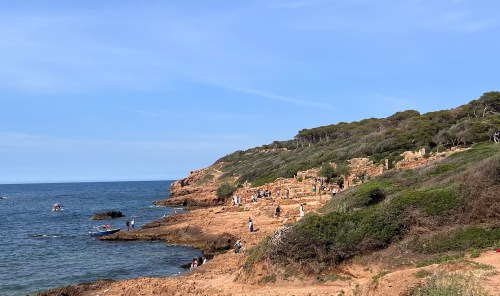
Tipaza some 70 km. west of Algiers was an ancient Punic trading post which the Romans took control of in the first century CE (Common Era) which I found confusing because I thought “CE” meant “Conformité Européenne” and was found on electronic products? Oh well back to the Romans. They developed the port and it became an place of exchange with the indigenous population for the next few centuries.

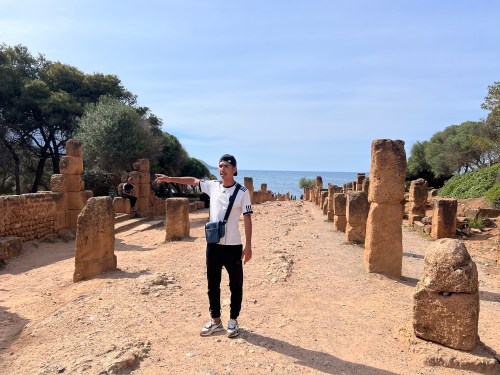
Two French / Algerian couples kindly invite us to join them and their guide on a tour. We had planned to hire a guide as otherwise we would be looking at columns and walls with no idea of their significance. Our guide Andou is just 19 and spent six months learning French to be able to share his love of history and this location. He even showed us the entrance to a roman water tunnel that in his early teens he had followed to the other end and come out in a police station across town. The policeman who first saw him thought he was having hallucinations! Andou explained the layout, how the rich lived overlooking the ocean, what’s changed?! and how each part of the city worked in relation to each other. He showed us how they heated water and even made underfloor heating under the mosaics. As it was in French you will have to ask Anne any questions.

Our guide Andou standing on the Cardo Maximus axis that leads to the ocean
Villa of frescoes – with underfloor heating
Tipaza Roman Ruins
IV century Basilique of Saint Sala, Tipaza
Drinking fountain – people in the left, animals on the right
Tipaza fountain stone worn by horses’ necks
Anthony with Jamel, Andou, Karima, Karima and Raphael

After a quick drink with the two couples, it’s back to the hotel and a quiet dinner watching the sunset contemplating how kind and helpful the Algerian people we have met are. What will tomorrow bring?

– Anthony and Anne

El Provencio, our base for three days

No matter how much research one, well Anne really, does, finding the right accommodation both for us and Streak and Storm can be a challenge. Anne had identified a couple of places to see south of Cuenca and while looking for somewhere to stay Anne found this gem “La Hospedería – El Provencio” but I am getting ahead of myself.

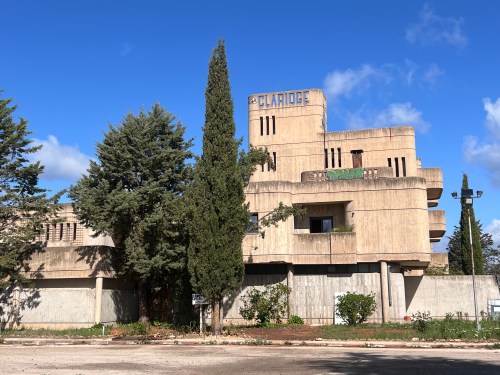
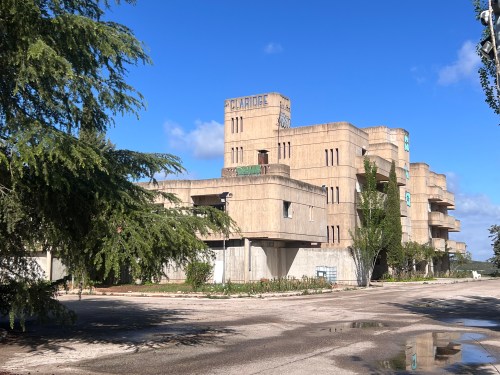
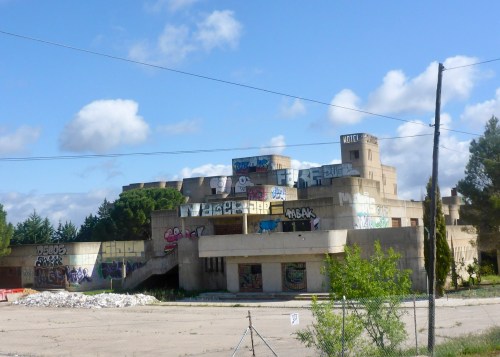
Leaving Cuenca we are well wrapped up, the temperature is barely in single digits celsius. We are heading for the Claridge Hotel, no not the London one but a now abandoned hotel, one of the best forms of “brutalist” architecture in Spain. Built entirely of concrete this hotel was a favourite of travellers heading from Madrid to the coast on the N-3 highway. The construction of the Autovia del Este, one of many roads to receive EU funding, bypassed this location. The Claridge Hotel and many another similar establishments and the adjacent petrol stations closed as new roads removed their traffic and therefore customers. We pass many such forlorn establishments every day as we ride on the older roads. The unintended changes that progress brings…

Abandoned Claridge hotel
Graffiti covered Claridge hotel
So many abandonned roadside businesses

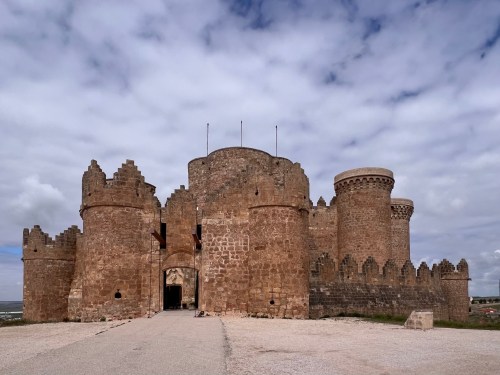
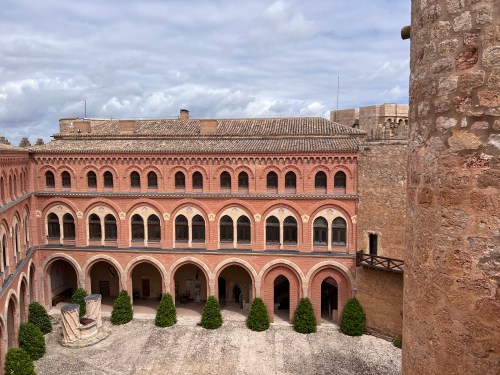
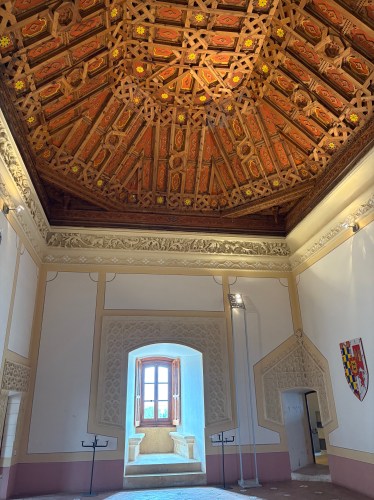
Next we visit the Castillo de Belmonte built in 15th Century for Don Juan Pacheco, the first Marquis de Villena. This is a well preserved castle with beautiful interiors and worth the €10 entry fee. We rode up from the south which gives great views of the castle from distance rather than through the town. Lunch in Belmonte in a local cafe, could not be better, local people local food.

Our first view of Belmonte castle
15th century Belmonte castle
Nature always finds a way
Belmonte castle triangular courtyard
View from Belmonte castle
Belmonte castle latrines
Fabulously restored Mudejar ceiling
Stunning wood carved ceiling

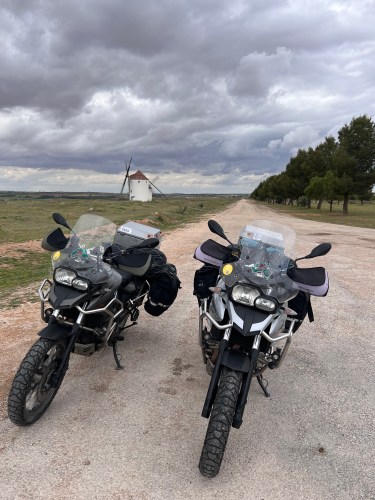
Just outside Mota del Cuervo stand seven windmills in an area known as “La Sierra” stand seven windmills made famous in the book “Don Quixote”, or to give it its full title “ The Ingenious Gentleman Don Quixote of La Mancha” by Miguel de Cervantes over 400 years ago and was considered one of the first novels in western literature and one of the most published and admired.

Yet again no tourists

We get to see the location without any other visitors although the size of the parking area makes me think that as the weather improves the visitors will flock to this site so we were very lucky.

Mota del Cuervo

Back to where I started, our night’s accommodation is at a converted winery in El Provencio. When a new winery was constructed in the 1990’s this building was abandoned but locals wanted to see a future for the old winery building. A retirement home was considered and the room fittings and wide doors installed before the decision to open a hotel. It does make it easier to get helmets and gear into the rooms. Great and helpful staff but the big revelation was the restaurant. After one night we decided to stay for four nights and use “La Hospedería” as a base rather than keep moving. It was a good choice as our comfortable bed and frequent bookings at the restaurant can attest to. With lunchtime stretching till 4pm and later we can get a day’s ride in and be back for lunch on one day. On the flip side of the coin they had to turn the restaurant lights on around 8pm for our arrival for dinner.

Gabriella showing us the old winery
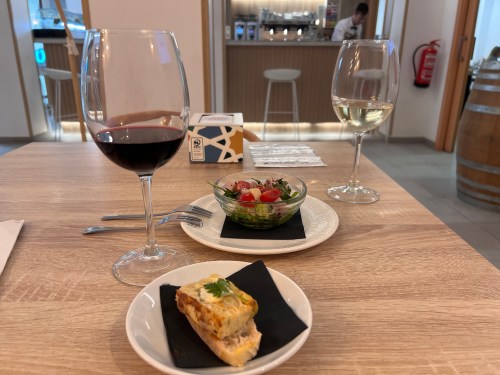
Free wine samples and nibbles
Extra “sin queso” nibbles for Anne
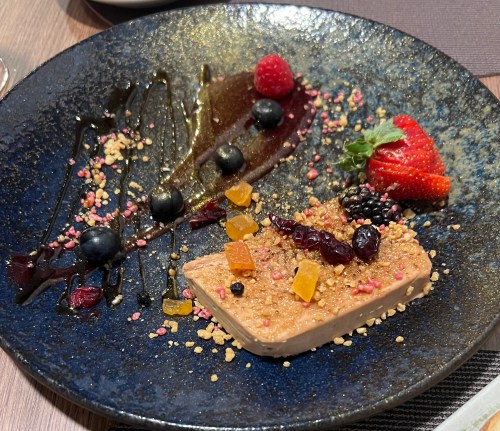
The most divine foie
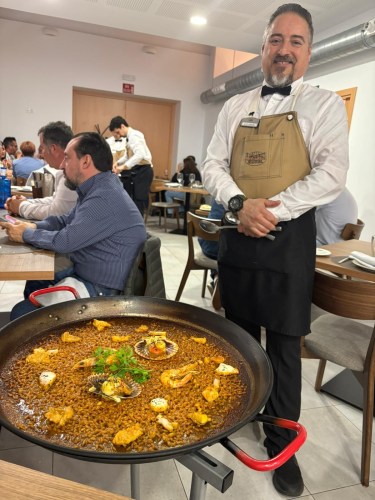
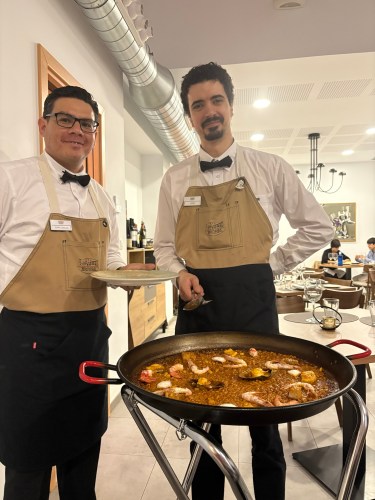
Señoret rice with extra scallops just for us
Quiet El Provincio
Filled bottles to keep cats from peeing on your door
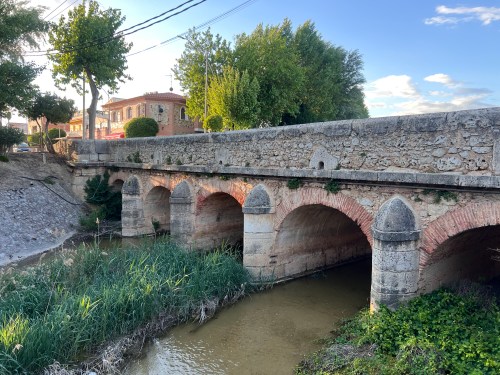
1789 bridge over the rio Zancara in El Provincio
Recycling in El Provincio

Our first excursion takes us to Laguna del Rey, outside Ruidera, a series for lakes connected by waterfalls, the cloudy day does not do the location justice so we move on to Motilla del Azuer where we plan to see a 3,500 year old bronze age fortification. When we arrive, we are greeted by a locked gate. The fine print says you must book at the museum and travel in their minibus in the morning. Oh well, lets nip round the back for a close view. Down a dirt farm road and we are as close as we can get. Time for lunch. It does not get much better than this: out in the middle of nowhere enjoying nature’s beauty.

By the edge of Laguna del Rey
2 hour ride to get here and it is open by appointment only
Motilla del Azuer
Country lane, birds, flowers – perfect
This is what we love
Oops

The roads we have taken have been mostly clear of traffic and we can cruise along enjoying the scenery. Yes I have taken some video and will eventually assemble an armchair ride, however bugs do keep affecting the camera’s view.

While the crops we see vary from wheat to almond, olive and fruit trees interspersed with vineyards, a nature strip down each side of the road is at times a riot of colour. The red of Anne’s favourite, the poppy, is interspersed with yellow, white and purple. Sometimes the flowers spill out across the adjacent fields making for a glorious spectacle. I also love the contrasting green and brown between crops and fallow fields.

Vinyards all have little white washed houses
Riding small roads around Albacete
Another riot of colour
So many bright poppies
Never seen such a field of daisies 🥰
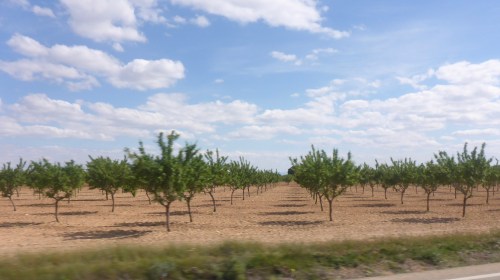
Almond plantations in Castile-de-la-Mancha

Well, all dusted off and back to our hotel to plan our next day out and what is for dinner tonight?

Back for more….

Today’s destination is Alcalá del Júcar – a town seemingly clinging to the side of a cliff. As we get closer riding across a flat plain, I am expecting the town to rise up as we have seen before on a defendable hilltop, but no, this place is carved into the side of a river canyon explaining why it cannot be seen as we approach. Quite spectacular but I would be nervous about inhabiting some of the houses.

Alcalá del Júcar
Alcalá del Júcar castle
Doesn’t look as safe as the houses in Cuenca
Bliss – riding along the Rio Jucar
Riding along the Rio Jucar
Riding back out of Alcalá del Júcar

We must farewell our home for the last four nights, great service from the friendly staff, comfortable beds, an excellent restaurant. This was a five star location for us, but onward we must go.

Coffee stop at a typical small petrol station in Spain. Note the alcohol.
Petrol station with amazing selection of food and drinks

Valencia, our next destination, gives us the opportunity to both see a little of the city, fine tune our packing, get the blog up to date and adjust the motorcycle chains etc. Anne found a nice apartment on the 27 bus route to the town centre.

We wait as a kilo of fresh sardines are gutted and deboned for the previous customer
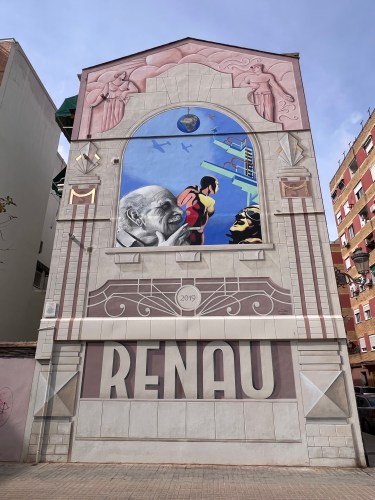
Mural dedicated to Joseph Renau – poster artist and activist
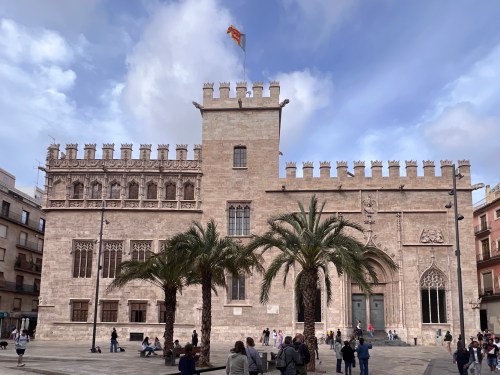
Llotja de la Seda – XV century silk exchange
Llotja de la Seda (Silk Exchange) trading room
Intricate stone carvings – Llotja de la Seda (Silk Exchange)
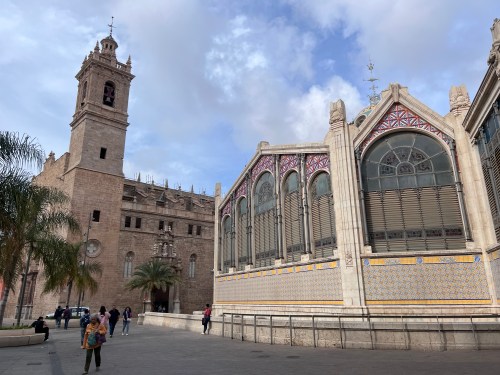
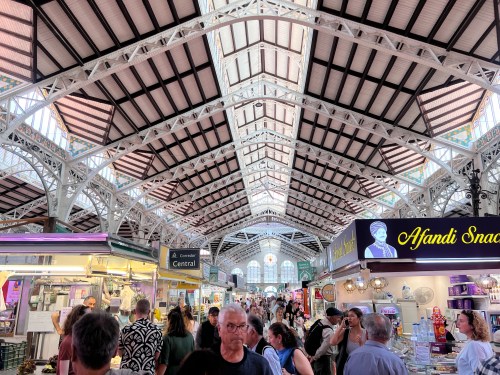
Valencia Central Market
Amazing array of fresh foods at Valencia Central Market
Graffiti tags everywhere in Valencia

From Valencia we will board our second ferry of this trip. For those who know our destination, please do not give it away in comments for those who do not.

So see you on the other side.

– Anthony