Esfahan

We leave our lovely hotel in Kashan, request help to take our luggage to the bikes, load our panniers back on the bikes and get ready to ride up the very steep, angled and weirdly corrugated driveway up to the lane-way. I had thought about it the day before and thought it would not be easy – better be careful not to lean too far to the right and fall over or you could land your chin and break neck on the hand rail. Vivid imagination sometimes… As I walked down to the bikes, I had decided how to tackle it. I can do it. It will be fine. I position my bike for the ride up… Yes I can. Aarrgghh. No!!! I chickened out. Anthony walks back down and rides my bike up. I am really annoyed at myself. Really annoyed and disappointed. Anthony tells me it was easier the 2nd time. We ride out. I keep having little chats to myself – one minute telling myself off, next telling myself to “drop it” and concentrate on the road. It’s done. It’s ok.

Our ride out of Kashan to Isfahan is short and easy, just 200 kms and quite pleasant. We stop half way to refuel and stretch our legs. As usual, our bikes attract a bit of attention.
There is no restaurant open so we open one of our cans of tuna which we eat with a small packet of chips/crisps in the shade of the closed restaurant. Several cars pull up, all from the same group and install themselves along the wall in the shade, like us. They have brought rugs to sit on and pillows to lean against, large containers of hot tea and all sorts of food.

Scenery between Kashan and Esfahan, Iran
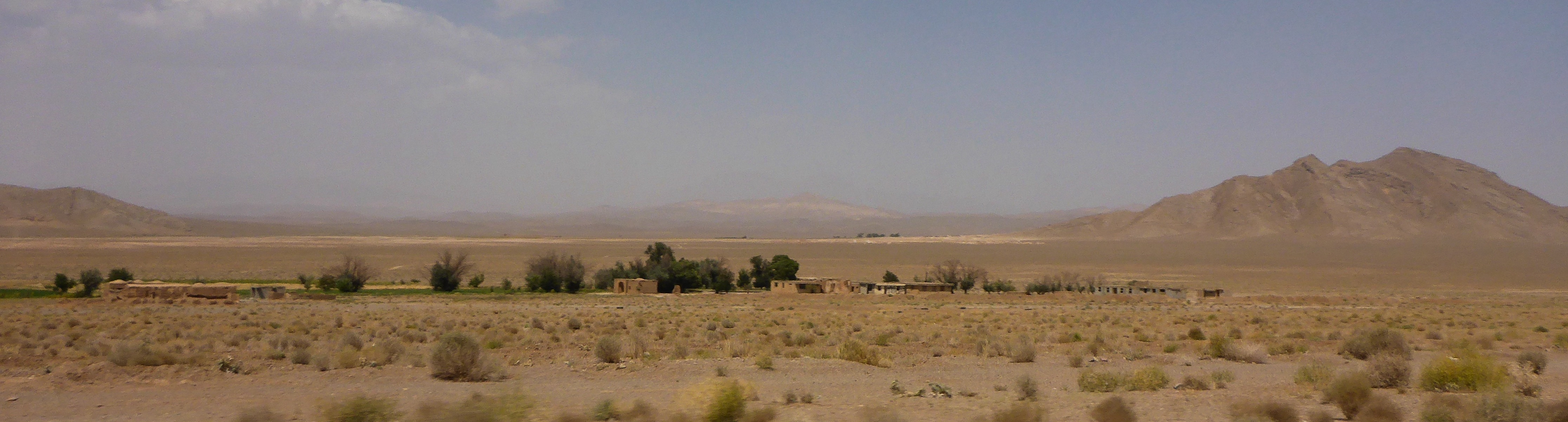
Scenery between Kashan and Esfahan, Iran
Scenery between Kashan and Esfahan, Iran

Scenery between Kashan and Esfahan, Iran

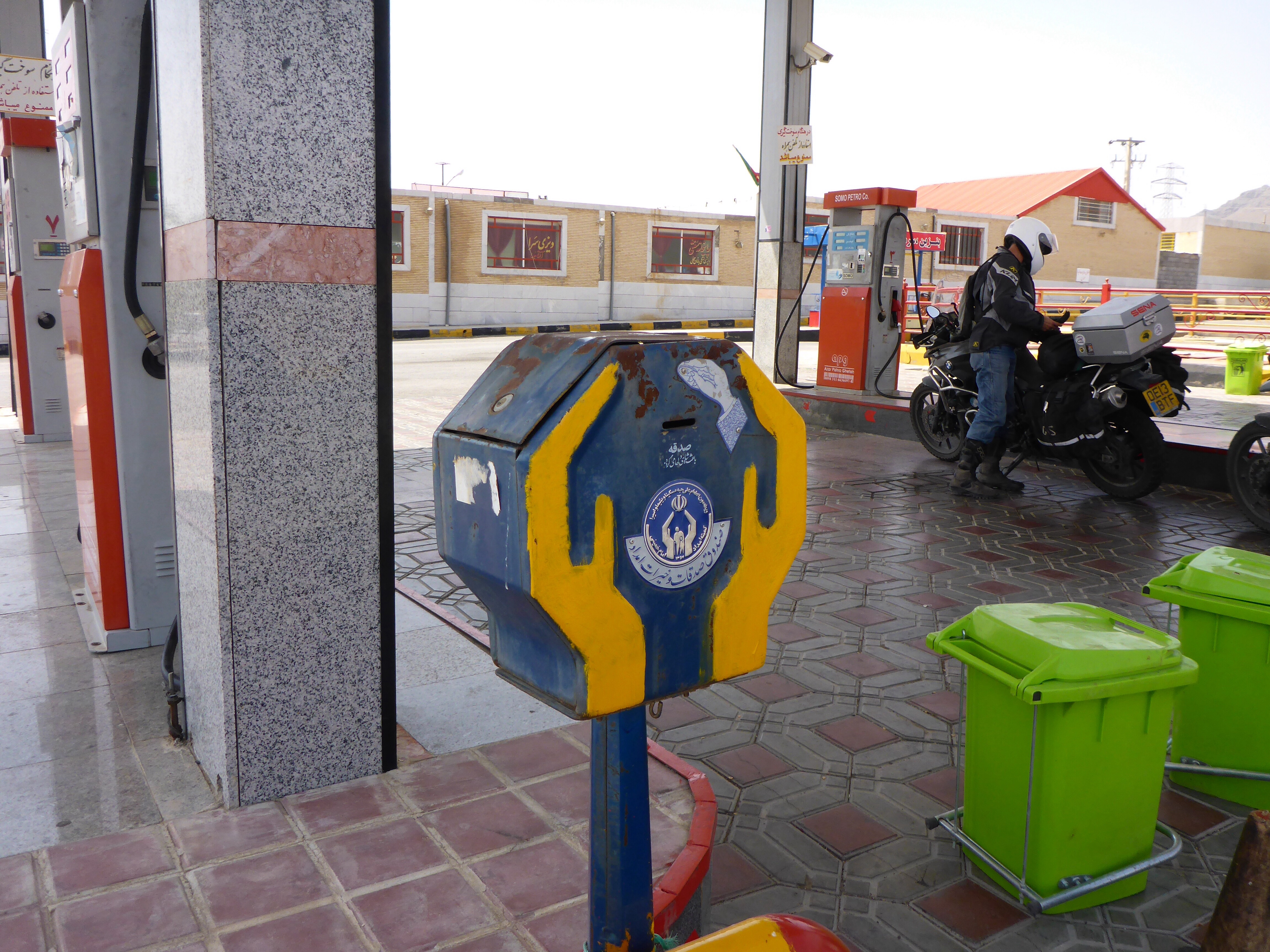
Charity boxes are found every few hundred metres in streets, and also at petrol stations throughtout Iran
Charity boxes are found every few hundred metres in streets, and also at petrol stations throughtout Iran

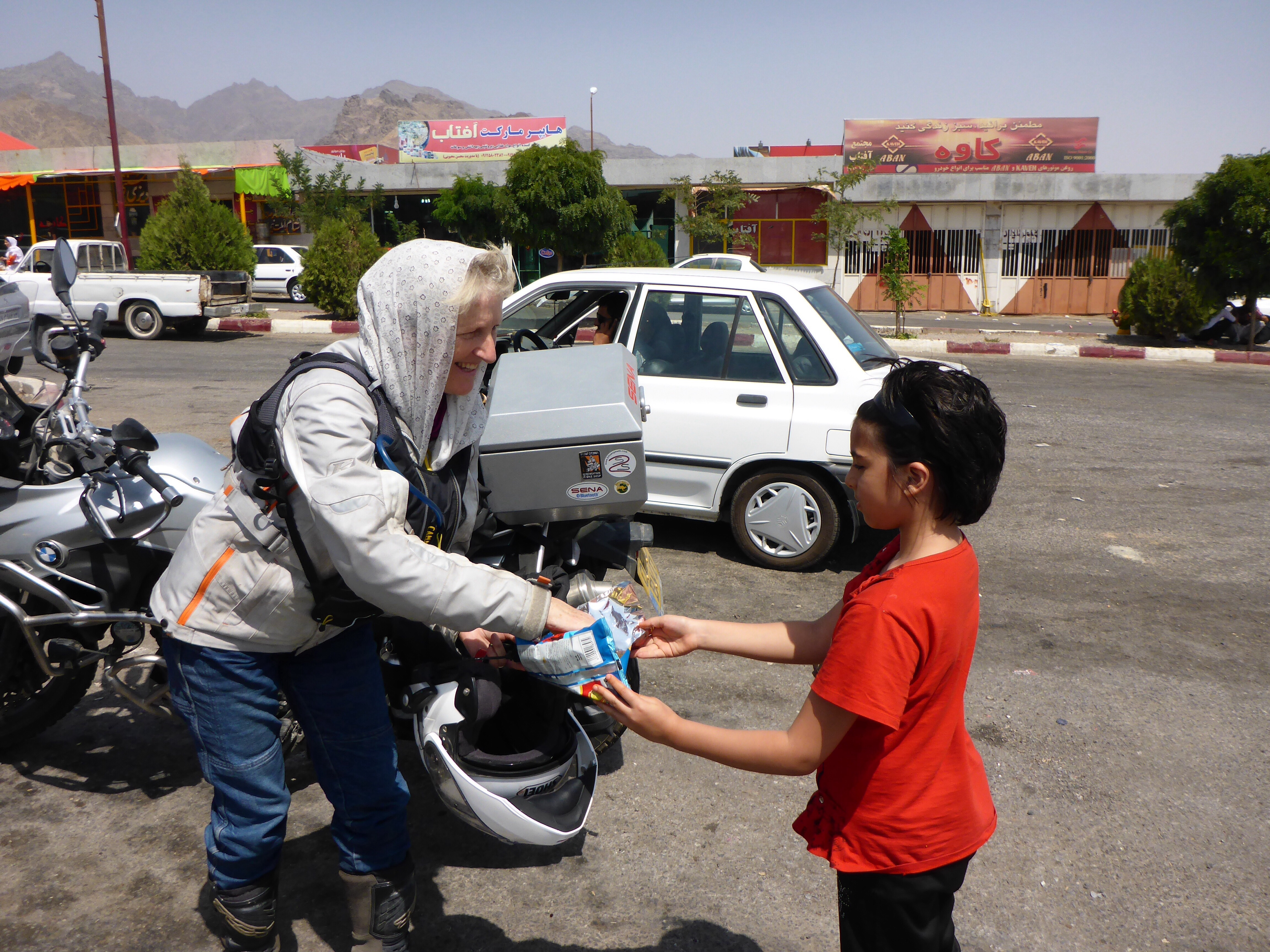
This girl came over and offered me some chips/crisps as we stopped for refreshments
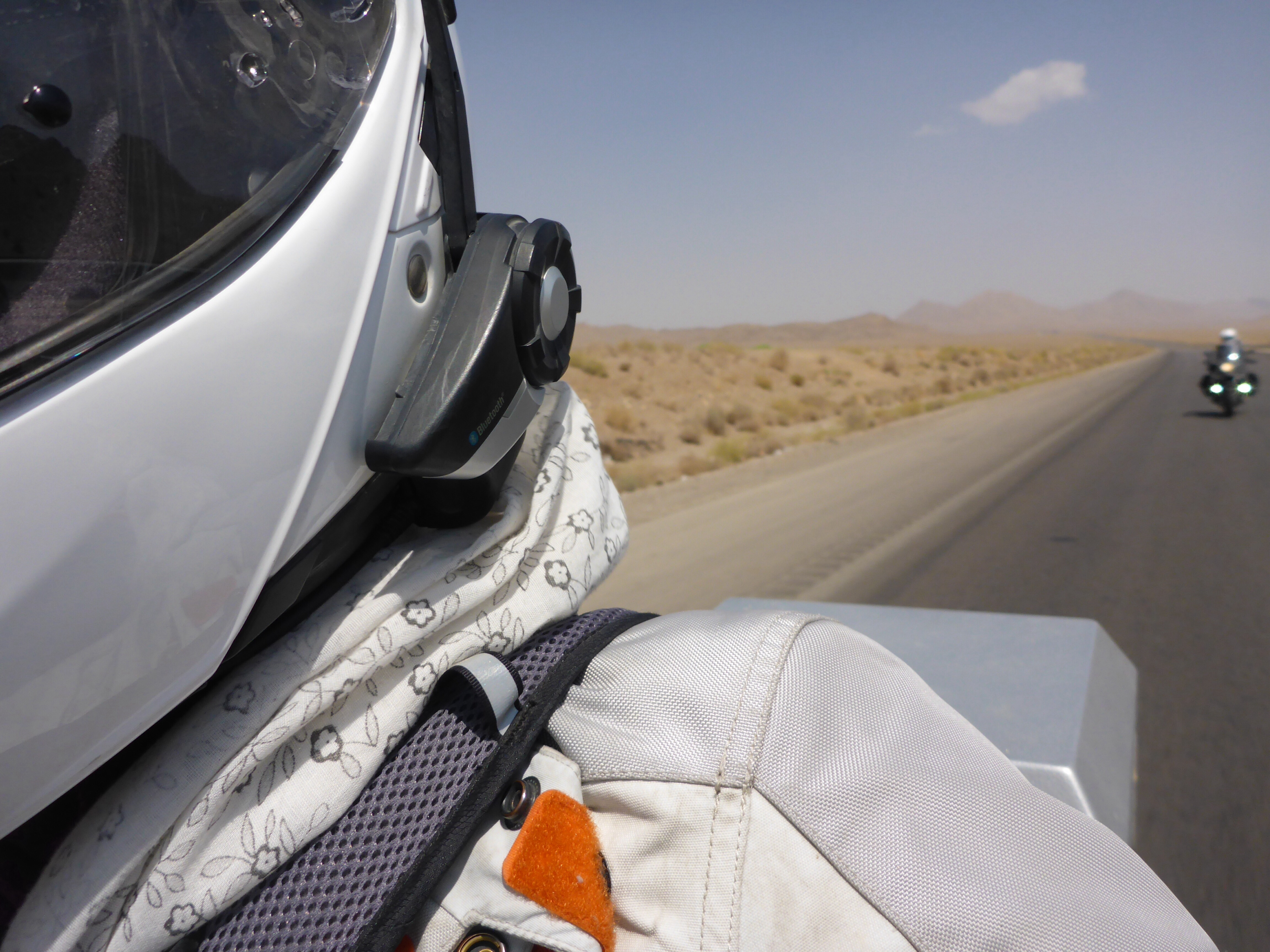
This girl came over and offered me some chips/crisps as we stopped for refreshments

On our way to Isfahan, Iran

On our way to Isfahan, Iran

We had given ourselves 4 hours to get to our rendez-vous – 3 for the bulk of the route and a final hour for getting into the city centre. We are meeting friends by a large, very famous park, Bagh Ghadir, everybody knows it we are told but the GPS doesn’t and no park is shown on the GPS so once again, the GPS cannot find the address we’ve been given. But I have it on my iPad with a saved Google map. So Anthony works on locating roads, bends, roundabouts, underpasses and puts a target pin roughly where our the meeting point is. I know the name and Anthony knows the direction. Between the two of us we get close. We’ve gone through 2 underpasses – do we exit here? It doesn’t look quite right. At the traffic lights, as a driver asks where we are going, I call out the name of the park. The driver waves towards the underpass, then left. We confirm our understanding – back down here and up again or…?? The lights turn green. Rats. Was it down the ramp, and stay left or down, up and left? He takes off, and cuts in front of us. Nothing unusual. He was in the left hand turning lane, which we know means nothing here really, but he waves at forward so we think he’s going to lead us to our destination. How nice!! Just as we thought, down, off to the right, up and left at the top. At the intersection, I spot a sign “Ghadir Gardens”. He is taking us there! We eventually arrive at a park which I recognise – thanks Google Earth. We were meeting 3/4 of the way along. I tell Anthony we should stop. The driver waves towards the park on the left, and starts to turn right. We decide to pull over where he’s turning and call our friends. Just as we’re pulling over, right there are 2 people waving at us!!!! Our usual luck strikes again – thank you guide, thank you angels…

Who are these friends? A friend of a friend and we’re staying at her sister’s house. We have never met them before. And our friend has in fact never met her friend either. They know each other through social media. And it seems perfectly normal to them to put us up. Why are we not staying in a hotel you may ask? Because every single hotel I called was full. I even tried for single nights, prepared to move as necessary as we wanted to spend at least 3 nights. And it wasn’t until Afrooz asked me yesterday where we were staying in Isfahan and I told her that every hotel I had tried was fully booked for the whole of September so we would try on arrival that she said she would call her friend that evening and check with her. As luck would have it, this friend, Zoreh, was coming home to her parents at 3am from Southern Iran where she works 2 weeks on, 2 weeks off as the emergency doctor at a hospital. And of course we could stay, but her sister’s home would be more comfortable for us.

So that’s how we meet Zoreh and her nephew Mohammad, by the side of the road. The house is close by, a few short lanes away and we’re there. The garage doors are opened for us and we park our bikes in the beautifully tiled garage. The car will be parked on the street while we’re there. We are dripping wet with sweat – it got to 42 degrees again today – it is good to stop.

We meet Zoreh’s eldest sister, her husband and their daughter. Mohammad’s wife arrives a little later. We are offered glasses of iced water. And biscuits. And sweets. And chocolates. And a cool fruit drink. And fresh fruit. Eat fruit!! I am invited to take my scarf off – even though all the others have kept theirs on, even within their own home. We are shown to our room. It’s massive. I am sure we are taking someone’s room but we are assured not. That night, as we went to the toilet, we get confirmation we have taken the parents’s room as they are sleeping in the lounge.

We are thankful Zoreh speaks good English. Mohammad tries hard and Zoreh completes the sentences for him. We are invited to go over to one of Zoreh’s aunts who lives across the road. We think of how close families are in Iran still. Family members never live very far from each other. It was like that for Afrooz, Saba, Fariba and now Zoreh, except that those 4 women were largely the exception in their family. We think of our families, and how travel pulled us away from them, geographically, all those decades ago…

As we walk into the aunt’s home, we see this absolutely enormous pot, about 50x110cm, with the biggest ladle and stirrer. We are greeted by so many people, with more waving from a balcony upstairs. We don’t know who they all are. Several kids are happily playing together in the courtyard. There is a happy and relaxed atmosphere. They have prepared and cooked kilos and kilos of osh. A large table cloth is brought down into the courtyard and and we and our ‘immediate family’ have our dinner together. Anthony and I struggle with sitting cross legged – our bodies are not used to that position, we feel so stiff and awkward! Our lovely hosts invite us to stretch our legs out. Dinner finished, we all get up and leave all the others.

Zoreh's family has prepared the largest pot of osh and prove such massive pots are household items

Zoreh’s family has prepared the largest pot of osh and prove such massive pots are household items
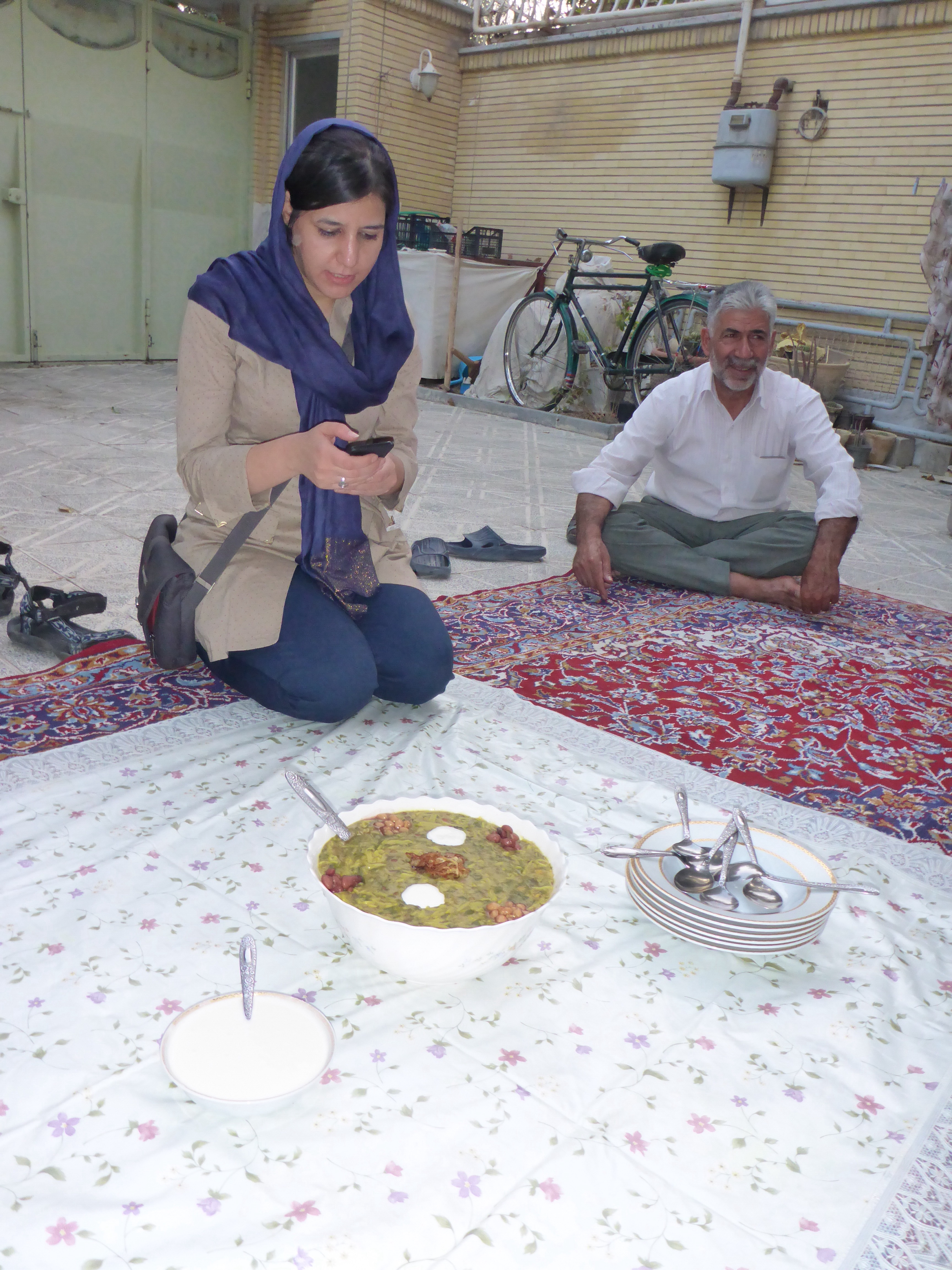
Delicious osh is being served for dinner, Isfahan, Iran

Delicious osh is being served for dinner, Isfahan, Iran


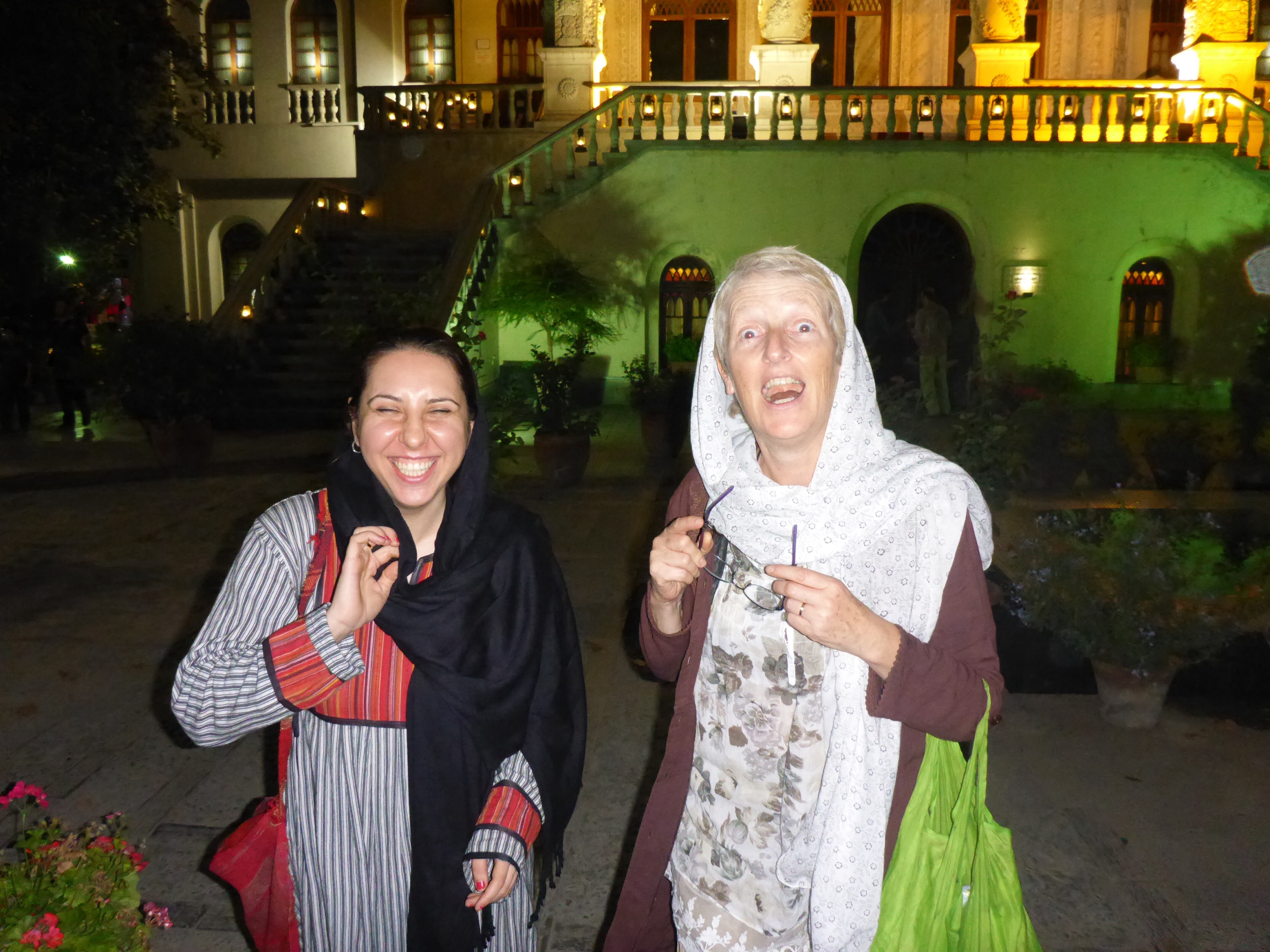
Zoreh, Mohammad and his wife Shadi take us to see the city by night. The streets are so busy, like rush hour – the night rush hour really. It seems that the whole of Isfahan is out enjoying the cooler evening air. Roundabouts, which are beautifully treed with lots of flower beds are dotted with several families having picnics. This isn’t the week end – it’s like that every evening we are told. Past the Si-oSeh-Pol bridge (30 bridges bridge), past the Khajoo bridge, and onto the main square Naqsh-e Jahan or Imam square. All beautifully lit. On the way, we stop for ice cream and a special lemon sherbert desert which is tasty and extremely sweet. We have found that Iranians love their sweets, in many forms, love salt and love sour foods. We spend a lovely evening strolling through the bazaar, stopping for tea at a very quirky tea house, admiring the bridges. We have long and very open discussions about marriage, kids, families, politics, religion.
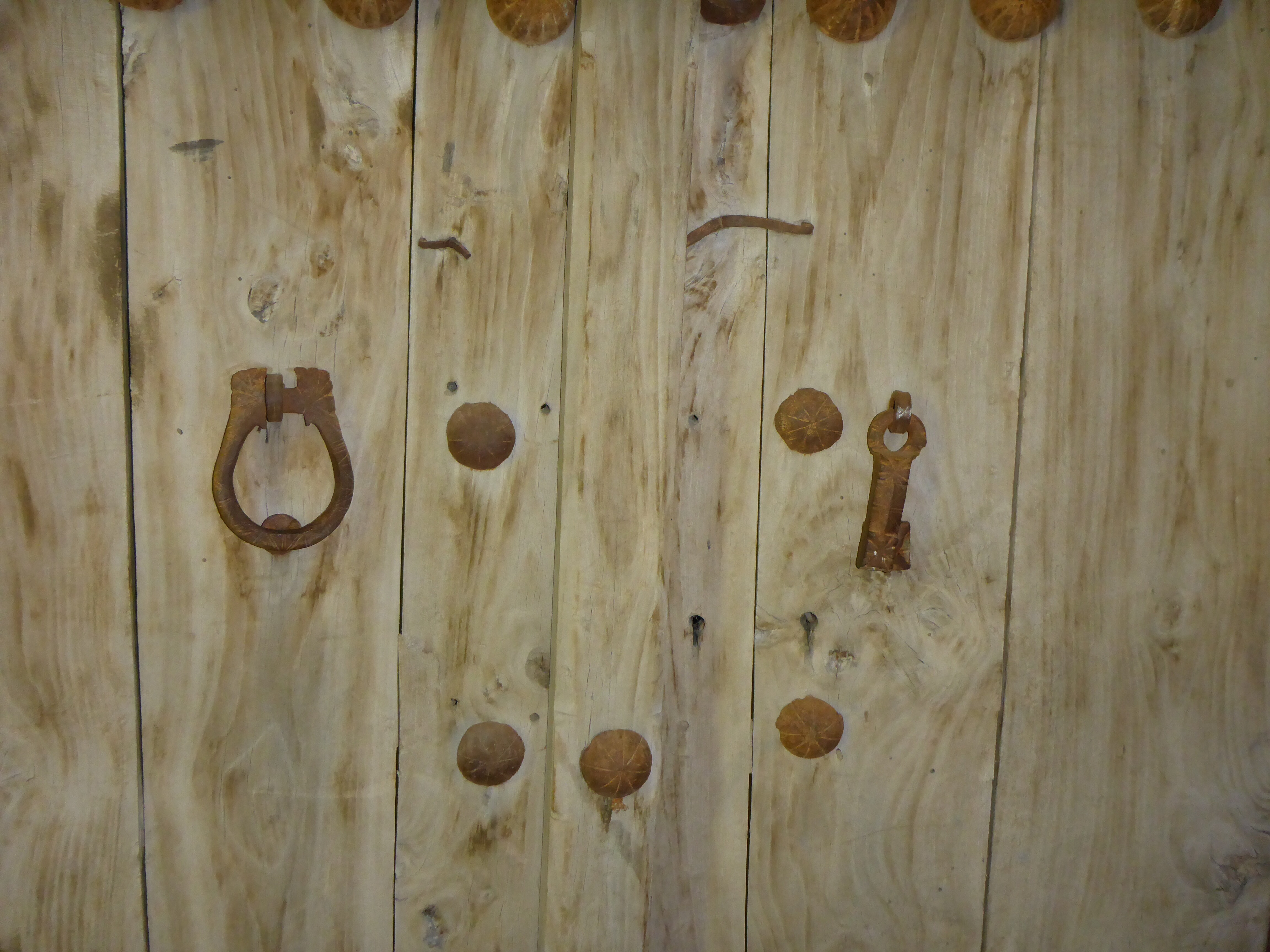
Female and male door knockers, Isfahan, Iran
Female and male door knockers, Isfahan, Iran

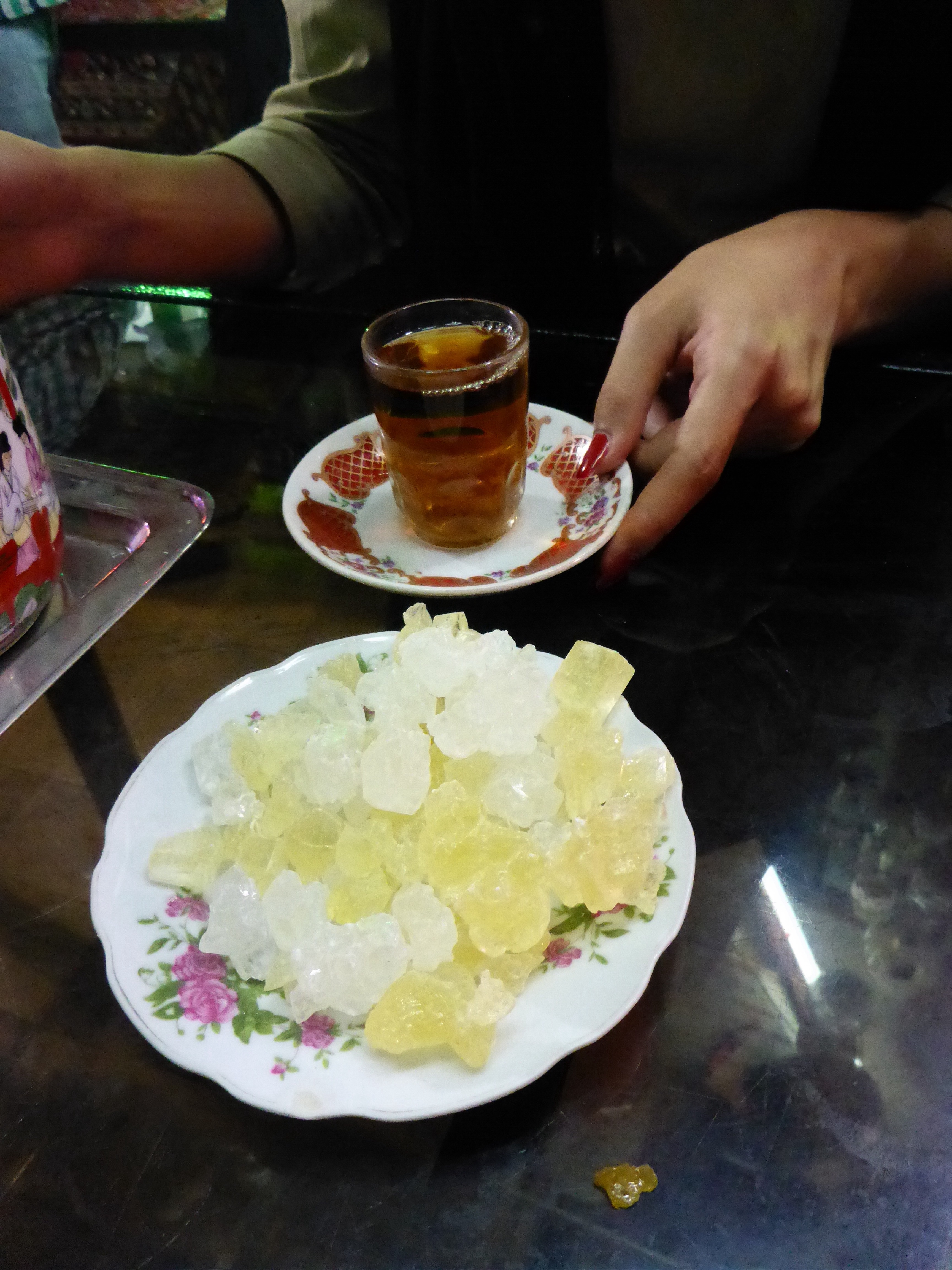
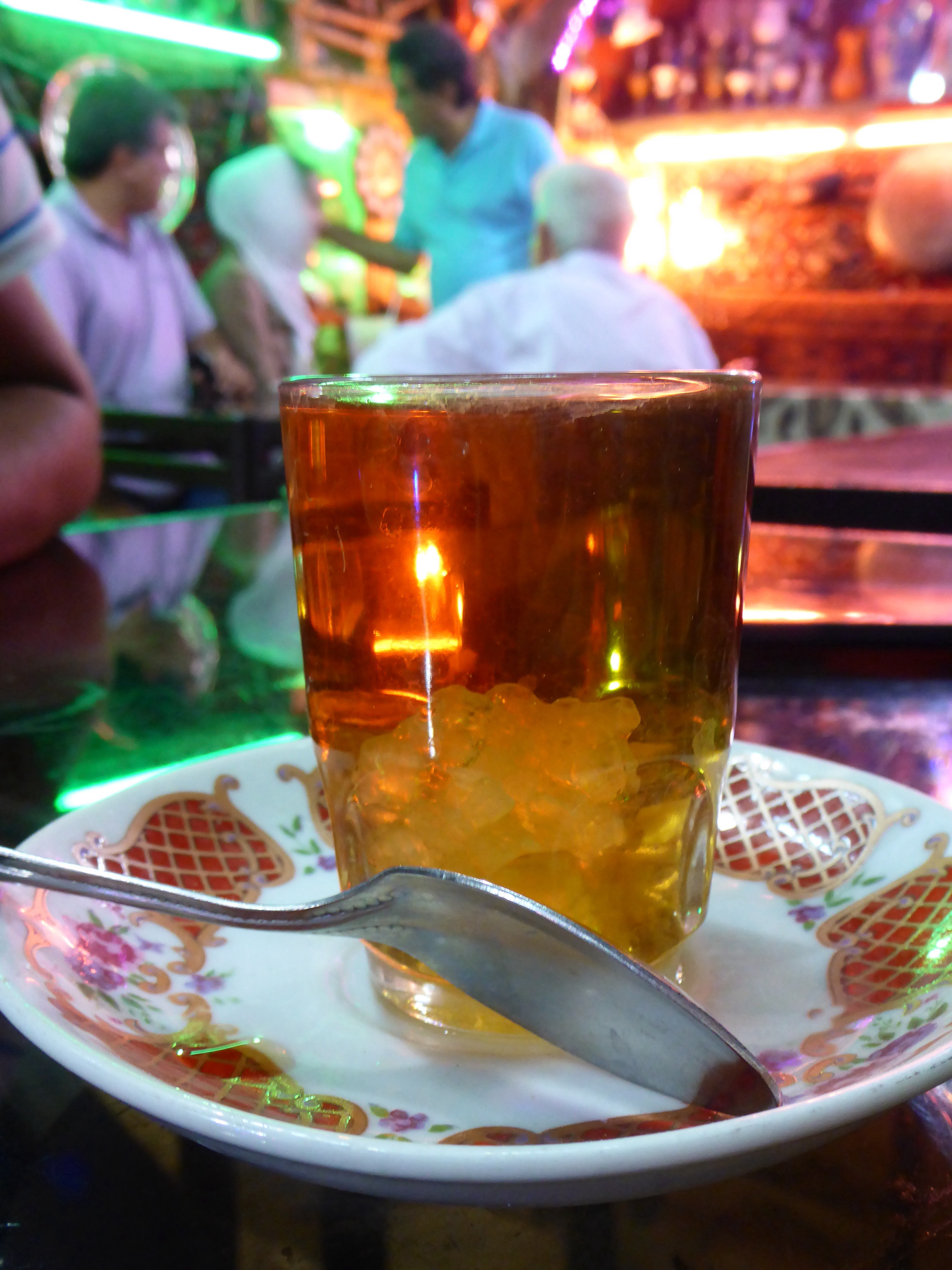
Want some tea with your sugar?
Want some tea with your sugar?

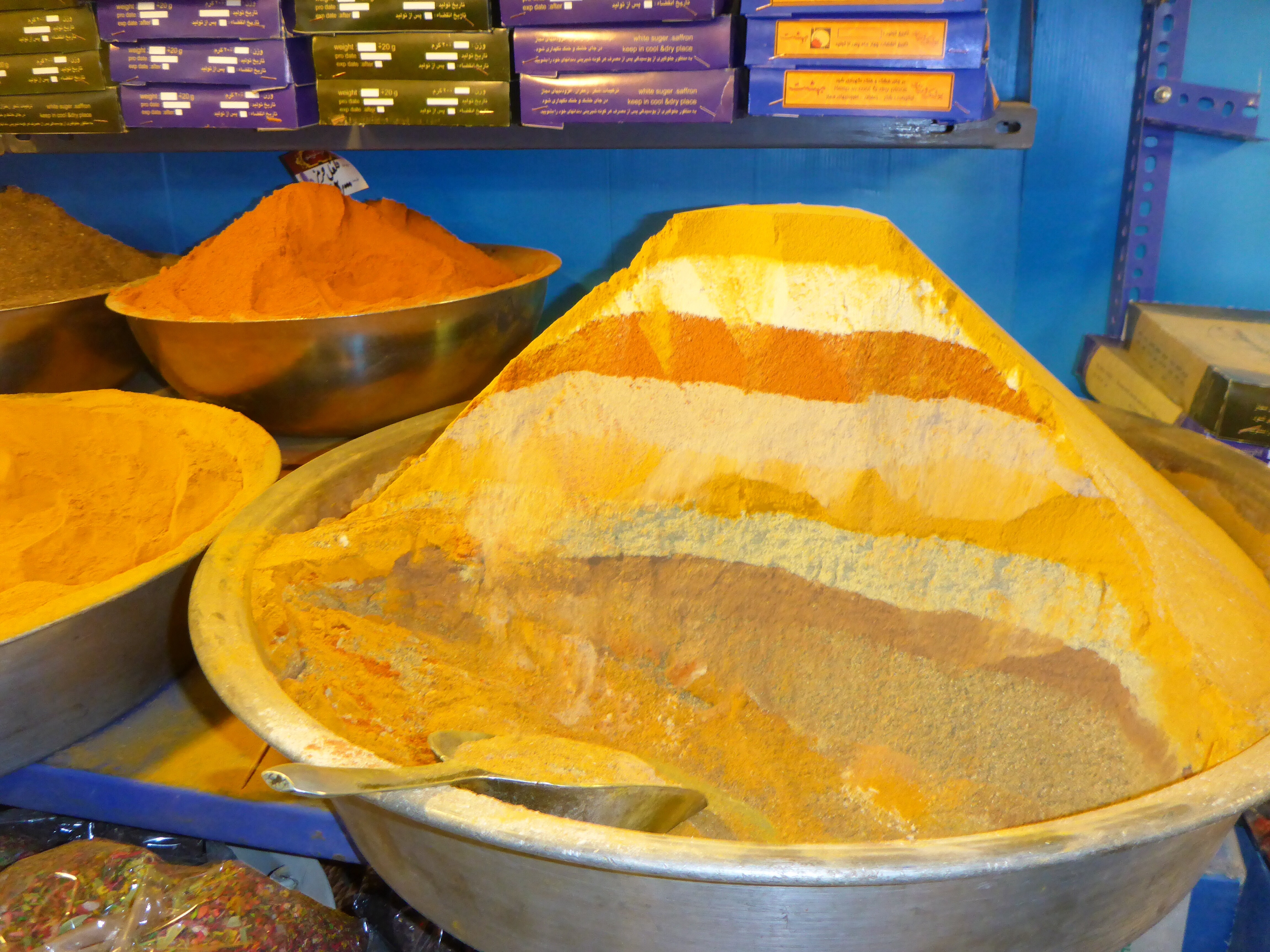
Chicken spices, Isfahan, Iran
Chicken spices, Isfahan, Iran

Iranian tea with just a bit of sugar

Iranian tea with just a bit of sugar

Over our two whole days in Isfahan, we meet several of Mohammad’s friends, several of Zoreh’s family members, we are invited to her parents’ house, an aunt’s home to see her most stunning home with mirrored walks and ceilings, like we’ve seen in palaces here. Once again, we are amazed at how people suddenly turn up, appear, join us for a while. Always so lovely, interested in us and life in Australia and interesting. I am quizzed once again on marriage and kids, why don’t we have kids, is it important what age you marry, is it important what age your husband is.
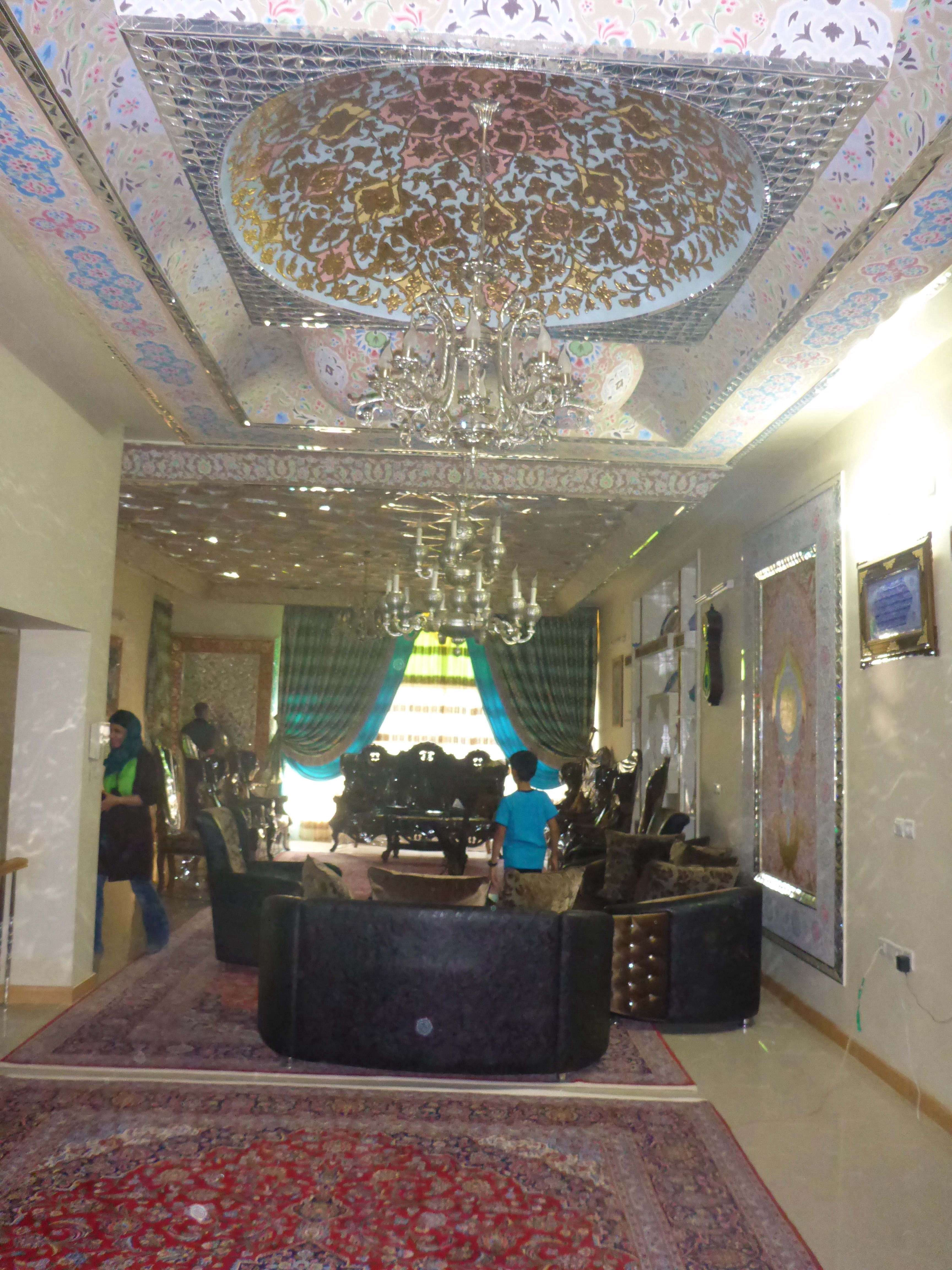
Zoreh's aunt's home with amazing mirrows and wall & ceiling decorations, Isfahan, Iran
Zoreh’s aunt’s home with amazing mirrows and wall & ceiling decorations, Isfahan, Iran

Zoreh with her parents

Zoreh with her parents

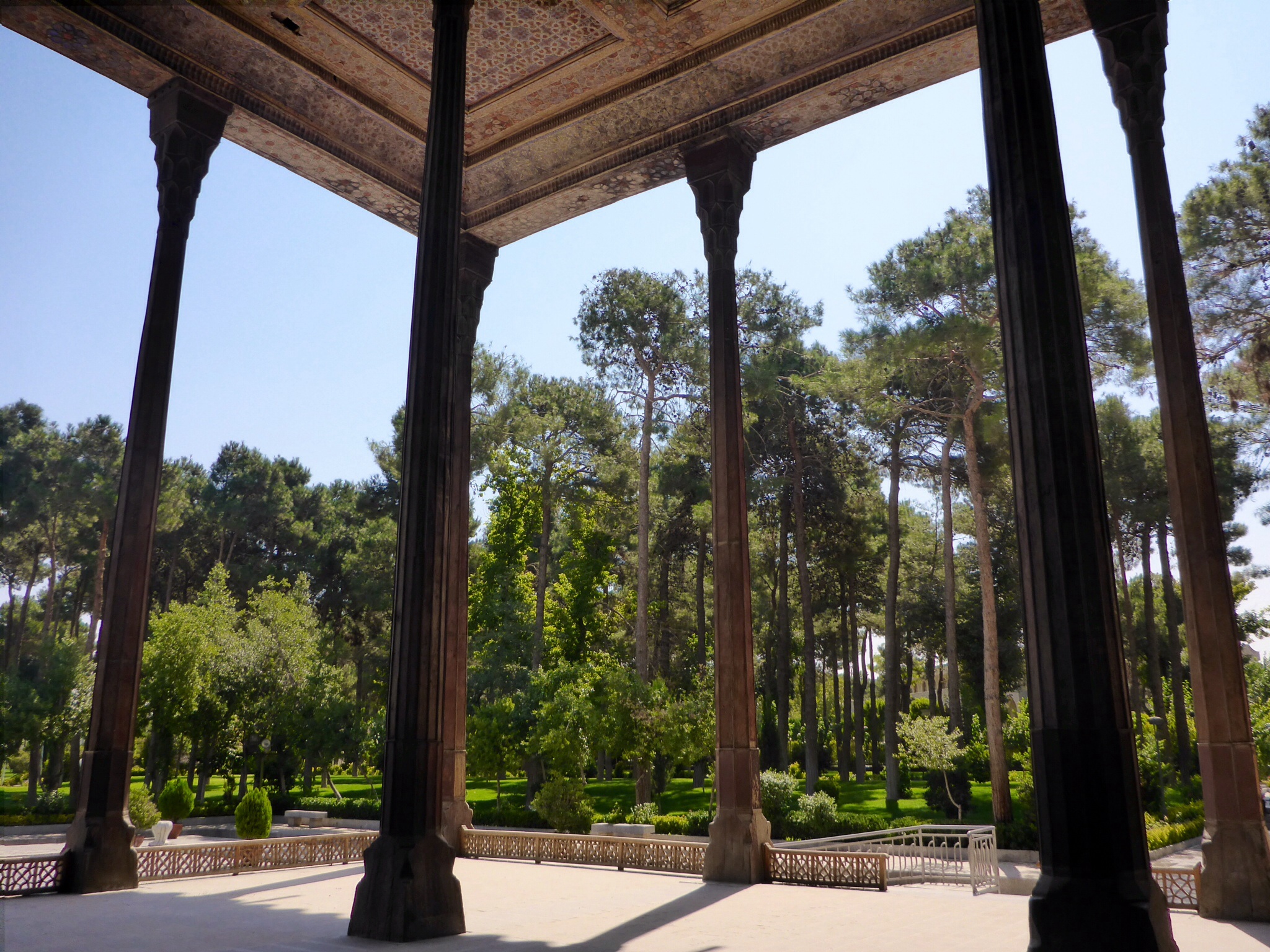
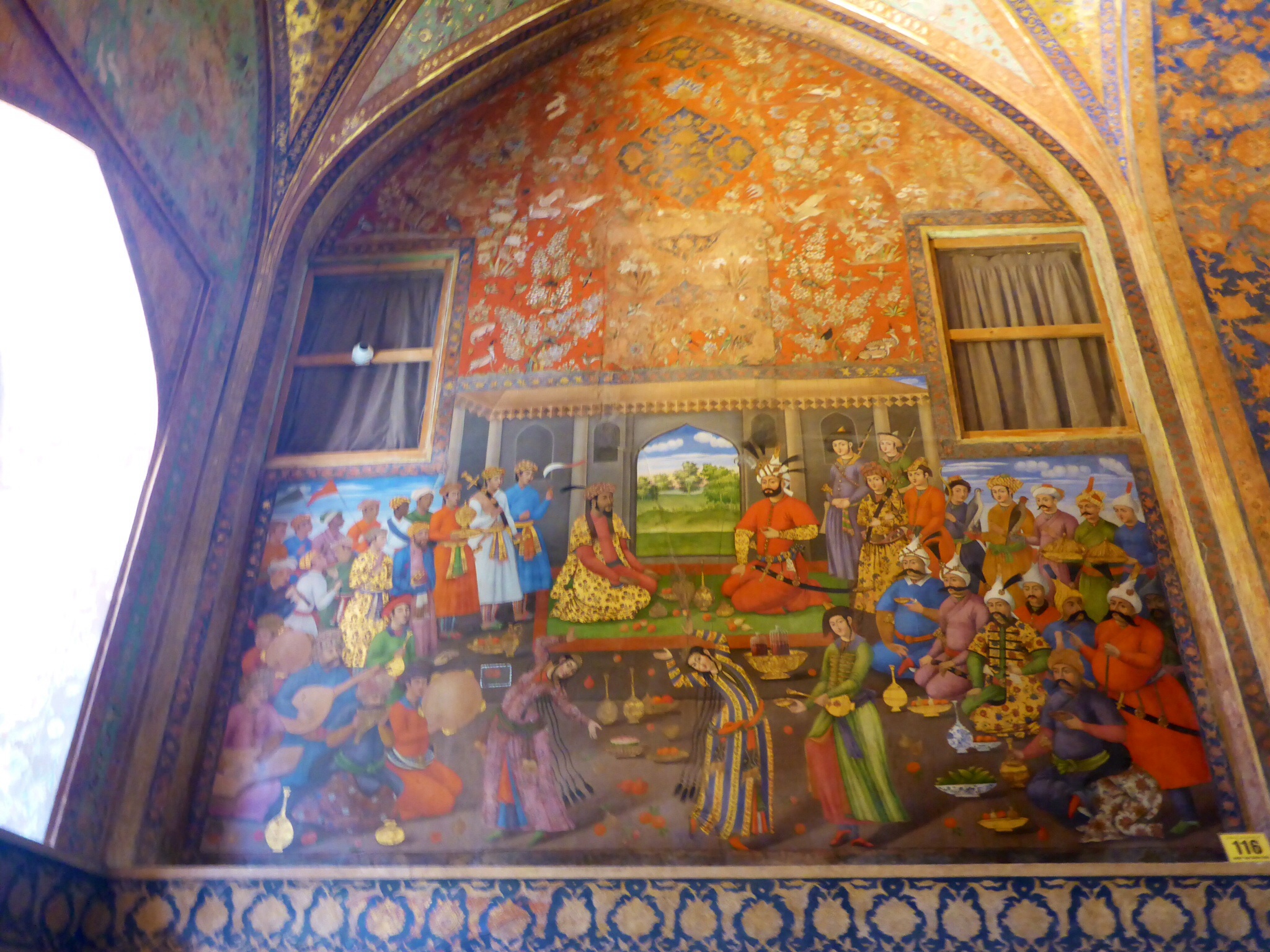
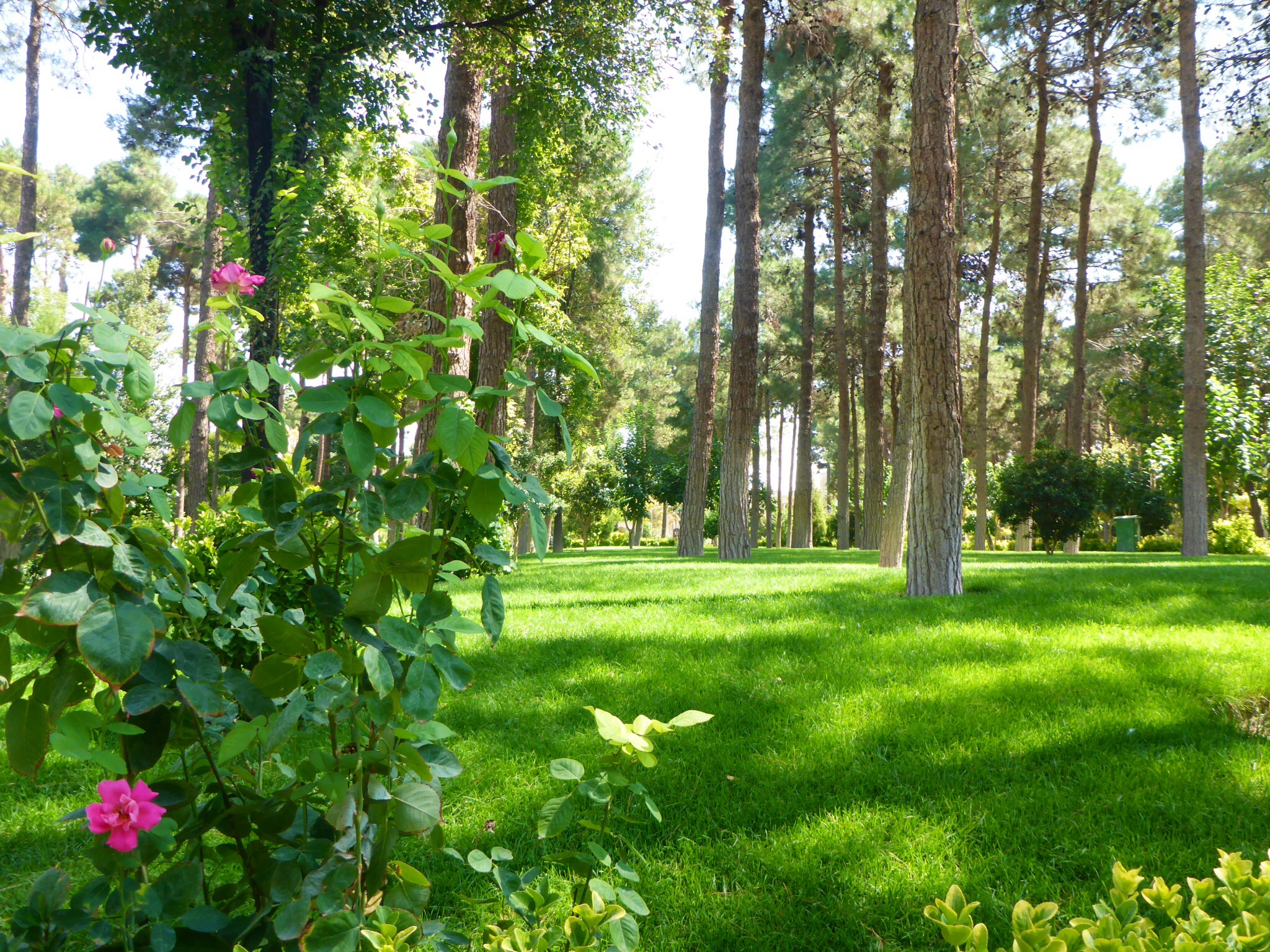
We are taken to restaurants, and some of the historical sights I was interested in such as: Chehel Sotun Palace, originally built as a pleasure pavilion (and was rebuilt in 1706 after a fire) is one of 300 palaces that were built when Isfahan was the capital of Iran. It’s name means 40 pillars and is derived from the 20 slender pillars that support a stunning wooden ceiling, and their reflection in the long pool in front of the palace. The palace’s great hall is adorned with magnificent historical frescoes. The palace gardens, covering an area of 67000sqm are stunning. I find that I am attracted to the vivid greens we’ve seen in gardens in Iran – probably because we’ve seen so much desert while riding.
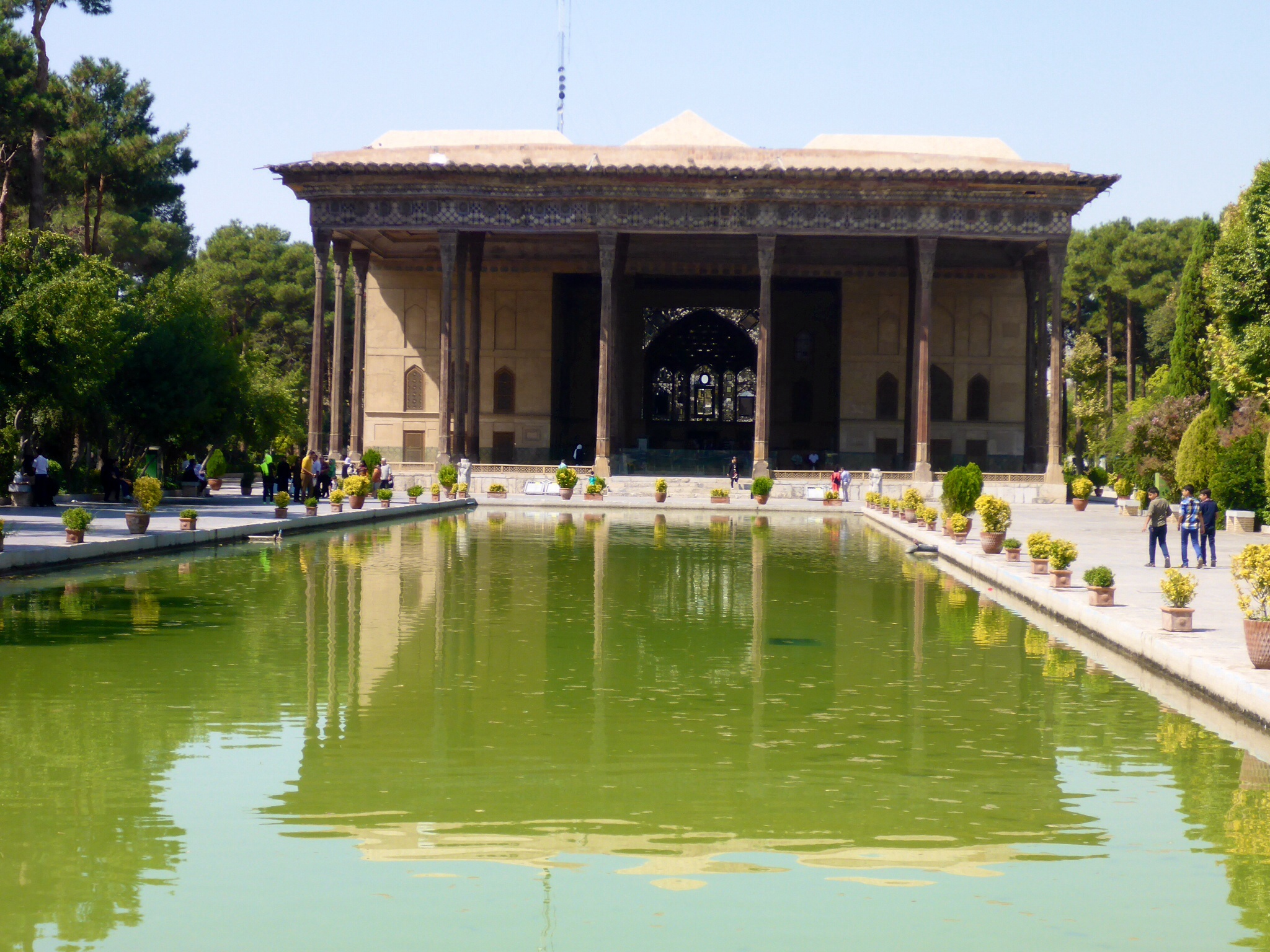
Chehel Sothun palace - Isfahan, Iran

Chehel Sothun palace – Isfahan, Iran

Some of the 20 slender column supporting the Chehel Sotun pavillion roof, Isfahan, Iran
Some of the 20 slender column supporting the Chehel Sotun pavillion roof, Isfahan, Iran

Fresco inside the Chehel Sotun pavillion, Isfahan, Iran
Fresco inside the Chehel Sotun pavillion, Isfahan, Iran

Park surrounding Chehel Sotun palace, Isfahan, Iran

Park surrounding Chehel Sotun palace, Isfahan, Iran

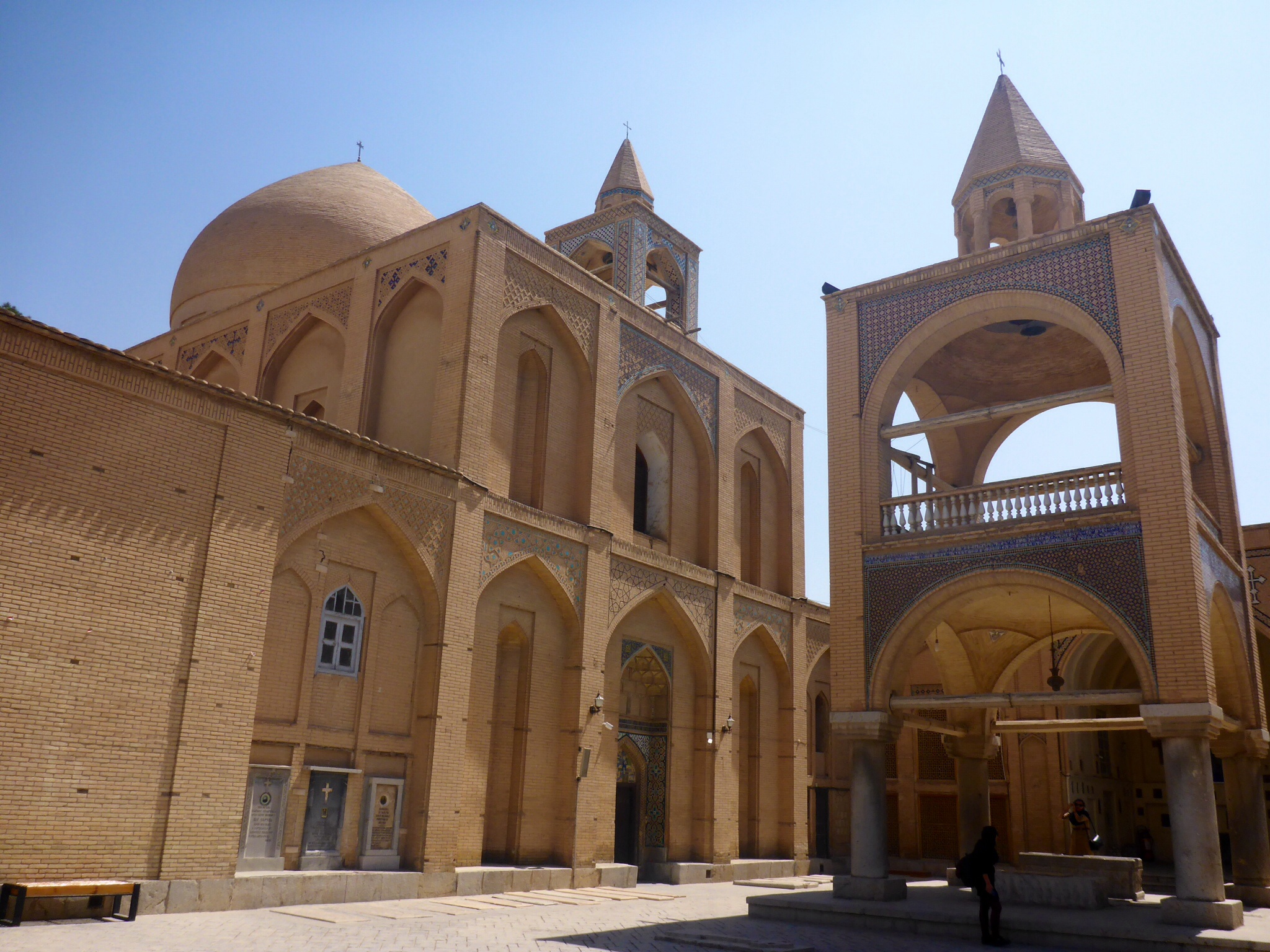
I was interested in seeing the Armenian quarter called Jolfa. Back in 1604, Shah Abbas was so impressed in the Armenians’ skills as merchants, entrepreneurs and artists, he kidnapped the whole population of the original Jolfa near Tabriz, and sent them off to build him a new capital at Isfahan, ensuring them that their religious beliefs would be respected, although they would be kept at a certain distance away from the city’s islamic centre. It is a relatively small, compact quarter but has a very distinctive feel. It was interesting to visit Vank cathedral, which is richly decorated with old and new testament imagery, together with typically islamic tiles and designs below.
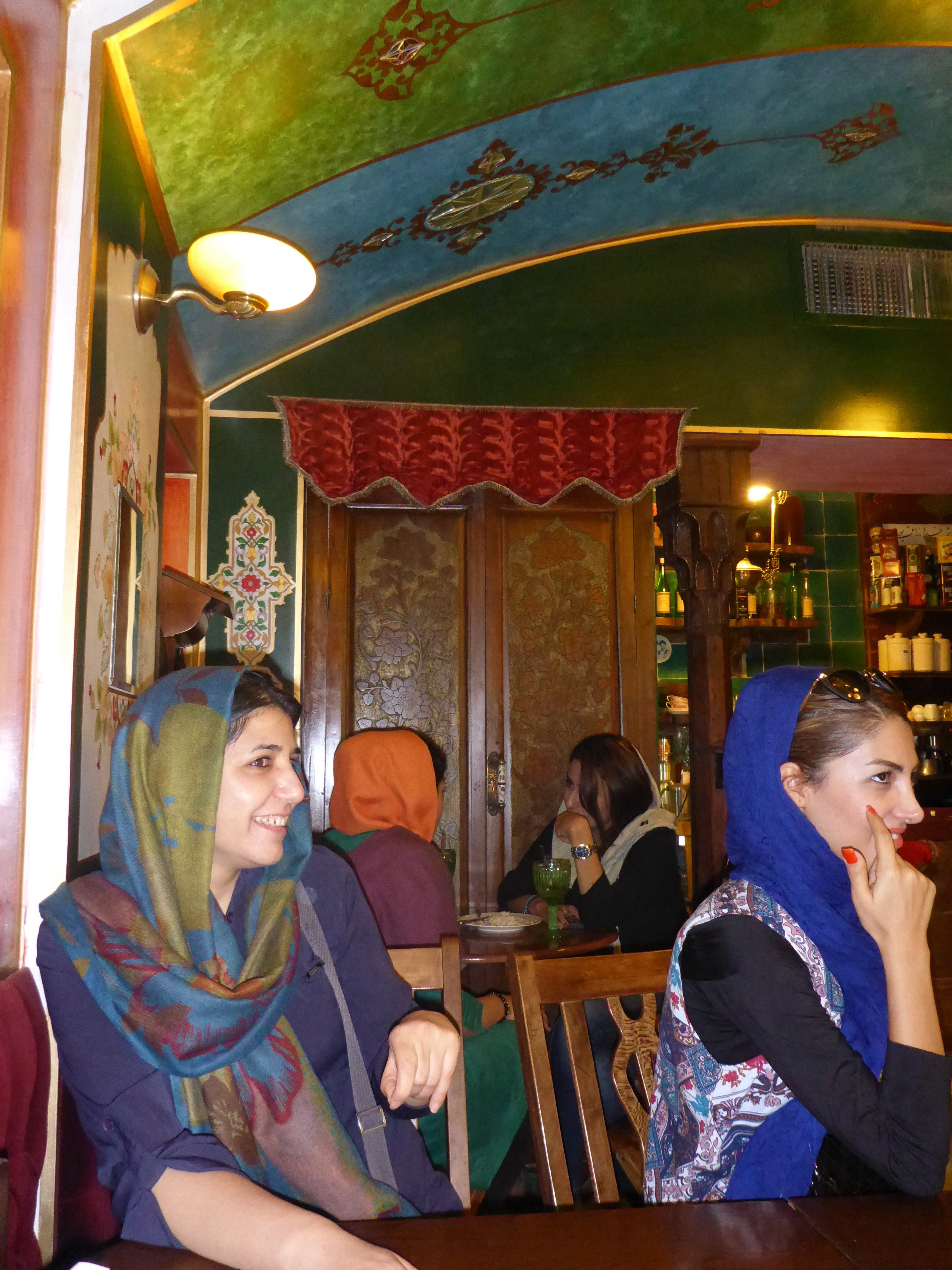
Typical Armenian teahouse in Jolfa district, Isfahan with Zoreh and friends
Typical Armenian teahouse in Jolfa district, Isfahan with Zoreh and friends

Vank cathedral in Jolfa district, Isfahan, Iran

Vank cathedral in Jolfa district, Isfahan, Iran

Inside Vank cathedral, Isfahan, Iran
Inside Vank cathedral, Isfahan, Iran

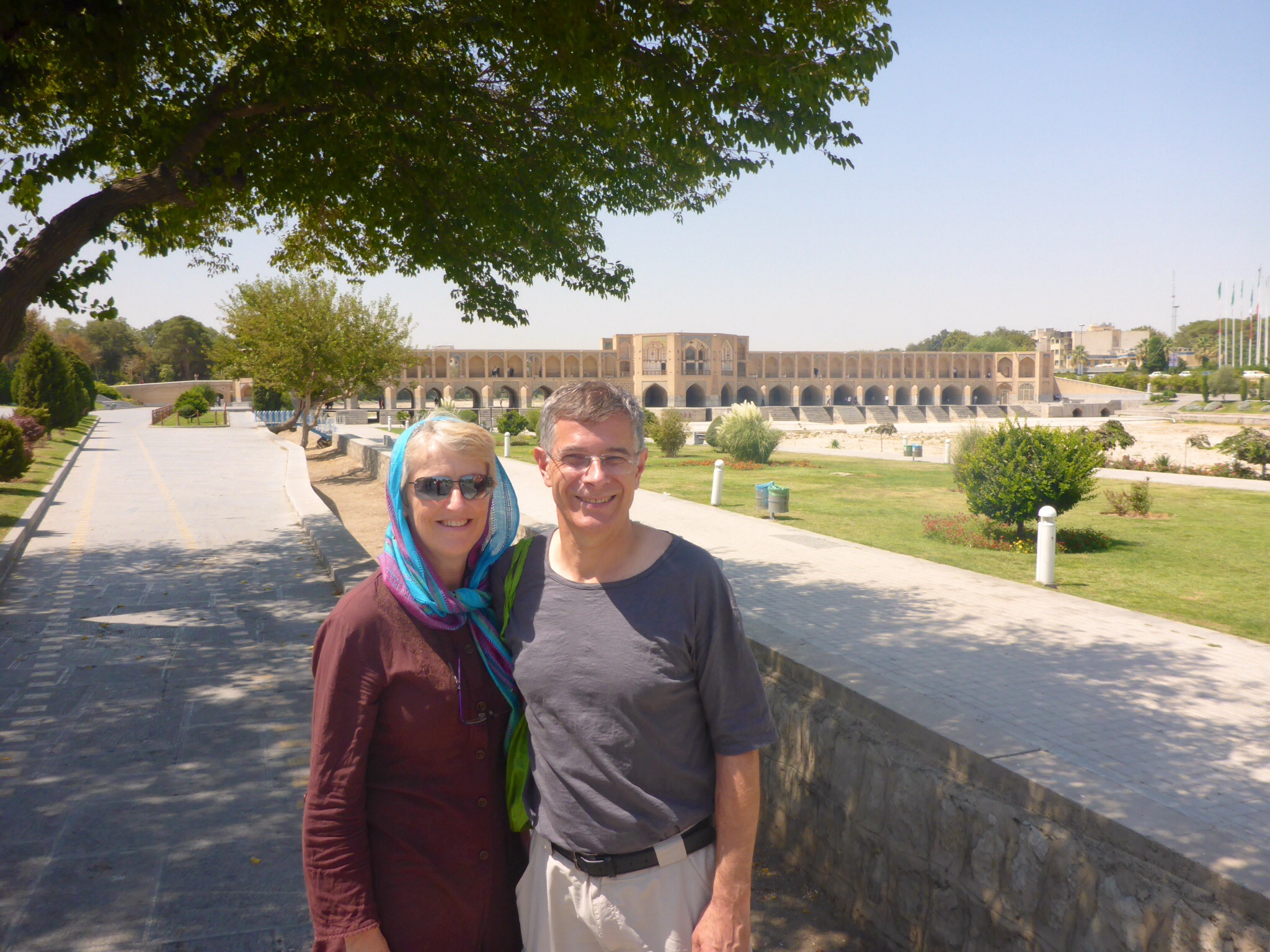
Khaju bridge, Isfahan, Iran

Khaju bridge, Isfahan, Iran

Finally, I was keen to visit the Sheikh Lotfollah mosque on the Naqsh-e Jahan squre, built between 1602 and 1619. It is unusual as it has no minaret or courtyard and but steps lead up to the entrance. That is because it was never designed for the public but for the women of the shah’s harem. They would enter their mosque via an underground passage under the square from the Shah’s palace.
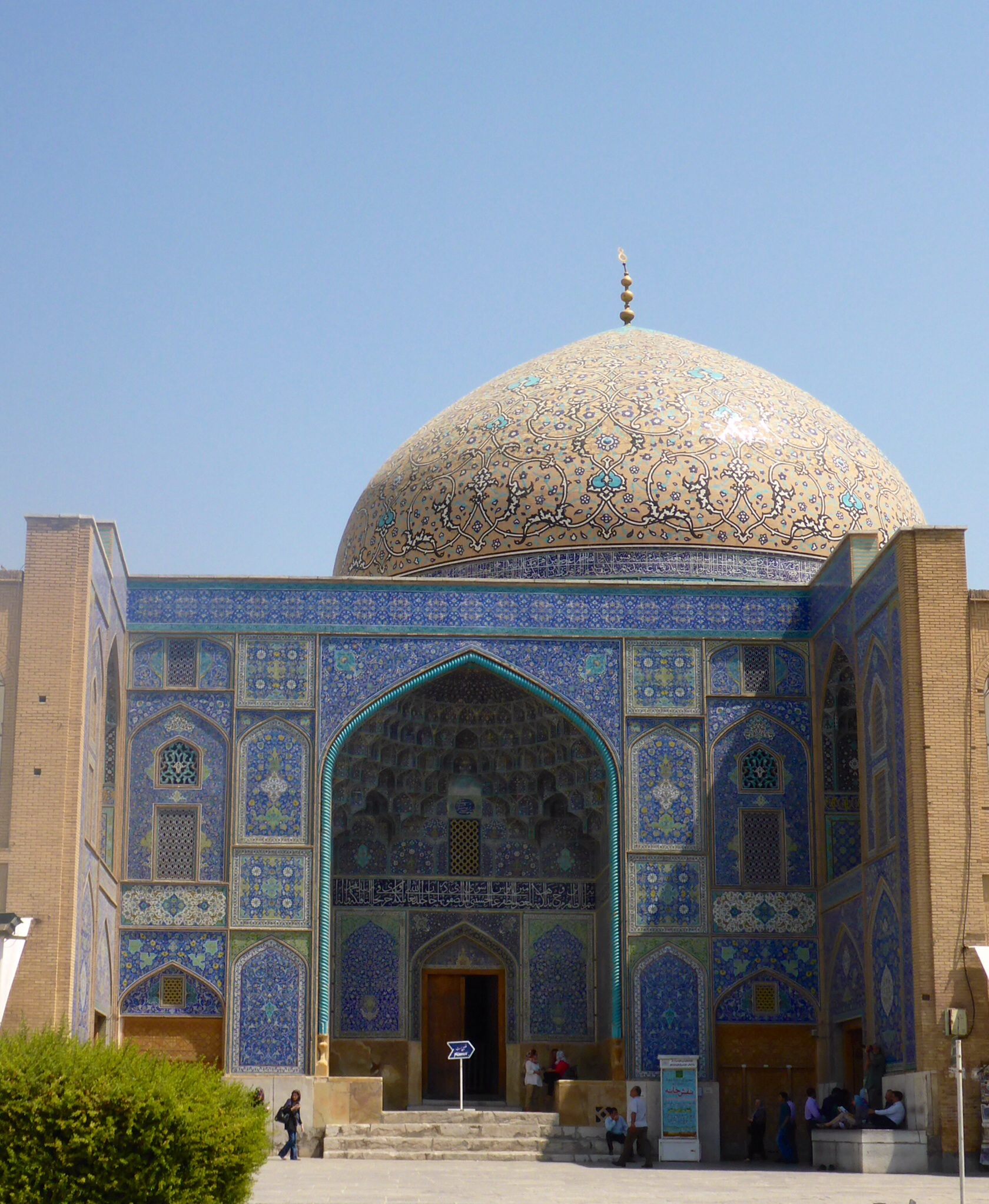
Sheikh Lotfollah mosque, with no minaret or  courtyard, but entrance steps which were never used - Isfahan, Iran

Sheikh Lotfollah mosque, with no minaret or courtyard, but entrance steps which were never used – Isfahan, Iran
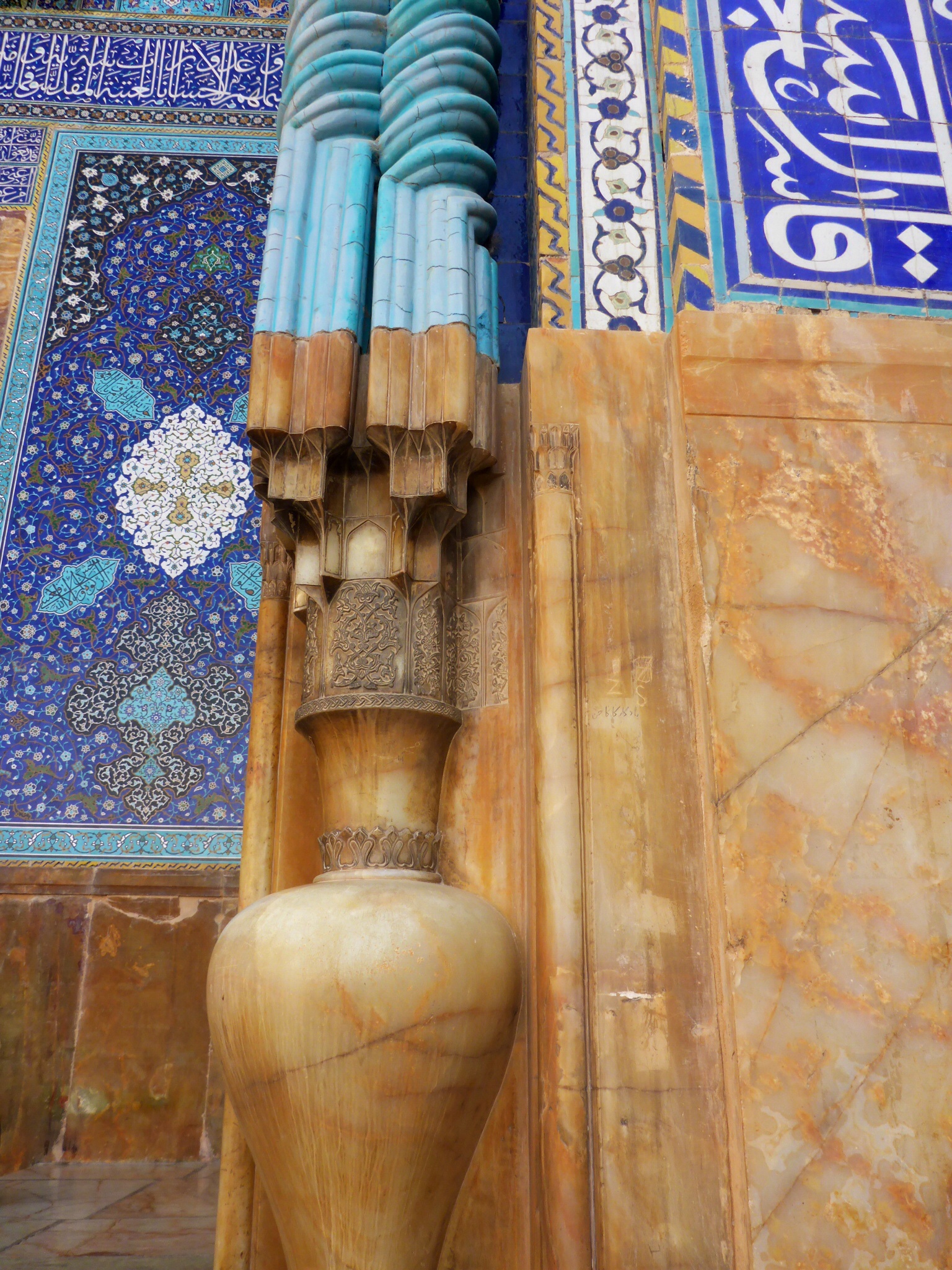
Alabaster surrounds the Shah or Imam (depending on your political views) mosque
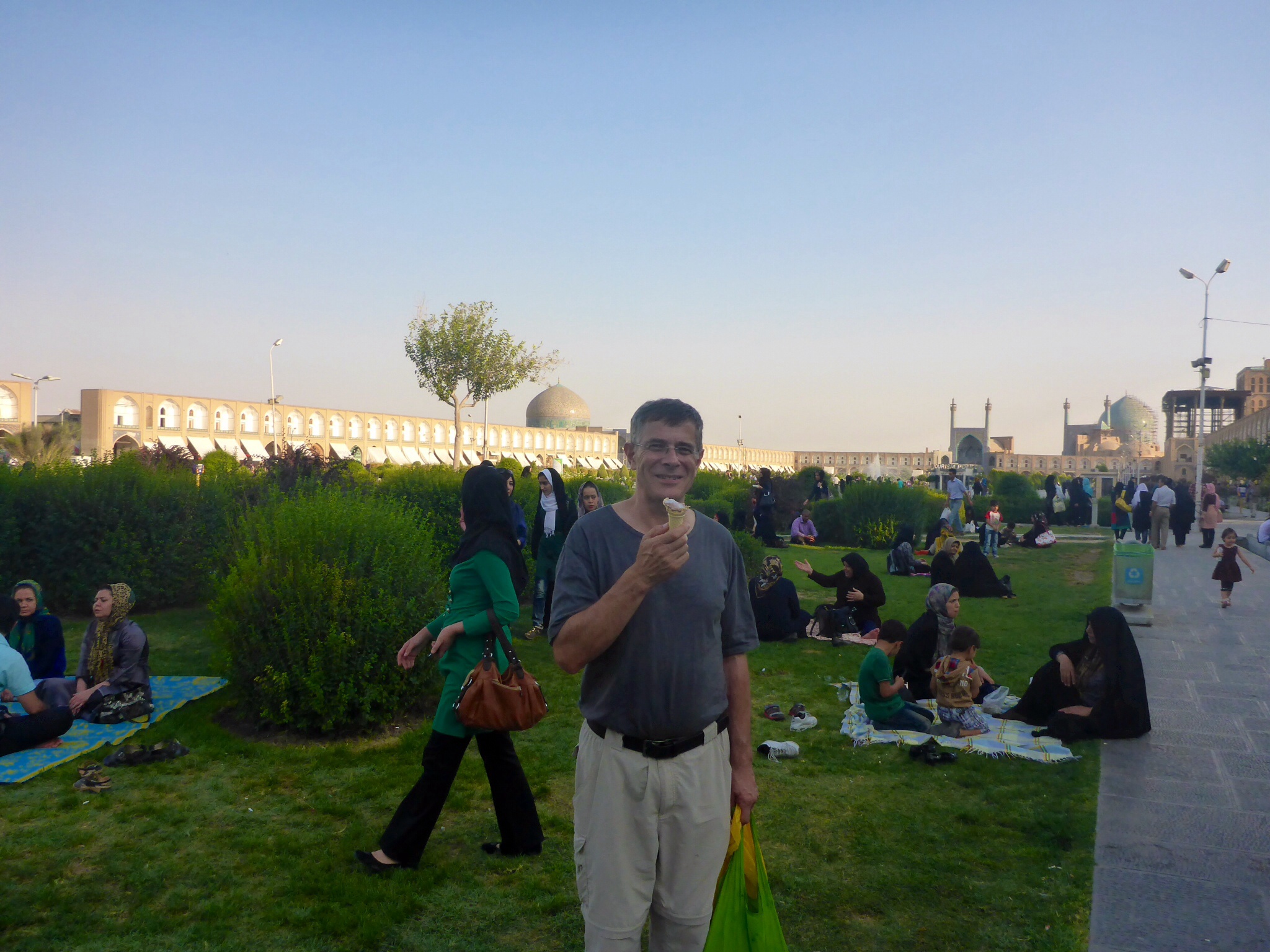
Alabaster surrounds the Shah or Imam (depending on your political views) mosque

Naqsh-e Jahan Square (or Imam Square), with the Sheikh Lotfollah (harem) mosque on the left, the palace opposite, and the main mosque at the far end.

Naqsh-e Jahan Square (or Imam Square), with the Sheikh Lotfollah (harem) mosque on the left, the palace opposite, and the main mosque at the far end.

Zoreh’s sister prepared us a different breakfast every morning, delicious lunches, so many Iranian sweets, especially Yazd nougat which we both loved, and lots of home grown fruit. They were so lovely – we just wish we could have communicated with them better. And so incredibly generous. When we left, we gave them a large box of sweets (which we had heard was a traditional gift when you visit people for dinner). They were obviously offended, asking us why we gave them a gift. Anthony was quick thinking: so that you can remember us when you eat them. Insult avoided, just!


Zoreh was wonderful and so attentive. Despite her migraine, she joined us on our last day. She could not have done more for us. Her nephew and his family were so lovely too. Once again, we leave new friends behind. We know we’ll stay in touch…
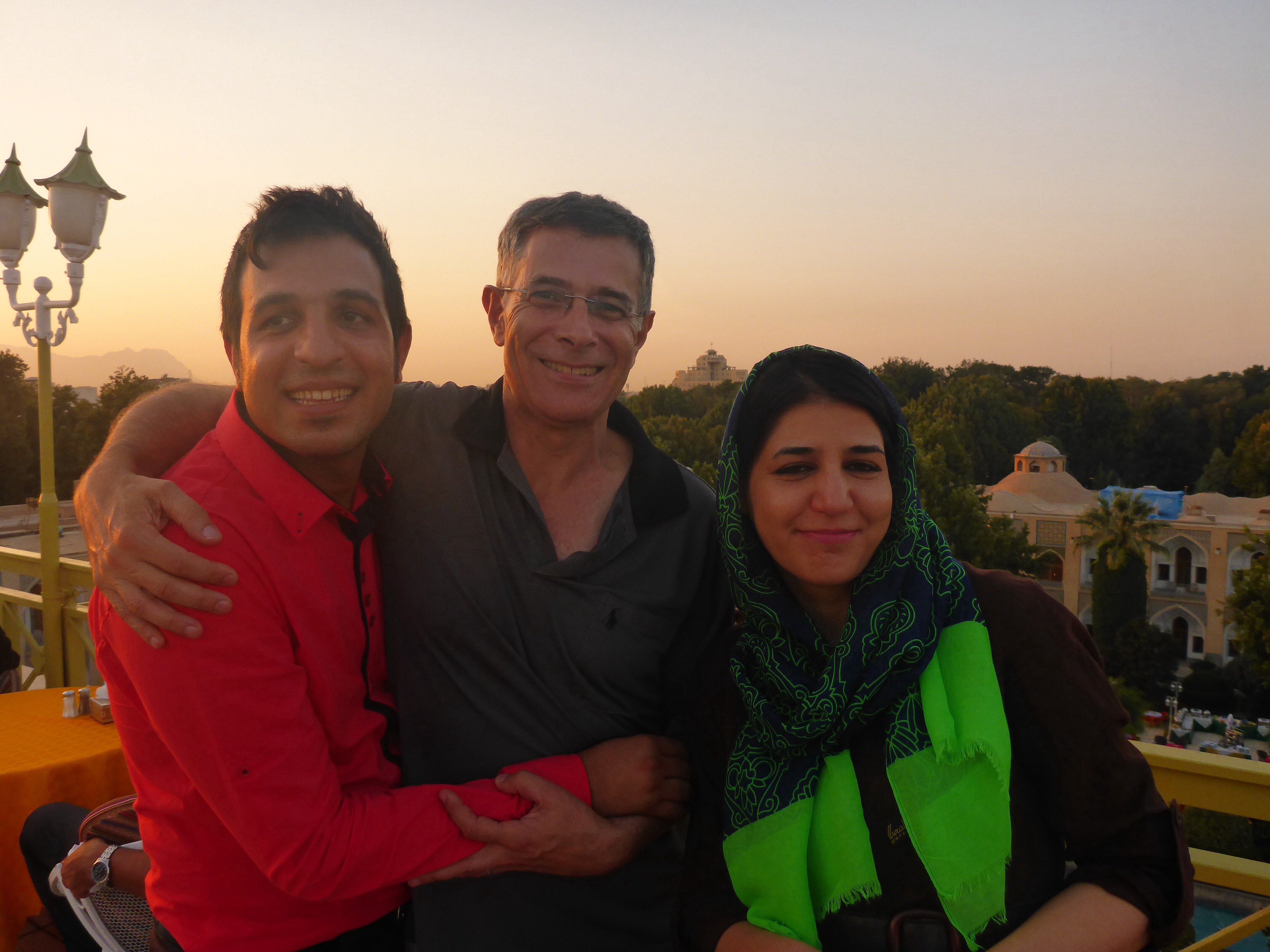
Mohammad, Anthony and Zoreh

Mohammad, Anthony and Zoreh

With Zoreh, Isfahan, Iran

With Zoreh, Isfahan, Iran


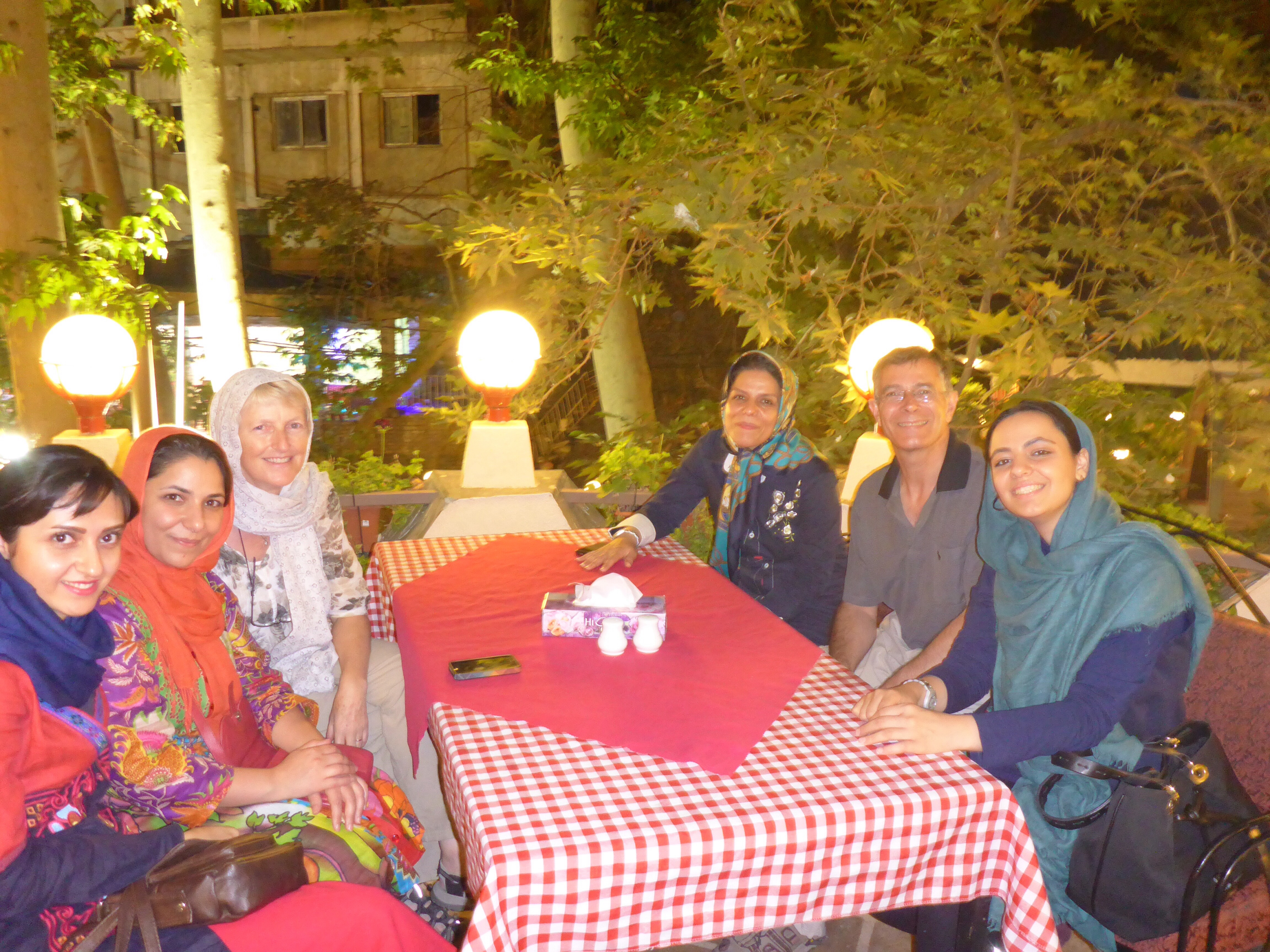
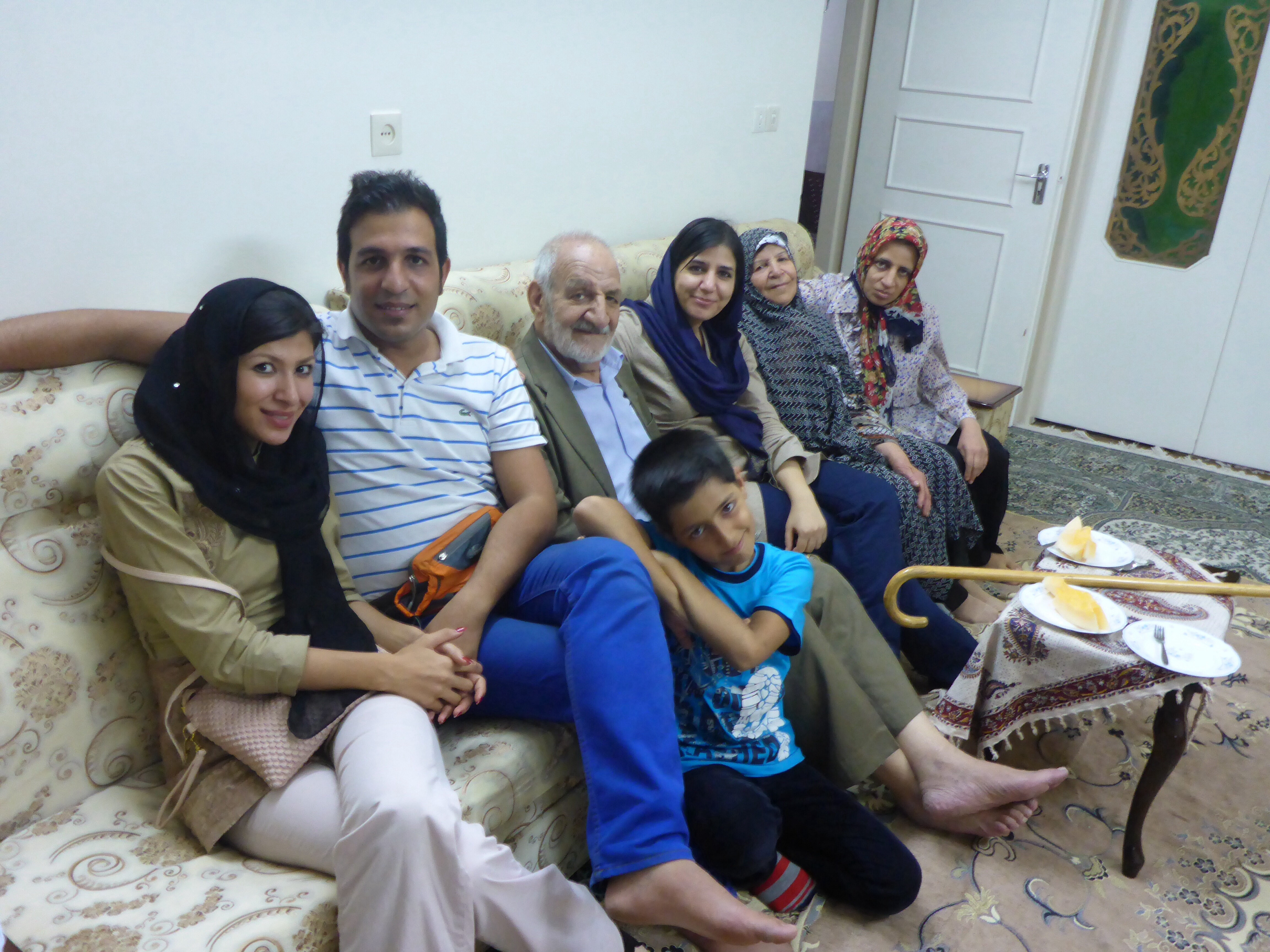
Zoreh's sister and husband in the front, with their kids Sarah and Mohammad with his wife Shadi, who all showed us around Esfahan

Zoreh’s sister and husband in the front, with their kids Sarah and Mohammad with his wife Shadi, who all showed us around Esfahan


After several photos and our final goodbyes, we set off for Yazd.

– Anne

Australia, Austria, where are you from ???????

From time to time, we consider and debate about the form of Government, Head of State and national flag that should represent Australia. While these are all worthwhile discussion points, we have missed the most important of all, our country’s name.

Anne and I have conducted extensive research in the last six weeks in Russia, Kazakhstan, Kyrgyzstan, Uzbekistan and Turkmenistan on these counties’ inhabitants’ understanding of where we are from. We have found that most people confuse us with Austria and Allemagne (Germany). However the use of “Kangaroo” accompanied by a hopping motion with the hand will have any local instantly aware of where we are from.

Changing our country’s name to ‘Kangaroo’ will provide much greater recognition for our country and therefore exposure to a large and hitherto untapped market. We will continue to research this phenomena on our RTW trip and provide a full report in July 2015.

Anthony

Leaving Tehran for Kashan

Today, Friday 5th September, we leave Tehran. The roadside butcher had finished his business – probably meat for the building crew a couple of doors down. We wave goodby and ride out onto a Friday lunchtime traffic, read Sunday lunchtime traffic as Friday is the weekend day here in Tehran. A huge change from riding as the streets seem deserted by comparison to our ride in, which is good for us as we were not looking forward to the exit from Tehran. We have to take a somewhat convoluted route to get to the main route south. A couple of U turns after we start, I hear Anne’s bike screech to a halt. She has avoided an accident with a car that was not going to stop by millimetres. Anne has commented that she felt her body had physically aged 10 years driving and being driven in Iran. A traffic jam or two later and we are on the main road south. We approach the toll road wondering if the payment system will be less complex and easier to understand the the one that inhabits French autoroutes.

Turns out that Toll road is a little bit of a misnomer for us, as it seems the large signs ban motorbikes and other undesirable forms of transport from the toll roads, we ignore the signs and the toll booths always waive us through without payment. Only once in the ride from Tehran to Kashan did a policeman waive his little traffic stick with the red side visible at a toll booth, I just waived back and on we went, maybe he thought I was colour blind.

Each stop for fuel, snack or our favourite lunch of canned tuna and biscuits, brought out the travelling photographers. Pictures of the bikes, us with the bikes, them with us and on the bikes, their children on the bikes. In each case they always ask, even if it is to just photograph the bikes. It sometimes takes quite a few minutes for the crowds to clear after we arrive for us to get on with whatever activity we stopped for. Still great to meet so many friendly people.

Friendly waves but I do wish the drivers didn't cut in front of us that way - on our way to Kashan, Iran

Friendly waves but I do wish the drivers didn’t cut in front of us that way – on our way to Kashan, Iran

The toll is a good quality and multi lane, we make good time and arrive at the outskirts of Kashan. We hail a taxi and agree a price for him to lead us to the hotel. Usually about one US dollar. I have found that the free maps do not have the lane ways in such detail to navigate so I switch to a local and very accurate GPS system – taxis. We travel down Kashan’s avenues around green and treed roundabouts, then off down alleyways, left and right to a point where the taxi can proceed no further. We ride on to find our hotel and park the bikes close by. It is beautiful inside and we are both exhausted so the air conditioning is vey welcome.

Bike security is very important to us and at each hotel we look for the most secure location for the bikes. I am told go back to the white door and part there. I bring both bikes to the white door, ring the bell and am admitted. About one meter in is a set of stairs descending to a courtyard and on my left a small balcony with a couple of 125cc bikes. To get ours in will be difficult, but not impossible so I start to reposition the two small bikes: it’s great I can just lift the back and pull it around, this is the size for next trip. Just as I am getting finished, the owner of the house comes up and tells be it’s the next white gate I want! Oh apologies and I am out of there, lucky I did not get our motorbikes in.

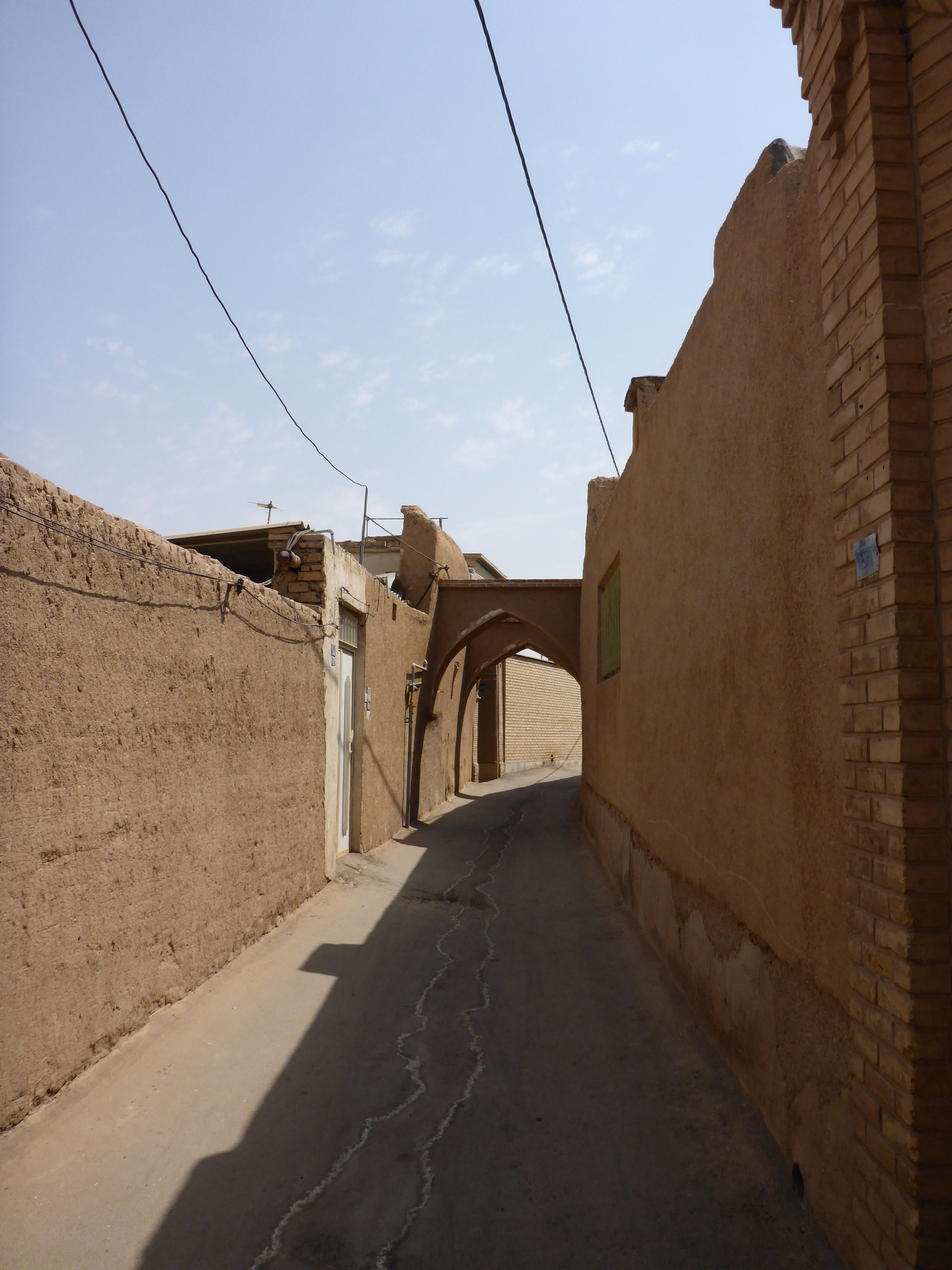
Not that white door!!  Our hotel entrance is just past the archway.  Kashan, Iran

Not that white door!! Our hotel entrance is just past the archway. Kashan, Iran

Soon the motorbikes are safely parked and I struggle back with two panniers in the 40 degree heat. It would have been nice to have some hotel help in this regard, but they all seem to have disappeared. It does seem from the number of women and children around that parts of this old building have been retained as family dwellings amid the hotel and it not clear where the boundaries are between hotel and home, especially when the children are playing outside your bedroom window at midnight. That and being near the kitchen, we decide on a room change for night number two. We get an underground cavern down eight steep steps, but the room is quiet and we are happy. It should be noted that steps in Iran never have an even step height, the builders must have to work with whatever sized materials are at hand. One really does need to “mind the step between the platform and the train” as they say.

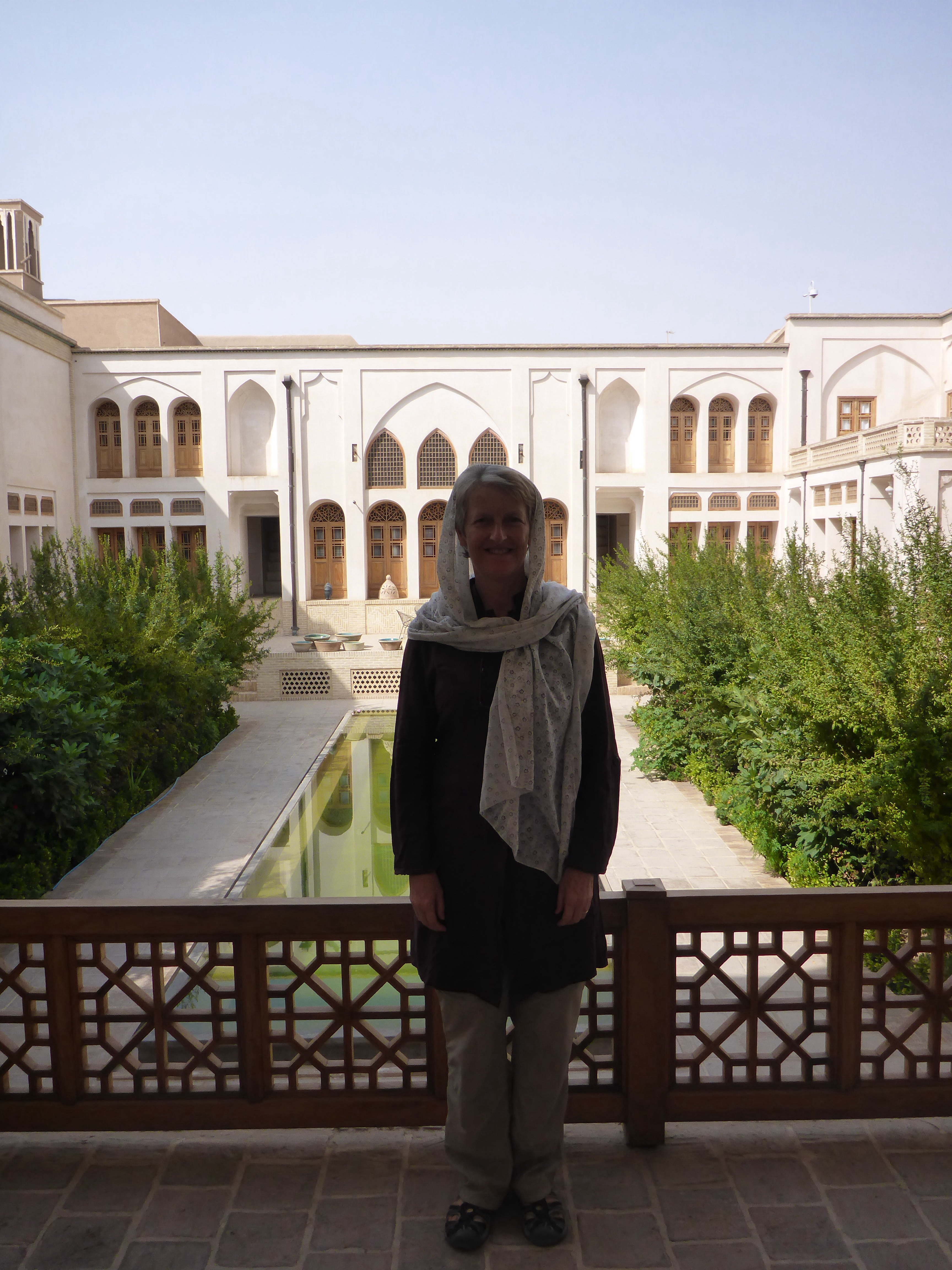
Our hotel in Kashan, the Manoucheri hotel - a beautifully renovated traditional home

Our hotel in Kashan, the Manoucheri – a beautifully renovated traditional home

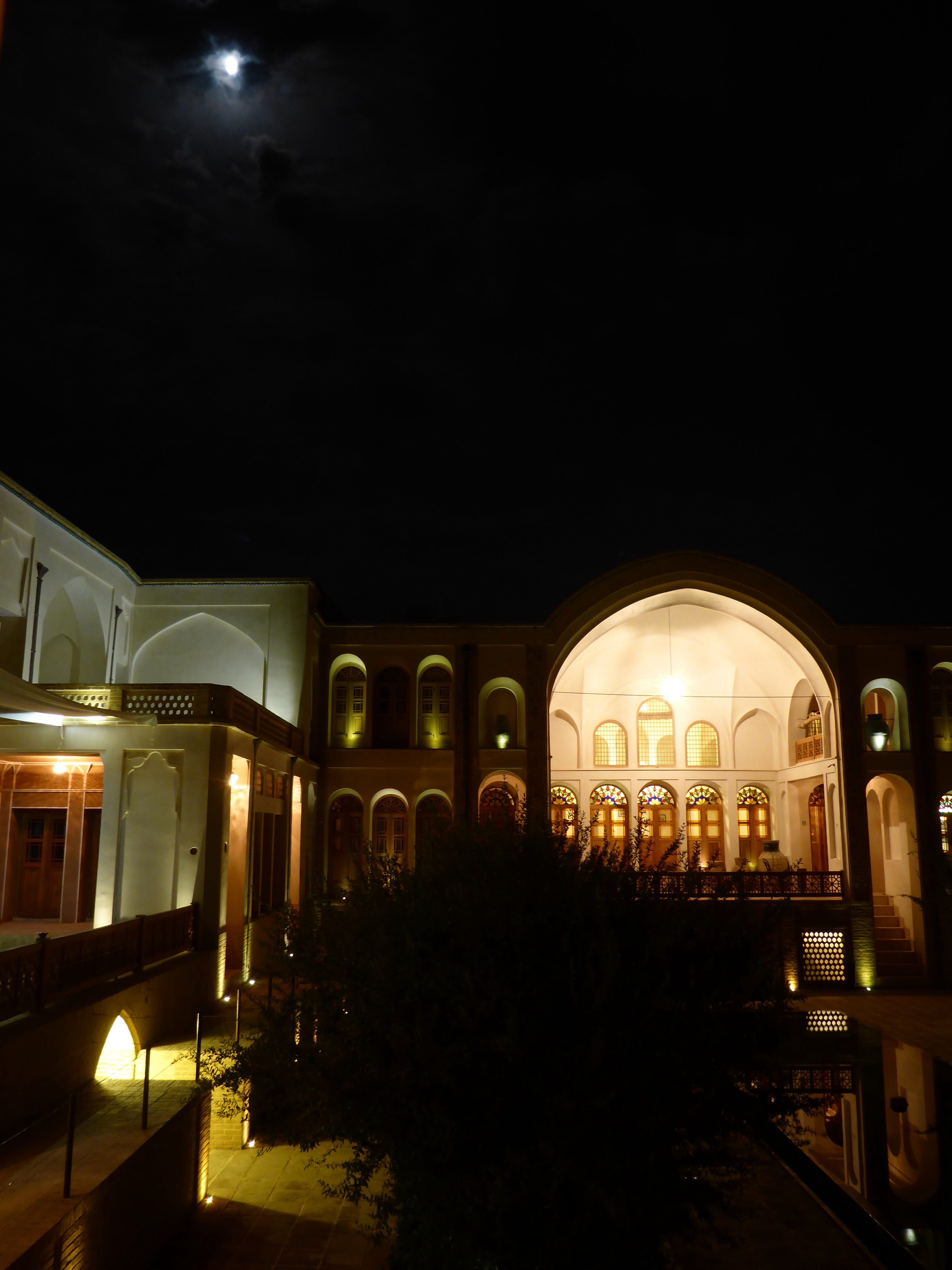
Our hotel in the evenings, Kashan, Iran

Our hotel in the evenings, Kashan, Iran


We only have one full day in Kashan and have divided the day into morning and afternoon activities, as the heat of day reaching over 40 degrees, plus everything shutting at lunchtime gives a us a window to rest and make some blog writing time in the cool of the air-conditioned room. As I have said before this makes a big difference for me, and while costing more, is preferable now to the types of places and conditions in which we stayed 35 years ago.

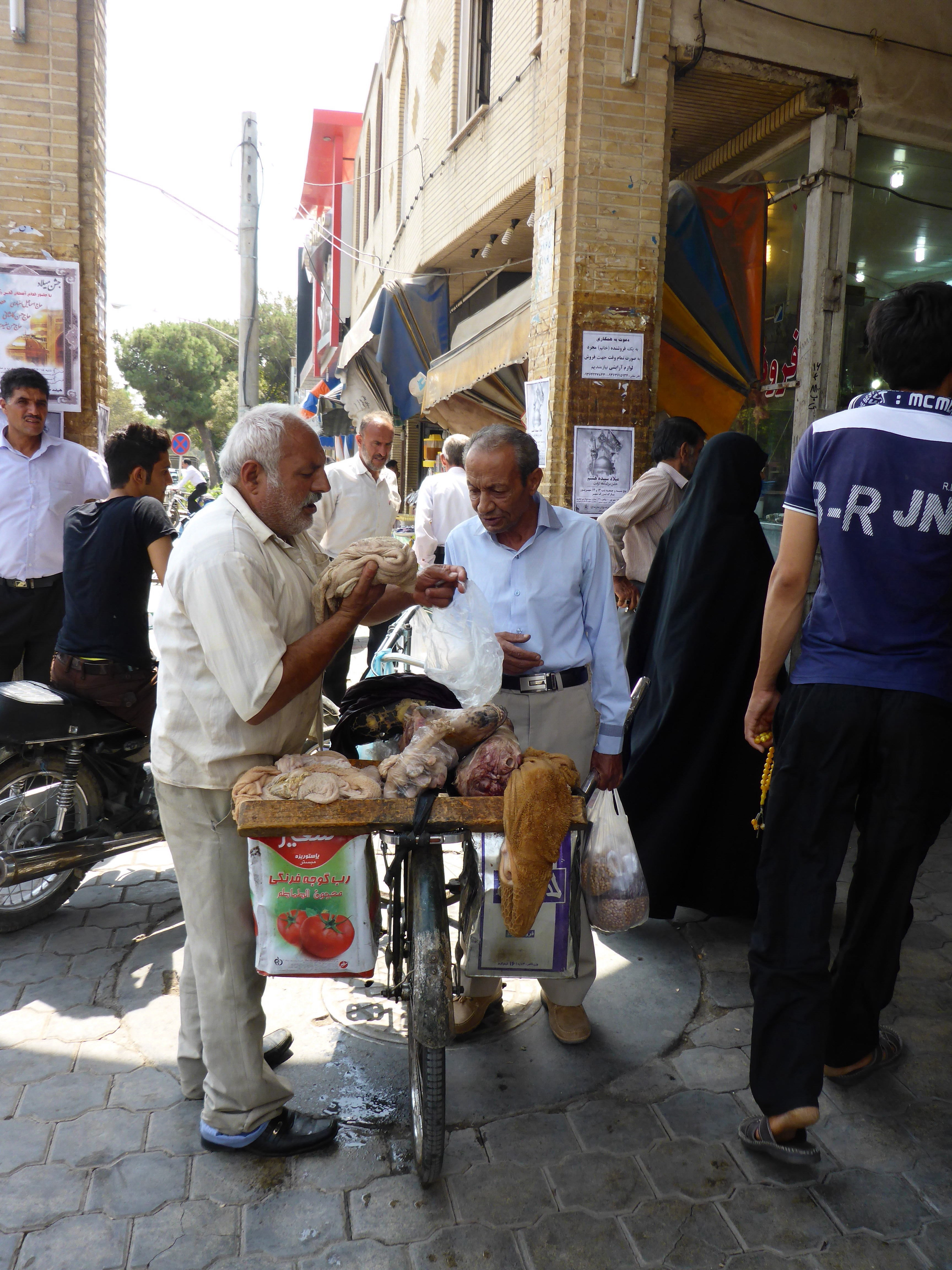
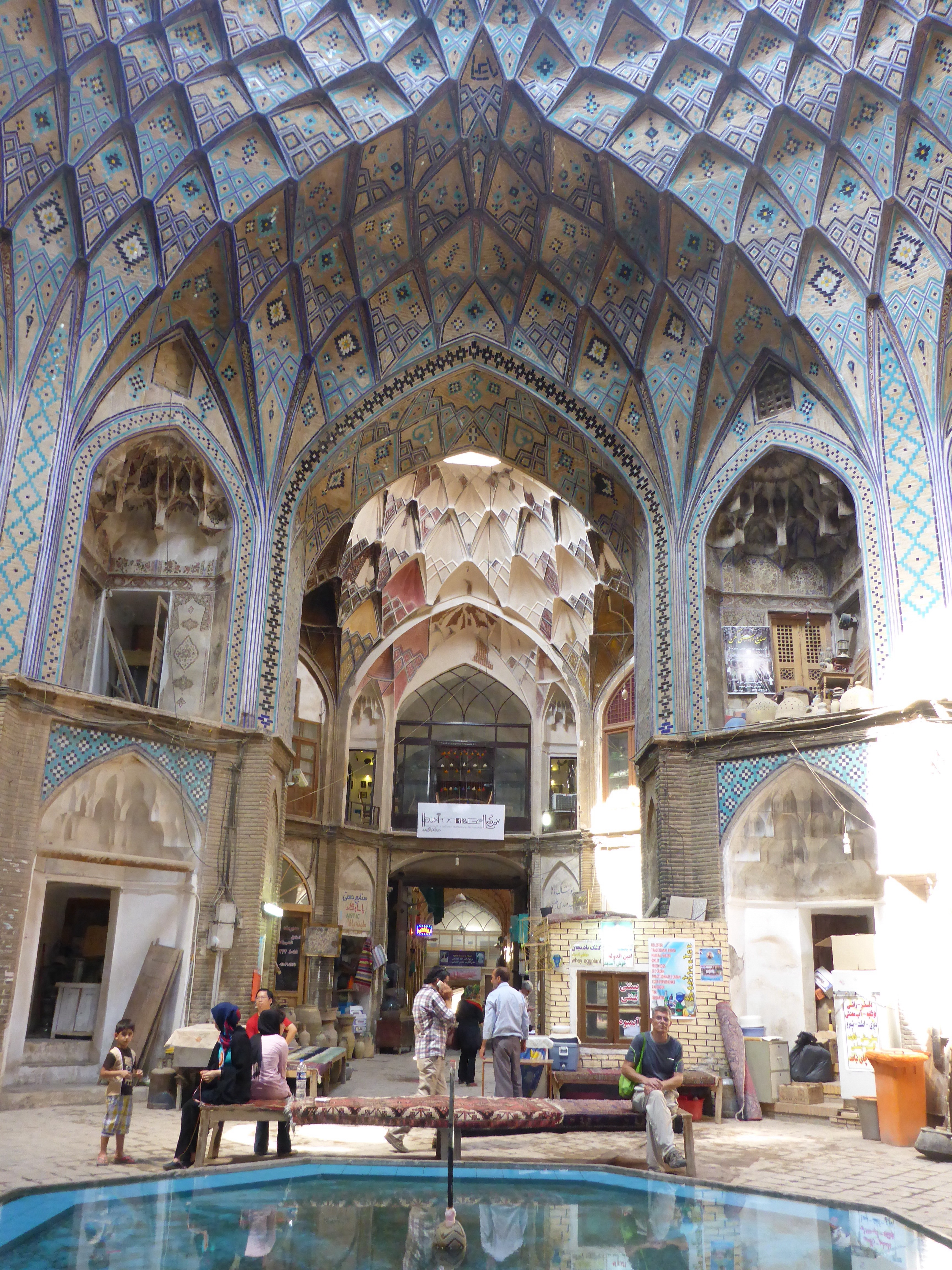
Anne had two places she wanted to visit in Kerman, one is the covered bazaar which is one of the best in Iran and has a renowned multi domed roof. We enter from the meat and vegetable end of the bazaar and Anne immediately spots a mobile butcher on his bicycle. Meat delivered to your door: any health issues there that could preclude this at home?

Mobile butcher, Kashan, Iran

Mobile butcher, Kashan, Iran

Past the usual stores until we spy a coffee shop down some stairs. This turns out to be a former bathhouse that has been converted into a coffee shop and restaurant. A single family has run this for generations and is still going strong. We lunch on a raised platform overlooking the fountain which for some strange reason has an oil fired flame coming out next to the water! The owner’s father and grandfather’s portraits hang on the wall. We are told the construction of the building is such that it is effectively earthquake proof. After a relaxing lunch, no hokum pipe for us, we take a photograph for the only awake German out of four sitting at the other end of the tea house. The others are stretched out on the carpet. I am sure he will have fun with that at home.

Teahouse, Kashan bazar, Iran

Teahouse, Kashan bazar, Iran

Before I wrote this section on the Bathhouse in the Kashan Bazaar, I had found people who had written similar travel reports and I thought how easy plagiarism must be today. There was a recent report on a Dutch girl who instead of travelling to Thailand for a month as family and friends thought, stayed home and used Photoshop to fake her trip as a way showing how media can be manipulated. I now realise we could have gone and done this RTW motorcycle trip while lounging on a year long round the world cruise instead. Just kidding, where do you really think we are?

Stunning ceiling of the Kashan bazar, Iran

Stunning ceiling of the Kashan bazar, Iran

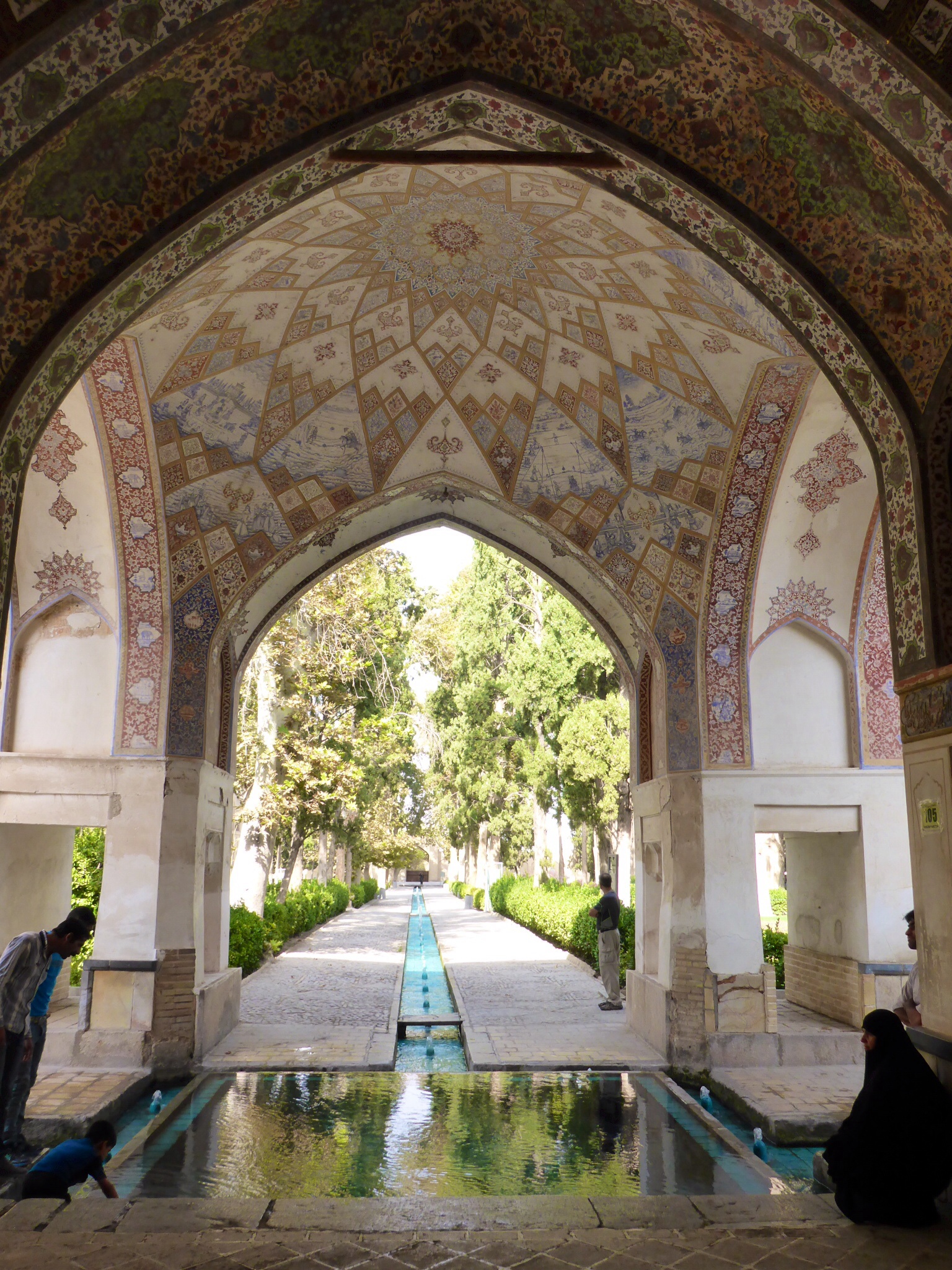
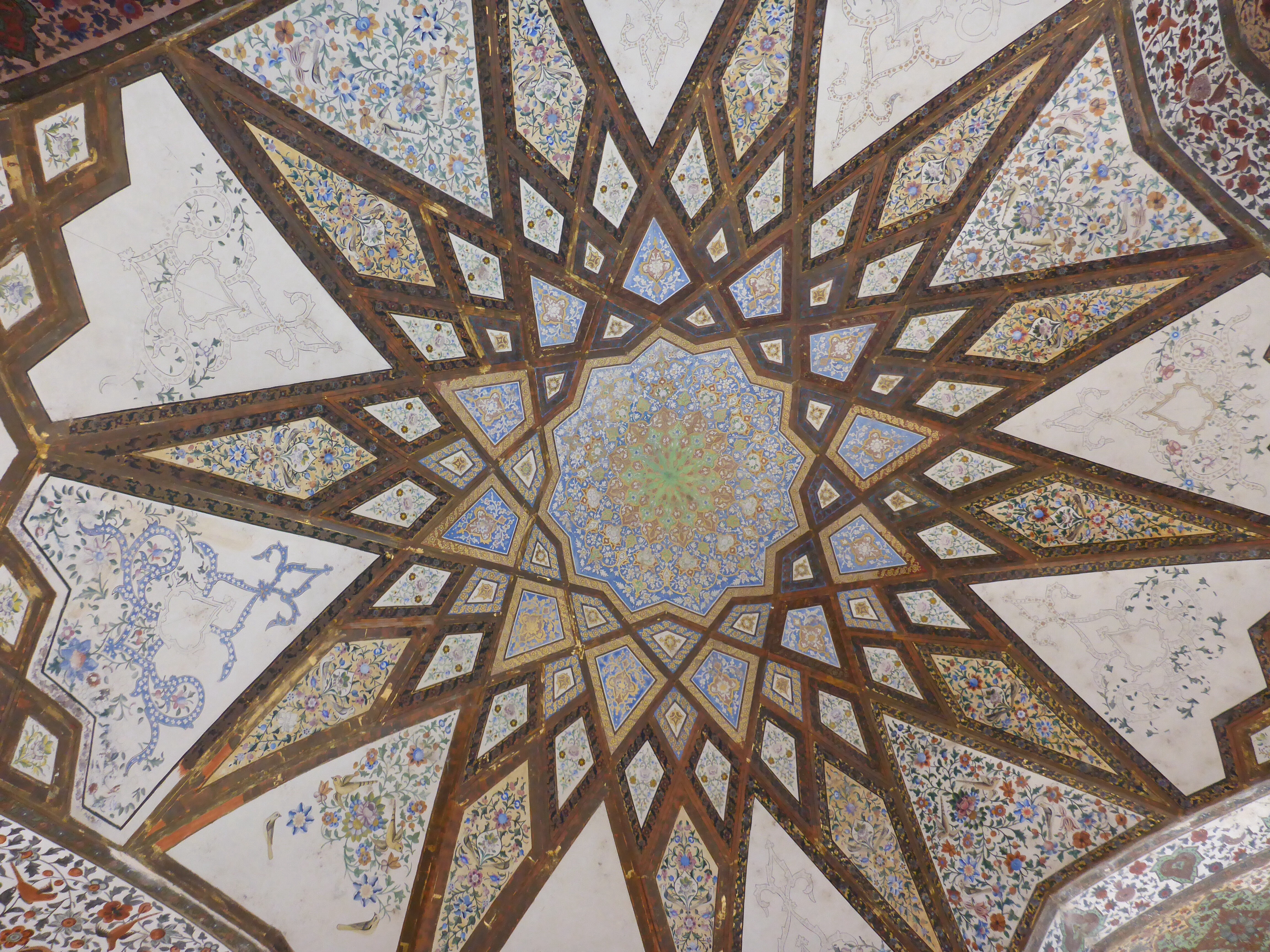
Our afternoon trip was to the Persian Gardens called Bagh-e Fin This is one of the classic Persian gardens and on Unescos heritage list. The construction and use of a gravity fed water supply to the gardens are amazing and will be reflected in the photos loaded in Dubai. They are beautifully laid out, cool with tall trees, deep green grass and the sound of running water. It is supplied with water from an underground stream that then flows towards town passing through numerous buried water storage facilities that date back hundreds if not thousands of years. Water conservation is always practiced by those in regular short supply.

Bagh-e-Fin Garden, Koshan, Iran

Bagh-e-Fin Garden, Koshan, Iran

Bagh-e-Fin Garden, Kashan, Iran

Bagh-e-Fin Garden, Kashan, Iran

Bagh-e-Fin Garden, Kashan, Iran

Bagh-e-Fin Garden, Kashan, Iran

Vivid green at Bagh-e-Fin garden, Kashan, Iran

Vivid green at Bagh-e-Fin garden, Kashan, Iran

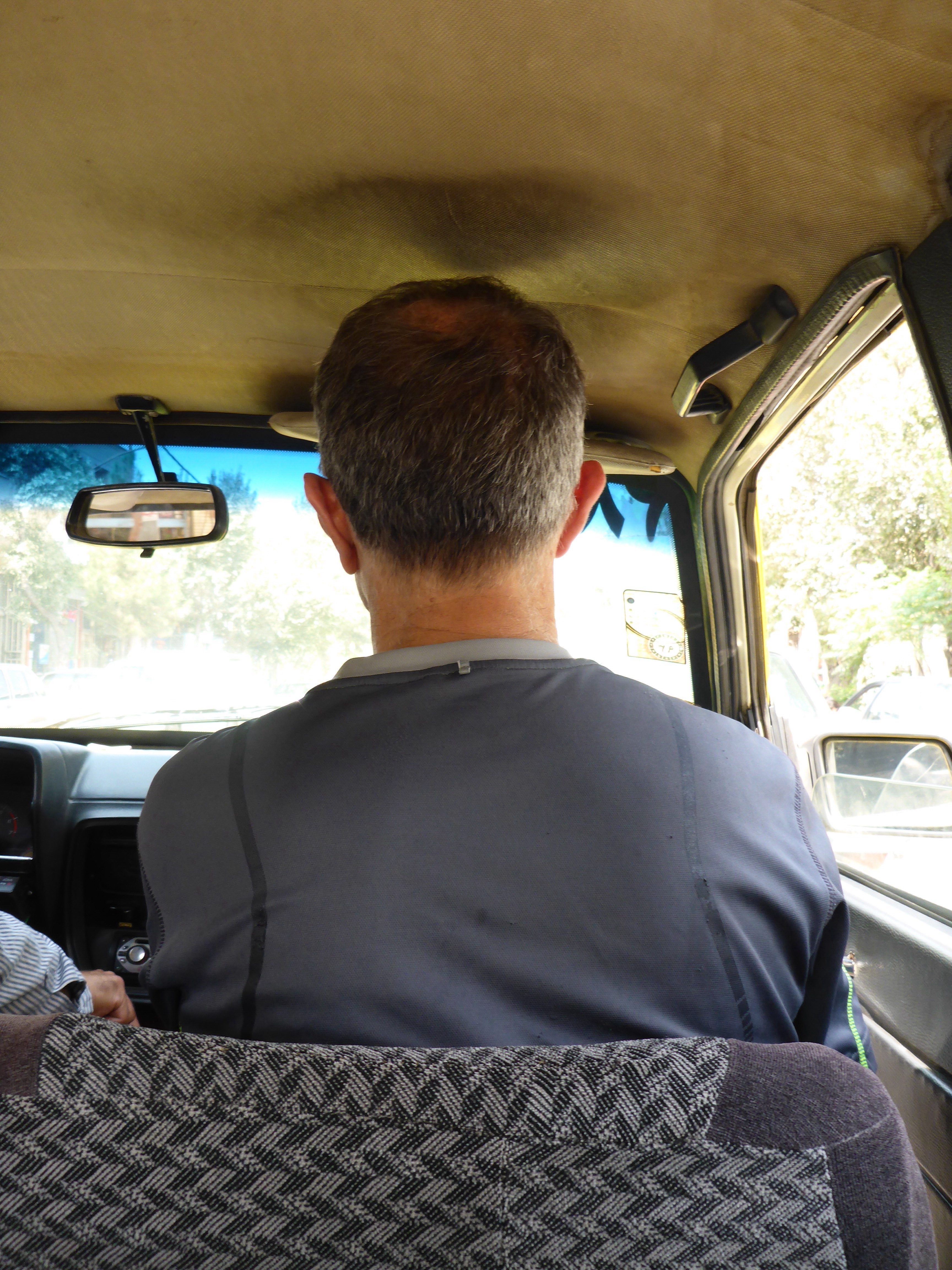
Taxi ride in Kashan with all the usual safety deatures of seatbelts & headrests

Taxi ride in Kashan with all the usual safety deatures of seatbelts & headrests


– Anthony

Tehran

We eventually left Karaj for Tehran, Monday 1st September. We used Sohrab’s instructions to get from the village the villa was located in to the freeway. Easier than the steep twisty way we came in he said. So we followed his directions until I shouted to Anthony: we’re going the wrong way, this is now a one way! We quickly do a U-turn. As we turn off, down the side road we’d just passed and ignored, I look back to see if we’d missed a sign – nothing! We should have just known/guessed. To avoid going right into the city of Karaj, which was the wrong way for us anyway, we set down all sorts of tiny, narrow, steep little streets, come across the odd dead-end, go back. In the end, it was much worse than the difficult way we’d come in a few days back and which Sohrab told us to avoid!!! I was quite pleased as I tackled them all ok, unstressed, even the final steep, gravelled T-junction up to the main road. So we eventually ride into Tehran. I have to admit I left the villa with a sense of trepidation at the thought of riding into Tehran, based on what we had been told by fellow riders. So this little exercise of getting ‘lost’ in the tiny streets of Karaj and tackling them with ease has given me confidence.

We follow the GPS, mostly but not exactly because it occasionally tries to send us some obviously obscure and convoluted way. The GPS is Anthony’s role, unfortunately for him as it can be quite frustrating to follow especially in traffic. We ignore the ‘no motorcycle’ signs on the freeway into Tehran and pass police cars on a few occasions without any trouble.

Tehran is like nothing we have ever experienced. And as I write this having now left Tehran, I am sorry to say I have no desire to ever repeat. We will return one day, to visit friends, but not on a bike. See our post on Iranian driving for more on why…

We eventually arrive at Saba’s just 10 minutes late – not bad really!!! Although 5 days later than originally planned. We drive down her steep driveway into her underground garage where we can safely store our bikes while there.

It is so good to see Saba again! (we met in Brisbane while I was doing the Celta English teaching course). Her aunt is there too to greet us and tells us Saba has been waiting for us for the past week!! We contact Sohrab and Afrooz to let them we have arrived safely. We have so many friends worried about us and wanting us to check-in and let them know we have safely arrived – as if they were our parents. Another friend, Fariba, has desperately been trying to contact to see us too, but we had already delayed our arrival in Tehran due to our unexpected stays in Beshahr and at the Karaj villa, our priority is to see Saba who has been patiently waiting for us. Saba tells us her apartment is ours for as long as we want. Once again, we experience the wonderful Iranian hospitality. Lunch has been waiting for us. Saba is a great cook. Saba’s aunt is very interesting and speaks perfect English which is very helpful for us. She tells us about her current project, designing a 300 metre high concrete walled dam. Later we meet Saba’s parents too.

We spend the afternoon chatting. A lovely lazy day. In the evening, we go to Tajrish square, a northern suburb where there is a bazaar and lots of little restaurants. Saba gives us the option of going by taxi or bus. Bus of course! As we are about to get on a bus, Saba explains that the front is for males and back for females, but if Anthony wants to join us, that’s ok. There is no law as such, but there is an understanding of where everyone’s place is. If one section gets too crowded, it can overspill into the other section. It is crowded as it is rush hour so we stand. I keep being offered a seat. Not because of my grey hair but because I am a tourist. Two young women talk to Saba and ask her why she took me on a bus. I should be traveling in something more comfortable. She assures them it was my choice and I confirm that to them. And so we all chat (with Saba interpreting). Apparently, it is very common to people to chat to strangers. I can see that the segregation makes it easier for women to interact comfortably amongst each other.

Segrated buses - Tehran, Iran

Segrated buses – Tehran, Iran

Tajrish is bustling with life. It is fantastic. The noises, the smells, the sights – it’s alive. We must look like kids in a candy shop, all wide eyed. We stop to look, to smell, to enquire and yes, to take photos. It is not our first bazar, but this particular one is full of locals only shopping for food, spices, clothes, anything really. There are no tourists.

Tajrish bazar, Tehran, Iran

Tajrish bazar, Tehran, Iran


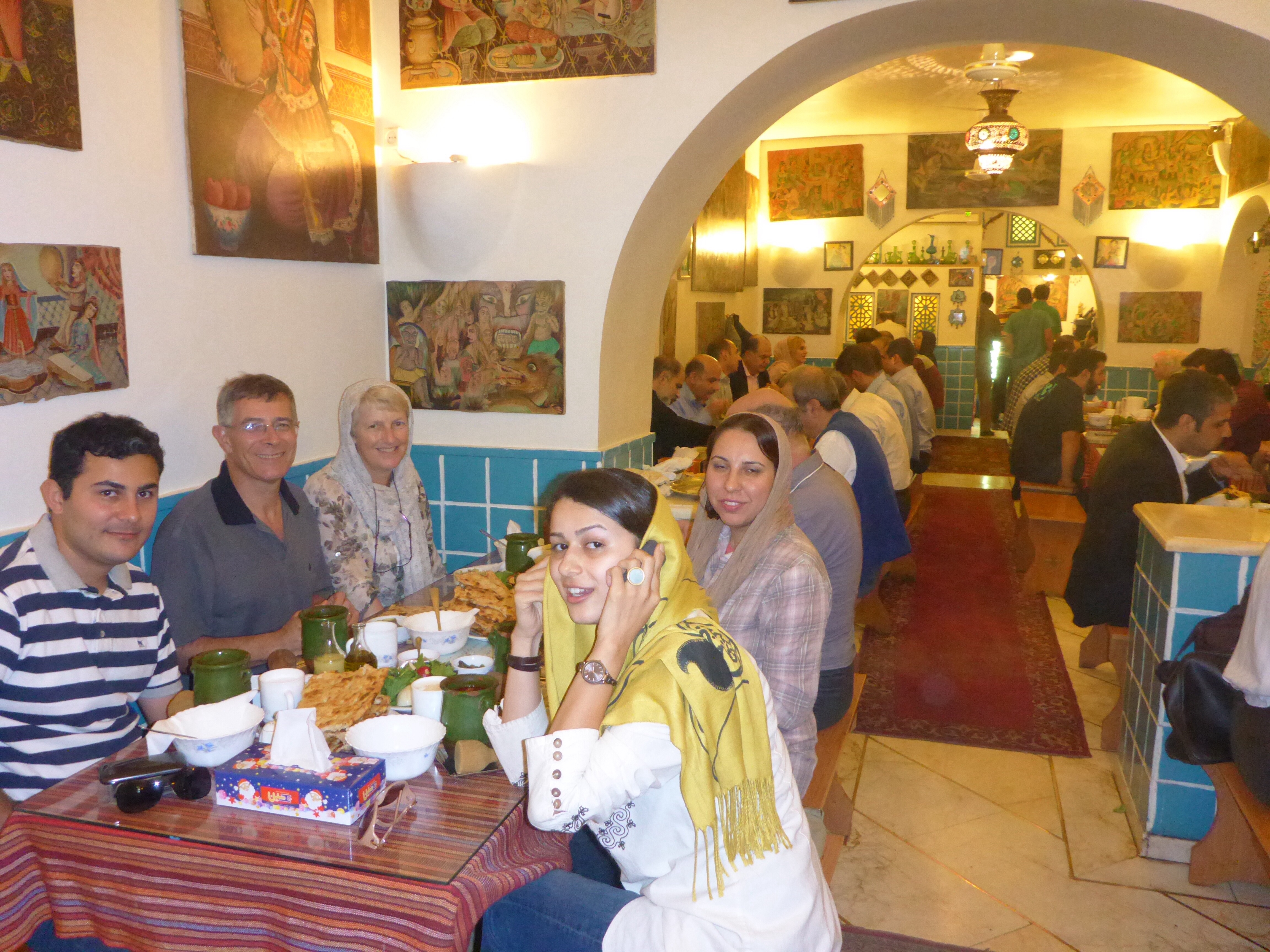
After a slow meander through it, we go to a tiny restaurant on Tajrish Square. Saba wants us to try two traditional dishes. One we loved, osh, a sort of noodle and vegetable stew, the other we weren’t that keen on – some sort of savory porridge. Osh was quite filling and a bowl was all we felt like for dinner. We can’t pay so we offer to get tea.
Saba introducing us to osh at Tajrish square, Tehran, Iran

Saba introducing us to osh at Tajrish square, Tehran, Iran


We go to a lovely outdoor coffee shop near the film museum. We love the fact that even in Tehran we seem to be the only tourists. That is of course thanks to the fact that we are shown around by Saba.
I love this photo - while totally unflattering of me, it reminds me of the great times we had with Saba - Tehran, Iran

I love this photo – while totally unflattering of me, it reminds me of the great times we had with Saba – Tehran, Iran


We get up late and have a lovely lazy morning. We meet Saba’s cousin who lives upstairs. She’s brought back our washing, beautifully folded into a little parcel. This is our 2nd machine wash since Moscow (first one was in Beshahr). It might sound totally trivial, but that is luxurious for me!!! Hand washing every couple of days can be tedious at times. Time for a late shower before going out. Although we are in the capital city, we have to remember, like in the whole of Iran, not to flush toilet paper down the toilet as the sewerage system does not handle it. You are meant to use the separate hand shower which is always provided next to the toilet bowl or ‘squat toilet’ to wash yourself.

We have lunch at a favourite restaurant of Saba’s with her father and meet up with 2 of her friends. There appears to be a set menu of dizi – a stew served in a tall cylindrical dish and which has a certain ritual in the way you eat it. You first tear little pieces of bread and place them into your bowl, over which you pour out lots of the broth. You eat your ‘soup’. Then, you mash up the remains of the container with a sort of pestle: in my case, you first carefully remove all large chunks of fat off the pieces of meat, then pound the meat, potatoes and chick peas and remaining broth into a thick paste. Then you spoon dollops into a piece of bread and eat. It is very filling and delicious. It is Saba’s father’s treat. Once again, we cannot pay or contribute in any way.

Eating traditional dizi with Saba's father and friends, Tehran, Iran

Eating traditional dizi with Saba’s father and friends, Tehran, Iran


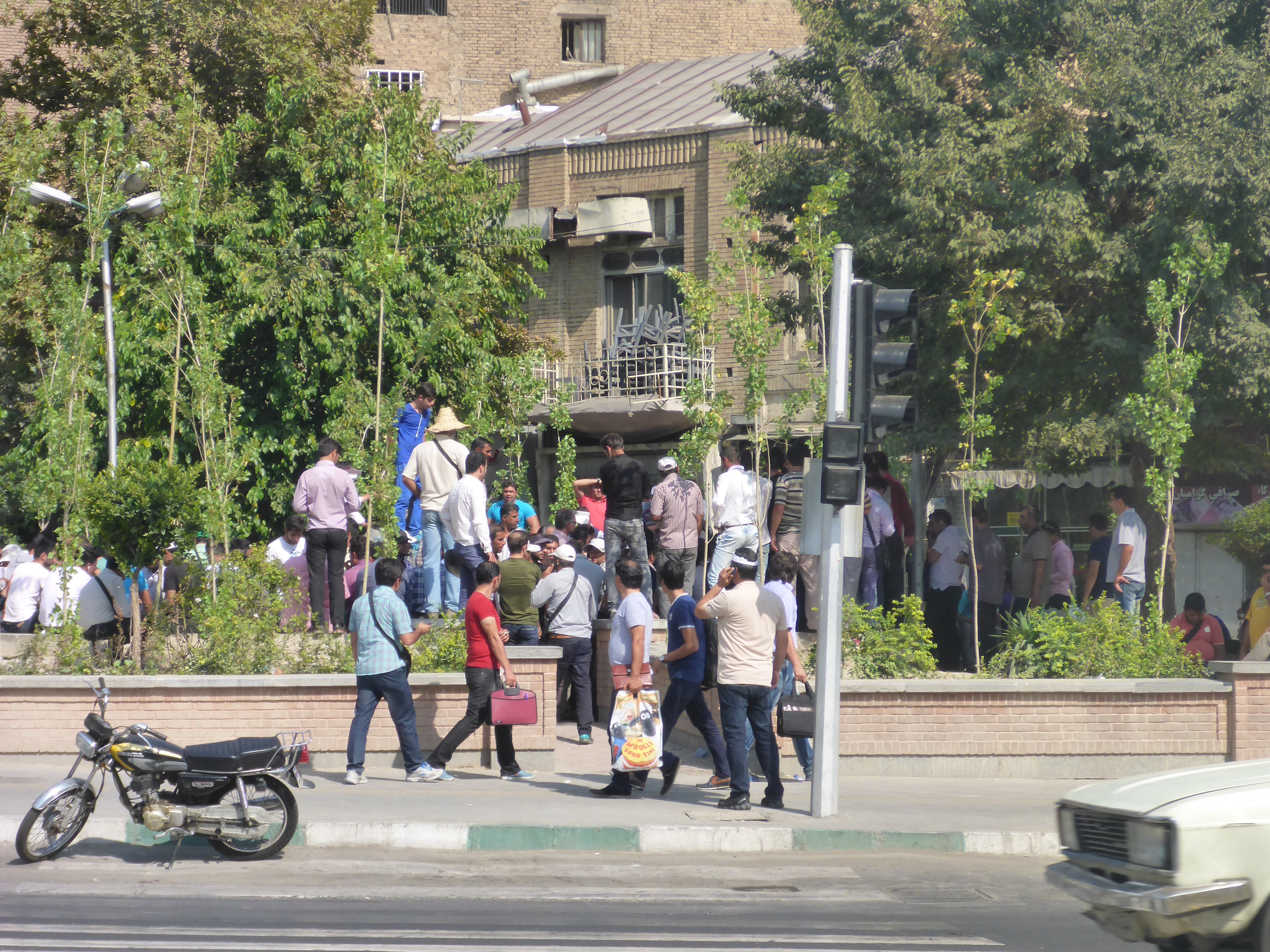
Saba takes us to an area of Tehran where small foreign exchanges line the streets. They are legal. But in the middle of all these is a group of men, trading foreign exchange in large amounts, illegally. They are always there, it is illegal, but somehow continues. It amazes us that such illegal trading continues in broad daylight without any trouble from the police…
Illegal currency trading occurs openly, opposite police guarding the old UK embassy in Tehran, Iran

Illegal currency trading occurs openly, opposite police guarding the old UK embassy in Tehran, Iran


We then visit the National Jewelry museum. And come across our first tourists! A whole coachload. That place is like Fort Knox. We go through 4 security screenings. Some tourists complain. The amount of jewels is amazing, mostly incredibly elaborate, but more amazing to us was the number of bowls full of rubies, emeralds, diamonds etc. Just stock for more jewelry.

Fariba picks us up from Saba’s just before 9pm. Unbeknownst to us, her two sisters, brother and his fiancée want to meet us too. 6 of us pile into his car (it’s only a 5 seater, but so what) and we meet up with his fiancée up the hill. It takes us an hour and a half due to traffic. Shall we go for a walk or have dinner first? Dinner!! We are starving!! Our bodies have not got used to such late dinners yet. We didn’t get our walk in as the kitchen forgot our whole order so we ate really late. But what a feast. And stunning setting – sitting outdoors with a view of the lit rock face of Sangan.

Dinner out with Fariba next to me, and her siblings

Dinner out with Fariba next to me, and her siblings


Conversation is interesting – Iranians we have met are all highly educated and qualified. At our table, we have several engineers and an English teacher. Our ease of travel is something Iranians are very envious about. So many Iranians have dreams to travel but getting visas from countries like ours is very difficult and sometimes impossible for them.

Anthony’s having trouble with a tooth we suspected he cracked on a cherry jam stone the other day and eating chicken this evening has aggravated it. Fariba has a dental appointment tomorrow morning and offers to give Anthony’s her appointment and she’ll make another for herself. And she can show us to a carpet shop straight after and leave us to wander on our own from there.

That is when we decided we would have to change our timetable and our route. Tomorrow will now be spent at the dentist and the bazaar, and we won’t have much time with Saba. She had asked us to stay longer so many times. So why not. We’ll leave another day later. But that did mean we had to skip … Shiraz and Persepolis… Yes, we can hear you from here already!! We know, we know. It is the most beautiful, most interesting city, we have to see Shiraz. We know but: we can read about it, we can see and buy more stunning photos than we could ever take of those treasures ourselves, but we could never ever buy the people experiences. Our choice is easy. One day longer in Tehran and then we can take an easy leisurely route down to Banda Abbas.

Why didn’t we have time for Shiraz? What’s the rush? Visas, once again. We have a 4 week visa for Iran and we have to get to Banda Abbas by a certain date to do the paperwork to ship the bikes to Dubai, and boats only leave 3 times a week. Shiraz is on a different road to Yazd/Banda Abbas and it would mean an additional 900kms round trip. And an extra 900kms is one thing, maybe not that much, but doing the same journey twice in this heat is too much. So Shiraz will be for our next visit.

Anyway, back to Tehran. The next morning, off we go with Fariba, and one of her sisters, to her dentist – the traffic is horrendous and the fumes sitting in the taxi and traffic jams finally get to my head. Anthony is shown to the dentist’s room – there is another patient in another chair in the same room. That’s efficiency. Verdict: Anthony has damaged his tooth but the extent of the work required will only be evident with an x-ray which can’t be done there and the treatment may require 2 or 3 visits. We don’t have the time and the tooth is bearable. It should last until Dubai if he is careful and lucky. We get the painkillers and antibiotics the dentist prescribes just in case, which cost a whole $3!! The cost of the consultation remains a mystery – we are not sure if the dentist didn’t charge, or Fariba paid, but as usual, we were not able to pay anything. Next we head to the large bazaar by metro this time. It is massive.

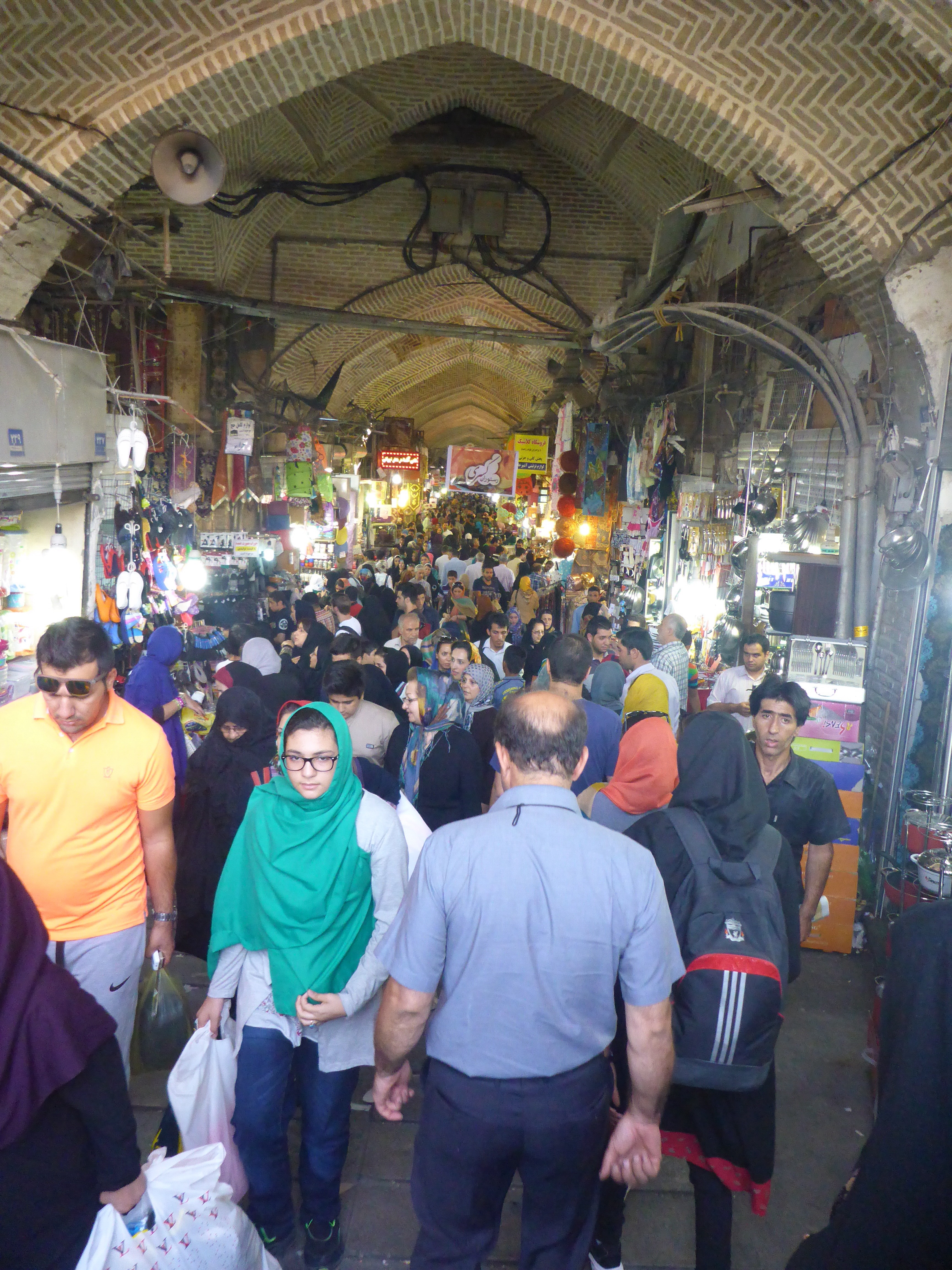
The very crowded Grand Bazar, Tehran, Iran

The very crowded Grand Bazar, Tehran, Iran


We wanted to have a look at carpets and have a little time to wander through the bazaar alone but as luck would have it, Fariba’s family know a carpet seller well so we’ll head there with her. But first lunch. Ok. And miraculously, another of Fariba’s sisters is there too. She tells us she has cleared her diary to spend the rest of the day with us. How unexpected but kind. When we go to the carpet shop and we are asked why we don’t like the carpets we see on the wall and what design we want, I don’t want to see anymore, it will be all too hard. I feel guilty at wanting to leave the bazaar when these kind Iranians are giving up their time for us. I am feeling torn. And my head hurts. It has been great to see Fariba again, meet her family, hear their feelings about their country, their dreams, their hopes, their frustrations, their views, their beliefs. We’ll next meet again in Brisbane.

It has surprised our Iranian friends to see the number of people who come up to us or stop us in the street just for a chat, asking the same questions: where are you from, welcome to Iran, what do think of Iranians, do you like Iran, what cities have you been to, is that your husband/wife, how many children do you have, welcome to my country! Often, it is followed by where are you going next, where are you staying, you can stay at my house.

Our last day in Tehran, with Saba. What a fantastic day. Saba takes us to see the palaces of Saadabad, with its stunning gardens. We wonder there until closing time at 5pm and were headed home for a rest before going out for dinner when Saba got a phone call that her parents had broken down and were stranded waiting for a rescue truck to turn up. Quick change of plan and we pick up mum and go to Saba’s grandmother who lives nearby.

With Saba at the Green Palace, Saadabad Palaces, Darband - Tehran, Iran

With Saba at the Green Palace, Saadabad Palaces, Darband – Tehran, Iran

Alborz mountains behind the Green Palace at Saadabad Palaces - Tehran, Iran

Alborz mountains behind the Green Palace at Saadabad Palaces – Tehran, Iran

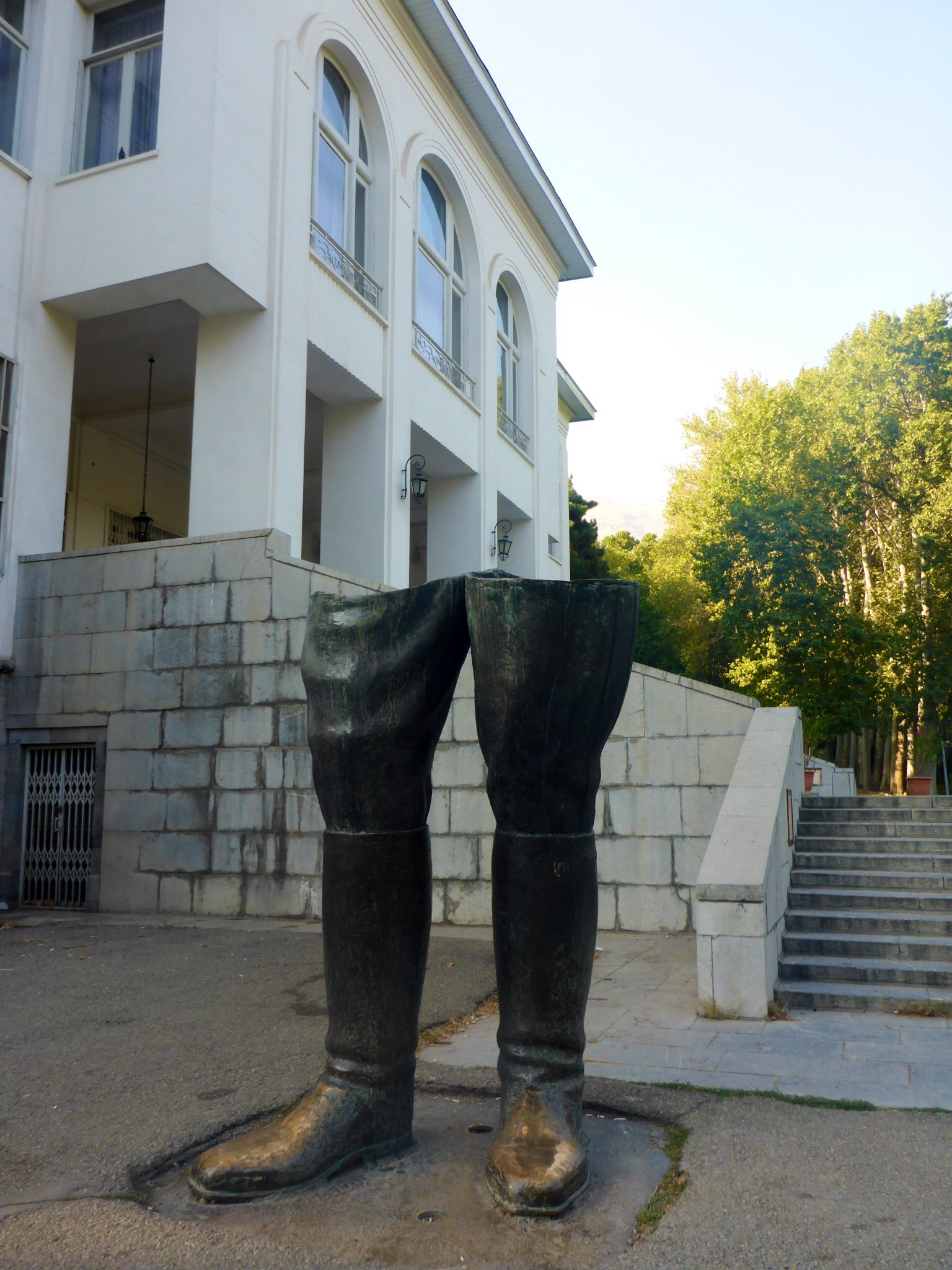
The statue of the last Shah of Iran was destroyed after the 1979 revolution and only his boots remain outside the stunning White Palace - Saadabad Palaces, Tehran, Iran

The statue of the last Shah of Iran was destroyed after the 1979 revolution and only his boots remain outside the stunning White Palace – Saadabad Palaces, Tehran, Iran


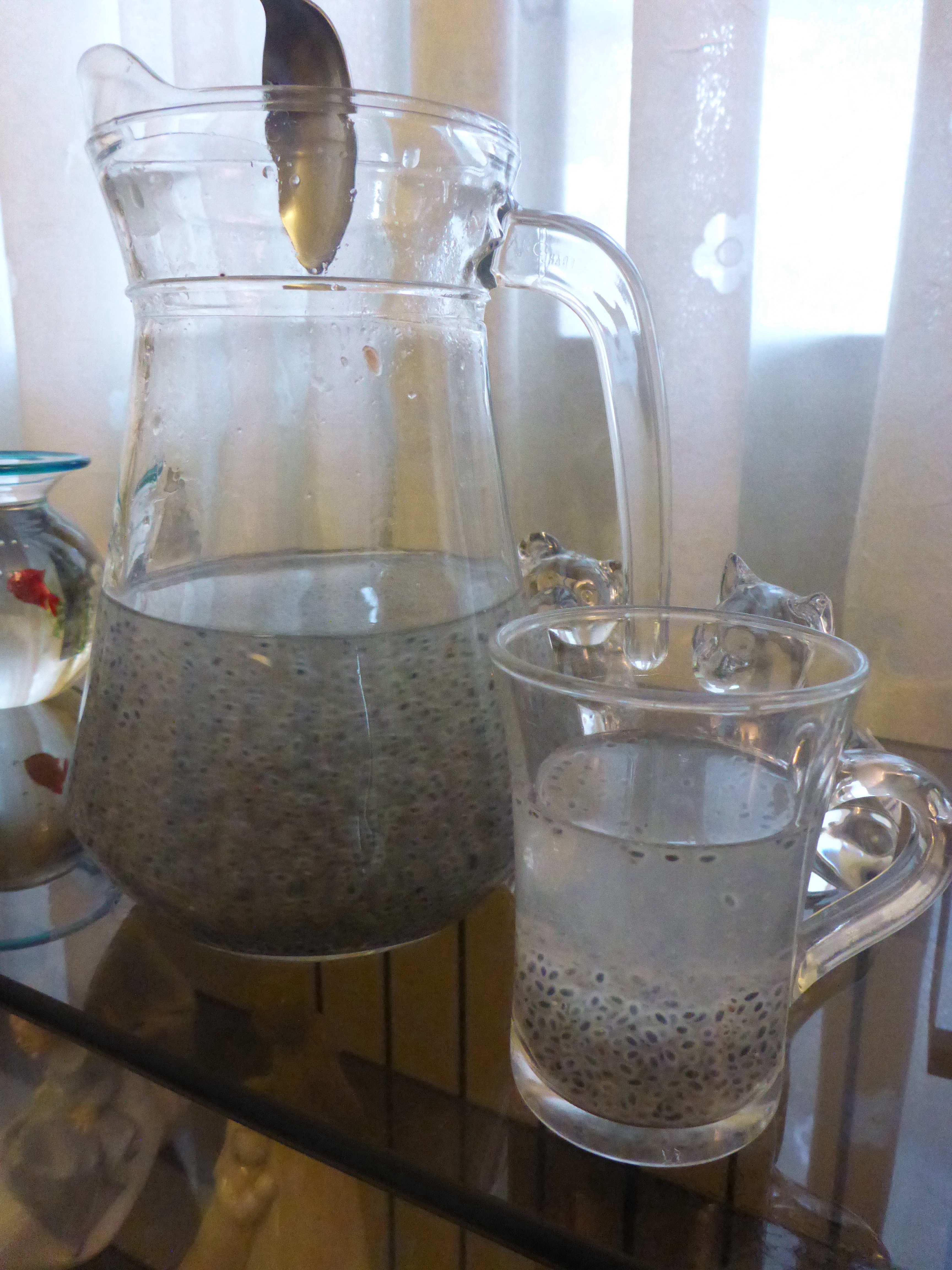
It has amazed us how fluid everything here is. Plans change, new ones are made, and always, people just turn up. Sometimes, we think plans have been changed on the fly (like picking up parents who have just broken down) and new ones made on the fly (like taking the mum to grandmother’s place nearby while the car is being seen to) but it seems everyone was waiting for us – another aunt, friends, grand mother. Our welcome at Saba’s grandmother’s home, which we thought was a spontaneous detour following Saba’s parents’ car breakdown, is incredible. So many plates and bowls all over the lounge, full of fresh fruit, nuts, Iranian sweets, cakes. We are served an amazing fresh fruit drink made from basil flower seeds. Saba’s aunt speaks fluent English which enables us to have in depth discussions on politics, religion, economics, travel. It is so interesting and gives us yet another glimpse into Iranian life. Tonight, after leaving Saba’s grandmother, for the first time since we arrived in Iran 10 days ago, we are allowed to pay for a meal.
Delicious basil flower seed drink which Saba's aunt introduced us to - Tehran, Iran

Delicious basil flower seed drink which Saba’s aunt introduced us to – Tehran, Iran


Apart from the incredible hospitality we have been shown, what is Tehran like? Tehran is a huge city – 11 million by night, 17 million by day. It has a stunning backdrop of the Alborz mountains and seems to sit on one massive hill side. Most streets are tree lined. Water runs through the streets constantly, down a deep channel between the road and pavement. While Buenos Aires reminds us of Paris, Tehran has its own distinctive feel. And traffic, well, that deserves its own full post as you may have already read. One last thing I’d like to say on that subject however: while it is total anarchy on the streets, it is also a great lesson in tolerance and adjustment and something our Australian drivers could learn from…. The lack of road rage is rather refreshing.
Helmets are only ever worn by men (sometimes) - Tehran, Iran

Helmets are only ever worn by men (sometimes) – Tehran, Iran

Many websites are blocked in Iran and the internet speed is deliberately slowed down to discourage its use

Many websites are blocked in Iran and the internet speed is deliberately slowed down to discourage its use


Good night Tehran, until next time as we will be back to see Saba one day…

– Anne