From Spain to Africa

We are off to Africa! Sitting aboard our Ethiopian Airlines A350 at London’s Heathrow airport after a whirlwind three days of returning Streak and Storm to storage, repacking and saying goodbye to family and old friends we had reconnected with on this trip. Our thanks to all of them for their generous hospitality. We now have a few hours to reflect on our Spanish adventure and future plans.

We had a wonderful time, as I hope our posts conveyed, but our preparation and packing was woeful. However our easy going approach to preparing for Spain taught us a few lessons. Firstly that we had to rediscover our efficient packing and minimalist travel style from the RTW trip. Like most things without practice, we loose that edge. We also needed to replace worn and tired equipment that had given 15 months of sterling service. This included helmet linings, camera batteries and that temporary brake fluid reservoir fix of Anne’s that gave up the ghost in Normandy. We had at least replaced the helmet lining, better fit, and visors, such a clear world out there, before our departure.

Our focus now turns to Africa as the moving map scrolls southward, names familiar to us slide below. In September 1982 we set off on a journey together that took us from Cairo to Cape Town hitch-hiking over nine months. Luxor, Wadi Halfa, Khartoum, Juba and Nairobi, where we lived for a couple of months, all evoke memories of sights, sounds and scents that filled our amazing adventure, which undertaken before mass tourism and the internet. Those of you familiar with the Lonely Plant travel guides may have come across their Thorn tree travel forum where people post travel questions. In 1982 this was a real thorn tree at the Thorn Tree cafe in Nairobi where notes were pinned to the trunk! While times have changed, our love of Africa has not. As we watch the thin line of light from the east transform into a spectacular red and orange sunrise, we are drawn closer to past adventures.

Sunrise over Africa

Sunrise over Africa

In Addis Ababa our journey then takes a slight detour, our non-stop flight to Cape Town has been rerouted via Maputo in Mozambique. This is probably for operational efficiency, but notification of the change only arrived by email the morning of our departure and the email did not clearly mention the stopover or advanced departure time in an obvious way. Announcements both before and on the flight left one none the wiser as to the first stop, Maputo or Cape Town. Maputo won and there one gentleman, a travel agent no less, disembarked thinking he was in Cape Town even though I had told him there was no Table Mountain here! While he quickly returned to our aircraft, it’s a timely reminder to keep checking one’s travel details.

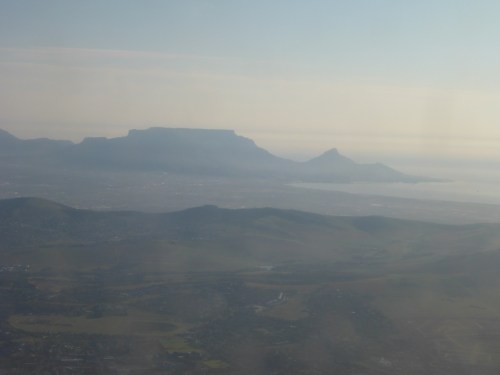
The onward flight to Cape Town took us across more familiar territory, the flat expanse of the Eastern Transvaal region, now called Mpumalanga covered in those small fluffy white clouds so typical of the region that I remember from my childhood when I lived here. Onward over the Free State towards Western Province and finally descending into Cape Town where we strained our eyes for recognition of the mountains, towns and roads we were so familiar with some 30 odd years ago when we lived here. The city has grown out further than we had imagined, but Table mountain stands majestically above it all, unchanged from when we lived close in the suburb of Tamboerskloof with a superb view of the mountain out of our kitchen window.

Table mountain and Cape Town

Table mountain and Cape Town

As the plane’s wheels touch down, we know we have two adventure filled months ahead of us. While we will not have Streak and Storm accompanying us, we will still be on the road providing our armchair followers a close up view of both our motorbiking: yes we have a short motorcycle adventure here as well as 4WD travels to Botswana and Namibia. Friends we have not seen in decades wait in Arrivals for us, the next chapter of 2slowspeeds.com is about to be written.

– Anthony

A few more gems in Spain

Based on what I had heard and read of the history and architecture, I thought Seville and Cordoba warranted several days’ stopover each for our first visit there. I was not disappointed! But what a treat to discover a couple of other little gems – and these are the ones that make us want to return one day…

Before I tell you about them, let’s go back to Seville and Cordoba. For the last few days, they have predicted a deluge due to a huge band of rain covering the whole of Spain the day of our journey to Seville. Rain itself doesn’t worry us, but it is more the fact that it hasn’t rained in Spain for months and even walking across the road feels incredibly slippery so the roads are going to be absolutely treacherous for the first few hours until the build up of oil and rubber has been washed away. Luck is on our side again. We got up early enough and made it to our hotel in Seville an hour before the downpour.

Seville didn’t disappoint. It is so green! Orange tree lined streets, avenues, squares, orange trees everywhere. The oranges hadn’t turned to orange yet – I can imagine how stunning Seville would be a few weeks later. We take the bus to town as we are staying outside the city centre, always a great way to see a bit more and get a better feel of a place. On our first day in Sevilla, the queues to get into the Alcazar or the Cathedral are so long, I’ll try again another day I thought, but didn’t. We enjoyed the lifestyle of Seville – there is something about this place that makes you want to wander the streets, sit, enjoy the architecture and greenery and watch the world go by. There is an elegance to this city.
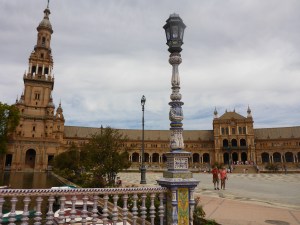
Plaza de España, Sevilla
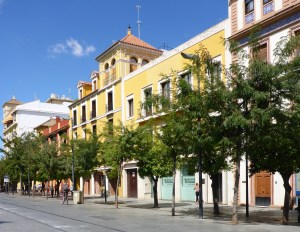
Plaza de España, Sevilla

Sevilla, Spain
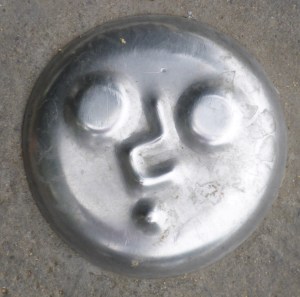
Sevilla, Spain

What are those cute smileys on the pavement in Sevilla?
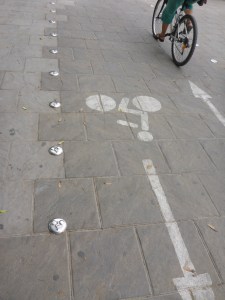
What are those cute smileys on the pavement in Sevilla?

Cycle paths in Sevilla!

Cycle paths in Sevilla!


On day 2, we take the train to Cordoba – that way we don’t have to visit the town in all our riding gear on.

Walking into the Mosque-Cathedral, also known as the Mezquita, in Cordoba was totally awe inspiring.

Very brief background courtesy of wikipedia, the site was originally a small temple of Christian Visigoth origin, the Catholic Basilica of Saint Vincent of Lérins. When Muslims conquered Spain in 711, the church was first divided into Muslim and Christian halves. This sharing arrangement of the site lasted until 784, when the Christian half was purchased by the Emir ‘Abd al-Rahman I, who then proceeded to demolish the original structure and build the grand mosque of Córdoba on its ground. Córdoba returned to Christian rule in 1236 during the Reconquista, and the building was converted to a Roman Catholic church, culminating in the insertion of a Renaissance cathedral nave in the 16th century.

Once inside the Mezquita, I switch off the audio guide as I find it too distracting – I just want to take in the majestic grace of those columns, alone, without anyone in my head and wait for the various tour groups to move away a little. I first just stand then slowly walk around admiring the elegance, balance and sheer beauty of those pink marble columns topped with sturdy double arches and enjoying the indescribable serenity of this place – until I walk along the outer nave off which there are over 30 small chapels – each small chapel dedicated to a different saint more opulent, sometimes more garish than the other. What a contrast… It feels brutal, to have done that to this once stunning simple mosque, and the cathedral’s baroque choir especially nearly seems grotesque to me in comparison. I do not mean to offend anyone, just my personal feeling. Interestingly, the dual arch system, as seen in Roman aqueducts, enables the distribution of the weight along the many arches, allowing thinner elegant columns. I cannot put in words how stunning the prayer hall is and the feeling that envelops you.

Prayer hall, Mosque-Cathedral, Cordoba, Spain
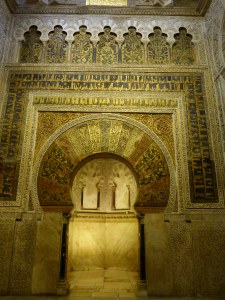
Prayer hall, Mosque-Cathedral, Cordoba, Spain

Mirhab, Mosque-Cathedral, Cordoba, Spain
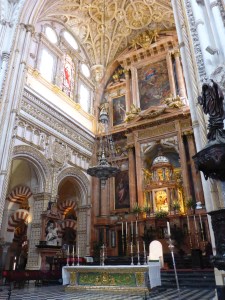
Mirhab, Mosque-Cathedral, Cordoba, Spain

Mosque-Cathedral, Cordoba, Spain
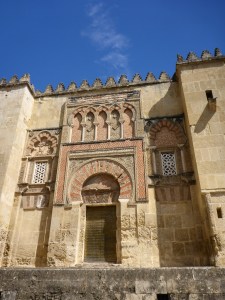
Mosque-Cathedral, Cordoba, Spain

Mosque-Cathedral, Cordoba, Spain

Mosque-Cathedral, Cordoba, Spain

What a treat to discover, as I peer down from the top of the Alcazar, that there is an event going on at the Royal Stables next door. I go and investigate: there is an annual equestrian fair at the Royal Stables in Cordoba starting tonight for 3 days. Entry is free today and we are allowed to watch the competition. The horses are stunning and the ‘trainers’ very dapper in their skin tight trousers, and white shirt, waist coat or silk polka dot cumber-band and sombreros. We are mesmerized as the ‘trainer’ shows off his horse’s skills to the judges. Guiding the horse with a very long lead, the horses gallops in circles then figures of 8, at some amazing speed until the horse is brought to a sudden stop. And this second part is what fascinated us: the ‘trainer’ seems to be feathering the short rope he is now holding, as if it were a bow and he were playing the violin. One certain stroke, and the horse moves one step forward, another stroke, it moves one or two ears. We didn’t get to find out what all the competitions were about but what we felt privileged to have been there at this time.
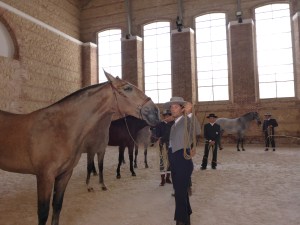
Royal stables, Cordoba, Spain
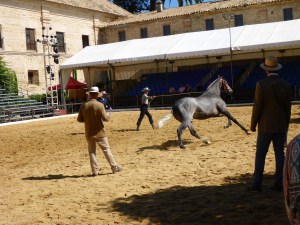
Royal stables, Cordoba, Spain
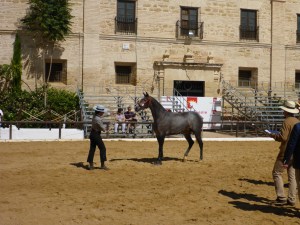
Royal stables, Cordoba, Spain
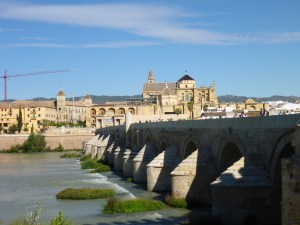
Royal stables, Cordoba, Spain

Royal stables, Cordoba, Spain

Royal stables, Cordoba, Spain

Puente Romano, Cordoba, Spain
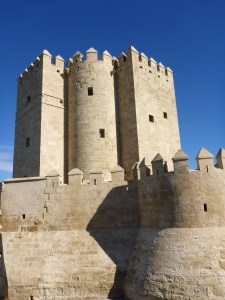
Puente Romano, Cordoba, Spain

Torre de la Calahorra, Cordoba, Spain

Torre de la Calahorra, Cordoba, Spain

We could have stayed for a flamenco show that evening, but we decided on rather going to a friend’s favourite local tapas bar in Seville for dinner. Queues again and as I ask Anthony whether we should stay and wait, we get chatting with a couple behind us, Paul and Wendy, and end up sharing a table and the next 3 hours with them!

Our third day in Seville ends up being an ‘admin’ day. Bike maintenance check, tighten the chains, washing and drying, blog update, photo upload, emails.

We have given ourselves 3 days to get from Seville to Santander where we are catching a ferry back to the UK. We decide to make good progress on the first day, about 450kms, to give ourselves enough time in case of breakdown to get to our ferry in Santander in plenty of time. So I look for somewhere around Salamanca, and stumble across Salvatierra de Tormes thanks to rave reviews of a 10 roomed hotel there. This village has a long history as the medieval coats of arms testify but it’s more recent history is very most unusual: most of the houses were bought up by a hydro company building a dam back in the 60s expecting the village to be submerged and forcing all but a few tenacious villagers out. But the dam engineers miscalculated and the village never flooded. Now presumably because the company never wanted to admit their error, they have always refused to resell the houses to the previous owners or to anyone, so only the handful of residents who held out still live there. You arrive in the village and you immediately feel like it could be a movie set. The roads and pavements are immaculate but many houses are crumbling down. There is obviously a lot of pride in this village.

Salvatierra de Tormes, Spain
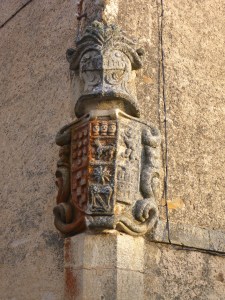
Salvatierra de Tormes, Spain

Salvatierra de Tormes, Spain

Salvatierra de Tormes, Spain

Salvatierra de Tormes, Spain

Salvatierra de Tormes, Spain

We eventually find our hotel. What an oasis. Beautiful garden out the back, birds are chirping, the internet is working and the most incredible kitchen is awaiting us. For a whole €10 each , we had a 3 course meal, where the entree was the size of a main course, the mains were first class, and the price included a litre of red wine and a litre of bottled water. And that was not all, at the end, we were given a half litre of some type of Baileys and another half litre of a most tasty home made green ‘eau de vie’. It was funny to see the villagers coming to the restaurant with their own barbecue and meat, with the hotel providing salads, drinks, plates etc. The bbq was brought over and left in the garden and restocked with fresh meat half way through their dinner. We were in the heart of the village. One of the gems.
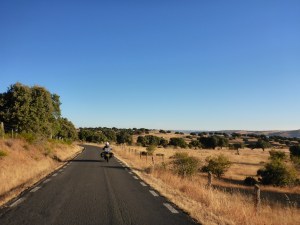
Leaving Salvatierra de Tormes, Spain

Leaving Salvatierra de Tormes, Spain

The ride to and out the village was gorgeous – our kind of country. Our biggest surprise was Cantabria. This part of Spain is so green, hilly, gorgeous riding roads, tiny stone villages. We are heading to San Vicente de la Barquera for the night – great spot chosen by Anthony.
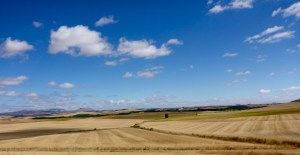
Heading to San vincente de la Barquera, Spain
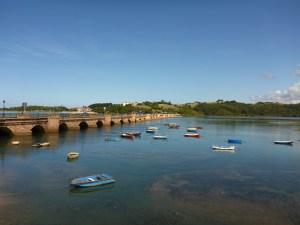
Heading to San vincente de la Barquera, Spain

San vincente de la Barquera, Spain

San vincente de la Barquera, Spain

Iglesia de Santa Maria de los Angeles, San vincente de la Barquera, Spain

Iglesia de Santa Maria de los Angeles, San vincente de la Barquera, Spain

We have given ourselves an easy ride on our last day to get to Santander where we are scheduled to spend our last night in Spain before catching the ferry back to the UK. The route we have chosen takes us through many tiny villages, past are numerous small sandy coves. We are so pleased we have the time to spend a few hours in Santillana del Mar. Yes, despite the tourists, which we remind ourselves we are part of!!! We admire the many camino pilgrims we see along the way – this region is hilly!!

Early morning, San vincente de la Barquera, Spain
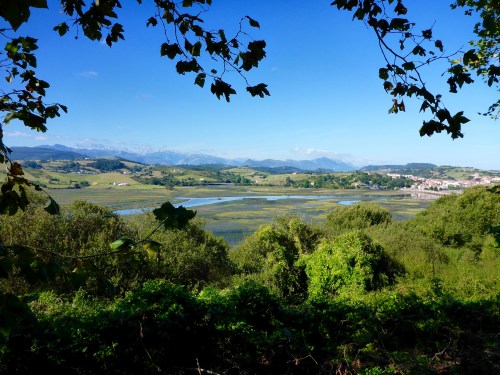
Early morning, San vincente de la Barquera, Spain

Looking back towards San vincente de la Barquera, Spain
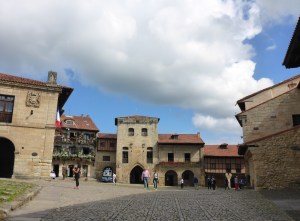
Looking back towards San vincente de la Barquera, Spain

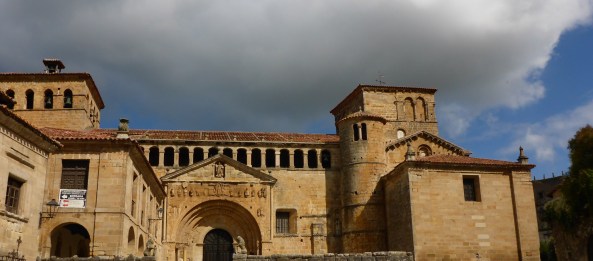
Santillana del Mar, Spain
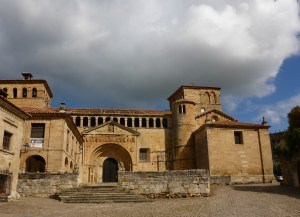
Santillana del Mar, Spain

Claustro de la Colegiata de Santillana del Mar, Spain

Claustro de la Colegiata de Santillana del Mar, Spain


Claustro de la Colegiata de Santillana del Mar, Spain

Claustro de la Colegiata de Santillana del Mar, Spain

Claustro de la Colegiata de Santillana del Mar, Spain

Claustro de la Colegiata de Santillana del Mar, Spain

Cantabria is definitely an area we would like to return to one day. A great way to finish our Spanish trip. We get to our hotel in Santander in plenty of time, having checked the arrival route to the port for tomorrow morning – time to pack for our ferry trip now and relax. Ha, that was until we got a little surprise… I get our ferry tickets out and then ask Anthony why it says that our ferry leaves from Bilbao?!?! Haha, how did that happen? We will never know, but once again on this trip, we have been reminded that we may have been a little too relaxed about our trip ‘preparation’ this time… Oh well, it only means we have to get up extra early tomorrow to do a 100kms journey instead of only 2kms!!

– Anne
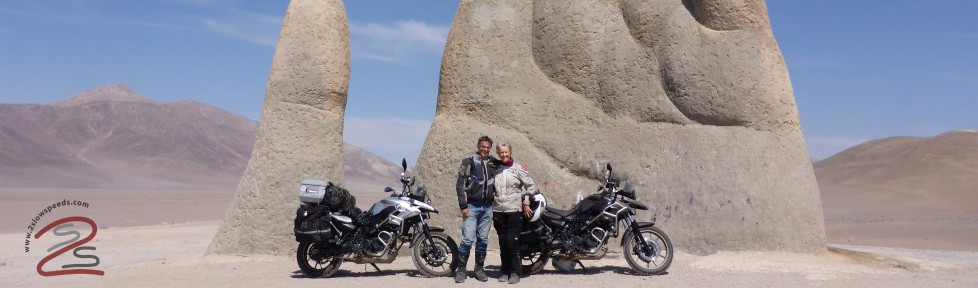
A great day’s ride to Ronda

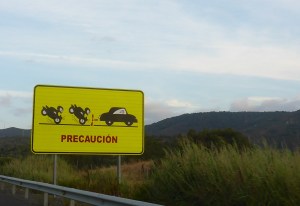
Our last day stationed conveniently in Algeciras before we start our journey north, we are off to Ronda. Although the quaint village of Ronda is now Andalucía’s fastest-growing town – it overtook Córdoba in the big three Andaluz tourist attractions, behind Sevilla and Granada – at least we have been promised one of the best motorcycling roads in Spain so we set off early on light bikes, having left all panniers behind. The road is good, the bends endless as we start the steep ascent to this historic town 2400ft/730m above sea level. We are glad we deliberately decided to go on Monday, suspecting this would be a popular biking road on week ends, like the Mount Glorious road outside Brisbane, where we live. It is such a perfect biking road, it attracts too many speeding bikers – so we avoid it at week ends. Interestingly, that evening, a local we chatted to referred it to a ‘racing track’ – our feeling exactly. No wonder we saw these signs all the way up to Ronda:

Found on all the twisty roads in Andalucia

Found on all the twisty roads in Andalucia

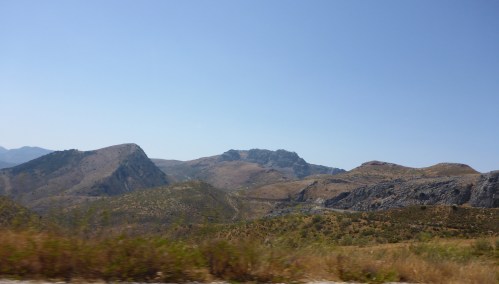
Fantastic scenery along the A397 up to Ronda, Spain

Fantastic scenery along the A397 up to Ronda, Spain


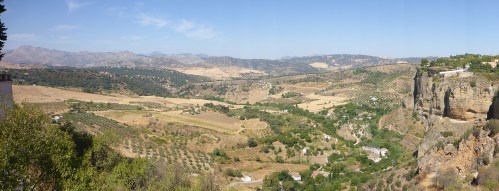
Old Moorish Ronda sits atop a Jurassic limestone cliff, on the edge of a gorge carved by the Guadalevín river, the altitude providing great natural defenses. It saw turbulent times. The Arabs conquered Izna-Rand-Onda, today known as Ronda, (and most of Iberia) in the year 713 and the city eventually became a mini Moorish kingdom. The Moors divided southern Andalucía into five distinct districts. The Moors were continually fighting among themselves, and the volatile ethnic mix in the mountains resulted in much rebellion and conflict. The Christians eventually won it back in 1485. By then, frequent crossings of the city required a new bridge to be built.

Puente Nuevo, Ronda

Puente Nuevo, Ronda

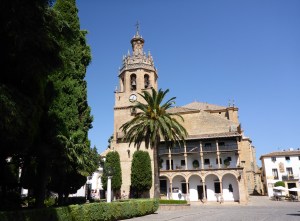
Plaza de la Duquesa de Parcent, Ronda, Spain

Plaza de la Duquesa de Parcent, Ronda, Spain


Ronda, Spain

Ronda, Spain

Ronda, Spain

Ronda, Spain

Around Ronda, Spain

Around Ronda, Spain

Around Ronda, Spain

Around Ronda, Spain


Ronda is also famous as the birthplace of modern bullfighting, when in 1726 bullfighter Pedro Romero broke away from the prevailing Jerez school of horseback bullfighting and founded a new style in which matadores stood their ground against the bull on foot using a muleta We have come across many posters plastered in the streets of various cities advertising bull fighting. Not for us, even if it is a local cultural tradition.

We are usually quite ‘slack’ tourists, in that we do not make sure we visit every famous site in a place. I am the one who typically does the research before visiting a place and deciding where we’ll go, making a rough note of what I want to see or what would be of interest to Anthony. I often leave Anthony on a bench somewhere while I go off alone, and we usually just meander through a town or region seeing what we might stumble across and simply enjoy in the atmosphere of the place, people watching and often chatting with locals. And we always read up more on the region later! The history of Andalucia is certainly complex and fascinating.

I didn’t know that chapter 10 of Hemingway’s “For Whom The Bells Toll” novel drew on events that occurred in Ronda in 1936 during Spain’s civil war when a mob threw 500 people, allegedly fascist sympathisers, into the surrounding gorge from the bottom span that holds the main arch of the New Bridge.

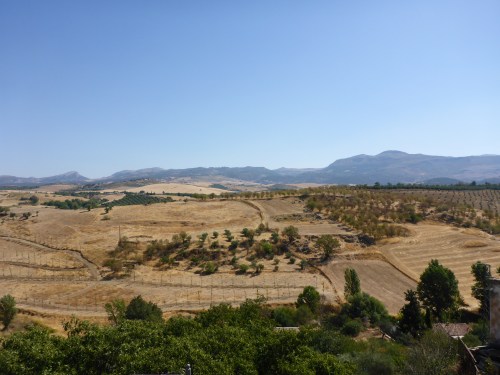
Ronda is definitely a beautifully scenic town. And while the road up was scenic too, our return ride back to the coast on back roads, the A369, was simply divine. So many tiny white villages hugging mountain tops and cliffs such as Atajate, Benadalid, Algatocin and Gaucin. We make numerous stops. This is our kind of riding – stunning scenery, windy roads, no traffic and all that with the greatest riding and life partner – we are so lucky we enjoy and appreciate the same things in life.

Stunning Andalucia, from the A369

Stunning Andalucia, from the A369

Loving the road along the A369

Loving the road along the A369

Algatocin, Spain

Algatocin, Spain


Gaucin, Spain

Gaucin, Spain


We get so used to living wherever we are, we sometimes forget to mention the small things. It occurred to me today that we haven’t mentioned all the olive groves we have seen traveling through Spain and especially in Andalucia. We have walked through them, admiring their gnarled trunks and fruit laden branches. And we have been surprised at the steep terrain on which olive trees have been planted as shown on some of our landscape photos – way too steep for any automated or machine harvesting. We eventually saw people harvesting, up small ladders leaning against the tree. Olive harvesting is obviously an important source of income across Spain from seeing the number of old and new groves especially in Andalucia, it made me want to know about the industry. Spain has been cultivating olives since Roman times and is now the world leader, producing 44% of the world’s olive oil, twice as much as Italy and 4 times as much as Greece. It turns out that the Andalucia Regional government tracks every commercial tree with its own GPS coordinate and is monitored by regional officials for EU subsidies. These olive trees apparently produce better fruit and oil in poor rocky soil and craggy limestone cliffs than they do in rich, fertile earth.

And how could I not have mentioned food before?! The food in Spain has been fantastic. Always so fresh and tasty. The seafood and olive oil in particular. One tiny mussel and you taste the ocean. And the ham – I have been feasting on it for breakfast. We were lucky to find a very small local tapas bar in Algeciras which we went back to 3 times!! The first time, all 4 chosen dishes were new to us. The 2nd time, we chose our 2 preferred tapas from last time and 2 new ones, the 3rd time we did the same again. I am definitely getting a taste for those tapas. Loved the Pedro Xemenez reduction over the slices of tender beef – it tasted like a blend of thick sweet balsamic vinegar and port. And the Spanish olive oil is like nothing I have ever tasted! We’ve had some drizzled on a simple slice of toast, on roasted vegetables, on chips/crisps even!! This olive oil tastes of sunshine. I wish I could bottle-record it for us all to taste anytime! It was interesting to see what every table had in a small petrol station/cafe we stopped at recently.

On all the tables in roadside cafes in Andalucia

On all the tables in roadside cafes in Andalucia

Seville and Cordoba next!

– Anne