O Canada

O Canada, not the national anthem, but ‘oh Canada’, we have only been here for five days, only seen a small snippet, but how enjoyable, well, after the first couple of days and the snow, see the video for that. We crossed from the USA at Eureka and switched from miles to kilometres, at least we stayed on the same side of the road. Anne prefers kilometres to miles because she says they go quicker when it’s cold, so she is happy. Speed limits seem to be lower on highways, 100 kph /62 mph on the main highways and 90 kph / 55 mph where those roads pass through National Parks to protect wildlife.

Our second day seems to provide a cloudy weather window, without rain, to allow us to get to Canmore via Banff. We were last here in 1985 and are looking forward to renewing our acquaintance with the area. While cold it was dry, at least for the first hour, by which time we needed to thaw out! We stop at the town of Radium Hot Springs, hope the hot is natural… It feels good to warm up – Anne even got a refill of the tasteless American ‘coffee’. We start riding again in light rain and come across a Kootenay National Park entrance across the road, fees payable, but as it’s Canada’s 150th anniversary, we get a free pass for 2017 – excellent! Climbing up through the park, we have to cross a pass at around 6,100 ft / 1850m, the rain turns to sleet then snow, the temperature dropped to 33F / 0.5 C. As we slow and indicate for the car behind us to pass us, it slows down too and positions itself behind us for the first section of the pass providing a measure of protection – thank you!

After 20′ wait Anthony goes to ask how much longer – brrrr


Further the road, after waiting for 20 minutes for roadworks, we travel on, colder and heavier snow. While pulling over might seem like an option, there is nowhere in the National Park to stop, a cold tent does not appeal and especially having to setup in this weather. We need to clean our visors of snow every 10 seconds or so, just to see where we are going, then splat! we are sprayed with a wall of fast moving slush by a vehicle going the other way, that’s a new experience for us.

Soon there was no time for selfies!


No fun at all but nowhere to stop or shelter


It takes us two hours of this, with a couple of necessary thawing stops, to reach our destination. We see no other motorcycles out there and encounter no bugs. Are the two related? More research is needed on that subject, I see a government grant here. We did note that driving snow does clean all the dead bugs off the windshield really well.

We made it to Banff!


Two very cold, wet and bedraggled riders sloshed their way into the nice hotel in Canmore we had found online with 70% off. As we dripped all over the foyer, we were given keys to a great room with two baths. With wet gear in one and us in another, the amount of water was about the same, pure luxury. A nice bottle of South Australian red wine with dinner rounded off a tough day, but we made it through once again.

Refreshed the next morning, we are ready to head back to Lake Louise, a location we last saw in the summer of 1985 when we were hitch hiking back from Alaska via the Icefield Parkway. It was a destination that on paper, well post cards, I recall at the time thinking how the blue of the lake looked fake, nothing could be that blue, but it was. We arrive at Lake Louise, overlooked by the iconic Fairmont Chateau Lake Louise hotel, to find no magic blue lake, just an ice covered scenic wonder. What a difference a season makes. Surprisingly the place is busy with tourists, both domestic and foreign.

Thawing Lake Louise, Alberta


The raw beauty of Lake Louise, Alberta


Off again, then suddenly a gaggle of cars pulled over at the side of the highway, a breakdown, accident?, no a grizzly bear on the side of the adjacent railway track, slowly moving from clump of clump of vegetation, which can include dandelions which we have seen flowering and seeding prolifically during the last few weeks. Our first and last bear so far, at least it was a grizzly.

Our first grizzly, eating between the railway track and our road
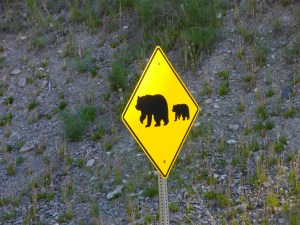

Common road sign in BC, Canada


A couple of nights at a B&B gives us a chance to start sort out what we will take with us next month, yes while we have sent one package home, we think we can slim down a little further.
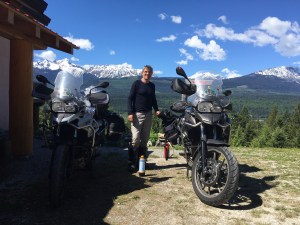
Great spot for some bike maintenance and a rest


This also coincided with a new phenomenon for us, blue sky and warm weather. After six weeks, we have blue sky and warm weather. We will now take a few back roads southwards into the vast expanse of the Canadian Rockies, winding roads, deep lakes, tall forests and snowcapped peaks. I will let the photos do the talking from here.

Glacier National Park, Canada
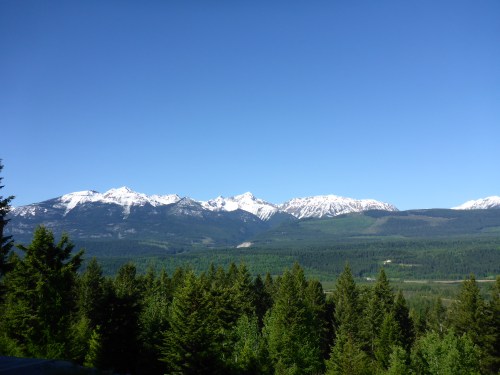

View of Glacier Nat’l Park Canada from our B&B room
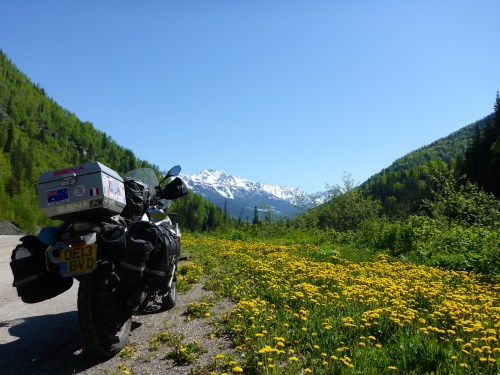

More dandelions
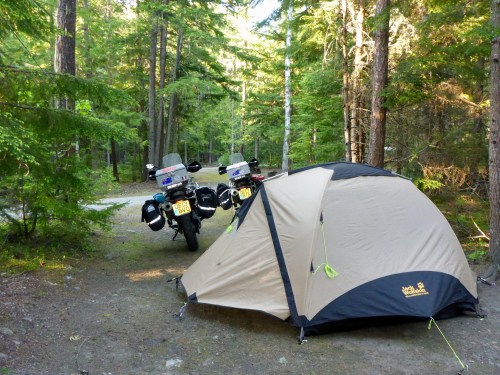

Home for the night at Rosebery Provincial Park


Winding through Central Kootenay, BC
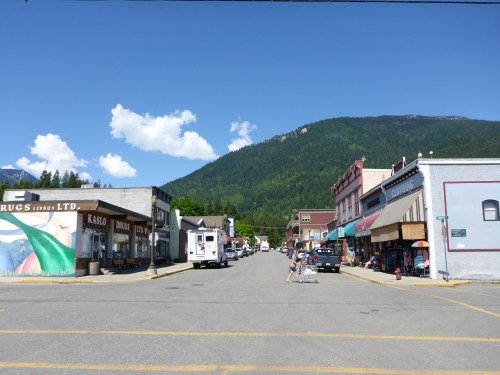

Kaslo main street


SS Moyie on Kootenay Lake in Kaslo, BC


Loving the vibrant greens along Crowsnest Hwy, Hwy 3

– Anthony
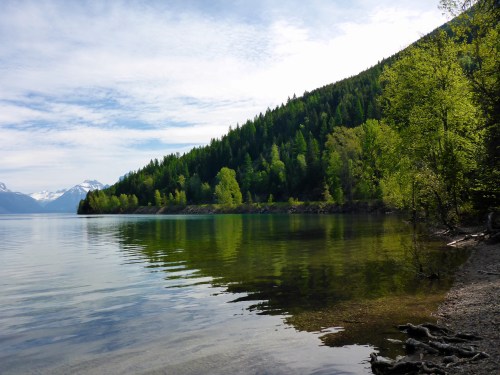
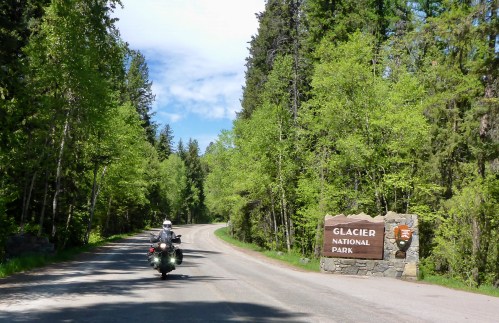
Glacier National Park

We wake up in Kalispell to our 3rd day of sunshine in a row, a perfect day for a ride up to Glacier National Park.

Glacier National Park is a 4000km2 (1583 sq miles) of wilderness in Montana’s Rocky Mountains and includes 2 mountain ranges (sub-ranges of the Rocky Mountains), over 130 lakes, 700 miles of hiking trails, 1000 species of plants and diverse wildlife from grizzly bears, moose, mountain goats, to wolverines and Canadian Lynxes. It is crossed by a single road, the Going-to-the-Sun Road. Today though, the road is closed from Avalanche Creek, just 25kms into the park due to 12 metres/40ft of snow!

Glacier National Park is the headwaters for rivers that flow to the Pacific Ocean, the Gulf of Mexico, and to Hudson’s Bay. Today, we get to see Lake McDonald and several creeks gushing into the lake. Our time in the park is short but memorable and what a joy to feel the sun’s warmth for a change!! A place to return to one day…

Enough words from me, I hope you enjoy the photos. And I wonder what our ride to Banff will be like tomorrow – they’re forecasting rain in the afternoon so an early departure is planned…

– Anne

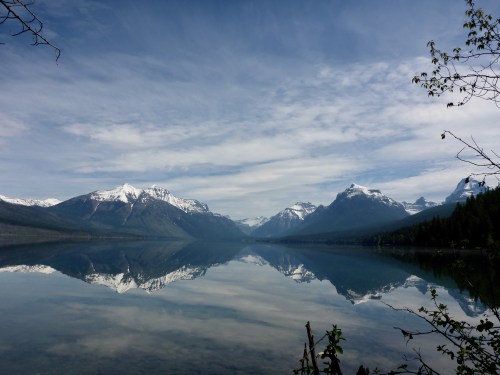
Lake McDonald, Glacier National Park -southern end

Lake McDonald, Glacier National Park – southern end

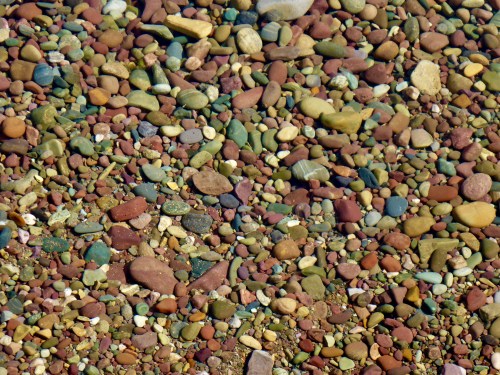
Lake McDonald pebbles, Glacier National Park, Montana

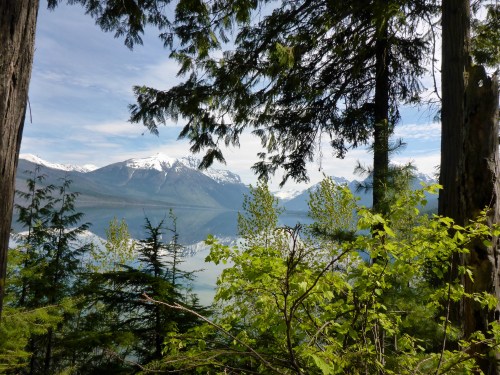
Lake McDonald, Glacier National Park

Lake McDonald, Glacier National Park

Lake McDonald, Glacier National Park – from Lake McDonald Lodge

Lake McDonald, Glacier National Park – Snyder creek gushing into the lake

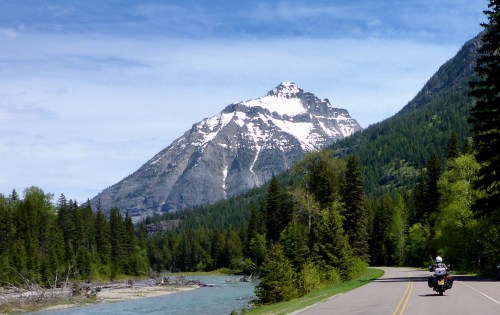
Glacier National Park, Montana

Glacier National Park, Montana

Glacier National Park, Montana

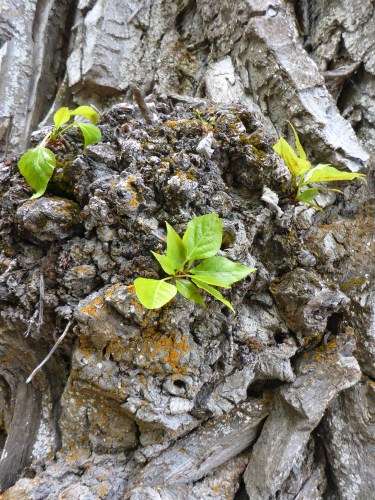
Spring shoots on an ancient tree

Glacier National Park, Montana

Idaho, on the other side

Up early to take advantage of the predicted blue skies: wrong again, it’s cloudy and cold! The warm sunny weather we seek is tantalisingly within reach according to the forecasts as we go to sleep, but seems to silently slip away as we slumber. Well that’s a lot of ‘s’ words, but enough wordSmithing. We have decided that we want to spend a little more time on the smaller roads in the mountains so our route is directly west from Idaho Falls.

First stop is Arco where, apart from thawing out, we need to make a decision of which of two routes to take into the mountains. People in the local diner suggest the sheriff’s office a couple of doors away for information on road conditions. There I find a couple of women who immediately go to a public state government web site called 511.idaho.gov which has all the road information and access to web cams. It seems that many people call the sheriff’s office to get the road conditions, not realising they have access to the same information. No calling old Joe or Fred up the mountains as they probably did in years gone by. I am left a little apprehensive by the fact that all the webcams up the mountains show a white screen: no connection or buried under snow? We really do rely on technology today in so many ways – a good or bad thing? On the sheriff’s department recommendation, we are going via Sun Valley. There are reports of flooding and rock falls on the route via Challis plus we are told the road from Arco to Challis is not as interesting.

Arco, each year students write the year on the hillside


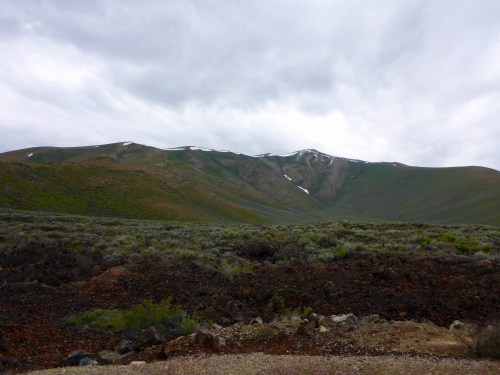
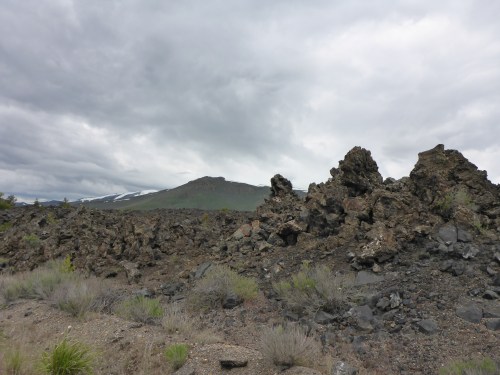
First stop is Craters of the Moon National Monument and Preserve which was only established in 2000 to preserve the lava flows that occurred as recently as 2,100 years ago: that event is incorporated into Northern Shoshone legends that speak of a fire breathing serpent that crushed a mountain until liquid rock ran out.

Craters of the Moon National Monument


Volcanic rock only 2,100 years old


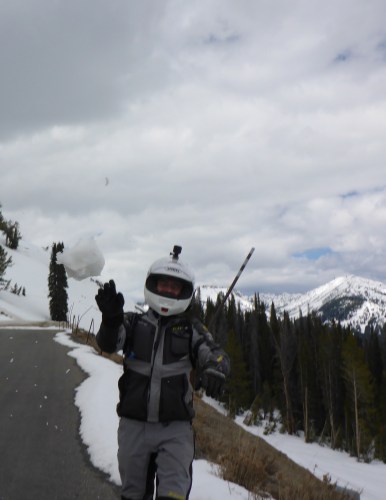
Snow still covers the mountains on both sides as we climb up towards Galena Summit having enjoyed an excellent and unexpected Thai meal in Haley near Sun Valley. Continued recent snow falls have slowed the normal melt process, but the road is clear and dry. We still need to watch out for rocks, or “Rock Season” as the locals say, along with avalanches and falling trees. The pictures tell the story – one can understand why roads can be closed for long periods in winter. Here we have our first snowball fight of the year, albeit with wet heavy snow, not the light fluffy stuff of mid winter. Still fun in mid May and definitely not possible back home in Manly, Queensland.

Snow lined Galena Pass


Watch that snowball!


Our first night in a ger, no not in Mongolia, but in Cascade, ID. I suspect microwave, TV, heater and WiFi will not be options when we finally get to Mongolia. Not quite camping, but getting closer. Cascade will be one the towns in the USA to see the total eclipse of the sun on August 21, 2017. The town’s population of around 1,000 will be boosted by an estimated 25,000 visitors for the day! Yes, all accommodation is long booked, that started two years ago. No more visitors please the locals say.

Our first yert or gur, just on the wrong continent.


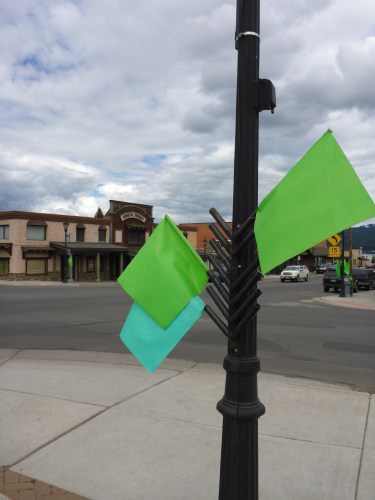
McCall has something a little different for pedestrians crossing the road: instead of the more usual lights or crossing signs, green flags, take one out of the holders, hold it in front of you as you cross the road and leave it in the corresponding holder on the other side. A couple of times we have seen orange flags on animal warning signs, but sadly no animal seems to use them as I have not seen a single dead animal with one in its mouth. More training needed there! A small aside, for some reason, we find dead skunk roadkill smells sickly sweet!, and the cloying smell seems to linger inside the helmet for a long time!

Take one cross the street amd place on other side.


When we descended from the Galena summit, we saw the headwaters of the Salmon river, a mere trickle at this point, which crisscrossed the road as we headed northward towards Stanley. Anne felt she was seeing a river being born. As the Salmon river grew alongside us as we rode, it reminded me the journey to adulthood, gentle baby, boisterous toddler, rambunctious adolescent when our company parted, us westwards and the Salmon river to the northeast. 24 hours later we are surprisingly reunited with the Salmon river, now grown into adulthood, powerful, deep and with purpose. While we slept, the river travelled northeastwards, then abruptly turned west, we are back together again! We travel along together, companions for a while, then when we turn off onto the old Route 95, we part company and wish the Salmon river well as it flows to maturity and into Snake river downstream.

Salmon river again.


We have previously commented on the terms “Ride to Travel” and “Travel to Ride” and we both feel that the first five weeks of our trip has been the later. We have spent time pouring over maps looking for the best and most scenic routes, this segment being an example, we travelled from Idaho Falls to Missoula, a distance of 650 miles / 1050 kilometres via western Idaho vs 314 miles / 500 kilometres on the direct route. We realise we have seen few famous landmarks, but given our previous trips to the USA we are focusing on the riding and exploring new routes.

Rider wanted for rest of RTW trip, motorbike provided.


Lets put the sign in the middle of the street. Kooskia ID


As we ride eastwards on US12 following the path of firstly the Clearwater River and then the Lochsa River, one must wonder at the fortitude of the early explorers, such as Lewis and Clarke who travelled though this area during their epic expedition from May 1804 to September 1806 exploring the newly acquired Louisiana purchase. The river for them and road for us now are the only routes for access, everything else is trees, trees and more trees! It must have been slow going for Lewis and Clark, we can zip along at around 60mph / 100kmh. Travel is so easy today, we are very lucky.

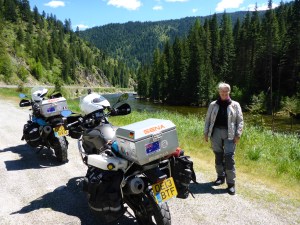
Taking a break US12


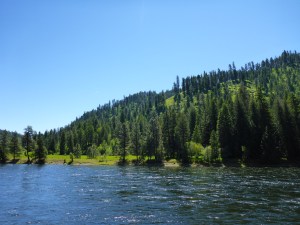
Clearwater River on US12


Lunch, courtesy of Jo and Lesley who we met at the side of the road with their riding companion Don, sees us at Lochsa lodge, the wonderful smells and idilic location encourage us to spend the night here. We get cabin No.1 and settle in. Blue skies, green trees and snowcapped peaks provide the backdrop to a relaxing afternoon. It feels so good to wear sandals and short sleeved tops for the first time in 6 weeks. Time for a short walk amongst the trees and along the rushing Lochsa river.

The view from our cabin at Lochsa Lodge, Idaho


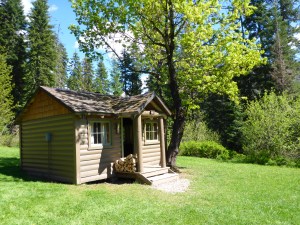
Cabin No.1 is our home tonight


Another blue sky day the following morning and up to Lolo pass, over the summit and we are into Montana, our 13th US State on this trip. A more sedate decent brings us to Missoula which we bypass and head north on US 93. Anne notices that road signs suddenly appear in 2 languages – English and one she has never seen before – then spots the Ninepipes Museum halfway between Missoula and Kalispell. The museum, http://www.ninepipesmuseum.org, was created in 1997 by Bud Cheff, who we were lucky to meet, in honour of Bitterroot Salish Chief Joseph Ninepipes. Growing up in Mission Valley, Bud became fascinated by history at a young age and started collecting artifacts and early photos: his museum is an absolute treasure trove of local Indian history. Many local people have donated historical items to this museum, which could have been lost without Bud Cheff’s foresight and commitment. In an interesting aside, numbers of people visiting the museum are down over the last few years and the comment was people turn to the internet for their information rather than visit such places, however if such places did not exist, the information within them could not make its way to the internet. So please keep visiting in the real world wherever you are.

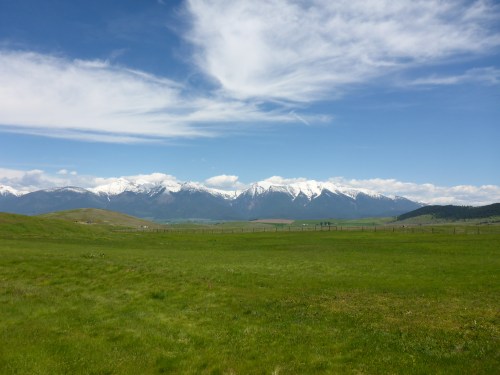
Mission Mountains, Montana


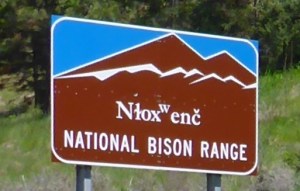
Anne found out that language on the road signs in the area are in Salish going north and Kootenai going south. The town we are headed to for the night, Kalispell, means “flat land above the lake” in Salish. There are several dialects of Salish such as Spokane, Kalispel (Pend d’Oreille) and Flathead (proper Salish) and it was great to see the Salish Kootenai College, a Higher Education college for American Indians. Let’s hope their languages survive thanks to the elders involved in teaching the younger generation.

Montana road sign in Salish

– Anthony