2slowspeeds.com : Blog Triva

We thought that after all this time, we are over half way through our journey, we would give you an insight into our blog, how we put it together and some trivia about it. Our early followers may already have seen some of this information previously.

This blog started being developed as a wordpress.com site approximately 12 months ago by Anne. The advantage of wordpress.com, as opposed to the .org version, is that we do not have to find a site to host the software and administer it ourselves. It does however have less flexibility and cannot use WordPress addins which provide extra blog functionality, but since we wanted to focus on content and our travelling locations potentiality made administration more difficult, the packaged option made more sense. This has been borne out by our experience.

The logo was designed by Anne to reflect the two bikes by colour and our names in the s’s, the larger brown line represents the start of the trip out through Russia, back on part of the silk route and then across Iran and India.

Facts as at date of writing:

Blog Entries: 143
Average blog development time to write,
upload and annotate photographs: 4 to 6 hours
Blog date: relates to when we were there
Estimated words written: over 100,000
Number of signed up followers: 100
Casual followers, not signed up unknown
Continents with regular followers: 6
Countries we have been viewed from: 98
Countries with most views: UK, Australia, USA, Iceland
Comments (not by us): over 800
Total views to date: 36,500 approx.
Most views in a day: 1021, looked at every photo?
Development tools: iPads using Pages & visual apps
Camera: Panasonic Lumix FT5
Video: GoPro 3+ Black @ 1080p 30fps

We realise that we have spent almost one month working on the blog 24 hours a day, but if we had not done this work we would have thousands of unannotated pictures and a fuzzy memory of what we did where and when. I think it has been time well spent, plus otherwise we would have had another month of memories to catalog or forget when we finally finished this journey!

Who writes the blog entry is not pre determined. We both may take notes independently, but one of us feels more like writing the entry. We can each do two or three blog entries in a row. We add our names to help identify who the author was, although our regular followers are usually able to identify that from the first few sentences. I take and edit the video using imovie, pretty simple really. Anne takes the photos, mostly as she rides, so anything that you may think is slightly blurry was taken at 100 kph with one gloved hand through a helmet, sometimes backwards while riding a motorbike. Anne then has to download to the iPad, upload a selection to the blog media library and annotate the photos for the blog. Pretty impressive!

In addition to the normal blog entires, from time to time we also update the borders / visas and equipment tabs. Worth a look if you are planning a trip yourself. I should also mention at this point, that there are many other fine motorcycle and other travel blogs out there. Each, while recording that person’s journey, can contain much valuable information and insightful views that could help anyone with their own travel planning. I have found blogs where the writer has taken time and effort to document road conditions, or places to stay, where to visit, the people etc. They each provide an insight into both the travel and the traveller which I find quite fascinating. We are all travelling and recording what we experience but projecting our thoughts and views through our own prism on life which means we each attract different types of readers and hopefully they enjoy the trip with us as much as we do.

While the statistics have shown views from 98 countries many of those are single views probably found by google search or similar. Some countries do keep coming back on a regular basis where we cannot identify the casual follower as family, friend or someone we met on the road. The country that first comes to mind is Brazil. We have regular views from Brazil but no idea who that person or persons are. Will we ever know?

We still enjoy developing content for the 2slowspeeds.com blog and really look forward to your comments, so if you have a question, thought or further information you would like, as they say “do not hesitate to contact us”. Please do comment as it adds to the value of blog in our view and remind us of details we omitted to include. We do aim to respond to each one within a day or so, internet access permitting.

When our RTW travel and retirement chapter finally closes towards the end of 2015, we plan to take the material and develop an ebook to sell to all our loyal followers at a price similar to the recently released gold apple watch. Wish us luck on that one as we have no idea how to do that but it will be an interesting experience.

Anthony

5 Norte: thoughts from the road

Riding along my gaze fell on the fields, hills and mountains with their colours ranging across green, yellow, brown red and purple into the distance reminded me of the various colours that my foot, ankle and leg have turned during the last three weeks. I thought I should provide an update on my progress. We are now entering the green and yellow phases which indicate healing is progressing, sadly new red and patches are appearing too. The swelling has mostly subsided but not gone away entirely and the swelling around the ankle bone has hardly reduced at all. The ankle is still sore to walk any distance but is improving and my reduced physical strength is impacting on my confidence. I suspect a further month to go before I am fully healed. It has surprised me that I have needed pain killers for such a length of time as the leg can still wake me up at night.

We have found the last few days challenging in a number of ways. The primary reason is that we have been wrestling with whether we visit Bolivia or not? We have decided that we will not visit Bolivia this time, the poor road conditions including lots of sand, the guaranteed spills and my leg being the primary reasons. I have also found that my confidence on tough surfaces has been reduced since the accident. We know we will miss certain wonderful places and views, but we both realise that while we will take on challenges when they are placed in front of us, we do not choose to put ourselves in situations where we take increased risks, which hundreds of kilometres on dirt roads with soft sand would provide, especially with one of us already partly functioning! We have always said that we ride to travel rather travel to ride. We will spend more time exploring the Salar de Atacama region in Chile instead before heading to Peru.

25,000 kilometres and counting, we have passed another distance milestone. It may not seem far to all you Jetset frequent flyers, but for us each kilometre has been ridden by hand, some more easily than others! We estimate that the total trip will be in the order of 40,000 kilometres. This is a real guesstimate as I have done no research on the distance from here, Antofagasta to New York. We are now over 1,300 kilometres north of Santiago by road and still have over 1,000 kilometres to go before we reach the Peruvian border.

– Anthony

Oh what a night in Vicuña!!

13th March, over a month since we arrived in Chile for Part II of our trip and we are finally heading north!! We leave our hotel near Santiago airport after a few days’ rest, a major repack after our trip South and Easter Island and a skype call to my niece for her birthday. It feels good to finally be following El Norte signs. We repeated our preparation of several envelopes with exact change for the numerous toll booths – on our way south, they occurred every 50kms, and were 700 pesos each and because stopping, finding neutral, taking gloves off, finding change can take a while at toll booths, Anthony had come up with this great idea of pre-paring several little envelopes. I prepared 6 more, some with the exact change, some with 2 notes. Good planning hey?! Ha!! Not quite because the distance between booths going north is completely different and every single booth asks for a different amount!! Oh well, at least I know how much is in each envelope.

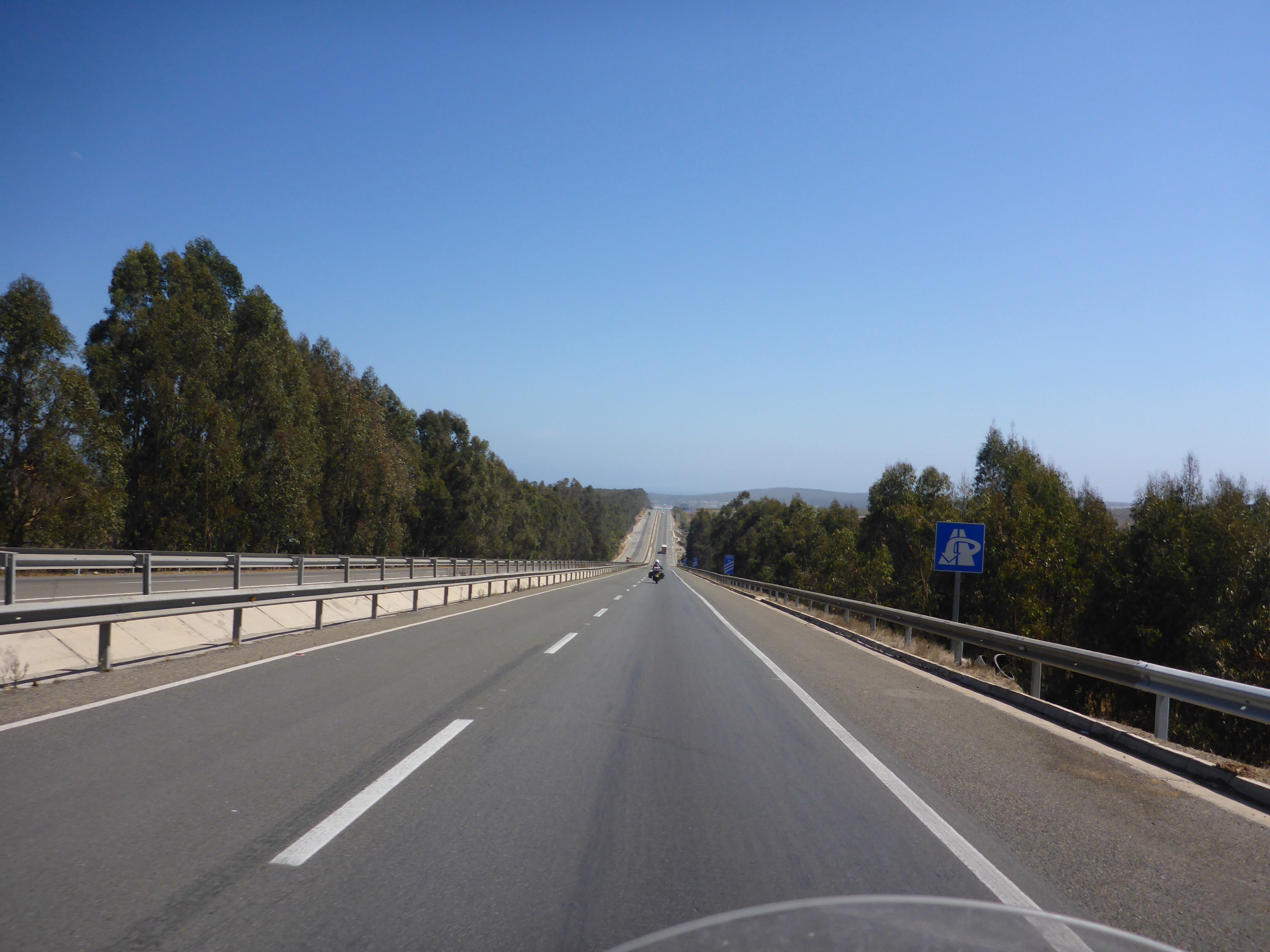
We want to get some distance under our belt before exploring more of Chile, so we take the Ruta 5 north. It is a beautiful 2 lane each way highway. It is an easy ride but quickly becomes tiring as it doesn’t require as much concentration as dirt roads. The scenery becomes very dry and barren very quickly. After the wine growing area and we cut into another valley, a fruit growing valley by the fruit trees we see and the number of fresh juice stalls along the road. The air smells sweet – it smells of pineapple. Then we ride through sparse grazing land, with rocky and scrubby hills in the distance. We hug the coast for a while, it is wild, the waves rolling and crashing spectacularly. It is tempting to stop but we have set ourselves La Serena as a target for today which will make us feel like we are finally progressing north, then Vicuña east of there the next day.

We are finally heading north of Santiago on Ruta 5

We are finally heading north of Santiago on Ruta 5

Then we ride through numerous wind farms, in the middle of nowhere. They are obviously owned by different power generation companies based on the advertising flags along the perimeters. Yes, wind farms does mean it is windy but nowhere as much as I had expected from what I had read. Maybe, as Anthony once said, it is because we “grew up” (our first bike riding experience) in Cape Town which is incredibly windy. Or we were very lucky…

All along the way, we ride past numerous tiny roadside cafés and restaurants, with Coca Cola or other suppliers’ advertising flags. Unlike the new wind generation farm flags, these are in tatters, sometimes you only see the first 2 white letters on red background, having been pounded by the relentless gusts for too long.

While riding, I find myself wondering how much I want to get more experience on dirt roads, as seeing Anthony coming off has brought back my fears of seeing him getting hurt – feelings and flashbacks reminiscent of my PTSD after his Dec 2012 accident rearing their ugly head – that took so long for me to get over… For the first 3 months on the road, I was terrified watching Anthony coming so close to grief, especially in Russia and Iran, yet he remained so calm and sure of himself (his anti-depressants at the time masking most emotions), I eventually relaxed myself too and started enjoying the challenges along the way and loving the way he rode.

We meet 2 Argentinian bikers now living in Santiago at a petrol stop. As you do when you meet fellow bikers, we discuss our route options to Vicuña – they thought the route was tarred all the way but we show them our detailed map which showed otherwise. They are going via Ovalle first instead of La Serena which we were going to do. It looks like a good idea so, quick change of plan, and we decide to aim for Ovalle too. As we ride off, Anthony and I both opt for the easier but longer option to Ovalle. His ankle is quite painful today and the thought of any type of riding challenge is totally unappealling.

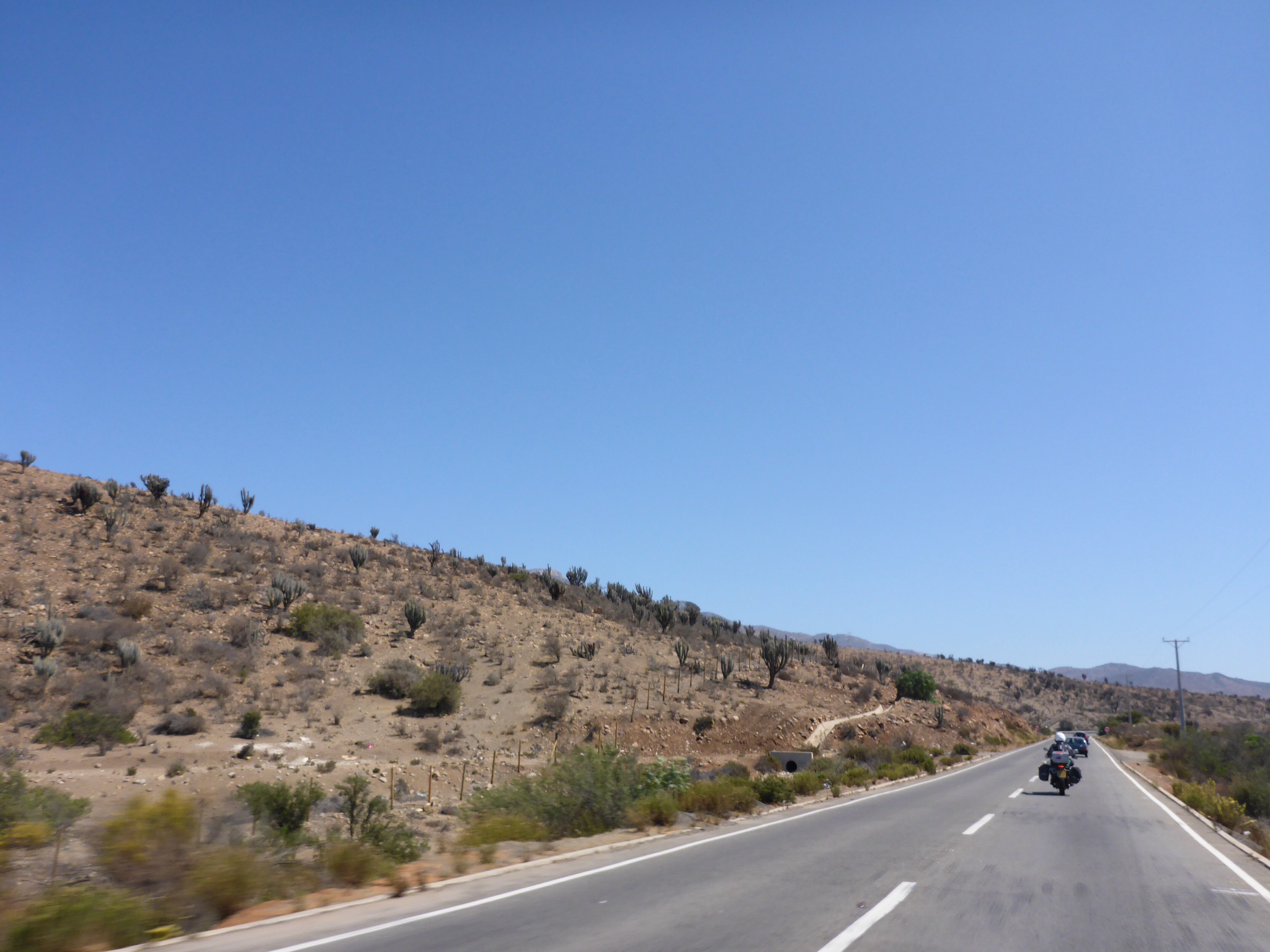
The winding road is easy, through many more wind farms so yes it is a little gusty at times. The scenery has changed again, we see many cacti (pad thai’s Anthony thought I said!).

On the way to Ovalle

On the way to Ovalle


We have to ride right across Ovalle to get to the Limari hotel the 2 bikers told us about and go through an endless number of traffic lights. At one time Anthony goes through a green to orange light, so I stop. Carabieneros to my right on 2 trail bikes notice we have been split up and wave me through the red light – so nice and intelligent policing. The truck driver on the inside of the cops realises too, so waits for me to ride through. I already love Ovalle. As we ride out towards the hotel, we ride past a shopping centre with a living wall: it is the first time I have seen such a ‘living’ wall on the outside of a wall, the plants really looking like they had a heart beating in them as they moved in the breeze. So magical.

After an interesting chat with the 2 Argentinian bikers near the pool that turns out to be too cold for a swim, we have a dinner of delicious ceviche with a pisco sour. When the bill arrives we tell them it is wrong as it is missing the drinks – no, that was a welcome drink!! Wow, nice surprise! The hotel has an interesting garden, full of interesting plants, birds, rabbits and a llama. To finish off, we are treated to the most stunning sunset.

In the morning, we discuss route options to Vicuna with the 2 Argentinians – the state of road depends on who you talk to, as is often the case, from all tar from the receptionist to 50kms of bad ripio by one of the many bikers staying at our hotel. Neither Anthony or I can be bothered with 50kms of bad ripio today, not as a choice. Somehow, the thought of one of us coming off and Anthony struggling with his ankle churns my stomach. We opt for easy road.

It is only about 130kms but by 110kms, we are both tired. Often the shorter rides feel like they’re much longer. We finally reach the pisco growing area. Not far now.

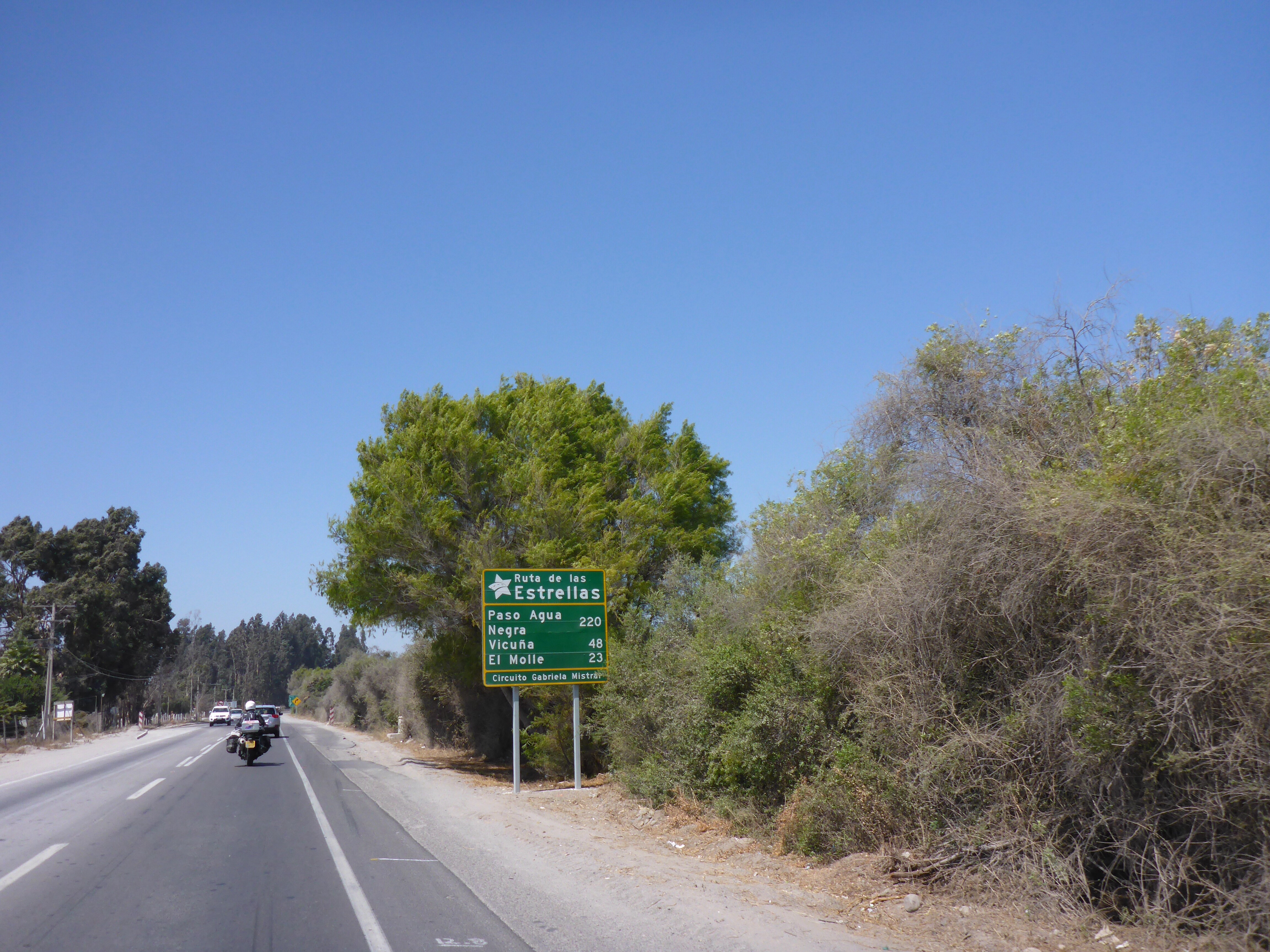
We are on the Ruta de les Estrelles, where many astronomical observatories are located

We are on the Ruta de les Estrelles, where many astronomical observatories are located

Wine growing valley of Elqui region

Wine growing valley of Elqui region


We find the hostal I booked a couple of hours earlier, the Casa Museo Solar de los Madariaga. All windows and doors are closed. Hmmm… I knock twice, wait, then 3 times a little louder on the big door knocker – nothing. We have a sandwich next door and I check my email. Booking has gone through and they have responded. After lunch, I go back to knock again, louder this time. I am greeted by lovely Alberto and Mitzi. We are the only guests and the place feels so serene. There is a lovely breeze, the courtyard full of flowering bushes, the sweet scent of jasmine and lavender in the air, the sound of chattering leaves in the gusts of wind, it feels lovely. I unpack the bare essentials out of the panniers while Anthony changes – it is not long before he snoozes in the sound of the wind which he loves and I type my notes. It is so lovely here, we ask Mitzi if we can stay an extra night. No one else is expected tomorrow so the room is ours for 2 nights. Perfect!!! 5pm, time for an afternoon walk for me, leaving Anthony snoozing.

I looked for brushes to give Streak and Storm a good clean. The Supermarcado and all the stores in town remind me of the stores in the UK when I was a little girl visiting my grandparents: they have a long counter with goods behind on shelves or in locked glass cabinets around the store and someone serves you. I find the word for brush – I obviously don’t speak Spanish so the guy mimics brushing teeth, no, I lift my foot up and mimic brushing shoes. Too easy!!

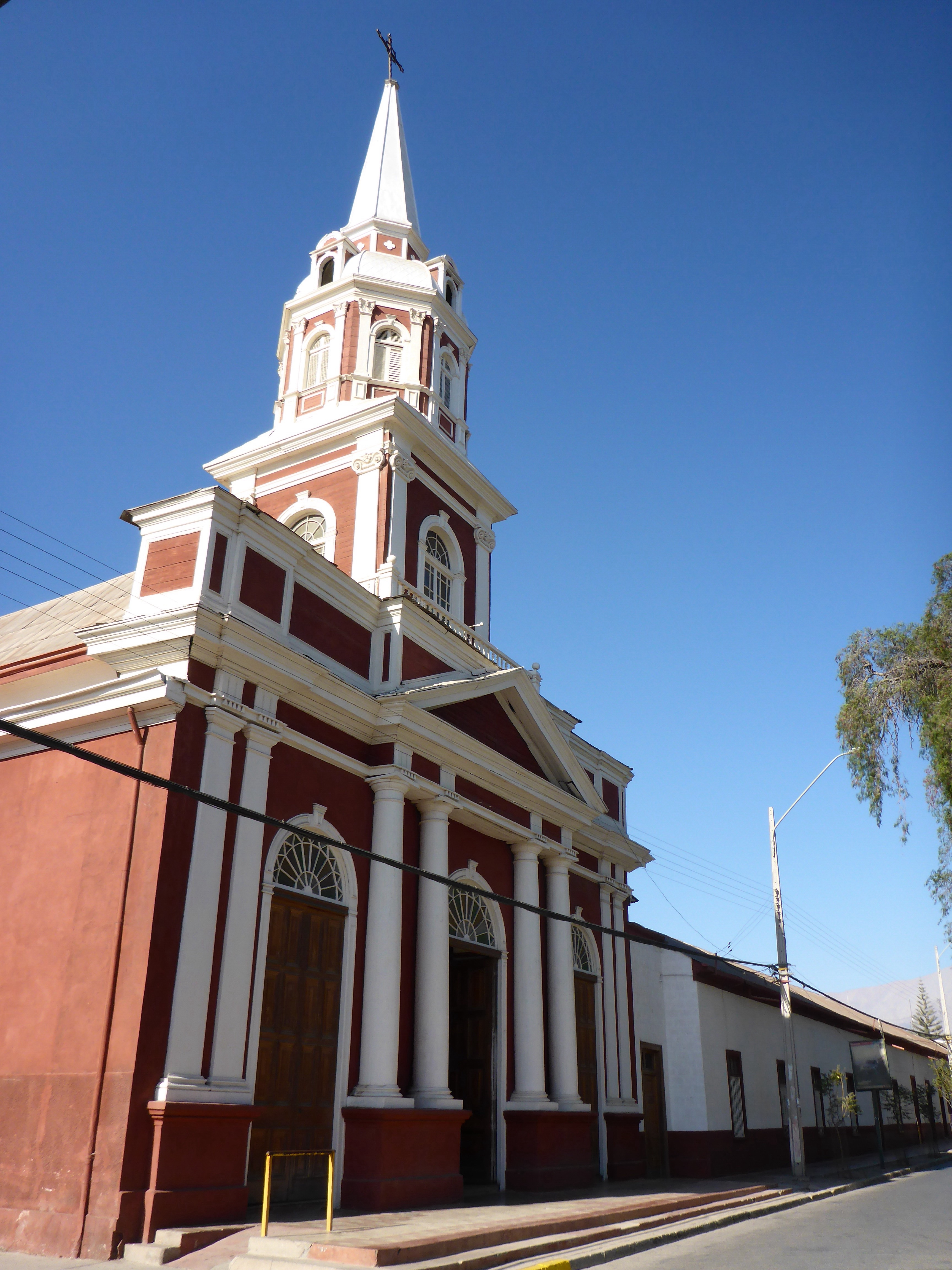
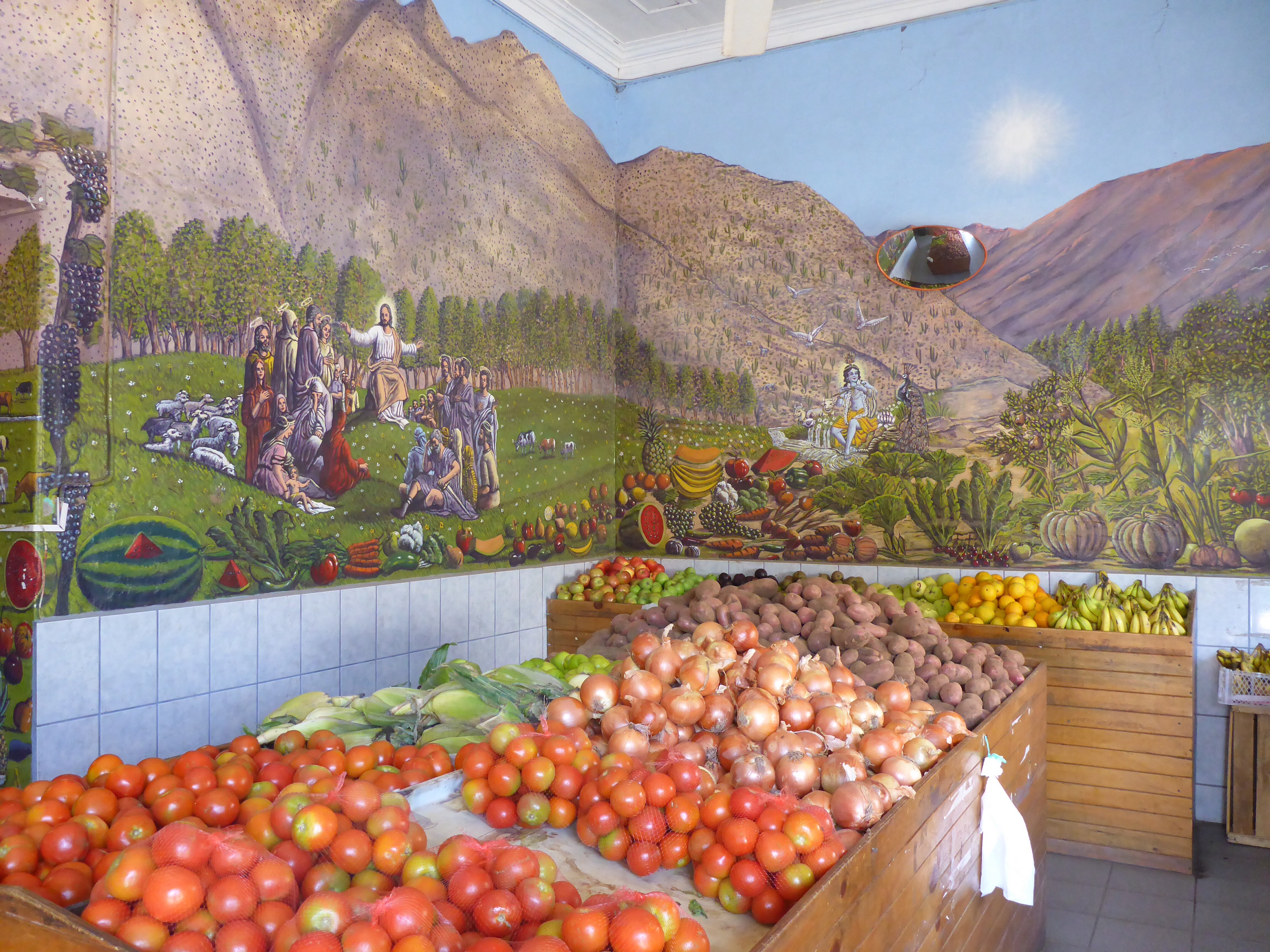
Shopping done, I stroll through town. All the bars are buzzing with shouts, gasps, cheering – I walk into a couple: they are watching a soccer match on the TV or big screen. I get to the tourist office as she is closing – yes, I am too late. On to the cathedral. Before walking in, I take my hat and sunglasses off. After admiring it, and taking a photo, I walk out, having noticed a donation box with a notice to tourists and ignoring it. I have a slight pang of guilt but continue on my walk. Stop at a green grocer advertising 4kgs of tomatoes for 1000CLP ($2), walk into see what they’re selling and discover a most amazing mural around the store. We must come back here before we leave Vicuña and buy some fresh fruit (“eat more fruit” we kept being told in Iran still rings in my head). I am now 100 metres from our B&B, look into my bag to put my hat back on and discover it is missing. I know exactly where it is: I must have dropped it when I took the photo inside the cathedral. I return, make a donation and chuckle at myself for having been so stingy and being taught a lesson!!!

Iglesia Inmaculada Conception in Vicuña

Iglesia Inmaculada Conception in Vicuña

Inside the Iglesia Inmaculada Conception in Vicuña

Inside the Iglesia Inmaculada Conception in Vicuña


Amazing mural inside Vicuña greengrocer

Amazing mural inside Vicuña greengrocer


As the sun is cooling off, we decide to wash the bikes. I had asked Mitzy if that was ok and she said yes. We find a pot in the garden we can use as a bucket. It is only when she comes over some time later that we find out she is about to go out for the evening, for a meeting on the shortage of water (they had very poor winter snow fall for the past 4 years and therefore the town has a shortage of water). We are glad we decided to use a bucket and minimise the amount of water we use. Anthony’s ankle is too sore and he goes to lie down. I finish washing and drying both bikes – the chain will have to wait until tomorrow.

The reason for coming to Vicuña was to visit one of the several astromical observatories and a pisco distillery. The Elqui valley where we are has 300 days of clear skies a year and is renowned for having the clearest skies in the world. Because we often change our plans and timings, we hadn’t booked anything yet and we are too late for a tour tonight. Mitzy tried to call several times on our behalf but kept getting an answering machine. I decide to try and book online and follow up with an email.

We have a lovely evening at a restaurant nearby – we share a plate of 6 bruchettas with veggies. Delicious. When we return to the darken B&B, open the front door with a massive old key, it reminds us of “a night at the museum” movie, for this place is also a museum. The house has belonged to Mitzi’s family since 1880. Her grandfather used to be a trading merchant so half the house was used as storage. The walls are all 60cm thick, the ceilings 5m heigh. They have cordonned a large part of the property as a museum showing furniture, utensils and equipment used by her grandfather. There is no air conditioning or fan but the room has stayed cool all day. Our room looks onto a beautiful courtyard, full of flowering bushes, the roof dripping with different ‘creepers’. There’s a passage way that takes you to another courtyard and back garden. It is simply gorgeous.

View from our room at Casa Solar de los Madariaga in Vicuña

View from our room at Casa Solar de los Madariaga in Vicuña


At 4am I am still awake because of the incredibly loud thumping music outside and we find out over breakfast that Mitzy couldn’t sleep either and even called the carabinieros.

We have the most delicious breakfast – huge plate of fresh fruit each, plate of cold meats and cheese, home made jam, fresh pot of real coffee and green tea. Amazing.

I get an email back from the observatory I contacted and yes we can join a tour this evening, I just need to drop by the agency between 12 and 2 to pay. Brilliant. We were going to take a local taxi to one of the pisquerias at lunchtime but Mitzi organises for one of her friends Lorenzo to take us around for the same price – excellent. We go Aba pisqueria first: good timing as a busload of cruiseship tourists arrives just as we leave after some interesting tasting (and the purchase of a half bottle!). Pisco is a local brandy made from muscat grapes – ancient documents reveal pisco was already been made in this valley in the 16th century. You can drink it as an eau-de-vie or in a cocktail such as pisco sour, which is pisco based of course with some sour citrus juice, some sweetner and sometimes angostura bitters. I have tried a few while in Chile (and Peru) and while they have all been very tasty, they never taste the same! We go to another pisqueria outside Vicuña, much larger and more commercialised but they are overrun with cruiseship visitors so we leave. A lovely little Sunday outing though.

At Aba pisqueria in Vicuña

At Aba pisqueria in Vicuña

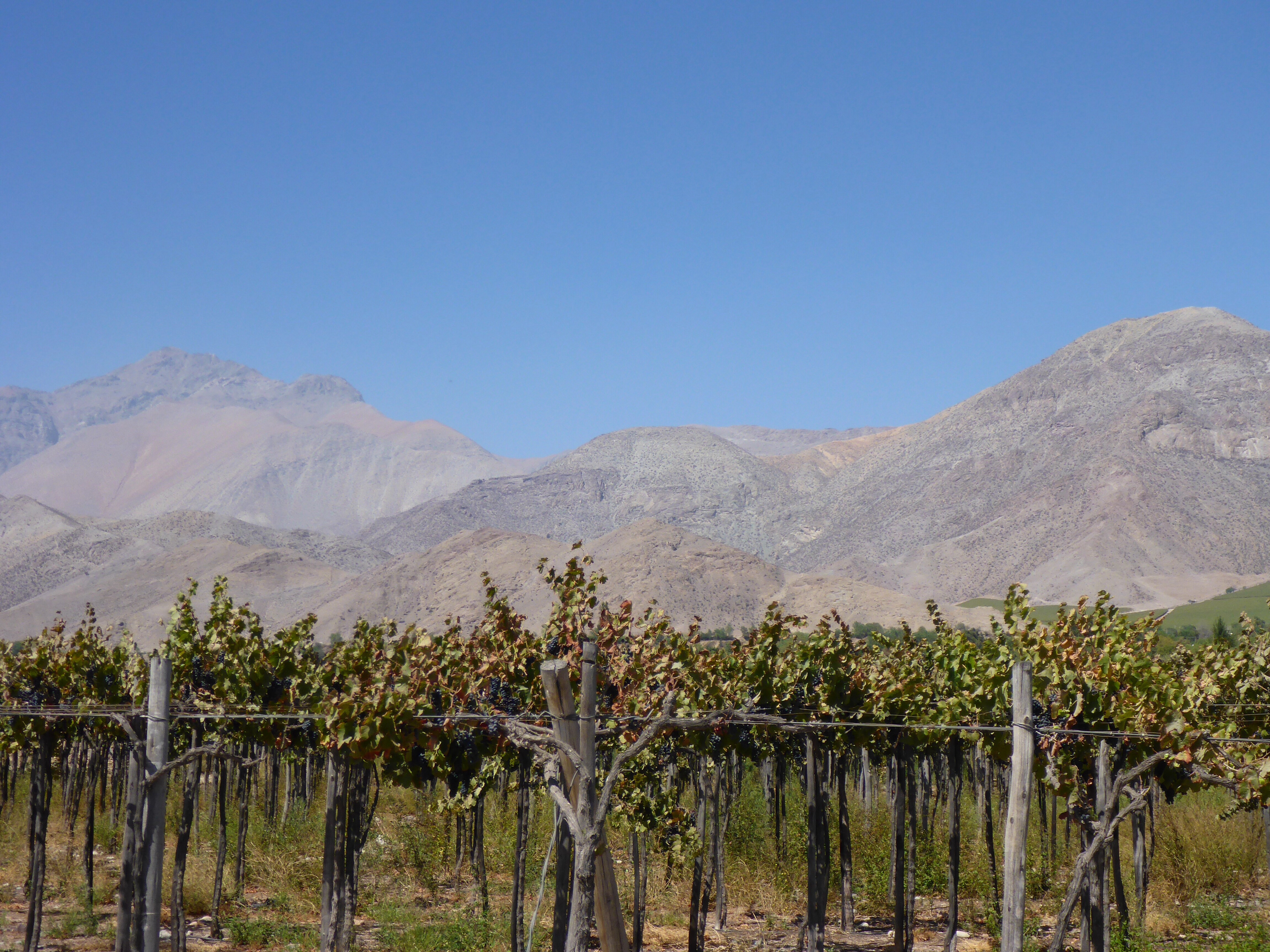
Elqui Valley outside Vicuña

Elqui Valley outside Vicuña

Elqui Valley outside Vicuña

Elqui Valley outside Vicuña

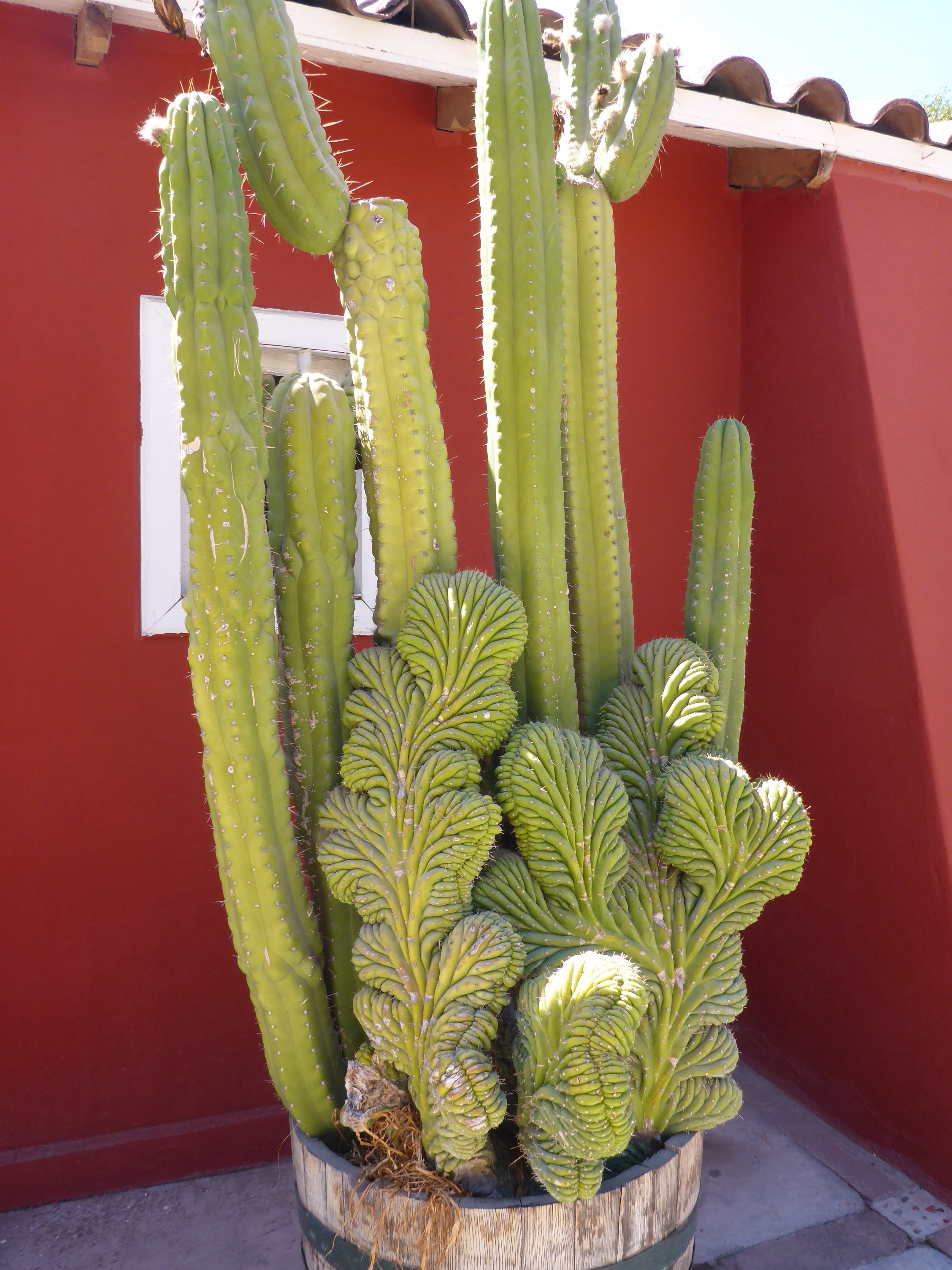
Strange cactus in Vicuña

Strange cactus in Vicuña


Time for me to hunt down some sandwich in sleepy Vicuña and bring it back to the B&B for lunch. The afternoon is spent reading, researching, writing and cleaning the chains after which we adjust Anthony’s chain and tighten up a few bolts that rattled themselves loose. Time for a shower before we get picked up for the observatory tour.

Oh what a night!!!!! Our visit to the Observatorio del Pangue, situated 19kms south of Vicuña, where the only man-made structures nearby are 3 other scientific observatories, was out of this world!!!!! We saw galaxies with the naked eye, a mere 200,000 light years away, we saw a galaxy (Sombrero or M104) through the telescope which is 60 million light years away, so far that we could clearly see its entire shape, we saw the only existing supernova in the entire universe, which is an exploding dying star, and we saw a slowly collapsing dying star, we saw Saturn with its rings and 4 moons. We also learned that the point of the southern cross id made up of twin stars and saw them. And of course, we saw shooting stars. We saw and learned so much… It was a completely mind blowing experience… It makes me feel like visiting more observatories with bigger lenses and learn more. Can’t wait to camp again under the stars soon.

Tomorrow, we head north, slowly towards Antofagasta.

– Anne

Timing Recalibration – Santiago to New York

As you may recall, due to a little medical hiccup in January, we departed a couple of weeks late for Santiago. This still gave us enough time to reach New York for late July as planned. As we finally start to head north, we have spent an additional four weeks in Chile and Argentina having had a wonderful time, but are no closer to our destination of New York than we were last month at this time. Something has to give.

One of our concerns had been that we needed to have our motorbikes back in the UK to obtain our Carnet de Passage refund, a not insignificant amount, by August 2015. This has turned out not to be the case and we can send the documents back once we are clear of any countries that may wish to see them. While we would have loved to be back in Europe for late summer, this is just not practical anymore given the distances, roads, borders and places we want to visit.

Places we want to visit! Now that has become a problem, there are just so many. Where do you start and stop? As we found out in Easter Island, a small place, but easy to fill 5 days! We could have spent a couple of months in the Chilean lake district and Argentina’s Patagonia. We realise now that as we travelled across Asia, the visa limits of no more than 30 days forced us to focus on what was practical to see in that timeframe and then we had to leave. If we are to avoid riding into New York in a December snowstorm, we have to make some decisions about time allocation. When we set off on this journey around the world in June 2014, we both agreed that we did not want to travel indefinitely. We have found that we enjoy six months or so continuous travelling but that is about our limit. Endless travel is not our thing. Having spent the preceding nine months living in Europe we were glad to be home, abeit briefly for six weeks, in January 2015.

So we now need to make some timing decisions, of course subject to change as we travel but with the aim of now arriving in New York in September. We have also decided to focus on certain countries and regions namely, Northern Chile, Southern Bolivia, only the Nasca lines in Peru since we have spent a fair amount of time in Peru on a previous trip, Ecuador and Columbia.

Since my accident we have both been considering how much ripio, or gravel we wish to ride on. Hard packed is OK, but the softer stuff is an issue, I do not have full strength and mobility and another fall could curtail our trip permanently. We ride to enjoy, and as we do not enjoy corrugations and poor quality roads, should we even undertake them if we do not need to? Anne is prone to altitude sickness and considering we would be above 4000m continuously for a few days (up to 5000m) in Bolivia, we are not sure how she will go or if we will even attempt it. We still have about a week before we have to decide on whether we enter Bolivia briefly or cross it up to La Paz. I do not know at this stage, we will probably decide when we get closer and have the latest information on road conditions.

Central America and Mexico are more accessible from the USA should we wish to return in future so we will limit our time there. It may unfortunately mean we may now be unlikely to get to Mexico and Costa Rica in time to meet up with friends as we had hoped later this year, but until we get past Peru we will not know for certain. I know we will miss many amazing places, but we need to leave somewhere for you armchair followers to explore on your own.

On this revised basis, and assuming I can stay on my motorbike, we should arrive in the USA mid July which should give us enough time to catch up with friends en-route and still get to Sturgis for the 75th anniversary of this motorcycle rally in early August. So those of you motorcyclists that want the 75th anniversary t-shirt, how about riding some of the way with us? A thought for those who have not planned their next holiday or can slip a few days in on a business trip.

Now we have a totally new and unexpected target to aim for, we will see how it all unfolds in the next five months, your guess is probably as good as ours.

– Anthony

Discovering Rapa Nui

Day 2 – Leaving Anthony behind at the cabin, I go for a lovely 3 hour walk along the north western coast, up to the start of the Orongo trail which I decide not to take today as I do not have enough water on me for another 2 hour walk. Although it is the peak tourist season, there are very few people. With one flight a day, and tourists spending on average 3 days, there are about 600 tourists at any one time and because there are so many sights across the island, it never feels overcrowded with tourists.

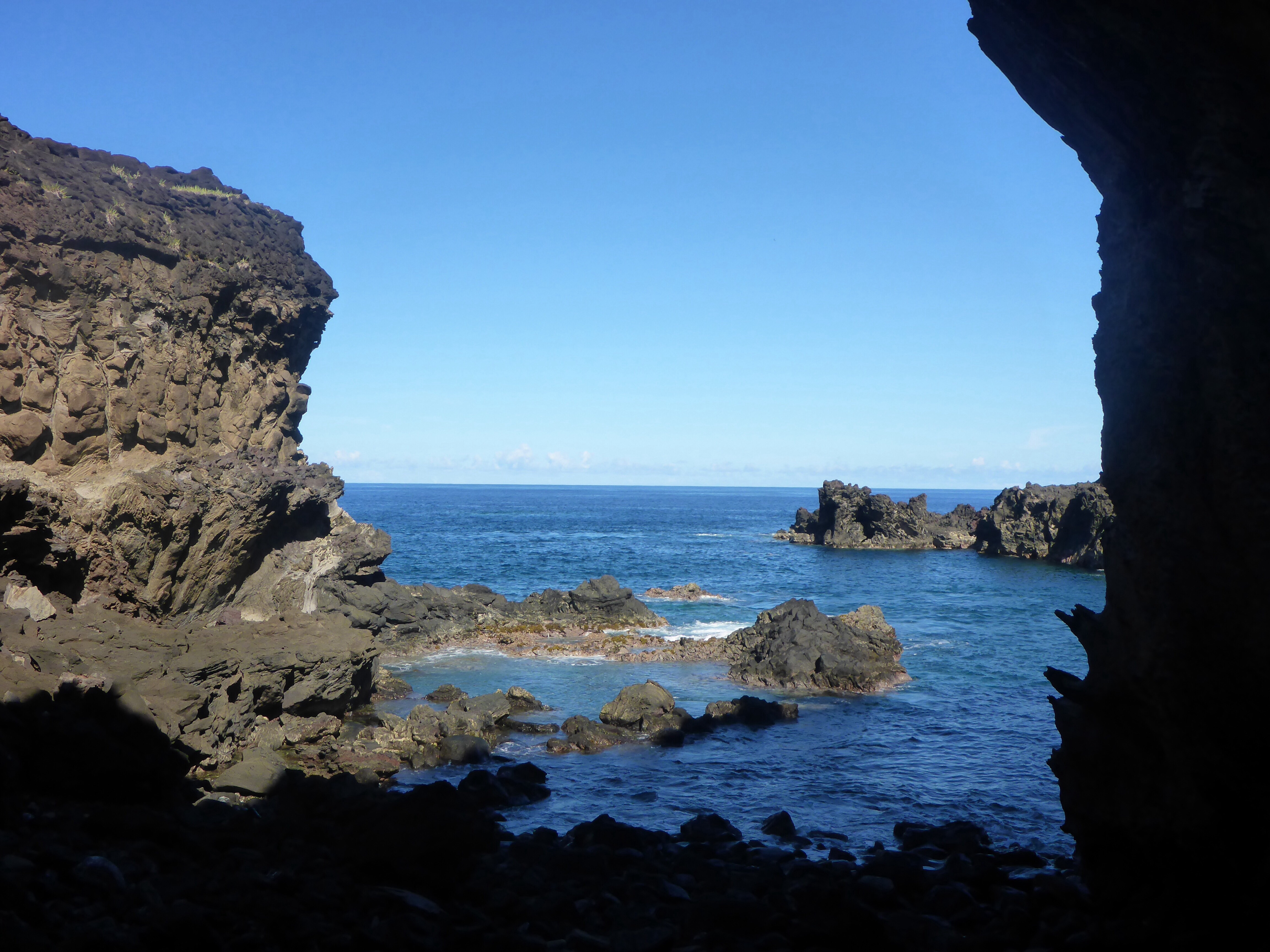
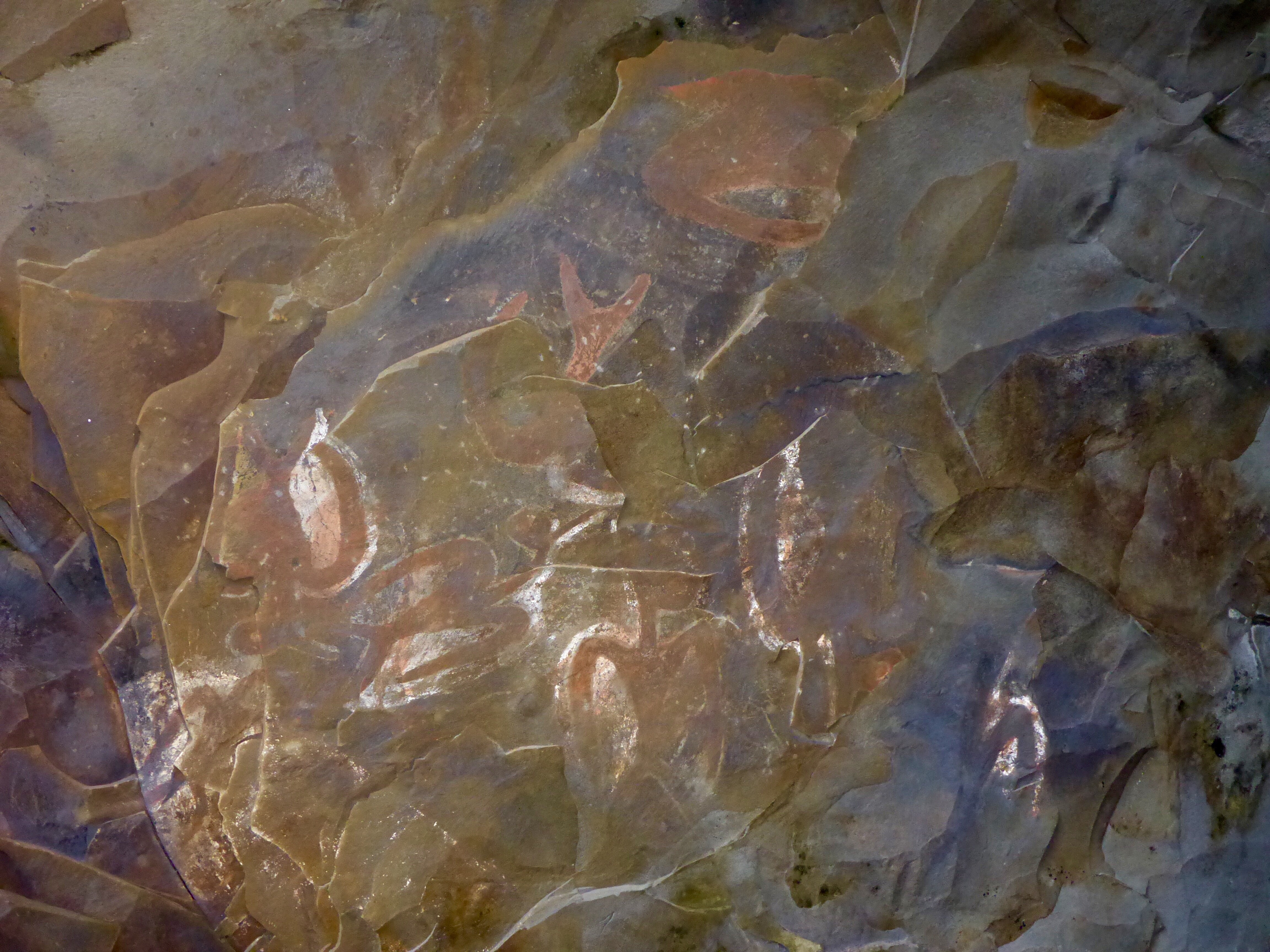
I love the luxury of solitude. Along the narrow walking trail, I spend some time just sitting, contemplating and enjoying the strange feeling at the thought of being so far from any other landmass. I visit a cave with some interesting petroglyphs. As I leave, a small group of tourists arrive to visit the cave – Mary is there!
Anne's walk along the western coast of Rapa Nui

Anne’s walk along the western coast of Rapa Nui

Ana Kai Tangata cave on Rapa Nui

Ana Kai Tangata cave on Rapa Nui

Petroglyphs inside Ana Kai Tangata cave
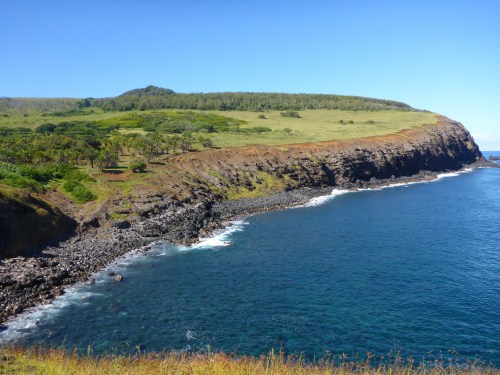
Petroglyphs inside Ana Kai Tangata cave

Te Ara OnTe Ao trail up to ceremonial village of Orongo where the Birdman ritual was held

Te Ara OnTe Ao trail up to ceremonial village of Orongo where the Birdman ritual was held


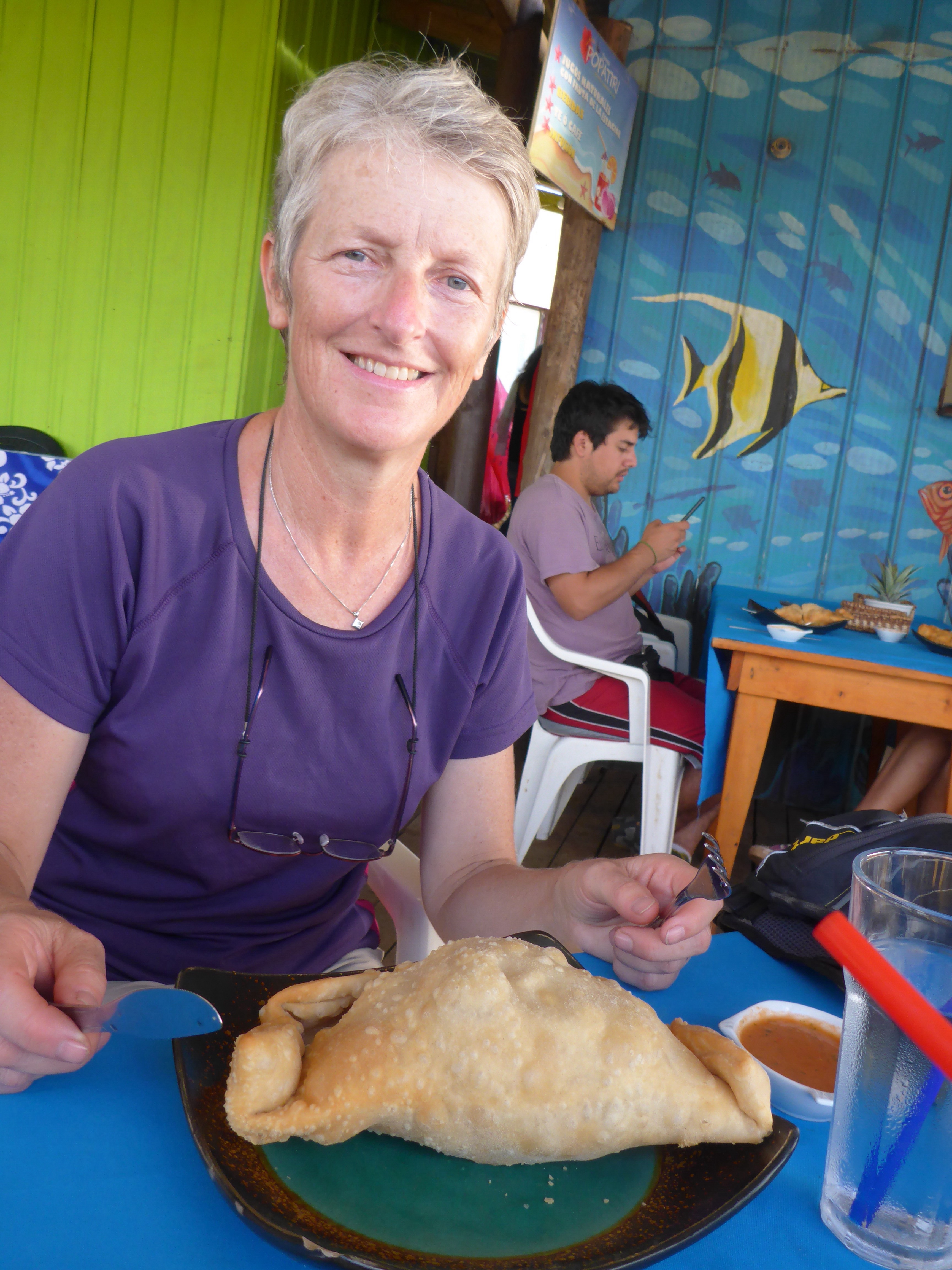
I walk home through town, have an empenada for lunch, stop and chat with the locals in various shops – I love the friendliness and warmth if the Polynesian people – and bump into Mary again in a shop!!

During siesta time, I spend the next 3 hours annotating the next lot of photos of our little tour of Patagonia. Around 5pm, Anthony comes out for his first walk and first upclose look at some moais. We walk to one of the local ponds, watching locals enjoying their end of day soak and swim and dangle our legs.
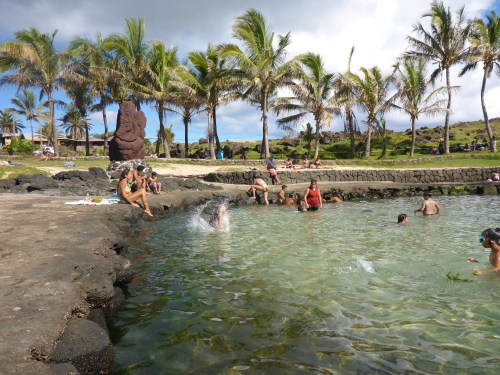
One of the many ponds in Hanga Roa

One of the many ponds in Hanga Roa

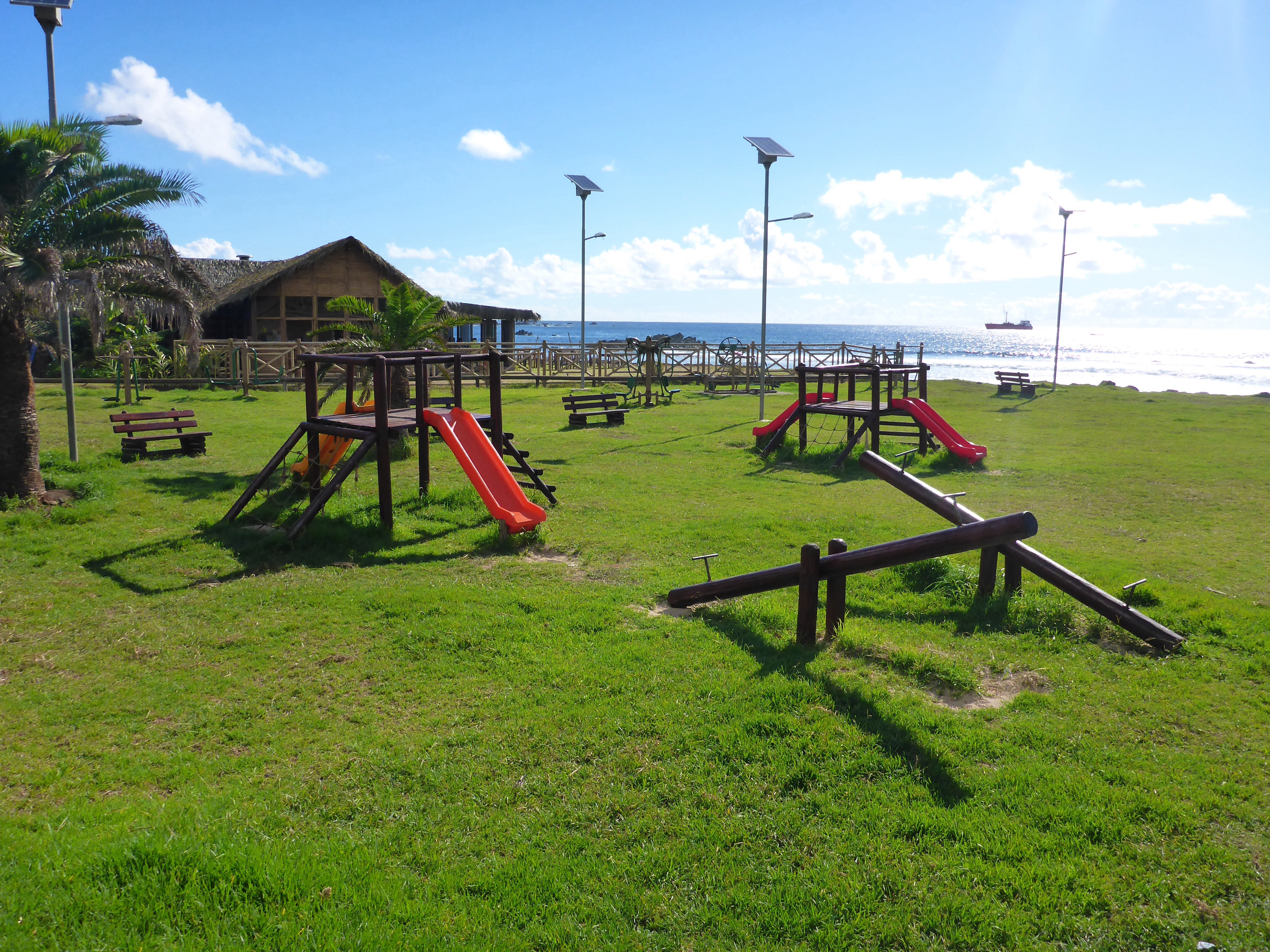
The playground next to one of the teaming ponds was always empty
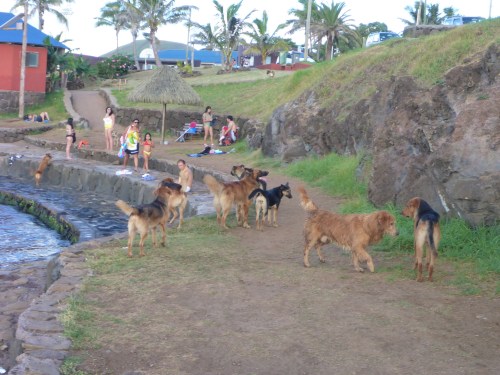
The playground next to one of the teaming ponds was always empty

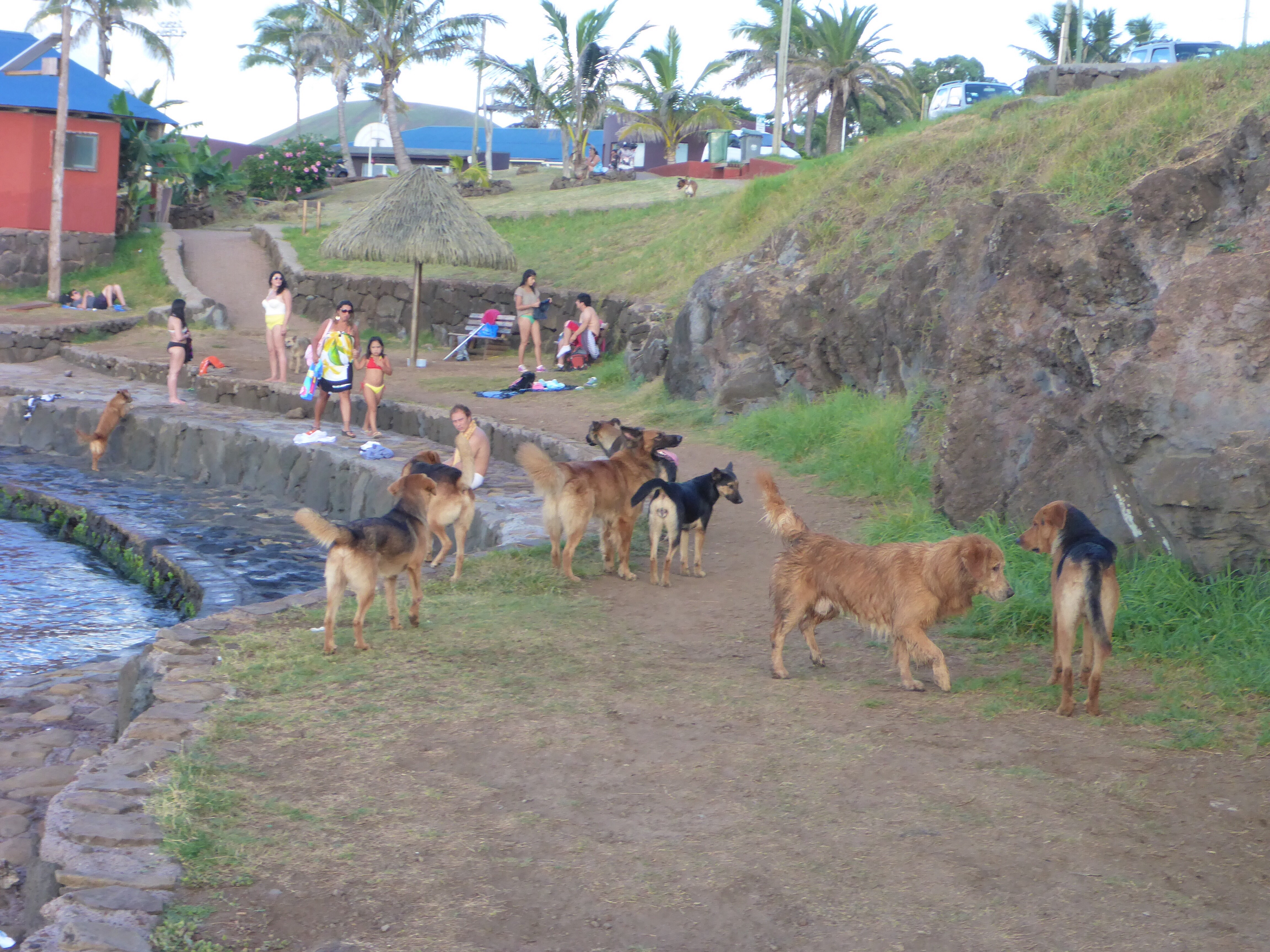
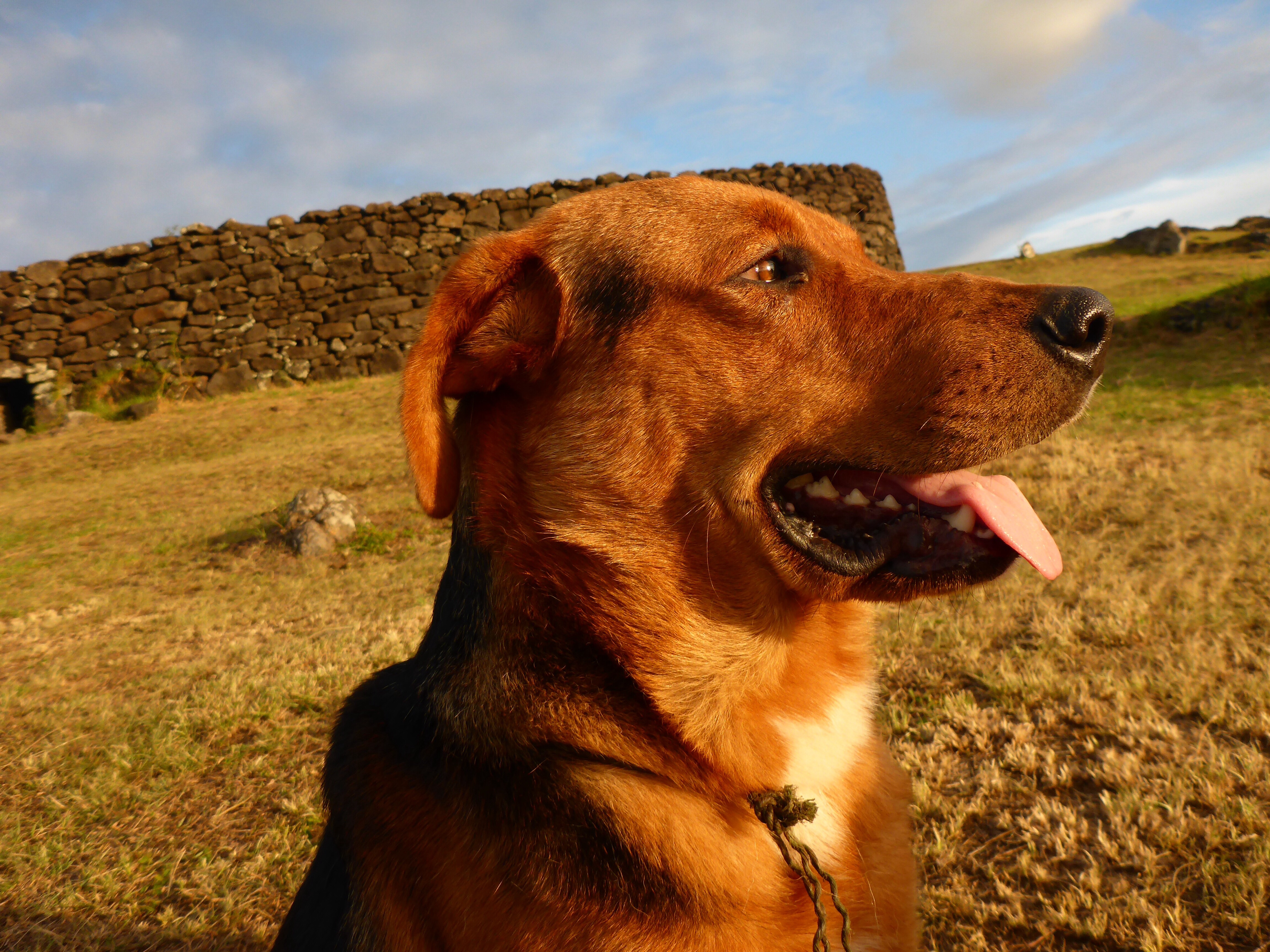
Anne has never felt so comfortable amongst so many stray dogs

Anne has never felt so comfortable amongst so many stray dogs


Then we walk to Taleta restaurant for a drink, see kids cycling with a surfboard under their arm. While we eat, we watch kids surfing. How wonderful to see kids enjoying a healthy, happy and active life without the constraints of modern society’s safety regulations or concerns. We go for dinner at a tiny restaurant as Taleta was fully booked. This empenada was delicious!!

Anne's delicious, and huge, tuna empenada at Hanga Roa

Anne’s delicious, and huge, tuna empenada at Hanga Roa

Day 3 – 2 tours
We take a tour in the morning and first go to an extinct volcano Rano Kau.

Rano Kau volcano's crater  and wetland, a haven for biodiversity

Rano Kau volcano’s crater and wetland, a haven for biodiversity


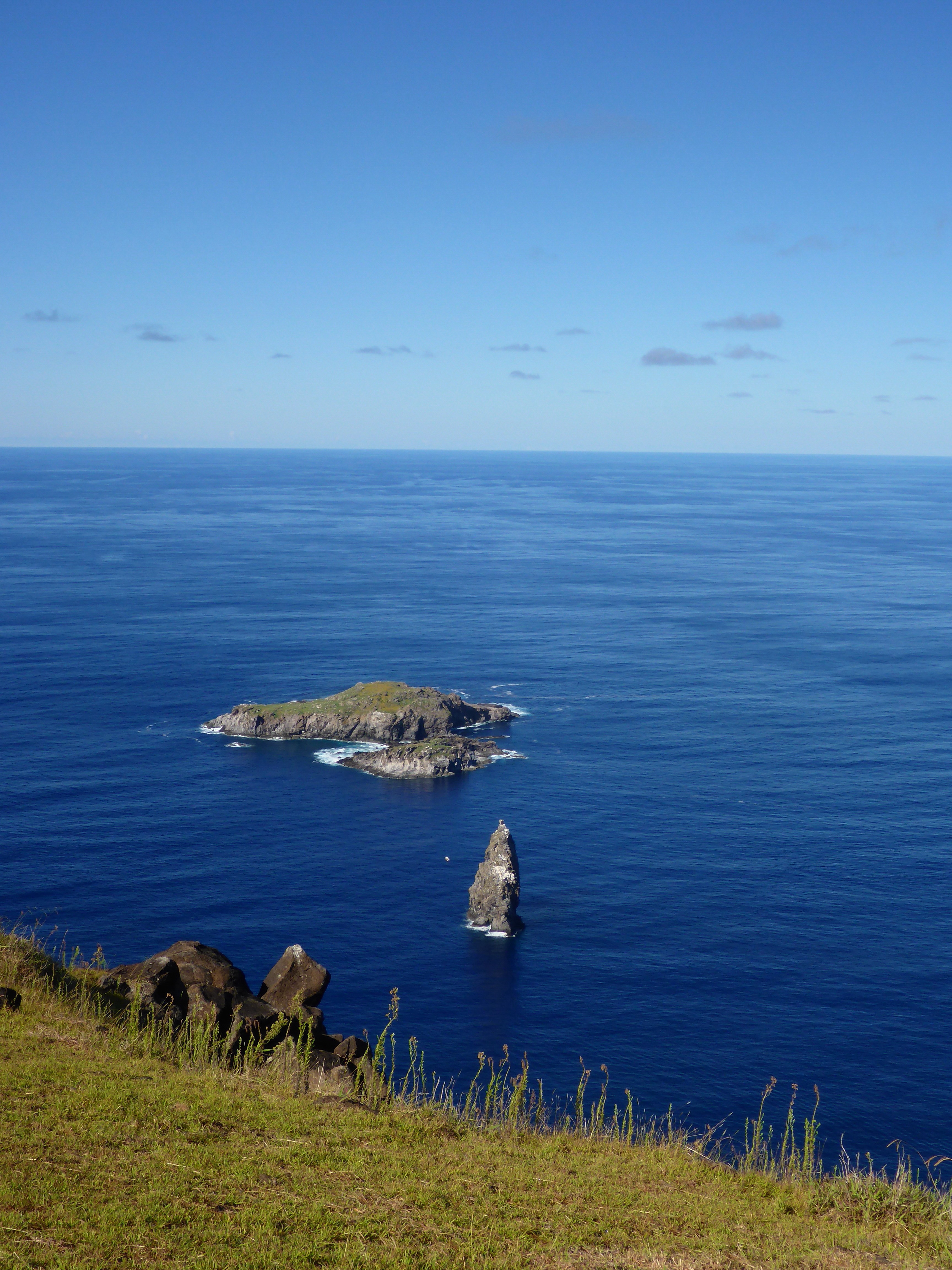
From there we walk to Orongo, the village where the Birdman competition took place. After the ecological disaster where all the trees had been cut down, the society no longer competed in erecting statues but fought more and more for scare resources. Then came the fierce Birdman competition: competitors (who were either chiefs of different tribes or their representative) had to climb down the jagged cliffs, swim to the island 2.5kms away, wait for the arrival of the sooty tern to lay their eggs and find a sooty tern egg, swim back with the egg and climb back up the cliffs and return the egg intact. In the process, competitors killed each other, other fell off the cliffs to their death or simply dropped their egg as they climbed back up the jagged cliffs. The tribe of the winner became the leaders for one year, until the following year’s competition and the tribe’s chief became the headman of the island.
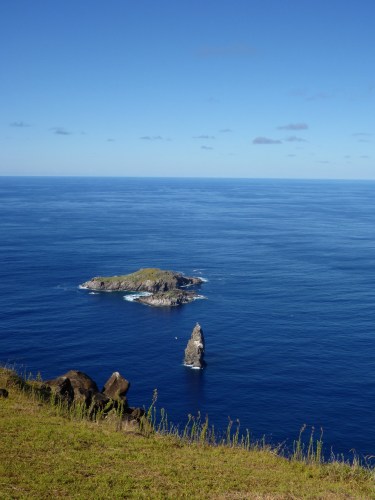
The largest island, 2,5kms away, is where Birdman contestants had to swim to and return with an unbroken sooty tern egg
The largest island, 2,5kms away, is where Birdman contestants had to swim to and return with an unbroken sooty tern egg

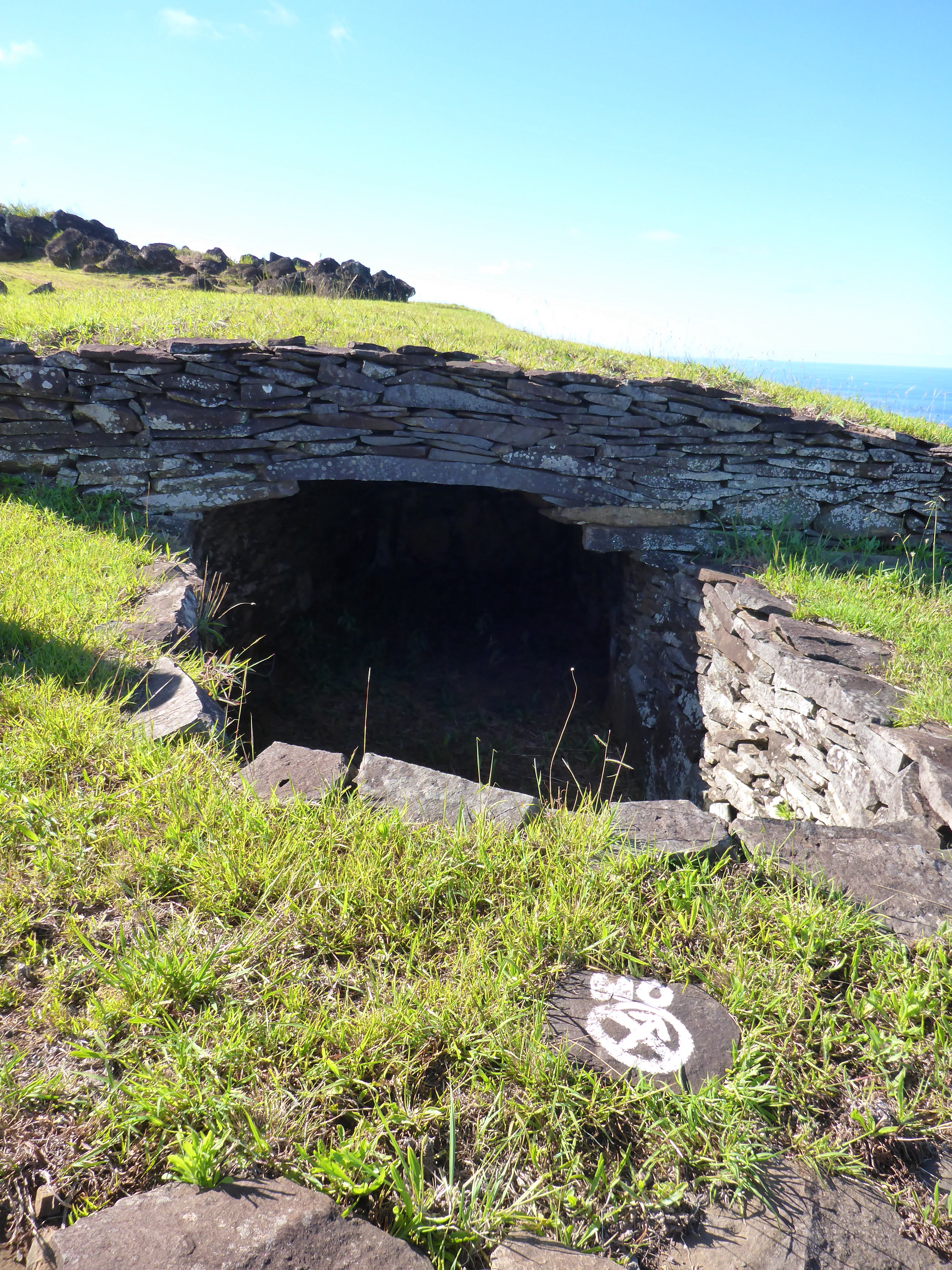
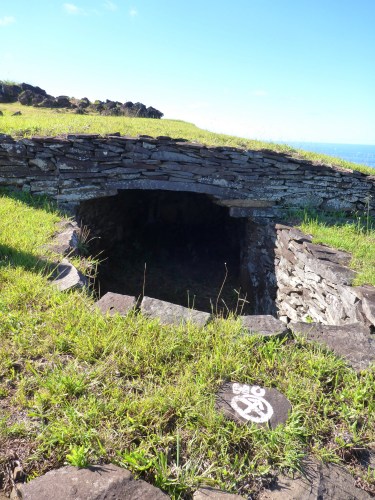
Partly reconstructed house at Orongo, showing the corbelled roof devised after all trees had been cut down and could no longer be used for rafters
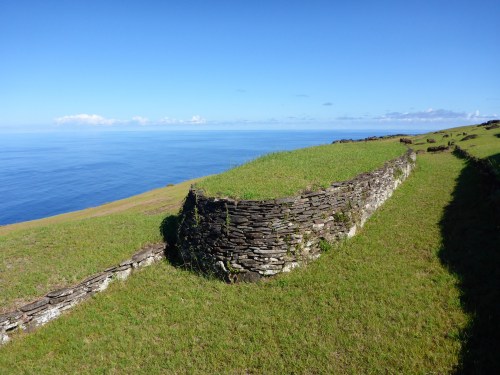
Partly reconstructed house at Orongo, showing the corbelled roof devised after all trees had been cut down and could no longer be used for rafters

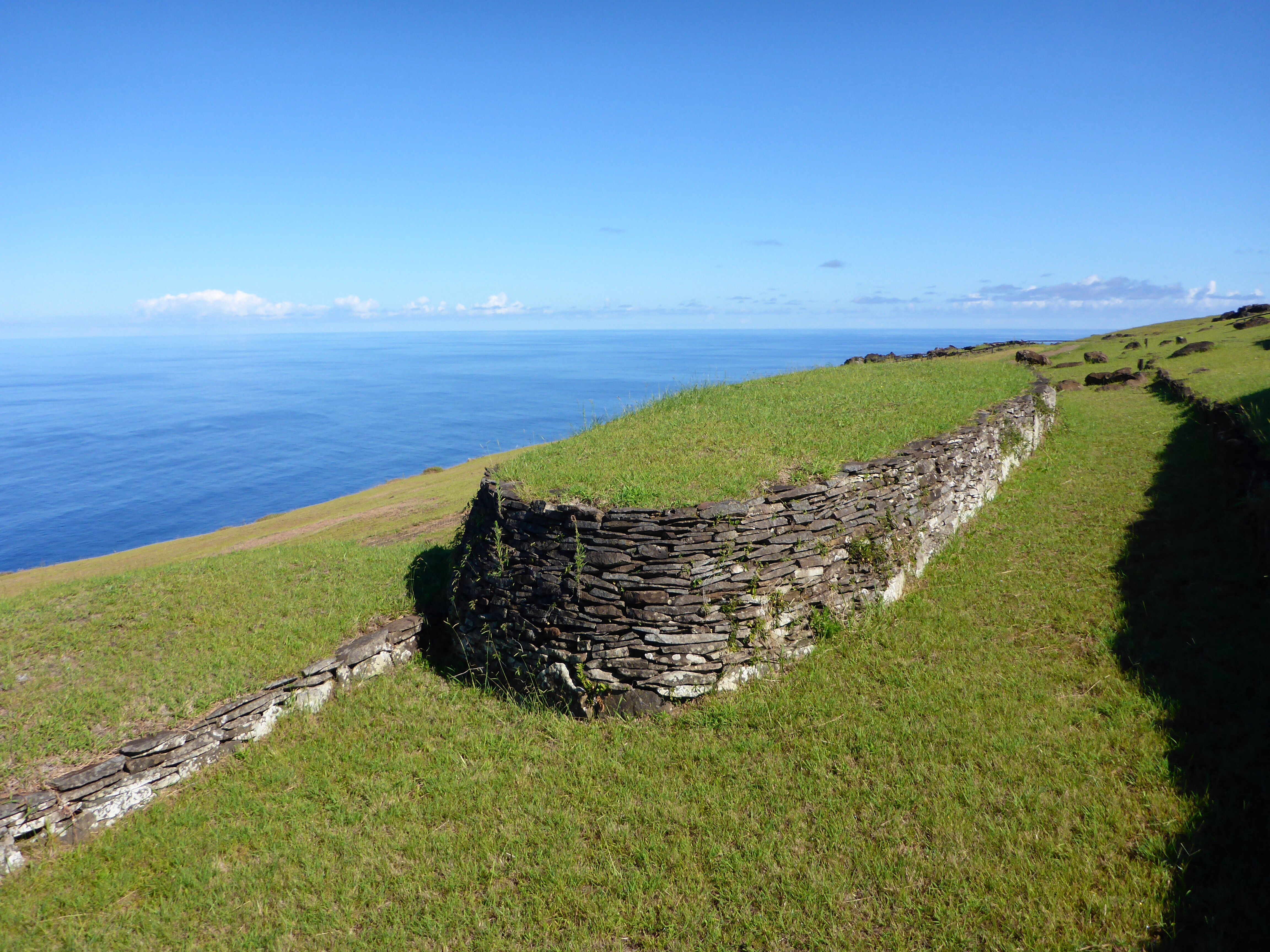
Longboat shaped house at Orongo village

Longboat shaped house at Orongo village

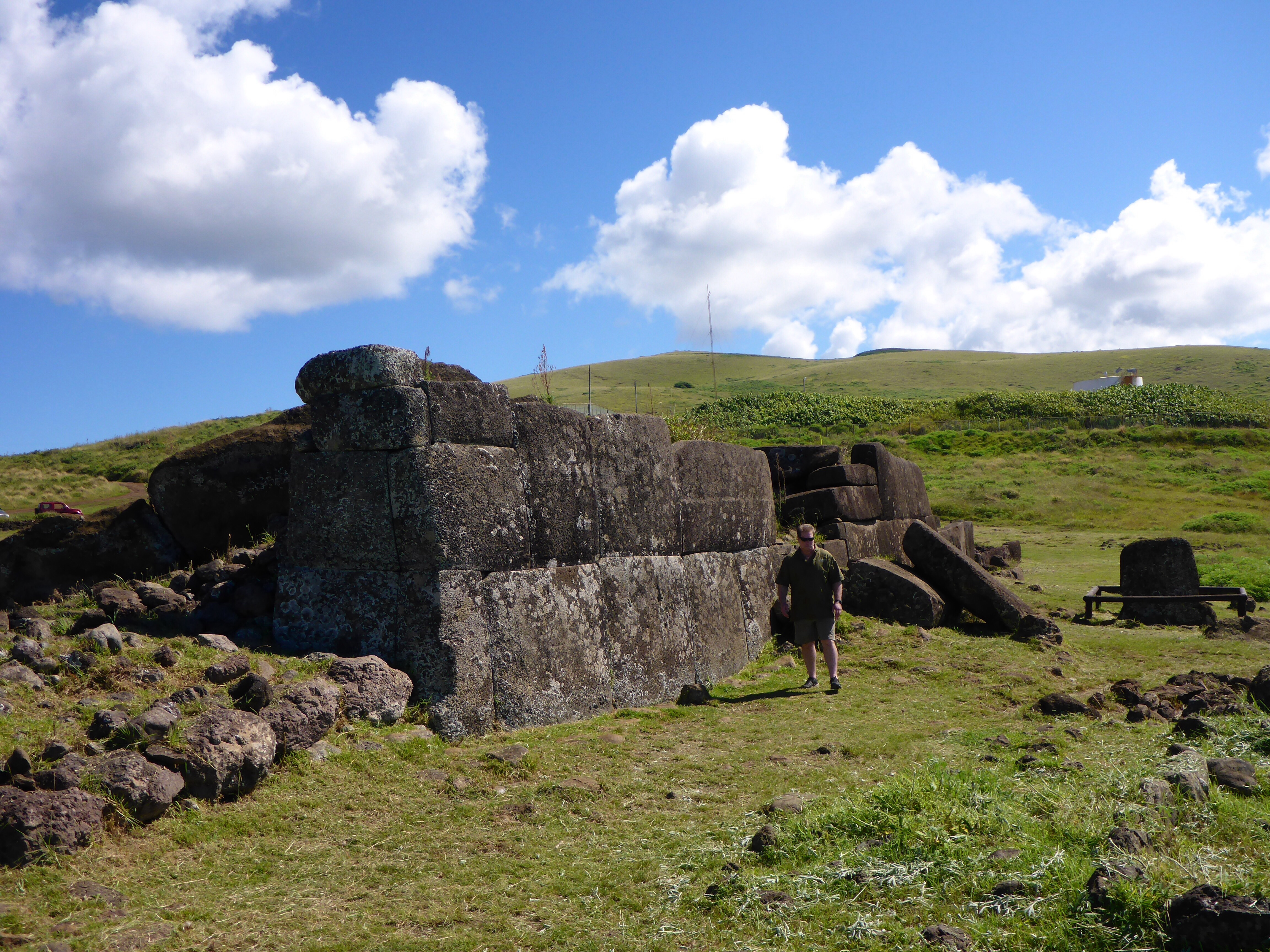
Then we went to ahu Vinapu, consisting of 2 ahus, each with extraordinary stonemasonry, similar to that found at Machu Picchu. There is debate as to whether there had been contact with Peru at the time. Vinapu was constructed before 1440 and similar stonework in Peru after 1440. Vinapu stone walls face towards sunrise at winter solstice.
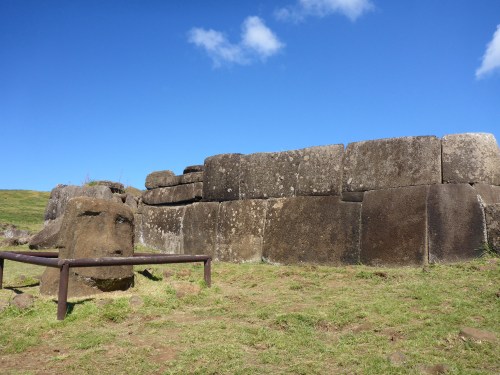
Vinapu I ahu wall, oriented astronomically, each block weighing several tons

Vinapu I ahu wall, oriented astronomically, each block weighing several tons

Vinapu II wall showing the scale of each block
Vinapu II wall showing the scale of each block

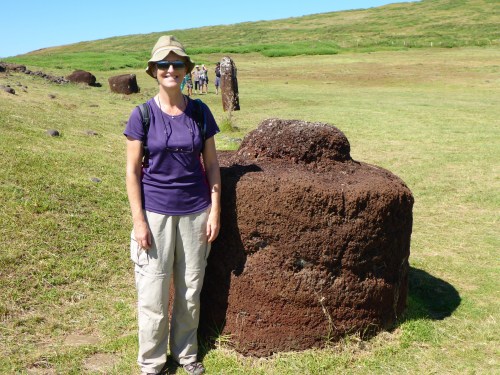
Anne next to a pukao or topknot.  The column in the background was a feminine statue with 2 heads, used as a funerary pillar

Anne next to a pukao or topknot. The column in the background was a feminine statue with 2 heads, used as a funerary pillar
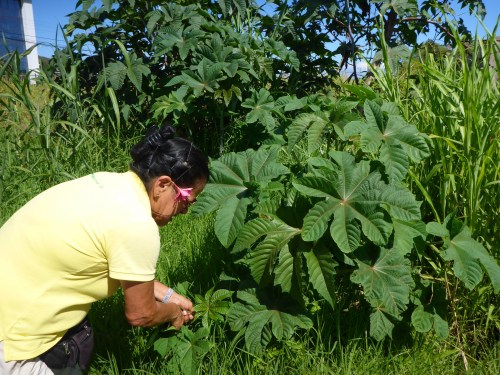
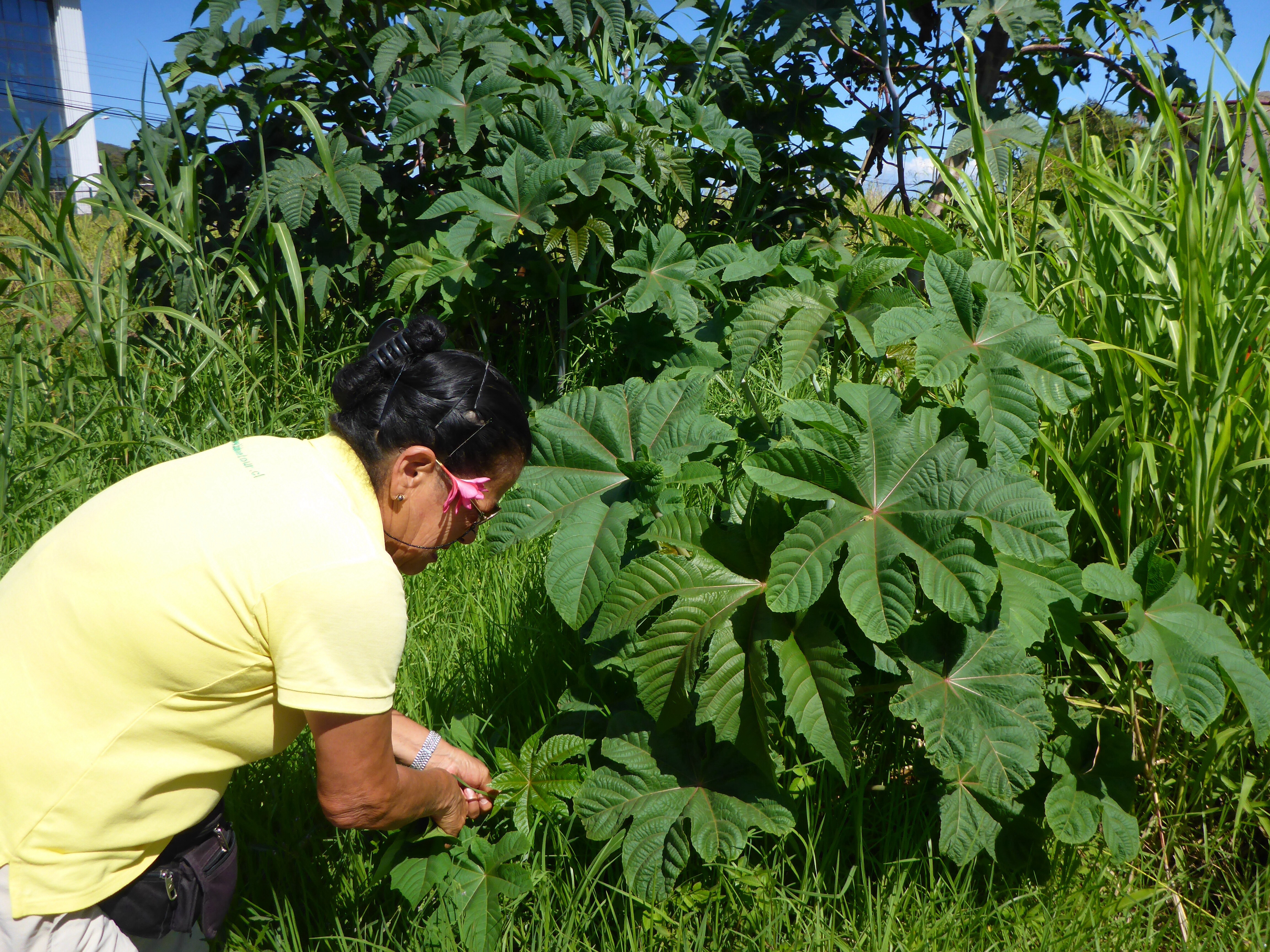
Our guide stopped to pick some rahakau leaves I had to boil and massage into Anthony's ankle

Our guide stopped to pick some rahakau leaves I had to boil and massage into Anthony’s ankle

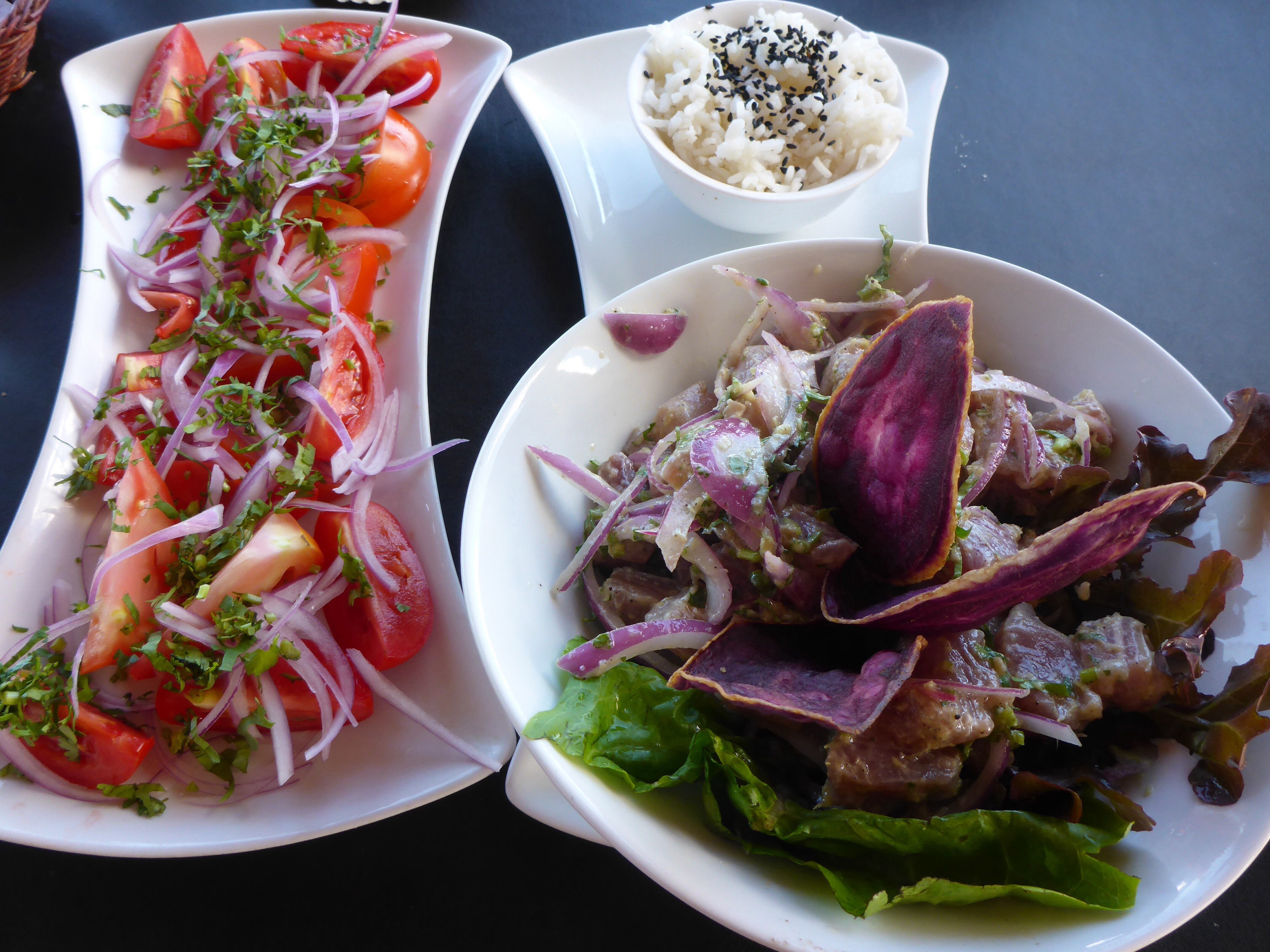
After a delicious lunch of tuna ceviche (raw tuna) at Taleta restaurant, I rejoin the tour group alone as Anthony probably walked too much this morning.

Tuna ceviche

Tuna ceviche


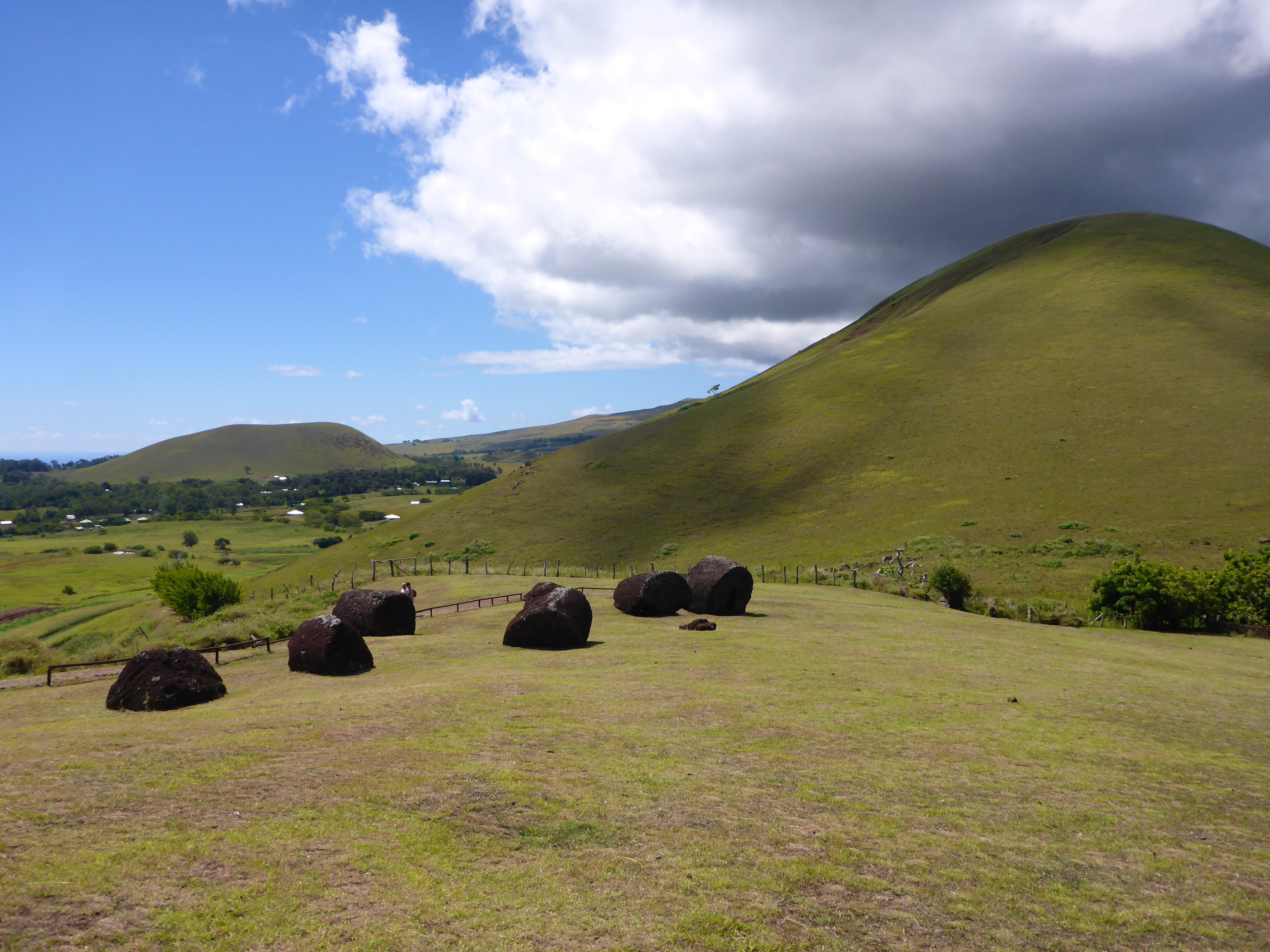
First stop is Puna Pau – a quarry in a small crater which was the only source of red scoria from which the Rapa Nui people carved pukaos out of its red volcanic rock. It was also used for a few moais such as Tukuturi and some rock art carvings. Some pukaos were as large as 2.5 metres in diametre. Pukaos are the ‘hats’ placed on top of moais, and may have represented dressed hair or headdresses of red feathers worn by chiefs throughout Polynesia.
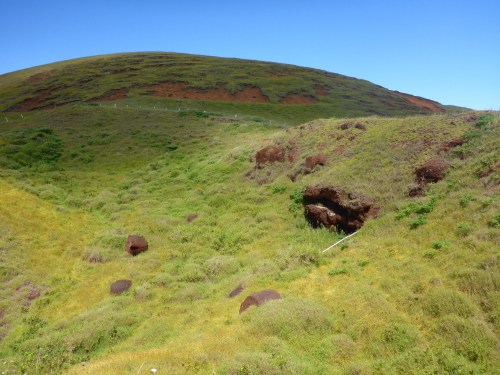
Pukao at Puna Pau quarry

Pukao at Puna Pau quarry

Puna Pau quarry

Puna Pau quarry

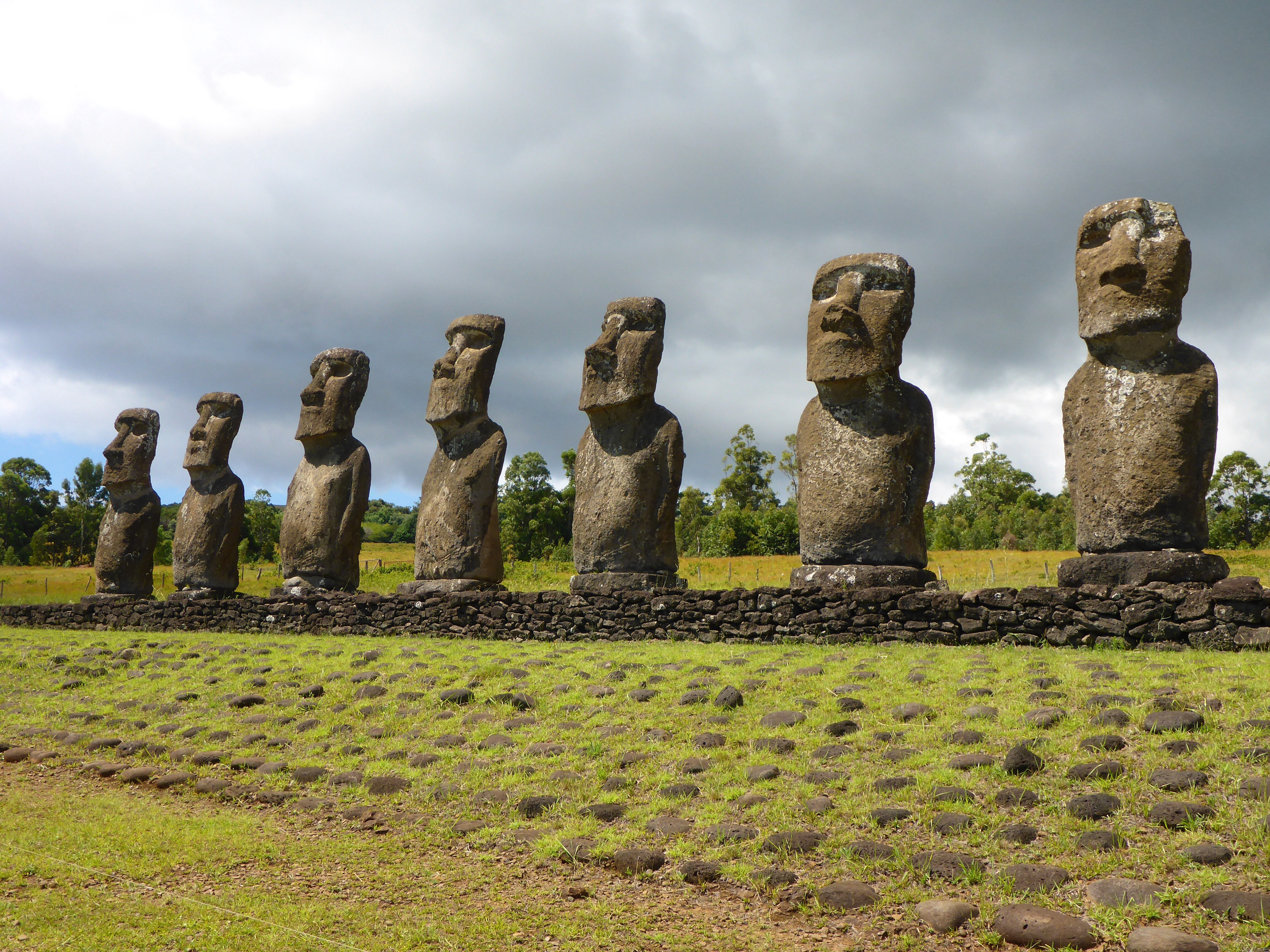
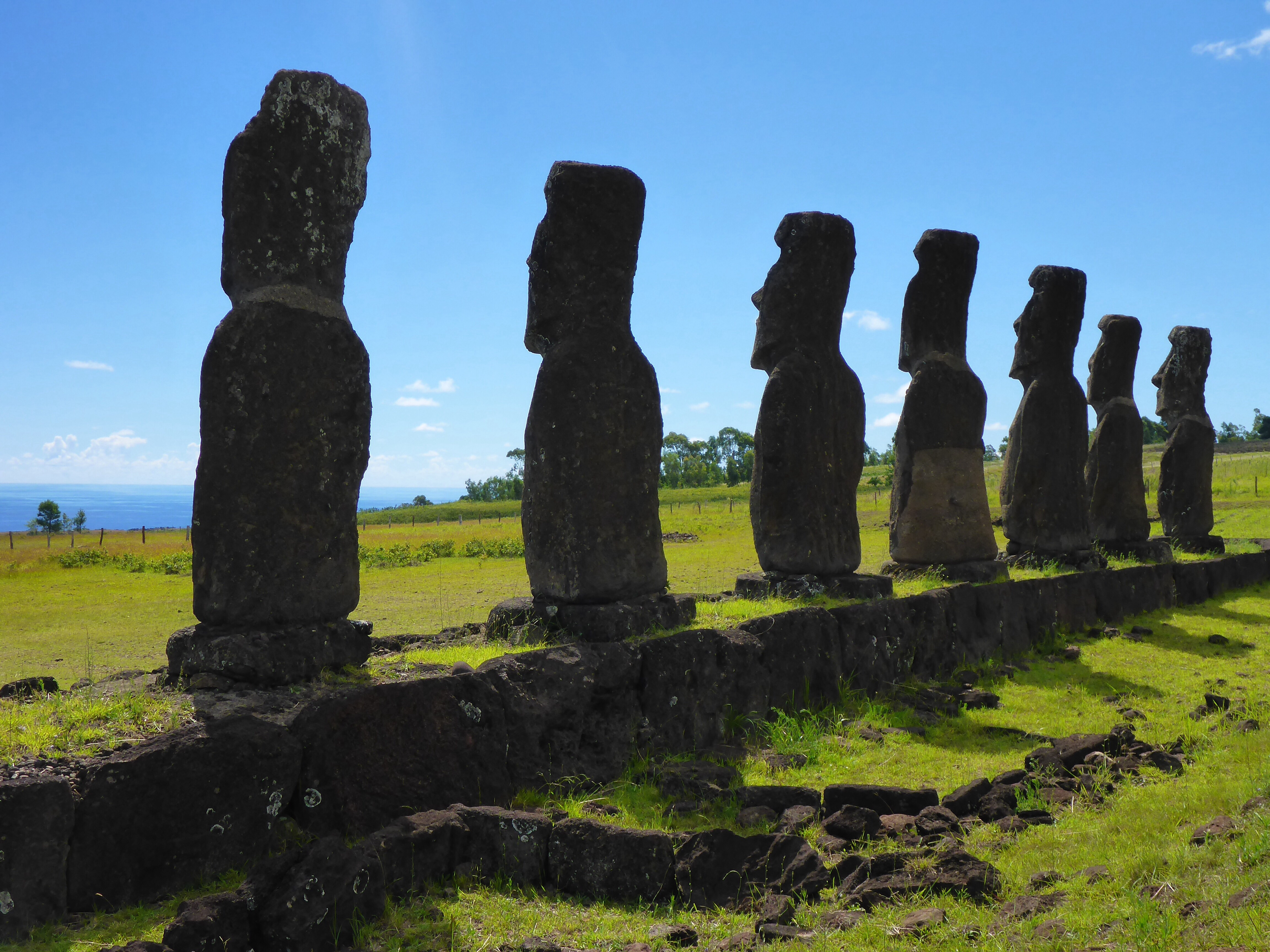
Ahu Akivi is very special as it is inland, faces the ocean and is oriented astronomically.

Ahu Akivi
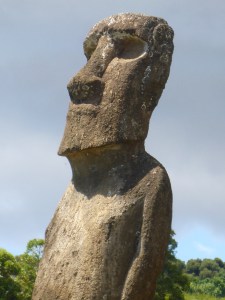
Ahu Akivi


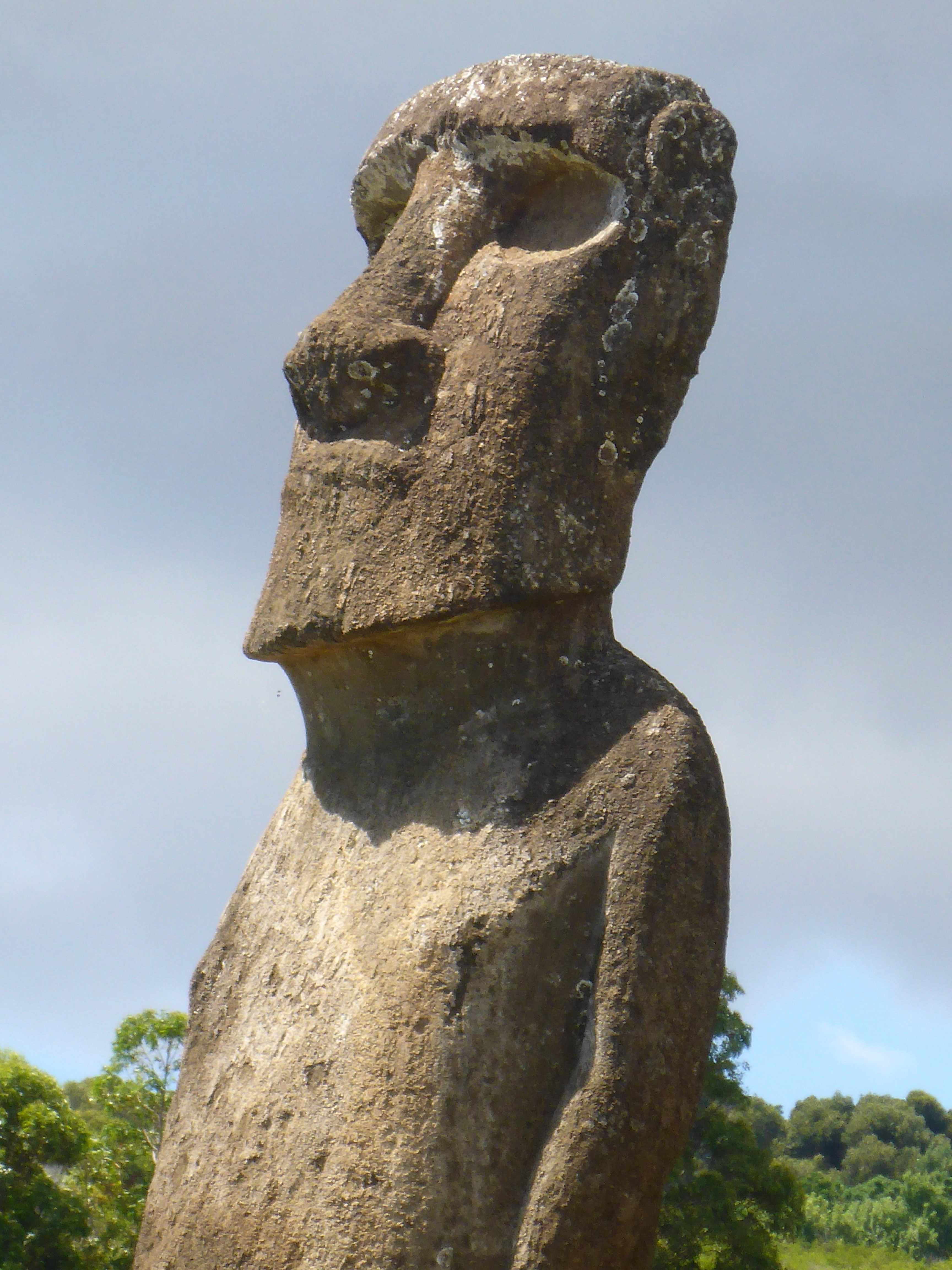
One of the moais on Ahu Akivi
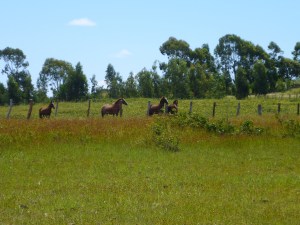
One of the moais on Ahu Akivi

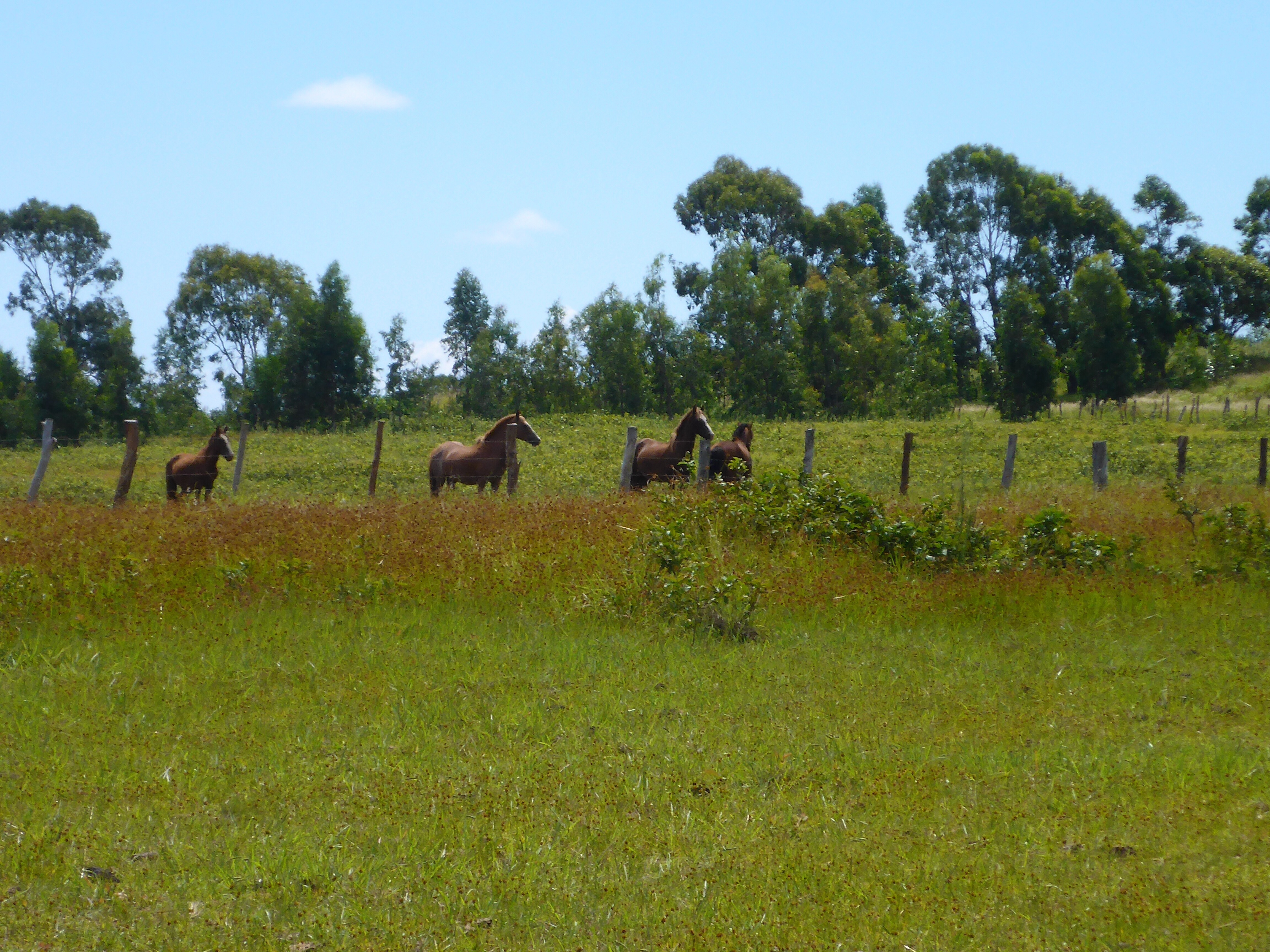
Horses watching tourists

Horses watching tourists

Ahu Akivi - a particularly sacred site, looking out to sea, and a celestial observatory set up around 1500 - they face sunset during Spring equinox and sunrise during autumn equinox

Ahu Akivi – a particularly sacred site, looking out to sea, and a celestial observatory set up around 1500 – they face sunset during Spring equinox and sunrise during autumn equinox

Day 4 – We decided to hire a car as yesterday’s afternoon was disappointing and China is busy with family issues. Anthony joins me for the day but can only walk slowly and part way only. His ankle seems to be hurting more today.

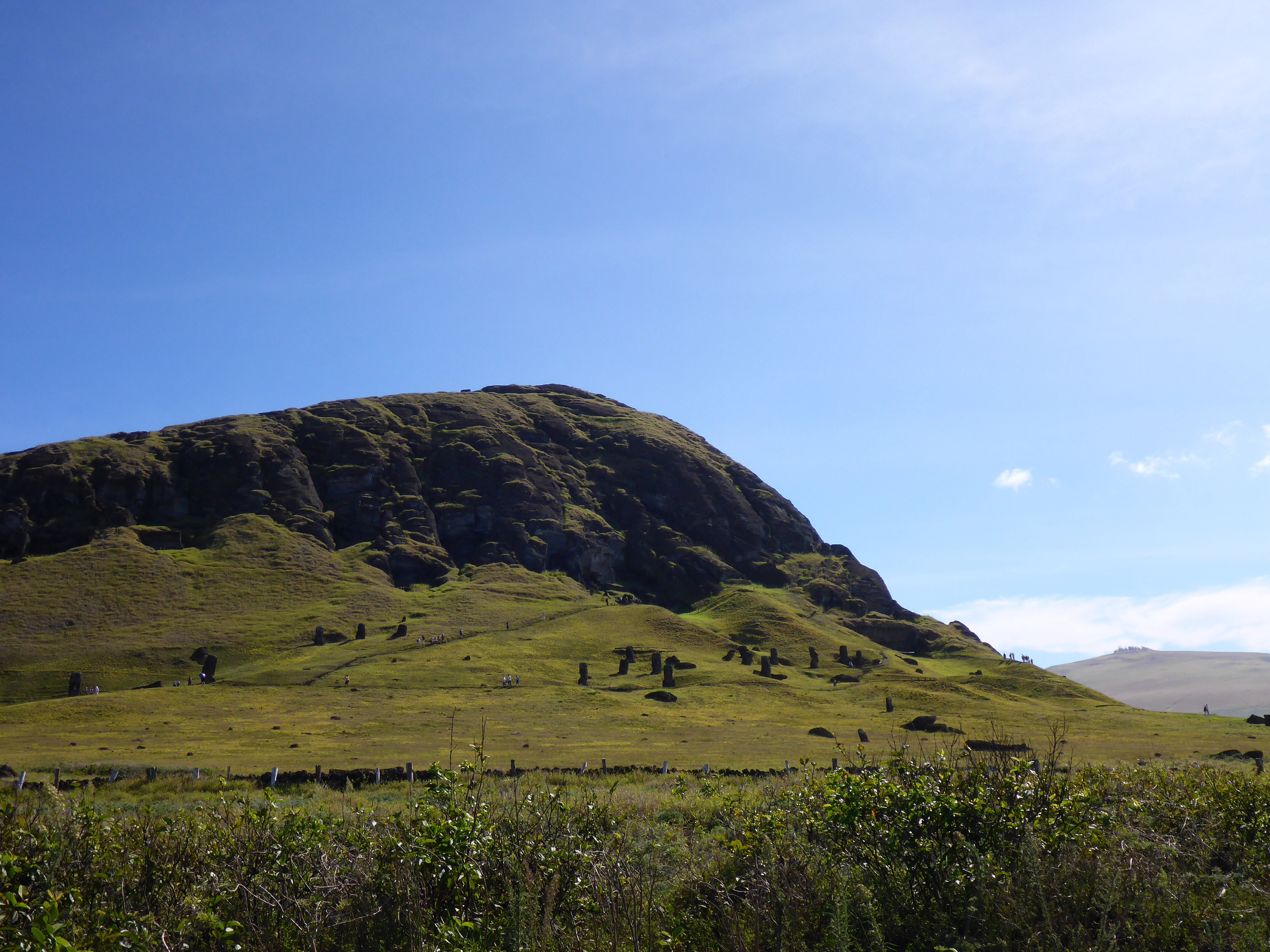
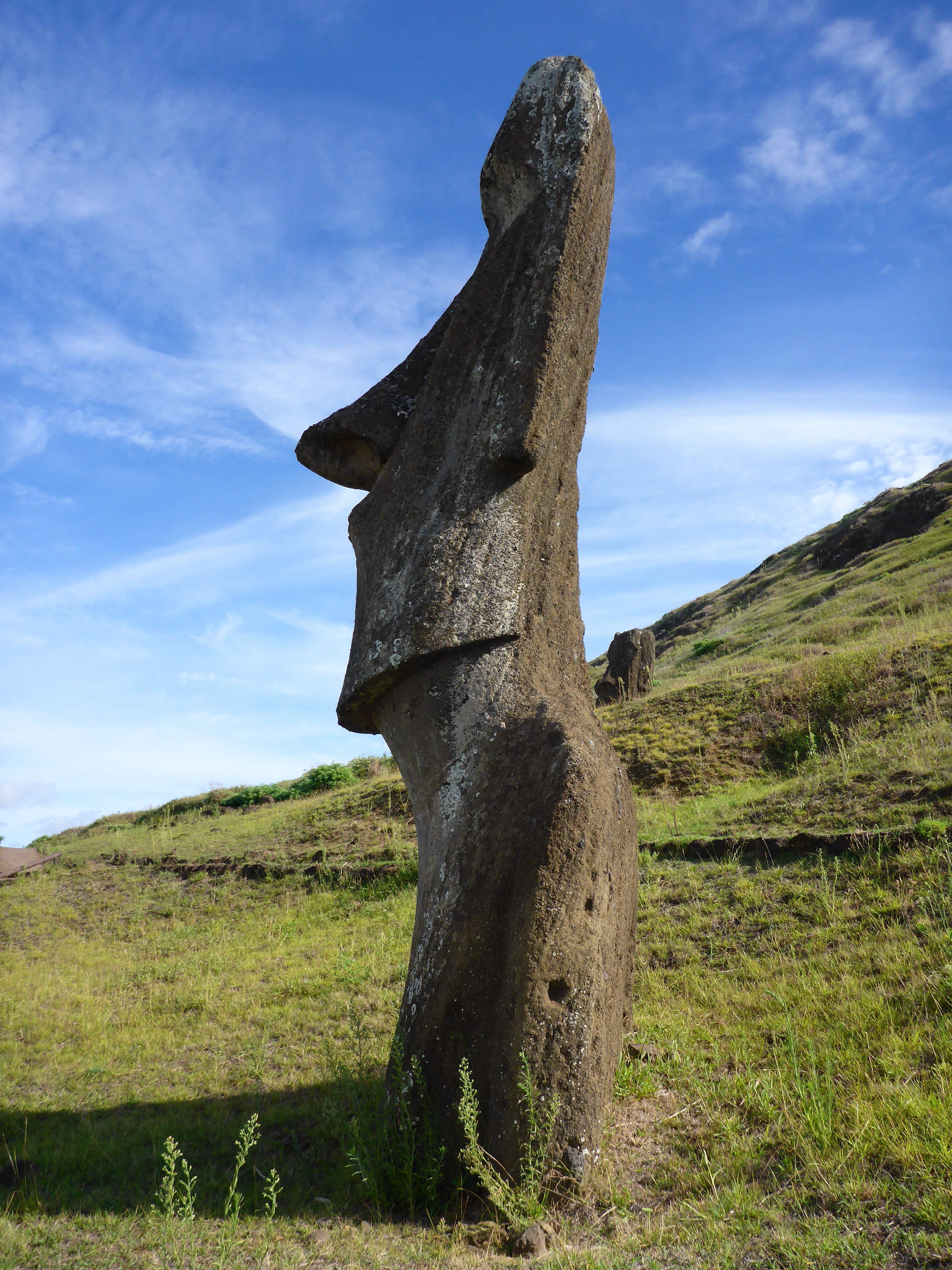
We first head to Rano Raraku, a volcanic crater where 95% of Easter Island’s moais, statues, were carved. It was a quarry for around 500 years until the early 18th century where 397 moais remain today. The first sight is breathtaking:

Rano Raraku quarry
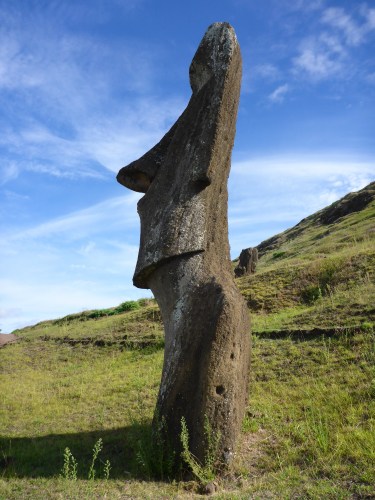
Rano Raraku quarry


At Rano Raraku

At Rano Raraku


Rano Raraku quarry

Rano Raraku quarry


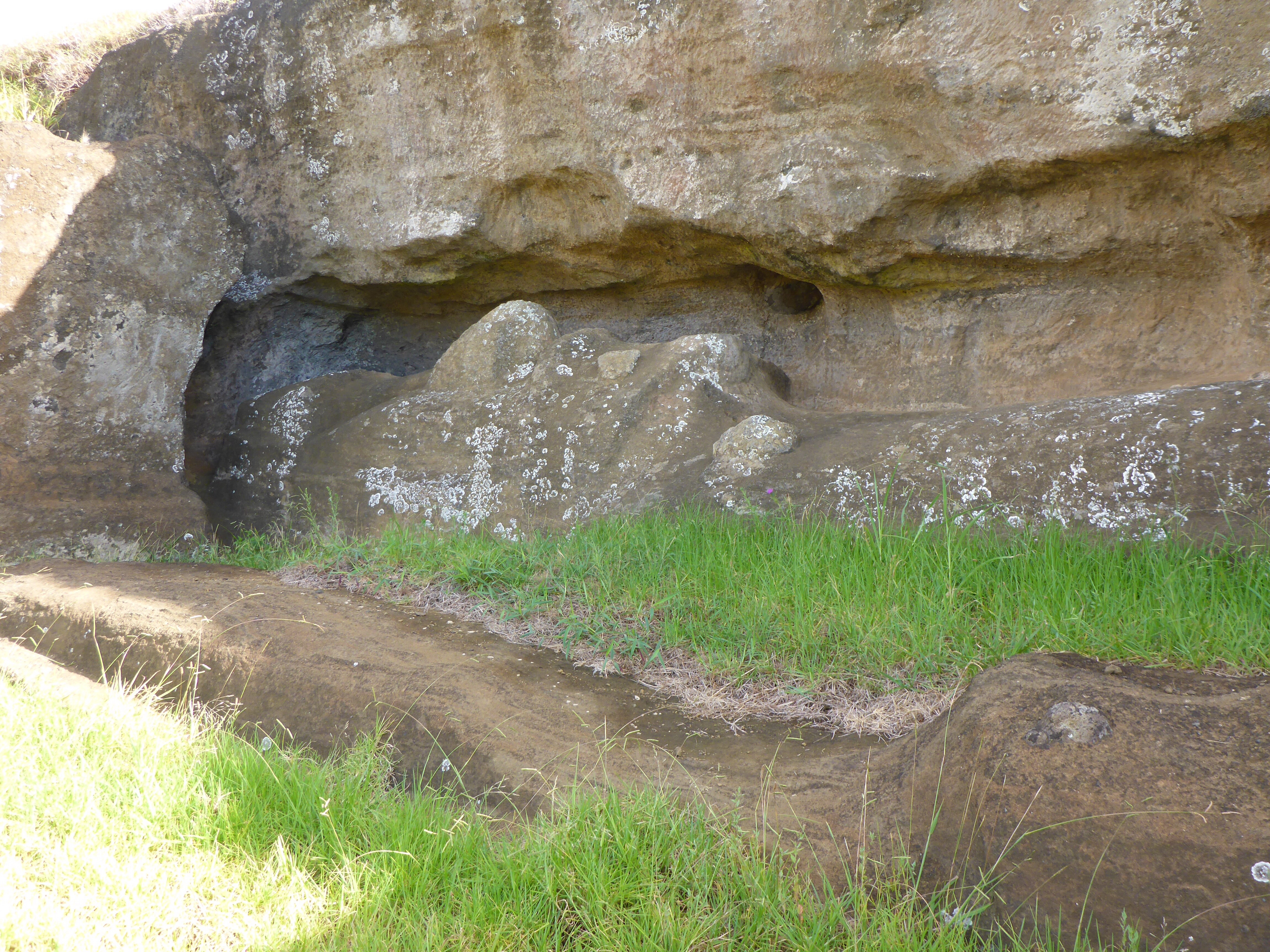
Seeing the incomplete moais was another breathtaking moment. The largest one is 21.6 metres long!! Twice the length of any moai completed and transported. Maybe they were abandonned because of some very hard rock material encountered as they were carving? Or maybe some were intended to remain within the rock?…
Incomplete moai at Rano Raraku quarry

Incomplete moai at Rano Raraku quarry

Two incomplete moais at Rano Raraku
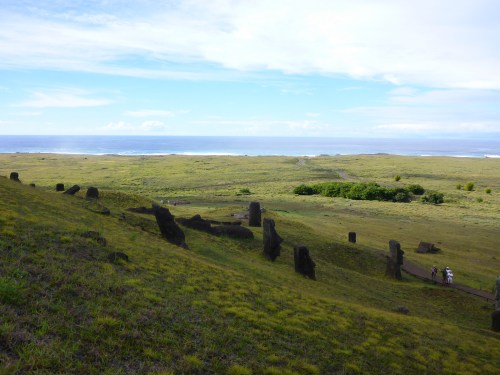
Two incomplete moais at Rano Raraku

Rano Raraku

Rano Raraku


What an incredible feeling to see all those stunning moais, standing out of the mountain. Then the best sight: Anthony made it about 500 metres into the park. Now we could enjoy this magical place together, sitting on a tiny bench.
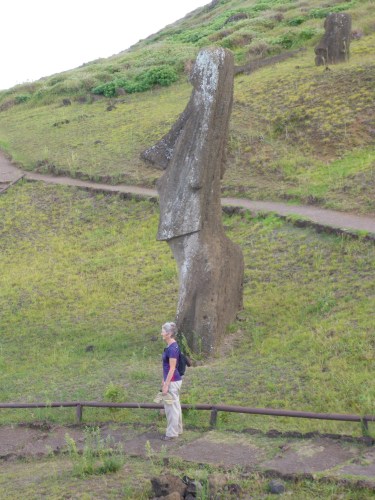
Showing the scale of these torsos at Rano Raraku

Showing the scale of these torsos at Rano Raraku

Rano Raraku moais

Rano Raraku moais

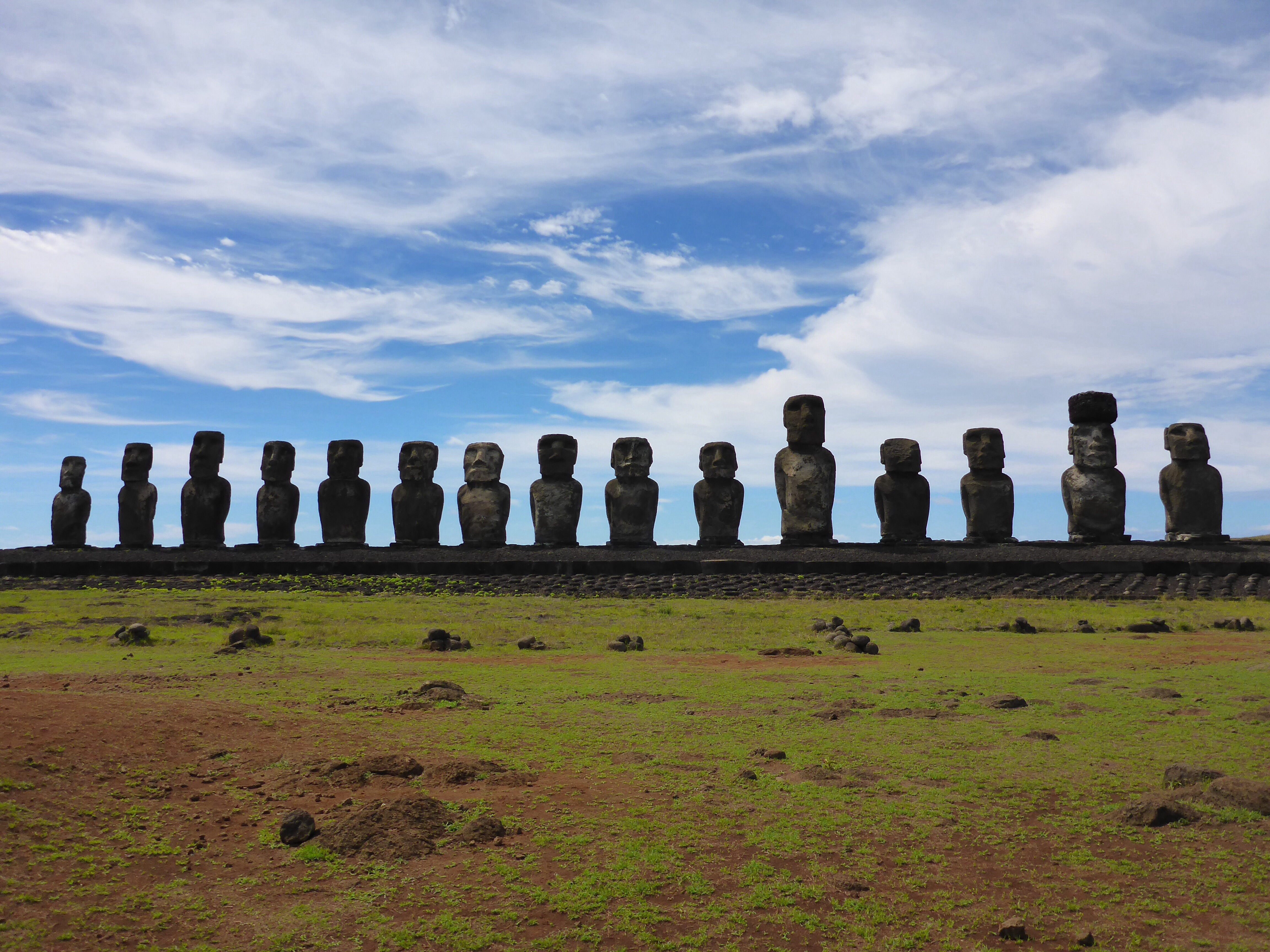
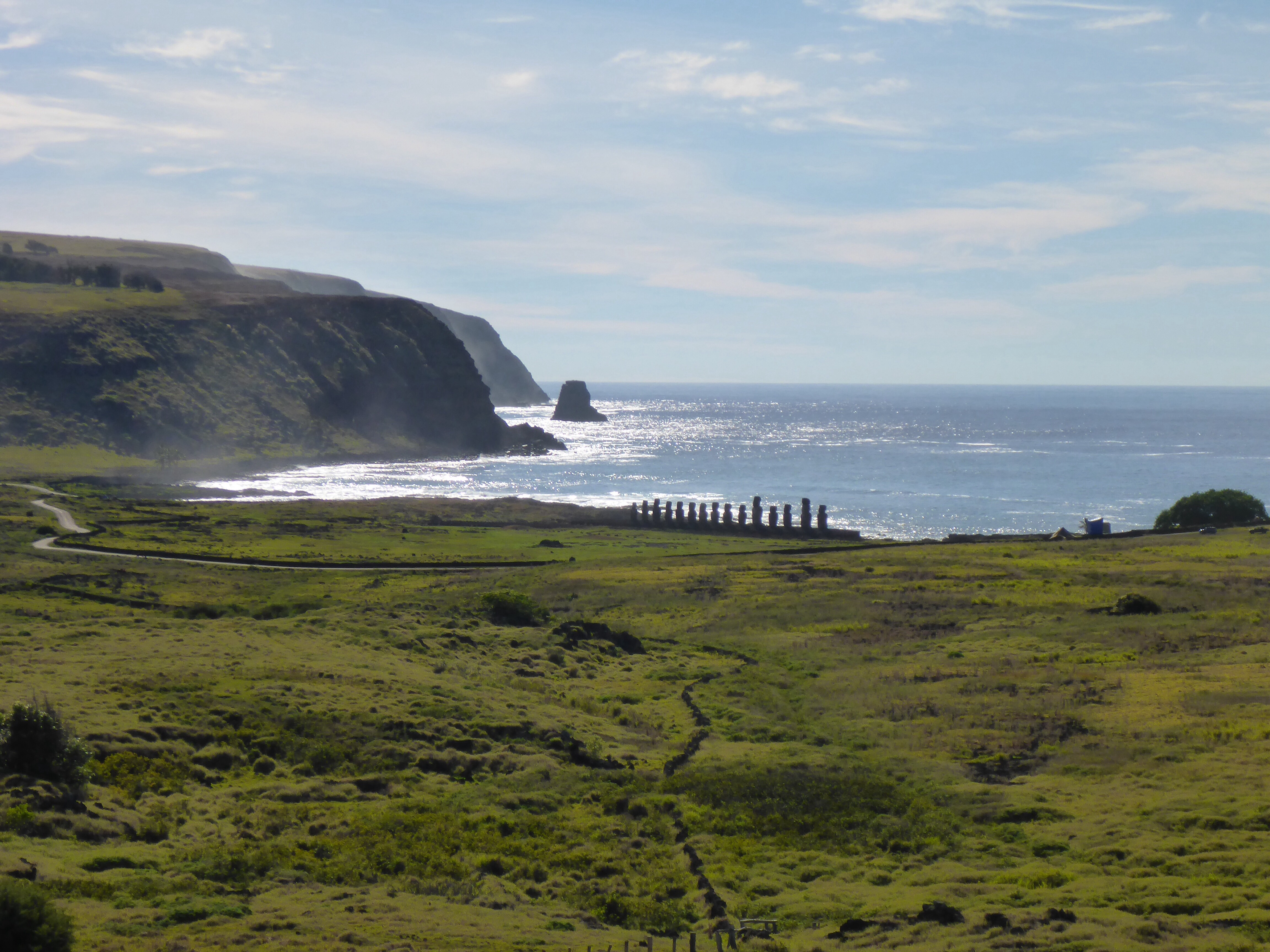
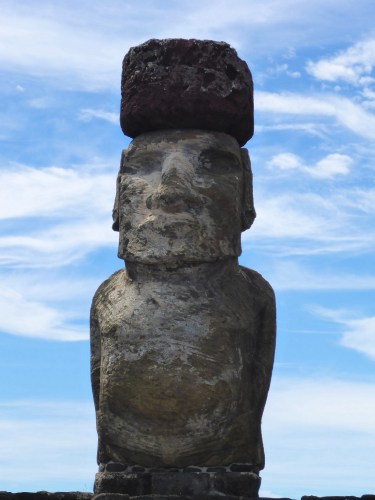
From Rano Raraku, we went to Tongariki, just a mile away, the largest ahu on Easter Island with 15 moiais, one of them with a pukao (topknot) on his head. Like all others, this ahu was toppled during the island’s civil wars, but the moais were swept inland by a tsunami in 1960 and restored in the 90s. They found one moai of 86 tonnes, the heaviest ever erected on the island.
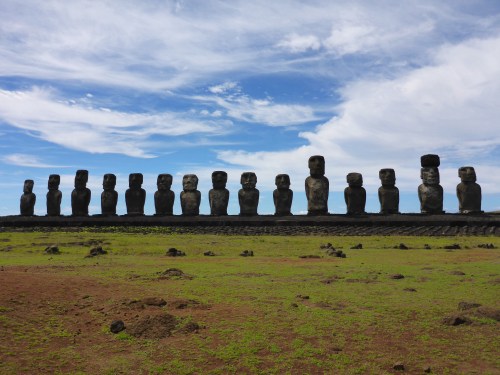
Ahu Tongariki
Ahu Tongariki

Tongariki moai with pukao

Tongariki moai with pukao


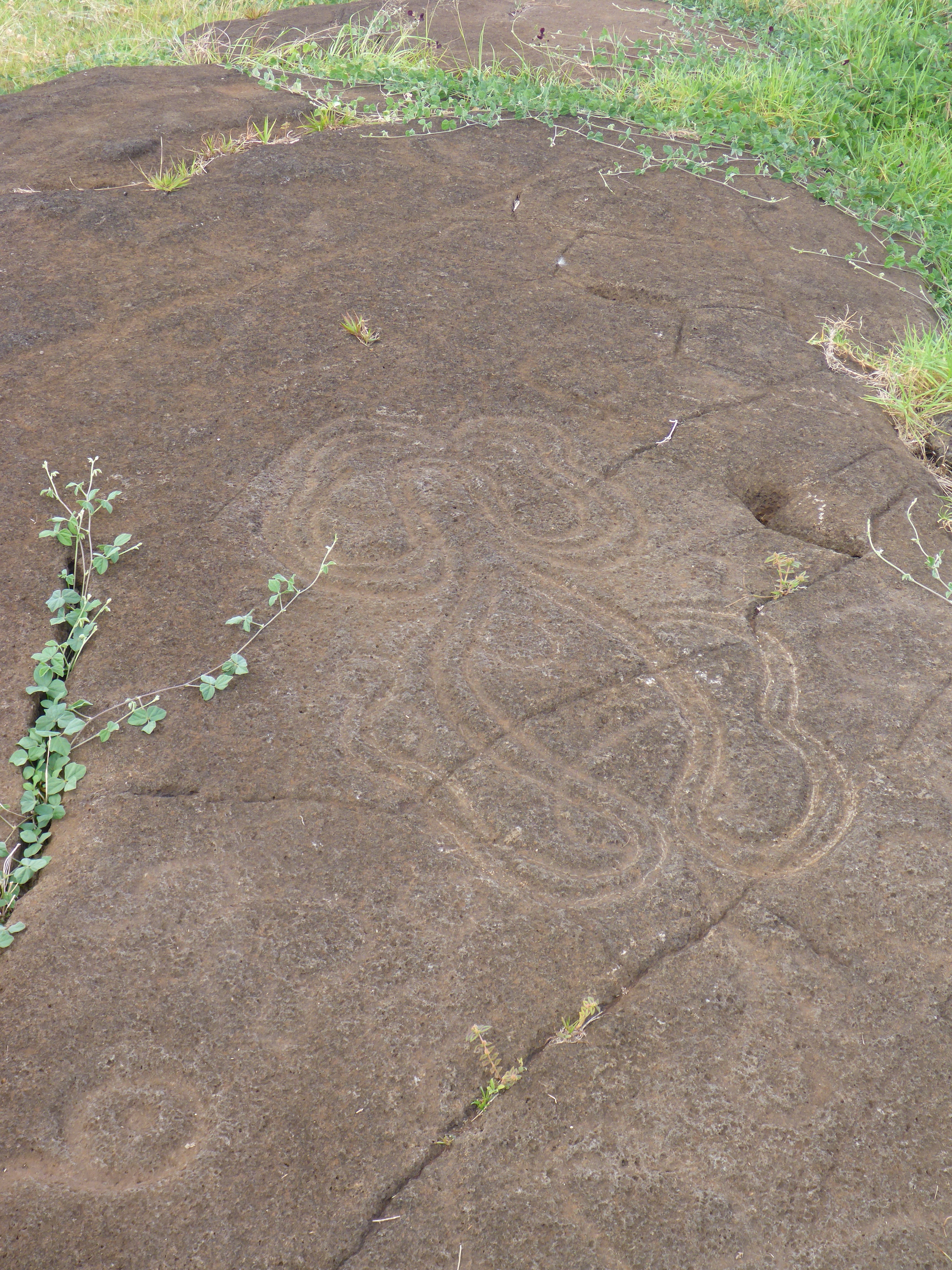
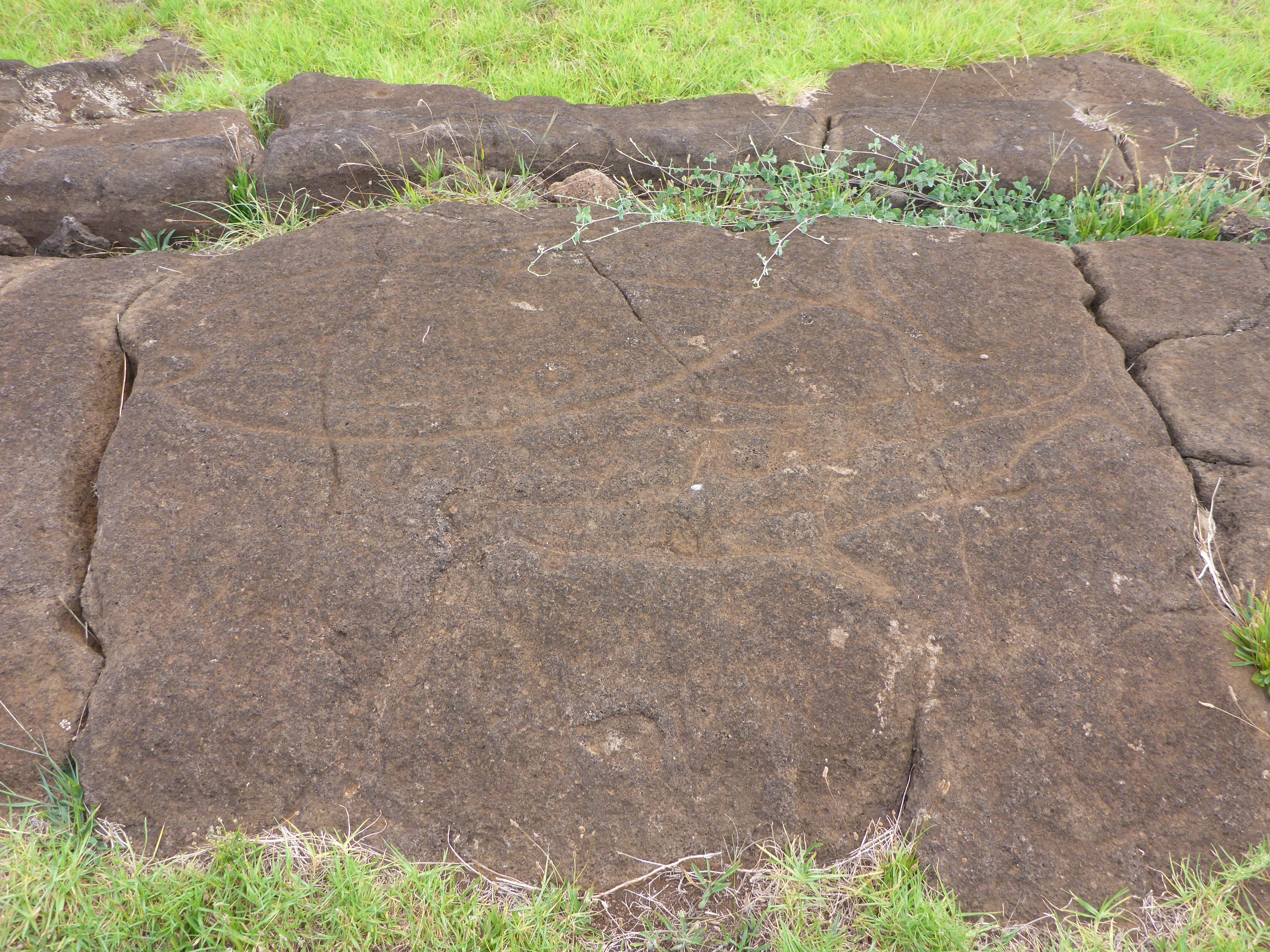
We stop at Papa Vaka, a site of fascinating petroglyphs, rock art showing how connected to the ocean the Rapa Nui people were, with fish hooks, tuna, shark, octopus or mythological sea creature.
Octopus or mythological sea creature petroglyph at Papa Vaka

Octopus or mythological sea creature petroglyph at Papa Vaka

Peteoglyphs of a tuna, top, and shark below it at Papa Vaka

Peteoglyphs of a tuna, top, and shark below it at Papa Vaka


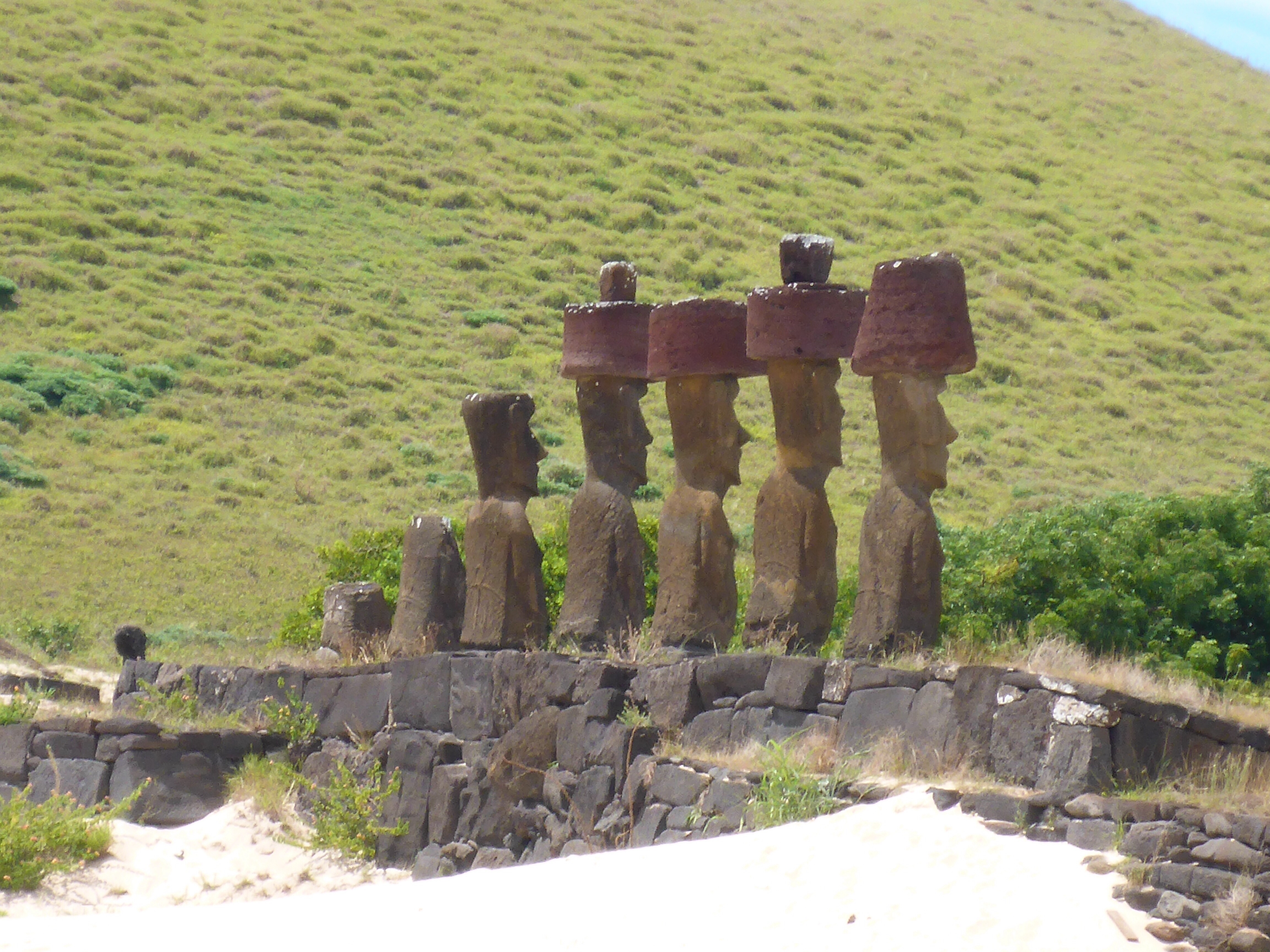
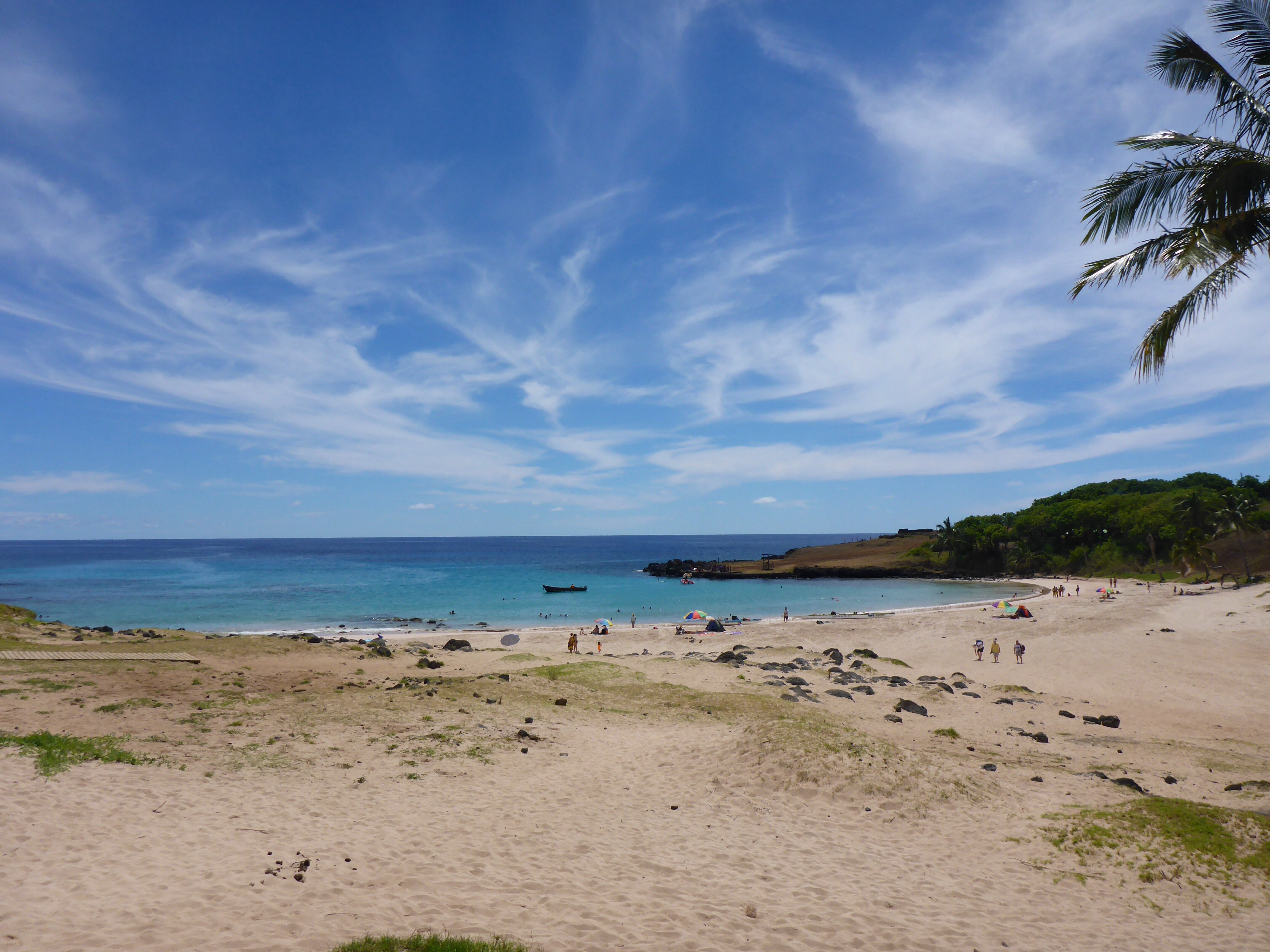
From here, we head to Anakena beach which, according to oral traditions, was the landing place of Hotu Matua who founded the first settlement on Rapa Nui. It is also where the new Birdman would end his celebrations. It is a beautiful white sandy beach – with the finest sand we have ever seen. After a lovely swim, we have a couple of tuna empenadas as we watch the ocean and the few tourists coming over for a swim.
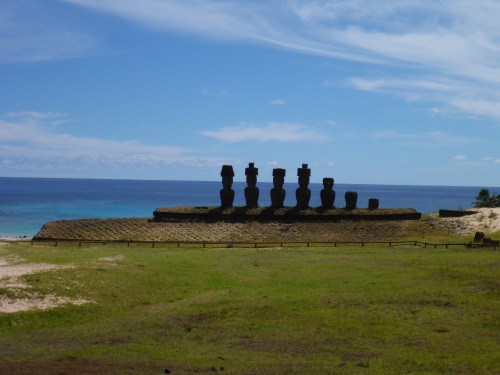
Ahu Nao-Nao with 7 moais at Anakena beach

Ahu Nao-Nao with 7 moais at Anakena beach

Ahu Nao-Nao at Anakena beach, showing the pukaos's reddish colour

Ahu Nao-Nao at Anknena beach, showing the pukaos’s reddish colour
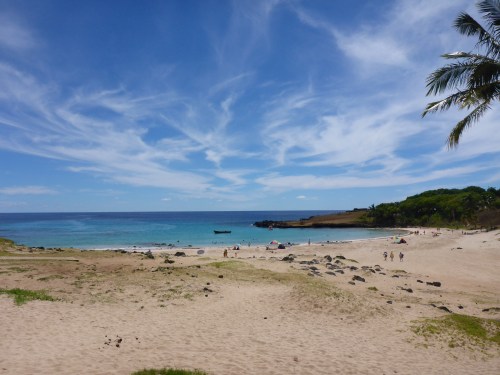
Beautiful Anakena beach

Beautiful Anakena beach

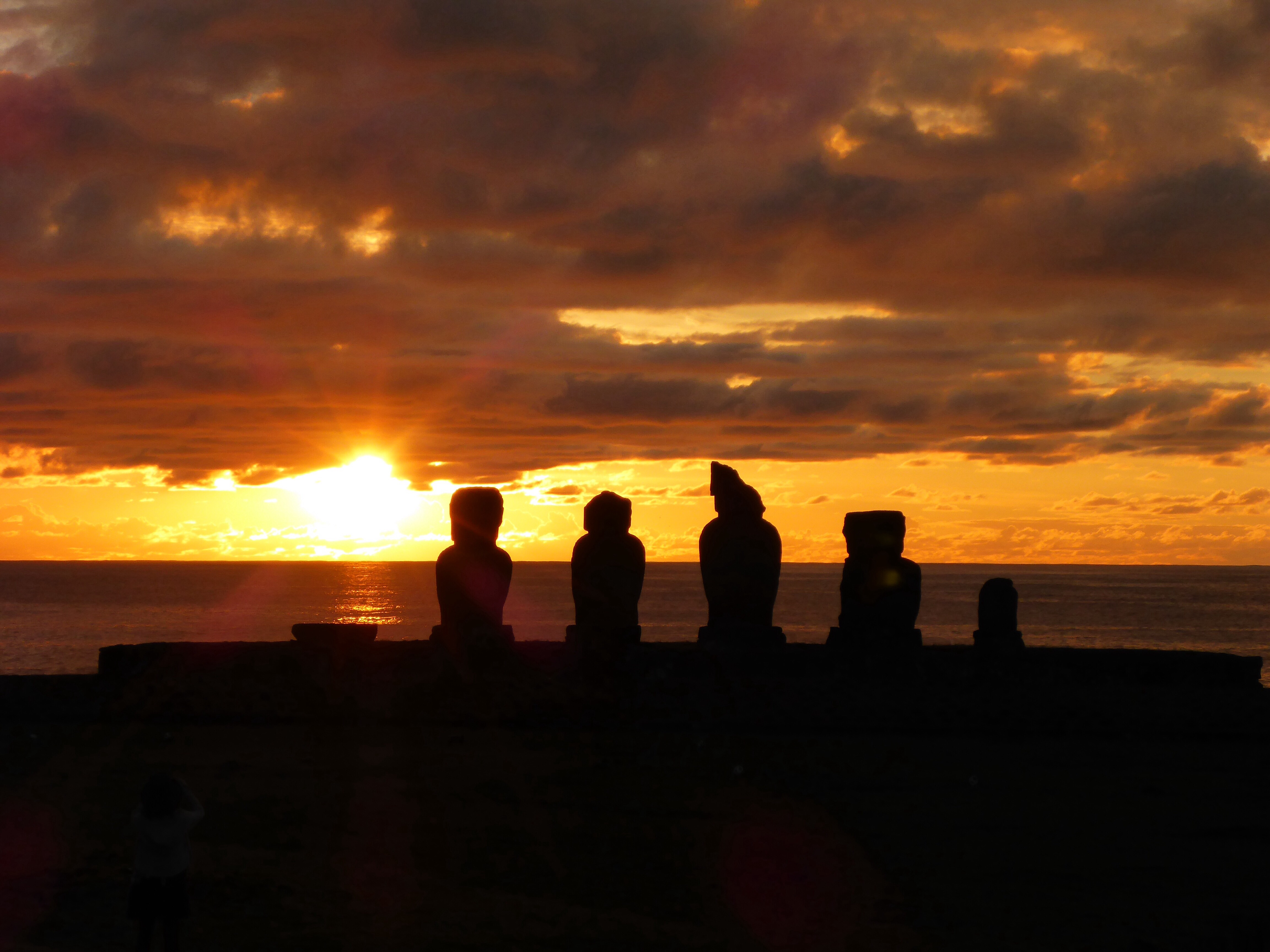
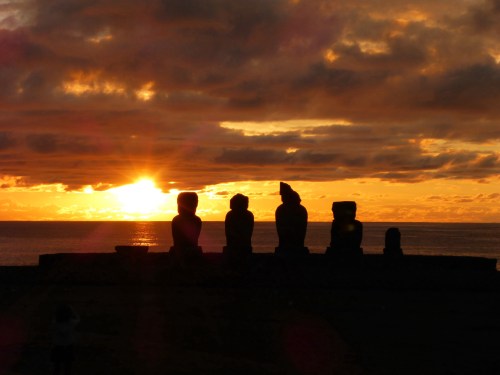
Afternoon rest then we head to Ahu Tahai for sunset before having another delicious fish dinner.

With Anthony at Ahu Tahai for the sunset
With Anthony at Ahu Tahai for the sunset

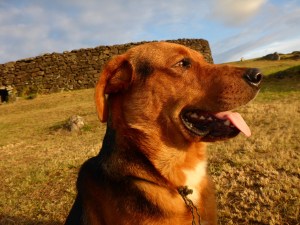
This stray dog sat beside me during the sunset at Ahu Tahai
This stray dog sat beside me during the sunset at Ahu Tahai

Sunset at Ahu Tahai

Sunset at Ahu Tahai

Day 5 – This morning, we are heading to Tongariki in our hire car for the sunrise. The way the colours of the sky behind ahu Tongariki and the volcano behind us change over two hours is magical.
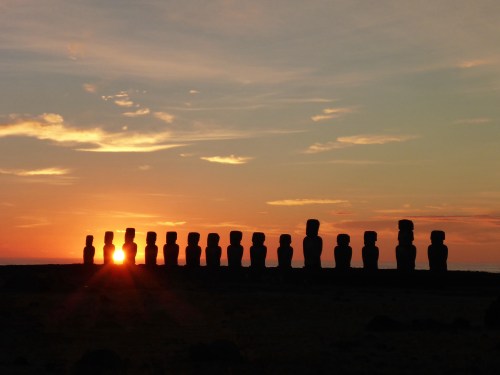
Ahu Tongariki at sunrise
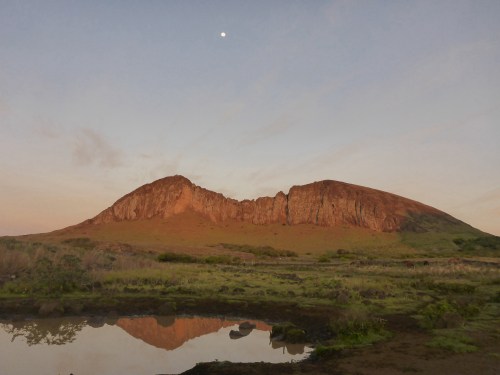
Ahu Tongariki at sunrise

Rano Raraku at sunrise

Rano Raraku at sunrise


I return Anthony to the hostal to rest his leg and head out alone for the rest of the day. I return to Rano Raraku. The lighting is different and I get to see Tukukuri moai which I missed yesterday.
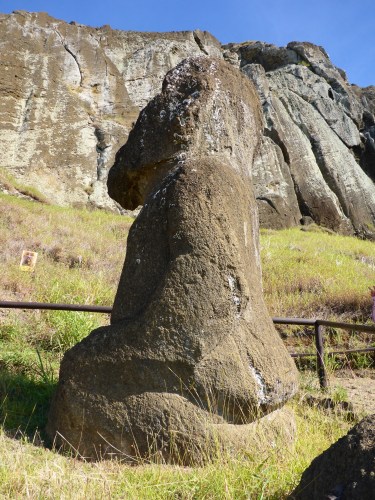
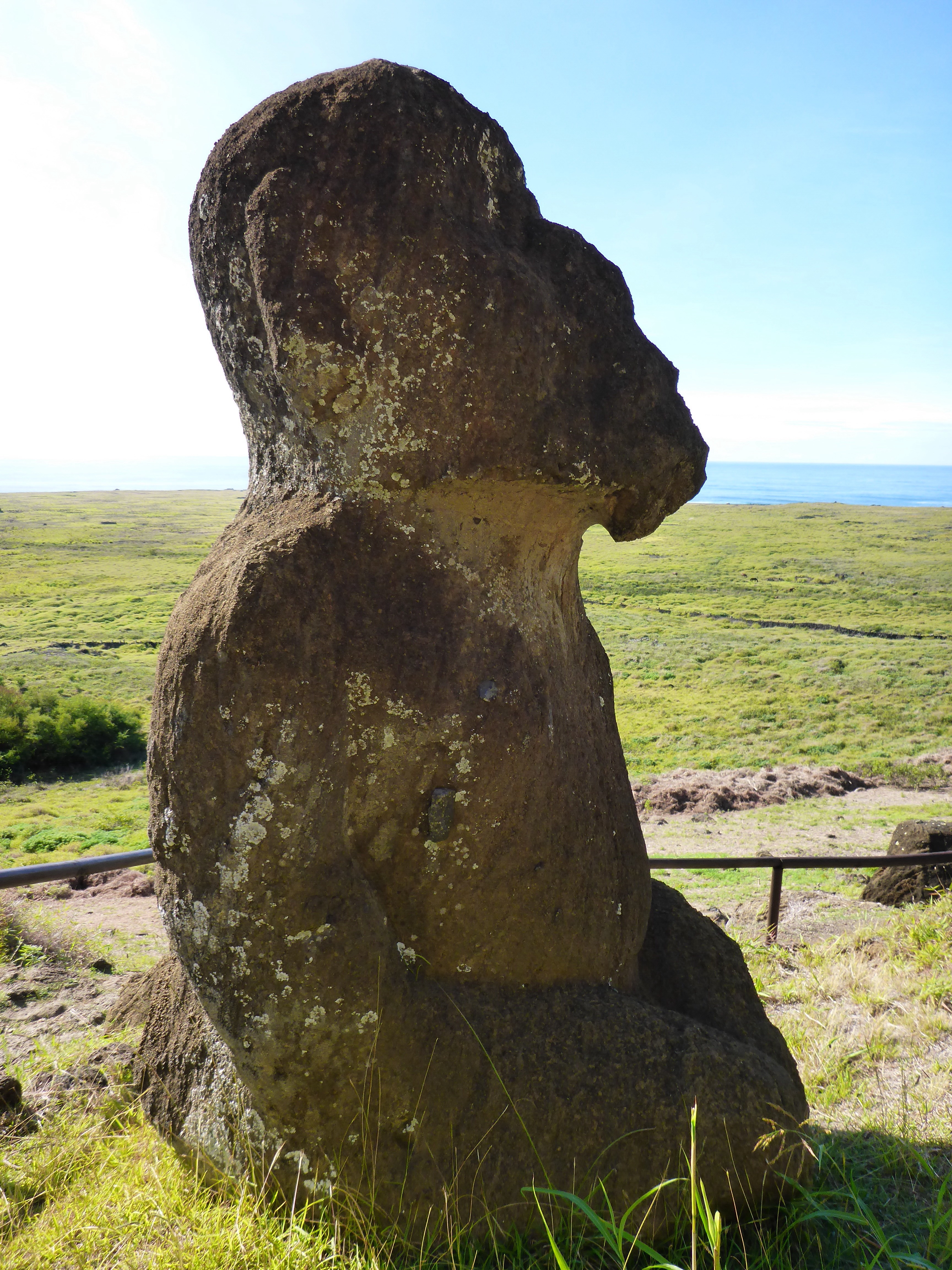
Tukuturi - the kneeling and bearded moai - at Rano Raraku

Tukuturi – the kneeling and bearded moai – at Rano Raraku
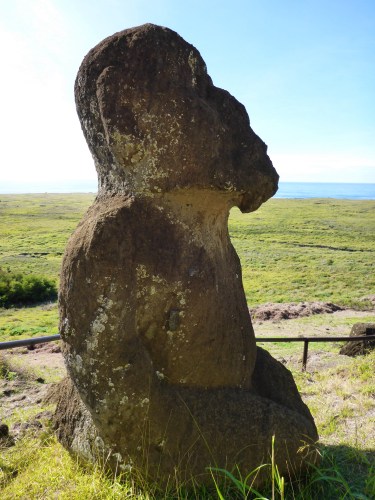
Tukuturi moai

Tukuturi moai

Tongariki seen from Rano Raraku

Tongariki seen from Rano Raraku

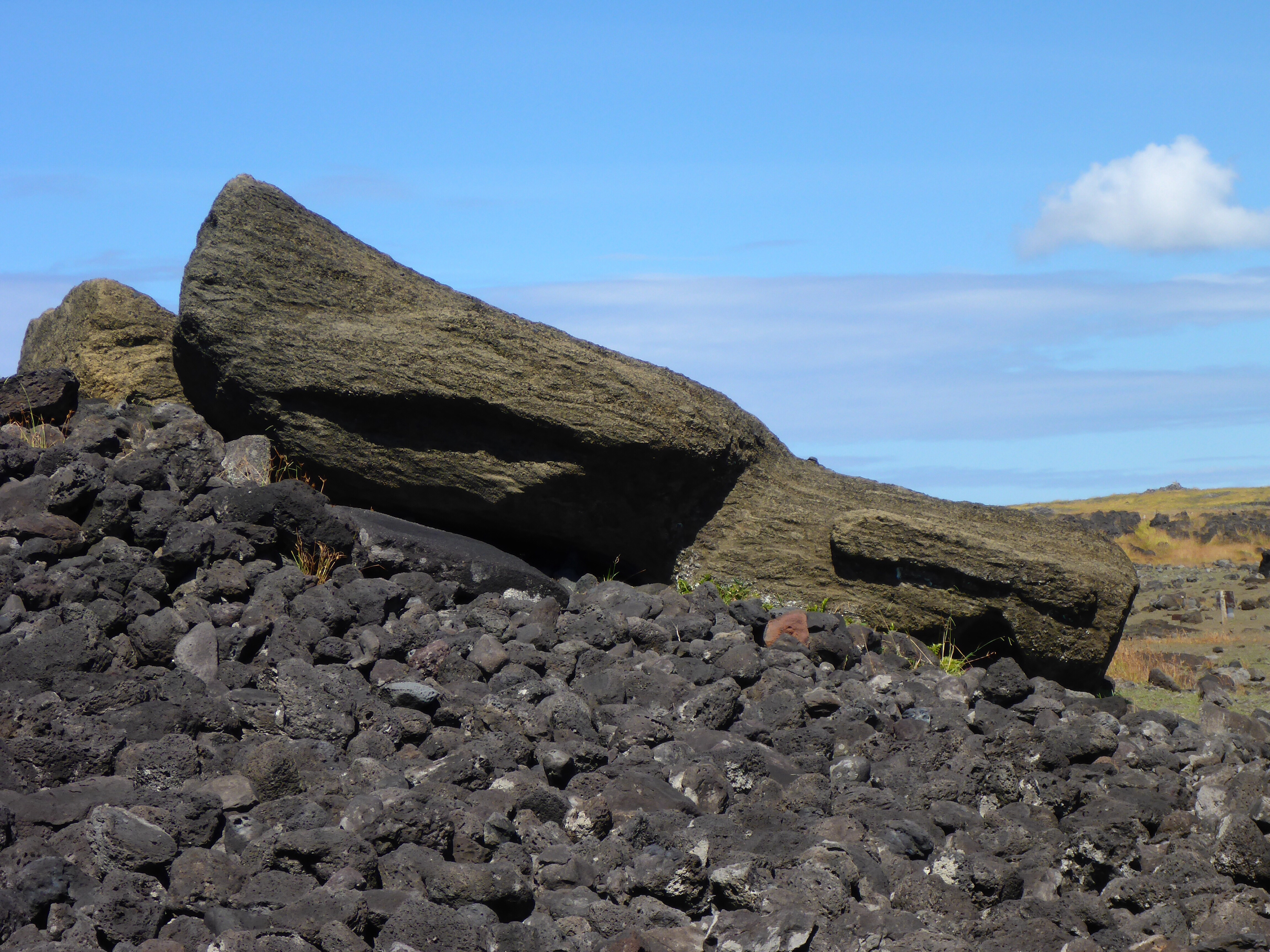
I stopped at ahu Akahanga, one of the largest monuments on the island’s south coast, once carrying 12 or more moais. This is where I found the best preserved moai, protected from erosion because of how it fell, down from the platform. It is interesting to see how the top of the statue is perfectly shaped for the complementary shape of the pukao.

Ahu Akahanga

Ahu Akahanga

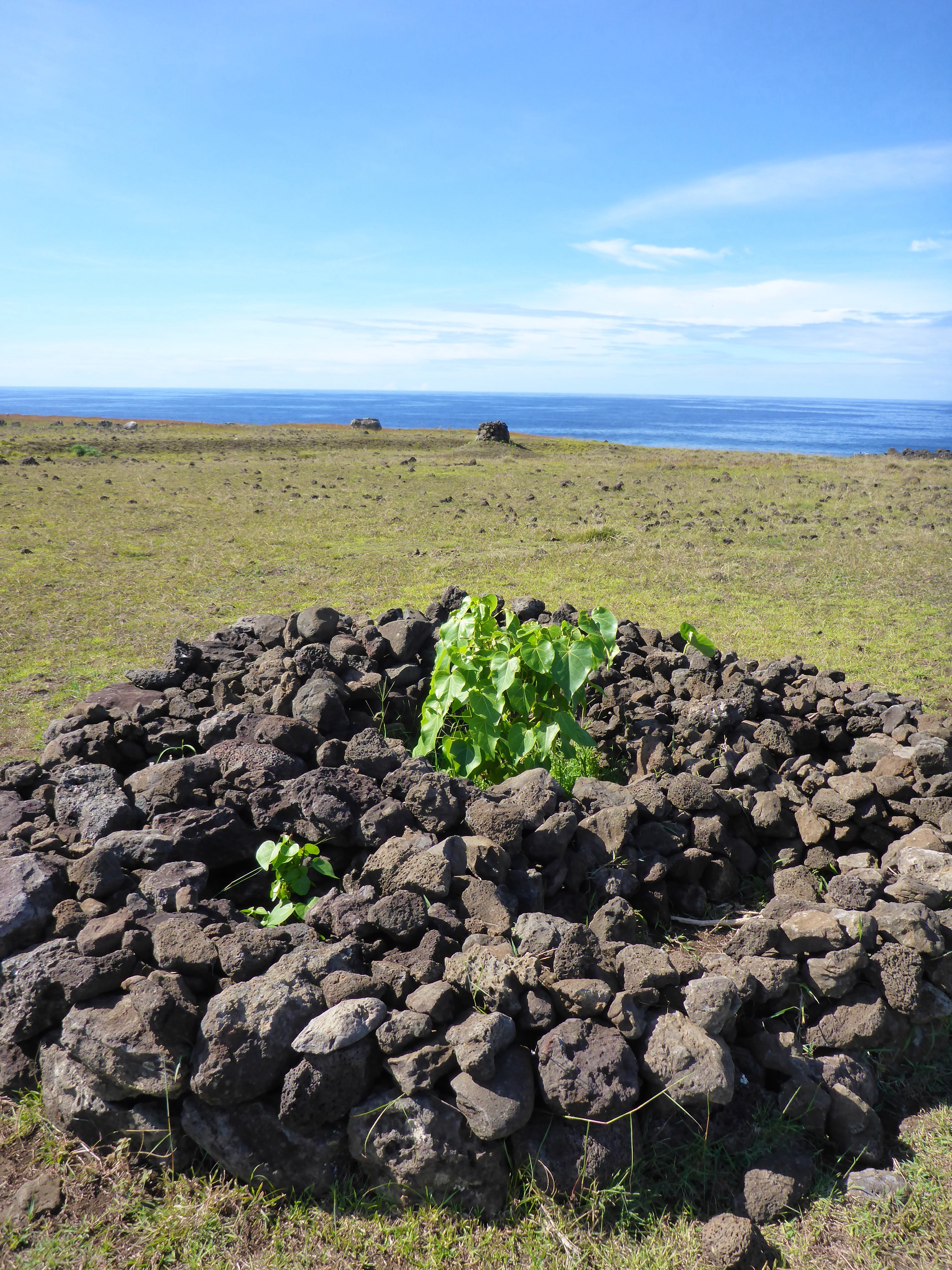
Garden bed near ahu Akahanga where plants are surrounded by lava rocks for nutrients
Garden bed near ahu Akahanga where plants are surrounded by lava rocks for nutrients

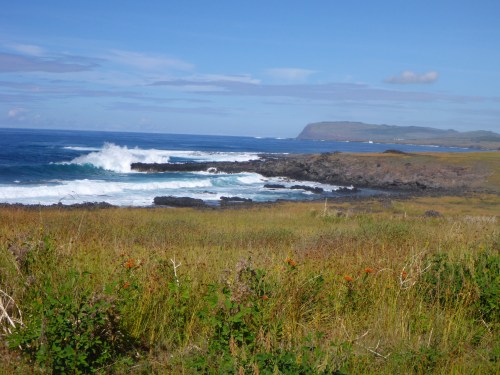
Easter Island's south coast  near Ahu Akahanga

Easter Island’s south coast near Ahu Akahanga

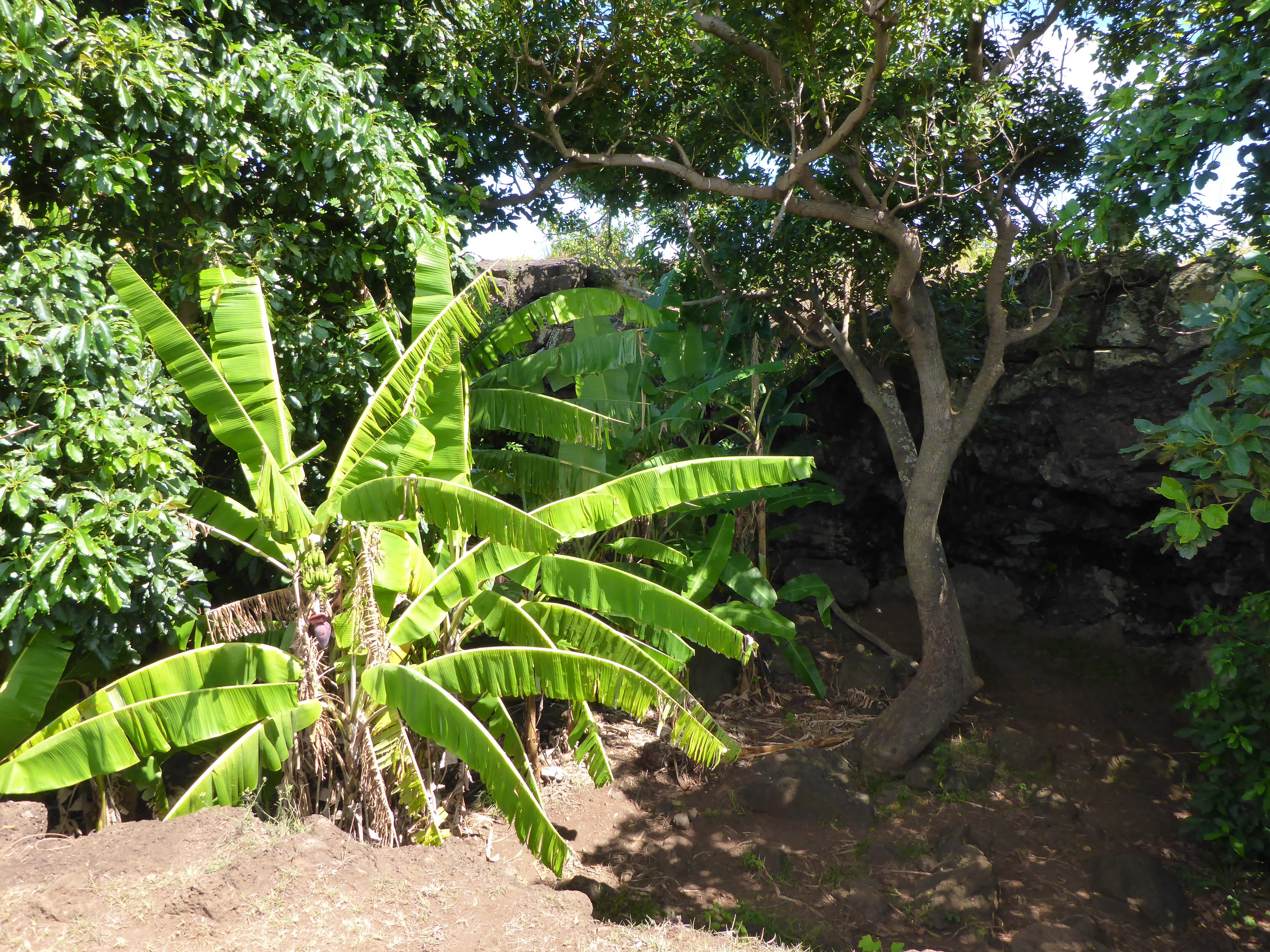
My next stop is Ana Te Pahu caves, like so many on the island, they were old lava tunnels where people lived. This cave is particularly long, several hundred feed and has several ‘windows’ or skylights. The caves were used as living quarters and also as gardens, the plants getting their nutrients out of the lava rocks surrounding them. I didn’t go through the part you have to crawl on your tummy as I was alone and hadn’t brought my headlamp, just my phone with torch.
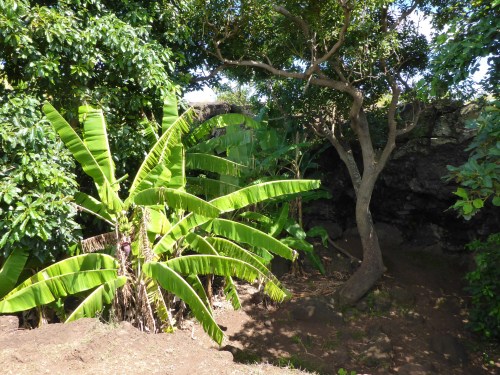
Ana Te Pahu caves

Ana Te Pahu caves

Window of the Ana Te Pahu caves

Window of the Ana Te Pahu caves


During our time on Easter Island, I have walked and walked, and stood in awe and I stopped and watched and gasped and sighed and cried. Rapa Nui was all I had ever dreamed of and more. Just a pity Anthony wasn’t able to enjoy it more.

Return to Santiago

After a leisurely breakfast on our porch, I returned the hire car, casual check of fuel gauge and am told the car has been rereturned in perfect condition. Ahh, Hertz, please note!!!

Check in at Mataveri airport is casual – no security check but a plant xray. We are returning in economy on a brand spanking new Boeing 787-9 series – another one for Anthony’s list of planes flown. At one point in the flight, the captain suddenly does a ‘Gary Larson’ (attention ladies and gentlemen, this is your captain speaking…) tilt left and right for everyone to see Robinson Crusoe island. Fabulous views. Thank you captain!!

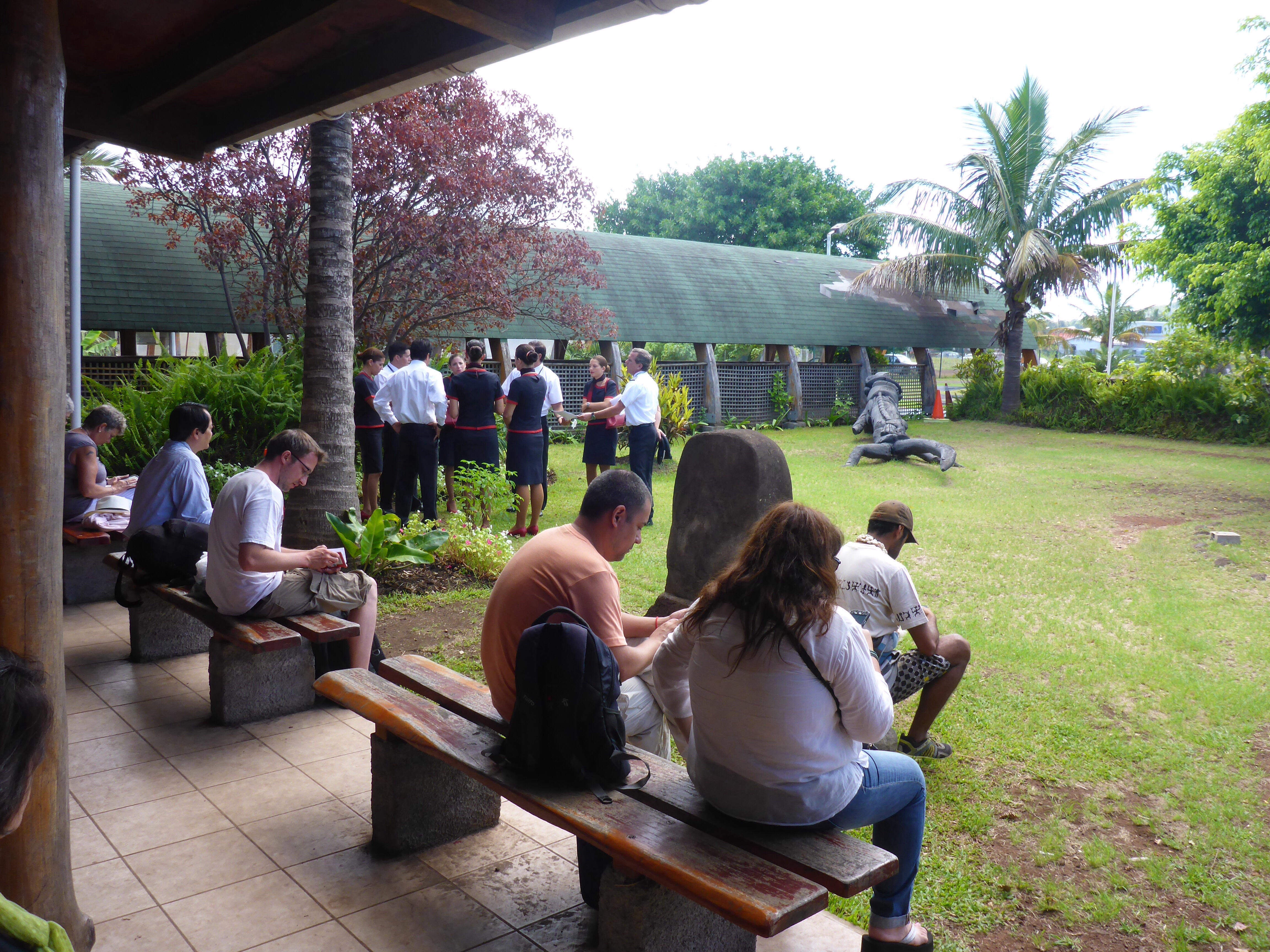
Mataveri airport at Easter Island and our flight crew having a meeting in the garden
Mataveri airport at Easter Island and our flight crew having a meeting in the garden

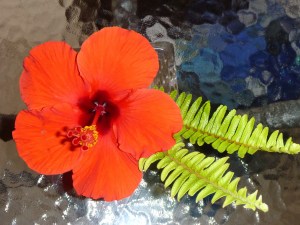
We saw hisbiscus flowers everywhere - here is the last one, at the airport

We saw hisbiscus flowers everywhere – here is the last one, at the airport
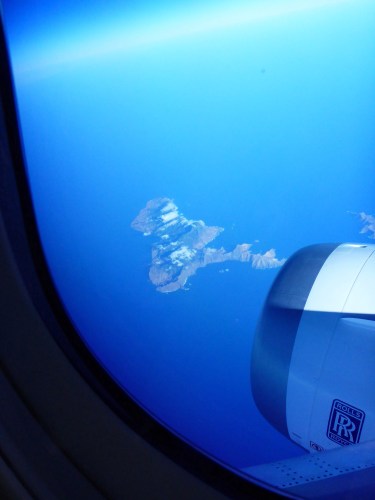
Robinson Crusoe island

Robinson Crusoe island


Thank you Rapa Nui – it was a dream come true to spend 5 days there – a trip I will never forget and makes me want to read much much more on Rapa Nui the people, the culture and the country.

– Anne