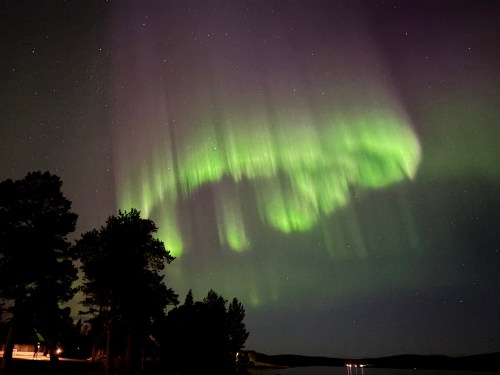
Well that is a hard act to follow – the northern lights performed as if on command for Anne, with a side showing for me. A real privilege to see such beauty dancing across the skies. But on we must…..
“The last day of summer today, then 10 months of winter”. We heard those chilling words from a local as we prepared to head further north into Lapland. We have the freedom and flexibly of a hire car for the next week and dual objectives, firstly to learn more about Sámi, the name of the indigenous people of Lapland, culture then secondly see the northern lights again. The second already achieved even though the weather forecasts seemed to rule this out.
Reindeer!! We see our first reindeer beside the road; so exciting. No place to stop so onward we go, more reindeer ahead and a place to pull over. Lots of photos, however the novelty wears off and we are now experienced reindeer viewers and ignore many sightings unless they are perfectly positioned for photos.


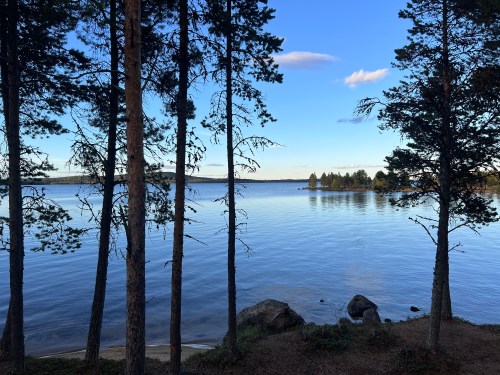
Our accommodation outside Inari is a beautiful log cabin at the Wilderness Hotel Inari, right on the water’s edge with stunning views over lake Inari. Our own log fire and sauna are included with enough firewood to keep us warm day and night. A clever combined match and fire-lighter make starting easy. A warm fire and a sauna, what a great combination, luckily the wrong season for rolling in the snow.


The rain has held off again and we walked to Inari, the colours of autumn are all around us, further north we travelled we have found more and more silver birch leaves have turned yellow.

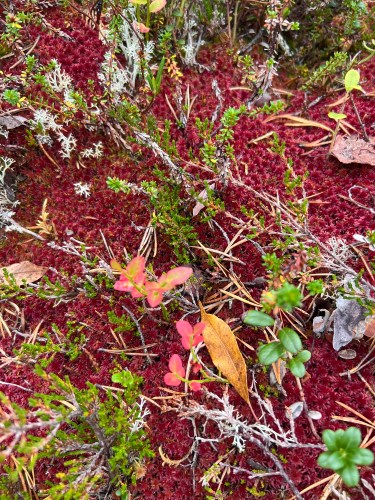
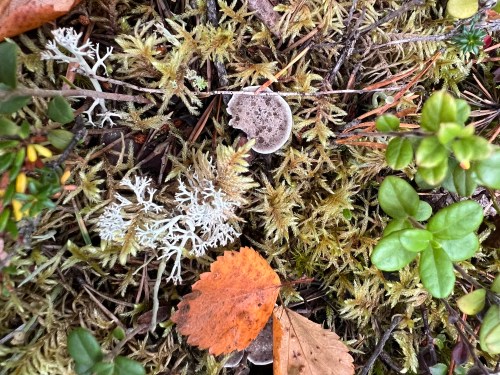
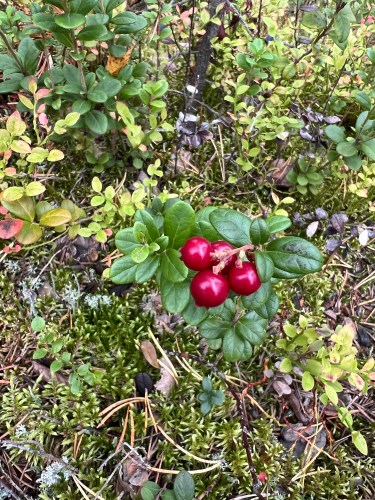


SIIDA is the Sámi Museum and Northern Lapland Nature Centre in Inari which has interesting and informative displays on Lapland, plus outdoors there are number of buildings that have been brought to site. They have also recreated a number animal traps showing both ingenuity and engineering skills.
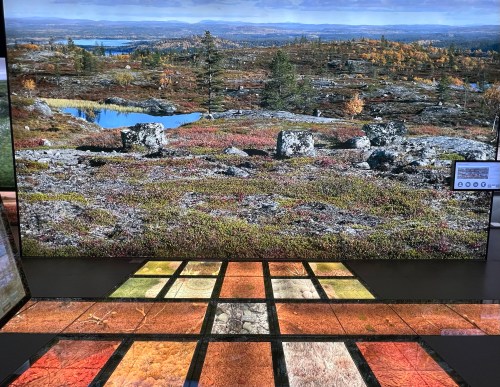

A tour of the Sámi Parliament was both informative and interesting to see how an indigenous culture interacts with national government. Similar Sámi parliaments exist in Norway and Sweden. Less is known about interactions within Russia. We learned there are five Sámi sub groups and three Sámi languages, Northern Sámi, Skolt Sámi and Inari Sámi. All three languages can be used in the Finnish Sámi Parliament. The full Parliament meets four times a year and provides advice to and negotiates with the Finnish government of affairs that impact the Sámi people.

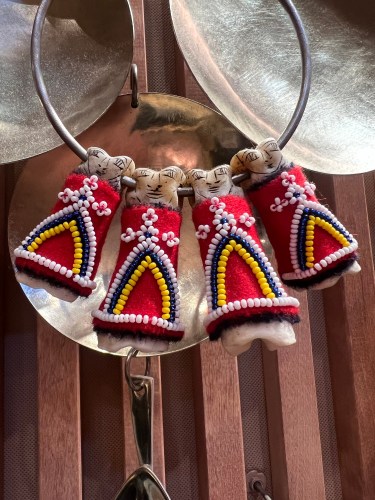
A series of paintings quite cleverly in some cases indicated the dos and don’ts of tourism as it pertains to Sámi culture.

AI and dog sledding. Now here is an interesting combination. When I searched Google for “were dog sleds ever used in Lapland”, AI gives me this:
Google AI overview. “Yes, dogs sleds were historically a crucial form of transportation for hunting and travel in Lapland, and remain a popular cultural activity and tourist attraction today. This centuries-old tradition was a primary way for the Sami people, the indigenous inhabitants of the region, and others to navigate the vast, snowy landscapes of the Arctic”
Sadly this is incorrect: we learned during our tour of the Sámi Parliament in Inari that Sámi used reindeer dogs for herding, but not huskies. Reindeer were used to haul loads. Sled dogs, used by eskimos in North America, are a relatively recent introduction boosted by foreign tourism and not always done to the benefit of locals or the dogs. The proliferation of such tourist organisations and descriptive websites using borrowed traditions likely leads to this not unreasonable conclusion by Google AI. How much other information we are presented with by AI could have evolved by similar means? I will try to follow up with Google on this, supposedly there is a way to do this.
The proliferation of these dogs also has the potential to interfere with the reindeer herders’ livelihood we were told.
After Inari we still had three and a half days of car hire left. Where to go? After pouring over maps, comparing options, further north it is – how far, we are dependant on the weather, and yes rain is forecast again.
Once again, we are lucky with the weather and cross into Norway. We have decided to go all the way to Nordkapp or North Cape as we call it. We make good progress, just an initial challenge is the lack a centreline on many Norwegian main roads, just edging dashes causing a few interesting moments as we adjusted to this with oncoming motorhomes or trucks. As we head northwards the trees gradually give way to open landscape and stunning views.
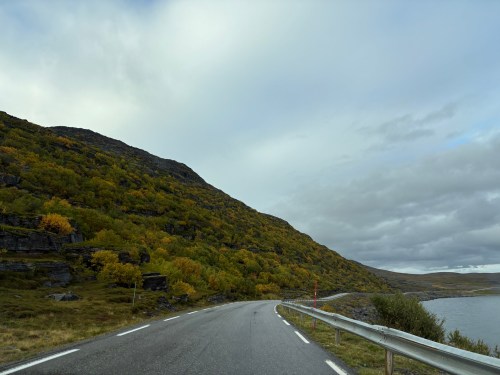

Nordkapp awaits for us tomorrow.
– Anthony






 2slowspeeds