Discovering Rapa Nui

Day 2 – Leaving Anthony behind at the cabin, I go for a lovely 3 hour walk along the north western coast, up to the start of the Orongo trail which I decide not to take today as I do not have enough water on me for another 2 hour walk. Although it is the peak tourist season, there are very few people. With one flight a day, and tourists spending on average 3 days, there are about 600 tourists at any one time and because there are so many sights across the island, it never feels overcrowded with tourists.

I love the luxury of solitude. Along the narrow walking trail, I spend some time just sitting, contemplating and enjoying the strange feeling at the thought of being so far from any other landmass. I visit a cave with some interesting petroglyphs. As I leave, a small group of tourists arrive to visit the cave – Mary is there!

Anne's walk along the western coast of Rapa Nui
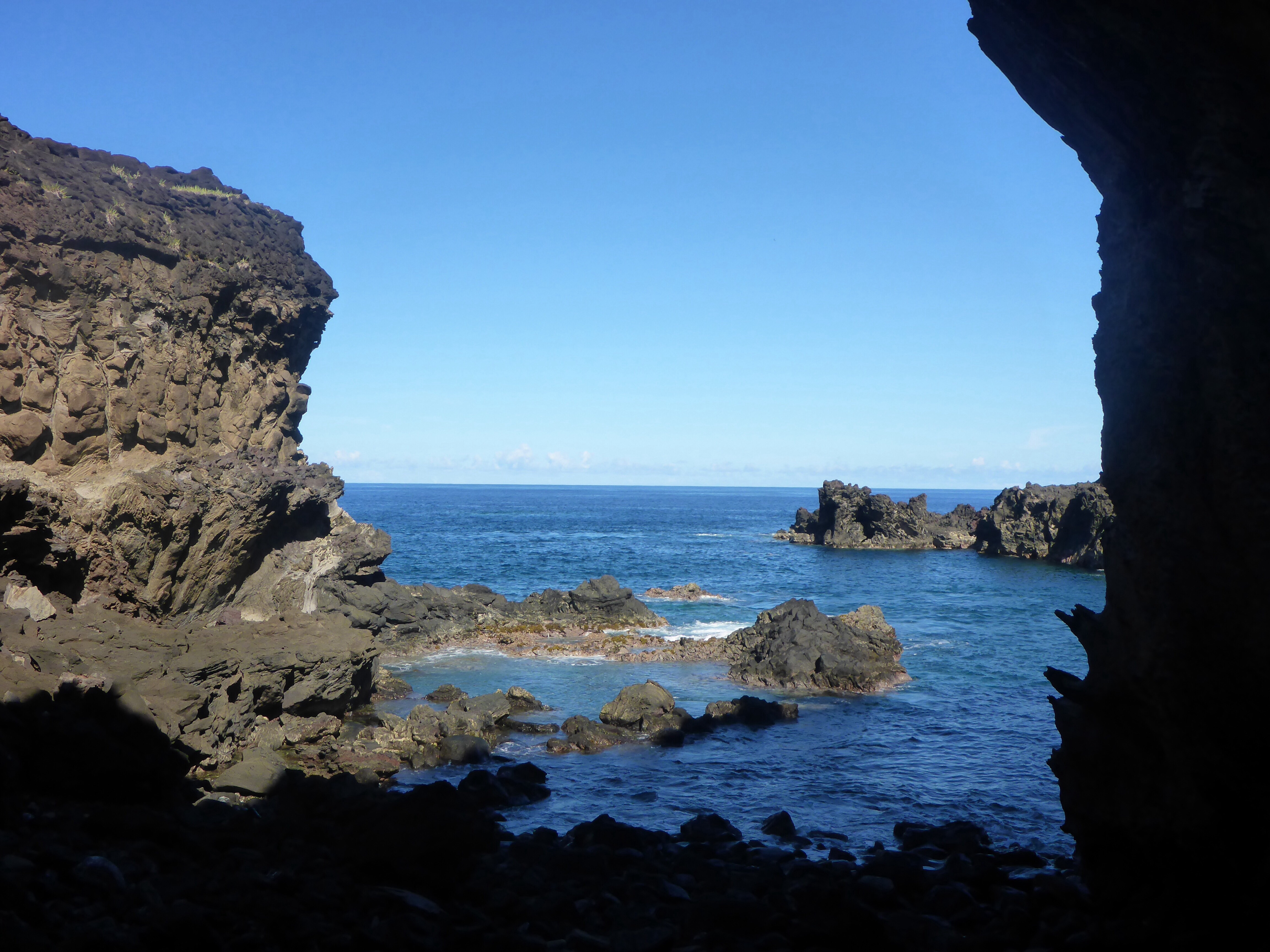
Anne’s walk along the western coast of Rapa Nui

Ana Kai Tangata cave on Rapa Nui
Ana Kai Tangata cave on Rapa Nui

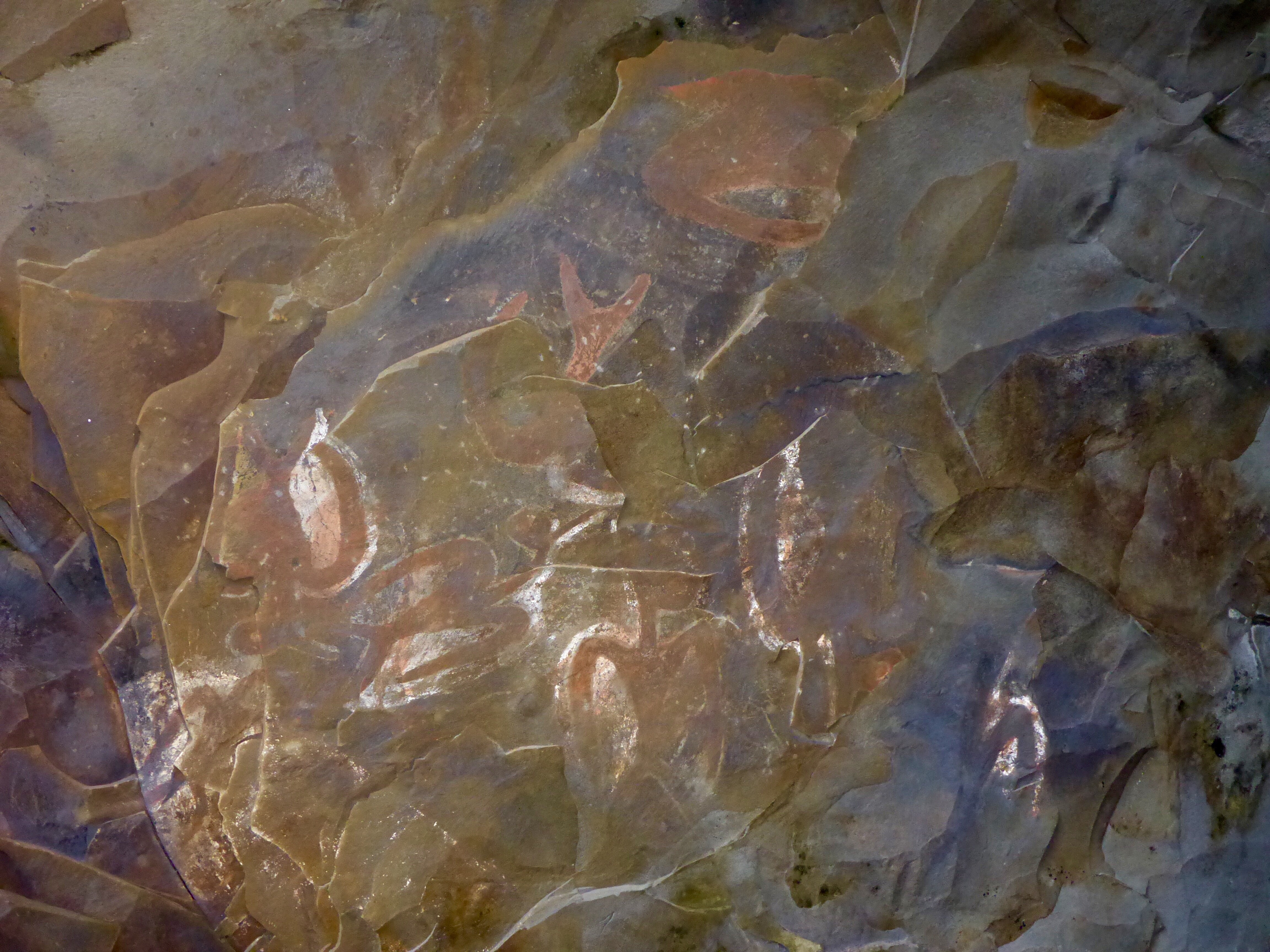
Petroglyphs inside Ana Kai Tangata cave

Petroglyphs inside Ana Kai Tangata cave

Te Ara OnTe Ao trail up to ceremonial village of Orongo where the Birdman ritual was held

Te Ara OnTe Ao trail up to ceremonial village of Orongo where the Birdman ritual was held


I walk home through town, have an empenada for lunch, stop and chat with the locals in various shops – I love the friendliness and warmth if the Polynesian people – and bump into Mary again in a shop!!

During siesta time, I spend the next 3 hours annotating the next lot of photos of our little tour of Patagonia. Around 5pm, Anthony comes out for his first walk and first upclose look at some moais. We walk to one of the local ponds, watching locals enjoying their end of day soak and swim and dangle our legs.

One of the many ponds in Hanga Roa
One of the many ponds in Hanga Roa

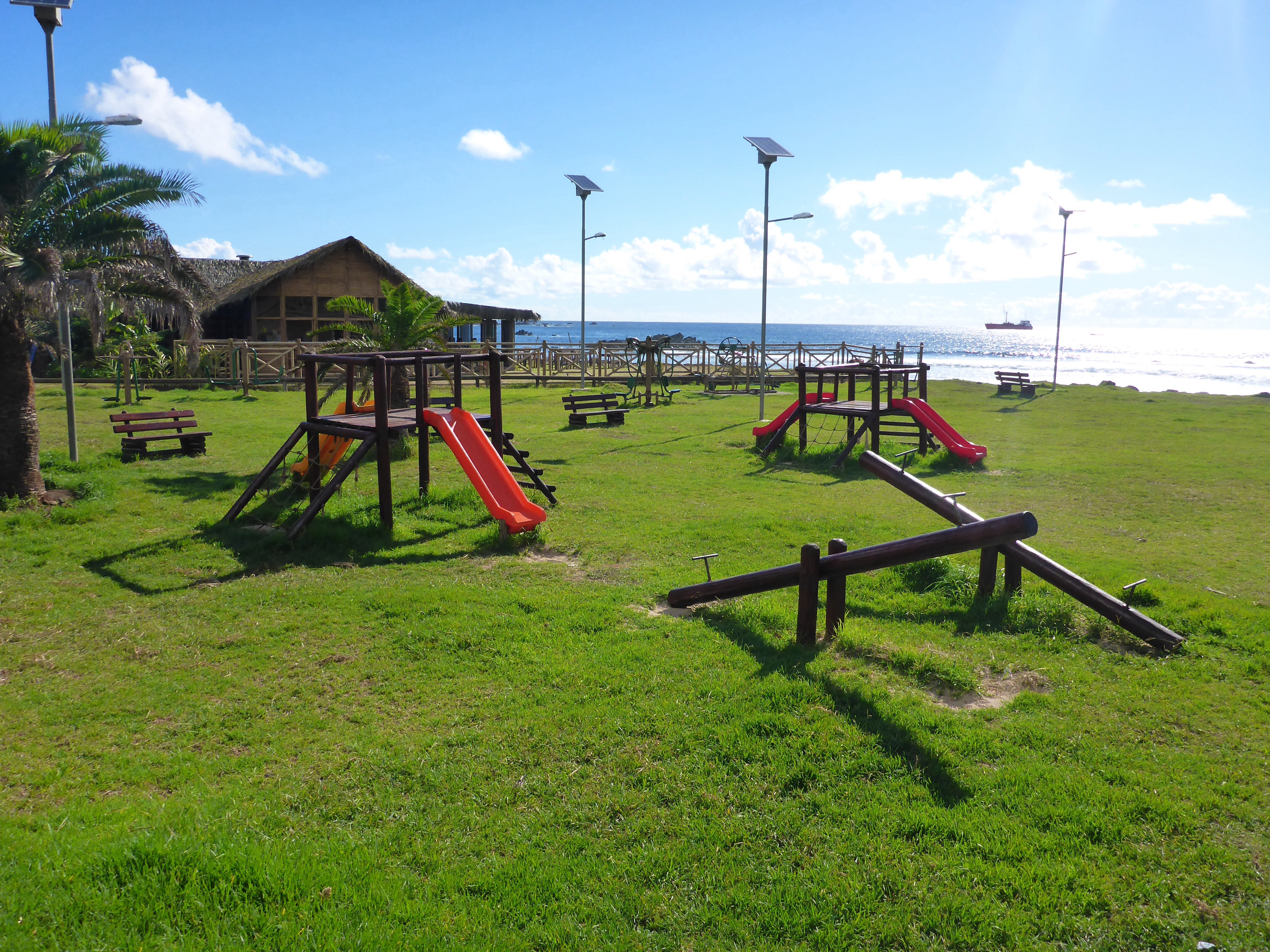
The playground next to one of the teaming ponds was always empty
The playground next to one of the teaming ponds was always empty

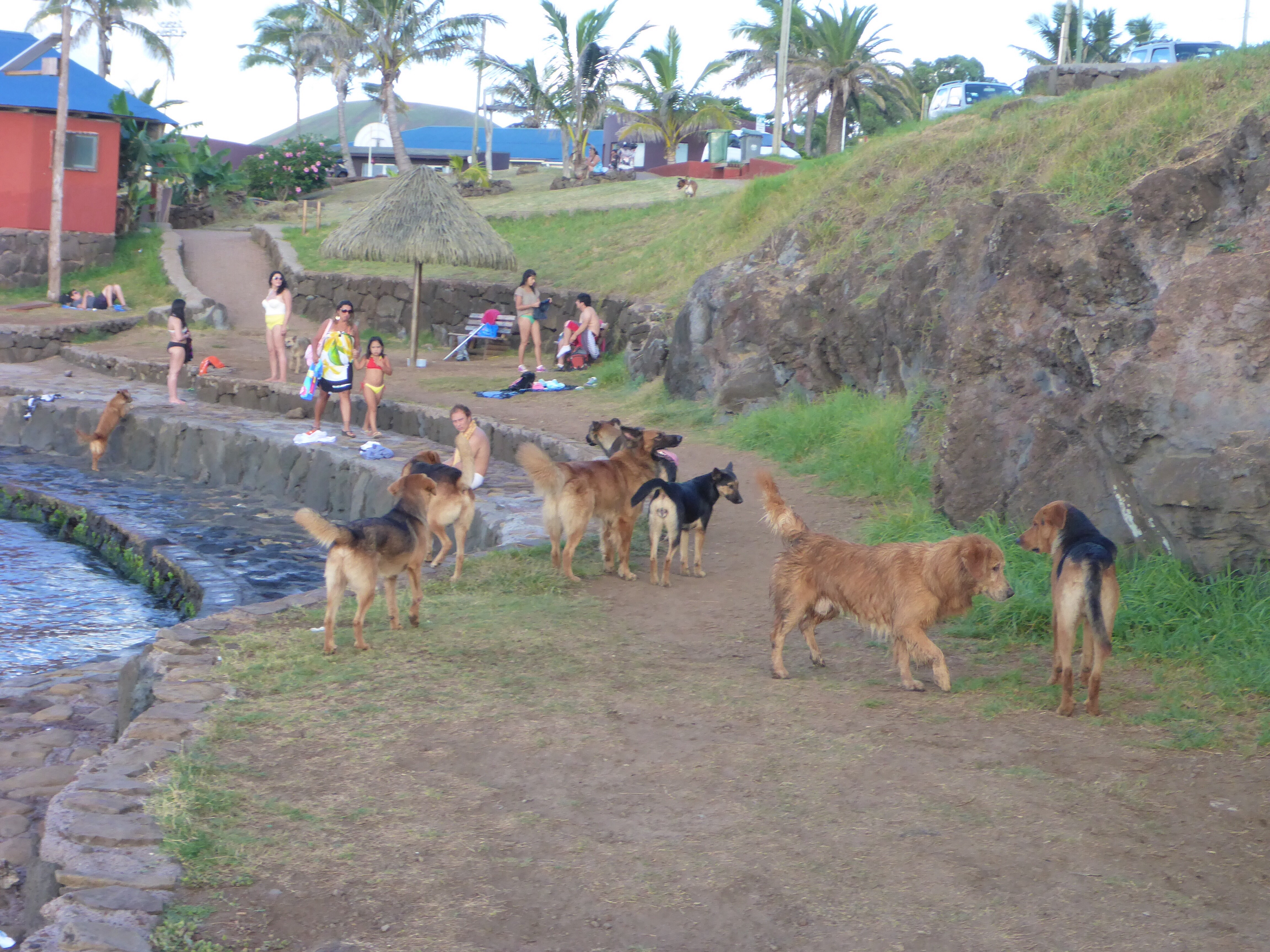
Anne has never felt so comfortable amongst so many stray dogs

Anne has never felt so comfortable amongst so many stray dogs


Then we walk to Taleta restaurant for a drink, see kids cycling with a surfboard under their arm. While we eat, we watch kids surfing. How wonderful to see kids enjoying a healthy, happy and active life without the constraints of modern society’s safety regulations or concerns. We go for dinner at a tiny restaurant as Taleta was fully booked. This empenada was delicious!!
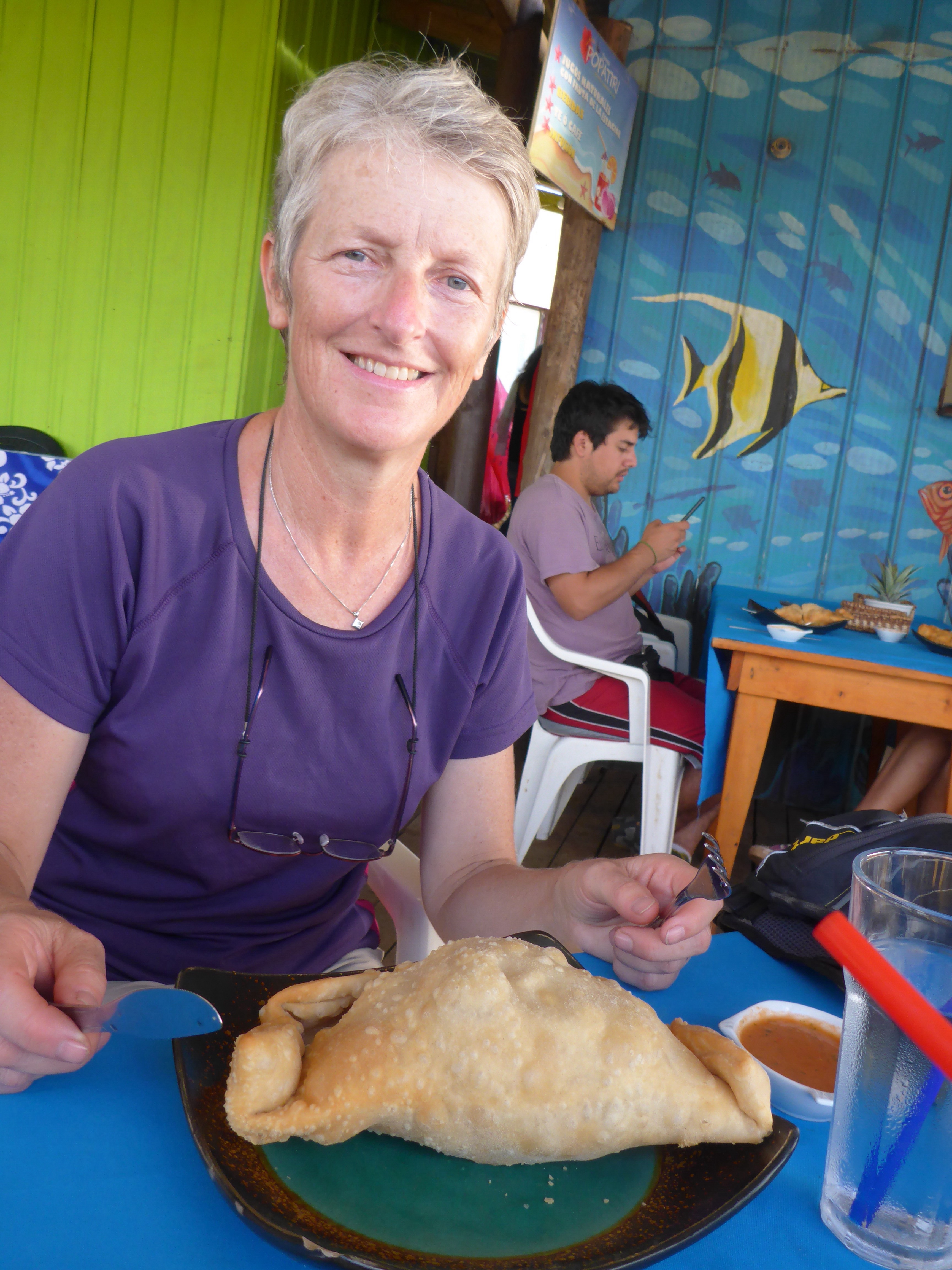
Anne's delicious, and huge, tuna empenada at Hanga Roa

Anne’s delicious, and huge, tuna empenada at Hanga Roa

Day 3 – 2 tours
We take a tour in the morning and first go to an extinct volcano Rano Kau.

Rano Kau volcano's crater  and wetland, a haven for biodiversity

Rano Kau volcano’s crater and wetland, a haven for biodiversity


From there we walk to Orongo, the village where the Birdman competition took place. After the ecological disaster where all the trees had been cut down, the society no longer competed in erecting statues but fought more and more for scare resources. Then came the fierce Birdman competition: competitors (who were either chiefs of different tribes or their representative) had to climb down the jagged cliffs, swim to the island 2.5kms away, wait for the arrival of the sooty tern to lay their eggs and find a sooty tern egg, swim back with the egg and climb back up the cliffs and return the egg intact. In the process, competitors killed each other, other fell off the cliffs to their death or simply dropped their egg as they climbed back up the jagged cliffs. The tribe of the winner became the leaders for one year, until the following year’s competition and the tribe’s chief became the headman of the island.
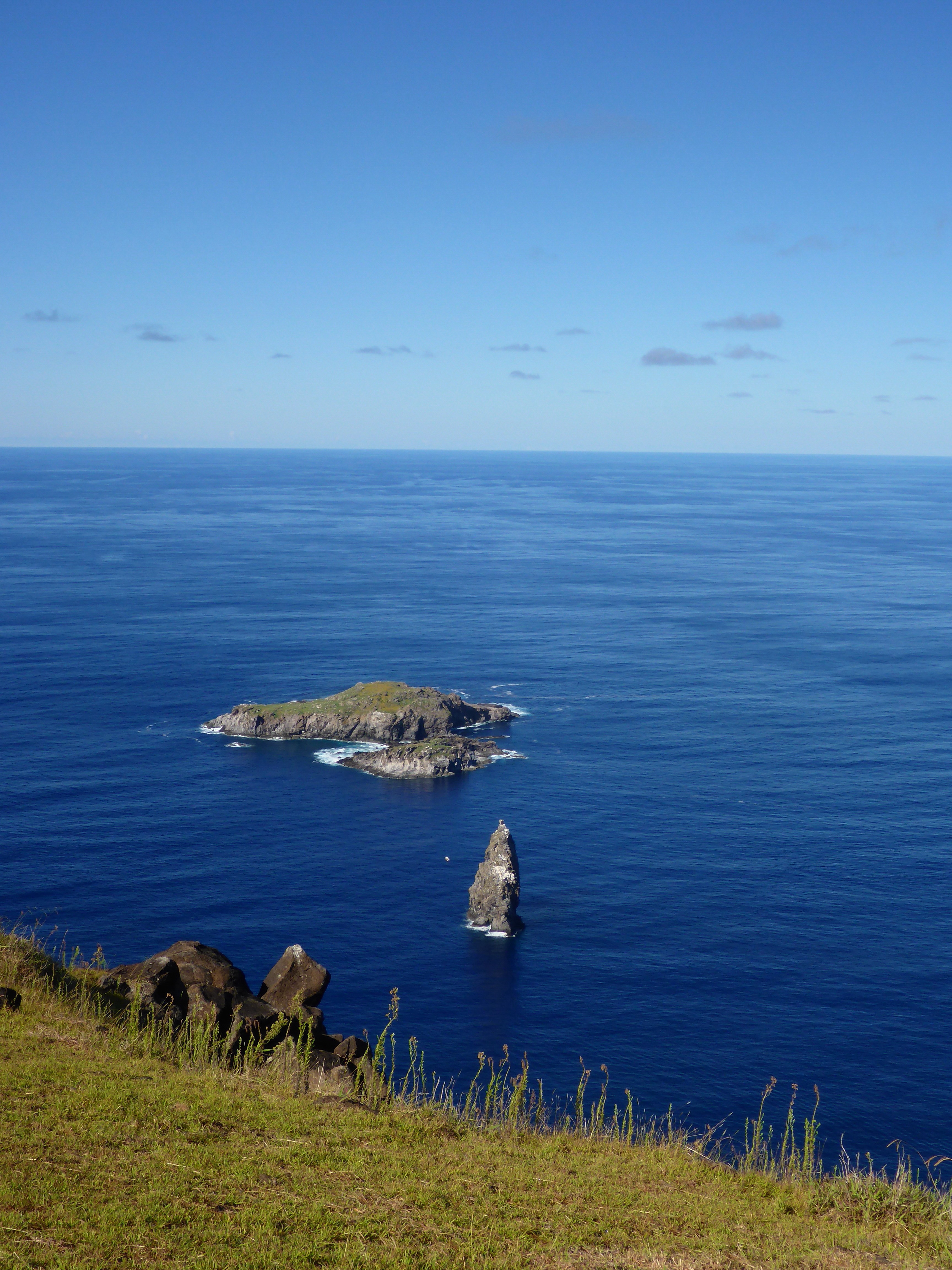
The largest island, 2,5kms away, is where Birdman contestants had to swim to and return with an unbroken sooty tern egg
The largest island, 2,5kms away, is where Birdman contestants had to swim to and return with an unbroken sooty tern egg

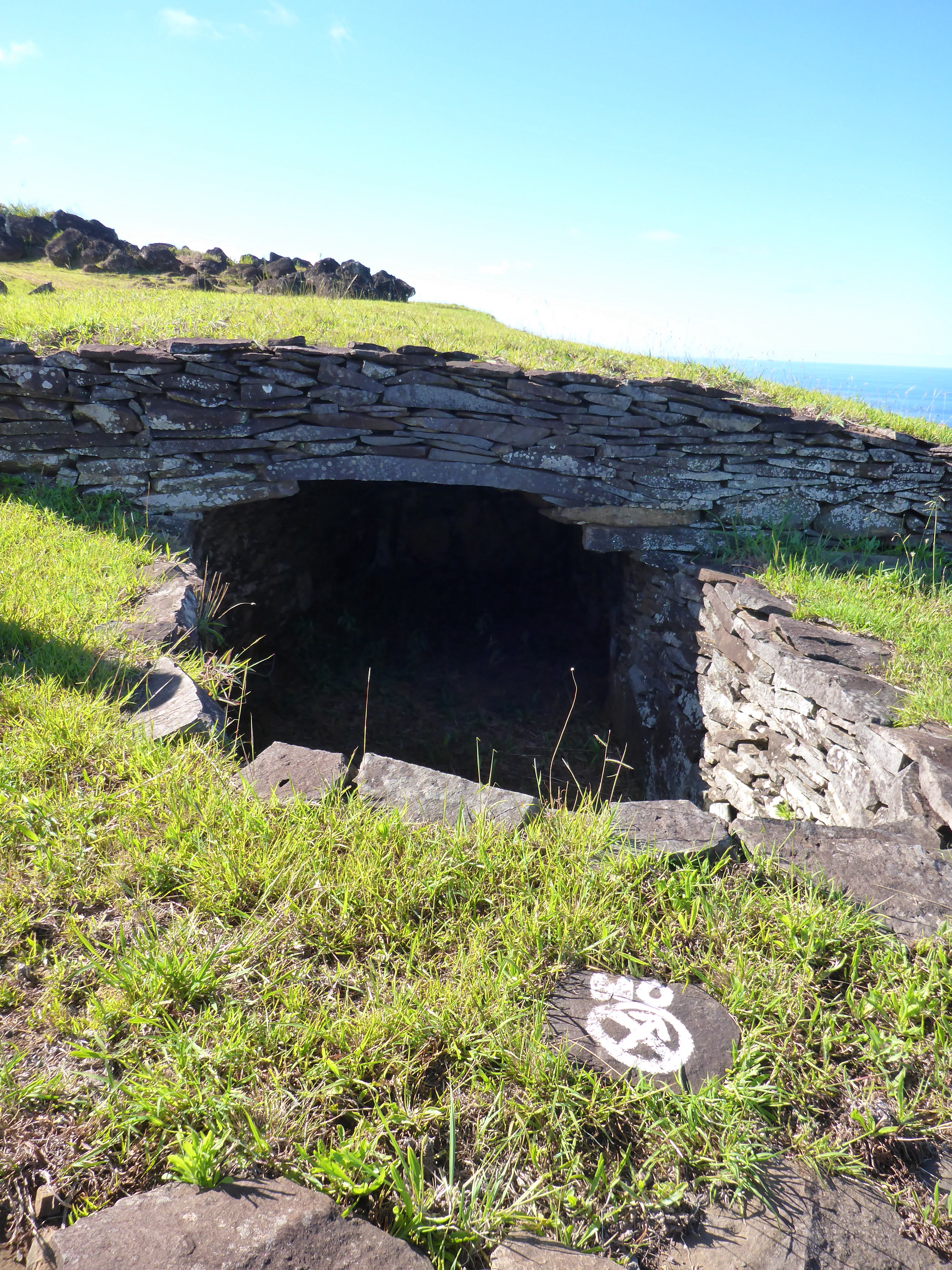
Partly reconstructed house at Orongo, showing the corbelled roof devised after all trees had been cut down and could no longer be used for rafters
Partly reconstructed house at Orongo, showing the corbelled roof devised after all trees had been cut down and could no longer be used for rafters

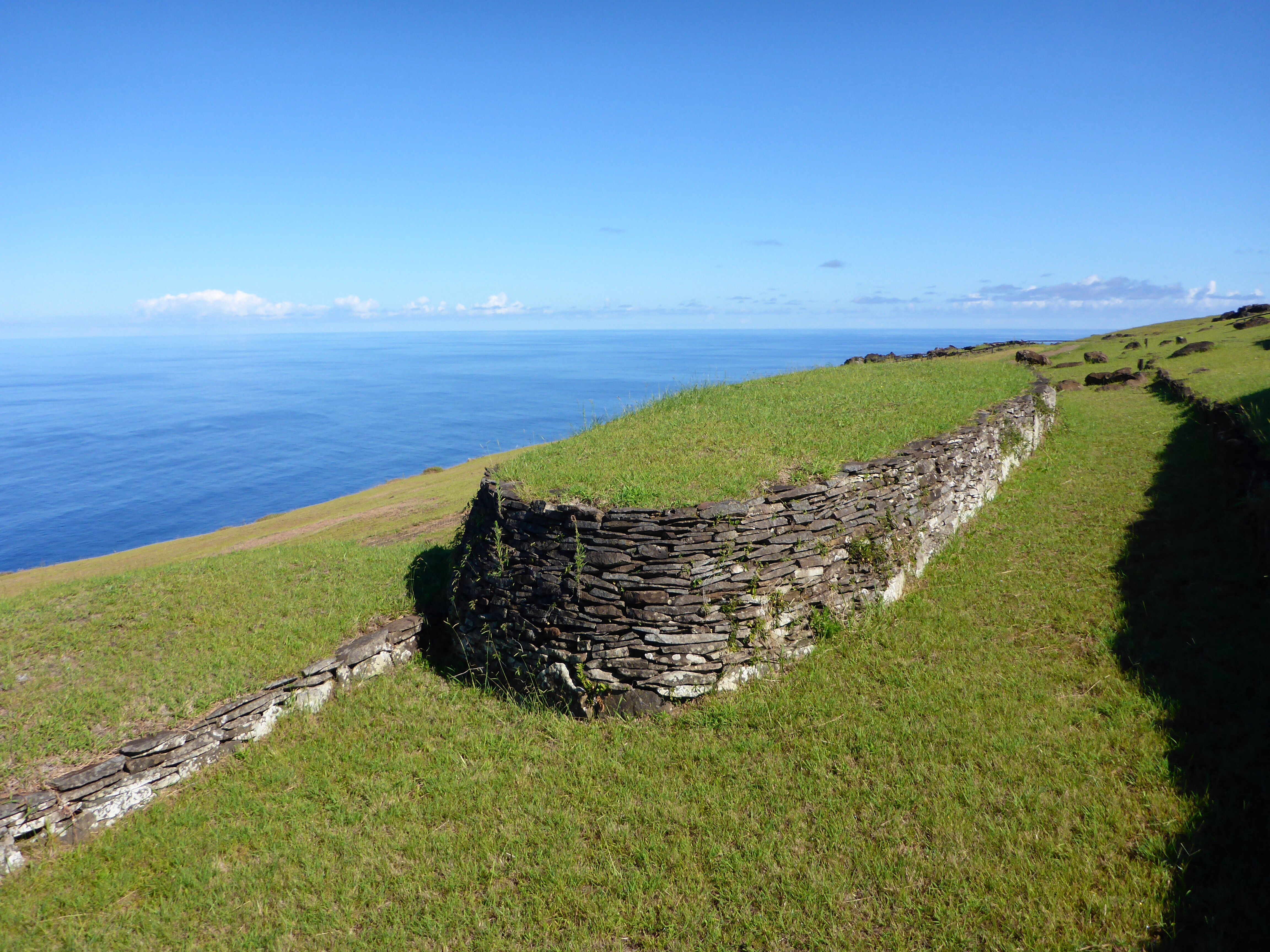
Longboat shaped house at Orongo village

Longboat shaped house at Orongo village

Then we went to ahu Vinapu, consisting of 2 ahus, each with extraordinary stonemasonry, similar to that found at Machu Picchu. There is debate as to whether there had been contact with Peru at the time. Vinapu was constructed before 1440 and similar stonework in Peru after 1440. Vinapu stone walls face towards sunrise at winter solstice.

Vinapu I ahu wall, oriented astronomically, each block weighing several tons
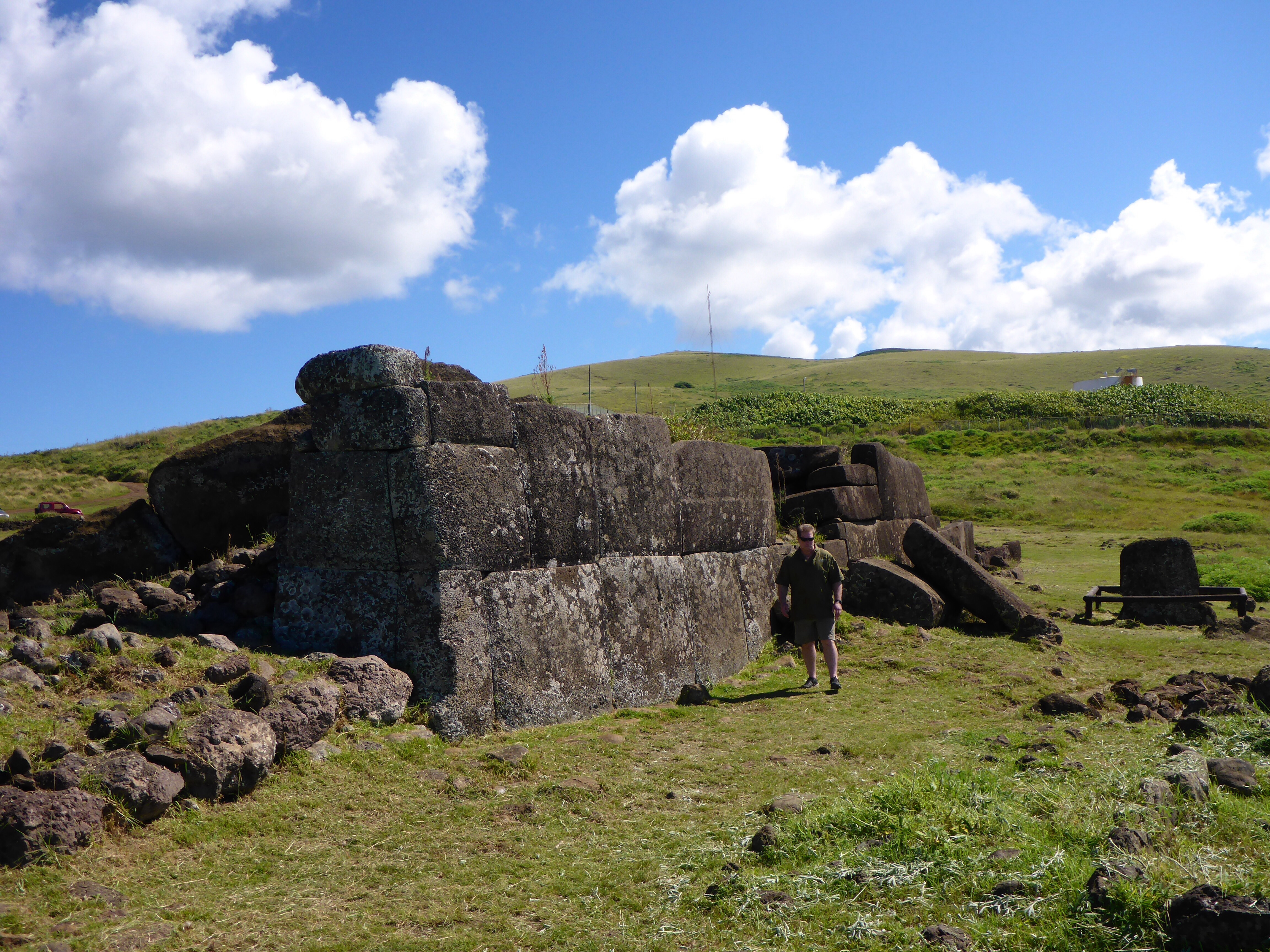
Vinapu I ahu wall, oriented astronomically, each block weighing several tons

Vinapu II wall showing the scale of each block

Vinapu II wall showing the scale of each block

Anne next to a pukao or topknot.  The column in the background was a feminine statue with 2 heads, used as a funerary pillar

Anne next to a pukao or topknot. The column in the background was a feminine statue with 2 heads, used as a funerary pillar
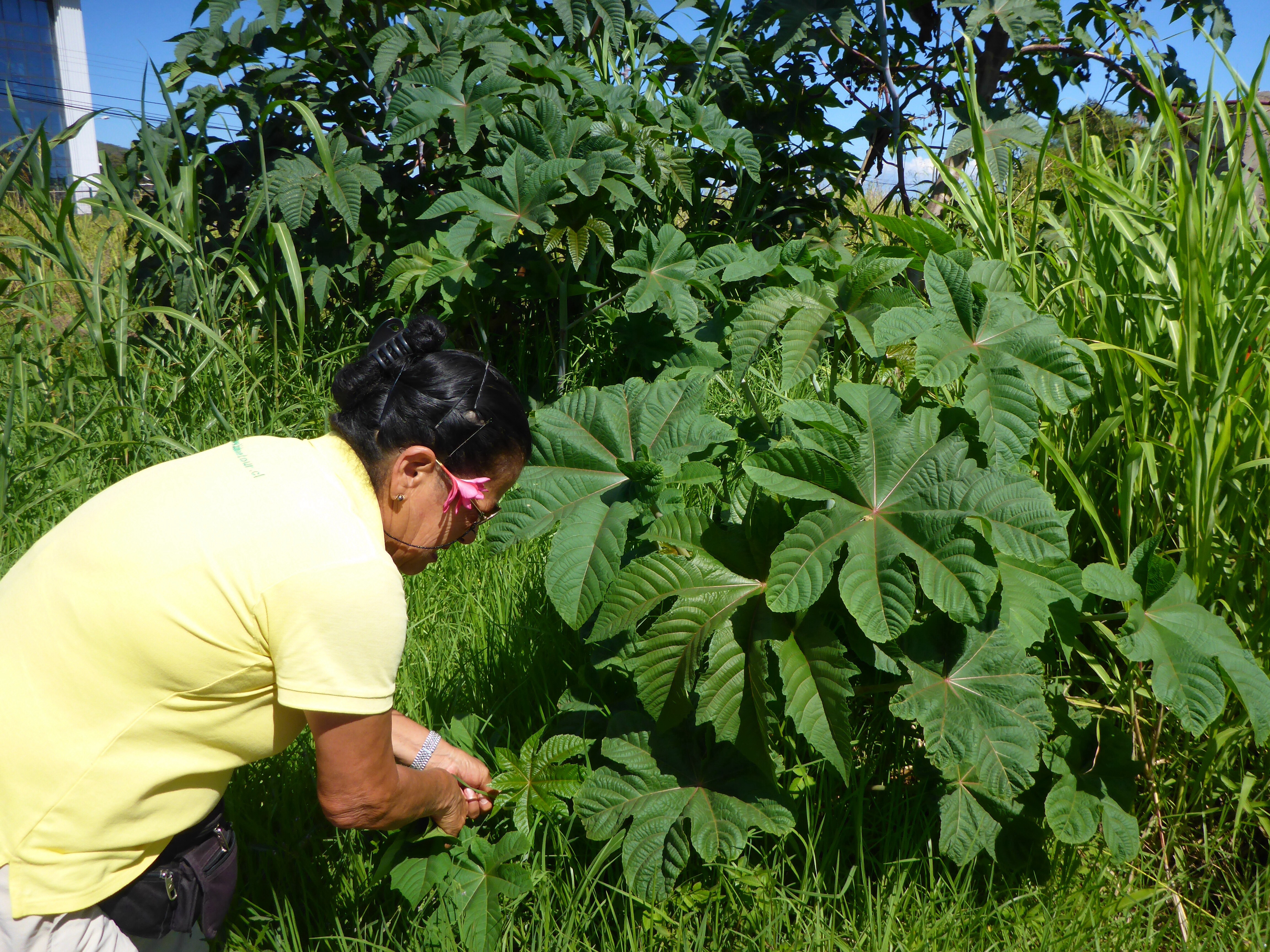
Our guide stopped to pick some rahakau leaves I had to boil and massage into Anthony's ankle

Our guide stopped to pick some rahakau leaves I had to boil and massage into Anthony’s ankle

After a delicious lunch of tuna ceviche (raw tuna) at Taleta restaurant, I rejoin the tour group alone as Anthony probably walked too much this morning.
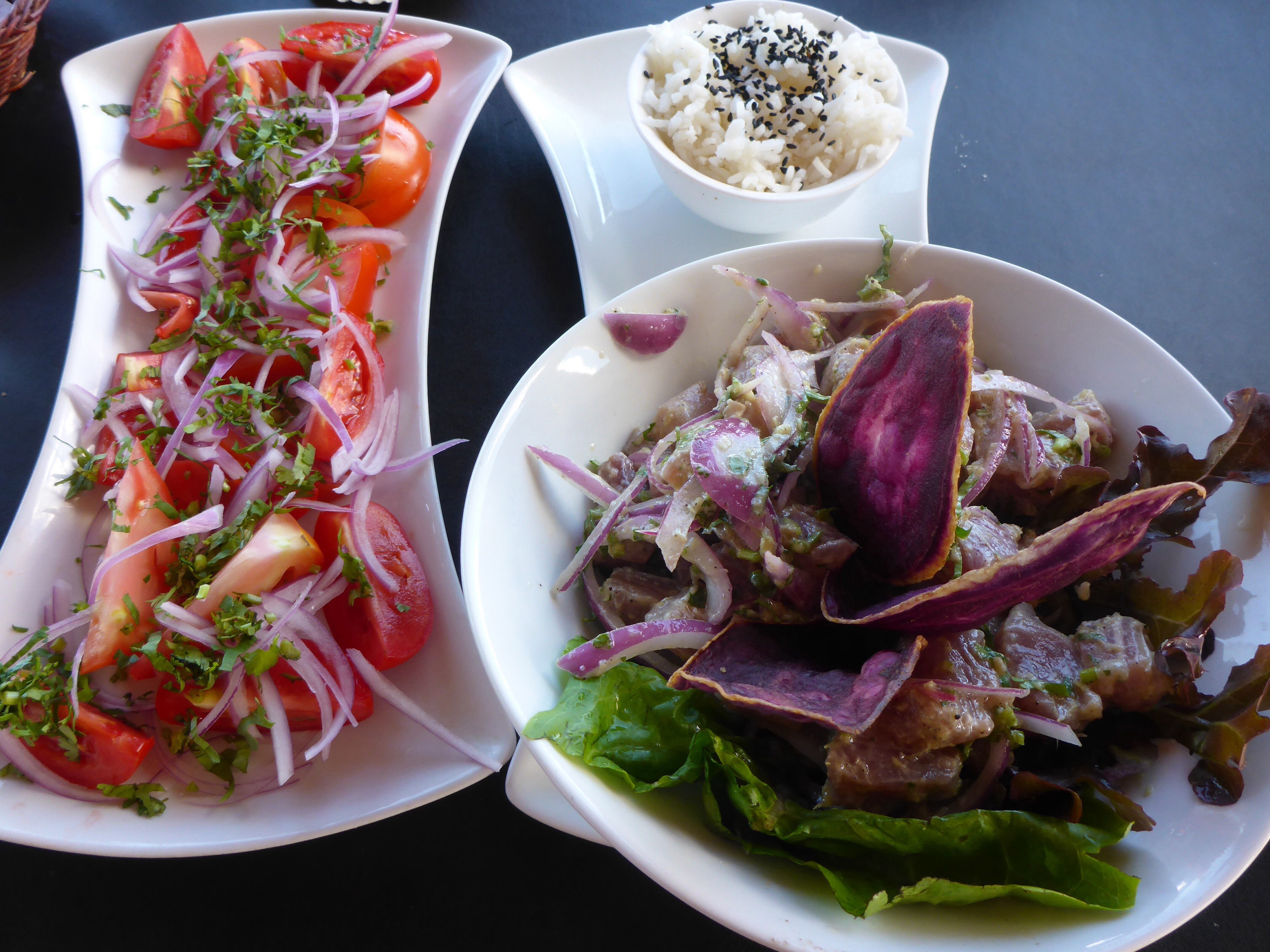
Tuna ceviche

Tuna ceviche


First stop is Puna Pau – a quarry in a small crater which was the only source of red scoria from which the Rapa Nui people carved pukaos out of its red volcanic rock. It was also used for a few moais such as Tukuturi and some rock art carvings. Some pukaos were as large as 2.5 metres in diametre. Pukaos are the ‘hats’ placed on top of moais, and may have represented dressed hair or headdresses of red feathers worn by chiefs throughout Polynesia.
Pukao at Puna Pau quarry
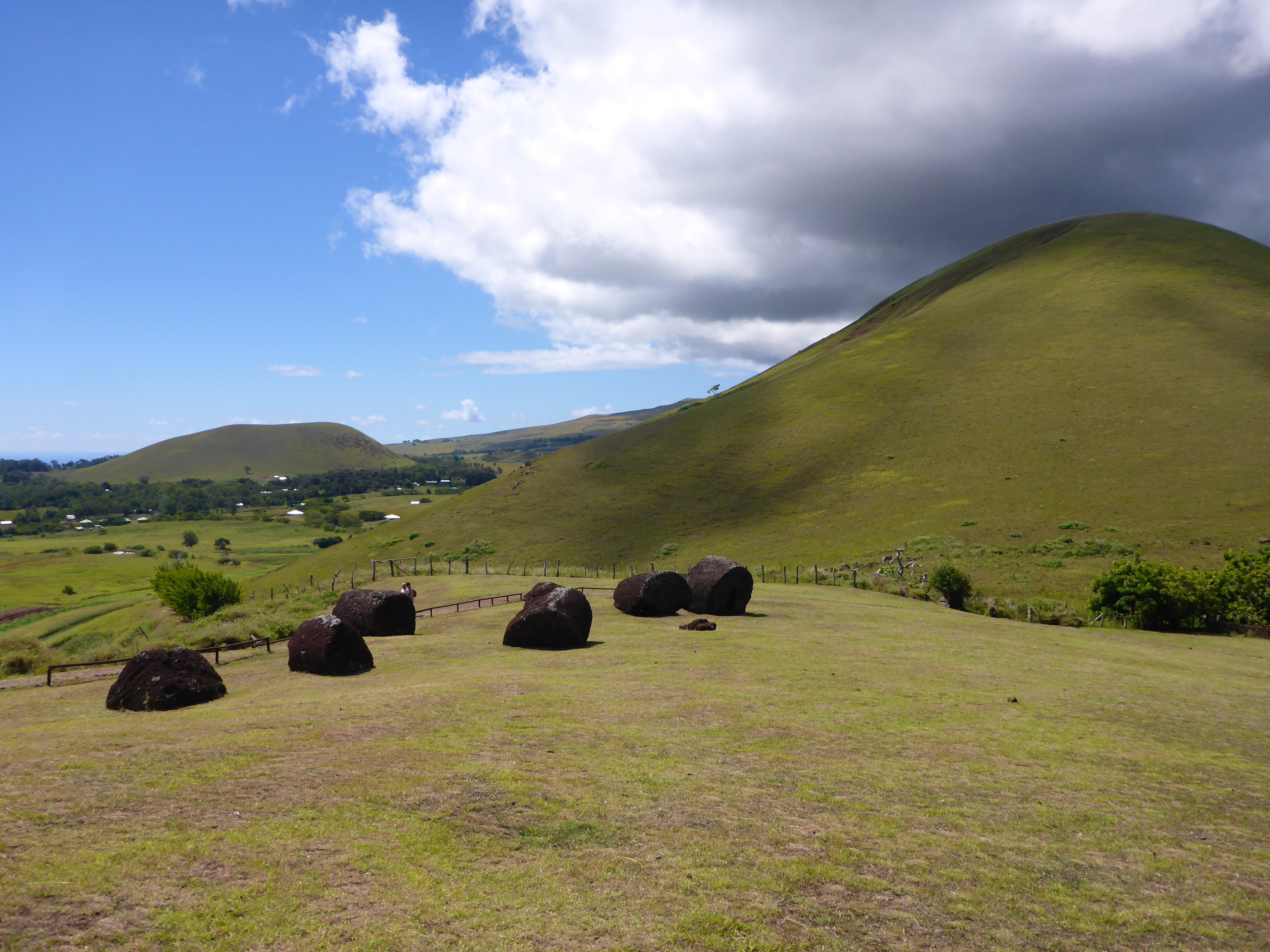
Pukao at Puna Pau quarry

Puna Pau quarry

Puna Pau quarry

Ahu Akivi is very special as it is inland, faces the ocean and is oriented astronomically.
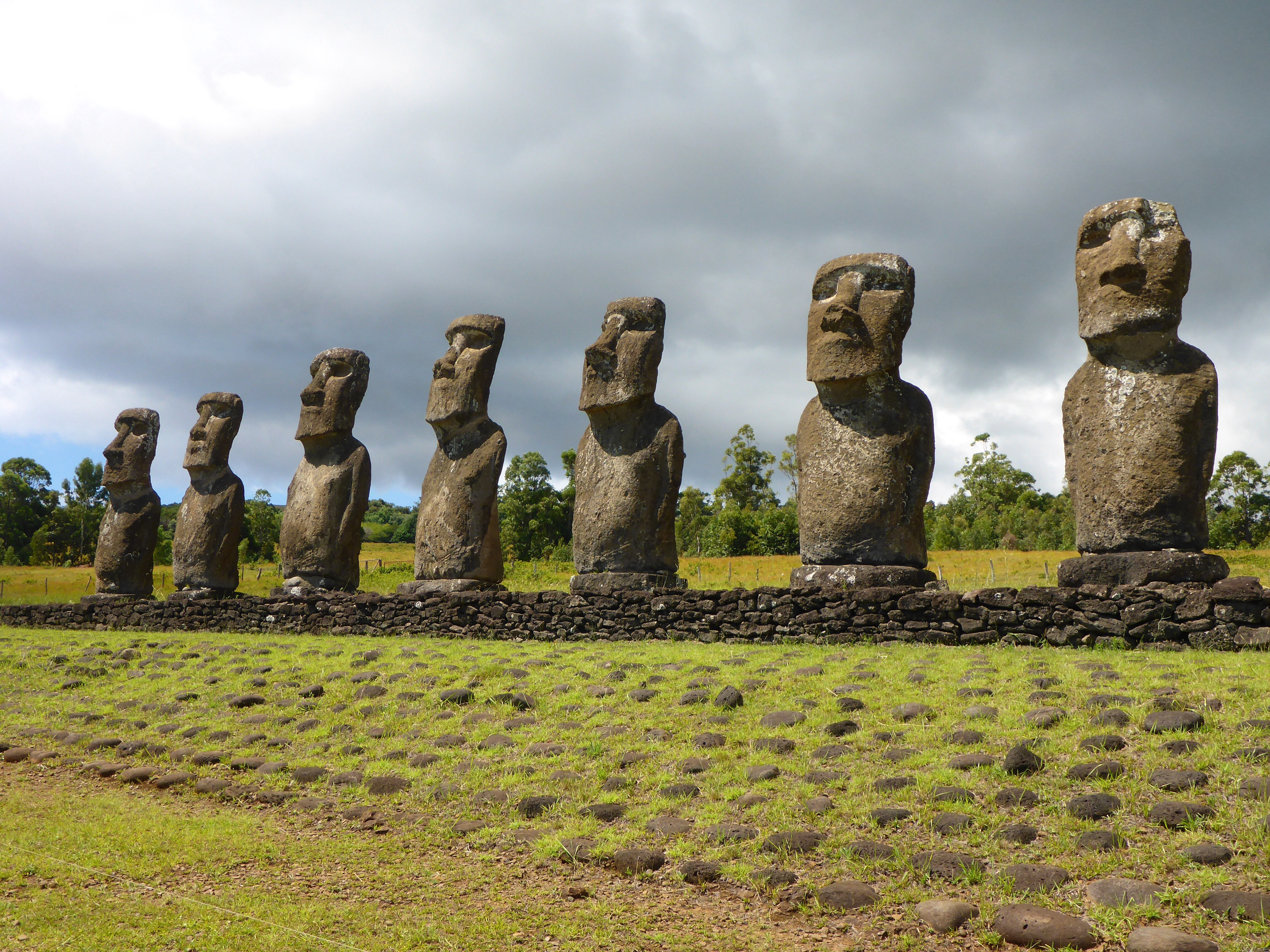
Ahu Akivi
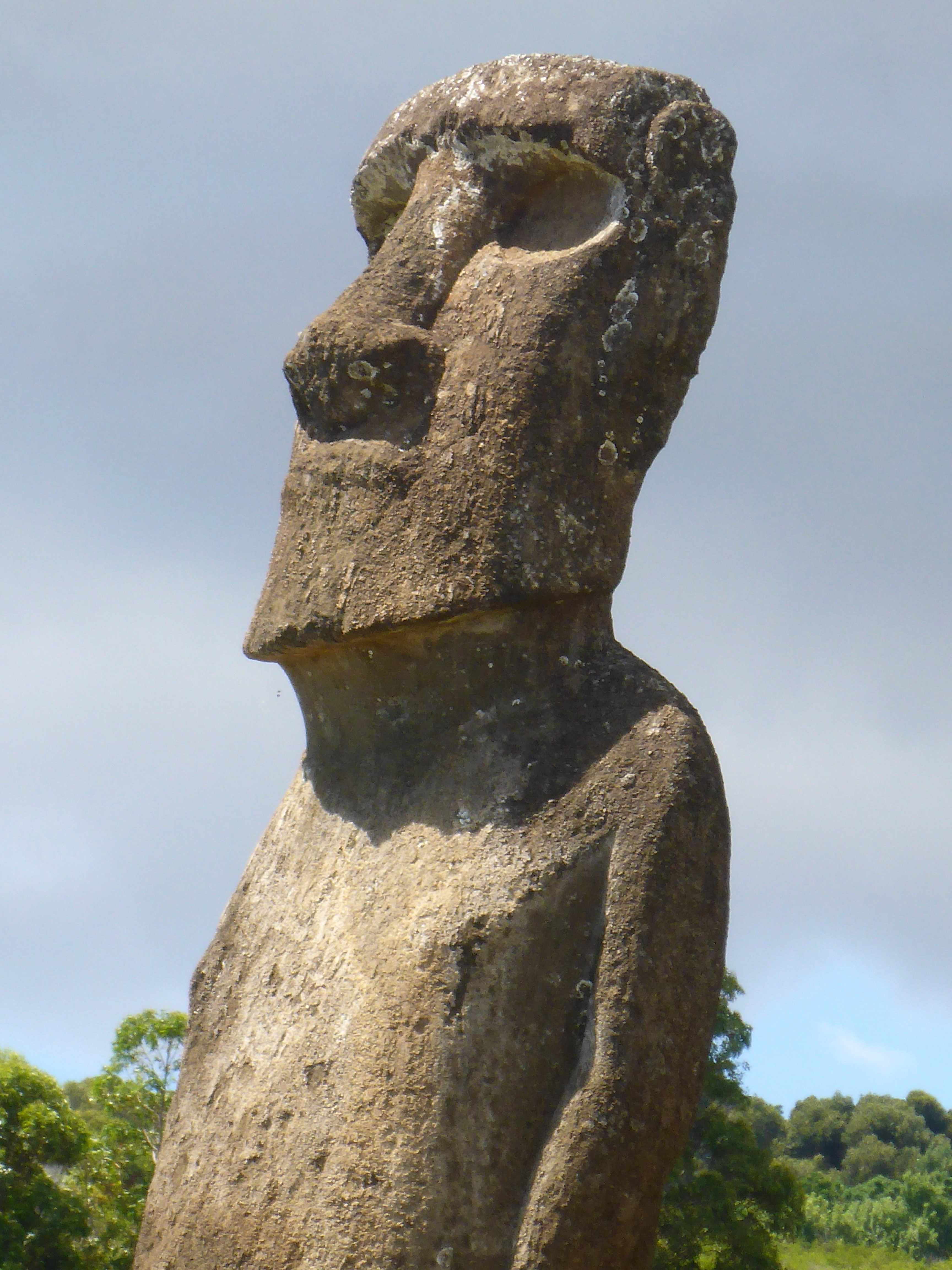
Ahu Akivi


One of the moais on Ahu Akivi
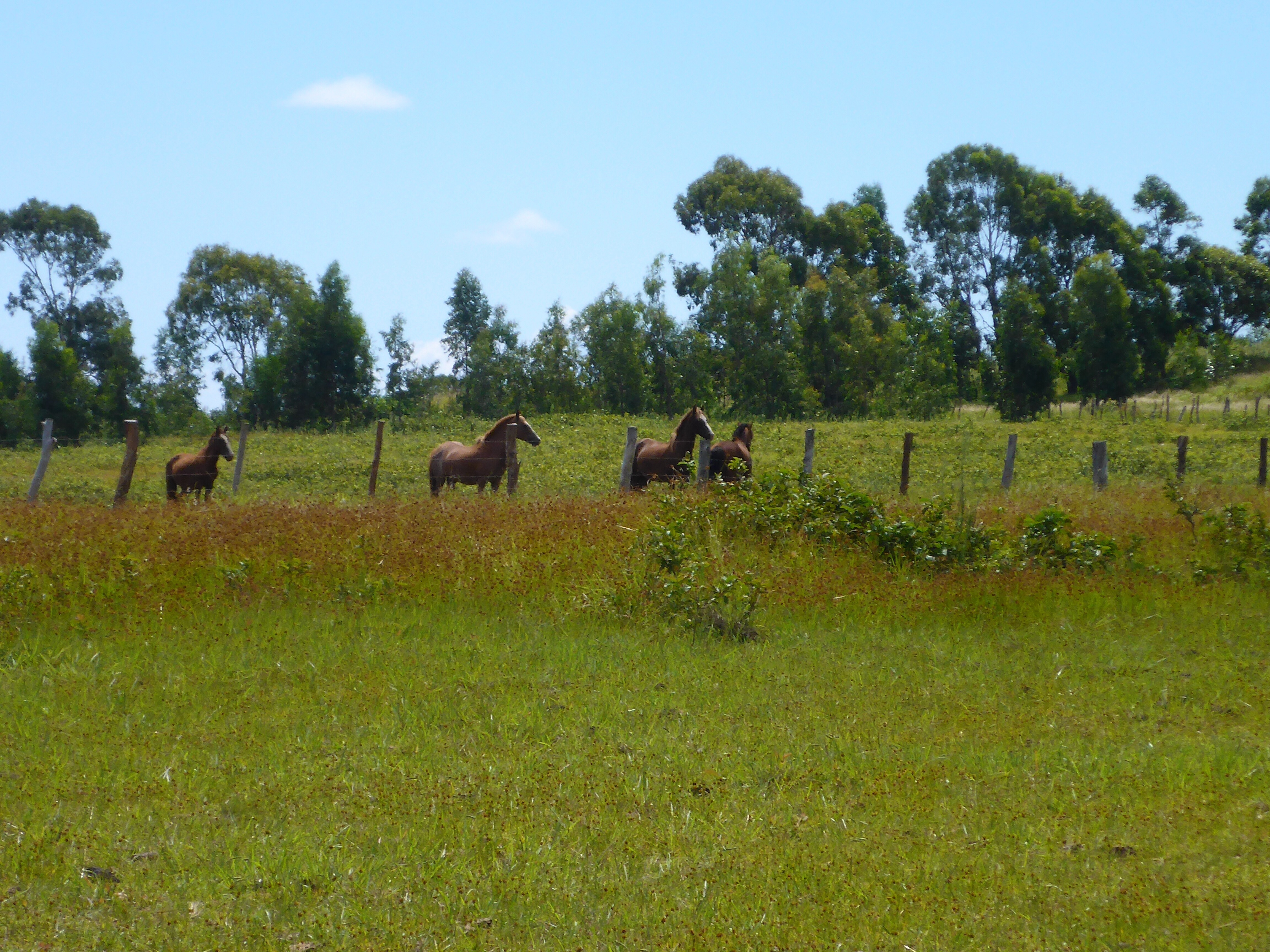
One of the moais on Ahu Akivi

Horses watching tourists
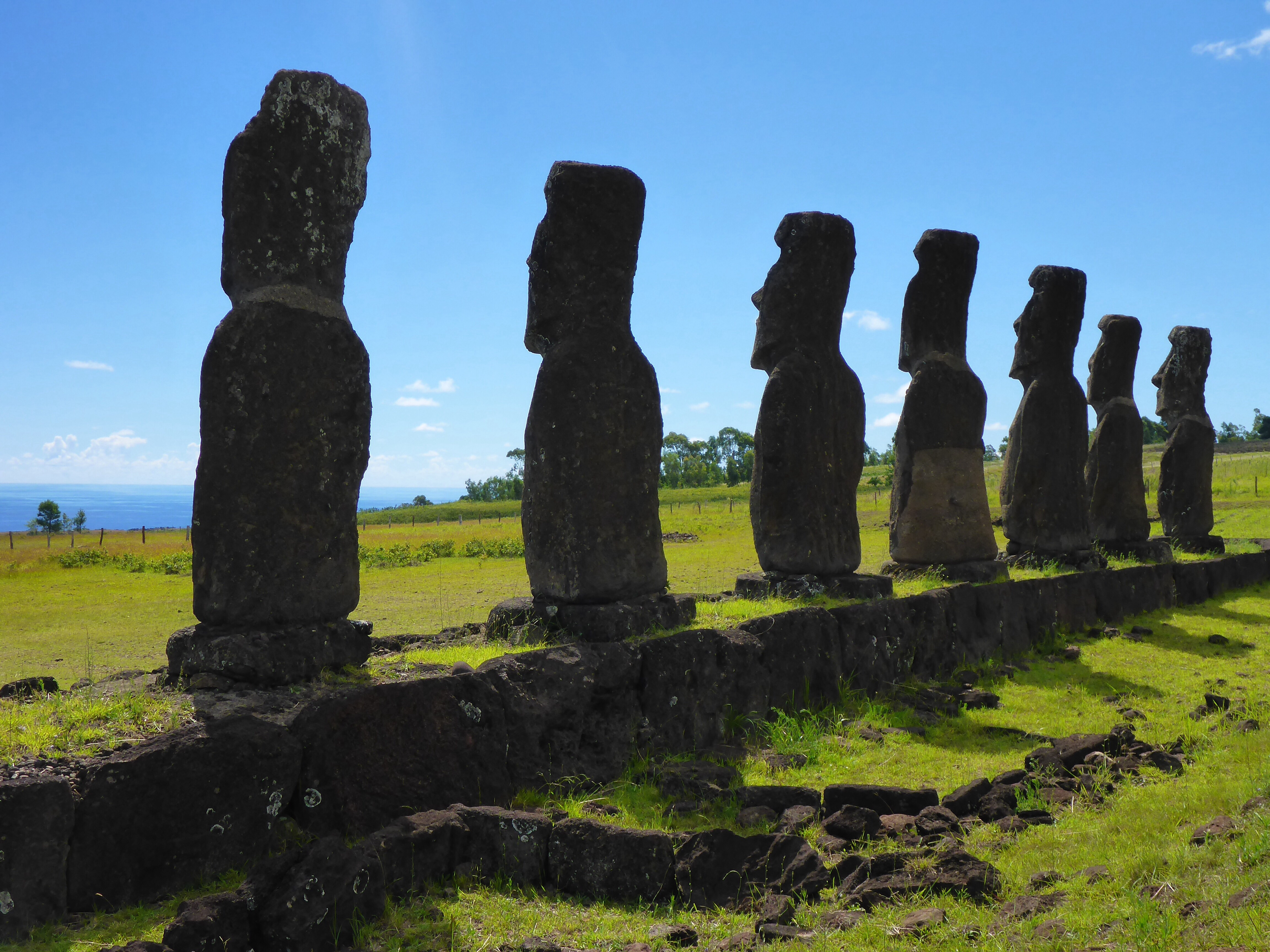
Horses watching tourists

Ahu Akivi - a particularly sacred site, looking out to sea, and a celestial observatory set up around 1500 - they face sunset during Spring equinox and sunrise during autumn equinox

Ahu Akivi – a particularly sacred site, looking out to sea, and a celestial observatory set up around 1500 – they face sunset during Spring equinox and sunrise during autumn equinox

Day 4 – We decided to hire a car as yesterday’s afternoon was disappointing and China is busy with family issues. Anthony joins me for the day but can only walk slowly and part way only. His ankle seems to be hurting more today.

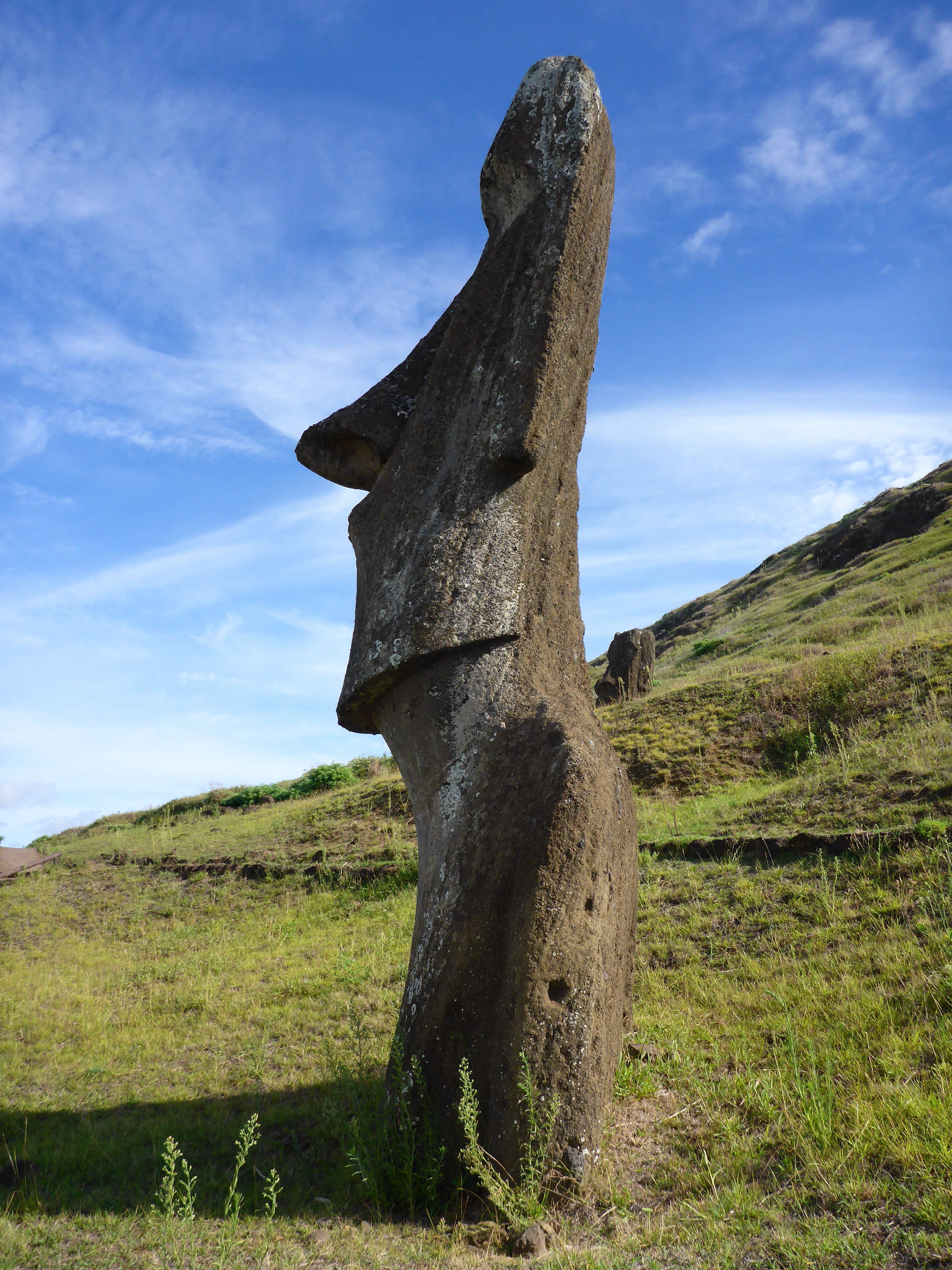
We first head to Rano Raraku, a volcanic crater where 95% of Easter Island’s moais, statues, were carved. It was a quarry for around 500 years until the early 18th century where 397 moais remain today. The first sight is breathtaking:
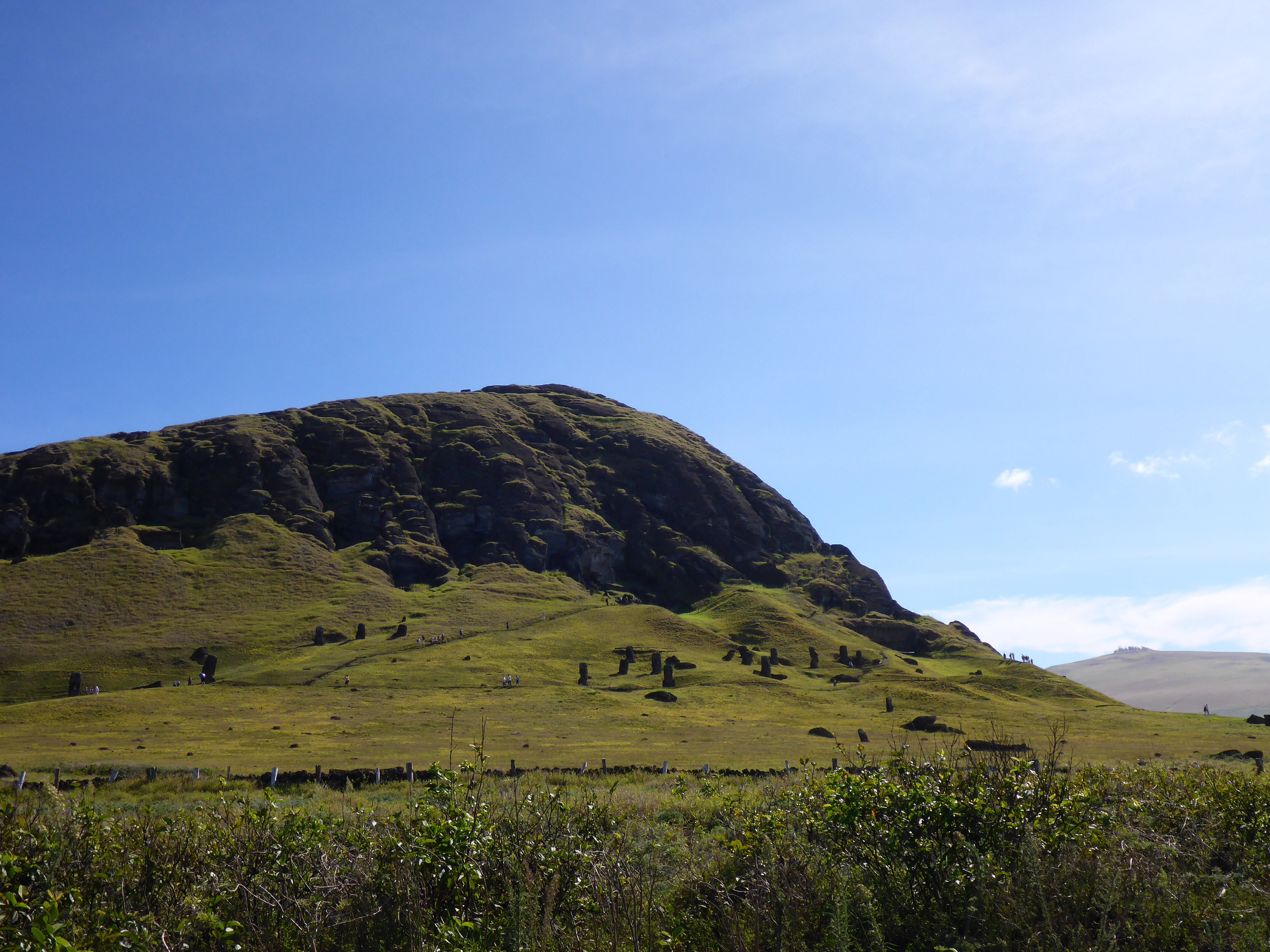
Rano Raraku quarry
Rano Raraku quarry


At Rano Raraku

At Rano Raraku


Rano Raraku quarry

Rano Raraku quarry


Seeing the incomplete moais was another breathtaking moment. The largest one is 21.6 metres long!! Twice the length of any moai completed and transported. Maybe they were abandonned because of some very hard rock material encountered as they were carving? Or maybe some were intended to remain within the rock?…
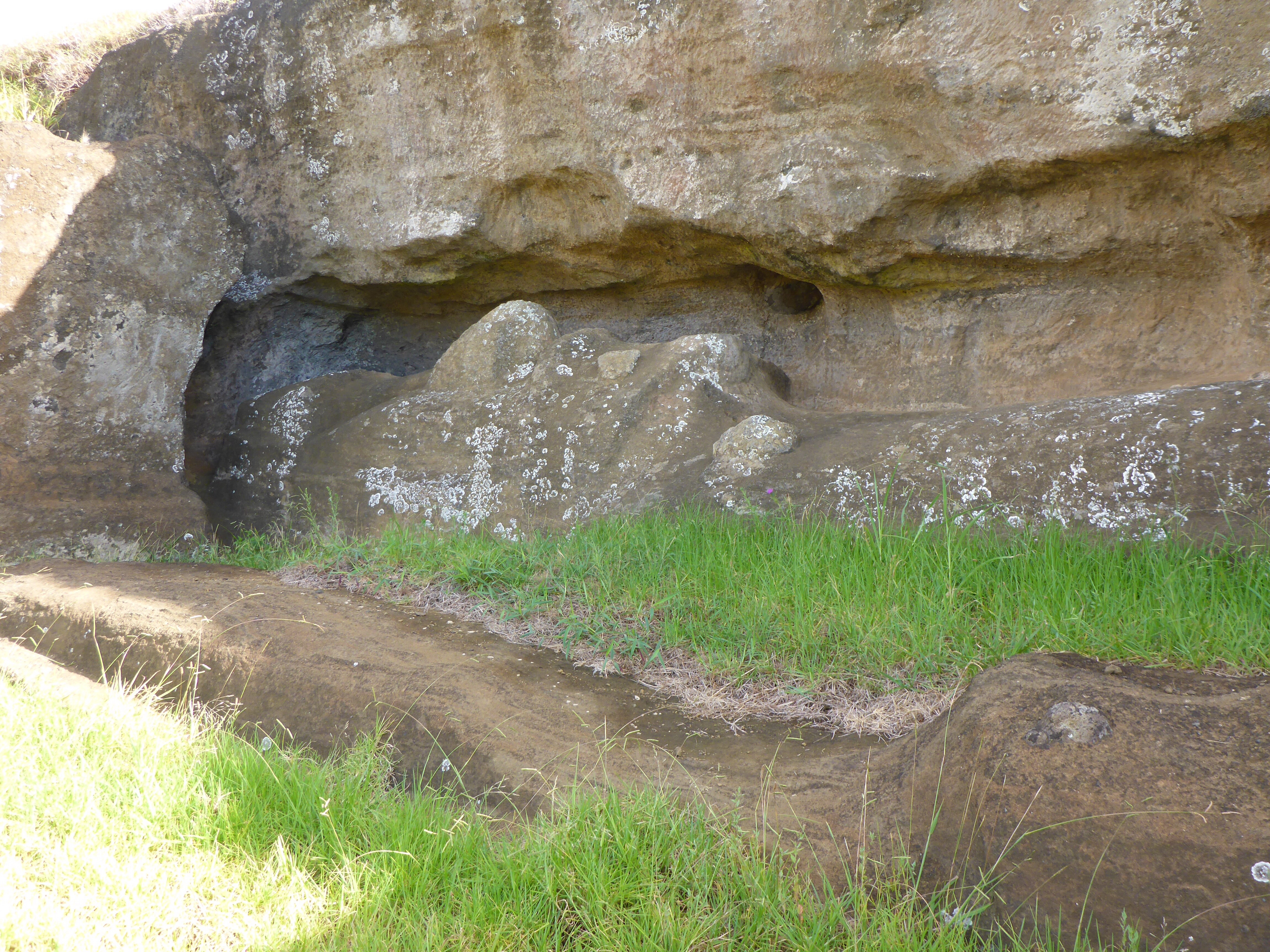
Incomplete moai at Rano Raraku quarry

Incomplete moai at Rano Raraku quarry

Two incomplete moais at Rano Raraku

Two incomplete moais at Rano Raraku

Rano Raraku

Rano Raraku


What an incredible feeling to see all those stunning moais, standing out of the mountain. Then the best sight: Anthony made it about 500 metres into the park. Now we could enjoy this magical place together, sitting on a tiny bench.
Showing the scale of these torsos at Rano Raraku

Showing the scale of these torsos at Rano Raraku

Rano Raraku moais

Rano Raraku moais

From Rano Raraku, we went to Tongariki, just a mile away, the largest ahu on Easter Island with 15 moiais, one of them with a pukao (topknot) on his head. Like all others, this ahu was toppled during the island’s civil wars, but the moais were swept inland by a tsunami in 1960 and restored in the 90s. They found one moai of 86 tonnes, the heaviest ever erected on the island.
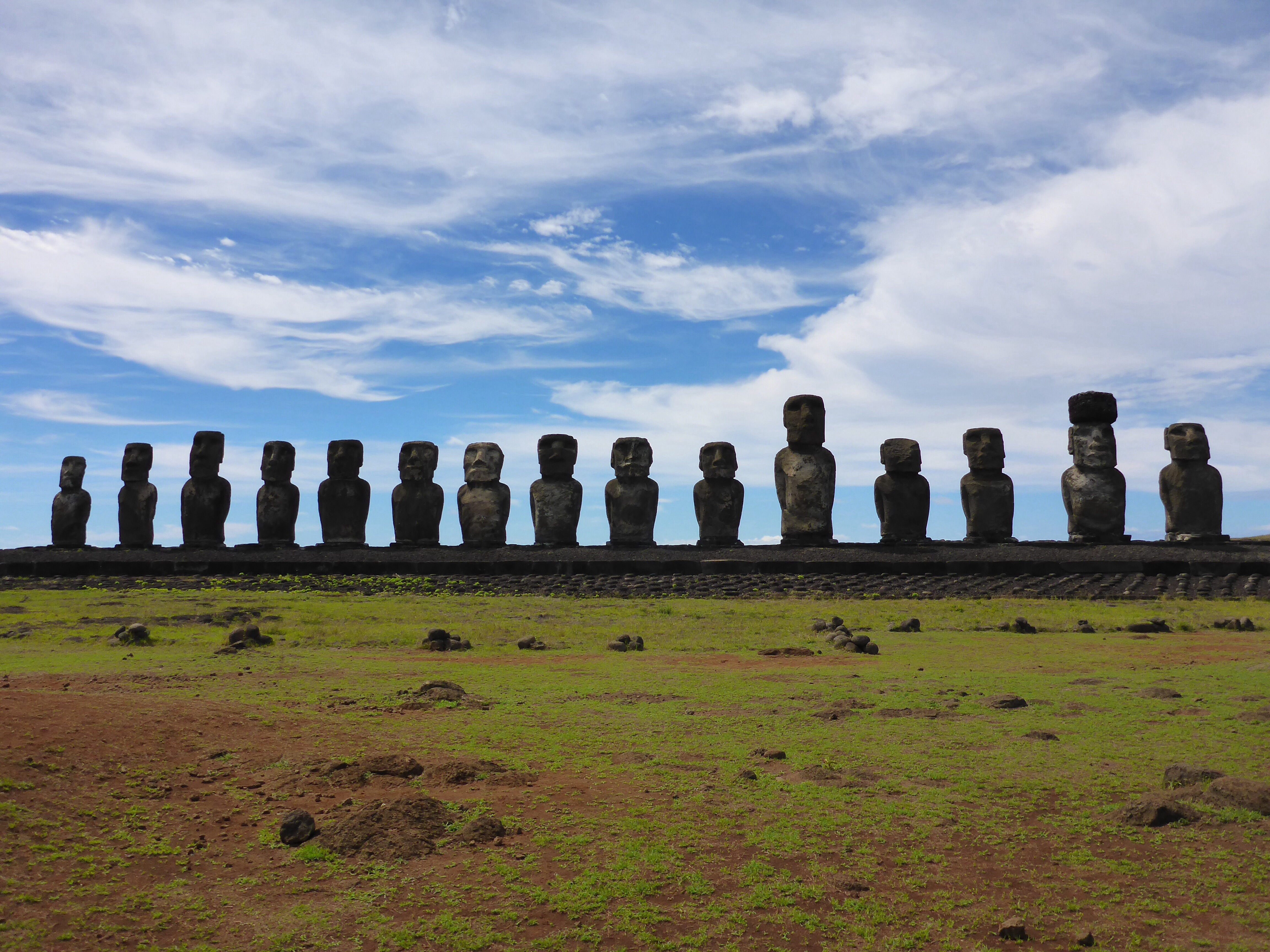
Ahu Tongariki

Ahu Tongariki

Tongariki moai with pukao

Tongariki moai with pukao


We stop at Papa Vaka, a site of fascinating petroglyphs, rock art showing how connected to the ocean the Rapa Nui people were, with fish hooks, tuna, shark, octopus or mythological sea creature.
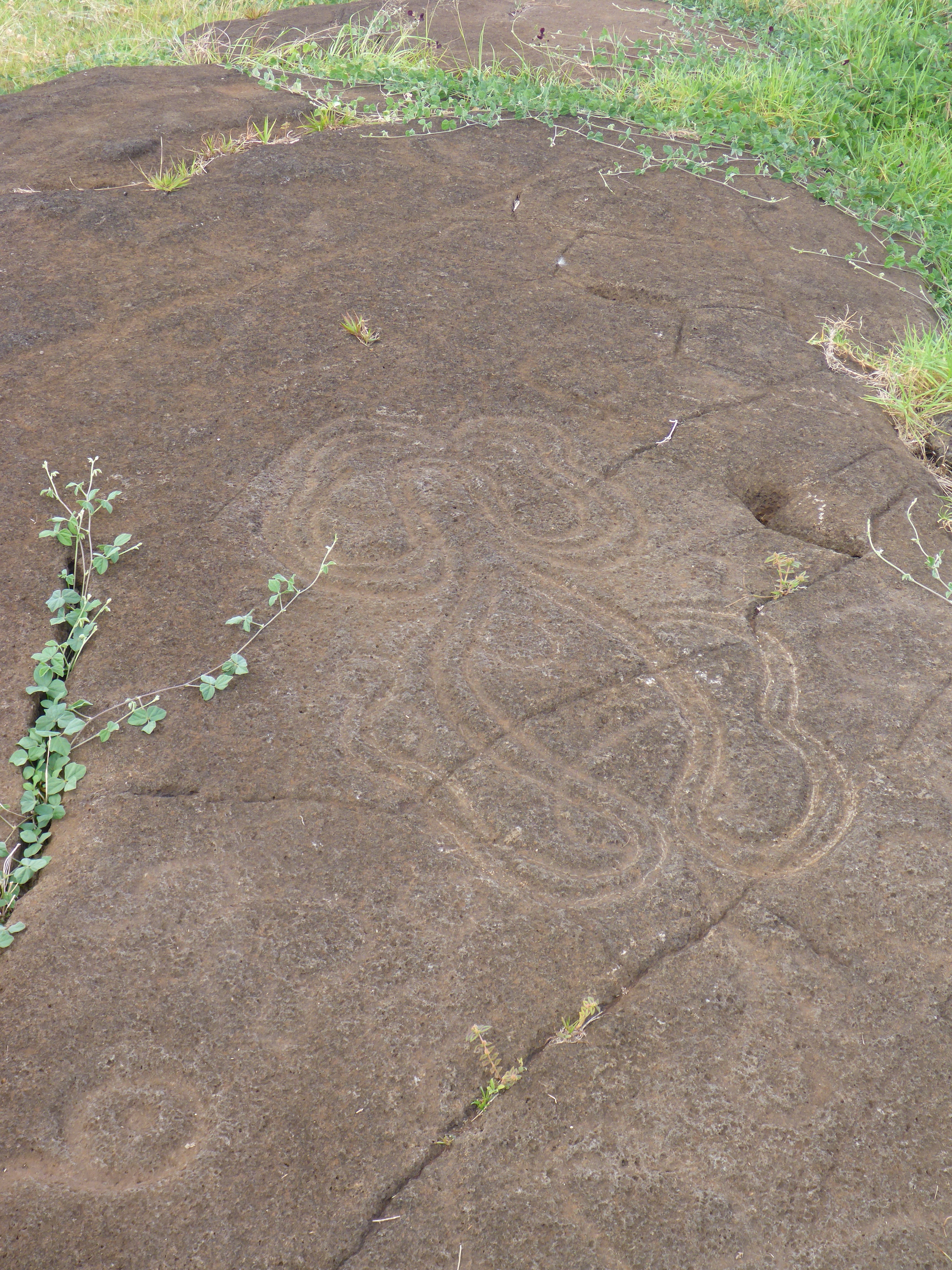
Octopus or mythological sea creature petroglyph at Papa Vaka
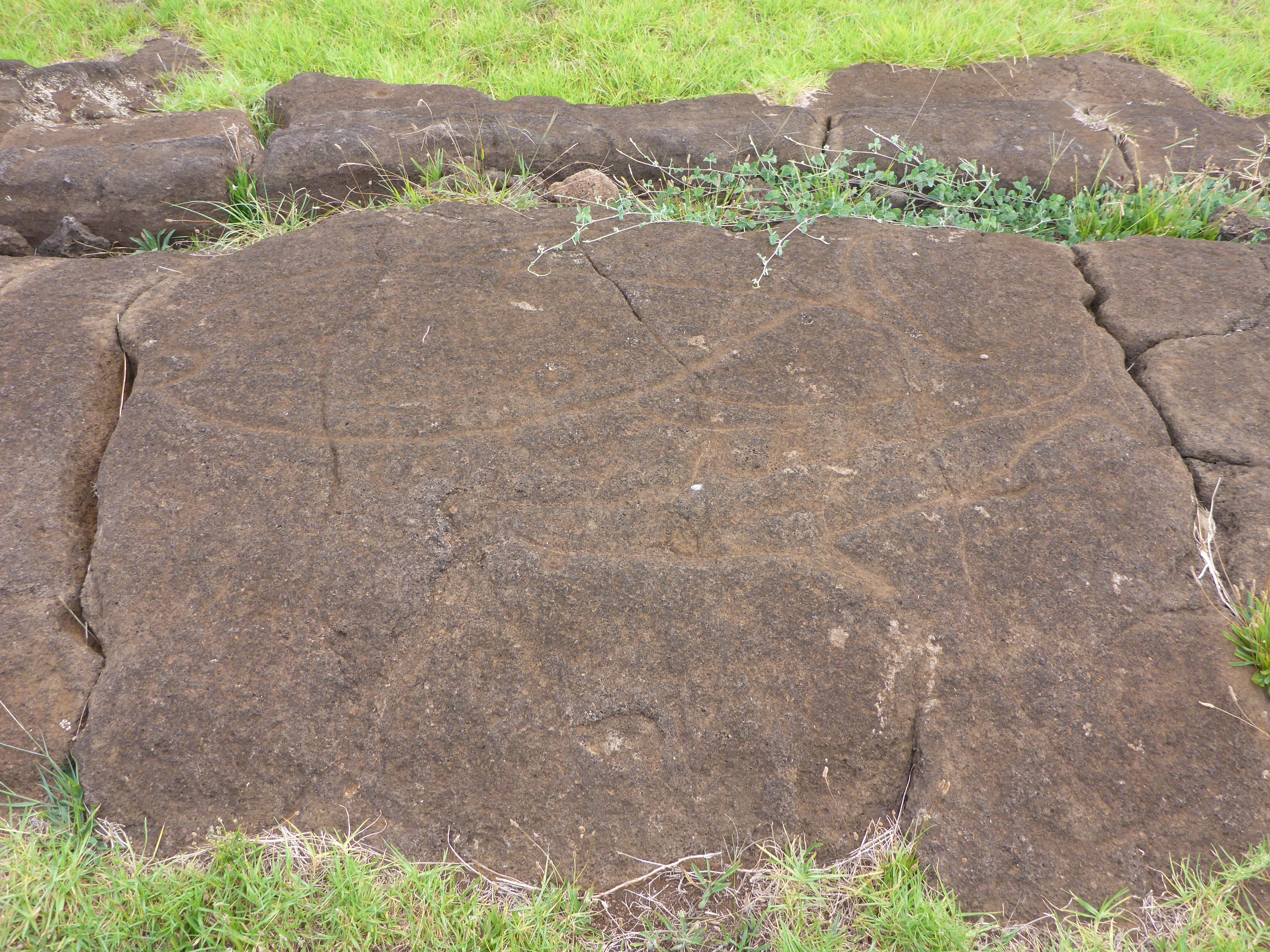
Octopus or mythological sea creature petroglyph at Papa Vaka

Peteoglyphs of a tuna, top, and shark below it at Papa Vaka

Peteoglyphs of a tuna, top, and shark below it at Papa Vaka


From here, we head to Anakena beach which, according to oral traditions, was the landing place of Hotu Matua who founded the first settlement on Rapa Nui. It is also where the new Birdman would end his celebrations. It is a beautiful white sandy beach – with the finest sand we have ever seen. After a lovely swim, we have a couple of tuna empenadas as we watch the ocean and the few tourists coming over for a swim.
Ahu Nao-Nao with 7 moais at Anakena beach
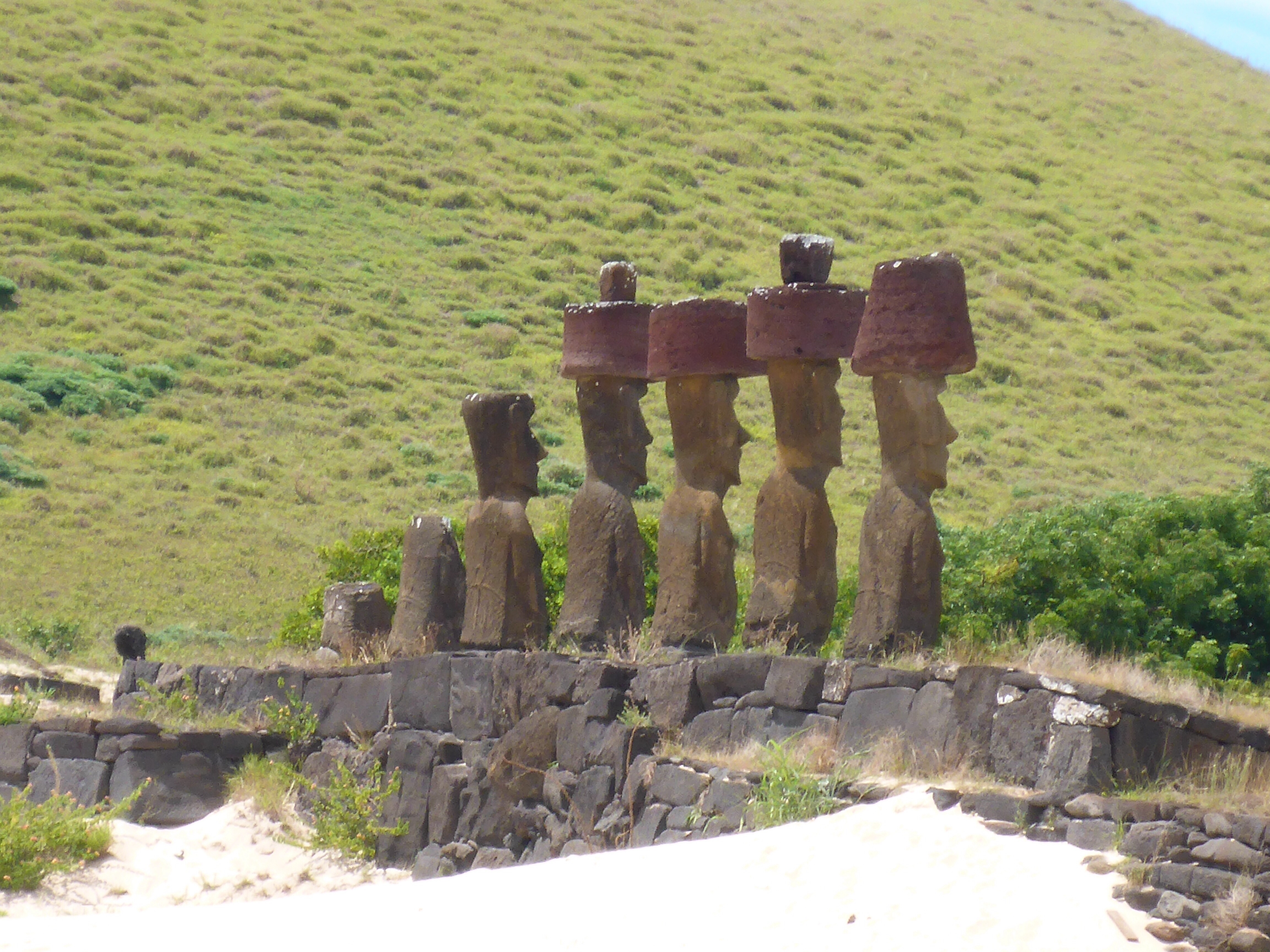
Ahu Nao-Nao with 7 moais at Anakena beach

Ahu Nao-Nao at Anakena beach, showing the pukaos's reddish colour

Ahu Nao-Nao at Anknena beach, showing the pukaos’s reddish colour
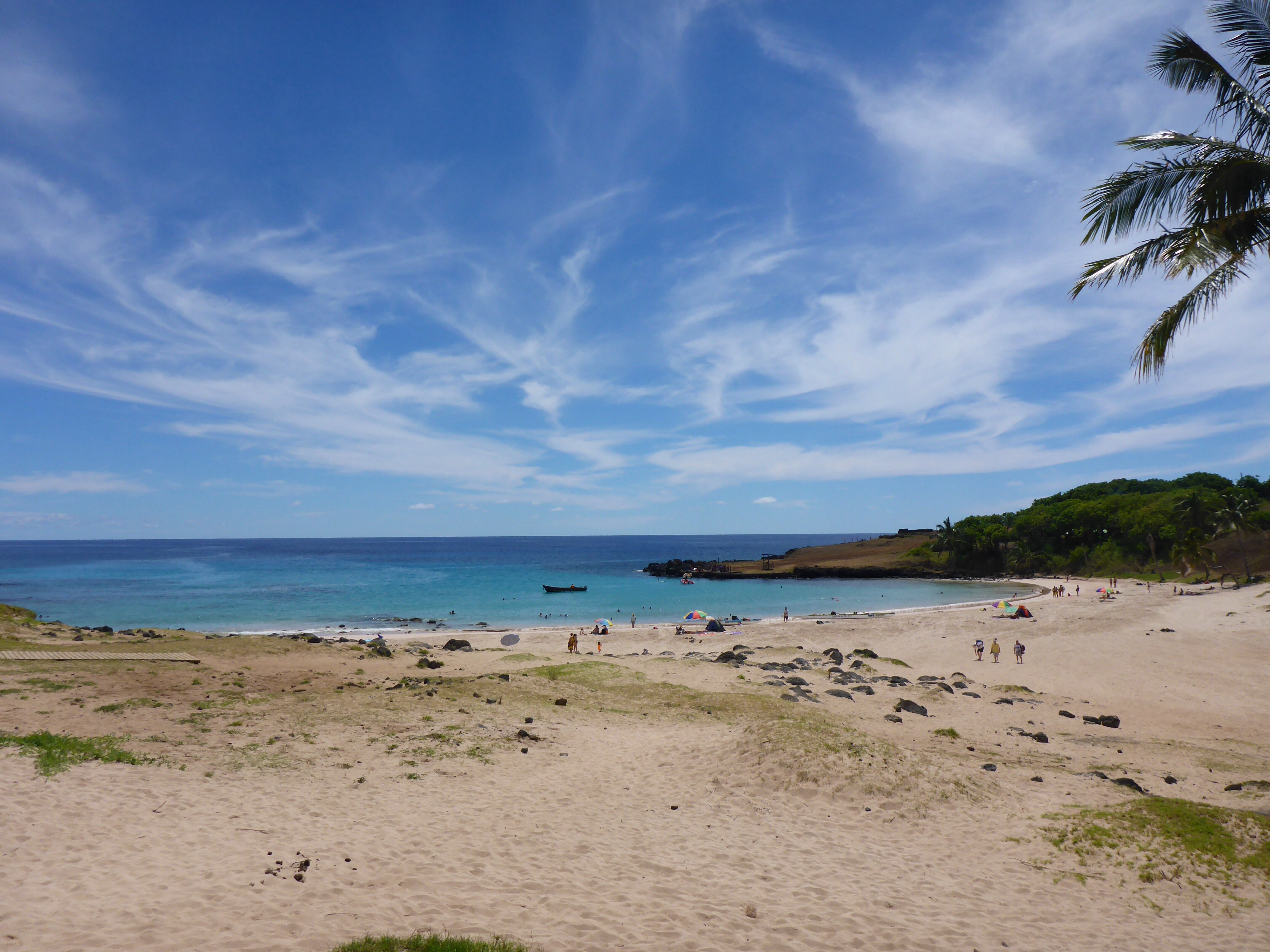
Beautiful Anakena beach

Beautiful Anakena beach

Afternoon rest then we head to Ahu Tahai for sunset before having another delicious fish dinner.
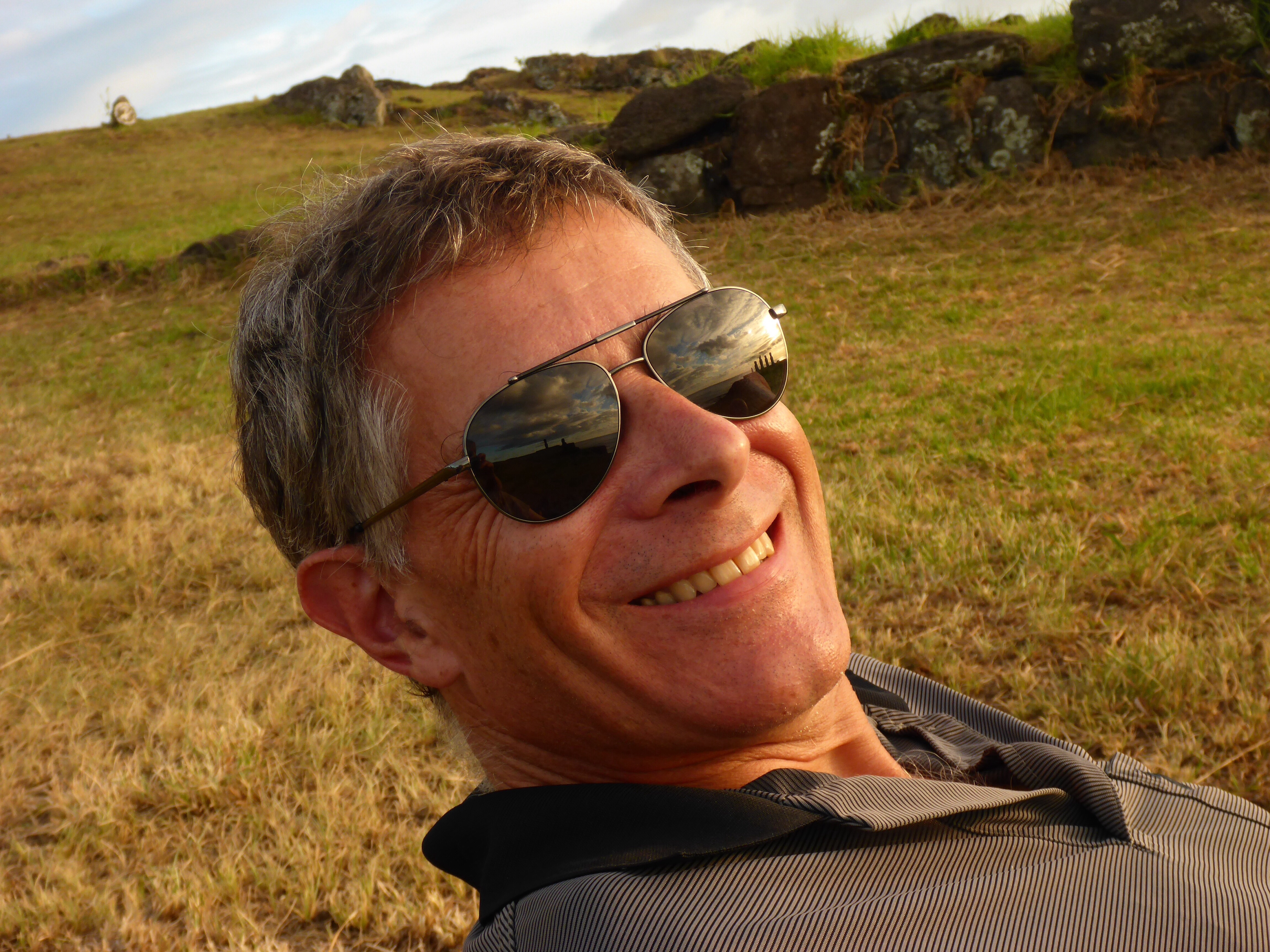
With Anthony at Ahu Tahai for the sunset
With Anthony at Ahu Tahai for the sunset

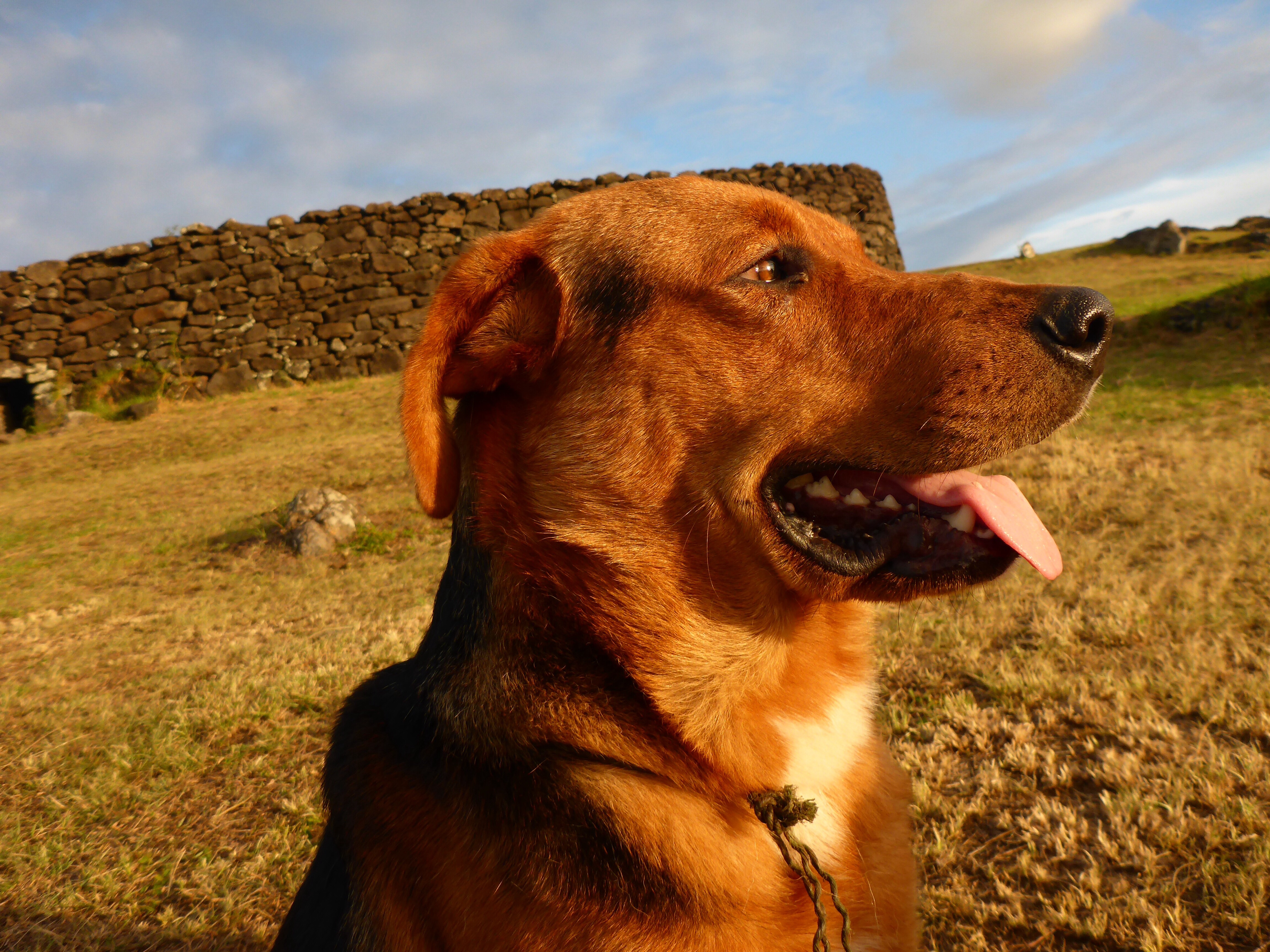
This stray dog sat beside me during the sunset at Ahu Tahai
This stray dog sat beside me during the sunset at Ahu Tahai

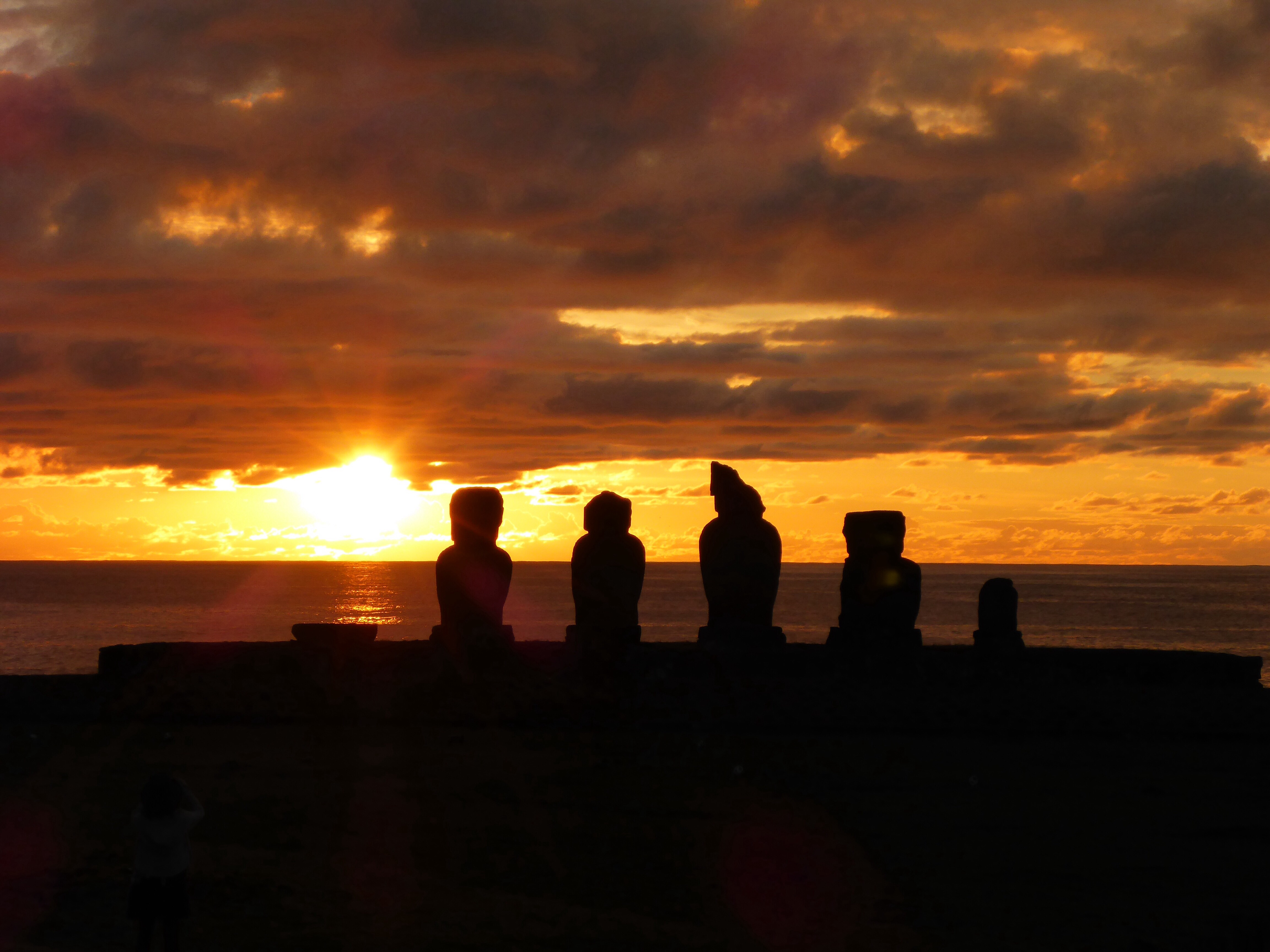
Sunset at Ahu Tahai

Sunset at Ahu Tahai

Day 5 – This morning, we are heading to Tongariki in our hire car for the sunrise. The way the colours of the sky behind ahu Tongariki and the volcano behind us change over two hours is magical.

Ahu Tongariki at sunrise

Ahu Tongariki at sunrise

Rano Raraku at sunrise

Rano Raraku at sunrise


I return Anthony to the hostal to rest his leg and head out alone for the rest of the day. I return to Rano Raraku. The lighting is different and I get to see Tukukuri moai which I missed yesterday.

Tukuturi - the kneeling and bearded moai - at Rano Raraku

Tukuturi – the kneeling and bearded moai – at Rano Raraku
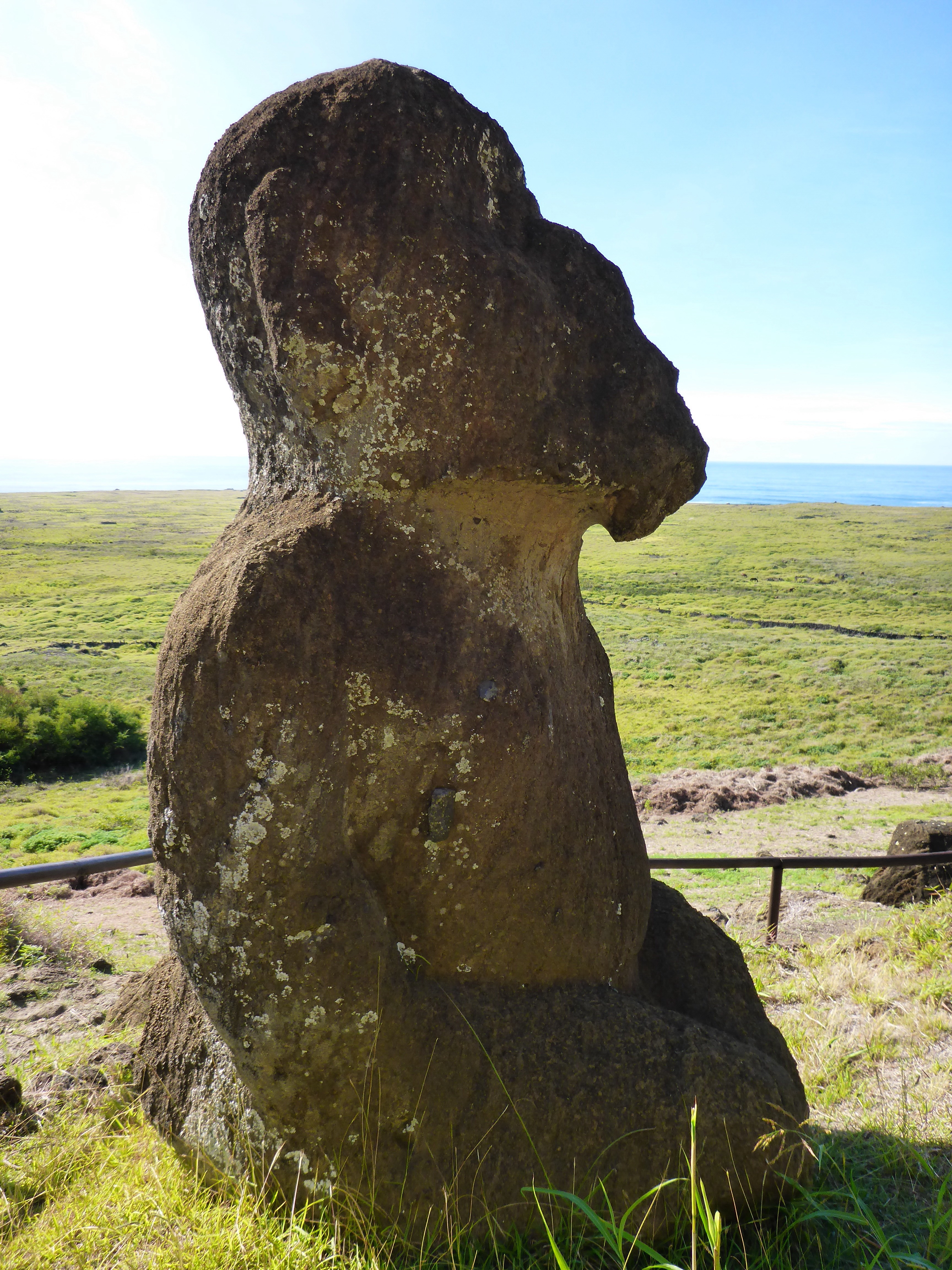
Tukuturi moai
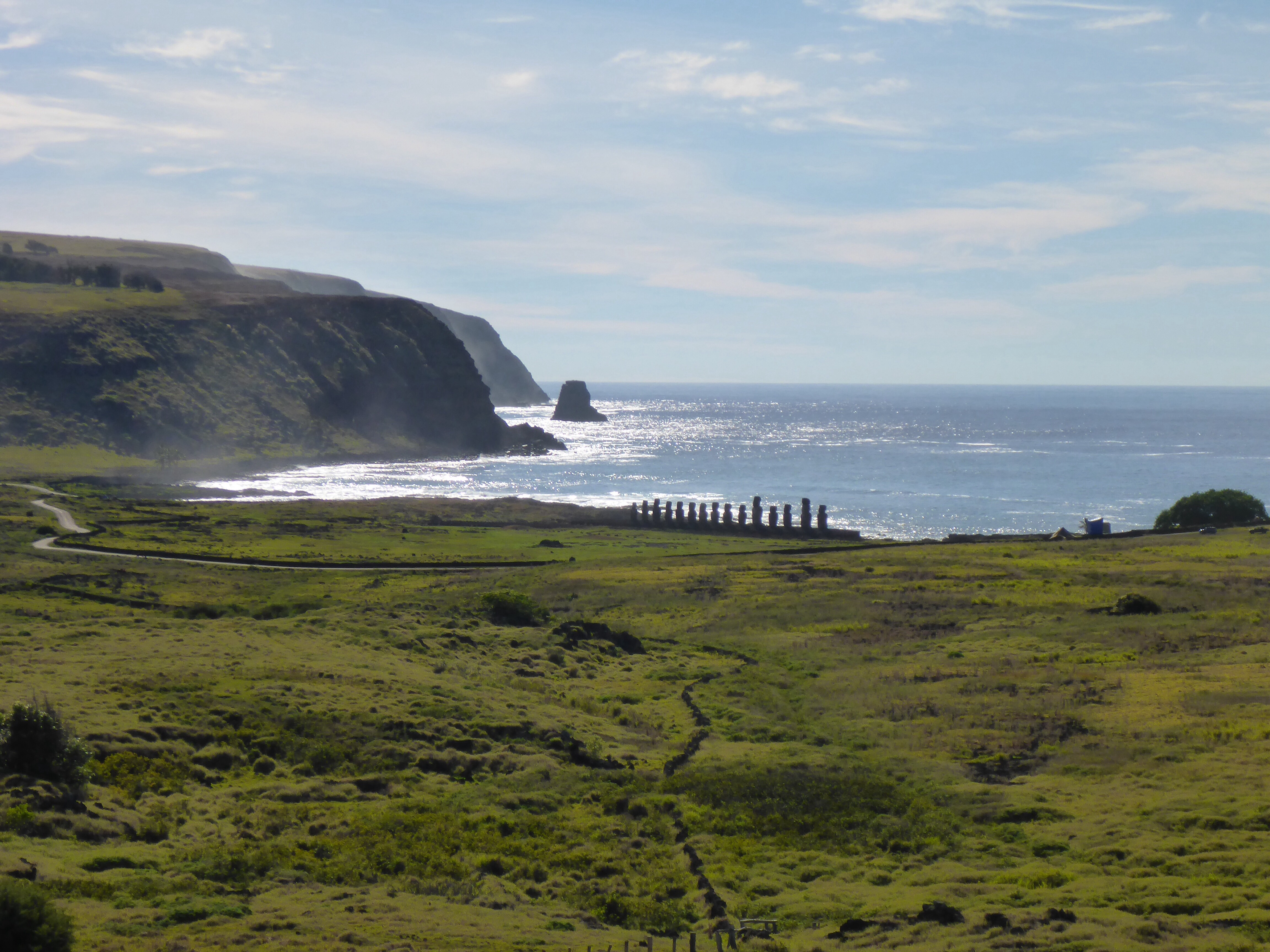
Tukuturi moai

Tongariki seen from Rano Raraku

Tongariki seen from Rano Raraku

I stopped at ahu Akahanga, one of the largest monuments on the island’s south coast, once carrying 12 or more moais. This is where I found the best preserved moai, protected from erosion because of how it fell, down from the platform. It is interesting to see how the top of the statue is perfectly shaped for the complementary shape of the pukao.
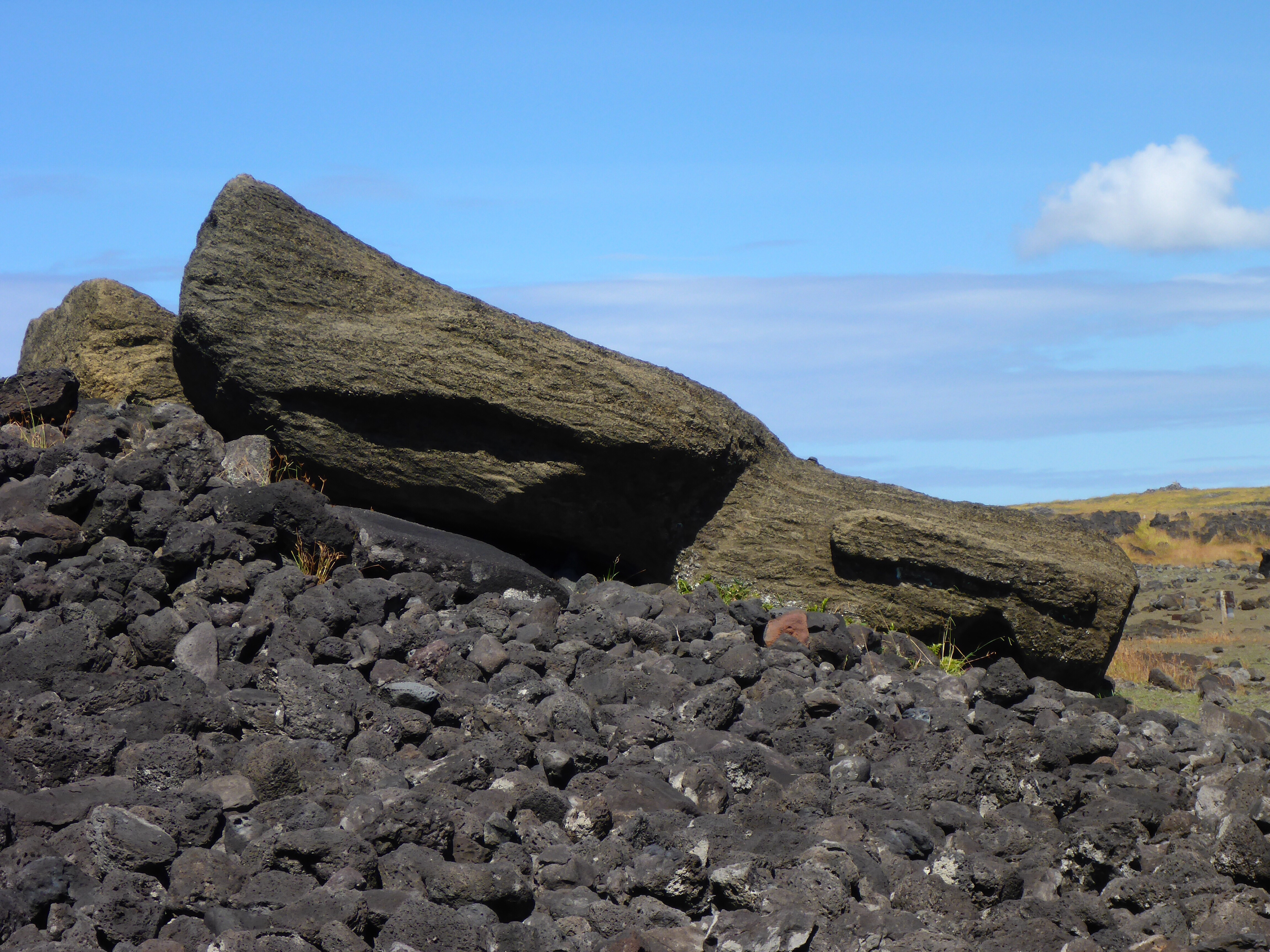
Ahu Akahanga
Ahu Akahanga

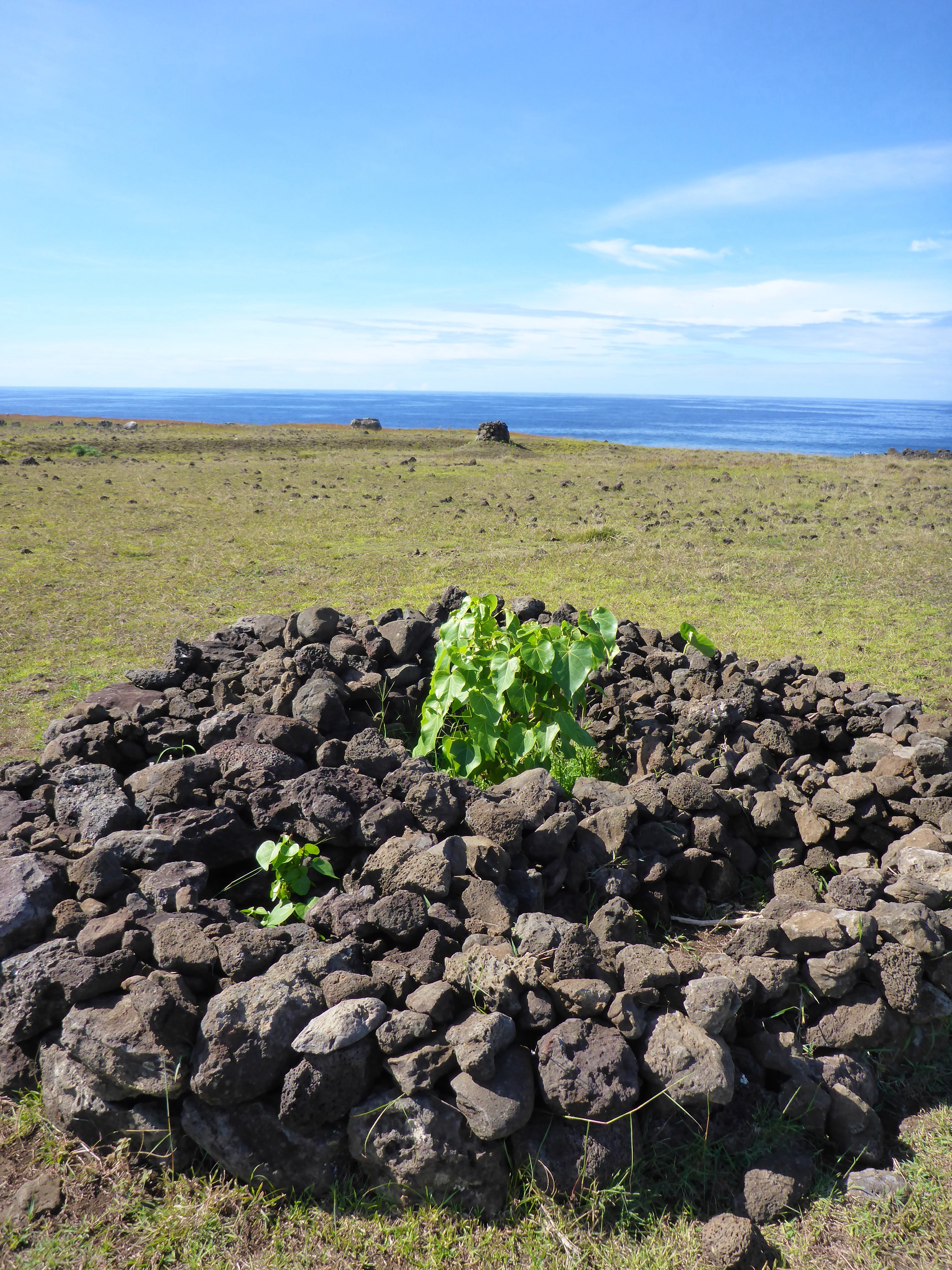
Garden bed near ahu Akahanga where plants are surrounded by lava rocks for nutrients

Garden bed near ahu Akahanga where plants are surrounded by lava rocks for nutrients

Easter Island's south coast  near Ahu Akahanga

Easter Island’s south coast near Ahu Akahanga

My next stop is Ana Te Pahu caves, like so many on the island, they were old lava tunnels where people lived. This cave is particularly long, several hundred feed and has several ‘windows’ or skylights. The caves were used as living quarters and also as gardens, the plants getting their nutrients out of the lava rocks surrounding them. I didn’t go through the part you have to crawl on your tummy as I was alone and hadn’t brought my headlamp, just my phone with torch.
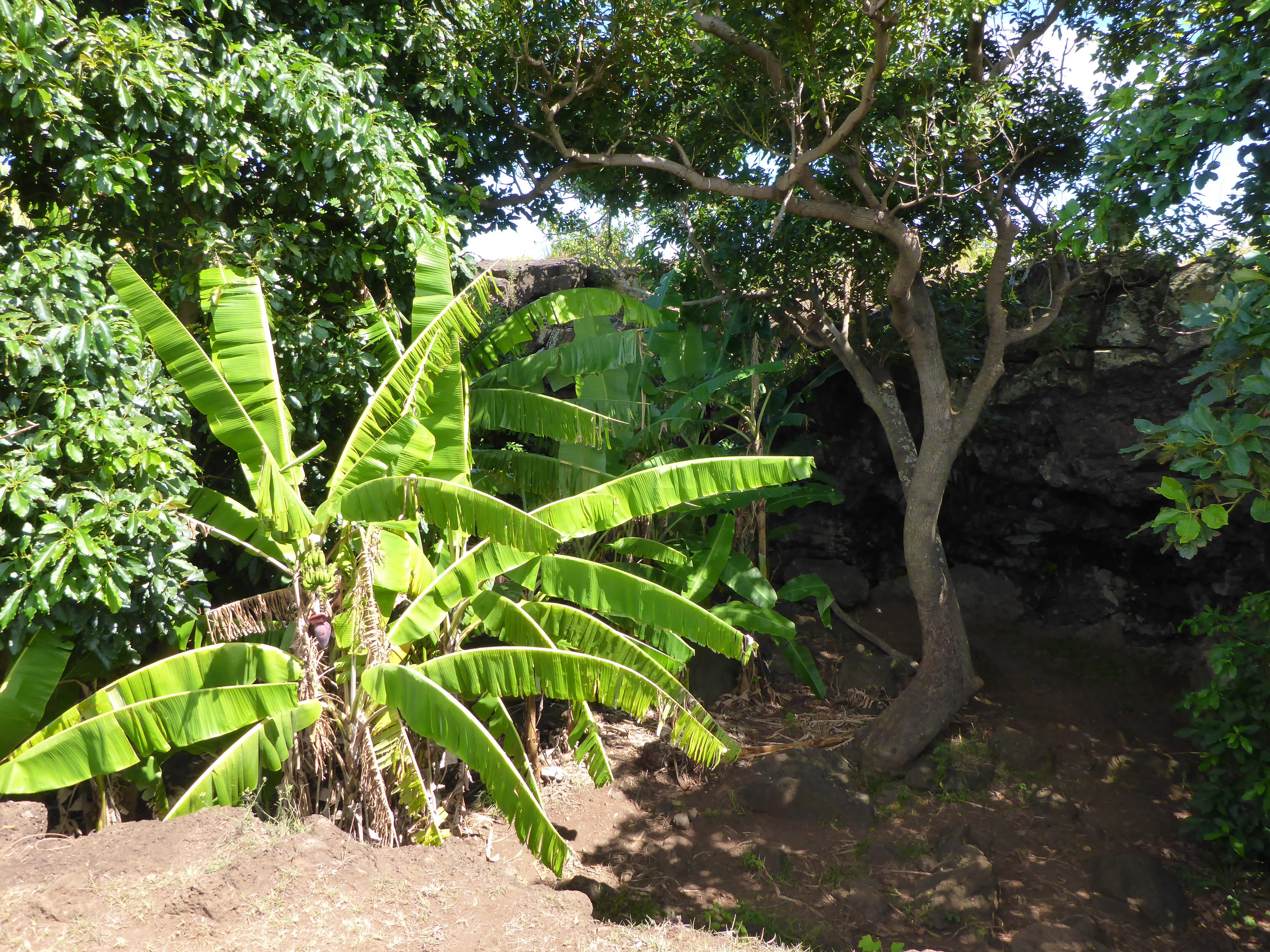
Ana Te Pahu caves

Ana Te Pahu caves

Window of the Ana Te Pahu caves

Window of the Ana Te Pahu caves


During our time on Easter Island, I have walked and walked, and stood in awe and I stopped and watched and gasped and sighed and cried. Rapa Nui was all I had ever dreamed of and more. Just a pity Anthony wasn’t able to enjoy it more.

Return to Santiago

After a leisurely breakfast on our porch, I returned the hire car, casual check of fuel gauge and am told the car has been rereturned in perfect condition. Ahh, Hertz, please note!!!

Check in at Mataveri airport is casual – no security check but a plant xray. We are returning in economy on a brand spanking new Boeing 787-9 series – another one for Anthony’s list of planes flown. At one point in the flight, the captain suddenly does a ‘Gary Larson’ (attention ladies and gentlemen, this is your captain speaking…) tilt left and right for everyone to see Robinson Crusoe island. Fabulous views. Thank you captain!!
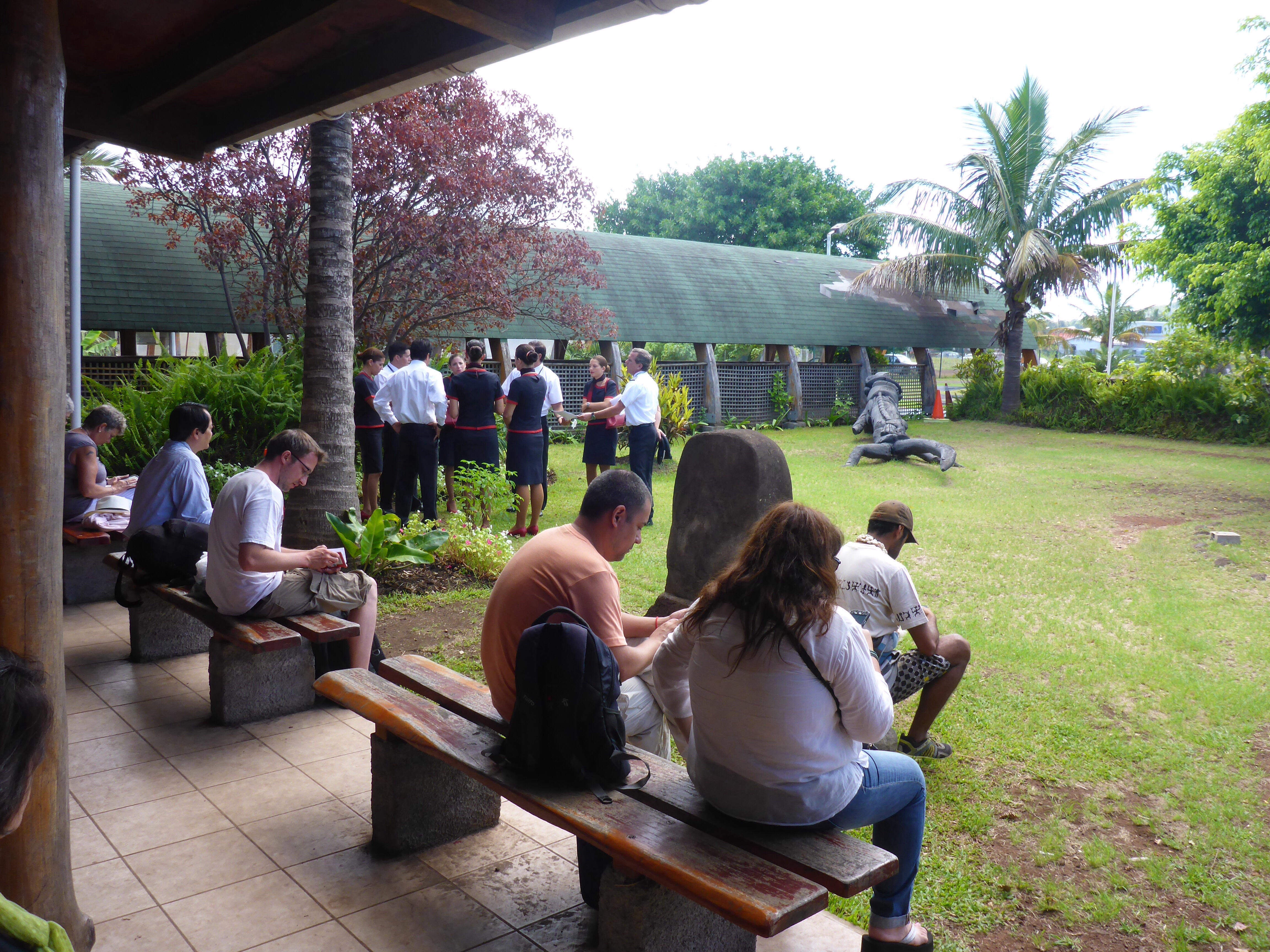
Mataveri airport at Easter Island and our flight crew having a meeting in the garden

Mataveri airport at Easter Island and our flight crew having a meeting in the garden

We saw hisbiscus flowers everywhere - here is the last one, at the airport

We saw hisbiscus flowers everywhere – here is the last one, at the airport

Robinson Crusoe island

Robinson Crusoe island


Thank you Rapa Nui – it was a dream come true to spend 5 days there – a trip I will never forget and makes me want to read much much more on Rapa Nui the people, the culture and the country.

– Anne

Off to Rapa Nui

I hardly slept last night – never do before a big trip, because although I love travelling and discovering new places, getting there by plane still scares me, or it could because I am excited at finally going to Easter Island! We leave our hotel at 6am for the airport and are checked in by 6.30. Anthony cleverly thought of calling Lan Chile and asking them for a wheelchair, not knowing how far we were going to have to walk at the airport.

When I booked the first available flight to Easter Island, I only got a price, no choice of class. It was a little more than the return flight but I put it down to demand. It turns out we are travelling business premium!!!! I think we are the first to check in and we have a choice of seats – perfect, I have a window seat and Anthony is seated next to me. This is great news. Originally we were seated on opposite sides of the plane.

Anthony at Santiago airport

Anthony at Santiago airport


That is not all: we are travelling on our first ever Dreamliner, business class. (At least this particular plane is the first in LAN’s fleet so has been flying for a while, but I find the idea of being in a composite material tube unnerving…) I don’t just have a window, I have 4!!! With personal window glare dimmer control! Lovely crisp white doona/quilts and all the luxuries of business class travel at a level we haven’t experienced before as this is such a new and modern plane. I think we are back in that artificial bubble….

My four windows, dimmed for my comfort

My four windows, dimmed for my comfort

We both make the most of our 5 1/2 hour flight to catch up on our blog writing and watch a couple of Modern Family episodes. They make me laugh out loud and keep my mind busy…

So where exactly are we headed? Easter Island, declared a UNESCO heritage site in 1995, is one of the most remote islands in the world – the nearest inhabited island with 50 inhabitants is Pitcairn Island over 2000kms away. Polysians first inhabited Easter Island in the first millenium but due to introduced Polynesian rat infestation and poor land resource management which led to deforestation and over-population, by the time the first Europeans arrived in 1722, there were 2000 to 3000 inhabitants, down from an original estimated 15,000 a century earlier. Then due to European sailors’ diseases and Peru’s slave raids and delibrately introduced diseases, population here was down to a mere 111 by 1860. Easter Island is known for its moais – enormous stone statues, mostly with their back to the ocean, scattered across the island. There are many myths and theories abound as to how the first inhabitants arrived and how they erected these statues. The moais, representing deitified ancestors, hold mana (power) that protects the island. There were no external dangers they thought which they had to protect against, but they needed strength and power to protect the island itself and its inhabitants and bring prosperity and health, hence the moais faced inland, their backs to the ocean. As the island became over-populated and deforested, warriors forced the end of the Ancestor Cult, where ancestors were revered and held the mana, and the Birdman Cult was created (an annual competition of chiefs of different tribes or their representatives based on physical strength, the winner being the first one to return from a 5km swim and climb back up the cliffs with an unbroken manutara (sooty tern) egg and awarded ‘birdman’ status for one year). The last Birdman competition was held in 1867.

Apparently in 1722, Europeans noticed standing statues but by 1838 most had been toppled during internal power clashes. Now, due to the Rapa Nui’s own near extermination and lack of written history (they did have their own hieroglyphs but it has never been deciphered), we are left to speculate on the origins and meanings behind much of Rapa Nui. Various carbon datings have dispelled previous estimates as to when Rapa Nui was first settled by Polynesians. There are still many mysteries, unanswered questions and differing theories. This is what makes this place so fascinating. But how tragic that a civilisation just about wiped itself out due to poor resource management out and its culture nearly lost, with expeditioners and missionairies taking its final breath away… This should be reminder to us all of what can happen if we do not take care of our planet and each other… This my crude abbreviation of a fascinating history – you may wish to check out good old wikipedia for a clearer overview at http://en.m.wikipedia.org/wiki/Easter_Island, and of course there are many books.

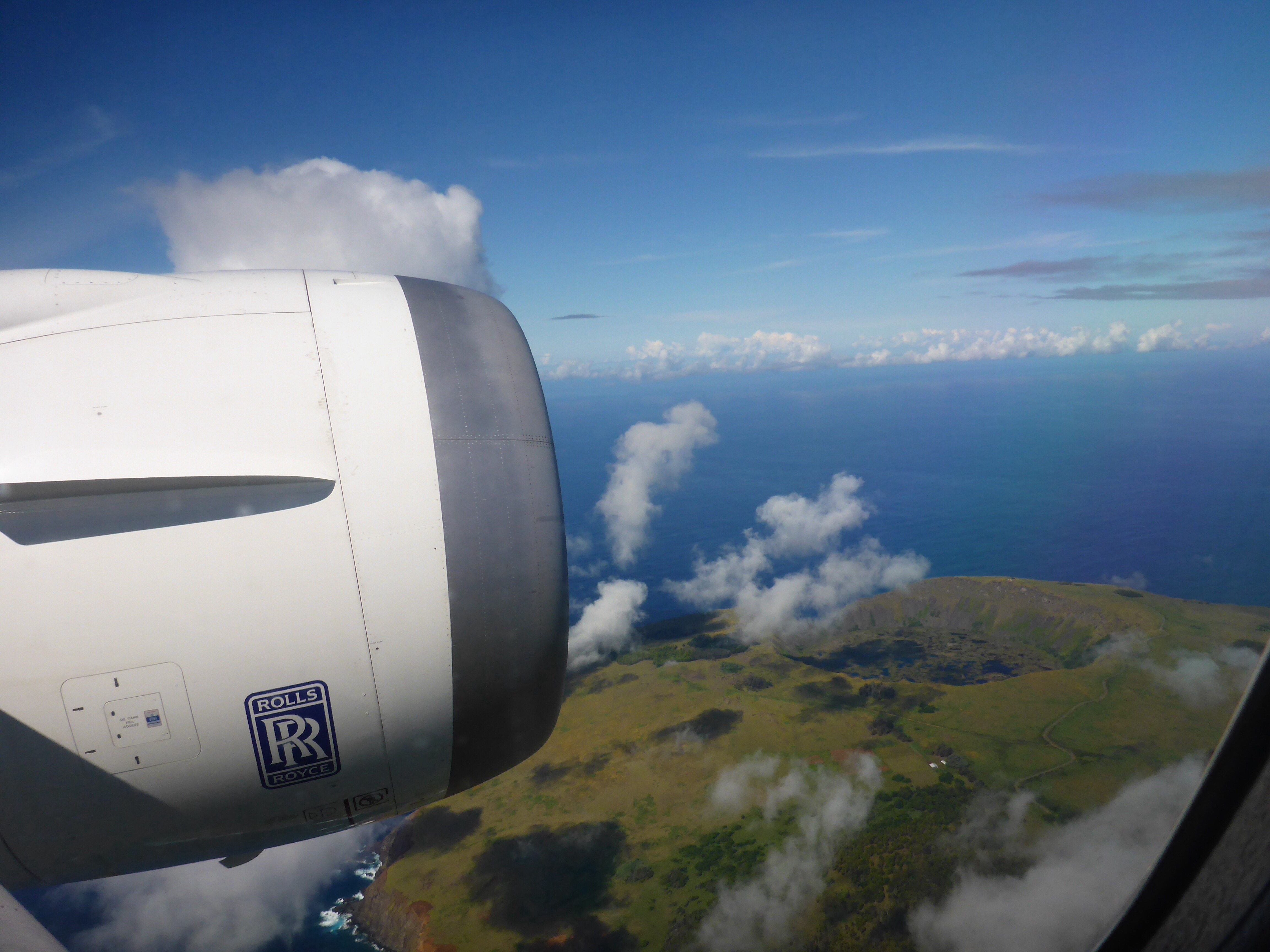
We are 30′ out of Hanga Roa and the captain announces we are about to commence our descent. I am getting excited. Not long now. We are on the left hand side of the plane and we have no idea if we will get any areal view of Easter Island. Suddenly I get my first glimpse of the island – fantastic. Then, what? We are above the runway. As if to give all passengers a view of both sides of the island, we fly right over the airport, which gives me a view of Orongo crater, then do a right then massive left hand turn, giving me now a full view of the entire island. We need the whole length of the runway, which is also the whole width of the island at that point, then turn back on ourselves to get to the terminal. I spot Anthony’s wheelchair being brought over!!

Rano Kau volcano, SW of Easter Island

Rano Kau volcano, SW of Easter Island

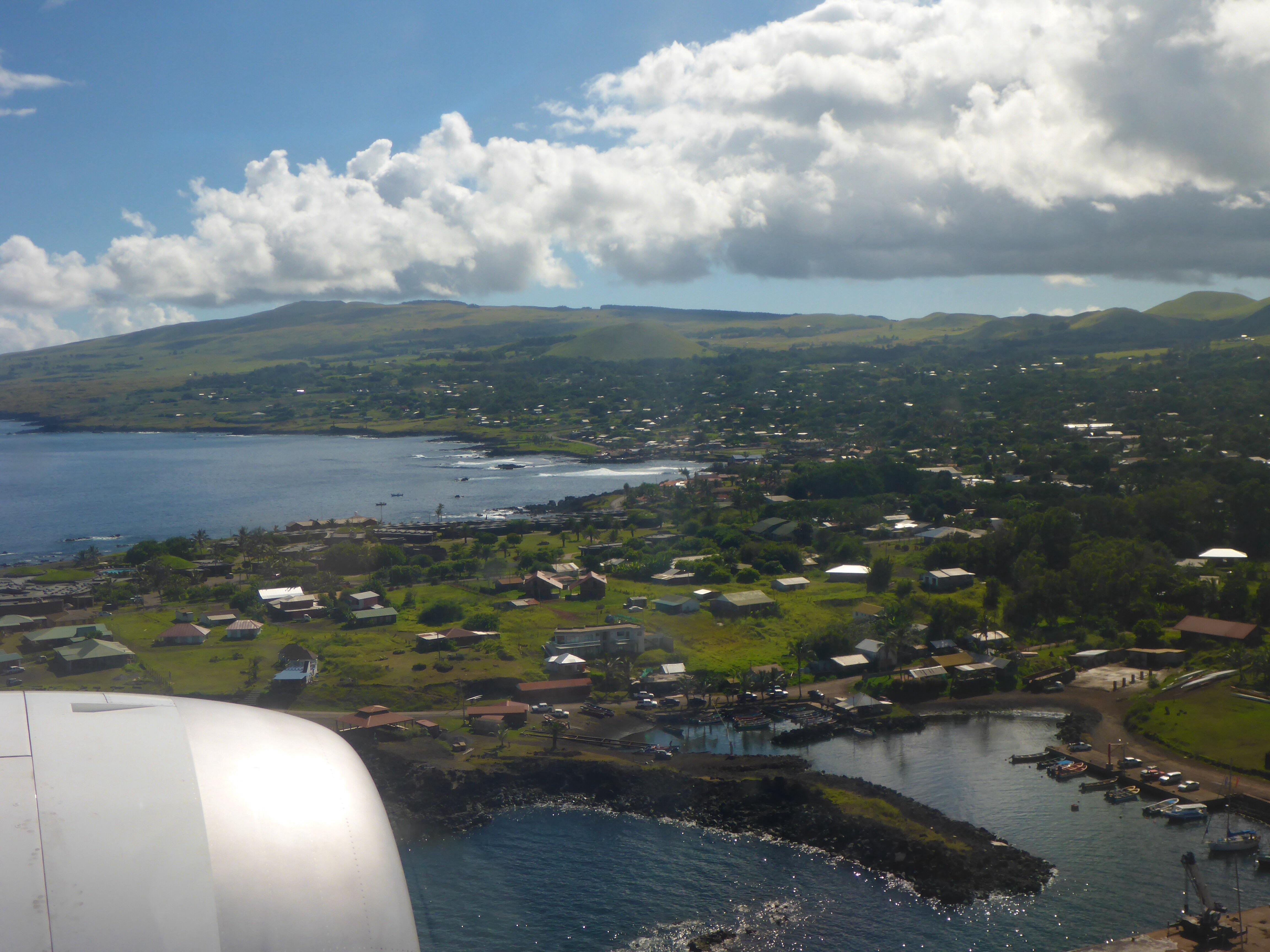
Hanga Roa, the only town on Easter Island

Hanga Roa, the only town on Easter Island

Anthony being wheeled at Mataveri airport

Anthony being wheeled at Mataveri airport

I am the first one off the plane with Anthony slowly following behind. There are many steps down for anyone with such a sore ankle as Anthony. It instantly feels and smells like home: the sea air, the hot humid weather. We need to buy our National Park entrance fees at the airport and the wheelchair attendant takes to the front of the queue (a small benefit to being handicapped) and the ranger refuses to sell Anthony a ticket: just one ticket for the 2 of us with a special note handwritten on the back for the park officials to allow Anthony through. As we get into the terminal, the sweet scent of tropical flowers instantly remind us both of Tahiti. Locals are welcomed by various members of their familes and friends with multiple leis (garland of fresh flowers placed around the visitor or returning traveller’s neck as a welcome). It is such a lovely custom. The love and happiness on their faces is heartwarming.

We wait a while for our checked bag and eventually head outside where we find China, our hostel owner, with our name on a board. She welcomes us with a lei each. I do love this custom!! China was born here, from a Rapa Nui father and Chilean mother. Rapa Nui is the name of the island, the name of its people and the name of its culture.

We hop into her people mover and get a mini private tour as we drive through tiny Hanga Roa centre, the only town on Rapa Nui, to our home for the next 5 nights, China waiving to various friends on the way. What strikes me is how neat and clean Hanga Roa is, the streets tarred or paved and there is not a spec of rubbish. It is green and lush, flowering bushes everywhere and people waiving to each other everywhere. You immediately feel a sense of pride in the place. It is good to be with a local who can point out which statues are modern or replicas or restored. We are on the northern edge of town, just past the cemetry, a 10′ walk to just about anywhere in town. The Sunset Hostal has 2 double cabañas. We are the only guests at the moment which is great.

Our cabin on the left

Our cabin on the left


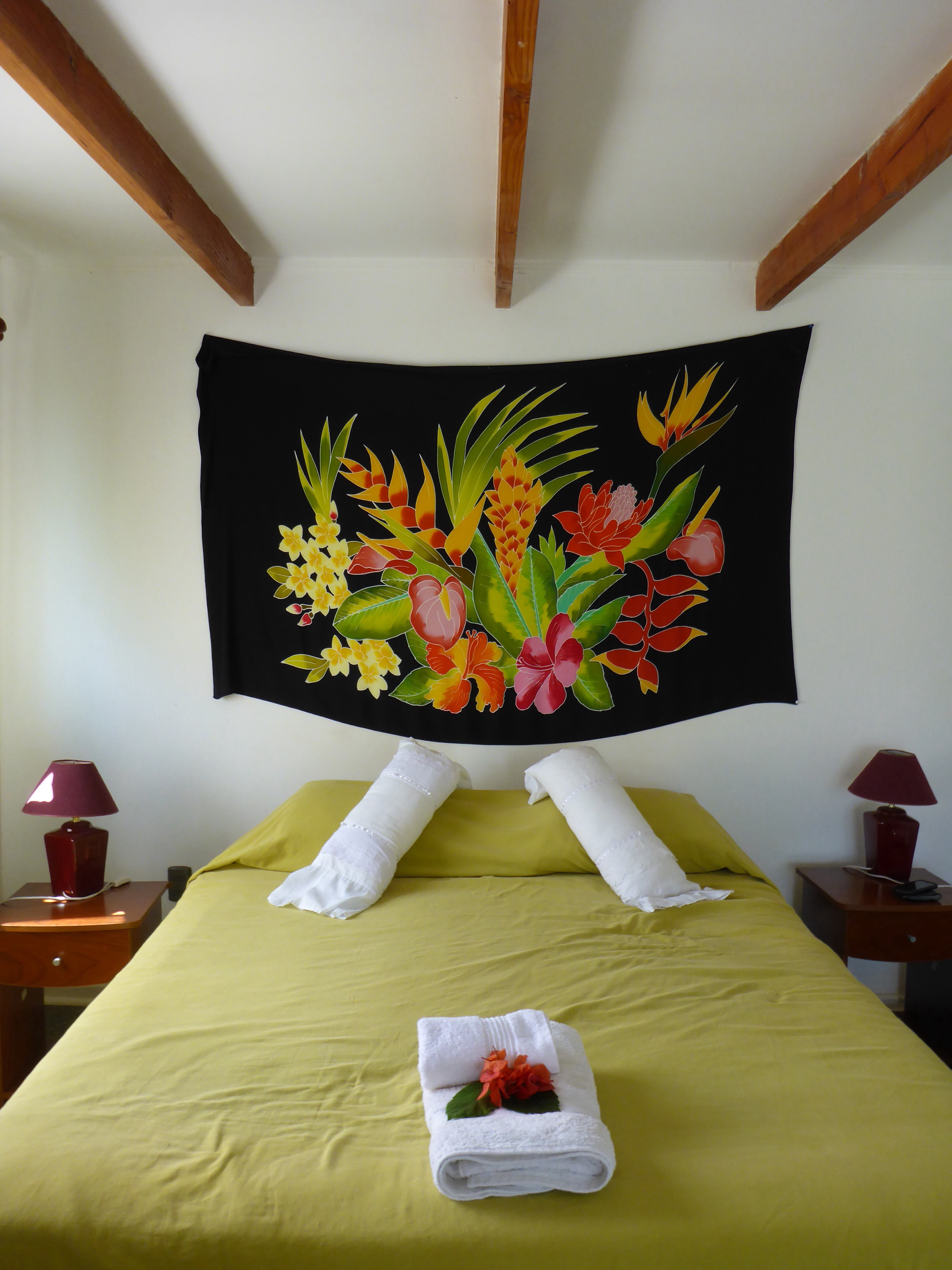
Our room at Sunset Cabañas at Habga Roa

Our room at Sunset Cabañas at Habga Roa


China lets us settle down before coming back with a local map and explaining what local tours are on offer and warning us of the dog problem on the island: there are stray dogs everywhere but they are friendly especially towards tourists who often feed them. China has 4 friendly dogs but they are very territorial so we must not let a stray dog follow us home or an almighty dog fight will erupt.

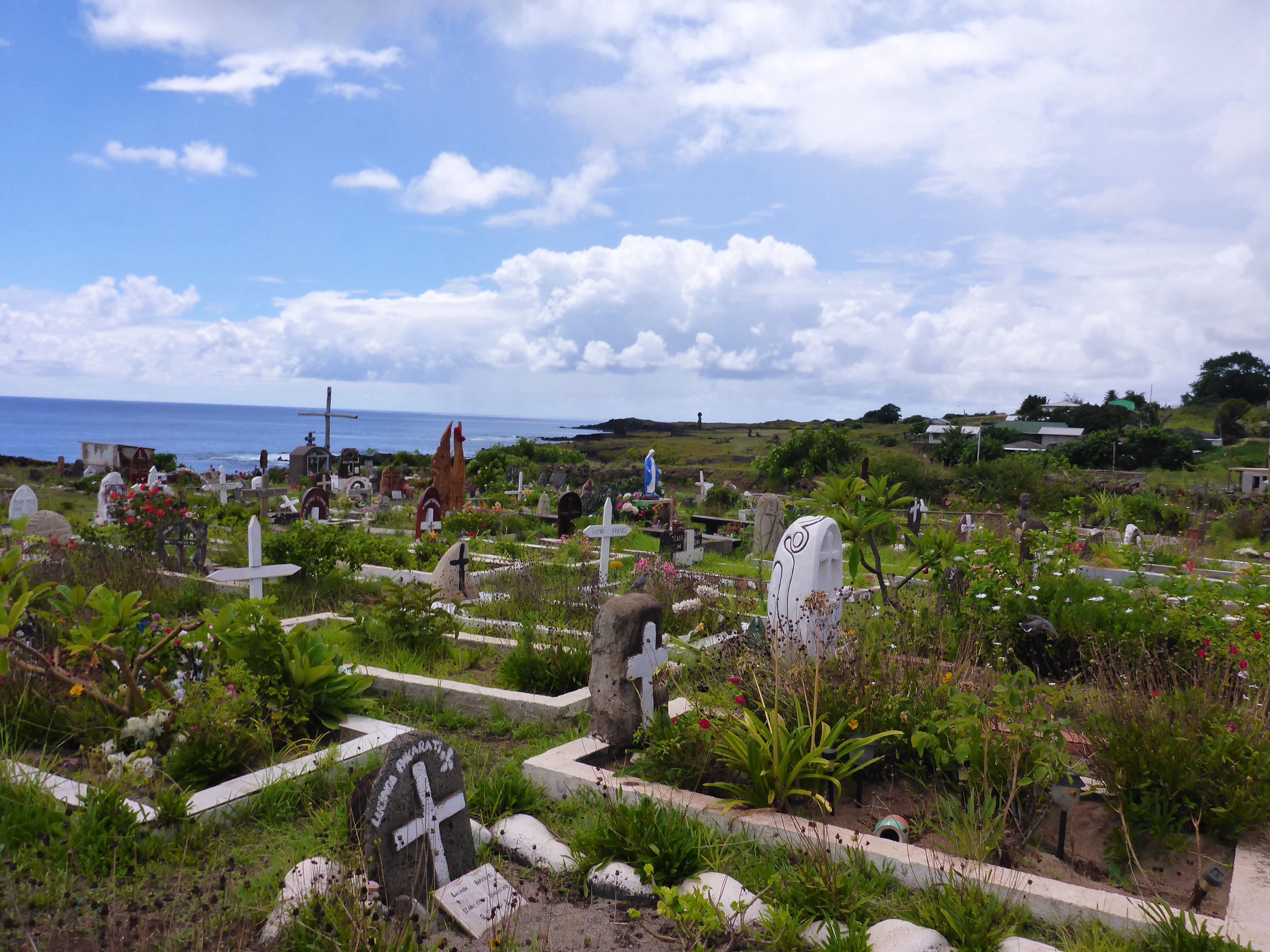
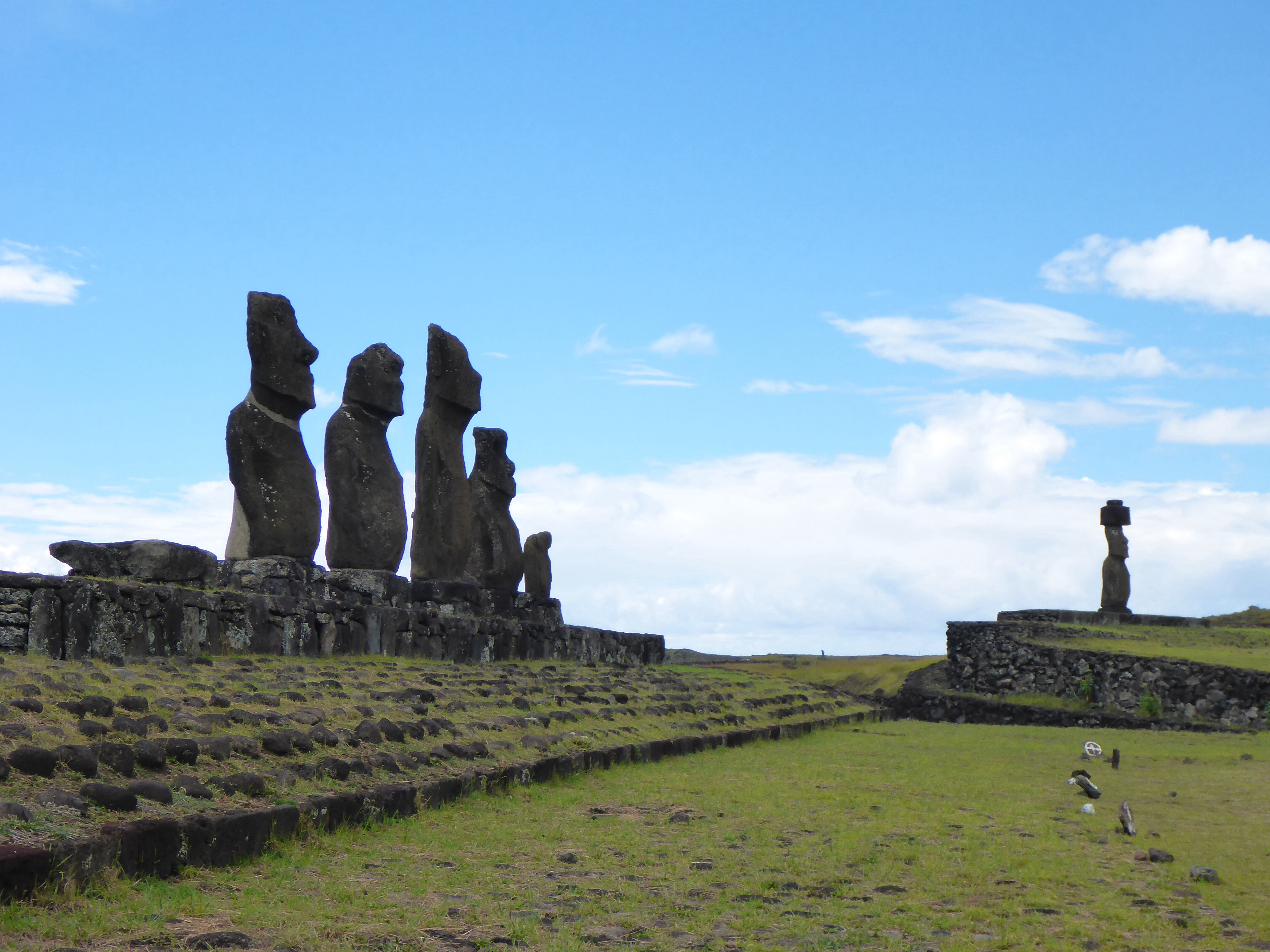
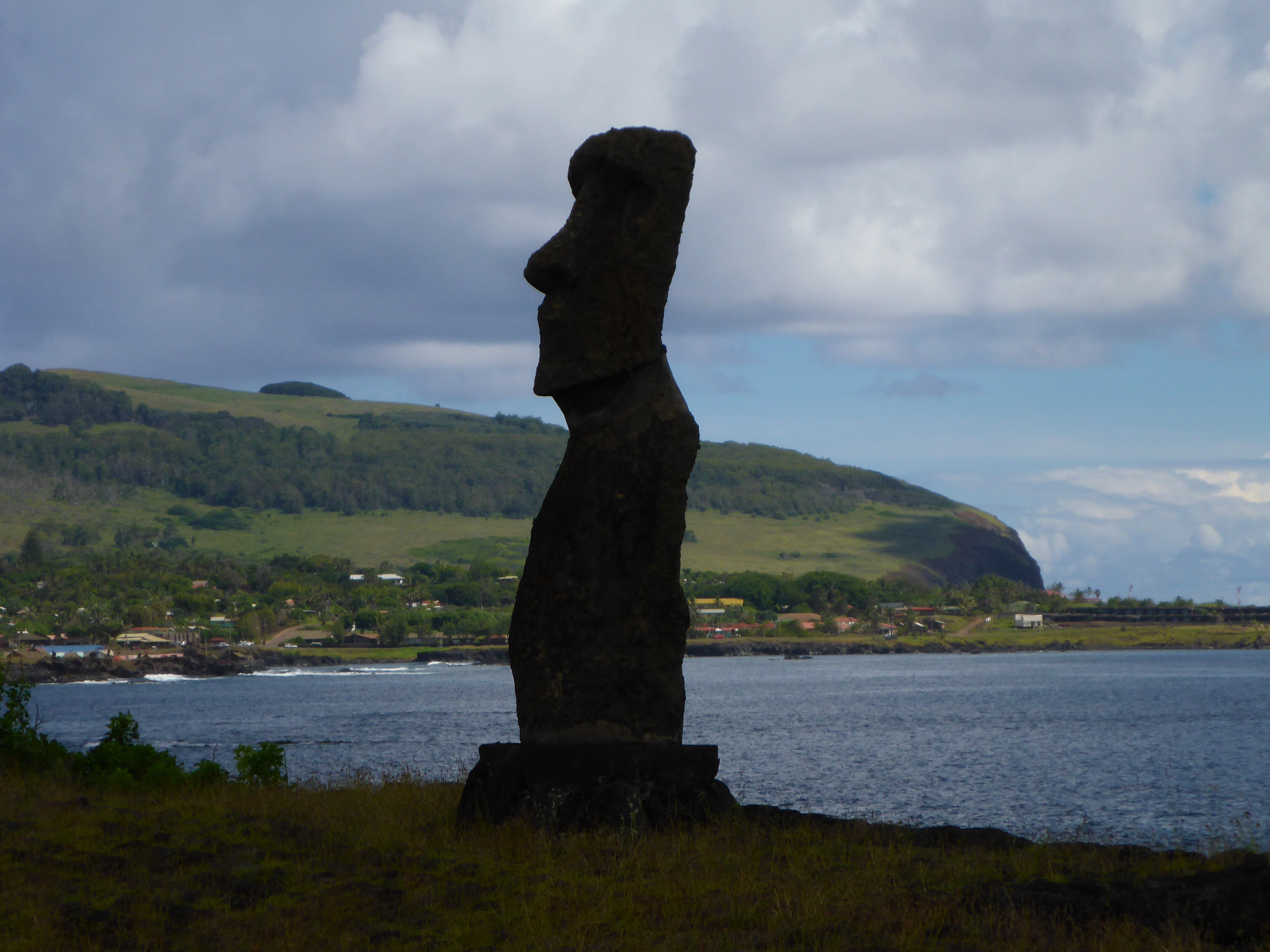
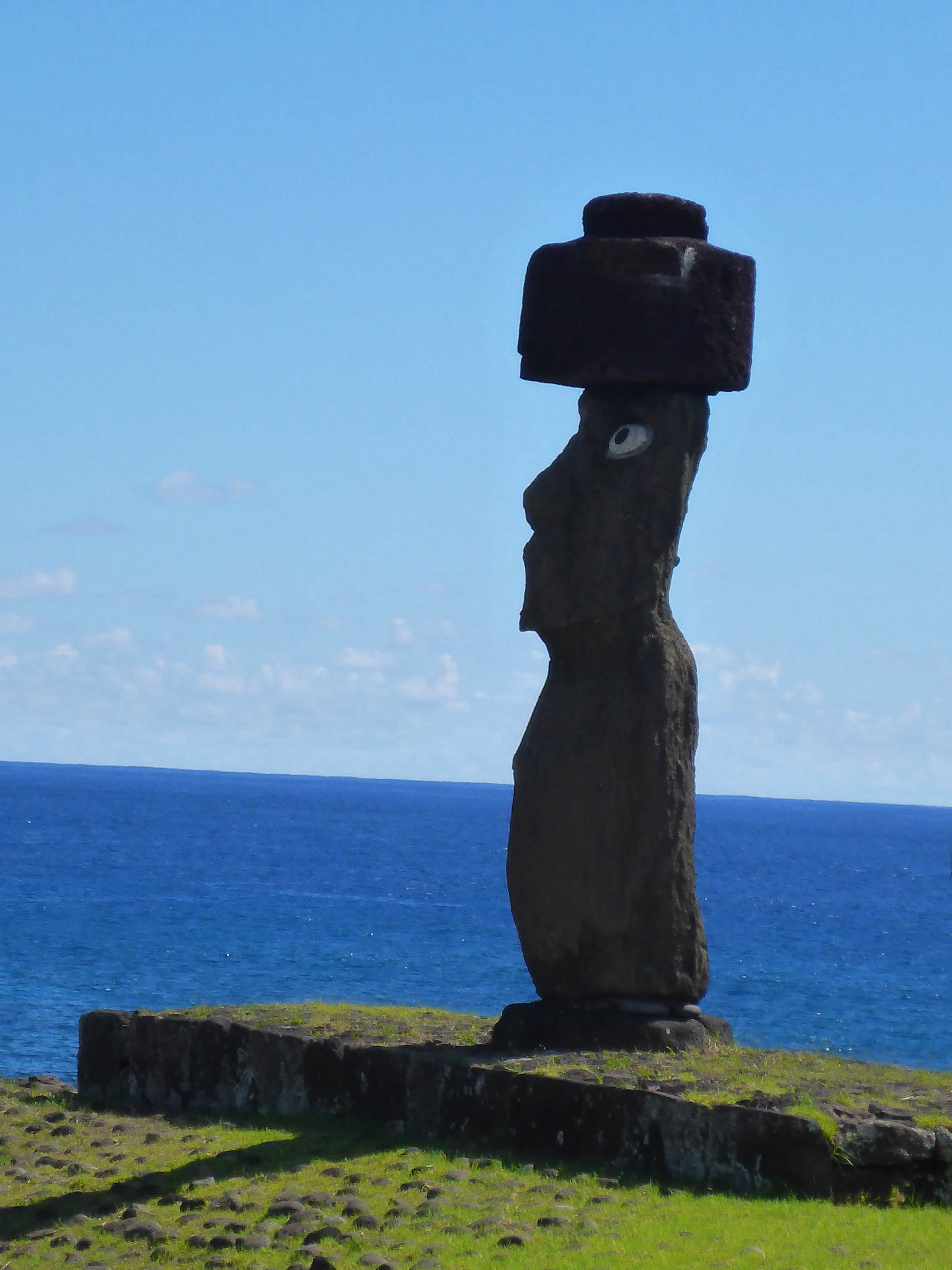
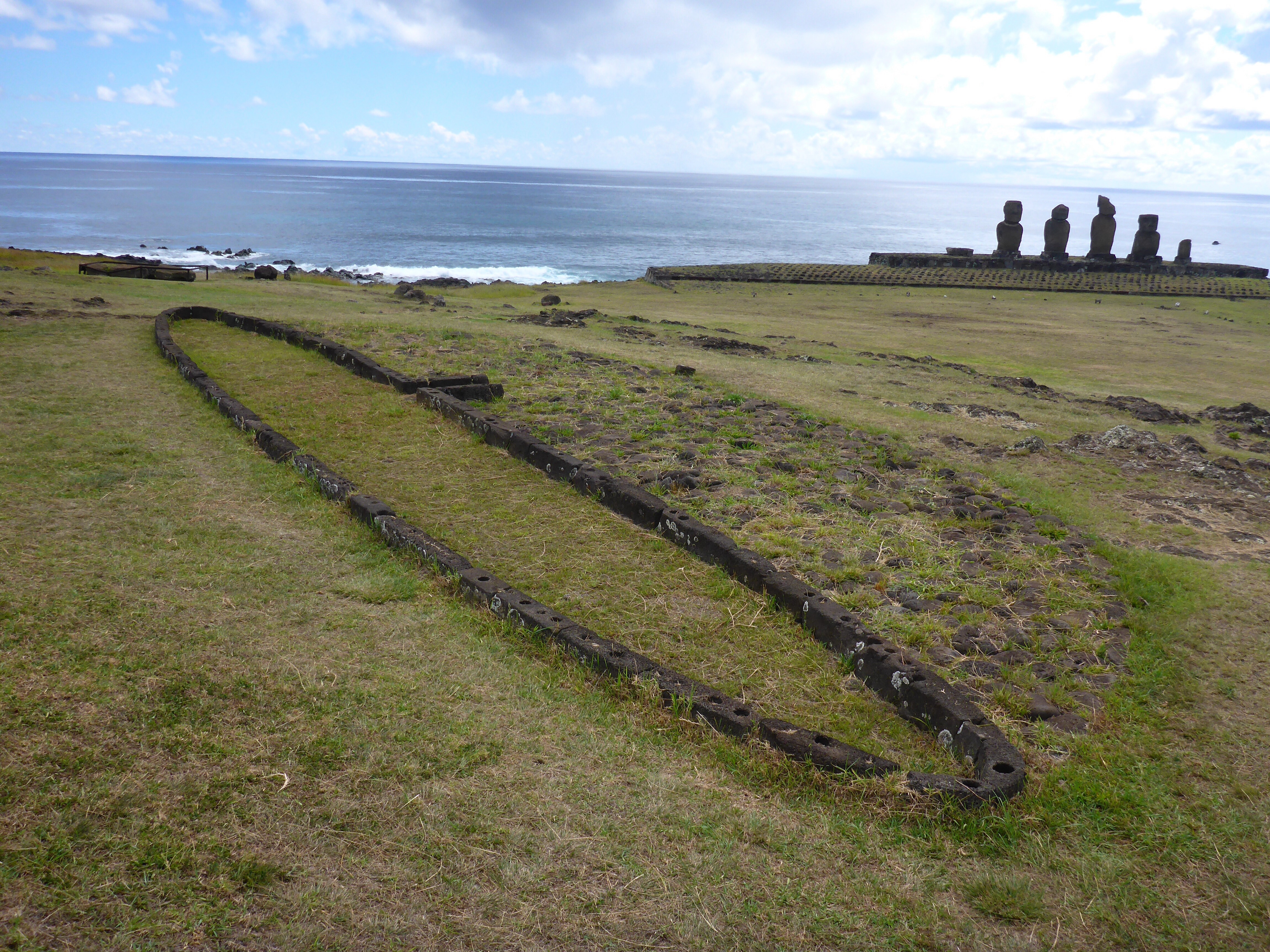
While Anthony rests with an ice pack on his ankle, I set off exploring for the next two and a half hours. First stop is the most beautiful cemetery, across the road from our hostal. The stone and wood carvings and offerings left at each tombstone are exquisite. Somehow, this cemetery feels alive, not forgotten like so many. I then walk over to Tahai, an ahu (platform or ceremonial shrine) with 7 moai (stone statues). My first up close ‘contact’ with a moai!!! Like most on the island, they face inland, their role being to protect the Rapa Nui People. Tahai has an original ahu with 5 moais remaining and a couple of single separate moais but the buildings have been reconscructed for us visitors for educational purposes. Those moais have an incredible presence. I continue along the coast for another hour. There is no one apart from several wild horses gently grazing and one local fisherman who pops out of the rocks I am standing beside as I looked out to sea, up from the beach below me. We have a quick ‘chat’ and each continue on our way. The tropical heavens open briefly, I get drenched, I am in paradise. After the rain, the lighting is stunning.

Hanga Roa cemetery

Hanga Roa cemetery


Ahu Tahai, Hanga Roa

Ahu Tahai, Hanga Roa

Tahai moai

Tahai moai


Tahai

Tahai


Vai Uri Moai (the eyes are not original)

Vai Uri Moai (the eyes are not original)


Ahu Tahai with a house foundation in the foreground

Ahu Tahai with a house foundation in the foreground


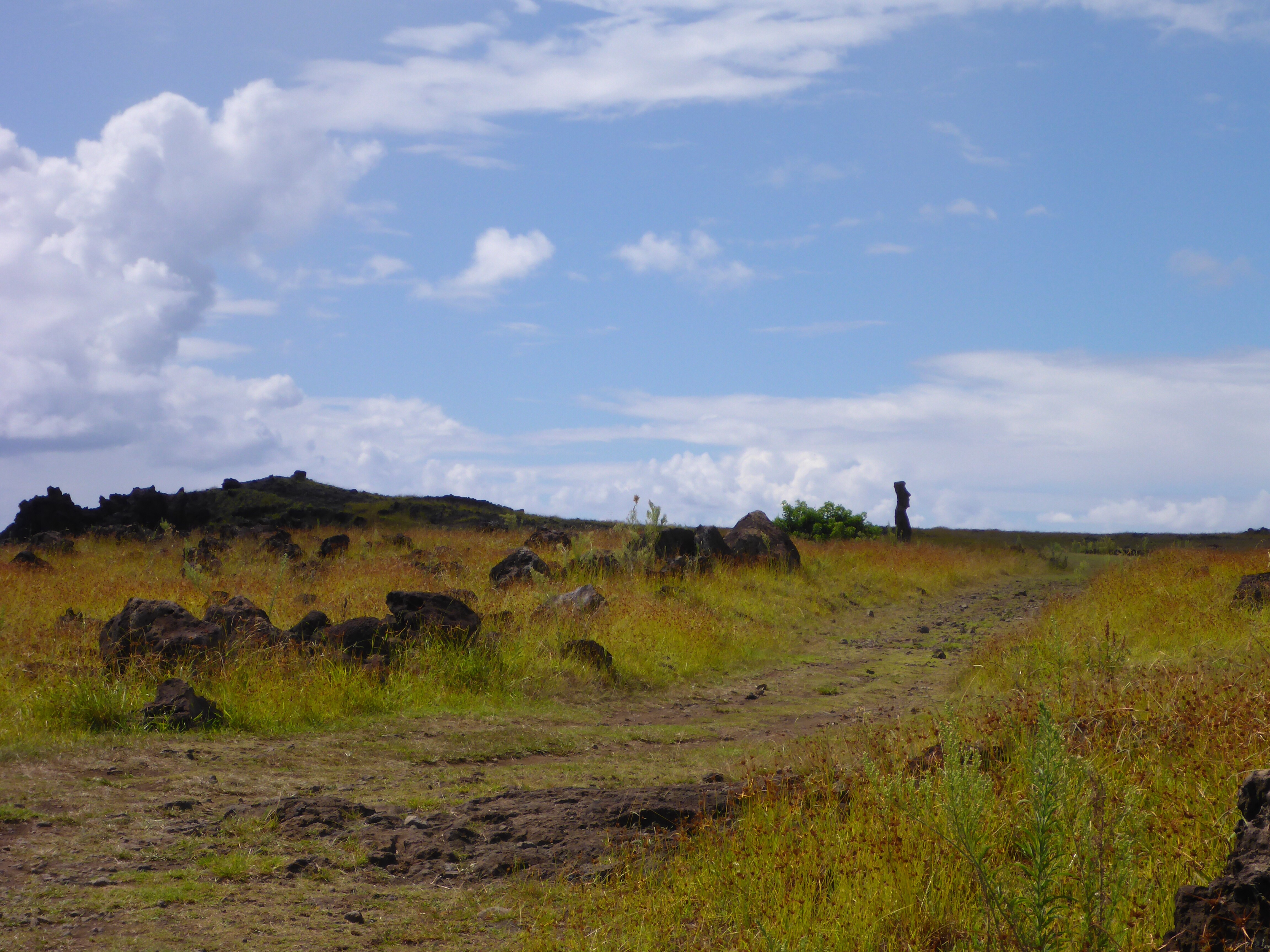
Walking towards Te Ihu O Motu Pare

Walking towards Te Ihu O Motu Pare

Before returning to our cabin, I check out a few restaurants close to us for dinner which Anthony could walk to.

Outside my selected restaurant, we bump into Mary from Minneapolis who was behind us at the Airport in Santiago. We chat, find out that her host has given her all sorts of incorrect information (the weekly dance show she wanted to go to next to the restaurant isn’t on this evening but tomorrow and the sculptures behind us are not original but replicas – a good reminder for anyone coming here to do some research to find a knowledgeable guide!). We invite her to join us for dinner as she is on her own. We have a great view, one level up, across the sculpture park to the ocean. As the sun sets, we hear lots of barking dogs: about 6 dogs are chasing 2 horses, the dogs are running around frantically while the horses slowly move away. Eventually, the dogs lose interest. The sunset is stunning.

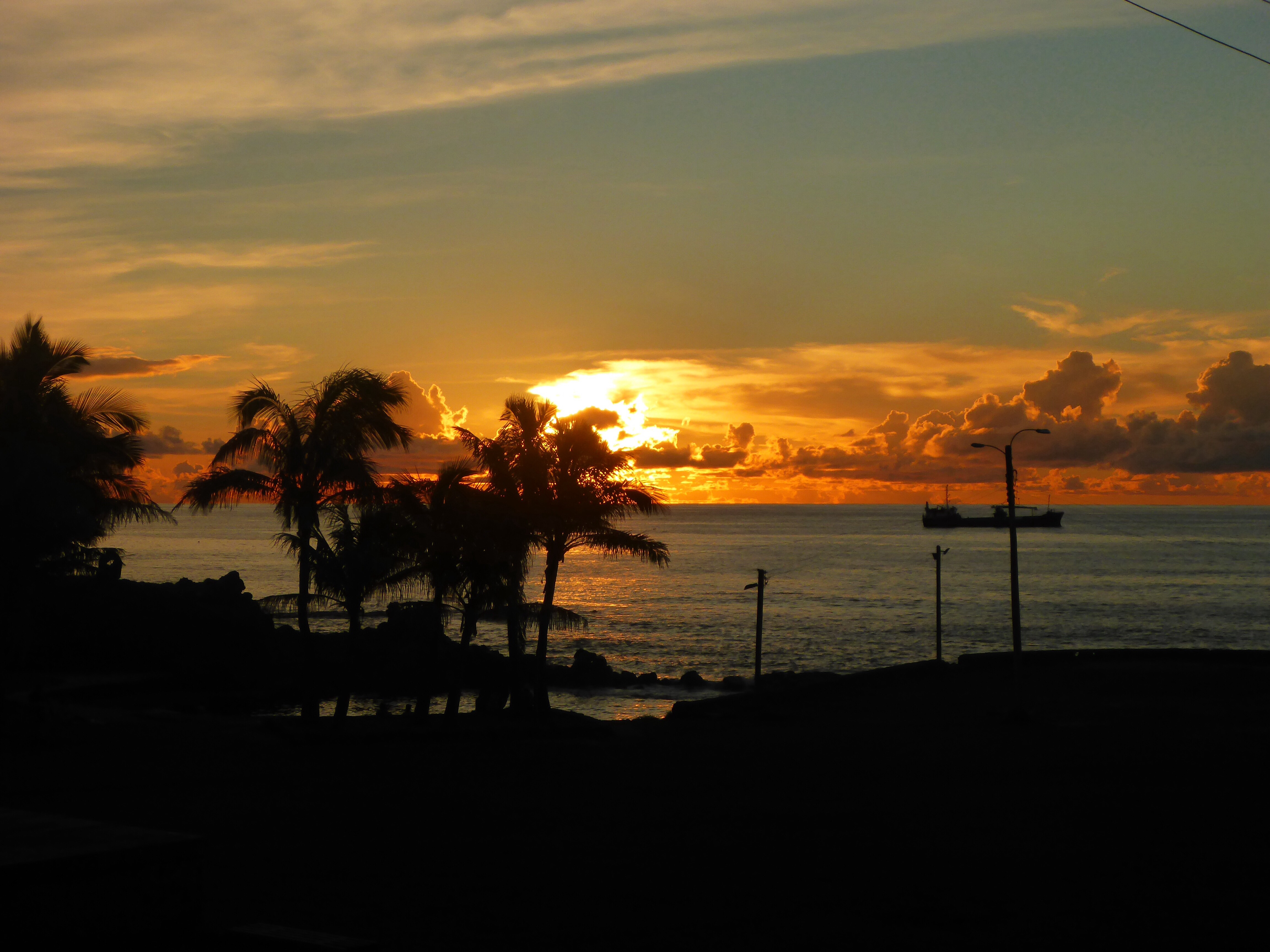
Sunset at Hanga Roa

Sunset at Hanga Roa

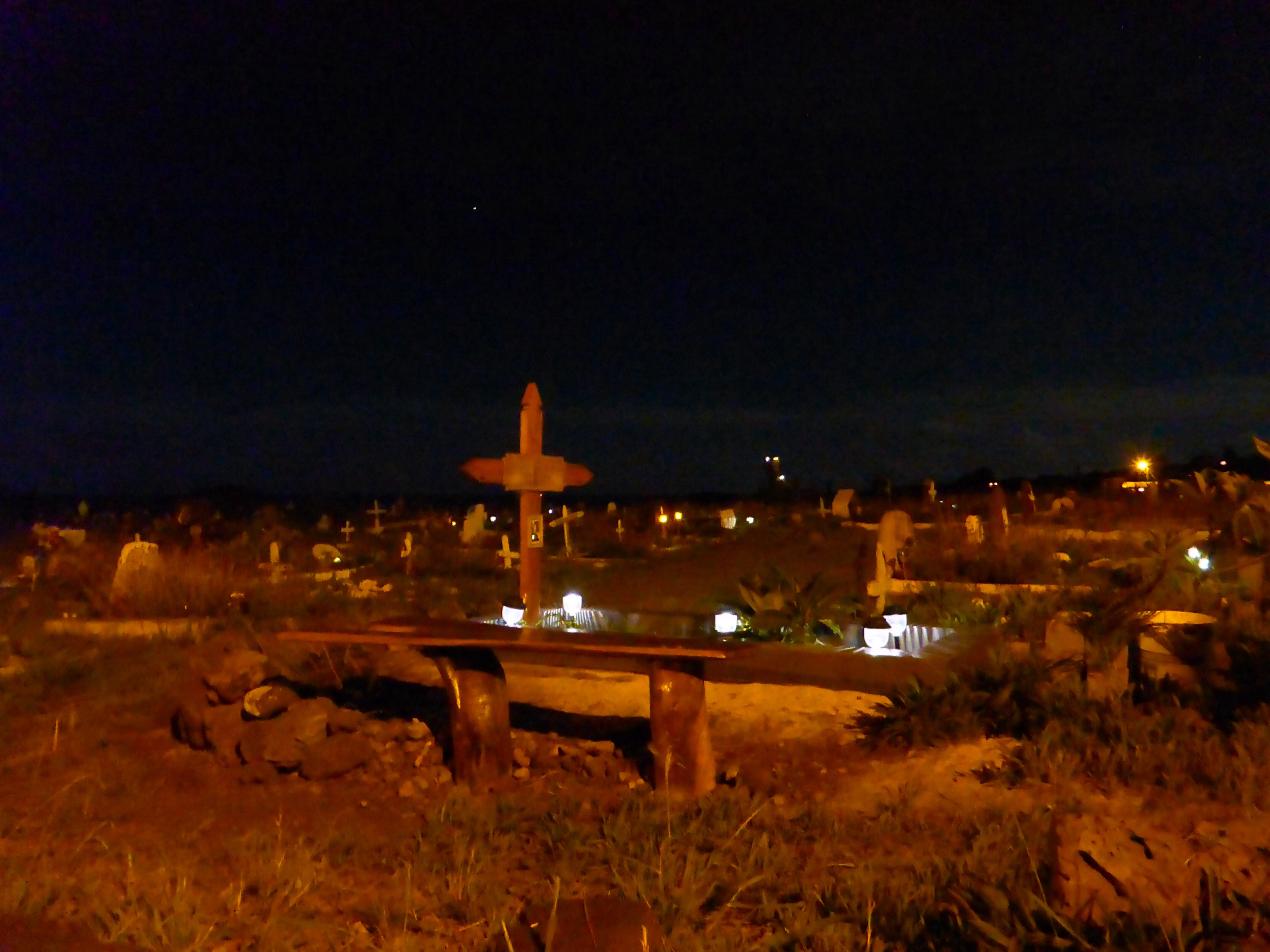
After a lovely evening, a pisco sour for me (a South American cocktail) and locally brewed pale Ale for Anthony and delicious dinner, we return to our home, past the cemetery: even at night it is beautiful as many graves have solar powered candles.

Hanga Roa cemetery at night

Hanga Roa cemetery at night

The next few hours are spent downloading my new photos to my iPad, captioning the photos from our trip south which I had already uploaded to our blog site last night in Santiago (and 45′ to upload one missing photo) for Anthony’s posts – we are so far behind in our blog!!

We have only spent one afternoon and evening here so far, but it feels like so much longer. What a day!!! Tomorrow, China will give us a half day tour – we decided it best to have short tours in the morning so that Anthony doesn’t over do it. Due to the swelling in his foot, he needs to spend as much time with his leg up as possible.

– Anne