
The weather is perfect, blue skies, calm seas. We are on the ferry from Helsinki to Tallinn. A short two hour crossing will see us in Estonia, the first time we have visited that country. We came close to Estonia in 2014 when we rode through Latvia en route to Russia. The route out of the harbour takes us past many low rocky outposts. Not somewhere to run aground – much less forgiving than the sands of Morton Bay where we live.
With both Finland and Estonia being in the EU, no border controls mean that you just walk off the ship, via a very long walkway and straight to the taxi line. Most people on the ferry have little or no luggage – we must really look like those tourists dragging the kitchen sink around with them. “Do not travel like them” they tell their children.
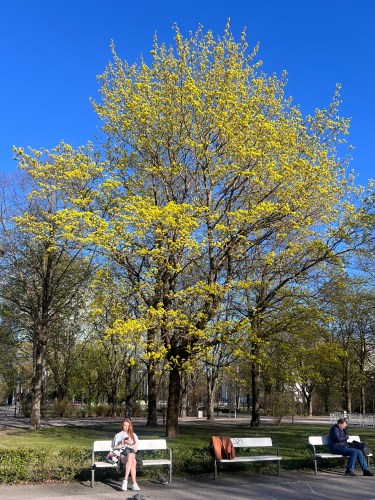
As we drive to our hotel, Anne says some of the architecture reminds her of St Petersburg, which I guess with the long history of Russian influence is not surprising. Russia had control of Estonia from the early 1700’s till the Russian revolution of 1917. Independence only lasted until 1939 following the signing of the German-Soviet Non-aggression Pact. Estonia has been independent again from the Soviet Union since 1991 and an EU member since 2004 which is celebrated by posters we see in the city. I also notice leaves on the trees in the park opposite the hotel which were not as evident in Helsinki. Seems just a short ferry ride can see a marked change in the advancement of Spring.
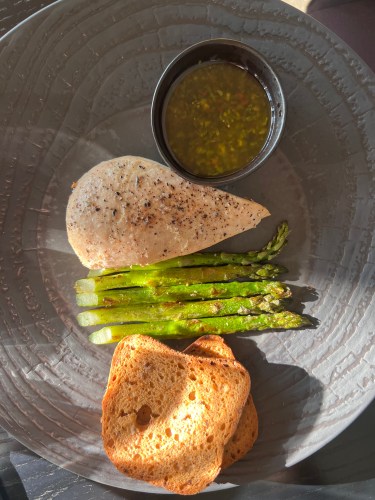
After a nice gluten free meal with wine specially organised in the Executive lounge at our Hilton hotel, we wait for the sunset over the view towards the old city, but no, it’s only 7pm with two hours and a half hours to sunset! A walk to the old city walls and our first exploration of the city beckons, so off we go. I do enjoy the long summer evenings, not something Queensland can offer.
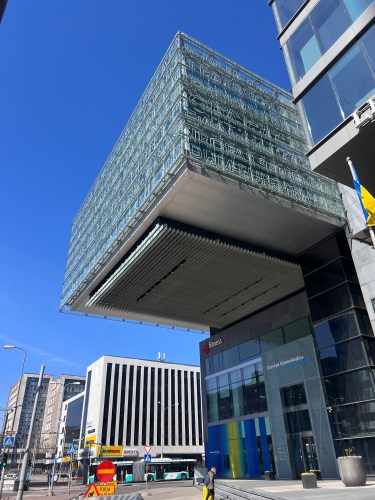
Our hotel is hosting a global Wikipedia Technical Conference. I have been wondering how far database indexing has come since I worked in the industry some 30 years ago. You can type just about anything into a search engine and it can be found. I did not ask, oh well probably just use the internet to get the answer or ask AI. A few fun facts: in 2012, Tallinn had the highest number of startup companies per person among all capitals and larger cities in Europe. Tallinn is the birthplace of many international high-technology companies, including Skype and Wise. The city is home to the headquarters of the European Union’s IT agency, and to the NATO Cyber Defence Centre of Excellence. world, and in 2022, Tallinn was listed among the top-10 “medium-sized European cities of the future”.
The weather is perfect, clear blue skies, crisp temperature but not as cold as it was last week when they got snow.
As we walk towards the city centre, we soon notice a lot of Russian spoken by older people. According to the latest census, 27% of Estonians speak Russian – a legacy of history and multiple Soviet occupations – but this will change as Estonia started moving towards a unified Estonian language education system in December 2022, with a full transition finalised by 2033. While in a shop, we ask if the shopkeeper speaks English?, “русский” “russkiy” is the firm answer. There must have been a huge upheaval for older Russian speakers with the demise of the Soviet Union in 1991.
The origins of Tallinn date back to the 13th century, when a castle was built there by the crusading knights of the Teutonic Order. It developed as a major centre of the Hanseatic League, and its wealth is demonstrated by the opulence of the public buildings (the churches in particular) and the domestic architecture of the merchants’ houses, which have survived to a remarkable degree despite the ravages of fire and war in the intervening centuries. We even discover that the city has a Dominican connection as we spy a sign indicating that the building was once a Dominican Convent.
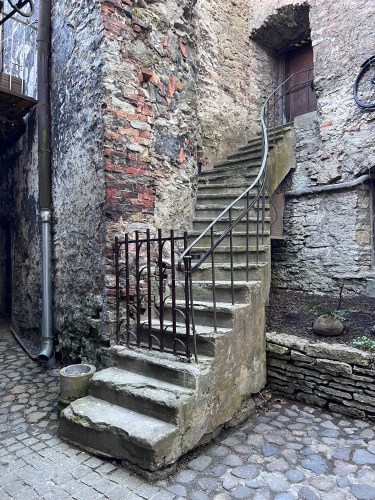
Tallinn Old Town is one of the best-preserved medieval cities in Europe and was listed as a Unesco World Heritage site in 1997.

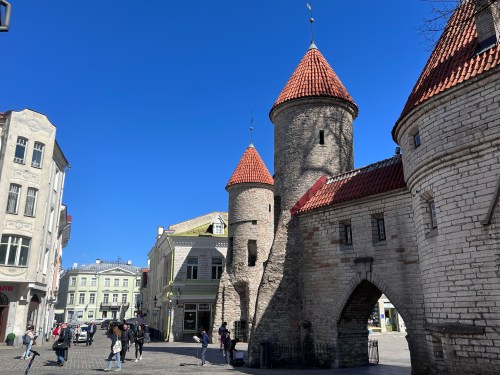
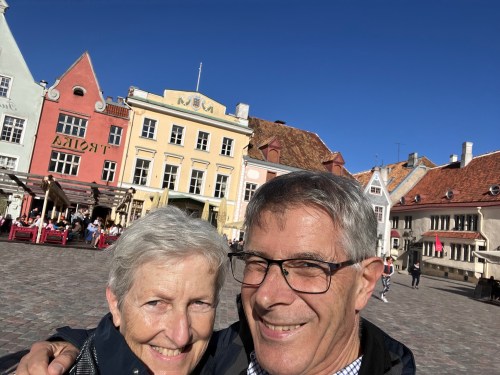
We enter Tallinn Old Town through the impressive Viru Gate which was part of the Tallinn city wall built in the 14th century. This blog is so late, I will let the photos do the talking now:
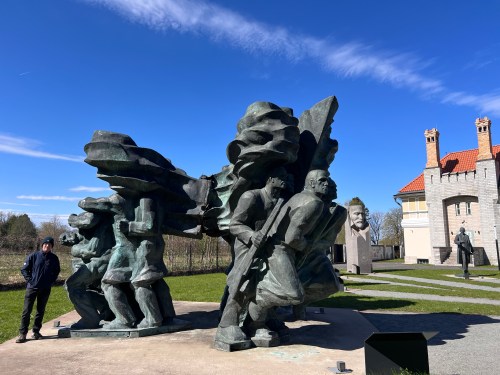
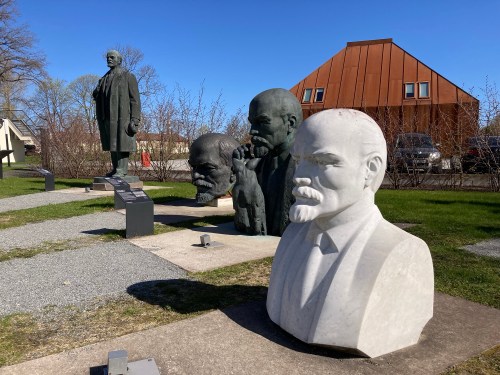
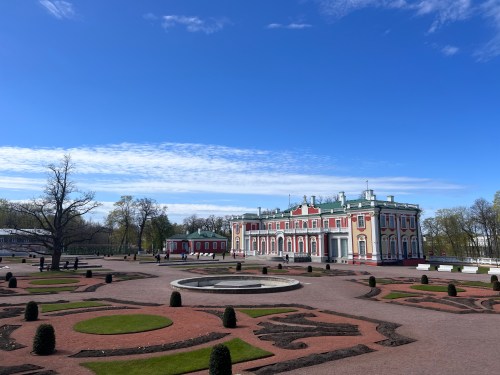
The Tallinn bus and tram pass has an interesting feature, a day pass runs from time of first use for 24 hours. Yesterday we acquired a tram/bus pass which allows us unlimited travel for 24 hours from the time of first use. As we start at 11am we can use it tomorrow before our ferry departure. What a good idea for tourists. We head to the Soviet Statue Graveyard by the Maarjamäe palace, behind the Estonian History Museum. All the Soviet heroes are there, minus their original pedestal, Lenin, Stalin – some are just decapitated bronze heads, some still have bodies. Each statue has a plaque with the history of the person, the statue and its removal. So much history, so much turmoil . We note that multiple statues have the year of passing as 1937. Stalin’s “Great Purge” or “Большой террор” “Bolshoy terror” the most likely cause of death for 700,000 to 1.2 million people estimated to have been executed between September 1936 and August 1938.


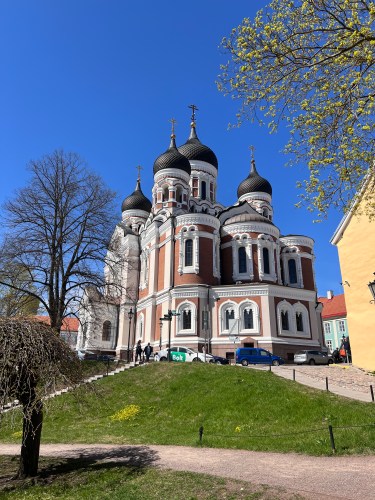
We head back to town and up to the area known as “High Town”. We enter the Russian Orthodox Alexander Nevsky cathedral to discover a hive of activity, no not us tourists, but large number of local women decorating the cathedral with flowers and laying out cakes. It is Sunday after all. We feel wrong to be visiting or taking photos at this time and we withdraw.
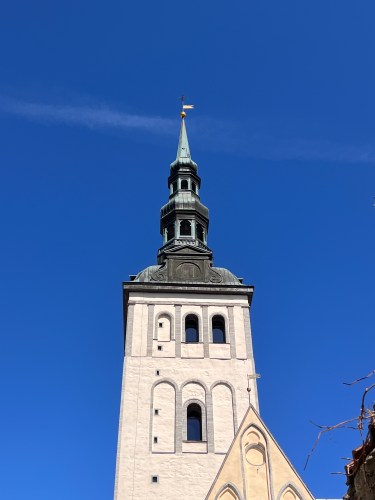
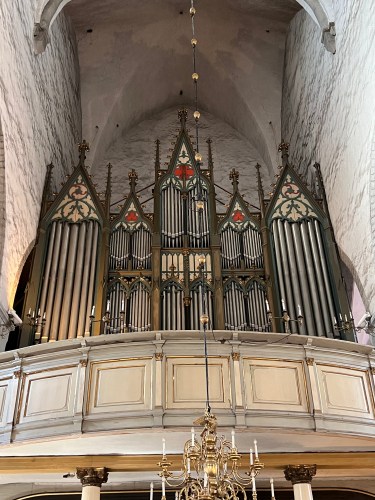
By contrast the nearby Cathedral of St Mary, run by the Lutheran Church is much quieter. Built on the location of the first Church in Tallinn, the first stone was laid in 1240. With the organist playing, we can quietly contemplate the interior and history of such a beautiful building.
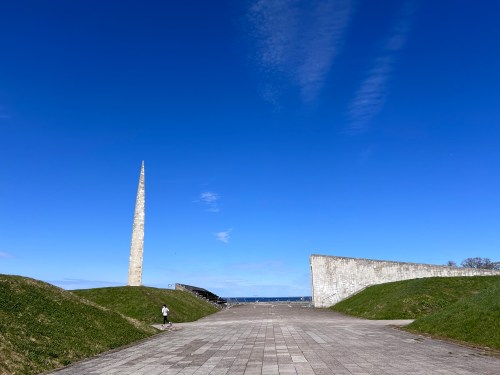
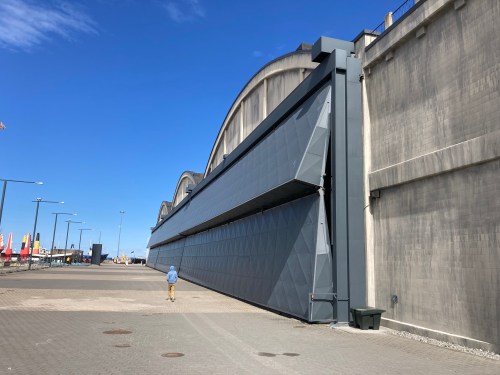
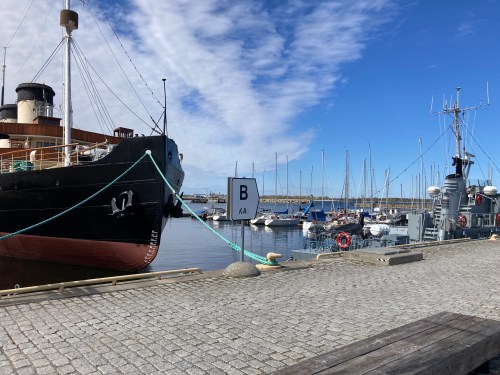
While the Naval museum was closed for renovation, but one can still admire the scale of the seaplane hanger that houses the museum, we visit historic ships mored nearby. Until the dissolution of Soviet Union, this was part of a naval base.
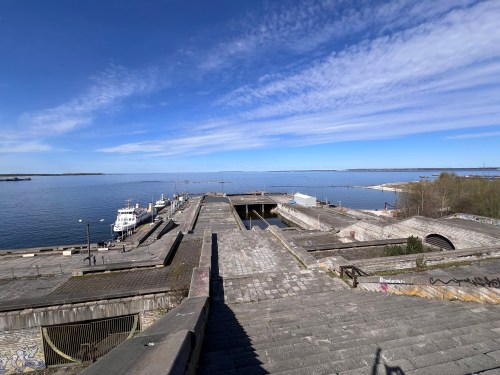
We then travel to a gluten free cafe in the suburb of Kalamaja just behind the station. Colourful houses line the streets and it seems like it would be a good suburb to live in. Then onto the Linnahall formally known as the V.I.Lenin Palace of Culture and Sports, a multi purpose venue opened in 1980 when Tallinn hosed sailing for the Moscow Olympics. It contained a skating rink and concert hall. Both are now closed and the vast concrete structure is closed and slowly falling into disrepair. Will it every return to its former glory?


We have really enjoyed our visit to Tallinn and know if we come back this way, there is more for us to explore.
Anne & Anthony
 2slowspeeds