Ruacana into Kaokoland

We made good progress to Ruacana, thanks to good roads built by the South African Army back in the 70’s and 80’s. It is strange to think that it wasn’t long ago that a war broke out in this part of the world, so recently really, back in 1988. Most of Ruacana was destroyed in the process. We manage to fill up – out last fuel stop for a few days now. We have 200 litres of fuel and 150 litres of water so we are set to travel deep into Kaokoland.

I wonder how far we’ll get today along the Kunene river and where we will spend the night. The scenery as we leave Ruacana is so different to anything we’ve seen so far. The road now crudely follows the terrain, with steep hills up and down, no more cut and fill. It is wild out here.

We are suddenly graced with the most beautiful sight: a stunning Himba, in her complete traditional dress. The sudden sight of this beautiful woman will remain implanted in my memory as we hadn’t expected to see anyone walking out those bushes, with no village in sight. And she radiated in her deep red skin, against the barren land.

The road heading due west of Ruacana mostly follows the Kunene river which forms the border between Namibia and South Africa, and is one of the few year-round flowing rivers in the region. We start off going through a few passes. The road is now a mixture of gravel and sandy patches, sometimes it is simply a faint track across meadows. Usually a sudden faint track means that people had to deviate from the original track for some reason and numerous new ones have been formed, to find the best way past an obstacle. In our case, it is a small stream with water running. As if by magic, help is suddenly here to guide us: a most handsome teenage boy and 2 young boys.

Himba teenager showing us the way across the creek

Himba teenager showing us the way across the creek


The teenager is wearing his hair in the traditional Himba way unlike the younger boys. Their attitude towards us is very different. The older one is keen to help guide us while the younger ones demand money and sweets. This immediately worries us both: have we, western tourists, created an expectation that we will give out gifts as we pass through the area, ‘buying’ them and is there a disconnect between generations and those embracing their traditions and those preferring western garb. Unfortunately, the request for money and sweets was repeated many times just for passing through and waving hello, along the Kunene river, the more accessible area to tourists. Being interested in indigenous people and culture, I am looking forward to learning more about the Himba while we travel through their land.

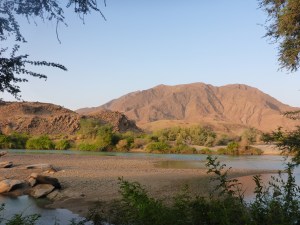
The Kunene river area is simply stunning. It was hot out here, 39 degrees mostly, and the river so inviting …. if it wasn’t for crocodiles… We spot so many areas we would have loved to stop and camp, but we are not comfortable with idea of crocs nearby. So on we go to Kunene River Lodge. Once again, we have no booking but we are still in luck. Kunene River Lodge, where we decide to camp for two days, provides us with the opportunity to visit a Himba village. Not speaking their language, going with a local guide will be interesting and allow me to hopefully have some of my questions answered. We are lucky there are just the two of us and our guide is half Himba himself.

Along the Kunene river
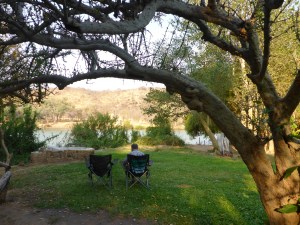
Along the Kunene river

Our camp site at Kunene River Lodge

Our camp site at Kunene River Lodge


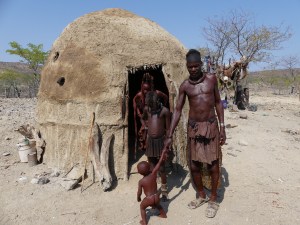
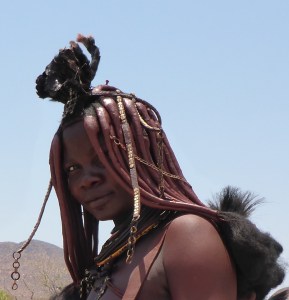
A bit of background: the Himba population of approximately 50,000 live in the Kunene region of North West Namibia and just over the border, across the Kunene river in southern Angola (yet another example of how people have been separated thanks to our wars and orders). The Himba are one of 12 major ethnic groups in Namibia. Many still live a semi nomadic life, raising goats which they milk and cattle which reflect their wealth, both of which are sold for cash. Himba women go topless and both men and women smear their skin in a mixture of butter, ash, aromatic resin and crushed ochre as a way of cleansing their skin and keeping their skin youthful. With their red skin, long platted hair and various leather, bead and shell adornments, the Himba women are beautiful. Girls wear their hair in two plats going forward, boys, one single plat going backwards and married women wear ornate headpieces. But the most fascinating for me was being able to ask questions and share some of my knowledge of Australian indigenous culture and seeing their reaction to the similarities and differences. The similarities especially, considering the physical distance between them, fascinate me.
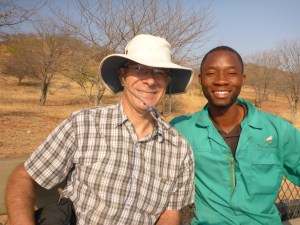
Our guide to the Himba family
Our guide to the Himba family

Himba milking area

Himba milking area

Himba girl

Himba girl

Himba family outside their living area where we spent a couple of hours
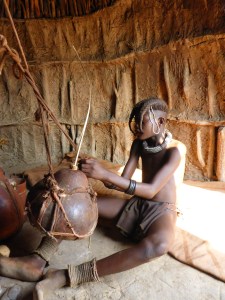
Himba family outside their living area where we spent a couple of hours

Making butter

Making butter

Himba woman's ornament made of leather, shells and even found bullets

Himba woman’s ornament made of leather, shells and even found bullets

Himba lady

Himba lady


Our next stop is Epupa Falls. We are told the road that used to take 10 hours has recently been upgraded for the Namibian police and the veterinary service (who are developing a new facility in the region) and the journey time has been cut to 3 hours. They are not wrong. But it is not only time that has been slashed – the poor country has been brutally scared with an oversized 4 lane wide dirt road cut through. It is painful to see. Interestingly, we heard that tourists who used to visit the area for the challenge of driving the old track have now cancelled their holiday. A double negative. Let’s hope it is worthwhile for the vet services.
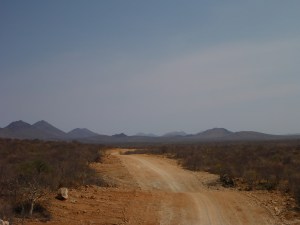
Upgraded road to Epupa Falls

Upgraded road to Epupa Falls


Epupa Falls must be incredible in the rainy season! They were very low for us after 3 years of drought and being at the end of the dry season but the raw, wild area is stunning nonetheless.
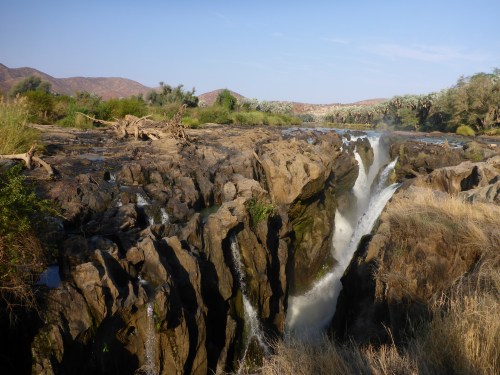
Epupa Falls

Epupa Falls

Onto Opuwo next for resupplies of fuel, water and food. What a fascinating place. A crossroad for tourists and Namibians. In the supermarket we see and hear mainly German and French tourists, and see Himba and Herero in all their splendour. So many photo opportunities but I don’t want to ‘steal’ photos.

Tonight’s stop is Marble camp, some 270 kms away. We agonise over the route to take, with conflicting stories and recommendations and choose to take the advice of a local – road conditions can change quickly, from season to season and year to year. From talking to a German couple we met at the camp that evening, we made the right choice – it took them 2 days to get here from Opuwo, while it took us 5.5 hours using the D3707 through Orupembe.

Kaokoland, Namibia
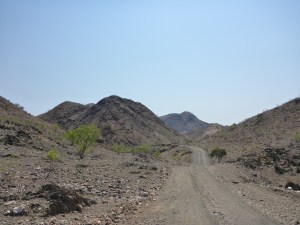
Kaokoland, Namibia

Kaokoland, Namibia
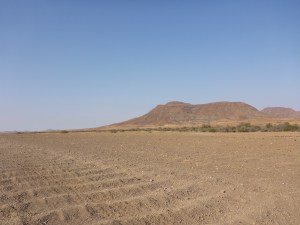
Kaokoland, Namibia

Kaokoland, Namibia

Kaokoland, Namibia


Kaokoland, Namibia

Kaokoland, Namibia

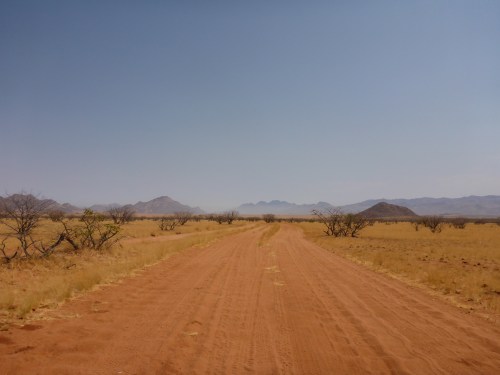
Outside Orupembe towards Marble Camp
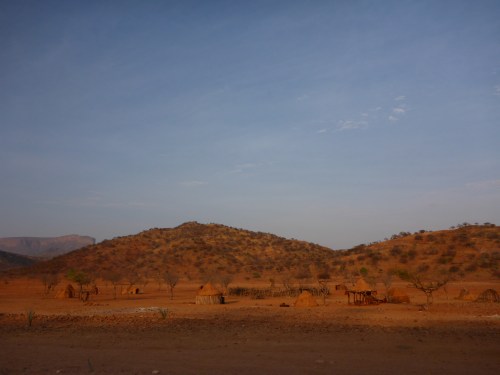
Outside Orupembe towards Marble Camp

Himba village

Himba village


Marble Camp

Marble Camp


The drive the next day has to be one of the most memorable. From tricky steep narrow rocky pass, to having to part rebuild a by-pass, past an burnt out and over-turned 4×4 just two days prior, to a most beautiful and serene valley, the Marienfluss onto Syncro Camp on the Kunene River. Photos cannot do this valley justice. We drive past many Himba villages, all so immaculate and past many Himba women and kids. Life must be hard out here. Otjinhungwa is where I had hoped we’d get to in Namibia and we made it!!!
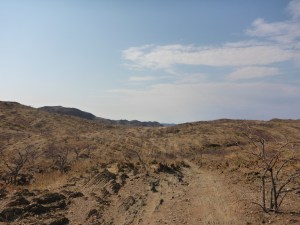
North of Marble Camp

North of Marble Camp

Track blocked by overturned vehicle
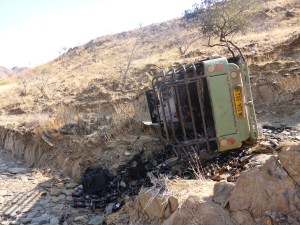
Track blocked by overturned vehicle

How much beer were they carrying?!
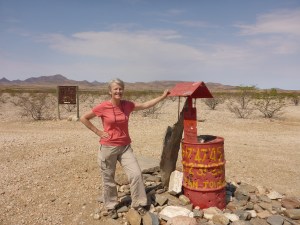
How much beer were they carrying?!


Red Drum junction
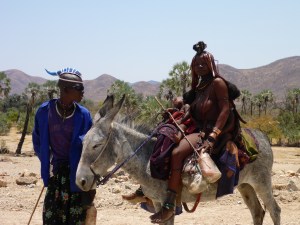
Red Drum junction

Himba family

Himba family

Himba mother

Himba mother


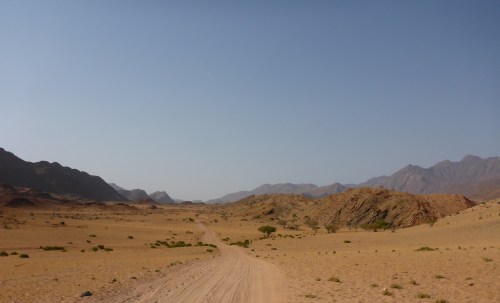
Marienfluss, Namibia

Marienfluss, Namibia

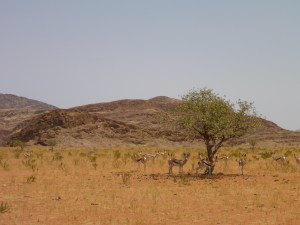
Springbok, Marienfluss

Springbok, Marienfluss


We are lucky that Syncro Camp space for us as only 2 of the 4 camping spots they have here are occupied by 4 vehicles and the 4 South African couples are all lovely. And even luckier that the next day we have the whole camp to ourselves.
Syncro Camp
Syncro Camp


Our campsite at Syncro Camp
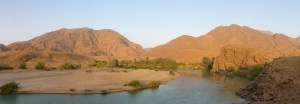
Our campsite at Syncro Camp

Angola across the Kunene river at Syncro Camp
Angola across the Kunene river at Syncro Camp


Marienfluss

Marienfluss

The raw beauty of the region touches me in a way few places do.

– Anne

Entering Namibia for the first time

Namibia, a country we have wanted to visit since we first over-landed through this region in early 1983. During our time in Cape Town from 1983 to 1985 the opportunity to visit did not arise, but finally we are crossing at Ngoma Bridge into Namibia some 30 odd years later. We have arrived! Namibia is a vast country and with the aid of friends, Martin and Karen in Cape Town, we have identified about six months of travel here! So we have to compromise and have selected a small number places we would like to visit, mostly in the North West and then down the west coast. We have a long way to travel on the first day and the return of 120km per hour roadsigns will aid this process. In Botswana, the town speed restrictions would go on for many kilometres and just as you accelerate 20 minutes after leaving the town there is the police radar trap. No such worries in Namibia – the 120km per hour signs are just metres out of town.

The border crossing is easy and we only have to pay a road fee of Namibian $259 for our vehicle. I ask if we can pay in any other currency. Yes we are told it is 259 in any currency. Since the Namibian $ is pegged to the South African Rand, all major currencies including US$ have a better than 10:1 exchange rate. Great way to make a profit! We pay in South African Rand.

It seems to be slightly greener here than in Botswana, possibly due to the fact that the Caprivi Strip now renamed Zambezi region, is bounded by rivers on both sides. Family plots appear to be rectangular and cleared of all vegetation except trees. Houses are built with both traditional and modern materials, we see bundles of thatch for sale at the roadside and many properties under renovation, I guess ahead of the rainy season which is due to start in a matter of weeks.

Caprivi village layout

Caprivi village layout


Local roof material shop

Local roof material shop

Wild animals appear absent, as is the destructive activity of the elephants we had become used to in Botswana, but domestic livestock abounds on both sides of the road, as usual requiring the driver to pay careful attention to any sudden movement.

Sometimes nature does intervene and for those of you with molehills in your gardens back home, spare a thought for the unfortunate who have this in theirs!

More gardening than most people would want!

More gardening than most people would want!

We eat up the kilometres and I reflect on a major difference I see between between motorcycle and car/4×4 travel. I believe we are more isolated in the 4×4 and do not form the same connection with people along the way. Having said that, in 38 degree plus temperatures with sand and loose dirt roads, my motorcycle skills would not be up scratch and so for us this is the best way to travel here, plus for some reason you cannot enter National Parks on motorcycles – I think it has something to do with carnivores not wearing helmets when riding their victims’ motorcycles.

Our original route was to be along the Angolan border to Ruacana, but I thought that we should visit the Etosha Pan, just for a day to get a sense of the place, which required a southerly detour. We will also have a greater selection of food to choose from when restocking in either Grootfontein or Tsumeb. This will require us to cross the vet fence line. Built to stop the spread of foot and mouth disease, the fence runs across the country from the edge of the Skeleton Coast NP to the Botswana border. No fresh meat or unpasteurised milk may travel southwards or westwards through the fence. A great deal of effort must go just into the upkeep of the fence, let alone the manning of the various checkpoints across the country. The aim is to keep the larger commercial cattle farms to the south free of foot and mouth disease to enable them to retain their export markets to Europe, USA etc. For the smaller local farmers north of the fence, they feel shutout of the lucrative beef export markets and would like the fence moved to the Angolan border. This will be an ongoing issue here in Namibia.

Towards the end of a long day driving, we will have covered approx 900 km or 550 miles and have decided Grootfontein will be our destination. Before we set off, we had purchased the Tracks for Africa: Namibia Self-Drive Guide, a book which is designed for independent travellers in Namibia. As well as planning advice, tourist information etc, it contains a very comprehensive list of accommodation throughout the country. We choose Maori campsite, just outside of Grootfontein, which turns out to be well run, if a little quirky, with nice cold beer. The owner has built a small 8 meter / 26 foot high castle like structure, that cleverly allows you to rise above the treetops and get a fantastic view of the sun setting over hills with drink in hand. Very clever! A great deal of hard work goes into establishing and maintaining the facilities which are competing with so many others. Not an easy life.

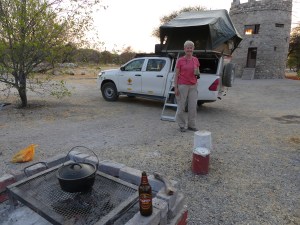
Our campsite with a Castle at Grootfontien

Our campsite with a Castle at Grootfontien


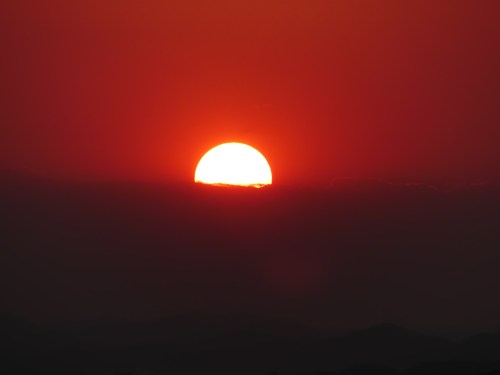
Sunset from the 'Tower' at our campsite near Grootfontein

Sunset from the ‘Tower’ at our campsite near Grootfontein

It was interesting that we have been asked a couple of times by locals about crime in South Africa, once by a policeman. There seems to be a view that crime was much more violent in South Africa than Namibia. We asked about the practice when leaving the supermarket of having groceries checked against the receipt. We were told shoplifting is a problem and got a memorable quote from Samuel in this context. “If you do not learn from your mistakes, they become your hobbies” referring to those who get caught and do not reform. I thought it could have application in other aspects of people’s lives.

Today I heard the sad news of the passing of my uncle Basil. I remember him as a kind and generous man, who would always take time to help others. He was a wizard with anything mechanical. My first motorcycle ride was at his place in Hilton, Natal on an old two stroke CZ I think, with a car battery strapped on the back and someone running alongside to change gear via a mole wrench secured to the stub of the gear change shaft! He will be missed and our thoughts are with his family at this difficult time.

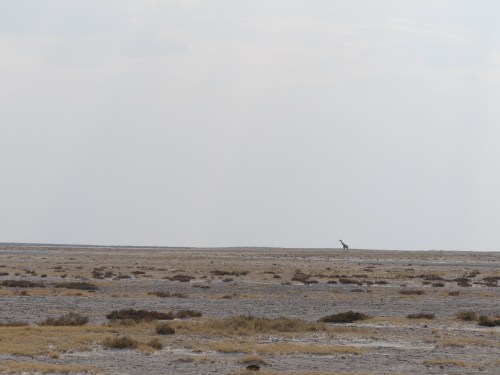
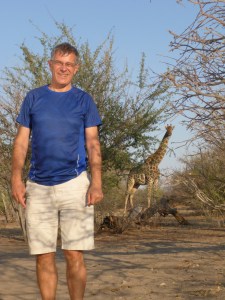
We stayed at a new campsite,within the Onguma Private Game Reserve just outside the entrance to the Etosha National Park (NP). Here we found excellent facilities that had only been open a couple of years. Small and secluded just the type of camping location we look for. Etosha NP was a quick visit, but for me seeing a solitary giraffe standing tall out on the pan was enough of a reason to have visited this national park.

Lone giraffe on the Etosha Pan.

Lone giraffe on the Etosha Pan.

While easy to spot out in the pan, amongst the trees is a different story.

Now you see me....

Now you see me….


Now you don't....

Now you don’t….


The drive to Ruacana was uneventful and mostly tar. It did seem as we travelled further north that the gap between villages diminished, although some villages required an 80km per hour limit while through others one could sail through at 120km per hour. We could not work out the reason for the difference. At Ruacana the tar road finishes and we will be on dirt roads and tracks for the next couple of weeks. Here the fun starts.

– Anthony

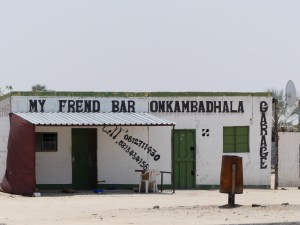
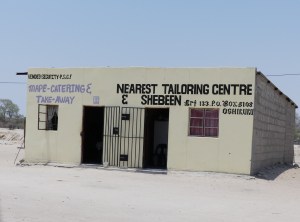
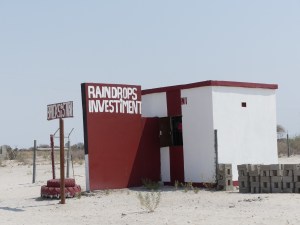
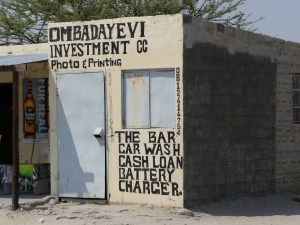
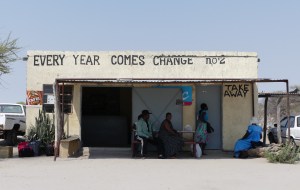
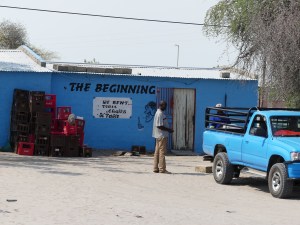
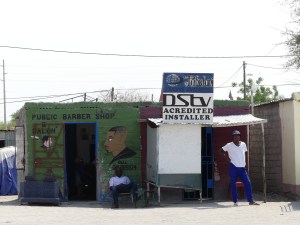
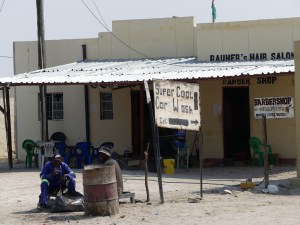
Namibian businesses

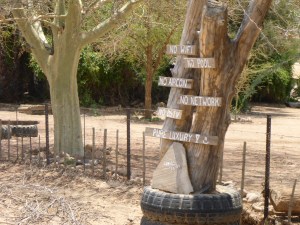
The various bars and business names along the road north to Ruacana are humorous and seem to reflect hope, pride and inspiring industriousness and entrepreneurial nature of their owners despite hardship. So much more positive than our society’s reliance on ‘entitlements’… Our stopping and taking photos was always welcomed with a friendly wave. Except once, a shout from the shade across the road. A cop, I hadn’t seen him. So I don’t take the photo. He waves us over, which we do. He is angry. Not sure why but I explain that when he shouted, I didn’t take the photo. He’s not convinced so I offer to show him my photos but he waves us off in disgust it seems. Odd but it is brutally hot out there at 39 degrees… Anyway, these signs made me smile and reflect the friendliness and humor of the Namibians we’ve met, albeit too briefly, along the way. Which is your favourite?!

Namibian business 1

Namibian business 1

Namibian business 2

Namibian business 2

Namibian business 3

Namibian business 3

Namibian business 4

Namibian business 4

Namibian business 5

Namibian business 5

Namibian business 6

Namibian business 6

Namibian business 7

Namibian business 7

Namibian business 8

Namibian business 8

Namibian business 9

Namibian business 9

Namibian business 10

Namibian business 10


– Anne
Beautiful Botswana

While we have decided to visit Botswana and Namibia by 4×4 on this part of our trip, our time is limited (4×4 hire is not cheap!) and there are so many places to see, we have to compromise. Namibia being trickier to visit and wilder and Botswana easier and more popular with tourists, you can guess what choice we make: we decide to follow our friend Martin’s advice and concentrate on Namibia. We are very lucky he has travelled around Namibia extensively and has given us many tips on places not to miss. We will therefore push through Botswana quite quickly.

Botswana has the unmistakable feel of Africa that we remember: maybe it is because of the heat, or just cultural, but everything moves ever so slowly. People dawdle then stop, and they drive the same way, suddenly stopping or slowing down, even in the middle of a main road. We noticed the difference with places in SE Asia where there people rush around everywhere, mopeds, taxis and cars everywhere. Here, people walk, dawdle. We have seen few bicycles, 2 motorbikes only. They must walk incredible distances!! But then we have also seen a handful of ridiculously fast BMW and Mercedes cars…

Animals eat along the road side, another sign of the current drought. So many bush pigs, goats, donkeys, cows, horses. How apt our common English expressions are: greedy pig, don’t be an ass, silly goat, silly cow, cheeky monkey.

Our first night in Botswana is full of mixed feelings. We see our first African setting sun, simply stunning, as we arrive at our first camp. “Woodlands” outside Francistown is fully booked we are told so we will have to take a chalet or take our chance looking for somewhere else… I am sure sheets in a brothel are cleaner than the ones in the chalet… Double rip off – luckily, it was the only time this happened to us so definitely not a reflection on the country. It is fine as we wanted to practice setting up our pop up tent anyway and we pass with flying colours!! Our first night under canvas. We are happy.

Because we decided to push through Botswana, we were not going to visit Makgadikgadi but it was too tempting not to. I really wanted to see giant baobabs. We turn off the main road outside Gweta and head south but when the track got smaller and narrower and sand got deeper and deeper so we turned back. Some kms later when we saw another sign for Makgadikgadi and couldn’t resist. The lovely lady at the gate cannot give us an entry or camping permit as she doesn’t have the book but allows us in, asking us to pay when we exit at the far end of the park. We have a great chat with her, enjoying her sense of humour and friendlness, before setting off.

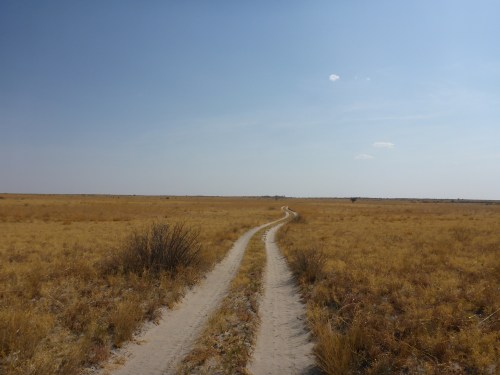
Makgadikgadi, Botswana

Makgadikgadi, Botswana


Njuca camp doesn’t have the view we had hoped for so we continue. We get to test our and the car’s skills in some 30kms long deep sand stretches, having to change into L4W a couple of times. We’ll get better at this driving over time…

We arrive at Khumaga Wildlife camp outside Mababe. A very basic and quiet camp. What a lucky find. There are 2 other 4×4 there and we pick our spot. Perfect!!!

Khumaga wildlife camp, Botswana

Khumaga wildlife camp, Botswana

I am in my element. Our ‘neighbours’ Kim and Dave give us a few more tips on places to see, and even help us test our compressor as the have the same model as ours. We are now ready to tackle the sand roads coming up.

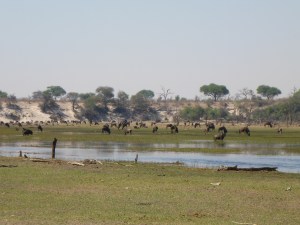
The next morning, we drive down to the river and see wilderbeast, kudu, impala all grazing on the grass along the river bank. There can’t be an crocodiles there as it would be too dangerous and there must be heaps of elephants based on all the fresh (massive) droppings around – we must start getting up earlier…

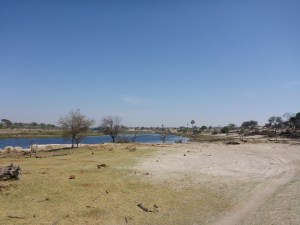
Khumaga wildlife camp, Botswana

Khumaga wildlife camp, Botswana

Khumaga wildlife camp, Botswana

Khumaga wildlife camp, Botswana

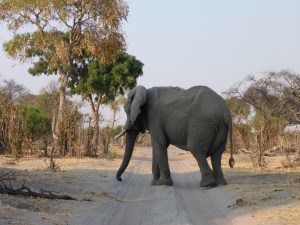
I would happily stay longer but Namibia is calling. Next Stop is Maun for supplies and see if we can visit Moremi or Savuti even ever so briefly. On the way, we see numerous road signs: danger! Elephants! This time, we see more than droppings. We decide to make a short detour to a lodge we had been told about by fellow travellers – the Elephant Sands Lodge. Those poor elephants are surrounded by fancy lodges around a man made water filled trough. Too sad.

In Maun, we go to a couple of places, KRL and Botswana Footprints, to check on accommodation: Moremi, Savuti and Linyanti parks are all booked out but Dijara outside Moremi and recommended by Kim and Dave at the previous camp is available. Perfect. We book 4 nights.

Dijara was our type of camping site – quiet, huge secluded campsites, clean outdoor shower and toilet, great views and so much wildlife. Each camping spot was designed to allow game to move freely to and from the river. Eating outside or simply sitting and enjoying our surroundings, we were constantly scanning for wildlife. We have a huge tree for shade humming with bees as the tree is laden with small purple flowers. Not sure how many of those flowers we ate and drank!! Getting too close to the water’s edge was not a good idea because of crocs and hippos. Spot the hippo in the next photo:

Spot the hippo, Dijara camp, Botswana

Spot the hippo, Dijara camp, Botswana


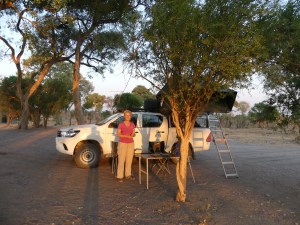
Our campsite, Dijara, Botswana

Our campsite, Dijara, Botswana


Dijara camp, Botswana

Dijara camp, Botswana

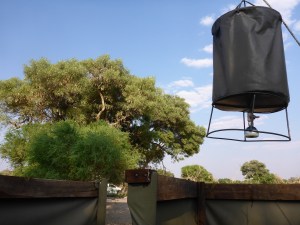
Our shower at Dijara, Botswana

Our shower at Dijara, Botswana


At Dijara camp, Botswana

At Dijara camp, Botswana

Another gorgeous sunset, Botswana

Another gorgeous sunset, Botswana


I amused myself at making note of each new sound as the night was falling, while we were safely in our roof top tent for the night:

Ticky tic
Tic tic tic
Grrrr–grrrr–
Gzzzz zzz gzzzz zzz
Gurrr gurrr
Woohoo woohoo
Grruh grruh
Splosh splosh
Whoah whoah
Grrroah grrroah
Bombombombombombom
Wheeoo wooee

It is amazing how quickly silence falls, frogs and insects stop when larger animals approach the water. The noise of elephants splashing in the water really made me laugh. A better reaction than the sight of the destruction of trees made by those amazing animals…

The next evening, we meet a young French couple, Roxane and François, who needed help pumping a tyre that had deflated a lot as their compressor was playing up. Well, it turned out that it wasn’t just playing up, it was literally burning and melting. And they had more than one problem: their sat phone was not working nor was their fridge. They were heading basically the same way as us but 2 days earlier than us, to Kasane, via Savuti first for them but Kasane for us as we had been told in Maun that all accommodation in Savuti was booked out. The road to Savuti was going to be slow with deep sand stretches. And they only have an 80l tank of fuel of which they have already used half. Feeling we had a duty of care not to let them take that road alone, we decided to cut our 4 day stay at Dijara short and offer to follow them the next day. We decided we wanted to leave by 7am as it was going to be a long day for us, and not having any accommodation booked, we wanted to arrive by mid afternoon. 7am, our friends announce they have another problem, the tyre is flat and needs changing. We leave a little later than we had hoped but the road is a lot easier than expected: being at the end of the dry season, with temperatures of around 40 during the day, the sand is deep and hot and we are told at the gate to take the Marsh road instead. So easy!!! We bid farewell to R&F and off they go to register for their campground. Our journey to Savuti being delayed and slower than had we been alone, we thought pushing onto Kasana was going to be too much for us so we decide to try our chance at staying in the park too. No, it is fully booked. Luckily for us R&F overheard and offer to share their campground with us. Very sweet! And very lucky as I had wanted to visit Savuti, renowned for its lions.

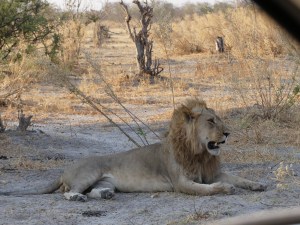
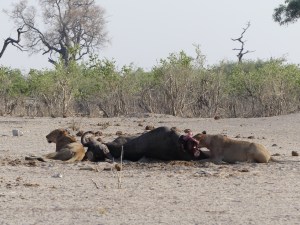
R&F set up their tent and all 4 of us set of for an early evening game viewing drive around the park in our car. I will let the photos do the talking:

Savuti, Botswana

Savuti, Botswana

Savuti, Botswana

Savuti, Botswana


Savuti, Botswana

Savuti, Botswana

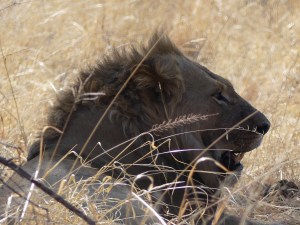
After a relaxing evening with R&F, hearing the hyenas closing in on us and seeing their eyes in our torch light, sleeping to the sound of numerous hyenas and other animals, and we set off together again at 7am. We start our days early as the sun comes up and heats up fast. They will be turning off short of Kasane and we’ll look for a camp site there. On our way out of Savuti, we come across this:

Savuti, Botswana

Savuti, Botswana

Savuti, Botswana

Savuti, Botswana

Savuti, Botswana

Savuti, Botswana

We have been constantly amazed at how well animals are camouflaged. Spotted this one on our way to Kasane:

Chobe, Botswana

Chobe, Botswana

Wild camping is not allowed in Botswana apparently. We decide to try our luck at the Chobe Safari Lodge camping which was recommended to us. They have vacancies in the camp site, and lodging. We weaken and chose to stay in a rondavel!

We think our bodies have been craving for something different to tinned fish and chopped raw vegetable salad!! The lunch buffet is calling. It is funny to see how we both piled our plates with the same options: chicken, cooked vegetables and pasta. Anthony finds a bread roll too, I take a bite and it reminds me of our holidays in Spain when I was little but I resist … until “bugger that” comes out of my mouth, I get up and get my own.

We bump into the same French family traveling with their 2 young kids whom we first met in Maun and enjoy an evening drink at their camp. It is nice meeting like minded travelers. While we’ve enjoyed the different experiences of traveling in 4×4 and the air conditioning during the 40 degree days, we do miss the accessibility to locals that traveling on bikes provides, the physicality of riding bikes, the ‘wind in the hair’ and the road courtesy accorded to bikes. But we couldn’t have travelled on most of the roads we’ve travelled on as they mostly go through national parks.

A great week in Botswana which we will remember fondly and the cleanest country ever visited, I think. Too many photos missing here but the internet is too slow for now. And I hope the photos I have tried to include here come out but the internet speed prevents me from seeing the finished post, so here it goes anyway. Next, Namibia…

– Anne