First days in Ireland

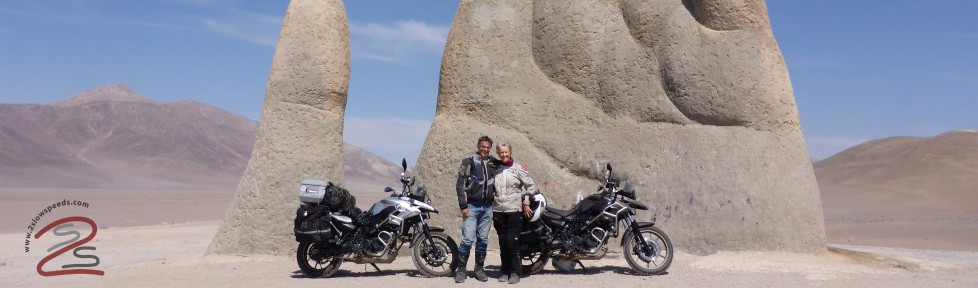
Ramp down, another ferry route for Streak and Storm. In addition to their jet setting adventures, they have travelled on overnight ferries to or from countries as diverse as Iran, South Korea, Azerbaijan, Iceland and now Ireland, their 52nd country visited I believe. For us we are back here in Ireland for the first time since 1977, which was our first holiday together when we cycled around the Killarney region.

After a three week mantra of “Ride on the Right”, this needs to be replaced with a left leaning or riding phrase as we are back to riding on the left, any ideas? Was it not simpler when we just drove in the centre of the track and size mattered all those centuries ago. Well that is progress for you.

Back to riding on the left.

We have still not been able test our re-waterproofing of our KLIM clothing. That will have to wait until tomorrow as today in Ireland the weather is fine. However the Irish weather service are predicting about 5 days of rain to follow after what for Ireland has been a dry start to the summer. Oh well the green has to come from somewhere I guess.

I only learned of the term “Wild Atlantic Way”, a 2,600 km. / 1,600 ml. long west coast route in Ireland, a few days ago. I gather it is very popular with motorcyclists, but for us slowspeeds it would probably take us weeks and weeks to complete. We only have about eight days. Again Anne has had to make choices from a smorgasbord of routes and points of interest to give us a taste of what the west of Ireland has to offer.

We plan as far as possible to stay off the main highways and use secondary roads As we ride west from Cork taking the backroads, I am intrigued by a sign, “Ireland’s only Toy Soldier Factory” pointing to a smaller side lane, oh well why not. Off we go down narrow winding lanes for about 10km before arriving in Kilnamartyra. Here we find the Prince August Toy Soldier factory. I gather they are known and well regarded by traditional war gamers. Eileen shows us around and gives a demonstration of how easy it is to make models using rubber moulds and your parents’ best pots to heat the metal mixtures. Fascinating.

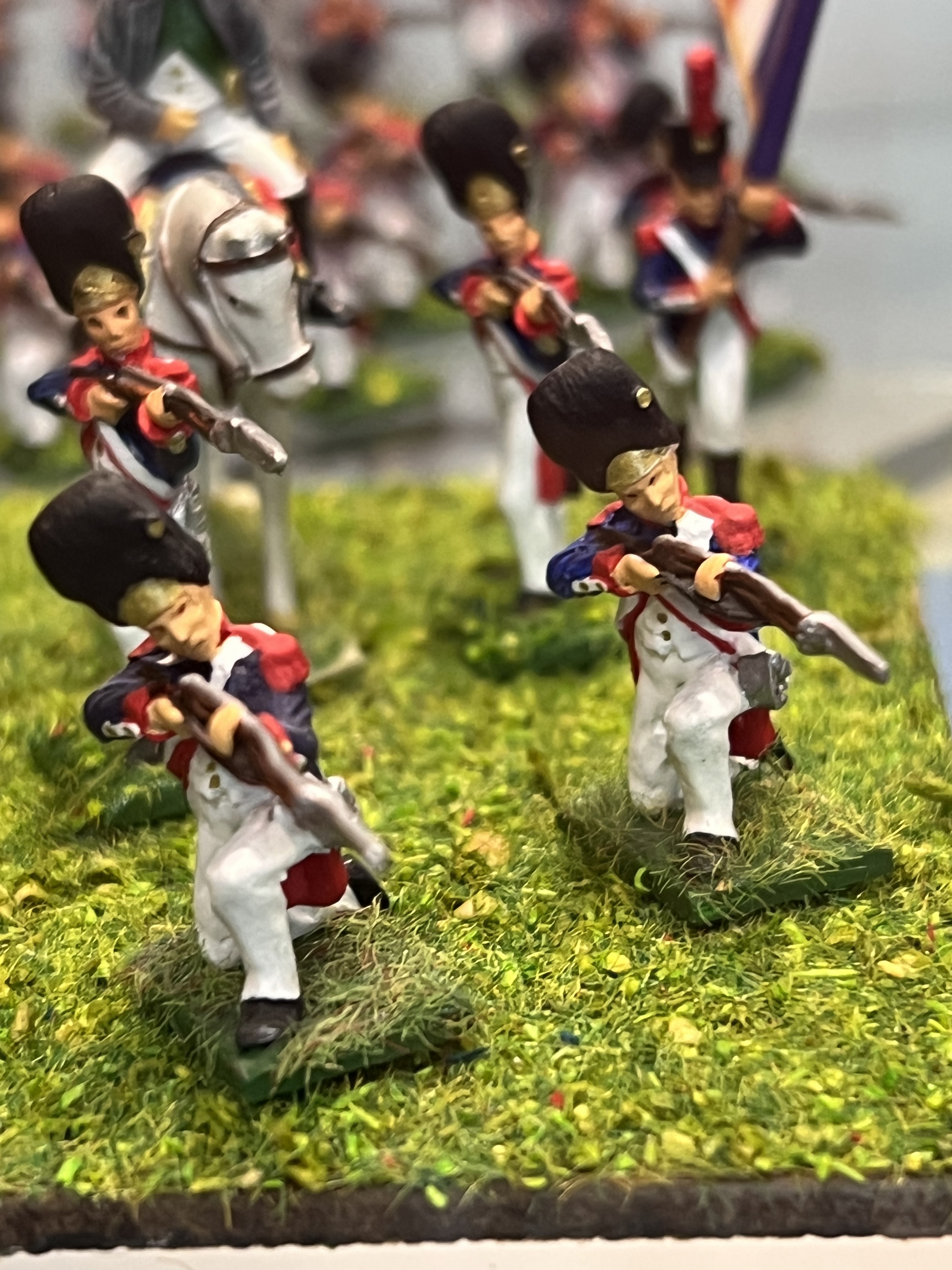
How to pour a model soldier
Aim, fire. Which Regiment is this?
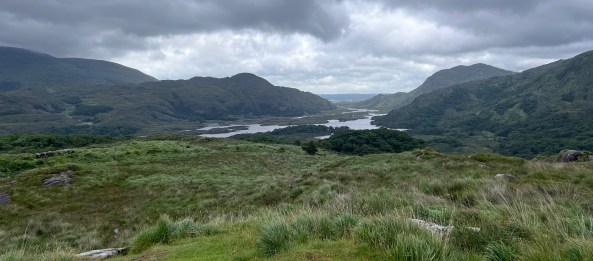
Glourious country in County Cork
Is this a divided highway?

Talking with a fellow visitor to the factory, we hear about Saint Finbarr’s Oratory at Gouganebarra Lake. This is a short distance away and we are told we must see it. Saint Finbarr lived in Ireland in the sixth century and spent some of his time there. Off we go following the maps on the iphone, the roads get smaller and smaller – should there be as much grass in the middle of the road? Anne acquires some shrubbery along the way. Hedge trimming for free. It is a beautiful and peaceful place.

Saint Finbarr’s Oratory

Since we do not have time to ride all of the Wild Atlantic Way in southwest Ireland, Anne suggests going on a friend’s recommendation to visit the Beara peninsula, which is less well known and perhaps a little quieter for us. This will include crossing the Caha mountains via the Healy Pass.

The road over Healy Pass or Kerry Pass as it was known when constructed during the Great Famine in the mid 1840’s was part of a country wide road building program to provide employment for starving locals. Poorly run, some workers starved to death while constructing the roads. Men women and children all participated. When you read the statistics that around 1 million people are believed to have died due to starvation or famine related disease and a greater number emigrated around the world at the time, it is not surprising that some people today have strong views on the actions by British authorities at the time.
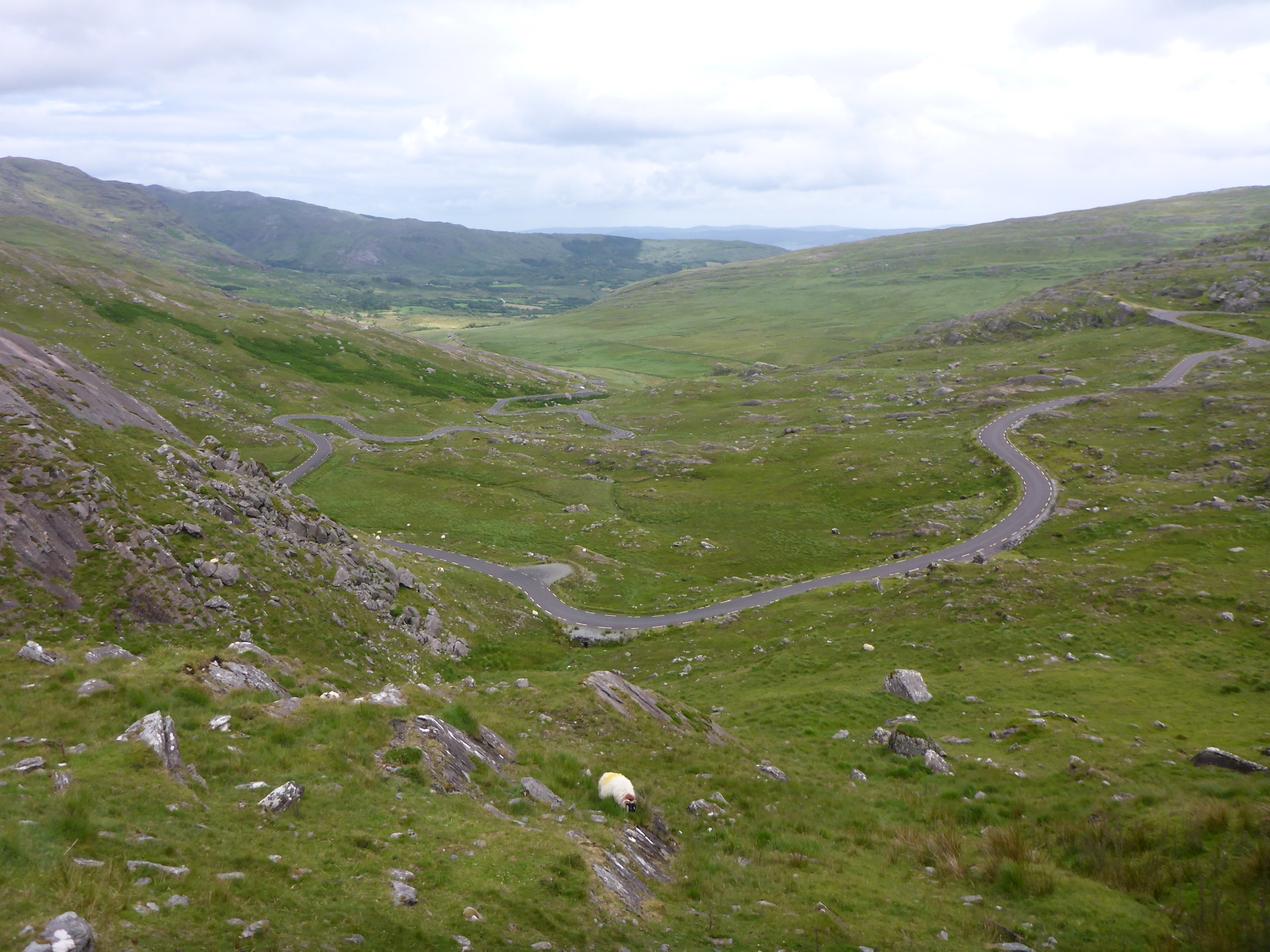
Looking south from Healy Pass

At the top of the Healy Pass we meet some intrepid cyclists and see one towing a child carrier the pass. That must take some muscles. It is worth the view though even if we used motor power to get here.

At the top of Healy Pass looking south.
Our picture perfect bedroom window

The next day the weather forecast was for heavy rain, the first real test of our hopefully re-waterproofed KLIM clothing. We had decided to just go as far as Kenmare about 45 minutes away to see how we would fare. Sadly, for me anyway, the re waterproofing was just a dream and in addition the soles of my boots were detaching, also letting in water. Seems that the COVID epidemic even got to our clothing is all I can assume or does equipment eventually reach the end of its life?

Testing the waterproof clothing: FAIL

Challenging riding conditions along twisty roads as we slowly cover the 40km to our next stop. We arrive in Kenmare soaking wet where the kindly B&B owner immediately offered to put our KLIM gear in the dryer, after we removed all the armour. The day was spent exploring the town, buying me waterproof over-pants and both of us savouring a tasty Shepard’s pie for lunch. Anne started her Irish whisky education with a Connemara 12 year old single malt whisky at the recommendation of the manager. A good choice – more to try.

While a relaxing day in Kenmare was enjoyable, we are still less than an hour’s ride from Cork where we started two days ago. We need to start moving northwards aiming for the Burren region northwest of Ennis. Given the strong winds forecast, we decide we will not ride the ring of Kerry along the coast but the section past the lakes, part of the same route we rode on bicycles back in 1977. Up over Moll’s Gap or Céim an Daimh giving us the vista of the MacGillycudd’s Reeks mountains and then down past Upper Lake then Muckross Lake onto Killarney.

Back in the Ring of Kerry after 46 years.

Looking for gluten free meals can be challenging at times. In Killarney with an hour only on the parking meter we seem to only find cafes with wheat products at the fore. We enter the dining room of the International Hotel with five minutes before the breakfast menu ends. Tea and coffee magically appear. Gluten free options including toast are detailed and ordered, separate butter is provided. Nothing is too much trouble for the JD and the team. Anne added a TripAdvisor entry as we ate. Another great memory.

Fed and watered we and our steeds ride on to Lisdoonvarna and the Burren.

– Anthony
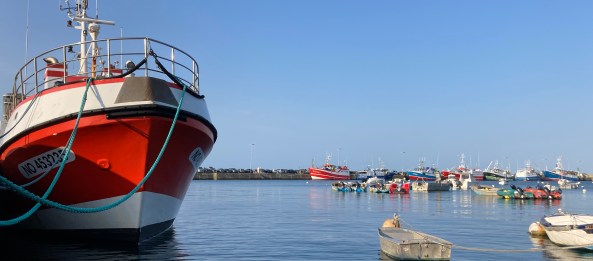
Roscoff – A surprising town.

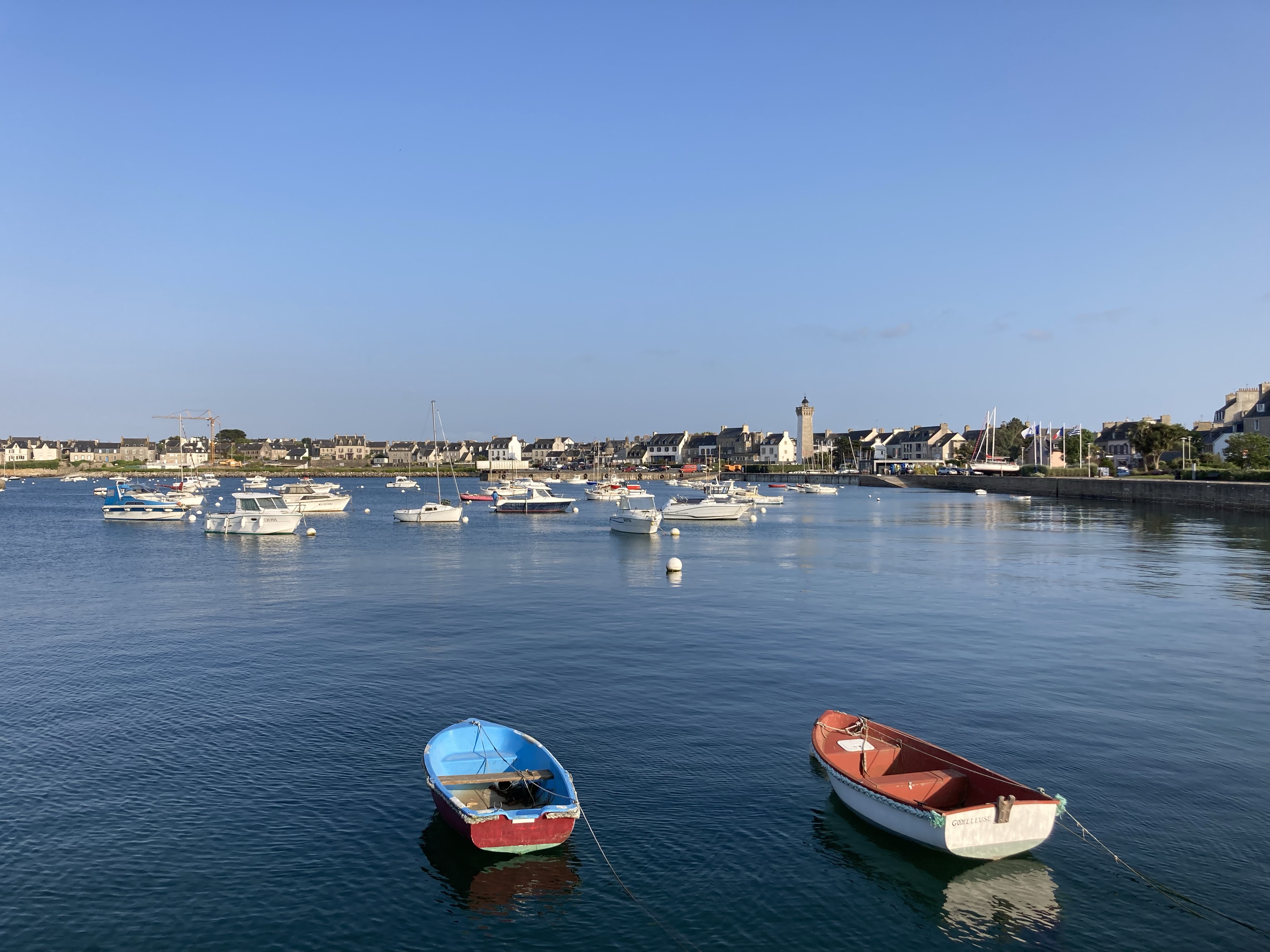
We sit in cafe “Ty Pierre” overlooking the harbour, coffee on hand, with the almost long forgotten smell of cigarette smoke wafting in our direction. We have spent a relaxing and enjoyable 24 hours in the town of Roscoff before our ferry to Ireland tomorrow. We have decided to continue to Ireland and take our chances with the weather.

Sunshine in Roscoff

I have to confess that Roscoff is a pleasant surprise, I had imagined the town would be just a working ferry port with little architectural or historical interest similar to some others we have seen in the past, however wandering around the town, reading the signs outside buildings, helpfully in both French and English, it is so much more. The size and construction of the buildings indicate that there was a level of prosperity in the town in the past. Part of this prosperity may have been driven by the humble onion, well, distinctive pink onions.

Looking east at Roscoff harbour
A challenger for Spacex?
This will always be a “Modern Garage”
A “Thank You” to medical staff.

“Onion Johnnies” is a term I had never heard of till now. It relates to Breton onion sellers who started to travel to the UK from Roscoff in the late 1820’s to sell their pink onions. In part this was due to higher prices obtained in the UK, but also back then it was easier to sail to the UK than travel by road and rail to Paris. Taking their harvest in July or August to the UK and into storage, the Onion Johnnies would then sell the onions on bicycles around the UK until the end of the year. At their peak in the 1920’s over 1,300 sellers would come to the UK each year. Wearing their distinctive blue and white stripped Breton shirts and berets it is possible they became the image of Frenchmen in the minds of those who met them, probably to the bemusement of the French people who do not dress like that.

Roscoff heritage carved into the buildings
A carved “Onion Johnnie” image.

I realised I had seen one or more Onion Johnnies in my childhood in England in the 1960’s when my parents would buy onions from a man on a bicycle wearing a beret. How interesting to learn this which recalled a forgotten memory.

Roscoff is also the home to the “Station biologigue de Roscoff” (SBR). Established in 1872 by Henri de Lacaze-Duthiers due to the diverse marine environment here, SBR is now linked to the Sorbonne university: the facility provides for research and advanced education in marine biology and oceanography. Over 1,000 students and staff work or visit during the year.

Courtyard of “The Station biologique de Roscoff”.
Goodbye to Cider and France

Ireland next

– Anthony

Brittany revisited

Apart from a brief visit to St Malo on our way to Spain in 2016 I have not visited Brittany since the mid 1960’s when my parents took us on holiday to a place called Le Pouldu. I recall names of places we visited such as Concarneau and Quimperlé but nothing else. Perhaps my sister has some old faded black and white photographs somewhere. Was that really almost 60 years ago? Time does fly.

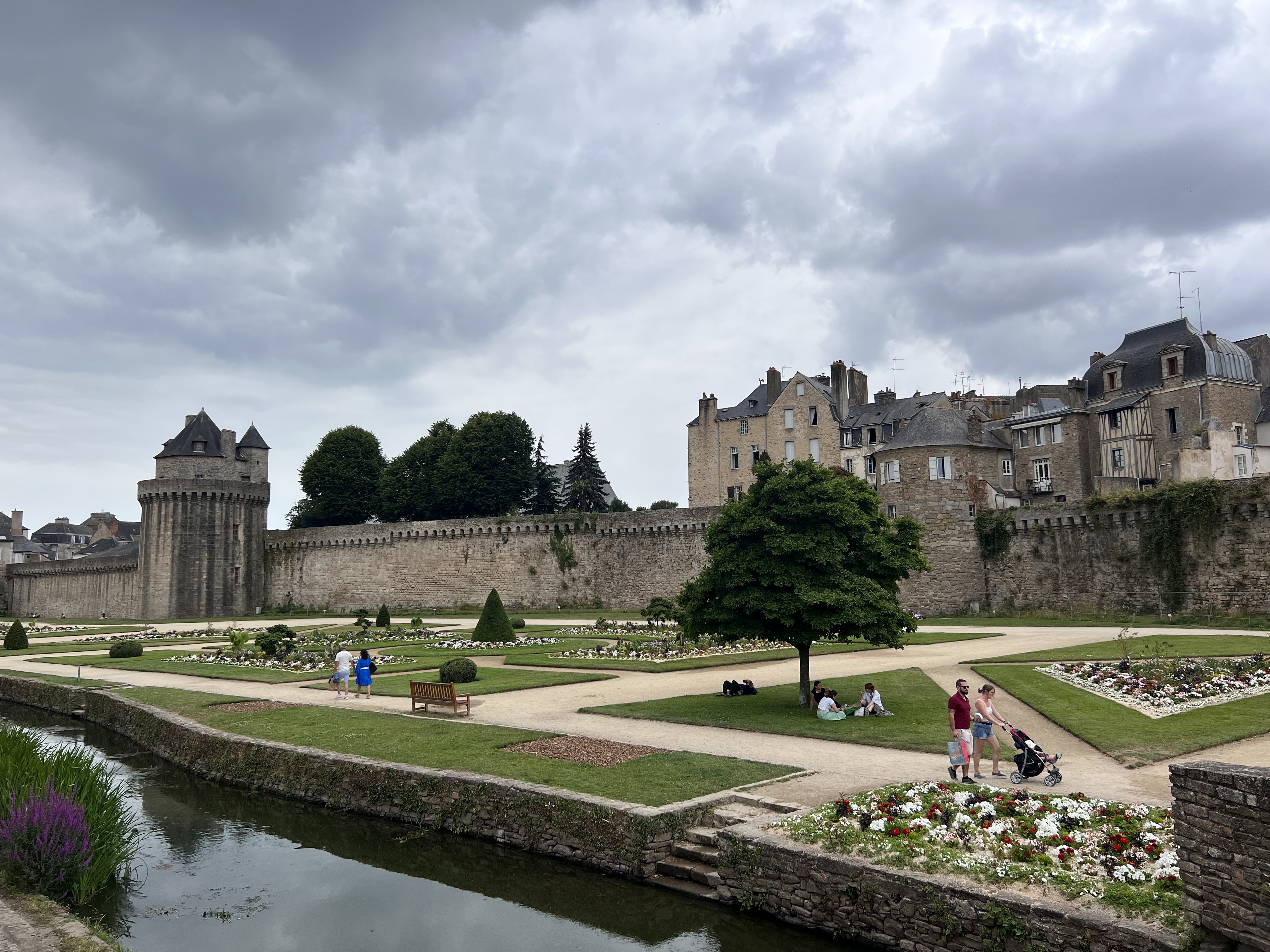
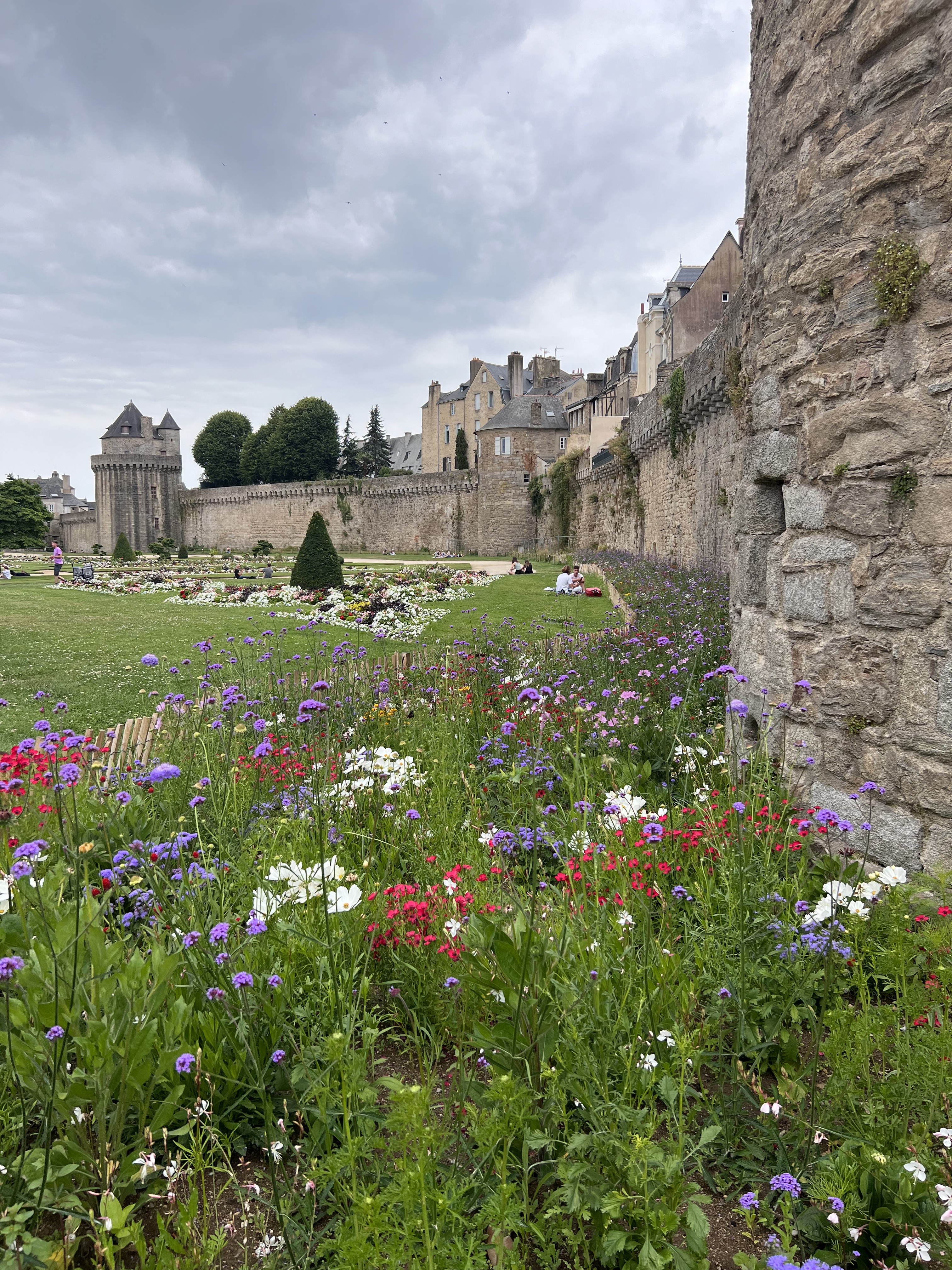
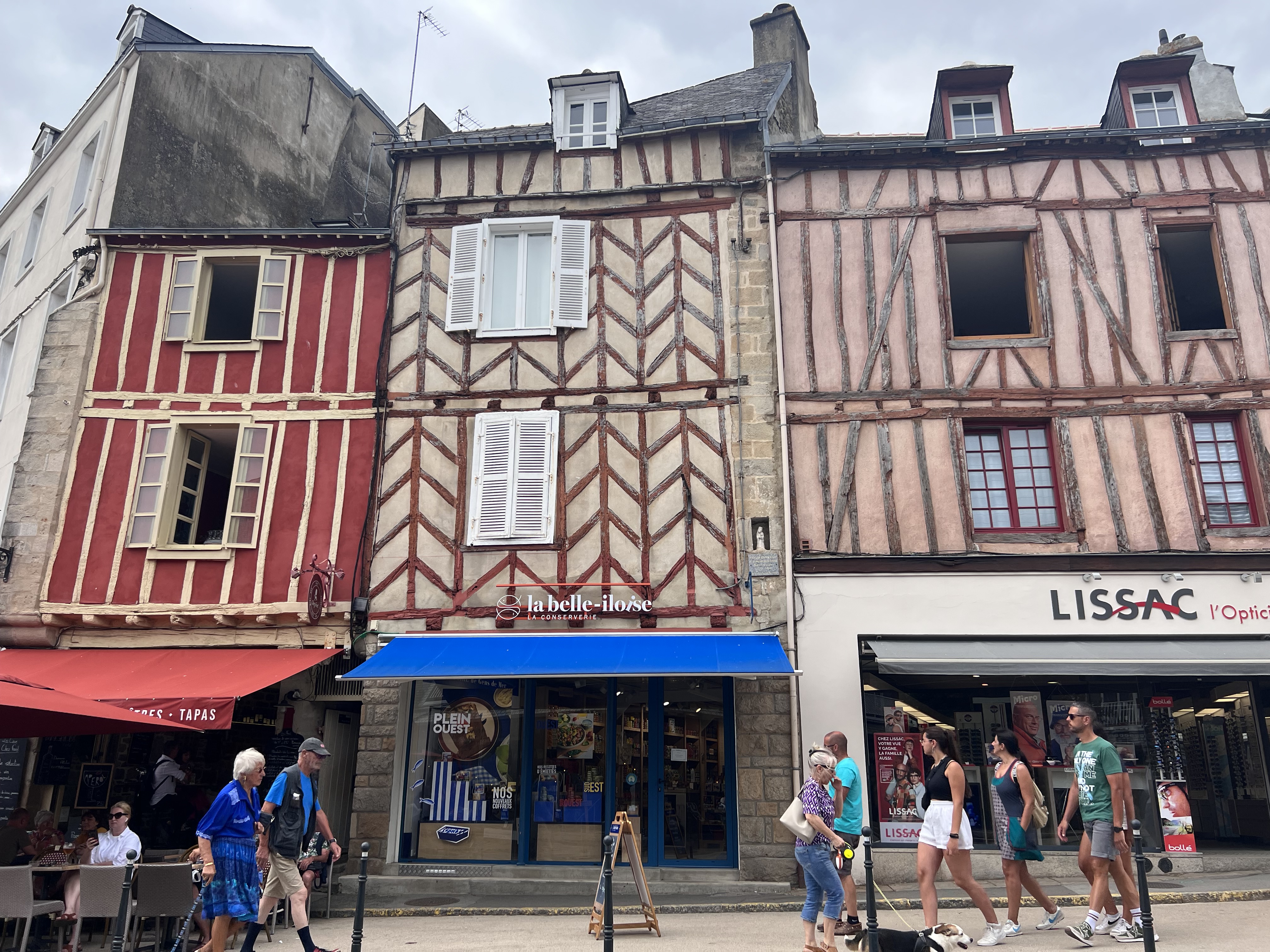
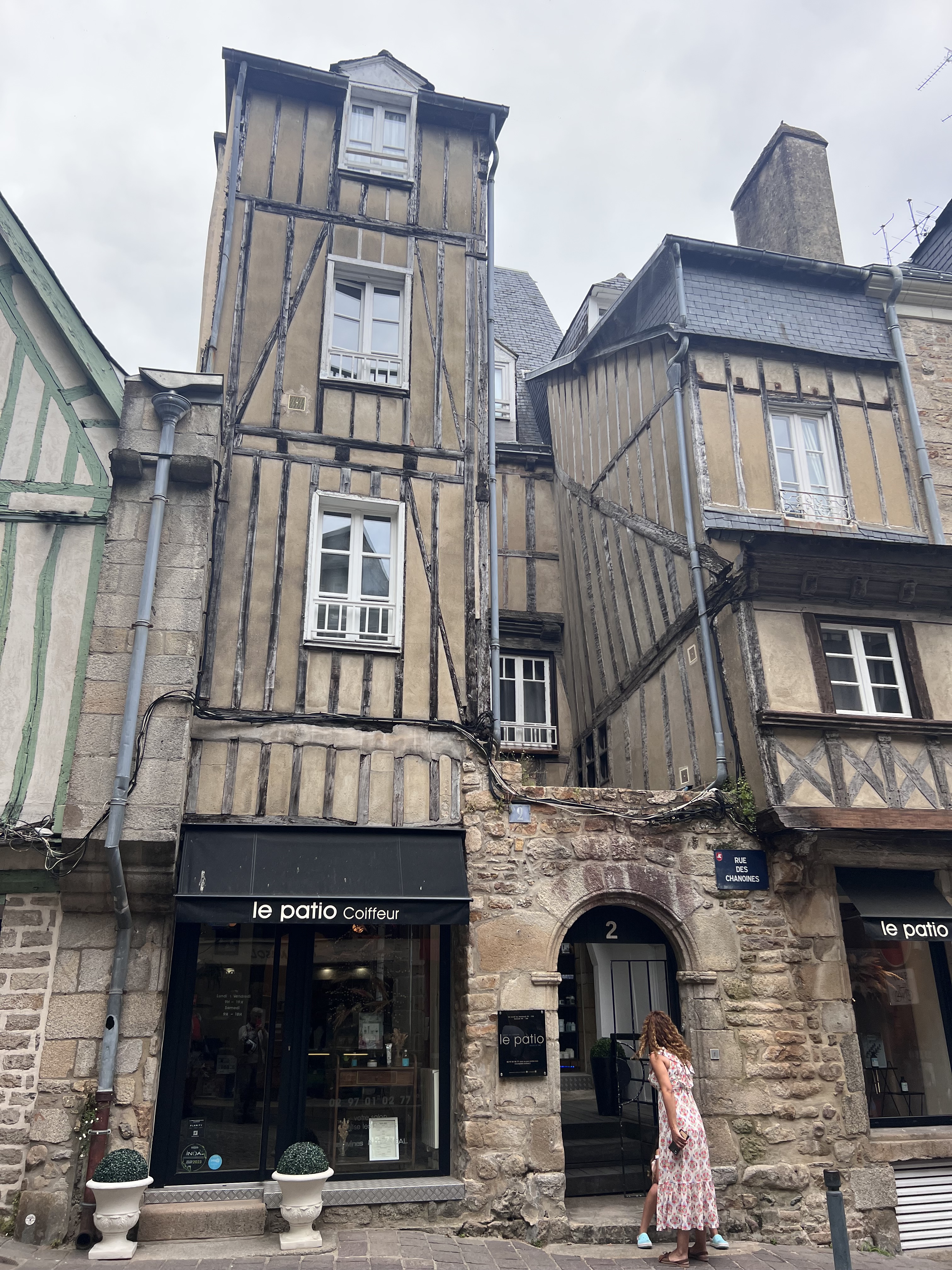
With so many potential places to visit, Anne has been diligently researching to pick a few of the many gems for us to see in our time in Brittany. Our first stop is Vannes, an old walled town en route to our first campsite. While the local shops seem more tourist focused for my liking, it is good to see that many businesses have survived COVID and hopefully are thriving again. The buildings are beautifully preserved and the town is worth a visit.

“Jardin de ramparts” Vannes
Wildflowers allowed to grow. Vannes
Beautifully maintained buildings in Vannes
Old buildings with external cables and pipes!

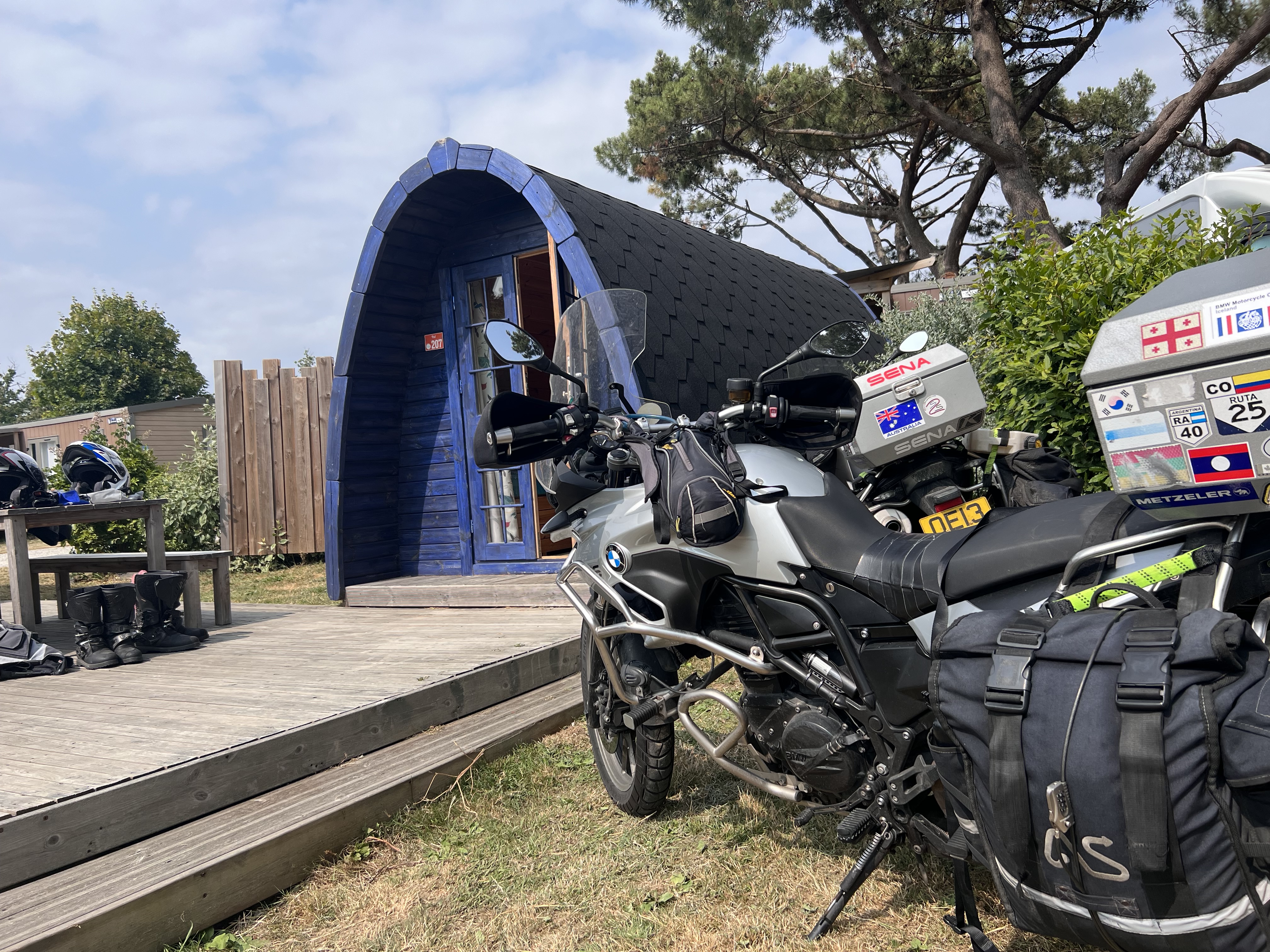
While we enjoy the riding, it is also important for us to walk each day, and not just in our riding gear! We are staying at a campsite on the beach outside Lamor-Barden, a small village with two restaurants and one ship – a campsite conveniently located between Vannes and Carnac, with costal walking paths starting from just outside the campsite. The weather forecast was not looking so good over the next few days, so we opted for a small pod instead of putting the tent up. After the first night and first breakfast of freshly baked and delivered flaky croissants (for Anne only) to the campsite reception, we decide to extend our stay by another day.

Our “tent” for three nights.
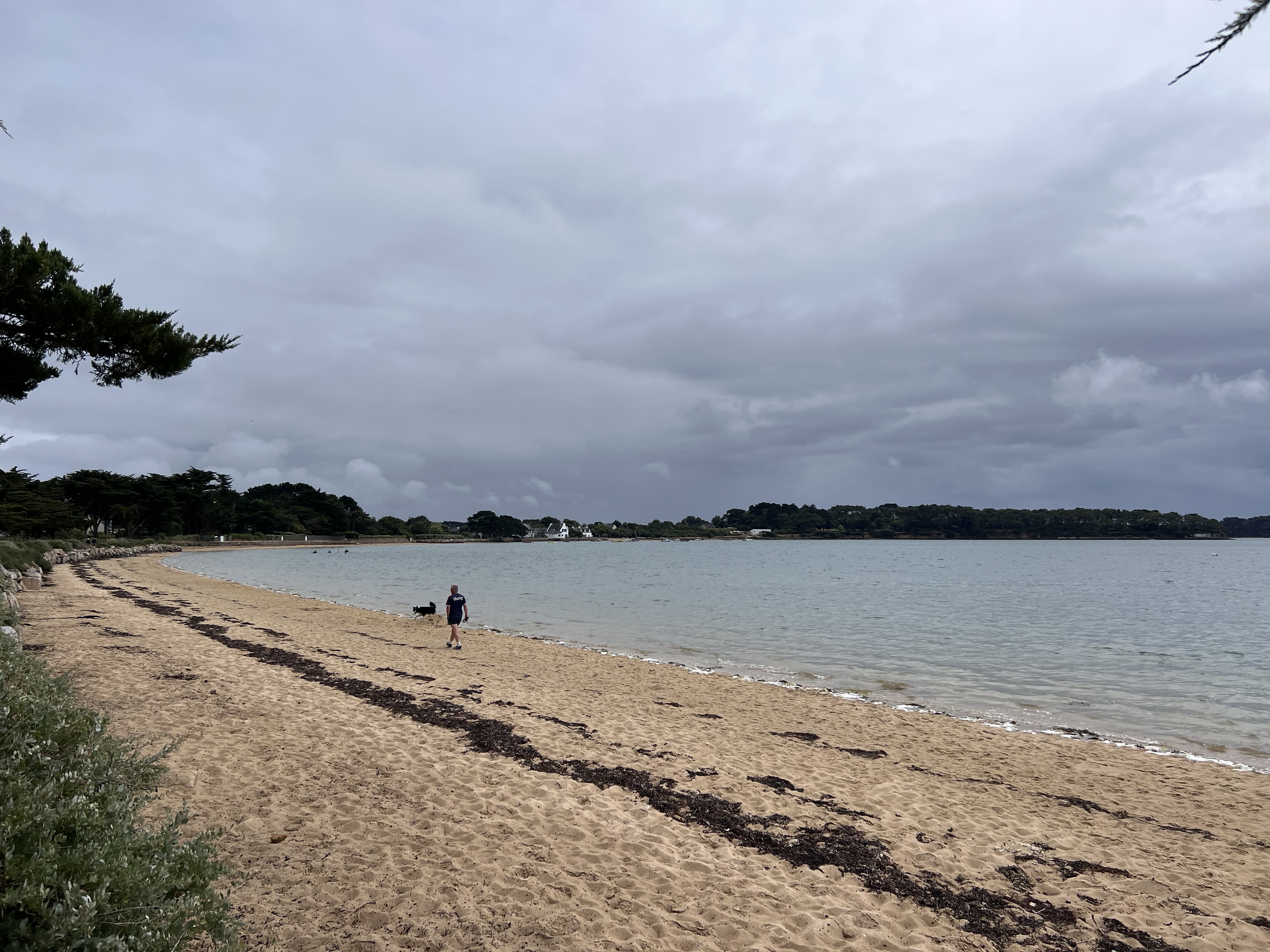
Our beachfront view
Beautiful horses, anyone know the breed?

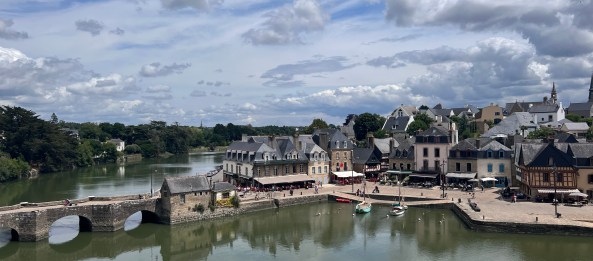
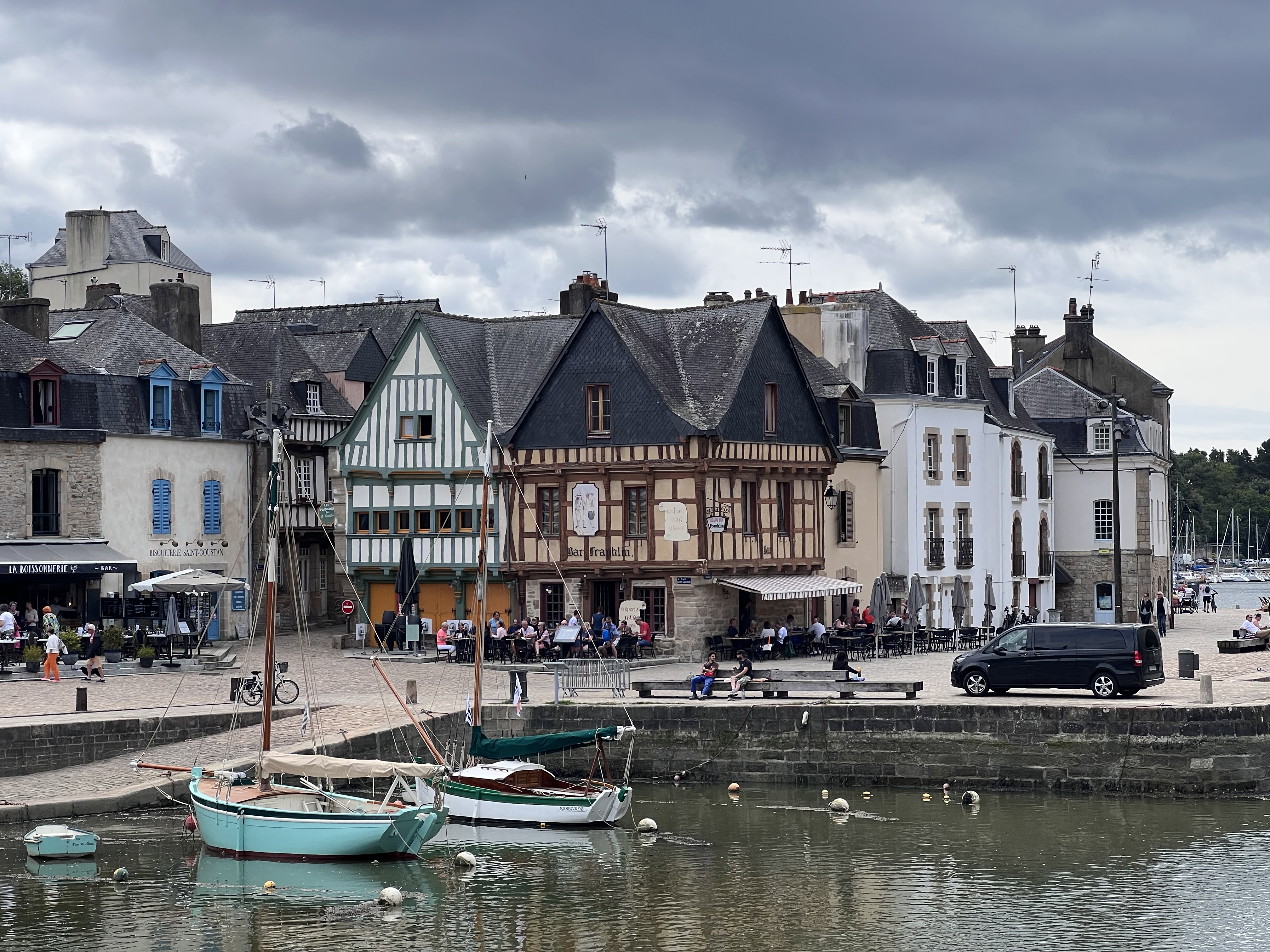
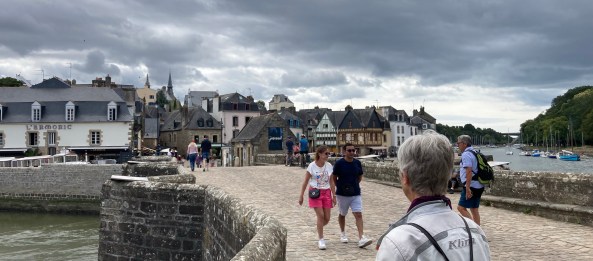
Today’s destinations, June 29th, are first Auray then Carnac. Auray is another picturesque old town. The Battle of Auray on 29 September 1364 was the last battle of the Breton War of Succession. Nestled at the bottom of an estuary, Saint-Goustan port takes you back in time with its cobbled streets, stone bridge, half-timbered houses and bustling quays. The most picturesque side of the river is reached by crossing the four-arched stone bridge that dates back to the 13th century.

Idilic scene at Auray
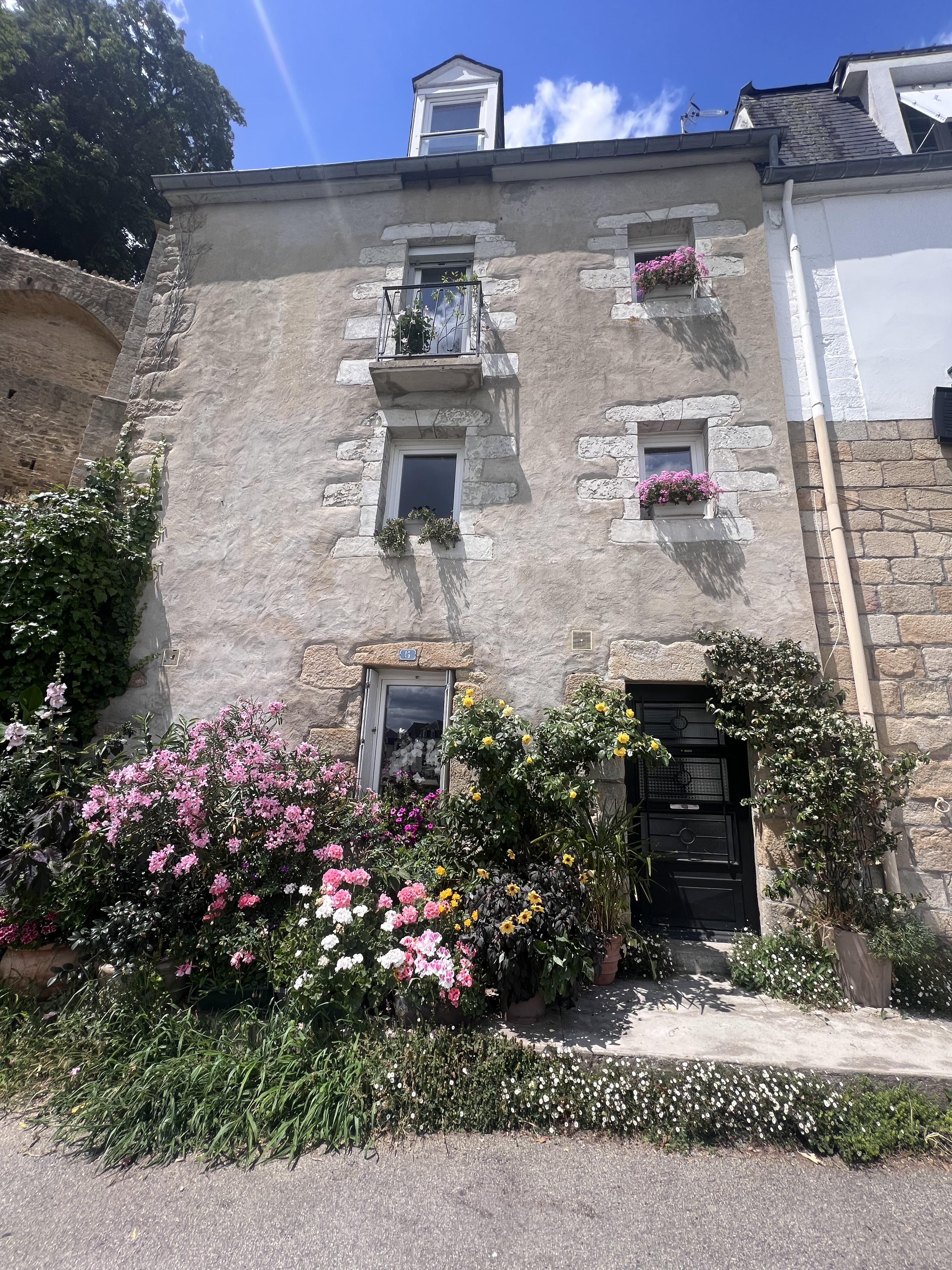
Stone buildings and blue sky. Auray

After a lovely lunch on the port, we head off to Carnac.

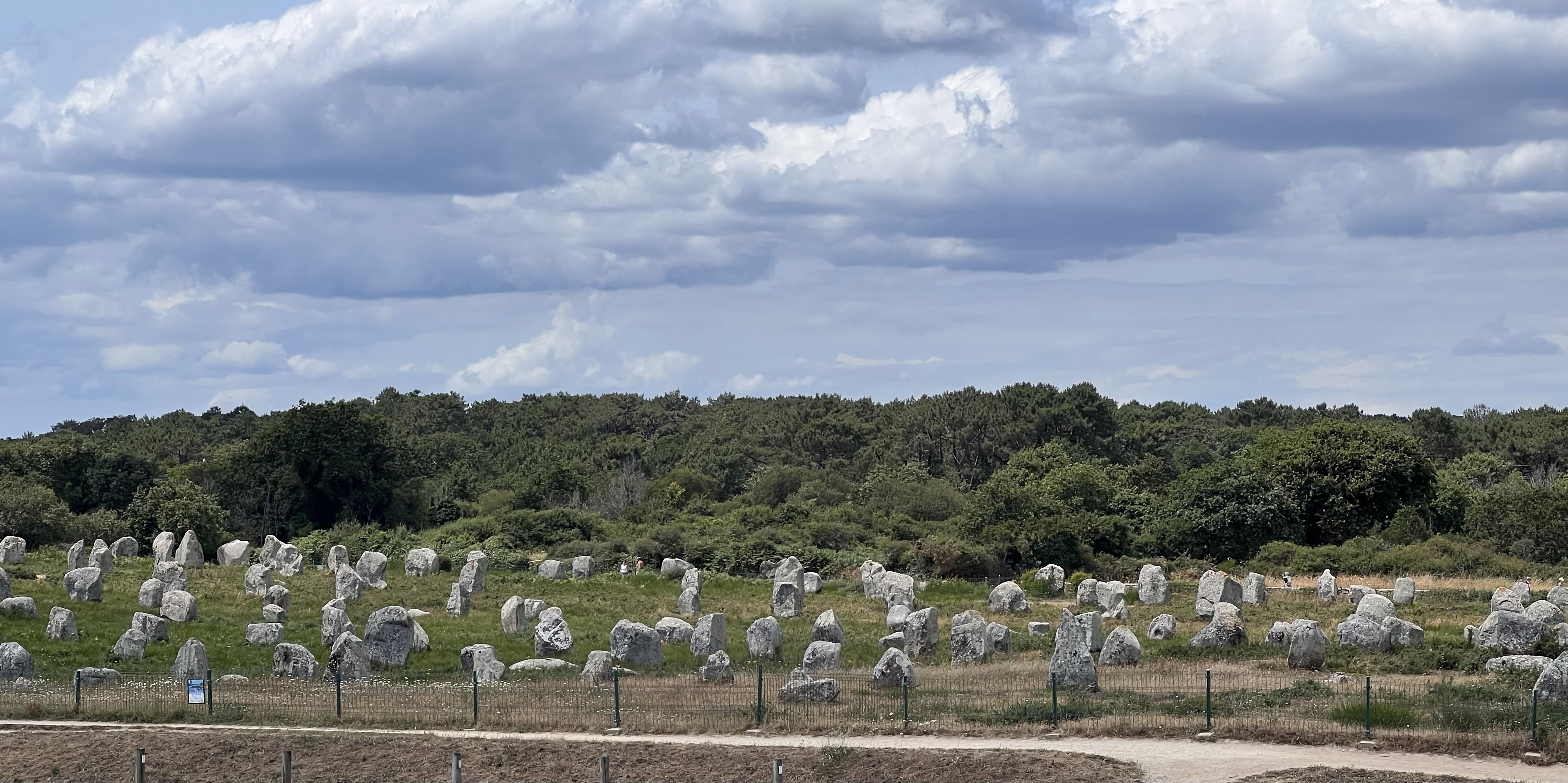
Built 1,000 years before the famed English site of Stonehenge, the Alignements de Carnac’s 3,000 perfectly aligned pre-historic megalithic stones continue to baffle historians and is one of the most important megalithic sites in Europe. The photographs do not do the site justice mainly because you can’t capture it all in one photo.

A small slice of the 3000 stones at Carnac.
A small section of Carnac’s alignment
Anne with two of the Carnac stones

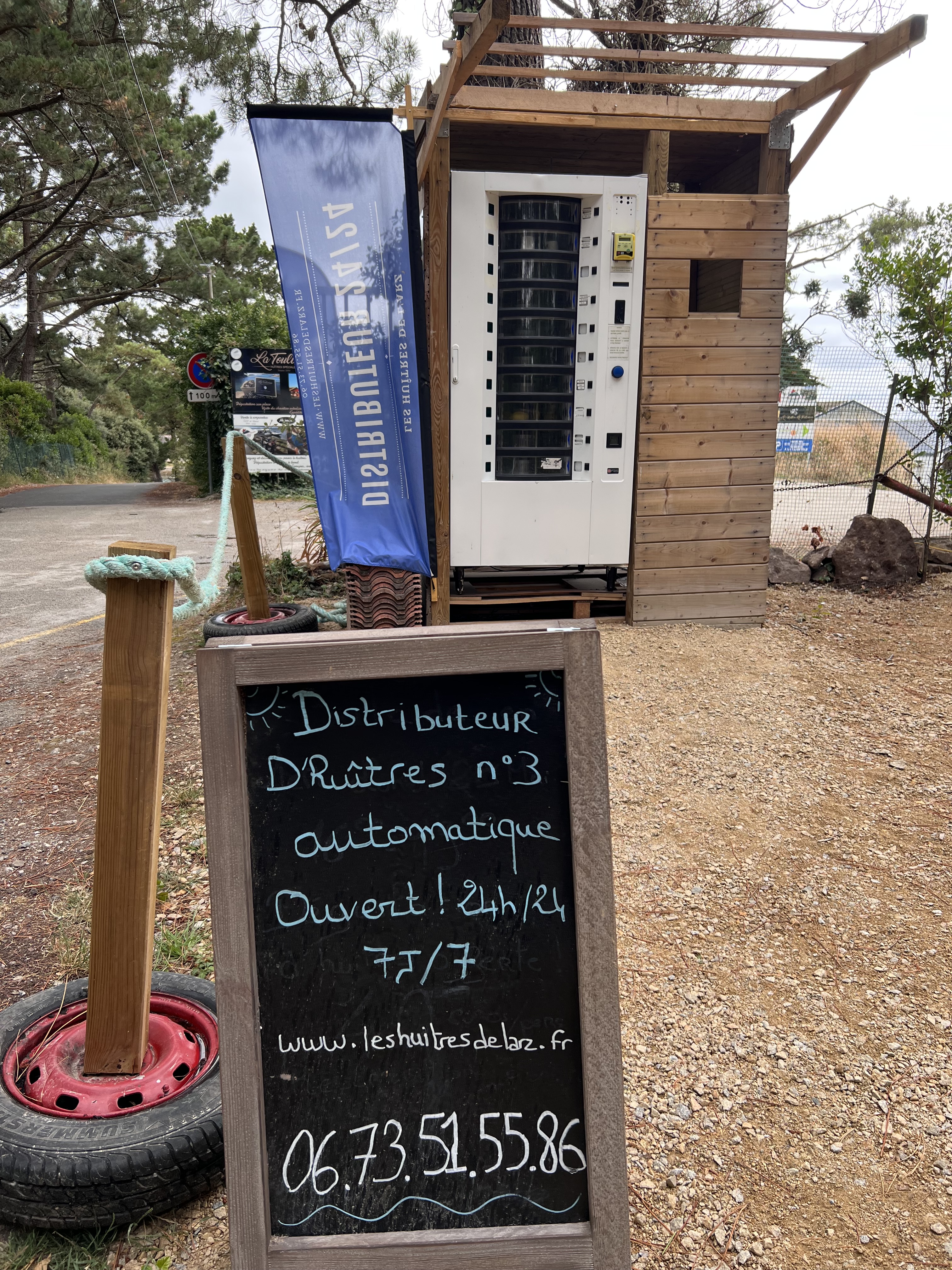
As tomorrow looks very wet again, we decide to stay a third night and explore the area further but on foot only. Today’s 12km walk takes us west of the campsite, along the coast line, past numerous oyster farms and back through a forest. Anne was not game enough to try this vending machine: it offered everything from oysters, lemon and rosé. What more do you need?!

Nine oysters for six Euros in a vending machine.

We have averaged 8kms a day walking this month – we both feel we need these walks to balance all the good food and local cider we’ve been having.

Only when I started planning routes in Brittany did I realise that there is no such thing as a coastline road to follow. Rivers, estuaries and a rugged coastline all cut deeply into the interior along the southern coast. One could spend weeks exploring a tiny area. So many beaches, so many wild coves, so many quaint photogenic villages. We are just seeing a fraction of what there is to offer here.

Anne’s next chosen destination is just outside Crozon. It turns our that our campsite is popular with young surfing Germans – there are lots of kids, lots of groups of campers together, even a happy clappy group of about 30, 3 year olds still being breastfed – we’ve suddenly brought the average age of the campsite residents up it seems. But we have scored well with a perfect spot right at the end of a lane. The weather is grey again but perfect for another long walk with lunch of moules frittes (mussels and chips) and a litre of local cider. We’re not sure whether eating moules is like eating celery: the effort expended in eating them is more than the nutrient value gained.

The best site in the campground for us.
Beyond this is North America thousands of kilometres away.
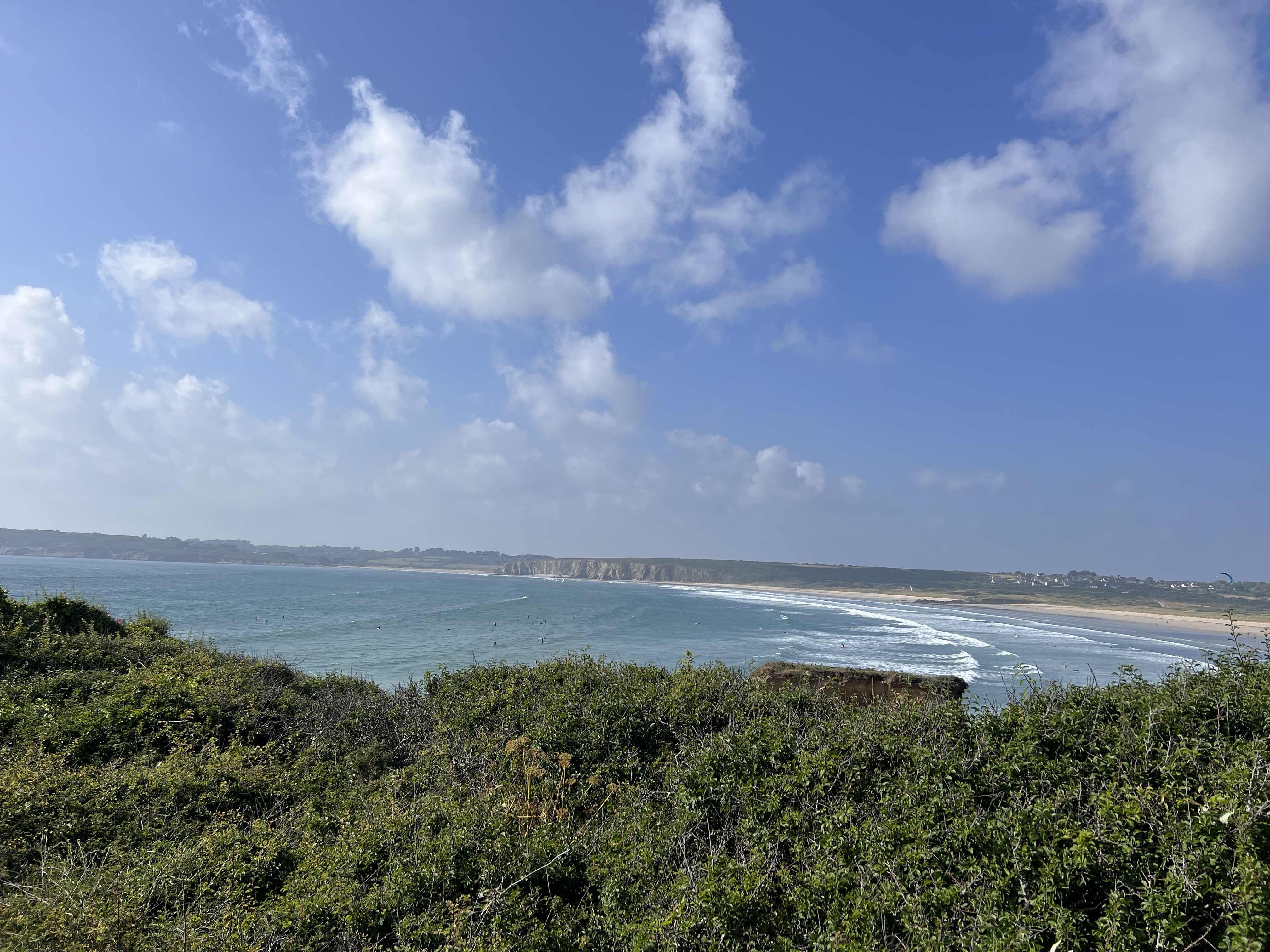
Looking north across the beach at near Goulien.
On the beach at Goulien.

Our priority on leaving our Crozon campsite is to go to the local hardware store for shoe glue. Yes, we have yet another equipment fail. One of Anthony’s squeeky Sidi boots is now quacking: the sole is completely detached at the back. We have attempted to glue it back together with Russian glue we acquired on one of our trips but will it hold? As I write this, 4 days later, so far so good and we haven’t used the new glue yet.

I had pinned so many stops in Brittany, but with the weather forecast not on our side, staying put for 2 or 3 nights at a time seemed to make more sense. While we have waited for the weather to clear enough for our walks, we have studied the various weather apps. Is it wise to stick with our original plan to visit Ireland considering the rain forecast or should we re-route? Various places in France that we contemplate are either getting drenched or scorched. Spain, Portugal then maybe? Oh to feel a bit of warmth again! Going south appeals, but Ireland has been calling for many years now.

We decide to still head for Roscoff where our ferry to Cork leaves from. We can still cancel our tickets (and get a 75% refund) up to 4 hours prior to departure. We can decide later so off we head to Roscoff.

– Anne & Anthony

Taking the near perfect photograph

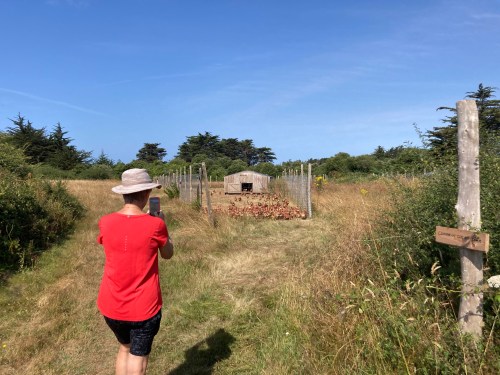
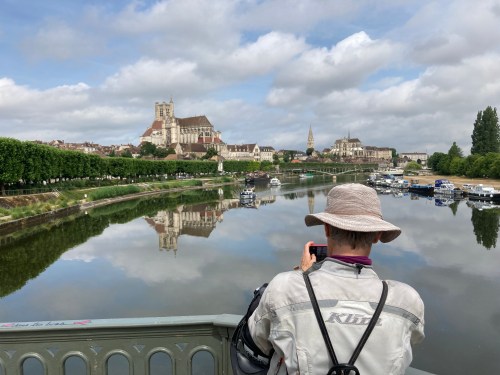
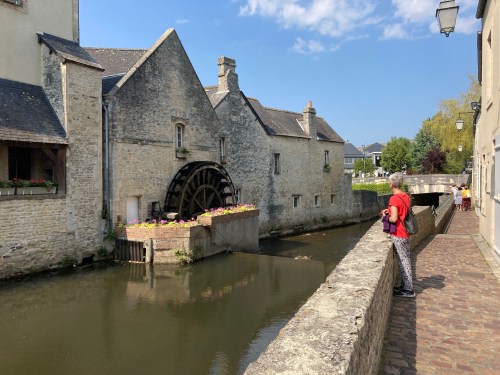
Have you ever tried to take the perfect photograph? Travel offers the opportunity to see and photograph scenes from around the world to give you memories for years to come. You find the location, check the lighting, frame the subject, aperture and shutter speed set, well perhaps not the last part on the iPhone SE that I use, and you are ready for that award winning photo, then this……..

Someone moves into the frame as you press the shutter. I mean what can you do? It seems to happen to me repeatedly. I would appreciate any ideas you have to allow me to take that elusive perfect photo.

– Anthony
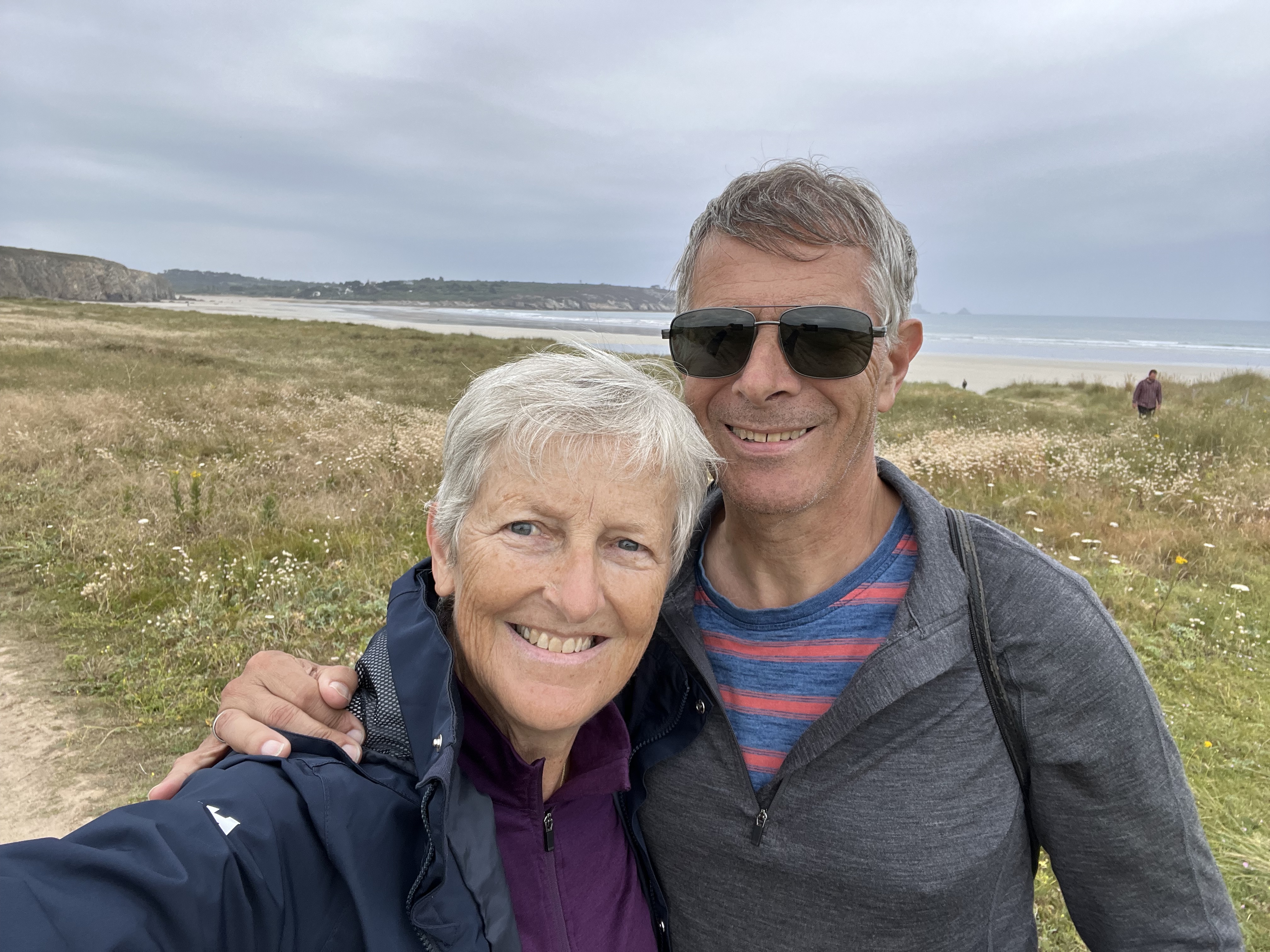
P.S. could not resist having some fun with this. Please note that Anne does all the award wining photographs in this blog from the motorbike and on foot.